Only by sharing meaning with members of the target audience and reducing levels of ambiguity can it be hoped to create a dialogue through which marketing goals can be accomplished. To share meaning successfully may require the support of significant others: those who may be expert, knowledgeable or have access to appropriate media channels.
For an applied interpretation see Lynn Sudbury’s MiniCase entitled Because it Works!at the end of this chapter.
The aims of this chapter are to introduce communication theory and to set it in the con- text of marketing communications.
The learning objectives of this chapter are to:
1. understand the core model of the communication process and how the various elements link together;
2. appreciate how the components of the model contribute to successful communications;
3. examine the impact of the media on the communication process;
4. evaluate the impact of personal influences on the communication process;
5. examine the nature and characteristics associated with word-of-mouth communication;
6. consider the nature and influence of interactivity in communication;
7. introduce more recent explanations of communication theory, including networks;
8. explain how communication theory underpins our understanding of marketing communications.
Aims and learning objectives
Chapter 2
Communication theory
An introduction to the process of communication
It was established in the previous chapter that marketing communications is partly an attempt by an organisation/brand to create and sustain a dia- logue with its various constituencies. Communication itself is the process by which individuals share meaning. Therefore, for interaction and even dialogue to occur, each participant in the communication process needs to
be able to interpret the meaning embedded in the others messages, and be able to respond. For this overall process to work, information needs to be transmitted to and from all participants.
It is important, therefore, that those involved with marketing communications understand the complexity of the transmission process. Through knowledge and understanding of the communications process, participants are more likely to achieve their objective of sharing meaning with each member of their target audiences and so have an opportunity to enter into a dialogue.
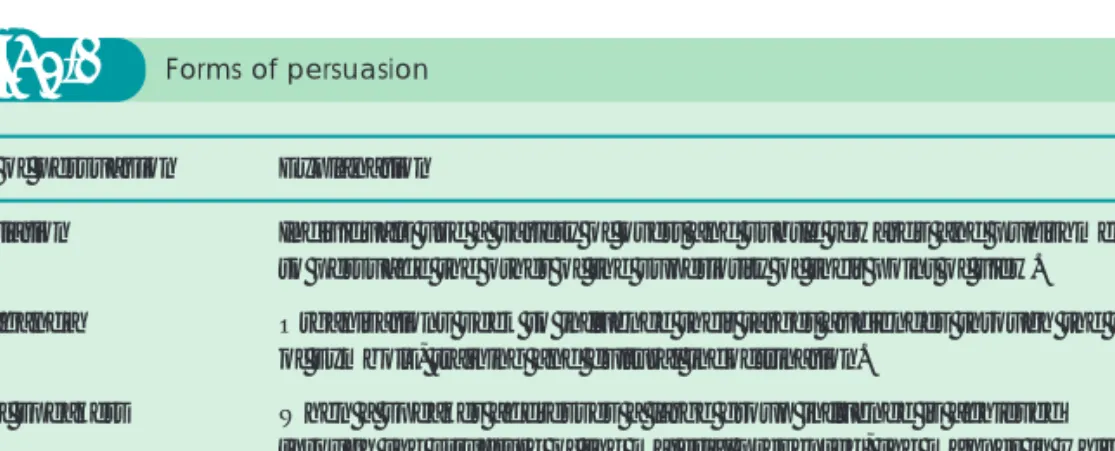
In the previous chapter the point was established that there are a variety of reasons why organisations need to communicate with various groups. Of these, one of the more prominent is the need to influence or persuade. As an initial observation, persuasive communications can be seen in three different contexts. These are set out in Table 2.1.
These three perspectives focus upon the use of persuasion, but there is a strong need for organisations also to inform and remind. Furthermore, these approaches are too specific for general marketing purposes and fail to provide assistance to those who wish to plan and manage particular communication activities.
Communication itself is the process by which individuals share meaning.
Form of persuasion Explanation
Negotiation Individuals use a variety of overt and subtle rewards and punishments to persuade the other of the superiority of their point of view.
Propaganda Organisations seek to influence their target audiences through the use of symbols, training and cultural indoctrination.
Use of speakers When a speaker addresses a large group influence is achieved through the structure of the material presented, the manner in which the presentation is delivered and the form of evidence used to influence the group.
Table 2.1
Forms of persuasionA linear model of communication
Wilbur Schramm (1955) developed what is now accepted as the basic model of mass com- munications (Figure 2.1). The components of the linear model of communication are:
1. Source: the individual or organisation sending the message.
2. Encoding: transferring the intended message into a symbolic style that can be transmitted.
3. Signal: the transmission of the message using particular media.
4. Decoding: understanding the symbolic style of the message in order to understand the message.
5. Receiver: the individual or organisation receiving the message.
6. Feedback: the receiver’s communication back to the source on receipt of the message.
7. Noise: distortion of the communication process, making it difficult for the receiver to interpret the message as intended by the source.
This is a linear model that emphasises the ‘transmission of information, ideas, attitudes, or emotion from one person or group to another (or others), primarily through symbols’
(Theodorson and Theodorson, 1969). The model and its com- ponents are straightforward, but it is the quality of the linkages between the various elements in the process that determine whether a communication event will be successful.
Source/encoding
The source, an individual or organisation, identifies a need to transmit a message and then selects a combination of appropriate words, pictures, symbols and music to represent the message to be transmitted. This is called encoding. The purpose is to create a message that is capable of being understood by the receiver.
There are a number of reasons why the source/encoding link might break down. For example, the source may fail to diagnose a particular situation accurately. By not fully understanding a stakeholder’s problem or level of knowledge, inappropriate information may be included in the message, which, when transmitted, may lead to misunderstanding and misinterpreta- tion by the receiver. By failing to appreciate the level of education of the target receiver, a
message might be encoded in words and symbols that are beyond the com- prehension of the receiver.
Some organisations spend a great deal of time and expense on marketing research, trying to develop their understanding of their target audience. The source of a message is an important factor in the communication process.
It is the quality of the linkages between the various elements in the process that determine whether a communication event will be successful.
A linear model of communication
Source: Based on Schramm (1955) and Shannon and Weaver (1962).
Figure 2.1
The source of a message is an important factor in the communication process.
A receiver who perceives a source lacking conviction, authority, trust or expertise is likely to discount any message received from that source, until such time as credibility is established.
Most organisations spend a great deal of time and expense recruiting sales representatives.
The risk involved in selecting the wrong people can be extremely large. Many high-tech organ- isations require their new sales staff to spend over a year receiving both product and sales training before allowing them to meet customers. From a customer’s perspective, salespersons who display strong product knowledge skills and who are also able to empathise with the individual members of the decision-making unit are more likely to be perceived as credible.
Therefore, an organisation that prepares its sales staff and presents them as knowledgeable and trustworthy is more likely to be successful in the communication process than one that does not take the same level of care.
The source is a part of the communication process, not just the generator of detached messages. Patzer (1983) determined that the physical attractiveness of the communicator, particularly if it is the source, contributes significantly to the effectiveness of persuasive communications.
This observation can be related to the use, by organisations, of spokespersons and celebrities to endorse products. Spokespersons can be better facilitators of the communication process if they are able to convey conviction, if they are easily associated with the object of the message, if they have credible expertise and if they are attractive to the receiver, in the wider sense of the word.
This legitimate authority is developed in many television advertisements by the use of the
‘white coat’, or product-specific clothing, as a symbol of expertise. By dressing the spokesper- son in a white coat, they are immediately perceived as a credible source of information (‘they know what they are talking about’), and so are much more likely to be believed.
Signal
Once encoded, the message must be put into a form that is capable of transmission. It may be oral or written, verbal or non-verbal, in a symbolic form or in a sign. Whatever the format
Exhibit 2.1
A magazine ad for Threshers demonstrating linear communication Image courtesy of The Advertising Archives.chosen, the source must be sure that what is being put into the message is what is required to be decoded by the receiver. The importance of this aspect of the communication process will be developed later when different message strategies are examined in Chapter 17.
The channel is the means by which the message is transmitted from the source to the receiver. These channels may be personal or non-personal. The former involves face-to-face contact and word-of- mouth communications, which can be extremely influential. Non- personal channels are characterised by mass media advertising, which can reach large audiences.
Information received directly from personal influence channels is generally more persua- sive than information received through mass media. This may be a statement of the obvious, but the reasons for this need to be understood. First, the individual approach permits greater flexibility in the delivery of the message. The timing and power with which a message is deliv- ered can be adjusted to suit the immediate ‘selling’ environment. Second, a message can be adapted to meet the needs of the customer as the sales call progresses. This flexibility is not possible with mass media messages, as these have to be designed and produced well in advance of transmission and often without direct customer input.
The channel is the means by which the message is transmitted from the source to the receiver.
When developing names or taglines for global brands it is important to choose a name that translates appropriately into all the languages. The encoding process, the name of the car, cleaner, biscuit or fashion accessory should be well researched and capable of being decoded by the target audience in such a way that there is meaning, sense and value. The following are examples where the encoding process had not been properly considered:
z When the European hardware store chain ‘Götzen’ opened in Istanbul they had to change the name as
‘Göt’ means ‘ass’ in Turkish.
z ‘Traficante’ is an Italian brand of mineral water. In Spanish, it means drug dealer.
z Clairol’s ‘Mist Stick’, curling iron had problems when launched in Germany because ‘Mist’ is slang for manure.
z A main-stream UK bank informed audiences in a recent advertising campaign that to show the soles of your feet in Thailand is a very rude gesture and, to give the thumbs up sign in Turkey, has quite the opposite meaning to its symbolism of cool acceptance here in Britain.
z Finally, workers in an African port saw a consignment with the international symbol for ‘fragile’ (a wine glass with snapped stem) on the side. They assumed it meant that they had been sent a cargo of broken glass and immediately pitched all the cases overboard into the harbour.
Sources: Adapted from: www.i18nguy.com/translations and http://www.sourceuk.net/indexf.html?03590.
Question
To what extent should the encoding process be researched?
Task
Search the web and find your own examples of communications where different meanings have emerged.
Is this what you really meant?
Decoding/receiver
Decoding is the process of transforming and interpreting a message into thought. This process is influenced by the receiver’s realm of understanding, which encompasses the experiences, perceptions, attitudes and values of both the source and the receiver. The more the receiver understands about the source and the greater their experience in decoding the source’s messages, the more able the receiver will be to decode the message successfully.
ViewPoint 2.1
Feedback/response
The set of reactions a receiver has after seeing, hearing or read- ing the message is known as the response. These reactions may vary from the extreme of dialing an enquiry telephone number, returning a coupon or even buying the product, to storing information in long-term memory for future use. Feedback is
that part of the response that is sent back to the sender, and it is essential for successful com- munication. The need to understand not just whether the message has been received but also which message has been received is vital. For example, the receiver may have decoded the message incorrectly and a completely different set of responses may have been elicited. If a suitable feedback system is not in place then the source will be unaware that the communi- cation has been unsuccessful and is liable to continue wasting resources. This represents inefficient and ineffective marketing communications.
The evaluation of feedback is vital if sound communications are to be developed. Only through evaluation can the success of any communication be judged. Feedback through
Exhibit 2.2
Decoding a print adShows a lady relaxing in the foreground and something resembling a cooker (the AGA), in the background. How are these two focal parts of the image related? The copy helps the reader decipher the code.
Aga, taken from their Love Aga Compaign, www.aga-web.co.uk.
Feedback is that part of the response that is sent back to the sender, and it is essential for successful communication.
personal selling can be instantaneous, through overt means such as questioning, raising objec- tions or signing an order form. Other means, such as the use of gestures and body language, are less overt, and the decoding of the feedback needs to be accurate if an appropriate response is to be given. For the advertiser, the process is much more vague and prone to misinterpreta- tion and error.
Feedback through mass media channels is generally much more difficult to obtain, mainly because of the inherent time delay involved in the feedback process. There are some excep- tions, namely the overnight ratings provided by the Broadcasters’ Audience Research Board to the television contractors, but as a rule feedback is normally delayed and not as fast. Some commentators argue that the only meaningful indicator of communication success is sales.
However, there are many other influences that affect the level of sales, such as price, the effect of previous communications, the recommendations of opinion leaders or friends, poor com- petitor actions or any number of government or regulatory developments. Except in circum- stances such as direct marketing, where immediate and direct feedback can be determined, organisations should use other methods to gauge the success of their communications activ- ities, for example, the level and quality of customer inquiries, the number and frequency of store visits, the degree of attitude change and the ability to recognise or recall an advertisement.
All of these represent feedback, but, as a rough distinction, the evaluation of feedback for mass communications is much more difficult to judge than the evaluation of interpersonal communications.
Noise
A complicating factor, which may influence the quality of the reception and the feedback, is noise. Noise, according to Mallen (1977), is ‘the omission and distortion of information’, and there will always be some noise present in all communications. Management’s role is to ensure that levels of noise are kept to a minimum, wherever it is able to exert influence.
Noise occurs when a receiver is prevented from receiving all or part of a message in full. This may be because of either cognitive or physical factors. For example, a cognitive factor may be that the encoding of the message was inappropriate, thereby making it difficult for the receiver to decode the message. In this circumstance it is said that the realms of understanding of the source and the receiver were not matched. Another reason noise may enter the system is that the receiver may have been physically prevented from decoding the message accurately because the receiver was distracted. Examples of distraction are that the telephone rang, or someone in the room asked a question or coughed. A further reason could be that competing messages screened out the targeted message.
Some sales promotion practitioners are using the word ‘noise’ to refer to the ambience and publicity surrounding a particular sales promotion event. In other words, the word is being used as a positive, advantageous element in the communication process. This approach is not adopted in this text.
Realms of understanding
The concept of the ‘realm of understanding’ was introduced earlier (see p. 42). It is an important element in the communi- cation process because it recognises that successful communi- cations are more likely to be achieved if the source and the receiver understand each other. This understanding concerns attitudes, perceptions, behaviour and experience: the values of both parties to the com- munication process. Therefore, effective communication is more likely when there is some common ground – a realm of understanding between the source and receiver.
Noise occurs when a receiver is prevented from receiving all or part of a message in full.
Successful communications are more likely to be achieved if the source and the receiver understand each other.
Some organisations, especially those in the private sector, spend a huge amount of money researching their target markets and testing their advertisements to ensure that their messages can be decoded and understood by the target audience. The more organisations understand their receivers, the more confident they become in constructing and transmitting messages to them. Repetition and learning, as we shall see later, are important elements in marketing communications. Learning is a function of knowledge and the more we know, the more likely we are to understand.
Influences of the communication process
The linear, sequential interpretation of the communication process fails to accurately rep- resent all forms of communication. Indeed, it is probable that there is no single model or framework that is entirely satisfactory and capable of covering all forms of communication.
However, there are two particular influences on the communication process that need to be considered. First, the media used to convey information and second, the influence of people on the communication process. These are considered in turn.
The influence of the media
The dialogue that marketing communications seeks to generate with audiences is partially con- strained by an inherent time delay based on the speed at which responses are generated by the participants in the communication process. Technological advances now allow participants to conduct marketing communication-based ‘conversations’ at electronic speeds. The essence of this speed attribute is that it allows for interactively based communications, where enquiries are responded to more or less instantly (see Chapters 25 and 26).
New, digital-based technologies, and the Internet in particu- lar, provide an opportunity for interaction and dialogue with customers. With traditional media the tendency is for mono- logue or at best delayed and inferred dialogue. One of the first points to be made about these new, media-based communica- tions is that the context within which marketing communica- tions occurs is redefined. Traditionally, dialogue occurs in a
(relatively) familiar context, which is driven by providers who deliberately present their mess- ages through a variety of communication devices into the environments that they expect their audiences may well pass or recognise. Providers implant their messages into the various en- vironments of their targets. Yuanet al. (1998) refer to advertising messages being ‘unbundled’, such as direct marketing, which has no other content, or ‘bundled’ and embedded with other news content such as television, radio and web pages with banner ads. Perhaps more pertin- ently, they refer to direct and indirect online advertising. Direct advertising is concerned with advertising messages delivered to the customers (email) while indirect advertising is concerned with messages that are made available for customers to access at their leisure (web sites).
Digital media-based communications tend to make providers relatively passive. Their messages are presented in an environment that requires targets to use specific equipment to actively search them out. The roles are reversed, so that the drivers in the new context are active information seekers, represented by the target audience (members of the public and other information providers such as organisations), not just the information providing organisations.
A further development resulting from the use of digital media in marketing communica- tions is the target of the communication activity. Interactivity, as stated above, has increased in speed, but interactivity can occur not only between people as a result of a message conveyed through a particular medium but also with machines or cyberspace. As Hoffman and Novak (1996) state, people interactivity is now supplemented by machine interactivity. This means
New, digital-based technologies, and the Internet in particular, provide an opportunity for interaction and dialogue with customers.
that the interaction that previously occurred through machines now occurs with the equip- ment facilitating the communication exchanges (see Figure 2.2).
These authors refer to the work of Steuer (1992), who suggests that the principal relation- ship is with what is referred to as a mediated environmentand not between sender and receiver.
This is important, as it is the potential of all participants in the communication activity to mediate or influence the environment (especially the message content) in which the interac- tion occurs that makes interactive marketing communications so dynamic and such a radically revolutionary new promotional medium.
The linear model assumes information content to be essentially one-dimensional, that is, just the spoken word (as in a presentation), just the written word (as in a product leaflet) or just in a visual format (as in a print or television advertisement). Digital media and the devel- opment of multimedia facilities have enabled the simultaneous delivery of messages through a variety of formats.
Media richness theory (MRT), developed before the influence of the Internet and related digital technologies, suggests that there is a range or depth of message content embedded within different media and is concerned with the capacity of media types to process ambigu- ous communication in organisations. According to Daft and Lengel (1986: 560) richness refers to the ‘ability of information to change understanding within a time interval’. The criteria used are the availability of instant feedback, the capacity to transmit multiple cues, expressions such as tone of voice, body language and eye contact, the use of natural language and finally, the personal focus of the medium. Face-to-face communication is the richest medium because it
A model of marketing communications in a hypermedia computer- mediated environment
Source: From Hoffman and Novak (1996). Reprinted with permission from the Journal of Marketing, published by the American Marketing Association.
Figure 2.2
helps establish a personal connection. At the other end of the scale, numeric and formal written communication is slow, often visually limited and impersonal. Such media is said to be leaner.
The scale starts with face-to-face and is followed by the tele- phone, email, letter, note, memo, special report, fliers and bul- letins. It is argued that rich media have a greater capacity to
reduce ambiguity and allow for more complex and difficult communications. Lean media are more cost-effective for simple or routine communications. By fitting the right media to the right type of task, it is argued that managerial performance can be improved or optimised.
Media richness theory provides a scale or ranking of different media concerning the richness of information each medium is capable of communicating. With the advent of digital tech- nologies it might be expected that new media would be relatively rich and hence impact posi- tively on task performance.
However, although intuitively appealing, there is little empirical evidence to support MRT.
Dennis and Kinney (1998) found that new media did allow for quicker decision-making but they argue that MRT is an old theory and not necessarily relevant in the digital age. Other, sub- sequent theories have evolved and these will be considered in greater depth in Chapter 24.
The influence of people
The traditional view of communication holds that the process consists essentially of one step.
Information is directed and shot at prospective audiences, rather like a bullet is propelled from a gun. The decision of each member of the audience to act on the message or not is the result of a passive role or participation in the process (Figure 2.3). Organisations can communicate with different target audiences simply by varying the message and the type and frequency of channels used. The one-step model has been criticised for its oversimplification, and it cer- tainly ignores the effect of personal influences on the communication process and potential for information deviance.
Two-step flow of communication
This model depicts information flowing via media channels to particular types of people (opin- ion leaders and opinion formers; see p. xx) to whom other members of the audience refer for information and guidance. Through interpersonal networks, opinion leaders not only reach
The scale starts with face-to-face and is followed by the telephone, email, letter, note, memo, special report, fliers and bulletins.
One-step model of communication. T =member of the target audience
Figure 2.3
members of the target audience who may not have been exposed to the message, but may rein- force the impact of the message for those members who did receive the message (Figure 2.4).
For example, editors of travel sections in the Sunday press and television presenters of travel programmes fulfil the role of opinion former and can influence the decision of prospective travellers. It can be seen that targets 5 and 6 were not exposed to the original message, so the opinion leader (OL; T4) acts as an original information source for them and as a reinforcer for
targets 1, 2 and 3.
The implication of the two-step model is that the mass media do not have a direct and all-powerful effect over their audiences. If the primary function of the mass media is to provide information, then personal influences are necessary to be persuasive and to exert direct influence on members of the target audience.
Multi-step flow of communications
This model proposes that the process involves interaction among all parties to the com- munication process (see Figure 2.5). This interpretation closely resembles the network of participants who are often involved in the communication process.
Two-step model of communication. OL =opinion leader
Figure 2.4
The implication of the two-step model is that the mass media do not have a direct and all-powerful effect over their audiences.
Multi-step model of communication
Figure 2.5
Word-of-mouth communications
The multi-step model suggests that opinion leaders/formers and members of the target audi- ence all influence each other. Indeed, successful communication is characterised by interac- tion and word-of-mouth (WoM) communications can assist and enrich this communication
Exhibit 2.3
Brushing Wax print ad. This uses the principles of opinion leadership (a representative of the target audience) to convey product benefitsprocess. It might be assumed therefore, that personal influence is important and can enrich the communication process.
Customers use word-of-mouth recommendations to provide information and to support and reinforce their purchasing de- cisions. At the heart of this approach is the source credibility that is assigned to people whose opinions are sought after and used in the purchase decision process. In comparison to advertising messages, word-of-mouth communications are considerably more robust (Berkman and Gilson, 1986).
WoM has been related to many aspects of marketing. For example, Woodside and Delozier (1976: 12) link WoM with consumer risk, while others establish links with complaining behaviour (Blodgett et al., 1995: 32), product judgements (Bone, 1995: 214), consumer atti- tudes (Bickart and Schindler, 2001: 31) and as an integral aspect of the customer relationship (Wangenheim, 2005: 154) to name but a few.
Stokes and Lomax (2002) define word-of-mouth communication as ‘interpersonal com- munication regarding products or services where the receiver regards the communicator as impartial’. This simple definition was developed from some of the more established interpre- tations that failed to accommodate contemporary media and the restrictions concerning the perceived independence of the communicator. For example, Helm and Schlei (1998: 42) refer to WoM as ‘verbal communications (either positive or negative) between groups such as the product provider, independent experts, family, friends and the actual or personal consumer’. Organ- isations now use WoM techniques commercially in order to generate a point of differentiation.
People like to talk about their product (service) experiences, for a variety of reasons that are explored in the next section. However, by talking with a neighbour or colleague about the good experiences associated with a new car, for example, the first-hand ‘this has actually happened to someone I know’ effect will be instrumental in the same views being passed on to other colleagues, irrespective of their validity or overall representation of similar cars. Mazzarol et al.
(2007) identify the ‘richness of the message’ and the ‘strength of the implied or explicit advocacy’ as important triggers for WoM.
Viral marketing (see Chapter 26) is an electronic version of the spoken endorsement of a product or service where messages, screen savers and other information are targeted at key individuals who then voluntarily pass the message to friends and colleagues and in doing so bestow, endorse and provide the message with much valued credibility.
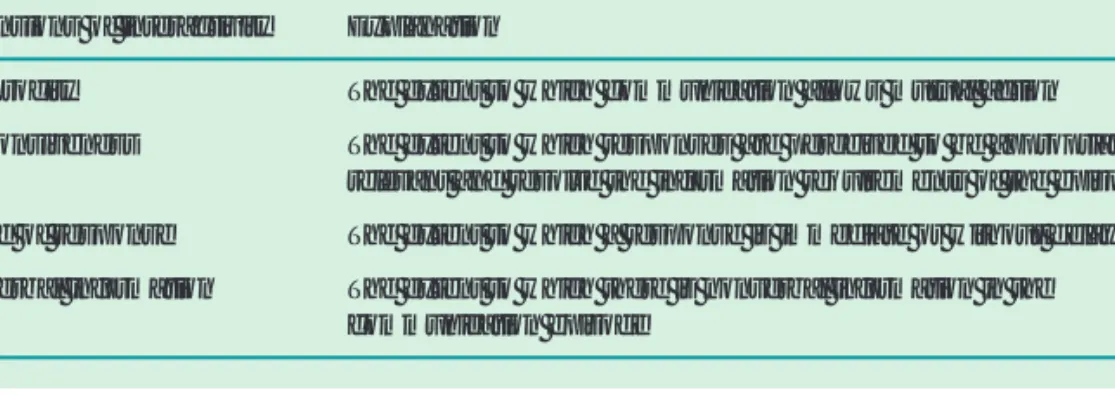
But why do people want to discuss products or advertising messages? Bone (1995) cited by Stokes and Lomax (2002) refers to three elements of WoM (see Table 2.2).
Dichter (1966) determined that there were four main categories of output WoM.
1. Product involvement
People, he found, have a high propensity to discuss matters that are either distinctly pleasurable or unpleasurable. Such discussion serves to provide an opportunity for the experience to be relived, whether it be the ‘looking for’ or the ‘use’ experience, or both.
Customers use word-of-mouth recommendations to provide information and to support and reinforce their purchasing decisions.
Element of WoM Explanation
Direction Input WoM Customers seeking recommendation prior to purchase Output WoM Expression of feelings as a result of the purchase experience Valence The positive or negative feelings resulting from the experience Volume The number of people to which the message is conveyed
Table 2.2
Elements of word-of-mouth communicationSource: After Bone (1995).
2. Self-involvement
Discussion offers a means for ownership to be established and signals aspects of prestige and levels of status to the receiver. More importantly, perhaps, dissonance can be reduced as the purchaser seeks reassurance about the decision.
3. Other involvement
Products can assist motivations to help others and to express feelings of love, friendship and caring. These feelings can be released through a sense of sharing the variety of benefits that products can bestow.
4. Message involvement
The final motivation to discuss products is derived, according to Dichter, from the messages that surround the product itself, in particular the advertising messages and, in the business- to-business market, seminars, exhibitions and the trade press, which provide the means to provoke conversation and so stimulate word-of-mouth recommendation.
It is interesting to note that Dichter’s various forms of involve- ment, in particular the ‘self ’ and ‘other’ categories, bare a strong similarity to the market exchanges and collaborative exchanges explored in Chapter 1. However, people who identify very closely with a brand and who might be termed brand advocates often engage in word-of-mouth communications. Advocacy can be
demonstrated not only through word-of-mouth communications but also through behaviour, for example, by wearing branded clothing or using tools and equipment. The issue of advo- cacy is explored further in Chapter 7 in the section on loyalty and retention schemes.
People who identify very closely with a brand and who might be termed brand advocates often engage in word-of-mouth communications.
A hotel manager noticed that input WoM for his hotel given by travel agents was much stronger than the output WoM, even though the overseas guests reported very favourable satisfaction levels. In order ‘to align the input WoM needs of potential customers with activities designed to encourage appropriate output WoM’, a range of activities were introduced to prompt WoM opportunities.
One of these strategies required guests to tell the agents of their experience and he also communicated with the agents by sending them copies of the guest comment cards. He also provided complimentary rooms for the agents so that they could experience the hotel first-hand and then sent them teddy bears (a reminder of England) when they made a certain number of bookings. Later he sent them jars of honey.
Guests were also given teddy bears on departure.
One other notable activity included restoring one of the hotel rooms to how it would have been when the hotel opened in 1860. People perceived this as novel, interesting and it gave rise to extensive positive output WoM. This activity also gave rise to a number of public relations activities.
Source: Stokes and Lomax (2002).
Question
If WoM communication is so important why is it not a core activity within marketing communications for all brands?
Task
When you next visit a leisure or entertainment complex make a mental note of the ways in which the brand owner encourages visitors to talk about the brand.
Hotel speak
These motivations to discuss products and their associative experiences vary between indi- viduals and with the intensity of the motivation at any one particular moment. There are two main persons involved in this process of word-of-mouth communications: a sender and
ViewPoint 2.2
receiver. Research indicates that the receiver’s evaluation of a message is far from stable over time and accuracy of recall decays (expectedly) through time. What this means for marketing communications is that those people who have a positive product experience, especially in the service sector, should be encouraged to talk as soon as possible after the event (Christiansen and Tax, 2000). For example, Pepsi Raw was launched in pubs and bars in order to reach young affluent consumers. The goal was to encourage this target audience to talk about the brand and in doing so imbue the brand with social group associations and then roll the brand out across supermarkets (Simms, 2007).
According to Reichheld (2003) cited by Mazur (2004) organ- isations should measure word-of-mouth communication because those who speak up about a brand are risking their own reputation when they recommend a brand. Looking at the financial services sector, Reichheld argues that measures based on customer satisfac- tion or retention rates can mask real growth potential because they are measures of defection, and switching barriers may induce inertia. He found three particular groups based on their type of word-of-mouth endorsement:
promoters, passively satisfied and detractors. In particular he identified a strong correlation between an organisation’s growth rate and the percentage of customers who are active promoters.
For organisations it is important to target messages at those individuals who are predisposed to such discussion, as this may well propel word-of-mouth recommendations and the success of the communications campaign. The target, therefore, is not necessarily the target market, but those in the target market who are most likely to volunteer their positive opinions about the offering or those who, potentially, have some influence over members. There are three types of such volunteers: opinion leaders, formers and followers.
Opinion leaders
Katz and Lazerfeld (1955) first identified individuals who were predisposed to receiving infor- mation and then reprocessing it to influence others. Their studies of American voting and pur- chase behaviour led to their conclusion that those individuals who could exert such influence were more persuasive than information received directly from the mass media. These opinion leaders,according to Rogers (1962), tend ‘to be of the same social class as non-leaders, but may enjoy a higher social status within the group’. Williams (1990) uses the work of Reynolds and Darden (1971) to suggest that they are more gregarious and more self-confident than non- leaders. In addition, they have a greater exposure to relevant mass media (print) and as a result have more knowledge/familiarity and involvement with the product class, are more innovative and more confident of their role as influencer (leader) and appear to be less dogmatic than non-leaders (Chan and Misra, 1990).
Opinion leadership can be simulated in advertising by the use of product testimonials. Using ordinary people to express posi- tive comments about a product to each other is a very well-used advertising technique.
The importance of opinion leaders in the design and imple- mentation of communication plans should not be underestimated.
Midgley and Dowling (1993) refer to innovator communicators: those who are receptive to new ideas and who make innovation-based purchase decisions without reference to or from other people. However, while the importance of these individuals is not doubted, a major difficulty exists in trying to identify just who these opinion leaders and innovator communicators are.
While they sometimes display some distinctive characteristics, such as reading specialist media vehicles, often being first to return coupons, enjoying attending exhibitions or just involving themselves with new, innovative techniques or products, they are by their very nature invis- ible outside their work, family and social groups.
There are three particular groups based on their type of word-of- mouth endorsement: promoters, passively satisfied and detractors.
Opinion leaders,according to Rogers (1962), tend ‘to be of the same social class as non-leaders, but may enjoy a higher social status within the group’.
In today’s digital environment opinion leaders are often revealed due to their propensity to blog. Bloggers may have strong opinions but they are able to lead and shape the opinion of mainstream audiences.
For example, the agency ‘Strawberry Frog’ developed a campaign for the very cool sports shoe brand Onitsuka Tiger.
A new shoe was launched in World Cup year 2006, and featured video clips on the web site of staff in Japan singing a ‘Lovely Football’ song. The site also featured the world’s first online Karaoke machine that empowered people at home to sing along and record themselves. The site received millions of hits and the shoe sold out in weeks. The total cost of the campaign . . . just $300k.
The reason for the success of the campaign was that Strawberry Frog had identified just 20 superstar bloggers who, it is alleged, have a strong influence over the European sports shoe market. By offering these 20 individuals exclusive access and content, these bloggers relayed positive messages to their 100K fol- lowers. These in turn introduced the brand to the mainstream and so the new shoe was a success.
Source: Adapted from Grant (2006).
Question
Should opinion leaders be rewarded for their contribution to a brand’s marketing communications?
Task
Find a blogger and ask them why they blog.
Singalong a blogger
Exhibit 2.4
Onitsuka TigerElectric Light Shoe is the dramatic centerpiece for Onitsuka Tiger’s integrated global brand campaign for 2008. It is a one-metre long sculpture based on an Onitsuka Tiger sneaker shape. The sculpture is a tribute to Tokyo’s vibrant city lights, and takes much of its inspiration from the underground cult of Dekotora(decorated trucks). For more information go to the companion web site for this book.
Image title: Electric Light shoe; Agency: Amsterdam Worldwide; Creative Director: Andrew Watson;
Account Director: Nicolette Lazarus.
ViewPoint 2.3
Opinion formers
Opinion formers are individuals who are able to exert personal influence because of their authority, education or status associ- ated with the object of the communication process. Like opinion leaders, they are acknowledged and sought out by others to pro- vide information and advice, but this is because of the formal expertise that opinion formers are adjudged to have. For ex- ample, community pharmacists are often consulted about symp- toms and medicines, and film critics carry such conviction in their reviews that they can make or break a new production.
Opinion formers are individuals who are able to exert personal influence because of their authority, education or status associated with the object of the communication process.
When BBC2 broadcast the Horizonprogramme on 27 March 2007, Boots were not to realise the storm that was to be created. The programme was about the accentuated claims made by cosmetic houses and the benefits their products offered. However, of all the products tested, one product was found to meet the claims made for it. This was an across-the-counter anti-ageing cream called No7 Protect & Perfect serum.
The report found that the serum did improve skin appearance and that it did reduce fine wrinkles, just as the promotional messages claimed.
Within 24 hours sales had increased by 2,000 per cent and not a single, 30ml jar of Boots No7 Protect &
Perfect serum could be found in the country. Boots had shipped in 21 weeks’ supplies into the stores the night before but these were sold the day following the programme at a rate of one jar every 10 seconds.
Stores developed four-figure waiting lists, online the company’s web site had 4,000 requests in an evening while a single jars of the £16.75 serum were being bought and sold for £100 on eBay (Craig, 2007).
The trust afforded to the BBC and the authority of the programme Horizonprovided such strong levels of source credibility that people regard the programme and its presenters as opinion formers. Boots did not have to resort to any further marketing communications other than to inform customers that stocks had been replenished.
Sources: Bainbridge (2007); Craig (2007).
Question
Is it right that an independent organisation such as the BBC should be allowed to act as a covert market- ing organisation for a third-party brand?
Task
For a more detailed insight to this event see the mini case at the end of this chapter.
Skin tight
The BBC radio programme The Archers, an everyday story of country folk, has been used to deliver messages about farming issues. The actors in the programme are opinion formers and they direct messages to farmers about farming techniques and methods. The educational use was very important after the Second World War.
Popular television programmes, such as Eastenders, Brooksideand Coronation Street, all of which attract huge audiences, have been used as vehicles to draw attention to and open up debates about many controversial social issues, such as contraception, abortion, drug use and abuse, and serious illness and mental health concerns.
The influence of opinion formers can be great. For example, the editor of a journal or news- paper may be a recognised source of expertise, and any offering referred to by the editor in the media vehicle is endowed with great credibility. In this sense the editor acts as a gatekeeper,
ViewPoint 2.4
and it is the task of the marketing communicator to ensure that all relevant opinion formers are identified and sent appropriate messages.
However, the credibility of opinion formers is vital for communication effectiveness. If there is a suspicion or doubt about the impartiality of the opinion former, then the objectiv- ity of their views and comments are likely to be perceived as tainted and not believed so that damage may be caused to the reputation of the brand and those involved.
Many organisations constantly lobby key members of parliament in an effort to persuade them to pursue ‘favourable’ policies. Opinion formers are relatively easy to identify, as they need to be seen shaping the opinion of others, usually opinion followers.
Opinion followers
The vast majority of consumers can be said to be opinion followers. The messages they receive via the mass media are tempered by the opinions of the two groups of personal influencers just discussed. Some people actively seek information from those they believe are well informed, while others prefer to use the mass media for information and guidance (Robinson, 1976).
However, this should not detract from the point that, although followers, they still process information independently and use a variety of inputs when sifting information and respond- ing to marketing stimuli.
Ethical drug manufacturers normally launch new drugs by enlisting the support of particu- lar doctors who have specialised in the therapy area and who are recognised by other doctors as experts. These opinion formers are invited to lead symposia and associated events to build credibility and activity around the new product. At the same time, public relations agencies prepare press releases with the aim that the information will be used by the mass media (opin- ion formers) for editorial purposes and create exposure for the product across the target audi- ence, which, depending upon the product and/or the media vehicle, may be GPs, hospital doctors, patients or the general public. All these people, whether they be opinion leaders or formers, are active influencers or talkers (Kingdom, 1970).
Types of word-of-mouth communication
Organisations use WoM communication because it is an effective way of delivering messages.
It provides a way to cut through the clutter of advertising and media-based messages.
However, current and recent practice suggests that two forms of WoM communications are emerging. The original concept is based on the idea that people talk voluntarily and in doing so convey messages about their product, service and associated experiences. Often organis- ations will target known opinion leaders and provide them with information and materials in the hope they will talk about them to their friends. These conversations can be positive or negative and the control organisations have on these messages is virtually nil.
In recent years some organisations have started to use the principles of WoM to stimulate their marketing communi- cations, but without the voluntary element. In other words, certain opinion leaders and formers are being coerced into a simulated WoM communication process. This is achieved by deliberately paying or rewarding ‘talkers’ in advance, in the expectation that they will talk about their positive experience.
Here the voluntary element is lost and organisational control re-established, simply through the provision of rewards and payments. Referred to as word-of-mouth advertising, this approach distorts the original meaning of word-of-mouth communication.
Some organisations have started to use the principles of WoM to stimulate their marketing communications, but without the voluntary element.
Process of adoption
An interesting extension to the concept of opinion followers and the discussion on word-of- mouth communications is the process by which individuals become committed to the use of a new product. Rogers (1983) has identified this as the process of adoption and the stages of his innovation decision process are represented in Figure 2.6. These stages in the adoption pro- cess are sequential and are characterised by the different factors that are involved at each stage (e.g. the media used by each individual).
1. Knowledge
The innovation becomes known to consumers, but they have little information and no well- founded attitudes. Information must be provided through mass media to institutions and people whom active seekers of information are likely to contact. Information for passive seekers should be supplied through the media and channels that this group habitually uses to look for other kinds of information (Windahl et al., 1992).
Jack cleans his teeth regularly, but he is beginning to notice a sensitivity to both hot and cold drinks. He becomes aware of an advertisement for Special Paste on television.
2. Persuasion
The consumer becomes aware that the innovation may be of use in solving known and potential problems. Information from those who have experience of the product becomes very important.
Jack notices that the makers of Special Paste claim that their brand reduces the amount of sensitive reaction to hot and cold drinks. Special Paste has also been recommended to him by someone he met in the pub last week. Modelling behaviour predominates.
3. Decision
An attitude may develop and may be either favourable or unfavourable, but as a result a decision is reached whether to trial the offering or not. Communications need to assist this part of the process by continual prompting.
Taxi drivers have a reputation for having opinions on a wide range of matters and issues. They are also prepared to talk about various topics, even if the customer is not that interested. This propensity to talk has not been lost to the Tourism Authority of Thailand who have targeted some cab drivers as part of a new campaign to boost tourism.
The Tourism Authority of Thailand has paid for several cab drivers to experience an all expenses five day visit to Bangkok. The cab drivers claim that no one has asked them to talk about their holiday experience but it is fairly certain that they will talk about their experience and in doing so persuade some people to visit.
Especially when their taxis are repainted to represent images of Thailand. One driver reported by Pavia (2008) had also enjoyed ten days in Melbourne, courtesy of the city’s tourist board.
Taxi Promotions UK are one of the first agencies to actively promote this new form of communication.
They refer to their cabbies as ‘ambassador drivers’ and perhaps they will be endorsing events, exhibitions, airlines, theatres and may be even shops in the future.
Source: Pavia (2008).
Question
To what extent are ‘paid’ opinion leaders such as these taxi drivers, viable forms of marketing communication?
Task
When you are next in a taxi make a note of any brands the taxi driver refers to.
Mouthy taxi drivers? Never
ViewPoint 2.5
Jack is prepared to believe (or not to believe) the messages and the claims made on behalf of Special Paste. He thinks that Special Paste is potentially a very good brand (or not). He intends trying Special Paste because he was given a free sample (or because it was on a special price deal).
4. Implementation
For the adoption to proceed in the absence of a sales promotion, buyers must know where to get it and how to use it. The product is then tested in a limited way. Communications must provide this information in order that the trial experience be developed.
Jack buys ‘Special Paste’ and tests it.
5. Confirmation
The innovation is accepted or rejected on the basis of the experience during trial. Planned communications play an important role in maintaining the new behaviour by dispelling negative thoughts and positively reaffirming the original ‘correct’ decision. McGuire, as reported in Windahl et al. (1992), refers to this as post-behavioural consolidation.
It works, Jack’s teeth are not as sensitive to hot and cold drinks as they were before he started using ‘Special Paste’. He reads an article that reports that large numbers of people are using these types of products satisfactorily. Jack resolves to buy ‘Special Paste’ next time.
This process can be terminated at any stage and, of course, a number of competing brands may vie for consumers’ attention simultaneously, so adding to the complexity and levels of noise in the process. Generally, mass communications are seen to be more effective in the earlier phases of the adoption process for products that buyers are
actively interested in, and more interpersonal forms are more appropriate at the later stages, especially trial and adoption. This model assumes that the stages occur in a predictable sequence, but this clearly does not happen in all purchase activity, as some
Stages in the innovation decision process of adoption
Source: Reprinted with the permission of The Free Press, a division of Simon & Schuster, Inc., from Diffusion of Innovations, Third Edition by Everett M. Rogers. Copyright © 1962, 1971, 1983 by The Free Press. All rights reserved.
Figure 2.6
Mass communications are seen to be more effective in the earlier phases of the adoption process.
information that is to be used later in the trial stage may be omitted, which often happens when loyalty to a brand is high or where the buyer has experience in the marketplace.
Process of diffusion
The process of adoption in aggregate form, over time, is diffusion. According to Rogers (1983), diffusion is the process by which an innovation is communicated through certain channels over a period of time among the members of a social system. This is a group process and Rogers again identified five categories of adopters. Figure 2.7 shows how diffusion may be fast or slow and that there is no set speed at which the process occurs. The five categories are as follows:
1. Innovators
These groups like new ideas and have a large disposable income. This means they are more likely to take risks associated with new products.
2. Early adopters
Research has established that this group contains a large proportion of opinion leaders and they are, therefore, important in speeding the diffusion process. Early adopters tend to be younger than any other group and above average in education. Other than innovators, this group takes more publications and consults more salespeople than all others. This group is important to the marketing communications process because they can determine the speed at which diffusion occurs.
3. Early majority
Usually, opinion followers are a little above average in age, education, social status and income. They rely on informal sources of information and take fewer publications than the previous two groups.
4. Late majority
This group of people is skeptical of new ideas and only adopts new products because of social or economic factors. They take few publications and are below average in education, social status and income.
Fast and slow diffusion of an innovation
Source: From Hawkins et al.(1989) Consumer Behaviour, 4th Edition. Used with permission of the McGraw-Hill Companies.
Figure 2.7
5. Laggards
A group of people who are suspicious of all new ideas and set in their opinions. Lowest of all the groups in terms of income, social status and education, this group takes a long time to adopt an innovation.
This framework suggests that, at the innovation stage, messages should be targeted at relatively young people in the target group, with a high level of income, education and social status. This will speed word-of-mouth recommendation and the diffusion process. Mahajan et al. (1990) observe that the personal influence of word-of-mouth communications does not work in isolation from the other communication tools. Early adopters are more likely to adopt an innovation in response to ‘external influences’ and only through time will the effect of
‘internal influences’ become significant. In other words, mass media communications need time to work before word-of-mouth communications can begin to build effectiveness.
A major difficulty associated with the use of this framework, however, is the inability to define which stage of the diffusion process is operating at any time. Furthermore, Gatignon and Robertson (1985) suggest that there are three elements to the diffusion process, which need to be taken into account, particularly for the fast-moving consumer goods sector:
1. The rate of diffusion or speed at which sales occur.
2. The pattern of diffusion or shape of the curve.
3. The potential penetration level or size of the market.
Care should be taken to ensure that all three of these elements are considered when attempt- ing to understand the diffusion process. It can be concluded that if a promotional campaign is targeted at innovators and the early majority, and is geared to stimulating word-of-mouth communications, then the diffusion process is more likely to be successful than if these elements are ignored.
When Sony wanted to launch its BRAVIA LCD television it was a faced with an audience that was essen- tially cynical towards advertising and promotional messages and hard to reach with telling branded mess- ages. The success of the launch was partly due to its use of a key part of the audience, Digital Influencers.
Digital Influencers are people who understand, appreciate and enjoy technology. They are effectively digital opinion leaders and they represent an important target audience. The key for Sony was to encour- age these influencers to spread the word about BRAVIA to the early majority and reach the mass market.
The original BRAVIA television ad was based round 250,000 coloured balls fired out of a cannon in San Francisco. During filming, local residents shot their own video footage. This found its way onto the Internet, which in turn provoked significant comment and interest. Quite transparently, Sony started to feed the digital influencers with blogging ‘blog fodder’, and they in turn used the material to develop conversations with other much broader audiences. Sony also slowly released official film that helped to create links from the Sony site to the original amateur images posted on Flickr. As the mainstream audiences, who are less technologically able than influencers, tuned into the BRAVIA interest so simpler content was made available, for example, screen savers and mobile phone wallpapers.
Source: Whitton and Ryan (2006).
Question
Do you believe the increasing use of opinion leaders is due to cost cutting or because it is superior form of communication?
Task
Think about buying a new laptop, make a note of who or what you would consult prior to purchase.
Digital influencers
ViewPoint 2.6
Interaction and interactivity in communications
The models and frameworks of the communication process discussed to date can be inter- preted as an abstraction. The one-step model is linear and unidirectional, and it suggests that the receiver plays a passive role in the process. The two-step and multi-step models attempt to account for the interactive nature of communication and they proffer a mutually partici- pative role for all parties to the communication process. These models emphasise individual behaviour and exclude the social behaviour implicit in the process. Goffman (1969) advocates an ‘interactional’ approach which focuses on the roles adopted by the players in the com- munication process. Through mutual understanding of each other’s behaviour, the rules of the communication process are established. McEwan (1992) suggests that this permits formal and informal communication procedures to be established, and that mutual understanding (Rogers and Kincaid, 1981) and increased levels of trust can be developed by the participants.
This is an interesting perspective, as strands of the importance of source credibility can be identified in this approach. Evidence of Goffman’s approach can be seen in personal selling.
Sellers and buyers, meeting for the first time, often enter negotiations at a formal level, each adopting a justifiable, self-protective position. As negotiations proceed, so the two parties adjust their roles, and, as the likelihood of a mutual exchange increases, so the formal roles give way to more informal ones.
Interactivity
The interactional approach has increased currency as the influence and use of interactivity within commercially oriented communications develops. The emergence of digital media has helped change the primary mode of communication from one based on mass one-way communication, to one that is essentially individual, transformational and one that enables interaction.
A key question emerges, what is interaction and what are its key characteristics? If we can understand the dynamics and dimensions of interactivity then it should be possible to develop more effective marketing communications. In the context of marketing communications, interactivity can be considered from one of two perspectives. One is the technology, tools and features (e.g. multimedia, www, online gaming) that provide for interaction. The second, according to Johnson et al. (2006) is the added value that inter- activity is perceived to bring to the communication process. These researchers point out that interaction should not be seen as technology specific, simply because face-to-face interaction has a considerably longer history. These two forms of interaction are referred to in the literature as mediated (technology) and non- mediated (human) interaction.
Johnson et al.(2006) identify four dimensions, or facets as they refer to them, of inter- activity. These are set out in Table 2.3.
The dimensions are considered to apply to both mediated and non-mediated interactive situations. Of these dimensions, three have the largest impact on an individual’s perception of interactivity in a communication episode. In decreasing order of importance these are, non-verbal, level of responsiveness, speed of response and reciprocity.
The implications for marketing communications can be far-reaching. For example, the researchers suggest that the perception that non-verbal information is more influential than speed of response might mean that decisions about whether to increase a site’s graphics (non-verbal) or its speed (of response) need to consider that the former might well reduce the latter in areas where there are bandwidth restrictions.
In the context of marketing communications, interactivity can be considered from one of two perspectives.
Three dimensions have the largest impact on an individual’s perception of interactivity in a communication episode:
non-verbal, level of responsiveness, speed of response and reciprocity.
Dimensions of interactivity Explanation
Reciprocity The extent to which communication allows mutual action Responsiveness The extent to which responses are perceived to be appropriate,
relevant and resolve the information requirements of the episode Speed of response The extent to which a response is immediate or without delay Nonverbal information The extent to which there is nonverbal information in the
communication episode
Table 2.3
The facets of interactivitySource: Derived from Johnson et al.(2006).
Tetra Pak have been developing their position with regard to recycling issues for many years. Their web site acts as a fulcrum for Tetra Pak’s efforts to encourage recycling and environmental awareness.
Working with their agency they actively engage with bloggers who either misunderstand or lack clarity in their messaging about recycling issues. Links are provided into www.tetrapakrecycling.co.uk to provide clarity about how and where its products can be recycled.
One novelty about the site is that Tetra Pak openly encourages visitors to tell others about the site and recycling issues. This it achieves by using a video featuring a woman with a loud-hailer informing the world that ‘cartons are recyclable’.
Source: Gray (2007).
Question
Why do Tetra Pak focus on bloggers? How do they identify them in the first place?
Task
Visit the www.tetrapakrecycling.co.ukand consider the extent to which the company extols recycling.
Tetra Pak: expert interaction
Relational approaches to communications
The previous model accounts for social behaviour but does not account for the context within which the behaviour occurs. Communication events always occur within a context (Littlejohn, 1992) or particular set of circumstances, which not only influence the form of the communica- tion but also the nature and the way the communication is received,
interpreted and acted upon. There are a huge number of variables that can influence the con- text, including the disposition of the people involved, the physical environment, the nature of the issue, the history and associated culture, the goals of the participants and the expected repercussions of the dialogue itself.
Communication events always occur within a context.
ViewPoint 2.7
Littlejohn identifies four main contextual levels: interpersonal, group, organisational and mass communication. These levels form part of a hierarchy whereby higher levels incorporate the lower levels but ‘add something new of their own’.
The relational approach means that communication events are linked together in an organ- ised manner, one where the events are ‘punctuated’ by interventions from one or more of the participants. These interventions occur whenever the participants attempt cooperation or if conflict arises.
Soldow and Thomas (1984), referring to a sales negotiation, state that a relationship devel- ops through the form of negotiations rather than the content. An agreement is necessary about who is to control the relationship or whether there will be equality. Rothschild (1987) reports that ‘sparring will continue’ until agreement is reached or the negotiations are terminated. In other words, without mutual agreement over the roles of the participants, the true purpose of the interaction, to achieve an exchange, cannot be resolved.
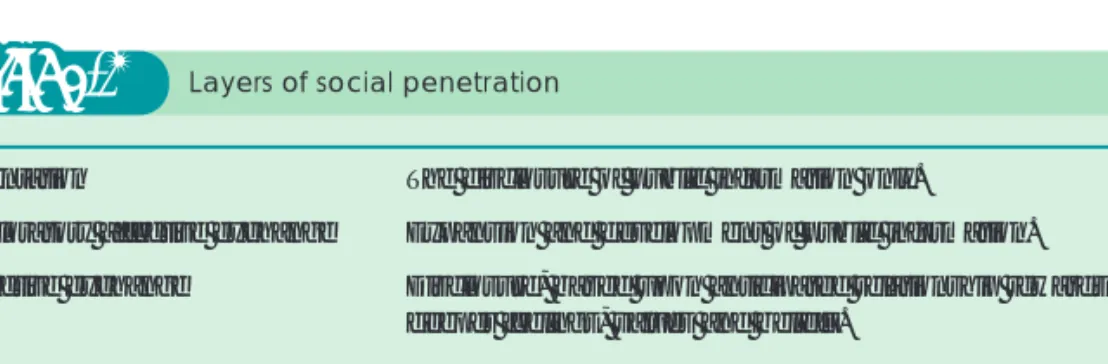
An interesting aspect of relational communication theory is social penetration (Taylor and Altman, 1987). Through the disclosure of increasing amounts of information about them- selves, partners in a relationship (personal or organisational) develop levels of intimacy, which serve to build interpersonal (interorganisational?) relationships. The relationship moves for- ward as partners reveal successive layers of information about each other and, as a greater amount or breadth of information is shared, confidence grows. These levels can be seen to con- sist of orientation, exploratory affective exchange, affective exchange and stable exchange; see Table 2.4. These layers are not uncovered in a logical, orderly sequence. It is likely that part- ners will return to previous levels, test the outcomes and rewards and reconsider their pos- itions as the relationships unfolds through time. This suggests that social penetration theory may lie at the foundation of the development of trust, commitment and relational exchanges between organisations.
Orientation The disclosure of public information