Herpetologists' League
A Checklist of the Herpetofauna of the Palau Islands (Republic of Belau), Oceania Author(s): Ronald I. Crombie and Gregory K. Pregill
Source: Herpetological Monographs, Vol. 13 (1999), pp. 29-80 Published by: Herpetologists' League
Stable URL: http://www.jstor.org/stable/1467060 Accessed: 05/10/2008 09:49
Your use of the JSTOR archive indicates your acceptance of JSTOR's Terms and Conditions of Use, available at
http://www.jstor.org/page/info/about/policies/terms.jsp. JSTOR's Terms and Conditions of Use provides, in part, that unless you have obtained prior permission, you may not download an entire issue of a journal or multiple copies of articles, and you may use content in the JSTOR archive only for your personal, non-commercial use.
Please contact the publisher regarding any further use of this work. Publisher contact information may be obtained at http://www.jstor.org/action/showPublisher?publisherCode=herpetologists.
Each copy of any part of a JSTOR transmission must contain the same copyright notice that appears on the screen or printed page of such transmission.
JSTOR is a not-for-profit organization founded in 1995 to build trusted digital archives for scholarship. We work with the scholarly community to preserve their work and the materials they rely upon, and to build a common research platform that promotes the discovery and use of these resources. For more information about JSTOR, please contact [email protected].
Herpetologists' League is collaborating with JSTOR to digitize, preserve and extend access to Herpetological Monographs.
http://www.jstor.org
A CHECKLIST OF THE HERPETOFAUNA OF THE PALAU ISLANDS (REPUBLIC OF BELAU), OCEANIA
RONALD I. CROMBIE1 AND GREGORY K. PREGILL2
'Division of Amphibians and Reptiles, United States National Museum, Smithsonian Institution, Washington D.C. 20560
2Department of Biology, University of San Diego, San Diego, CA 92110-2492
ABSTRACT: The Palau islands of western Micronesia comprise one of the most physiographically varied archipelagos in the Pacific. There are some 350 islands of volcanic and coralline origin that range from Babeldaob at 333 km2 (about 80% of Palau's total land area) to others, unnamed, that are less than one hectare. A barrier reef encircles most of the archipelago creating a lagoon up to 20 km wide. The majority of the islands are uninhabited, accessible with difficulty only by boat at high tide, and are densely vegetated over steep, rocky terrain. Because of their proximity to the Philippines, New Guinea, the Moluccas, and Borneo, the Palau islands host a significantly richer herpetofauna with more unique taxa than is found on other Pacific islands to the east. As with most other Pacific island groups, however, the herpetofauna has been poorly documented. Since the earliest investigations that began in the nineteen century, Palau's herpetofauna has been uncovered piecemeal. No sustained field effort had been conducted until we began a systematic survey of the islands in 1992. Since then we have collected in Palau every month of the year at least once.
This checklist of 46 species of reptiles and amphibians includes almost twice as many taxa as were known from Palau (Owen, 1977) at the beginning of our study. Among these are new species or Palauan records of Gehyra, Hemiphyllodactylus, Lepidodactylus, Nactus, Perochirus, Emoia and Sphenomorphus. Because of the difficulties in surveying so many islands we believe that additional taxa and distributional records await discovery; even the smallest island in Palau can turn up sur- prises. Nonetheless, it is appropriate to consolidate what is now known about this intriguing fauna and environment. We provide an historical summary of previous collecting efforts, an overview of the islands' geology and habitats, and for each species account we include distributional information, taxonomic and systematic discussion, natural history observations, and a comprehensive bibliography.
Key words: Micronesia, Palau Islands, Amphibians, Reptiles
PERHAPS THE MOST zoogeographically significant yet poorly known archipelago in the Oceanic realm is the Palau Island group (now the independent Republic of Belau) in western Micronesia. The earliest herpetological investigations of this area by the Germans in the mid-1800's revealed new taxa in genera (Hypsilurus, Spheno- morphus, and others) otherwise unknown from the oceanic islands of the Pacific Plate, and the few subsequent field studies continued to yield additional novelties. Al- though these early collections suggested a diverse fauna with unexpectedly high lev- els of endemism, they were insufficient for addressing the numerous systematic and zoogeographic problems of this region.
Because many other islands in the Pa- cific have relatively depauperate extant vertebrate faunas but much larger lists of recently extinct taxa (e.g., Steadman, 1995), Palau provides an ideal opportunity to see if this pattern also obtains on an
island group with a more diverse extant fauna that is closer to potential source ar- eas. Therefore, in 1992 we began extensive surveys of the extant and extinct verte- brates of Palau. Although we have accu- mulated significant collections and data in our field work to date, each additional trip yields important (and often surprising) new specimens and distributional infor- mation. Nevertheless, given the consider- able recent increase of interest in Micro- nesian biology and conservation (e.g., Rodda et al., 1991), we feel it is appropri- ate to present our working list.
Modern summaries of the Palauan her- petofauna (e.g., Cassell et al., 1992; Oto- bed and Maiava, 1994) have had to rely on the incomplete and taxonomically outdat- ed list of Owen (1977). Despite the ad- mitted shortcomings of the data, our list reflects current herpetological taxonomy (to August 1998) and it contains nearly twice as many species as listed by Owen
29
30 HERPETOLOGICAL MONOGRAPHS [No. 13
(1977), with many systematic problems duly noted. It is our intention to resolve some of these problems with future field work and collections. The strong zoogeo- graphic affinities between Palau and the Papuan region, and additional influences from the Philippines, Borneo, and Ocean- ia, further complicate systematic studies.
This is especially so with respect to the logistics of obtaining pertinent compara- tive material from such a broad area that includes several political entities not known for expansive cooperation with sci- entific endeavours. We hope that our ac- cumulated specimens and data-base for Palau are such that future studies involving this area will be facilitated.
The taxonomic aspect of our list is com- prehensive, but we particularly want to stress the incomplete nature of the distri- butional data we present. Although we list all island records currently available for each species, the results of earlier surveys plus our own field work have sampled only a small fraction of the multitude of islands in Palau, with varying degrees of rigor. The logistics of even briefly sampling islands spread across nearly six degrees of latitude are daunting and expensive; the survey work itself is grueling and often danger- ous. The Rock Islands in particular are of- ten very difficult to land on, much less to survey adequately for cryptic and elusive amphibians and reptiles. Even the smallest and seemingly insignificant islands should not be ignored, as demonstrated by the re- cent discoveries of Lepidodactylus pauro- lepis (Ota et al., 1995), Emoia impar, Lep- idodactylus sp. nov., and Nactus sp. (this paper). Our distributional data are intend- ed to convey only the most general pat- terns, many of which will undoubtedly be modified with additional field work.
We but hope that the data presented here are not used to generate or justify counterproductive "conservation" efforts that will hinder or prevent the much-need- ed continuing data collection that is nec- essary to make sense of the Palauan her- petofauna. In short, we emphasize that these data are presented for general use, with the major caveat that they are not the
"last word" in Palauan herpetology. We
think that the following list adequately documents that the discovery phase is far from over.
GEOGRAPHY AND ECOLOGY
Spelling of Place Names
The inconsistent spelling of Palauan place names is attributable to idiosyncratic useage by four separate foreign adminis- trations over the past one hundred years.
These administrators made a limited at- tempt at using native names, and often misinterpreted their meaning when they did. Moreover, none of these languages (Spanish, German, Japanese, English) is adequate to fully capture the phonics of the Palauan tongue, such as the clipped nasal-quality ng. Even within Palau it is common to see the same name spelled two or three different ways. There are, for ex- ample, some 15 spellings for Palau itself, with the most common alternate being
"Belau". The population center, both the island and the town, called "Koror" by practically everybody who lives there is spelled "Oreor" on many maps. For all place names we follow the spelling found on the USGS Topographic Maps of the Pa- lau Islands (1983-1984), which are the most detailed available and are used by most governmental agencies. We note, however, that some of the spellings on these topographic sheets are at odds with local or casual useage, or are not followed in older (e.g., Anon., 1957; Brigham, 1900;
Bryan, 1971) or recent (Karolle, 1993;
Motteler, 1986) literature. Finally, most of Palau's smaller islands are unnamed.
The following is a list of our island local- ities and their common alternate spellings.
Coordinates are for the center of the island/
group (Lat. 0.000 N, Long. 000.000 E)
Babeldaob (Babelthuap, Babeldaop)
Bablomekang Beliliou (Peleliu) Chemoi Island Group Euidelchol (Ashakasengu) loulomekang
Kmekumer Islands (island 46 from Wiles and Conry, 1990) Malakal (Ngemelachel) Mecherchar (Eil Malk)
7.5 134.5
7.14 7.0 7.19 7.19 7.134 7.19 7.33 7.15
134.316 134.25 134.38 134.36 134.304 134.24 134.45 134.36
[No. 13
30 HERPETOLOGICAL MONOGRAPHS
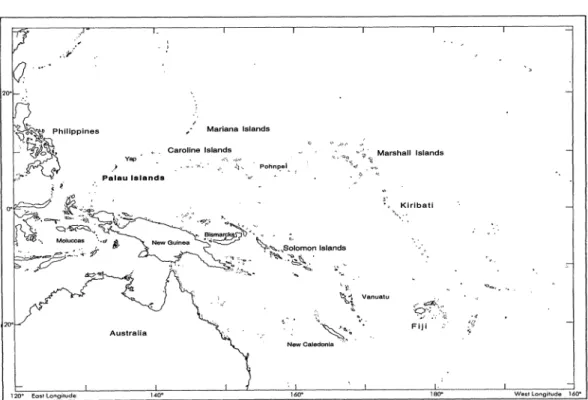
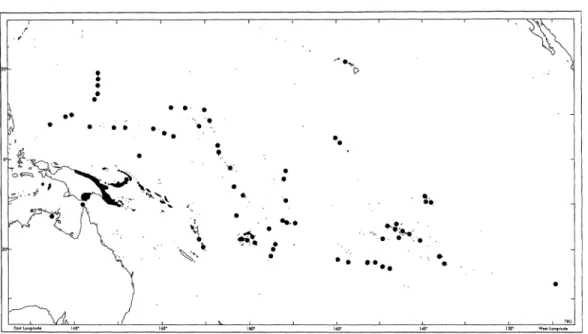
FIG. 1. The islands of Micronesia and the southwest Pacific.
Ngcheangel Atoll (Kayan- gel, Ngerebelas, Nger- iungs, Orak)
Ngeanges (Necos) Ngeaur (Angaur) Ngebad (Ngabad) Ngebedangel (Ngoba-
sangl)
Ngedbus (Ngesebus) Ngelsibel
Ngemlis Islands (Baile- chesengel, Iilblau, Ngemlis)
Ngercheu (Ngergoi;
Carp)
Ngerdis (Kobasang) Ngerduais (Nardueis) Ngerechong
Ngerechur
Ngerekebesang (Araka- besan)
Ngermalk
Ngeruchubtang (Ngeru- gelbtang)
Ngerukeuid Islands (Sev- enty Islands; islands 4, 12, 13, 16, 24, 34 of Wiles and Conry, 1990)
Ngeruktabel (Urukthapel) Ngerur
Ngesbokel (Gechbokul) Ngetmeduch
8.07
7.206 6.9 7.019 7.27 7.06 7.187 7.12
7.09 7.35 7.355 7.11 7.750 7.35 7.335 7.083 7.17
7.25 7.365 7.508 7.357
134.7
134.370 134.15 134.270 134.33 134.26 134.344 134.25
134.28 134.439 134.582 134.36 134.620 1 34A A.4
Oreor (Koror) Pkulaklim (Orrak) Toiracholodochoel Uchulameradel Uchulangas
Ulebsechel (Auluptagel) Ulong (Aulong) Island
Group
Southwest Islands:
Fana Helen Merir
Pulo Anna (Palo Anna) Sonsorol
Tobi
7.34 7.347 7.339 7.507 7.340 7.31 7.28
5.36 3.0 4.29 4.66 5.31 3.01
Physical Description
134.49 134.565 134.455 134.491 134.460 134.47 134.29
132.22 131.8 132.31 132.95 132.22 131.18
...t.
""
The thousands of islands and atolls in
134.459 Micronesia have a total land area of only
134.327 about 3,227 km2, roughly 0.03% of the sur- face area between 0?-20? N latitude and 135?-170? E longitude. The four major ar- chipelagos of Micronesia, from east to west, are the Gilberts (Kiribati), Marshalls, Carolines, and Marianas (Fig. 1). Palau is
134. 429 the westernmost group of the Caroline Is-
134.488 lands, centered near 7?20' N latitude and
134.496 134? E longitude. The island of Mindanao
32 HERPETOLOGICAl, MONOGRAPHS [Vo 12
in the southern Philippines is about 800 km west of Palau, whereas Irian Jaya and the Moluccas are, respectively, to the south and southwest about that same dis- tance; Borneo is an additional 700 km. All of the Gilberts and Marshalls are coral atolls or low islands. The Carolines include both volcanic and coralline islands. Car- tographically, Palau is included in the Car- oline Islands, but the western Carolines (Palau and Yap), as well as the Marianas, are exposed peaks of undersea ridges stretching between Japan and New Guinea and are not located on the Pacific Plate.
The Palau islands originated on the now dormant southern section of the Palau- Kyushu Ridge, which formed by about 43 million years ago (mya) in a complex series of rifting and boundary shifts of the Pacific Plate margin during formation of the Phi- lippine Basin (Kroenke, 1984; Seno and Maruyama, 1984). Volcanism along the Pa- lau-Kyushu Ridge ceased in the earliest Miocene about 29 mya. Subsequently, the Palau-Kyushu ridge fractured and the eastern segment ultimately developed into the West Mariana Ridge. Back-arc spread- ing between the the two submerged ridges (Palau-Kyushu and West Mariana) wid- ened the Philippine basin to the east, and for the last 17 mya the basin has been moving northwest with respect to Eurasia.
Thus, Palau, Yap and the Mariana Islands rest on the eastern margin of the Philip- pine Plate where it contacts the western edge of the Pacific Plate. The Palau, Yap and Mariana Trenches that mark the sub- duction zone at plate contact are some of the deepest waters on earth. When the is- lands that are now Palau first emerged above sea level is uncertain. The oldest or- ganic limestones are early Miocene (ca. 25 mya), which suggests that the volcanics were emergent sometime before that, per- haps by late Oligocene (ca. 30 mya).
The eastern Caroline Islands, by con- trast, are comparatively young and origi- nated on the Pacific Plate. From Kosrae in the east to Woleai (Ulithi Atoll) in the west, the eastern Carolines stretch across the Pacific for 2100 km. The Truk (Chuuk) Islands are estimated to have originated at ca. 12-14 mya, whereas Kosrae is much
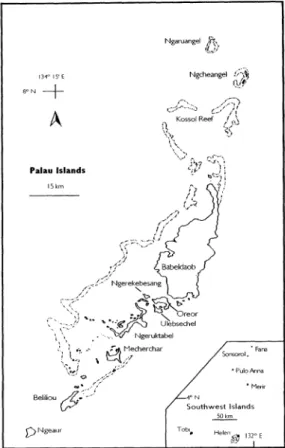
FIG. 2.-The main islands of the Palau archipelago.
younger at ca. 4 mya (Springer, 1982). The Carolines are being carried westward to- ward the Philippine Plate margin.
The Republic of Belau includes the Pa- lau Islands proper and a cluster of remote outliers 320 to 480 km to the southwest (Fig. 2). Each of the latter (Tobi, Sonsorol, Fana, Merir, Pulo Anna and Helen) are separated from one another by from 130 to 280 km of open ocean. Few people out- side of Palau are aware of them, and no one in the west has ever bothered to give them a collective name other than the Southwest Islands. The Palau islands themselves are arranged in a 160 km curv- ing chain from Ngeruangel reef in the north to Ngeaur Island in the southwest.
The total land area (including mangrove) is approximately 415 km2. Most of Palau's 350 islands are enclosed in a reef: barrier to the west and fringing on the east. Only Ngeaur in the southwest and Ngcheangel Atoll and Ngeruangel reef in the north are
[No. 13
32 HFERPETOLTOGICAL MONOGRAPHS
Babeldaob 5 km
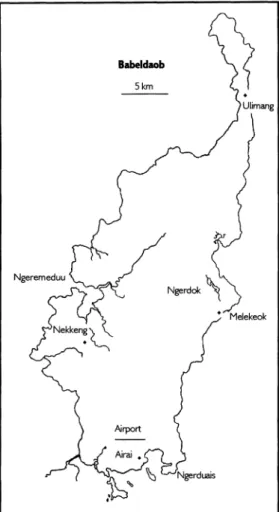
FIG. 3. The island of Babeldaob, Republic of Palau.
outside the lagoon. The lagoon is approx- imately 20 km at its widest, covers about 1450 km2, and varies in depth from barely a meter to over 20 m in a few places. Out- side the reef ocean depths drop hundreds of meters almost immediately.
Babeldaob (Fig. 3) is the largest island at 333 km2, accounting for about 80% of Palau's total land area. The next largest is- lands are Ngeruktabel (20.2 km2), Beliliou (12.4 km2), Ngeaur (8.3 km2), Mecherchar (8 km2), Oreor (7.5 kin2), Ulebsechel (4.3 km2) and Ngerekebesang (2.3 km2). Most of the other islands are less than 1 km2 and many are no more than a few hectares.
About two-thirds of Palau's 15,500 inhab- itants live on Oreor, and practically all of the other residents live in the vicinity, ei- ther on southern Babeldaob, Ngerekebes-
ang or Malakal, each of which is connected to Oreor by a causeway.
The islands are of four geological types:
1) volcanic, 2) high limestone, 3) low lime- stone, reef or atoll, or 4) a combination of volcanics and limestone. The Military Ge- ology of Palau compiled by the U.S. Army of Corps of Engineers (1956) remains the most thorough description of Palau's geo- logical features. The following summary is based on that compendium. Volcanic is- lands include Babeldaob, western Oreor, Ngerekebesang, Malakal, and numerous tiny islets in the northern end of the la- goon. Contours of the larger volcanic is- lands are generally rolling hills punctuated by steep irregular outcrops or other prom- inent landmarks. Palau's highest point, 242 m Ngerchelchuus in northwest Babeldaob, is one such feature. The largest evident volcanic center is Ngeremeduu Bay on the west coast of Babeldaob. The original cone collapsed leaving an eroded caldera which is now the bay. Poor exposures elsewhere on the volcanic islands obscure most for- mer eruption centers, a possible exception being the volcanic breccias and the incli- nations of pyroclastic rock on Ngerekebes- ang. Coastlines of the volcanic islands are irregular, sometimes steep, and often form small bays. Approximately 125 km of Ba- beldaob's 157 km coastline is bound by mangrove. The extent of calcareous beach sand on the volcanic islands is very limited, and mainly confined to Babeldaob's north- east and east coast. Each of the larger vol- canic islands is dissected by streams, but the only perennial flows are on Babeldaob.
On Oreor and Ngerekebesang the radial drainages slow to a trickle when rain ceas- es for more than a week or so. The major streams and rivers of Babeldaob are more or less aligned with the north-south axis of the island, but are linked irregularly with connecting tributaries. The largest river, Ngermeskang, flows for about 16 km into Ngeremeduu Bay from the northeast. The largest body of standing freshwater is Lake Ngerdok (approximately 30 hectares) lo- cated about 2 km from the east-central coast of Babeldaob.
The high limestone islands number more then 300, but comprise only about
34 HERPETOLOGICAL MONOGRAPHS [No.~~~~~~~~~~ 13
oNgerur Ngerekebesang O-or J
Ngerchaol
tu? n Butottoribo Ul. secU
Ngebedangel ,
Nler uce
0pnf Ngeruktabel
Euidelchol _, 0 Ngerukeuid lids
Mercherchar Bablomekang I
% Ngemihs lids
55*. *
V
*
Ngercheu Ngerechong
Rock Islands - Palau
t-; Ngedbus 5km
/ l. Ngebad
Beliliou
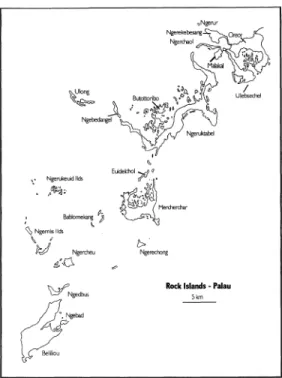
FIG. 4.-The Rock Islands of the Palau lagoon.
10% of Palau's land area. They include practically all of the islands in the lagoon.
Those in the central and southern part of the lagoon are referred to locally as the Rock Islands (Fig. 4). Ngeruktabel and Mecherchar are the largest. The Rock Is- lands are formed in the Palau Limestone which consists of light-colored, poorly bedded, porous to very dense raised reef and lagoonal coralline deposits laid down in shallow warm water. The age of the Pa- lau Limestone ranges from Miocene in the northern part of the Lagoon and parts of Beliliou (Bloody Nose Ridge) to Pleisto- cene elsewhere. The larger islands are characterized by steep, arcuate ridges flanked by descending skirts of parallel and/or tangential ridges that once marked exposed, successive reef fronts. The small- er rock islands probably derived from scat- tered, irregular deposits in the lagoon. The limestone islands were raised to their pres- ent extent by asymmetrical upwarping fol- lowing the Neogene rifting and faulting that was associated with the tectonic and volcanic activities in the area. Uplift to as much as 200 m elevation occurs on an axis
from southwestern Babeldaob to Beliliou.
West of this line there is slight westward tilting. Although there are occasional coves and narrow beaches, the shorelines of the limestone islands are often nearly vertical, and almost everywhere are undercut by solution notches forming horizontal over- hangs 1-5 m deep. Undercutting of the smaller islands gives them the appearance of mushrooms. Ashore, solution features of sharp, jagged pinnacles, pits and rubble make for exceedingly treacherous footing.
Springs occur on some of the high lime- stone islands but there is no surface drain- age. Caves, sinks, and other subsurface so- lution features are abundant in this highly karstified terrain. On several of the larger Rock Islands numerous interior depres- sions extend below sea level to form saline lakes.
The reef islands and atolls of Palau re- sult from minor uplift of reef rocks and wave building accumulations. The largest and best developed of Palau's atolls is Ngcheangel (Kayangel), located about 3 km beyond the north end of the Palau reef. It is more or less oval, about 7 X 3.5 km, and embraces four small islands (beach deposits) on its east side.
Several of Palau's islands are a combi- nation of the preceding geological types.
High limestone ridges are present on the south end of Babeldaob. In a zone south and southwest of Babeldaob volcanic and high limestone islands occur adjacently or combined. The two volcanic islands, Nger- ekebesang and Malakal, are separated by the high limestone island of Ngerchaol.
Western Oreor is underlain by volcanics, whereas the southeast part is a high lime- stone ridge. The two larger islands at the southwest end of the Palau group, Beliliou and Ngeaur, consist of high limestone ridg- es, low platforms, and beach deposits.
Today, the Palau islands exist along a continuum of coastal morphologies deter- mined by eustatic changes in sea level dur- ing the Pleistocene. During the last glacial maximum (18,000 years ago), when sea levels may have depressed as much as 120 m, the entire lagoon and most of the ar- chipelago's 350 islands would have formed a single island of approximately 2250 km2,
34 HERPETOLOGICAL MONOGRAPHS [No. 13
more than five times the present area of emergent land. During periods of higher- than-present sea level, for instance in the mid-Holocene (e.g., Allen, 1997), Palau was more fragmented than it is today. The effect of these oscillations on the terres- trial biota was undoubtedly considerable.
Indeed, the present distributions of Pacific island amphibians and reptiles in general must be considered in view of these sea level fluctuations (e.g., Gibbons, 1985;
Gibbons and Clunie, 1986; see also Alli- son, 1996).
Habitat and Land Vertebrates Palau's climate is tropical and rainy.
Mean annual temperature is 27.2 C (81?F) and mean daily temperature varies no more than 1 degree throughout the year.
On average the islands receive 355 cm (140") annual rainfall with the wetter months (July and August) receiving 25-50 cm, the drier (February to April) 15-20 cm. A survey of vegetation and timber re- sources of Palau was drafted by the U.S.
Forest Service (Cole et al., 1987; MacLean et al., 1988), and some of the vascular plants were listed by Fosberg et al. (1980).
A soil survey of Palau by Smith (1983) in- cludes 1:10,000 scale aerial photo maps of Babeldaob, Oreor and the causeway is- lands, Beleliou, and Ngeaur. Cole et al.
(1987) estimated that three-fourths of Ba- beldaob and the other volcanic islands are covered in native upland forest, in which Calophyllum, Ficus, Elaeocarpus and Campnosperma are common genera. In the past few decades native upland forest has been greatly reduced, and most of the remaining area, especially on Babeldaob, is covered by coarse grasses burned an- nually, along with scattered pandanus and ferns. Mangrove (especially Rhizophora sp.) accounts for about 11% of Palau's veg- etation cover, practically all of which is found around Babeldaob, Oreor, Malakal, Ngerekebesang, and Beleliou. The luxu- rient limestone forests of the Rock Islands form impressive, dense stands with cano- pies reaching 20 m or more on the larger islands. Freshwater swamps and marshes in Palau comprise about 5% of the area.
Cultivated lands comprise about 3-4% and
yield such crops as bananas, cassava, co- conut, papaya, mango, pineapple, and be- tel nut. Urban areas occupy about 1%
(Otobed and Maiava, 1994). Our impres- sions would put the percentage of agricul- tural and urban land considerably higher.
Besides amphibians and reptiles, the vertebrates of Palau include a fair diversity of freshwater fishes and birds, but a de- pauperate mammal fauna. The resident freshwater and land birds consist of wide- spread oceanic species, species confined to Micronesia, species found elsewhere only in Indonesia or the Philippines, endemic species, and a few introductions. Palau's modern avifauna has received much more attention than its herpetofauna (Baker, 1951; Engbring, 1983, 1988; Engbring and Pratt, 1985; Pratt et al., 1980), although it would be surprising if these islands have not experienced extinctions of native bird species similar to what has been discov- ered elsewhere in Oceania (Steadman, 1995), including the nearby Marianas (Steadman, 1999). The endemic land mammals known from Palau are the Palau Sheath-tailed Bat, Emballonura semicau- data palauensis, the "Marianas" Fruit Bat, Pteropus marianus pelewensis, and the larger Palau Fruit Bat Pteropus pilosus.
The Palau Fruit Bat has not been seen since the 19th century and is presumed to be extinct (Wiles et al., 1997). Introduced taxa include rodents Rattus spp. and Mus musculus (see below), as well as the Asiatic musk shrew Suncus murinus, confined to Ngeaur (see Ruedi et al., 1996 for Suncus zoogeography). The introduced Crab-eat- ing Macaque, Macaca fascicularis, is most common on Ngeaur, and a few individuals also occur on Babeldaob.
A review of Palau's freshwater fishes was compiled by Bright and June (1981), but very few of Babeldaob's rivers and streams (particularly in the eastern sectors) have been sampled, much less properly sur- veyed. Undoubtedly endemic, unde- scribed species await discovery (e.g., Par- enti and Maciolek, 1993).
Human impact is most obvious in and around Palau's main habitation centers (Oreor, Ngerekebesang, Malakal, Airai) and surrounding settlements and planta-
26 HERPETOLOGICAL MONOGRAPHS [No. 13
tions. Much of Babeldaob has been defor- ested, especially the southern half. Al- though Palau's present human population is relatively small (about 15,500), estimates of around 40,000 native Palauans were be- lieved to be present at the time of first Western contact (Johannes, 1981; Osbor- ne, 1966). There is some dispute of that figure, which is based on accounts of the early traders to the islands (Johannes, 1981). Nonetheless, ancient agricultural terraces and other archaeological indica- tors suggest that the population was sig- nificantly greater than it is today (Craib, 1983; Osborne, 1966). During this century population highs were in the early 1940's when 25,000 Japanese residents and native Palauans lived in the islands (U.S. Army, 1956; see also Bailey, 1991).
WWII brought substantial devastation to parts of Palau. Beliliou, the site of one of the bloodiest battles in the Pacific (Hough, 1990; Ross, 1991), was burned over most of its area. The island has gen- erated dense second growth forest over the past 50 years. Ngeaur, Oreor, and southern Babeldaob were also heavily bombed by American forces, but of these only Ngeaur was invaded. Despite the im- pact of human occupation and WWII, Pa- lau still claims some pristine habitat, or that which is but moderately disturbed.
The Rock Islands are practically all pri- mary forest due to their steep slopes and brutal topography (Johnson, 1972). Yet even there one of the most odious mea- sures of human disturbance is conspicu- ous-introduced Black Rats (Rattus rat- tus). Our campsite on uninhabited Ulong was overrun by hundreds of rats one night in January 1995. During the same month in 1993 we trapped along a 200 m forest transect in Ngaraard State (northern Ba- beldaob) and had a capture rate of about 73% (19 of 26 traps) in one hour. Rats can also be seen commonly in Koror town by day. The effect of R. rattus as a predator on Palau's herpetofauna and birds has not been documented, but we suspect that it is substantial.
Rapidly growing economic interests in Palau probably will adversely affect the na- tive fauna in the next few decades (Anon.,
1998; Cassell et al., 1992). The human population is likely to double in 5-10 years (Maiva and BNRD, 1994), and at least one major road is under construction to the north end of Babeldaob where none pres- ently exists. Erosion and siltation of some Babeldaob water courses are already evi- dent. Tourism is burgeoning, and numer- ous hotels are planned or being built in Oreor, southern and eastern Babeldaob, Malakal, and on the Rock Islands. The government of Palau has proudly and jus- tifiably promoted its marine resources as a tourist attraction. We hope that this does not come to the detriment of its terrestrial ecosystems.
HISTORICAL SUMMARY
The Spaniards were the first Europeans to land on Palau, claiming the islands for the King of Spain in 1710. Their presence was uneventful, particularly biologically except perhaps for the first introduction of rats. Several European ships were wrecked in the treacherous waters around Palau in the 18th and 19th Century and stories of the interactions between the marooned sailors and Palauans have been amply chronicled (Keate, 1802, 1808; Martin, 1980). Not surprising, the early Pacific ex- ploratory expeditions usually avoided Pa- lauan waters in favor of the better harbors on Guam, Yap, and Kosrae, so their natu- ralists and collectors had little or no op- portunity to sample the Palauan fauna.
The French ships Astrolabe and Zelee briefly contacted the residents of Beliliou in January 1838 (Rosenman, 1992:162), but we have found no herpetological spec- imens that were collected at that time. The French did, however, make the most sig- nificant early contribution to Micronesian herpetology during the voyage of the Co- quille, 1822-1825. Many of the most com- mon and widespread Pacific lizards were described from the island of Oualan (now Kosrae in the eastern Carolines), four of which also occur in Palau (Gehyra ocean- ica, Emoia atrocostata, Lamprolepis sma- ragdina, Lipinia noctua).
Lessons's (1830) zoological report of the Coquil expedition generated confusion on several levels, however. Brygoo (1986)
[No. 13
36 HERPETOLOGICAL MONOGRAPHS
pointed out that the Atlas of plates from the Expedition appeared in 1826 but the text not until 1830, so Lesson's taxa must date from the Atlas. The types of several of the species are no longer extant (Bry- goo, 1986) and Barbour (1911) suggested that Lesson's type locality (Oualan, now Kosrae in the eastern Carolines) was sus- pect. Loveridge (1948) disagreed and crit- icized Barbour's interpretation but we feel that Barbour's suspicion was justified for at least some of the taxa. The situation is complex and a lengthy discussion is not ap- propriate here since it has no direct impact on Palau, although we hope to provide clarification in a future paper.
Serious herpetological research in Palau began only after the Germans suceeded Spain in 1899. Unlike the Spanish, Ger- man merchants and diplomats were actu- ally resident in Palau. Particularly notable among them was Carl Semper, who wrote an interesting book on his Palau experi- ences (Semper, 1925, English translation Semper and Craig, 1982). Semper was an experienced field naturalist who had made important collections in the Philippines and elsewhere in Asia. His Palau herpe- tological material was studied by Wilhelm Peters in Berlin, who described many new taxa (Peters, 1867a,b, 1874, 1877, 1879).
Most of the Berlin specimens have no lo- cality data other than the island group, var- iously rendered as "Pelew", "Pelew-In- seln" or "Palaos". Additional Palau material (mostly from Angau = Ngeaur) in the Senckenberg Museum, Frankfurt, was reported by Sternfeld (1914, 1920), who (1920:385) mentioned that, "another new lizard from Palau" was present in the Senckenberg collection and that it would
"also be described here." However, no new Palauan lizards were described in the 1920 paper or any subsequent publications by Sternfeld before he was executed by the Nazis in 1943, nor are there type spec- imens of any Palauan lizards in the Senck- enberg collection (Mertens, 1967). The material of this new species alluded to by Sternfeld was not located during a visit to Senckenberg by RIC in May of 1986, and we are unsure which of the still unde-
scribed Palauan lizards Sternfeld referred to.
The Japanese period (1914-1944) pro- duced relatively little herpetological re- search, as summarized in Utinomi's Biblio- graphica Micronesica (Fisher, 1947). No new herpetological taxa were described, and most of the information was published in obscure, generally unavailable journals.
Messel and King (1991), in summarizing the crocodilian literature, mentioned two significant papers by Motoda (1937, 1938).
However, we have been unable to locate any extant herpetological collections that were made by the Japanese during their 30-year occupation of Palau.
U.S. influence in Palauan herpetology began with personnel of the Naval Medi- cal Research Unit (NAMRU II), who were active in Palau soon after the islands were secured from the Japanese. Biological ma- terial was collected from November 1944 until about September 1945 (Baker, 1951;
USNM catalogue records). Although col- lecting efforts centered on Beliliou and offshore islands, the team also obtained herpetological material from Ngeaur, Ngercheu, and Ngcheangel Atoll. The NAMRU collections provided the first meaningful distributional data (island and specific localities) for Palau amphibians and reptiles. Although most of the NAM- RU material was deposited in USNM, one member of the team, William Lewellen, contributed most of his Ngeaur specimens (CM 29085-29103, collected between 19 November 1944 and 13 January 1945) to the Carnegie Museum.
Until recently, the most extensive and important Palauan herpetological collec- tion was made by H. Adair Fehlmann dur- ing his ichthyological surveys in the mid 1950's (Fehlmann, 1960). Most of the fish data remain unpublished but his discovery of the remarkable endemic skink Lipinia leptosoma appeared early (Brown and Fehlmann, 1958). Fehlmann's herpetolog- ical specimens were deposited in the Stan- ford University collection (now housed at CAS) and they represent important base- line data on distributions before extensive development on Palau.
The earliest natural history observations
38 HERPETOLOGICAL MONOGRAPHS [No. 13
on the endemic Palauan frog (Platymantis pelewensis) was by a Palauan, Kenji Atoda (1950). Palauan citizens and residents have continued to contribute meaningfully to herpetology ever since. Although he was severely criticized by Messel and King (1991) for encouraging exploitation and even extermination of crocodiles in Palau, Robert Owen was the entomologist and Chief Conservation Officer of Palau for many years, and was unfailingly helpful to visiting researchers. He provided data and specimens to many individuals (including us), and meaningfully aided projects in- volving the Palauan flora and fauna during his tenure there. Owen's successors, par- ticularly Demei Otobed and Kammen (Taktai) Chin, have continued this fine tra- dition of cooperation and have made sig- nificant contributions of their own (e.g., Cassell et al., 1992; Fosberg et al., 1980;
Otobed and Maiava, 1994).
ZOOGEOGRAPHY
Although it is premature to discuss Pa- lauan zoogeography in any detail before the relationships of many species are un- derstood, summary papers on SW Pacific biogeography continue to appear (Allison, 1996; Brown, 1997; Holloway, 1997 among others), some of which are hampered by the lack of recent data on Palau. A brief summary is justified. We are confident that analysis of the data in hand will confirm that Palau is an important zoogeographic crossroads, with faunal influences from all four major source areas. Our preliminary data do not confirm any species with un- equivocal Bornean relationships, but the Oceanic (Gehyra oceanica, Lepidodactylus sp. nov., Perochirus sp.) and Philippine (Lepidodactylus moestus, Mabuya sp.) af- finities are more certain. Without ques- tion, the greatest influence on the Palauan herpetofauna is the Greater Papuan region (New Guinea + the Solomons and Moluc- cas, East Wallacea of Brown, 1997 and others). At least 13 Palauan species are de- rivatives of this area, and several of the 13 or 14 others of uncertain origin will likely be added to that total with additional re- search.
Critically missing from the puzzle are
sufficient data from the Southwest Islands.
This chain of islands provides a potential stepping stone pathway between Palau proper and the Greater Papuan region, particularly during periods of lower sea level. The few extant herpetological rec- ords from the islands provide many sur- prises, as much for the species that have not been collected as those that have.
Donaldson's (1996) discussion on the strik- ing diversity and complexity of relation- ships in the fish fauna convinces us that the terrestrial fauna will be equally signif- icant.
SPECIES ACCOUNTS
Forty-six species of amphibians and rep- tiles (39 terrestrial and 7 marine) are treat- ed in the following section (Table 1).
Three species are twentieth-century intro- ductions, eight species are certain endem- ics, and ten others are probably endemic.
The latter include several species repre- sented by only one or a few specimens and their status cannot yet be determined.
Other species are known under existing names but for reasons discussed we be- lieve are distinct species. For each species, the localities listed under Distribution are those islands in Palau where we have col- lected voucher specimens and/or verified existing museum records. Almost all of the island records derive from, or are verified by, our field work through 1998. Appendix I is a checklist of species by island.
AMPHIBIA: ANURA Bufonidae
Bufo marinus (Linnaeus, 1758) This large toad is very widely distribut- ed, both in its natural range of the Neo- tropics (Zug and Zug, 1979) and in many other parts of the world via introduction (Easteal, 1981; Honegger, 1970). Details of exactly when and whence Bufo marinus was first introduced into Palau are un- known (Easteal, 1981:102) but the first museum specimens were collected in the early 1950's. Although the NAMRU 2 teams did not collect any Bufo during their stay on Beliliou in 1945, it is likely that toads were introduced during U.S. military activity in Palau in the post-war years, pos-
38 HERPETOLOGICAL MONOGRAPHS [No. 13
TABLE 1.-Amphibians and reptiles of the Palau Is- lands. Those marked by an asterisk (*) have not been
reported previously.
FROGS Bufonidae
Bufo marinus (introduced) Ranidae
Platymantis pelewensis (endemic) LIZARDS
Agamidae
Hypsilurus godeffroyi (status uncertain) Gekkonidae
Gehyra sp.*
Gehyra brevipalmata (endemic) Gehyra mutilata
Gehyra oceanica Gekko sp. (endemic)*
Hemidactylus frenatus
Hemiphyllodactylus cf. H. typus*
Lepidodactylus sp. nov.*
Lepidodactylus lugubris Lepidodactylus moestus
Lepidodactylus paurolepis (endemic) Nactus sp. (endemic)*
Nactus cf. N. pelagicus*
Perochirus sp.*
Polychrotidae
Anolis carolinensis (introduced) Scincidae
Carlia cf. C. fusca (introduced)*
Cryptoblepharus sp. (probable endemic)*
Emoia atrocostata Emoia caeruleocauda Emoia impar*
Emoia jakati
Eugongylus sp. (endemic) Lamprolepis smaragdina Lipinia leptosoma (endemic) Lipinia cf. L. noctua*
Mabuya sp. (endemic)
Sphenomorphus sp. nov. (endemic)*
Sphenomorphus scutatus (endemic) Varanidae
Varanus cf. V indicus SNAKES
Boidae
Candoia cf. C. carinata Colubridae
Cerberus rynchops Dendrelaphis sp.
Hydrophiidae Pelamis platurus Laticaudidae
Laticauda colubrina Typhlopidae
Ramphotyphlops acuticaudus (endemic) Ramphotyphlops braminus
TURTLES Chelidae
Gen. & sp. indet.*
Bataguridae (?) cf. Chinemys reevesii*
TABLE 1.-Continued.
Cheloniidae Chelonia mydas Eretmochelys imbricata Dermochelys coriacea Lepidochelys olivacea CROCODILES
Crocodylidae Crocodylus porosus
sibly from Guam, New Guinea and/or Aus- tralia where Bufo has been well estab- lished since the 1930's. Gressitt (1952) visited Kayangel Atoll in July-November 1951 and the toads were well established by then. The hypothesis of a post-war (i.e., mid-1940's) introduction into Palau is fur- ther supported by USNM 123909, collect- ed in July 1946 on nearby Yap. The field notes of the collector state that, "On Yap (the toad) does not reach the size it does on Guam and other islands ..." but that it was "very common" around Yaptown (now Colonia) at that time. Fisher (1948) did not mention toads from Palau, but he confirmed that they were common on Ponape and all the islands of Yap during his visits there, at some unspecified time before 1948.
Although Easteal (1981:117) found mu- seum vouchers for only three islands in Pa- lau-Arakabesan (= Ngerekebesang), Kayangel (= Ngcheangel Atoll), and Ker- rar (= Koror, now Oreor)-Bufo marinus is widely distributed in the archipelago. It is most abundant on the causeway-con- nected islands where agriculture (particu- larly taro patches) and other human activ- ities provide abundant breeding places.
The species is not found on most of the Rock Islands where standing water rapidly percolates through the steep, porous lime- stone, thus eliminating potential breeding places. We have sight records from Ulong in January 1995, when the toads were quite common, but several subsequent vis- its to collect vouchers were unsuccessful.
Rat density was also startlingly reduced and we initially suspected that a rat poi- soning project might also have extirpated the toads. An El Nino-associated drought in late 1997-early 1998 killed off much of
40 HERPETOLOGICAL MONOGRAPHS [No. 13
the undergrowth in the disturbed area around the beach that it is unlikely any toads survived this exceedingly dry period on Ulong.
Our one vouchered Rock Island record is USNM 531973 from Pkulaklim, a high island just off the Airai Dock area of southeastern Babeldaob. The toad was ac- tive by day in low undergrowth adjacent to a low swampy area just behind a small beach on the west side. Taro had recently been planted in the swamp and the toad(s) may have been intentionally brought in with the agriculture.
Distribution.-Babeldaob, Beliliou, Ma- lakal, Ngcheangel Atoll (Ngcheangel), Ngeaur, Ngerekebesang, Oreor, Pkulaklim.
Ranidae
Platymantis pelewensis Peters, 1867:33 Wilhelm Peters (1867a:33) described Platymantis pliciferus pelewensis from the
"Pelewinseln", based on a single specimen collected by Dr. C. Semper. The holotype (ZMB5699) was listed as "not located" in Frost (1985:469) and Peters' extremely brief description provided no morpholog- ical information, merely indicating that the Palau specimen was nearly identical with the Philippine Platymantis plicifera Guin- ther, differing only in the coloration of the side of the head (all black in plicifera, up- per and lower lips flecked with white in pelewensis). The name was overlooked in subsequent reviews of ranids (Boulenger, 1882, 1918), but it reappeared as a valid species in the more recent literature (Gor- ham, 1965; Frost, 1985). Although Ota and Matsui (1995) and Kuramoto (1997) re- cently presented some data on the rela- tionships of the species, no historical re- view has ever been published. We will fill in some of the "lost years".
Kampen (1923:190) transferred plicifera to the genus Rana (but maintained Platy- mantis as a subgenus), where the species name became a homonym. He provided the unnecessary replacement name Rana rugata and regarded pelewensis as a strict synonym of it. Loveridge (1948:407) criti- cized Kampen's arrangement, regarded Philippine and New Guinea Platymantis as subspecifically related, and pointed out
that the name corrugatus had priority over plicifera. He also commented, ". . . wheth- er Platymantis plicifera pelewensis Peters, 1867, from the Pelew Islands, is a recog- nizable race, scarcely concerns us here."
Brown (1952:51) and Inger (1954:351) concluded that the Philippine and New Guinea "corrugatus" were not only specif- ically distinct, but quite unrelated to one another. Inger (1954:355-356) correctly pointed out that both pelewensis and pa- puensis were more similar to the Philip- pine Cornufer meyeri (= Platymantis dor- salis, Brown and Inger, 1964) than to P.
corrugatus (see also Tyler, 1979). He re- garded the three taxa as distinct species and provided some data on pelewensis (size, dorsal and ventral skin texture, dig- ital and vocal sac morphology, ova dimen- sions).
Atoda (1950) published an excellent em- bryological study of direct development in the Palauan frog but used no scientific name, speculating that it was, "... prob- ably a new species of Rana." Alcala (1961:
721) referred Atoda's material to Cornufer pelewensis (see Zweifel, 1969 for use of the name Platymantis rather than Cornu- fer). Gorham (1965:410-411) confirmed that pelewensis was a valid species and provided the first illustrations of it (sketch- es of the lateral head, ventral view of the hand and a photo of an entire specimen (1965:432, Figs. 3A,B)). Brown (1965:2-3) summarized the known species of "Corn- ufer", also listing pelewensis as a valid spe- cies. The validity of the Palauan Platyman- tis has remained unchallenged since Brown and Tyler (1968). [Tyler's (1979:82, Fig. 6) mention of one species of Rana in Palau is incorrect. This is either a lapsus or perhaps a reference to Atoda's (1950) erroneous remark that P pelewensis as "an undescribed species of Rana", but Atoda's paper is not cited.]
Most recently, Ota and Matsui (1995) described the karyotype and Kuramoto (1997) analysed morphological, karyologi- cal, and acoustic information on P pelew- ensis to clarify its relationships. All data unequivocally confirmed that pelewensis is very closely related to P papuensis from New Guinea (e.g., Menzies, 1982a,b) and
40 HERPETOLOGICAL MONOGRAPHS [No. 13
quite distant from the Philippine P. dor- salis. We have collected several hundred more P. pelewensis than our Japanese col- leagues, material that includes call record- ings, skeletons, and frozen tissue, but we concur completely with their conclusions.
Our larger sample sizes negate the size dif- ferences between pelewensis and papuen- sis noted by Kuramoto (1997) and greatly expand the limited pattern polymorphism he reported.
Platymantis pelewensis is ubiquitous in Palau, at least from Kayangel to Ngeaur, but Owen (1977) stated that frogs were not found in the Southwest Islands. This species is abundant in backyards in Koror town and in undisturbed forest on the Rock Islands. Although Kuramoto (1997:
183) characterized the Palau frog as being
"found among leaf litter on the forest floor," it is most assuredly not a forest ob- ligate. In fact, based on call records it may be most abundant in patches of thick grass in disturbed areas, where dozens of males can be heard vocalizing among the impen- etrable, moisture-retaining roots. Call rec- ords also confirm the presence of frogs on many of the Rock Islands, even very small pinnacles. We suspect P pelewensis may be salt tolerant as well, since we have heard and collected the species at the edg- es of mangrove swamps and other haline areas.
Details on the natural history of the Pa- lau frog have been minimal since Atoda's (1950) description of the development of the clutch he discovered. Unfortunately, he did not provide information on where the eggs were found, if there was an at- tendant frog, or other important details on direct-developing species. No other clutch has ever been found, despite our intense field efforts. We suspect, however, that males call from and defend a calling/nest chamber and attend the clutch. We base this on the fact that calling males are often nearly impossible to find, particularly dur- ing dry periods. On rainy evenings males may call from exposed sites but in general they are well concealed and several have been collected from calling chambers, un- der detritus but not subterranean.
One of our more startling discoveries in-
volved the ecology of female P. pelewensis.
Collections made from the forest floor (e.g., Kuramoto, 1997) are usually strongly skewed towards males and subadults, but we found that females congregate, often in incredible numbers, in the multitude of natural caves and Japanese-made bunkers that are omnipresent in Palau. These bun- kers usually retain moisture and many have an abundance of trash on the floor or crevices in the wall, so we initially sus- pected they may have been an important egg deposition area. However, after thor- oughly searching dozens of bunkers (some repeatedly throughout much of the year) we have yet to find any indication that re- production occurs there. The bunker frogs are 90+% female, many of them larger than maximum previously reported size, and we initially suspected that they might be a second species. However, the few males found in samples from more than 12 "caves" were all immature; calling males have been heard near the mouths of the caves (but never inside) and the calls were all typical pelewensis. Apparently large females use the bunkers as diurnal retreats and venture into the forest at night for reproduction, presumably at the male calling site. The bunkers remain con- sistently moist even during the driest spells, and provide an abundance of food (cave crickets are particularly abundant).
On several occasions we have also found juvenile P. pelewensis in the guts of large females from bunkers.
Distribution.-ENDEMIC. Babeldaob, Bailechesengel (Ngemlis Islands; call only), Beliliou, Malakal, Ngcheangel Atoll (Ngcheangel, Ngeriungs), Ngeaur, Nger- cheu, Ngerechur, Ngerekebesang, Ngeru- keuid (island 24), Ngeruktabel, Ngetme- duch, Oreor, Ulebsechel, Ulong.
REPTILIA: SAURIA Agamidae
Hypsilurus godeffroyi Peters, 1867 Originally described from two speci- mens as Lophura (Hypsilurus) Godeffroyi from the "Pelew-Inseln" (Peters 1867b:
707, Fig. 1; lectotype ZMB 5891), this spe- cies has never been collected again any-