--- How to cite this article:
DOI: 10.24127/pj.v12i1.6141
---
DESIGNING SUPPLEMENTARY MATERIALS FOR TEACHING- LEARNING OF WRITING EXPLANATORY TEXT BASED ON A
GENRE-BASED APPROACH
by Cornelia*
English Language Education Study Program, Universitas Tanjungpura, West Borneo [email protected]
Ikhsanudin
English Language Education Study Program, Universitas Tanjungpura, West Borneo [email protected]
Surmiyati
English Language Education Study Program, Universitas Tanjungpura, West Borneo [email protected]
Rahayu Apriliaswati
English Language Education Study Program, Universitas Tanjungpura, West Borneo [email protected]
Yanti Sri Rezeki
English Language Education Study Program, Universitas Tanjungpura, West Borneo [email protected]
*Corresponding author
(Article History: Received: 2022-09-20 Revised1: 2023-02-07 Revised2: 2023-02-07. Accepted: 2023-02-05 Published: 2023-02-27)
Abstract:
Writing an explanatory text following the advanced contents in the textbook may be arduous for rural students. Territory differences remarkably denote that students' needs for topics in the explanatory text are also distinct. Therefore, the exposure topics must be by the students' conditions. This study aimed to design supplementary materials as an e-book based on the genre-based approach for students' learning of writing explanatory text with closely-related topics. The students were the eleventh graders of SMAN 01 Seponti at Kayong Utara Regency. This study employed research and development (R&D) with the procedure of the ADDIE concept (Analyze, Design, Develop, Implement, Evaluate). The data collection employed instruments, field notes, interview protocol, documenting notes, and questionnaires. We collected the data through observation, interview, document analysis, and questionnaire distribution.
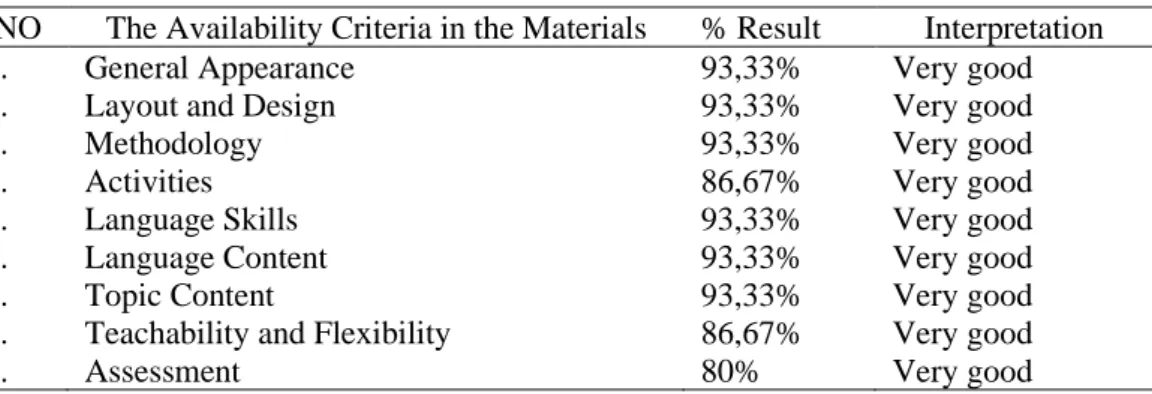
The data were analyzed using fieldnote reflection, interview transcription, textbook analysis results, and the rating scale interpretation. The need analysis results show that the textbook used by the teacher to teach writing the explanatory text was not in line with the student's condition. After the e-book was entirely developed, the internal evaluation was inquired. It resulted in the 'very good' category for its general appearance, layout and design, methodology, activities, language skills, language content, topic content, teachability and flexibility, and assessment, with percentages of 93,33%, 93,33%, 93,33%, 86,67%, 93,33%, 93,33%, 93,33%, 86,67%, 80%, respectively. The study implies that the product is feasible, and this study may add insights for future research.
Keywords: Supplementary Materials, Explanatory Text, Genre-Based Approach
Abstrak:
Menulis teks ”penjelasan” mengikuti konten lanjutan dalam buku teks mungkin sulit bagi siswa pedesaan. Perbedaan wilayah sangat menunjukkan bahwa kebutuhan siswa untuk topik dalam teks penjelasan juga berbeda. Oleh karena itu, topik paparan harus sesuai dengan kondisi siswa.
Penelitian ini bertujuan untuk merancang materi tambahan sebagai e-book berdasarkan pendekatan berbasis genre untuk pembelajaran siswa menulis teks eksplanasi dengan topik yang berkaitan. Para siswa tersebut merupakan siswa kelas sebelas SMAN 01 Seponti di Kabupaten Kayong Utara. Penelitian ini menggunakan penelitian dan pengembangan (R&D) dengan prosedur konsep ADDIE (Analyze, Design, Develop, Implement, Evaluate). Pengumpulan data menggunakan instrumen, catatan lapangan, protokol wawancara, catatan dokumentasi, dan kuesioner. Kami mengumpulkan data melalui observasi, wawancara, analisis dokumen, dan distribusi kuesioner. Data dianalisis menggunakan refleksi catatan lapangan, transkripsi wawancara, hasil analisis buku teks, dan interpretasi skala penilaian. Hasil analisis kebutuhan menunjukkan bahwa buku teks yang digunakan guru untuk mengajar menulis teks eksplanasi tidak sesuai dengan kondisi siswa. Setelah e-book sepenuhnya dikembangkan, evaluasi internal ditanyakan. Ini menghasilkan kategori 'sangat baik' untuk penampilan umum, tata letak dan desain, metodologi, kegiatan, keterampilan bahasa, konten bahasa, konten topik, kemampuan mengajar dan fleksibilitas, dan penilaian, dengan persentase masing-masing 93,33%, 93,33%, 86,67%, 93,33%, 93,33%, 93,33%, 93,33%, 86,67%, 80%. Studi ini menyiratkan bahwa produk tersebut layak, dan penelitian ini dapat menambah wawasan untuk penelitian di masa depan.
Kata kunci: Bahan Tambahan, Teks Penjelasan, Pendekatan Berbasis Genre
INTRODUCTION
Certain previous studies are in line with this study executed by other researchers. First, Dirgayasa (2014) has developed genre-based writing learning materials specifically for short and long functional texts for English university students. He found out that the teaching- learning of writing was not favorable yet. Hence the development of additional material based on the genre-based approach was done. This product then resulted in positive feedback since it covered the different levels and needs of the students. Another study was done by Handayani et al. (2014). They have developed a handout based on a process genre-based approach for facilitating SMA students in writing hortatory exposition text. The produced handout gained a percentage of 77.4 for its validity, 88.77 for practicality, and 80 for effectiveness.
These results signified that the handout was worthwhile for the target school. Lastly is a study by Sinaga and Fitriyani (2019), who have developed genre-based writing materials for students' narrative text. This study shows that the used book at the target school must be supported with additional materials to cover students' needs. The resulting product was then validated and gained percentages of 91.6 and 80, respectively, from the lecturer and English teacher. This data indicated that the materials were in a 'perfect' categorization for use at the
targeted school. These prior studies have added the validity of the genre-based approach as the principle in developing additional materials.
Despite those previous studies, they have yet to focus on designing supplementary materials in the form of an e-book with exciting activities and varied levels for teaching- learning of writing explanatory text based on the genre-based approach incorporated with Bloom's Taxonomy of Learning. The former was used as the guiding principle for developing the tasks, while the latter was used in creating the graded levels of the supplementary materials. The existence of individual tasks whose contents align with the used curriculum and the graded levels will help the students learn the writing of an explanatory text gradually.
In addition, to ease its distribution, supplementary materials were created in the form of an e- book. Moreover, the e-book form was chosen as it can cater to the change and development of technology in this present time (Alshaya & Oyaid, 2017). Lies because an e-book is a newly developed product through technologies (Lai, 2016).
Hence this study attempts to provide the expected externality to English teaching and learning. First, this study is expected to serve as a resource or inspiration for English teachers, especially at the targeted school, to design supplementary materials for students learning to write explanatory text. Moreover, the result of this study is projected to provide valuable input for senior high school students to improve their writing ability on explanatory text. Beyond that, since no studies specifically address designing supplementary materials in the form of an e-book based on GBA and with graded levels, this study is expected to provide significant ideas for material developers and other researchers in designing supplementary materials on particular focuses and skills.
Concisely, this study was conducted to design and develop supplementary materials in the form of an e-book for the learning of writing explanatory text based on a genre-based approach and is dedicated to the eleventh-grade students of SMAN 01 Seponti, located in Kayong Utara regency. Many relevant previous theories have been previously selected, evaluated, identified, and synthesized in this study. They involve writing skills, explanatory text, genre-based approach, and Bloom's Taxonomy of Learning, which are further defined.
As such, the nature of writing logically precedes others since it is fundamental for the entire product content. Being one of the macro-skills in English, writing is an essential productive skill in a written mode. Writing is not merely about expressing ideas, thoughts, and
expressions in the written text; it is more than those things. As supported by Harmer (2004), writing is a process – the procedures or steps that every writer exceeds or passes through intending to produce the final written form. In addition to this, based on the Konsep dan Implementasi Kurikulum 2013 (2014) transliterated as the Concept and Implementation of 2013 Curriculum (2014), writing skill requires the students to organize or write a particular text into a systematic, logical, and practical product by practicing writing regularly. Hence, writing is the foremost troublesome skill for students to comprehend. The difficulty lies in creating and drawing thoughts and interpreting these thoughts into readable content. In other words, writing is a very complex activity and requires a consistent attempt to master it, especially for students with poor language proficiency (Richards & Renandya, 2002).
Apart from the complex and challenging writing scope, writing is a crucial skill to be mastered. In most schools, writing is a way of life for students across the age levels from elementary school through university graduates because without the capability to express themselves in writing, they will not succeed in mastering the subject matter, or they do not pass the course (Brown, 2001). One of the writing activities commonly done by Indonesian learners, especially senior high school students, is writing English text. Based on the syllabus of English for Senior High School in the 2013 Curriculum, genre-based English learning supports learning in other subjects.
Among the various types of English texts, writing explanatory text attracts the researcher's attention to develop it further due to the data gained from the preliminary observation executed by the researcher. It was uncovered that one of the most challenging English text types for the eleventh-grade level in the second semester was an explanatory text due to students' need for more understanding of English vocabulary and grammar. In addition, the explanatory text writing activity was mainly omitted to prevent the students from getting stuck in conveying ideas and elaborating them into a written text. It was because most students had a low writing proficiency, notably in vocabulary, spelling, and sentence structure. As supported by Starkey (2004), low writing proficiency is marked when its indicators, namely organization, clarity, word choice, and mechanics, are not reflected in the writing result. Moreover, the textbook available at the school had few writing activities for the explanatory text, and its tasks needed to be consistent with students' needs and different English levels.
Regardless of the difficulties when writing an explanatory text, this activity must be mastered by second-year senior high school students. An explanatory text is an excellent and effective type for improving students' knowledge and critical thinking. An explanatory text is an English text categorized as an information text (Richards, 2006) as it tells and explains how or why something happens (Anderson & Anderson, 1997). Accordingly, the explanatory text encourages students to learn how and why particular phenomena, events, and concepts in either scientific or technical scope occur (Bashir, 2017). As students write an explanatory text, they learn how to convey ideas, look for sources to support their ideas, and write the paragraph coherently so that the explanation of a particular phenomenon is informative.
Concerning the importance of writing an explanatory text, the teacher has to ensure that the activities conducted and the materials provided are under the needs of the students in the classroom. Hence, the teacher must rely on something other than the textbook because its contents are only sometimes suitable for their students' needs. Accordingly, supplementary materials are required to promote and support the compulsory textbook used at the school. It is believed that providing additional or supplementary materials may cater to diverse levels of ability or different needs of students within a class (McGrath, 2002). Moreover, students may obtain a myriad of learning advantages through the existence of supplementary materials (Reddy, 2013). As Tomlinson (2011) supported, supplementary materials provide the contents of four skills development and consist of vocabulary, structure, and task activities for students to practice.
Following the results of the need analysis conducted in this research, the researcher has designed supplementary materials in the form of an e-book for the students to learn and practice their writing of the explanatory text. Despite the varied language teaching and learning approaches, the researcher had chosen the Genre Based Approach (GBA) as the guiding principle in designing and developing the e-book. The Genre Based Approach is an approach that sees one's language achievement from his or her competence in mastering the types of oral and written texts in terms of the language structure, organization, and content, along with grammar and vocabulary (Richards, 2006). GBA is one of the most well-known approaches in language teaching and learning, and it is primarily used in the classroom setting. Nonetheless, GBA can also be employed as the guiding principle in designing supplementary materials, especially for the student's learning of writing skills. As supported
by Dirgeyasa (2016), the GBA implies genre as the approach and genre as the product of writing. As an approach, genre provides systematical procedures for the instructor and learners. Besides, the genre as a product shares writing features, such as structure, design, communicative significance, and language features used.
The choice of GBA was based on the unstructured interview and several considerations. First, the English teacher has conveyed that GBA is simple yet comprehensive in training the students to learn stage by stage. Moreover, the syllabus of English for Senior High School in the 2013 Curriculum states that GBA is one of the most relevant approaches in teaching English at the SMA/MA level. Besides, the five phases in the GBA align with the purposes of the explanatory text, namely, to deepen students' knowledge through the process of learning step by step. Those five phases are Building the Context, Modeling, and Deconstructing of the Text, Joint Construction of the Text (JCOT), Independent Construction of the Text (ICOT), and Linking to Related Texts (Feez and Joyce, as cited in Richards, 2006, pp. 39–41).
Last, the third stage of GBA, namely Joint Construction of the Text (JCOT), promotes collaborative skills. Collaboration itself is one of the crucial 21st-century skills that students must be capable of (Bialik & Fadel, 2015). Through collaborative work, the students may be encouraged to think while writing and discussing ideas with friends critically (Bhowmik et al., 2019). Concerning those reasons, it is declarable that the genre-based approach fits to be used as the theory in designing the supplementary materials in the form of an e-book.
In addition, the revised Bloom's Taxonomy of Learning by Anderson et al. (2001) was also used as the taxonomy in creating the graded levels of the supplementary materials. The taxonomy may promote the students' learning because graded levels trigger them to finish the preceding level before heading up to the higher level (O'Neill & Murphy, 2010). Besides, the developed supplementary materials attempt to encompass the six criteria of suitable materials proposed by Hutchinson and Waters (1987). The criteria embody that the materials have to offer a learning boost, aid the teaching-learning process, actualize the view of language and learning, represent the nature of learning tasks, present new techniques for teaching-learning, and reflect the samples of precise and proper language use.
Overall, this study was undertaken to design supplementary materials as an e-book for eleventh graders. The tasks are created based on the five phases of the genre-based approach.
Besides, the e-book has graded levels created based on Bloom's Revised Taxonomy of Learning. This study seeks answers to the following research questions.
1. What are the conditions, needs, and interests of the eleventh-grade students of SMAN 01 Seponti in writing the explanatory text?
2. What is the design of supplementary materials for students learning to write explanatory text based on the Genre Based Approach?
3. How are the supplementary materials for students learning of writing explanatory text based on the Genre Based Approach for the eleventh-graders of SMAN 1 Seponti developed?
METHOD Design
This study employed a method known as development research since the ultimate result was an educational product that intended to fulfill the student's needs and interests in writing the explanatory text. The choice of utilizing this research design was in consequence of enabling the researcher to reach her purpose in resulting instructional product through the sequenced process of designing, developing, and evaluating (Richey & Klein, 2009). The data from this executed design was then analyzed and interpreted in qualitative and quantitative forms.
Participant
The participants of this study were eleventh-grade students at SMAN 01 Seponti, North Kayong Regency, who enrolled in the English subject in the academic year of 2021/2022. The total number of students was 103.
Table of participants and sampling
Class Sample
XI IPA 1 24
XI IPA 2 28
XI IPS 1 26
XI IPS 2 25
Total 103
Besides, an English teacher in eleventh grade was also involved as the informant who experienced the teaching and learning of writing explanatory text in the mentioned class. In addition, the addressed teacher went along with the researcher's supervisors, who were involved and served as the product's internal evaluators.
Instrument
This study required two forms of data, namely qualitative and quantitative. The employed instruments were field notes adapted from Creswell (2012), the interview protocol adapted from Creswell (2012), and the writing notes. The field note was in the table format containing two parts: the description and reflection, and they were filled with any occurring situation within the implementation of the class observation. The interview protocol was also in the form of a table that included the interview guidelines, ten prepared questions, and blank space to take notes of the answered questions from the interviewee. The prepared questions asked the teacher's views on (1) the books' availability at the school; (2) the relevance of the used textbook to the student's needs and interests; (3) the strengths of the used textbook; (4) the weaknesses of the used textbook; (5) the criteria of suitable supplementary materials; (6) the effectiveness of GBA; (7) the school's support on the use of GBA; (8) supplementary materials based on GBA; (9) the acceptance of the product to be used by the students; and (10) the standards that supplementary materials must possess. At the same time, the writer used a piece of paper to take notes on the contents of the document being analyzed.
In addition, the latter used the Likert Scale adapted from Nemoto and Beglar (2014) and the evaluation questionnaire adapted from the materials evaluation scheme by Dickinson (2010). The evaluation questionnaire itself included the nine availability criteria in the supplementary materials such as (1) general appearance; (2) layout and design; (3) methodology; (4) activities; (5) language skills; (6) language content; (7) topic content; (8) teachability and flexibility; and (9) assessment. Both of them were in the form of a scale that consisted of five predetermined options.
Data collecting technique
The whole data collection reflects the product development procedure. Therefore, we implemented the ADDIE procedure. The product development employs ADDIE (analyze, design, develop, implement, and evaluate), as Branch (2009) proposed. However, the
researcher focused only on the first three steps with the exclusion of implementation and evaluation due to the limited time in the bachelor's study and the limitation of access.
The ADDIE steps are generally under the following global procedures. In the analysis phase, the researchers did a need analysis on the eleventh graders of SMAN 01 Seponti. The data collection took two weeks in total. We took several steps to gain the data for designing and developing the supplementary materials as an e-book based on a GBA. In attempting to minimize the bias of the findings, methodological triangulation was executed since this study includes four data collection techniques. The triangulation mitigates potential bias in single data collection (Heale & Forbes, 2013). Using triangulation, the researchers obtained detailed information related to the scope of the study and the research participants (Taylor et al., 2016). The data from the need analysis were collected for the Design phase.
In the design phase, the researcher generated the requirements of the supplementary materials in the form of an e-book and then designed it. We designed the inventory process, the instructional objectives, and the complete e-book frame. Then we created instructional objectives concerning the levels of chapters based on the revised Bloom's Taxonomy by Anderson et al. (2001). This entire process resulted in a Design Brief or the product prototype.
In the development phase, the e-book was developed based on the Design Brief of the product. The e-book was developed using software such as Microsoft PowerPoint, Microsoft Word, and Discovery Education Puzzlemaker. As the researcher finished the complete supplementary materials as an e-book, the researcher distributed evaluation questionnaires and requested an internal evaluation from the evaluators to gain the data and percentage of the product appropriateness. The evaluators, referred to here, are the researcher's Supervisor 1, Supervisor 2, and an English teacher of the targeted school.
Data analysis technique
We analyzed the data qualitatively and quantitatively. The data from the first to the third data collection techniques were analyzed and presented in qualitative form. The observation results consisting of description and reflection were presented in written data. The recorded-interview results were transcribed into word processing on a computer, and the data from the textbook was done by hand analysis that included reading, marking, and dividing the written data into several sections. Both the qualitative data analysis were done using the
model proposed by Creswell (2013), while the hand analysis was done using the model proposed by Creswell (2012).
The data resulting from the fourth and fifth data collection techniques were analyzed and presented quantitatively. The data from questionnaires distributed to the students were analyzed by counting the percentage result of each questionnaire's frequency by using the formula of the rating scale, i.e., the calculation of the result score multiplied by a hundred and divided by the multiplication of the amount of point and amount of categories. The percentage of their responses was then interpreted within the ranges of 0-19.99, 20-39.99, 40-59.99, 0- 79.99, and 80-100, respectively, to signify the interpretation of strongly disagree, disagree, undecided, agree, and strongly agree. Similarly, the data from evaluation questionnaires were analyzed by counting the percentage result based on the same rating scale formula. The percentage interpretation was also in the same ranges of 0-19.99, 20-39.99, 40-59.99, 0-79.99, and 80-100, respectively, to signify the interpretation of bad, less, standard, good, and very good. The researcher created the range based on the guidelines of a prior study by Nemoto and Beglar (2014).
RESULT AND DISCUSSION Result
Results of the first research question Circumstances of the students
Providing a collaborative task of writing an explanatory text about a specific topic, the students in their group could only write a complete explanatory text with hints. Even more, they could not write a single paragraph in English. As an alternative way to encourage them to write, the teacher allowed them to write the text in Indonesian first and then translated it using an online dictionary.
English teacher's insight of teaching-learning and the used textbook of writing explanatory text
The teacher asserted that teaching explanatory text, especially for writing skills, was challenging since most students needed more vocabulary and grammar. Moreover, the only textbook owned by the school was the one published by Kemdikbud, in which the task of
writing the explanatory text was advanced for her students. As a result, she was open to accepting the supplementary materials designed by the researcher to be used at the school.
The textbook content of writing explanatory text
It was found that the topics of explanatory text contained in the compulsory book were outside the students' surrounding lives and prior knowledge. Besides, the activities to train students to write explanatory text were advanced for them to follow.
Student's interests and needs of supplementary materials
A total of 103 students agreed that they needed supplementary materials in the form of an e-book for their learning of writing explanatory text with the availability of the genre- based approach activities and graded levels based on Bloom's Taxonomy of Learning.
Results of the second research question
The research question related to the design of supplementary materials for students writing explanatory text based on the GBA has been answered through the action of the design phase, as further represented.
Instructional objectives
The instructional objectives for each chapter of the e-book were composed based on the four elements: Audience, Behavior, Condition, and Degree, abbreviated as ABCD. The compelling verbs of Bloom's Taxonomy for learning were used in composing the Behavior elements. Each chapter has five instructional objectives, and hence a total of them were 35 distributed in seven chapters of the e-book.
Task inventory
Since the e-book was designed with graded levels for chapters 2 to 7, the tasks were organized and started with Lower Order Thinking Skills (LOTS to Higher Order Thinking Skills (HOTS) of Bloom's Taxonomy. Each chapter consists of 11 tasks; thus, there are 66 tasks.
Design brief
The complete frame of the e-book contains the front cover, front matter, body matter, end matter, and back cover. In terms of body matter, the e-book contains seven chapters.
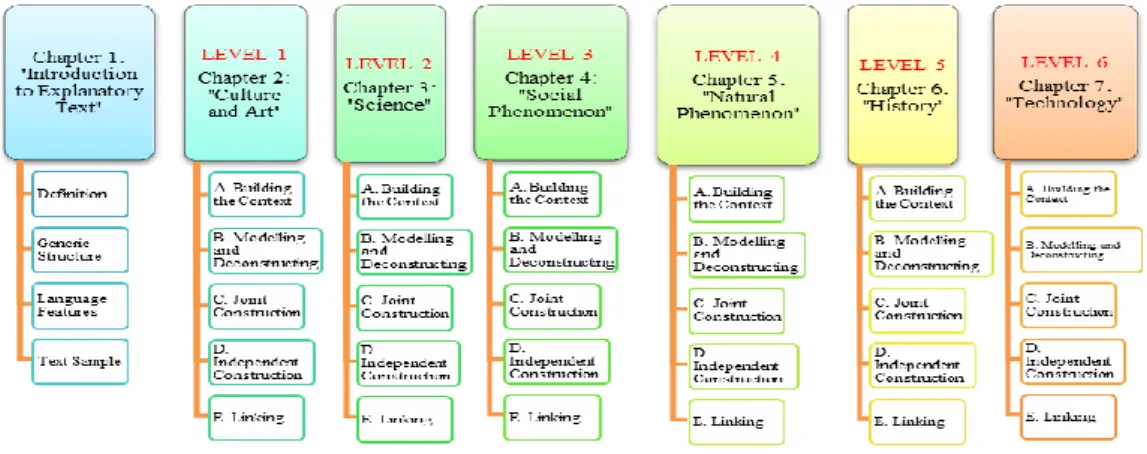
Chapter 1 is proportioned as an introduction to the material, while the following six chapters,
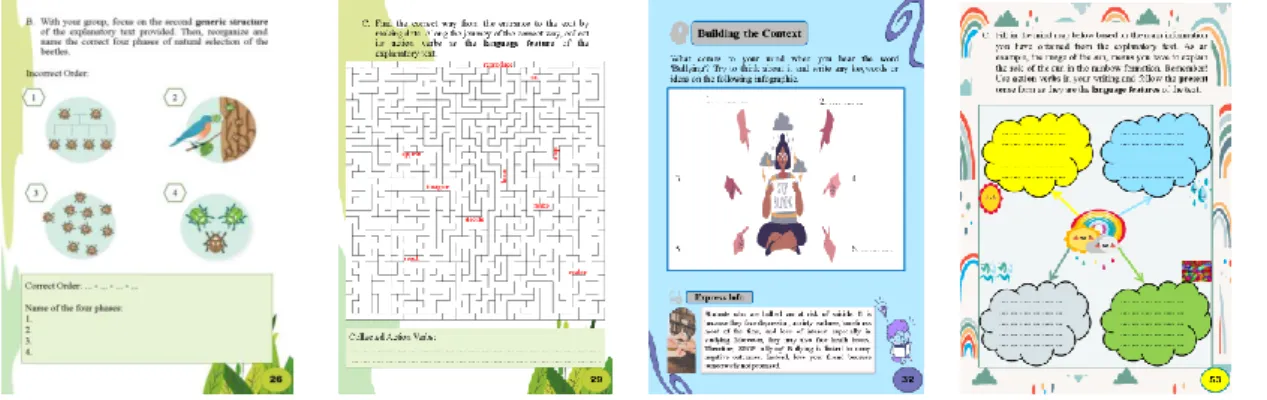
the second to the seventh, specialize in the material's activities. These primary activities were designed based on the guiding principle of the genre-based approach (GBA). In exact pattern, each chapter, from Chapter 2 to Chapter 7, contains five main activities: Building the Context, Modeling and Deconstructing, Joint Construction, Independent Construction, and Linking, as shown below.
Figure 1 The structure of the complete supplementary materials (e-book form) In addition, Chapters 2 to 7 represent different levels of writing skills practice. The levels of these chapters are based on the cognitive process in revised Bloom's Taxonomy by Anderson et al. (2001, p. 31), such as "Remembering, Understanding, Applying, Analyzing, Evaluating, and Creating." These cognitive processes represent Level 1 to Level 6 exercises of the supplementary materials, as shown below.
Figure 2 Broad structure of content for each chapter Results of the third research question
The research question related to the development of the supplementary materials has been answered through the action of the development phase, as further represented.
Internal Evaluation
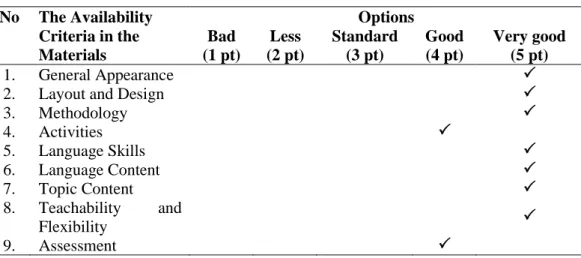
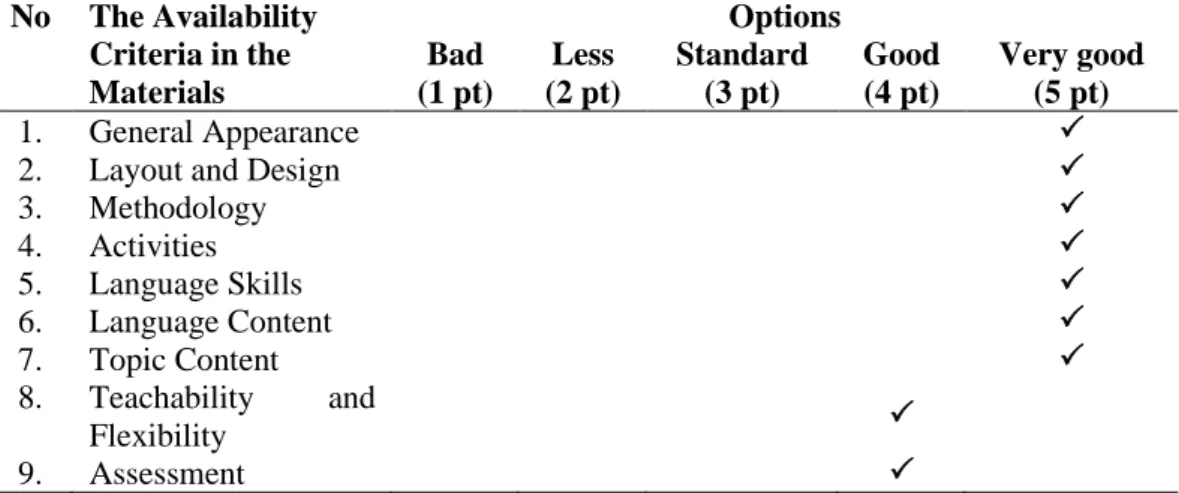
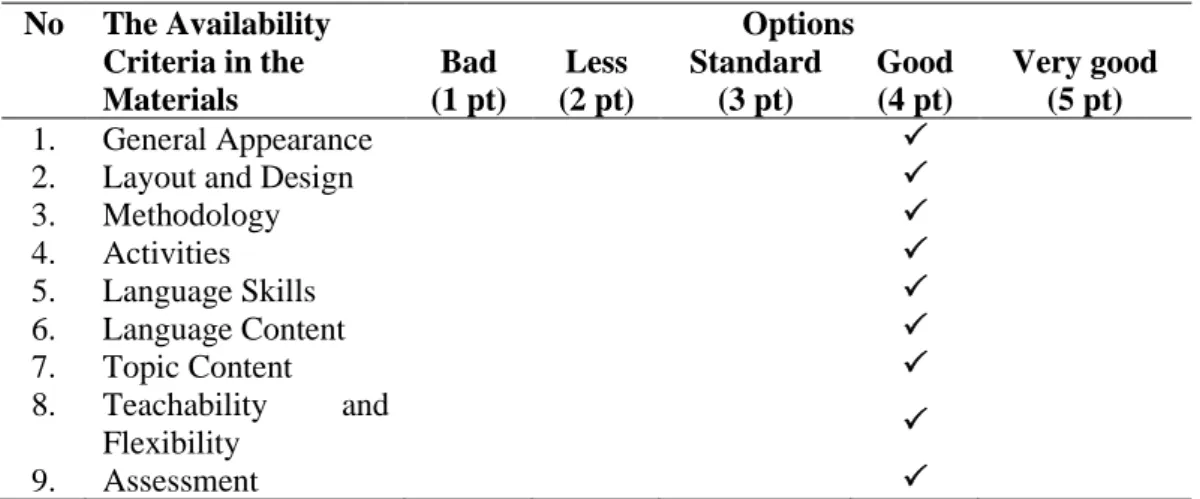
The developed supplementary materials in the form of an e-book following the created design brief were evaluated by the researcher's supervisors and the targeted school's English teacher. Each number of the nine aspects being evaluated has its particular criterion, namely (1) general appearance covers the impression of the e-book as a whole; (2) the layout and design are categorized as very good if they are well-organized following the students' interests known from need analysis; (3) the e-book gained a very good category if its contents and activities reflect the methodology of used principles, in this study is the genre-based approach and revised Bloom's Taxonomy; (4) a very good category of activities filled in the e-book must be in line with the guiding principle and encourage the students to learn; (5) the focus language skill of the e-book is writing; (6) the language content of the e-book are all about explanatory text; (7) the topic contents of the explanatory text are related to culture and art, science, social phenomenon, natural phenomenon, history, and technology; (8) the e-book reaches teachability if it is feasible to be used by the school as additional material for the students to learn and practice their writing of explanatory text.
Moreover, the e-book offers flexibility for students to follow up the activities with different English levels; (9) since the e-book provides graded levels of activities based on Bloom's Taxonomy, it encourages students to assess their writing ability explanatory text by level. The following tables show the results of the internal evaluation gained from the responses of the researcher's supervisor 1, supervisor 2, and an English teacher toward the distributed evaluation questionnaires.
Table 1. the Results of internal evaluation from supervisor 1 No The Availability
Criteria in the Materials
Options Bad
(1 pt)
Less (2 pt)
Standard (3 pt)
Good (4 pt)
Very good (5 pt)
1. General Appearance
2. Layout and Design
3. Methodology
4. Activities
5. Language Skills
6. Language Content
7. Topic Content
8. Teachability and
Flexibility
9. Assessment
Table 2 The Results of internal evaluation from supervisor 2
No The Availability Criteria in the Materials
Options Bad
(1 pt)
Less (2 pt)
Standard (3 pt)
Good (4 pt)
Very good (5 pt)
1. General Appearance
2. Layout and Design
3. Methodology
4. Activities
5. Language Skills
6. Language Content
7. Topic Content
8. Teachability and
Flexibility
9. Assessment
Table 3 The results of internal evaluation from the english teacher
No The Availability Criteria in the Materials
Options Bad
(1 pt)
Less (2 pt)
Standard (3 pt)
Good (4 pt)
Very good (5 pt)
1. General Appearance
2. Layout and Design
3. Methodology
4. Activities
5. Language Skills
6. Language Content
7. Topic Content
8. Teachability and
Flexibility
9. Assessment
Based on the three results above, the researcher calculated the percentage result for each criterion. After gaining the percentage, the criterion was interpreted to know its quality.
The following table is the result of the calculation.
Table 4 The calculation results of the internal evaluation
NO The Availability Criteria in the Materials % Result Interpretation
1. General Appearance 93,33% Very good
2. Layout and Design 93,33% Very good
3. Methodology 93,33% Very good
4. Activities 86,67% Very good
5. Language Skills 93,33% Very good
6. Language Content 93,33% Very good
7. Topic Content 93,33% Very good
8. Teachability and Flexibility 86,67% Very good
9. Assessment 80% Very good
Regarding the table mentioned above, all the criteria of the supplementary materials reach the percentage range of 80-100. This range signifies that the nine criteria of the supplementary materials as an e-book are in the 'very good' category. Hence, the e-book is not revised and stated as the final product of this study. The following are several examples of supplementary materials in the form of an e-book.
Final product
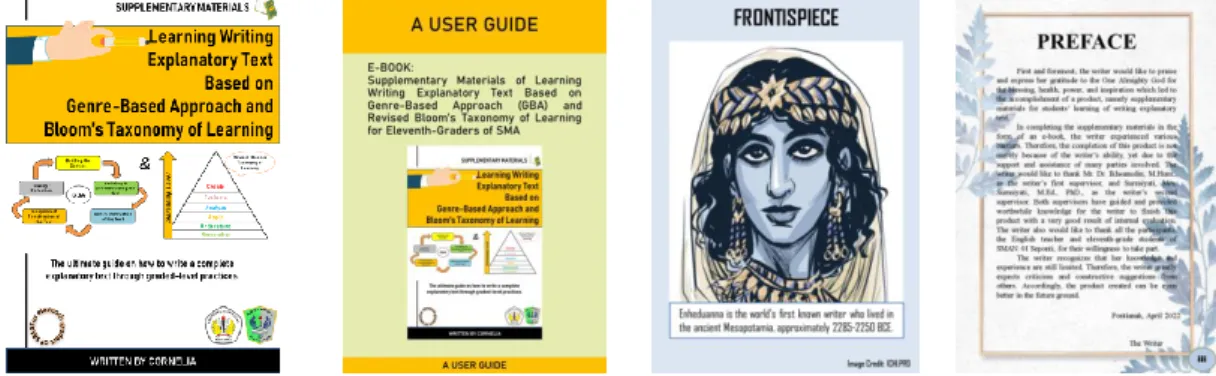
After the development and internal evaluation processes, we completed the supplementary materials, Learning Writing Explanatory Text Based on Genre-Based Approach and Bloom's Taxonomy of Learning, written by Cornelia, The full e-book can be
accessed through this link:
https://drive.google.com/file/d/1EaZrXTR_o3OJp8dUsoQX7rxZuin6_ByO/view?usp=sharing
Figure 3 Several examples of front cover and front matter
Figure 4 Several examples of body matter
Figure 5 Several examples of end matter and back cover
Discussion
It was uncovered that the primary reason for students' difficulty in writing lay in their lack of writing skills. As supported by Harmer (2004), written language requires the students to comprehend its elements, such as the writing structure, drafting ideas, editing the errors, and composing the final written text. This matter implied that the students must be exposed to the writing skill before starting to write. Moreover, they must practice those four elements correspondingly, and through practice, they might learn that they can master the written language.
This study's resulting educational product aimed to fulfill the students' enthusiasm to learn writing skills. Despite the compulsory textbook they owned, having a supplementary book is an excellent idea to boost and aid one's learning (Hutchinson & Waters, 1987). It was the reason that the e-book was created with exciting tasks and levels based on the GBA and Bloom's Taxonomy. This idea can be noticeably seen based on the result of the fourth criterion, namely activities, with a percentage of 86.67. This innovation might provide an opportunity for the students to experience writing differently.
The product of this study has reached the category of very good in terms of its general appearance, layout and design, methodology, language skills, language content, topic content, teachability and flexibility, activities, and assessment. The first six criteria obtained the highest percentage of 93.3, while the criteria of activities, teachability, and activities obtained the mediate percentage of 86.67. Meanwhile, the assessment criterion gained the lowest percentage of 8. With the mentioned category, the e-book was stated as the final product without any revision from the internal evaluators.
The preceded percentages indicated that the designed e-book based on the GBA gained absolute responses. It is believed to be supplementary material to encourage the students' writing of the explanatory text. It follows the study conducted by Dirgayasa (2014), who asserted that GBA might promote learners' writing interest as it tends to teach and train them about the writing process. Another study by Sinaga and Fitriyani (2019) claimed that GBA is a relevant principle for developing writing materials since its learning stages promote the learners to learn the complexity of writing skills in continuity. As supported by Feez and Joyce (as cited in Richards, 2006), apart from being the approach for the teaching process, GBA can also serve as the framework for developing additional materials for teaching and learning (Handayani et al., 2014).
CONCLUSION AND IMPLICATION Conclusion
Considering the research questions, we have concluded three conclusions. First, it is summed up that the student's needs and interests were gathered based on the conducted need analysis with triangulation methods. Second, it is concluded that the design of the e-book has included three main procedures by Branch (2009). Along with those procedures, the complete framework of the preliminary product was also gained. Both of these aspects created the design brief of the e-book, which consists of 7 chapters with five main activities for each.
Third, it is concluded that the supplementary materials in the form of an e-book have passed through the systematical phases of the ADDIE model by Branch (2009). The product was generated by considering the analysis results, following the design brief or prototype, and developing it appropriately. In the final step, the developed product underwent an internal evaluation. It obtained a perfect categorization for its appearance (93.33.%), layout and design (93.33%), methodology (93.33%), activities (86.67%), language skills (93.33%), language content (93.33%), topic content (93.33%), teachability and flexibility (86.67%), and assessment (80%).
Limitation
This study has been attempted and carried out following the scientific method and guiding principles in product development. However, several limitations, yet, can be pointed
out. Since this study was done during the Covid-19 outbreak, the executed product development only included Analyze, Design, and Develop, excluding the Evaluate and Implement phases. The unavailability of evaluate phase caused the product was neither evaluated externally nor validated externally. In addition, due to the time limitation for researching and available schedules at the target school, two data collection techniques, namely observation and questionnaire, were conducted at the same meeting in each class.
Implication
At the time of the settling of this study, this study is expected to provide significant contributions to English teaching and learning. The e-book created based on the GBA and grade levels of Bloom's Taxonomy of Learning is expected to serve as a resource and valuable input or ideas for English teachers and material developers for their further research in development research. Furthermore, the findings of this study are expected as proper research and may add to the number of research in the educational scope.
ACKNOWLEDGMENT
I, the first author of this article, would like to convey my deepest gratitude to several honorable individuals who contributed to the completion of this article. First, all of the lecturers of the English Language Education Study Program of Universitas Tanjungpura have assisted me during my undergraduate study, particularly Ibu Surmiyati, M.Ed., Ph.D., as my academic supervisor. I am thankful for all of the genuine support, motivation, guidance, evaluation, feedback, corrections, and advice that have been given. Besides, I also would like to convey my gratitude to SMA Negeri 1 Seponti, who has allowed me to conduct the research. Furthermore, I would like to thank Ibu Rusdiyanti, S.Pd., the English teacher at SMA Negeri 01 Seponti, who has assisted me in successfully implementing the research.
BIO-PROFILE:
Cornelia was born in Jungkat on December 26th, 1999. She is an English Language Education Study Program undergraduate at Universitas Tanjungpura. She started her study in 2018 and finished them in 2022, with a study period of 3 years, ten months 25 days. Her interests in English are related to writing skills and grammar. Her corresponding email: is [email protected]
REFERENCES
Alshaya, H., & Oyaid, A. (2017). Designing and publication of interactive e-book for students of Princess Nourah bint Abdulrahman University: An empirical study. Journal of Education and Practice, 8(8), 41–57.
Anderson, L. W., Krathwohl, D. R., Airasian, P. W., Cruikshank, K. A., Mayer, R. E., Pintrich, P. R., Raths, J., & Wittrock, M. C. (Eds.). (2001). A taxonomy for learning, teaching, and assessing: A revision of Bloom's taxonomy of educational objectives (Abridged Edition). Longman. https://www.pdfdrive.com/a- taxonomy-for-learning-teaching-and-assessing-a-revision-of-blooms-
taxonomy-of-educational-objectives-d187836328.html
Anderson, M., & Anderson, K. (1997). Text types in English 1. Macmillan Education Australia.
https://books.google.co.id/books/about/Text_Types_in_English.html?id=yfr8O GxyDaEC&redir_esc=y
Bashir, M. (2017). Bahasa Inggris SMA/MA/SMK/MAK Kelas XI (Revisi 2017).
Kementerian Pendidikan dan Kebudayaan. http://bukukelas- xxixii.blogspot.com/2017/11/buku-bahasa-inggris-kelas-11-kurikulum-
2013.html?m=1
Bernard, H. R. (2006). Research methods in anthropology: Qualitative and quantitative
approaches (5th ed). AltaMira Press.
https://books.google.co.id/books/about/Research_Methods_in_Anthropology.
html?id=LvF-afWmvlkC&redir_esc=y
Bhowmik, S. K., Hilman, B., & Roy, S. (2019). Peer collaborative writing in the EAP classroom: Insights from a Canadian postsecondary context. TESOL Journal, 10(2), e00393. https://doi.org/10.1002/tesj.393
Bialik, M., & Fadel, C. (2015). Skills for the 21st Century: What should students learn?
Center for Curriculum Redesign, 1–13.
Branch, R. M. (2009). Instructional design: The ADDIE approach. Springer.
https://www.pdfdrive.com/instructional-design-the-addie-approach- d25690406.html
Brown, H. D. (2001). Teaching by principles: An interactive approach to language pedagogy (Second Edition). Longman. https://www.pdfdrive.com/douglas-teaching-by- principles-an-interactive-approach-to-language-pedagogy-d187683987.html Creswell, J. W. (2012). Educational research: Planning, conducting, and evaluating
quantitative and qualitative research (4th ed). Pearson.
https://www.pdfdrive.com/educational-research-planning-conducting-and- evaluating-d16448388.html
Creswell, J. W. (2013). Educational research: Planning, conducting, and evaluating quantitative and qualitative research (4th ed.).
Creswell, J. W. (2014). Research design: Qualitative, quantitative, and mixed methods approaches (4th edition, international student edition). SAGE.
https://www.pdfdrive.com/research-design-qualitative-quantitative-and- mixed-method-approaches-d186455788.html
Dickinson, P. (2010). Evaluating and adapting materials for young learners. The
University of Birmingham.
https://www.birmingham.ac.uk/Documents/college- artslaw/cels/essays/younglearners/dickinsonYL.pdf
Dirgayasa, I. W. (2014). The development of English writing learning material through a genre based approach for English department at university.
International Seminar on English Language and Teaching, 200–209.
Dirgeyasa, I. Wy. (2016). Genre-based approach: What and how to teach and to learn writing. English Language Teaching, 9(9), 45–51.
https://doi.org/10.5539/elt.v9n9p45
Handayani, H., Jufrizal, J., & Hamzah, H. (2014). Developing process genre-based approach handout for teaching writing of exposition hortatory text for senior high school students. Lingua Didaktika: Jurnal Bahasa Dan Pembelajaran Bahasa, 7(2), 87–98. https://doi.org/10.24036/ld.v7i2.10348
Harmer, J. (2004). How to teach writing. Longman, Pearson Education.
https://www.pdfdrive.com/how-to-teach-writing-d168589443.html
Heale, R., & Forbes, D. (2013). Understanding triangulation in research. Evidence Based Nursing, 16(4), 98–98. https://doi.org/10.1136/eb-2013-101494
Hutchinson, T., & Waters, A. (1987). English for specific purposes: A learning-centred approach. Cambridge University Press. https://booksc.xyz/book/1223758/a2c0a2 Konsep dan implementasi Kurikulum 2013. (2014). Kementerian Pendidikan dan
Kebudayaan.
https://www.kemdikbud.go.id/kemdikbud/dokumen/Paparan/Paparan%20W amendik.pdf
Lai, C. S. (2016). Integrating e-books into science teaching by preservice elementary school teachers. Journal of Education in Science, Environment and Health (JESEH), 2(1), 57–66.
McGrath, I. (2002). Materials evaluation and design for language teaching (Reprinted).
Edinburgh University Press.
Nemoto, T., & Beglar, D. (2014). Developing Likert-scale questionnaires. JALT2013 Conference Proceedings, 1–8.
O'Neill, G., & Murphy, F. (2010). Guide to taxonomies of learning. UCD Teaching and Learning/Resources. http://eprints.teachingandlearning.ie/3346/
Reddy, R. S. (2013). Supplementary materials to enhance language skills of learners.
International Journal of Social Science & Interdisciplinary Research, 2(9), 143–150.
Richards, J. C. (2006). Communicative language teaching today. Cambridge University Press.
https://www.researchgate.net/publication/242720833_Communicative_Langua ge_Teaching_Today
Richards, J. C., & Renandya, W. A. (2002). Methodology in language teaching: An anthology of current practice. Cambridge University Press.
https://www.pdfdrive.com/methodology-in-language-teaching-an-anthology- of-current-practice-d59558848.html
Richey, R. C., & Klein, J. D. (2009). Design and development research: Methods, strategies and issues. Routledge.
Silabus mata pelajaran sekolah menengah atas/madrasah aliyah (SMA/MA). (2016).
Kementerian Pendidikan dan Kebudayaan Jakarta, 2016.
Sinaga, I. N., & Fitriyani, T. (2019). Developing English writing materials in narrative text based on genre-based approach. SALTeL Journal (Southeast Asia Language Teaching and Learning), 2(2), 88–93. https://doi.org/10.35307/saltel.v2i2.36
Starkey, L. B. (2004). How to write great essays (1st ed). LearningExpress.
https://www.pdfdrive.com/how-to-write-great-essays-d187742745.html
Taylor, S. J., Bogdan, R., & DeVault, M. L. (2016). Introduction to qualitative research methods: A guidebook and resource (4th edition). Wiley.
https://books.google.co.id/books/about/Introduction_to_Qualitative_Research _Met.html?id=RkCCCgAAQBAJ&redir_esc=ytoml
Tomlinson, B. (Ed.). (2011). Materials development in language teaching (2nd ed).
Cambridge University Press.