A COMMUNITY HEALTH CENTER:
DEVELOPING CULTURAL COMPETENCE AMONG MEDICAL PROFESSIONALS
An Exploratory Quantitative Study
FRANKIE SANDOVAL
Vanderbilt University In partial fulfillment of the requirements for the degree of Doctor of Education in Leadership and Learning in Organizations
Acknowledgements
A special thank you to the leadership team at Yakima Neighborhood Health Services for allowing me to partner with their organization to explore this critical issue within
the healthcare industry.
Table of Contents
ACKNOWLEDGEMENTS ... 1
LIST OF FIGURES ... 3
LIST OF TABLES ... 3
EXECUTIVE SUMMARY ... 4
INTRODUCTION ... 6
ORGANIZATIONAL CONTEXT ... 7
PROBLEM OF PRACTICE ... 9
LITERATURE REVIEW ... 10
CONCEPTUAL FRAMEWORK ... 16
RESEARCH QUESTIONS ... 19
PROJECT DESIGN ... 20
LIMITATIONS ... 25
FINDINGS ... 26
RECOMMENDATIONS ... 32
DISCUSSION/CONCLUSION ... 38
REFERENCES ... 40
APPENDIX ... 46
APPENDIX A:CULTURAL COMPETENCE SELF-ASSESSMENT CHECKLIST SURVEY... 46
List of Figures
Figure 1: YNHS CARE FOR VULNERABLE POPULATIONS ... 8
Figure 2: OVERALL AVERAGE SCORE FOR EACH CCSAC DOMAIN ... 27
Figure 3: CCSAC SURVEY RESULTS BY GENDER ... 29
Figure 4: CCSAC SURVEY RESULTS BY ETHNICITY ... 29
Figure 5: CCSAC SURVEY RESULTS BY LGBTQ VS. NON-LGBTQ ... 30
Figure 6: RESULTS FOR EACH CCSAC DOMAIN BY FUNCTIONAL CATEGORY... 31
Figure7:SUMMARIZEDRECOMMENDATIONSFORYNHS ... 37
List of Tables
Table 1: CULTURE CARE THEORY (LEININGER, 1991) ... 16Table 2:THE PROCESS OF CULTURAL COMPETENCE (CAMPINHA-BACOTE, 1998) ... 18
Table 3: CCSAC TOOL RELATION TO CONCEPTUAL FRAMEWORK ... 22
Table 4: EMPLOYEE ROLES GROUPED BY FUNCTIONAL CATEGORY ... 23
Table 5: CCSAC PARTICIPATION DATA ... 24
Table 6: MEAN & STANDARD DEVIATION PER DOMAIN ... 27
Executive Summary
This capstone project investigated the cultural competence levels of medical professionals within a community health center. Research argues that culture
competence is a means to combat disparities in health care services (Dreachslin et al., 2017). With a pledge to increase access and improve the quality of care to
diverse populations, Yakima Neighborhood Health Services (YNHS) hoped to better understand the cultural consciousness of their employees. The overall goal for YNHS was to implement diversity, equity, and inclusion (DEI) strategies that further develop their staff and enhance the patient experience. To gain a deeper grasp of medical practices in the United States (U.S.) and the historical implications impacting underserved communities, this study collected literature around health inequalities, doctor-patient relationships, professional development, racial and ethnic
perceptions, and cultural competence theory.
The Process of Cultural Competence in the Delivery of Healthcare Services: A Model of Care by Campinha-Bacote (1998) was employed to explore the problem of practice. This framework suggests that cultural competence is an ongoing process and incorporates concepts around cultural awareness, knowledge, skills,
encounters, and desires (Shen, 2015). With a cyclical and interconnected structure, building cultural competence levels requires an individual to acknowledge each construct (McFarland & Wehbe-Alamah, 2019). Scholars propose several
assessment tools to measure the model’s ideas; however, this project design used
an adapted version of the Cultural Competence Self-Assessment Checklist (CCSAC) to calculate the educational proficiency of YNHS personnel.
The CCSAC survey evaluated employee levels of cultural awareness, knowledge, and skills. The data analysis highlighted that YNHS employees perceived themselves as fairly culturally competent professionals and often considered social differences when interacting with patients of diverse backgrounds. The results implied that staff members of historically
underrepresented groups and those in frontline positions were perceived to be more culturally competent than medical providers and employees with less patient interaction.
The recommendations for potential areas of improvement were based on the research questions, the CCSAC survey findings, guidance from the conceptual framework, and best practices from the U.S. Department of Health and Human Services. YNHS should consider implementing the following suggestions: (1) establish an organizational taskforce committee, (2) build a diversity recruitment strategy, (3) provide ongoing evidence-based development for staff, (4) survey patients to better understand their cultural needs, (5) implement a patient journey mapping process, (6) create community engagement opportunities, and (7) seek additional cultural competence tooling for further assessment.
Introduction
Within the U.S., there has been a long record of health disparities between white Americans and those of black, indigenous, and people of color (BIPOC) communities (Williams & Purdie-Vaughns, 2016). Although socioeconomic status is largely considered to justify the variation in access and treatment of medical care, research suggests that the health gap is a direct result of racism and oppression (Avila et al., 2016). Unfortunately, given the numerous historical instances where BIPOC populations were targeted for medical experimentation, members of these communities are less likely to adhere to doctor recommendations around testing and treatment (Wheeler et al., 2017). In addition, patient satisfaction is typically low for racially and ethnically diverse families as providers are less culturally sensitive;
negatively affecting the doctor-patient relationship (Avila et al., 2016). Thus, the healthcare industry must work to improve the levels of cultural competence among medical professionals to equally serve various demographics and discard the health inequality in America (Shen, 2015).
In partnership with YNHS, this capstone project sought to understand the cultural competence skills among the organization’s employees, the possible impact of race, gender, and sexual orientation, and determine potential areas to expand their efforts around DEI development. Similar to the health care challenges across the U.S., YNHS offers a multitude of medical services to an ethnically mosaic patient population. Despite YNHS’ continuous commitment to serve the members of BIPOC
communities, the staff level of comfort and the quality of care had yet to be measured. This quantitative study explored the problem of practice through the conceptual framework of the Process of Cultural Competence in the Delivery of Healthcare Services (Campinha-Bacote, 1998).
Organizational Context
Founded in 1975, YNHS is a non-profit organization that strives to provide affordable and accessible health care to underserved populations, nurture a
learning environment for students in the health profession, end homelessness, and improve the quality of life in the greater Yakima Valley. The community health
center began with one medical doctor, a two-bedroom home, and about 20 patients to now serving over 23,000 patients and 90,000 visits yearly at their six campus locations. With a patient-centered approach, YNHS staff aim to uphold the values of commitment, professionalism, excellence, and compassion. The expanded services at the clinic include behavioral health, family dentistry, internal medicine, pediatrics, pharmacy, primary medical care, vision, women’s health, homeless services,
maternal support, health educational programs, and an LGBTQ+ youth resource center. As a result, YNHS was the first community health center in the state of Washington to attain recognition from the Joint Commission for their patient- focused medical practice (Yakima Neighborhood Health Services, 2020).
With a total economic impact of $50.5 million, YNHS employs roughly 285 full-time employees at their multisite locations throughout the Yakima Valley. Each
YNHS center is situated in a low income residential area, and many of their programs and services are minimal to no cost due to state and federal support.
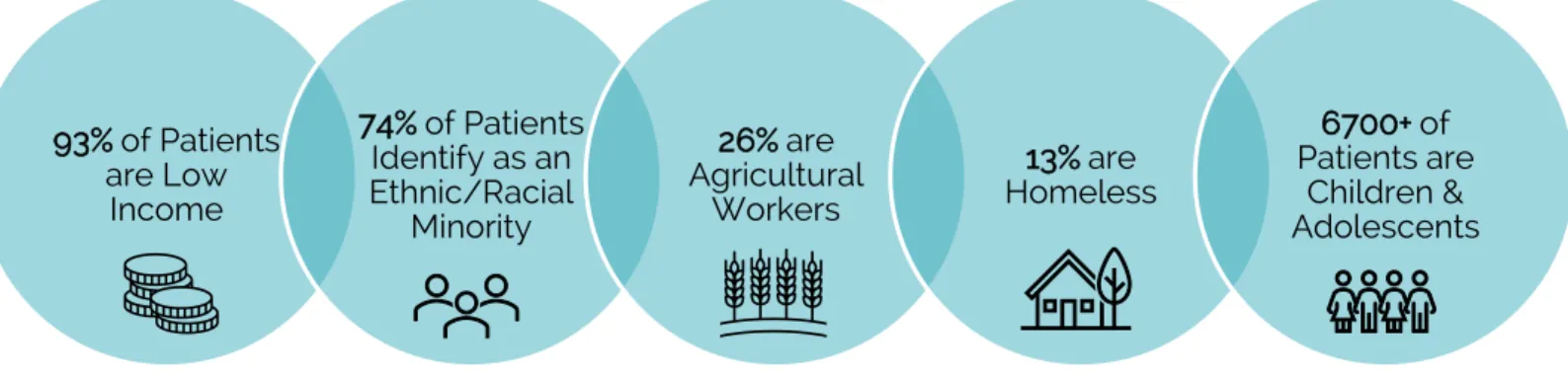
Therefore, the clinical staff serve the most vulnerable populations in Yakima, Washington. Figure 1 provides a breakdown of the patient demographics.
Figure 1: YNHS CARE FOR VULNERABLE POPULATIONS
(YNHS Annual Report, 2019).
For the purposes of this capstone project, all YNHS staff were invited to participate in this study. The findings from the analysis attempted to guide the chief executive officer, administrative leadership, and human resources around potential
opportunities to further enhance the ongoing DEI and cultural competence professional development for employees.
93% of Patients are Low
Income
74% of Patients Identify as an Ethnic/Racial
Minority
26% are Agricultural
Workers
13% are Homeless
6700+ of Patients are
Children &
Adolescents
Problem of Practice
Within the healthcare industry, one could argue that cultural competence among physicians is one of the most important areas for progress (Shen, 2015). For far too long, communities of color have lacked access to quality health care and have been reluctant to follow the guidance of medical professionals (Avila et al., 2016). Even health research for BIPOC communities is extremely minimal (Goodman et al., 2017). Sadly, racial and ethnic groups are twice as likely than white people to have chronic health concerns like heart disease, cancer, and diabetes, which are also the leading causes of death (Centers for Disease Control and Prevention, 2020;
Price et al., 2013). However, such issues cannot be addressed if there is a lack of cultural understanding and empathy for diverse populations (Wheeler et al., 2017).
Over the last couple of years, the community services and patient
demographics at YNHS have diversified given the socio-cultural changes within the Yakima Valley. According to the U.S. Census Bureau (2020), 50.2% of the population in Yakima County is now Hispanic/Latinx. As a result, senior leadership at YNHS had increased its focus on the cultural competence of the health care providers and administrative staff. Although all employees had recently participated in several DEI exercises, the chief executive officer understood that in order to make a true impact on their patient satisfaction, the cultural responsiveness, understanding, and skills of employees are a lifelong pledge.
Like many nonprofit organizations, the success of YNHS is dependent upon patient satisfaction. The doctor-patient relationship not only builds brand recognition and trust with the surrounding populations, but also could affect the organization’s ability to operate (Lan et al., 2017). At YHNS, patient volume determines how much state and federal funding the clinic is able to receive to provide various health care services. If patients are not pleased and choose to seek medical guidance
elsewhere, the community health center could be forced to cut programs or
possibly even close. Thus, it is imperative to ensure doctors are comfortable treating historically underserved communities to guarantee continued access to medical care, minimize health inequality, and allow YNHS to remain serving the community at large.
Literature Review
A comprehensive literature review explored the historical challenges within the healthcare industry. Topics such as health disparity, patient-physician
relationships, professional development for healthcare providers, and cultural competence are addressed to better understand the problem of practice and conceptual framework used to guide this study.
Health Care Disparity
Racial and ethnic health disparities in America were documented by W.E.B DuBois as early as the late nineteenth century (Williams et al., 2016) when he argued that health care differences could be better understood by observing the
impoverished conditions of the black community. According to the National
Institutes of Health (2000), health care disparity can be defined as the variations in the occurrence, death, and hardship of illnesses that exist among different groups within the U.S. (Dreachslin, 2012). This social inequity is one of the leading public health issues to date (Williams et al., 2016). But, what is the root cause of the health gap among diverse communities? Although socioeconomic status is largely argued to be the primary barrier around access to quality health care, scientific evidence reveals that institutional racism and discrimination have affected the wellbeing of BIPOC communities for decades (Williams et al., 2016).
In 1985, the U.S. government launched a taskforce to conduct a
comprehensive investigation on racial and ethnic minority health, known as the Heckler Report (Goodman et al., 2017). The study uncovered that between 1979 and 1981, there were approximately 60,000 excess deaths per year of black and brown populations. Not only did this report spark a national conversation around health care services for white Americans in comparison to black and Hispanic/Latinx groups, but the Office of Minority Health, additional research, and community
programs surfaced to address the unreasonable death rates (Goodman et al., 2017).
Such data immensely impacted the U.S. government’s effort to bridge health injustices and build relationships with BIPOC communities as there was a lack of trust in healthcare institutions (Dreachslin, 2012).
Doctor-Patient Relationship
The doctor-patient relationship is a common area of concern for communities of color. To improve their quality of care, it requires fostering a rapport where
credibility and empathy are established (Lan et al., 2017). Research shows that the success in the delivery of health care is dependent upon the doctor-patient
connection. The relationship involves an exchange of social and economic elements, while also understanding cultural beliefs, emotions, and behaviors. In comparison to white Americans, racial and ethnic minority groups are less pleased with their
treatment, are less likely to understand the information provided by the physician, and have outstanding questions post-doctor visits (Schinkel et al., 2016). Several considerations have been determined as primary reasons for the disconnect: (1) communication difficulties, (2) language barriers, and (3) cultural-related differences.
BIPOC communities firmly believe that they receive a reduced quality of treatment from doctors, which is why they are not likely to visit a physician throughout the year, and have a tendency to only attend to an emergency room when they are in dire need (Cuevas et al., 2017). Johnson et al. (2004, as cited in Cuevas et al., 2017) argue that doctors are more verbally assertive and are less likely to engage in a patient-centered approach with clients of ethnic minority groups.
With cultural insensitivity and implicit bias, the quality of care and patient satisfaction for African American and Hispanic/Latinx communities will continue to suffer (Blair et al., 2013). Therefore, health professionals must build their development around
cultural competence to better serve diverse populations, overcome sociocultural disparities, and other systemic complications (Fung et al., 2012).
Cultural Competence
In order to address levels of cultural competence and understand its
significance, it is critical to first recognize how attitudes and views are formed, and how quickly demographics are shifting in America (Debs-Ivall, 2018; Wheeler et al., 2016). Behar-Horenstein et al. (2016) argue that the perception of an individual is deeply influenced by family, nationality, education, religion, and lived experiences.
These cultural norms impact the perspective of other people that are regarded as different due to race, sexual orientation, socioeconomic status, language, and/or faith. And unfortunately, it is not until an encounter triggers a deeper level of reflection that these assumptions are then put into question. As stated by the U.S.
Census Bureau (2020, as cited in Young & Guo, 2020), the Hispanic/Latinx
community is the largest minority group in America and is expected to surpass half of the U.S.’ population by 2050. On the other hand, only a range between three and nine percent of the U.S. population identifies as a sexual orientation or gender expression minority (Boroughs et al., 2015). Despite the population of specific
marginal groups, diversity is steadily increasing, which has created many challenges in the healthcare industry for both medical staff and patient care (Young & Guo, 2020). Consequently, the only way to effectively meet the needs of a continuously diversifying population is through cultural competence (Foster Curtis & Dreachslin, 2007).
Although the definition of cultural competence has evolved since the 1960s, the concept can be interpreted as a coordination of feelings, actions, and
procedures that assemble in a system, organization, or among experts to work successfully in cross-cultural environments (Cross et al.,1989, as cited in Shen, 2015).
Specifically, with regard to health care providers, Campinha-Bacote (1998) defines cultural competence as, “the process in which the healthcare provider continuously strives to achieve the ability to effectively work within the cultural context of a client (individual, family or community)” (p. 6). Thus, cultural competence aims to improve the understanding of ethnic minority groups, members of the LGBTQ community, and other underserved populations (Boroughs et al., 2015). Without cultural
competence, healthcare organizations cannot provide culturally responsive care to the progressively diverse demographic of the U.S. (Campinha-Bacote, 2002b; Health Resources and Services Administration, 2001b; Purnell 2008, as cited in Shen, 2015).
Sadly, members of a minority community have a significantly higher probability of experiencing health care disparities in comparison to their majority counterparts (Dauvrin & Lorant, 2015). While many healthcare institutions have prioritized training around DEI, cultural competence is a process of lifelong learning (Dauvrin & Lorant, 2015).
Cultural Competence Development
Cultural competence development has become one of the leading methods for hospitals and clinics to tackle medical care inequities (Boucher et al., 2021). With
the goal of advancing the awareness, knowledge, and skills of health professionals, training within the DEI space is now strongly encouraged, and in some institutions, mandated (Shepherd, 2019). With the priority of creating a national model, the U.S.
Department of Health and Human Services formed a nationwide standard on cultural and linguistic services (Govere et al., 2016). The structured learning aims to focus on cultural needs and preferences of BIPOC communities (Boucher et al, 2021). Although this initiative is loosely defined and left to each individual medical institution to implement, states such as California, New Jersey, and Washington now demand that some form of diversity training is administered to employees (Govere et al., 2016).
Unfortunately, there is still minimal research around the impact of cultural competence training and its direct effect on vulnerable patient outcomes (Boucher et al., 2021). However, initial studies have found that DEI education has indeed enhanced the patient experience as provider awareness and understanding of underserved groups has increased with the exposure to the health care obstacles for different populations (White Hughto et al., 2017). Furthermore, doctor training effectiveness has also been validated through the use of pre- and post-assessment surveys (Shepherd, 2019). On the other hand, in addition to federal and state
governments, many professional organizations and certification agencies for doctors and nurses are building cultural competence development into their mission, vision, and licensure requirements (Govere et al., 2016). Healthcare leaders see the value in
the development of cultural competence, which is why models such as the Process of Cultural Competence in the Delivery of Healthcare Services (Campinha-Bacote, 1998) have become crucial in the continuous growth of health professionals
(McFarland & Wehbe-Alamah, 2019).
Conceptual Framework
One of the first theoretical frameworks around cultural competency was the Theory of Culture Care: Diversity and Universality, or also known as Culture Care Theory developed by Dr. Madeleine Leininger (1991, as cited in Shen, 2015). As a nursing scholar and practitioner, Leininger recognized the disparity in teaching culturally competent medical experts (Young & Guo, 2020). The notion behind the Culture Care Theory was that in order to provide quality care, the patient experience must be personalized with culturally congruent treatment (McFarland & Wehbe- Alamah, 2019). With a focus on the individual, families, groups, commonalities, and organizations in diverse settings, Leininger suggests that there are three modes of care decisions and actions: (1) preservation and/or maintenance, (2) accommodation and/or negotiation, and (3) re-patterning and/or restructuring. Table 1 further
describes the Culture Care Theory and three modes of care.
Table 1: CULTURE CARE THEORY (LEININGER, 1991)
Three Modes of Care Decisions & Actions
Culture Care Preservation and/or Maintenance
Initiatives that assist individuals of specific cultural groups in preserving core values related to health care concerns.
Culture Care Accommodation and/or Negotiation
Initiatives that support individuals of specific cultural groups in adjusting or negotiating with others to reach a shared goal of health and well-being.
Culture Care Re-patterning and/or Restructuring
Initiatives that enable patients to
change their health lifestyle in order to reach better health outcomes.
(Adapted from McFarland & Wehbe-Alamah, 2019).
The conceptual framework that guided the investigation of this capstone project was the Process of Cultural Competence in the Delivery of Healthcare Services: A Model of Care by Dr. Josepha Campinha-Bacote (1998). This model was partly developed based on Leininger’s theory and previous work around cultural competence (Shen, 2015). The framework describes cultural competency as continuous learning for health care professionals in order to reach higher levels of quality care with patients of diverse backgrounds (Campinha-Bacote, 2002). “The process requires health care providers to see themselves as becoming culturally competent rather than being culturally competent” (Campinha-Bacote, 1999, p. 203).
Shen (2015) identifies the five key concepts in the model as: (1) cultural awareness, (2) cultural knowledge, (3) cultural skill, (4) cultural encounters, and (5) cultural desire.
Campinha-Bacote (2002) suggests that each construct is interconnected, and that medical staff must experience each component in order to truly understand the
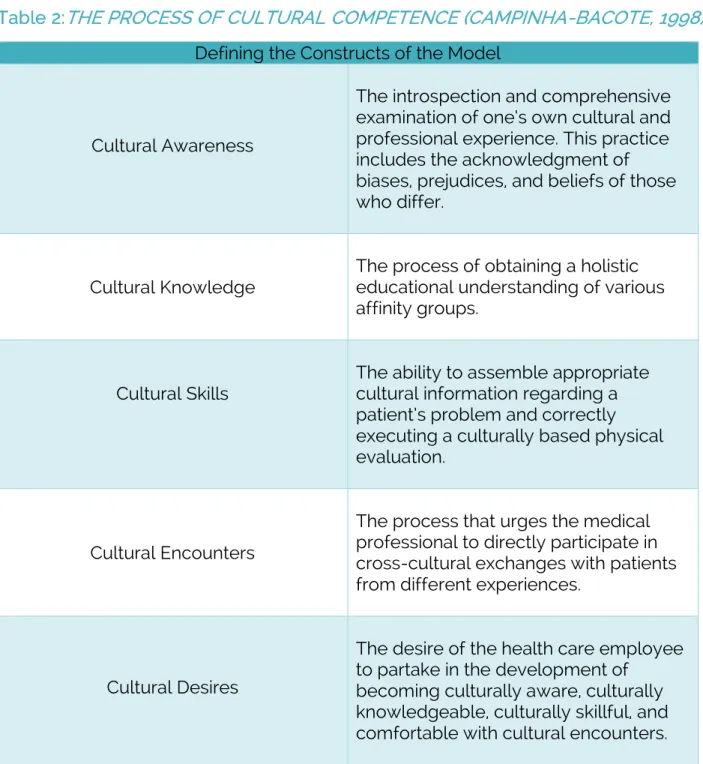
development of cultural competence. Table 2 below defines each of the five elements.
Table 2:THE PROCESS OF CULTURAL COMPETENCE (CAMPINHA-BACOTE, 1998) Defining the Constructs of the Model
Cultural Awareness
The introspection and comprehensive examination of one’s own cultural and professional experience. This practice includes the acknowledgment of biases, prejudices, and beliefs of those who differ.
Cultural Knowledge The process of obtaining a holistic educational understanding of various affinity groups.
Cultural Skills
The ability to assemble appropriate cultural information regarding a patient’s problem and correctly executing a culturally based physical evaluation.
Cultural Encounters
The process that urges the medical professional to directly participate in cross-cultural exchanges with patients from different experiences.
Cultural Desires
The desire of the health care employee to partake in the development of
becoming culturally aware, culturally knowledgeable, culturally skillful, and comfortable with cultural encounters.
(Adapted from Campinha-Bacote, 2002).
The Process of Cultural Competence in the Delivery of Healthcare Services framework has been used in numerous studies. Specifically, previous research applied Campinha-Bacote’s lens to guide the examination of cultural competence in the fields of occupational therapy and public health nursing (Otuata, 2019; Song, 2019). The theory aided in clarifying the rise of inadequate cultural responsiveness in occupational rehabilitation acute care, and the need for recognizing both
commonalities and differentiation between therapists and clients of diverse
backgrounds (Song, 2019). At the completion of the study, the concept strengthened the therapeutic relationship by creating shared treatment goals, which ultimately, amplified the results for the patient (Song, 2019). On the other hand, Otuata (2019) utilized Campinha-Bacote’s work to assist in the improvement of culturally
congruent services for new and existing public health nurses at a community research partner. The organization was able to increase the cultural understanding among nurses and improve the patient experience for underserved communities in the greater Atlanta, Georgia area (Otuata, 2019).
Research Questions
The objective of this capstone project was to understand the level of cultural competence among the employees of YNHS in an effort to determine informed recommendations that support culturally responsive health care, professional development, and DEI initiatives. As research confirmed, having culturally competent medical staff enhances provider self-assurance when working with
diverse populations, builds rapport between doctors and patients, and overall, improves patient satisfaction (Brach & Fraserirector, 2000; Capell, Veenstra, & Dean, 2007; National Center for Cultural Competence, 2003, as cited in Shen, 2015). The study focused on the following key questions:
1. What is the overall self-perception of cultural competence among employees at YNHS?
2. How might an employee’s background impact their understanding of cultural competence?
3. What are the levels of cultural awareness, knowledge, and skills of
administrative leadership and medical providers compared to support staff?
Project Design
Data Collection
To align with the purpose of the study and following the guidance of the Process of Cultural Competence (Campinha-Bacote, 1998) framework, the capstone project employed a quantitative exploratory approach. Data were collected through an adapted version of the Cultural Competence Self-Assessment Checklist (CCSAC), an independent survey, which was the primary method to evaluate the cultural competence levels of YNHS staff. The CCSAC tool was designed in partnership by the Central Vancouver Island Multicultural Society, the Canadian government, and the province of British Columbia. Due to the location of the partnering organization and participant population, the CCSAC survey topics were tailed to Americans as the historical social and racial events between the U.S. and Canada differ, and several questions were rephrased given the grammatical variances in the English language
between the two countries. The original instrument has been used in studies to measure the levels of cultural competence among public health licensed practical and registered nurses (Otuata, 2019). In addition, many educational institutions and healthcare organizations have utilized modified versions of the CCSAC survey such as the American Veterinary Medical Association, the Center for Research and
Education on Violence Against Women and Children at Western University, the La Crosse Medical Health Science Consortium, the United Way, and the Colorado Education Initiative.
The CCSAC included 32 questions around the concepts of cultural awareness, knowledge, and skills, and a 4-point Likert scale that ranged from
“Never” (1) and “Sometimes/occasionally” (2) to “Fairly Often/Pretty Well” (3) and
“Always/Very Well” (4). Please refer back to Table 2: The Process of Cultural Competence for the definition of each concept. Fundamentally, the higher the number of points received, the more culturally competent an employee is
becoming. Thus, the scale is able to identify both areas of strength and the need for further development per domain. Considering the research question around how an individual’s background might impact their perception of cultural understanding, the CCSAC also incorporated pre-survey optional demographic information to better interpret the results of the questionnaire and accurately answer the research
questions. The complete layout and questions of the CCSAC survey can be found in
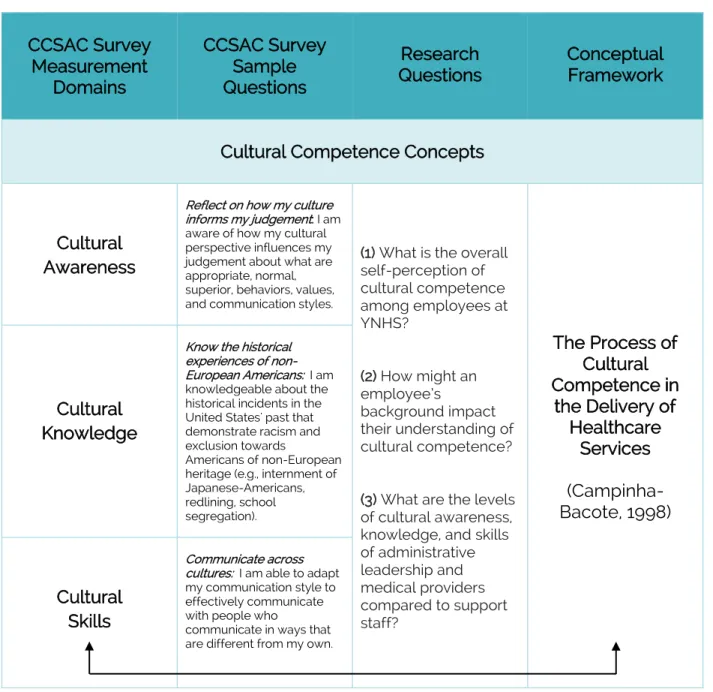
Appendix A. However, Table 3 showcases how the CCSAC tool connects to the identified research questions and Campinha-Bacote’s conceptual framework.
Table 3: CCSAC TOOL RELATION TO CONCEPTUAL FRAMEWORK
CCSAC Survey Measurement
Domains
CCSAC Survey Sample Questions
Research
Questions Conceptual Framework
Cultural Competence Concepts
Cultural Awareness
Reflect on how my culture informs my judgement: I am aware of how my cultural perspective influences my judgement about what are appropriate, normal, superior, behaviors, values, and communication styles.
(1) What is the overall self-perception of cultural competence among employees at YNHS?
(2) How might an employee’s
background impact their understanding of cultural competence?
(3) What are the levels of cultural awareness, knowledge, and skills of administrative leadership and medical providers compared to support staff?
The Process of Cultural Competence in
the Delivery of Healthcare
Services (Campinha- Bacote, 1998) Cultural
Knowledge
Know the historical experiences of non- European Americans: I am knowledgeable about the historical incidents in the United States' past that demonstrate racism and exclusion towards
Americans of non-European heritage (e.g., internment of Japanese-Americans, redlining, school segregation).
Cultural Skills
Communicate across cultures: I am able to adapt my communication style to effectively communicate with people who
communicate in ways that are different from my own.
The CCSAC assessment was distributed in April of 2021 via email by the chief executive officer to all employees, using a survey software tool. The recruited
population for this project was provided one business week to submit their responses from the date the invitation was received, and participation included administrative leadership, administrative support staff, doctors/providers, and health care support staff. Involvement in the study was completely voluntary, respondents could avoid any question that they did not feel comfortable answering, and
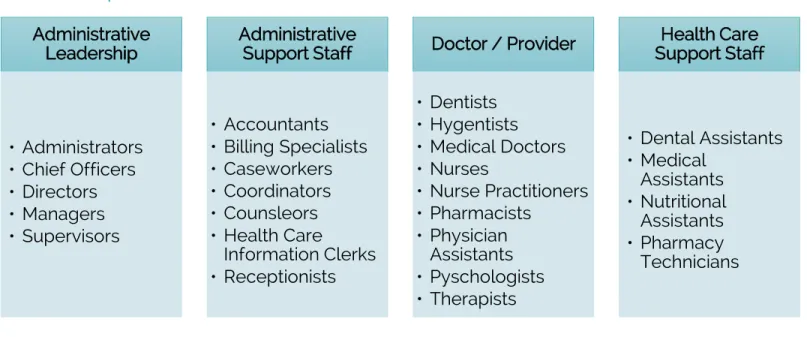
submissions remained anonymous. To better distinguish the sample population, Table 4 introduces a complete list of roles within the organization grouped by functional category.
Table 4: EMPLOYEE ROLES GROUPED BY FUNCTIONAL CATEGORY
Data Analysis
CCSAC survey data were collected using Qualtrics and exported into the programming language, RStudio, for statistical computing, graphics, and analysis.
The information was characterized into three domains of cultural competency (cultural awareness, knowledge, and skills) using the mean (m) and standard Administrative
Leadership
• Administrators
• Chief Officers
• Directors
• Managers
• Supervisors
Administrative Support Staff
• Accountants
• Billing Specialists
• Caseworkers
• Coordinators
• Counsleors
• Health Care Information Clerks
• Receptionists
Doctor / Provider
• Dentists
• Hygentists
• Medical Doctors
• Nurses
• Nurse Practitioners
• Pharmacists
• Physician Assistants
• Pyschologists
• Therapists
Health Care Support Staff
• Dental Assistants
• Medical Assistants
• Nutritional Assistants
• Pharmacy Technicians
deviation (SD). In addition, a series of t-tests were applied to compare cultural competence across demographic strata. Although a total of 106 responses were submitted, the analytic sample was comprised of 82 individuals. If the self-
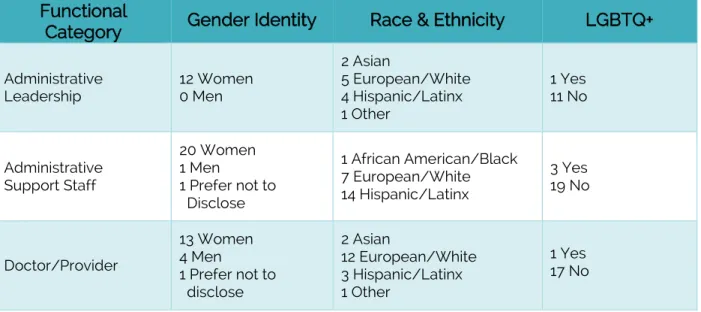
assessment submission had less than 80% of the CCSAC complete, the responses were not considered in the measurement of each domain to avoid possible skewed results. Among the participants, 80.2% identified as female, 47.6% reported being Hispanic/Latinx, and 9.8% identified as a member of the LGBTQ+ community. In addition, of the sample, 14.6% of respondents held the role of administrative leadership, 26.8% were administrative support staff, 28.0% were medical support staff, and 22.0% were providers/doctors. Table 5 illustrates the breakdown of participants within the organization by race and ethnicity, gender identity, sexual orientation, and employment functional category.
Table 5: CCSAC PARTICIPATION DATA Functional
Category Gender Identity Race & Ethnicity LGBTQ+
Administrative
Leadership 12 Women
0 Men
2 Asian
5 European/White 4 Hispanic/Latinx 1 Other
1 Yes 11 No
Administrative Support Staff
20 Women 1 Men
1 Prefer not to Disclose
1 African American/Black 7 European/White 14 Hispanic/Latinx
3 Yes 19 No
Doctor/Provider
13 Women 4 Men
1 Prefer not to disclose
2 Asian
12 European/White 3 Hispanic/Latinx 1 Other
1 Yes 17 No
Health Care Support Staff
19 Women
4 Men 6 European/White
17 Hispanic/Latinx 2 Yes
21 No
Unknown
2 Women 1 Men
4 Prefer not to disclose
1 Hispanic/Latinx 6 Other
1 Yes 2 No
4 Prefer not to disclose
The investigator also collected secondary data that included both publicly available records and confidential information. The YNHS documents received were provided by the chief executive officer during the duration of the project.
Supplemental documentation was reviewed pre- and post- CCSAC survey distribution. Additional sources included: (1) YNHS 2019 Annual Report and (2) C4 Innovations Leadership & Administrator Training.
Limitations
There are several noteworthy limitations within this project. First, due to COVID-19 and the organization serving on the frontlines to combat the virus, the methods used in this study were restricted due to time, availability, and safety. The initial capstone design included follow-up interviews and/or focus groups. Second, the assessment tool employed to evaluate the cultural competency level of each employee was not the original instrument developed by Campinha-Bacote as cost and access were an impediment. Third, the assessment tool, like most designed within the cultural competence space, was based on self-perception. There is a possibility that an individual can perceive themselves to uphold more cultural
understanding than they actually possess. Furthermore, the survey instrument only measures cultural awareness, knowledge, and skills. Additional development is needed to better interpret the cultural encounters and desires within the conceptual framework. And lastly, there was a significant gender imbalance among the
participants. The sample size consisted of 80.2% women, which makes it difficult to determine a meaningful generalization around levels of cultural competence in men.
Findings
Research Question 1
The first research question was focused on the self-perception of cultural competence among employees at YNHS. One major finding surfaced from this inquiry, but an individual’s identity impacted their sensibility of cultural competence and provided an additional discovery. Prior to the self-assessment, participants received information on the purpose of the study, definitions around cultural competence, and additional context on the concepts of cultural awareness, knowledge, and skills.
FINDING 1: EMPLOYEES AT YNHS PERCEIVE THEMSELVES AS RELATIVELY CULTURALLY
COMPETENT. TYPICALLY,“FAIRLY OFTEN/PRETTY WELL” WAS SELECTED WHEN
REFLECTING ON THEIR INTERACTIONS WITH OTHERS FROM DIVERSE BACKGROUNDS.
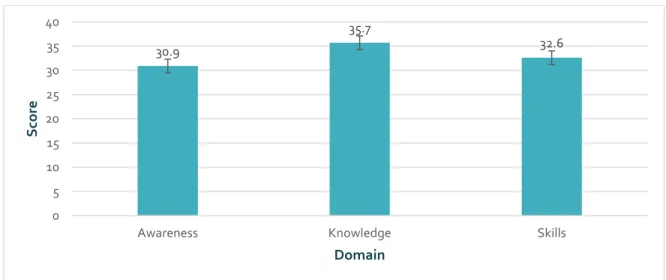
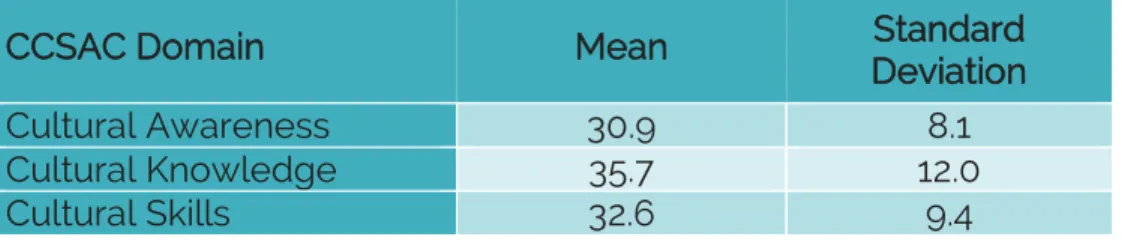
The CCSAC instrument attempted to probe respondents on their views towards different groups, their educational understanding of identity, and ability to engage in a culturally responsive approach. YNHS employees scored an overall average of 99.2 points on a scale of 0 to 128 across the three domains of cultural awareness, knowledge, and skills. More specifically, the scale range for cultural awareness and knowledge were 0 to 40, whereas the scale for cultural skills was 0 to 48 due the varying number of questions within each section of the survey. The mean and standard deviation for each domain is listed in Table 6. Furthermore, Figure 2 highlights the average score for each cultural concept.
Table 6: MEAN & STANDARD DEVIATION PER DOMAIN
CCSAC Domain Mean Standard
Deviation
Cultural Awareness 30.9 8.1
Cultural Knowledge 35.7 12.0
Cultural Skills 32.6 9.4
Figure 2: OVERALL AVERAGE SCORE FOR EACH CCSAC DOMAIN
30.9
35.7
32.6
0 5 10 15 20 25 30 35 40
Awareness Knowledge Skills
Score
Domain
RESEARCH QUESTION 2
The second area of interest was to understand how an employee’s racial or ethnic background, gender, and/or sexual orientation might influence their
perception and levels of cultural competence. The investigator compared the optional pre-survey data with the participant responses across the CCSAC domains of cultural awareness, knowledge, and skills.
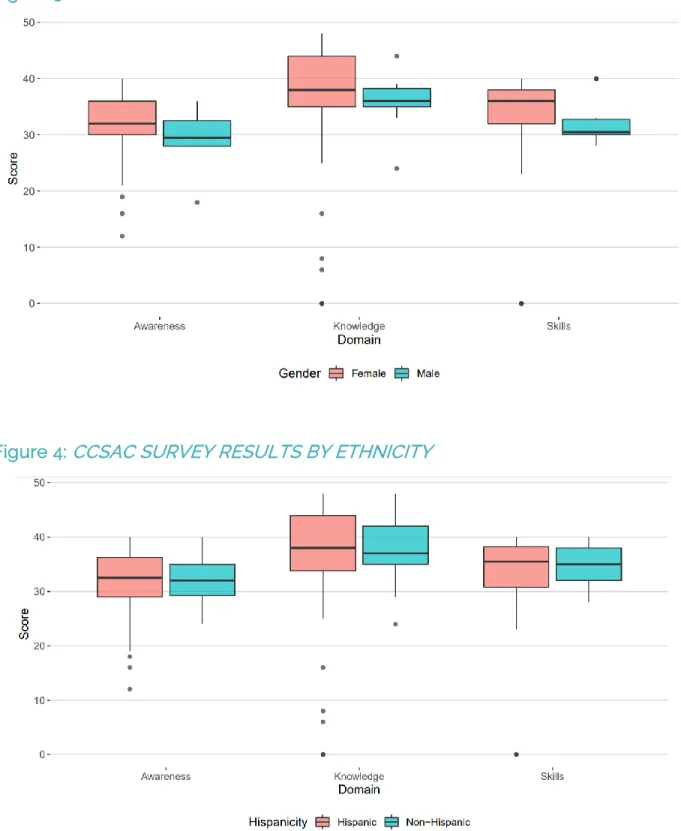
On average, respondents who identified as female as opposed to male reported higher levels of cultural awareness, knowledge, and skills. In addition, employees of Hispanic/Latinx descent compared with non-Hispanic/Latinx, and LGBTQ members compared with non-LGBTQ participants also reported higher levels within each domain. However, these differences were not statistically significant at the .05 level.
Figures 3 through 5 display the average score for each domain by gender, race and ethnicity, and LGBTQ versus non-LGBTQ.
FINDING 2: YNHS EMPLOYEES THAT IDENTIFY AS A MEMBER OF A MARGINALIZED
GROUP, SPECIFICALLY HISPANIC, WOMEN, AND/OR LGBTQ, REPORTED BEING MORE
CULTURALLY COMPETENT.
Figure 3: CCSAC SURVEY RESULTS BY GENDER
Figure 4: CCSAC SURVEY RESULTS BY ETHNICITY
Figure 5: CCSAC SURVEY RESULTS BY LGBTQ VS. NON-LGBTQ
RESEARCH QUESTION 3
To obtain a deeper understanding how employees within different functional areas of the organization might think about their interactions with diverse
populations, the third research question focused on how levels of cultural
competence could possibly vary depending on their role and the amount of patient contact.
Across all three domains, support staff, including health care and administrative support, had higher levels of cultural awareness, knowledge, and skills, on average.
FINDING 3: ADMINISTRATIVE AND HEALTH CARE SUPPORT STAFF ARE PERCEIVED TO
BE MORE CULTURALLY COMPETENT THAN YNHS LEADERSHIP AND PHYSICIANS.
Although there was not a .05 level of statistical significance, those in
doctor/provider or administrative leadership roles, typically, were less culturally confident and lacked social consciousness in comparison to their peers in support roles. Figure 6 below features the average scores among employees within
different functional roles.
Figure 6: RESULTS FOR EACH CCSAC DOMAIN BY FUNCTIONAL CATEGORY
When the investigator assessed the findings across all three areas of inquiry, there was a parallel to be made between an employee’s identity, their role, and perception of cultural competence. The findings indicate that women, members of the Hispanic/Latinx community, and employees within support roles have higher levels of cultural competence. When comparing the data, of those in support staff positions, 86.6% identified as women and 68.8% were Hispanic/Latinx. As the
literature suggests, an individual’s background shapes their cultural views and health care professionals of historical underrepresented groups, have a stronger ability to connect and find commonalities with patients of diverse cultural
backgrounds (Behar-Horenstein et al., 2016; Cuevas et al., 2017). As a result, the findings align with previous research in that people of marginalized communities generally have a higher degree of cultural competence.
Recommendations
Cultural competence has growingly been identified as a crucial factor to address issues around health disparities (Fung et al., 2012). More than ever, community health centers in the U.S. need administrative leadership to employ strategies that are efficient and promote culturally responsive care (Guerrero et al., 2017). However, DEI efforts must be a collaborative approach between chief officers, board members, community members, and clinical physicians in order to achieve progress (Dreachslin et al., 2017). Although the cultural competence levels among staff at YNHS are relatively positive as demonstrated in finding 1, it is an ongoing learning process. Continuous professional development is necessary to bridge health inequality, improve patient-satisfaction, and create an inclusive experience for all (Olivarria et al., 2009). Thus, the recommendations provided were based on the core research questions and findings of this study, attempt to further develop YNHS staff within the various cultural stages of the conceptual framework, and
aligned with the Office of Minority Health’s national standards through the U.S.
Department of Health and Human Services.
Research advises that a systemic cultural competence intervention expands the overall intellectual awareness, knowledge, and skills of health professionals (Avila et al., 2016). An organizational taskforce can be defined as group of individuals that have been selected to lead an executive initiative that will implement change (Fung et al., 2012). The taskforce should be representative of all levels within the company such as those in administrative support, managerial, and clinical positions (Whaley & Longoria, 2008). This guidance was associated with the outcomes of this study as finding 2 and 3 suggested that employees of color and in support roles have higher levels of cultural competency. But more importantly, the committee should reflect the diverse populations that are being served (Dreachslin et al., 2017).
The primary responsibilities of a taskforce are to: (1) continuously improve the organization’s level of cultural competence and quality of care, (2) create a cultural competence strategic plan, (3) establish implementation policies and procedures, and (4) evaluate the clinic’s overall effectiveness (Fung et al., 2012). As a result, the investigator suggested that the taskforce spearhead recommendations 2 through 7.
RECOMMENDATION #1: ESTABLISH AN ORGANIZATIONAL TASKFORCE COMMITTEE
A diverse workforce has become a primary area of focus for many companies across industries as organizations have recognized the competitive advantage it can bring to their productivity (Tipper, 2004). Finding 2 informed the investigator that YNHS employees of BIPOC communities have stronger cultural interactions with vulnerable populations. Thus, hiring additional employees from historically
underrepresented groups, specifically in doctor and leadership roles, might help to increase cultural expertise across the organization. This initiative should consider market research, the professional network of current employees, appropriate sourcing tools, marketing and communication channels, and an inclusive hiring process (Tipper, 2004).
The literature further argues that diversity and cultural appreciation education helps to improve cultural competence levels (Musolino et al., 2010). The purpose of such development is to build awareness around cultural differences, discrimination, biases, and conflict resolution (Curtis et al., 2007). It is important to be tactical with
RECOMMENDATION #2: BUILD A DIVERSITY RECRUITMENT STRATEGY
RECOMMENDATION #3: PROVIDE ONGOING EVIDENCE-BASED CULTURAL
COMPETENCE DEVELOPMENT FOR EMPLOYEES
the training being delivered; it should be specific to the organization’s overall goal, delivered through multiple training methods, offer real-time assistance to trainees, and continuous (Littrell et al., 2005).
Healthcare organizations should incorporate patient satisfaction surveys into their overall cultural competence improvement process (Lan et al., 2017). Client feedback not only helps medical professionals better understand the populations that they serve, but also allows the organization to recognize both their areas of strength and opportunities for growth (U.S. Department of Health & Human Services, 2014). Moreover, feedback permits health professionals to gauge the community’s awareness around services, programs, and even possible misinformation (Gill et al., 2009). This is a critical step for YNHS as finding 3 showcased that progress in
cultural knowledge and awareness can be attained for providers and those in leadership positions.
RECOMMENDATION #4: SURVEY PATIENTS TO BETTER UNDERSTAND
CULTURAL NEEDS
RECOMMENDATION #5: PATIENT JOURNEY MAPPING
To further assess the desires of patients and to better understand employee- client interactions, YNHS should consider integrating a patient journey mapping process. This method is used to interpret the hospital or clinic experience from the patient’s perspective and to evaluate the multitude of touch points within a client visit (McCarthy et al., 2016). Journey mapping incorporates both the physical and emotional experience through observing behaviors, feelings, and attitudes
throughout the patient’s appointment (Hostyn, 2011, as cited in McCarthy et al., 2016).
Given the limitations to this study, this process will assist YNHS leadership in assessing the cultural confidence of the medical physicians while engaging with vulnerable communities.
Within BIPOC populations, family and community engagement is critical.
Often times, relatives are part of the patient’s support network and essential to successful treatment (Taylor et al., 2013). Community engagement includes
targeting specific populations and the community at large through media channels, promotional material, local events, and home visits; building relationships beyond a doctor’s appointment (Fung et al., 2012). This suggestion is an opportunity to create a sense of belonging, distribute valuable information, and build on culturally
competent care (Dreachslin, 2012).
RECOMMENDATION #6: CREATE COMMUNITY ENGAGEMENT OPPORTUNITIES
There are many assessment tools that have been developed over the last decade around cultural competence. At Georgetown University, the National Center for Cultural Competence has created numerous resources to assist organizations in continuous evaluation and process intervention that are specific to the healthcare industry. As YNHS works to implement various DEI initiatives, it will be imperative to measure such efforts for potential improvement around cultural awareness,
knowledge, and skills. To summarize the suggestions discussed, Figure 7 underlines the complete list of recommendations for YNHS.
Figure7:SUMMARIZEDRECOMMENDATIONSFORYNHS
Organizational Taskforce
Build Diversity Recruitment Strategy
Ongoing Evidence- Based Development
Survey Patients
Patient Journey Mapping
Community Engagement
Seek Additional Cultural Competence
Tooling for Further Assessment
RECOMMENDATION #7: SEEK ADDITIONAL CULTURAL COMPETENCE TOOLING
FOR FURTHER ASSESSMENT
Through the National Center for Healthcare Leadership Diversity
Demonstration Project, similar recommendations were provided to two U.S. hospital systems in which the following accomplishments were achieved: (1) employees felt more comfortable discussing diversity topics, (2) leadership and providers became more aware of cultural issues, (3) patient satisfaction increased, and (4) the hospitals gained more community trust and saw an increase in patient volume of diverse backgrounds (Dreachslin et al., 2017).
Discussion/Conclusion
This capstone project aspired to offer senior leadership at YNHS increased insight around employee cultural understanding as the organization works to advance efforts in DEI. Similar to community health centers across the U.S., YNHS strives to extend learning and development in all departments in hopes of improving access and the overall experience for patients of diverse backgrounds. In order to explore the problem of practice, this study addressed three questions centered around cultural competence. The study depended on the CCSAC survey and quantitative data to reach three findings and seven recommendations for advancement. The outcomes determined that the overall level of cultural
competence among staff was relatively high. However, employees of historically underrepresented groups and those in frontline positions, had higher levels of cultural awareness, understanding, and skills than the administrative leadership and medical doctors. As a result, the recommendations emphasized the importance of
establishing an organizational taskforce, building a diversity recruitment strategy, continuous training, obtaining patient feedback, journey mapping, and community engagement. In addition, given the multilayered approach, it will be imperative for YNHS to further assess employee cultural competence levels over time. As
Campinha-Bacote (2002) claims, cultural competence is a lifelong journey that requires healthcare professionals to constantly aim to reach the aptitude to effectively treat patients within the cultural context of the person, family, and/or community.
References
Avila, M. M., Kamon, J. L., & Beatson, J. E. (2016). Addressing health disparities
through cultural and linguistic competency trainings. The ABNF Journal, 27(4), 83–87.
Behar-Horenstein, L.S., Garvan, C.W., Su, Y., Feng, X., & Catalanotto, F.A. (2016).
Assessing cultural competence among Florida’s allied dental faculty. The Journal of Dental Hygiene, 90(3), 192–196.
Blair, I. V., Steiner, J. F., Fairclough, D. L., Hanratty, R., Price, D. W., Hirsh, H. K., Wright, L. A., Bronsert, M., Karimkhani, E., Magid, D. J., & Havranek, E. P. (2013).
Clinicians’ implicit ethnic/racial bias and perceptions of care among black and latino patients. The Annals of Family Medicine Journal, 11(1), 42–52.
Boroughs, M.S., Bedoya, C.A., O’Cleirigh, C., & Safren, S.A. (2015). Toward defining, measuring, and evaluating LGBT cultural competence for psychologists.
Society of Clinical Psychology, 22(2), 151–171.
Boucher, N. A., & Johnson, K. S. (2021). Cultivating cultural competence: How are hospice staff being educated to engage raciall and ethnically diverse
patients? American Journal of Hospice & Palliative Medicine, 28(2), 169–174.
Campinha-Bacote, J. (2002). The process of cultural competence in the delivery of healthcare services: A model of care. Journal of Transcultural Nursing, 13(3), 181–184.
Cuevas, A. G., O’Brien, K., & Saha, S. (2017). What is the key to culturally competent care: Reducing bias or cultural tailoring? Psychology & Health, 32(4), 493–507.
Dauvrin, M. & Lorant, M. (2015). Leadership and cultural competence of healthcare professionals. Nursing Research, 64(3), 200–210.
Dreachslin, J. L., Gilbert, M. J., & Malone, B. (2012). Diversity and Cultural Competence in Health Care: A Systems Approach. Wiley Publishers.
Dreachslin, J. L., Weech-Maldonado, R., Jordan. L. R., Gail, J., Patien-Epane, J., &
Wainio, J. A. (2017). Blueprint for sustainable change in diversity management and cultural competence: Lessons from the national center for healthcare leadership diversity demonstration project. Journal of Healthcare
Management, 61(3), 171–183.
Echeverri, M., Brookover, C., & Kennedy, K. (2013). Assessing pharmacy students’
self-perception of cultural competence. Journal of Health Care for the Poor and Underserved, 24, 64–92.
Foster Curtis, E., & Dreachslin, J.L. (2007). Diversity and cultural competence training in health care organizations. The Health Care Manager, 26(3), 255–262.
Fung, K., Hung-tat, T. L., Srivastava, R., & Andermann, L. (2012). Organizational cultural competence consultation to a mental health institution. Transcultural
Psychiatry, 49(2), 165–184.
Gill, L., & White, L. (2009). A critical review of patient satisfaction. Leadership in Health Services, 22(1), 9–19.
Goodman, M. S., Gilbert, K. L., Hudson, D., Milam, L., & Colditz, G. A. (2017). Descriptive analysis of the 2014 race-based healthcare disparities measurement
literature. Journal of Racial and Ethnic Health Disparities, 4, 796–802.
Govere, L., & Govere, E. M. (2016). How effective is cultural competence training of healthcare providers on improving patient satisfaction of minority groups? A systematic review of literature. Worldviews on Evidence-Based Nursing, 13(6), 402–410.
Guerrero, E. G., Fenwick, K., & Kong, Y. (2017). Advancing theory development:
Exploring the leadership-climate relationship as a mechanism of the implementation of cultural competence. Implementation Science, 12(133), 1–12.
Hall, M. B. (2012). Evaluation of cultural competence and health disparities
knowledge and skill sets of public health department staff (Publication No.
3524871) [Doctoral dissertation, Texas A&M University]. ProQuest Dissertations Publishing.
Lan, Y. L. & Yan, Y. H. (2017). The impact of trust, interaction, and empathy in doctor- patient relationship on patient satisfaction. Journal of nursing and health studies, 2(2), 1–7.
Littrell, L. N., & Salas, E. (2005). A review of cross-cultural training: Best practices, guidelines, and research needs. Human Resource Development Review, 4(3), 305–334.
McCarthy, S., O’Raghallaigh, P., Woodworth, S., Lim, Y. L., Kenny, L. C., & Adam, F.
(2016). An integrated patient journey mapping tool for embedding quality in healthcare services reform. Journal of Decision Systems, 25(1), 354–368.
McFarland, M.R., & Wehbe-Alamah, H.B. (2019). Leininger’s theory of culture care diversity and universality: An overview with a historical retrospective and a view toward the future. Journal of Transcultural Nursing, 30(6), 540–557.
Musolino, G.M., Burkhalter, S.T., Crookston, B., Ward, R.S., Harris, R.M., Chase
Cantarini, S., & Babitz, M. (2010). Understanding and eliminating disparities in health care: Development and assessment of cultural competence for interdisciplinary health professionals at the University of Utah—a 3-year investigation. Journal of Physical Therapy Education, 24(1), 25–36.
Olavarria, M., Beaulac, J., Belanger, A., Young, M., & Aubry, T. (2009). Organizational cultural competence in community health and social organizations: How to conduct a self-assessment. Journal of Cultural Diversity, 16(4), 140–150.
Otuata, A.M. (2019). Cultural competence of public health nurses who care for
diverse populations (Publication No. 13877687) [Doctoral dissertation, Walden University]. ProQuest Dissertations Publishing.
Price, J. H., Khubchandani, J., McKinney, M., & Braun, R. (2013). Racial/Ethnic disparities in chronic diseases of youths and access to health care in the united states. BioMed Research International, 1, 1–12.
Schinkel, S., Schouten, B. C., Street, R. L., van de Putte, B., & van Weert, J. C. M. (2016).
Enhancing health communication outcomes among ethnic minority patients:
The effects of the match between participation preferences and perceptions and doctor-patient concordance. Journal of Health Communication, 21(12), 1251–1259.
Sears, K. P. (2012). Improving cultural competence education: the utility of an intersectional framework. Medical Education, 46, 545–551.
Shen, Z. (2015). Cultural competence models and cultural competence assessment instruments in nursing: A literature review. Journal of Transcultural Nursing, 26(3), 308–321.
Shepherd, S. M., Willis-Esqueda, C., Newton, D., Sivasubramaniam, D., & Paradies, Y.
(2019). The challenge of cultural competence in the workplace: Perspectives of healthcare providers, BMC Health Services Research, 19, 2–11.
Song, J. (2019). Essentials for developing cultural competence in occupation therapy:
The cultural competence workshop for occupational therapy practitioners (CCWOT) (Publication No. 27539427) [Doctoral dissertation, Boston University].
ProQuest Dissertations Publishing.
Taylor, S. P., Nicolle, C., & Maguire, M. (2013). Cross-cultural communication barriers in health care. Nursing Standard, 27(31), 35–43.
Tipper, J. (2004). How to increase diversity through your recruitment practices.
Industrial and Commercial Training, 36(4), 158–161.
US. Department of Health & Human Services. (n.d.). Cultural and Linguistic Competency. Office of Minority Health. https://minorityhealth.hhs.gov/
Whaley, A. L., & Longoria, R. A. (2008). Assessing cultural competence readiness in community mental health centers: A multidimensional scaling analysis.
Psychological Services, 5(2), 169–183.
Wheeler, S. M., & Bryant, A. S. (2017). Racial and ethnic disparities in health and health care. Obstetrics and Gynecology Clinics of North America, 44(1), 1–11.
White Hughto, J. M., Clark, K. A., Altice, F. L., Reisner, S. L., Kershaw, T. S., & Pachankis.
(2017). Improving correctional healthcare providers’ ability to care for
transgender patients: Development and evaluation of a theory-driven cultural and clinical competence intervention. Social Science & Medicine, 195, 159–
169.
Williams, D. R., & Purdie-Vaughns, V. (2016). Population health: Needed interventions to reduce racial/ethnic disparities in health. Journal of Health Politics, Policy, and law,41(1), 627–651.
Yakima Neighborhood Health Services. (n.d.). About YNHS. https://www.ynhs.org/
Young, S., & Guo, K. L. (2020). Cultural diversity training: The necessity of cultural competence for health care providers and in nursing practice. Health Care Manager, 39(2), 100–108.