Development of the “Oshiete! Kaden”
(“Tell Me! Consumer Electronics”) Website — Recommending Merchandises Through the Deployment of a Web Recommendation Engine
With the emergence of the Internet, the ways of searching for information for the purpose of developing new businesses has changed dramatically. To launch the product recommendation web- site, “Oshiete! Kaden,” within a span of several months, it was essen- tial to engage in the gathering of timely information, the sharing of information, and the management of information. I will give a brief description of the Web recommendation engine, “Bull’s eye,”
and “Oshiete! Kaden” and then move on to present concrete case studies to comment on information search methods implemented in all the stages, ranging from the stage of conceiving the idea for a business development to the stage of website development and initial operation.
7.1 Web Recommendation Engine 7.1.1 What is a recommendation?
An Internet business that specializes in customizing the selection and display of information according to what may appear to be interesting to an individual customer is generally designated as a recommenda- tion service. If your website were to know what items or services its
197
visiting customers were looking for or what their preferences were, you will certainly be able to realize an ultimate form of one-to-one marketing.
For the customer, if a website only displays information that interests them, there will be the merit of being able to save time, as it will become unnecessary for them to select their required infor- mation from vast amounts of data. For the business offering the website, on the other hand, there will be the merit of being able to expect an increase in sales by being able to acquire new customers at low cost, prevent the loss of existing customers, and improve purchasing frequency and amount. Additionally, the business can also expect to acquire customer satisfaction through the delivery of appropriate information. Web recommendation is indeed a key technology that assumes the role of true Customer Relationship Management (CRM).
7.1.2 The history of recommendation
From the latter half of the 1990s to the beginning of the 2000s, the recommendation engine began to heat up. Net Perceptions Japan, a Japanese subsidiary of the US Net Perceptions,21released in Decem- ber 1999 a software that could refer to the personal purchase history of customers to automatically select the products they are likely to buy next and propose those products to them. The software went on to be adopted by Amazon2 and later by Nissen Online20as well.
In August 1998, Thomas Foley, a US software engineer, and Junko Nishimura, an entrepreneur, established the company, Sil- ver Egg Technology,16 and in the autumn of 2000, this company released “Aigent,” a service based on “deep knowledge” technology.
Specifically, Aigent uses artificial intelligence technology to analyze on-site buying and browsing patterns of individual customers and display the most suitable products for them.
Soon after, the recommendation market cooled down temporar- ily, but this was not because of any problem with the technology.
Rather, it was mainly due to the fact that the cost effectiveness of introducing the relatively expensive recommendation engine was not clear and the fact that the network infrastructure and Web technol- ogy were still in their formative stages, making it difficult for the engine to sufficiently function.
With the arrival of Web 2.0, the cost of servers declined drasti- cally while their performance rose dramatically and affiliate networks and the drop shipping system began to appear on the scene. Con- sequently, the environment for the recommendation engine began to see a remarkable change. Amid the rise of various portal sites and comparison sites such as “Kakaku.com”10 (Price.com), anticipation for the recommendation engine to provide a competitive means of differentiation has become substantial. It is expected that there will be a rise in the number of companies, such as “Kenko.com,”14 that will install their own recommendation engine, and companies, such as “Yamada Denki Web.Com,”27 that will install external systems such as Bull’s eye through ASP.
7.1.3 Types of recommendation engines
There are several ways to classify recommendation engines. Here, I will basically explain the kinds of data used for the purpose of making recommendations. Following are some examples of such data:
1) Attribute data acquired from customers 2) Data of preferences acquired from customers 3) Customer purchase history data
4) Customer web browsing data (Web log data) 5) Product specification data
6) Product sales data (POS data, etc.).
One way of implementing the first type of data above is to acquire data on the gender and age of customers at the time of their registration or enrollment and recommending products based on predetermined age and gender-specific rules when those customers
visit the site again. For example, if the customer is a man who is forty years old, then the recommendation could be a golf club. The most basic method of this kind is known as “questionnaire-based fil- tering.” The second method is one form of the questionnaire-based filtering technique, as it requires visitors to declare their preferences before the website offers product recommendations related to those preferences. The preferences are indicated through multiple answer questionnaires, often times revealing personal interests and hobbies.
While the recommendation algorithms for these methods are sim- ple, prior registration is necessary so recommendations cannot be made for first-time visitors. Additionally, there is the problem that these methods are too standardized, making them capable of offering recommendations of commonplace items only.
The third method of implementing customer purchase history data is called “rule-based filtering,” since it involves making product recommendations by following a predetermined rule that follows the following line of thought; people purchasing product A are highly likely to purchase product B. This is the so-called basket analysis, which is based on the “if-then” line of thinking that is evident in such cases as recommending diapers to people who buy beer. What sets this method apart from the questionnaire-based filtering method is that visitor attributes and preferences are not linked to recommended products, but instead rules are set once product to product relevan- cies are established based on multivariate analysis and data mining approaches.
The method known as collaborative filtering, which is famous for being the method adopted by Amazon,2 employs data of pur- chase histories of customers in the way method No. 3 does, but the analytical algorithm is different. In making product recommen- dations, this method does not observe the rule of assuming that people who buy product A will also buy product B. Instead, this method makes product recommendations on the basis of assuming that people who buy similar items are similar themselves and therefore
the items bought by similar people will be bought in similar ways by other similar people. In other words, this method is based on making assumptions that are rooted in affinity-based reasoning.
7.1.4 The web recommendation engine “Bull’s Eye”
Bull’s eye (Figure 7-1) was developed by Albert Inc.3and the data it employs are the No. 2 and No. 5 ones mentioned in Section 7.1.3.
However, what is distinctive about this engine is that it does not acquire customer preference data in advance, but instead acquires such data in real time when it makes recommendations. Therefore, it can also recommend products to people who visit a website for the first time. Since rule-based and collaborative filtering techniques select products on the basis of making statistical, probabilistic infer- ences, the recommended products may not always be the products actually sought out by customers. However, Bull’s eye is capable of recommending items that customers definitely want since it directly inquires them about the level of importance they attach to sought-out features and characteristics.
At the heart of this approach is the fact that consumer selec- tions are determined through overall evaluations. Individual differ- ences between evaluations are the individual differences in the level of importance attached to product attributes and in the individ- ual evaluations for standards. The system is fundamentally based on the concept that consumers will choose to purchase from a multiple number of choices those items they evaluate the most highly. In effect, the system possesses detailed data of specifications of all potentially
Figure 7-1: Recommendation Engine “Bull’s Eye”
recommendable products, and based on the narrowing down of choices by customers and their declarations of how important certain product attributes are to them, it becomes possible for the system to faithfully make recommendations of products that are closest to the ones that customers seek. Furthermore, there is the merit that the system will be able to offer precise recommendations of even com- pletely new products, since it does not employ data pertaining to personal purchase records.
7.2 Product Recommendation Website “Oshiete! Kaden”
7.2.1 What is “Oshiete! Kaden”?
In this present age that has seen the advent of the networked soci- ety, consumer behavior patterns are changing from AIDMA, to AISAS(Figure 7-2). AIDMA was proposed by Roland Hall and is an acronym for Attention→Interest→Desire→Memory→Action (purchase). It is also considered to be a process of reacting to communication. AISAS, on the other hand, is an acronym for Attention→Interest→Search→Action→Share, indicating that a change is taking place in the process after the stage when a consumer gains interest. (AISASis a registered trademark of Dentsu Inc.) In these present times, for the purpose of attracting attention, Internet banner and text ads have become as viable as radio, TV, newspa- per, and magazine ads and selling through the Internet is becoming
Attention Interest Desire Memory Action
Attention Interest Search Action Share
Figure 7-2: From AIDMA to AISAS
more commonplace. Amid such an environment, consumers are increasingly making use of search engines, such as Google12 and Yahoo24, and of comparison sites, such as Kakaku.com10, to research about products that interest them immediately prior to mak- ing purchases. In other words, for a consumer searching with interest, the Internet has made it possible for them to make speedy purchases.
Furthermore, after purchase, an unprecedented pattern has been added. Namely, this involves making use of online bulletin boards, blogs, and Social Networking Services (SNS) to share information on what had been purchased or consumed. Thanks to this new pat- tern, it has become possible for consumers at the search stage to receive opinions expressed by people who had already made pur- chases. In fact, it has become possible for many people to make decisions on the basis of what has been written on comparison and community sites.
However, with regard to consumer electronics products, whose product specs are becoming more complex and whose variations con- tinue to increase, the amount of information available is too vast, and for individuals of the follower group, who do not understand the specs necessary for conducting effective searches to narrow down their choices, the task of choosing the right product is certainly con- fusing for the most part.
In addition to helping customers make product selections,
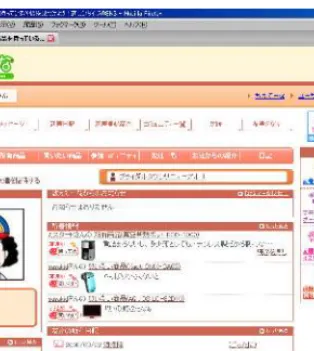
“Oshiete! Kaden” is a website that offers solutions for all sorts of concerns and troubles that may arise from the time after a purchase is made to the time of making replacements (Figure 7-3). As for providing product-selection support, the website offers the fol- lowing three recommendation features, while also offering search features, various information services, and support for repair and throwaway replacements.
Figure 7-3: The Front Page of “Oshiete! Kaden”
7.2.2 Three recommendation features 1) Recommendation by Bull’s eye
The recommendation engine, “Bull’s eye,” is a system that can make real-time recommendations of products and services that perfectly meet various user needs. Many product recommendations can be found not only on the Internet, but also in the analog world of newspapers, magazines, and word-of-mouth. However, not many of them have structures that make it possible to offer recommendations
of products from a neutral standpoint and in a quantitative manner so as to be able to offer products that truly meet personal needs.
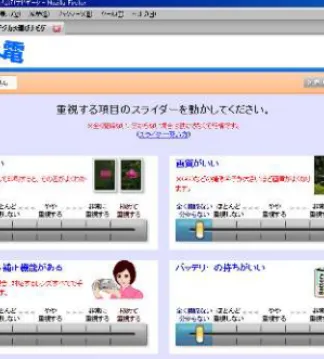
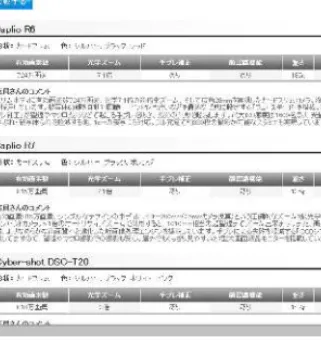
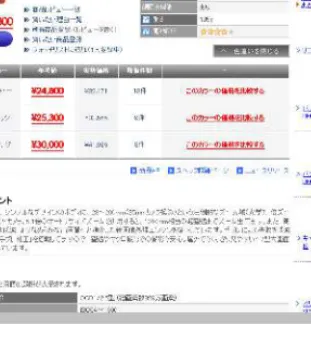
Regarding the products customers want, Bull’s eye inquires them about what they deem to be necessary features and characteristics and what level of importance they attach to them. In other words, Bull’s eye acquires the previously discussed individual evaluations that weigh the importance of product attributes and standards. The weighing is realized through the use of a slider interface that allows a visitor to indicate their answers to simple questions on an impul- sive level (Figure 7-4). In so doing, it becomes possible for the sys- tem to search for products that are considered to be optimal for the visitor. Consequently, the system displays these products in the order of how well they match the features requested by the visitor (Figure 7-5). Additionally, with regard to difficult questions and specifications, the system is designed to provide easy-to-understand
Figure 7-4: Inputting Assessments of Importance with a Slider Interface
Figure 7-5: Recommendation Results
explanations as the need arises. For this reason, the system will be able to find products that perfectly meet the needs of even followers whose product literacy may not be high.
Additionally, the website makes it possible to look up detailed specifications of recommended products or make comparisons of the specifications, while also displaying a list of stores selling the recommended products, making it also possible to purchase them from the web itself.
2) Recommendation by experts
Recommendations made by experts are highly valuable types of rec- ommendations that make good use of human knowledge and expe- rience. In a web-based survey, the following question was asked:
Among the products or services that you have recently bought or are planning to buy, what products or services did you have or are
having much trouble in choosing, if any? Include up to three items in your response. The top three responses were as follows: No. 1 was the PC, No. 2 was the digital camera, and No. 3 was the DVD recorder.
Upon asking about how they went about resolving their concerns and making final decisions, the No. 1 response was “consulting with a shop assistant,” and the No. 2 response was, “consulting with friends or acquaintances.” In other words, it came to light that many consumers were resolving their issues or their indecision by consult- ing with shop assistants or friends or acquaintances rather than by making use of company websites and search engines.
In response to these findings, Oshiete! Kaden created the system,
“Ask the shop assistant,” which made it possible to directly pose questions to experts through the web (Figure 7-6). These experts included actual staff members of consumer electronics mass retailers and repair and installation agents. In effect, the website made it
Figure 7-6: Screenshot of a Page Where Questions to Shop Assistants are Asked
possible to resolve concerns over matters of consumer electronics by transcending temporal and spatial constraints. The questions asked to the shop assistants through this system were not only regarding product recommendations, but also regarding usage and support for times when products malfunctioned, and the assistants are providing sound and honest answers.
Furthermore, the questions and answers are displayed at the top of the web page to allow anyone to read them freely and the page is set up to update in a timely fashion to show new posts of questions and answers (Figure 7-7).
3) Recommendations by general users
Thanks to the growing rate of Internet access around the world, the practice of consumers transmitting information through blogs and social networking services has become commonplace. Media known as Consumer Generated Media (CGM) are media from which
Figure 7-7: Screenshot of a Page Showing Responses from Shop Assistants
individuals or consumers transmit information and they can only be realized on the Internet. While there have been several other forms of media to date such as the telephone and the fax machine, until the emergence of the Internet, it has never been possible for an individ- ual to transmit information at a global level. This information can be easily read by anyone and can also be stored, searched, and analyzed.
Such information are also a source for making recommendations, and the company, “ALBERT,”3 has developed the social network- ing service titled “Oshiete Na” (“Oh tell me, won’t you?”),9 which connects consumers with each other according to their mutual inter- ests in products and introduces a structure that allows people who are interested in certain products to hear the opinions of others who already own them (Figure 7-8). Additionally, they have also intro- duced contents such as photo galleries and product reviews that make it possible for users to easily and enjoyably share useful information (Figures 7-9 to 7-11).
Figure 7-8: Front Page of Oshiete Na9SNS
Figure 7-9: Product Detail Page
Figure 7-10: Comments on Products
Figure 7-11: Writings Posted on a Bulletin Board
7.2.3 Search by specification and keywords
Oshiete! Kaden has spec-search features for users with a relatively high level of product literacy. It allows users to read through a list of prod- uct choices and narrow them down through specifying their preferred specs, such as preferred maker, model number, characteristics, and features (Figure 7-12). In addition, since it is also possible to search the “ask the shop assistant” pages, the photo galleries, and product specification pages by keywords, a user can effectively obtain various information regarding specific products and features (Figure 7-13).
7.2.4 Offering useful information
Oshiete! Kaden transmits valuable information that cannot be obtained anywhere else. Specifically, the website periodically runs columns by well-known experts titled, “Consumer Electronic Prod- ucts That Can Enrich Your Life” and “Consumer Electronic Products That Offer Value” (Figures 7-14 and 7-15). In addition, the site also
Figure 7-12: Specifications Search
Figure 7-13: Keyword Search Results
Figure 7-14: The Consumer Electronics Blog for Richer Living
Figure 7-15: The Beneficial Consumer Electronics Blog
updates trivia from shop assistants and seller rankings in a timely fashion to support making product selections in a topical way.
7.3 The Role of Information Search in the Business Development of “Oshiete! Kaden”
7.3.1 The back story that led to business development
For businesses, it is no exaggeration to say that a highly accurate forecast of consumption behaviors is the ultimate sales promotional strategy. For the general consumer, selecting just the information that truly suits them from vast amounts of information made avail- able through the power of the Internet — a medium that enables anyone to easily and instantly access information found all over the world — is a Herculean task. Meanwhile, for businesses, due to the diversification of user needs, it has become extremely difficult to accurately grasp what consumers desire to have and how much they are willing to pay for them.
For this reason, companies have introduced the method know as Customer Relationship Management (CRM) and are attempting to implement a full-fledged one-to-one marketing approach. CRM is said to be one of the business strategies available for maintaining favorable relationships with customers, while also being one of the necessary approaches available for businesses to communicate with customers to promote their repeat purchases of products and ser- vices. Additionally, it is also considered to be a marketing technique for finding out about customer attributes, tastes, and consumption trends for the purpose of recommending products and services that meet their individual needs.
The act of offering the most suitable products through gaining detailed knowledge about individual customers probably was prac- ticed since the Kyoho period of the Edo era, when the retailing indus- try of Japan became established in its prototypical form. What is the
difference then between CRM and the strategy of the neighborhood grocery, which has been in existence since the Edo era?
The greatest difference is that one has the powers of IT and the database on tap, while the other does not. A grocer who is good at their trade would communicate with their customers and find out information on such matters as what they have bought the previous day, what they have cooked, what their family make-up is like, and whether their grandmother is currently visiting from the countryside.
Based on such information, they would make recommendations for particular vegetables for the day. These days, consumer electronics stores located in towns have considerably dwindled in number. They know such matters as when it is about time to replace a TV set at which household, or even when it is time to replace the batteries of a wall clock.
However, regrettably, their knowledge of such matters is limited to their own surrounding areas, making it impossible for them to grasp the situation of several thousands or even tens of thousands of customers for the purpose of servicing them. During the Edo era when IT was nonexistent, detailed records of transactions were kept in an old-fashioned account book called “daifukucho,” which was for all matters and purposes the database of the times. Storeowners used to enter into this account book all types of information, includ- ing information on customers, products, deposits and withdrawals, and it was indispensable for realizing an efficient business operation.
What IT, data mining, and database marketing have made possible is not the capability of grasping a massive number of customers in aggregates as clusters, but instead it has, in effect, realized a mod- ern version of the “daifukucho” system, which allows us to grasp customers as individuals. In fact, this is the essence of CRM.
To understand customer consumption patterns, you can refer to such data as sales data derived from point of sales systems (POS), personal histories of web-access patterns, and data on what materi- als were requested prior to making purchases. Consequently, many
companies often carry out data mining approaches that analyze these sets of data and draw out certain principles that help them to pre- dict consumption patterns in advance. The fact that the pattern of
“people buying beer and diapers at the same time” was extracted as a rule is a famous case in point. However, it is extremely difficult to predict future consumption behaviors by examining just buying patterns, which are information of outcomes. We must instead begin by examining the determinants of consumption behaviors. In a cause and effect chain of events, if a consumption behavior is the effect, then the cause of this effect can be described as one of the following three factors:
1) Psychological, 2) Demographical, and 3) Informational.
The psychological factor refers to the values and lifestyle pecu- liar to an individual and has a strong relationship with consumption behaviors. Furthermore, values and lifestyle are influenced by per- sonality and ability, which are in turn influenced by temperament.
Consumption behaviors, in addition to these psychological factors, are determined by demographical factors such as gender, age, occu- pation, and domicile, and furthermore, by external factors such as contact media, friends, acquaintances, storefront information, and advice from shop assistants.
To predict future consumption behavior in a more detailed man- ner, it is advisable to carry out data mining for not only the data of outcomes such as the data pertaining to completed purchases, but also for the data pertaining to causes.
However, from the viewpoint of protecting personal data, acquir- ing data on psychological and demographical factors becomes very difficult, requiring some new thinking. With recommendation engines that only use data of outcomes such as data derived from
Figure 7-16: Consumption Behavior Forecasting Model
collaborative filtering, algorithms that predict consumption patterns are also frequently used (Figure 7-16).
Amid such a context, the “Teiin-san.com” (Shop assistant.com) was truly a project that started with the idea of building a site that can offer personable services, just like local, neighborhood consumer elec- tronics stores. (At the time of initial development, “Oshiete! Kaden”
was called “Teiinsan.com”.)
When a customer visits a website, if the site knows well about the visitor and understands the preferences of the person without inquiring about them, and is able to offer relevant information and products, just as a shop assistant might of a store they often visit, then there is nothing more efficient for the company or for the consumer for that matter.
We resolved to launch this project with a strong and passionate determination to pursue a large dream of revolutionizing marketing in Japan. Toward this end, we aimed to realize an ultimate form of
one-to-one marketing that would make it possible to recommend products and services by offering the most suitable information cus- tomized for every different individual. In the process, we were going to eliminate inefficient marketing all together. While we had the mar- keting research know-how and the expertise in performing value and data analyses, the moment we discovered a completely new recom- mendation algorithm for Bull’s eye, we became confident that this business would succeed.
How are inventions and discoveries made? It is difficult to create something out of nothing. This is true for everything and the reason is zero multiplied by any amount is zero.
According to a particular research, many patents are formed through combinations. Moreover, it is said that difficult combina- tions between difficult elements are extremely rare, and that they instead tend to be difficult combinations between simple elements, and simple combinations between difficult elements. The pencil equipped with an eraser is a simple combination between simple ele- ments, so it can be considered to be an idea, but it will not stand as an invention or be worthy of a patent. The recommendation algorithm discussed here is something that occurred to me when I was having a chat in a veranda with a certain person. This person had served as a consultant for a certain EC site and was talking about how he had failed in an attempt to select products from a choice of tens of thou- sands of other products by implementing a certain method. When he told me why he had failed, I remembered the cluster analysis method, which is a multivariate analytical technique, and became convinced that it was possible to develop an optimal recommendation engine through combining the two methods. I then went on to immediately create a product database in Excel, and made full use of sorting and filtering features to develop the prototype of the recommendation engine. Even though it was an engine that I had created, I was unable to foresee how it would turn out, and when I eventually ended up with a product that made me say, “Oh yes, this is it!,” I was moved.
So regarding the start of Bull’s eye, I can say that it all began with the small talk I had at the veranda. There are times when break- through inventions and discoveries result from person-to-person communication, and even if we are living in the age of the Internet, the sharing of information through personal, face to face exchanges is very important.
7.3.2 Business development and information search
The speed of business development is evolving dramatically due to the emergence of the Internet. Even when looking at the time it takes for a company to make a public offering of stocks, up to now a period of 10 to 20 years was considered to be quick and it was said that it would usually take three generations. However, since the 1990s, venture corporations achieving a listing within a span of only several years has been on the rise. With the progress of IT, the performance of servers and PCs improved rapidly and the cost declined substantially in parallel. The development of Internet-based businesses is moving away from the model of borrowing large sums of money from the bank and purchasing land to build a factory to install a production capacity to a model where a small capital investment is made to prepare an IT infrastructure that a talented engineer takes advantage of to promote the business at an extremely fast pace.
Amid such circumstances, information search media and tools revolving around the Internet are evolving to a great extent.
Groupware such as “Cybozu” are used for purposes of facilitating management, various application filings, and making settlements (Figure 7-17). In addition to these features, groupware such as Cybozu have many products equipped with features such as schedule management and project management. In addition, email is ordi- narily used as a means to transmit information. Compared to the telephone and making a visit, the email has extremely substantial
Figure 7-17: Media Used for Searching Information in Each Phase of Developing the Business of “Oshiete! Kaden”
merits, such as being able to have the receiver receive your message at a convenient time for them, being able to share information among many people at once, being able to attach documents, and being able to leave behind a record. However, the tone of an email message can sound blunt and devoid of any feeling and therefore become a source of hurt feelings. For this reason, it is important to try to communicate at a genuine level.
In addition, when you do not wish to hold a conference in partic- ular, but instead wish to carry out a discussion within a relatively short span of time, chat software such as Skype17 and Yahoo! Chat26 are
often used. While they are useful for exchanging highly confiden- tial personnel and financial information, there are instances when the intent is not communicated well as in the case of email. So for complex issues, I recommend that you change the venue and hold face-to-face discussions.
Business development steps can be largely classified into the fol- lowing three categories; the business plan and spec determination phase (Plan), the development phase (Do), and the initial operation phase (See). I have summarized below a number of new information search media and tools for information sharing according to each phase.
7.3.3 The phase of determining the business plan and specifications
When starting a new business development, you must first of all verify the validity of the business. Even if you are confident that it will succeed, there are a large number of matters you will need to investigate. For instance, you will need to know if user needs really exist, what its strengths and weaknesses are, what its competitive situation is like, and whether it is a business that can develop in the middle to long-term period.
1) Patent search
Toward developing the recommendation engine, Bull’s eye, it was first of all necessary to study existing technologies and the develop- ments made by competitors, so we used search engines to collect all kinds of data on corporate websites, press releases, and announce- ment materials of academic societies and went on to analyze them.
In addition, with regard to information on patents, we were able to very easily search for them over the Internet. At the web- site of the National Center for Industrial Property Information and Training15, if you conduct searches by entering keywords or the
names of inventors, you will be able to browse all types of mate- rials, such as patent advertisements and related PR materials. When developing a new core technology, it is necessary to carefully carry out patent searches and if you discover any patents that may conflict, you need to consult with a patent attorney and deal with the matter immediately. In addition, you should file a patent application at an early stage for any new technology developed by your own company.
(The application for the patent of Bull’s eye has already been filed.)
2) Internet research
In business development, financing is necessary. To receive financ- ing, you need to create a business plan first of all and then give a presentation to an underwriter. Specifically, you need to clarify busi- ness goals, the details of the business, sales and earnings targets, the particulars of the service to be offered and the differentiation from and superiority to existing services and further perform a market analysis that covers market trends and the competitive situation. On that account, sufficient prior research is necessary.
For the user survey required in developing the business of Oshiete! Kaden, we mainly carried out our research over the Internet.
Up to then, face-to-face interviews, mail surveys, and telephone sur- veys were actively used. However, since the emergence of the Internet, the shift toward Internet research has rapidly advanced, thanks to the fact that it is cheaper and less time-consuming. It is no exaggeration to say that there are no businesses now that ignore the Internet for the purpose of carrying out market research. For Internet businesses in particular, surveys are carried out for Internet users, so the targets naturally coincide, and for this reason, it can be said that it is the most efficient solution.
In carrying out a marketing research program, the most crucial element is framing a hypothesis and verifying it. In addition, it is absolutely necessary to tie the results of a research to an action.
Without a hypothesis, you will not be able to design the survey nor the questions. The questionnaire should be thought of as something that cannot yield anything beyond what is asked, and that 80% of its success is determined by the design of the questions themselves. It just goes to show how important and highly difficult it is to have the expertise to be able to construct a good hypothesis and reflect it in the questions. In addition, if the results turn out to be unexpected, there are times when researchers simply ignore them, but as long as the survey is being commissioned to help make decisions, you must investigate the cause of even such results and rebuild your hypothesis and tie them to some kind of action.
For this business development, we came up with the following hypotheses:
1) In the course of selecting products and services, consumers become troubled and hesitant.
2) To resolve their concerns, many of them seek advice from shop assistants.
3) Only people with in-depth knowledge of products make use of price comparison websites.
In addition, we examined the following issues:
1) When consumers purchase products or services, which ones make them troubled or hesitant?
2) What kinds of information do consumers require? What criteria do they use when deciding to make a purchase?
3) Specifically, what types of questions do they ask shop assistants?
To find answers to these questions, we carried out Internet surveys several times. The survey sample was comprised of the members of Scope Net,18 which is operated by Interscope.4
In the survey, we asked, “Among the products or services you have bought or are planning to buy, if there were or are any that you expe- rienced difficulty in deciding to purchase, then please tell us what
they were or are. Reply up to three items.” We analyzed the responses through text-mining analysis and found that that the overall top three products were the PC, digital camera, and the DVD recorder, or in other words, they were the so-called brown products of consumer electronics (Figure 7-18). Since the progress of the technology of PCs and digital cameras is quick, and since new features continue to be added one after another, it is extremely difficult to decide which products to choose among the many found at stores, making such products typically difficult for consumers to choose. When examin- ing by gender-specific preferences, in the case of women, such items as insurance, trips, country inns, hotels, and cellular phones ranked higher than DVD recorders.
Figure 7-18: Products Consumers Hesitate to Buy When They are About to Buy Them
In addition, we found out that 89% of the subjects had made inquiries at the time of purchasing a PC, television set, or an audio product, while 50% of them hesitated at the time of purchase.
Based upon the foregoing, we realized that when consumers pur- chase brown-goods consumer electronics such as the PC or the dig- ital camera, half of them were having trouble deciding and that specifically they were having trouble deciding in the following order of items: PC, digital camera, DVD recorder, cellular phone, and television.
Next, we inquired what they did to resolve their issues when- ever they were troubled or at a loss. The results overwhelmingly showed that many people consulted shop assistants (Figure 7-19).
This was followed by making inquiries to friends and acquaintances,
Figure 7-19: Steps Taken to Resolve Concerns
researching over the Internet, and carrying out searches. While there were many people who used the Internet to resolve their questions and concerns regarding their decision to make a purchase, over- whelmingly many people consulted actual shop assistants to achieve this end.
Next, we inspected the assumption that “only people with in- depth knowledge of products use price comparison websites.” We asked beforehand product-specific questions that required them to choose from the following answers, which would indicate their level of product literacy, and then inquired on how often they used price comparison websites.
1) I know as much as shop assistants.
2) For an amateur, I know things that experts would know.
3) Since I understand general specifications, I can offer advice to others.
4) If I see the specifications list, I can decide on my own which model I should choose.
5) I generally understand the specifications list, but I cannot decide on my own.
6) Even though I don’t understand the specifications list so well, if I ask others about it, I can understand, so I am able to make decisions on my own.
7) Since I don’t understand most of the specifications, I make selec- tions on the basis of my impression, such as by looking at the design.
8) Since I don’t understand most of the specifications and since I feel it’s okay as long as I can use it, I leave the decision making up to others for the most part.
The proportion of people who responded that they sometimes used price comparison websites or frequently used price comparison websites exceeded 80% in the case of those who claimed to know as much as shop assistants. But the lower the level of product literacy,
Figure 7-20: Relationship between Literacy Levels and Use of Comparison Websites
the more the usage frequency dropped, and in the case of the group with the lowest product literacy level, we found out that their fre- quency of usage was extremely low, with little less than 70% of them answering that they had used such sites a little or had never used them or didn’t know about them at all (Figure 7-20).
The innovators and early adopters — as mentioned in the dif- fusion theory put forward by Everett Rogers (Figure 7-21) — make decisions based on their understanding of specifications, so these groups are not resistant to the idea of narrowing down their prod- uct choices through looking up specifications. However, the major- ity of the members of the follower bracket base their decisions not on specifications but on benefits. So for example, if they were to be asked, “what pixel count would you like your digital camera to have” or “how much clock speed do you prefer for your CPU,” they will not be able to reply properly. In fact, they will only be able to
Figure 7-21: Target Brackets Described in the Diffusion of Innovations Theory Conceived by Everett Rogers
give fuzzy answers that cannot be easily put into specification terms.
Such answers may include responses such as, “I want the camera to be able to take pictures of reasonable quality” and “I would pre- fer that it doesn’t turn out to be unwieldy when I take it on trips with me.”
In this sense, if shop assistants are able to respond via the Web and recommend the most suitable products by giving fuzzy answers in kind, the site promises to be valuable for the follower bracket as well.
In Figures 7-22 and 7-23, you will find the results of my investi- gation into how buying decisions are made and into what questions are asked to shop assistants. We were able to successfully develop the business of Oshiete! Kaden7 by accurately capturing user needs and meeting them via the Internet through investigating the behav- ior and mindsets of consumers at the time they were making a purchase.
3) Other tools for acquiring information
Media that can prove useful for the purpose of verifying the via- bility of a business and for grasping user needs include community
Figure 7-22: Determinants for Purchasing a Product (PC)
sites such as Hatena22 (Good Gracious!), Oshiete! goo8 (Tell me!
goo), and Yahoo! Chie Bukuro25(Yahoo! Wisdom Bag). These Q&A communities are structured in a way that lets people post ques- tions on the Internet and receive replies from someone within a matter of several minutes. Since these questions and answers are on
Figure 7-23: Questions Asked at the Time of Making a Purchase
public display, many of the details found there are relatively correct and useful.
In the arena of Web 2.O, the concept of what is known as
“collective intelligence” is advocated, but what is found there is a healthy functioning of democracy. The setup is designed to facil- itate the power of revision through allowing the participation of many people in the act of revising and polishing answers put for- ward by others. So even incorrect answers will eventually become valuable.
A representative example of collective intelligence is the Wikipedia,5 which is an online encyclopedia that provides a forum for users to freely contribute entries. As of October 2006, there are
280,000 articles contained in the Japanese edition and the encyclo- pedia is aiming to become the largest one in Japan.
Key policies
You don’t need to read any Wikipedia policies before you con- tribute. However, the following policies are particularly important to the project, as they have been shaped through experience, and the sooner you understand and use them, the better:
Avoid bias — Articles should be written from a neutral point of view, representing views fairly, proportionately and without bias.
Respect copyrights — Wikipedia is a free encyclopedia licensed under the terms of the GNU Free Documentation License. Sub- mitting work which infringes copyrights threatens our objective to build a truly free encyclopedia that anyone can redistribute, and could lead to legal problems. (See Wikipedia: Copyright for details.) Wikipedia is an encyclopedia. Its goals go no further. (See What Wikipedia is Not for details.)
Respect other contributors — Wikipedia contributors come from many different countries and cultures, and have widely dif- ferent views. Treating others with respect is key to collaborating effectively in building an encyclopedia. (See Wikipedia: Etiquette, Wikipedia: Civility, Wikipedia: Dispute Resolution for details.) Cited from the Japanese edition of Wikipedia.5
While you can look up definitions of terms through search engines, very often, there are too many search results to choose from. Since Wikipedia is founded on the above-mentioned poli- cies, it serves as a very valuable, exhaustive tool that meets various information gathering needs of business development.
There is another media — a consumer-oriented one — that offers more detailed information, even though it is not as exhaustive as Wikipedia. This media is the website called “All About,”6 and it features many experts of various fields as guides who offer information
that help consumers in their daily living. Specifically, it offers only reliable information carefully selected by the experts in the form of articles, link collections, and e-mail newsletters. Since the site offers information that is relevant to daily living, it is largely useful to use as a reference for finding out how to choose household electrical appliances.
“Google trends”13 is a system that allows us to check how many words or expressions are searched through search engines.
Using a time-series graph, Google trends can confirm the rise and fall of the frequencies of specific words or expressions searched.
Since links to related news items are displayed, when the graph indicates a peak, it is easy to grasp what types of events have occurred. In addition, since you can find out from which country or region a user had entered a particular keyword, you can understand search-word trends. Additionally, the sites appearing below are also resourceful:
• Search Engine Ole http://www.seoseo.net/
• SEO TOOLSβ(SEO tools) http://www.seotools.jp/
“Technorati”19 is a search engine that specializes in blogs, and can be used to carry out real-time searches of words and phrases found in blogs in the order of the newness of the words and phrases (Figure 7-24). The difference with regular search engines is that the time required for an article to be reflected in the search results after it is posted is extremely short, requiring less than several minutes.
Nowadays, it is not unusual to see news images in this media ahead of any other media. In addition, the fact that search results are dis- played in the order of their newness is one of this media’s distinctive characteristics that set it apart from conventional search engines. For the purpose of acquiring evaluations, word of mouth information, and the latest information on various topics, it is a very valuable media.
Figure 7-24: Blog Search Engine
The following search engines for blogs also have similar features:
•NAMAAN blog search engine http://www.namaan.net/
•livedoor blog search http://sf.livedoor.com/
•goo blog http://blog.goo.ne.jp/
•Yahoo! Blog search http://blog-search.yahoo.co.jp/
•Ask.jp Blog search http://ask.jp/blghome.asp
•Search Engine MARS FLAG http://www.marsflag.com/
7.4 The Role of Information Management in the
Development Phase of the “Oshiete! Kaden” Website 7.4.1 Information sharing
While information sharing during development is carried out through face-to-face communication and email, when collectively managing documents such as those with specifications, you can realize further efficiency if you make use of a system that allows anyone to rewrite documents from anywhere in a network using a web browser application. A typical system of this kind is the “wiki.”
Wikipedia is well-known for being a website that makes use of the wiki for both browsing and editing purposes, and if you look up the term “wiki” on the Japanese edition of Wikipedia, the following entry appears.
A wiki or a WikiWiki is a system that makes it possible via web browsers to rewrite hypertext documents stored in web servers. The software used in this system and the collection of documents created using this system are at times referred to as a wiki.
WikiWiki means fast in Hawaiian and alludes to the swiftness of creating and renewing a wiki page. With a wiki, anyone can rewrite a document from anywhere within a network, so it is suited for the collaborative creation of documents. Due to such a feature, it has been remarked that the wiki is a collaborative tool. At present, many wikis have appeared as a result of improving upon the first version or as a result of drawing upon from it.
Additionally, there are systems known as local wikis. These sys- tems have been configured to work without web servers and are being used for the purpose of convenient storing of personal notes.
With such systems, it is common to use a dedicated application instead of a web browser. While there is the merit that constructing an engine is unnecessary, there is also the demerit that the mark-up syntax varies by the application.
The characteristics common to all wikis are as follows:
• The ability for anyone to be able to rewrite and store documents from anywhere within a network at any time.
• Only a web browser is required for rewriting documents.
• The document mark up language unique to the wiki is compar- atively easier than HTML and is therefore easy to learn.
• Linking between documents within the same wiki is easy, making the creation of a complex collection of interrelated documents also easy.
• Usually no prior permission is required to make changes and the wiki is open to anyone who can access the server where the wiki resides. There are many wikis that do not require users to register and create personal accounts.
Cited from the Japanese edition of Wikipedia.5
Regarding the use of the wiki, there are several services such as the Livedoor Wiki28 that are available for free. However, from the aspect of information management, making use of an external server is problematic, so it is advisable to use tools such as PukiWiki23that are free of charge to build your own system within the corporate server (Figure 7-25).
7.4.2 Version control
In system development, version control has become common sense.
Mainly, it is a procedure that is used in the development of programs to manage source codes and other data, and is generally used in com- mercial software development projects and open-source community projects that involve many people. In the event several engineers revise a source code at the same time, there is no problem if the revisions are for different sections of the code, but if the same section was changed at the same time, the decision of choosing which revision to adopt
Figure 7-25: Information Sharing
cannot be made by the server. The version control tool can prove useful for such situations, since it merges revisions while confirming who added what changes.
Concurrent Versions System (CVS) is the version control sys- tem used by Oshiete! Kaden. It records and manages changes made in files, and is mainly used in the sharing of text files (saving and extracting), including source-code files that accompany software development. It can also manage branched off versions of text files.
While the software is not limited to text files and can carry out version
control for files such as image files and Office documents, in the case of text files, it allows the inspection of differences between versions.
In addition, it can also extract a source code entered at a certain point in time. In the development of the Ohsiete! Kaden website, most files were managed with CVS.
7.4.3 Bug control
The bug control system is for systematically managing and amend- ing bugs (discrepancies, malfunctions, obstacles) that occur in the course of carrying out a project, and is mainly used in software devel- opment projects.
In the development of software, how a system efficiently discov- ers and amends errors and defects found in a program (in its coding) is vital. To build a perfect program by amending bugs without let- ting them leak, it is necessary to share among all project members numerous data regarding a bug, in addition to the data on its partic- ulars, and have the members manage them as well. Such data include the date and time of a bug’s discovery, name of the person reporting the bug, classification of the bug, its treatment method, its reproduc- tion method, its level of priority, its level of severity, the name of the person in charge of its revision, and the level of progress. In bug con- trol, there are times when mailing lists and bulletin boards are used, while at other times even direct discussions and meetings are carried out. But in the case of developing the Oshiete! Kaden website, we made use of a dedicated bug control tool called “KAGEMAI.”11 KAGEMAI is a purely Japanese bug management system and is easy to use. Because multiple projects progress in parallel, the bug reporter writes the details of a bug after having chosen a project.
The administrator receives the report and then assigns a person in charge to manage the progress. You will find more detailed informa- tion on other bug control tools at http://www.swtest.jp/tools.html#
management.
7.4.4 Regarding security when utilizing tools
Regarding the above-mentioned tools, it is necessary to take caution when using them.
What you should be most careful about is the use of external services. An external service is a tool that is located inside an external server. In the case of Oshiete! Kaden, the corresponding services are email and messaging, and depending on the mode of operation, even the wiki and CVS are realized through external services. Regarding the sections where external services are used, it is necessary to take care not to enter any information that will prove to be problematic if it is leaked, such as personal or confidential information. During the development of the Oshiete! Kaden website, we took security into consideration and configured systems such as the wiki, CVS, and bug control programs within our in-house server and in that way managed to reduce security risks. In addition, anytime we used email facilities provided by external services, we reduced the damage brought about by any possible leaks through making use of encryp- tion technology. Furthermore, regarding messaging, I cannot say that the security was always tight, since we used an external service as pre- viously mentioned. Still, we went with Skype, since its messaging features incorporate a high level of encryption. For information on Skype’s privacy policy, which includes information on encryption, refer to http://www.skype.com/help/faq/privacy.html.
7.5 The Role of Information Management in the Early-Phase Operations of “Oshiete! Kaden”
7.5.1 User survey
When launching a website, it is necessary to confirm how the site will be evaluated by actual users. Among the methods that can be adopted to evaluate a website, there are expert surveys, which are taken by experts, and user surveys, which are taken by general consumers. With expert surveys, experts evaluate predetermined topics. The topics
vary by the research company and also by the site and the evaluator.
While such surveys are considerably excellent in the sense of being exhaustive in the evaluations they offer, they do not cover the likes and dislikes of design aspects, so the results of these surveys are not always in alignment with the results of general consumer evaluations.
User surveys are carried out for general consumers and are either carried out at physical venues where the test subjects are assembled or are carried out over the Internet. Surveys carried out at physical venues are suited for evaluating websites prior to their launch and for confirming their usability — specifically by having inspectors seated next to people to monitor them while they actually access and browse a website. In the case of Internet surveys, they can be used for only evaluations of websites that have already been launched.
However, since there are no regional and temporal constraints, sub- ject samplings can be made easily, making them suited for carrying out quantitative evaluations.
7.5.2 Access log analysis
An access log is the data of records of fixed processing functions carried out by a web server, and an access log analysis helps to grasp the usage situation of a website by performing an analysis on how users have accessed the site (Figure 7-26).
An access log comprises data such as IP addresses and domain names of users, access times, the names of accessed links and files, browser types and operating systems. If you analyze this vast amount of data with an access-analysis software, you can collect all sorts of necessary information such as where visitors come from, around how many have visited, around how many pages they have viewed, how long they have stayed, and what operations they have carried out at the site. By making use of these data sets in marketing, you can reassess the structure of the website and search-keyword settings and thereby increase the number of visitors.
Figure 7-26: Access Log Analysis
A great many businesses are offering access log analyses services, but Google Analytics is offered free of charge, so this service can certainly be used without reserve.
7.5.3 Competitive research
Competitive research can be confirmed by referring to the findings of expert surveys of competing websites or through carrying out user surveys, but the easiest way to achieve this end is to research page views. They are the most basic feature of the access log analysis and you can compare them with those of the websites of other companies to help you readily understand the effectiveness of not only your own firm’s promotional and advertising campaigns, but the competition’s as well. Alexa1is also offered free of charge, so it is enjoyable to check
the page views of not just the websites of the competition, but of also much talked about websites in general.
Yoshisuke Yamakawa
Acknowledgments
In the course of developing and writing on “Oshiete! Kaden”,7I was fortunate to have received considerable support and advice from the following people. I would like to express my sincere appreciation for them here:
ALBERT Inc.
Takashi Uemura Megumi Sato Kei Tsuji
Hidefumi Tamura Hiroaki Tamura Shogo Ota Interscope Inc.4
Chiharu Hiraoka Reiko Shirakawa
Kagawa Nutrition University Mayomi Haga
References
1. Alexa, http://www.alexa.com/
2. Amazon, http://www.amazon.co.jp 3. Albert, http://www.albert2005.co.jp/
4. Interscope, http://www.yahoo-vi.co.jp/
5. Wikipedia, http://ja.wikipedia.org/wiki/
6. All About, http://allabout.co.jp/
7. Oshiete! Kaden, http://mitsukaru.jp/
8. Oshiete! goo, http://oshiete.goo.ne.jp/
9. Oshiete Na, http://www.oshiete-na.com/
10. Kakaku.com, http://kakaku.com/
11. Kagemai, http://www.daifukuya.com/kagemai 12. Google, http://www.google.co.jp/
13. Google trends, http://www.google.com/trends 14. Kenko.com, http://www.kenko.com
15. National Center for Industrial Property Information and Training, http://www.inpit.go.jp/
16. Silver Egg Technology, http://www.silveregg.co.jp/
17. Skype, http://www.skype.com/intl/ja
18. Scope Net, http://www.yahoo-vi.co.jp/panel/scopenet data.html 19. Technorati, http://www.technorati.jp/
20. Nissen Online, http://www.nissen.co.jp 21. Net Perceptions, http://www.netperceptions.com 22. Hatena, http://www.hatena.ne.jp
23. PukiWiki, http://pukiwiki.sourceforge.jp/
24. Yahoo!, http://yahoo.co.jp/
25. Yahoo! Chie Bukuro, http://chiebukuro.yahoo.co.jp/
26. Yahoo! Chat, http://chat.yahoo.co.jp
27. Yamada Denki Web.Com, http://www.yamada-denkiweb.com/
28. Livedoor Wiki, http://wiki.livedoor.com/