FUNCTIONALIZATION OF CARBON SILICA COMPOSITES WITH
Introduction
CSC consists of a carbon phase derived from polyfurfuryl alcohol and a silica phase consisting of MCM-41. MCM-41 is a mesoporous silica material belonging to the M41S family of materials developed by Kresge et al.4 of Mobile Oil Corporation. The performance of CSCs for use as a biphasic adsorbent was tested by Furtado et al.3 via full breakthrough capacity measurements for NH3 and SO2.
In another work by Furtado et al., 7 different metal salts dissolved in an aqueous solution were mixed with calcined MCM-41 via a wet impregnation through which the metal sites entered the porous network of MCM-41. The water solvent was removed through evaporation resulting in the synthesis of MCM-41 containing the metal salt. Dahn et al.10,11 also studied the effects of metal salt functionalization on toxic gas adsorption.
In a separate study, Dahn et al.10 also analyzed SO2 adsorption as a function of K2CO3 loading on activated carbon.
Experimental Methods
Together with performance measurements of breakthrough capabilities, the structural integrity and textural properties of the synthesized adsorbents are characterized. The silicate source forms a tempered silica matrix that takes the shape of the surfactant micelles. After completion of the synthesis, the surfactant is burned off during high-temperature calcination (550 ◦C), leaving behind the well-ordered mesoporous silica matrix.
The synthesis of the carbon-silica composite (CSC) involves the deposition of the carbon source within the pores of pre-synthesized MCM-41. After removal of water by evaporation, the desired amount of metal salt remains within the pores of the CSC. The mass of the sample, m, varies between 15-30 mg and is contained in a small cylindrical adsorbent bed with an internal diameter of 4 mm.
For many of the synthesized adsorbents in this study, to confirm reproducibility, the materials were re-synthesized (several batches).
Results and Discussion
Conclusions
ADSORPTION
Introduction
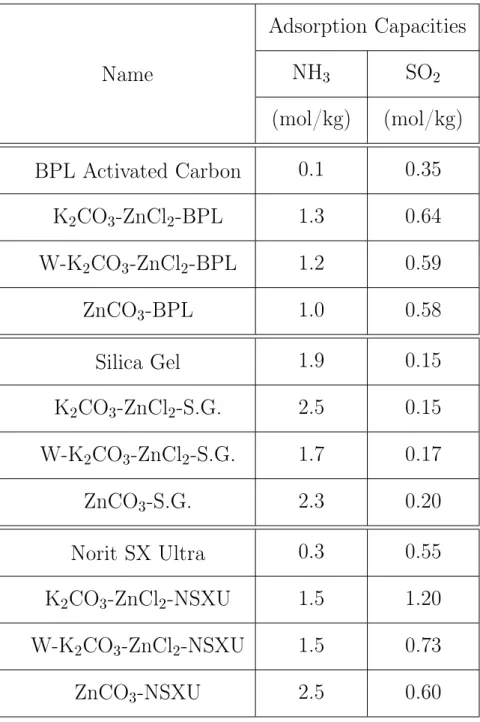
Among the salts tested, ZnCl2 and K2CO3 were identified as the most effective against TICs such as NH3 and SO2, respectively. 1-5 The high performance of these functionalities has been attributed to chemisorption. Silica gel is a commercially available, porous, granular form of silica synthesized from sodium silicate that contains pores larger than 2 nm in size.12 MCM-41 is a mesoporous silica that belongs to the developed M41s family of materials. by Kresge et al.13 Mobile Oil Corporation. It contains ordered, hexagonal pores 3–4 nm wide, although tunable in size based on the chain length of the surfactant used during synthesis.
Further functionality with additional reactive moieties using such substrates should increase the broad applicability of the adsorbent material. During this synthesis, iron nitrate was impregnated into the carbon and calcined after impregnation to form iron(III) oxide in the pores of the substrate. In both cases of in-pore synthesis, a greater level of dispersion of the functionalities was achieved.
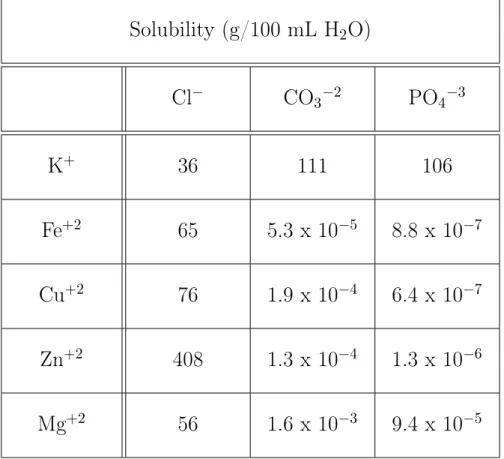
Given the insolubility of ZnCO3, the incorporation of this salt is varied either by adding a commercially purchased sample to the substrate or by forming ZnCO3 within the pores of the substrate via in-pore synthesis using two water-soluble precursors.
Experimental Methods
Confirmed by thermogravimetric analysis, approximately 25 wt% of the composite structure consists of carbonaceous material and the remainder corresponds to the siliceous phase. The formation of ZnCO3 in the different substrates involves sequential dual salt functionalization leading to synthesis within the pores. After removal of water by evaporation, approximately 25 mg ZnCl2 was now also present in the material.
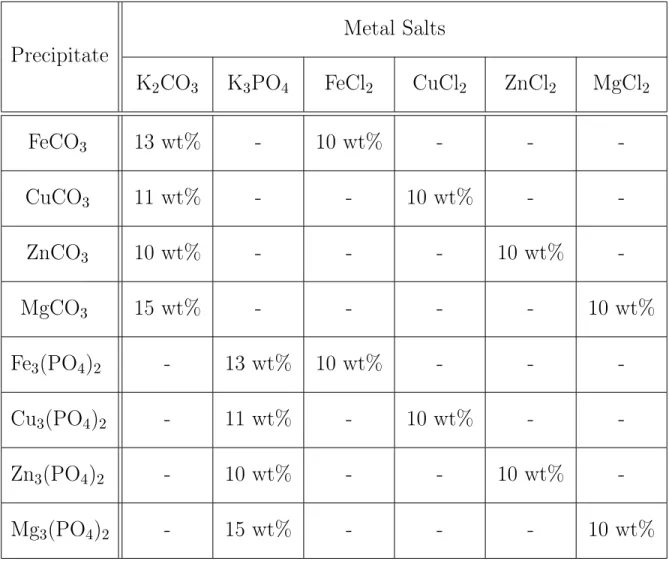
Theoretically, with 25 mg of each impregnant loaded onto 200 mg of adsorbent, approximately 10 wt. % (based on total sample) of both ZnCl2 and K2CO3. If all amounts of both impregnated salts are expected to react, about 9 wt. % of the total sample consisted of ZnCO3. For this reason, the pore synthesis reaction to form ZnCO3 in the pores of each of the tested substrates starts first with K2CO3 functionalization followed by ZnCl2 functionalization.
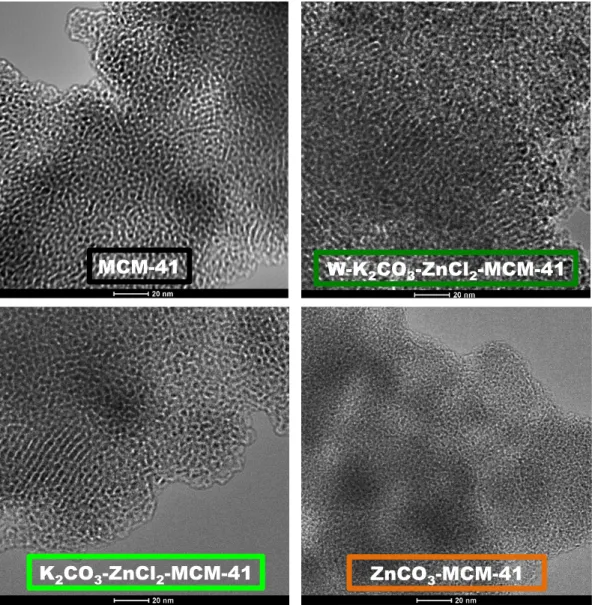
For comparison with in-pore synthesis, approximately 22 mg of commercially purchased ZnCO3, corresponding to 10 wt%, was added to 200 mg of substrate via a wet impregnation method. After removal of the water by evaporation, the commercially purchased ZnCO3 was incorporated into the substrate in an amount analogous to the concentration of ZnCO3 expected to form within the pores via the synthesis method. Transmission electron microscopy (TEM) was used to obtain high-resolution images of the mesoporous and microporous structures of functionalized MCM-41 and CSC.
Scanning transmission electron microscopy (STEM) coupled with energy dispersive X-ray (EDX) signal detection provided color-coded, mapped images of specific elements of interest and, after using the appropriate software, also provided quantitative analysis of each element in a scanned region of the sample. Since carbon was present in both the TEM grid and the CSC, the functionalized MCM-41 was used to interpret the dispersion of the impregnants as well as the effects on the elemental composition after washing using quantitative to avoid misinterpretation of the carbon content of the impregnants. analysis with STEM-EDX. These measurements were carried out using a breakthrough apparatus, schematically shown elsewhere.4 With the accumulation of target adsorbate in the gas phase being negligible compared to that in the adsorbed phase, the capacity of the adsorbent material, n (mol adsorbate/kg) adsorbent ), was calculated from
The mass of the sample, m, varied between 15-30 mg and was contained in a small cylindrical adsorbent bed with an inner diameter of 4 mm. This implies that deviations in capacity measurements for the same material are not only due to the standard deviation from measurement to measurement, but also to differences in batch-to-batch synthesis of the same material.
Results and Discussion
In-pore synthesis on MCM-41 resulted in the splitting of the characteristic peak between 3–4 nm into two broader peaks of reduced intensity centered around 3 nm and 5 nm. Water washing in MCM-41 showed minimal shift of the distribution to larger pore volumes compared to water washing in CSC, which showed a significant new peak in the mesoporous regime of the pore size distribution. The XRD patterns shown in Figure 3.3 were analyzed to confirm the ordered structural integrity of the synthesized adsorbents.
The apparent decrease in the order of the silicon phase in the functionalized materials is probably due to disorder. TEM images of washed and unwashed pore-synthesized ZnCO3 versus solution-impregnated ZnCO3 on MCM-41. Comparison of the error in zinc and carbon composition between samples 3 and 4 clearly showed differences in dispersion during the synthesis with two soluble precursors compared to the inclusion of previously synthesized, commercially available ZnCO3.
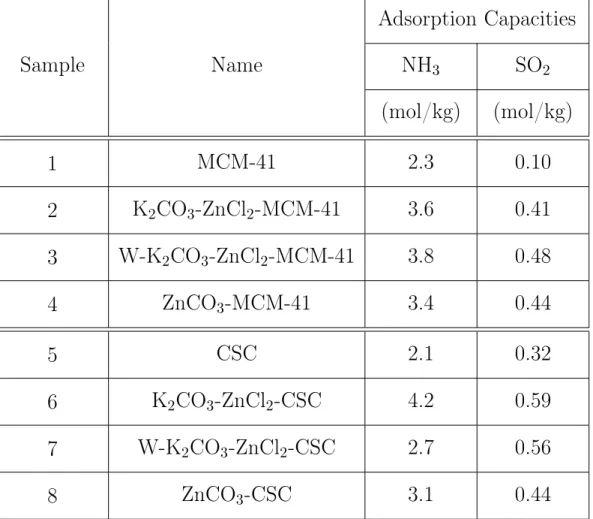
In both substrates, the incorporation of ZnCO3 increased the NH3 and SO2 capacities, regardless of the impregnation method. NH3 and SO2 capacities of washed and unwashed ZnCO3 synthesized in pores compared with solution-saturated ZnCO3 in MCM-41 and CSC. This can be attributed to the larger pore volumes of mesoporous silica compared to the biphasic material which may incorporate more ZnCO3 leading to less aggregation in MCM-41 than in CSC.
In-pore synthesis of ZnCO3 provided the highest adsorption capacities compared to wet impregnation of the commercially purchased ZnCO3. This is due to the increased dispersion of the incorporated salt, which provides more reactive sites for adsorption compared to the incorporation of a raw, agglomerated salt containing minimal exposed reactive sites. This was attributed to the release of basic carbon phase adsorption sites from the CSC after the water wash, which hindered the adsorption of basic ammonia gas.
These varying trends between carbonaceous and siliceous substrates help highlight the importance of the impregnants on CSC compared to MCM-41, where washing with water reduced the capacity of CSC. Crude impregnation of commercially purchased ZnCO3 increases the capacity, but the poor dispersion of the salt when incorporated in this way limits the efficiency of the adsorption.
Conclusions
After removal of water through evaporation, the desired amount of the metal chloride remained in the pores of the substrate. By removing water through evaporation, the desired amount of the potassium salt is now also found in the substrate. However, these profiles still allow a qualitative analysis of shifts in the distribution due to salt functionalization.
For similar reasons, the functionalized materials also exhibited larger differential pore volume fractions in the macropore regime. As with the amounts of adsorbed nitrogen, the total surface area and pore volumes are largely unaffected by the order of addition of the impregnation or the choice of metal chloride and potassium salt in the functionalized material. The XRD patterns shown in Figure 4.3 were analyzed to confirm the structural integrity of the synthesized adsorbents.
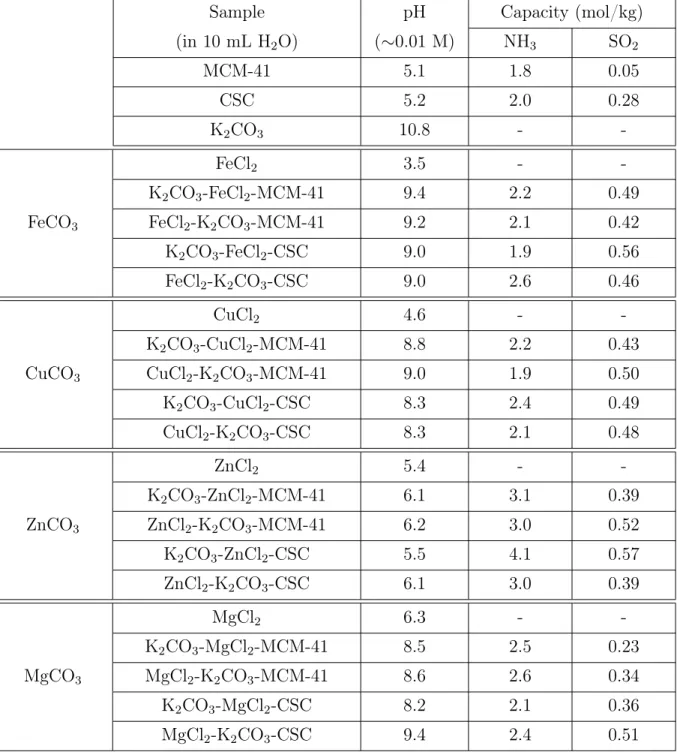
In dual salt functionalization, the pH of the final functionalized composite varies and is not dependent on the acidity of the metal chloride. Sample pH capacity (mol/kg). the chloride and potassium-containing salts added to the substrate have no significant effect on the overall pH of the final material. After exposure to water, the functional groups in the chemical structures of the samples were examined using infrared spectroscopy.
On the other hand, unsaturated metal centers as well as metal-oxygen bonds can be subject to attack by water molecules given the oxidation state of the metals in the structure. The spectra shown in Figures 5.3 and 5.4 show evidence of hydration given the effects of water molecules on the protonation of the carboxylate functionality cm−1) present in each of the MOFs. Among each of the MOFs, MIL-53 showed minimal differences in the DRIFTS spectra of the carboxylate region.
Interestingly, Raman spectroscopy results showed that the copper dimers that form the backbone of the structure are sensitive to water molecules. Elucidation of polar vapor adsorption on the highly flexible metal organic framework MIL-53 (Cr).
FUNCTIONALIZATION OF CARBON SILICA COMPOSITES WITH
- Introduction
- Experimental Methods
- Results and Discussion
- Conclusions
- Introduction
- Experimental Methods
- Results and Discussion
- Conclusions
CONCLUSIONS AND RECOMMENDATIONS