
In addition, it implicitly links the current health changes in Ecuador to the Cuban health care system created during the revolution. One of the main results of the relationship is (and will be) the integration of Cuban doctors into the Ecuadorian health system.
National identities
Cubans see themselves as a metaphor and living example of the communist value—yet uniquely Cuban—that the national body is a dynamic product of comprehensive, nationalized, and free health care distributed to the masses. Although the primary reason for Ecuador's adoption of the Cuban health care system is to truly improve the overall health of the national body, it would be an oversimplification to claim that this is the only reason for its implementation in Ecuador.
Latin America’s Response to Western Hegemony
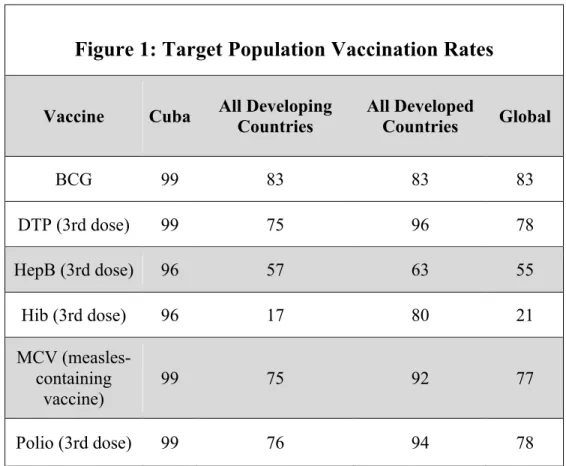
This, along with improvements across the whole of the health service, helped to greatly improve the health of the national body. With the implementation of the Medico de la familia plan, also referred to as.

Personal Experiences: Strengths and Limitations of the Cuban System
The structure of the system seeks to improve efficiency through a pyramidal organization in which patient referrals are now methodically directed "up the chain" to prevent case flooding in large hospitals (Labrador: 1). The período especial was the period after the collapse of the Soviet Union in 1989. In December 2004, Castro declared that Cuba was finally moving out of the período especial (Guerra and Vega 117).
Carmen's strong stance against the Cuban government is common among Cubans who have fled the island, most of whom immigrate to the United States. She sees much of the government's actions as mysterious and difficult to understand. This money goes straight to the government, and it doesn't go to the hospitals in Cuba either.
In contrast to the problems and inefficiencies above is the response of the Cuban medical community to a neuropathy epidemic. This rapid and comprehensive response proved the effectiveness of the Medico de la familia program during the special period.
Cuban International Medicine Today
Biomedical training and culture within Cuba combine science with government beliefs. Data from the Cuban government and confirmed by the World Health Organization (WHO) estimate that there are currently more than 50,000 Cuban-trained health care workers12 in 66 countries ("Cuban Medical Team to Sierra Leone"). During a joint Cuban-World Health Organization press conference, the Director-General praised the Cuban government, saying: "Cuba is world famous for its ability to train outstanding doctors and nurses and for its generosity in helping other countries on the path to progress (WHO Welcomes Cuban Doctors for Ebola Response in West Africa.) The financially strapped country again revolutionized medicine in a way no other country could.
The ensuing economic, political and social instability threatens Cuba's desire and/or ability to maintain such a high population there. Secretary of State John Kerry did not mention meeting with Cuban officials to create a united front, but he acknowledged Cuba's (Castillo) large-scale effort. But Cuba's physical donation of hundreds of Cuban health care workers has garnered a lot of attention.
Cuba's response with actual doctors coming into direct contact with patients undermines the more distant strategic and financial US response. Cuba currently receives much of its financial compensation from Venezuela, receiving $9.4 billion from the trading partner in 2008.
Effects of the U.S. Embargo
U.S. citizens, as well as any foreign national doing business with a U.S. citizen or company. Therefore, the United States embargo is the biggest obstacle preventing Cuba from entering the modern era. It [Cuba's recognized success through medical diplomacy] has also contributed to support for Cuba and rebuke of the United States in the UN General Assembly, where members have overwhelmingly favored abolishing the US for the past eighteen consecutive years voted.
With equal voting rights for all members of the UN General Assembly, Cuba's medical diplomacy with such a large number of member states is a rational endeavor, however humanitarian the impetus (Feinsilver 2010: 97). Feinstein points out that without such a monumental expression of goodwill and humanitarianism realized in Cuba's medical diplomacy, there would be little or no support for lifting the embargo. Unlike other countries, the United States has no power to prevent Cuba from infringing American patents.
Prices are often higher because of the trade-related implications they face from the United States. Displaying both its medical skills and ideology, the world overwhelmingly approves of the former, creating the perception that the US refuses to move out of an outdated mindset, regardless of the embargo's toll on Cuba's silent citizens.
Cuban (Inter)national Biomedical Education
This maneuvering by Cuba is not accidental, but a calculated process, in which the Cuban government positions itself as the humble "healer of the world", but still mistreated by its powerful neighbor to the north. The potential reduction of the pool of Cuban doctors from the United States, for reasons largely derived from pride, is unlikely to meet with the sympathy of the foreign governments that use the resource. The prestige and desire to help marginalized groups in other countries via biomedical practice is the primary motivation for traveling abroad on behalf of the Cuban government.
As family physicians combat negative perceptions in many countries of the global north, the distinction between specialists and generalists. Herein lies the problem—the medical community does not provide the symbolic prestige that general practitioners deserve, which has negative consequences for the Ecuadorian national body. Although this may seem low, the single largest demographic in rural Ecuador is the mestizo population, which makes up 65% of the rural population (Rep. of Ecuador, Census).
In 2005, nearly 40% of the indigenous population was considered to be living in extreme poverty, compared to only 8.2% of the mestizo population (Perfil De Sistema De Salud 9). Moreover, Cubans "specialize" in providing this type of biomedical care—community medicine—in settings accustomed to shortages and few resources.
Controversies and Context: The Año Rural Reconfigured
Because licensure is an afterthought, physicians within the año rural program technically practice without a license, refining their craft on populations without other biomedical access. She quickly told me that she had fortunately completed her period for the año rural in the greater Quito area. The same study highlighted that 94% of participants felt that their year of service during the año rural provided a rewarding experience overall.
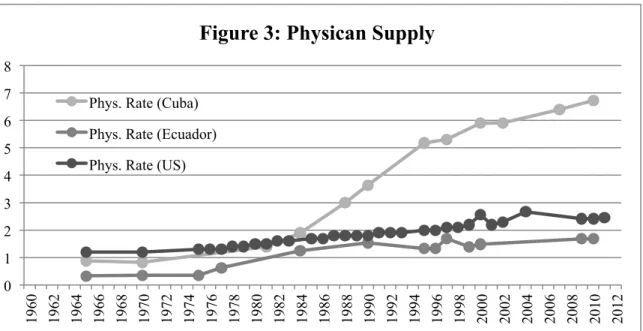
Año rural has continued mainly to increase the biomedical access that the service offers to rural areas populated by the lowest socio-economic group. From 2002 to 2013 Ecuador increased its physician workforce by 54.8% to nearly 32,000, yet the change in the percentage of physicians practicing in a rural setting per año rural was only a 0.7% increase (Ecuador 22). Instead, the Ecuadorian Ministry of Public Health is reconfiguring another system around the año rural program instead of restructuring it from its core.
Perhaps this new interface between the año rural program and the practice of placing Cubans in similar settings will effectively improve the former by increasing the ratio of the doctor to rural Ecuador. Thus, if implemented carefully, few changes can be made within the año rural program, but biomedical outcomes and physician experiences can be greatly improved thanks to the larger health care environment in which it operates.
Reshaping the Political Terrain
In a recent interview conducted by an Ecuadorian national newspaper with the Executive Secretary of the Ecuadorian Federation of Doctors, Dr. Therefore, one of the goals of the Union of Doctors of Ecuador is that the law provides a more detailed description of what the article means. The Ecuadorian Medical Union and the Correa administration are currently in discussions to find a possible solution (Interview with the Executive Director).
There is no definite and clear connection between the establishment of COIP and the recent takeover of Cuban doctors by the Ecuadorian government. In the newsletter of the Ecuadorian Medical Association, published in September 2014, a section titled "Strategy for the Importation of Cuban Doctors" responds to the official arrival of Cuban doctors in August. The rationale was that Ecuadorian professionals did not accept work in isolated and remote places.
This is proof that the real goal of the [Ecuadorian] government is to maintain an atmosphere of fear of dismissal through fireworks to continue the exploitation of Ecuadorian doctors (Pacheco). It seeks to portray Cuba as a hypocrite and claims to be a party to the Ecuadorian capitalist market for health care by "forcing out".
Enter Cuba
The new labor laws are thus only part of the whole operation that will incorporate Cuba into Ecuadorian health care. Those applying for the Ecuadorian program from one of the aforementioned countries will therefore have no problem demonstrating the quality of their education. Luxuries” that the rest of the world has access to (whether it is affordable is another matter) are not always available in Cuba.
Ironically, it is the Cubans who have access to some of the best biomedical treatment in the world, free of charge. If the plan to use Cuban doctors succeeds, this success will not only mean an improvement of the Ecuadorian national body. 34; Ecuador: Correa, Indigenous Movements, and the Writing of a New Constitution.” Rethinking Latin American Social Movements: Radical Action from Below.
34;We Must Think Like Capitalists, But Continue to Be Socialists”: Medicalized Subjectivities, Emergent Capital, and Socialist Entrepreneurs in Post-Soviet Cuba.” American ethnologist. The Role of Intrinsic Motivation, Rural Background, and Faith-Based Institutions in Ethiopia and Rwanda." Bulletin of the World Health Organization. 34; Socialist Government Healthcare Policy Reforms in Bolivia and Ecuador: The Underestimated Potential of Comprehensive Primary Healthcare to Address the Social Determinants of health. " Social medicine.
34;Update on Manta Dispute Manta,Port Developments, Agunsa,CCNI,HPH,Hutchison Port Holdings,." Update on Manta Dispute Manta,Port Developments,.
