CHAPTER 1
Financial Risk in a Crisis-Prone World
R
isk has become a focal point for anyone thinking about, or acting in, financial markets. The financial market crisis that began in 2007 con- firmed the centrality of risk analysis in finance and in public policy vis- `a-vis the financial markets. The crisis, which we’ll refer to going forward as the“subprime crisis,” will be the reference point for thinking about risk for decades to come.
The name itself is a bit of a misnomer for a crisis that now extends far beyond the subprime residential mortgage sector in the United States to the entire world and most sectors of the economy and financial system. It has highlighted grave shortcomings in public policy toward the economy, business and financial practices, and in previous analyses and prescriptions.
It will be a recurrent and inescapable theme in this book.
In order to adequately analyze, or even describe, the subprime crisis, we need an analytical toolkit, which this textbook will provide. In this chapter, we survey the landscape of financial risk historically, sketch the financial world of our time, and provide an overview of different types of financial risk. We have two main objectives: to get a basic sense of the subject matter of financial risk analysis, and of the financial world in which we live and which market participants try to understand and influence. But a fuller description of the crisis itself will have to wait until later chapters.
1 . 1 S O M E H I S T O R Y : W H Y I S R I S K A S E P A R A T E D I S C I P L I N E T O D A Y ?
To understand why risk management became a major focus in finance in the 1990s, we need to understand something of the history of the finan- cial services industry during the preceding decades. We’ll look at a few broad themes in this evolution, focusing on the United States, in which these
1
P1: a/b P2: c/d QC: e/f T1: g
JWBT440-c01 JWBT440-Malz August 19, 2011 17:17 Printer: To Come
2 FINANCIAL RISK MANAGEMENT
changes have tended to occur earlier. But it is important to understand that the financial system evolved as a whole, and that these themes are analytical constructs meant to help us understand the financial system, not realities in their own right.
1 . 1 . 1 T h e F i n a n c i a l I n d u s t r y S i n c e t h e 1 9 6 0 s
Financial services firms engage primarily in originating or trading in financial instruments. They hold long and short positions in loans, securities, and other assets, either to trade or as an investment, though some financial service providers just provide advice, or facilitate trades without using their own balance sheets. These firms are often called financial intermediaries, since their primary role is to move funds from ultimate savers to ultimate investors. Over the past half-century, the financial services industry has undergone a large transformation from a bank-centered world to one in which credit is intermediated in a wide variety of ways. Because of these changes, the credit intermediation process has become decentralized and takes place in forms that can be hard to measure and understand. For this reason, particularly since the onset of the subprime crisis, observers have spoken of the emergence of a “shadow banking system.”
B a n k i n g S i n c e t h e 1 9 6 0 s : F r o m I n t e r m e d i a t i o n t o F e e s At the core of this evolution lies the banking industry, which from the medieval era until just a few decades ago was by far the most important part of the financial services industry. Banks ordepository institutions, in their classic form, take deposits and make loans, and profit from the spread between the higher lending interest rate and generally low deposit rates. Their risks are mainly those that arise from intermediating between short-term liabilities and longer- term assets. Banks have increasingly diversified their business away from the classic deposit-taking and lending function and engage in other activities from which they earn fees in addition to net interest. Often, these activities are carried out by subsidiaries within a holding company structure.
In 1960, banking was a heavily regulated industry focused on lending to nonfinancial corporations. Under the U.S. Glass-Steagall Act of 1933,com- mercial bankstook deposits and made commercial loans, whileinvestment banks bought and sold securities (the broker-dealer function) and helped companies issue stock and debt securities (theunderwritingfunction).1
1This distinction was peculiar to the United States. In Europe, the universal bank model combined commercial and investment banking, as in the post–Glass-Steagall United States.
Large companies could borrow directly from commercial banks through commercial and industrial (C&I) loans (and to a smaller extent insurance companies), or directly from the public through bond and commercial paper issues. Smaller companies usually had no alternative to C&I loans.
One way to compare the different types of risks to which commercial and investment banks are exposed is by looking at the typical structure of their balance sheets. Commercial banks specialized in maturity intermediation between deposits, which are very short-term loans, and C&I loans, which are generally medium- to long-term. Hence, they were fragile, since depositors could demand the return of their money, while the corporate borrower was generally neither obligated nor able to unwind projects and turn invested capital back into cash nearly fast enough to meet the demand. In the extreme, banks could suffer bank runs that potentially ended their existence. In the 1960s, banking was nonetheless considered a simple business, often and probably unfairly described by the “3-6-3 rule”: Pay depositors 3 percent, lend at 6 percent, and be on the golf course by 3P.M.
Investment banks had very different balance sheets. They, too, had plenty of short-term debt, but their assets were inventories of securities, most of them quite liquid. They were capitalized and regulated to be un- wound quickly in the event of financial distress. As discussed in Chapter 12, the balance sheets of both commercial and investment banks changed dras- tically over the past few decades in ways that led to greater risk. There was a degree of convergence between the two types of firms, although they remained under distinct legal and regulatory regimes. Banks began to hold trading booksof securities and loans held for potential sale, in addition to their traditional banking books of commercial and mortgage whole loans that were presumed to be held until repayment. Broker-dealers began to hold less liquid securities in their inventories.
Figure 1.1 illustrates these changes by tracing bond issuance and bank borrowing by U.S. companies over the past half-century. Nonfinancial cor- porations have always had sources of lending, such as trade receivables, commercial paper, and mortgages, apart from the capital markets and bank loans. Even before the capital market expansion of the 1980s, nonfinancial firms relied on bank loans for only 15 to 20 percent of their debt funding, and company debt via bond issuance was generally about one-and-a-half times to twice as large as bank debt. The creation of thehigh-yieldorjunk bond marketopened a new channel for borrowing directly from investors, which we describe presently. The share of bank lending has declined to un- der 5 percent, with the ratio of bonds to bank loans increasing steadily to over 5-to-1.
Since 2005, and during the subprime crisis, bank lending has had a fleeting revival, due to increased bank lending to private equity firms buying
P1: a/b P2: c/d QC: e/f T1: g
JWBT440-c01 JWBT440-Malz August 19, 2011 17:17 Printer: To Come
4 FINANCIAL RISK MANAGEMENT
bonds
bank loans
1980 1990 2000 2010
5 10 15 20 25 30
F I G U R E 1 . 1 Disintermediation in the U.S. Financial System 1980–2010 The graph plots the shares, in percent, quarterly through end-2010, of borrowing via the corporate bond market and of nonmortgage borrowing from banks in total liabilities of U.S. nonfarm nonfinancial corporations. Bank lending is comprised mostly of commercial and industrial loans (C&I loans).
Source:Federal Reserve Board, Flow of Funds Accounts of the United States (Z.1), Table L.102.
public companies as well as increased borrowing by smaller companies di- rectly from banks. However, most of this debt was distributed to investors outside the originating bank. Large bank loans trade somewhat like cor- porate bonds in secondary markets and differ primarily in having, in most cases, a claim prior to bonds on the assets of the firm in the event of default.
The role of finance in the economy has grown substantially in the postwar era and especially during recent years. Figure 1.2 displays the share of the financial services industry in U.S. gross domestic product (GDP) since 1947. During that time, it has grown from about 2.3 to about 8 percent of output, with the most rapid growth occurring between 1980 and 2000. The finance share has fallen a bit in the most recent data, and may fall further as the subprime crisis plays out and intermediaries fail or merge.
Another viewpoint on the magnitude of finance’s role in the economy comes from estimates of the cost of financial intermediation. According to John Bogle, who developed low-cost index mutual funds in the 1970s, the aggregate cost of intermediation rose 20-fold.2
2See Bogle (2008), p. 36.
1960 1980 2000 3
4 5 6 7 8
F I G U R E 1 . 2 Share of Financial Services Industry in U.S. Output 1947–2009 Share of value added in GDP of the finance and insurance industry, as defined by the North American Industrial Classification System (NAICS), annual, in percent.
Source: Bureau of Economic Analysis of the U.S. Department of Commerce, U.S.
Economic Accounts Data, Gross-Domestic-Product-(GDP)-by-Industry Data, available at www.bea.gov/industry/gdpbyind data.htm.
F i n a n c i a l I n n o v a t i o n Financial innovation describes the introduction and wide use of new types of financial instruments. These innovations have been made possible by general technical progress in the economy, particularly the radical cheapening of communication, computation, and data storage.
These factors have interacted with technical progress in finance, primarily the invention of new types of securities.
The wave of innovation began at a relatively slow pace in the 1960s in the money markets, with the introduction of negotiable certificates of deposit (CDs). There had long been time deposits, bank deposits repaid to the depositor at the end of a fixed interval rather than on demand, but negotiable CDs could be sold prior to maturity at a market-adjusted interest rate in a secondary market, rather than “broken,” at a cost.
Financial innovation also affected retail and private investors directly.
Investment companiessuch asmutual fundsandhedge funds pool invest- ments and make shares in the pools available to the public. In contrast to other institutional investors, their capital is placed directly with them by the public. Mutual funds are an old form of investment vehicle, dating back in various forms to the nineteenth century. In the United States, most mutual funds are organized and regulated under the Investment Company Act of
P1: a/b P2: c/d QC: e/f T1: g
JWBT440-c01 JWBT440-Malz August 19, 2011 17:17 Printer: To Come
6 FINANCIAL RISK MANAGEMENT
1940 (the “1940 Act”), which restricts both what mutual funds may in- vest in and how they advertise. They experienced tremendous growth over the past quarter-century. Their growth was driven mainly by wealth ac- cumulation, but also by the introduction ofindex funds, funds that track securities indexes such as the S&P 500 and permit even small investors to have diversified investment portfolios and reduce risk with low transaction costs.
A new form of mutual fund, theexchange-traded fund(ETF), was in- troduced in 1993; the first was the SPDR traded on the American Stock Exchange. An ETF tracks a well-defined index, like many mutual funds, but can be traded intraday, in contrast to a mutual fund, which can only trade at its end-of-day net asset value(NAV). To gain this ability, certain institutional investors are tasked with creating and unwinding unit of the ETF from the index constituents.
We focused in our discussion of disintermediation on the ability of public markets to compete with banks’ lending activity. But banks have another important function, called liquidity transformation, of providing liquid means of payment to the public. Their lending function is to own a certain type of asset, classically C&I loans and real estate loans. Their liquidity function is to provide a certain type of liability, namely demand deposits.
Just as access to the public capital markets and other forms of credit intermediation have reduced banks’ intermediation share, a new type of liquid means of payment, money market mutual funds (MMMFs), have reduced banks’ role in providing the public with means of payment.
The first MMMF was introduced in 1972 and they have grown rapidly over the past three decades. Competition from MMMFs obliged the Federal Reserve to completely remove limits on interest paid by banks on demand deposits in the 1980. Although they were initially conceived as a product for retail investors, institutional investors now account for over two-thirds of MMMF assets and their behavior plays the decisive role in the stability of MMMFs in stress periods. MMMFs have been crucial purchasers of the liabilities of the shadow banking system, providing its necessary link to the public’s demand for liquidity. We discuss securitization and related finan- cial innovations in Chapters 9 and 12, and discuss the role these structures played during the subprime crisis in Chapter 14. These innovations played an important role in the transformation of banking by creating alternatives for depositors and thus reducing the extent to which banks could rely on a quiescent deposit base for funding. But it also created new loci for instability in stress periods.
The other major innovations of the 1970s and 1980s were in derivatives markets, especially the introduction of swaps and the expansion of futures and options trading. Aderivative securityorcontractis one whose payoff is
entirely determined by the values or payoffs of some other security; as the price of the underlying asset or risk factors change, the value of a derivative on the asset changes. The security that drives the derivative’s payoffs is called theunderlying.
The first swaps werecurrency swaps, introduced in the mid-1970s. In 1981, a transaction said to be the first interest-rate swap was concluded between IBM Corp. and the World Bank.
Forwards are an old market mechanism that has been in use in some form for many centuries. Futures markets date to the post–Civil War era in the United States, when the first agricultural futures began trad- ing in Chicago. The breakdown of the Bretton Woods system of fixed ex- change rates created demand for currency risk management tools; the first financial—as opposed to commodities—futures were on currencies, intro- duced in 1972.
The expansion of options markets was unusual in that it was facili- tated enormously by an innovation in finance theory, the development of theBlack-Scholes-Merton option pricing model. The first exchange-traded options were introduced in 1973.
In the early to mid-1980s, a major focus of financial innovation was onexotic options. Variants such asbarrier options, which pay off only if a threshold value is attained by the underlying asset price, were introduced.
But exotic options have never become as widely used as the banking industry hoped.
We’ve mentioned the growth in issuance of high-yield bonds.
“Speculative-grade” or high-yield bonds had existed for many years prior to the 1980s. But they were typically “fallen angels,” formerly investment- grade bonds issued by companies that had become financially weak. The innovation was to enable small or financially weaker firms to issue new high-yield bonds. Many of these firms had previously been unable to bor- row in capital markets at all. The growth in the high-yield market was supported by the easing of certain restrictions on securities firm activities, which we describe later in this chapter.
Another innovation of the 1970s was the securitization of mortgage loans. Bonds collateralized by real estate had existed at least since 1770, when the first precursor of the German Pfandbriefbanken was organized in Silesia as a Seven Years’ War reconstruction measure. In these covered bonds, a single bond is collateralized by the value of a pool of real estate loans. In 1970, the first pass-through certificates were issued by the Gov- ernment National Mortgage Association (GNMA, also known as “Ginnie Mae”), a federally owned housing-finance company. These went beyond merely collateralizing the bond issue; the cash flows to the pass-through bondholders are, apart from fees and other costs, those actually generated by the mortgage collateral.
P1: a/b P2: c/d QC: e/f T1: g
JWBT440-c01 JWBT440-Malz August 19, 2011 17:17 Printer: To Come
8 FINANCIAL RISK MANAGEMENT
Since a mortgage borrower in the United States generally must amortize a loan, and always has the option to repay the loan early, pass-throughs are partially redeemed or “factored down” as the loans are repaid. Homeown- ers are particularly apt to prepay when interest rates decline, as they can then refinance and reduce their monthly payments. Pass-through investors therefore faceprepayment risk, the risk of a capital loss resulting from losing a higher-coupon cash flow in a lower-yield environment.
These bonds were among the earliestmortgage-backed securities(MBS).
The next step in the evolution of securitization was the issuance of the first collateralized mortgage obligation (CMO) in 1983. The essentials of later securitization innovations were all here: The collateral was placed in a trust, and the cash flows were distributed to three different bond classes, called tranches, under the terms of a structure. Asequential-pay structurewas used in this and other early CMOs: After coupon payments, all prepayment cash flows went to the first tranche until it was fully redeemed, then to the second tranche, and finally to the third.
Other changes involved, not new security types, but changes in mar- ket lending practices. For example, lending via repurchase agreementsor
“repo,” a form of secured credit, had historically been limited to govern- ment bond markets. From the 1990s, repo was increasingly used to finance mortgage bond positions. We discuss these developments in detail in Chap- ter 12.
Major changes also took place in trading technology. Asecurities ex- changeis an organized locus of securities trading to which only exchange members have direct trading access. Exchanges are an old institution, dat- ing back to the early seventeenth century in the Low Countries. Initially, only underlying assets were traded on exchanges. Exchanges now include futures, options, and other derivatives. Until relatively recently, traders had to be physically present at the exchange’s location. With the improvement of communication and computing technology, electronic trading has be- come the dominant form of trading on exchanges. Electronic trading has made transacting far cheaper, but has also introduced new complexities into markets.
Trading can also take place outside of exchanges, inover-the-counter (OTC) markets. For some asset, such as U.S. government and corporate bonds, real estate, as well as many types of derivatives, OTC trading is typical. Large volumes of electronic trading also take place in OTC markets.
The differences between exchange-traded and OTC markets are important in understanding liquidity risk, discussed in Chapter 12. Swaps and other OTC derivatives have grown enormously in size: The Bank for International Settlements (BIS) has collected data on OTC derivatives since 1998 (see Figure 1.3).
Total
CDS
2000 2002 2005 2008 2010
0 100 200 300 400 500 600 700
F I G U R E 1 . 3 OTC Derivatives Markets 1998–2010
The solid line plots the total for all derivatives types; the dashed line displays the volume of CDS. Notional amounts outstanding, G10 countries including Switzerland, trillions of U.S. dollars, semiannual through June 2010.
Source: BIS, Semiannual Over-The-Counter (OTC) Derivatives Markets Statistics, Table 19, downloaded at www.bis.org/statistics/derstats.htm.
1 . 1 . 2 T h e “ S h a d o w B a n k i n g S y s t e m ”
The combination of disintermediation on the part of banks and financial innovation has given rise to what is sometimes called the “shadow banking system.” The term means that intermediation between savers and borrowers occurs largely outside of the classic banking system, at least in the traditional sense of banks owning, servicing, and monitoring loans until maturity or default. But it is also meant to convey that the channels of credit interme- diation and the exposures of participants in the intermediation process are difficult to identify and measure. The more neutral terms “market-based”
and “arm’s-length” lending are also commonly used to describe innovative forms of credit in which much of the risk is taken by nonbank financial firms in the form of tradable assets.
We have already seen one important aspect of disintermediation, the substitution of financing via the capital markets for financing via bank loans. The shadow banking system amplified the disintermedia- tion of traditional bank lending to firms and individuals, but also ex- tended it to new types of lending such as subprime mortgages. Most importantly, as the subprime crisis deepened, it became clear that the shadow banking system had obscured both the poor credit quality of
P1: a/b P2: c/d QC: e/f T1: g
JWBT440-c01 JWBT440-Malz August 19, 2011 17:17 Printer: To Come
10 FINANCIAL RISK MANAGEMENT
much recently originated debt, and the extensive borrowing or leverage of some market participants. The financial fragility induced by this lever- age did not become apparent until the assets began to evidence credit deterioration.
The shadow banking system has its origins in the 1960s, but did not come fully to fruition until just before the subprime crisis. Much of it is being dismantled, or at least has been frozen, during the crisis. Several interrelated financial innovations fostered its development:
Securitization enables more credit risk to be taken outside the banking system. We discuss securitization in Chapter 9.
Markets for collateral gave additional economic value to securitized products. The securities not only paid a coupon financed by the underlying loans, but could also be pledged by the bondholders to themselves obtain credit. We describe these markets in detail in Chapter 12.
Off-balance-sheet vehicles permit financial institutions to take on more risk while remaining within regulatory capital rules.
Money market mutual funds are important lenders in the short-term credit markets. An MMMF invests in a wide range of short-term assets, including some with material market and credit risk, and provides checkable accounts to investors.
Risk transfer via credit derivatives has led to the replacement offund- ingbyguarantees. This permits banks and other institutions to move their risks off their balance sheets. This does not necessarily reduce the risks, but potentially makes them more difficult to identify and measure.
Up until the mid-1980s, securitizations were focused primarily on resi- dential mortgages guaranteed by one of the federal housing finance agencies.
Repayment of the loans was guaranteed by the U.S. government, so the se- curities exposed investors mainly to interest rate risk, but in some cases a great deal of it and in complex, option-like forms. In the late 1980s,asset- backed securities(ABS) were introduced, in which bonds were issued that distributed cash flows and credit losses from a pool of non-mortgage loans in order of bond seniority. Initially, bonds were issued against collateral pools containing credit card debt and auto loans. The idea was later extended to student loans, leases, loans to auto, equipment, and truck dealers, and a wide variety of other debt types.
In the 1990s, the introduction of credit derivatives made possible new types of securitized products. The most widely used credit derivative, the
credit default swap (CDS), was introduced in the early 1990s. CDS are important in many ways: as widely used derivatives, in their capacity as a rich source of data on market perceptions of credit risk, and because of the operational and systemic risk issues their rapid growth has raised. Figure 1.3 displays the BIS data on the size of the CDS market, which remains small by comparison with the staggering size of the overall OTC derivatives market.
We discuss CDS further in Section 7.3.
The CMO idea was extended to collateral types other than mortgages with the introduction of thecollateralized debt obligation(CDO). The collat- eral pool could now contain just about any asset with a cash flow, including securitizations and credit derivatives. In 1997, J.P. Morgan created a se- curity called the Broad Index Secured Trust Offering (BISTRO), in which credit derivatives were used to achieve the economic effects of moving un- derlying collateral off the bank’s balance sheet. BISTRO is regarded as the firstsynthetic CDO.
Traditional accounting rules found it hard to accommodate these inno- vations. Were options an “asset,” and should they be placed on the firm’s balance sheet? Similar questions arose around banks’ and brokerages’ re- sponsibility for the securitizations they originated. In addition to derivatives, a growing portion of the universe of investment objects were off-balance- sheet securities.
The shadow banking system fostered the growth of yet another “old- new” institution, specialty finance companies. They make a wide variety of loans, primarily to businesses. The companies exist because their parent firms are considered highly creditworthy and can borrow at relatively low interest rates in capital markets, or because they sold the loans they made into securitizations (theoriginate-to-distributebusiness model). This access to relatively inexpensive funding gives them a competitive advantage as lenders. Among the largest such firms is GE Capital, the lending arm of industrial firm General Electric, CIT Group, and General Motors Acceptance Corp. (GMAC); only the first-named has survived the subprime crisis in its original form.
These financial innovations amplified the disintermediation of the bank- ing system. We have already seen how the share of banking was reduced by the growing importance of capital markets in providing credit. The shadow banking system was also responsible for an increasing share of intermedia- tion over the past quarter-century. Figure 1.4 displays the shares of credit market assets (that is, liabilities of others as opposed to buildings and copy machines) held by different types of institutions and investors. The shares of traditional intermediaries—banks, insurance companies, and retirement funds—have declined over the past three decades, while the shares of new types of intermediaries have risen.
P1:a/bP2:c/dQC:e/fT1:g
JWBT440-c01JWBT440-MalzAugust19,201117:17Printer:ToCome
banks insurance/pension fund mutual fund money market mutual fund agency ABS specialty finance co.
Q4 1959
banks insurance/pension fund mutual fund money market mutual fund agency ABS specialty finance co.
Q4 1984
banks insurance/pension fund mutual fund money market mutual fund agency ABS specialty finance co.
Q2 2008 0
10 20 30 40 50 60
percent
Share of each sector in total credit market assets held by financial sectors, percent.
Source:Federal Reserve Board, Flow of Funds Accounts of the United States (Z.1). The data in Table L.1 are aggregated as follows:
banks Monetary authority (line 34)
Commercial banking (line 35) Savings institutions (line 40) Credit unions (line 41) Brokers and dealers (line 56) insurance/pension fund Insurance companies (lines 42–43)
Private pension funds and govt. retirement funds (line 44–47) mutual fund Open- and closed-end mutual funds (lines 48–49)
Exchange-traded funds (line 50) money market mutual fund Money market mutual funds (line 47) agency Government-sponsored enterprises (line 51)
Agency- and GSE-backed mortgage pools (line 52)
ABS ABS issuers (line 53)
specialty finance co. Finance companies (line 54) REITs (line 55)
Funding corporations (line 57)
F I G U R E 1 . 4 Intermediation by Sector 1959–2008
12
Traditional intermediation
New types of intermediation
1960 1980 2000
0 20 40 60 80 100
F I G U R E 1 . 5 Traditional and Innovative Intermediation 1951–2010
Shares of traditional and innovative intermediation in total credit market assets held by financial sectors, quarterly, percent.
The sectors displayed in Figure 1.4 are aggregated as follows: “Traditional intermediation” includes “banks,” “insurance/pension fund,” “mutual fund,” and
“specialty finance co.” “New types of intermediation” includes “money market mutual fund,” “agency,” and “ABS.”
Source:Federal Reserve Board, Flow of Funds Accounts of the United States (Z.1).
Of particular note are the proportions of intermediation accounted for by money market mutual funds, by mortgage debt intermediated by government-sponsored enterprises, and by ABS. These sectors together had a share in intermediation of less than 9 percent at the end of the 1970s; their share had risen to over 37 percent by the end of 2007.
Between 1980 and 2007, as the “innovative” sectors of the financial system, including those at the center of the shadow banking system, grew to nearly 40 percent of total intermediation, traditional intermediation shrank to just over 60 percent. The broader trend can be seen in Figure 1.5.
The introduction of commercial mortgage-backed securities (CMBS) around 1990 as a new source of funding for commercial real estate is a good example of the impact innovation had on a particular sector of the financial system. These are a type of securitized credit product in which commercial real estate loans used to finance the purchase or development of commercial properties, such as apartment and office buildings, retail shopping malls, hotels, and industrial developments are pooled, and bonds backed by the loans are sold to investors. They are much like mortgage-backed securities,
P1: a/b P2: c/d QC: e/f T1: g
JWBT440-c01 JWBT440-Malz August 19, 2011 17:17 Printer: To Come
14 FINANCIAL RISK MANAGEMENT
Banks
Insurance and pension funds
CMBS
07Q3: 26.1 Households, REITs, and other
1960 1980 2000
0 10 20 30 40 50 60
F I G U R E 1 . 6 Financing of Commercial Real Estate Lending 1960–2010 Shares of total commercial real estate lending loans held by financial sectors, quarterly, percent.
Banks include commercial banks and savings institutions. Institutional investors include insurance companies and pension funds. Other includes finance companies.
Source:Federal Reserve Board, Flow of Funds Accounts of the United States (Z.1), Table L.220.
except that the typical residential mortgage loan is much smaller than the typical commercial real estate loan. A CMBS therefore generally has far fewer loans in the pools supporting the bonds, at most a few hundred, compared to MBS, in which the collateral pool of a large deal can contain many thousands of residential mortgage loans.
Figure 1.6 displays the sources of funding for commercial real estate loans over the past 60 years. In the middle of the twentieth century, the main sources of funds were about evenly divided between banks, in- surance companies, and other sources such as wealthy households. Over time, the latter became less important as a source, while banks became more important, so that by the late 1980s, banks were the source of about 60 per- cent of commercial real estate lending. In part, banks were making up for the slowing of growth in more traditional C&I lending to companies.
The volume of CMBS grew rapidly throughout the 1990s and un- til the subprime crisis, reaching a share of 26 percent of total commer- cial real estate lending in mid-2007. The share of banks remained high, while the share of insurance companies and other institutional investors as direct lenders continued to decline. Instead, they became large investors in CMBS.
1 . 1 . 3 C h a n g e s i n P u b l i c P o l i c y T o w a r d t h e F i n a n c i a l S y s t e m
Beginning in the 1970s, public policy toward the financial system changed in may ways. These changes are often summarized, somewhat misleadingly, as “deregulation.” But they were less a deliberate attempt to give market forces a greater role in the financial system than part of the process of adapting to the broader changes taking place in the financial world. Changes in regulation often occurred in response to short-term financial stresses and had long-term consequences that were quite different from those intended.
We discuss approaches to and techniques of financial regulation in more detail in Chapter 15.
G e o g r a p h i c a l S e g r e g a t i o n w i t h i n a n d A c r o s s N a t i o n a l B o r d e r s In the United States, until 1994, a bank chartered in one state could not open branches in another, and in some states, underunit banking, could not open multiple branches even within a state. Interstate branching was permitted by the Riegle–Neal Interstate Banking and Branching Efficiency Act of 1994.
In international finance, capital controls, which we describe in more detail in a moment, kept residents of many countries from investing in foreign securities or holding foreign exchange. Capital controls were lifted by many countries beginning in the 1970s.
R e m o v a l o f P r i c e a n d I n t e r e s t R a t e C o n t r o l s Historically, interest rates and prices of financial services have often been capped. In the United States, the trend toward lifting these restrictions began in 1970 with the lifting of limits on certain U.S. deposit interest rates that had been capped under Regulation Q since 1933. The remaining caps were gradually removed by the Monetary Control Act of 1980.
In the brokerage industry, fixed commissions for stock trades on the New York Stock Exchange were abolished in 1975. Other countries fol- lowed, such as the United Kingdom with its “Big Bang” reform of 1986.
Limits on foreign exchange rates have been the most persistent area of price control. Fixed foreign exchange rates are different from other price controls. The exchange rate can be seen not only as the price, say, of an asset called “U.S. dollars.” It is also the relative price of the locally issued money in terms of dollars. A fixed exchange rate vis- `a-vis the dollar can serve as a key mechanism by which a central bank controls money and credit.
In order to maintain fixed exchange rates, most countries imposed con- trols on international flows of capital. Examples of such controls are pro- hibitions or controls on capital imports and exports, that is, investments abroad by domestic residents and domestically by foreign residents, and
P1: a/b P2: c/d QC: e/f T1: g
JWBT440-c01 JWBT440-Malz August 19, 2011 17:17 Printer: To Come
16 FINANCIAL RISK MANAGEMENT
a public monopoly of the right to conduct foreign exchange transactions.
Early financial innovations, such as the development of swap markets, were in part adaptations by market participants to these controls.
Fixed foreign exchange rates between major currencies ended in the mid-1970s (see Chapter 14). Within Europe, many important exchange rates remained fixed, or pegged within narrow limits, until they were merged into one currency, with one central bank, in the European Monetary Union.
C o m p e t i t i o n B e t w e e n T y p e s o f F i n a n c i a l I n t e r m e d i a r i e s More competi- tion between different types of financial market participants was permitted, loosening the division of labor among them. A milestone was the Deposi- tory Institutions Deregulation and Monetary Control Act of 1980, which permitted savings and loan associations to provide checking accounts like those of commercial banks.
Underwriting, or arranging issues of bonds for corporate and other capital markets borrowers, had been carried out by only a small number of firms prior to the 1970s. It was typically slow and expensive, due in part to the elaborateregistrationprocess by which information about securities was conveyed to the public. In a more highly regulated financial system, most bonds are permitted to be traded in public markets.Public securities are subject to many rules, especially regarding disclosure of information about the issuer and its financial condition, and to restrictions on who may invest in them and how they may be traded. Private securitiesare subject to fewer disclosure requirements, but to more restrictions on trading and ownership.
Two regulatory innovations eased registration requirements and con- tributed to the massive expansion in both the fixed-income and equity mar- kets that began in the 1980s:
Shelf registration enabled underwriters to bring issues to market more rapidly, and introduced “economies of scale” into the process by which one issuer could issue a number of bonds over time with- out repeating all steps in the registration process. Shelf registration proved particularly important in the development of the securitiza- tion markets.
Rule 144a introduced the notion of a private security with lower dis- closure requirements. Rule 144a issues could be sold to and traded only among qualified institutional buyers, essentially institutional investors.
Broker-dealers, in contrast to banks, buy and sell securities. Their risks are primarily those arising from holding inventories of securities. They are
designed to be less fragile, since they can be wound down and liquidated by selling off inventories of stocks and bonds, rather than hard-to-sell loans to businesses and individuals. When broker-dealers fail, a smaller potential for problems to spread to the broader financial system is expected than when banks fail.
This presumption about the differences in the public policy issues raised by broker-dealers was shockingly violated during the subprime crisis. A number of large financial institutions failed, but among them were two of the largest U.S. broker-dealers, Bear Stearns and Lehman Brothers. Bear Stearns was not obliged to file for bankruptcy and liquidate; Lehman was.
In subsequent chapters, we study the reasons for the breakdown of the presumption that broker-dealers can “fail quietly.”
The paradigmatic restriction on competition between banks and broker- dealers, the Glass-Steagall Act, was rolled back in stages, culminating in the Gramm-Leach-Bliley Financial Services Modernization Act of 1999. These regulatory changes interacted with the development of nonbank intermedia- tion to change the competitive landscape in financial services. For example, nonbank lenders became important in the origination of mortgage loans.
Subsidiaries of insurance companies calledmonoline insurersbecame credit guarantors of asset-backed and municipal bonds.
1 . 1 . 4 T h e R i s e o f L a r g e C a p i t a l P o o l s
As wealth grew during the postwar era, increasing quantities of capital became available to take advantage of investment opportunities. Most of this new capital flowed into traditional repositories such as pension funds and insurance companies. Public and private occupational pension funds receive “contributions,” that is, savings by individuals or by companies, trade unions, or the public sector on their behalf, and invest them. These investments can be managed directly by the firm or other entity that sponsors the plan, or by outside managers hired by the sponsor. Insurance companies insure property against damage or loss, and families against loss of a major source of income. Insurers must deal with the nonfinancial risks of losses on policies they issue, and also face financial risk on the investments they make with their insurance reserves. Capital also flowed into “old-new” vehicles such as mutual funds.
In the 1980s, two new types of investment fund became much more significant, hedge funds and sovereign wealth funds. Hedge funds are a loosely defined group of investment companies that are distinguished by restrictions on who can invest in them. In general, they are open only to other institutional investors and wealthy individuals. Because the fund is not open to the general public, it is not subject to many of the restrictions on
P1: a/b P2: c/d QC: e/f T1: g
JWBT440-c01 JWBT440-Malz August 19, 2011 17:17 Printer: To Come
18 FINANCIAL RISK MANAGEMENT
investment style and technique constraining publicly offered mutual funds or pension funds under the 1940 Act. Such constraints include the ability to trade derivatives, take short positions, and use leverage. This permits hedge funds to take different risks from other fund types and to engage in strategies that cannot be carried out at all without these tools.
A hedge fund is essentially a set of accounts that deploys capital received from investors. Hedge funds are often organized in an onshore-offshore structure, in which paired accounts have nearly identical investments. The offshore account is organized as a corporation and domiciled in a coun- try that does not tax trading profits. The investors are then responsible for paying taxes where they reside. The onshore account, typically organized as a limited partnership, is domiciled onshore. Its investors are entities such as pension funds that are not obliged to pay profit taxes. Both accounts are managed in parallel by a hedge fund management company, which em- ploys the portfolio managers, makes the investment decisions, and receives management fees.
Hedge funds are an old form of investment company, dating back (at least anecdotally) to the late 1940s. But they have increased quite rapidly, in both numbers and assets under management, over the past two decades.
According to Hedge Fund Research, Inc. (HFR), there were 610 hedge funds in 1992; that number grew to 10,096 at its peak in 2007, just before the subprime crisis. Figure 1.7 displays HFR’s estimates of assets under manage- ment by hedge funds, which have reached nearly$2 trillion. At these levels,
1995 2000 2005 2010
0 500 1000 1500
F I G U R E 1 . 7 Hedge Fund Assets under Management 1992–2010 Estimated assets of the hedge fund industry, annual.
Source:HFR.
hedge fund assets have become comparable in volume to international re- serves.
The data in Figure 1.7 represent the capital or equity placed with hedge funds by investors. As we see in Chapter 12, market participants can use derivatives, short positions, and leverage to greatly magnify the po- tential risks as well as returns on investors’ capital. The direct impact of hedge funds’ trading on particular financial markets at particular times can therefore be quite intense. Examples of the strategies used by hedge funds include:
Equity long-short trading involves taking long positions in equities that are expected to outperform the stock market as a whole and selling other equities that are expected to underperform. The portfolio then has little overall exposure to the stock market. If the manager is correct in his forecasts, the portfolio will outperform the market.
Convertible bond arbitrage exploits the persistent gaps between the val- ues ofconvertible bonds, bonds that can be converted into equity, and other securities that, when assembled into a portfolio in the right proportions, approximately replicate the exposures embedded in the convertible.
Statistical arbitrage is an “advanced” form of the equity long-short strategy. It uses a combination of technology and valuation and risk models to take advantage of small, high-frequency, transitory gaps between current and forecast values of equities. It usually is carried out using frequent, automated trades, and short holding pe- riods, and can rapidly switch from long to short positions in the same stock.
Investment companies are closely related, but not identical, tofinancial advisors, who only provide advice and don’t offer investments. Typically, a large firm operating mutual or hedge funds is an advisor, but the funds are invested in accounts which are some form of investment company. The asset-management divisions of large banks act as advisors, but generally also operate investment companies.
Another important form of capital pool areprivate equity funds. These are similar to hedge funds in some respects; the funds are raised from in- stitutional investors and wealthy individuals, they take the legal form of limited partnerships, and the funds are managed by specialized management companies, the private equity firms. They differ, however, in that they have a fixed size of committed funds, and a fixed duration, usually 10 years, prior to which investors cannot withdraw funding, and at the end of which the
P1: a/b P2: c/d QC: e/f T1: g
JWBT440-c01 JWBT440-Malz August 19, 2011 17:17 Printer: To Come
20 FINANCIAL RISK MANAGEMENT
capital and profits are to be distributed to the investors. Private equity funds generally specialize in leveraged buyouts (LBOs), in which the fund buys all the stock of a company, “taking it private,” operates and restructures the acquisition, and reintroduces the company to the public markets some years later, usually via an initial public offering (IPO). LBOs derive their name from the typical practice of financing the acquisition largely through borrowed funds.
Sovereign wealth funds (SWFs) are a byproduct of the large postwar international capital flows in which a number of countries invest at least part of their international reserves. As with hedge funds, there is no universally agreed-upon definition of a SWF. They are typically owned and managed by a sovereign, separately from its currency reserves, and in a risk-seeking style similar to that of a private asset pool. The International Monetary Fund (IMF) has estimated the aggregate size of SWFs as of 2008 at between$2.1 and 3.0 trillion. This compares to about $1.5 trillion in hedge fund assets and $4.5 trillion in international reserves (the latter figure intersecting to some extent with SWF assets).
1 . 1 . 5 M a c r o e c o n o m i c D e v e l o p m e n t s S i n c e t h e 1 9 6 0 s : F r o m t h e U n r a v e l i n g o f B r e t t o n W o o d s t o t h e G r e a t M o d e r a t i o n
I n c r e a s e s i n W e a l t h a n d I n c o m e We’ve discussed changes in the financial markets over the past half-century. These changes are one aspect of vast changes in the world economy, particularly the growth of incomes and wealth in most parts of the world.
Measuring world income growth is hard, and any estimates are rough at best. Two efforts to do so are Angus Maddison’s, conducted under the auspices of the Organization for Economic Development and Cooperation (OECD), and the Penn World Table. Maddison’s data on per capita world output, astoundingly, cover the past 2,000 years, with annual data since 1950. Overall, the world today enjoys far higher income than a half century ago; the average annual compounded growth rate from 1950 to 2008 has been 2.2 percent, that is, average per capita income in 2008 was over 312 times its level of 1950 (see Figure 1.8). The most rapid growth occurred in the quarter-century following the end of World War II, and the decade preceding the subprime crisis.
This aggregate growth figure conceals huge, but declining, regional dis- parities, with East Asia, Western Europe, and North America at the higher end of the income growth distribution, and Africa at the other end. Income disparity has increased within many countries, but overall world income
1960 1980 2000 2250
3000 4000 5000 6000 7000
F I G U R E 1 . 8 Growth of World Income 1950–2008
The graph displays the logarithm of world per capita income, annually. Although the graph is on a logarithmic scale, the vertical axis tick labels are in 1990 U.S.
dollars.
Source: Statistics on World Population, GDP and Per Capita GDP, 1-2008 AD (Angus Maddison).
disparity has been driven lower by the large increase in incomes of large countries such as China and India.3
Along with incomes, international trade and capital flows have increased dramatically over the past half-century. Trade has increased because income and output have increased, and because the international division of labor has intensified. Trade barriers were lowered under the General Agreement on Tariffs and Trade (1947–1995) and its successor the World Trade Or- ganization (since 1995). These efforts have endeavored to replace bilateral trade agreements, which tend to discriminate against third world countries and therefore create smaller gains from trade, with multilateral ones.
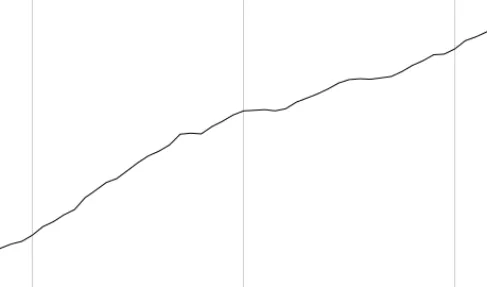
Figure 1.9 displays one measure of the increasing volume of interna- tional trade since 1971. The average growth rate has been just over 6 per- cent per annum, but with the onset of the subprime crisis, there was an unprecedented drop of nearly 12 percent in 2009.
Progress in communication and information technology have been an important part of income growth. Technical progress has been one of the
3Maddison’s data is available at www.ggdc.net/maddison/. The Penn World Table data is available at http://pwt.econ.upenn.edu/php site/pwt index.php.
P1: a/b P2: c/d QC: e/f T1: g
JWBT440-c01 JWBT440-Malz August 19, 2011 17:17 Printer: To Come
22 FINANCIAL RISK MANAGEMENT
1980 1990 2000 2010
500 1000 2000 4000
F I G U R E 1 . 9 Growth of World International Trade 1971–2009
Annual volume of world trade in goods and services, calculated as an arithmetic average of the volume of world imports and exports, in billions of 2005 U.S.
dollars. The graph is plotted on a logarithmic scale, but vertical axis tick labels are expressed as levels.
Source:Organisation for Economic Co-operation and Development (OECD), International Trade (Main Economic Indicators).
enabling factors in financial innovation, and has probably also been an important factor in the past 15 years’ increase in productivity, illustrated for the United States in Figure 1.10. Two periods of high productivity growth, well over 212 percent per annum, were separated by the period 1973–1995, during which output per hour grew by less than 112percent.
Wealth accumulation has increased as a consequence of rising incomes.
Ownership of more assets by households has been accompanied, at least in developed countries, by more widespread ownership of financial assets as well as residential real estate (see, for example, Figure 15.1).
T h e K e y n e s i a n M o m e n t a n d t h e S t a g f l a t i o n C r i s i s Economic policy in the early postwar period centered on high employment and economic growth in the United States, and on reconstruction and recovery in Europe. Macro- economic policy was informed by the view that there was a stable trade- off, called the Phillips curve, between the two. Inflation was a secondary concern. The United States and Europe enjoyed both rapid growth and low inflation in the first two postwar decades, a time of high confidence in the ability of policy makers to “fine-tune” economic policy to achieve multiple goals.
2.8
1947–1973
1.1
1973–1979
1.4
1979–1990
2.1
1990–1995
2.6
1995–2000
2.8
2000–2010
F I G U R E 1 . 1 0 U.S. Labor Productivity 1947–2010
Nonfarm business sector labor productivity (output per hour), average percent change at an annual rate.
Source: U.S. Bureau of Labor Statistics, http://www.bls.gov/lpc/prodybar.htm.
The framework for international economic policy was the Bretton Woods system, under which the U.S. dollar served as the linchpin of a system of fixed exchange rates and rules for addressing international finan- cial flows. In such a system, only the United States could conduct a truly independent monetary policy.
Doubts about this framework grew in response to two disturbing phe- nomena that grew into a crisis in the 1970s:
U.S. inflation rates were gradually rising and by the early 1970s had reached alarming levels. As seen in Figure 1.11, U.S. inflation rose from 1.2 percent in 1965 to 6.3 percent in 1970, eventually peaking at 12.4 percent in 1980.
The United States was also running growing trade deficits and capital outflows that made it increasingly difficult to maintain fixed exchange rates. During the 1960s, these outflows had been a minor blot on the pic- ture of macroeconomic policy success, rather than a center of concern.
By the 1970s, the deficits had become a full-blown crisis.
In a sequence of increasingly radical steps beginning in 1968 and cul- minating in March 1973, when it permitted the dollar to float against other major currencies, the United States led the way in dismantling the Bretton Woods system. The European Common Market countries immediately
P1: a/b P2: c/d QC: e/f T1: g
JWBT440-c01 JWBT440-Malz August 19, 2011 17:17 Printer: To Come
24 FINANCIAL RISK MANAGEMENT
mean 1996–2009 2.1
1960 1980 2000
2 4 6 8 10 12
F I G U R E 1 . 1 1 U.S. Inflation 1958–2010
Annual percent change in the consumer price index—all urban consumers (CPI-U), all items less food and energy. Vertical grid lines represent the dates of NBER business cycle peaks.
Source:U.S. Bureau of Labor Statistics, series CUUR0000SA0L1E.
introduced measures to limit foreign exchange rate fluctuations between their currencies. The Common Market evolved into the European Union, and its efforts to “peg” European currencies to one another eventually evolved into a single currency, the euro, introduced in 1998. The currency crises that beset this evolution are described in Chapter 14.
The major industrial countries have from time to time intervened in currency markets by buying or selling dollars against other currencies to counteract volatility or exchange rate levels that were perceived as unac- ceptable, hence the name managed floating for the exchange-rate system, such as it is, today. The U.S. dollar nonetheless remains prominent in trade and capital flows, in global investment portfolios, and in the reserves of other central banks.
Capital flows have increased rapidly since the breakdown of the Bretton Woods system, though the degree of integration has precedents in earlier periods of history. International differences in savings rates manifest them- selves in current account surpluses and deficits, or differences in the value of the goods and services a country imports and exports. The United States has a low savings rate (see Figure 1.16) and runs large current account deficits (Figure 1.12). By this means, the world is provided with dollar balances.
Countries with high savings rates tend to run current account surpluses, un- less their domestic investment rates are also high, since their output is greater
1960 1980 2000 –6
–5 –4 –3 –2 –1 0 1
F I G U R E 1 . 1 2 U.S. Current Account Balance 1960–2010
Ratio of the U.S. balance on current account to gross domestic product in current dollars, percent, annual.
Source:Bureau of Economic Analysis, U.S. International Transactions Accounts, Table 1, line 77; National Income and Product Accounts, Table 1.1.5, line 1.
than their consumption and investment. Current account surpluses are offset by equal capital flows in the opposite direction. Countries saving more than they invest internally must invest in foreign assets. The surpluses—or the cor- responding overseas investments—are additions to the net assets of the sur- plus country vis- `a-vis the rest of the world, and are frequently accumulated in the form of foreign assets of the central bank, that is, central bank reserves.
Figure 1.13 displays IMF estimates of international monetary reserves.
The growth in reserves has been rapid and steady since the end of the Bretton Woods era. Two periods of especially rapid growth stand out.
The first occurred in the immediate aftermath of the transition in 1973 to the managed-float exchange-rate system that prevails today, as coun- tries equipped themselves with the international reserves they felt neces- sary to cope with potential instability. The second occurred after 1998;
reserves increased almost four-fold in the decade 2001–2010. This increase followed the Asian Crisis in emerging markets, lasting from mid-1997 to early 1999, during which a number of countries were forced to devalue their currencies and endure severe, if brief, recessions. In its aftermath, a number of developing countries determined not only to restore, but to sig- nificantly increase their foreign-exchange reserves. Other reasons for the in- crease, which was concentrated in East Asia and in oil-exporting countries,
P1: a/b P2: c/d QC: e/f T1: g
JWBT440-c01 JWBT440-Malz August 19, 2011 17:17 Printer: To Come
26 FINANCIAL RISK MANAGEMENT
1960 1980 2000
50 100 250 500 1000 2000 4000
F I G U R E 1 . 1 3 Growth of International Monetary Reserves 1948–2010 International reserves, annual, billions of Special Drawing Rights (SDRs), logarithmic scale. SDRs are a currency unit introduced by the IMF in 1969 as a means of increasing its flexibility to provide liquidity to countries experiencing balance of payments problems. Today, it serves primarily as a unit of account. In early 2010, one SDR was worth about$1.57.
Source:International Monetary Fund.
include the increase in oil prices and export-led development in East Asian countries.
T h e “ G r e a t M o d e r a t i o n ” During the 1970s, a new orientation in macroe- conomic policy placed expectations about the future, especially concerning economic policy, at the center of economic models. In this approach, a cred- ible commitment by central banks to low inflation could help maintain price stability at much lower cost in growth and employment than the Phillips curve suggested. In the new approach, central banks focused more on man- aging inflation expectations, explicitly or implicitly targeting low inflation and revising their earlier emphasis on employment and growth.
The new orientation was initially a dramatic success. U.S. inflation dropped rapidly throughout the 1980s and 1990s. The annual increase in the core urban consumer price index (CPI-U), a standard inflation measure, fell below 3 percent in 1994, fell below 2 percent in 2003, and has not been higher than 2.5 percent since (Figure 1.11).
Interest rates dropped even more rapidly. The Federal Reserve initiated the new policy by dramatically increasing nominal short-term interest rates, but was able to lower them rapidly once inflation began to decline. The renewed focus on low inflation, and disappointment with the results of
mean 2.34
1980 1990 2000 2010
–2 0 2 4 6 8 10
F I G U R E 1 . 1 4 Real Fed Funds Rate 1971–2009
The graph displays a simple approach to measuring the real Fed funds rate. For the period from Q1 1971 through Q3 1997, the real Fed funds rate is estimated as the quarter-end nominal target rate less the average of the four preceding and four subsequent quarterly estimates of the GDP personal consumption expenditure deflator, an inflation estimate. For the period from Q4 1997 through Q3 2009, the real Fed funds rate is estimated as the quarter-end nominal target rate less the five-year forward breakeven rate, a market-adjusted inflation estimate based on Treasury Inflation-Protected Securities (TIPS).
Source:Bloomberg Financial L.P.
“Phillips-curve Keynesianism,” was shared by a number of central banks around the world.
The Federal Reserve was able eventually to lower real, or inflation- adjusted, interest rates by definitively removing inflation fears from the economy’s wage- and price-setting. It did the latter by initially cutting in- terest rates more slowly than the inflation rate was falling. This can be seen in Figure 1.14 in the behavior of the realtarget federal funds rate, the rate on overnight central bank reserves the Fed endeavors to achieve through its daily operations in the money market. The real Fed funds rate was extremely volatile in the 1970s, reaching double-digit levels at the time of the Fed’s major effort against inflation around 1980. Following the onset of the dot- com bust in 2000, real short-term interest rates fell to extremely low levels, and were below zero for the first time since the mid 1970s. The difference was that in the 1970s, real rates were negative because inflation was so high;
after 2000 it reflected the low level of nominal interest rates.
P1: a/b P2: c/d QC: e/f T1: g
JWBT440-c01 JWBT440-Malz August 19, 2011 17:17 Printer: To Come
28 FINANCIAL RISK MANAGEMENT
GDP growth
volatility of GDP growth
1960 1980 2000
–10 –5 0 5 10 15
1 2 3 4 5 6
F I G U R E 1 . 1 5 U.S. Growth Rate and Its Volatility 1947–2009
The solid line (lefty-axis) plots U.S. GDP growth, Q2 1947 to Q3 2009, seasonally adjusted at an annual rate, percent. The dashed line (righty-axis) plots the rolling standard deviation of the past 5 years’ quarterly growth rates in percent. Vertical gridlines represent the dates of NBER business cycle peaks and the horizontal gridline the mean GDP growth rate over the entire period.
Source:U.S. Bureau of Labor Statistics, series CUUR0000SA0.
The small decline in employment and growth attendant on the dis- inflation of the early 1980s, once the initial interest-rate shock had been absorbed, was a surprise. A dampening of business cycles over the past half- century had been noted, but a decline in fluctuations in output, prices, and other economic indicators was now unmistakable. The standard deviation of U.S. output growth, for example, dropped rapidly from around 6 percent to about 2 percent, as seen in Figure 1.15. This change has sometimes been called the “Great Moderation.”
The benign economic and financial environment was reflected in many ways. For example, the disinflation of the early 1980s made it possi- ble for corporations to finance growth through capital-markets borrow- ing, leading to an increase in balance sheet that outstripped the increase in firm value. This trend reversed in the early 1990s, as can be seen in Figure 1.17, when nonfinancial corporate business began to see strong profit growth, and leverage ratios declined rapidly until the onset of the subprime crisis.
But shadows did appear on the horizon. One worry was the decline in the U.S. household savings rate. Figure 1.16 shows that, once the immediate
mean 1946–2009 7.1
1960 1980 2000
2 4 6 8 10
F I G U R E 1 . 1 6 U.S. Savings Rate 1946–2010
Personal saving as a percentage of disposable personal income, annual.
Source:Bureau of Economic Analysis, National Income and Product Accounts, Table 2.1, line 34.
Net worth at market value Net worth at historical cost basis
1960 1980 2000
20 30 40 50 60 70 80 90
F I G U R E 1 . 1 7 Corporate Leverage in the United States 1950–2010
Ratio of debt instruments to net worth, nonfinancial corporations, quarterly.
Source:Federal Reserve Board, Flow of Funds Accounts of the United States (Z.1), Table B.102.
P1: a/b P2: c/d QC: e/f T1: g
JWBT440-c01 JWBT440-Malz August 19, 2011 17:17 Printer: To Come
30 FINANCIAL RISK MANAGEMENT
postwar consumption boom had ended (the savings rate had approached 25 percent during the war years), the savings rate was typically near 10 percent until about 1982. It declined steadily thereafter, and households became steadily more indebted, until the financial crisis spurred a sharp in- crease in savings. One reason commonly advanced for the decline is house- holds’ choice to rely on asset appreciation rather than forgone consumption to build wealth. The sudden disappearance of confidence in that approach led to the rise in savings in 2008. We further explore these macroeconomic phenomena and their relationship to the subprime crisis in Chapter 14.
Perhaps most worrisome was the apparently increasing frequency of episodes of financial stress. There were many types, most of them affecting only one or a small number of financial firms, but with at least the po- tential for wider effects. Table 1.1 lists a few of the financial mishaps of recent decades that preceded the subprime crisis. By no means is the table comprehensive.
By way of contrast, let’s get a perspective from a time when the world seemed a financially more secure and stable place. Stefan Zweig provides this description of the placid financial environment of late nineteenth century Europe:
There were no revolutions, no sharp destruction of wealth in the calm of that epoch; if securities lost even four or five percent on the exchanges, it was called a “crash,” and one spoke with wrinkled brow of the “catastrophe.” . . . Wills stipulated precisely how one’s grandchildren and great-grandchildren were to be protected from even the smallest loss in asset value, as though an invisible debt instrument guaranteed safety from the eternal Powers. And in the meantime, one lived contentedly, and stroked one’s petty worries like good, obedient house pets one did not, fundamentally, really fear[Zweig, 1944].
The era was not as stable as appeared, and in its aftermath Keynes (1920) provided one diagnosis of the forces undermining it: “the instability of an excessive population dependent for its livelihood on a complicated and artificial organization, the psychological instability of the laboring and capitalist classes, and the instability of Europe’s claim, coupled with the completeness of her dependence, on the food supplies of the New World.” In the century since it ended, financial risk and instability have been recognized as persistent features of the economic system. All the more surprising, then, that the study of financial risk is a relatively new discipline in finance and economics.