This research was funded by the National Science Foundation Graduate Research Fellowship, the Templeton Foundation (#61368), and the Eunice Kennedy Shriver National Institute of Child Health and Human Development under Award U54HD083211. I was fortunate to find a home in Nashville's international and Jewish communities during my time in the city. The faculty in my field of study regularly challenged and supported me as a critical thinker and analyst.
I am honored by the investment these people have made in my development, but I would be remiss if I did not mention the person with whom I have worked most closely over the past five years: David Lubinski. It's hard to find true advocates in life - someone who is in your corner of the ring no matter the circumstances and no matter the time and energy it takes.
THE GENDER WAGE GAP
Finally, these considerations will be linked to the specific purpose and scope of the empirical advances that I hope to contribute by examining the gender wage gap in the broader context of life course development. The Proceedings of the National Academy of Sciences (Sterling et al., 2020), for example, discussed the gender pay gap as it relates to gender differences in trust without ever mentioning other factors (e.g. gender differences in ability and interest patterns, work structure preferences). Many of the studies and results in the articles cited herein are the culmination of
The research conducted into the nuances and dimensions of the gender pay gap, as discussed above, helps explain differences in wages between women and men. Cook et al.'s (2018) recent study of the gender pay gap among Uber drivers found that even in an environment where gender discrimination by the company was unlikely due to blinding and non-negotiable pay, a 7% pay gap existed. The final determinant of the gender pay gap to be revised is the presence of children and parenthood.
These findings suggested that some, but not all, of the gender pay gap could be attributed to this. If the same researchers reach different conclusions based on similar data sets (Anderson et al Budig & Hodges, 2010; England et al., 2016; Killewald & Bearak, 2014), it would be difficult to truly understand the extent of the gender problem. pay gap for women with high potential.

CURRENT INVESTIGATION
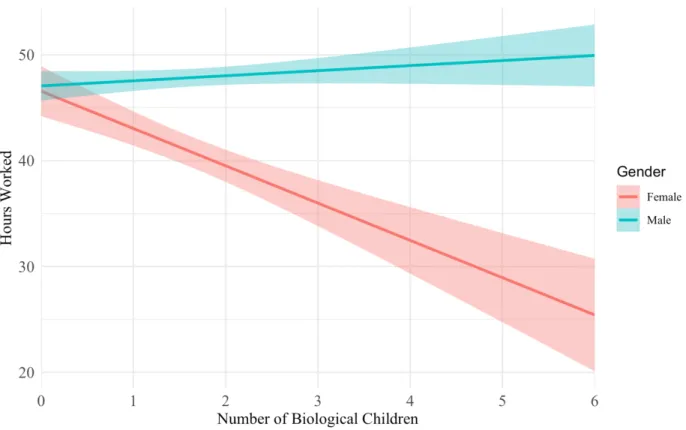
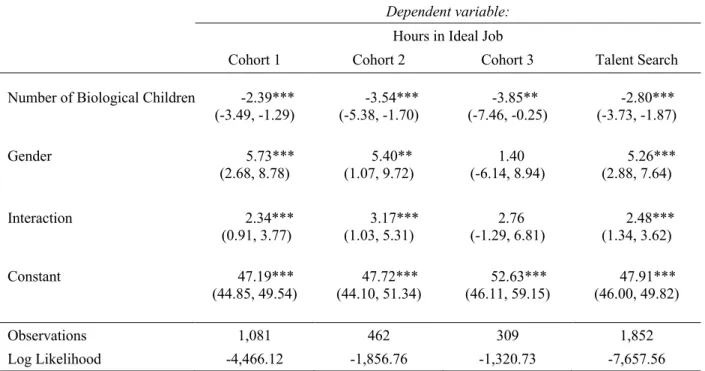
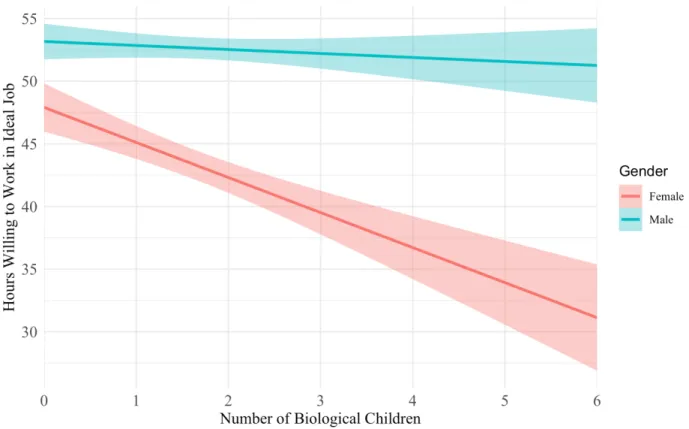
The number of hours participants currently work was determined by asking participants to describe the average number of hours per week they worked in the five-year period prior to completing the survey. Participants recorded the number of hours they were willing to work in their ideal job by answering the question: “If you were given the opportunity to work in your first choice job, how many hours per week would you want to work to the max?” ?”. Participants also indicated the number of children and the status of each child (i.e., biological child, adopted child, or stepchild).
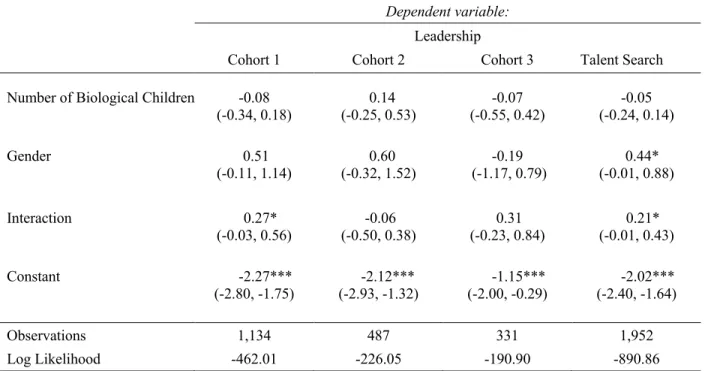
Emphasis was placed on interpreting the interaction between participant gender and number of children in predicting the desired outcome. McCabe and colleagues (2021): The change in the marginal effect of children for a counterfactual change from female to male. The (statistical) null hypothesis is assumed to be that the interaction is zero in the population (that is, the number of biological children is related to the outcome of interest in exactly the same way for both men and women).
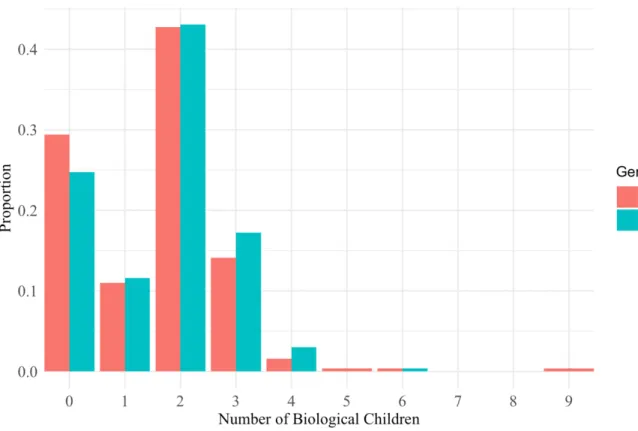
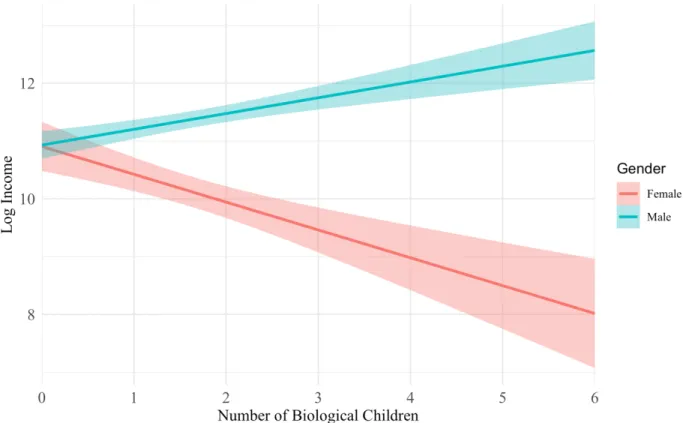
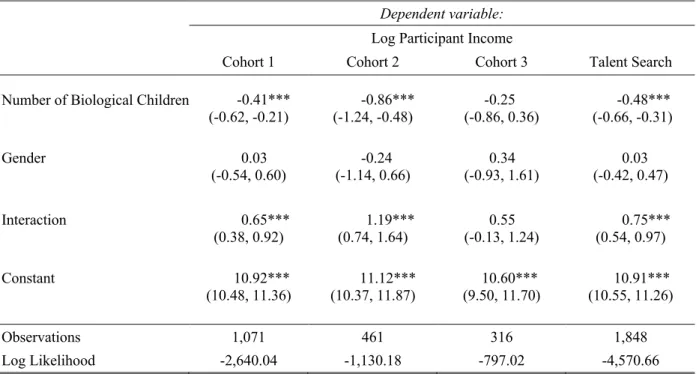
On this scale, a one-unit increase in the number of children is associated with a 38% decrease in women's wages, and the same change is associated with a 31% increase in men's wages. The result is a clear difference in income between women and men as a function of the number of children. The interaction is statistically significant at each value of the number of children, with the interaction becoming larger as the number of children increases.
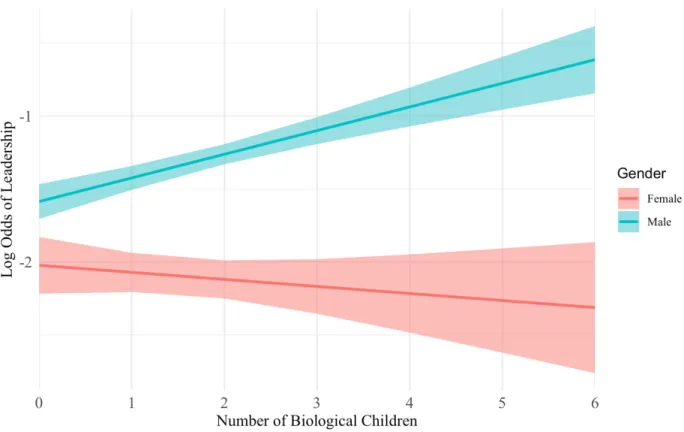
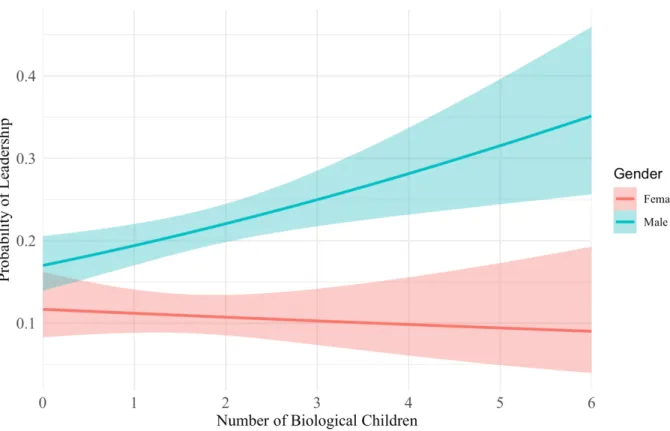
The interaction can be interpreted as an increased marginal effect of the number of biological children on the probability of leadership for changing gender from female to male. These ancillary findings may help explain the finding that their total family income remained relatively high while their reports of subjective well-being increased by more, although parenthood and the number of children they had had different effects on the individual incomes of men and women . children. Part A shows different trends in the proportion of significant others of men and women working full-time as a function of number of children.
Part B shows an increase in median family income as a function of the number of children. Across three cohorts of intellectually prodigious participants, the findings from Study 1 replicate robust normative findings about the earnings divergence between women and men as a function of the number of children they have. Consistent with the Motherhood Penalty and Fatherhood Bonus literature (Cukrowska-Torzewska & Matysiak, 2020), intellectually gifted women had significantly lower incomes as a function of the number of children they had (i.e., Motherhood Penalty); on the other hand, intellectually talented male participants experience a complete reversal of this relationship and earned significantly greater incomes with more children (ie, Fatherhood Bonus).
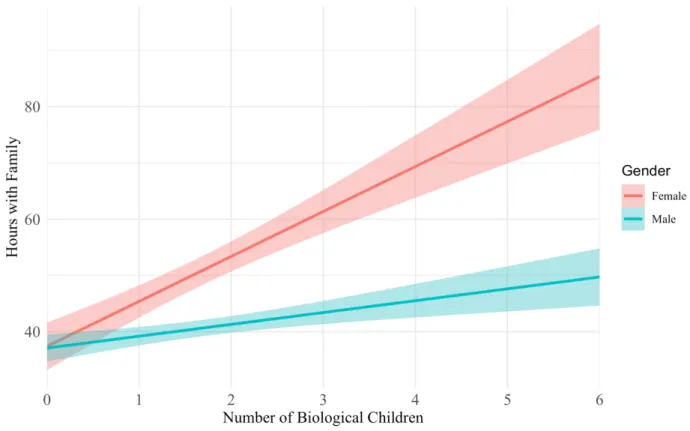
Since income changes differed between the sexes as a function of parentage and the number of children, both sexes. Fathers, on the other hand, had no changes in the number of hours worked, slight increases in the number.
However, we do not have a good understanding of the overall gender-related longitudinal impact of parenting in STEM. A sample of these participants will be studied here to test all of the hypotheses examined in Study 1. The cohort of top STEM doctoral students consisted of individuals who identified in 1992 as first- or second-year doctoral students pursuing training in one of the top 15 STEM doctoral programs in the United States (Gourman, 1989; Lubinski et al., 2001; National Research Council, 1987).
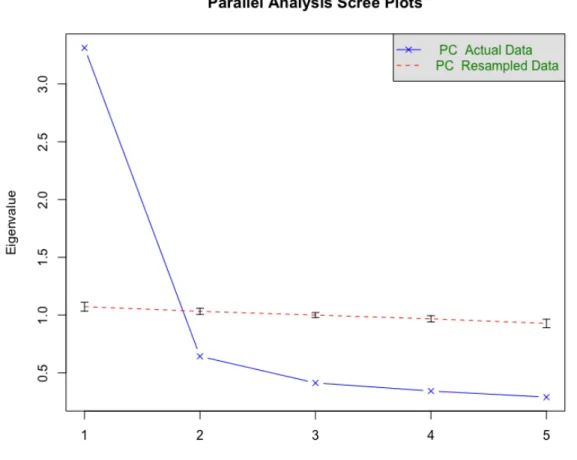
The result is a clear divide in income between men and women as a function of the number of children they have. Nevertheless, the magnitude of the interaction is consistent with the results in Study 1 as well as with the results based on the log odds scale: more children was associated with greater increases in the likelihood of leadership for men compared to women. Performed on the correlation matrix of the indicators of psychological well-being for Study 2, only the first eigenvalue is above what would be expected by chance.
Distribution of Labor and Family Income among Top STEM Doctoral Students Part A shows divergent trends in the proportion of male and female participants' significant others working full-time as a function of the participant's number of children. Another reason why this study is particularly informative is that it is the longest running longitudinal study of the life-span development of high-potential women who grew up largely during and after second-wave feminism. Some of the literature on the Gender Wage Gap brings these two issues together, but it is important to disentangle them for analytical and other purposes.
However, the series of findings in this dissertation suggest that a more cautious interpretation of the gender wage gap and the motherhood penalty is in order, one that does not dictate policy but certainly has policy implications. A very different set of results for men consistently emerged from the analyzes in the three groups. That consistent empirical patterns were found across Study 1 and Study 2 reinforces an underlying model of the multivariate relationships of constructs structuring the life span development of high-potential men and women.
For example, two plausible explanations for the finding that women with more biological children earn less are 1. The scope of this dissertation is both an advantage and a limitation of this dissertation design. On the one hand, this dissertation provided the first comprehensive investigation of a multivariate set of important life outcomes in high-potential samples in the context of the gender wage gap.
This enables clear and specifically focused conclusions on high-potential populations, and these populations have rarely received serious attention in investigations of the gender wage gap and the motherhood penalty. Thus, to make inferences across a relatively large number of children (eg, 4, 5, and 6)—and without uncomfortably extrapolating to sparsely supported data sets (eg, and 11 children ) - I do not overturn any observations with six or fewer children. While it seems highly likely that the relationship is monotonic (e.g., child rearing leads to steadily decreasing earnings for mothers), it seems unlikely at first that the relationship is linear (e.g., the change from four children in five has the same impact on income as the change from zero children to one).
Rationale for the Study of Mathematical Precocity of Youth (SMPY) in the First Five Years of Promoting Educational Acceleration.