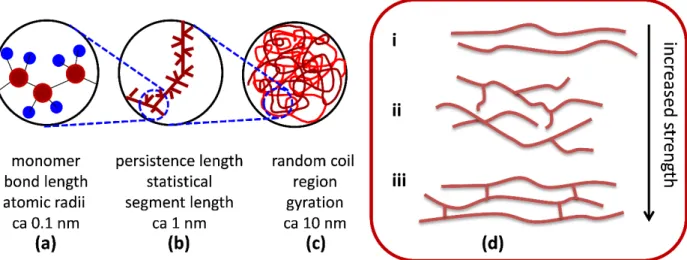
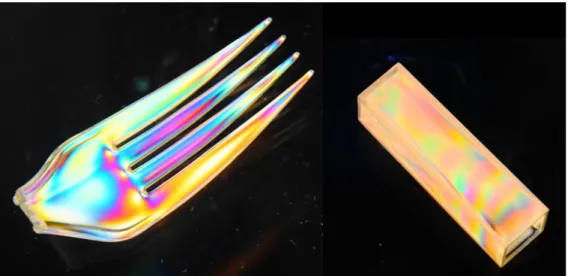
This is seen for metaphosphate glass (Inaba et al. 2015) as well as for organic polymer or elemental chalcogen glass (Zallen 1998). The type of stacking can affect many properties such as birefringence or thermal conductivity (Meille Stefano et al. 2011).
Amber
Often the active component is dissolved in a polymer host or chemically attached to the polymer (Lundquist et al. 1996). Ambers do exhibit a glass transition temperature, and a very low fictitious temperature - which, however, cannot be directly linked to the age and subsequent relaxation of the amber (Zhao et al. 2013).
Organic metal framework glasses
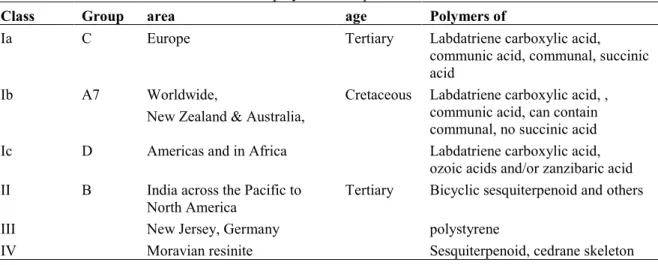
Photo of a 2.3 kg piece of amber found in 1992 in La Harve in the Seine River (France) and exhibited at the Inselgoldschmiede & Schmuggelkiste, Langeoog, Germany (Photo Möncke). The chemical formula of the basic repeating units of a regular labdanoid as typical for Baltic Amber;.
INORGANIC METALLIC GLASSES
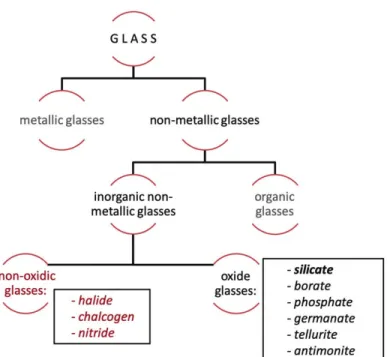
12 ligand binding is preserved in glass, MOFs are distinguished from other glass families, namely organic, metallic, and the large group of inorganic non-metallic glasses. Mechanical studies of glasses often focus on metallic glasses, one of the few properties where BMGs are directly compared to non-metallic inorganic glasses (Rouxel 2007).
INORGANIC NON-METALLIC NON-OXIDE GLASSES 1 Chalcogenide glasses
Fluoride glasses
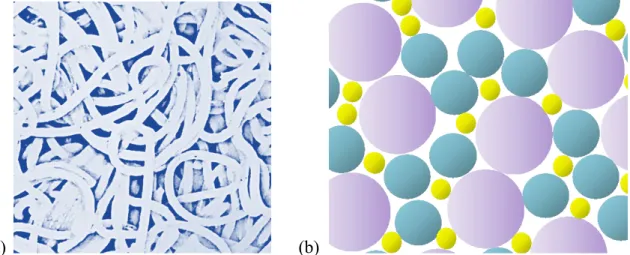
Thus, an opposite approach was to describe glass formation in fluoride systems as random ion packing (Poulain et al. 1992). Some fluoride glasses such as some fluoroaluminate and fluoro-indate glasses are even relatively stable when immersed in water (Poulain et al. 1992).
Nitride glasses
Fluoride glasses are the most important of the halogen glasses, although other systems with high fractions of chloride (Chen et al. 2018) or iodide (Lefterova et al. 1997) have been successfully prepared. Other saline-like glass systems include mixed alkaline earth silicates (Duffy and Ingram 1968, Ingram and Lewis 1974) or sulfates (Thieme et al. For example, the ZnSO4-K2SO4-NaCl system has been studied in the context of immobilization of salt-rich nuclear waste (Nienhuis et al . 2019).
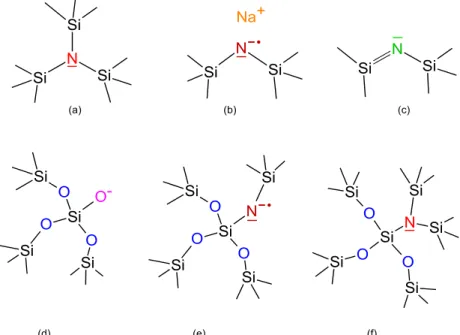
N0 or N3+ is reduced in a redox reaction, oxidizing the metals to the corresponding nitrides, which in turn will lead to an oxynitride glass that maintains a significant nitride fraction (Loehman 1987; Becher et al. Depiction of basic glass-forming units in silica-oxynitride glasses , after Becher et al. a) bridging nitrogen connecting three silicate tetrahedra; (b) charge-balanced bridging nitrogen linking two silicate tetrahedra – being essentially a mixture of the bridging and a non-bridging oxygen atom;. For one, thermal ammonolysis at relatively low temperatures is the preferred preparation method (Bunker et al. 1987, Muñoz 2011).
23 of the 17O NMR studies on NaPON glasses allowed to distinguish non-bridging oxygen atoms on both the PO4 and PO3N or PO2N2 sides (Muñoz et al. 2013). 2015) studied fluoride-containing LiOPN glasses, 30 years after previous attempts to introduce nitride into fluoride (oxide) systems by Vaughn and Risbud (1984) and Fletcher et al. 2014) also prepared a thio-phosphorus oxynitride glass electrolyte, demonstrating its versatility of glass formation on the anion side.
SIMPLE INORGANIC OXIDE GLASSES
Phosphate glasses
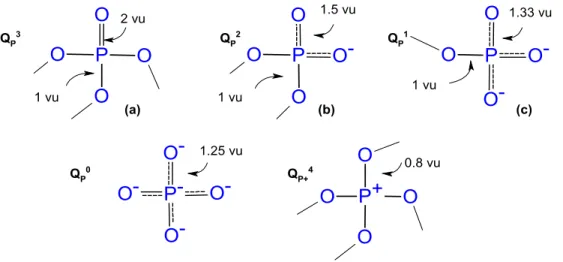
Delocalized electron on the basic phosphate units with increasing depolymerization (a) ultraphosphate, (b) metaphosphate, (c) pyrophosphate, (d) orthophosphate and (e) the special case of the fourfold coordinated phosphate tetrahedra, bond strength values are given in valence units (vu) after Brow et al. Pure P2O5 is so hygroscopic that it has long been used as a drying agent in chemistry (Wiberg et al. 2007). Phosphate glass with controlled dissolution rate is used in fertilizers (Kosareva et al. 2006) and bioglass (Sharmin and Rudd 2017).
Niobium absorptions are also dissolved and Nb-O bands can be identified in the Raman spectra of phosphate glasses fused in Nb cauldrons (Wójcik et al. 2018). Like NMR signals, the vibrational bands shift with the field strength of the binding modifier ion (Velli et al. 2005; Palles et al. 2016). Hoppe performed extensive diffraction studies on phosphate glasses focusing on the phosphate units and the coordination and bonding of the modifying cations (Hoppe et al. 2000).
Phosphate glasses may also contain high levels of halogens, such as in the ionic conductive AgPO3- AgI system (Rodrigues et al. 2011; Palles et al. 2016). Perhaps one of the best studied systems of such inverted ionic glasses are sulfate phosphate glasses (Mamoshin 1996; Thieme et al. 2015).
Borate glasses
Pyroborate (BØO22-) and orthoborate (BO33-) units are usually found as trigonal borate units, although tetrahedral borate pyroborate (BØ3O-) and orthoborate (BØ2O22-) units are known to occur in crystals (Wright et al. 2014) and possibly in glasses (Winterstein-Beckmann et al. Illustration of typical superstructural units found in borate glasses and crystals (a) boroxol ring, (b) triborate ring, (c) di-triborate ring, (d) diborate unit, (e ) pentaborate unit, (f) di-pentaborate unit, (g) tri-pentaborate, (h) metaborate chain, (i) metaborate ring, (j) pyroborate, (k) orthoborate, (l) orthoborate ring with three connected [ BØ2O2 ]3- Td-orthoborate units; and finally two large polyanions known from crystals and believed to exist (m) as the di-pentaborate anion [B5O11]7- in bismuth metaborate glass or (n) as the bi-diborate polyanion [B10O21 ] 12- in lead-metaborate glasses, (Kamitsos and Chryssikos 1991; Wright et al. However, some metaborate glasses crystallize (Yiannopoulos et al. 2001) or merging and separating phases (Ehrt 2013, Herrmann et al. 2019).
Lead and bismuth borate glasses form PbO and Bi2O3 pseudophases embedded in a connective tissue, as described by Ingram for silicates (Ingram et al. 1991). Raman and XPS spectroscopy can distinguish these embedded microphases from the surrounding phase of undermodified borate compositions (Möncke et al. 2016). Because borate-related bands are found at higher energies, more studies have been conducted on the far IR region of borate than most other glasses (Yiannopoulos et al. 2001).
Such glasses are of interest for their non-linear optical properties and electric field-induced second harmonic generation (Dussauze et al. 2006). Borate glass fibers are used for wound healing (Zhao et al. 2015), showing great potential for vascular regrowth.

Tellurite glasses
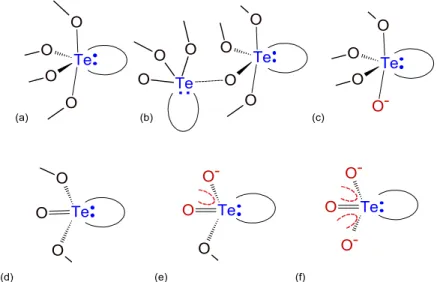
The fundamentals of this structure have been confirmed by Raman (Tagiara et al. 2017), neutron diffraction (McLaughlin et al. Diffraction studies seem to indicate a significant proportion of such terminal units (Barney et al. 2013); however, Raman spectroscopy does not see double Te=O bonds with a signal at about crucible dissolution has already been discussed in the case of phosphate glasses and as shown by Tagiara et al. 2017), melting of pure TeO2 in Al2O3 crucibles will enhance glass formation through dissolution and uptake of Al2O3 from the crucible.
This behavior is in contrast to the series (1-x)TeO2-xTl2O, where weaker thallium ions act as network modifiers, changing the connectivity and coordination of tellurite polyhedra, which is consequently evident in significant changes in the Raman spectra (Mirgorodsky et. others 2012). The use of tellurite glasses is particularly focused in optics and photonics due to their high polarizability, which results in high refractive index and high third-order sensitivity, which is of interest for nonlinear optics (NLO) (Weber 2006; Barbosa et al. 2017). Low-energy phonon sidebands are beneficial for fluorescence, as is the high solubility of rare earth ions in tellurite glasses (Wang et al. 1994).
Density and coefficient of thermal expansion are high while mechanical strength and hardness are relatively low compared to other oxide glasses (Stanworth 1952; Tagiara et al. 2017). The reported anti-glass compositions include SrTe5O11 (Burckhardt and Trömel 1983) or glass ceramics from the TeO2−Nb2O5−Bi2O3 system (Bertrand et al. 2015).
Germanate glasses
Structural variations under high pressure are also interesting, as GeO2 has a greater tendency than SiO2 to form higher coordinated polyhedra (Kono et al. 2016). GeO2 readily forms glasses with many other glass formers, intermediates, and oxide modifiers (Haiyan et al. 1986). Germanophosphate glasses have been studied by X-ray and neutron diffraction and show better glass formation and fewer phase separation zones than the corresponding phospho-silica glass (Hoppe et al. 2006).
Germano-tellurite glasses have been studied for their optical properties, especially fluorescence in glasses doped with Er3+ and Tm3+ ions (Mattarelli et al. 2005). Various studies investigated the structure of modified germanate glasses, such as in terms of alkali sites and optical basicity (Kamitsos et al. 2002), including IR and Raman studies exemplified in the xRb2O·(1 − x)GeO2 series (Kamitsos et al. .1996). Binary germanate systems such as TiO2-GeO2 (Khan and Mohamed-Osman 1986), GeO2-Bi2O3 (Kassab et al. 2019) and GeO2-PbO (Bahari et al. 2013) were investigated for their structure and optical properties after the addition of optically active elements such as rare earth ions and silver nanoparticles.
More recent, in-depth multi-technique structural studies of mixed network former glasses have been performed by Eckert et al. Fluorine-containing germanate systems were recently studied in detail, see for example Pereira et al.
Other glasses
Multicomponent Germans containing Bi2O3, Gd2O3, Ga2O3, WO3, TeO2 or even CoO as additional components have been successfully prepared and studied, e.g. A coordination number of 4 has been found earlier for Al3+ in 50CaO-50 Al2O3 glass, and generally if CaO< Al2O3. The eutectic melt is characterized by a very high viscosity, despite the fact that the composition is rich in modifying oxides (Akola et al. 2013).
Lead-gallate glasses have been investigated by diffraction (Hannon et al. 1996) and for ionic conduction by Qiu et al. (1996), and lanthano-gallates by Raman spectroscopy (Skopak et al. 2018). Many non-traditional multi-component tungstate-based network formers have been established, an article on tungstate-based glasses by Ataalla et al. 2018) also includes a review on the former free network glasses. Nonmetallic inorganic glasses can be combined in countless variations, as shown by Zanotto et al.
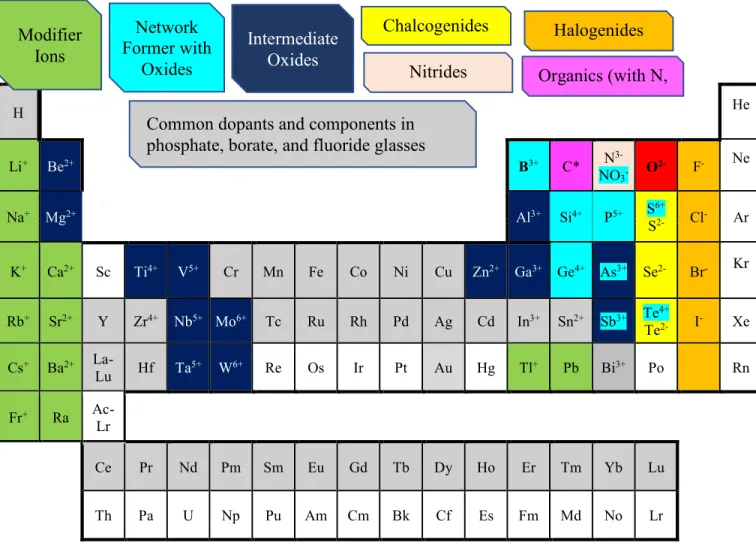
Many intermediate oxides form glass with one of the classical network formers (NWF) and are listed in each section devoted to each NWF. Mixed network glass systems are discussed in this book chapter in chronological order from the first NWF discussed.
GLASS FAMILIES IN COMPARISON
Thus, the structure and properties of the glasses can be adjusted and fine-tuned to varying degrees. Baazouzi M, Soltani MT, Hamzaoui M, Poulain M, Troles J (2013) Optical properties of alkali-antimonite glasses, purified fiber drawing processes. Becher PF, Hampshire S, Pomeroy M, Hoffmann MJ, Lance MJ, Satet RL (2011) A review of the structure, properties of silicon-based oxynitride glasses.
Fekeshgazi IV, Mai KV, Matelesco NI, Mitsa VM, Borkach EI (2005) Dagiti estruktural a panagbalbaliw, dagiti optiko a tagikua dagiti As2S3 a kalkogenido a sarming. Konidakis I, Varsamis C-PE, Kamitsos EI, Möncke D, Ehrt D (2010) Estruktura, dagiti tagikua dagiti naglaok nga strontium-manganese metaphosphate a sarming. Mascaraque N, Takebe H, Tricot G, Fierro JLG, Duran A, Muñoz F (2014) Estruktura ken elektrikal a tagikua ti baro a thio-phosphorus oxynitride a sarming nga elektrolito.
Milanova M, Kostov KL, Iordanova R, Aleksandrov L, Yordanova A, Mineva T (2019) Local structure, bonding and physical properties of glasses in the B2O3–Bi2O3–La2O3–WO3 system. Möncke D, Ehrt D, Velli LL, Varsamis CPE, Kamitsos EI (2005) Structure, properties of phosphate-fluorinated mixed glasses. Thieme A, Möncke D, Limbach R, Fuhrmann S, Kamitsos EI, Wondraczek L (2015) Structure, properties of alkali glasses and silver sulfophosphate.
Winterstein-Beckmann A, Möncke D, Palles D, Kamitsos EI, Wondraczek L (2015) Structure, properties of quaternary orthoborate glasses Eu2O3–(Sr,Eu)O–B2O3.