HUMAN
RESOURCE
MANAGEMENT
Boston Columbus Indianapolis New York San Francisco Upper Saddle River
Amsterdam Cape Town Dubai London Madrid Milan Munich Paris Montreal Toronto Delhi Mexico City Sao Paulo Sydney Hong Kong Seoul Singapore Taipei Tokyo
THIRTEENTH EDITION
GARY DESSLER
FLORIDA INTERNATIONAL UNIVERSITY
Editorial Director: Sally Yagan Acquisitions Editor: Brian Mickelson Editorial Project Manager: Sarah Holle Director of Marketing: Maggie Moylan Senior Marketing Manager: Nikki Ayana Jones Marketing Assistant: Ian Gold
Senior Managing Editor: Judy Leale Production Project Manager: Kelly Warsak Senior Operations Supervisor: Arnold Vila Operations Specialist: Cathleen Petersen Creative Director: Blair Brown Senior Art Director: Kenny Beck
Text Designer: LCI Design Cover Designer: LCI Design Cover Art: LCI Design
Manager, Rights and Permissions: Estelle Simpson Media Project Manager: Lisa Rinaldi
Senior Media Project Manager: Denise Vaughn Full-Service Project Management: Jennifer Welsch/
Bookmasters
Composition: Integra Software Services Pvt. Ltd.
Printer/Binder: Quebecor World Book Services Cover Printer: Lehigh-Phoenix Color Text Font: Minion 11/12
Credits and acknowledgments borrowed from other sources and reproduced, with permission, in this textbook appear on appropriate page within text.
Microsoft® and Windows® are registered trademarks of the Microsoft Corporation in the U.S.A. and other countries. This book is not sponsored or endorsed by or affiliated with the Microsoft Corporation.
Copyright © 2013, 2011, 2008, 2005, 2003 by Pearson Education, Inc., publishing as Prentice Hall.All rights reserved. Manufactured in the United States of America. This publication is protected by Copyright, and permission should be obtained from the publisher prior to any prohibited reproduction, storage in a retrieval system, or transmission in any form or by any means, electronic, mechanical, photocopying, recording, or likewise. To obtain permission(s) to use material from this work, please submit a written request to Pearson Education, Inc., Permissions Department, One Lake Street, Upper Saddle River, New Jersey 07458 or you may fax your request to 201-236-3290.
Many of the designations by manufacturers and seller to distinguish their products are claimed as trademarks. Where those designations appear in this book, and the publisher was aware of a trademark claim, the designations have been printed in initial caps or all caps.
Library of Congress Cataloging-in-Publication Data Dessler, Gary
Human resource management/Gary Dessler. 13th ed.
p. cm.
Includes bibliographical references and index.
ISBN-13: 978-0-13-266821-7 (hardcover: alk. paper) ISBN-10: 0-13-266821-1 (hardcover: alk. paper)
1. Personnel management. I. Title.
HF5549.D4379 2012 658.3 dc23
2011037044
ISBN 10: 0-13-266821-1 ISBN 13: 978-0-13-266821-7 10 9 8 7 6 5 4 3 2 1
Microsoft and/or its respective suppliers make no representations about the suitability of the information contained in the documents and related graphics published as part of the services for any purpose. All such documents and related graphics are provided as is without warranty of any kind. Microsoft and/or its respective suppliers hereby disclaim all warranties and conditions with regard to this information, including all warranties and conditions of merchantability, whether express, implied or statutory, fitness for a particular purpose, title and non-infringement. In no event shall Microsoft and/or its respective suppliers be liable for any special, indirect or consequential damages or any damages whatsoever resulting from loss of use, data or profits, whether in an action of contract, negligence or other tortious action, arising out of or in connection with the use or performance of information available from the services.
The documents and related graphics contained herein could include technical inaccuracies or typographical errors. Changes are periodically added to the information herein. Microsoft and/or its respective suppliers may make improvements and/or changes in the product(s) and/or the program(s) described herein at any time. Partial screen shots may be viewed in full within the software version specified.
DEDICATED TO SAMANTHA AND TAYLOR
PART ONE INTRODUCTION 2
1
Introduction to Human Resource Management 22
Equal Opportunity and the Law 303
Human Resource Management Strategy and Analysis 70 PART TWO RECRUITMENT, PLACEMENT, AND TALENTMANAGEMENT 102
4
Job Analysis and the Talent Management Process 1025
Personnel Planning and Recruiting 1366
Employee Testing and Selection 1747
Interviewing Candidates 212PART THREE TRAINING AND DEVELOPMENT 242
8
Training and Developing Employees 2429
Performance Management and Appraisal 28210
Employee Retention, Engagement, and Careers 320 PART FOUR COMPENSATION 35011
Establishing Strategic Pay Plans 35012
Pay for Performance and Financial Incentives 39013
Benefits and Services 422 PART FIVE EMPLOYEE RELATIONS 45814
Ethics and Employee Rights and Discipline 45815
Labor Relations and Collective Bargaining 49416
Employee Safety and Health 53017
Managing Global Human Resources 57618
Managing Human Resources in Small and Entrepreneurial Firms 604 APPENDICESAPPENDIX A PHR and SPHR Knowledge Base 633 APPENDIX B Comprehensive Cases 641
V
Preface xxiii
Acknowledgments xxvii
PART ONE INTRODUCTION 2
1
Introduction to Human Resource Management 2WHAT IS HUMAN RESOURCE MANAGEMENT AND WHY IS IT IMPORTANT? 4 What Is Human Resource Management? 4
Why Is Human Resource Management Important to All Managers? 5 Line and Staff Aspects of Human Resource Management 6
Line Managers Human Resource Duties 7 Human Resource Manager s Duties 7 New Approaches to Organizing HR 9
Cooperative Line and Staff HR Management: An Example 9
THE TRENDS SHAPING HUMAN RESOURCE MANAGEMENT 10 Globalization and Competition Trends 11
Indebtedness ( Leverage ) and Deregulation 12 Technological Trends 12
Trends in the Nature of Work 13
*HR AS A PROFIT CENTER: Boosting Customer Service 14 Workforce and Demographic Trends 14
Economic Challenges and Trends 16
THE NEW HUMAN RESOURCE MANAGERS 17 Human Resource Management Yesterday and Today 17 They Focus More on Strategic, Big Picture Issues 17
* THE STRATEGIC CONTEXT:Building L.L.Bean 17 They Use New Ways to Provide Transactional Services 18
They Take an Integrated, Talent Management Approach to Managing Human Resources 19
They Manage Ethics 19
They Manage Employee Engagement 19 They Measure HR Performance and Results 19
They Use Evidence-Based Human Resource Management 20 They Add Value 20
They Have New Competencies 21 HR Certification 22
THE PLAN OF THIS BOOK 22 The Basic Themes and Features 22 CHAPTER CONTENTS OVERVIEW 23
Part 1: Introduction 23
Part 2: Recruitment, Placement, and Talent Management 23 Part 3: Training and Development 23
Part 4: Compensation 23 Part 5: Employee Relations 23 The Topics Are Interrelated 24 CHAPTER SECTION SUMMARIES 25 DISCUSSION QUESTIONS 25
INDIVIDUAL AND GROUP ACTIVITIES 26
EXPERIENTIAL EXERCISE: HELPING THE DONALD 26 APPLICATION CASE: JACK NELSON S PROBLEM 27 CONTINUING CASE: CARTER CLEANING COMPANY 27 KEY TERMS 28
ENDNOTES 28
VII
2
Equal Opportunity and the Law 30EQUAL EMPLOYMENT OPPORTUNITY 1964 1991 32 Title VII of the 1964 Civil Rights Act 32
Executive Orders 32 Equal Pay Act of 1963 33
Age Discrimination in Employment Act of 1967 33 Vocational Rehabilitation Act of 1973 33
Pregnancy Discrimination Act of 1978 34 Federal Agency Guidelines 34
Early Court Decisions Regarding Equal Employment Opportunity 34 EQUAL EMPLOYMENT OPPORTUNITY 1990 91 PRESENT 35
The Civil Rights Act of 1991 35 The Americans with Disabilities Act 36
Genetic Information Nondiscrimination Act of 2008 (GINA) 39 State and Local Equal Employment Opportunity Laws 39 Sexual Harassment 39
DEFENSES AGAINST DISCRIMINATION ALLEGATIONS 43 The Central Role of Adverse Impact 44
Bona Fide Occupational Qualification 46 Business Necessity 47
Other Considerations in Discriminatory Practice Defenses 48 ILLUSTRATIVE DISCRIMINATORY EMPLOYMENT PRACTICES 48
A Note on What You Can and Cannot Do 48 Recruitment 49
Selection Standards 49
Sample Discriminatory Promotion, Transfer, and Layoff Practices 50 What the Supervisor Should Keep in Mind 51
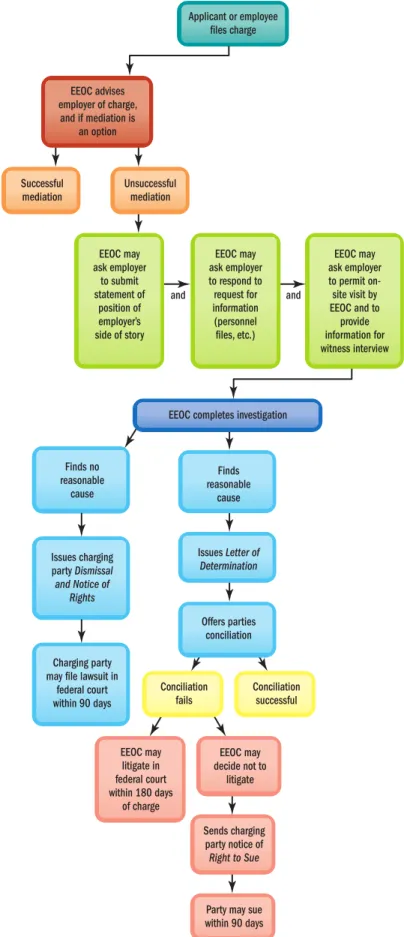
THE EEOC ENFORCEMENT PROCESS 51 Voluntary Mediation 53
Mandatory Arbitration of Discrimination Claims 54
DIVERSITY MANAGEMENT AND AFFIRMATIVE ACTION PROGRAMS 55 Diversity s Potential Pros and Cons 55
*HR AS A PROFIT CENTER 56 Managing Diversity 56 Encouraging Inclusiveness 57
Developing a Multicultural Consciousness 58
Equal Employment Opportunity Versus Affirmative Action 59 Implementing the Affirmative Action Program 59
Reverse Discrimination 60 CHAPTER SECTION SUMMARIES 61 DISCUSSION QUESTIONS 62
INDIVIDUAL AND GROUP ACTIVITIES 62
EXPERIENTIAL EXERCISE: SPACE CADET OR VICTIM? 63
APPLICATION CASE: AN ACCUSATION OF SEXUAL HARASSMENT IN PRO SPORTS 63 CONTINUING CASE: CARTER CLEANING COMPANY 64
KEY TERMS 65 ENDNOTES 65
3
Human Resource Management Strategy and Analysis 70THE STRATEGIC MANAGEMENT PROCESS 72
*THE STRATEGIC CONTEXT: The Shanghai Portman Hotel 72 Goal-Setting and the Planning Process 72
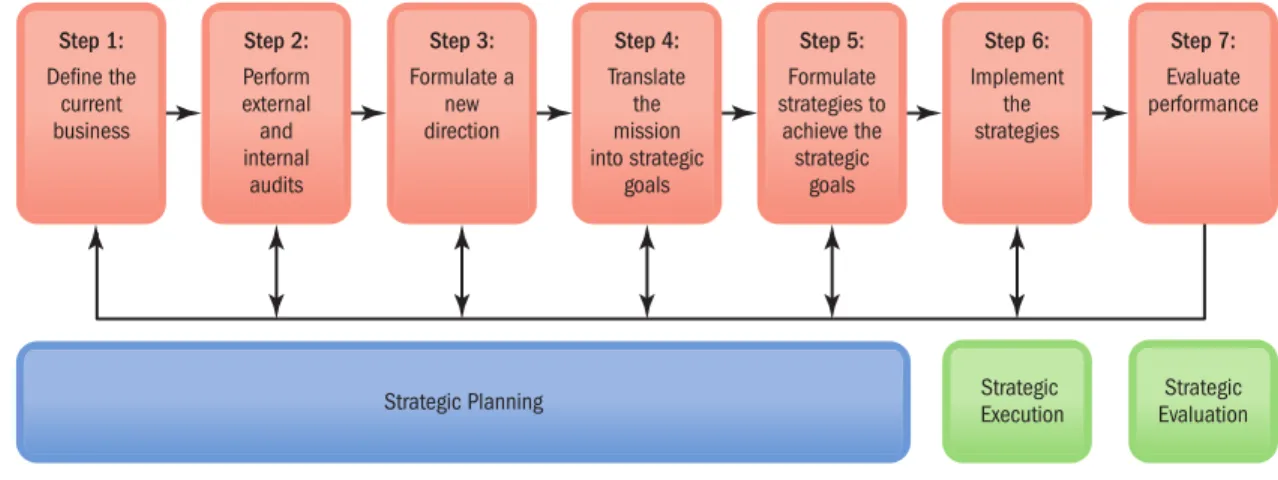
Strategic Planning 73
Improving Productivity Through HRIS: Using Computerized Business Planning Software 76 Types of Strategies 76
Top Managers Role in Strategic Planning 78
Departmental Managers Strategic Planning Roles 78
Departmental Managers Strategic Planning Roles in Action: Improving Mergers and Acquisitions 79
STRATEGIC HUMAN RESOURCE MANAGEMENT 80 Defining Strategic Human Resource Management 80 Human Resource Strategies and Policies 82
HR AS A PROFIT CENTER: Albertsons Example 82 Strategic Human Resource Management Tools 82 HR METRICS AND BENCHMARKING 84
Types of Metrics 85
Improving Productivity Through HRIS: Tracking Applicant Metrics for Improved Talent Management 85
Benchmarking in Action 86
Strategy and Strategy-Based Metrics 87 Workforce/Talent Analytics and Data Mining 87
HR AS A PROFIT CENTER: Using Workforce/Talent Analytics 88 What Are HR Audits? 89
Evidence-Based HR and the Scientific Way of Doing Things 90 WHAT ARE HIGH-PERFORMANCE WORK SYSTEMS? 91
High-Performance Human Resource Policies and Practices 92 CHAPTER SECTION SUMMARIES 93
DISCUSSION QUESTIONS 94
INDIVIDUAL AND GROUP ACTIVITIES 94
EXPERIENTIAL EXERCISE: DEVELOPING AN HR STRATEGY FOR STARBUCKS 95 APPLICATION CASE: SIEMENS BUILDS A STRATEGY-ORIENTED HR SYSTEM 95 CONTINUING CASE: CARTER CLEANING COMPANY 96
TRANSLATING STRATEGY INTO HR POLICIES & PRACTICES CASE: THE HOTEL PARIS CASE 96 KEY TERMS 98
ENDNOTES 99
PART 1 VIDEO CASES APPENDIX 100
PART TWO RECRUITMENT, PLACEMENT, AND TALENT MANAGEMENT 102
4
Job Analysis and the Talent Management Process 102THE TALENT MANAGEMENT PROCESS 104 What Is Talent Management? 104
THE BASICS OF JOB ANALYSIS 105 Uses of Job Analysis Information 106
THE STRATEGIC CONTEXT: Daimler Alabama Example 107 Conducting a Job Analysis 107
HR AS A PROFIT CENTER: Boosting Productivity through Work Redesign 108 Job Analysis Guidelines 110
METHODS FOR COLLECTING JOB ANALYSIS INFORMATION 110 The Interview 110
Questionnaires 113 Observation 114
Participant Diary/Logs 114
Quantitative Job Analysis Techniques 114 Internet-Based Job Analysis 116 WRITING JOB DESCRIPTIONS 118
Job Identification 118 Job Summary 119 Relationships 121
Responsibilities and Duties 121
MANAGING THE NEW WORKFORCE: Writing Job Descriptions That Comply with the ADA 122
Standards of Performance and Working Conditions 122 Duty: Accurately Posting Accounts Payable 122 Using the Internet for Writing Job Descriptions 122 WRITING JOB SPECIFICATIONS 126
Specifications for Trained Versus Untrained Personnel 126 Specifications Based on Judgment 126
Job Specifications Based on Statistical Analysis 127 Using Task Statements 127
PROFILES IN TALENT MANAGEMENT 128
Competencies and Competency-Based Job Analysis 128 How to Write Job Competencies-Based Job Descriptions 130 CHAPTER SECTION SUMMARIES 131
DISCUSSION QUESTIONS 132
INDIVIDUAL AND GROUP ACTIVITIES 132
EXPERIENTIAL EXERCISE: THE INSTRUCTOR S JOB DESCRIPTION 132 APPLICATION CASE: THE FLOOD 133
CONTINUING CASE: CARTER CLEANING COMPANY 133
TRANSLATING STRATEGY INTO HR POLICIES & PRACTICES CASE: THE HOTEL PARIS CASE 134
KEY TERMS 134 ENDNOTES 134
5
Personnel Planning and Recruiting 136INTRODUCTION 138
WORKFORCE PLANNING AND FORECASTING 138 Strategy and Workforce Planning 138
THE STRATEGIC CONTEXT: IBM 139
Forecasting Personnel Needs (Labor Demand) 139
Improving Productivity Through HRIS: Computerized Personnel Forecasting 142 Forecasting the Supply of Inside Candidates 142
Forecasting the Supply of Outside Candidates 144
Talent Management and Predictive Workforce Monitoring 144
Developing an Action Plan to Match Projected Labor Supply and Labor Demand 145 The Recruiting Yield Pyramid 145
THE NEED FOR EFFECTIVE RECRUITING 146 Why Recruiting Is Important 146
What Makes Recruiting a Challenge? 146 Organizing How You Recruit 146
INTERNAL SOURCES OF CANDIDATES 147 Using Internal Sources: Pros and Cons 147 Finding Internal Candidates 147
Rehiring 147
Succession Planning 148
Improving Productivity Through HRIS: Succession and Talent Planning Systems 148 OUTSIDE SOURCES OF CANDIDATES 149
Recruiting via the Internet 149 Advertising 152
Employment Agencies 154
Temp Agencies and Alternative Staffing 155 Offshoring and Outsourcing Jobs 157 Executive Recruiters 157
On-Demand Recruiting Services 158 College Recruiting 158
Referrals and Walk-Ins 159 Telecommuters 160 Military Personnel 160
Recruiting Source Use and Effectiveness 160
Evidence-Based HR: Measuring Recruiting Effectiveness 161
HR AS A PROFIT CENTER: GE Medical Recruitment Process Outsourcing (RPO) example 162 Improving Productivity Through HRIS: An Integrated Approach to Recruiting 162
RECRUITING A MORE DIVERSE WORKFORCE 162 Single Parents 162
Older Workers 163 Recruiting Minorities 163 Welfare-to-Work 164 The Disabled 164
DEVELOPING AND USING APPLICATION FORMS 164 Purpose of Application Forms 164
Application Guidelines 166
Application Forms and EEO Law 166
Using Application Forms to Predict Job Performance 167 Mandatory Arbitration 167
CHAPTER SECTION SUMMARIES 167 DISCUSSION QUESTIONS 168
INDIVIDUAL AND GROUP ACTIVITIES 168
EXPERIENTIAL EXERCISE: THE NURSING SHORTAGE 169
APPLICATION CASE: FINDING PEOPLE WHO ARE PASSIONATE ABOUT WHAT THEY DO 169 CONTINUING CASE: CARTER CLEANING COMPANY 170
TRANSLATING STRATEGY INTO HR POLICIES & PRACTICES CASE: THE HOTEL PARIS CASE 170
KEY TERMS 171 ENDNOTES 171
6
Employee Testing and Selection 174WHY CAREFUL SELECTION IS IMPORTANT 176 Person and Job/Organization Fit 176
THE STRATEGIC CONTEXT: Crowd Sourcing at Google 176 BASIC TESTING CONCEPTS 177
Reliability 177 Validity 178
Evidence-Based HR: How to Validate a Test 180 Bias 182
Utility Analysis 182
HR AS A PROFIT CENTER: Reducing Turnover at KeyBank 183 Validity Generalization 183
Test Takers Individual Rights and Test Security 183 How Do Employers Use Tests at Work? 184 Computerized and Online Testing 185 TYPES OF TESTS 186
Tests of Cognitive Abilities 186 Tests of Motor and Physical Abilities 187 Measuring Personality and Interests 187 Achievement Tests 190
WORK SAMPLES AND SIMULATIONS 190 Using Work Sampling for Employee Selection 190 Situational Judgment Tests 191
Management Assessment Centers 191
Situational Testing and Video-Based Situational Testing 192 Computerized Multimedia Candidate Assessment Tools 192 The Miniature Job Training and Evaluation Approach 193 Realistic Job Previews 193
HR in Practice: Testing Techniques for Managers 193 Summary 194
BACKGROUND INVESTIGATIONS AND OTHER SELECTION METHODS 194 Why Perform Background Investigations and Reference Checks? 194
The Legal Dangers and How to Avoid Them 195 How to Check a Candidate s Background 196
The Social Network: Checking Applicants Social Postings 198 Using Preemployment Information Services 199
The Polygraph and Honesty Testing 199 Graphology 201
Human Lie Detectors 201 Physical Exams 201
Substance Abuse Screening 202 Complying with Immigration Law 203
Improving Productivity Through HRIS: Using Automated Applicant Tracking and Screening Systems 204
CHAPTER SECTION SUMMARIES 204 DISCUSSION QUESTIONS 205
INDIVIDUAL AND GROUP ACTIVITIES 205
EXPERIENTIAL EXERCISE: A TEST FOR A RESERVATION CLERK 206 APPLICATION CASE: THE INSIDER 206
CONTINUING CASE: HONESTY TESTING AT CARTER CLEANING COMPANY 207
TRANSLATING STRATEGY INTO HR POLICIES & PRACTICES CASE: THE HOTEL PARIS CASE 207 KEY TERMS 208
ENDNOTES 208
7
Interviewing Candidates 212BASIC TYPES OF INTERVIEWS 214
THE STRATEGIC CONTEXT: Whirlpool Corp. 214 Structured Versus Unstructured Interviews 214
Interview Content (What Types of Questions to Ask) 215 How Should We Administer the Interview? 218 HR AS A PROFIT CENTER: Great Western Bank 220
Three Ways to Make the Interview Usefulness 221
THE ERRORS THAT UNDERMINE AN INTERVIEW S USEFULNESS 221 First Impressions (Snap Judgments) 222
Not Clarifying What the Job Requires 222
Candidate-Order (Contrast) Error and Pressure to Hire 222 Nonverbal Behavior and Impression Management 223
Effect of Personal Characteristics: Attractiveness, Gender, Race 223
MANAGING THE NEW WORKFORCE: Applicant Disability and the Employment Interview 224
Interviewer Behavior 224
HOW TO DESIGN AND CONDUCT AN EFFECTIVE INTERVIEW 225 Designing a Structured Situational Interview 225
How to Conduct an Effective Interview 226
Talent Management: Profiles and Employee Interviews 229 CHAPTER SECTION SUMMARIES 229
DISCUSSION QUESTIONS 230
INDIVIDUAL AND GROUP ACTIVITIES 230
EXPERIENTIAL EXERCISE: THE MOST IMPORTANT PERSON YOU LL EVER HIRE 231 APPLICATION CASE: THE OUT-OF-CONTROL INTERVIEW 231
CONTINUING CASE: CARTER CLEANING COMPANY 232
TRANSLATING STRATEGY INTO HR POLICIES & PRACTICES CASE: THE HOTEL PARIS CASE 232 KEY TERMS 233
ENDNOTES 233
APPENDIX 1 FOR CHAPTER 7 APPLICANT INTERVIEW GUIDE 236 APPENDIX 2 FOR CHAPTER 7 INTERVIEW GUIDE FOR INTERVIEWEES 238 PART 2 VIDEO CASES APPENDIX 240
PART THREE TRAINING AND DEVELOPMENT 242
8
Training and Developing Employees 242ORIENTING AND ONBOARDING NEW EMPLOYEES 244 The Purposes of Employee Orientation/Onboarding 244 The Orientation Process 244
OVERVIEW OF THE TRAINING PROCESS 246 Aligning Strategy and Training 246
THE STRATEGIC CONTEXT 246 Training and Performance 247
The ADDIE Five-Step Training Process 247 Conducting the Training Needs Analysis 247 Designing the Training Program 250 Developing the Program 253
IMPLEMENTING TRAINING PROGRAMS 253 On-the-Job Training 253
Apprenticeship Training 255 Informal Learning 255 Job Instruction Training 255 Lectures 256
Programmed Learning 256 Audiovisual-Based Training 257 Vestibule Training 257
Electronic Performance Support Systems (EPSS) 257 Videoconferencing 258
Computer-Based Training (CBT) 258 Simulated Learning 258
Interactive Learning 259 Internet-Based Training 259
Improving Productivity Through HRIS: Learning Management Systems 260 Mobile Learning 260
The Virtual Classroom 261
Lifelong and Literacy Training Techniques 261 Team Training 262
IMPLEMENTING MANAGEMENT DEVELOPMENT PROGRAMS 263 Strategy and Development 263
Managerial On-the-Job Training 263
Off-the-Job Management Training and Development Techniques 264
Leadership Development at GE 266
Talent Management and Mission-Critical Employees: Differential Development Assignments 267
MANAGING ORGANIZATIONAL CHANGE PROGRAMS 268 What to Change 268
Lewin s Change Process 269 Leading Organizational Change 269 Using Organizational Development 270 EVALUATING THE TRAINING EFFORT 272
Designing the Study 272 Training Effects to Measure 273
HR AS A PROFIT CENTER: Judging Training s Impact 274 CHAPTER SECTION SUMMARIES 275
DISCUSSION QUESTIONS 275
INDIVIDUAL AND GROUP ACTIVITIES 276
EXPERIENTIAL EXERCISE: FLYING THE FRIENDLIER SKIES 276
APPLICATION CASE: REINVENTING THE WHEEL AT APEX DOOR COMPANY 277 CONTINUING CASE: CARTER CLEANING COMPANY 277
TRANSLATING STRATEGY INTO HR POLICIES & PRACTICES CASE: THE HOTEL PARIS CASE 278 KEY TERMS 278
ENDNOTES 278
9
Performance Management and Appraisal 282BASIC CONCEPTS IN PERFORMANCE MANAGEMENT AND APPRAISAL 284 The Performance Appraisal Process 284
Why Appraise Performance? 285
HR AS A PROFIT CENTER: Setting Performance Goals at Ball Corporation 286 The Importance of Continual Feedback 286
Performance Management 286 THE STRATEGIC CONTEXT: TRW 287
Defining the Employee s Goals and Performance Standards 287 Who Should Do the Appraising? 288
TECHNIQUES FOR APPRAISING PERFORMANCE 290 Graphic Rating Scale Method 290
Alternation Ranking Method 294 Paired Comparison Method 294 Forced Distribution Method 294 Critical Incident Method 295 Narrative Forms 296
Behaviorally Anchored Rating Scales 296 Mixed Standard Scales 299
Management by Objectives 300
Computerized and Web-Based Performance Appraisal 300 Electronic Performance Monitoring 301
Appraisal in Practice 301
DEALING WITH APPRAISAL PROBLEMS AND INTERVIEWS 302 Potential Appraisal Problems 303
Guidelines for Effective Appraisals 304 Appraisals and the Law 306
Managing the Appraisal Interview 306 PERFORMANCE MANAGEMENT 309
Performance Management vs. Performance Appraisal 309
Using Information Technology to Support Performance Management 310 TALENT MANAGEMENT PRACTICES AND EMPLOYEE APPRAISAL 311
Appraising and Actively Managing Employees 311
Segmenting and Actively Managing Employees in Practice 311 CHAPTER SECTION SUMMARIES 312
DISCUSSION QUESTIONS 313
INDIVIDUAL AND GROUP ACTIVITIES 313
EXPERIENTIAL EXERCISE: GRADING THE PROFESSOR 314
APPLICATION CASE: APPRAISING THE SECRETARIES AT SWEETWATER U 314 CONTINUING CASE: CARTER CLEANING COMPANY 315
TRANSLATING STRATEGY INTO HR POLICIES & PRACTICES CASE: THE HOTEL PARIS CASE 316 KEY TERMS 316
ENDNOTES 316
10
Employee Retention, Engagement, and Careers 320MANAGING EMPLOYEE TURNOVER AND RETENTION 322 Costs of Turnover 322
HR AS A PROFIT CENTER 322 Managing Voluntary Turnover 322
Retention Strategies for Reducing Voluntary Turnover 323 A Comprehensive Approach to Retaining Employees 324 THE STRATEGIC CONTEXT: IBM Aims for Flexibility 324
Managing Involuntary Turnover 325
Talent Management and Employee Retention 325 Job Withdrawal 325
EMPLOYEE ENGAGEMENT 326 Why Engagement Is Important 326 Actions That Foster Engagement 326 Monitoring Employee Engagement 326 CAREER MANAGEMENT 327
Careers Terminology 327 Careers Today 328 Psychological Contract 328
The Employee s Role in Career Management 328 The Employer s Role in Career Management 330 Career Management Systems 330
Gender Issues in Career Development 332 The Manager s Role 333
IMPROVING COACHING SKILLS 333 Building Your Coaching Skills 333 Building Your Mentoring Skills 334
Improving Productivity Through HRIS: Integrating Talent Management and Career and Succession Planning 336
MAKING PROMOTION DECISIONS 337
Decision 1: Is Seniority or Competence the Rule? 337 Decision 2: How Should We Measure Competence? 337 Decision 3: Is the Process Formal or Informal? 338 Decision 4: Vertical, Horizontal, or Other? 338 Practical Considerations 338
Sources of Bias in Promotion Decisions 338 Promotions and the Law 339
Managing Transfers 339 Managing Retirements 340 CHAPTER SECTION SUMMARIES 341 DISCUSSION QUESTIONS 341
INDIVIDUAL AND GROUP ACTIVITIES 342
EXPERIENTIAL EXERCISE: WHERE AM I GOING . . . AND WHY? 342 APPLICATION CASE: GOOGLE REACTS 343
CONTINUING CASE: CARTER CLEANING COMPANY 343
TRANSLATING STRATEGY INTO HR POLICIES & PRACTICES CASE: THE HOTEL PARIS CASE 343 KEY TERMS 344
ENDNOTES 344
PART 3 VIDEO CASES APPENDIX 347
PART FOUR COMPENSATION 350
11
Establishing Strategic Pay Plans 350BASIC FACTORS IN DETERMINING PAY RATES 352 Aligning Total Rewards with Strategy 352
THE STRATEGIC CONTEXT: Wegmans Foods 352 Equity and Its Impact on Pay Rates 353
Legal Considerations in Compensation 354
MANAGING THE NEW WORKFORCE: The Independent Contractor 355 Union Influences on Compensation Decisions 358
Pay Policies 358
HR AS A PROFIT CENTER: Wegmans Foods 359 JOB EVALUATION METHODS 359
Compensable Factors 360
Preparing for the Job Evaluation 360
Job Evaluation Methods: Ranking 361 Job Evaluation Methods: Job Classification 362 Job Evaluation Methods: Point Method 363 Computerized Job Evaluations 363
HOW TO CREATE A MARKET-COMPETITIVE PAY PLAN 364 1. Choose Benchmark Jobs 364
2. Select Compensable Factors 364
3. Assign Weights to Compensable Factors 365 4. Convert Percentages to Points for Each Factor 365 5. Define Each Factor s Degrees 366
6. Determine for Each Job Its Factors Degrees and Assign Points 366 7. Review Job Descriptions and Job Specifications 366
8. Evaluate the Jobs 367
9. Draw the Current (Internal) Wage Curve 368 10. Conduct a Market Analysis: Salary Surveys 368 11. Draw the Market (External) Wage Curve 370
12. Compare and Adjust Current and Market Wage Rates for Jobs 370 13. Develop Pay Grades 371
14. Establish Rate Ranges 371 15. Address Remaining Jobs 373 16. Correct Out-of-Line Rates 373
PRICING MANAGERIAL AND PROFESSIONAL JOBS 374 Compensating Executives and Managers 374
What Determines Executive Pay? 374 Compensating Professional Employees 375
CONTEMPORARY TOPICS IN COMPENSATION 376 Competency-Based Pay 376
Broadbanding 378
Actively Managing Compensation Allocations and Talent Management 380 Comparable Worth 380
Board Oversight of Executive Pay 381
Total Rewards and Tomorrow s Pay Programs 381
Improving Productivity Through HRIS: Automating Strategic Compensation Administration 382
CHAPTER SECTION SUMMARIES 382 DISCUSSION QUESTIONS 383
INDIVIDUAL AND GROUP ACTIVITIES 383
EXPERIENTIAL EXERCISE: RANKING THE COLLEGE S ADMINISTRATORS 384 APPLICATION CASE: SALARY INEQUITIES AT ACME MANUFACTURING 384 CONTINUING CASE: CARTER CLEANING COMPANY 385
TRANSLATING STRATEGY INTO HR POLICIES & PRACTICES CASE: THE HOTEL PARIS CASE 385 KEY TERMS 386
ENDNOTES 386
12
Pay for Performance and Financial Incentives 390MONEY AND MOTIVATION 392
Linking Strategy, Performance, and Incentive Pay 392
THE STRATEGIC CONTEXT: The Car Sales Commission 392 Motivation and Incentives 393
Incentive Pay Terminology 395 Employee Incentives and the Law 395
INDIVIDUAL EMPLOYEE INCENTIVE AND RECOGNITION PROGRAMS 396 Piecework Plans 396
Merit Pay as an Incentive 396
Incentives for Professional Employees 398 Nonfinancial and Recognition-Based Awards 398 Online and IT-Supported Awards 400
Job Design 400
INCENTIVES FOR SALESPEOPLE 400 Salary Plan 401
Commission Plan 401 Combination Plan 401
Maximizing Sales Force Results 402
Evidence-Based HR: How Effective Are Your Incentives? 402 INCENTIVES FOR MANAGERS AND EXECUTIVES 403
Strategy and the Executive s Long-Term and Total Rewards Package 403 Sarbanes-Oxley 404
Short-Term Incentives and the Annual Bonus 404 Strategic Long-Term Incentives 406
Other Executive Incentives 407
TEAM AND ORGANIZATIONWIDE INCENTIVE PLANS 407 How to Design Team Incentives 407
Evidence-Based HR: How Effective Are Your Incentives? 408 Profit-Sharing Plans 409
Scanlon Plans 409
Other Gainsharing Plans 410 At-Risk Pay Plans 410
Employee Stock Ownership Plans 411
DESIGNING EFFECTIVE INCENTIVE PROGRAMS 411
HR AS A PROFIT CENTER: The Impact of Financial and Nonfinancial Incentives 412 The Five Building Blocks of Effective Incentive Plans 412
Incentive Plans in Practice: Nucor 413 CHAPTER SECTION SUMMARIES 413 DISCUSSION QUESTIONS 414
INDIVIDUAL AND GROUP ACTIVITIES 414
EXPERIENTIAL EXERCISE: MOTIVATING THE SALES FORCE AT EXPRESS AUTO 415
APPLICATION CASE: INSERTING THE TEAM CONCEPT INTO COMPENSATION OR NOT 415 CONTINUING CASE: CARTER CLEANING COMPANY 416
TRANSLATING STRATEGY INTO HR POLICIES & PRACTICES CASE: THE HOTEL PARIS CASE 417 KEY TERMS 417
ENDNOTES 418
13
Benefits and Services 422THE BENEFITS PICTURE TODAY 424 Policy Issues 424
THE STRATEGIC CONTEXT: NES Rentals 425 PAY FOR TIME NOT WORKED 425
Unemployment Insurance 425 Vacations and Holidays 427 Sick Leave 427
Evidence-Based HR:Tracking Sick Leave 428
HR AS A PROFIT CENTER: Cutting Absences at the Driver and Vehicle Licensing Agency 428 Parental Leave and the Family and Medical Leave Act 429
Severance Pay 431
Supplemental Unemployment Benefits 432 INSURANCE BENEFITS 432
Workers Compensation 432
Hospitalization, Health, and Disability Insurance 433 The Legal Side of Health Benefits 434
Trends in Employer Health Care Cost Control 435 Long-Term Care 437
Life Insurance 438
Benefits for Part-Time and Contingent Workers 438 RETIREMENT BENEFITS 438
Social Security 438
Pension Plans 438
Pension Planning and the Law 441 Pensions and Early Retirement 442
Improving Productivity Through HRIS: Online Benefits Management Systems 442 PERSONAL SERVICES AND FAMILY-FRIENDLY BENEFITS 443
Personal Services 443
Family-Friendly (Work Life) Benefits 443 Other Job-Related Benefits 445 Executive Perquisites 445
FLEXIBLE BENEFITS PROGRAMS 446 The Cafeteria Approach 446
Benefits and Employee Leasing 447 Flexible Work Schedules 448 CHAPTER SECTION SUMMARIES 449 DISCUSSION QUESTIONS 450
INDIVIDUAL AND GROUP ACTIVITIES 450
EXPERIENTIAL EXERCISE: REVISING THE BENEFITS PACKAGE 450 APPLICATION CASE: STRIKING FOR BENEFITS 451
CONTINUING CASE: CARTER CLEANING COMPANY 451
TRANSLATING STRATEGY INTO HR POLICIES & PRACTICES CASE: THE HOTEL PARIS CASE 452 KEY TERMS 452
ENDNOTES 453
PART 4 VIDEO CASES APPENDIX 456
PART FIVE EMPLOYEE RELATIONS 458
14
Ethics and Employee Rights and Discipline 458ETHICS AND FAIR TREATMENT AT WORK 460 THE STRATEGIC CONTEXT: Berkshire Hathaway 460
What Is Ethics? 461 Ethics and the Law 461
Ethics, Justice, and Fair Treatment 461 Ethics, Public Policy, and Employee Rights 462 WHAT SHAPES ETHICAL BEHAVIOR AT WORK? 463
There s No One Smoking Gun 463 The Person (What Makes Bad Apples?) 464
Outside Forces That Shape Ethical Decisions (Bad Barrels) 464
In Summary: Some Things to Keep in Mind About Ethical Behavior at Work 466 USING HUMAN RESOURCE MANAGEMENT METHODS TO PROMOTE ETHICS AND FAIR TREATMENT 467
Selection 467 Ethics Training 468 Performance Appraisal 468
Reward and Disciplinary Systems 468 Managing Ethics Compliance 468
MANAGING EMPLOYEE DISCIPLINE AND PRIVACY 468 Fairness in Disciplining 469
Bullying and Victimization 469 What Causes Unfair Behavior 470
Basics of a Fair and Just Disciplinary Process 471 Employee Privacy 474
Employee Monitoring 474 MANAGING DISMISSALS 476
Termination at Will and Wrongful Discharge 476 Grounds for Dismissal 477
Avoiding Wrongful Discharge Suits 478
HR AS A PROFIT CENTER: Wrongful Terminations 479 Personal Supervisory Liability 480
The Termination Interview 481
Layoffs, Downsizing, and the Plant Closing Law 483 Adjusting to Downsizings and Mergers 485 CHAPTER SECTION SUMMARIES 486
DISCUSSION QUESTIONS 487
INDIVIDUAL AND GROUP ACTIVITIES 487
EXPERIENTIAL EXERCISE: DISCIPLINE OR NOT? 487
APPLICATION CASE: ENRON, ETHICS, AND ORGANIZATIONAL CULTURE 488 CONTINUING CASE: CARTER CLEANING COMPANY 489
TRANSLATING STRATEGY INTO HR POLICIES & PRACTICES CASE: THE HOTEL PARIS CASE 489 KEY TERMS 490
ETHICS QUIZ ANSWERS 490 ENDNOTES 490
15
Labor Relations and Collective Bargaining 494THE LABOR MOVEMENT 496
THE STRATEGIC CONTEXT: The Anti-Walmart 496 Why Do Workers Organize? 496
What Do Unions Want? 497 The AFL-CIO and the SEIU 498 UNIONS AND THE LAW 498
Period of Strong Encouragement: The Norris-LaGuardia (1932) and National Labor Relations (or Wagner) Acts (1935) 499
Period of Modified Encouragement Coupled with Regulation: The Taft-Hartley Act (1947) 501 Unfair Union Labor Practices 501
THE UNION DRIVE AND ELECTION 502 Step 1. Initial Contact 502
Step 2. Obtaining Authorization Cards 504 Step 3. Hold a Hearing 505
Step 4. The Campaign 505 Step 5. The Election 506
How to Lose an NLRB Election 507
Evidence-Based HR: What to Expect the Union to Do to Win the Election 508 The Supervisor s Role 508
Rules Regarding Literature and Solicitation 509 Decertification Elections: Ousting the Union 509 THE COLLECTIVE BARGAINING PROCESS 509
What Is Collective Bargaining? 509 What Is Good Faith? 510
The Negotiating Team 510
HR AS A PROFIT CENTER: Costing the Contract 511 Bargaining Items 511
Bargaining Hints 511
Impasses, Mediation, and Strikes 512
Improving Productivity Through HRIS: Unions Go High-Tech 516 The Contract Agreement 516
DEALING WITH DISPUTES AND GRIEVANCES 517 Sources of Grievances 517
The Grievance Procedure 518
Guidelines for Handling Grievances 519
THE UNION MOVEMENT TODAY AND TOMORROW 520 Why Union Membership Is Down 520
An Upswing for Unions? 520
Card Check and Other New Union Tactics 521
High-Performance Work Systems, Employee Participation, and Unions 521
CHAPTER SECTION SUMMARIES 523 DISCUSSION QUESTIONS 524
INDIVIDUAL AND GROUP ACTIVITIES 524
EXPERIENTIAL EXERCISE: THE UNION-ORGANIZING CAMPAIGN AT PIERCE U. 524 APPLICATION CASE: NEGOTIATING WITH THE WRITERS GUILD OF AMERICA 525 CONTINUING CASE: CARTER CLEANING COMPANY 525
TRANSLATING STRATEGY INTO HR POLICIES & PRACTICES CASE: THE HOTEL PARIS CASE 526 KEY TERMS 526
ENDNOTES 527
16
Employee Safety and Health 530SAFETY AND THE MANAGER 532 Why Safety Is Important 532 Management s Role in Safety 532 What Top Management Can Do 532
THE STRATEGIC CONTEXT: Deepwater Horizon 532 The Supervisor s Role in Safety 533
OCCUPATIONAL SAFETY LAW 533 OSHA Standards and Record Keeping 533 Inspections and Citations 535
Responsibilities and Rights of Employers and Employees 538 WHAT CAUSES ACCIDENTS? 539
What Causes Unsafe Conditions and Other Work-Related Safety Problems? 539 What Causes Unsafe Acts? (A Second Basic Cause of Accidents) 540
HOW TO PREVENT ACCIDENTS 540 Reducing Unsafe Conditions 540
MANAGING THE NEW WORKFORCE: Protecting Vulnerable Workers 545 Reducing Unsafe Acts 546
Reducing Unsafe Acts through Selection and Placement 546 Reducing Unsafe Acts through Training 546
MANAGING THE NEW WORKFORCE: Safety Training for Hispanic Workers 547 Reducing Unsafe Acts through Motivation: Posters, Incentives, and Positive Reinforcement 547 Reducing Unsafe Acts through Behavior-Based Safety 548
Reducing Unsafe Acts through Employee Participation 548
Reducing Unsafe Acts by Conducting Safety and Health Audits and Inspections 549 Controlling Workers Compensation Costs 550
HR AS A PROFIT CENTER: Reducing Workers Compensation Claims 551 WORKPLACE HEALTH HAZARDS: PROBLEMS AND REMEDIES 551
The Basic Industrial Hygiene Program 552 Asbestos Exposure at Work 552
Infectious Diseases 553 Air Quality 553
Alcoholism and Substance Abuse 553 Stress, Burnout, and Depression 555
Solving Computer-Related Ergonomic Problems 557 Repetitive Motion Disorders 557
Workplace Smoking 558
HR AS A PROFIT CENTER: Wellness Pays 558 Violence at Work 558
Workplace Violence Supervisory Training 560 OCCUPATIONAL SECURITY AND SAFETY 561
Basic Prerequisites for a Crime Prevention Plan 562 Setting Up a Basic Security Program 562
Evacuation Plans 563
Company Security and Employee Privacy 563 CHAPTER SECTION SUMMARIES 564
DISCUSSION QUESTIONS 564
INDIVIDUAL AND GROUP ACTIVITIES 565
EXPERIENTIAL EXERCISE: HOW SAFE IS MY UNIVERSITY? 565 APPLICATION CASE: THE NEW SAFETY AND HEALTH PROGRAM 569 CONTINUING CASE: CARTER CLEANING COMPANY 570
TRANSLATING STRATEGY INTO HR POLICIES & PRACTICES CASE: THE HOTEL PARIS CASE 570 KEY TERMS 571
ENDNOTES 571
17
Managing Global Human Resources 576The Manager s Global Challenge 578
THE STRATEGIC CONTEXT: Unionizing Walmart Stores in China 578 ADAPTING HUMAN RESOURCE ACTIVITIES TO INTERCOUNTRY DIFFERENCES 578
Cultural Factors 579 Economic Systems 580
Legal, Political, and Labor Relations Factors 580 Ethics and Codes of Conduct 581
HR Abroad Example: The European Union 581 HR Abroad Example: China 581
STAFFING THE GLOBAL ORGANIZATION 582 International Staffing: Home or Local? 582
HR AS A PROFIT CENTER: Reducing Expatriate Costs 583 Offshoring 585
Management Values and International Staffing Policy 585 Selecting Expatriate Managers 586
Avoiding Early Expatriate Returns 589
TRAINING AND MAINTAINING EMPLOYEES ABROAD 590 Orienting and Training Employees on International Assignment 590 Appraising Managers Abroad 590
Compensating Managers Abroad 591 Labor Relations Abroad 593
Terrorism, Safety, and Global HR 593 Repatriation: Problems and Solutions 594
Improving Productivity Through HRIS:Taking the HRIS Global 595
MANAGING HR LOCALLY: HOW TO PUT INTO PRACTICE A GLOBAL HR SYSTEM 595 Developing a More Effective Global HR System 596
Making the Global HR System More Acceptable 596 Implementing the Global HR System 597
CHAPTER SECTION SUMMARIES 597 DISCUSSION QUESTIONS 598
INDIVIDUAL AND GROUP ACTIVITIES 598
EXPERIENTIAL EXERCISE: A TAXING PROBLEM FOR EXPATRIATE EMPLOYEES 599 APPLICATION CASE: BOSS, I THINK WE HAVE A PROBLEM 599
CONTINUING CASE: CARTER CLEANING COMPANY 600 TRANSLATING STRATEGY INTO HR POLICIES & PRACTICES CASE:
THE HOTEL PARIS CASE 600 KEY TERMS 601
ENDNOTES 601
18
Managing Human Resources in Small and Entrepreneurial Firms 604THE SMALL BUSINESS CHALLENGE 606 Why Small Business Is Important 606
How Small Business Human Resource Management Is Different 606 Why HRM Is Important to Small Businesses 607
THE STRATEGIC CONTEXT: The Dealership 608
USING INTERNET AND GOVERNMENT TOOLS TO SUPPORT THE HR EFFORT 608
Complying with Employment Laws 608 Employment Planning and Recruiting 611 Employment Selection 611
Employment Training 612
Employment Appraisal and Compensation 613 Employment Safety and Health 614
LEVERAGING SMALL SIZE: FAMILIARITY, FLEXIBILITY, FAIRNESS, INFORMALITY, AND HRM 614
Simple, Informal Employee Selection Procedures 614 A Streamlined Interviewing Process 614
Work-Sampling Tests 616 Flexibility in Training 616
Flexibility in Benefits and Rewards 617 Improved Communications 620
*HR AS A PROFIT CENTER: IHOP 620 Fairness and the Family Business 620
USING PROFESSIONAL EMPLOYER ORGANIZATIONS 621 How Do PEOs Work? 621
Why Use a PEO? 621 Caveats 622
MANAGING HR SYSTEMS, PROCEDURES, AND PAPERWORK 623 Introduction 623
Basic Components of Manual HR Systems 623 Automating Individual HR Tasks 624
Human Resource Information Systems (HRIS) 624 Improved Transaction Processing 625
Online Self-Processing 625 Improved Reporting Capability 625 HR System Integration 625 HRIS Vendors 625 HR and Intranets 625
CHAPTER SECTION SUMMARIES 626 DISCUSSION QUESTIONS 626
INDIVIDUAL AND GROUP ACTIVITIES 627 EXPERIENTIAL EXERCISE: BUILDING AN HRIS 627 APPLICATION CASE: NETFLIX BREAKS THE RULES 627 CONTINUING CASE: CARTER CLEANING COMPANY 628
TRANSLATING STRATEGY INTO HR POLICIES & PRACTICES CASE: THE HOTEL PARIS CASE 628 ENDNOTES 629
PART 5 VIDEO CASES APPENDIX 631
APPENDICES
APPENDIX A PHR and SPHR Knowledge Base 633
APPENDIX B Comprehensive Cases 641
Glossary 655
Name and Organization Index 663
Subject Index 678
Human Resource Management, 13th edition provides students in human resource management courses and practicing managers with a comprehensive review of essential personnel management concepts and techniques in a highly readable and understandable form. As this new edition goes to press, I feel even more strongly than I did when I wrote the first that all managers not just HR managers need a strong foundation in HR/personnel management concepts and techniques to effectively do their jobs. Particularly in these difficult economic times, where students want to be able to apply at work what they learn in class, this edition continues to particularly focus on practical applications that all managers can use in carrying out their HR-related responsibilities. If you adopted the previous edition, you will find transitioning to the 13th edition easy, as the chapter outline (as well as the outline for each chapter) is more or less the same.
I had two goals in writing the 13th edition. In brief, I wanted it to provide a high-level book s complete coverage with a lower-level book s readability, user- friendliness and (relative) brevity. To that end, I ve made six major changes to this edition.
1. Dozens of new topics.These include new, expanded treatments of reliability, validity, generalizability, utility, person-job fit, person-organization fit, and bias in Chapter 6 (Employee Selection), as well as the standard deviation rule in equal employment compliance, retaliation, job satisfaction and withdrawal, managing voluntary turnover, management s willingness to take a strike, cross training, the Myers-Briggs type indicator, workflow analysis, job design in job analysis, task analysis and task statements, the psychological contract, job hazard analysis, safety awareness programs, operations reviews, competencies of HR professionals, managing voluntary turnover, employee engagement, the process of job withdrawal, cumulative trauma disorders, a thoroughly revised and expanded description of the ADDIE training process in Chapter 8, and new material on employee rights in Chapter 14 (Ethics and Employee Rights and Discipline). This edition also contains many dozens of new recent citations.
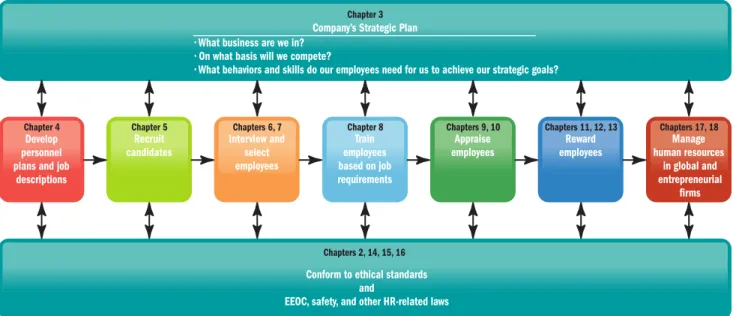
2. A new boxed feature,The Strategic Context,paired with new strategic human resource management opening scenarios.These boxes illustrate the strategic context of each chapter s material for instance, how L.L.Bean s employee selection standards help to produce the employee competencies and behaviors that in turn support L.L.Bean s customer service strategy. The new chapter opening model says this: that (1) the company s human resource policies and practices should (2) produce the employee competencies and behaviors that (3) the company needs to implement its strategic plan.
3. NewHR as a Profit Centerboxed features.I ve added a new focus throughout the book on the value proposition and on HR strategy, metrics, and analysis.
The new HR as a Profit Center features give readers actual examples of human resource management practices they can apply on their jobs to cut costs, boost revenues, and improve performance.
4. A completely revised Chapter 10 on Employee Retention, Engagement, and Careers,and a completely rewritten and practical discussion in Chapter 11 of how to actually develop a market competitive salary structure.
5. Eighteen new videosall reviewed by me and with discussion questions and a synopsis for each video included at the end of each part of the textbook. We have a total of 28 videos on the DVD.
6. All in a slimmer package.This 13th edition is about 10% (73 pages) shorter than the 12th edition, which I accomplished mostly by pruning material.
XXIII
NEW FEATURES
As noted previously, I ve added two important boxed features.
Strategic HR opening scenarios paired with a new boxed feature,The Strategic Context.What HR practices and policies do we need to produce the employee competencies and behaviors required to achieve our strategic goals? The new The Strategic Contextfeatures (linked to the opening scenarios) show how companies make human resource management decisions within the context of their strategic initiatives. Examples include how Whirlpool uses candidate interviewing to build its customer base (Chapter 7), and how Google fosters the employee interaction its strategy depends on with a crowd sourcing selection process (Chapter 6).
NewHR as a Profit Centerboxed feature.Today s students want to apply what they learn in class to their jobs, and today's employers expect human resource management to add measurable value to the company. Our new HR as a Profit Center features show actual examples of how human resource management practices do this. Examples include how the Atlantic American insurance company conducted a workflow analysis to identify inefficiencies in how it processes its insurance claims (Chapter 4), and how KeyBank produced a $1.7 million cost savings in teller turnover in one year, simply by making better hiring decisions to reduce training costs (Chapter 6).
In addition, I ve retained these important 12th edition features.
Evidence-Based Human Resource Management illustrates why and how managers base human resource decisions on measurable, data-based evidence.
Improving Productivity Through HRISdemonstrates how managers use tech- nology to improve the productivity of HR.
Managing the New Workforce illustrates the skills managers need to manage today s diverse employees.
Previous editions of this textbook were the first to provide specific, actionable expla- nations and illustrations showing how to use devices such as the HR Scorecard process (explained fully in Chapter 3) to measure HR s effectiveness in achieving the compa- ny s strategic aims. In this 13th edition, a continuing Hotel Paris case at the end of each chapter gives readers practice in applying strategic human resource management in action. Coverage of the core concepts of strategic HR appears in Chapter 3.
Video Cases
To provide professors, students, and practicing managers with a richer and more flexible textbook, I have incorporated 18 new video cases at the end of the book s five parts. The in-book video cases provide a basis for in-class discussion of the videos available to adopters; I reviewed the videos and wrote the questions.
Comprehensive Cases
To continue with the theme of a richer, more flexible textbook, professors, students, and practicing managers will find I ve again included five comprehensive cases in an appendix at the end of the book. I personally wrote the five comprehensive casesto provide students and faculty with an opportunity to discuss and apply the book s concepts and techniques by addressing more comprehensive and realistic case-based issues.
SHRM HRCI Review Questions
The profession of HR management is becoming increasingly demanding. Responding to these new demands, thousands of HR managers have passed the various certification exams offered by the Human Resource Certification Institute (HRCI), thus earning the designations Professional in HR (PHR), Senior Professional in HR (SPHR), and Global Professional in HR (GPHR) (as well as a special exam for California HR professionals).
This edition again contains, in each chapter, an HRCI-related exercisestudents can use to apply their knowledge of that chapter s material within the HRCI exam context, as well as a comprehensive listing of the topics that these exams address, in a HRCI guide- lines appendix.
SUPPLEMENTS
Instructor Supplements
Instructors can access downloadable supplemental resources by signing into the Instructor Resource Center at www.pearsonhighered.com/educator.
It gets better.Once you register, you will not have additional forms to fill out or multiple user names and passwords to remember to access new titles and/or editions.
As a registered faculty member, you can log in directly to download resource files and receive immediate access and instructions for installing Course Management content to your campus server.
Need help?Our dedicated Technical Support team is ready to assist instructors with questions about the media supplements that accompany this text. Visit http://247pearsoned.custhelp.com/ for answers to frequently asked questions and toll-free user support phone numbers. The following supplements are available to adopting instructors.
INSTRUCTOR S MANUAL This comprehensive supplement provides extensive instructional support. The instructor s manual includes a course planning guide and chapter guides for each chapter in the text. The chapter guides include a chapter outline, lecture notes, answers to discussion questions, definitions to key terms, and references to the figures, tables, cases. The instructor s manual also includes a video guide.
TEST ITEM FILE The test item file contains approximately 110 questions per chapter including multiple-choice, true/false, and short-answer/essay-type questions.
Answers are provided for all questions along with difficulty ratings. In addition, the Test Item File includes questions that are tagged to Learning Objectives and to AACSB Learning Standards to help measure whether students are grasping the course content that aligns with AACSB guidelines.
TESTGEN SOFTWARE Pearson Education s test-generating software is available from www.pearsonhighered.com/irc. The software is PC/MAC compatible and preloaded with all of the Test Item File questions. You can manually or randomly view test questions and drag and drop to create a test. You can add or modify test-bank questions as needed. All of our TestGens are converted for use in Blackboard and WebCT and are available for download from www.pearsonhighered.com/irc.
BLACKBOARD/WEBCT BlackBoard and WebCT Course Cartridges are available for download from www.pearsonhighered.com/irc. These standard course cartridges contain the Instructor s Manual, TestGen, Instructor PowerPoints, and when available, Student Powerpoints and Student Data Files.
INSTRUCTOR POWERPOINT PRESENTATION This presentation includes basic outlines and key points from each chapter. It includes figures from the text but no forms of rich media, which makes the file size manageable and easier to share online or via email.
VIDEOS ON DVD Adopters can access the 18 videos referenced in the part- ending cases, as well as 10 additional videos, on the 2013 Human Resource Management Video Library DVD. These videos have been produced to depict real- world HRM issues and give students a taste of the multi-faceted nature of HRM in real companies.
Student Supplements
MYMANAGEMENTLAB MyManagementLab (www.mymanagementlab.com) is an easy-to-use online tool that personalizes course content and provides robust assessment and reporting to measure student and class performance. All the resources you need for course success are in one place flexible and easily adapted for your course experience.
COURSESMART ETEXTBOOKS ONLINE CourseSmart eTextbooks were deve- loped for students looking to save on required or recommended textbooks. Students simply select their eText by title or author and purchase immediate access to the content for the duration of the course using any major credit card. With a CourseSmart eText, students can search for specific keywords or page numbers, take notes online, print out reading assignments that incorporate lecture notes, and bookmark important passages for later review. For more information or to purchase a CourseSmart eTextbook, visit www.coursesmart.com.