Edible films and coatings for food packaging applications: a review
Article in Environmental Chemistry Letters · October 2021
DOI: 10.1007/s10311-021-01339-z
CITATIONS
115
READS
9,308
4 authors:
Lokesh Kumar
Indian Institute of Technology Roorkee 14PUBLICATIONS 214CITATIONS
SEE PROFILE
Dakuri Ramakanth
Indian Institute of Technology Roorkee 16PUBLICATIONS 399CITATIONS
SEE PROFILE
Akhila Konala
Indian Institute of Technology Roorkee 17PUBLICATIONS 374CITATIONS
SEE PROFILE
Kirtiraj K. Gaikwad
Indian Institute of Technology Roorkee 118PUBLICATIONS 3,000CITATIONS
SEE PROFILE
https://doi.org/10.1007/s10311-021-01339-z REVIEW
Edible films and coatings for food packaging applications: a review
Lokesh Kumar1 · Dakuri Ramakanth2 · Konala Akhila1 · Kirtiraj K. Gaikwad1
Received: 4 September 2021 / Accepted: 2 October 2021
© The Author(s), under exclusive licence to Springer Nature Switzerland AG 2021
Abstract
Food preservation technologies are currently facing challenges in prolonging the shelf life of perishable food products. The uses of edible films and coatings developed from food biopolymers have advanced significantly during the last few years.
Edible packaging is consumable and made from food-grade biopolymers, including lipids, proteins, and polysaccharides from plants, animals, and marine life or food processing by-products. Here we review natural polymer and bioactive compounds integrated into edible films and coatings, and their effects on food quality attributes. We present preparation techniques for edible films and coatings, and properties such as antimicrobial, antioxidant, physical, and sensory. Récent trends on film composition, nanotechnology in edible films, and safety concerns are reviewed.
Keywords Edible coating · Edible films · Food packaging · Preservation · Biopolymer · Shelf life
Introduction
Food packaging has become an essential factor in the food supply chain. From processing to handling to transportation, packaging protects the food product (Singh et al. 2021b;
Kumar et al. 2021d). Conventional food packaging materi- als such as plastic, paper, glass, metal, and composites have had limitations in edible food packaging. Plastics such as polyethylene, polypropylene, and polyethylene terephthalate are not environmentally friendly (Sundqvist-Andberg and Akerman 2021). They are obtained during the processing of petroleum and termed petroleum-based products, and most food-grade plastics are single-time use, which ends up in the ocean and landfill after usage. The emission of carbon dioxide and other greenhouse gases due to the incineration of plastic has become a menace to the ozone layer, leading to global warming (Ramakanth et al. 2021; Meys et al. 2020).
In the present modern era, the consumers’ change in their approach towards food packaging, quality, its disposing
patterns, and environmental concerns is forcing researchers and manufacturers to adopt bio-based sustainable packaging materials and circular economic processes. Edible packag- ing can be a potential futuristic eco-friendly food packag- ing alternative. Consumers can consume edible packaging materials as they are extracted from plants, animals, marine life or derived from natural food-grade polymers such as polysaccharides, protein, or lipids (Mohamed et al. 2020;
De et al. 2021; Oloye et al. 2021; Kurt and Cekmecelioglu 2021). Edible packaging maintains food quality, extends shelf life, and reduces waste to a certain extent. With the advent of technological advances and the availability of state-of-the-art converting processes, edible materials can be converted into edible films and coatings. These films can be used in the form of wraps and pouches. In contrast, coat- ings can be use on to food products. The unique advantage of edible packaging is that it is an integral part of the prod- uct; hence, consumers don’t need to unpack it (Saklani et al.
2019).
Biopolymers have several advantages, such as biodegra- dability, recyclability, and sustainability; there are certain limitations due to their poor mechanical and barrier prop- erties (Singh et al. 2021a). To overcome these limitations, certain additives can be added to these biomaterials. Addi- tives can improve the flexibility, gas barrier, and mechani- cal properties of packaging materials. Plasticizers, including glycerol and sorbitol, make films and coatings more flexible to change their shape more efficiently (Abdollahzadeh et al.
* Kirtiraj K. Gaikwad [email protected]
1 Department of Paper Technology, Indian Institute of Technology Roorkee, Roorkee, Uttarakhand 247667, India
2 Department of Polymer and Process Engineering, Indian Institute of Technology Roorkee, Roorkee, Uttarakhand 247667, India
2021; Sari et al. 2021). Active edible packaging techniques are gaining importance; for example, edible essential oils as antimicrobial agents can inhibit microbial growth and enhance the shelf life of food (Singh et al. 2021c, 2018;
Campos et al. 2010). Antioxidants are another example of active edible packaging, which reduces the rate of oxidation of food, thus controlling the taste and nutrition of the food, ultimately extending the food product's shelf life (Gaikwad et al. 2016; Singh et al. 2018; Ribeiro et al. 2020; Chawla et al. 2021; Massoud et al. 2021; Asada et al. 2021; Hossain and Hossain 2021). Edible packaging materials alone can- not meet all the barrier requirements; hence, incorporating multilayers may enhance the barrier and other properties, where desirable properties of one packaging material can be combined with desirable properties of other packaging mate- rial. Nanotechnology has also been introduced to improve edible packaging materials' mechanical strength and barrier properties (Trajkovska Petkoska et al. 2021).
Edible packaging materials are suitable for packaging fruits, vegetables, dairy, and meat products commercially.
As it is highly selective, it is still at the early stages. Differ- ent types of edible materials respond to the food differently.
The selection of edible packaging material depends on the type of food, such as fruit, dairy, meat, and storage con- ditions, including temperature and relative humidity (Jeya Jeevahan et al. 2020). Edible packaging might not be an immediate replacement for conventional plastic food pack- aging. However, it can be an alternative technique to shift toward sustainable biopolymers that can replace traditional plastic packaging in the long run. Edible packaging materi- als cannot be used as secondary packaging materials as they can be directly exposed to the environment during handling, storage, and transportation (Cerqueira et al. 2017).
This review discusses the role and importance of edible packaging materials in the food packaging sector. A brief introduction about edible packaging and its materials, fol- lowed by different preparation methods. Further, we provide an overview of the ongoing research studies and their appli- cations in food packaging. We carried a thorough discussion on the role of nanotechnology for edible films and coatings.
In the end, we have discussed the safety concerns and future trends involved in edible packaging.
Materials for edible films and coatings
Edible films and coatings are used as packaging material to reduce the effect of conventional non-biodegradable packaging material on the environment. Consumer demand also shows an increasing trend towards renewable and eco- friendly packaging materials. Edible films are made by casting, and the extrusion process and coating of the edible solution are done by dipping and spraying. The significant
difference is that in edible film, solid edible laminate is wrapped around the food products. In contrast, the edible coating forming solution is applied to the food product.
These packaging materials should be edible, and they should have film and coating forming capability. Polysac- charides, proteins, and lipids are such materials and can form continuous films and coatings (Saklani et al. 2019).
In the casting process, edible film-forming content is dis- solved in a solvent such as water or ethanol. Plasticizers can be added to improve the flexibility of the film. A con- tinuous film casting and drawdown bar process is used at the commercial level. The combination of polysaccharides and proteins is known as hydrocolloids. Hydrocolloids are hydrophilic, and they are long-chain polymers. When they are mixed with the solvent water, they can form a gel- like structure. These films and coatings are transparent, whereas lipids are opaque. Polysaccharides can develop a strong hydrogen bond with other active additives including coloring agents or flavoring agents. Hydrocolloid films and coatings have a good oxygen barrier, but they have a poor water vapor barrier due to their hydrophilic nature. Due to their hydrophobic nature, lipids exhibit good water barrier properties (Mohamed et al. 2020).
Polysaccharides
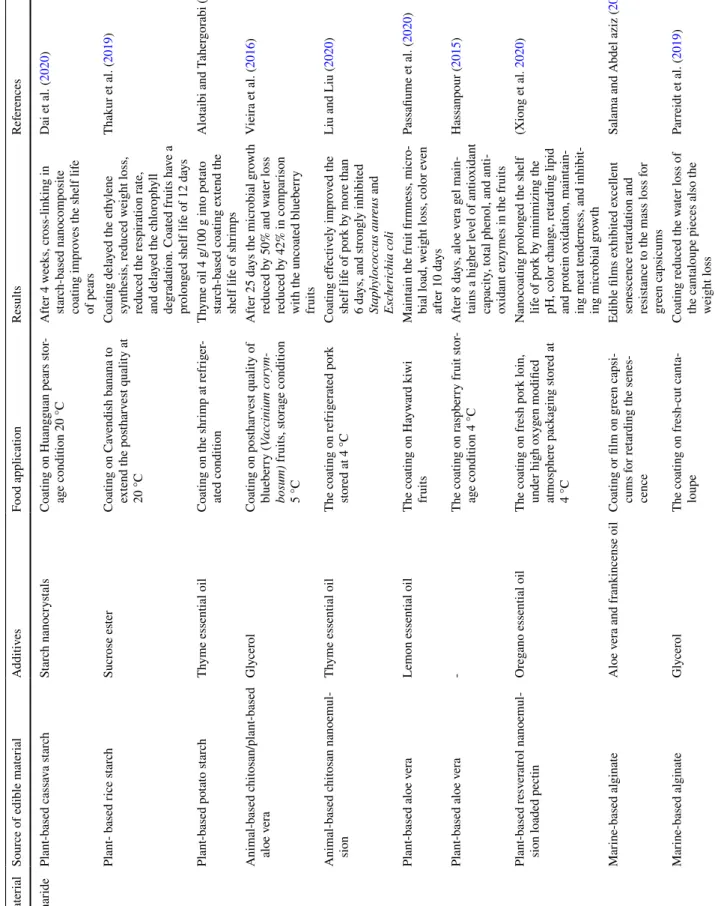
Polysaccharides are non-toxic, edible, and abundant in nature. When monosaccharides and disaccharides are polymerized, they repeat in a specific pattern with a glyco- sidic bond, forming polysaccharides. In polysaccharides, free hydroxyl groups are present, which initiate hydrogen bonding with added active agents. This coating has shown a good oxygen barrier, aroma barrier, along with excel- lent strength properties. One of the reasons might be the highly packed structure of polysaccharides. Since polysac- charides are hydrophilic, the integrity of packaging will reduce in highly humid conditions. This hydrophilicity can be reduced by adding lipophilic substances, e.g., wax and oil. The addition of antimicrobial agents and antioxidants to the packaging materials may reduce food products' rip- ening process and increase shelf life. Based on the source of origin, polysaccharides can be divided into plant-based, animal-based, marine-based, and microbial-based (Saklani et al. 2019). Table 1 shows polysaccharides-based edible packaging materials and their applications, effects on vari- ous food products.
Cellulose, starch, pectin, and gum arabic are plant-based polysaccharides. Cellulose is a highly abundant biopolymer on Earth. When monomers of D-glucose is polymerized with each other in a 1–4 linkage with the help of a glycosidic bond, cellulose polymer is formed. Starch polysaccharides are available in the granules form and are hydrophilic in
Table 1 Polysaccharides as edible film and coating for packaging material, application, and effect on the food products Edible materialSource of edible materialAdditivesFood applicationResultsReferences PolysaccharidePlant-based cassava starchStarch nanocrystalsCoating on Huangguan pears stor- age condition 20 °CAfter 4 weeks, cross-linking in starch-based nanocomposite coating improves the shelf life of pears
Dai et al. (2020) Plant- based rice starchSucrose esterCoating on Cavendish banana to extend the postharvest quality at 20 °C
Coating delayed the ethylene synthesis, reduced weight loss, reduced the respiration rate, and delayed the chlorophyll degradation. Coated fruits have a prolonged shelf life of 12 days
Thakur et al. (2019) Plant-based potato starchThyme essential oilCoating on the shrimp at refriger- ated conditionThyme oil 4 g/100 g into potato starch-based coating extend the shelf life of shrimps
Alotaibi and Tahergorabi (2018) Animal-based chitosan/plant-based aloe veraGlycerolCoating on postharvest quality of blueberry (Vaccinium corym- bosum) fruits, storage condition 5 °C
After 25 days the microbial growth reduced by 50% and water loss reduced by 42% in comparison with the uncoated blueberry fruits
Vieira et al. (2016) Animal-based chitosan nanoemul- sionThyme essential oilThe coating on refrigerated pork stored at 4 °CCoating effectively improved the shelf life of pork by more than 6 days, and strongly inhibited Staphylococcus aureus and Escherichia coli
Liu and Liu (2020) Plant-based aloe veraLemon essential oilThe coating on Hayward kiwi fruitsMaintain the fruit firmness, micro- bial load, weight loss, color even after 10 days
Passafiume et al. (2020) Plant-based aloe vera-The coating on raspberry fruit stor- age condition 4 °CAfter 8 days, aloe vera gel main- tains a higher level of antioxidant capacity, total phenol, and anti- oxidant enzymes in the fruits
Hassanpour (2015) Plant-based resveratrol nanoemul- sion loaded pectinOregano essential oilThe coating on fresh pork loin, under high oxygen modified atmosphere packaging stored at 4 °C
Nanocoating prolonged the shelf life of pork by minimizing the pH, color change, retarding lipid and protein oxidation, maintain- ing meat tenderness, and inhibit- ing microbial growth
(Xiong et al. 2020) Marine-based alginateAloe vera and frankincense oilCoating or film on green capsi- cums for retarding the senes- cence
Edible films exhibited excellent senescence retardation and resistance to the mass loss for green capsicums
Salama and Abdel aziz (2021) Marine-based alginateGlycerolThe coating on fresh-cut canta- loupeCoating reduced the water loss of the cantaloupe pieces also the weight loss
Parreidt et al. (2019)
nature. When added to the water, they swell and form a gel- like structure. Pectin is an ionic polysaccharide extracted from apple and citrus. Cross-linking with calcium ions enhanced the mechanical properties. Food with low moisture content–walnut, chestnut can be packed with pectin polysac- charides films or coatings. The other material, Gum Arabic, can be extracted from the stem of the tree. Mohamed et al.
(2020) reported that it has an excellent film-forming capa- bility and decreased the respiration rate, thus controlling ethylene production, ultimately improving the food product's shelf life.
Alginate, agar, and carrageenan are marine-based natural polysaccharides. The author (Cazón et al., 2017) reported that the alginate is extracted from brown marine algae showed a low water barrier. Still, the film's overall water barrier properties increased and became water-insoluble with the addition of calcium ions. On the other hand, agar is extracted from the red algae. And these agar-based packag- ing materials can be dissolved only in hot water, limiting their usability in hot moist conditions. The other material in the polysaccharide family, carrageenan, is extracted from red seaweed and can be used in meat, poultry, and fish.
Chitin and chitosan are examples of animal-based natural polysaccharides. Chitin is extracted from the exoskeleton of fungi. Deacetylation of chitin forms chitosan polysac- charide. Chitosan is a cationic polysaccharide with good film-forming properties (Kadam et al. 2021). Chitosan has shown antimicrobial and antifungal properties and can be used as antimicrobial agents in other film-forming biopol- ymers (Cazón et al. 2017). Pullulan, gellan, and xanthan are microbial-based polysaccharides produced by highly selective bacteria. These packaging films and coatings also improve the shelf life of the food product (Mohamed et al.
2020).
Proteins
Proteins are polymers made up of amino acids. These amino acids form a peptide bond between chains confirm- ing their polymerization to form proteins. The amino acid has a carboxylic acid (–COOH), amino group (–NH2), and alkyl group (–R). The structure of the natural protein can be found in two forms—fibrous protein and globular protein.
Fibrous protein such as zain corn, soy protein, and whey protein is parallel to the polypeptide chain. Globular pro- tein like collagen protein is highly folded spherical. Colla- gen, Zain corn, soy, and whey protein have shown excellent film and coating forming properties. Protein-based films are hydrophilic, exhibiting poor to moderate water barriers and reducing film integrity at high humidity. They offer an excellent barrier to hydrophobic compounds such as oil and aroma. Protein-based edible films also carry antimicrobial agents and antioxidant agents (Saklanis et al. 2019). Table 2
summarizes the various protein-based edible films/coatings and their application.
Films made from milk protein are flexible and transpar- ent in nature. These films also carry active antimicrobial and antioxidant agents to enhance the quality of food. Milk protein is a part of two protein elements—whey and casein protein. Most of the milk protein is found in the form of casein protein. After the casein precipitation, whey protein can be obtained. Casein protein is dissolved in the water solvent, and after that, alkali solution having agents includ- ing calcium ion or sodium ion is added. These agents bind with amino acids and form the calcium caseinate or sodium caseinate. These ions increase the cross-linking tendency of proteins, thus improving the film’s barrier properties and mechanical strength. According to the reported literature by Mohamed et al. (2020), whey protein films have good oxy- gen gas barrier properties as compared to caseinate films.
Collagen protein is found in muscles and tissues of ani- mals. The breakdown of collagen with the help of water (hydrolysis) produces gelatine. Dry gelatine is tasteless and transparent. It is dissolved in hot water to form the film- forming solution. The film is formed by the casting method and followed by oven drying. Likewise, zein protein is obtained from corn. It is hydrophobic and can form water- insoluble films. Due to its natural antimicrobial and anti- oxidant properties can be used as active edible packaging material to retain the quality and extend food products' shelf life. Soybeans are one of a kind and are the major source of soy protein. The author (Hassan et al. 2018) discussed that boiling soy milk will remove the water content available, and at the end, soy protein film will be formed. The air-drying process follows this step. Soy protein films have high gas barrier properties compared to lipids and polysaccharides- based film.
Lipids
Lipids are not polymers and they do not have a self-sup- porting structure. Lipids are hydrophobic in nature, so they possess an excellent water barrier property compared to pol- ysaccharides and protein-based films. Among all the lipid- based packaging, wax films show the highest moisture bar- rier properties. Resins such as terpene resin and wood resin are known for their glossy properties. Lipids are nonpolar, so they can be incorporated into composite films to improve the overall moisture barrier. Apart from these, lipids also have greasy surfaces and unique tastes. Edible waxes are long- chain of alcohol and esters and can be extracted from plants and animals. Due to their hydrophobicity, these coatings can reduce the water vapor permeability. Gel extracted from the aloe vera plant can be coated onto freshly cut fruits. Studies have shown that aloe vera coating creates the moisture bar- rier and helps reduce weight loss of fruit and maintain the
Table 2 Protein as edible packaging material, application, and effect on the food products Edible materialSource of edible materialStructureAdditivesFood applicationResultsReferences ProteinWhey protein isolate edible filmAnimal-based globularOregano oil, garlic oil, Nisin, NatamycinThe edible film containing essential oil on microbial inactivation of sliced Kasar cheese
The edible film containing nisin showed highest inac- tivation to Listeria mono- cytogenes. The film having natamycin had the highest inactivation to Penicil- lium spp. WPI film with oregano oil is effective for Staphylococcus aureus and Escherichia coli
Seydim et al. (2020) Whey protein isolate edible filmAnimal-based globularWhite tea extractEdible film for soft rennet curd cheeseYerba mate additive enhanced the puncture strength, thermal stability, and water vapor perme- ability Coliform bacteria count decreased when cheese packaged in the film
Pluta-Kubica et al. (2020) Grass carp collagen and chitosanAnimal-based ribbonLemon essential oilEdible film for pork stored at 4 °CEdible film inhibits the lipid oxidation and prevented microbial proliferation and delayed the pork deteriora- tion for 21 days
Jiang et al. (2020) Zein/gelatin
Plant and animal based pr
oteinTea polyphenolMultilayered edible film for fruits and vegetablesThe outer layer is hydropho- bic zein and the inner layer is hydrophilic gelatin Tea polyphenol added the multilayered edible film to control the weight loss, inhibit microbial growth and prevent browning of food
Xia et al. (2019) Soy protein isolate and cel- lulose nanocrystalsPlant-based globularCurcumin nanocapsulesEdible film for shrimp fresh- nessCellulose nanocrystals improved the tensile strength, thermal stability and decreased the water
solubility of film Film decr
eases the total volatile basic nitrogen of stored shrimp and keeps the shrimp fresh
Xiao et al. (2021)
firmness of the fruit. Wax is also added in the starch-based film to improve their water barrier tendency. They are yellow to brown in color and semi-solid in form. The resin-based coating has been applied to the green chilies and tomatoes.
This coating provides glossiness and transparency along with a barrier for water and oxygen (Cheng et al. 2021). Fats and oil are extracted from plants and oil. The primary ingre- dient of fat and oil is tri-glycerides. A film made from palm fruit oil has good water resistance and elongation properties.
Sunflower oil coating has been used on pork meat for oxy- gen and water vapor barrier properties. The essential oil has antimicrobial properties. They are volatile and hydrophobic.
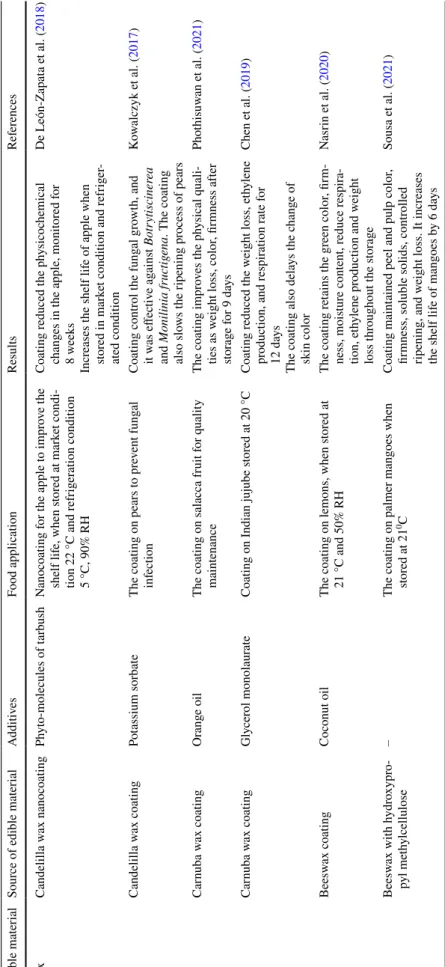
Essential oil from thyme, clove and lemon peel are added to the biopolymer matrix to improve the overall antimicrobial properties of the packaging film (Hassan et al. 2018). The summary of waxes as edible packaging and their application on the food product is presented in Table 3.
The plasticizers such as glycerol and polysorbate are added to the biopolymer matrix to improve the flexibility of the packaging film. Plasticizers reduce the intermolecular forces in the polymer matrix and make it flexible. Adding plasticizer will lead to an increase in the water and oxy- gen permeability. Emulsifiers are used to reduce the surface tension between hydrophilic and lipophilic compounds.
When lipids and hydrocolloids are both used to form edible packaging, they show the separation of phases. Emulsifiers reduce the separation of phases between them. Emulsifiers are extracted from plants and animals as phospholipids (Liu et al. 2020).
Composite materials
Composite packaging is the combination of more than one edible packaging material to improve the overall packaging properties. Polysaccharides and protein-based films have good gas barrier properties, but they show insufficient water vapor barrier. In contrast, lipids have a good water barrier but a poor gas barrier. Therefore, composite films are made by incorporating lipid materials in the polysaccharides or protein-based polymer matrix. The addition of lipids in the composite films may improve water vapor and oxygen bar- rier properties. The bilayer method can also form the com- posite film, where one layer is made of lipid, and the other is hydrocolloid based. In the bilayer coating method, coating of lipid content is performed on dried hydrocolloid film. In the bilayer emulsion method, the lipid is dissolved in the film-forming solution, and emulsifiers are added. After this packaging, the film is formed by the casting method. The film contains some parts as lipid and some as hydrocolloid.
During the drying process, the lipid phase will separate from the phase of polysaccharides or proteins. This process also forms a bilayer with improved properties (Janjarasskul and Krochta 2010; Hassan et al. 2018).
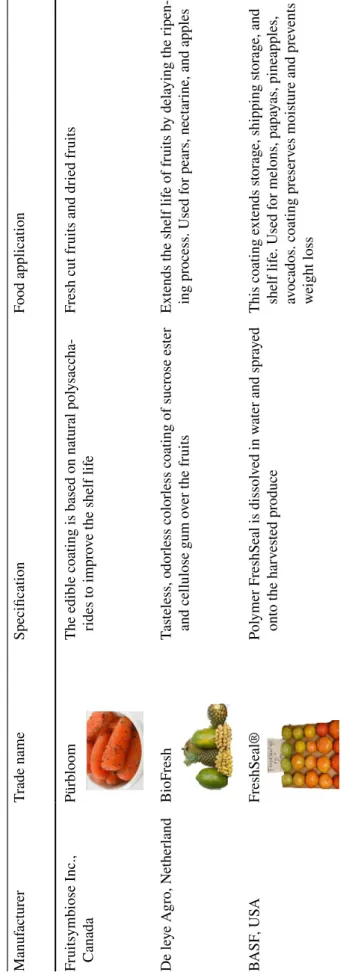
With the change in focus and moving towards the era of biomaterials and sustainable practices to contribute to the circular economy, few manufacturers have already developed edible packaging materials commercially with different trade names. Montrose Hauser Co., Inc. USA, developed Certi- coat®, a highly stable wax and vegetable oil-based coat- ing that provides shine and resistance to moisture applied to safeguard confectionery products. Improveat Portugal, a Portuguese manufacturer, launched BioNutriCoat for cheese, pastry, and meat. Loders Croklaan Netherland, the Dutch manufacturer, brought Durkex 500 into the market as a pro- tective coating for dry fruits and nuts, enhancing the gloss of the food products. Numerous products are currently availa- ble in the global market, as thoroughly discussed in Table 4.
Methods of preparation of edible films and coatings
Edible films and coatings are two critical forms of pack- aging. The edible coating is directly applied to the surface of the food product. Edible coatings are made from biode- gradable material such as polysaccharides, proteins, or lipids (Saklani et al. 2019). In this section, we discuss different types of preparation methods.
Edible film fabrication methods
Edible films are wrapped around the food surface and serve as primary edible packaging. Solubility of additives with biopolymer is a crucial factor so that additives can serve their purpose. Cohesive forces between biopolymers affect the overall mechanical properties of the film. Edible films can be obtained mainly by two processes- the casting (wet) method and the extrusion (dry) method (Cerqueira et al.
2017).
Solution casting method
The casting method is a common and low-cost film prepara- tion method. This process can be divided into three steps.
The first is solubilization. In this step, the biopolymer mate- rial is solubilized in a suitable solvent. As the film is edible in nature, the solvent must also be edible and non-toxic.
Generally, ethyl alcohol and water are used as solvents. The second step is pouring the casting solution on the predefined mold. The final step is the drying of the casted solution. In drying, the solvent is evaporated from the casted film, and these polysaccharides form a gel-like structure making it a film after further drying. Figure 1a shows all the stages of the casting process for edible film preparation. A vacuum drier, microwave, and air dryer are used for drying the film.
Drying is critical as drying time affects the intramolecular
Table 3 Waxes as edible packaging material, application, and effect on the food products Edible materialSource of edible materialAdditivesFood applicationResultsReferences WaxCandelilla wax nanocoatingPhyto-molecules of tarbushNanocoating for the apple to improve the shelf life, when stored at market condi- tion 22 °C and refrigeration condition 5 °C, 90% RH
Coating reduced the physicochemical changes in the apple, monitored for 8 weeks Increases the shelf life of apple when stored in market condition and refriger- ated condition
De León-Zapata et al. (2018) Candelilla wax coatingPotassium sorbateThe coating on pears to prevent fungal infectionCoating control the fungal growth, and it was effective against Botrytiscinerea and Monilinia fructigena. The coating also slows the ripening process of pears
Kowalczyk et al. (2017) Carnuba wax coatingOrange oilThe coating on salacca fruit for quality maintenanceThe coating improves the physical quali- ties as weight loss, color, firmness after storage for 9 days
Phothisuwan et al. (2021) Carnuba wax coatingGlycerol monolaurateCoating on Indian jujube stored at 20 °CCoating reduced the weight loss, ethylene production, and respiration rate for 12 days The coating also delays the change of skin color
Chen et al. (2019) Beeswax coatingCoconut oilThe coating on lemons, when stored at 21 °C and 50% RHThe coating retains the green color, firm- ness, moisture content, reduce respira- tion, ethylene production and weight loss throughout the storage
Nasrin et al. (2020) Beeswax with hydroxypro- pyl methylcellulose–
The coating on palmer mangoes when sCoating maintained peel and pulp color, 0tored at 21Cfirmness, soluble solids, controlled ripening, and weight loss. It increases the shelf life of mangoes by 6 days
Sousa et al. (2021)
Table 4 Examples of commercially available of edible films and coatings for food packaging applications ManufacturerTrade nameSpecificationFood application Caragum International, FranceFibercoat tempura Made up of vegetable fibers and 100% natural sea- weed extractReduction of fat content around 20% in fried tempura product—chicken Fiber coat directly added to tem- pura mixture, and it will prevent the frying oil from soaking the piece of food Fibercoat spr ay
Reduced the lipid absorption and enhanced the organoleptic properties of the fired breaded productThe coating on the fried product with reduction of fat content around 26.4% Mantrose Hauser Co. Inc. USACerticoat®Highly stable wax and vegetable oil-based coating that provides shine and resistance to moistureConfectionary products Crystalac®A natural glaze enhanced the shelf life, provide brilliant gloss, scuffing resistance, fat and moisture barrier
Confectionary products AgriCoat NatureSeal Ltd. UKNatureSealCoating is a mixture of vitamins and minerals con- taining no sulfites and is completely allergen-freeNatureSeal protects the cut fruits and vegetables from oxidizing without altering the natural flavor and improves the shelf life of cut fruits and vegetables SamperfreshThey are based on a combination of sugar esters, vegetable oil, and other edible ingredients- Coating creates a modified atmosphere inside the fruit tissue that reduces the respiratory rate and effectively delay ripening and extend the shelf life of whole fruits and vegetables up to 21 days
Table 4 (continued) ManufacturerTrade nameSpecificationFood application Improveat, Portugal BioNutriCoatThe coating contains vitamins and antioxidants, increases the nutritional value of the foodCoating for cheese, pastry, and meat BioFruitCoatThis coating acts by avoiding enzymatic degradation and fruit and vegetable oxidationCoating for fruits and vegetables will keep them fresh for a longer time BioCheeseCoatCoating made of all-natural ingredients will not alter the flavor and aroma of the cheese and prevent water loss
This coating increases the shelf life of cheese by 50% and avoids unwanted contamination by fungi, bacte- ria, and yeast WikiFoods Inc, USA WikipearlsThe edible protective electrostatic gel is formed by natural food particles, nutritive ions, and polysac- charides in the form of a shell
Packaging of diverse types of food as solid and liquid Frozen yogurt, ice cream, cheese, cocktail, etc. Loders Croklaan, Neth- erlandHigh-stable vegetable oil (soybean oil) produces by a unique fractionation processProtective coating for dry fruits and nuts, also enhances the gloss of food products
ManufacturerTrade nameSpecificationFood application Fruitsymbiose Inc., Canada
Pürbloom The edible coating is based on natural polysaccha- rides to improve the shelf lifeFresh cut fruits and dried fruits De leye Agro, NetherlandBioFresh Tasteless, odorless colorless coating of sucrose ester and cellulose gum over the fruitsExtends the shelf life of fruits by delaying the ripen- ing process. Used for pears, nectarine, and apples BASF, USAFreshSeal®Polymer FreshSeal is dissolved in water and sprayed onto the harvested produceThis coating extends storage, shipping storage, and shelf life. Used for melons, papayas, pineapples, avocados. coating preserves moisture and prevents weight loss
Table 4 (continued)
bonding between the biopolymer and the biopolymer as ytphysical properties than quick-dried films (Suhag et al.
2020). The amount of plasticizer also decides the gas and moisture barrier and mechanical properties including tensile strength and elongation of the film. As it is a wet process, this will ensure better bonding between molecules of biopol- ymer and will produce the homogenous film. The casting method is a low-temperature production method, so there is no possibility of molecule degradation due to temperature.
This process requires a longer drying time, so it cannot be used for commercial applications.
Hot melt extrusion method
The extrusion process is used to produce edible films, and it can increase production at the commercial level. The extru- sion method is a dry process as it uses little or no amount of solvent. There is very little or no solvent, so we need not wait for evaporation of the solvent and the drying time nul- lified. The extruder has mainly three zones. First is the feed- ing zone, where biopolymer and additives are added to the extruder. After that kneading zone, wherewith the help of an extruder screw, ingredients are mixed properly, and the final zone is the heating zone, where some amount of heat is pro- vided with the help of the oven. Here melting and mixing of biopolymer and additives occurs. At the end of the extruder, a die is fixed, which decides the shape and thickness of the extruded film. High temperature changes the structure of the biopolymer and improves the overall properties of the film.
The temperature-sensitive biopolymer cannot be extruded as high temperatures will degrade the biopolymer (Suhag et al.
2020; Cheng et al. 2021).
Parameters such as speed of extruder screw, amount of heat, length of the heating zone, and solvent content, if present, are crucial. They play a major role in deciding the mechanical and optical properties of the film. A twin-screw extruder helps in better mixing of the feed compared to the single screw extruder. If more than one extruder is used, we can produce the multilayered film with enhanced overall properties. This process is known as co-extrusion. The final co-extruded film will have combined and improved proper- ties than single-layer extruded film. The disadvantage of this method is that only temperature or heat tolerate biopolymer can be used as the mixture of biopolymer and additives flow forward and the extruder temperature increases. Heat-sensi- tive material will degrade because of the temperature zone.
Extruder equipment has a high initial cost, so the overall production cost is higher than the casting method (Suhag et al. 2020).
Edible coating application methods
Edible coating as primary edible packaging is directly applied on the surface of fruits, vegetables, and other food products. There are four primary coating techniques—dip- ping, spraying, fluidized bed, and panning for coating. The selection of the coating method depends on several factors, including the surface properties of the food product and the coating layer's purpose. In coating formation, first, the mate- rials get diffused on the food surface, and after that, adhesion between coating material and surface of the food takes place.
This section presents a brief discussion about the major coat- ing techniques (Cerqueira et al. 2017).
Dipping method
The dipping method is most commonly used for fruits and vegetables. This method can be divided into three stages.
The first is complete dipping of the food product into the coating-forming solution. After that, the coating material gets deposited on the surface of the food product. In the last step, the solvent evaporates from the coating, forming a solution, leaving a thin coating on the product's surface. Fig- ure 1(b) represents the dipping process for the edible coating formation on the strawberries (Guerreiro et al. 2015). Evapo- ration of solvent can occur at room temperature or with the help of heat. Freshly cut fruits are dipped in the aqueous coating, forming a solution with antimicrobial agents (Suhag et al. 2020). With the use of the dipping method, chitosan coating is performed on the frozen salmon fish. This coat- ing prevents the growth of pathogenic microorganisms and improves the shelf life of fish (Soares et al. 2016). Alginate coating along with malic acid dipping is performed on the fresh-cut mangoes. This coating increases the firmness of coated food products and reduces the quality deterioration during storage (Salinas-Roca et al. 2016).
Spraying method
In this method, the liquid solution is sprayed on the food product. Spraying of liquid converts the liquid solution into tiny droplets. For the same amount of liquid solution, these droplets will have more surface area. Therefore, droplets will cover more areas of the product. Based on the forma- tion of the droplets, this method can be divided into air spray atomization and pressure atomization. In air spray atomiza- tion, high-speed air is used to convert the liquid into the droplets, and in pressure atomization, high pressure is used to convert the liquid into the droplets. Figure 2 shows the spraying method for edible coating on valencia oranges. This method has a major drawback that highly viscous biopoly- mer cannot be sprayed. For the high-viscous biopolymer, dipping method is preferred (Suhag et al. 2020). Xantham
gum-based edible coating along with citric acid and glycerol as plasticizer sprayed on the lotus root till the 5 mm thick- ness. This coating reduces the color change and inhibits the growth of Bacillus subtilis microorganisms, improving the shelf life of lotus roots (Lara et al. 2020).
Panning method
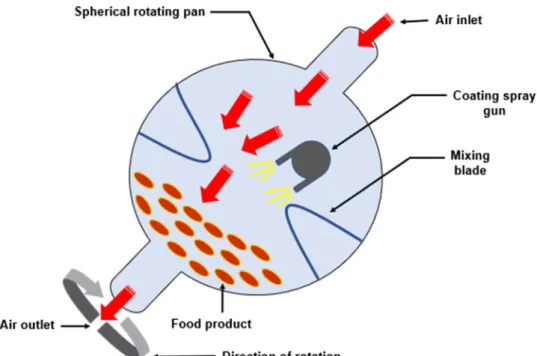
This method is a suitable coating for food and confection- ary items. Plenty of round or oval shape food products can be coated in a single batch in this method. A big round ball known as a pan is rotated, and food products are rotated inside it. The coating forming solution is sprayed on the surface of food product, while the pan keeps spinning. The amount of solution sprayed decides the thickness of the final coating on the food product. With the help of air circulated, the solvent evaporates, and coating dried up (Campos et al.
2010). Figure 3 demonstrates the panning coating making process where the coating spray gun releases the edible coat- ing material on the food products.
Fluidized bed processing method
This method helps apply a thin layer of coating on the sur- face of the very small size of a dry food product such as wheat or nuts. The coating solution is sprayed with the help of nozzles, and this helps to flow the smaller size food with the sprayed solution. The solution starts to form a shell on the food, which slowly converts to the coating. After that, drying is performed. This method is costlier than other coat- ing methods (Chawala et al. 2021). This process reduces the chances of agglomeration and helps in the reduction of the rate of release to active compounds (Lipin and Lipin 2021).
Active edible films and coatings
Edible packaging is biodegradable and non-toxic, and even after serving its purpose as packaging, if they go to land- fills, they do not pollute the earth or ocean. While as pack- aging for perishable food products, they protect the food from quality loss, improve the barrier properties, inhibit the growth of microorganisms, provide necessary nutrients to
Fig. 1 Different methods employed for the preparation of edible films and coatings, a multiple steps involved in casting method for edible film formation b dipping method for applying edible coating on the strawberry fruit
the food, and at the end will improve the shelf life of food products (Cerqueira et al. 2017). In this section, we discuss all the above points briefly.
Enhanced moisture barrier
Edible packaging provides a barrier between food products and the surrounding environment. Environment contain gases (oxygen) and water vapor (relative humidity) which are the significant factors for the growth of food spoilage microorganism. Edible film and coatings can be used to cre- ate a moisture barrier between food and the environment.
Films or coatings made from polysaccharides and protein are hydrophilic, so they have high water vapor permeability.
These packaging materials should always be used in low relative humidity conditions only. Films made from lipids and waxes are hydrophobic in nature and can create a water vapor barrier even in high humidity conditions. These films or coatings also provide an oxygen barrier. Films and coat- ing made from polysaccharides and proteins have a high gas barrier at low relative humidity conditions. With the increase in humidity content, these films and coating will absorb the water, so the oxygen barrier will also reduce (Janjarasskul and Krochta 2010).
Aroma is a mainly organic volatile compound, and edible films or coatings provide a barrier to the aroma. The biopol- ymer matrix of edible packaging prevents the migration of the aroma of the food. Polysaccharides and protein films are hydrophilic, and these aroma compounds are nonpolar.
Hence, they have less affinity towards each other, which will
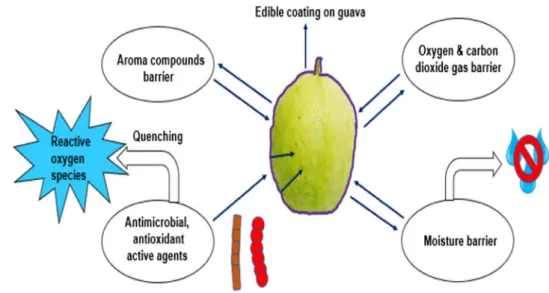
lead to a decrease in the migratory tendency of the flavor of the food product. Edible films also provide a barrier to oil and grease. Films made from polysaccharides and pro- teins are suitable as they are hydrophilic and oil and grease are hydrophobic in nature. They have less affinity towards each other, and these films will stop the migration of oil and grease. Figure 4 shows various types of barriers including moisture barrier, oxygen and carbon dioxide barrier pro- vided by edible coating on fruit. All these barrier properties of edible packaging materials are susceptible to external temperature and relative humidity. If they are not within the permissible range, then packaging material will not serve its whole purpose. The high temperature will increase the rate of diffusion of molecules through the barrier film. High humidity conditions will reduce the desired quality of poly- saccharides and protein films. Water molecules will perme- ate through the packaging film and will spoilage the food product (Janjarasskul and Krochta 2010). When used for oil packaging, cassia gum-based edible film reinforced with car- boxylated cellulose nanowhiskers improved the total resist- ance for oil permeation, mechanical properties, and heat sealing strength (Cao et al. 2020). Edible bilayer film made from corn zein and soy protein isolate to improve the oxygen barrier properties for olive oil packaging (Cho et al. 2010).
Antimicrobial activities
Spoilage of food because of microbial growth is a major eco- nomic problem to the food supply chain. Studies show that about 25% of food is spoiled due to microbial contamination
Fig.2 Spraying method for applying edible coating on orange fruit by using a spray gun, the uncoated oranges passing under a spray gun devel- oping an edible coating on the surface of it
(Chawla et al. 2021). Food spoilage is defined as loss of color, texture, reduced nutritional value, and quality.
Growth of microbial above the specific permissible limit will change the nutritional value and quality such that it becomes unhealthy for consumers. Based on the food prod- uct, different kinds of bacteria and yeast contaminate the food. This mechanism is highly affected by other factors such as water or moisture availability, oxygen availability, temperature, and food pH. Synthetic chemicals added in the food to reduce microbial growth may harm human health (Cerqueira et al. 2017). Antimicrobial packaging helps to reduce and restrict the growth of microbes which reduces the spoilage of food products. Subsequently, this technique increases the shelf life of food by maintaining the quality of food. Antimicrobial agents are incorporated in the biopol- ymer matrix of food packaging (Singh et al. 2018). They reduce or inhibit the growth of dedicated microorganisms and prevent food spoilage. When antimicrobial agents come in contact with an existing microbial presence on perish- able food items, including fruits and vegetables, meats, and dairy products, they damage the building block of the living cell of microbes. Furthermore, it inhibits the growth of the microorganism and protects the food product. Antimicrobial packaging maintains quality, assures safety, and improves the product's shelf life (Chawla et al. 2021). Figure 5 repre- sents various kinds of antimicrobial agents and their effects on the various microorganisms. Many techniques have been developed for the making of antimicrobial packaging. Vari- ous antimicrobial agents are available for packaging appli- cations, such as essential oils, enzymes, plant extracts, etc.
(Chawla et al. 2021).
The addition of antimicrobial agents in the biopolymer matrix replaces the conventional way of spraying antimi- crobial chemicals directly on the food. Direct spraying on the food has more chances of diffusion. They will inhibit the growth of microbes; however, these chemicals may dif- fuse inside the food product itself. Antimicrobial biopolymer film or coatings control the release of antimicrobial agents.
Thymol, carvacrol, eugenol, cinnamaldehyde, rosemary, and citral are essential oils used as natural and safe antimicro- bial agents. Carvacrol and cinnamaldehyde essential oil are added in the apple-based edible film shows antimicrobial properties. Whey protein isolates with added glycerol as plasticizer and lemon, and bergamot essential oil as antimi- crobial agent edible films effectively against Escherichia coli and Staphylococcus aureus (Çakmak et al. 2020).
Antioxidant
Films and coating containing active antioxidant agents prolong the food shelf life, and these agents are incorpo- rated into films and coating (Tanwar et al. 2021; Kumar et al. 2021a). Antioxidants are stable molecules, and they can donate electrons to unstable molecules. These antioxi- dants react with unstable molecules known as free radical and reactive oxygen species (ROS) and terminate the chain reaction that can spoil the food products (Lobo et al. 2010).
Many seeds, herbs, and fruits are well-known natural anti- oxidant materials, and most of them can be extracted as a by- product, without exploiting the plant species (Lourenço et al.
2019). Thyme extract as an antioxidant agent incorporated into the chitosan and starch matrix-based edible film has fla- vonoid glycosides and terpenoids as main active compounds
Fig. 3 Panning method for edible coating formation with the help of air circulation, the air from the inlet to rotating pan evaporates the solvent used for coating, leaving the coating formation on food products
(Talón et al. 2017). Ocimum sanctum extract incorporated as an active agent in the arabic gum-based guava fruit coat- ing has polyphenols and flavonoids as active compounds (Murmu and Mishra 2017). The commercial success of any freshly cut fruit is measured by enzymatic browning. Anti- oxidants help delay enzymatic browning of the cut-fruits and increase consumer acceptance (Ghidelli et al. 2013).
Prolonging shelf life
Edible films and coating completely cover the surface of food products to improve their shelf life without compro- mising their existing sensory and nutritional values. Food products contain nutrients such as carbohydrates, protein, sugar, and water. These nutrients are sufficient for the growth of food-borne microorganisms, and when the level of microorganisms exceeds a certain level, it will lead to food spoilage. Spoiled food is harmful to human health. Hence, these edible films and coatings will inhibit the growth of microorganisms in different manners (Galus et al. 2020).
The edible film and coating with added antimicrobial agents preserve the food for a more extended period. Active agents added in the packaging can modify the internal atmosphere of the packaging. Barrier properties of the edible packaging will provide selective transfer of different gases and volatile aroma compounds. If oxygen is not available around the food product, then oxidation will not occur. If volatile compounds cause aroma not to be transferred, then the flavor of food will not alter. Edible films made of polysaccharides, for instance, chitosan, are hydrophilic, and they have a high barrier to oxygen transfer and nonpolar organic aroma compounds.
High oxygen barrier prevents the oxidation of lipid present in the food product. Low nonpolar compound permeabil- ity maintains the natural aroma of food within itself for a longer period. These packaging materials have active anti- oxidant and antimicrobial agents. Antioxidants also prevent
the oxidation of food, and antimicrobial agents inhibit the excessive growth of food spoilage microorganisms. These packaging materials reduce the dehydration process, reduce water vapor transfer, and slow down the ripening process.
All the activities combined, the food is preserved, and it will have more shelf life than non-coated foods (Sapper and Chiralt 2018). A recent study by Galus et al. (2020) has shown that uncoated strawberries have a shelf life of around 14 days. But when they are coated with the starch solution, shelf life increases to 21 days. This starch coating provides a barrier to the oxygen gas that inhibits the growth of micro- organisms. In another example, gum arabic coating provides antimicrobial properties when coated on apples and extends the shelf life of coated apples.
Target delivery of nutrients
Nutraceuticals are food-grade compounds that have health benefits. They are added in the edible food coating to improve the nutrients value of the food, as, during processing at high temperature, loss of nutrients may occur. Direct use of nutraceuticals is not preferred, so they are incorporated in the composite matrix of the food packaging materials.
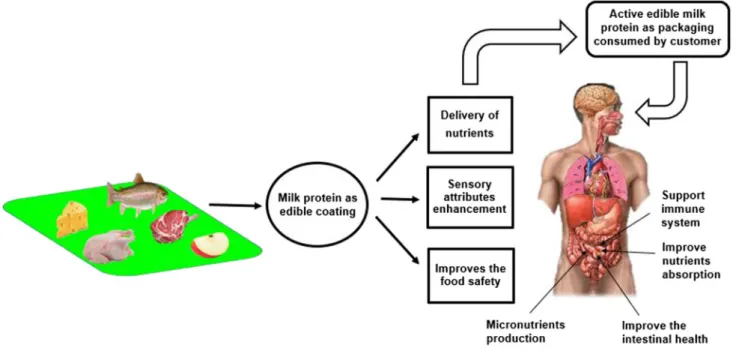
Some nutraceuticals have an impact on human health, such as ascorbic acid as an antioxidant, pectin as cardiovascular support, beta carotene has age-related implications (Danilo- ski et al. 2021). In recent research by Daniloski et al. (2021), edible films and coating are formed with milk protein as a nutraceutical compound. Milk protein is having around 80%
of caseins protein and 20% of whey protein. Both of these contents positively impact human health and are entirely made from natural products. Figure 6 shows milk-based edible packaging provides nutritional value after consump- tion. Active packaging materials made from milk protein provide an oxygen barrier, delay moisture loss, have better tensile strength, and have more flexibility. Antioxidants and
Fig. 4 Different kinds of barri- ers including moisture barrier, oxygen, and carbon dioxide gas barrier and antimicrobial, active antioxidant layers through the edible coating on the food products
antimicrobials agents added in the milk protein film or coat- ing improve the shelf life of the food product. Milk protein acts as a vehicle for natural additives as oregano and ginger essential oil that inhibit microbial growth. Sodium caseinate edible coating acts as a vehicle for nutraceutical of antimi- crobial agents ginger essential oil. When this edible solution is coated on the chicken breast, stored at 4 ℃, it reduces the aerobic bacteria counts for 12 days (Noori et al. 2018). Car- nuba wax with nanoclay bio composite improves the nutri- tional quality of the valencia orange (Motamedi et al. 2018).
Nanotechnology in edible films and coatings
Nanotechnology is a science-related to nanoscale materials (< 100 nm). Nanomaterials have a very high surface-to-vol- ume ratio. So, these materials are very reactive compared to their bulk counterpart. Nanomaterials show different physi- cal and chemical properties to their macroscale materials.
With the help of nanotechnology and nanomaterials, we can now produce nanoscale edible coating for the packaging of perishable food items such as meat, fruits, and cheese. This nanoscale edible coating provides a barrier to water and gaseous interaction. Active materials are also added in the
packaging that acts as an antimicrobial, antioxidant coating (Cerqueira et al. 2017).
Active nanoedible packaging
Active packaging is used to preserve the quality, sensory properties of food, prevent oxidation of food, and prevent undesirable flavors in the food. In recent trends, antimicro- bial agents and antioxidant agents have been directly incor- porated into the packaging films (Kadam et al. 2021; Tanwar et al. 2021; Kumar et al. 2021a, b, c, d). Active packaging absorbs or releases substances from the food product. Anti- microbial agents, flavoring agents, and coloring compounds are integrated with the packaging material. Bioactive encap- sulation substances are added inside the package, which also helps release active substances and increase the shelf life of food. Figure 7 demonstrates the release of antimicrobial agents from nanoencapsulation. Food-grade additives are generally recognized as safe (GRAS) added in the edible food coating solution in their nanoforms like nanoparticles or nanoemulsions. These are also known as “nanoadditives”
(Chawla et al. 2021).
Chitosan nanoparticles are incorporated in the starch film and used as the edible film on the cherry tomatoes. Active chitosan nanoparticles inhibit the growth of Escherichia
Fig.5 Types of antimicrobial agents used in edible packaging such as organic acids, essential oils, enzymes, and bacteriocins for protection of foods against microbial growth
coli and Staphylococcus aureus and improve tomato shelf life (Shapi et al. 2020). When sweet potato starch film with added active agents of thyme essential oil and montmoril- lonite nanoclay is used for packaging baby spinach leaves, this film efficiently inhibits Escherichia coli and Salmonella typhimurium (Issa et al. 2017). Natural compounds having antimicrobial and antifungal properties are encapsulated in nanoparticles as those are dedicated to a specific purpose.
A combination of nanoparticles is used in the packaging where multi-functionality is needed in the food packaging.
Antimicrobial nanoparticles prevent the growth of microbes by eliminating them, but these properties may eventually be detrimental for human cells. Nanorange is 1–100 nm;
nevertheless, smaller nanoparticles possess more threat as they can easily penetrate the cell and freely move within the body. Since nanoparticles are tiny in size, they can pass into human cells and damage the living material of the cell. The use of nanoparticles should be according to food regulatory agencies. For example, 20 nm silver nanoparticles are more toxic to human lung tissue than 100 nm silver nanoparticles (Chawla et al. 2021).
Edible nanolaminates
Nanolaminates are nanoscale thin films formed by food- grade materials for the packaging. Thickness may vary from microscale to nanoscale. Nanolaminates are formed on the food substrate with the layer-by-layer (LBL) method. In the LBL method, the first layer is formed on the food substrate by the adsorption of charged species on polysaccharides
or proteins. Now, this single-layered food substrate is con- sidered as charged. After this, washing is required so that excess unbound material can be removed. The next layer of oppositely charged species is adsorbed on a single-layered food substrate. This is the second layer on the food sub- strate, and the thickness is controlled by the number of layers adsorbed on the food substrate (Acevedo-Fani et al. 2017).
Figure 8 shows the different steps involved in the layer-by- layer nanolaminate formation on the apple slice. This LBL assembly can be performed with hydrogen bonding and charge transfer interaction, but the electrostatic interaction mechanism is explored to prepare food-grade nanolaminates.
Nanolaminates can be prepared by dipping, spraying, and spin coating method. Dipping is a straightforward method for food laminate, and it can be carried out manually by dip- ping the food substrate in the adsorbing solution. Depend- ing on the laminate thickness, adsorption step can take time from 1 min to 1 h (Acevedo-Fani et al. 2017). In current trends, active compounds are incorporated inside the nan- olaminates. Active compounds are released when external stimuli like temperature, pH, and light change.
Some studies also show that nanolaminates of polysac- charides exhibit excellent gas barrier and water barrier prop- erties. When the nanolaminate coating of negatively charged alginate and positively charged lysozyme chitosan rectorite complex is applied on the pork substrate, it shows improved antimicrobial activity compared to the single laminate of the lysozyme-chitosan-rectorite complex. It improves the shelf life of pork by 3 days (Acevedo-Fani et al. 2017). Chitosan- based layer-by-layer coating and sodium alginate or tannic
Fig. 6 Milk protein as an edible coating on fruits, meat, and confectioneries for delivering the nutrients to the human body and to improve the sensory properties and safety of food products