Pediatric Nurse Practitioners Role in Care Delivery within Pediatric Intensive Care Units By
Kristin Hittle Gigli Dissertation
Submitted to the Faculty of the Graduate School of Vanderbilt University
in partial fulfillment of the requirements for the degree of
DOCTOR OF PHILOSOPHY in
Nursing Science August 11, 2017 Nashville, Tennessee
Approved:
Ann F. Minnick, Ph.D.
Peter I. Buerhaus, Ph.D.
Mary S. Dietrich, Ph.D.
Ruth M. Kleinpell, Ph.D.
DEDICATION
To Sergio who shares infinite love and wisdom and
To my parents who always encouraged me and taught me to be smart and work hard
ACKNOWLEDGEMENTS
I would like to express my gratitude to the members of my dissertation committee for their endless support, models of professionalism, and thoughtful feedback that has encouraged me to work harder and think bigger. My sincere appreciation goes to my dissertation chair, Dr.
Ann Minnick who changed how I think and ask questions and promoted the highest standards of excellence and academic achievement. I am grateful to Dr. Peter Buerhaus for his early
guidance, imparting visionary thinking, and showing me how to delineate my space in the research community. Dr. Mary Dietrich has guided and encouraged me to produce high-level scholarship while sharing her love of teaching. I appreciate Dr. Ruth Kleinpell’s example of nursing leadership and promotion of the value of nurse practitioners in addition to her encouragement of meaningful scholarly engagement. Without these key individuals, this dissertation would not be what it is today. I hope I can follow the examples you each set.
I would like to recognize the financial support I received to conduct my dissertation research. I am grateful for support from the Vanderbilt University School of Nursing PhD Student Research Award, the Iota Chapter of Sigma Theta Tau International, and Clinical Translational Science Award (CTSA) for REDCap.
To my colleagues in the PICU at Children’s Medical Center Dallas, I thank you for your encouragement, patience with my schedule needs, and showing an interest in my work during this dissertation process. To Paula, I value your critical eye, desire for clarity, and sensibility.
It is with infinite gratitude that I thank Sergio for his unconditional love and endless encouragement throughout this dissertation. He took time to celebrate accomplishments while reminding me to bend like a reed in the wind and embrace the journey. My mom has been my lifelong supporter to whom I am grateful for her listening ear, compassionate heart, and passion for learning – you and Dad have been a wonderful example to me, I hope you are proud.
TABLE OF CONTENTS
Page
DEDICATION ... ii
ACKNOWLEDGEMENTS ... iii
LIST OF TABLES ... vi
LIST OF FIGURES ... viii
Chapter I. INTRODUCTION ... 1
Statement of the Problem ... 1
Specific Aims ... 3
Significance of Issue ... 3
Theoretical Framework. ... 6
Literature Review. ... 12
Research Priorities ... 14
Specific Aims Key Definitions ... 20
II. PEDIATRIC INTENSIVE CARE UNIT PROVIDER SUPPLY AND DEMAND ... 24
Introduction and Background ... 25
Materials and Methods ... 26
Results ... 30
Discussion ... 39
Conclusions ... 42
References ... 43
III. INTERDISCIPLINARY TEAMS and the ROLE OF NURSE PRACTITIONERS in PEDIATRIC INTENSIVE CARE UNITS ... 45
Introduction and Background ... 46
Methods... 47
Discussion ... 59
Conclusions ... 65
References ... 66
IV. REGULATION OF NURSE PRACTITIONER PRACTICE IN PEDIATRIC INTENSIVE CARE UNITS ... 72
Introduction and Background ... 73
Methods... 77
Results ... 79
Discussion ... 88
References ... 95
V. IMPLICATIONS FOR FUTURE RESEARCH ... 99
Background ... 99
Summary of Key Findings ... 100
Dissemination of Findings ... 103
Addressing Future Gaps ... 104
REFERENCES ... 109
LIST OF TABLES
Table Page
1. Considerations for Research Prioritization Related to Gaps in Understanding the Role of NPs in PICU Care Delivery. ... 16 2. Development of Survey Concepts and Questions. ... 19 3. PICU Workforce Survey Concepts, Conceptual Definitions, and Key Variables Related to
Provider Demand. ... 27 4. Characteristics of Institutions Identified as Having a PICU. ... 33 5. Characteristics of PICU Medical Directors and PICU NP Respondents ... 35 6. PICU Providers' Perception of the National Supply of PICU Physicians who Work in Patient
Care in the United States and Self-Report of the Local Supply of PICU Providers who Work in Patient Care in Respondent Institutions in the United States. ... 37 7. Intent to Employ PICU NPs For All Institutions and Among Those Institutions that Self-
Report a Local Provider Shortage Compared by Current Employment of PICU Nurse
Practitioners. ... 39 8. PICU Interdisciplinary Provider Team Composition in PICUs as Reported by Institutions that Employ PICU NPs and Those Without PICU NPs in the United States ... 51 9. PICU Interdisciplinary Provider Team Composition as Reported by Institutions that Employ
PICU NPs and Those Without PICU NPs in the United States ... 53 10. Labor Inputs and Working Conditions Reported for NPs Employed in PICUs within the
United States. ... 55 11. Respondent Demographic Characteristics of PICU NPs and Medical Directors Who Work in
Institutions with NPs in the United States. ... 80
12. Reported Alignment of Organizational Policies that Regulate PICU NP Practice and Prescriptive Authority with State Scope-of-practice Regulations within Institutions in the United States. ... 82 13. Medical Directors and PICU NPs' Report of the Alignment of Organizational Policies that
Regulate PICU NP Practice and Prescriptive Authority with State Scope-of-Practice
Regulations within Institutions in the United States. ... 83 14. PICU NPs' Reports of the Alignment of Organizational Policies that Regulate PICU NP
Practice and Prescriptive Authority with State Scope-of-practice Regulations within
Institutions in the United States. ... 85 15. PICU Medical Director's Report of the Alignment of Organizational Policies that Regulate
PICU NP Practice and Prescriptive Authority with State Scope-of-Practice Regulations within Institutions in the United States. ... 85 16. Organizational-level Supervision of and Privileging for PICU NPs. ... 88 17. Knowledge Gained and Questions Developed from Dissertation Study of PICU NP Roles.
... 104
LIST OF FIGURES
Figure Page
1. Synthesized Model to Describe the Impact of State Scope-of-Practice Laws and Regulations on Nurse Practitioner Practice Patterns ... 8 2. Institutional Response Rates from PICUs in the United States ... 31 3. Clinical Responsibilities Reported by PICU Medical Directors and Lead NPs As Part of
Clinical Practice of PICU NPs Employed in the United States ... 57 4. Procedural Competencies Expected of PICU NPs by PICU Medical Directors and Lead PICU NPs as part of Clinical Practice in the United States ... 58 5. Differences in Expectations of PICU NPs' Procedural Competencies by Report of PICU
Medical Directors (n=68) and Lead PICU NPs (n=59) ... 58 6. Clinical Roles in Acute Patient Care Situations Reported by PICU Medical Directors and
Lead NPs as Part of the Clinical Practice of PICU NPs Employed in the United States ... 59
LIST OF ABBREVIATIONS ACGME- Accreditation Council of Graduate Medical Education AANP- American Association of Nurse Practitioners
ACA- Patient Protection and Affordable Care Act AHRQ- Agency for Healthcare Research and AHA- American Hospital Association
APRN- Advanced Practice Registered Nurse CHA- Children's Hospital Association COTH- Council of Teaching Hospitals
HRSA- Health Resources and Services Administration HWIC- Health Workforce Information Center
ICU- Intensive Care Unit
IGM-International Medical Graduate IOM- Institute of Medicine
IQR- Inter-quartile Range
NAPNAP- National Association of Pediatric Nurse Practitioners NCSBN- National Council of State Boards of Nursing
NONPF- National Organization of Nurse Practitioner Faculties NP- Nurse Practitioner
PICU- Pediatric Intensive Care Unit
PNCB- Pediatric Nursing Certification Board PNP- Pediatric Nurse Practitioner
RN- Registered Nurse
SSOP- State Scope-of-Practice
CHAPTER I INTRODUCTION
Statement of the Problem
In 2012, there were more than 2 million pediatric hospital admissions in the United States (Agency for Healthcare Research and Quality [AHRQ], 2012). The sickest children are served in the pediatric intensive care unit (PICU) where they receive specialized care and resources.
Although the number of admissions to children’s hospitals is decreasing, the number of admissions to the PICU is increasing (Randolph, Gonzales, Cortellini, & Yeh, 2004).
Despite a significant demand for pediatric providers, the pediatric workforce is inadequate to meet the current health care needs of children in pediatric intensive care units (Children's Hospital Association [CHA], 2012; Health Resources and Services Administration [HRSA], 2006). By 2020 the Society of Critical Care Medicine estimates a multifactorial shortfall in the number of hours of care that intensivist physicians will provide relative to the demand for care (Society of Critical Care Medicine, 2015). Since the impending physician shortage will influence care delivery to children (CHA, 2012) and children in the PICU must have qualified pediatric health care providers strategies to address the physician shortage must be explored before the shortage effects the care of children.
Three primary approaches to increasing the PICU physician workforce include: increased recruitment of pediatricians to critical care pediatrics, increasing quotas for International Medical Graduates candidates included in critical care medicine workforce, and increased participation (delayed retirement, more hours worked) in the workforce (Minnick, 2014). These strategies have not stemmed the decline in the number of critical care physicians. The number of critical care fellows decreased by 25% between 1998-2004 and increasing the number of fellows back to
(HRSA, 2006). More than half of critical care trainees are IGM physicians who as a result of federal visa policies, largely must return to their home countries after training – not increasing the size of the United States PICU physician workforce (HRSA, 2006). Work hour restrictions also contribute significantly to the availability to training physicians to contribute to the care of patients in the PICU (Accreditation Council of Graduate Medical Education [ACGME], 2011).
Prolonged participation in the workforce is unlikely related to burnout and exhaustion.
Approximately half of the critical care workforce retires by age 60 and one-third by age 50, factors of burnout and exhaustion are imbedded in the nature of the work in critical care and not easily modified to increase workforce participation (HRSA, 2006). Additionally, women are increasingly part of the critical care physician workforce; they have been found to spend fifteen percent less time in patient care than male physicians with implications for the number of providers needed to deliver care (HRSA, 2006).
Barriers to growing the PICU physician workforce have resulted in an evolution of workforce models of care to compensate for the physician shortage (Garland & Gershengorn, 2013). These models often rely on the involvement of Advanced Practice Registered Nurses (APRNs) to deliver patient care as part of the health care provider team (Basco & Rimsza, 2013;
Kleinpell, Ward, Kelso, Mollenkopf, Houghton, 2015; Shugerman et al., 2013).
Advanced Practice Registered Nurses are essential health care providers in the United States. Pediatric Nurse Practitioners (PNPs), a subspecialty of APRN providers, are increasingly utilized as health care providers in hospital-based settings (Allen, Fennie, & Jalkut, 2008; Brady
& Neal, 2000; Freed, Dunham, Lamarand, Loveland-Cherry, & Martyn, 2010; Freed et al., 2014; Pitts & Seimer, 1998). The demand to increase PNP utilization is strongest among pediatric physicians in the PICU (Freed, Dunham, Loveland-Cherry, Martyn, & Moote, 2011).
The roles PICU nurse practitioner providers play in care delivery is not well known (Verger, Marcoux, Madden, Bojko & Barnestiner, 2005; Brown et al., 2012) and may be variable
based upon the PNP practice location (Kleinpell, Hudspeth, Scordo, & Magdic, 2012).
Variability in the PNP role may contribute to PICU provider shortages if PNPs are inadequately or incompletely included in the team of PICU providers. Additionally, it is unknown how PICU NPs should optimally use their skills and knowledge in care delivery teams to improve patient outcomes. The purpose of my research is to describe the roles of nurse practitioners on provider teams and in the delivery of care and within the PICU.
Specific Aims
Three specific aims of my dissertation research are to:
1) Identify the roles and functions of pediatric nurse practitioners working in pediatric intensive care units. This aim is to discover if there is variation in practice patterns of PNP care across the country.
2) Examine the pediatric intensive care unit provider team composition. This aim is designed to identify if there is variation in provider staffing models within the PICUs, including utilization rates of APRNs in patient care delivery.
3) Identify hospital-reported internal regulatory characteristics and state regulatory environments influence on the practice of pediatric nurse practitioners. This aim is designed to identify areas where future intervention could modify the roles and/or restrictions placed on nurse practitioners’ roles and practice influencing their ability to provide hospital care services.
Significance of Issue
PICU provider workforce.
PICU physician workforce.
A shortage of intensive care physicians is exacerbated by multiple factors that influence the supply of and demand for their care. Currently the number of physicians completing critical care training is not adequate to replace those retiring (HRSA, 2006). In addition, many
restrictions (HRSA, 2006) and restrictions on the number of hours training physicians may work (ACGME, 2011) contribute to the shortage of critical care physicians. Studies suggest that the presence of an intensivist in the ICU improves patient outcomes, which is also driving demand for increased intensivist presence in hospital PICUs (Pronovost & Rainey, 2011).
Pediatric nurse practitioner workforce.
With the physician shortage, workforce models include the PNP role to meet pediatric health care demands (Basco & Rimsza, 2013; Shugerman et al., 2013). The nurse practitioner workforce is growing and the forecast for future growth is strong (Auerbach, 2012; Freed, Dunham, Loveland-Cherry, & Martyn, 2010). However, while other nurse practitioner subspecialties are increasing in size, the PNP workforce is stable (Freed, Dunham, Loveland- Cherry, et al., 2010; Martyn, Martin, Gutknecht, & Faleer, 2013) and among the smallest subspecialties, making up approximately five percent of the NP population (American
Association of Nurse Practitioners [AANP], 2017a). The current supply of PNPs is unlikely to be adequate to meet this demand for PICU PNPs (Freed et al., 2011; Freed et al., 2014). Efforts to evaluate the recruitment and retention of acute care PNPs caring for patients in the PICU will help promote the future development and engagement of this in-demand portion of the PICU workforce.
Acute care PNPs are unique in education and clinical practice from all other ARPNs.
Dedicated, nationally recognized acute care PNP education programs and national certification and state licensure are consistent with other APRNs subspecialists (APRN Consensus Work Group & National Council of State Boards of Nurse [APRN Consensus Work Group], 2008).
With specialized knowledge, skills, and expertise, acute care PNPs, such as the PICU PNP, can assume roles that have traditionally been held by physicians (Lowe, Plummer, O'Brein, & Boyd, 2012; Reider-Demer, Widecan, Jones, & Goodhue, 2006). Although wide variation in role implementation has resulted and inconsistent clinical assimilation of nurse practitioners on health
care teams (Kleinpell, Ely, et al., 2008; Kleinpell, et al., 2015; Verger et al., 2005), the general public views PNPs as qualified providers (Dill, Pankow, Erikson, & Shipman, 2013; Martin, 1999) with equivalent and, in some cases, better outcomes than physician providers (Kuo, Loresto, Rounds, & Goodwin, 2013; Newhouse et al., 2011).
Regulations on APRN practice.
Despite national education standards and certification, states vary in their degree of regulation of NP practice and prescriptive authority with state scope-of-practice (SSOP) regulations. The variation in regulations has resulted in disparity of APRN responsibilities in clinical practice across the country (Reagan & Salsberry, 2013). It is imperative that pediatric nurse practitioners practice to the full extent of their legal abilities. When PNPs practice to the fullest extent, access to critical care providers is increased (Moote, Krsek, Kleinpell, & Todd, 2011).
Through credentialing and hospital privileging, PNPs are granted the ability to perform specific components of patient care, including procedures that are within the scope of their education, licensure, and certification (Kleinpell, Hravnak et al., 2008). Hospitals can place additional restrictions that are more stringent than defined through SSOP regulations (Kleinpell et al., 2012). How these hospital-based restrictions are determined, how they vary among hospitals, and their implications for patient care delivery have not been described.
As PNPs assume expanded roles such as those found in the PICU, physicians may place additional restrictions on PNPs’ practice. Physician-imposed restrictions may include
unnecessary supervision (Larsson & Zulkowski, 2002), limits on PNP role actualization (Lowe et al., 2012), and exacting barriers to billing as a unique provider (McCarthy, O'Rourke, &
Madison, 2013; Schaum, 2010). These additional physician-imposed restrictions threaten the cohesion provider-care teams must achieve to provide collaborative, high-quality care in the
PICU. With knowledge of pediatric intensive care practice environments, future interventions can be designed to allow and enable optimum integration of PNPs in care delivery.
Evaluating the current roles and restrictions upon PNPs’ practice as they relate to PICU health care delivery places practitioners’ current contribution to pediatric care in context of what could be achieved with full role implementation (Institute of Medicine [IOM], 2010). PICU PNP workforce development can be supported with an understanding of the role SSOP regulation laws and hospital characteristics play in creating a supportive practice environment that produces positive child, family and organizational outcomes (Bahouth et al., 2013).
Literature Review and Theoretical Framework
A review of theoretical frameworks relevant to the NP role in PICU care delivery and a literature review pertinent to the phenomenon will be presented. Theoretical approaches to examining the clinical practice of NPs are evaluated from a nursing perspective. Policy and regulations also influence how NP roles are implemented, and additional theories of practice regulation and policy are considered important theoretical frameworks for this study. A review of the history of NPs and their utilization in the PICU provides a context for understanding the phenomena. Finally, key concepts are presented and defined to build consistent categorization from which to further evaluate this phenomenon.
Theoretical Framework.
Adoption and implementation of the Consensus Model for APRN Regulation (2008) and the Institute of Medicine (2011) recommendations support nurses practicing to the full extent of their licensure and education. Concurrently, employment of and roles for APRNs are increasing in acute care settings (Allen, Fennie, & Jalkut, 2008; Brady & Neal, 2000; Freed, Dunham, Lamarand, et al., 2010; Freed et al., 2014; Pitts & Seimer, 1998). Despite increased
opportunities for APRN practice and momentum to expand practice to the fullest extent of licensure and education, regulations, formal and informal, continue to influence APRN practice.
APRN practice is increasingly a focus of research and a framework to understand APRN practice in the context of regulations to practice is important to understanding the roles APRNs play in providing patient care.
Existing nursing models (Elliott & Walden, 2014; Herman, 2007; Kilpatrick, Lavoie- Tremblay, Lamothe, Ritchie, & Doran, 2013; APRN Consensus Work Group, 2008; van
Offenbeek & Knip, 2004) focus on the role and role enactment of nurses or nurse practitioners.
The notion of formal and informal restrictions to practice is introduced in these models while highlighting the fluidity with which APRN roles are enacted. As it relates to understanding nurse practitioners’ role in PICU care delivery, the biggest limitation of existing nursing frameworks is a lack of full integration of regulatory and practice concepts into a single model for evaluation. Kilpatrick et al. (2013) provides the closest attempt at integration, but the framework lacks clarity of concepts and does not adequately emphasize the complexity of the relationships among the concepts. Further conceptual clarity and incorporation of the regulatory, policy and practice concepts is needed in nursing frameworks.
Policy and economic models (Feldstein, 2004; Lomas, 2000; Lubell, 2012) have been essential to understanding how regulations influence and can change APRNs’ practice. These models do not focus on components of APRNs’ clinical practice specifically, but contribute to understanding how changes to regulations related to practice and role enactment should be evaluated and can be achieved. As states eliminate formal, legislative restrictions to practice, the role and influence of informal regulations become more important to evaluate relative to APRN practice and should be present in any framework for APRN practice (Kilpatrick et al., 2013;
Lubell, 2012; van Offenbeek & Knip, 2004).
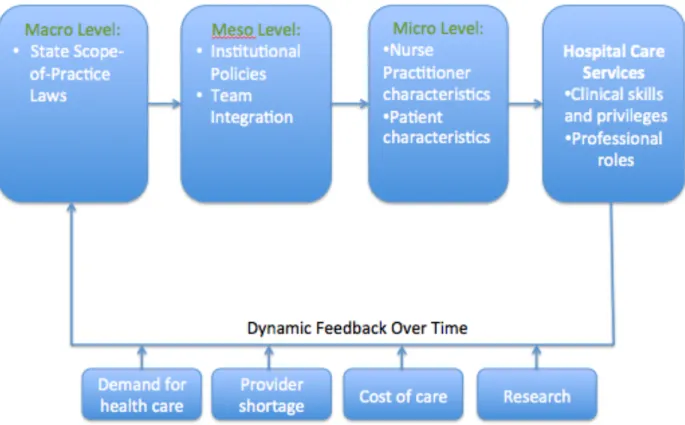
I propose a new framework that examines how variety in state scope-of-practice and other regulations impact hospital-based NPs’ practice (Figure 1). My suggested framework’s
2012), Lomas Policy (Lomas, 2000), the Economic Theory of Regulation (Feldstein, 2004), and Acute Care Nurse Practitioner Role Enactment, Boundary Work and Perception of Team
Effectiveness (Kilpatrick, 2013) frameworks. These frameworks incorporate the central ideas of regulations on practice, factors associated with nurse practitioner care, and how policies related to regulations on practice change over time.
Figure 1. Synthesized Model to Describe the Impact of State Scope-of-Practice Laws and Regulations on Nurse Practitioner Practice Patterns
The concept of progressive restriction upon practice (Kleinpell, Hudspeth, et al., 2012) is demonstrated in: 1) a macro-level set of formal rules that constrain and enable behavior 2) a meso-level of institutional influences upon behavior; and 3) micro-level parameters that result from individual characteristics that influence behavior (Lubell, 2012). These cumulative restrictions result in a variety of expectations for APRNs’ delivery of hospital care services.
The Kilpatrick et al. framework (2013) describes the gradations of restrictions upon the acute care nurse practitioners’ clinical practice that can be inferred to pediatric intensive care unit
PNP hospital care services. State scope-of-practice regulations outline expectations related to the range of care services within a NP’s practice. Individual providers can then face additional restrictions and practice oversight from institutions and hospitals for which they work and/or by physician colleagues that are part of a health care team that may have different standards for integration of PNPs into teams or delegation of components of patient care to PNPs. An individual provider’s educational background and clinical experiences, along with the patient’s characteristics, influence the PNP level of competence to care for specific patient populations.
The Lomas and Social Elements of a Policy System frameworks support that, over time, factors including demand for health care, provider shortages, the cost of providing care, and research on NP practice in this new framework will influence the macro-level regulations that trickle down, and ultimately result in changes to the hospital care services provided (Lomas, 2000; Lubell, 2012).
This new framework supports cross-sectional and longitudinal research. As it is used, the van Offenbeck and Kipp (2004) concepts of demand for care and division of patient care tasks will be important to monitor and will be influential in model testing. The professional roles (Elliott & Walden, 2014) related to hospital care services in proportion to clinical roles may change with time as the optimum balance of provider skills and knowledge utilization are not yet understood. A career of research designed to support NP practice will afford opportunities to assess how, over time, practice patterns influence the evolution of SSOP laws. As part of the dynamic of this long-term assessment, the use of information to influence policy/regulation, as presented in Lomas (2000), will have considerable import. With the synthesis of this new framework, concepts related to scope-of-practice and NP practice can be more clearly understood and venues for research can be readily identified.
Conceptual definitions.
In this document, definitions for all the concepts within my proposed framework will be defined. Only a portion of the overall framework will be examined in my
dissertation work. Those concepts that are specifically applicable to my proposed dissertation research project will be indicated with a * following the key concept.
State scope-of-practice laws*: formal, legal regulation of APRN practice that occurs
state-by-state and includes three levels of practice authority: 1) states with no scope-of-practice limitations where APRNs have full practice authority; 2) states where an APRN must collaborate in order to practice or prescribe have reduced practice authority; and 3) those who must
collaborate to prescribe, diagnose, and treat patients have restricted practice authority (AANP, 2017b; Kuo, Loresto, Rounds & Goodwin, 2013; Regan & Salsberry, 2013).
Institutional policies*: hospital- or institution-based credentialing and privileging that
permits APRNs to perform patient care “tasks under varying degrees of supervision, collaboration or independently” (Kleinpell, et al., 2012, p.16).
Team integration*: how NPs are incorporated into a team of care providers for a patient
population in the hospital setting and includes: who does work, how many of them are doing the work, what they are able to do and tasks they are assigned – and variation in role based upon individual collaborating physicians APRN inclusion disposition, work schedules and interactions with non-physician health-care workers (Garland & Gershengorn, 2012).
Nurse practitioner characteristics: demographic characteristics of the APRN including:
age, years worked as an APRN, years worked as an register nurse (RN), number of years at current job, highest educational level, APRN certification and practice specialty as an RN and APRN (Cajulis & Fitzpatrick, 2007).
Patient characteristics: acuity and complexity of a patient’s condition(s) determines
patient care needs and provides framework for which APRN provider, acute care versus primary care, is appropriate to provide care (National Organization of Nurse Practitioner Faculties [NONPF], 2012).
Hospital care*: care provided in an acute care setting with specially trained personnel,
monitoring and support equipment for treatment of patients requiring comprehensive observation and care (American Hospital Association [AHA], 2014).
Clinical skills*: assessment, diagnosis, treatment and management with interventions for
patients and their families performed by an APRN (NONPF, 2013; Verger, et al., 2005).
Clinical roles*: professional responsibilities of the APRN that include patient
management, nursing and medical education, coordination of care, research, advocacy and consultation (Verger, et al., 2005).
Demand for care: a present or future need for health care by a specific patient population
with specific health problems in a particular care setting by a specific individual health care professional (Health Workforce Information Center [HWIC], 2012).
Provider shortage: an inadequate supply of: physicians in all stages of training, nurse
practitioners and physicians assistants who have the ability to give orders that influence patient care; to provide needed care to a patient population (HWIC, 2012).
Cost of care: total cost of health care service for an episode of illness (Mason, Leavitt &
Chaffe, 2012). The cost of care also includes the influence of “concentrated interest”, the effect of changes to SSoP legislation that would have a large impact on the profitability of a provider, where providers with the most at risk in terms of an economic self interest are the most likely to oppose to changes to legislation (Feldstein, 2004).
Research: systematic inquiry using a disciplined method to answer questions about care
Literature Review.
History of the PNP.
The role of the NP has been integrated into health care delivery over the last 50 years.
Developed in the 1960s, this new nursing role, an equivalent to today’s pediatric nurse practitioner – primary care (Silver, Ford, & Stearly, 1967), offered “improved patient care, benefit to society by conservation of scarce manpower resources, increased availability of comprehensive, expert, and accessible services, and the development of the role of each health practitioner to its fullest” (Silver, Ford & Day, 1968; pg. 302). Over time the NP role has expanded to include roles for NPs as care providers to both pediatric and adult patients in primary, specialty, and acute care settings, along with other advanced practice nursing roles in nurse midwifery, clinical nursing, and anesthesia, becoming essential health-care providers (AANP, 2017c).
Pediatric nurse practitioners are increasingly assuming roles in the care of children in acute care, hospital-based settings (Allen et al., 2008; Brady & Neal, 2000; Freed et al., 2010;
Freed et al., 2014; Pitts & Seimer, 1998). Nurse practitioners first transitioned into acute care settings during the 1990s (Haut & Madden, 2015). Approximately one-quarter of PNPs work in hospital-based settings today (Freed et al., 2014). Ongoing development of the acute care PNP role has resulted in national competencies for education (NONPF, 2013) and a national
certification (Pediatric Nursing Certification Board [PNCB], 2017).
Nurse practitioners working in the PICU require additional post-graduate training, often provided during a formal clinical orientation (Sorce, Simone, & Madden, 2010) lasting up to a year after hiring (Verger et al., 2005). Theses PNPs are specialized providers with clinical skills and a knowledge base to provide direct patient care and care coordination to the population of critically ill pediatric patients, many with complex, chronic illness (Reuter-Rice, 2013; Verger et al., 2005). The roles and clinical privileges of acute care nurse practitioners in hospital-based
care delivery have been described, (Reuter-Rice, 2013), but roles specific to the PICU providers have not been recently evaluated (Verger et al., 2005). With regulatory and practice
environments changes, nurse practitioner practice in the PICU must be reevaluated to understand role implementation and practice variations nationally.
Role recognition.
Since the NP role was created, contention has surrounded incorporating this role into the health care system. Today, APRNs complete formal, advanced-practice education in a clinical role for a specialized patient population, attain national certification, and attain state licensure before practicing (APRN Consensus Work Group, 2008). Despite national education and certification standards, the degree to which NPs may practice independently and the scope of their practice varies by state, creating legal barriers to APRN practice (National Council of State Boards of Nursing [NCSBN], 2017).
Policy barriers are used and create variation among APRN practice as well. Individual health care organizations also place limits on NP practice by imposing restrictive policies and failing to completely integrate NPs into historically physician-centric practice groups
(Poghosyan, Nannini, Stone, & Smaldone, 2013). Nurse practitioners, particularly those
working in the PICU, are part of an interdisciplinary team of providers (Jessup, 2007). The role of every provider on a health care team should be developed to its fullest to allow for optimal health care manpower utilization (Silver et al., 1967).
Demand for PICU NPs.
Recent enactment of the Patient Protection and Affordable Care Act (ACA) has changed the health-care delivery environment by reframing care delivery models and underscoring quality and care coordination, while altering reimbursement (Carlson, 2013; Hall & Lord, 2014). These changes occurred at a time of physician provider shortage, particularly in pediatrics and intensive
APRNs are being integrated into the health care delivery models and are accepted as qualified, cost-effective providers by consumers, institutions, and some policymakers (Dill, Pankow, Erikson, & Shipman, 2013; Federal Trade Commission, 2014; Lowe et al., 2012; IOM, 2011).
The alignment of these events has contributed to demand for expansion of PNP roles and utilization in the delivery of hospital-based child health care, particularly within the PICU (Freed, Dunham, Loveland-Cherry et al., 2011). Nurse practitioners are viewed as high-quality providers whose participation in patient care in the intensive care unit can supplement and extend physician-provider care (Garland & Gershengorn, 2013; Gershengorn, Johnson, & Factor, 2012).
To have the greatest influence on pediatric health care delivery, PNPs must practice to the full extent of their education, certification, and licensure, and be completely and effectively
integrated into the hospital-provider team. It is imperative that factors influencing PNP practice limitations in the PICU be explored to understand how and why their practice is limited. In doing so, efforts to maximize PNPs’ contributions to pediatric intensive care delivery can be instituted.
Research Priorities
Nurse practitioners in the PICU have unique skills and knowledge to care for critically ill patients in various stages of development with acquired and/or congenital illnesses (Connor, LaGrasta, & Hickey, 2015). The population of PNPs is small, and those pursuing careers in the PICU represent only a portion of the total PNP population. With a need for pediatric specialists (Basco & Rimsza, 2013), it is imperative that PNPs practice to the full extent of their education and training. A combination of regulations, SSoP and hospital-based, and restrictions placed through physician supervision can limit care delivery provided by NPs in the PICU. Therefore, an evaluation of the current roles of and restriction upon PNPs’ practice as they relate to
pediatric health-care delivery is needed if we are to maximize NPs’ contribution to pediatric care and increase children’s access to critical care services.
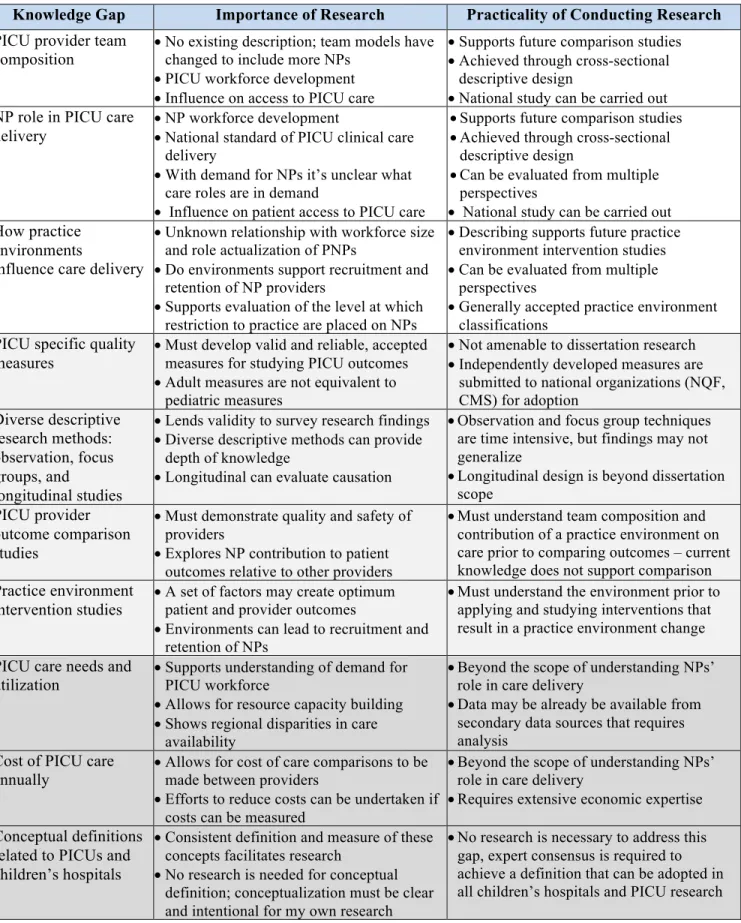
Although knowledge of the PNP role and workforce has increased, significant gaps in knowledge of the role of NPs in care delivery within the PICU persist. Prioritization of research gaps is important to strategic advancement in the knowledge of NP roles in PICU care delivery (Table 1). Describing the phenomenon is first step to addressing gaps and enables informed decisions when considering future comparative and interventional research. Descriptive research priorities to advance the knowledge of the role of the NP in PICU care delivery are derived from two interrelated areas of study: (1) the roles and team integration of NPs on care delivery teams in the PICU and (2) the influence of regulations and restrictions on NP practice in the PICU.
Table 1. Considerations for Research Prioritization Related to Gaps in Understanding the Role of NPs in PICU Care Delivery.
Knowledge Gap Importance of Research Practicality of Conducting Research PICU provider team
composition • No existing description; team models have changed to include more NPs
• PICU workforce development
• Influence on access to PICU care
• Supports future comparison studies
• Achieved through cross-sectional descriptive design
• National study can be carried out NP role in PICU care
delivery
• NP workforce development
• National standard of PICU clinical care delivery
• With demand for NPs it’s unclear what care roles are in demand
• Influence on patient access to PICU care
• Supports future comparison studies
• Achieved through cross-sectional descriptive design
• Can be evaluated from multiple perspectives
• National study can be carried out How practice
environments
influence care delivery
• Unknown relationship with workforce size and role actualization of PNPs
• Do environments support recruitment and retention of NP providers
• Supports evaluation of the level at which restriction to practice are placed on NPs
• Describing supports future practice environment intervention studies
• Can be evaluated from multiple perspectives
• Generally accepted practice environment classifications
PICU specific quality
measures • Must develop valid and reliable, accepted measures for studying PICU outcomes
• Adult measures are not equivalent to pediatric measures
• Not amenable to dissertation research
• Independently developed measures are submitted to national organizations (NQF, CMS) for adoption
Diverse descriptive research methods:
observation, focus groups, and
longitudinal studies
• Lends validity to survey research findings
• Diverse descriptive methods can provide depth of knowledge
• Longitudinal can evaluate causation
• Observation and focus group techniques are time intensive, but findings may not generalize
• Longitudinal design is beyond dissertation scope
PICU provider outcome comparison studies
• Must demonstrate quality and safety of providers
• Explores NP contribution to patient outcomes relative to other providers
• Must understand team composition and contribution of a practice environment on care prior to comparing outcomes – current knowledge does not support comparison Practice environment
intervention studies • A set of factors may create optimum patient and provider outcomes
• Environments can lead to recruitment and retention of NPs
• Must understand the environment prior to applying and studying interventions that result in a practice environment change PICU care needs and
utilization • Supports understanding of demand for PICU workforce
• Allows for resource capacity building
• Shows regional disparities in care availability
• Beyond the scope of understanding NPs’
role in care delivery
• Data may be already be available from secondary data sources that requires analysis
Cost of PICU care
annually • Allows for cost of care comparisons to be made between providers
• Efforts to reduce costs can be undertaken if costs can be measured
• Beyond the scope of understanding NPs’
role in care delivery
• Requires extensive economic expertise Conceptual definitions
related to PICUs and children’s hospitals
• Consistent definition and measure of these concepts facilitates research
• No research is needed for conceptual definition; conceptualization must be clear and intentional for my own research
• No research is necessary to address this gap, expert consensus is required to achieve a definition that can be adopted in all children’s hospitals and PICU research
With a grasp of PICU team composition, identification of NP roles, and an awareness of constructive practice settings for PNPs, then strategies can be: 1) developed to encourage positive clinical practice environments for NPs across institutions; 2) instituted to result in national standardization of practice that matches national standards for both education and certification; and 3) adopted to increase patient access to the pediatric specialist workforce focused on PICU care delivery. These strategies have policy implications, but also compel additional research questions.
To compare provider outcomes, gaining an understanding of the PICU team composition and provider roles is essential. To formulate groups for comparisons, a researcher must know: (1) who the PICU providers are on a team, (2) the roles they assume in providing patient care, and (3) how much of each provider’s time in the PICU is spent providing direct patient care. When these elements are understood, comparisons can be made about patient outcomes among and between these provider groupings: (a) provider groups that have varying composition (e.g. teams with and without NPs, PICUs with or without 24-hour NP coverage), (b) PICU groups that use similar NP staffing models (e.g. PICUs with 24 hour NP coverage models vs. PICUs with day time NP coverage 7 days a week), and (c) SSoP regulatory practice environments (e.g. least vs.
most restrictive states). Understanding the provider-team composition and provider roles ensures comparisons are equivalent relative to a “dose of NP”, across settings and studies.
A PICU practice environment results from a confluence of SSoP regulations, hospital policies incorporating supervision, and physician collaboration. Little is known about the effect of SSoP and organizational regulations, physician supervision, and work processes upon the practice and growth of this specialized PICU NP workforce (Bahouth et al., 2013; Becker, Kaplow, Muenzen, & Hartigan, 2006; Kilpatrick et al., 2012). Hospital attributes can be hypothesized as important for NP recruitment and retention and should be investigated.
understanding professional work process and organizational characteristics as understanding this information can help them recruit and retain a desired PNP workforce with PNPs working in an optimal role (Freed et al., 2011; Freed, Dunham, Moran, & Spera, 2012).
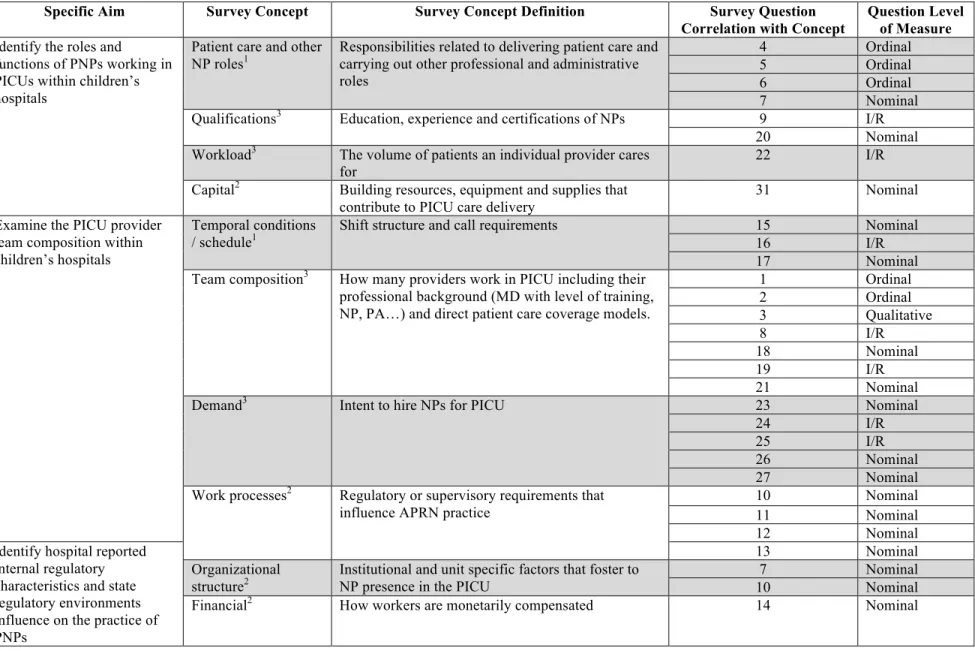
These factors guided the development of the study-specific aims. From the aims, I identified key concepts (Table 2, columns 1-3).
Table 2. Development of Survey Concepts and Questions.
Specific Aim Survey Concept Survey Concept Definition Survey Question
Correlation with Concept
Question Level of Measure Identify the roles and
functions of PNPs working in PICUs within children’s hospitals
Patient care and other NP roles1
Responsibilities related to delivering patient care and carrying out other professional and administrative roles
4 Ordinal
5 Ordinal
6 Ordinal
7 Nominal
Qualifications3 Education, experience and certifications of NPs 9 I/R
20 Nominal
Workload3 The volume of patients an individual provider cares for
22 I/R
Capital2 Building resources, equipment and supplies that contribute to PICU care delivery
31 Nominal
Examine the PICU provider team composition within children’s hospitals
Temporal conditions / schedule1
Shift structure and call requirements 15 Nominal
16 I/R
17 Nominal
Team composition3 How many providers work in PICU including their professional background (MD with level of training, NP, PA…) and direct patient care coverage models.
1 Ordinal
2 Ordinal
3 Qualitative
8 I/R
18 Nominal
19 I/R
21 Nominal
Demand3 Intent to hire NPs for PICU 23 Nominal
24 I/R
25 I/R
26 Nominal
27 Nominal
Work processes2 Regulatory or supervisory requirements that influence APRN practice
10 Nominal
11 Nominal
12 Nominal
Identify hospital reported internal regulatory characteristics and state regulatory environments influence on the practice of PNPs
13 Nominal
Organizational structure2
Institutional and unit specific factors that foster to NP presence in the PICU
7 Nominal
10 Nominal
Financial2 How workers are monetarily compensated 14 Nominal
Specific Aims Key Definitions
The definitions are organized as they occur in the specific aims:
1) Identify the roles and functions of PNPs working in PICU within children’s hospitals.
2) Examine the PICU provider team composition within children’s hospitals.
3) Identify hospital-reported internal regulatory characteristics and state regulatory environments’ influence on the practice of PNPs.
Definitions.
Pediatric Nurse Practitioner (aims 1 and 3).
A PNP is an APRN who practices in a NP role caring for the pediatric population.
Pediatric nurse practitioners are educated as primary care and/or acute care NPs (APRN Consensus Work Group, 2008; NONPF, 2013). The NP is:
prepared to diagnose and treat patients with undifferentiated symptoms as well as those with established diagnoses…provide initial, ongoing, and comprehensive care, includes taking comprehensive histories, providing physical examinations and other health assessment and screening activities, and diagnosing, treating, and managing patients with acute and chronic illnesses and diseases. This includes ordering, performing, supervising, and interpreting laboratory and imaging studies;
prescribing medication and durable medical equipment; and making appropriate referrals for patients and families…care includes health promotion, disease prevention, health education, and counseling as well as the diagnosis and
management of acute and chronic diseases…(APRN Consensus Work Goup, 2008, pp. 9)
The pediatric population traditionally includes children from birth to age twenty-one.
However, in certain situations the age constraint is not in the best interest of patient care.
Patients with congenital diseases who are diagnosed by prenatal testing or who survive into adulthood may be best cared for by a PNP (Lace Network, 2012).
Roles and functions (aim 1).
Professional responsibilities of the APRN that include roles in patient management, nursing and medical education, coordination of care, research, advocacy and consultation (Verger, et al., 2005) and clinical functions related to provision of patient care including:
assessment, diagnosis, treatment and management with interventions for patients and their families performed by an APRN (NONPF, 2013; Verger et al., 2005).
Pediatric Intensive Care Unit (aims 1 and 2).
A PICU is a section of a hospital that “contains specialized equipment and highly trained staff to treat patients who have a serious illness or injury.” (Torpy, Lynm, & Glass, 2009) Patients of multiple developmental levels with congenital and acquired diseases and illnesses comprise the PICU patient population (Connor, LaGrasta & Hickey, 2015). The size and scope of critical care services vary among PICUs, but all provide monitoring and care for patients with multiple critical conditions (Fuhrman & Zimmerman, 2006; Torpy et al., 2009). Care is
provided by a multidisciplinary team that includes: physicians, nurses, respiratory therapists, physical therapists, nutritionists, social workers, and pastoral care staff (Furhman & Zimmerman, 2006; Torpy et al., 2009).
Children’s hospitals (aims 1 and 2).
Hospitals with “inpatients predominantly age 18 or younger” are designated as children’s hospitals (HRSA, nd,
http://www.hrsa.gov/opa/eligibilityandregistration/hospitals/childrenshospitals/index.html).
Children’s hospitals can be free-standing or units within a larger, adult-based system, and recently have become more regionalized centers for advanced quality pediatric specialty care.
Provider (aim 2).
A health care worker including: physicians in all stages of training, nurse practitioners and physicians assistants who have the ability to give orders that influence patient care.
Team composition (aim 2).
The types of providers who deliver care to a patient population in the hospital setting, in this instance PICU providers, and includes: who does work, how many of them are doing the work, work schedules and interactions with non-physician health-care workers (Garland &
Gershengorn, 2012).
Internal regulatory characteristic (aim 3).
Hospital- or institution-based credentialing and privileging that permits APRNs to perform patient care “tasks under varying degrees of supervision, collaboration or
independently” (Kleinpell et al., 2012, p.16).
Credentialing.
Credentialing is “the process of obtaining, verifying, and assessing the qualifications of a practitioner to provide care or services in or for a health care organization. Credentials are documented evidence of licensure, education, training, experience, or other qualifications.” (The Joint Commission, n.d., p. 2)
Privileging.
Privileging is the process whereby a specific scope and content of patient care services (that is clinical privileges) are authorized for a healthcare practitioner by a health care
organization, based on an evaluation of the individual’s credentials and performance. A
“privilege” is defined as an advantage, right, or benefit that is not available to everyone; the rights and advantages enjoyed by a relatively small group of people, usually as a result of education and experience. (The Joint Commission, n.d., p. 2)
State regulatory environment (aim 3).
Formal, legal regulation of APRN practice that occurs state-by-state and consists of three levels of practice authority: 1) APRNs working in states with no scope-of-practice limitations have full practice authority; 2) those who must collaborate in order to practice or prescribe have reduced practice authority; and 3) those who must collaborate to prescribe, diagnose, and treat patients have restricted practice authority (AANP, 2017b).
Practice (aim 3).
Skills and activities permitted to be performed and consistent with a health care provider’s education, competence, and responsibility related to the delivery of patient care (NONPF, 2013). Activities may overlap with the practice of other providers (NONPF, 2013).
Dissertation Chapters
Subsequent chapters of this dissertation are manuscripts, submitted for review and publication, complied to describe: a) the supply of and demand for PICU providers (Chapter II);
b) the roles of PICU NPs in care delivery and interdisciplinary provider team composition in the PICU (Chapter III); and the alignment of SSOP and organizational regulation of NP practice and prescriptive authority along with organization-level regulation of PICU NP practice (Chapter IV). The final chapter, chapter V, outlines my research trajectory based upon these dissertation findings.
CHAPTER II
PEDIATRIC INTENSIVE CARE UNIT PROVIDER SUPPLY AND DEMAND
This manuscript has been submitted to the journal Pediatric Critical Care Medicine, is formatted to the journal specifications, and is currently under review.
Objectives: To describe physicians’ and nurse practitioners’ (NPs) perceptions of the national and local pediatric intensive care unit (PICU) physician and other provider supply; assess for differences in perceptions of supply; and evaluate the intent of institutions to hire NPs to work in PICUs.
Design: National, quantitative, cross-sectional descriptive study via a postal-mail survey from October 2016 to January 2017.
Setting: Institutions identified in the 2015 American Hospital Association Annual Survey with a pediatric intensive care unit.
Subjects: Pediatric intensive care unit physician medical directors and NPs.
Intervention: None
Measurements and Main Results: There were 152 respondents, representing 126 institutions.
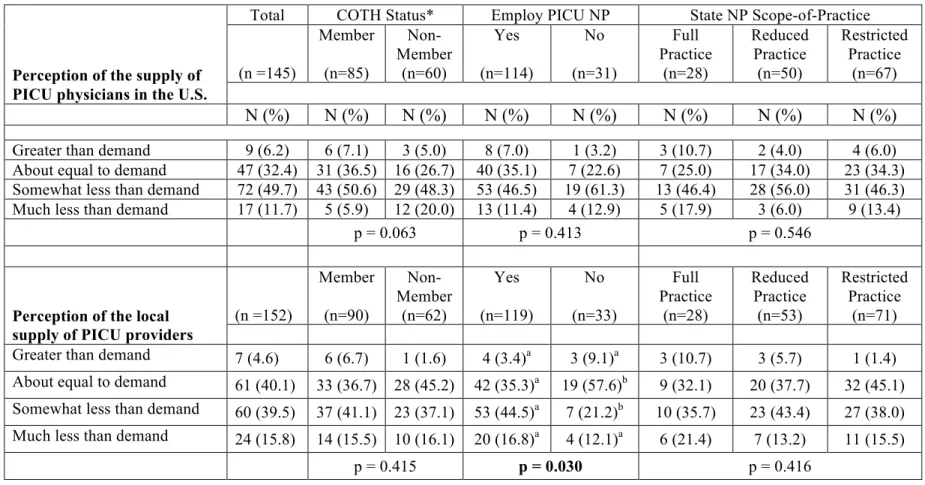
Responses were received from 93 (29%) PICU medical directors and 59 (45%) lead NPs. More than half (60%) of all subjects reported the national supply of PICU physicians is less than demand, and 55% reported the local supply of PICU providers (physicians in all stages of training, NPs, and physician assistants) is less than demand. Respondents from institutions that reported local shortages were more likely to employ PICU NPs than those that did not (p=0.03).
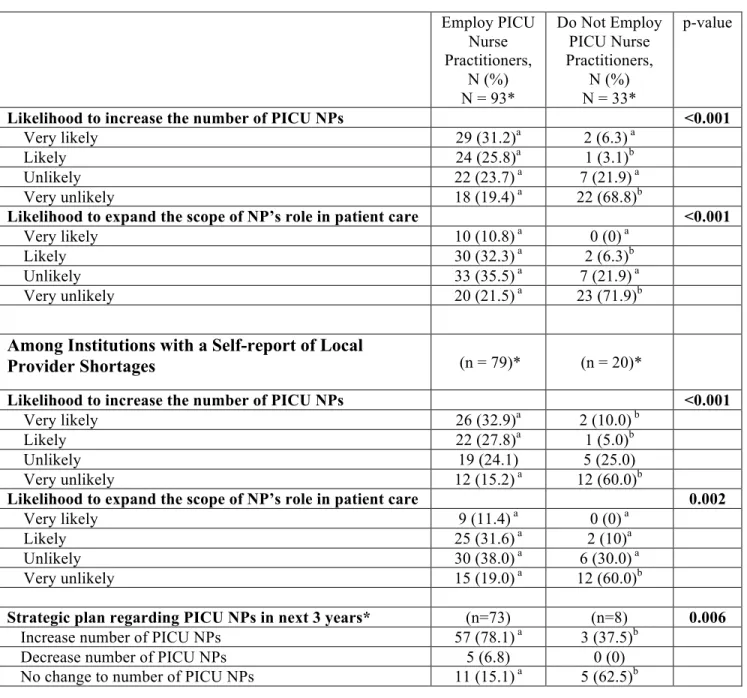
Of the respondents from institutions that self-reported a local provider shortages (n=99), nearly three-fourths (n=60 of 81 respondents, 74%) reported plans to increase the number of PICU NPs in the next 3 years and one-third (36%) were likely to expand the NP’s role in patient care.
Conclusions: Most PICU medical directors and lead NPs perceive the national and local supply of providers to be less than the demand. Where local demand is exceeded by supply, innovative models of care are being utilized. The demand for more PICU NPs with expanded roles in care delivery was reported. Further evaluation of models of care and provider roles in care delivery can contribute to aligning provider supply with demand for care delivery.
Key Words: pediatric; critical care; workforce; supply; demand; nurse practitioner
Introduction and Background
In 2012, there were more than 2 million pediatric hospital admissions in the United States (1). Although the number of admissions to children’s hospitals is decreasing, the number of admissions to the pediatric intensive care unit (PICU) has been increasing since the 1990s with patients presenting with higher acuity and complexity (2, 3, 4, 5). Although national estimates of the critical care workforce predict an abundant supply of critical care providers, these estimates focus primarily on the adult critical care workforce (6). The American Academy of Pediatrics has emphasized the importance of pediatric subspecialty workforce policy and planning (7).
Knowledge of the pediatric-focused critical care workforce is limited, but studies suggest that, despite recent efforts to increase the physician workforce, there may be an inadequate supply of PICU physicians (6, 8, 9).
Barriers to growing the PICU physician workforce have resulted in innovative workforce models of care to compensate for the inadequate supply of such physicians (10, 11). These models often rely on the involvement of nurse practitioners (NPs) to deliver patient care as part of the health care provider team (12, 13, 14). As NPs are increasingly used as health care providers in hospital-based settings (15, 16, 17, 18, 19), PICU physicians have shown a
willingness to incorporate NPs into provider teams (20). Given the increasing size of the acute
care NP workforce and uncertainty over the adequacy of the PICU physician workforce, the current demand for NP providers in the PICU is uncertain.
The purpose of this study was to describe PICU medical director and NP perceptions of the national PICU physician supply and the local supply of providers, namely physicians, NPs and physician assistants; assess differences in perceptions of the national and local supply; and to evaluate the medical director and NPs’ assessment of their institutional intent to incorporate NPs into the PICU workforce.
Materials and Methods
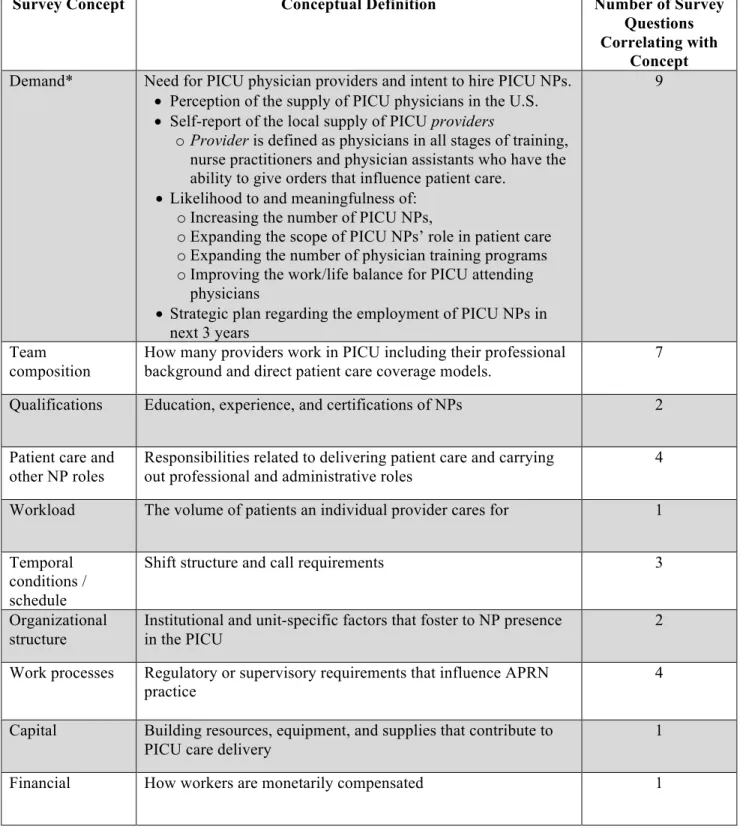
A national, quantitative, cross-sectional descriptive study of PICU medical directors and lead (most senior or NP serving in a supervisory role among a group of PICU NPs) PICU NPs was conducted. A novel survey instrument was developed to assess the current composition of the PICU workforce and role of NPs in providing PICU care. Concepts were operationally defined based upon literature reviews and the author’s experience. A 34-item survey was developed based upon concepts derived from a synthesis of frameworks for NP participation in care delivery (Table 3); this article focuses on the concept of provider demand.
Table 3. PICU Workforce Survey Concepts, Conceptual Definitions, and Key Variables Related to Provider Demand.
Survey Concept Conceptual Definition Number of Survey
Questions Correlating with
Concept Demand* Need for PICU physician providers and intent to hire PICU NPs.
• Perception of the supply of PICU physicians in the U.S.
• Self-report of the local supply of PICU providers
o Provider is defined as physicians in all stages of training, nurse practitioners and physician assistants who have the ability to give orders that influence patient care.
• Likelihood to and meaningfulness of:
o Increasing the number of PICU NPs,
o Expanding the scope of PICU NPs’ role in patient care o Expanding the number of physician training programs o Improving the work/life balance for PICU attending
physicians
• Strategic plan regarding the employment of PICU NPs in next 3 years
9
Team composition
How many providers work in PICU including their professional background and direct patient care coverage models.
7 Qualifications Education, experience, and certifications of NPs 2
Patient care and other NP roles
Responsibilities related to delivering patient care and carrying out professional and administrative roles
4 Workload The volume of patients an individual provider cares for 1
Temporal conditions / schedule
Shift structure and call requirements 3
Organizational structure
Institutional and unit-specific factors that foster to NP presence in the PICU
2
Work processes Regulatory or supervisory requirements that influence APRN practice
4
Capital Building resources, equipment, and supplies that contribute to PICU care delivery
1
Financial How workers are monetarily compensated 1
Five items related to PICU provider supply and demand were included in the survey
of the local provider (physicians in all stages of training, nurse practitioners and physician assistants who have the ability to give orders that influence patient care) supply were reported on a 5-point likert-like scale. This analysis reports a 4-point scale as no respondents reported that supply was much greater than demand. Interventions acknowledged to address PICU provider shortages were assessed with a 5-point likert-like scale for their likelihood to occur and
meaningfulness in ability to offset a local provider shortage (6). Strategic planning regarding intentions to grow the local PICU NP workforce were also examined.
Variables that have been associated with healthcare workforce size including COTH membership status and state scope-of-practice (SSOP) regulations, were used to compare
perceptions of supply and demand (8, 21). Hospital characteristics including state, hospital size, and COTH membership were obtained from the 2015 American Hospital Association Annual Survey (22). Based upon state, the American Association of Nurse Practitioners respondents were categorized into SSOP regulatory environments at the time of data collection (23). The SSOP environments are: 1) full practice authority; i.e. NPs may evaluate, diagnose, and manage treatment of patients - including prescribing medications under the authority of the board of nursing; 2) reduced practice authority; i.e. a collaborative agreement with a physician is required for at least one of the practice elements: evaluation, diagnosis, or treatment - including
prescribing medications; and 3) restricted practice; i.e. there must be physician supervision, delegation or team-management to prescribe, diagnose, and/or manage patient treatment (23).
Two independent researchers conducted preliminary item validity testing using a card sort method. Each survey item was assigned to a conceptual category within the study
framework with greater than 75% agreement. Seven PICU providers unrelated to the study team participated in pilot testing for reliability, readability, and acceptability (24).
Institutions identified as operating a PICU in the 2015 American Hospital Association Annual Survey (21) were contacted to confirm the continued operation of a PICU. Surveys were
sent to a medical director at each operational PICU (n = 326). Telephone calls were made to each PICU to determine the presence of a PICU NP and, if a NP was employed, the lead NP (most senior or NP serving in a supervisory role among a group of PICU NPs) was identified, an additional survey was sent to the lead PICU NP (n = 140). The Vanderbilt University Medical Center’s Institutional Review Board approved this study before recruitment and distribution of any study materials.
Mailings occurred between October 2016 and January 2017. After an initial introductory postcard, three separate survey mailings were sent to eligible participants. Survey packets
included a cover letter; a definition of key concepts; a paper survey, which included an electronic participation option; and a self-addressed, stamped envelope. Returning a survey served as consent. Participants (one medical director and one lead PICU NP for each PICU) who returned a completed survey were eligible for a drawing of a $250 visa gift card. Participants returned surveys electronically via a secure, web-based platform, Research Electronic Data Capture (REDCap) (n = 29, 19%) hosted at Vanderbilt University (25) or by postal-mail (n = 123, 81%).
Mailed survey responses were double-entered by a study team member into REDCap.
After the survey was closed, data analysis was performed using IBM SPSS Statistics 23.0 (IBM Corporation, 2015). For institutional-level data, institutions were included in the analysis if either a medical director or a NP responded. If both providers responded from the same institution, the medical director’s response was included in the analysis of institutional-level responses to have consistency in respondent roles, given most sample institutions only had eligible physician respondents.
Most of the survey responses were nominal or ordinal in nature and thus were
summarized using counts and percentages. Continuous data distributions were summarized using median and inter-quartile range (IQR) due to skewness. Tests of differences between groups
Whitney test (continuous). An alpha of 0.05 (p < 0.05) was used for determining statistical significance.
Results
Survey Respondents and Response Rates.
The survey was sent to 466 potential respondents (326 PICU medical directors from 326 institutions and 140 lead PICU NPs from 140 institutions). Responses were received from a PICU medical director and/or NP working in 126 institutions (39% of all U.S. institutions with a PICU). In total, 93 (29%) medical directors responded, 59 (45%) NPs responded (n = 152). Both the medical director and the lead NP responded from 26 institutions (Figure 2).
Figure 2. Institutional Response Rates from PICUs in the United States
PICUs without NP (n = 186)
Respondents n = 93 (66.4%)
PICUs with NP (n = 140)
Non-respondents n = 47 (33.6%)
Non-respondents n = 153 (82.3%) Respondents
n = 33 (17.7%)
Medical Director n = 60*
Nurse Practitioner
n = 59*
*A Medical Director and Nurse Practitioner both responded from 26 institutions
Total Medical Director response rate 93/322 (28.9%) and Nurse Practitioner 59/132 (44.7%).
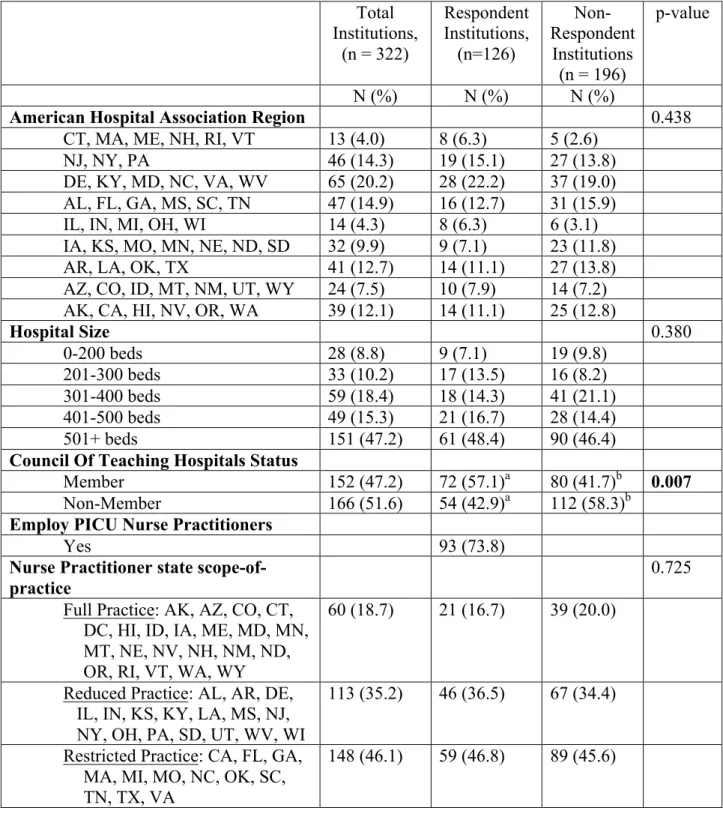
Characteristics of the institutions with respondents (n = 126) and those not responding are summarized in Table 4. Compared to those institutions without respondents (n = 196),
institutions with respondents (n = 126) were more likely to be members of the Council of Teaching Hospitals (COTH, 57% vs. 42%, p=0.007). Differences in size, region, or state regulation of nurse practitioner practice were not statistically significant (p > 0.05, Table 4).