Hydrogen Amination via Carbene and Nitrene Transfers Catalyzed by Engineered
Cytochrome P450 Enzymes
Thesis by
Pedro de Souza Leão Coelho
In Partial Fulfillment of the Requirements for the Degree of
Doctor of Philosophy
CALIFORNIA INSTITUTE OF TECHNOLOGY Pasadena, California
2013
2013
Pedro de Souza Leão Coelho All Rights Reserved
ACKNOWLEDGEMENTS
To my mentor and role model, Frances Arnold, whose career is proof that novel and useful research can have an immense impact in this world.
I am indebted to the postdocs and fellow graduate students who much contributed to my learning and development at Caltech, especially Jared Lewis, Eric Brustad, Mike Chen, Jane Wang, and John McIntosh. I am grateful for the contributions from the exceptional undergraduates, Arvind Kannan, Tristan Brown, and Eugenia Zah, who worked during the riskiest and most uncertain stages of this research project.
To my parents and my brothers for their unconditional support.
To Renata for her understanding in sharing me with the lab and for her always joyful company that made these four years in Los Angeles unforgettable.
Salomon saith: There is no new thing upon the earth.
So that as Plato had an imagination, that all knowledge was but remembrance;
so Salomon giveth his sentence, that all novelty is but oblivion.
Francis Bacon, Essays, LVIII
The certainty that everything has already been written annuls us, or renders us phantasmal.
Jorge Luis Borges, The Library of Babel
SEPTIMUS: We shed as we pick up, like travellers who must carry everything in their arms, and what we let fall will be picked up by those behind. The procession is very long and life is very short. We die on the march. But there is nothing outside the march so nothing can be lost to it. The missing plays of Sophocles will turn up piece by piece, or be written again in another language. Ancient cures for disease will reveal themselves once more. Mathematical discoveries glimpsed and lost to view will have their time again. You do not suppose, my lady, that if all of Archimedes had been hiding in the great library of Alexandria, we would be at a loss for a corkscrew?
Tom Stoppard, Arcadia
ABSTRACT
Synthetic biology promises to transform organic synthesis by enabling artificial catalysis in living cells. I start by reviewing the state of the art in this young field and recognizing that new approaches are required for designing enzymes that catalyze nonnatural reactions, in order to expand the scope of biocatalytic transformations. Carbene and nitrene transfers to C=C and C-H bonds are reactions of tremendous synthetic utility that lack biological counterparts. I show that various heme proteins, including cytochrome P450BM3, will catalyze promiscuous levels of olefin cyclopropanation when provided with the appropriate synthetic reagents (e.g., diazoesters and styrene). Only a few amino acid substitutions are required to install synthetically useful levels of stereoselective cyclopropanation activity in P450BM3. Understanding that the ferrous-heme is the active species for catalysis and that the artificial reagents are unable to induce a spin-shift-dependent increase in the redox potential of the ferric P450, I design a high-potential serine-heme ligated P450 (P411) that can efficiently catalyze cyclopropanation using NAD(P)H. Intact E. coli whole-cells expressing P411 are highly efficient asymmetric catalysts for olefin cyclopropanation. I also show that engineered P450s can catalyze intramolecular amination of benzylic C-H bonds from arylsulfonyl azides. Finally, I review other examples of where synthetic reagents have been used to drive the evolution of novel enzymatic activity in the environment and in the laboratory. I invoke preadaptation to explain these observations and propose that other man-invented reactions may also be transferrable to natural enzymes by using a mechanism-based approach for choosing the enzymes and the reagents. Overall, this work shows that existing enzymes can be readily adapted for catalysis of synthetically
CONTENTS
Nomenclature ... vii
Abbreviations ... viii
Additional Publications ... ix
Chapter I: Synthetic Biology Approaches for Organic Synthesis ... 1
Abstract ... 2
Introduction ... 3
Enabling Technologies ... 4
Enzyme Engineering ... 13
Metabolic Engineering ... 37
Beyond Nature: Design and Evolution of Artificial Function/Catalysis ... 71
References ... 75
Chapter II: Olefin Cyclopropanation via Carbene Transfer Catalyzed by Engineered Cytochrome P450 Enzymes ... 86
Abstract ... 87
Main Text ... 88
Supplementary Materials ... 99
References ... 139
Chapter III: Highly Efficient Carbene Transfer to Olefins Catalyzed In Vivo ... 141
Abstract ... 142
Main Text ... 143
Supplementary Materials ... 153
References ... 192
Chapter IV: Intramolecular C-H Amination Catalyzed by Engineered Cytochrome P450 Enzymes ... 194
Abstract ... 195
Main Text ... 196
Supplementary Materials ... 206
References ... 231
Chapter V: On Preadaptation and the Evolution of Enzymes with Synthetic Catalytic Function ... 232
Abstract ... 233
Main Text ... 234
References ... 249
NOMENCLATURE
Bioinformatics: the study of methods for storing, retrieving, and analyzing biological data such as DNA, RNA, and protein sequence, structure, function, pathways, and genetic interactions
Directed evolution: a systematic algorithm of mutation and selection for improvements in the properties of a biological entity, such as an enzyme, a metabolic pathway, or a whole organism
Heterologous protein expression: expression of a gene coding for a protein not natively produced by the production host
Metabolic engineering: genetic alteration of metabolism to produce molecules of interest Metagenomics: the study of genetic material recovered directly from environmental samples
Operon: a functioning unit of genomic DNA containing a cluster of genes under the control of a single promoter
Recombinant (metabolic) pathway: an artificial (metabolic) pathway created by combining one or more enzymes foreign to the host organism
Synthetic biology: forward engineering of genetic material (genes, promoters, operons, genomes) encoding an artificial function
ABBREVIATIONS
BM3 Cytochrome P450 BM3 from Bacillus megaterium (CYP102A1) DMSO Dimethyl sulfoxide
KM Michaelis-Menten constant kcat Catalytic rate constant
LB Luria-Bertani medium
M9Y M9 minimal medium with 1.5% yeast extract NADH Reduced nicotinamide adenine dinucleotide
NADPH Reduced nicotinamide adenine dinucleotide phosphate P411 Serine-heme ligated cytochrome P450s
P450 Cysteine-heme ligated cytochrome P450s TB Terrific-broth medium
TTN Total turnover number
ADDITIONAL PUBLICATIONS
I coauthored the following two publications that were not included in this thesis in the interest of restraining the thematic focus to the catalysis of carbene and nitrene transfers by cytochrome P450s.
J. C. Lewis, P. S. Coelho, F. H. Arnold, Enzymatic functionalization of carbon-hydrogen bonds. Chemical Society Reviews 40, 2003–2021 (2011).
Abstract. The development of new catalytic methods to functionalize carbon-hydrogen (C−H) bonds continues to progress at a rapid pace due to the significant economic and environmental benefits of these transformations over traditional synthetic methods. In nature, enzymes catalyze regio- and stereoselective C−H bond functionalization using transformations ranging from hydroxylation to hydroalkylation under ambient reaction conditions. The efficiency of these enzymes relative to analogous chemical processes has led to their increased use as biocatalysts in preparative and industrial applications.
Furthermore, unlike small molecule catalysts, enzymes can be systematically optimized via directed evolution for a particular application and can be expressed in vivo to augment the biosynthetic capability of living organisms. While a variety of technical challenges must still be overcome for practical application of many enzymes for C−H bond functionalization, continued research on natural enzymes and on novel artificial
complex molecules. In this critical review, we discuss the most prevalent mechanistic strategies used by enzymes to functionalize nonacidic C−H bonds, the application and evolution of these enzymes for chemical synthesis, and a number of potential biosynthetic capabilities uniquely enabled by these powerful catalysts.
M. M. Chen, P. S. Coelho, F. H. Arnold, Utilizing terminal oxidants to achieve P450- catalyzed oxidation of methane. Advanced Synthesis & Catalysis 354, 964–968 (2012).
Abstract. Terminal oxidant-supported P450 reactions alleviate the need for substrate binding to initiate catalysis by chemically generating “compound I.” This allows investigation of the innate substrate range of the enzyme active site. Using iodosylbenzene as the oxidant, CYP153A6, a medium-chain terminal alkane hydroxylase, exhibits methanol formation in the presence of methane demonstrating that P450- mediated methane hydroxylation is possible.
Comment. Hydroxylations using iodosylbene are isoelectronic to C−H aminations using sulfonylazides and C=C cyclopropanations using diazoesters. An important difference is that iodozylbenzene can react directly with the resting state ferric form of cytochrome P450, whereas the N and C transfer reagents only react with the ferrous form of the enzyme (as shown in chapters 2, 3 and 4). This difference in reactivity requires that P450 aminations and cyclopropanations be conducted in the presence of a reductant [e.g., dithionite or NAD(P)H].
C h a p t e r 1
SYNTHETIC BIOLOGY APPROACHES FOR ORGANIC SYNTHESIS
“Organic chemistry just now is enough to drive one mad.
It gives me the impression of a primeval forest full of the most remarkable things, a monstrous and boundless thicket,
with no way of escape,
into which one may well dread to enter.”
– Friedrich Wöhler (1835)
Synthetic biology is to the 21st century chemist
what organic chemistry was to the 19th century inorganic chemist
This chapter is published as P. S. Coelho, J. C. Lewis, F. H. Arnold “Synthetic biology approaches for organic synthesis” in Comprehensive Organic Synthesis II, G. Molander, P. Knochel, eds. (Oxford, UK: Elsevier Ltd, 2014)
Key Words. Synthetic Biology | Enzyme Engineering | Directed Evolution | Metabolic Engineering | Microbial Cell Factories | Metagenomics | Biocatalysis
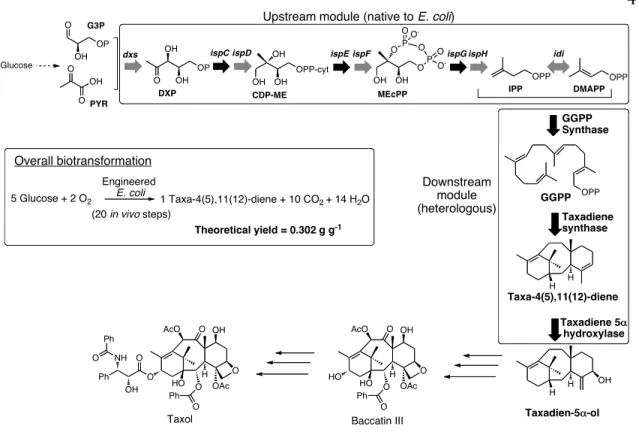
Abstract. Advances in DNA technologies, metagenomics, and bioinformatics have enabled the use of biological systems (i.e., enzymes, metabolic pathways, and cells) for chemical synthesis and production of chemicals from renewable resources such as plant sugars. We review these basic technologies, illustrate their connection to synthetic chemistry, and provide examples of enzyme and metabolic engineering for synthesis of organic molecules with high efficiency and selectivity. Finally, we anticipate the potential for increased integration of engineered enzymes in metabolic pathways as well as the creation of enzymes with completely novel activities to expand our biosynthetic capabilities.
1. Introduction
As the volumes of this collection illustrate, synthetic chemists have devised a powerful arsenal of chemical reactions—one that is often, if colloquially, claimed to enable the synthesis of any desired molecule given enough time. This factor, time, along with measures of material and energy economy, largely determines the efficiency, and thus utility, of chemical syntheses. Developing new catalysts, reactions, and functional molecules remains a time-intensive endeavor, and the costs of energy and material inputs along with waste from syntheses continue to increase as the global population swells and resources become more limited. Barring the removal of these pressures, advances in our ability to assemble molecules are essential.
Systematic and highly efficient approaches to the construction of molecular complexity have evolved in response to analogous supply and demand challenges over four billions years of natural selection. The emergence of myriad biocatalysts ultimately enabled the generation of the seemingly infinite array of natural products that inspire chemists (and provide immense human benefits). The efficiency of these evolved catalytic systems is typically far greater than any synthetic systems we have generated in the short 200 years of modern chemistry. This has driven extensive efforts to mimic these systems for synthetic applications—but stripping systems down to their simplest forms rarely replicates the levels of efficiency and selectivity that are hallmarks of biology.
More recently, increased understanding of biology has allowed researchers to begin to harness the capabilities of biological catalysts, including enormous catalyst diversity,
molecular recognition, selection, and evolution, for chemical synthesis. Furthermore, we are no longer limited to whole-cell or enzyme catalysts isolated from nature or cultured in the laboratory, but can readily modify these systems to suit our purposes.
Efforts toward this end have taken many names over the course of their development, but are now encompassed by the umbrella term “synthetic biology”. This review summarizes some key technologies and examples from this field, with the goal of illustrating how synthetic biology is already a powerful tool that can be used alongside and, increasingly, in place of conventional synthetic methods.
2. Enabling Technologies
2.1 DNA Sequencing and Synthesis
Since chemical function in biocatalysts is encoded and engineered at the DNA level, our ability to build systems for chemical synthesis is greatly influenced by technologies that enable efficient manipulation and analysis of genetic information.
Reductions in the cost of DNA sequencing have outpaced Moore’s law (a doubling in microprocessor computing power every two years), especially following the transition from Sanger-based (dideoxy chain termination sequencing) capillary electrophoresis sequencing to second-generation (“massively parallel”) technologies in the mid 2000s.1 Several competing massively parallel sequencing technologies have been brought to market, including but not limited to pyrosequencing (Roche/454, Basel, Switzerland), sequencing-by-ligation (Life Technologies, Carlsbad, USA), sequencing-by-synthesis (Illumina, San Diego, USA), optical single-molecule sequencing (Pacific Biosciences, Menlo Park, USA) and nanopore technology (Oxford Nanopore, Oxford, UK). All the
massively parallel technologies differ significantly from Sanger capillary sequencing in that they occur in a nucleotide-by-nucleotide stepwise fashion, eliminating the need for discrete separation and detection of Sanger sequencing reaction products on a capillary instrument. An entire human genome can now be sequenced in a matter of hours for less than US$1,000 (a dramatic reduction from US$70,000,000 in 2002).2 This revolution in genomics has now made whole-genome sequencing experiments routine and has enabled initiatives to sequence entire ecosystems. 3
The ability to chemically synthesize sequences of DNA greatly facilitates production and optimization of genetically encoded products. DNA synthesis capabilities have also improved at an exponential pace.4 Synthetic oligonucleotides have been available for 20 years, and synthetic genes built commercially from those “oligos” for the last 10. The ability to synthesize increasingly longer stretches of DNA is improving rapidly as evidenced from the following milestone “firsts”: a synthetic gene in 1979 (207 base pairs, bp), a synthetic plasmid in 1990 (2,100 bp), and a synthetic genome in 2008 (583,000 bp).5 Because total chemical synthesis remains limited to relatively short DNA molecules (<200 nucleotides), novel enzymatic methods have been developed to assemble synthetic oligos into the desired DNA duplex length.6 These methods can be broadly categorized as restriction enzyme-dependent or sequence-independent overlap techniques, either of which may be employed depending on the gene of interest.7 De novo synthesis of entire genomes requires assembly at the chromosomal scale, which can be achieved by in vivo recombination in yeast or Bacillus by making use of native recombination mechanisms.8 For example, in the 580 kb synthesis for the genome of
Mycoplasma genitalium, in vitro recombination was used to assemble 101 overlapping cassettes each 5–7 kb in length into 4 DNA fragments of 144 kb, which were subsequently assembled into the complete genome by in vivo recombination in yeast.5c De novo DNA synthesis is a key enabling technology for synthetic biology because it permits access to arbitrary genes and even whole biosynthetic pathways directly from digital information (DNA sequences from databases), thus bypassing the need to clone genetic material from biological samples.
2.2. Metagenomics and Bioinformatics
Nature presents an immense collection of genes encoding biocatalysts that can be directly applied in chemical syntheses. The most diverse source of biocatalysts in nature is arguably the prokaryotes (archaea and bacteria), comprising millions of species that display an extraordinary diversity of niche, habitat range, and metabolisms.9 However, genomic information for only around 6,000 prokaryotic species is available in commercial culture collections, and it is estimated that 99% of all microorganisms may be recalcitrant to cultivation. Although it is not possible to characterize the enzymes and small molecules produced by uncultured bacteria using traditional microbiological methods, it is possible to extract microbial DNA directly from an environmental sample and clone this DNA into easily cultured bacteria. The utility of this approach for the discovery of novel biocatalysts and small molecules has been extensively reviewed.10 In short, these “metagenomic” libraries can be analyzed by two general strategies: (i) functional screening, which requires the heterologous expression of environmental DNA
in a model cultured host to yield a phenotype of interest, and (ii) homology screening, which relies on DNA sequence similarity to identify genes of interest.
The first approach typically uses one of three classes of functional screens: (i) direct readout assays, (ii) reporter genes, and (iii) complementation. Direct readout assays are applicable when the enzyme reaction product can be coupled to a spectroscopic signal or to the formation of a halo around the clone encoding the gene for the desired enzyme.
For example, halo formation resulting from tributyrin ester hydrolysis in agar plates was used to screen a metagenomic library from the Antarctic desert soil, which led to the discovery of a cold-active alkaliphilic esterase only distantly related to reported lipases.11 Reporter genes may be used in special cases where the enzymatic product is known to elicit a response from a transcription factor. For example, a benzoate-sensitive transcription factor controlling green fluorescent protein expression was used to identify 11 amidases distantly related to known amidases from a wastewater sludge metagenomic library based on their activity on benzamide.12 Genetic complementation assays may also be used, with very high throughput. Genencor-DuPont screened metagenomic libraries for a novel glycerol dehydratase that catalyzes the bottleneck reaction in the heterologous fermentation pathway to make 1,3-propanediol from sugars (see section 3.6).13 The complementation screen was based on an E. coli strain that contained and expressed all genes necessary for anaerobic glycerol breakdown except the genes coding for glycerol dehydratase. The only way for such a strain to survive under anaerobic conditions with glycerol as the sole carbon and energy source is complementation by a gene that confers
the glycerol or diol dehydratase activity. Two out of 560,000 E. coli clones tested contained active dehydratases with superior properties.13
Novel enzymes can also be identified from their sequence similarity to enzymes that possess the desired activity. This homology-based screening can be carried out in vitro, using polymerase chain reaction (PCR) and colony hybridization, or in silico, using bioinformatics. This approach is particularly suited for studying the production of secondary metabolites in prokaryotes, since the genes involved are typically clustered on the chromosomes. For example, homology screening was used to identify gene clusters associated with the biosynthesis of natural products derived from bacteria that exist in symbiosis with animals, including medicinally important pederins and patellamides.14 Ultimately, heterologous expression of the gene clusters provides a renewable source of these compounds, which could not otherwise be isolated in sufficient quantities to permit extensive biological testing.
“Synthetic metagenomics” is another form of sequence-based screening that builds on advances in gene synthesis and bioinformatics. Several free web-based bioinformatics tools are available for aiding experimental design (table 1). For example, the NCBI sequence database, which comprises both cultured and uncultured genomes, can be used to identify genes that are similar to a given enzyme gene. These genes can be optimized for expression in a particular heterologous host, chemically synthesized, cloned, and expressed in the selected host. This approach was used for the discovery and characterization of methyl halide transferases, which catalyze the transfer of a methyl group from the ubiquitous metabolite S-adenosyl methionine (SAM) to a halide ion.15 A
BLAST search of the NCBI database using known methyl chloride transferases yielded 89 putative methyl halide transferases from sources spanning the biological kingdoms, with a remarkable degree of sequence diversity (average of 28% amino acid identity between sequences). These genes were codon-optimized, expressed in E. coli, and analyzed for methyl halide synthesis. More than half were active on halides (X− = Cl−, Br− and I−), and subsequent engineering of the most active methyl halide transferase in S.
cerevisiae resulted in fermentative production of methyl halides from glucose with a volumetric productivity of 190 mg L−1 h−1.15
Table 1. A compilation of generally useful publicly available bioinformatic tools and resources
Database URL Description
Genbank—National Center for Biotechnology
Information (NCBI)
http://www.ncbi.nlm.nih.go
v/genbank/ Annotated collection of all publicly available DNA sequences
BLAST (Basic Local Alignment Search Tool)—
NCBI
http://blast.ncbi.nlm.nih.go v/Blast.cgi
Compares a query sequence with a database of
nucleotide or amino acid sequences
BRENDA Enzyme Database http://www.brenda- enzymes.info/
Kinetic, thermodynamic, structural and reaction information for enzymes KEGG (Kyoto Encyclopedia
of Genes and Genomes)
http://www.genome.jp/keg g/
Searchable metabolic pathway maps for various organisms
DR Nelson Cytochrome
P450 http://drnelson.uthsc.edu/C
ytochromeP450.html Reference for over 11,500 CYPs
eQuilibrator http://equilibrator.weizman n.ac.il/
Computation of
thermodynamic parameters for enzymatic reactions and metabolic pathways
Genome News Network
(GNN) http://www.genomenewsne
twork.org/ Updates on developments in genomics research
American Type Culture Collection (ATCC)
http://www.atcc.org/ Source of microbial strains, vectors, genomic and cDNA libraries
FoldX http://foldx.crg.es/ Estimates the contributions
of mutations/interactions to the stabilities of proteins and protein complexes
EcoCyc (Encyclopedia of E.
coli K-12 genes and metabolism)
http://ecocyc.org/ Transcriptional regulators, transporters, metabolic pathways; flux balance metabolic model
YeastCyc http://pathway.yeastgenom
e.org/
152 metabolic pathways from S. cerevisiae
MetaCyc http://biocyc.org/metacyc/i
ndex.shtml 1,877 metabolic pathways
from 2,263 organisms
GLAMM http://glamm.lbl.gov/ Regulation of metabolic
pathways under a range of environmental conditions Gene Designer (DNA 2.0) https://www.dna20.com/ge
nedesigner2/ Codon optimization of genes for heterologous expression
2.3 Protein Expression
Once a gene encoding an enzyme of interest is identified, it must be expressed by some organism in a functional form. Expression level targets differ depending on whether the enzyme is used to catalyze a reaction in isolation or in the context of a well-balanced metabolic pathway. For example, metabolic engineering requires precise relative control of the expression of several enzymes (as opposed to the overexpression of a single enzyme) to prevent the accumulation of potentially toxic intracellular intermediates and to prevent the diversion of carbon and energy to other products. Expression levels must be carefully tuned rather than simply maximized to ensure high flux through the target pathway. This has been accomplished by varying the gene copy number, altering promoter sequences, and utilizing designer transcription factors.16
On the other hand, production of isolated enzymes for single reactions is largely an exercise in maximizing expression of functional enzyme. This is often accomplished by optimizing culture conditions (e.g., time, temperature, media, aeration, etc.), but more recently gene modification has also been used to improve enzyme expression levels.17 Modified leader sequences and optimization of codon choices have improved transcription and translation, respectively, but solubility (if dealing with a cytosolic enzyme) cannot generally be improved using these methods. This can be addressed in some cases by lowering the expression temperature, fusing a solubility- inducing protein to the target enzyme, or even by expressing truncated soluble versions of the target enzyme.18 Coexpressing target enzymes with chaperones has also been effective.19 These are largely empirical techniques, and their mode of action remains the subject of active investigation, but they can be useful tools in the preparation of soluble enzymes.
The most important factor influencing protein expression is the host organism used. E. coli is often chosen due to the expansive set of genetic tools and relatively simple culturing requirements for this organism. However, E. coli is by no means appropriate for all enzymes and biosynthetic pathways, and one may choose from a wide range of organisms for a given application.20 In general, a host organism must possess the ability not only to synthesize the gene product, which requires appropriate codon usage and GC content, but also to incorporate cofactors, form disulfide bonds, and perform any required posttranslational modifications. Many industrial enzymes are expressed in hosts with good secretion capabilities (e.g., filamentous fungi and Bacillus sp.), so that the
enzyme can be precipitated or filtered directly from the supernatant, or even used without purification.
3. Enzyme Engineering
Enzymes produced using the methods outlined above are valuable catalysts for a range of chemical reactions. Extensive reviews on the utility of such catalysts21 and the engineering of substrates22 to suit those catalysts have been published. In many cases, however, enzymes themselves are not ideally suited to the task for which they are charged, and properties such as thermal stability, organic cosolvent and pH tolerance, substrate scope, or selectivity may require improvement. Although some of these factors may be addressed through the use of specialized bioreactors, enzyme immobilization, or other process optimization,23 modification of the enzyme itself has proven to be a powerful means of improving biocatalytic processes.24 Indeed, the ability to engineer enzymes gives them a significant advantage over small molecule catalysts. For example, enzymes may be tuned for specific applications using a systematic process of mutation and selection known as directed evolution.25
We provide some examples of directed evolution of synthetically relevant enzymes,24 to illustrate the types of improvements that have been made. We specifically focus on the use of directed evolution to alter substrate scope or reaction selectivity, rather than process-related properties such as thermal stability, solvent tolerance, or pH.26 The choice of sequence modification approach depends on the problem; for example, how much is known about that enzyme? Is a crystal structure available or can a
enzymes be generated readily, and is a high throughput assay possible? Thus, the examples presented illustrate the results of various approaches and are grouped based on the type of reaction catalyzed rather than the methods employed.24 We avoid discussion of specific technologies and strategies for introducing sequence modifications (EP-PCR, DNA shuffling, site-directed recombination, ISM, circular permutation, etc.), as they have been thoroughly discussed elsewhere.27
3.1. Oxygenation
Given the importance of oxygenation in synthetic organic chemistry, it is not surprising that several different classes of oxygenases have been engineered.28 Of these, the cytochromes P450 (P450s) have been the subject of a particularly large volume of work due to their ability to hydroxylate unactivated C-H bonds and epoxidize olefins (figure 1).29 Several recent examples highlight the power of engineered P450s to hydroxylate a wide range of substrates whose structures differ significantly from the native substrates of these enzymes. The applications of engineered P450s in biocatalysis have been reviewed.29-30
Figure 1. General scheme for oxygenase-catalyzed C-H hydroxylation and olefin epoxidation.
R1 H R1
or
P450 or FAD
oxygenase R1 O R1
or H
O2 O NAD(P)H
H2O NAD(P)+
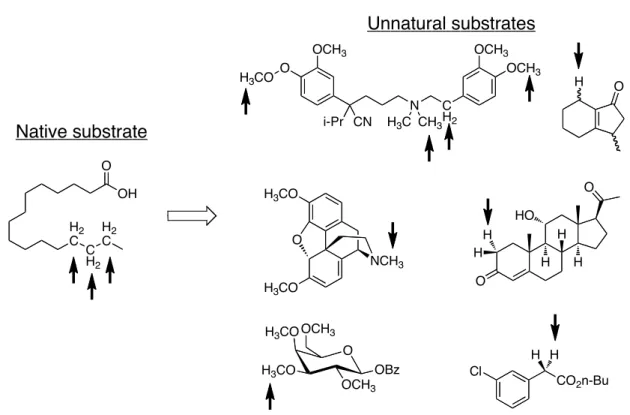
Cytochrome P450BM3 from Bacillus megaterium (BM3) has been the subject of a large number of engineering efforts.31 In this enzyme, the heme and diflavin reductase domains (FMN and FAD) are fused in a single polypeptide chain, rendering BM3 self- sufficient in generating the active oxidant from dioxygen and NAD(P)H. BM3 is soluble, readily overexpressed in a variety of heterologous hosts, and requires only atmospheric oxygen and a supply of nicotinamide adenine dinucleotide phosphate (NADPH) for monooxygenase activity. Arnold and Lewis have used directed evolution to alter the substrate scope of BM3, from long chain fatty acids to gaseous alkanes, including propane and ethane.32 Some of the intermediate mutants along the evolutionary lineage of the so-called BM3 propane monooxygenase (PMO) were found to have activity on a wide range of small organic molecules. These enzymes commonly catalyze both olefin epoxidation and C-H hydroxylation, and hydroxylation of secondary C-H bonds or those alpha to heteroatom substitution is particularly efficient. This activity has been enhanced to provide catalysts suitable for preparative scale hydroxylation of drugs, protected sugars, steroids, alkaloids, and other small molecules (figure 2). Other research groups, including those of Reetz, Schmid, and Fasan, have described the directed evolution of BM3 for hydroxylation of substrates ranging from methane to aromatic heterocycles to steroids and terpenes.29
Figure 2. A native substrate for cytochrome P450BM3 and representative substrates accepted by BM3 variants.32 Arrows denote sites of hydroxylation. Block arrow denotes engineered activity on unnatural substrates.
Cytochrome P450 CAM from Pseudomonas putida has also been engineered as an oxygenation catalyst. Hydroxylations of substrates similar to those outlined above for BM3, including terpenes, arenes, polychlorinated arenes, and even ethane, have been accomplished using CAM variants.29 Both cytochrome P450 CAM and BM3 accept small molecules (camphor and dodecanoic acid) as substrates, but significant sequence engineering effort is typically required to achieve high activity on larger substrates. In contrast, PikC, a P450 from Streptomyces venezuelae that catalyzes hydroxylation of an intermediate in the biosynthesis of the macrolactone YC-17 (22 carbon atoms),33 can also hydroxylate a range of other macrocyclic compounds. Efforts are underway to expand this reactivity and enable hydroxylation of large substrates.
N C H2 OCH3
O
OCH3 OCH3 H3CO
i-Pr CN H3C CH3
O H3CO
H3CO
OCH3 OBz OCH3
O
NCH3 H3CO
H3CO O
H H H HO H H
O
CO2n-Bu Cl
H H H O
H2 C C
H2 H2 C
OH O
Native substrate
Unnatural substrates
FAD-dependent oxygenases use an FAD hydroperoxide oxidant to catalyze oxygenation of activated substrates. Directed evolution of 2-hydroxybiphenyl 3- monooxygenase led to variants with improved activity on several substrates, including 2- sec-butylphenol, 2-methoxyphenol, and 2-tert-butylphenol (figure 3A).34 Similar efforts improved the hydroxylase activity of vanillyl-alcohol hydroxylase on cresol35 and epoxidation activity of styrene monoxygenase from Pseudomonas putida CA-3 on styrene, indene, and indole36 (figure 3B, C).
Figure 3. Native substrates and representative substrates accepted by variants of (A) 2- hydroxybiphenyl 3-monooxygenase,34 (B) vanillyl-alcohol hydroxylase,35 and (C) styrene monoxygenase from Pseudomonas putida CA-3.36
Ph OH H
R OH H
R = OMe, CHO, s-Bu, t-Bu
OMe OH H3C
OH H3C
A
B
X X = CH2 or NH
C
Native substrates Unnatural substrates
Extensive evolution of FAD-dependent Baeyer-Villiger monooxygenases,37 which catalyze the eponymous chemical reaction on a range of native carbonyl and thiocarbonyl containing substrates (figure 4A), has been reported. This work focused on improving activity and enantioselectivity on unnatural substrates, typically involving desymmetrization of prochiral ketones or kinetic resolution of racemic ketones.38 For example, cyclohexanone monooxygenase (CHMO) was engineered to oxidize 4- hydroxycyclohexanone to either enantiomer of the corresponding lactone (figure 4B), and related variants have been found to accept a wide range of substrates (figure 4C). Many of these enzymes have been employed on large scales (e.g., 200 L), including the reactions of rac-bicyclo-[3.2.0]-hept-2-en-6-one and rac-2-phenylcyclohexanone, which provide near-quantitative conversion and high enantioselectivities (E-values >100).
Similarly high enantioselectivities are possible for the resolution of a range of substituted cyclohexanones using variants of phenylacetone monooxygenase (PAMO) (figure 4D).
Figure 4. (A) General scheme for Baeyer-Villiger monooxygenase-catalyzed oxidation of carbonyl compounds. (B) Enantioselective oxidation of a meso ketone. (C) Native substrate and representative substrates accepted by variants of cyclohexanone monooxygenase. (D) Native substrate and representative substrates accepted by variants of phenylacetone monooxygenase.37-38
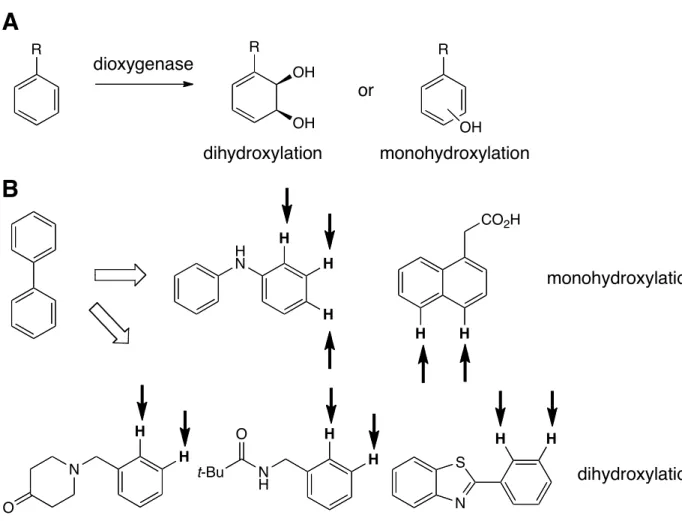
Finally, even multicomponent, nonheme iron oxygenases have been engineered by directed evolution. Mutations in the oxygenase subunit of these enzymes alter both their site selectivity and substrate scope. Various arene dioxygenases have been engineered to accept unnatural substrates in order to make useful diene diols and phenols
R1 R2
O BVMO
O2 NADPH
H2O NADP+
R1 O O
R2
O
O
H H
Cl
O
Ph
O
A
B
C
O
OH
O O
HO
O O
HO
O O OH
CHMO variant 1
CHMO variant 1
H
O O OH
H 90% ee
79% ee
O
R R = Me, Et, n-Pr, i-Pr, allyl, n-Bu, Ph, etc.
O Ph
D
dioxygenated (and in some cases monooxygenated) products of a wide range of heterocycles and arenes (figure 5B).40
Figure 5. (A) General scheme for dioxygenase catalyzed arene oxidation.39 (B) Native substrate and representative substrates accepted by variants of biphenyl dioxygenase. 40
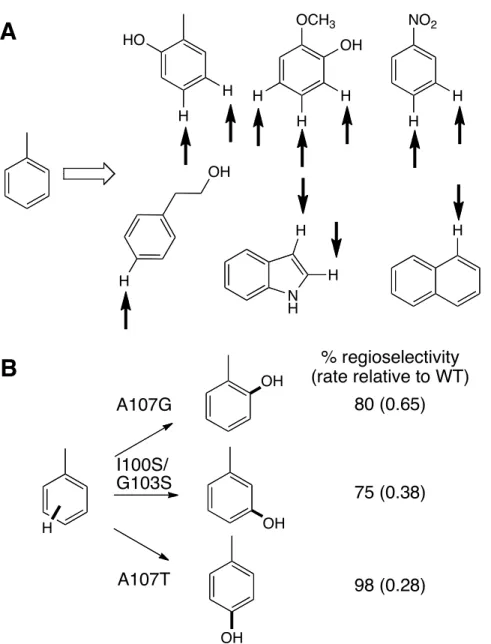
Wood and others have made extensive efforts to expand the scope of toluene and xylene monooxygenases. Variants with improved activity and altered regioselectivity on indole41 and naphthalene42 have been reported (figure 6A). Furthermore, variants of toluene p-monooxygenase from R. pickettii PKO1 are capable of hydroxylating toluene at the ortho, meta, and para positions (figure 6B).43
HN
R R
OH
OH
dioxygenase
A
H
H H
N O
CO2H
H H
H H
monohydroxylation
dihydroxylation
NH t-Bu
O H
H
or
R
OH
N S
H H
B
dihydroxylation monohydroxylation
Figure 6. (A) Native substrate and representative substrates accepted by variants of toluene and xylene monooxygenases.41-42 Sites of hydroxylation are denoted with arrows.
(B) Hydroxylation of ortho, meta, and para positions of toluene using variants of a toluene monooxygenase.43
OH OH
OH
75 (0.38)
98 (0.28) I100S/
G103S A107G
A107T
H
% regioselectivity (rate relative to WT)
80 (0.65)
OCH3 OH
OH
H
NH H
H
NO2
H H
H H
H H H
H
A
B
HO
3.2. Halogenation
Enzymatic halogenations typically involve oxidation of halide anion to an X+ (X
= halogen) equivalent that can react with electron-rich substrates. Directed evolution of heme-44 and vanadium-dependent45 haloperoxidases has improved the scope of biocatalytic halogenation. The site selectivity of halogenation reactions catalyzed by haloperoxidases has been questioned due to their release of free HOCl into solution.46 On the other hand, FAD-dependent halogenases are known to catalyze site-specific halogenation of their native substrates. Thus, Van Pee and co-workers utilized site directed mutagenesis to alter the site selectivity of tryptophan chlorination and bromination by the halogenase PrnA.47 More recently, O’Connor and co-workers engineered the halogenase RebH to act on tryptamine, rather than its native substrate, tryptophan.48
3.3. Dehydrogenation
Dehydrogenases and a variety of oxidases catalyze the oxidation of organic substrates, including amines, alcohols, and sugars, via dehydrogenation (figure 7A). The activities of these enzymes can also be reversed under suitable conditions to enable hydrogenation of unsaturated compounds (vide infra). The utility of the products of both modes of operation has motivated many successful examples of engineering these enzymes for synthetic applications.
Amino acid dehydrogenases have been engineered to convert unnatural amino acids to the corresponding imines, which subsequently undergo hydrolysis to generate
alpha-keto acids (figure 7B).49 Although not directly relevant to organic synthesis, much work has also focused on improving alcohol, sugar, and other dehydrogenases for producing reducing equivalents needed by other redox enzymes.50 Several oxidases also catalyze dehydrogenation of C-O and C-N bonds. Amino acids are also substrates for these enzymes, and directed evolution has been used to expand the range of amino acids that these enzymes accept.51 Monoamine oxidase from Aspergillus niger has been studied as a catalyst for chemo-enzymatic deracemization of amines. In this process, the oxidase converts a single enantiomer of the racemic amine to an imine, which is subsequently reduced by a nonspecific reducing agent (figure 7C).52 Directed evolution has been used to expand the scope of this enzyme from several simple primary amines to a very large range of secondary amines (figure 7D).52 In a similar fashion, galactose oxidase, which naturally oxidizes the primary alcohol of galactose to the corresponding aldehyde has been used to catalyze oxidation of secondary alcohols to the corresponding ketones, enabling kinetic resolution of the alcohol enantiomers (figure 7E).53 Directed evolution of several other pyranose oxidase enzymes has also been described.54
Figure 7. (A) General scheme for oxidase and dehydrogenase catalyzed reactions. (B) Native substrate and representative substrate accepted by a variant of phenylalanine dehydrogenase. The site of dehydrogenation is denoted by an arrow.49 (C) General scheme for oxidase catalyzed deracemization of amines.52 (D) Native substrate and representative substrates accepted by variants of a monoamine oxidase from Aspergillus niger. (E) Native substrate and representative substrates accepted by variants of a galactose oxidase. 53
3.4. Hydrogenation
As noted above, dehydrogenases can operate in “reverse” to catalyze hydrogenation of unsaturated carbon-heteroatom bonds (i.e., the reverse of figure 7A).
This direction has significant importance due to the formation, rather than destruction or resolution, of a stereogenic center. Furthermore, these enzymes possess a remarkably
OH O
NH2
OH O
NH2
OH PheDH O
variants
NAD+ H2O
NADH NH4+
O
NH2
R1 R2 NH2
monoamine oxidase variants
(selective) R1 R2 NH
R1 R2 NH2 reduction
(nonselective) R1 R2
NH2
1 : 1 +
R1 R2 NH2
+ 1 : 1
R1 R2 NH2 + 1.5 : 0.5
R1 R2 NH2
simple amines
NH HN
MeO NH2
O2N
NH2
OH NH2
* * *
* *
A
C
D
E
HO OH HO
OH OH
OH OH
OH OH
oxidase/
dehydrogenase
NAD+ H2O
NADH NH4+
R1 R2 X
X = O, NH
R1 R2 H X
H
B
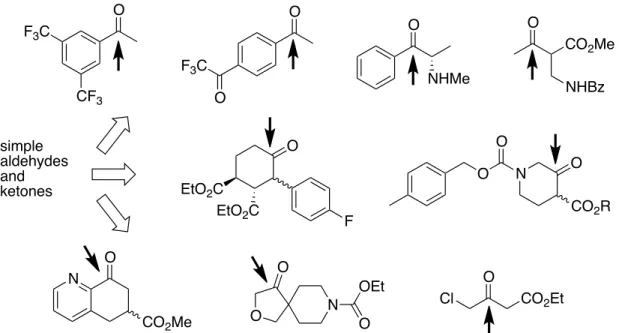
broad substrate scope. For example, the S-selective dehydrogenase from Rhodococcus erythropolis and the R-selective dehydrogenase from Lactobacillus kefir have been used extensively as ketoreductases.55 These enzymes accept a wide range of simple aldehydes and ketones as substrates for reduction and the corresponding alcohols as substrates for oxidation. In most cases a specific cognate substrate for the wild-type enzyme is not known. Despite the utility of these enzymes, the desired selectivity is not always achieved, and directed evolution has been used to achieve highly selective reduction of a wide range of ketones, including aryl ketones, α-amino ketones, cyclic ketones, and β- dicarbonyl compounds, many on a commercial scale (figure 8).55 Importantly, both product enantiomers typically can be obtained using variants of one of the two aforementioned ketoreductases. Enolate reductases have also attracted much attention due to their ability to effect stereoselective hydrogenation of β-substituted α,β- unsaturated ketones.56
Figure 8. Representative substrates accepted by ketoreductase variants. The site of
F3C
CF3 O
O F3C
O
Cl O
CO2Et O
NHMe
O
CO2Me NHBz
EtO2C EtO2C
O
F
O N
O
O CO2R
N O
CO2Me
O N
OEt O O
simple aldehydes and ketones
3.5. Group Transfers
Several different enzyme classes transfer functional groups and even entire molecular fragments from donor substrates to target substrates. Particularly notable in this regard are the pyridoxyl phosphate dependent amino transferases, also known as transaminases, which enable synthesis of chiral amines by exchanging amine and ketone functional groups on donor (typically amino acids or simple short chain alkyl amines) and acceptor substrates, respectively (figure 9A). The ω-transaminases have been the subject of the most engineering efforts due to the fact that they can accept a wide range of amine (rather than amino acid) donor substrates. These have been engineered to utilize simple amines as donor substrates with high efficiency. The reaction scope of the ketone acceptor substrate has been greatly expanded to enable the amination of a wide range of acyclic and cyclic ketones bearing a variety of functional groups (figure 9B).57 Variants capable of providing either enantiomer of the amine product have also been generated.
Perhaps most impressively, as highlighted in another section of this volume, researchers at Merck and Codexis engineered a transaminase capable of installing a chiral amine in the final step of the synthesis of the drug Sitagliptin.58
Figure 9. (A) General scheme for transaminase-catalyzed reductive amination. (B) Representative substrates accepted by transaminase variants.57-58
Glycotransferases have also benefited from directed evolution.59 These enzymes transfer single sugar moieties to a range of aglycone (i.e., small molecule) substrates (figure 10 A), and directed evolution has been used to expand the scope of aglycones that may be utilized (figure 10B/C). Glycosidases have also been used as glycotransferase catalysts. These enzymes possess transglycosidase activity in addition to hydrolytic activity, and the former has been improved through rational design of variants lacking a nucleophilic active site residue required for hydrolytic activity.60 The resulting artificial transglycosidases enable glycosylation of a range of substrates, including sugars (to generate oligosaccharides) as well as aglycones (figure 10D).
R1 R2 O
R1 R2 NH2
R3 R4 NH2
R3 R4 O transaminase,
PLP
simple aldehydes and ketones
N N N N F3C
O O
F
F F
O O F
A
B
Figure 10. (A) General scheme for glycotransferase coupling of a nucleotide diphosphate (NDP) glycosyl donor and a glycosyl acceptor (R-OH). (B) Native glycosyl acceptor and acceptors accepted by glycotransferase variants.59 (C) Native glycosyl donor and glycosyl donors accepted by glycotransferase variants.59 (D) Representative glycosylation reaction catalyzed by an artificial transglycosidase.60
Directed evolution of sulfuryl-,61 phosphoryl-,62 glutathione,63 and many other transferases has also been described. These enable highly selective tailoring of substrates
O
O O
O O
OHOMe HO NMe2 O
O O
OH
O Rn
NDP
R-OH
glycotransferase O Rn
OR
O HO
HN O OH
O
OH HO O
OH O OH
OH
O UDP OH HOHO
HO (R-OH)
O UDP HOHO
HO
O UDP SH HOHO
HO
O UDP N3 HOHO
HO O
UDP HO
HO
O UDP H2N
HO HO
A
B
C
D
O F HO OH
HO HO
O OH HOHO
HO
+ OPNP O
OH OHO
HO O OPNP HO OH
HO HO glycosidase
variant
with biologically important functional groups that are highly challenging to install using conventional synthetic methods.
3.6. Hydrolysis and Condensation
Hydrolases remain among the most commonly used enzymes in organic synthesis.
In the forward direction, these enzymes hydrolyze a range of functional groups, including esters, amides, and nitriles, and many of these enzymes can be conveniently operated in the reverse direction to enable formation of these same functional groups. Directed evolution has been applied extensively to optimize hydrolase activity in both directions.
While not all of these can be covered here, the examples presented should provide readers with an idea of how these enzymes are typically used for chemical synthesis.
Lipases, which catalyze ester hydrolysis or formation (figure 11A), were among the first enzymes to be evolved for improved organic solvent tolerance and enantioselectivity, and have received extensive attention since these early efforts.27 Engineered lipases enable efficient kinetic resolution of racemic esters and desymmetrization of meso diesters that are dramatically different, in many cases, from those accepted by the wild type enzymes. Carboxyl esterases possess very similar hydrolytic activities64 and have been engineered to improve enantioselectivity toward a range of substrates. Hydrolysis of carboxylic acid esters, including ibuprofen esters, 2- phenylalkanoic acid esters, and allene esters, has been achieved, and various alcohol leaving groups ranging from phenols to primary alcohols to tertiary alcohols can be used (figure 11B). Among the most commonly used enzymes are those from Pseudomonas
aeruginosa (PAL), Bacillus subtilis (BSLA), Candida antarctica (CALA/CALB),65 and Burkholderia cepacia (BCL).
Figure 11. (A) General scheme for lipase- and esterase-catalyzed hydrolysis reactions.
(B) Representative substrates accepted by lipase and esterase variants for either kinetic resolution or desymmetrization.64-65
Epoxides have long been recognized as valuable synthetic intermediates, and epoxide hydrolases convert these compounds to enantio-enriched diols (figure 12A).
These enzymes are typically used as catalysts for kinetic resolution of racemic epoxides, and the epoxide hydrolase from Aspergillus niger has been a frequent target of
kinetic resolution
desymmetrization n-C8H17
O OPNP
PNP = p-nitrophenyl OPNP O
OEt O
OAc O
O
F3C OAc
EtO O
OEt O
Cl Cl
OPNP O
AcO OAc
R1 O
O R2
A
B
lipase/esterase H2O
R1 O
OH + R2OH
engineering efforts (figure 12B).66 Halohydrin dehalogenases can also catalyze epoxide hydrolysis; however, these enzymes possess the added ability to resolve racemic halohydrins via epoxide formation prior to catalyzing epoxide opening with water (hydrolysis) and a range of additional nucleophiles, including azide, cyanide, and halide (figure 12C). In a particularly notable example, directed evolution improved a halohydrin dehalogenase for production of the side chain of the commercial drug atorvastatin (figure 12C, Nu = CN, R = CH2CO2Et).67 Several examples of similar efforts have been described, including engineering the halohydrin dehalogenase from Agrobacterium radiobacter for greater enantioselectivity on 2-chloro-1-phenethyl alcohol.24
Figure 12. (A) General scheme for epoxide hydrolase catalyzed reaction. (B) Representative substrates accepted by epoxide hydrolase variants.66 (C) General scheme for halohydrin dehalogenase-catalyzed addition of nucleophiles to 2-haloalcohols.68
epoxide hydrolase
H2O R
OH +
R O
OH R
O
A
B
MeO O OO O
O
O O
EtO OEt
C
Cl R
OH
Cl R
OH R
O
Nu R
OH halohydrin
dehalogenase Nu
+
3.7. Nonoxidative, Nonhydrolytic Bond Formation
Lyases catalyze nonoxidative, nonhydrolytic bond cleavage; when catalyzing the reverse direction (bond formation), these enzymes are called synthases. Perhaps among the most recognizable members of this class of enzymes to the synthetic chemist are the aldolases. Given the importance of the aldol reaction in synthetic organic chemistry, it is hardly surprising that enzymes capable of catalyzing this reaction on highly functionalized, unprotected substrates have received considerable attention. These enzymes utilize either an active site lysine (Class I aldolases) or zinc ion (Class II aldolases) to catalyze the cross aldol reaction between two carbonyl compounds (figure 13A). Directed evolution has improved the utility of these enzymes, which typically have stricter requirements on at least one of the aldol partner substrates than many of the enzymes outlined above.69
For example, many aldolases require phosphorylated substrates, which are not typically desired by synthetic chemists. Reymond and co-workers removed this requirement by evolving a L-ramulose-1-phosphate (RhaD) aldolase to accept dihydroxyacetone as a substrate, which greatly improves the enzyme’s utility (figure 13B).70 Similarly, 2-deoxyribose-5-phosphate aldolase (DERA), which naturally catalyzes the aldol reaction of acetaldehyde with D-glyceraldehyde 3-phosphate, was evolved to accept nonphosphorylated aldol acceptors.71 Because this enzyme catalyzes the aldol reaction of two aldehydes, the product can in turn function as a substrate for a second aldol reaction (figure 13C). Of course, not all aldolases require phosphorylated substrates, but expanding the substrate scope of these enzymes to include unnatural