1 | P a g e
2 | P a g e
PROCEEDING
THE FIRST INSURING SUSTAINABLE BUSINESS STRATEGY (ISBS) 2018
Managing Risk for Anticipating The Era of Volatility, Uncertainty, Complexity and Ambiguity (VUCA)
Semarang, Indonesia 15 - 16 Nopember 2018
Editor:
Prof. Hasan Fauzi, Ph.D. (Sebelas Maret University, Indonesia) Evan Lau, Ph.D. (University Malaysia Serawak, Malaysia)
Juniati Gunawan, PhD. (Trisakti University, Indonesia)
Prof. Azhar Abdul Rahman, Ph.D (University Utara Malaysia, Malaysia) Dewi Fitriasari, Ph.D, CMA. (Bina Nusantara International University, Indonesia)
Prof. Selvam D, Ph.D (VIT University, India)
Dr. Yohan Wismantoro, MM (Dian Nuswantoro University, Indonesia) Juli Ratnawati, S.E., M.Si (Dian Nuswantoro University, Indonesia)
Dr. Agus Prayitno, MM (Dian Nuswantoro University, Indonesia) Hertiana Ikasari, S.E., M.Si (Dian Nuswantoro University, Indonesia)
Usman, MT (Dian Nuswantoro University, Indonesia)
Wikan Isthika, S.E., M.Ec., Ak., CA (Dian Nuswantoro University, Indonesia)
i | P a g e
Contents
Table of
Table of Contents i
Speech from Dean ii ii
Conference program iii
Parallel Session v
ii | P a g e Foreword
On behalf of the committee of ISBS 2018 (Insuring Sustainable Business Strategy) international conference at Dian Nuswantoro University in Semarang Indonesia, we would like to express our sincere gratitude to all distinguish Rector of Dian Nuswantoro University, AAMAI president, keynote speakers, all participants and presenters, committee for the contribution to succeed the conference. The first international conference of ISBS 2018 is followed by 350 participants from academicians and professionals from Indonesia, Thailand and Taiwan. This conference is in relation with eight reputable international journals from Scopus Q1 to Q3, four national accredited journals and five SINTA (Indonesian Science and Technology Index) journals. We have been notified that some conference articles have been pre-admitted on the journals.
The sustainability issue has a broad landscape and solutions are required in a variety of areas and mechanism to attain and manage it. The domains scope from environmental sustainability over organizational and business sustainability toward social sustainability. Pertaining the tools of sustainability, the scope from traditional engineering and management methodologies toward mechanism such as knowledge, learning, and creativity. The articles in this proceeding book addresses the entire sustainability problems space in a lesser and greater extent. However, though the dynamic properties come from management, technology, learning, individuals, organizations, community and society, everything is at simultaneously getting effect and cause. We put emphasis on business with the purpose to address primarily the companies and their businesses. Therefore, we entitle this international conference as “insuring sustainable business and strategy”.
Finally, we would like to deeply thank to all parties involved in this international conference such as sponsors, media, etc.
Semarang, November 8, 2018.
Prof. Vincent Didiek Wiet Aryanto, Ph.D
Dean Faculty of Economics and Business Dian Nuswantoro University Semarang Indonesia
Speech from the Dean
Faculty of Economics and Business, Dian Nuswantoro University
Prof. Vincent Didiek Wiet Aryanto, Ph.D Dean Faculty of Economics and Business Dian Nuswantoro University, Semarang
Indonesia
iii | P a g e
CONFERENCE PROGRAM
Venue: International Conference and Call for Paper at. Gumaya Tower Hotel, Semarang, Indonesia
Workshop on International Publication at. Building H Floor 1st, Universitas Dian Nuswantoro Semarang, Indonesia
Day 1, 15 November 2018
Time Session
07.30 - 08.30 Registration and Morning Coffee Break (E-Gamelan Performance)
08.30 - 09.00 Welcoming Performance of Traditional dance, National Anthem of Indonesia 09.00 – 09.20 Welcome Greetings and Opening Remark:
Dr. Nila Tristiarini, CSRA. (Chairman of Organizing Committee)
Dr. Hendrisman Rahim, MA, FSAI, AAIJ, AMRP, CPIE, QIP (Chairman of The Indonesian Insurance Institute -AAMAI)
Prof. Dr. Ir. Edi Noersasongko (Rector of Universitas Dian Nuswantoro)
09.20 - 09.40 Keynote Speech:
Ahmad Nasrullah, S.E., MPacc (Director Of Insurance and Social Insurance Administration Organization of Health (BPJS Kesehatan) Supervisory II – Financial Services Authority (OJK))
Token of Appreciation for Keynote Speaker 09.40 – 10.00 Gita Dian Nuswa Choir Performance 10.00 - 12.00 Conference:
Session 1 (Moderator: Setyo Prasiyanto Cahyono, SS., M.Pd)
1. Prof. Yahn-Shir Chen, Ph.D (National Yunllin University of Science & Technology Taiwan)
2. Dr. Hendrisman Rahim, MA, FSAI, AAIJ, AMRP, CPIE, QIP (Chairman of The Indonesian Insurance Institute -AAMAI) 3. I Wayan Wijana (Deputy Director of Insurance Supervision I –
Financial Services Authority (OJK)) Session 2 (Moderator: Juli Ratnawati, S.E., M.Si)
1. Evan Lau, Ph.D (University Malaysia Serawak, Malaysia)
2. Prof. Hasan Fauzi, Ph.D, CA., CSRA. (Universitas Sebelas Maret Surakarta, Indonesia)
3. Dr. Nilmanee Sriboon (Thammasat University, Thailand 12.00 – 12.15 Token of Appreciation for Speakers
12.15 - 13.30 Photo Session & Lunch Break
13.30 – 15.30 15.30 – 16.00 16.00 – 18.00
Academia: (Meeting Room on the 6th floor) Parallel Session 1
Afternoon Coffee Break Parallel Session 2
iv | P a g e
13.30 - 17.00 Insurance Industry: (Ballroom) Parallel Session
1. Joel Richard Hogart (Reliance Capital Management) 2. Stephen Francis Bowey (Leapfrog Investment)
3. Dr. Robby Loho, APAI, CIIB, AAIK, QIP, ICBU, ICPU, CPIE, AMRP, FMII, ANZIIF (SNR.ASSOC), CIP (Vice Chairman of The Indonesian Insurance Institute-AAMAI)
4. Kevin Tan (The Malaysian Insurance Institute - AMII) Moderator: Drs. Arizal E.R, AAINZ, QPI, AAIK, QIP
17.00 – 18.00 Afternoon Coffee Break & Distributing Certificate 19.00 – 22.00 Gala Dinner
Gala Dinner, 15 November 2018 19.00 – 19.30 Registration 19.00 – 19.30 Band Performance 19.30 – 19.40 Welcome greeting:
Prof. Vincent Didiek Wiet Aryanto, Ph.D, MBA (Dean of Faculty of Economic and Business, Universitas Dian Nuswantoro)
19.40 – 20.00 Speech:
Dr. Robby Loho, APAI, CIIB, AAIK, QIP, ICBU, ICPU, CPIE, AMRP, FMII, ANZIIF (SNR.ASSOC), CIP (Vice Chairman of The Indonesian Insurance Institute – AAMAI)
20.00 – 20.15 E-Gamelan & Traditional Dance
20.15 – 20.30 Best Paper Award Announcement (3 best papers) 20.30 – 22.00 Performance/ Entertainment
22.00 Closing
Workshop on International Publication & City Tour
Building H, 1st Floor Day 2, 16 November 2018
Time Session
08.00 –08.30 Registration and Morning Coffee Break 08.30 – 11.30 Workshop:
How to Get Published in a Reputable Journal: Top Tips From Editors in Chief (Evan Lau, Ph.D, University Malaysia Serawak, Malaysia) 11.30 - 13.30 Lunch Break
13.30 – 15.00 15.00 – 16.00 16.00 – 17.00 17.00 – 17.30
City Tour :
Semarang’s batik (Javanese handwritten cloth) heritage (Kampung Batik Semarang)
Sam Po Kong Temple
Semarang food Shopping Centre (Bandeng Juwana) at Pamularsih Street Lawang Sewu
v | P a g e
PARALLEL SESSION 1
Session: Marketing Management and Behavior and E- Business Date: 15 November 2018
Time: 13.30 – 14.10 Room: Ruby 1
Chair: Dr. Yohan Wismantoro, MM (Universitas Dian Nuswantoro)
PAGE
1
Bugis Consumers’ Decision Making Process Based on Religiosity in Indonesia
Kasnaeny Karim, STIM Nitro Makassar, Indonesia 1
Muhammad Jibril Tajibu, Hasanuddin University, Indonesia
2
Relationship Marketing Model on BTPN Wow Product Marketing and Its Effect towards Customer Satisfaction and Loyalty
Siti Fatonah, STIE Adi Unggul Bhirawa, Surakarta, Indonesia 2
Cahyani Tunggal Sari, STIE Adi Unggul Bhirawa, Surakarta, Indonesia
3
Customized Relational Quality: A Systematic Review Mukson, Muhadi Setiabudi University, Indonesia 3
Roby Setiadi,Muhadi Setiabudi University, Indonesia Waddle,Muhadi Setiabudi University, Indonesia
4
IMPACT CORPORATE BRAND ON CONSUMER LOYALTY Mateus Radiman, Universitas Dian Nuswantoro, Indonesia 4
Yohan Wismantoro, Universitas Dian Nuswantoro, Indonesia
vi | P a g e
Session: Marketing Management and Behavior and E- Business Date: 15 November 2018
Time: 14.20 – 15.10 Room: Ruby 1
Chair: Dr. Yohan Wismantoro, MM (Universitas Dian Nuswantoro)
PAGE
1
The Influence Of Social Media And Word Of Mouth Power On The Branding Image Of Tuquoise Organizer
Teguh Sriwidadi, Bina Nusantara University, Indonesia 5 Hartiwi Prabowo, Bina Nusantara University, Indonesia Ngatindriatun, Bina Nusantara University, Indonesia Aries Wicaksono, Bina Nusantara University, Indonesia
2
EVALUATION OF ORGANIZATIONAL ADAPTABILITY AND SOCIAL MEDIA MARKETING
Roby Setiadi, Muhadi Setiabudi University, Indonesia 6 Mukson, Muhadi Setiabudi University, Indonesia Wadli, Muhadi Setiabudi University, Indonesia
3
Increase the impact of the usage of information technology on business
value 7
Agus Prayitno, Universitas Dian Nuswantoro, Indonesia
4
Study on the Influence of Work Environment & Work Engagement Moderated by Work Family Conflict to TurnOver Intension in IT Integration System company
Franciscus Xaverius Wahyu Arif Wibawa, Bina Nusantara University, Indonesia 8 Deny Setiaji Nursidiq, Bina Nusantara University, Indonesia
Ricky Tan, Bina Nusantara University, Indonesia
Meilani Hartono, Bina Nusantara University, Indonesia
5
COSTUMER SATISFACTION IN HIGHER EDUCATION (The Study on Private Universities in Central Java Indonesia)
Santi Inderawati, Universitas Dian Nuswantoro, Indonesia 9 Yohan Wismantoro, Universitas Dian Nuswantoro, Indonesia
vii | P a g e
Session: Corporate Governance Date: 15 November2018
Time: 13.30 –14.20 Room: Ruby 2
Chair: Vinko Satrio Pekerti, S.E., MBA (Universitas Dian Nuswantoro)
PAGE
1
Why Do Firms Separate Their Business Accounts From HouseHold Accounts? A-Family-Based Explanation
Ronny Prabowo, Universitas Kristen SatyaWacana, Indonesia 10 Like Soegiono, Universitas Kristen SatyaWacana, Indonesia
Ika Kristianti, Universitas Kristen SatyaWacana, Indonesia
Aprina Nugrahesty SH, Universitas Kristen SatyaWacana, Indonesia
2
Family Ownership and Tax Avoidance: An Analysis throughForeign Related Party Transactions and Dividends
Nuritomo, UniversitasAtma Jaya Yogyakarta, Indonesia 11 SidhartaUtama, Universitas Indonesia, Indonesia Ancella A Hermawan, Universitas Indonesia, Indonesia
3
The Effect of Agency Problems on Cost Stickiness in the Banking Industry: The Role of the Board of Commissioners and the Audit Committee Effectiveness
Miranti, Universitas Indonesia, Indonesia 12
AncellaAnitawatiHermawan, Universitas Indonesia, Indonesia
4
Do the Characteristics of Audit Committee and Independent Commissioners Reduce Earning Management? Evidence-based on Indonesia Stock Exchange (IDX)
Enny Susilowati Mardjono, National Yunlin University of Science and 13 Technology,Taiwan
Yahn Shir Chen, National Yunlin University of Science and Technology, Taiwan Li Jen He, National Yunlin University of Science and Technology, Taiwan
5
The Effect Of Corporate Social Responsibility Performance, Board Of Commissioners Effectiveness, And Women On The Board Of
Commissioners Towards Ceo Turnover 14
Bulan DwiUtami, Universitas Indonesia, Indonesia
Ancella Anitawati Hermawan,Universitas Indonesia, Indonesia
viii | P a g e
Session: Corporate Governance & Risk Management Date: 15 November2018
Time: 14.30 –15.20 Room: Ruby 2
Chair: Vinko Satrio Pekerti, S.E., MBA (Universitas Dian Nuswantoro)
PAGE 1
AUDIT COMMITTEE EFFECTIVENESS, INTEGRATED REPORTING QUALITY, AND FIRM RISK
Rita Sugiarti, Universitas Indonesia, Indonesia 15
Ancella Anitawati Hermawan, Universitas Indonesia, Indonesia
2
Board of Directors Effectiveness, Voluntary Integrated Reporting and Cost of Equity: Evidence from OECD Countries Mira Falatifah, Universitas Indonesia, Indonesia 16
Ancella Anitawati Hermawan, Universitas Indonesia, Indonesia
3
THE INFLUENCES OF GOOD PUBLIC GOVERNANCE ON TRUST IN GOVERNMENT IN INDONESIAN NON FINANCIAL
PUBLIC COMPANIES 17
Meco Sitardja, Universitas Agung Podomoro, Indonesia Lin Oktris, Universitas Trisakti, Indonesia
4
The Effect of Tax Risk, Hedging, Income Smoothing, and Cash Flows Volatility on Firm Value
Tria Novianti, Polytechnic of State Finance STAN, Indonesia 18 Amrie Firmansyah, Polytechnic of State Finance STAN, Indonesia
5
Do Young, Female, and Experienced Characteristics of Risk Oversight Committee Members Accommodate Bank Risk-
Taking? Evidence from Indonesia 19
Aulia Natasya Irfani Ampri, Universitas Indonesia, Indonesia Ancella Anitawati Hermawan,Universitas Indonesia, Indonesia
ix | P a g e
Session: Corporate Social Responsibility Date: 15 November2018
Time: 13.30 –14.20 Room: Saphire
Chair: Usman, MT (Universitas Dian Nuswantoro)
PAGE
1
Corporate Social Responsibility Model: A Creation to Sustainable Development in Indonesian Batik Wax-Painting Craft-Based Textile Cluster
Farida Naili, Universitas Diponegoro, Indonesia 20
Vincent Didiek Wiet Aryanto, Universitas Dian Nuswantoro, Indonesia
2
The Future of Integrated Reporting in an Emerging Market:
Analysis of the Disclosure Readiness Level Desi Adhariani, Universitas Indonesia, Indonesia 21 Sylvia Veronica, Universitas Indonesia, Indonesia
3
The External and Internal Economic Impact of Eco-Innovation: Evidence from Indonesia
Gracezelda Latupeirissa, Universitas Indonesia, Indonesia 22 Desi Adhariani, Universitas Indonesia, Indonesia
4
The Effect Of Income Smoothing, Forward-Looking Disclosure, And Corporate Social Responsibility On Information Uncertainty Andry Irwanto, Polytechnic of State Finance STAN, Indonesia 23
Amrie Firmansyah, Polytechnic of State Finance STAN, Indonesia
5
THE INFLUENCES OF CORPORATE GOVERNANCE ON CARBON DISCLOSURE
Lin Oktris, Universitas Trisakti, Indonesia 24
Meco Sitardja, Universitas Agung Podomoro, Indonesia
x | P a g e
Session: Corporate Social Responsibility & Green Managemet Date: 15 November2018
Time: 14.30 –15.20 Room: Saphire
Chair: Usman, MT (Universitas Dian Nuswantoro)
PAGE
1
Board Of Directors' Confidence And Corporate Social Responsibility
Taufan Bahtera, Universitas Indonesia, Indonesia 25
Sylvia Veronica Siregar, Universitas Indonesia, Indonesia
2 CSR: Expenses Or Benefits For Corporation
Etty Indriani, Sekolah Tinggi Ilmu Ekonomi AUB, Indonesia 26
3
Analysis CSR And Environmental Performance Report On Financial Performance: An Empirical Study For PROPER Ranking Manufacturing In Indonesia
Hendro Lukman, Tarumanagara University, Indonesia 27 Rousilita Suhendah, Tarumanagara University, Indonesia Jesica Evania, Pricewaterhouse Coopers Indonesia
4
Core Option Vs Comprehensive Option: Which One Is Better?
Astrid Rudyanto, Trisakti School of Management, Indonesia 28 Linda Wimelda, Trisakti School of Management, Indonesia
5
An Investigation of Greenhouse Effect : Commitment to Disclosure Gas Emissions Reporting in Central Java
Kiryanto, Universitas Islam Sultan Agung, Indonesia 29 Winarsih, Universitas Islam Sultan Agung, Indonesia
Devi Permatasari, Universitas Islam Sultan Agung, Indonesia
xi | P a g e
Session: Corporate Social Responsibility & Green Managemet Date: 15 November2018
Time: 15.30 –16.00 Room: Saphire
Chair: Usman, MT (Universitas Dian Nuswantoro)
PAGE 1 The Shape of Water: Analysis of Corporate Water Disclosures in Indonesia
Desi Adhariani, Universitas Indonesia, Indonesia 30
2
Detect Tax Avoidance Improvement Through CSR Cost on Firm Value
Nila Tristiarini, Universitas Dian Nuswantoro, Indonesia 31 Hayu Wikan Kinasih, Universitas Dian Nuswantoro, Indonesia Melati Oktafiyani, Universitas Dian Nuswantoro, Indonesia
3 The Effect of Sustainability Practices based on Sustainable Development Goals (SDGs) to Firm Performance
Fadilla Primaria Dewi, Universitas Indonesia, Indonesia 32 Ratna Wardhani, Universitas Indonesia, Indonesia
xii | P a g e
Session: Sustainability Accounting Date: 15 November 2018
Time: 13.30 –14.10 Room: Emerald
Chair: Juli Ratnawati, M.Si (Universitas Dian Nuswantoro)
PAGE
1
Financial Performance on Firm Value: Exchange Rates as Moderating (Empirical Study of Companies on Indonesia Stock Exchange)
33
Yulita Setiawanta, Universitas Dian Nuswantoro, Indonesia Agus Purwanto, Universitas Diponegoro, Indonesia
Luluk Muhimatul Ifada, Universitas Islam Sultan Agung, Indonesia Much. Azizum Hakim, Universitas Dian Nuswantoro, Indonesia
2
Strategy to Minimize Non Performing Financing in Sharia Commercial Banks
34 Maya Indriastuti, Universitas Islam Sultan Agung, Indonesia
Indri Kartika, Universitas Islam Sultan Agung, Indonesia
3
THE EFFECT OF FINANCIAL DERIVATIVES, FINANCIAL LEVERAGE AND INTANGIBLE ASSETS ON TRANSFER PRICING AGGRESSIVENESS
35
Artikayara Yunidar, Polytechnic of State Finance STAN, Indonesia Amrie Firmansyah, Polytechnic of State Finance STAN, Indonesia
4
Corporate Earnings Management Post-Implementation of Thin Capitalization Rule in Indonesia
36 Akbar Saputra, Polytechnic of State Finance STAN, Indonesia
Dyah Purwanti,Polytechnic of State Finance STAN, Indonesia
xiii | P a g e
Session: Sustainability Accounting, Fraud Detection, & Corporate Finance Date: 15 November 2018
Time: 14.20 –15.10 Room: Emerald
Chair: Juli Ratnawati, M.Si (Universitas Dian Nuswantoro)
PAGE 1 RELATED PARTY TRANSACTIONS, SOCIAL
RESPONSIBILITIES, EARNINGS MANAGEMENT ON FIRM’S VALUE: EVIDENCE FROM INDONESIA
37
Aji Kusumo Ardi, Polytechnic of State Finance STAN, Indonesia Amrie Firmansyah, Polytechnic of State Finance STAN, Indonesia
2 Analysis of Individual Investor Behavior at Stock Market Study Group Member of University In Surakarta using Analytical Hierarchy Process Method (AHP)
38
Cahyani Tunggal Sari, STIE Adi Unggul Bhirawa, Indonesia
Bernadeta Anindya Nandi Wardhani, STIE Adi Unggul Bhirawa, Indonesia
3 The Relationship between Psychopathy and Acts of Fraud on Accounting Students in Indonesia
39
Agung Sutrisna, Universitas Indonesia, Indonesia Dodik Siswantoro, Universitas Indonesia, Indonesia
4
The Effect Moderating Managerial Ownership On Audit Quality
And Auditor Switching To Fraudulent Financial Statement 40 St. Dwiarso Utomo, Universitas Dian Nuswantoro, Indonesia
Imang Dapit Pamungkas, Universitas Pekalongan, Indonesia
5 THE EFFECT OF TAX AVOIDANCE, IFRS ADOPTION ON EARNINGS PERSISTENCE AND ACCRUALS PERSISTENCE
41 Silmiana Nisa Fadila, Polytechnic of State Finance STAN, Indonesia
Amrie Firmansyah, Polytechnic of State Finance STAN, Indonesia
xiv | P a g e
Session: Corporate Finance Date: 15 November 2018 Time: 15.20 –16.00 Room: Emerald
Chair: Juli Ratnawati, M.Si (Universitas Dian Nuswantoro)
PAGE 1 Working Capital Management, Financial Ratios and Pofitability
in Food and Beverages Companies were Listed on the IDX 42 Ririh Dian Pratiwi, Universitas Dian Nuswantoro, Indonesia
Dzulfika Putera Dualapahi, Universitas Dian Nuswantoro, Indonesia St. Dwiarso Utomo, Universitas Dian Nuswantoro, Indonesia
2 Company Attributes And Firm Value: Evidence From Companies Listed On Jakarta Islamic Index
43 Luluk Muhimatul Ifada, Universitas Islam Sultan Agung, Indonesia
Faisal, Universitas Diponegoro, Indonesia
Yulita Setiawanta, Universitas Dian Nuswantoro, Indonesia
3 The Causality of Monetary Policy, Economic Growth and Stock Price Index In Financial Sector Indonesia Stock Exchange
44 Herry Subagyo, Dian Nuswantoro University, Indonesia
Dian Prawitasari, Dian Nuswantoro University, Indonesia Ana Kadarningsih, Dian Nuswantoro University, Indonesia
4 Family Owned Firms Decision Making in Preserving Socioemotional Wealth
45 Melati Oktafiyani, Universitas Dian Nuswantoro, Indonesia
Anis Chariri, Universitas Diponegoro, Indonesia Fuad, Universitas Diponegoro, Indonesia
xv | P a g e
PARALLEL SESSION 2
Session: Risk Management and Insurance Date: 15 November 2018
Time: 16.00 –16.50 Room: Ruby 1
Chair: Dr. Amron (Universitas Dian Nuswantoro)
PAGE 1 Model Development of Insurance Guarantee Funding in Indonesia
Toward Robust and Sustainable Insurance BusinessesToward Robust and Sustainable Insurance Businesses
46
Handayani, Universitas Gunadarma
E. Susy Suhendra, Universitas Gunadarma Lana Sularto, Universitas Gunadarma
2 The Effects of Proportion of Female Directors, Firm Size, and Net Premium to Financial Performance in General Insurance Firms with Ownership as Moderator Variable Period 2011-2015
47
Vincentia Sylvy Setiawan, PT. MNC Asuransi Indonesia Sudaryanto, Universitas Gunadarma
E.S Margianti, Universitas Gunadarma
3 FACTORS THAT INFLUENCE INTENTION OF THE COMMUNITY AS A LIFE INSURANCE AGENT IN INDONESIA
48
Dwi Yanto, Universitas Gunadarma
4 Determinants and Impact of Risk-Based Capital on Financial Performance of Life Insurance Companies in Indonesia: A Preliminary Study
49
Toto Sugiharto, Universitas Gunadarma, Indonesia
Hendrisman Rahim, Indonesia Insurance Institute, Indonesia H. M. Imam Basuki, Indonesia Insurance Institute, Indonesia Novita Sulistiowati,Universitas Gunadarma, Indonesia
Rina Nofiyanti, Universitas Gunadarma, Indonesia
xvi | P a g e
Session: Risk Management and Insurance Date: 15 November 2018
Time: 17.00 –18.00 Room: Ruby 1
Chair: Dr. Amron (Universitas Dian Nuswantoro)
PAGE 1 The Affecting Intentions Factors of Small Business Actors in Jakarta to
Become Participants in National Health SecurityBPJS Program
50
Kasir Iskandar, PT KATSIR IMAM SAPTO SEJAHTERA AKTUARIA Nopirin, Universitas Gunadarma, Indonesia
Toto Sugiharto, Universitas Gunadarma, Indonesia
2 The Impacts of Capital and Operational Performance Towards Financial Performance of Insurance Industry in Indonesia Through Debt Equity Ratio and Good Corporate Governance Mediators
51
Robby Loho, PT Maskapai Reasuransi Indonesia Tbk, Indonesia Nopirin, Universitas Gunadarma, Indonesia
Sudaryanto M., Universitas Gunadarma,Indonesia
3 THE IMPACTS OF COMPANY INCOME AND COMPANY OUTCOME TOWARDS INSURANCE PENETRATION WITH COMPANY’S OWN RETENTION AS MEDIATOR IN INSURANCE COMPANIES IN INDONESIA
52
Suhartono, Universitas Gunadarma, Indonesia
4 The Influence of Customer Satisfaction on Word of Mouth (WOM) with Price and Service Quality as Antecedent in General Sharia Insurance Product
53
Amron, Universitas Dian Nuswantoro, Indonesia
Imam Basuki, The Indonesian Insurance Institute, Indonesia Prihantoro, Universitas Gunadarma, Indonesia
Ate Sumarna, The Indonesian Insurance Institute, Indonesia
5 The Effect of Underwriting on Profitability through Premium Incomes, Technical Reserves and Investments in the General Insurance Companies in Indonesia
54
Muh Imam Basuki, Universitas Gunadarma, Indonesia Susy Suhendra, Universitas Gunadarma, Indonesia AdiKuswanto, Universitas Gunadarma, Indonesia
xvii | P a g e
Session: Sustainability Small Medium Enterprises Date: 15 November 2018
Time: 16.00 – 16.50 Room: Ruby 2
Chair: Hertiana Ikasari, S.E., MM (Universitas Dian Nuswantoro)
PAGE 1
Indonesian Ex-Migrant Workers: Triple Bottom Line Perspectives
Analysis 55
Sri Wahjuni Latifah, Universitas Muhammadiyah Malang, Indonesia Agung Riyardi, Universitas Muhammadiyah Surakarta, Indonesia
2 Readiness Assesment Modelfor Creative Industries in Improving Competitiveness in Central Java
56
Winarsih, Universitas Islam Sultan Agung, Indonesia Hendar, Universitas Islam Sultan Agung, Indonesia
3 Online Peer-to-Peer Lending as Alternative Funding Source for
Indonesian SME (Case Study: A Bottled Water Manufacturer) 57 Eunice Shertaria Bangun, Universitas Indonesia, Indonesia
Ancella Anitawati Hermawan, Universitas Indonesia, Indonesia
4 Service Quality (The Flower Of Service) SMEs In Indonesia 58 Imam Nuryanto, Universitas Dian Nuswantoro, Indonesia
Ida Farida, Universitas Dian Nuswantoro, Indonesia
5 Dissecting Position Strategy Using SPACE Matrix to Improve the
Performance of MSME 59
Guruh Taufan Hariyadi, Universitas Dian Nuswantoro, Indonesia Enny Susilowati Mardjono, National Yunlin University of Science and Technology, Taiwan
xviii | P a g e
Session: Sustainability Small Medium Enterprises & Climate Change and Change Management
Date: 15 November 2018 Time: 17.00 – 18.00 Room: Ruby 2
Chair: Hertiana Ikasari, S.E., MM (Universitas Dian Nuswantoro)
PAGE 1 Model and Characteristics of Islamic Micro Finance
Performance in the Perspective of Maqashid Syariah in Indonesia
60
Titik Inayati, Wijaya Kusuma Surabaya University, Indonesia
2 Escalation Of Commitment And The Sustainability Of Small Medium Enterprises
61
Nurchayati, Universitas Kristen Satya Wacana, Indonesia Supramono, Universitas Kristen Satya Wacana, Indonesia Intiyas Utami, Universitas Kristen Satya Wacana, Indonesia Hari Sunarto, Universitas Kristen Satya Wacana, Indonesia
3 DYNAMIC COMPETITIVENESS OF INDONESIAN COMMODITY IN MAJOR EXPORT DESTINATION
62
Hertiana Ikasari, Universitas Dian Nuswantoro, Indonesia
4 Technology Marketing Ethics: An Empirical Review of Social
Marketing on Climate Change 63
Yohan Wismantoro, Universitas Dian Nuswantoro, Indonesia
Vincent Didiek Wiet Aryanto, Universitas Dian Nuswantoro, Indonesia Pulung Nurtantyo Andono, Universitas Dian Nuswantoro, Indonesia 5 Lack of Studies on Post Implementation of Halal Supply Chain:
A Literature Survey
64 Usman, Universitas Dian Nuswantoro, Indonesia
xix | P a g e
Session: Human Behavior and Organization Date: 15 November 2018
Time: 16.30 – 17.00 Room: Saphire
Chair: Dr. Sih Darmi (Universitas Dian Nuswantoro)
PAGE 1 The Effect of Participatory budgeting on Managerial
Performance with Organizational Commitment, Organizational Culture, Innovation Perception being the Moderating Variables
65
Saripudin, Universitas Indonesia, Indonesia
Dodik Siswantoro, Universitas Indonesia, Indonesia
2 Women Empowering, Food Security And Proverty Alleviation 66 Rachman Hakim, Madura University, Indonesia
Tri Haryanto, Airlangga University, Indonesia Dyah Wulansari, Airlangga University, Indonesia M. Amir Furqon, Madura University, Indonesia Taufikurrahman, Madura University, Indonesia
3 Impact Of Motivation on Teacher's Peformance Through Job
Satisfaction And Organizational Commitment 67 Kusni Ingsih, Dian Nuswantoro University, Indonesia
Juli Ratnawati, Dian Nuswantoro University, Indonesia Imam Nuryanto, Dian Nuswantoro University, Indonesia Sih Darmi Astuti, Dian Nuswantoro University, Indonesia
xx | P a g e
Session: Human Behavior and Organization Date: 15 November 2018
Time: 17.10 – 18.00 Room: Saphire
Chair: Dr. Sih Darmi (Universitas Dian Nuswantoro)
PAGE 1 Supply Chain Of Service Capability And Its Impact On Business
Performance
68
Etty Indriani, Sekolah Tinggi Ilmu Ekonomi Adi Unggul Bhirawa, Indonesia I Gusti Putu Diva Awatara, Sekolah Tinggi Ilmu Ekonomi Adi Unggul
Bhirawa, Indonesia
2 EFFECT OF WORK MOTIVATION ON EMPLOYEE PERFORMANCE (STUDY ON FRONTLINER EMPLOYEE OF BANK BRI, BNI, AND BJB OF JABODETABEK AREA)
69
Agnessia, Bina Nusantara Business School, Indonesia
Amanda Dyla Pramadanti, Bina Nusantara Business School, Indonesia 3 THE INFLUENCE OF THE WORK DISCIPLINE,
COMMUNICATION,COMPENSATION AND LEADERSHIP ON TEACHER PERFORMANCE OF NASIMA ISLAMIC EDUCATION FOUNDATION IN SEMARANG
70
Bonita Rahardiyanti, Universitas Dian Nuswantoro, Indonesia Kusni Ingsih, Universitas Dian Nuswantoro, Indonesia
4 The Effectiveness of Leadership and Percived Performance in Sport Organization Affected Spectator’s Royalty: Case Study Suanlum Night Bazaar Rachadaphisek’s Boxing Stadium at Bangkok Thailand
71
Wassana Bootpo, Ramkhamheng University, Bangkok, Thailand Wisit Rittiboonchai, Nakhon Pathom Rajabhat University, Thailand Ana Kadarningsih, Dian Nuswantoro University, Indonesia
xxi | P a g e
Session: Corporate Governance & Risk Management Date: 15 November2018
Time: 16.00 –17.00 Room: Emerald
Chair: Vinko Satrio Pekerti, S.E., MBA (Universitas Dian Nuswantoro)
PAGE 1 Probability of Financial Statement Fraud Based on Corporate
Governance Components 72
Kinanti Eka Putri, Universitas Indonesia, Indonesia Nurul Husnah, Universitas Indonesia, Indonesia
2 Analysis Of EnterpriseRisk Management (ERM) Implementation in Supporting Firm Performance(Case Studi in Astra Group)
73
Devina Gabriela, Universitas Indonesia, Indonesia Ancella A. Hermawan, Universitas Indonesia, Indonesia
3 THE EFFECT OF CORPORATE GOVERNANCE MECHANISM AND CAPITAL STRUCTURE ON RISK MANAGEMENT DISCLOSURE AT RETAIL COMPANY IN INDONESIA STOCK EXCHANGE PERIOD 2015-2017
74
Agatha Fiona Asri Dewanti, Bina Nusantara University, Indonesia ASL Lindawati, Bina Nusantara University, Indonesia
4 The Effect of Characteristics and Overlap Membership of Risk
Oversight Committee on Banking Credit Risk in Indonesia 75 Utami Ratnasari, Universitas Indonesia, Indonesia
Ancella Anitawati Hermawan,Universitas Indonesia, Indonesia
5 Gaining Corporate Financial Performance through Corporate Environmental Disclosure, Corporate Governance Mechanism, and Earnings Management
76
ZAKY MACHMUDDAH,Universitas Dian Nuswantoro, Indonesia RIANA SITAWATI, Dharmaputra Economics Institute, Indonesia St. DWIARSO UTOMO, Universitas Dian Nuswantoro, Indonesia
xxii | P a g e
Session: Marketing Management and Behavior & Financial Technology Date: 15 November 2018
Time: 17.10 – 18.00 Room: Emerald
Chair: Dr. Yohan Wismantoro, MM (Universitas Dian Nuswantoro)
PAGE 1 UTILIZATION OF SOCIAL MEDIA MARKETING AND
CUSTOMIZED RELATIONAL QUALITY: AN EMPIRICAL STUDY IN THE HOSPITALITY INDUSTRY IN JAKARTA
77
Roby Setiadi, Muhadi Setiabudi University, Indonesia
2 Improved Marketing Performance ThroughThe Ability to
Isolate Product Marketing and Innovation Capabilities 78 Mahmud, Universitas Dian Nuswantoro, Indonesia
Vincent Didiek Wiet Aryanto, Universitas Dian Nuswantoro, Indonesia
3 Measuring MSEs’s Literacy on Banking Products and Digital Financial Services
79 MG Westri Kekalih Susilowati, Soegijapranata Catholic Univesity,
Indonesia
4 INFORMATION QUALITY AND INTERACTION AS A FACTOR
AFFECTING CONSUMER TRUST IN ONLINE TRANSACTION 80 Tety Elida, Gunadarma University, Indonesia
Wahyu Rahardjo, Gunadarma University, Indonesia Ari Raharjo, Gunadarma University, Indonesia Edi Sukirman, Gunadarma University, Indonesia
5 ADAPTATION MARKETING STRATEGY, DYNAMIC CAPABILITY, TECHNO BRAND ADVANTAGE: A CONCEPTUAL APPROACH TO PROMOTE MARKETING PERFORMANCE
81
Ivonne Angelic Umboh, Universitas Katolik De La Salle, Indonesia Mahmud, Universitas Dian Nuswantoro, Indonesia
Vincent Didiek Wiet Aryanto, Universitas Dian Nuswantoro 6 Customer Perspective by Integrating Kano Model and
Quality Function Deployment Method 82
Agung Sedayu, Universitas Dian Nuswantoro, Indonesia
Rahmat Budi Santoso, Universitas Dian Nuswantoro, Indonesia
56
Readiness AssesmentModelfor CreativeIndustries in Improving Competitiveness in Central Java
Winarsih1, Hendar2
1,2Akuntansi, Fakultas Ekonomi Unissula, Semarang, Indonesia [email protected],[email protected]
Abstract
The contribution of the creative industry to the economy in Indonesia is without doubt. however the seriousness of the government in developing creative industries is being questioned, especially in terms of competitiveness, therefore the Readiness Assessment Scorecard is offered to measure the extent to which the readiness of the creative industry has a competitive advantage. With a specific measurement model of competitive advantage, it will facilitate both intellectuals, business people and the government in carrying out its role in developing the creative industry.This study aims to investigate the readiness factors of competitive advantage as a determinant of success in facing competition as well as developing measurement models and its scorecards. The resulting scorecard is used to measure readiness to create a comprehensive competitive advantage (multilevel perspective).The population in this study are creative industry players in the centers of creative industries in Central Java. Measurement of readiness assessment as a competitive advantage that is carried out comprehensively and periodically can provide technical and strategic advantages. Besides being able to be used to measure the strength or weakness of certain dimensions, it can also be used for continuous improvement. In addition, to optimize the efficiency and effectiveness of the process, knowledge transfer between creative industries is highly encouraged.The results of the literature study are four variables to measure the readiness of information technology to improve competitiveness, namely optimism, inconvenience, innovativeness and security. Data was collected by using survey method with questionnaire and analyzed using AMOS software. In general, the research findings indicate that SMEs in creative industries in Central Java have readiness to adopt IT. However, the research findings also indicate that perceptions of discomfort and insecurity are key issues that could potentially hamper IT adoption by SMEs creative industries in Central Java
Keywords: Readiness Assessment Scorecard, Technology Readiness Index, competitive advantage.
Readiness Assesment Model for Creative Industries in Improving Competitiveness in Central Java
Winarsih1, Hendar2
1. Akuntansi, Fakultas Ekonomi Unissula, Semarang, Indonesia 2. Manajemen,Fakultas Ekonomi,Unissula, Semarang, Indonesia
[email protected], [email protected]
Abstract
The contribution of the creative industry to the economy in Indonesia is without doubt. however the seriousness of the government in developing creative industries is being questioned, especially in terms of competitiveness, therefore the Readiness Assessment Scorecard is offered to measure the extent to which the readiness of the creative industry has a competitive advantage. With a specific measurement model of competitive advantage, it will facilitate both intellectuals, business people and the government in carrying out its role in developing the creative industry.
This study aims to investigate the readiness factors of competitive advantage as a determinant of success in facing competition as well as developing measurement models and its scorecards. The resulting scorecard is used to measure readiness to create a comprehensive competitive advantage (multilevel perspective).
The population in this study are creative industry players in the centers of creative industries in Central Java. Measurement of readiness assessment as a competitive advantage that is carried out comprehensively and periodically can provide technical and strategic advantages. Besides being able to be used to measure the strength or weakness of certain dimensions, it can also be used for continuous improvement. In addition, to optimize the efficiency and effectiveness of the process, knowledge transfer between creative industries is highly encouraged.
The results of the literature study are four variables to measure the readiness of information technology to improve competitiveness, namely optimism, inconvenience, innovativeness and security.
Data was collected by using survey method with questionnaire and analyzed using AMOS software. In general, the research findings indicate that SMEs in creative industries in Central Java have readiness to adopt IT. However, the research findings also indicate that perceptions of discomfort and insecurity are key issues that could potentially hamper IT adoption by SMEs creative industries in Central Java
Keywords: Readiness Assessment Scorecard, Technology Readiness Index, competitive advantage.
I. INTRODUCTION
1.1 Background
Creative economy in which includes creative industry is believed to be able to answer basic problems in the short and medium term, such as: 1) Low economic development post economic crisis (averaging 4.5% per year). 2) High unemployment (9-10%), 3) High poverty (16-17%), and 4) Low industrial competitiveness in Indonesia. In addition, the creative economy is expected to address some challenges such as global warming, renewable energy use, deforestation and reduced carbon emissions because the goal of developing creative industries is to create environmentally friendly products and services based on the intellectuals owned by Indonesia as a source of renewable energy (Pangestu, 2008, Ministry of Commerce of the Republic of Indonesia).
Some of the problems faced by Indonesia in developing the creative industries are: the readiness of creative human resources, competent educational institutions to produce creative Indonesian human resources, socio-cultural diversity, the readiness of government apparatus to encourage creative industries based on intellectual property to face global free market, and financial institutions to capitalize creative industry. (Ministry of Trade of Republic of Indonesia, 2008) Research on the competitive advantage of creative industry in Indonesia has been done by some researchers such as Fitriati et al (2013) on mapping the creative industry related to regional competitiveness, Aritenang (2013) on regional development or innovation, Naomi (2011) on dynamic competitiveness of industry creative and manufacturing. Later, Setyorini et al (2013) suggested that SMEs need to develop human resources and technological capabilities to improve innovation and competitiveness. Jerusalem (2009) concludes that to strengthen the role of triple helix (intellectual, business and government) as this is a factor the key to achieving competitive advantage.
Based on previous studies, it can be concluded about the importance of creative industries to have competitive advantage. Readiness to deal with competition is a major obstacle in the development of creative industries which is believed to have a major contribution to the improvement of the economy in Indonesia. Therefore the Readiness Assessment Model Scorecard is offered to measure the extent to which the creative industry's readiness has competitive advantage. A specific measurement model of competitive advantage will make it easier for intellectuals, businessmen, and government in doing its role to develop the creative industry From this fact, the need for research that is specifically aimed at investigating the factors of readiness of competitive advantage as a determinant of success in facing competition becomes urgent.
II. LITERATURE REVIEW
2.1 Creative Industries
A Theory section should extend, not repeat, the background to the article already dealt with in the Introduction and lays the foundation for further work. Acalculation section represents a practical development from a theoretical basis.Overview (of the Literature Review) – try to link this with the research problems, aims/objectives of the study, research questions and the
theory that you are using. Critical Evaluation (of the Literature Review) and Critical Evaluation (of the Theory (ies) – (1)resolve a controversy and/or identify disagreements; (2) establish the need for additional research; (3) define a topic of inquiry; (4) andoutline a practical problem that needs resolution.
Berg and Hassink (2013) identified in early 2000 there was a debate among policy makers about the definition of the creative industry, especially about what sectors should be included and excluded. After this debate, from a wide range of discussions finally came a consensus based on the UNESCO definitions that included the following sectors (UNESCO 2007): publishing and literature, artistic performances, music, film, video and photography, broadcasting (television and radio), art visuals and crafts, advertising, design, including fashion, museums, galleries, and libraries, and interactive media (web, games, mobile, etc).
2.2. Competitive Advantages
Porter (2008) "competitive advantage is the heart of industrial performance in a competitive market situation". In addition, competitive advantage means having a low cost, differential advantages, or a successful focus strategy. Wingwon, Boonthawan (2012) describes the competitive advantage of Small and Medium Enterprises (SMEs) into 5 aspectsas follows. (1) increase market share, (2) firm asset growth (3) general competitiveness (4) lower cost than competitor and (5) product uniqueness as explained by Porter (2008).
2.3. Balanced Scorecard and Its Development
Chapman et al (2009) on the basic concept of Balanced Scorecard (BSC) introduced by Kaplan and Norton (1992) explains the roots and motivations of BSC and innovations that relate to the management literature. Kumari (2011) further said that BSC can be used as a management strategy system that will clarify and translate strategic vision and strategy, communication and networking objectives and strategic measurements, plan and prepare targets with strategic alliance initiatives, improve strategic feedback and learning. Thus Nzuve and Nyaega (2013) recommend a balanced scorecard used by the company in its strategy implementation and as a performance measurement.
The results of Chan and Hiap review (2012) recommend four BSC perspectives but less focus on customer relationships in the perspective of consumers and customer management on the internal business process perspective. Further suggested recommendations relating to this gap, a list of key performance measures for the construction industry in Malaysia has been selected by linking each trust strategy with relevant performance measurements.Gomes and Romao (2014) combine various tools and approaches to prepare for corporate strategic alliances as replace the statistical evaluation framework.
Divandri and Yousefi (2011) extend the BSC to measure the competitive advantage of port users especially in container terminals. It is concluded that the use of BSC is helpful in scheduling more efficient equipment ie reduction of time used by ships in ports and increasing terminal productivity. Wegmann (2008) using BSCs that connect two theories as background, strategic control approaches and knowledge management theory. In the other hand Cheng et al (2010)
integrates Corporate Social Responsibility with Balanced Scorecard for the development of the company's sustainability.
2.4. Readiness Assessment
Readiness assessment has been studied by previous researchers such as Ramayah et al (2007) studied 300 SMEs in Penang, Kedah and Perlis. His findings explain that SMEs in northern Malaysia are ready to implement e business, e commerce, and the internet in general. It also explains that in general the commitment of management and infrastructure and technology has a significant influence on the readiness of SMEs. Furthermore Hourali et al (2008) said that the concept of readiness assement for SMEs still get little attention in the literature. His research investigates the e readiness assessment model offered by several countries and then tries to develop a model for measuring readiness assumptions for SMEs with exploratory studies.
Then Janom and Zakaria (2010) studied to find out in general in developing the value of internal and external barriers indicators of the impact of B2B e-commerce development on agricultural- based SMEs. A process hierarchy analysis (AHP) is used in this study to create ranking list so that the key elements can be determined. The use of AHP results in more accurate and more consistent assessment. Thus the company can identify the level of readiness to implement B2B e- commerce and every aspect needed to improve before implementing this application.
Kirori and Achieng (2013) report on research findings related to readiness access of SMEs and financial institutions in Kenya in using information technology and challenges. Furthermore Chanyagorn and Kungwannarongkun (2011) explain the readiness model of information and communication technology information especially designed to measure readiness level of benefits and penetration on SMEs in developing countries. This technology assessment model includes 15 important indicators, mathematical models, development factors and interpretation guidelines for readiness of information and communication technology.
Alam and Noor (2009) evaluated the relationship between ICT adoption and the five factors that resulted in benefits, costs, ICT knowledge, external pressure and government support. The results of this study illustrate that three factors are significantly important in ICT adoption in determining adoption. This study resulted in a better understanding of SMEs' perceptions of ICT adoption in their business services. While Nezakati et al (2012) found that the technical knowledge of e-commerce is significantly no difference between Malaysia, Singapore and Thailand both in manufacturing and service industries, but in technical knowledge and skills have the same challenge that is the influence of e-commerce in these countries.
This research uses theory, namely Technology Readiness Index (TRI) which adapted from Parasuraman (2000). The reason for using the theories is because it is relevant to explain the issue and purpose of research, that is measuring and predicting the level of readiness of information technology adoption by creative industry. Technology Readiness Index (TRI) adapted from Parasuraman (2000). TRI measures the tendency of a person to accept and use technology to accomplish goals in domestic life or at work. The constructs in the TRI model are an overall thought statement that results from the mental of the impulse and inhibitor that collectively determines the tendency to use new technology. TRI is a framework that explains the relationship of individuals with technology, namely the relationship of individual characteristics and beliefs to various aspects of technology. The relative strength of each
characteristic indicates one's openness to technology (Parasuraman, 2000). TRI defines four main constructs of individual readiness adopting IT based on common personality characteristics and motivator or inhibitor factors on new technologies. Here are the constructs in the TRI model (Parasuraman, 2000). 1) Optimism, which is a positive view of technology. Positive beliefs about technology can improve control, flexibility, and efficiency in life because of technology. 2) Innovation innovativeness, the tendency to become the first user of a new technology. 3) Inconvenience, ie overwhelming feelings and inability to control new technology. 4) Insecurity, ie distrust of new technology for security and privacy reasons. Based on the explanation of theoretical basis, it can be concluded that TRI can explain and predict the degree of readiness of individual adoption in receiving IT.
III. METHODOLOGY
Data collection methods used in this study are Focus Group Discussion (FGD) and field survey.
FGDs are intended to verify validated readiness assessments scorecard of creative industry competitiveness and to generate initial concept implementation methodologies of the scorecards that have been produced. While the field survey conducted by distributing questionnaires to a number of potential respondents which is creative industry players in creative industries centers in Central Java region as much as 267 respondents.
IV. RESULT AND DISCUSSION
Based on the data and the results of verification of researchers on the number of creative industries in Central Java in 2017, there are 500 companies. Of the 300 questionnaires distributed, 267 are returned and can be further processed. The following is a creative industry type of 267 samples is described in Table 4.1.
Table 4.1 Types of Creative Industry
Types of Industry Frequency Percentage
Craft 30 11.24
Advertising 20 7.49
IT software and services 15 5.62
Design 20 7.49
Apparel design 10 3.75
Film / video / photography 5 1.87
Music 5 1.87
Architecture 10 3.75
Antique and Artistic Goods 2 0.75
Batik 65 24.34
Bed linen, pillowcases 25 9.36
Gray Fabrics 20 7.49
Publishing and Printing 10 3.75
Interactive games 15 5.62
Art Performance 5 1.87
Others 10 3.75
Total 267 100
Based on Table 4.1 that batik shows the greatest results, but for the next craft in the next sequence. The type of technology used is as follows:
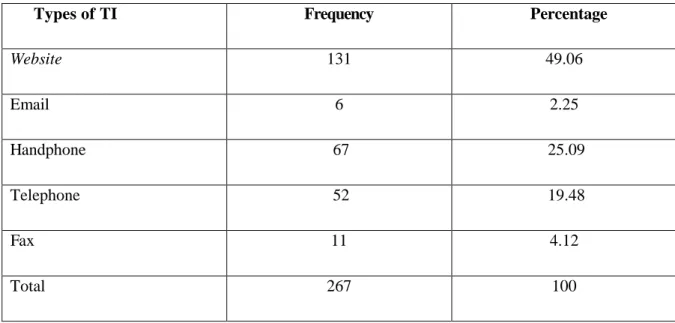
Table 4.2. Types of IT used
Types of TI Frequency Percentage
Website 131 49.06
Email 6 2.25
Handphone 67 25.09
Telephone 52 19.48
Fax 11 4.12
Total 267 100
Based on the table shows that the type of information technology used by the largest creative industries is the website. This means web is primarily used as a means of communication. These findings indicate that the growth of creative industries based on information technology in Central Java is quite good and the selected samples are distributed equally and relevant in the adoption of information technology.
Key findings identified through interviews from key person and employees of the creative industries are as follows:
1. Understanding of information technology shows that most businessmen do not have difficulty in its use.
2. An innovative is aware of the progress of technology and the rapid development of technology, so the information technology system is relatively brief
3. The use of information technology is based on the amount of contribution earned 4. The perception of convenience and usability by adopting information technology
Measurement Model Analysis
Confirmatory Factor Analysis (CFA) is used to test dimensionality of a construction. The first phase prior to analyzing structural model is analyzing measurement model of every variable, because a decent model is supported by variables that is measured by a valid and reliable indicator.
Analysis of confirmatory factor of exogenous variable is used to test indicators that shape exogenous construction. The diagram of measurement model of exogenous variable can be found in picture 4.1 below.
1. OPTIMISM variable
Figure 4.1. Measurement Model of Optimism Variable
The results of the confirmatory analysis of the Optimism variable in the form of the diagram above showed that the standardized loading for all indicators has a loading factor greater than 0.50 which means that all the indicators that make up the Optimism construction are valid.
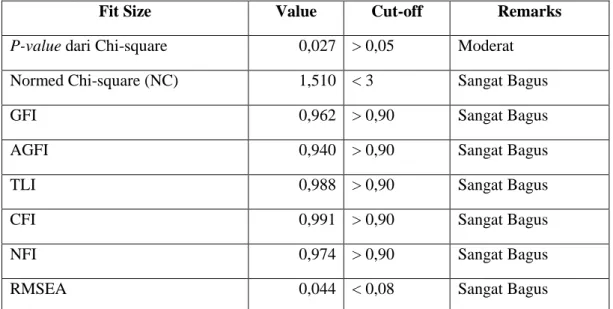
To get the confidence whether the measurement model can be stated in accordance with the research data, then the calculation of the general match test model measurement statistics is carried out. Evaluation of the suitability of the model, the measurement model on the Optimism variable is done by comparing the value of the model compability indexes produced with the recommended model match index, as presented in table 4.3 below:
Table 4.3 Compability Evaluation of Measurement Models of Optimism Variable
Fit Size Value Cut-off Remarks
P-value dari Chi-square 0,027 > 0,05 Moderat
Normed Chi-square (NC) 1,510 < 3 Sangat Bagus
GFI 0,962 > 0,90 Sangat Bagus
AGFI 0,940 > 0,90 Sangat Bagus
TLI 0,988 > 0,90 Sangat Bagus
CFI 0,991 > 0,90 Sangat Bagus
NFI 0,974 > 0,90 Sangat Bagus
RMSEA 0,044 < 0,08 Sangat Bagus
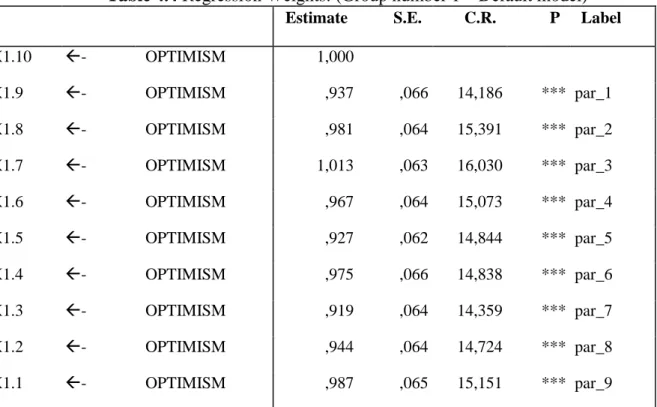
Suitability evaluation of the measurement model on the Optimism variable shows that the indices are good, that is according to what is required. Furthermore, based on Regression Weights, it shows that all indicators have a p-value smaller than 0.001 (***). Therefore it can be
concluded that all indicators are significant as OPTIMISM variable measurement. This can be seen in table 4.4. below :
Table 4.4 Regression Weights: (Group number 1 – Default model)
Estimate S.E. C.R. P Label
X1.10 - OPTIMISM 1,000
X1.9 - OPTIMISM ,937 ,066 14,186 *** par_1
X1.8 - OPTIMISM ,981 ,064 15,391 *** par_2
X1.7 - OPTIMISM 1,013 ,063 16,030 *** par_3
X1.6 - OPTIMISM ,967 ,064 15,073 *** par_4
X1.5 - OPTIMISM ,927 ,062 14,844 *** par_5
X1.4 - OPTIMISM ,975 ,066 14,838 *** par_6
X1.3 - OPTIMISM ,919 ,064 14,359 *** par_7
X1.2 - OPTIMISM ,944 ,064 14,724 *** par_8
X1.1 - OPTIMISM ,987 ,065 15,151 *** par_9
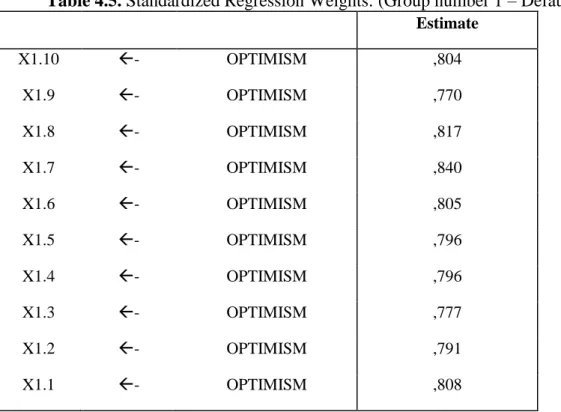
Based on Table 4.4, it is known that all measurement items have a loading greater than 0.70.
This means that all indicators meet convergent validity as a variable measure of Optimism.
Table 4.5. Standardized Regression Weights: (Group number 1 – Default model Estimate
X1.10 - OPTIMISM ,804
X1.9 - OPTIMISM ,770
X1.8 - OPTIMISM ,817
X1.7 - OPTIMISM ,840
X1.6 - OPTIMISM ,805
X1.5 - OPTIMISM ,796
X1.4 - OPTIMISM ,796
X1.3 - OPTIMISM ,777
X1.2 - OPTIMISM ,791
X1.1 - OPTIMISM ,808
2. Variabel INNOVATIVENESS
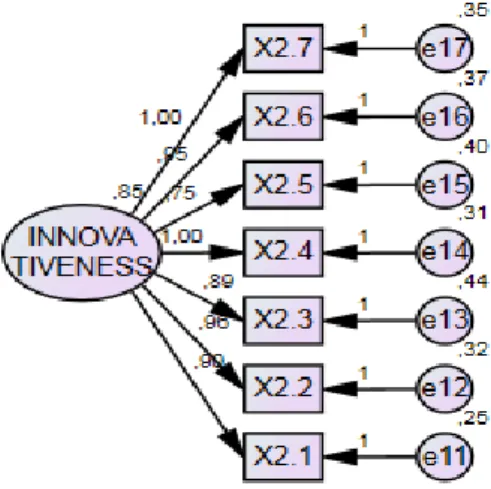
Figure 4.2 Measurement Model of Innovativeness Variable
The results of the confirmatory analysis of the Innovativeness variable in the diagram above showed that the standardized loading for all indicators has a loading factor greater than 0.50 which means that all the indicators that make up the construct of innovativeness are valid. To get confidence whether the measurement model can be stated in accordance with the research data, then the calculation of the general match test model measurement statistics is carried out.
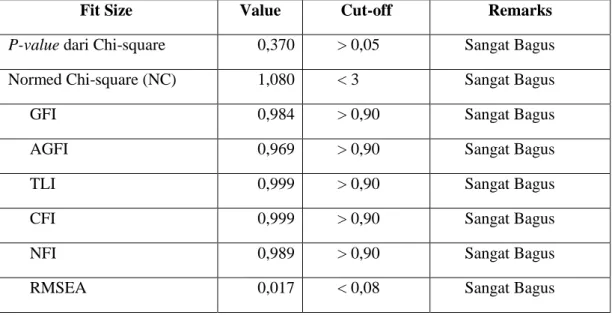
Evaluation of the compability of measurement models in the Innovativeness variable is done by comparing the value of the model matched indices produced with the recommended model match index, as presented in table 4.6 below :
Table 4.6 Compability Evaluation of Measurement Models of Innovativeness Variable
Fit Size Value Cut-off Remarks
P-value dari Chi-square 0,370 > 0,05 Sangat Bagus
Normed Chi-square (NC) 1,080 < 3 Sangat Bagus
GFI 0,984 > 0,90 Sangat Bagus
AGFI 0,969 > 0,90 Sangat Bagus
TLI 0,999 > 0,90 Sangat Bagus
CFI 0,999 > 0,90 Sangat Bagus
NFI 0,989 > 0,90 Sangat Bagus
RMSEA 0,017 < 0,08 Sangat Bagus
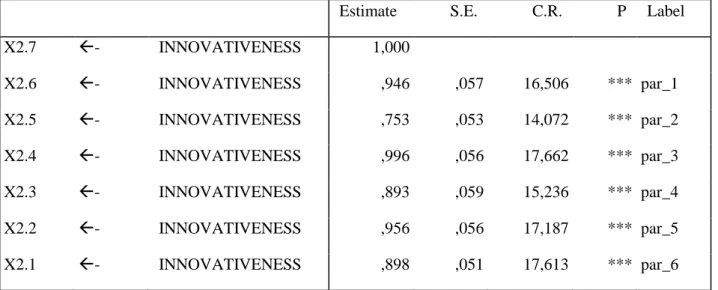
Compability evaluation of the measurement model in the Innovativeness variable shows that the indices are good, that is according to what is required. Furthermore, based on Regression Weights, it is pointed out that all the analysts have a p-value smaller than 0.001 (***), so it can
be concluded that all indicators are significant as indicators of Innovativeness indicators. This can be seen in table 4.7.
Table 4.7 Regression Weights: (Group number 1 – Default model)
Estimate S.E. C.R. P Label
X2.7 - INNOVATIVENESS 1,000
X2.6 - INNOVATIVENESS ,946 ,057 16,506 *** par_1
X2.5 - INNOVATIVENESS ,753 ,053 14,072 *** par_2
X2.4 - INNOVATIVENESS ,996 ,056 17,662 *** par_3
X2.3 - INNOVATIVENESS ,893 ,059 15,236 *** par_4
X2.2 - INNOVATIVENESS ,956 ,056 17,187 *** par_5
X2.1 - INNOVATIVENESS ,898 ,051 17,613 *** par_6
According to Raghunathan et al. (1999), all measurement items (indicators) which have a standardized loading value smaller than 0.45 should be removed from the analysis at once. From Table 4.7 it is known that all measurement items have a loading greater than 0.45, therefore all are eligible to measure the latent indicators. This means that all indicators fulfill convergent validity as a measurement of innovativeness variable.
Table 4.8 Standardized Regression Weights: (Group number 1 – Default model)
Estimat e
X2.7 - INNOVATIVENESS ,843
X2.6 - INNOVATIVENESS ,821
X2.5 - INNOVATIVENESS ,740
X2.4 - INNOVATIVENESS ,856
X2.3 - INNOVATIVENESS ,780
X2.2 - INNOVATIVENESS ,842
X2.1 - INNOVATIVENESS ,854