Creating sustainable food policies in the cities will face many barriers, not least because they pose such fundamental challenges to vested interests in the conventional food system. This book is in line with the objectives of the Sustainable Urban Food Systems (SurFood) research project supported by the Agropolis Fondation.
The Twenty-First Century Heralds the Dawn of a New Era for Cities
This flagship project was established to coordinate, expand and globally present the interdisciplinary research of the various institutional members of Labex Agro. It was written in response to a request from the Scientific Council of the Agropolis Foundation to build a conceptual framework for the analysis, evaluation and development of sustainable urban food systems.
Cities as ‘Human Settlements’
Global and Organic Cities
Feeding Cities: An Urban Planning Issue
Pothukuchi and Kaufman (1999) were among the first authors to focus on the importance of the role of food in the city. First, the multidimensional aspect of the food system means that it has a substantial impact on other sectors such as public health, social justice, energy, water, land, transport and economic development.
Emergence of New Urban Food Strategies
However, Caroline Brand (2015) has clearly shown that the movement of territories towards a comprehensive global view of the food issue is not a clear trend. There is still often a disconnect between the rhetoric on this issue and the actual fact regarding the consideration of the food situation in the territories.
Towards a Conceptual Framework
The objectives of this approach, its uses and possible applications are specified in this chapter. In 2014, Montpellier Méditerranée Métropole voted for an agroecology and food policy, with the support of researchers involved in the SurFood project (chapter 6).
Innovative local government plans and policies to build healthy food systems in the United States. Pothukuchi K, Kaufman JL (1999) Putting the food system on the urban agenda: The role of municipal institutions in food systems planning.
Sustainability
Cities, Sustainability and Food Systems: Definitions Cities
Growing inequality is reflected in the marginalization of part of the population as a result of exclusion from the production system, where mechanization increasingly replaces human labour, creating a reservoir of cheap labour. Food has an important identity function because it is absorbed into the body and thus helps to build individual and collective identities.
Promoting Sustainable Agriculture to Feed Cities Reclosing Fertilization Cycles and Reducing Pollution
Energy and material consumption in cities has increased significantly, while their metabolism is slowing down - addiction. Due to the reduction of transport costs, cities are supplied with food from increasingly distant production areas.
Reducing Reliance on Remote Supplies and Reconnecting Cities to Their Hinterlands
This connection nevertheless does not represent a balance of power between cities and rural areas (Lipton 1977). Rural poverty and widening differences in living standards between cities and rural areas often lead to emigration from the countryside, which in turn creates problems for urban authorities.
Facilitating the Movement of Goods and Access to Food Reducing Last-Kilometre Transportation Costs
Thus, the model has evolved in favor of the development of grocery shopping in the supermarket by car. The weight and packaging of shipments naturally vary from one end of the chain to the other.
Promoting More Sustainable Urban Food Styles
The extent of the agri-food sector's contribution to environmental degradation is difficult to calculate due to the absence of data that differentiates the food contribution from industry, transport and other factors. When environmental impacts other than GHG emissions (acidification, ecotoxicity, eutrophication, etc.) are considered, the contribution of the food sector appears to be lower.
Reducing Inequality and Power Asymmetry
They highlighted the importance of food price stabilization (HLPE 2011), as well as the employment problem. The growing anxiety among food consumers is further accentuated by the individualization of their eating habits (Fischler and Masson 2008).
Living Together
This distance leads to a sense among consumers that they are losing control of the system—a decline spurred by the acceleration of modernity (Rosa 2010)—thus lowering risk acceptability (Slovic 1987). Many urban food policies, especially in the most industrialized countries, are focused on relocating supplies and building more inclusive governance.
Conclusion
Leçons de dix années d’enquêtes auprès des ménages en Afrique de l’Ouest, au Cameroun et au Tchad, Col. Dans : Coll JL, Guibbert JJ (éd.) Planification et défi de la décentralisation en Afrique de l'Ouest, Coll.
Such a hierarchy is unstable due to competition between the cities in the network and the specializations they develop. And third and last, urban public health policies at the onset of the Industrial Revolution.
The Four Stages of Urbanization in Europe
Fernand Braudel writes: “[…] The fate of these very special cities was linked not only to the progress of the surrounding countryside, but also to international trade. The population of the city of Rome alone seems to have exceeded one million inhabitants around the second century AD.
Securing Food Supply: Rise and Fall of Urban Policies
Box 1: Famine, markets and public policy in European cities from the end of the Middle Ages. In the modern era, the construction of the territorial states upset the urban food policies described above.
The Cities’ Separation from the Organic World
Debates and regulations about the proper place of animals in the city were part of the same hygiene movement. In the nineteenth century, municipalities began to build and operate their own slaughterhouses (Muller 2004: 107).
Several ways in which the success of urban actions can be measured are discussed subsequently. Finally, two possible future directions for the role and influence of cities in the food system are identified.
Objectives of Urban Food Policies and Challenges of Urban- Rural Relationships
Social inclusion and food culture - the last two goals - seek to remedy the problem of consumers' cognitive and cultural detachment from food. Recognition of the cross-domain nature of food is increasingly seen as best practice, although it is not yet ubiquitous.

Involvement of Different Sectors and Respective Governance Models
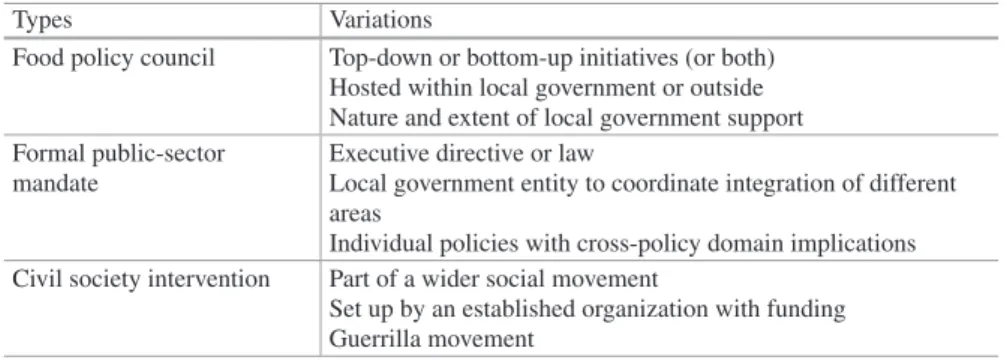
The involvement of civil society is a key principle of food policy councils, which are groups of actors from several sectors. A third type of urban food policy initiative worth mentioning consists of civil society interventions with different degrees of organization.
Ways to Assess the Success of Urban Food Policies
The three types of urban food policy described above and their variations are summarized in Table 3. Mendes W (2008) Implementing social and environmental policies in cities: the case of food policy in Vancouver, Canada.
Conclusion: Mobilizing Methodological Tools and Drawing Up an New Research Agenda
New networks, such as the Sustainable Food Cities Network in the UK and the Milan Urban Food Policy Pact of 2015, signed by over 100 cities around the world, can give cities a greater collective voice on food policy. In particular, this includes monitoring the impact of initiatives such as Milan's 2015 Urban Food Policy Pact on the international food policy dialogue.
Sustainable Urban Food Policymaking
Diversity and Complexity
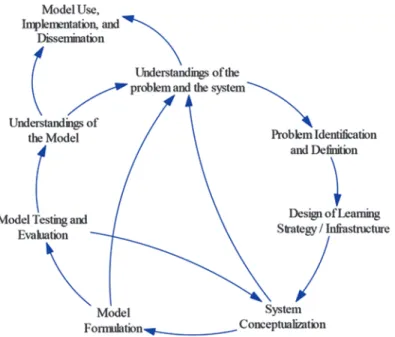
Scholars are addressing this complexity by developing conceptual frameworks and representational models to capture various aspects of sustainable urban food systems within a shared vision. These conceptual frameworks are not always explicitly aimed at promoting the sustainable design of urban food policy.
Food System Approaches
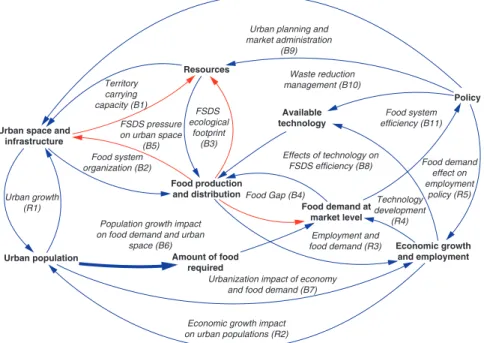
In fact, this approach required some simplification of the first detailed FSDS model (Armendáriz et al. 2015a) to capture – at an aggregated level, while preserving its validity – the most important system interactions, including non-food system issues. 2 A metropolitan-region food system is defined as: “the complex network of actors, processes and relationships involved in food production, processing, marketing and consumption that exists in a given geographic region, containing a more or less concentrated urban center and the surrounding suburban and rural hinterlands; a regional landscape where the flows of people, goods and ecosystem services are managed.” (Jennings et al. 2015).
Sustainable City Approaches
Wiskerke (2009) because they seem clearer than in the FoodLink research report by Ana Moragues et al. Practices are carried out within the framework of interdependent sets of practices (Schatzki et al. 2001), so changes in one practice will therefore affect the whole set of practices.

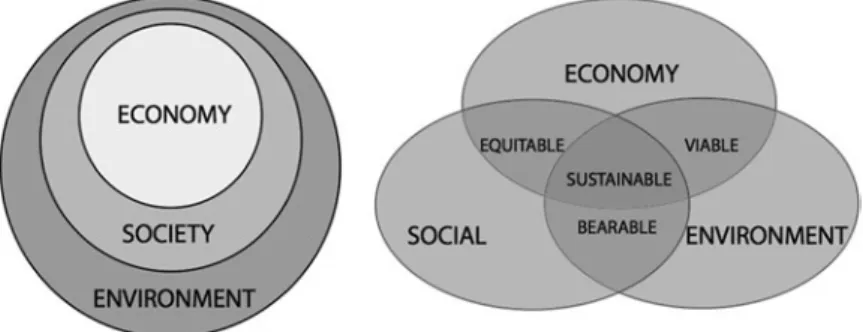
Sustainable Development Applied to Urban and Food Issues
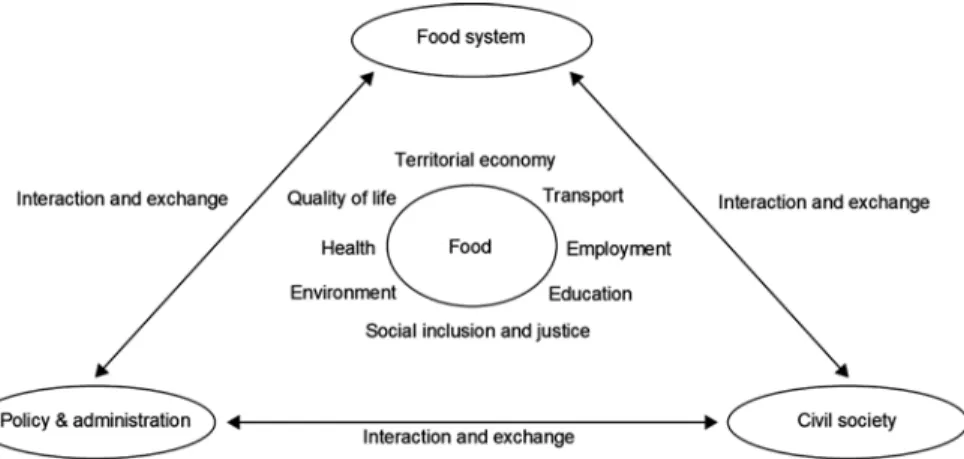
One alternative - the circles of social life - begins with the question of the human condition, which includes food. 12 Unless qualified by the adjective 'local', the concept of 'food system' refers to the entire system on which the local area depends – from local to global.
Most approaches to the development of urban food policies require a preliminary objective assessment of the urban food system to be addressed and the identification of problems to be solved. In the second part of this chapter, we will analyze different ways of creating urban food policies.
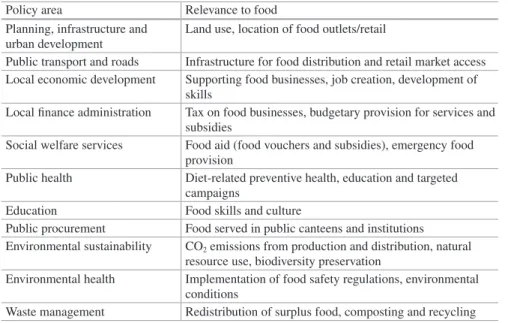
Local Urban Governments’ Scope of Action
For example, the municipality of Montpellier has organized a series of summer events to promote gastronomic products and specialties from the surrounding countryside to the urban population. Food policies are rarely introduced on the basis of in-depth knowledge of the effects and risks of the actions to be taken.

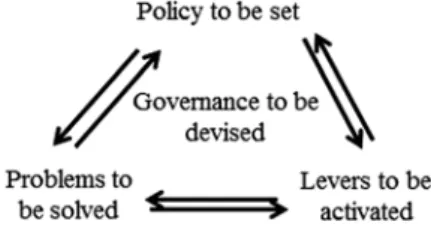
Steps for the Construction of Urban Food Policies
The levers are scattered through different units of the AIR and the problems to be solved are diverse and can be tackled by several of them. Jarrige F (2013) The return of the food issue in the city of Lausanne: a challenge for the coherence of local policies.
Agenda in Montpellier, France
By examining the process of food policy development in Montpellier, we can gain an understanding of how the food issue has been placed on cities' agendas in the French context. The food issue was added to the agenda in a legislative, electoral and regional context that needs some explanation.
Putting Food on the Regional Policy Agenda
An Agricultural Prism
Various actors are involved in the emergence of the public food supply problem in cities. In particular, the food supply issue has been taken up by the state3, which has developed an incentive policy in the form of the National Food Plan (PNA), which aims to encourage territorial actors to get involved in the food issue. , its quality (food and heritage related) and accessibility (Bonnefoy and Brand 2014).
Construction of a Regional Agroecology and Food Policy
The heads of unit and elected officials concerned were then invited to the workshops with the mayors of the 31 municipalities that make up the metropolitan area. The situation was very conducive to the preparation of the new agroecology and food policy.
Organizational, Political and Territorial Reconfigurations
The second process is the framing of the food problem, which depends on the development of common knowledge about the area, namely the urban food system. The first question concerns a central urban food system actor, which, surprisingly, is not yet at the forefront of the debate - the urban population, i.e.