1 PROPOSAL FOR A DOCTOR OF PHILOSOPHY PROGRAM IN
CHEMISTRY AND CHEMICAL BIOLOGY
DEPARTMENT OF CHEMISTRY AND CHEMICAL BIOLOGY Indiana University - Purdue University Indianapolis (IUPUI) Indiana University Graduate School/School of Science, IUPUI
2 INSTITUTION: Indiana University – Purdue University, Indianapolis (IUPUI)
SCHOOL: University Graduate School/Science, IUPUI DEPARTMENT: Chemistry and Chemical Biology
DEGREE PROGRAM TITLE: Chemistry and Chemical Biology
FORM OF RECOGNITION TO BE AWARDED/DEGREE CODE: Doctor of Philosophy (Ph.D.)
SUGGESTED CIP CODE: 400501
LOCATION OF PROGRAM/CAMPUS CODE: Indianapolis, IUPUI PROJECTED DATE OF IMPLEMENTATION: August 2012
DATE PROPOSAL WAS APPROVED BY INSTITUTIONAL BOARD OF TRUSTEES:
_____________________________________________________
SIGNATURE OF AUTHORIZING INSTITUTIONAL OFFICER
_____________________________________________________
DATE RECEIVED BY COMMISSION FOR HIGHER EDUCATION
_____________________________________________________
COMMISSION ACTION (DATE)
3 A. ABSTRACT
This document proposes that a Doctor of Philosophy (Ph.D.) degree in Chemistry and Chemical Biology be offered on the Indiana University – Purdue University
Indianapolis (IUPUI) campus by the Indiana University Graduate School .
A.1. Program Objectives and Rationale
The objective of the proposal is to convert a well-established Purdue Ph.D. program in chemistry to an Indiana University Graduate School Ph.D. program in chemistry and chemical biology in Indianapolis (IUPUI). The Department of Chemistry & Chemical Biology at IUPUI has graduated a total of 318 graduate students since 1973 (273 Purdue M.S. degrees and, since 1986, 45 Ph.D. degrees). We have been training Ph.D. students for twenty-five years with 43 of 45 graduates earning the Purdue University Ph.D.
degree, and two earning Indiana University degrees. The vast majority have gone on to successful careers in science, with destinations including academic institutions,
industrial laboratories, and non-profit organizations. Our productivity in graduate degrees, while currently attributed to Purdue University, already exceeds the expected ICHE standards for productivity of graduate degrees. As an already mature program, strategic growth is expected in the future.
At present, by arrangement with our departmental counterpart at Purdue University West Lafayette (PUWL), the program is entirely delivered on the Indianapolis campus.
However, its graduates are attributed to the graduate school at PUWL and the diplomas indicate that the work was done at West Lafayette. One objective of the proposed
degree is to train productive researchers that contribute to the economic development of central Indiana and beyond. A second objective for this research-focused Indiana University Ph.D. program in the Department of Chemistry & Chemical Biology is to meet our research faculty’s own specialized expertise to provide students with training in the latest research and investigative techniques to advance our scientific and
technological frontiers. Historically, the Department has successfully attracted major funding from Federal agencies that have recognized that our program meets national needs for training in the sciences, a critical challenge to achieve global competitiveness in science and technology.
A.2. Unique Features and Strengths of the Program
The IUPUI Department of Chemistry & Chemical Biology is one of only four programs that offer Ph.D. degrees in chemistry-related topics in the state of Indiana. Given our physical location on the health and life sciences campus in the capital and largest city in Indiana, our program makes a Ph.D. degree in Chemistry & Chemical Biology
accessible to many Indiana residents, or place-bound students, who would otherwise be unable to take advantage of opportunities to advance their graduate education. By selective and distinctive specialization, we are able to drive increased research collaboration across campus, enhancing externally funded scholarship at IUPUI. In particular, the proximity of the Department of Chemistry & Chemical Biology to the Indiana University School of Medicine facilitates productive collaborations and leverages resources in the medical sciences.
4 A.3. Clientele to be Served
The program will continue to serve highly qualified, research-motivated baccalaureate and master’s degree holders from Indiana, the U.S., and beyond.
A.4. Employment Potential
Our students have gone on to prominent postdoctoral appointments at research universities and, ultimately, have taken permanent positions in academia or in
government and industrial laboratories (see Section C2 and accompanying table). Other graduates have gone directly into industry. A significant number of our graduates remain in the greater central Indiana workforce.
B. PROGRAM DESCRIPTION B.1. Introduction
The prime objective of this proposal, recognizing that we currently have an established Purdue Ph.D. program in chemistry at IUPUI, is to confirm this by converting that program to one that is site-approved for Indianapolis (IUPUI). The Department of Chemistry & Chemical Biology is a key contributor to research and learning on the IUPUI campus, an urban research university that has been designated by the Indiana University System as its “Health & Life Sciences” campus. It provides the course work foundation for undergraduate health programs, as well as the undergraduate degree programs that feed into professional programs and health-related graduate programs on campuses statewide. The Department is also the setting for an assemblage of externally funded research programs with strengths in sub-disciplines that emphasize basic chemical research. The Ph.D. program currently provides training in the highest degree offered by institutions of higher education and complements the advanced degree programs in the professional schools on campus. The Department of Chemistry
& Chemical Biology has been educating Ph.D. students for twenty-five years with the vast majority earning the Purdue University Ph.D. in Chemistry, a degree awarded on the West Lafayette campus despite the fact that all of the course work and research is completed at IUPUI. The Department of Chemistry & Chemical Biology of the IUPUI School of Science is in the midst of a hiring initiative that will bring additional research- focused faculty members into the Department. A clear identity for a PhD program in Chemistry & Chemical Biology will be more attractive to prospective new faculty.
Further, it will facilitate increased research collaboration across campus, and will make IUPUI more competitive for external funding. The latter is particularly important, as the present system has been confusing to grant reviewers.
The research focus of IUPUI has generated economic benefits for central Indiana. Since 1980, external funding for the Department exceeds $22 million and there is an auxiliary impact from additional millions from allied goods and services accompanying this figure. The graduate programs (45 Ph.D. and 273 M.S. graduates since 1986 and 1973, respectively) have made a significant contribution to this research enterprise. Right now, there are thirteen full time and many hourly individuals supported by external funding. Our chemistry research programs are contributing at ever-increasing levels to
5 the transformation of the Indiana economy and its emphasis on the life sciences. The availability of Ph.D. students is essential in the recruiting of high-caliber research faculty and in the completion of the work contracted for in funded proposals.
The proposed program will be structured similarly to the ongoing, successful Ph.D.
program in accord with the policies of the Indiana University Graduate School. The program is structured similarly to most Ph.D. programs in chemistry in that it is research intensive and requires 90 credit hours of registration. This program is
characterized by an extensive research element that is closely monitored by an Advisory Committee. Our primary academic objective is to produce Ph.D. graduates who are trained in the latest technologies and techniques, who have the foundational skills to direct an independent program of research and are able to adapt to a changing research landscape, and who are competitive for positions in academia, industry and
government.
B.2. Admission requirements, student clientele, and student financial support All applicants must have earned, at the minimum, a four-year baccalaureate degree from a U.S. institution or an equivalent degree from a foreign institution. For
admission, applicants must complete an online application and submit the Graduate Student Questionnaire, a personal statement, general GRE scores, and original
transcripts from all institutions previously attended. A minimum cumulative GPA 3.0 (on a 4.0 scale) is required for admission. Applicants must also arrange for letters of recommendation from three individuals who can evaluate the applicant’s past work and comment on the applicant’s potential for success at the graduate level.
International applicants must also submit their official TOEFL scores unless their undergraduate degrees were earned from U.S. institutions or select international institutions where instruction was delivered exclusively in English.
Most students will enter the program will be highly qualified, research-motivated baccalaureate and masters degree holders in chemistry. We also seek talented and highly motivated students from allied fields including biochemistry, biology, chemical engineering, and other programs who have sufficient preparation to enable their success in the program. The blending of rich curricular backgrounds with ours has led to a distinctive, successful program producing capable students strongly impacting our scientific workforce needs in Indiana and elsewhere. Applicants will be expected to have completed basic course work in biology, chemistry, physics, and mathematics for admission. Because the curriculum (see Section B3) is built for maximum flexibility, deficiencies can be addressed while in the program. The primary traits we seek in applicants are intellectual and research ability and motivation. We can adjust for academic background within the program through supplementary course work and tutorials. Our history is that approximately 26% of our Ph.D. students come from IUPUI B.S. and M.S. programs in Chemistry. This serves to the benefit of place-bound students in Indiana (often associated with local industries) that may otherwise be unable to pursue a graduate degree elsewhere. Admission requirements are summarized as follows:
a. Formal application to the University Graduate School b. Resume or curriculum vita
c. Personal statement
6 d. Three letters of recommendation
e. Competitive scores on the GRE exams
f. TOEFL score of 213 on the computer version (or iBT equivalent of 79) is required for applicants whose native language is not English.
g. Official transcripts from all colleges and universities attended with:
i. a cumulative GPA of at least a 3.0 on a 4.0 scale in any prior completed degree program
ii. a letter grade of B or higher in all courses applied toward prerequisites
Prerequisite Coursework and/or Degrees: The program will serve highly qualified, research-motivated baccalaureate and masters degree holders from Indiana and beyond. Applicants will be expected to have completed basic course work in biology, chemistry, physics, and mathematics for admission.
Selection Criteria: The Admissions Committee, comprised of graduate faculty
members from the Department of Chemistry & Chemical Biology, reviews completed applications. The committee screens for GPAs of at least 3.0 in all degrees completed, supportive letters of recommendation, and a commitment to a research career as evidenced by previous research experience and/or a strong motivation for research revealed in the personal statement section of the online application. For international students, competitive GRE scores and minimum TOEFL scores (Paper 550, Computer 213, and Internet-based Testing (iBT) 79 with minimum sub-scores of 19 reading, 16 listening, 22 speaking and 18 writing) are required. A TOEFL score of 100 is a
recruitment goal. These are also our current admission criteria. It should be noted that they are equal to and, in some cases, more stringent than those at PUWL and Indiana University. Applicants we are pursuing are normally interviewed on campus unless this is not feasible (e.g. overseas or international); these students will be interviewed by phone or by Skype. The number of students admitted each year will be dependent on the quality of the applicant pool, the level of available institutional and faculty support, and the number of available laboratory openings. We anticipate recruiting an average of five to six students a year initially. Our program has traditionally been highly selective.
Admissions will be coordinated with the IUPUI Graduate Office and the Indiana University Graduate School.
Transfer Credit: Upon petition by the student, review and recommendation of the Director of Graduate Studies, with the approval of the Chair of the Department of Chemistry and Chemical Biology, and in accord with University Graduate School policies and agreement (maximally 30 hours of coursework), work taken for graduate credit at other institutions may be transferred in partial fulfillment of degree
requirements. To qualify for transfer, the course grade must be B or higherand not previously used for credit towards a Bachelors degree. Courses that were taken as an undergraduate in excess of the minimum graduation requirements for the Bachelors degree or as a graduate student towards completion of an MS are acceptable. Courses that are not substantially equivalent to courses offered at IUPUI or that are equivalent to courses the student has taken during their IUPUI graduate degree will not be approved. Transfers do not automatically fulfill any departmental major or minor
7 course requirements, unless specifically approved by the individual’s Advisory
Committee.
B.3. Curriculum Curriculum
The Ph.D. program will require the traditional 90 credit hours of registration and the Advisory Committee of each student will be the final determinant of the course work component. The diversity of the research opportunities available in our program has demonstrated a capacity to attract excellent students, and allowed them to achieve scientific success in a variety of collaborative research endeavors. Students will typically enroll in at least 20 credit hours of course work (see example curriculum). A plan of study for each student will be designed to meet major and minor area
requirements (see below). Students will be required to present two one-hour seminars on topics as part of the Qualifying Examination. These experiences will appear as two separate credit hours of CHEM 69500, Seminar, on the internal plan of study and on transcripts.
Program Requirements
Program requirements include selecting a Research Advisor, establishing a Advisory Committee, submitting to the department a plan of study, completing each component of the qualifying examination (including passing five Cumulative Exams, satisfactorily presenting a departmental research seminar, submitting a written Research Progress Report, passing an Oral Qualifying Exam), and submitting and defending a dissertation supervised by the Research Committee. Students who continue on from an IUPUI M.S.
degree may select a Research Advisor at the outset of the Ph.D., and begin the other program requirements. Students new to IUPUI will commonly interview with
prospective mentors early in the first fall semester and from that experience will select a Research Advisor as soon as feasible, but before the beginning of the second semester.
Cumulative examinations are started during the first month of the Ph.D. program.
Students take cumulative exams until they have passed five tests in 20 opportunities.
These exams are one written facet of the Qualifying Examination. Since 1993, IUPUI Chemistry faculty have been invited to write and grade cumulative examinations for PUWL students and administer PUWL-authored exams to our Ph.D. students. As our faculty and graduate student composition has changed and will continue to do so, we expect that the subdisciplinary foci of the examinations will change over time.
Within one year of starting the program, Ph.D. students establish a Advisory
Committee. The Committee is comprised of the Research Advisor, two members of the graduate faculty from the student’s Major area, and one member of the graduate faculty from outside the student’s area of focus (the Minor area). At least two members of the Committee must be from the IUPUI Department of Chemistry & Chemical Biology.
Under the current Ph.D. arrangement, the Committee is comprised of two faculty members from the IUPUI Department of Chemistry & Chemical Biology and two
members of the Purdue West Lafayette Graduate Faculty (one as a thesis reader and one that participates fully in the thesis reading, oral exams and defense). The proposed Ph.D. program would not require a committee member from the Purdue West Lafayette
8 Graduate Faculty. Based on experience it would seem that this is an onerous task for PUWL faculty. In this proposal, a member of the IU Graduate Faculty outside of the IUPUI Department of Chemistry & Chemical Biology could be invited based on an expertise match with the student’s Major or Minor area. The Director of Graduate Studies meets with the student and establishes a plan of study, subject to the approval of the Advisory Committee and the Graduate School. This document lists all courses and seminars the student is to complete and ensures a timely progression toward Candidacy. Research credits are not listed in the plan of study. Completion of this document also establishes the membership of the Advisory Committee.
The Advisory Committee will meet with the student at minimum annually to help direct the research and to monitor progress. Students will present their research in a departmental seminar during the fourth semester, leading to a written progress report, due at least one month prior to the Oral Qualifying Exam, which will be filed with the department. The Advisory Committee will normally serve as the dissertation-
examining Research Committee at the end of program.
The plan of study will list a set of courses that will support and facilitate the research area and two seminar experiences (CHEM 69500, Seminar), where the student delivers one-hour presentations on subjects inside and outside of the research area. The overall expectation of the Purdue Indianapolis Ph.D. program in chemistry is one that is heavily research-oriented with the dissertation and publications derived from the research being the primary outcomes. Because there are no core requirements, the course work component of the Ph.D. can be individually crafted. This is particularly important in chemistry, a discipline that covers a wide range of sub-disciplines from theoretical to experimental chemistry: physical, organic, inorganic, and analytical chemistry; biochemistry, and chemical education. Finding an acceptable core to serve all of these areas would not be possible. The minimum number of credit hours needed to qualify for full-time status for domestic (international) students at IUPUI is six (eight), six (eight) and one (one) credit for fall, spring and a summer semester,
respectively. Below is a sample plan of study for a student entering the program with a B.S. degree; a plan for an entering M.S. student would be expected to contain
transferred coursework, approved by the Director of Graduate Studies on consultation with appropriate departmental faculty.
First Semester: CHEM 62100 Advanced Analytical Chemistry (M) 3 cr. hrs.
CHEM 53300 Introductory Biochemistry (m) 3 cr. hrs.
Second Semester: CHEM 69600 Special Topics: Analytical 3 cr. hrs.
Spectroscopy (M)
CHEM 69600 Bioinorganic Chemistry (m) 3 cr. hrs.
Third Semester: CHEM 62900 Chromatographic Methods of 3 cr. hrs.
Analysis (M)
CHEM 69600 Special Topics: Bioanalytical 3 cr. hrs.
Chemistry (M)
Fourth Semester: CHEM 69500 Seminar 1 cr. hr.
Fifth Semester: CHEM 69500 Seminar 1 cr. hr.
*Examples of courses meeting (M)ajor and (m)inor requirements for a student with an analytical chemistry major and a biochemistry minor.
9 The Ph.D. requires 90 credit hours of course work and research. Students who enter the Ph.D. program with an M.S. degree can apply a maximum of 30 credit hours toward the 90 credit hours required for the Ph.D. degree.
By end of the fifth semester, the Oral Qualifying Exam takes place completing the requirements for Nomination to Candidacy. The Advisory Committee functions as the examining committee. This exam is an oral exam that is a defense of a written original research proposal and the student’s research progress. The Committee will receive the comprehensive Original Research Proposal and the Research Progress Report two weeks before the exam. Passing all requirements of the Qualifying Exam (cumulative exams, Formal Research Seminar, Research Progress Report, and the Original Research Proposal) and having satisfactorily completed coursework officially meet the
requirements for Admission to Candidacy. Deferral of this exam, rarely by more than one semester, may occur if the student successfully petitions the Director of Graduate Studies. This may occur, for example, if difficulties occur arranging a meeting time, but will not occur to allow additional research progress to be made.
Specific requirements for the Ph.D. degree and their timing are summarized below:
1. Select Research Advisor and Advisory Committee (this activity is typically completed by the end of the 1st semester, but no later than the end of the 2nd semester)
2. Cumulative Exams (details given below) during the first two years
3. An approved plan of study form submitted by the end of the third semester a. 20 credit hours of approved graduate courses including:
i. 12 credit hours in a major area of concentration
ii. 6 credit hours in a subdiscipline outside the major area
iii. Among items 3a(i) and 3a(ii), 12 credit hours must be 600-level courses.
iv. 2 credits of CHEM 69500 Seminar 4. Formal Research Seminar:
a. Before the end of the 4th semester students must present a Formal Research Seminar open for attendance by the full department. His/her Advisory Committee and the faculty member in charge of the seminar program must approve the timing of the seminar.
5. Written Research Progress Report:
a. During the 5th semester each student will provide a written research report to the Advisory Committee describing research progress and future plans.
6. Oral Qualifying Examination (details given below), passed by the end of the 5th semester.
7. 69900 Ph.D. Dissertation Research
8. Approval of a detailed dissertation outline (six months prior to defense date) 9. A dissertation approved by the student’s Research Committee (one month prior
to defense date)
10. Defense of dissertation (announced at least 30 days prior to the event)
These requirements are closely based upon our currently functioning Purdue Ph.D.- granting program, adjusted to meet all timing and component requirements of the IU Graduate School.
10 In addition to the above formal requirements, from their 5th semester on, Ph.D.
students are expected to participate in the Departmental Poster Session held every fall semester; this important event serves partially as a progress review for thesis students and also assists in developing presentation skills and preparation for the final dissertation defense. Students admitted in January are expected to participate on or before their 6th semester in residence.
Competencies for the Doctoral Curriculum
1. Demonstrate broad knowledge of concepts and techniques used in the chemical sciences.
2. Design investigations to produce new knowledge or solve problems in the chemical sciences.
3. Analyze and evaluate data from studies in the chemical sciences.
4. Critically evaluate results of chemical studies, including analyses, interpretation and conclusions.
5. Independently propose, design, and defend potential new avenues of chemical research.
6. Prepare written and oral reports and presentations to effectively
communicate the results of chemical research to professional audiences, policy makers, and the general public.
7. Provide practical training of educators in the chemistry and related studies.
8. Develop community partnerships in Central Indiana to advance chemical investigations.
9. Prepare proposals for extramural peer-reviewed funding.
10. Promote and model ethical conduct in the practice of chemical research.
The curriculum will include courses that currently exist on the IUPUI campus as well as courses that will be developed during program growth. Course descriptions of the existing courses are included in the Appendix A.
Other Degree Requirements a. Breadth of Course Work
Major Courses. A major may be taken in analytical, biological, inorganic, materials, organic, or physical/theoretical chemistry. A minimum of 12 hours, exclusive of research, is required for the major.
Minor Courses. One minor is required that consists of a minimum of two courses that may be either within or outside of the Chemistry Department. If a chemistry student
11 elects an outside minor, all requirements established by the outside department must be satisfied. If an inside minor is chosen, the student must take at least 6 credits in areas other than the major.
b. Cumulative Examinations
Ten Cumulative Examinations are offered each academic year. The student must pass five cumulative examinations by the end of the 4th semester (summer semesters are not counted). All students take the exam in a preannounced sitting, scheduled at the beginning of each academic year, when they write responses to as many of the offered sub-discipline tests as they wish to attempt. Traditionally, cumulative examinations are given once each month on Saturday mornings from 10:00 am to 12:00 noon in LD 326T.
Occasionally, topics are posted. The Director of Graduate Studies will provide information on a topic, if one is announced. Students continue to take cumulative exams until they have succeeded in passing five sub-discipline tests within 20 or fewer opportunities. The counting of opportunities begins at the first sitting, normally the first semester of the Ph.D. program, and runs contiguously thereafter. A hiatus from cumulative exams occurs during the summer semester.
Faculty members write individual questions, evaluate the responses, and set the passing level. Our faculty have shared examination responsibilities during the collaborative period with PUWL thus ensuring expertise in appropriate levels of expectation. IUPUI Chemistry & Chemical Biology faculty will administer and grade their students' cumes.
c. Oral Qualifying Examination and Research Progress Report
The final oral component of the Qualifying Examination consists of an Original Proposal (OP) and an oral examination of the summary of the student’s dissertation research. This exam must be taken after all other requirements for Nomination to Candidacy (coursework, cumulative examinations, departmental seminar, written research report) have been completed but no later than the end of the fifth semester.
The OP must originate with the student and not be related to their doctoral research.
The Original Proposal should include a concise statement of the problem or hypothesis to be tested, a statement of its significance and originality, why the proposal is superior to previous approaches (if applicable), how it is proposed to attack the problem, what difficulties can be expected in the course of the project and their solutions, and what will be accomplished by addressing the project. Although the student is expected to have a complete knowledge of the area(s) related to the OP, the written OP should not include an extensive review of the area but should outline a research program as opposed to a single experiment. The Original Proposal is to be the student’s own work;
consultation with any faculty member is not permitted.
The Research Progress Report should consist of a statement of research already accomplished as well as a discussion of directions that further dissertation research might take.
The Oral Examination will consist of a presentation by the student and discussion of the OP and Research Progress Report. Members of the committee are free to interrupt the student at any time and probe, by detailed questioning, the depth of the student’s
12 understanding of the proposed research.
Upon successful completion of this final Qualifying Exam component, the Advisory Committee will submit the Nomination to Candidacy Form to the University Graduate School. Unsuccessful students may: a) be provided the opportunity to correct their deficiency in the Qualifying Exam, normally within one semester; b) complete a thesis- based MS degree by the end of the third year, if research and coursework support this option; c) switch to a non-thesis MS track; or d) be found to have insufficient progress to remain in the Chemistry & Chemical Biology graduate program.
d. Dissertation
The dissertation will be written on the student’s original research and will be orally defended as one of the final requirements for the Ph.D. degree. The chair of the
dissertation Research Committee must be a regular faculty member in the Department of Chemistry and Chemical Biology and a full member of the Graduate Faculty and will normally be the student’s research mentor. The student’s Research Committee will usually be the Advisory Committee, as described in Section B.3. The student will submit to the IUPUI Graduate Office, acting for the University Graduate School, a two- page prospectus of the dissertation research and the membership of the research committee at least six months before the defense of the dissertation for their approval.
At least two weeks prior to the defense and approved by the Research Committee chair, the student will submit an unbound copy to each member of the Research Committee as the initial step to the dissertation defense. After the Research Committee has reviewed the dissertation, the decision to schedule the defense will be made. The student will then present the dissertation in a public forum and defend it orally before the
committee. Following the dissertation defense, a vote on the outcome of the examination will occur following the IU Graduate School guidelines. Once any
deficiencies are adequately addressed, the thesis can be approved by a majority of the members of Research Committee signing the acceptance page.
e. Form of Recognition
The degree offered will be an Indiana University Doctor of Philosophy (Ph.D.) in
Chemistry and Chemical Biology through the Indiana University Graduate School. The degree would be offered exclusively on the Indianapolis campus.
The diploma will read Doctor of Philosophy in Chemistry and Chemical Biology, Indiana University School of Arts and Sciences, Indianapolis.
f. CIP Code
At the time of degree creation, campus administration will identify an appropriate CIP code that will be approved by the Indiana Commission of Higher Education.
13 B.4. PROGRAM ADMINISTRATION AND FACULTY
a. Program Administration
The IUPUI Ph.D. Program in Chemistry will be administered by the Department of Chemistry and Chemical Biology of the Indiana University School of Arts and Sciences.
Primary responsibility will reside with the Chair of the Department of Chemistry and Chemical Biology and the Director of the Graduate Studies for the department. Fiscal oversight will be provided by the departmental Business Manager.
14 b. Program Faculty
Tenure -Track Faculty
Name Rank Ph.D. Postdoctoral
Haibo Ge, Ph.D. Asst. Professor University of Kansas The Scripps Research Institute John Goodpaster, Ph.D. Asst. Professor, Director
of Forensic & Investigative Sciences Program
Michigan State University National Institute of Standards and Technology (NIST)
Lei Li, Ph.D. Asst. Professor The Johns Hopkins University University of Michigan
Eric Long, Ph.D. Professor University of Virginia California Institute of Technology David Malik, Ph.D. Chancellor’s Professor,
Executive Vice-Chancellor, Indiana University
Northwest
University of California, San Diego University of Illinois
Michael McLeish, Ph.D. Assoc. Professor La Trobe University, Melbourne,
Australia University of California, Berkeley
Robert Minto, Ph.D. Assoc. Professor, Director of Graduate Admissions
University of California, Berkeley The Johns Hopkins University Barry Muhoberac, Ph.D. Assoc. Professor University of Virginia University of Texas Health Science
Center at San Antonio Christoph Naumann,
Ph.D. Assoc. Professor Technical University of Munich,
Germany MPI for Polymer Research Mainz,
Germany
David Nurok, Ph.D. Assoc. Professor Emeritus University of Cape Town, South Africa AE and CI, North Rand, South Africa Martin O’Donnell, Ph.D. Chancellor’s Professor,
Director of Graduate Studies
Yale University Université Catholique de Louvain, Belgium
Kyungsoo Oh, Ph.D. Asst. Professor University of Sussex, U.K. University of Pennsylvania Jingzhi Pu, Ph.D. Asst. Professor University of Minnesota Harvard University Rajesh Sardar, Ph.D. Asst. Professor The City University of New York,
College of Staten Island
University of North Carolina Jay Siegel, Ph.D. Professor, Chair of
Chemistry and Chemical Biology
George Washington University Virginia Bureau of Forensic Sciences
Pratibha Varma-Nelson, Ph.D.
Professor, Director of Center for Teaching and Learning
University of Illinois, Chicago Stritch School of Medicine, Loyola University
15
Research Faculty (Non-Tenure Track)
Name Rank Ph.D. 1st Postdoctoral
Brenda Blacklock, Ph.D. Asst. Research Professor University of Alberta, Canada The Johns Hopkins University
Donald Boyd, Ph.D. Research Professor Harvard University Cornell University
Tax Georgiadis, Ph.D. Asst. Research Professor University of California, Los Angeles Columbia University Malea Kneen, Ph.D. Asst. Research Professor The University of Melbourne, Australia University of California, San
Francisco
James McCarthy, Ph.D. Research Professor University of Utah Dow Chemical Co.
William Scott, Ph.D. Research Professor University of California, Los Angeles Rockefeller University
Associate Research Faculty
Name Rank Ph.D. 1st Postdoctoral
Millie Georgiadis Ph.D. Assoc. Professor, IUSM University of California, Los Angeles Columbia University Samy Meroueh Ph.D. Asst. Professor, IUSM Wayne State University Wayne State University
Curriculum Vitae for all faculty participating in training Ph.D. students and administering the proposed Ph.D. program can be found in Appendix C.
16 Although still below the high point of 18 tenure-track faculty in the mid-1990s, our faculty numbers have been partially restored in recent years (including four faculty hires in the last two years). Our Strategic Plan indicates additional research and teaching efforts will be needed. Two current faculty members, Drs. Jay Siegel and Martin O’Donnell, are approaching normal retirement age and will likely be replaced within three years. In addition, the opening of a new building in 2014 will provide the additional research space necessary to further increase the number of Chemistry &
Chemical Biology faculty. Overall, the increase in faculty needed over the five years to support all aspects of chemical education at IUPUI has been built into funding plans.
Concomitantly, additional Ph.D. students will be needed to drive faculty research and to provide instructional support for the large and growing undergraduate teaching mission at IUPUI.
In addition to the full-time faculty, Chemistry & Chemical Biology has two jointly
appointed (official IUPUI appointments) faculty members whose primary appointments are at the IU School of Medicine (IUSM). These individuals also hold special graduate certification with the Purdue Graduate School that allows them to serve as outside members of Ph.D. and thesis M.S. committees.
c. Needed Learning Resources
Since we have been engaged in Ph.D. training for twenty-five years, we do not
anticipate a need for additional learning resources. We have at our disposal excellent libraries on campus as well as online resources to successfully operate all aspects of Ph.D. training in Indianapolis. Other technical resources are available through core facilities in the School of Science, at the IUSM, and through Indiana University Bloomington. In addition, the Indiana Clinical and Translational Sciences Institute provides access to core facilities at Purdue University West Lafayette, at Indiana University Bloomington, and at the University of Notre Dame.
C. PROGRAM RATIONALE
C.1. Introduction
IUPUI has identified itself as the urban research university of Indiana. Given the presence of a contingent of large health schools on campus, the Indiana University system has labeled IUPUI as the Health & Life Sciences campus in the state.
Furthermore, the IUPUI Vision Statement is very clear about the future direction of the institution. The IUPUI Vision is:
“to be the best urban research university by conducting world-class research, scholarship, and creative activities that develop knowledge and contribute to the economic growth and social advancement of Indiana and the nation and benefit humanity as a whole.”
17 This vision together with the natural maturation of the IUPUI campus makes
Indianapolis-based doctoral programs not just an aspiration but also a pressing need to fulfill the research and educational enterprise of central Indiana, the home of many life and health sciences industries. Building the research capacity of the Purdue School of Science at IUPUI has been on the agenda for at least 35 years. The Department of Chemistry & Chemical Biology began offering the M.S. degree in the early 1970s and admitted its first Ph.D. student in the mid 1980s. We are not new to this endeavor but we are on the cusp of a major expansion. The current hiring rate with more new positions planned will build the faculty and enhance external funding. Our new
building (2013) will address the space shortage. With the growth of the undergraduate student population, the recruitment of more research-oriented faculty, and the
increased external grant income, the Dean of the School of Science envisions a doubling of the Chemistry & Chemical Biology graduate student (thesis M.S. and Ph.D.)
population in the next three years. A Ph.D program entirely delivered on the Indianapolis campus can only help make this vision a reality.
On a campus where many schools train a wide variety of health care professionals, a vital Department of Chemistry & Chemical Biology is a key element. At IUPUI, Chemistry & Chemical Biology provides fundamental education for students seeking admission to nursing, dental hygiene, physical therapy, and a number of other health- related programs in the Schools of Medicine, Dentistry, Engineering and Technology, Nursing, and Health & Rehabilitative Sciences. In addition, we train students at the baccalaureate and masters levels for application to medical and dental schools on campus as well as for programs in pharmacy, optometry and veterinary medicine elsewhere in the state. These responsibilities along with those associated with providing service courses to the general undergraduate population and graduating undergraduate majors who have the intention of joining the life sciences work force make our programs among the fastest growing on the IUPUI campus.
Our concept of the Urban Research University does not limit research to professional schools but rather raises the expectations across campus in order to elevate all units and provide multiple opportunities for cross-fertilization through collaboration. Our
commitment to research is made clear in all of our hires. In order for us to be able to recruit top faculty talent and in order for them to be successful, we must have a robust, high quality graduate program at the Ph.D. level. We have already seen the impact of such programs over the past twenty-five years on faculty productivity, external funding success, and the overall intellectual climate of the department. We are also aware of the impact that these scientists-in-training can have as teaching assistants in our
undergraduate laboratory courses. Indeed, they are essential to educating our undergraduate students yet, at the same time, they obtain their own teaching experience and credentials.
Our hope is to have this proposal approved for implementation as soon as possible.
The new program will seamlessly replace our current one, so it will not impact other IUPUI units or those elsewhere in the state. The resources needed will be the same except for those associated with our plans for growth. We intend to generate these resources through increased enrollments and external funding success.
18 C.2. Evidence of Demand
We project admitting six to eight new Ph.D. students each year for the next two to three years. Beyond that our target number for recruitment will depend on faculty expansion that will accelerate when the new building opens. Because we have grown in the
number of faculty with active research programs and in external funding that includes graduate student support lines, we anticipate that we will and must double the number of annual admissions. We foresee a Ph.D. program that emphasizes the quality of the student experience. We anticipate a steady-state enrollment of around 30 Ph.D.
students plus a cohort of thesis-based M.S. students.
We have data on Ph.D. students thus far trained in chemistry as well as the students currently enrolled in the program. The vast majority of our graduates have gone on to successful careers in higher education and industrial or governmental positions. Below is a list of our Ph.D. graduates to date. One of the students was an Indiana University Ph.D. student who, because of medical reasons, completed all the research for his doctoral dissertation at IUPUI under the direction of one of our faculty.
Last First Degree
Date Last Known Position
Bennett (IU) William 1986 Adv ChemTech, Louisville, KY – Sr. Scientist Carfagna (IU) Mark 1990 Eli Lilly, Indianapolis, IN
Steinmetz Curtis 1991 Ctr. Ocean-Land-Atmospheric Studies, MD – Dir. Info. Sys.
Wu Shengde 1992 Proctor & Gamble, Cincinnati, OH – Sr. Scientist Parish Carol 1994 Univ. of Richmond – Professor
Shen Peidong 1994 Stanford Univ. – Genome Tech Center, Res. Assoc.
Liu Shanghao 1995 Yale Univ. – Postdoctoral Thompson David 1995 Los Alamos National Lab
Peterson Michael 1996 Duke University – Senior Analyst, Dept. of Chemistry Stout Joyce 1996 Eli Lilly, Indianapolis
Eason Paula 1997 Meso Scale Technologies, Gaithersburg, MD
Lawin Laurie 1997 Innovative Surface Technologies, St. Paul, MN – Scientist Speelman Brent 1997 Purdue Univ. – Postdoctoral
Ewing Gregory 1997 Deceased
Roach Steven 1997 Unknown
Liang Qi 1997 NIST, MD – Staff Scientist
Ananias Davina 1998 Roche Diagnostics, Indianapolis, IN Huang Xiaofen 1998 South China Univ. of Technology, PRC
19
de Oliveira Glenisson 1998 Rhode Island College – Professor and Chair Gao Yang 1998 Genentech, San Francisco, CA – Sr. Scientist
Mattison Kevin 1999 Malvern Instr., Westborough, MA – Principal Scientist Hemkin Sheryl 1999 Kenyon College – Assoc. Professor
Borts David 1999 Univ. of North Carolina – Research Asst. Professor Wang Yingfan 1999 Univ. of Alabama – Postdoctoral
Chin Frederick 2000 Stanford Univ. – Instructor, Radiology Jalaie Mehran 2000 Pfizer, La Jolla, CA
Turner Jeffrey 2000 Roche Diagnostics, Indianapolis, IN Cooper Jeremy 2001 Wake Forest Univ. – Visiting Professor
Uhrhammer Darrell 2001 Evert Software Systems, Chaska, MN – Scientist Schefzick Sabine 2002 Pfizer, La Jolla, CA
Chenoweth Kimberly 2002 Smith College – Visiting Professor Claussen Craig 2003 Seradyn, Indianapolis, IN
Lecher Carl 2003 Marian College – Assoc. Professor Deverall Miranda 2005 Roche Diagnostics, Indianapolis, IN Seyrek Emek 2005 Univ. Geneva, Switzerland - Lecturer Murcia Michael 2006 Nalco, Naperville, IL – Sr. Research Chemist
Lewis Mark 2007 Entrepreneur, CA
Garg Sumit 2008 Argonne Natl Lab – Postdoctoral Kimble-Hill Ann 2008 IU School of Medicine – Postdoctoral Denton Ryan 2009 IUPUI, Chemistry – Academic Specialist Novotny Allyson 2009 Univ. of Indianapolis – Asst. Professor Trobaugh Corey 2009 Cummins Automotive, Columbus, IN
Cissell Kyle 2010 TransGenex Nanobiotech, Tampa, FL – Research Scientist Goulding Ann 2010 IUPUI, Chemistry – Instructor
Minner Daniel 2010 IUPUI, Chemistry – Postdoctoral
3. Institutional Factors
Chemistry is a discipline that is interwoven into the pursuits of many schools and departments on the IUPUI campus, especially in the IU School of Medicine and in the Schools of Science and Engineering. The associated faculty members may serve
multiple roles in the proposed Ph.D. program – providing additional opportunities for doctoral level courses, serving on dissertation committees, and participating in the training of doctoral students through collaborations with Chemistry faculty. Through
20 grants and departmental fundraising efforts, scholarships and financial support will be made available for full-time doctoral students.
Financial information is provided in the tables included in the appendices. Associated costs to support the Ph.D. program include the existing and future faculty to teach and advise doctoral students, an administrative assistant, departmental facilities
(computers, analytical and other laboratory instrumentation), tuition support for selected students, annual stipends for doctoral students working as teaching assistants and research assistants.
Full time student support will continue to be derived from institutional, departmental and faculty sources. At the institutional level there are competitive first-year
fellowships and block grants to schools (distributed to departments) for one-year fellowships. In addition, there are funds to support Graduate Teaching Assistants (TAs). Students whose native language in not English must pass a language test administered by the Department of English before they can be assigned to teaching.
Our department has regularly supported 5-6 Ph.D. or thesis M.S. students as TAs, particularly during the first year of their degree program and another 3-4 on internal research fellowships. The department has recently received additional funds through the IUPUI School of Science to support another 4-6 Ph.D. students. These students are critical to our teaching mission as they lead laboratory sections of courses in our growing undergraduate program. Finally, a number of students are supported on faculty research grants as Research Assistants (RAs). Faculty routinely include
graduate support lines in their federal grant proposals. Recently, the School of Science has taken over the costs of most of the tuition for graduate students. This is critical for the support of the research faculty recently hired and those who will come on board in the future. New faculty usually build graduate support into their start-up funding.
Current support for TA or RA positions is a stipend of $21,000 for Ph.D. and M.S.
students. With respect to the teaching and research duties of our students, both TAs and RAs receive tuition remission and paid health insurance premiums.
4. Local, Statewide, National and Global Factors
There are four chemistry Ph.D. programs in Indiana with the largest being at Purdue University West Lafayette (PUWL), the program through which we are now operating.
The others are at Indiana University Bloomington (IUB) and the University of Notre Dame. The IUPUI campus also has a chemistry-related “life science” Ph.D. program in the School of Medicine as well as a biochemistry doctoral program, PUWL has both an agricultural biochemistry and medicinal chemistry and molecular pharmacology faculty and IUB has a Molecular and Cellular Biochemistry department. Each of these
programs has a focus that makes each program different in some but not in all ways.
For example, organic chemists may be on staff in most departments and each of these faculty will direct research in some aspect of organic chemistry. However, at other levels and in certain chemistry sub-disciplines, clear distinctions emerge. In most traditional chemistry programs, the six core areas include analytical, biological, chemical education, inorganic, organic and theoretical/physical chemistry.
21 PUWL Chemistry is subdivided into the six common core areas plus chemical biology and materials chemistry. Recently, it has been focusing its research into three strategic areas:
1. Drug Discovery and Disease Detection: this area includes natural product synthesis, chemical biology, human trials, target selection and validation, combinatorial chemistry, biomarker identification and detection, drug delivery, structure-based drug design, and chemical sensing and imaging.
2. Energy/Catalysis: this area includes solar/hydrogen, biofuels, organometallic synthesis, battery research, fuel cells, and hydrogen storage.
3. Soft Materials: this area includes membranes, DNA nanostructures, peptide assemblies and composite materials, carbohydrates, and chemical sensing and imaging.
IUB Chemistry has identified 26 research clusters and a program in Quantitative and Chemical Biology has been initiated recently. They participate in three interdisciplinary doctoral degrees in chemical physics, biochemistry, and a combined MD/Ph.D.
program. Doctoral programs within their department, however, lie in the following six traditional areas:
1. Analytical Chemistry 2. Biological Chemistry 3. Inorganic Chemistry 4. Materials Chemistry 5. Organic Chemistry 6. Physical Chemistry
The University of Notre Dame Department of Chemistry and Biochemistry lists 13 research specialties, which are broadly represented in the following four fields of study:
1. Organic Chemistry 2. Physical Chemistry 3. Inorganic Chemistry 4. Analytical Chemistry
The IU Schools of Medicine and Dentistry and the Purdue programs listed from departments outside of Chemistry have research areas in the standard basic sciences with the obvious emphases on the appropriate applied areas of human health or agricultural science.
Chemistry at IUPUI, while relatively small compared to these long-standing programs, is growing in terms of faculty count and has Ph.D. opportunities in several areas
including membrane biophysics, metabolic biochemistry, nucleic acids chemistry,
22 protein chemistry, synthetic organic and medicinal chemistry, inorganic chemistry, combinatorial chemistry and analytical chemistry. As already mentioned, our major focal area is in Life Science Chemistry. This focus is synergistic with, and
complementary to, research being done in biology, physics, medicine, dentistry and engineering on the IUPUI campus. In campus Signature Centers, there are labs working on bio-renewable products, structure and dynamics of membrane systems, nanotechnology, and tobacco cessation research.
There are Indianapolis-area residents with strong interests in graduate education who cannot relocate outside of the city for personal reasons. Many students are excited by the atomic/molecular level understanding of matter that is a central attribute of the chemical sciences. That interest cannot be satisfied by campus Ph.D. programs in the professional schools and, for those students, we are the only option. It is notable that at least eight of our Ph.D. graduates and four of our current students had/have such issues.
5. Employment Factors
Based on the success of our graduates (see above table in Section C2) over the past two and a half decades, we are confident that future graduates will continue to find
excellent positions in industry, government and academia. To date 45 students have earned their Ph.D. degrees in chemistry at IUPUI. Forty-three have done so under the Purdue University West Lafayette Ph.D. and two under Indiana University Ph.D.
programs. The summary of the placement outcomes for these graduates include sixteen who are in academic positions, eighteen who work in industry, and three who has found laboratory or management positions in government. Of the total, thirteen are presently employed in Indiana. Companies with a major footprint in Central Indiana, such as Eli Lilly, Dow AgroSciences, Roche, and AIT Laboratories, together with the many smaller and startup companies will provide a continuing demand for our graduates.
6. Impact on Other Units and Programs at IUPUI and IUB
In addition to covering all of the essentials of a sound undergraduate curriculum, offering an array of appropriate service courses, and delivering highly respected thesis and non-thesis Purdue M.S. degrees, the department has developed an extensive externally supported research program over the past 30 years. In 1999, we identified Life Science Chemistry as the organizational theme on which, where possible, we would concentrate our hires, while maintaining sufficient breadth to continue to support the aforementioned offerings. In 2005, the name of the department was revised from the Department of Chemistry to the Department of Chemistry and Chemical Biology to reflect our strategic focus. Beyond the strengths of individual research programs, departmental research expertise has evolved over time. This resulted in the formation of the Integrated Nanosystem Development Institute and the Center for Membrane Biosciences, centers of excellence incorporated as IUPUI
Signature Centers that include other faculty on campus spanning departments in science and the professional schools, and throughout the central Indiana academic
23 community. The Chemical Synthesis & Organic Drug Lead Development Core is
operated through Chemistry and Chemical Biology to provide core facilities that allow departmental expertise to be more fully shared with the School of Medicine and local industry. There are several faculty members in the department participating in other campus centers such as the Center for Computational Biology & Bioinformatics and the Indiana University Cancer Center. Several facilities centers provide research capabilities necessary for vibrant chemical research on the IUPUI campus, including the Nanoscale Imaging Center, and the Chemistry and Chemical Biology Nuclear Magnetic Resonance (NMR) and High-Resolution Mass Spectrometry (HRMS) Cores. The focus and
expertise for science on both the atomic and molecular scales clearly gives us a
distinction on campus that is fully compatible with the research goals in the Schools of Medicine as well as other programs, such as Engineering.
The Department of Chemistry & Chemical Biology has had a long-term commitment to including undergraduate students in the research enterprise. The presence of
undergraduate students as active participants in research is a distinctive feature of the research environment in Chemistry & Chemical Biology and provides opportunities for graduate students to gain experience in mentoring and directing research projects.
7. Planning and Implementation
Administration and operation of our on-going program has been described above. Full time student support will continue to be derived from institutional, departmental and faculty sources.
8. Evaluation and Assessment
There are no special steps we must take to implement the program. It will be operated in the same way as we have under the Purdue West Lafayette arrangement, except for adjustment of degree components to meet IU Graduate School guidelines, and the replacement of the PUWL Department of Chemistry for administrative approval of applications and the necessity of PUWL faculty representation on students’ Advisory Committees with appropriate approvals through the IU Graduate School and the School of Science. Students in the current program will migrate to the new program provided they are not too far along in their studies and provided that there are no burdensome procedures required.
The program will be evaluated using the following parameters:
1. Number of applicants and admitted students 2. Number of students attending
3. Number of students supported on grants and from institutional sources 4. Profiles of attendees (GPAs, GRE scores, graduate degrees, previous
institutions attended)
5. Student performance in course work
6. Student performance on Cumulative Exams
7. Student research productivity (number of publications, presentations)
24 8. Awards and other special recognition
9. Time to degree
10. Number of graduates
11. Student placement: Number placed and quality of placements
Monitoring the above parameters will be the responsibilities of the Department Chair, the Director of Graduate Studies and the Chemistry & Chemical Biology Graduate Admissions Committee. Each year in early fall the recruiting data (Items 1 and 2) from the previous year will be collected and summarized. Historical data (Item 4) on
matriculating students will also be compiled at that time. Each annual cohort will be followed through graduation to collect the information for items 9 and 10. Pass rates on the Cumulative Exams will be collected for the previous year in the summer (Item 6).
Course work performance will be monitored semester by semester (Item 5). Data regarding student research productivity, awards and placement will be followed for three to five years post-graduation to capture program productivity that appears after leaving and to allow for a long-term view of career trajectory (Items 7, 8 and 11). We will also monitor annually the proportion of institutionally and grant-supported
students (Item 3). It is an important measure of program effectiveness that institutional commitment and external research funding success be in balance.
We are prepared to change whatever is necessary if student performance does not measure up to expectations. What follows are steps that may be taken in cases where there are multiple examples of poor performance. In cases where the data indicate poor to mediocre performance on Cumulative Exams we will review students’ academic history, preparatory materials made available to students, and courses taken prior to the exam. Solutions could involve changes in preparatory materials, changes within courses or among courses selected, and requiring more background of students
admitted to certain areas of study. In cases of poor classroom performance, we will also consider instructional effectiveness and examination materials. In some cases, a change of instructor may be the best remedy. We will annually report the publications and other achievements of our students in order to publicly display expectations to all faculty mentors and students. This is a subtle way to support the notion that
productivity (Item 7 above) is a critical outcome of the training. To this point in our history of Ph.D. training there have been no recurring problems with exams or courses that have required curricular or instructor changes.
25 E. Tabular Information
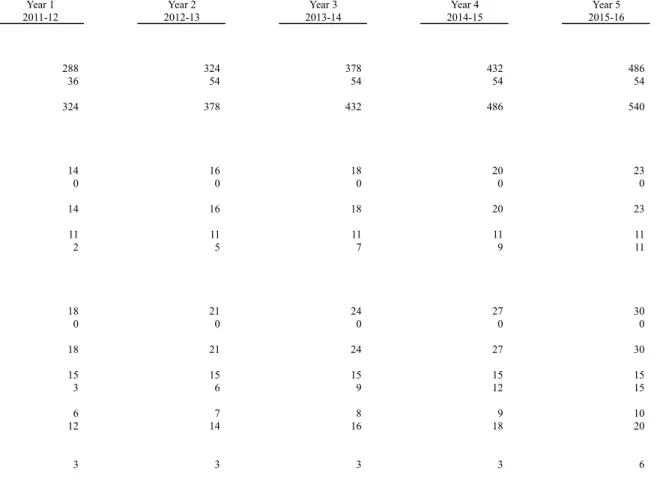
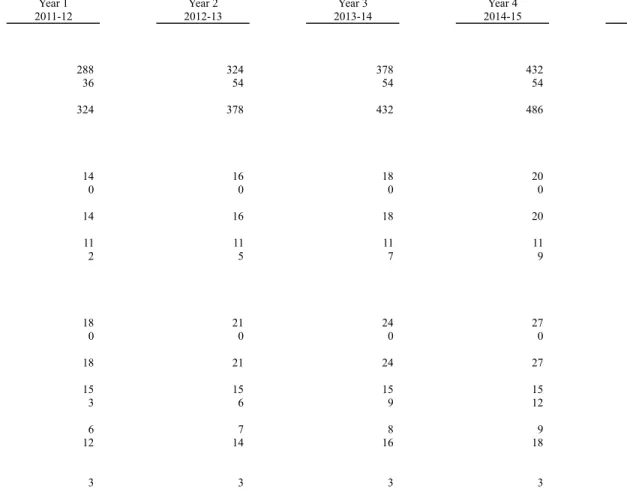
1. Table 1: Enrollment and Completion Data 2. Tables 2A and 2B: Cost and Revenue Data 3. New Program Proposal Summary
C1748_PhDChem(1)_withbreaks.xlsx Tables 2/13/12 Campus: Indiana University-Purdue University Indianapolis
Program: Ph.D. in Chemistry Date: 9 February 2011
TABLE 1: PROGRAM ENROLLMENTS AND COMPLETIONS Annual Totals by Fiscal Year (Use SIS Definitions)
Year 1 Year 2 Year 3 Year 4 Year 5
2011-12 2012-13 2013-14 2014-15 2015-16
A. Program Credit Hours Generated
1. Existing Courses 288 324 378 432 486
2. New Courses 36 54 54 54 54
Total 324 378 432 486 540
B. Full-time Equivalents (FTEs)
1. Generated by Full-time Students 14 16 18 20 23
2. Generated by Part-time Students 0 0 0 0 0
Total 14 16 18 20 23
3. On-Campus Transfers 11 11 11 11 11
4. New-to-Campus 2 5 7 9 11
C. Program Majors (Headcounts)
1. Full-time Students 18 21 24 27 30
2. Part-time Students 0 0 0 0 0
Total 18 21 24 27 30
3. On-Campus Transfers 15 15 15 15 15
4. New-to-Campus 3 6 9 12 15
5. In-State 6 7 8 9 10
6. Out-of-State 12 14 16 18 20
D. Program Completions 3 3 3 3 6
C1748_PhDChem(1)_withbreaks.xlsx Tables 2/13/12 Campus: Indiana University-Purdue University Indianapolis
Program: Ph.D. in Chemistry Date: 9 February 2011
TABLE 2A:
TOTAL DIRECT PROGRAM COSTS AND SOURCES OF PROGRAM REVENUE
Year 1 Year 2 Year 3 Year 4 Year 5
FTE 2011-12 FTE 2012-13 FTE 2013-14 FTE 2014-15 FTE 2015-16
A. Total Direct Program Costs
1. Existing Departmental Faculty Resources 2.2 $ 198,000 2.2 $ 198,000 2.2 $ 198,000 2.2 $ 198,000 2.2 $ 198,000
2. Other Existing Resources 40,000 40,000 40,000 40,000 40,000
3. Incremental Resources (Table 2B) 61,100 122,300 183,400 244,600 305,700
TOTAL $ 299,100 $ 360,300 $ 421,400 $ 482,600 $ 543,700
B. Sources of Program Revenue
1. Reallocation $ 238,000 $ 238,000 $ 238,000 $ 238,000 $ 238,000
2. New-to-Campus Student Fees 40,100 80,300 120,400 160,600 200,700
3. Other (Non-State): External Research Grants 21,000 42,000 63,000 84,000 105,000
4. New State Appropriations
a. Enrollment Change Funding 0 0 0 0 0
b. Other State Funds 0 0 0 0 0
TOTAL $ 299,100 $ 360,300 $ 421,400 $ 482,600 $ 543,700