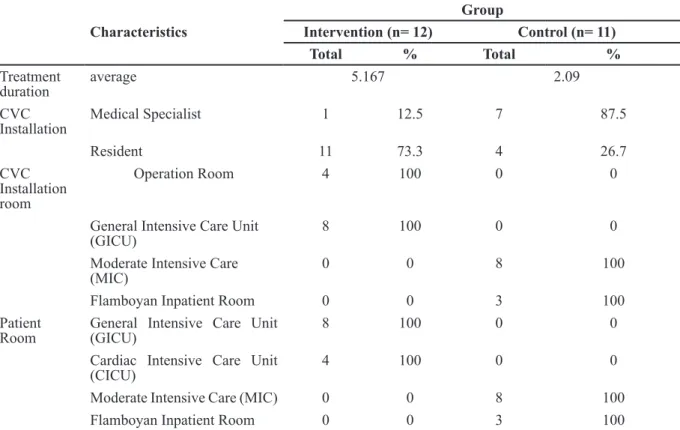
The dependent variable in this study is the difference in the number of bacteria in the CVC insertion area. The number of bacteria in the CVC insertion area in the intervention group increased less than in the control group.
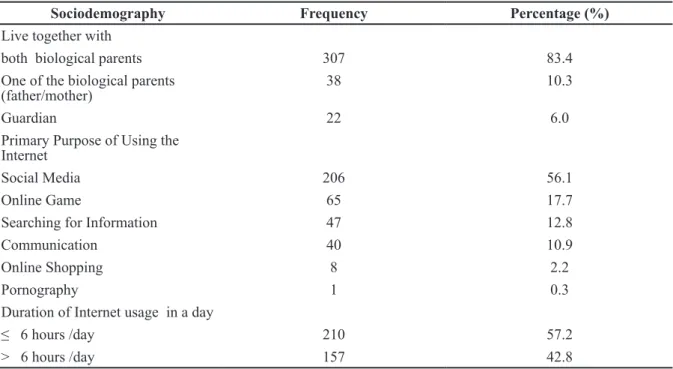
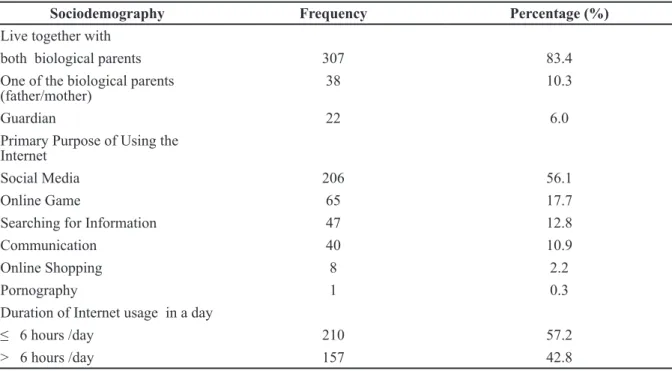
Relationship between Academic Stress, Family and Peer Attachment with Internet Addiction in Adolescents
This means that the higher the family bond, the lower the internet addiction in adolescents. It means that the higher the attachment to peers, the lower the risk of Internet addiction in adolescents.
Efforts in Hypercholesterolemia Treatment
Using Turmeric (Curcuminoid) Extract Phytotherapy on Obese Patients
Preclinical Study
A person with obesity will have more body fat and the risk of developing fatty deposits in the blood vessels (Firmansyah, 2017). Hypercholesterolemia can lead to various diseases and treatment efforts are needed to keep cholesterol levels in the normal range. Turmeric is an agricultural commodity that people in the West Java area produce in abundance.
The results of the study concluded that mice with a high-fat diet and consumption of curcumin extract reduced the expression of lipogenic genes in the liver and the inflammatory response in adipose tissue. The use of turmeric extract to overcome various disorders or diseases in the body, e.g. Based on the results of the study in Table 1, the respondent (5.6%) belonged to the underweight category, 3 respondents (16.7%) to the ideal/normal weight category, 8 respondents (44.4%) to the overweight category and 6 respondents (16.7%) in the overweight category. respondents (33.3%) as obesity category.
The similarity of the results of previous studies lies in the fact that they included people who belong to the underweight category. Most respondents belonged to the overweight and obese categories with increased cholesterol levels, but there were also respondents who were in the normal weight and underweight categories who experienced increased cholesterol levels. Turmeric therapy can be used as a promotional and preventive action in the nursing profession to prevent.
The Effect of InGDEP on Type 2 Diabetes Patients’ Knowledge and Self-Care
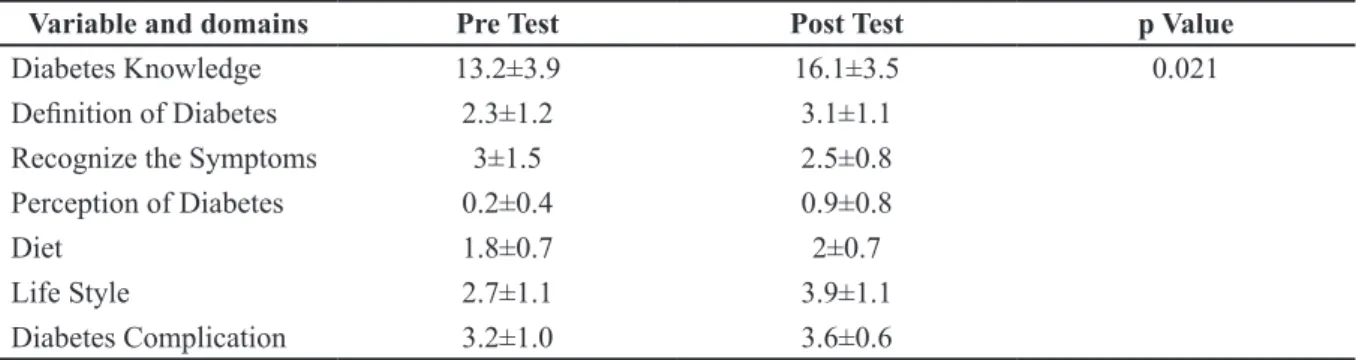
Worldwide, there is a significant increase in the number of people with diabetes, with one in 11 adults suffering from diabetes (WHO, 2014). However, the implementation of the program in the previous research was limited to only a small number of patients. In terms of, length of diabetes experience, the average time would be 4.2 years, showing that most of the respondents in this study experience chronic condition.
Some of the respondents only check their blood sugar once a month or if necessary. It is therefore recommended that, for the further development of the proposed education program in this study, the involvement of the family must be included and more emphasis placed. First, the training program was implemented only for research purposes, and the sustainability of the program therefore needs to be further investigated.
This present study provided new insight into the diabetes education program should further research be conducted to measure the effectiveness of the education program. However, in terms of active involvement, all respondents and health professionals felt some benefits of the program. Effectiveness of diabetes education and self-management for ongoing and newly diagnosed (DESMOND) program for people with newly diagnosed type 2 diabetes: A cluster randomized controlled trial.
The Effect of Spiritual Emotional Freedom Technique (SEFT) on the Self Concept of Breast Cancer Patients with Mastectomy
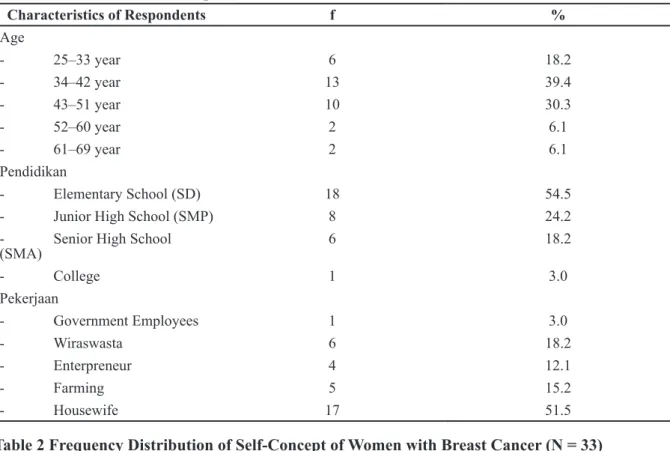
The effect of spiritual emotional freedom technique (SEFT) on the self-concept of breast cancer patients with mastectomy. The sample in this study was breast cancer patients who had undergone mastectomy and met the inclusion and exclusion criteria. But after the SEFT treatment there was an increase in self-concept, namely respondents with a positive self-concept up to 10 people (30.3%) and still having a negative self-concept up to 23 people (69.7%).
Based on Table 2, it can be seen that the majority of women with breast cancer after mastectomy had a negative self-image, namely 29 respondents (87.9%). Breast cancer patients will have a negative impression such as shame and low self-esteem towards others. This shows that support and acceptance of different sides is very important for breast cancer patients.
The results of this study are supported by research conducted by Anggraini (2006) that the need for social support for women with high breast cancer. And as many as 11 respondents (33.3%) since they suffer from breast cancer, cannot do social activities in the community. There are differences in self-concept in women suffering from breast cancer with mastectomy after being treated with SEFT therapy with a value of p = 0.05.
Implementation of Roles and Functions of Case Managers
The success of 73 patients is due to the case manager's ability to perform assessment functions and coordinate services, as well as facilitating terminal services. Therefore, the researcher was interested in performing the role and functions of the case manager at Dr. The first phase was an exploratory study to obtain information on the implementation of the role and functions of the case manager.
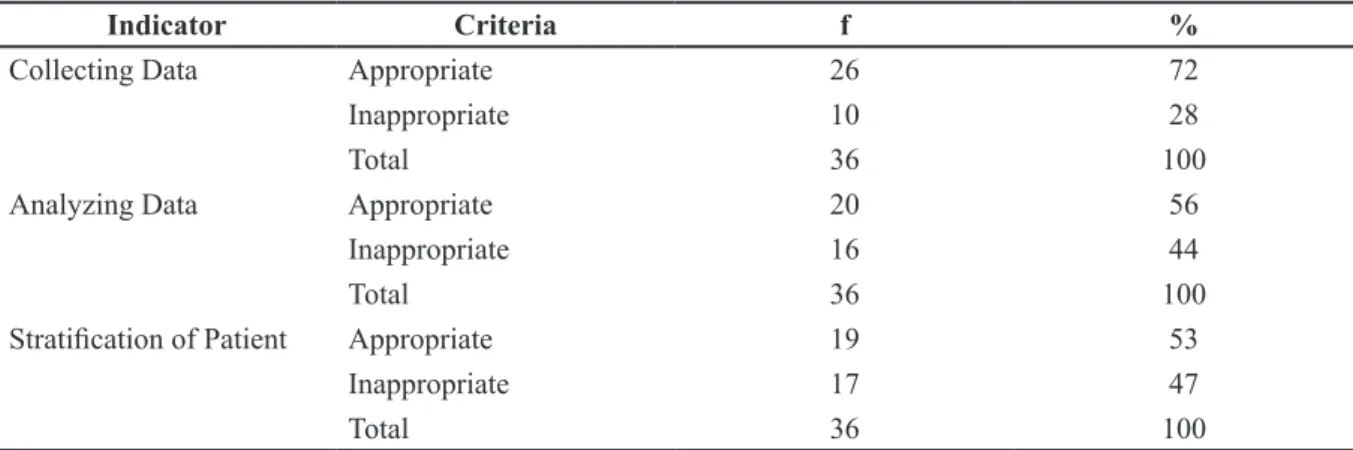
Thus, the implementation of the case manager function is appropriate if the percentage is ≥62.5%, and is not appropriate if it is <62.5%. Participants' opinions regarding planning functions revealed that in the implementation of the planning function there were three things that the case manager must have. The results of the descriptive analysis on the utility evaluation function showed that the case manager function was appropriately implemented by more than half of the number of respondents, the highest percentage of suitability in the collection of data.
Therefore, the case manager must strive to provide integrated interventions to reduce the fragmentation of services. Evaluation, the results of the qualitative analysis showed that in the function of evaluation, every case manager should be qualified to evaluate patients and perform self-evaluation. Post-discharge follow-up, the role of the case manager in the post-discharge follow-up function is to ensure that the continuity of services is safe and timely.
Quality of Nurse Work Life in Pangandaran Health Center
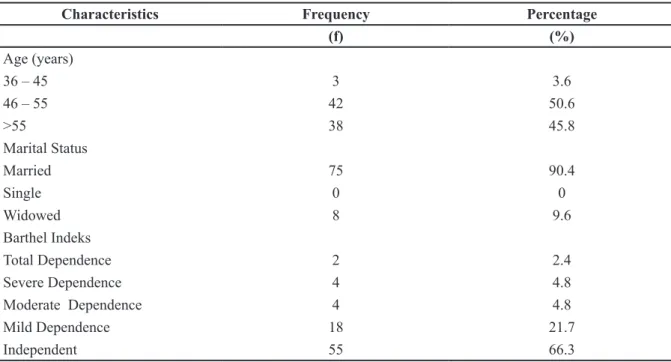
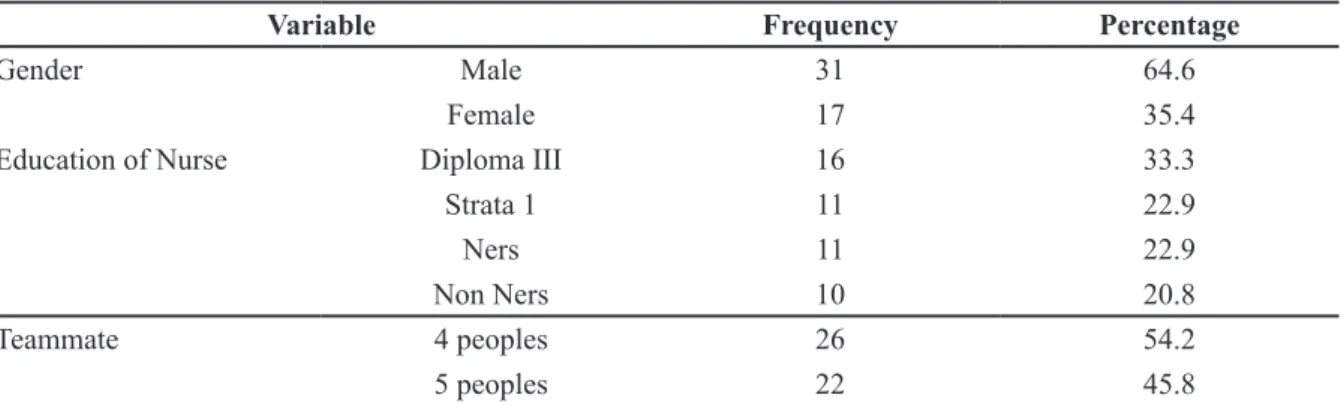
Quality of working life is not a single job design, but instead focuses on all aspects of the work climate or work culture (Luthans, 2011). Based on some of the above understandings, it can be concluded that the quality of working life is the perception of the worker in this case the nurse to the system, so it will affect the working climate and work culture. The results of the survey for the respondents' demographic data can be seen in Table 1 below.
Likewise, for the value of the subvariable of the quality of work life of nurses, all are below the average standard value, except for the subvariable. To look at the relationship between officer characteristics and quality of work life, because the normality test results given were not normally distributed, then all analyzes used non-parametric analyses. The table also shows that gender and age are not related to the quality of life at work (p value > 0.005), while the level of education, the number of teams and salaries of the quality of work life of nurses in Puskesmas Pangandaran (p value < . 0.001).
The support service aspect based on the results of the study has a value higher than the average value. Based on the results of the study, some things can be concluded as follows;. Subsequent analysis revealed that gender and age are not related to quality of work life, while education level, number of teams and wages of quality of work life of nurses in Pangandaran Health Center.
Factors Affecting Low Back Pain among ICU Nurses
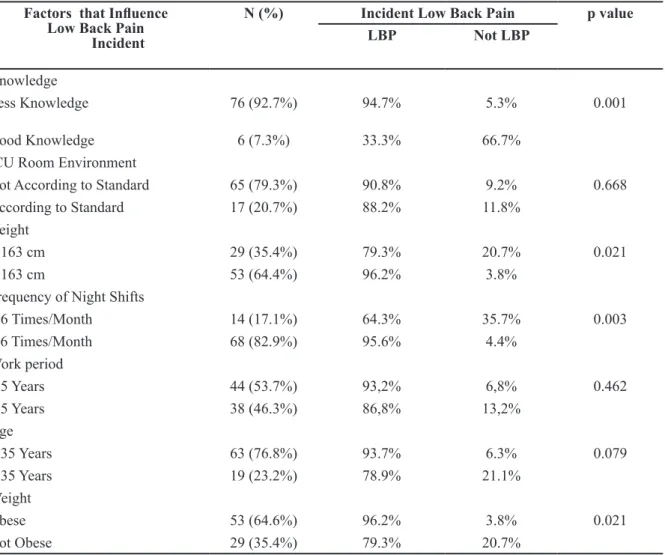
Based on the above data, it was concluded that many ICU nurses had low back pain. Low back pain has a significant impact on nurses, especially those working in the ICU. The environmental factor in the ICU is a risk factor for the occurrence of low back pain problems.
While the results of the statistical analysis conducted by Widiyanti (2009), did not show any significant relationship between height and low back pain. Bivariate, associations between knowledge level and occurrence of low back pain in intensive care unit nurses in regional hospitals in Banten province. Based on the respondent distribution, most of the respondents were those with less knowledge, they experienced low back pain.
Based on the respondent distribution, most overweight respondents experienced low back pain. Based on the research in regional hospitals in the province of Banten, it was determined that many nurses with obesity experienced low back pain. The risk of low back pain (LBP) can be placed in the ICU-A department of the ICU-A department of Pertamina (RSPP) Jakarta.
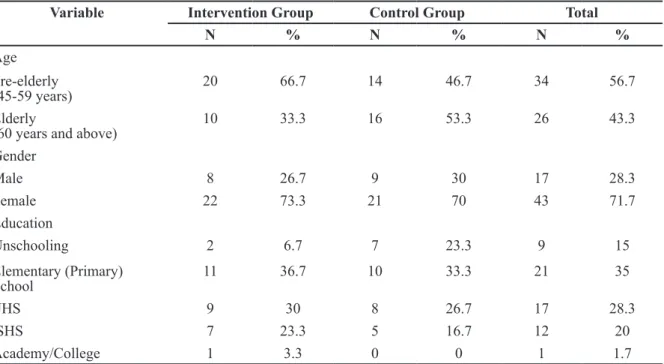
Effect of Family Support Intervention towards Quality of Life with Elderly’s Hypertension in Community
The aim of the study was to map the influence of family support interventions on the quality of life of elderly people with hypertension. This explains that the accepted hypothesis means that there is a difference in the average quality of life of elderly people with hypertension. The results showed that there was a significant difference in the average quality of life of elderly people with hypertension after the family support intervention program in the intervention group compared with the control group (p-value 0.012).
And information support is the dominant factor in the behavior of the elderly in controlling high blood pressure. The family support intervention program that provided training design for family care in the care of elderly people with hypertension had a significant relationship with improving the quality of life of elderly people. The final result of the multivariate analysis showed that the most dominant support was related to the quality of life of PLWHA (Agustanti, 2006).
The family support intervention program provided was part of the health promotion aspect to improve health and the quality of life to reach a happy and useful old age;. Family support intervention program affected the quality of life of elderly people with hypertension in the intervention group compared to the control group. This can be seen in the difference in the average quality of life of the elderly with hypertension between the two groups.