INSTITUTO SUPERIOR CRISTAL FACULTY OF EDUCATION SCIENCE ENGLISH LANGUAGE DEPARTMENT
Rua de Balide Dili Timor-Leste
Contacto: +67075903277 email; [email protected]
Syllabus OF ENGLISH INRODUCTION PEDAGOGY 2025
Instituto Superior Cristal Faculty : Education Science Department: English Language
Level : licentiate of English DBE: Lecturer: Fausto Belo, L.Ed, M.SC
Subject:Introduction to Pedagogy Class : A and B Credit : 4X27 =108 minutes
Semester: III Total meeting:20 meeting -2 meeting mid and final
test = 18 meeting Hours: 108 Minutes
Program outcome (PO) PO1- PO4 Part : 1 Academic Year : 2025
I. DESCRIPTION
The course of Pedagogy should at its best be about what teachers do that not only help student to learn but actively strengthens their capacity to learn
A school system can never be better than teachers teaching in it. If you want to start an innovation in teaching learning process method, make it happen in your own classroom
The school instruction and has shown the terrible need for innovations in pedagogy and curriculum to improve student learning.
Reinforcing and strengthening the teachers in the classroom activities by the English language teaching
To develop the teachers’ capacities as an innovator in formal education
To train and guide the students in learning of method of teaching learning process
To train and guide of students in how to prepare the materials for teaching learning process
The final assessment the students is the guidance of the students’ group project on how to carry out any design and develop of program for teaching learning process as a syllabus, lesson plan, materials for teaching, and evaluation.
Prepare the students in domain of method of teaching learning process II. THE OBJECTIVES/LEARNING OUTCOMES
KNOWLEDGE
By the end of this course, students will be able to :
domain the theories of pedagogics in relation to the methodology of teaching as strategy for the English topics has been selected.
assists students to improve their accuracy and fluency in producing and preparing the materials for teaching learning process activity
attain and enhance competence in the four modes of literacy: writing, speaking, reading and listening by the teaching learning process.
SKILLS
identify the part curriculum of unpacked common core standards for grade and content in relating to the teaching learning process
create the module in unit and/or lesson design as a material for teaching
able to design lesson plans that include clearly defined, measurable objectives and lesson benchmarks
Engage the activities coordinated to students’ developmental level and learning styles
ATITUDE
apply the theories of innovative management to the resolving the education teaching learning process
carry out appropriate tests to detect the student’s domain in methodology of teaching
apply a variety of instructional materials and/or technology appropriate for content and grade level to lessons
Instituto Superior Cristal Faculty : Education Science Department: English Language
Level: licentiate of English Language DBE: Lecturer: Fausto Belo, L.Ed, M.SC
Subject: English Pedagogy Class : A and B Credit : 4 X 27 = 108 Minutes
Semester: I Total meeting:20 meeting -2 meeting mid and final
test = 18 meeting Hours: 108 minutes
Program outcome (PO) PO1- PO4 Part : 2 Academic Year : 2025
III. UNIT/LEARNINGREQUIREMENTS 1. Participation, attitude behaviour
(Individual 4%)
2. Discussion, assignments and presentation
Participate in the class on time actively between lecturer and students Behaviour during learning process in active express ideas for teaching Good English in exploration of material in front of classroom
Good performance in dressing cloth, education words using and good instruction words in
the classroom activities (between Lecturers and Students)
Discussion the specific topic that the lecturer delivery for each group Presentation and questioning and answering each group in the classroom 3. Module Development (Individual 30%)
Teaching materials of English Pedagogic compilation as English Pedagogy module and power points.
The historical of pedagogic theory and father of pedagogy 4. Research assignments the types of a good
teacher (40%)
The function of the teacher in school How write of proposal writing Working duration in three weeks
Time of submission 26 June 2024 in English Pedagogic
Instituto Superior Cristal Faculty : Education Science Department: English Language
Level : Licentiate of English Language DBE: Lecturer: Fausto Belo, L.Ed, M.SC
Subject: English Pedagogy Class : A and B Credit : 5
Semester: I Total meeting:20 meeting -2 meeting mid and final
test = 18 meeting Hours: 125 minutes
Program outcome (PO) PO1- PO4 Part : 3 Academic Year : 2025
IV. UNIT REQUIREMENTS Teaching and Learning Activities Learning Hours
Clearly presentation and orientation, to achieve the outcomes of pedagogy development in the preparation to the presentation of relevant information form the lecturers to students will need to be engaged in activities that provide opportunities to develop the student’s skill in order student’s skills has been involved.
Apply the theories of educational management to the resolving in context of teacher activities in the classroom as innovator for students learning.
Train and develop students through scientific research methods with appropriate research methods Train and educate students how to formulate questions for scientific research
Instituto Superior Cristal Faculty : Education Science Department: English Language
Level: licentiate of English language DBE: Lecturer: Fausto Belo, L.Ed, M.SC
Subject: English Pedagogy Class : A AND B Credit : 5
Semester: I Total meeting:20 meeting -2 meeting mid
and final test = 18 meeting Hours: 125 minutes
Program outcome (PO) PO1- PO4 Part : 4 Academic Year : 2025
SESSIONAL MEETING
WEEKS MEETING TIME TOPICS/CONTENTS METHOD ASSESSMENT
1 2 3 4 5 6
1 1 108 minutes
Presence list
Distribution of materials for students
Systematics of pedagogy materials for one semester by lecturer
The Introduction of Pedagogy
The aims and rationale pedagogy
Self-introduce between lecturer and students Power Point presentation Exploration the materials
Content of materials Grammar /structure Vocabulary
Conclusion of materials
2 2 108 minutes
Presence List
Remain the last materials meeting
The education curriculum as procedures for teaching
Teacher as educator or cancel-ling
The rate of enrolment for the education
Remained the material last Explaining the materials Question and answering
Writing the content of materials
The questioning and answering
3 3 108 minutes
Remained /recheck of materials the last
Explain of the Pedagogy as a method for teaching
Preparing stage for Teaching learning process as teacher
Explanatory and compare the techniques and mechanism in developing the curriculum activities in
Classroom
Questioning and
answering between teacher and students Take notes
4 4 108 minutes Pedagogy function in terms of science
Branch of educational science
Delivery of example lesson plan
Copy or write down the example of lesson plan
Discussion groups with a title about: why the teacher prepare the lesson plan and
learning process.
Evaluation system in using teaching learning process
materials for teaching learning process
5 5 108 minutes
Continuation of groups discussion about as teacher prepare the lesson plan and materials for teaching
Formulate the result discussion each group and preparing for presentation in front of classroom
Each groups present and questioning
6 6 108 minutes
Reinforce of discussion result
Develop and determine human quality.
The diversity of social and cultural at interpersonal skills quality; and
The construct human cognitive, Knowledge, and skill in education.
Reinforce of discussion and given the example of
good mechanism
discussion groups Explanation the materials
Write down the example and questioning
7 7 108 minutes
The construct human cognitive, Knowledge, and skill in education.
Pedagogy functions in terms of tools
Internal and external factors influence an individual’s mental processes to supplement learning.
These processes are such as attention, observation, retrieval from long-term
memory, and
categorization.
The mental processes are linked to teaching.
Discussion and write down the result
8 8 108 meeting
Pedagogy functions in terms of tools
Master using media of education.
The educators created the aids for teaching
Classroom management
Create the mini library in the classroom
The teachers are preparation the aids for teaching
The materials are central for teaching in the classroom
Controlling and
counselling for students
Questioning and
answering
Training and guide the students in how to research
9 9 108 minutes
The Practical Approach Method for teaching learning process
Syllabus for teaching learning process based on the national curriculum
Lesson planning for teaching learning process
Materials/module for teaching learning process
Evaluation for teaching learning process
Guide students to create aids for teaching process How to write or preparing the instrument for evaluation
Practice in front of class for each students with their writing
10 10 108 minutes Middle test Items of instruments
prepared by lecture Doing test for students
11 11 108 minutes
The Practical Approach Method for teaching learning process
Syllabus for teaching learning process based on the national curriculum
Lesson planning for teaching learning process
Materials/module for teaching learning process
Evaluation for teaching learning process
Guide students to create aids for teaching process How to write or preparing the instrument for evaluation
Practice in front of class for each students with their writing
12 12 108 minutes
Cognitive learning can also teach students to form a range of different concepts such as easily
Perceiving and interpreting information that could boost creativity and lead to innovations at the workplace.
Cooperative learning Learning groups Groups discussion
13 13 108 minutes
The Practical Approach Method
Psychological Approach.
Phenomenological approach.
Situational and conditional approach
Functional approach.
Counselling and guidance system
Cooperation between families and school organization
Guarantee and
successful of outcomes or students quality
14 14 108 minutes
The Pedagogy stand science as a tool for
Philosophy of Education
Science of Education
Psychology of child development
Learning Psychology
Educational administration
Sociology and Anthropology Cultural
Mechanism and techniques of teaching learning process in relation to the classroom management The theory of classroom management in relation to the students learning problems to decide on class rules or procedures and the student’s peer’s benefits in keeping the students engaging to promote the pro-social behaviour are happening.
Group discussion and presentation of result
15 15 108 minutes
Characteristics and module of good teachers in the school as such:
Teacher as a representative of family in the school
The teacher as partnerships of students in the school live
Teacher as an innovator in the school learning
Teacher as a motivator in the school learning
Teacher as administrator in the school learning
Teacher as an evaluator in the school of students learning
To avoid misusing educational rules in educating students at school.
Training students to understand educational
psychology and
guidance for students in the school.
16 16 108 minutes Continuation of the Characteristics and
module of good teachers in the school To avoid misusing educational rules in educating students at school.
Training students to understand educational
psychology and
guidance for students in the school.
17 17 108 minutes
Groping the students to do the small research about the characteristics of good teacher in the school.
The groups identify the characteristic
The background,
problems and
objectives
18 18 108 minutes Presentation result of small research Each groups presentation Questioning and answering
19 19 108 minutes Continuation presentation and reinforced of theory as a review for materials given.
Each groups presentation and reinforce of materials
Questioning and
answering as final meeting of semester.
20 20 108 minutes Final test Prepared by lecturer Scorers submitting
Prepared by: Agreed by:
English Pedagogic English Language Department
Fausto Belo, L.Ed, M.SC Charles F. Guterres, MM Lecturer The Chief
Approved by:
Faculty of Education Science
Zelio da Conceição Freitas, M.Ed.
Dean
LESSON PLAN I and II
Topic : Introduction of Pedagogic
Sub-Topic : method of pedagogic and function of pedagogic Instructor : Fausto Belo, L. Ed, M. Sc
I. Learning Outcome : the final of the teaching the students can:
LO 1:
LO 2: learn of the theories and discovers of pedagogy
LO 3: have a skill of teaching learning process in the classroom
II. Facilities : Materials, Power Point Presentation, Books/module, chalk, black and white board, markers and Eraser.
III. Procedures of Teaching and Learning Activities
Nu PROCEDURES OF ACTIVITIES SPECIFIC OBJECTIVES TIME ALLOCATION
01 Greeting and pray To remain the students, prepare their
selves in good to follow the activities today
Two types teaching 10 minutes
02 Absence for students To organize and know the students 5 Minutes
03 Materials presentation by power points The students ask questions during the explanation The students actively take important points of pedagogical theory
The lecturer and fellow students provide answers the questions asked by students
35 minutes
04 The lecturer giving the opportunities for students
to expression their ideas for the materials The students are given the opportunity to provide views on pedagogy related to teaching methods through questions by the questions
40 minutes
05 Reinforced the materials Reminds students about the benefits or usefulness of the material that has been taught
15 minutes 06 Close the activity today Students are preparing themselves for next
material 3 minutes
IV. EVALUATION
Can only see the activeness of students who can express opinions in good and correct English in class V. ASSIGNMENT
VI. Every students are assigned to read/watch or discover of discover of pedagogy as theory of teaching in relevant with next mmeeting.
VII.REFERENCES:
Module or compilation o pedagy Theory of Maria Montessori Theory of Kihajar Dewantoro Theory of Paulo Freire
Dili, ___,______________ 2024 Approved by:
Introduction to Pedagogy English Language Department
(Fausto Belo, L. Ed, M. Sc) (Charles F. Guterres, MM) Lecturer The Chief
LESSON PLAN I, II, and III
Topic : Introduction of Pedagogic
Sub-Topic : Introduction of method and Function of pedagogic Instructor : Fausto Belo, L. Ed, M.Sc.
I. Learning Outcome: the final of the teaching the students can:
LO 1: train the students to be able in using good methods teaching LO 2: learn of the theories and discovers of pedagogy
LO 3: to train students to be able in mastering the teaching learning process
II. Facilities : Materials, Power Point Presentation, Books/module, chalk, black and white board, Markers and Eraser.
III. Procedures of Teaching and Learning Activities
Nu PROCEDURES OF ACTIVITIES SPECIFIC OBJECTIVES TIME ALLOCATION
01 Greeting and pray To remain the students, prepare their
selves a good to follow the activities today
Three types teaching 7 minutes
02 Absence for students To organize and know the students 8 Minutes
03 Method and function of pedagogic in teaching
learning process train the students domain in using method for
teaching
prepare students to know the classroom controlling techniques
to train the students in mastering of the teaching learning process
35 minutes
04 Prepare students in find out of materials for
teaching based on the national curriculum The students will be selecting the topics
curriculum to create the materials for teaching 40 minutes 05 The instructor correction of the materials
production Reminds students about the benefits or
usefulness of the material that has been taught 15 minutes 06 Close the activity today Students are preparing themselves for next
material 3 minutes
IV. EVALUATION
Can only see the activeness of students who can express opinions in good and correct preparation materials for teaching
V. ASSIGNMENT
Every students are assigned to read/watch or discover of discover of pedagogy as theory of teaching in relevant with next mmeeting.
VI. REFERENCES:
Module or compilation of pedagogy National curriculum
Dili, ___, ______________ 2024 Approved by:
Introduction to Pedagogy English Language Department
(Fausto Belo, L.Ed, M.Sc) (Charles F. Guterres, MM) Lecturer The Chief
LESSON PLAN VI Topic : Introduction of Pedagogic
Sub-Topic : Introduction of method and Function of pedagogic Instructor : Fausto Belo, L. Ed, M.Sc.
I. Learning Outcome: the final of the teaching the students can:
LO 1: train the students to be able in using good methods teaching
LO2 : prepare students to be able in understanding the techniques for classroom controlling
LO 3: to train students to be able in mastering the teaching learning process II. Facilities : Materials, Power Point Presentation, Books/module, chalk, black and white Board, Markers and Eraser.
III. Procedures of Teaching and Learning Activities
Nu PROCEDURES OF ACTIVITIES SPECIFIC OBJECTIVES TIME ALLOCATION
01 Greeting and pray To remain the students, prepare their selves a good to follow the activities today
One types teaching 7 minutes
02 Absence for students To organize and know the students 8 Minutes 03 Method and function of pedagogic in
teaching learning process
train the students domain in using method for teaching
prepare students to know the classroom controlling techniques
to train the students in mastering of the teaching learning process
35 minutes
04 Prepare students in find out of materials for teaching based on the national curriculum
The students will be selecting the topics curriculum to create the materials for teaching
40 minutes
05 The instructor correction of the materials production
Reminds students about the benefits or usefulness of the material that has been taught
15 minutes
06 Close the activity today Students are preparing themselves for next material
3 minutes
IV. EVALUATION
Can only see the activeness of students who can express opinions in good and correct preparation materials for teaching
V. ASSIGNMENT
All students are assigned to read/watch or discover of discover of pedagogy as theory of teaching in relevant with next mmeeting.
VI. REFERENCES:
Module or compilation of pedagogy National curriculum
Dili, ___, ______________ 2024 Approved by:
Introduction to Pedagogy English Language Department
(Fausto Belo, L. Ed, M. Sc) (Charles F. Guterres, MM) Lecturer the Chief
LESSON PLAN VII Topic : Introduction of Pedagogic
Sub-Topic : Introduction of method and Function of pedagogic Instructor : Fausto Belo, L. Ed, M.Sc.
VII. Learning Outcome: the final of the teaching the students can:
LO 1: train the students to be able in using good methods teaching
LO2: prepare students to be able in understanding the techniques for classroom controlling
LO 3: to train students to be able in mastering the teaching learning process VIII. Facilities : Materials, Power Point Presentation, Books/module, chalk, black and
white Board, Markers and Eraser.
IX. Procedures of Teaching and Learning Activities
Nu PROCEDURES OF ACTIVITIES SPECIFIC OBJECTIVES TIME ALLOCATION
01 Greeting and Pray To remain the students, prepare their selves a good to follow the activities today
One types teaching 8 minutes
02 Absence for students To organize and know the students 7 Minutes
03 Types of the teachers in the school Students can understand good teachers in front of the class
Students know the aspects of good teachers in the classroom to teach
Students know the functions and duties of teachers in the classroom
35 minutes
04 The assignments for students to observe the real English teacher in the classroom
The students observe the classroom activity and present for each student or groups
40 minutes
05 The instructor correction the task of students submitted after the observation
Reminds students by report and present in front of class
15 minutes
06 Close the activity today Students are preparing themselves for next material
3 minutes
X. EVALUATION
Can only see the activeness of student’s observation activity XI. ASSIGNMENT
Every students are assigned to read/watch or discover of discover of pedagogy as theory of teaching in relevant with next mmeeting.
XII.REFERENCES:
Module or compilation of pedagogy National curriculum
Dili, ___, ______________ 2024 Approved by:
Introduction to Pedagogy English Language Department
(Fausto Belo, L. Ed, M. Sc) (Charles F. Guterres, MM) Lecturer the Chief
LESSON PLAN VIII Topic : Introduction of Pedagogic
Sub-Topic : Introduction of method and Function of pedagogic Instructor : Fausto Belo, L. Ed, M.Sc.
XIII. Learning Outcome: the final of the teaching the students can:
LO 1: train the students to be able in using good methods teaching z
O2: prepare students to be able in understanding the techniques for class room controlling
LO 3: to train students to be able in mastering the teaching learning process XIV. Facilities : Materials, Power Point Presentation, Books/module, chalk, black and
white Board, Markers and Eraser.
XV. Procedures of Teaching and Learning Activities
Nu PROCEDURES OF ACTIVITIES SPECIFIC OBJECTIVES TIME ALLOCATION
01 Greeting and pray To remain the students, prepare their selves a good to follow the activities today
One types teaching 8 minutes
02 Absence for students To organize and know the students 7 Minutes
03 The Lecturer can review the previous lesson to students before starting a new lesson today
The students get a response as a warm- up for the next lessons
15 minutes
04 The function of Pedagogic as a tool for teaching learning based on the National Curriculum
The students have mastered in using media of education.
The students have created the aids for teaching
The students have Created the mini library in the classroom after teaching learning process
35 minutes
04 The assignments for students to select
the aids for teaching based on the topic Each student is creating the aids of title
delivering 40 minutes
05 Close the activity today Students are preparing themselves for next material
3 minutes
XVI. EVALUATION
Can only see the activeness of student’s observation activity XVII. ASSIGNMENT
All students are assigned to read/watch or discover of discover of pedagogy as theory of teaching in relevant with next mmeeting.
XVIII. REFERENCES:
Module or compilation of pedagogy National curriculum
Dili, ___, ______________ 2024 Approved by:
Introduction to Pedagogy English Language Department
(Fausto Belo, L.Ed, M.Sc) (Charles F. Guterres, MM) Lecturer the Chief
LESSON PLAN IX Topic : Introduction of Pedagogic
Sub-Topic : Introduction of method and Function of pedagogic Instructor : Fausto Belo, L. Ed, M.Sc.
I. Learning Outcome: the final of the teaching the students can:
LO 1: train the students to be able in using good methods teaching
LO2: prepare students to be able in understanding the techniques for classroom controlling
LO 3: to train students to be able in mastering the teaching learning process II. Facilities : Materials, Power Point Presentation, Books/module, chalk, black and
White Board, Markers and Eraser.
III. Procedures of Teaching and Learning Activities
Nu PROCEDURES OF ACTIVITIES SPECIFIC OBJECTIVES TIME ALLOCATION
01 Greeting and pray To remain the students, prepare their selves a good to follow the activities today
One types teaching 8 minutes 02 Absence for students To organize and know the student’s
presence today
7 Minutes 03 The Lecturer can review the previous
lesson to students before starting a new lesson today
The students get a response as a warm- up for the next lessons
15 minutes
04 The function of Pedagogic as a tool for teaching learning based on the National Curriculum
The students have mastered in using media of education.
The students have created the aids for teaching The students have Created the mini library in the classroom after teaching learning process
35 minutes
04 The assignments for students to select the aids for teaching based on the topic
Each student are creating the aids of title delivering
40 minutes
05 Close the activity today Students are preparing themselves for next material
3 minutes
IV. EVALUATION
Can only see the activeness of student’s observation activity V. ASSIGNMENT
Every students are assigned to read/watch or discover of discover of pedagogy as theory of teaching in relevant with next mmeeting.
VI. REFERENCES:
Module or compilation of pedagogy National curriculum
Dili, ___, ______________ 2025 Approved by:
Introduction to Pedagogy English Language Department
(Fausto Belo, L. Ed, M. Sc) (Charles F. Guterres, MM) Lecturer the Chief
LESSON PLAN X, XI and XII
Topic : Introduction of Pedagogic
Sub-Topic : Introduction of method and Function of pedagogic Instructor : Fausto Belo, L.
Ed, M.Sc.
VII. Learning Outcome: the final of the teaching the students can:
LO 1: train the students to be able in using good methods teaching
LO2: prepare students to be able in understanding the techniques for classroom controlling
LO 3: to train students to be able in mastering the teaching learning process VIII. Facilities : Materials, Power Point Presentation, Books/module, chalk, black and
White Board, Markers and Eraser.
IX. Procedures of Teaching and Learning Activities
Nu PROCEDURES OF ACTIVITIES SPECIFIC OBJECTIVES TIME ALLOCATION
01 Greeting and pray Middle Text
To remain the students, prepare their selves a good to follow the activities today
Three types teaching 8 minutes 02 Absence for students To organize and know the student’s
presence today
7 Minutes 03 Guide student’s assignment for one week
and presenting the result of assignment about to observe the English teachers in teaching English in the secondary and pre- secondary at Cristal schools.
The Lecturer can review the previous lesson to students before starting a new lesson today
To train the student how to present resent in front of classroom.
To deliver the students responsibilities for the assignment
15 minutes
04 The function of Pedagogic as a tool for teaching learning based on the National Curriculum
To teach the students in mastering in using media of education.
To improve the students in creating the aids for teaching
To motivate the students Creating the mini library in their classroom after the final teaching learning process
35 minutes
04 The assignments for students to select the aids for teaching based on the topic
To check each student are creating the aids of title delivering
40 minutes
05 Close the activity today Students are preparing themselves for next material
4 minutes
X. EVALUATION
Can only see the activeness of student’s observation activity XI. ASSIGNMENT
All students are assigned to read/watch or discover of discover of pedagogy as theory of teaching in relevant with next mmeeting.
XII. REFERENCES:
Module or compilation of pedagogy National curriculum
Dili, ___, ______________ 2025 Approved by:
Introduction to Pedagogy English Language Department
(Fausto Belo, L. Ed, M. Sc) (Charles F. Guterres, MM)
Lecturer the Chief
Lesson Plan XIII
Topic : Introduction of Pedagogic
Sub-Topic : Introduction of method and Function of pedagogic Instructor : Fausto Belo, L. Ed, M.Sc.
XIII. Learning Outcome: the final of the teaching the students can:
LO 1: train the students to be able in using good methods teaching
LO2: prepare students to be able in understanding the techniques for classroom controlling
LO 3: to train students to be able in mastering the teaching learning process XIV. Facilities : Materials, Power Point Presentation, Books/module, chalk, black and
White Board, Markers and Eraser.
XV. Procedures of Teaching and Learning Activities
Nu PROCEDURES OF ACTIVITIES SPECIFIC OBJECTIVES TIME ALLOCATION
01 Greeting and Pray to remain the students, prepare their selves a good to follow the activities today
one type teaching 8 minutes 02 Absence for students To organize and know the student’s
presence today
7 Minutes 03 Remained of students for materials last to remain the students with a last materials
given.
15 minutes 04 The lecturer explains about Psychology
and Method approach for teaching as a teacher.
to improve the students can learn about the psychological aspects, and
to educate the students with a methodology of teaching.
35 minutes
04 The Lecturer give students time to express their opinions or ideas in fostering and training good students to improve the quality of education.
to guide the students are given the opportunity of education
to express the student’s opinions that are relevant to psychology and methodology of the approach.
40 minutes
05 Close the activity today The students are preparing themselves for next material
5 minutes
XVI. EVALUATION
Can only see the activeness of student’s observation activity XVII. ASSIGNMENT
All students are assigned to read/watch or discover of discover of pedagogy as theory of teaching in relevant with next mmeeting.
XVIII. REFERENCES:
Module or compilation of pedagogy National curriculum
Dili, ___, ______________ 2025 Approved by:
Introduction to Pedagogy English Language Department
(Fausto Belo, L. Ed, M. Sc) (Charles F. Guterres, MM)
Lecturer the Chief
Lesson Plan Lesson Plan XIV
Topic : Introduction of Pedagogic
Sub-Topic : Introduction of method and Function of pedagogic Instructor : Fausto Belo, L. Ed, M.Sc.
XIX. Learning Outcome: the final of the teaching the students can:
LO 1: train the students to be able in using good methods teaching
LO2: prepare students to be able in understanding the techniques for classroom controlling
LO 3: to train students to be able in mastering the teaching learning process XX. Facilities : Materials, Power Point Presentation, Books/module, chalk, black and
White Board, Markers and Eraser.
XXI. Procedures of Teaching and Learning Activities
Nu PROCEDURES OF ACTIVITIES SPECIFIC OBJECTIVES TIME ALLOCATION
01 Greeting and pray to remain the students, prepare their selves a good to follow the activities today
one type teaching 8 minutes 02 Absence for students To organize and know the student’s
presence today
7 Minutes 03 Remained of students for materials last To recheck previous material with students
before starting new material
15 minutes 04 The Pedagogy stand science as a tool for
teaching dan counselling students by the teaching learning process
to improve the students can learn about the psychological aspects, and
To educate the students with a methodology of teaching.
To guarantee of the quality teaching learning process preparing the materials and lesson plain
35 minutes
04 The Lecturer give students time to express their opinions or ideas in fostering and training good students to improve the quality of education.
to guide the students are given the opportunity of education
to express the student’s opinions that are relevant to psychology and methodology of the approach.
40 minutes
05 Close the activity today The students are preparing themselves for next material
6 minutes XXII. EVALUATION
Can only see the activeness of student’s observation activity XXIII. ASSIGNMENT
All students are assigned to read/watch or discover of discover of pedagogy as theory of teaching in relevant with next mmeeting.
XXIV. REFERENCES:
Module or compilation of pedagogy National curriculum
Dili, ___, ______________ 2025 Approved by:
Introduction to Pedagogy English Language Department
(Fausto Belo, L. Ed, M. Sc) (Charles F. Guterres, MM) Lecturer the Chief
Lesson Plan Lesson Plan XV
Topic : Introduction of Pedagogic
Sub-Topic : Introduction of method and Function of pedagogic Instructor : Fausto Belo, L. Ed, M.Sc.
I. Learning Outcome: the final of the teaching the students can:
LO 1: train the students to be able in using good methods teaching
LO2: prepare students to be able in understanding the techniques for classroom controlling
LO 3: to train students to be able in mastering the teaching learning process II. Facilities : Materials, Power Point Presentation, Books/module, chalk, black and
White Board, Markers and Eraser.
III.Procedures of Teaching and Learning Activities
Nu PROCEDURES OF ACTIVITIES SPECIFIC OBJECTIVES TIME ALLOCATION
01 Greeting and pray to remain the students, prepare their selves a good to follow the activities today
one type teaching 8 minutes 02 Absence for students To organize and know the student’s
presence today
7 Minutes 03 Remained of students for materials last to remain the students with a last materials
given.
15 minutes 04 The lecturer explain about Psychology
and Method approach for teaching as a teacher.
to improve the students can learn about the psychological aspects, and
to educate the students with a methodology of teaching.
35 minutes
04 The Lecturer give students time to express their opinions or ideas in fostering and training good students to improve the quality of education.
to guide the students are given the opportunity of education
to express the student’s opinions that are relevant to psychology and methodology of the approach.
40 minutes
05 Close the activity today The students are preparing themselves for next material
7 minutes
IV. EVALUATION
Can only see the activeness of student’s observation activity V. ASSIGNMENT
All students are assigned to read/watch or discover of discover of pedagogy as theory of teaching in relevant with next mmeeting.
VI. REFERENCES:
Module or compilation of pedagogy National curriculum
Dili, ___, ______________ 2025 Approved by:
Introduction to Pedagogy English Language Department
(Fausto Belo, L. Ed, M. Sc) (Charles F. Guterres, MM)
Lecturer the Chief
The Compilation of Materials Teaching Learning process For Subject Introduction to Pedagogy
English Language Department Semester I for Class A and B
Academic Year 2025
Prepared By
Fausto B elo, L. Ed, M. S c.
Lecture
FACULTY OF EDUCATION SCIENCE INSTITUTO SUPERIOR CRISTAL
DILI
2025
The Compilation of Materials Teaching Learning process For Subject Introduction to Pedagogy
English Language Department Semester III for Class A and B
Academic Year 2025
Prepared By
Fausto Belo, L. Ed. M.Sc.
Lecturer Approved by:
English Education Study Program the Faculty of Education Science
(Charles F. Guterres, L. ED, MM) (Zelio da Conceição Freitas, M.TP) Head Dean
ENGLISH LANGUAGE DEPARTMENT FACULTY OF EDUCATIONAL SCIENCE
INSTITUTO SUPERIOR CRISTAL DILI
2025
Acknowledgement
Glory to the Father, Son and Spirit was given the lecture has prepared the Compilation of Materials for Teaching Learning Process through English Language Didactic to the English Study Program at Instituto Superior Cristal Dili in protecting to the students in Semester seven on Academic year 2020 in good and be successful prepared, but still on fare way of the perfectiveness for readers to read this compilation materials of English Language Didactic but not for selling.
Based on that, the ISC has board structural as follow: Executive Director of Fundação Cristal is owner of ISC, and one cluster of academics are responsibilities of academic activities. This cluster is responsibility by one Rector, one vice Rector of academic, one BAK, Finances, one faculty of science and education with more departments included and one faculty of health education has created too. And then the Instituto Superior Cristal has one library are preserved in reinforcing the student’s ability by teaching learning process but still has lack of references.
With that cause presenting above, the lecture has creative to give or minimize the weakness of Instituto Superior Cristal has. Because, the ISC has existed not only responsibility from them, but almost of the human resources whose are including on this academic could be responsibility based on the capacities do we have to do for this Instituto. Based on that, the priest or pastor his named Smail argue on his theory O Salesiano com Socialista, 1789 sobre “o buro nunca-se sabe o que a intelegência, mas o intelegente sabe muito vem o que o buro. Porque? Porque o buro nunca vem de intelegencia, más o intelegente bem do buro, por isso o intelegente conhece muito bem o que o buro.” Therefore, the weakness of ISC it’s also the weakness of lectures and then we are lectures on this Instituto do not passively but actively in a creative to create the conditions and limited the weakness they have there.
Finally, the lecturer that was prepared this compilation material of English Language didactic could be fearless and guarantee of the critics from the readers and students ISC after the reading this compilation. Because this compilation has still unqualified of rightness and perfectively in scientific core do we need. And then the last no things are high perfect than to be increasing and minimize of illiterate of the younger people of Timor-Leste has still hungering the knowledge and science for the Timor-Leste Development in generally and specifically in education power require on the constitution of the RDTL required for us as new generation.
The Abbreviation Words
Adj = adjective
Adv. = adverb
N = noun
BC = Before Christ
S = subject
V = Verb
The List of Table
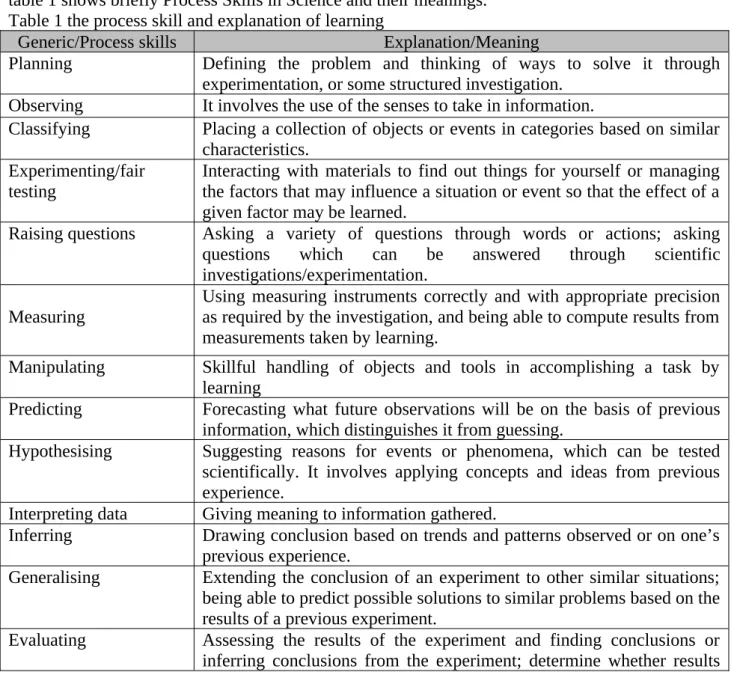
Table 1 the process skill and explanation of learning ………11
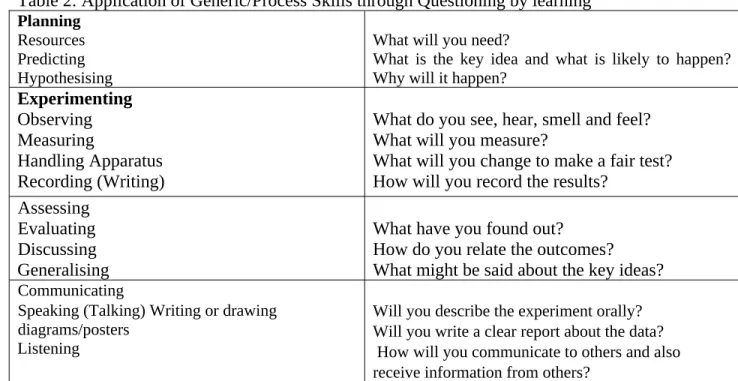
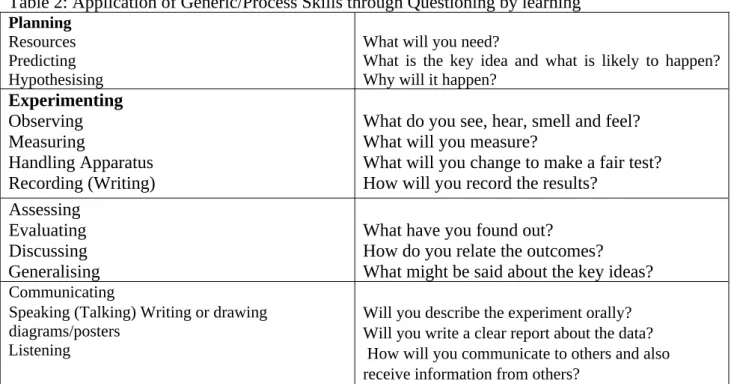
Table 2: Application of Generic/Process Skills through Questioning by learning……….11
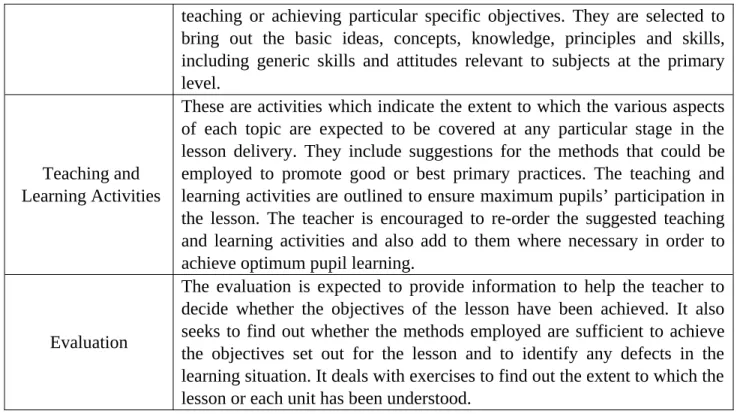
Table 3: Information Contained in the Syllabus ……….12
Table 4 Summaries of teacher attitudes, strategies and practices………14
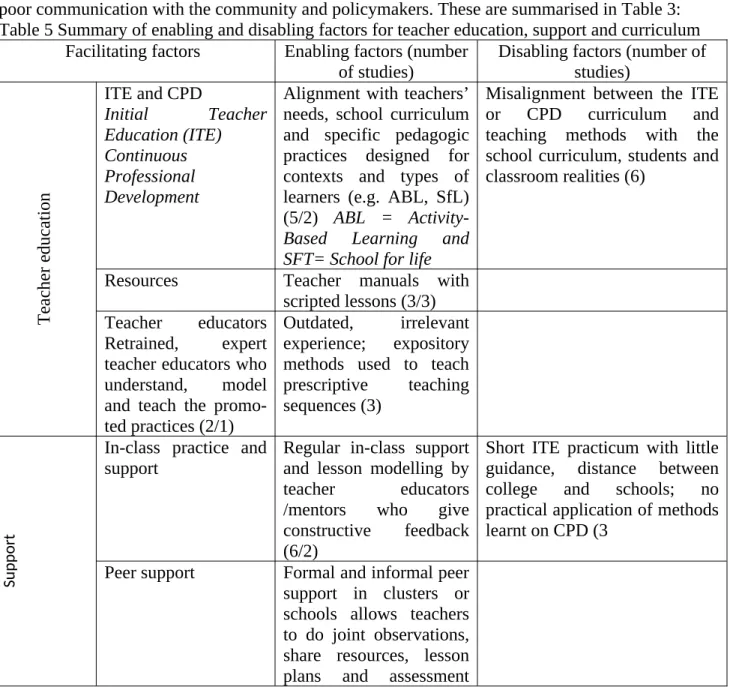
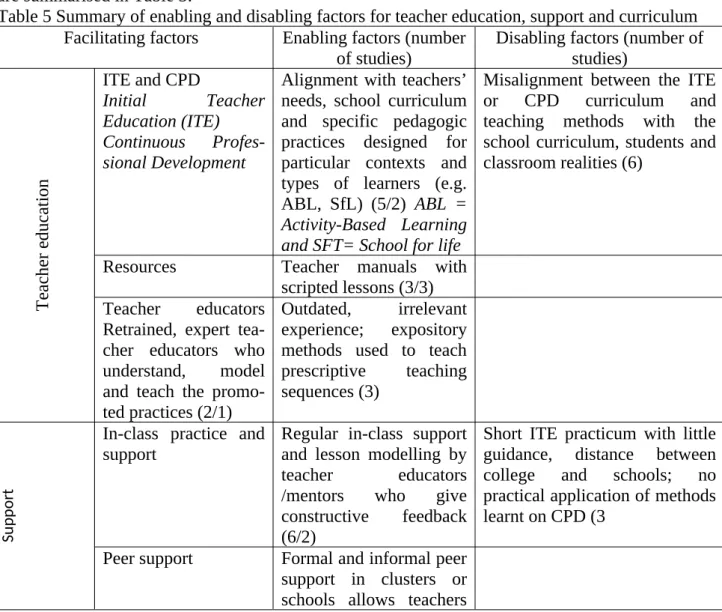
Table 5 Summary of enabling and disabling factors for teacher education, support and curriculum….15 Table 6: Example of a Timetable for Large Classes……….17
The List of Figures
Experience, Reflection, Learning Model to Optimize Learning………9
The Table of Contents
The Cover……….i The legalization………...ii The Acknowledgement………..iii The Abbreviation Words………iv The List of Tables………...v The Title Introduction to Pedagogy………1 A. Introduction ………1 B. Objective of Pedagogy……….9 C. Concept of learning………10 D. Multi-grade Teaching (MGT)………18 E. Conclusion and Suggestion ………...19 F. References………..21
Introduction to Pedagogy
A. Introduction
This compilation material introduction to pedagogy review, commissioned by the lecturer of introduction pedagogy in English Language Department at faculty of Education Science of Instituto Superior Cristal, focused on pedagogy, curriculum, teaching practices and teacher education in developing countries. I enter this teacher action compilation with an interest in studying how I, as a high school teacher, developed a critical race pedagogy (CRP) curriculum for students in an out-of-school context. The Timor-Leste Government is committed to providing every student with opportunities to achieve excellence in second language or foreign language, as science language, critical and creative thinking, and the arts. Our ambitious Education State targets focus our efforts on promoting excellence across the curriculum, on the education and wellbeing of students, and on breaking the link between disadvantage and student outcomes on language study.
Pedagogy is a method of teaching in which teachers teach, both in theory and in practice.
Pedagogy is shaped by educator's teaching beliefs. Relation to characteristic of word or morphology Word pedagogy is noun word with a meaning is the method and practice of teaching, especially as an academic subject or theoretical concept that in relationship between applied linguistics and language pedagogy. Therefore, the pedagogy is taken as an academic discipline, is the study of how knowledge and skills are imparted in an educational context, and it considers the interactions. When we are talking about phonology system that using sound and morphology is adapted International Phonetic Alphabet (IPA) 21 Alphabet Consonants and 5 Vowels that created or adapted of Latin alphabet. It is based on Li, G., (2012). Culturally contested Pedagogy: Battles of literacy and schooling between mainstream teachers and Asian immigrant parents. To be guaranteed the teaching learning process we as a teacher used teaching method is a set of principles and methods used by teachers to enable students learning. Because pedant is tutor (teacher) and Pedantic is teaching activities in the classroom.
Based on the theory of Kihajar Dewantara (1912) said that in improving the quality of education, a person is in front of the class as a model/example for students, the teacher is in the middle as a companion for students and behind as a supporter for students in the world of education between informal education, formal education and non-formal education for each individual, then Paul, F. (1912) said that teachers are partners or colleagues towards students in the learning process in class and Maria Montessory (1912) said that students are like blank white paper and are stained by teachers through learning activities in class.
Pedagogy is about learning, teaching and development influenced by the cultural, social and political values we have for children…in Timor-Leste and underpinned by a strong theoretical and practical base. (Education Scotland, 2005). Theories provide different lenses through which to interpret and gain insight into complex issues…Educators can use theories to assist them to make sense of and respond to different circumstances and contexts… Because all theories have strengths and limitations, it is preferable for educators to use a range of theories rather than relying only on one. (DEEWR, 2010) The following theories are those mainly referred to in relation to early childhood education and care practice: a) Behaviourist theory - behaviour is learned and can be unlearned, unacceptable behaviour can be replaced by acceptable behaviour and changes in children’s behaviour occur due to the responses they get to their behaviour. Pedagogical practices associated with this theory include educators reinforce appropriate behaviour through rewards ranging from a positive statement to tangible rewards such as star charts; educators avoid reinforcing inappropriate behaviour or remove children who are behaving
inappropriately; educators draw children’s attention to the consequences of their behaviour. b) Developmental theory - development depends on the context, genetic and environmental circumstances;
development leads learning; children learn through exploration and play with concrete materials;
physical, cognitive, emotional and social domains of development are interwoven. Pedagogical practices associated with this theory include educators facilitate children’s learning by planning a rich environment with routines and play-based experiences that may be linked to learning goals appropriate for children’s unique and holistic development; using developmental theory, educators observe children to understand and interpret their development and individual differences.
Teachers and school leaders have told us they want resources that expand their conversations about effective teaching and learning. The Pedagogical Model follows their lead, it is adaptive and flexible, not prescriptive and linear, and it encourages teachers to move back and forth between the five domains as they respond to their students’ learning needs. The Pedagogical Model maps the five domains to the relevant Practice Principles and creates opportunities for deep learning experiences. Combined with the Vision for Learning, Practice Principles for Excellence in Teaching and Learning (Practice Principles) and High Impact Teaching Strategies (HITS), the Pedagogical Model will stimulate discussions about current teaching practices in schools, help schools to build a high-performance learning culture, and ultimately improve student achievement and engagement. By providing common language and guidance on improving the quality and consistency of teaching practice, the Pedagogical Model enables school leaders, teachers and students to foster shared leadership so that everybody contributes to co-designed and connected learning. Therefore, the Successful teaching and primarily learning emanates from careful planning and preparation. Before this can be done, the teacher must be fully aware of the need to familiarize himself/herself with the requisite curriculum materials. The curriculum of a school is the structured and controlled total learning experience under the guidance of a school.
In relating to that the teacher is a good have morals in developing for children must have the character as:
a. The teacher is a representative of the family in the class
b. The teacher is a co-worker in the class as a dynamic for students in the class c. The teacher is an administrator in the class
d. The teacher is a change in children's education as an innovator in the class
e. The teacher is as an increase in education as a moderator of knowledge for the quality of students in the class
f. Teachers are evaluators for students in class
Related to the practice of Introduction to Pedagogy exploration are always persistent with human inquiry and science, paradigms, theory, social enquiry, ethics, politic of social by the teaching learning processes. Therefore, the practice of introduction to pedagogy exploration is an introduction to inquiry or enquiry in a teaching learning processes existence in similarly relation with science of how inquiry the teacher candidate.
B. Objective of Pedagogy
Child Inclusive Learning and Development services subscribe to the principles, practice and outcomes of the approved Early Years Learning Framework (EYLF) and Framework School Age Care (FSAC). The approach of these frameworks supports our mission to develop the capacity of the early childhood education and care sector, families and community to support children’s wellbeing, learning and development and reflects our values of integrity, respect, recognition, collaboration, commitment
and innovation. The frameworks support our strong belief that pedagogy encompasses a spirit of enquiry and professional dialogue about why we do what we do, that learning through play and intentional teaching are key to optimising children’s learning and development and that children are people with agency. Effective pedagogy not only produces outcome results in relation to input but also represents a common core of values and objectives to which all those involved can subscribe. (Moyles, Adams &
Musgrove, 2002).
The Early Years Learning Framework’ (EYLF) and the ‘My Time, Our Place: Framework for School Age Care’ (FSAC) share the same five outcomes of:
1. Children have a strong sense of identity 2. Children relate to and contribute to their world 3. Children have a strong sense of wellbeing 4. Children are confident and involved learners 5. Children are effective communicators.
The frameworks also share five principles:
1. Secure and respectful relationships 2. Partnerships
3. High expectations and equity 4. Respect for diversity
5. Ongoing learning and reflective practice.
The principles are enacted through practice which focuses on assisting all children to make progress in relation to the outcomes. The practice statements of the frameworks highlight:
1. Holistic approaches
2. Responsiveness and collaboration with children 3. Learning through play
4. Intentionality 5. Environments 6. Cultural competence
7. Continuity of learning and transitions and 8. Assessment and evaluation.
The principles, practice statements and outcomes do not stand or operate in isolation. This interconnectedness is derived from the research literature and is replicated in the holistic practice of high quality early and middle childhood services. The frameworks view pedagogy as educators’
professional practice, especially those aspects that involve nurturing relationships, curriculum decision- making, teaching and learning. The support for this pedagogical approach comes from a range of sources and is discussed below. Our pedagogy builds on empirical research, evidence from practice, individual and group reflection, exploration and enquiry and accepting that we are life-long learners who do not know everything we need to know but who strive to learn and do better. Through ongoing engagement with the principles, practice statements and outcomes of the EYLF and FSAC we deepen our understanding of our pedagogical base.
Objectives are intended learning outcomes written down before the process of instruction.
General Objectives - Statement of instructional intent - student ability in general terms. Specific objective statement of instructional intent of student ability is in terms of specific & observable. The usefulness of o b j e c t i v e s , Elements of o b j e c t i v e s , is terminal behaviours condition, and criterion / criteria. Writers tend to separate learning into three main groups or domains. These are the
psychomotor, cognitive and affective domains. Those skills, which are concerned with physical dexterity, for example changing a wheel and giving an injection, fall into the psychomotor domain. Both tasks do need knowledge but, predominantly they are physical skills, which need practice. Knowledge and knowing the 'how' and the 'why', the thinking skills, fall into the cognitive domain. Examples include 'stating the names of the major bones in the body “'explaining why we have tides”. Both require thought processes to be accomplished. The third domain, and one we often neglect, is the affective domain. This is concerned with attitudes. Examples in this domain include 'the need to eat a healthy, balanced diet', 'the need for equality of opportunity for all', and 'politeness'. This deal with feelings and emotions and different from the examples in the other domains are. Affective Learning occurs when these three domains are seen as interdependent. Each of these domains should be developed as part of teaching/ learning session. Teachers should be able to define learning objectives in each of them. Learning in these three domains often needs different teaching and learning approaches. They are often considered in isolation but in practice learning may occur simultaneously in all three.
C. Concept of learning
Learning has been defined by the educational psychologists in different ways and meanings. It has been explained as a quantitative increase in knowledge, memorizing of facts, skills, and methods that can be retained and used, as necessary. It is also viewed as making sense or abstracting meaning, relating parts of the subject matter to each other and to the real world, interpreting and understanding reality and comprehending the world by reinterpreting knowledge. It is very difficult to decide what happens when an organism learns. It is also defined as adjustment, or adaptation to a situation or improvement. The questions about the nature of adjustments, adaptations or improvement for what and from whose point of view are unanswered. Learning in the context of problem solving does not answer the physical dimensions of a problem and of its solution. Is learning mean coming out of a puzzle box and strengthening of the bond? But the release from the box faster and faster is not learning rather it is merely a performance. These different interpretations of the concept of learning compelled the researcher to conduct a study on the topic to enlist the viewpoints of behaviourists, humanists and connectivism in sequenced form to identify the differences and similarities.
E
x p e r i e n c e , R e f l e c t io n , Le a r n i n g M o d e l t o Op t i m i z e L e a r n i n g
Preparatory More Providing Material for
Indicating need Indicating need for
Source: Ian Reece and Stephen Walker (1983-1997)
According to R e e c e , I a n d W a l k e r S , ( 1983- 1997) by the Further Education Unit (FEU), UK documented a suggested model of lesson design to help overcome the problems associated with the second and more readily applied of the approaches. This Experience, Reflection, Learning Model, they suggested, embodied the principles that:
a) the process should be focused on the student’s current experience, EXPERIENCE
Existing and/or provided as a part of the learning programme
LEARNING Usually, skills and knowledge and varying
student to student
REFLECTION
Guided by teacher, usually serving to consolidate, interpret, develop, and theories, perceive attitudes
and values, etc.