Technological pedagogical content knowledge (TPACK) in teaching EFL learners during the Covid-19 Pandemic: A comparative study between Rural and. TPACK in teaching English language learners during the Covid-19 pandemic in a rural school area (SMP Negeri 8 Bengkulu Selatan): T1. TPACK in teaching English language learners during the Covid-19 pandemic in a rural school area (SMP Negeri 8 Bengkulu Selatan): T2.
TPACK Dalam Mengajar Siswa Bahasa Inggris Di Masa Pandemi Covid-19 di Area Sekolah Perkotaan (SMP Negeri 5 Kota Bengkulu): T1. TPACK Dalam Mengajar Siswa Bahasa Inggris Di Masa Pandemi Covid-19 di Area Sekolah Perkotaan (SMP Negeri 5 Kota Bengkulu): T2.
Introduction
- Identification of the Problems
- Limitation of the Study
- Research Questions
- Research Objectives
- Significance of the Research
- Definition of Key Terms
Compared to the previous academic year, students' performance during learning during the pandemic was relatively lower. The weak quality of the internet network prevents this online learning process from running optimally. Compared to the previous academic year, students' performance during learning during the pandemic was relatively higher.
There are several issues facing the teacher and students from rural and urban areas (SMP Negeri 8 Bengkulu Selatan and SMP Negeri 5 Kota Bengkulu), simply based on the clear description of the background given above. TPACK, e-learning, rural and urban areas and Covid-19 are just some of the key terms related to the search.
Literature Review
English Teacher Competency
According to Permendiknas No. 16 Year 2007, the teacher must have four competences; pedagogical; personal; social and professional competence. According to Ramayulis (2013, p. 84), professional competence is defined as mastery of educational philosophy, subject matter, science and technology, recognition of educational study and progress, and knowledge of counselling. Specifically, professional competence is described in education policy as the ability to achieve the conceptual definition and point of view to support the subject, the ability to reach the competence level and quality standard, the ways to improve the subject creatively, the ability to continuous professionalism to address progress and the ability to use technology in the method of instruction.
Jalal (2009, P. 44) stated that pedagogical competence is divided into nine sub-competencies: a) understanding of the learners' learning style characteristics in physical, mental, environmental, cognitive, spiritual and cognitive terms; b) understanding of the learner's experience in the light of families, social classes and cultural diversity; and c) understanding of learners and their problems, d) the ability to 17. enhancing a learner's abilities; e) the ability to demonstrate learning theories and concepts and improve relevant learning processes; and f) the ability to build curricula that enable high levels of learner participation in the learning processes.
TPACK
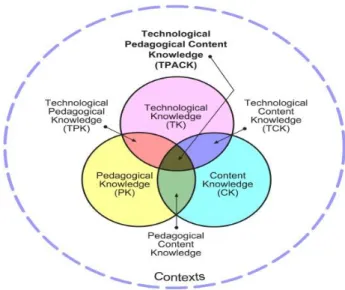
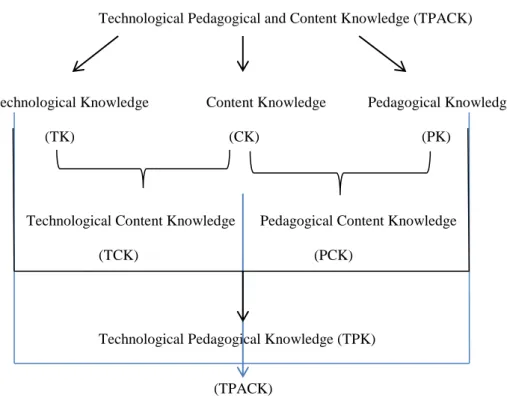
Shulman (1986) described pedagogical content knowledge as the presentations and formulations of subject knowledge by teachers in terms of promoting student learning. Technological content knowledge (TCK) refers to subject material knowledge presented through the use of technology. Pedagogical content knowledge (PCK) also corresponds to knowledge of various subject teaching techniques.
Technological Pedagogical Content Knowledge (TPACK), which is described as the knowledge of how to use technology to apply instructional methods to a variety of subject formats. Creates awareness of technological pedagogical material by combining pedagogical and content knowledge with technology (TPACK).
The Concept of Online and Offline
However, Singh et al. (2012) argue that there remain a number of unanswered questions about the relative effectiveness of these online courses compared to. Therefore, according to Singh et al. productivity of students who enroll in online courses compared to students who enroll in offline courses is advanced in contemporary literature. On the other hand, Biktimirov & Klassen (2008) argued that online courses give students access to learning materials and possibly high-quality training that they may not have access to in their current school.
2019) explained that the students who tended to be a procrastinator or if there is no physically present teacher to direct their focus to the subject, students who are not good at self-directed studies may see a drop in results . Olson (2002) found that online and offline distribution is a factor that affects a student's course completion when measuring student success based on resource completion rates.
Learning Situation in Rural and Urban
Hal ini menunjukkan bahwa guru bahasa Inggris SMP Negeri 5 Kota Bengkulu dan SMP Negeri 8 Bengkulu Selatan memiliki kesamaan berupa aspek pengetahuan konten pedagogis. Hal ini menunjukkan bahwa guru bahasa Inggris SMP Negeri 5 Kota Bengkulu dan SMP Negeri 8 Bengkulu Selatan memiliki perbedaan berupa aspek Pengetahuan Pedagogis Teknologi. Hal ini menunjukkan bahwa guru bahasa Inggris SMP Negeri 5 Kota Bengkulu dan SMP Negeri 8 Bengkulu Selatan memiliki perbedaan berupa aspek Pengetahuan Pedagogis Teknologi.
This showed that the EFL teachers of SMP Negeri 5 Kota Bengkulu and SMP Negeri 8 Bengkulu Selatan have similarities in the form of pedagogical knowledge aspects. There are two types of barriers to implementing teachers' TPACK when teaching EFL students at SMPN 8 Bengkulu Selatan. The first obstacle is the knowledge of technology of the teachers.
Previous Study
Research Design
Since the aim of this study was to discover and investigate the similarities and differences between selected phenomena or groups, a comparative qualitative approach was used to explain and understand the essence of a real world event. Then, according to Richardson (2019), a comparative study simply compares two groups to make a judgment about them. According to Fraenkle et al. 2012), a comparative study is a research approach that allows researchers to discover and investigate the similarities and contrasts between two or more phenomena or groups.
It implies that the primary goals of descriptive comparative research are to discover and investigate similarities and differences in particular phenomena occurring in a given educational group and to compare two groups to reach conclusions about a specific phenomenon in the descriptive technique. This method used in this study was to identify and describe the similarities and differences in teachers' technological pedagogical content knowledge (TPACK) in teaching English as a foreign language in SMP Negeri 8 Bengkulu Selatan and SMP Negeri 5 Kota Bengkulu (rural and urban areas) in the academic year 2021/2022.
Research Subject
Its purpose is not to cause changes in the objects; rather, it usually tries to avoid them. Furthermore, this study shows how the teachers control the EFL class during the pandemic. The study only contributed in "Class VII" of SMP Negeri 8 Bengkulu Selatan and SMP Negeri 5 Kota Bengkulu, in an effort to facilitate the researcher to assess and observe the teachers' TPACK skills.
The teacher was investigated in this study because the researcher needed to understand specifically how teachers perform TPACK while teaching in the online classroom so that the researcher could collect real data. Furthermore, the researcher hopes that the findings of this study can serve as a resource for school English teachers in order to improve teaching habits in secondary school about teacher TPACK.
Types of Data
It showed that EFL teachers of SMP Negeri 5 Kota Bengkulu and SMP Negeri 8 Bengkulu Selatan have differences in technological knowledge aspects. The teachers of SMP Negeri 8 Bengkulu Selatan have shown that they have good subject knowledge. Observation findings on 18 May 2021 at SMP Negeri 5 Kota Bengkulu showed that the PCK level of teachers was good.
In addition, the findings of the observation on 25 May 2021 of urban school teachers at SMP Negeri 5 Kota Bengkulu showed that the PCK level of the teachers was excellent. It showed that EFL teachers of SMP Negeri 5 Kota Bengkulu and SMP Negeri 8 Bengkulu Selatan have differences in technological knowledge aspects.
Data Collection Technique and Instrument
Research Procedures
During the preparation step, the researcher started by submitting the title, then the proposal and finally the seminar proposal of the diploma thesis. Before embarking on the research, the researcher conducted a preliminary study (first observation) to determine the extent of actual field conditions that EFL instructors need to consider when implementing online learning in two different school regions (urban and rural) during covid-19. an epidemic. During this implementation step, the researcher went to the school to talk to the principal to get permission.
The researcher then scheduled an observation with the English teacher to get acquainted with the class. Furthermore, the researcher conducted the interview with the English teacher of SMP Negeri 8 Bengkulu Selatan and SMP Negeri 5 Kota Bengkulu.
Data analysis
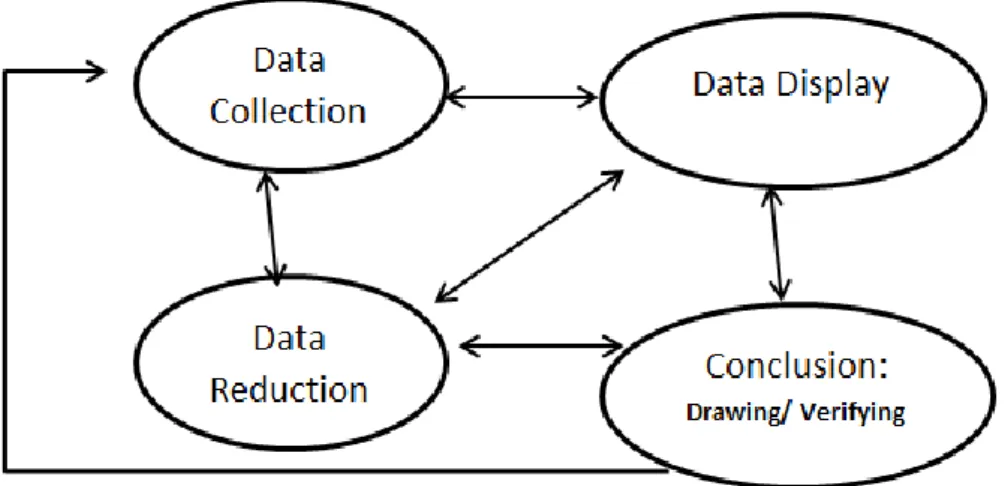
The data collected through questions and answers between the researcher and EFL teachers and the researcher will compare the results and find the similarities and differences between these two schools. The researcher was responsible for preparing the final research report in the form of a thesis, approving the pilot study, and approving the research results when reporting the study. The reduction of data is interpreted as the process of choice, the object of interest; there is inference, abstraction and data transformation of what is written in the field.
It implies that the process of continued reduction, such as inference, codification, thematic inquiry, grouping and memorandum writing, takes place when the data is collected. After the data has been reduced and presented, conclusion and verification is the final step in the evaluation of the data.
Trustworthiness of the Data
These are the practices that aim to end the pedagogical ability of teachers in teaching young learners English. Triangulation is defined as a data collection technique that incorporates different data collection techniques and established data sources (Sugiyono, 2012). The goal of the triangulation data collection technique is to discover data that is widespread, stable, and definitive.
In this study, the researcher tried to combine three sources of data (in-depth interview), namely in-service EFL teachers and pre-service EFL teachers. The researcher uses triangulation methodology to collect the same data but using different data collection approaches or techniques. The method of triangulation is used to examine the use of data collection techniques, for example, whether the information received through the interview method is the same as that obtained through the observation method, or whether the findings of the observations match the information supplied during the interview.
This technique was also used to test the data source, to see if the data source provided the same or different information when queried and viewed. Huberman theory (1994) for data collection method and Schostak theory (2006) as one of the theories of research instruments. Triangulation can be performed on these data by comparing observational, interview and documentation findings.
FindingsandDiscussion
Discussion
Help your colleagues understand how to integrate language, technologies and teaching approaches. Do you use different approaches with different software to increase students' understanding of language learning? Observation of the implementation of the TPACK of English teachers (T1) in teaching EFL students during the Covid-19 pandemic in 7th grade SMPN 8 Bengkulu Selatan.
Observation of the implementation of English teachers (L2) TPACK in teaching EFL learners during Covid-19 pandemic at Grade 7 SMPN 8 Bengkulu Selatan.
Conclusion and Suggestions