A revision of the New World species of the shorefly genus Nostima Coquillett (Diptera: Ephydridae). A revision of the New World species of the shore fly genus Nostima Coquillett (Diptera: Ephydridae) / James F.
Nostima atriscuta, new species
DESCRIPTION.—Minute to small shore flies, body length 0.89-1.11 mm; yellowish brown, brown, to dark brown with silver gray and yellowish silver microtomentum. Abdomen (Figure Background dark brown; tergites 1 and 2 dark brown with sparse, silvery gray microtomentum; tergite 3 dark brown with silvery gray microtomentose band along entire posterior margin covering 1/2%.

Nostima cinnamea, new species
Gena covered with yellowish silver microtomentum; postgena covered with sparse, yellowish silver microtomentum. Mesonotum yellowish to brown with sparse, yellowish silver microtomentum, slightly darker along dorsocentral rows; scutellum pale brown with sparse, yellowish silver microtomentum; anepistemum yellow to tan with sparse, yellowish silver microtomentum; katepisternum yellow to tan with sparse, yellowish silver microtomentum; subscutellum pale brown with sparse, yellowish silver microtomentum; anatergite light brown with sparse, yellowish silver microtomentum.
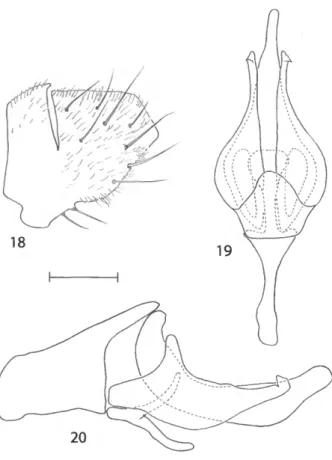
Face medially yellow-brown with sparse, silvery gray microtomentum, center of face slightly paler. Abdomen (Figures Background shiny brown with sparse yellowish silver microtomentum; tergite 3 with dense silvery gray microtomentose posterolateral spot; Facial background yellowish brown with yellowish silver microtomentum; narrow band of silvery gray microtomentum along eye margin beginning at vertical frame and extending to gena .
Gena with dense, silvery gray microtomentum; postgena covered with dense, silvery gray microtomentum, extending to occiput. Axiput dorsally with silvery gray microtomentum, ventrally dark brown with sparse, silvery gray microtomentum continuous with thoracic stripes. Occiput medially yellowish brown with yellowish silver microtomentum, laterally with silver gray microtomentum forming a stripe continuous with thoracic stripe.

Nostima maculata, new species
Shift dark yellow-brown; pedicel ventrally dark yellow brown, dorsally with silvery gray microtomentum; flagellomere 1 ventrally yellowish brown, dorsally brown; arista branched dorsally. Gena dorsally with dense, silvery gray microtomentum, shiny black ventrally; postgena dorsally with dense, silvery gray microtomentum, ventrally glossy black. DESCRIPTION.-Small shore flies, body length 1.04 mm; yellowish brown to dark brown with silver gray and yellowish silver microtomentum.
Facial background brown to dark brown with silver-gray microtomentum; narrow band of silver-gray microtomentum along the eye margin, starting from vertical setae and extending to genital organs. Gena covered dorsally with thin, silver-gray microtomentum, ventrally shiny dark brown; postgena shiny dark brown with thin, silver-gray microtomentum. Abdomen (figures Background yellowish brown to brown; tergites 1-3 yellowish brown with thin, yellowish silver microtomentum; tergite 2 with dense, silver-gray microtomentose posterolateral spot; tergite 3 shiny brown with 2 dense, silver-gray microtomentose posterolateral spots;
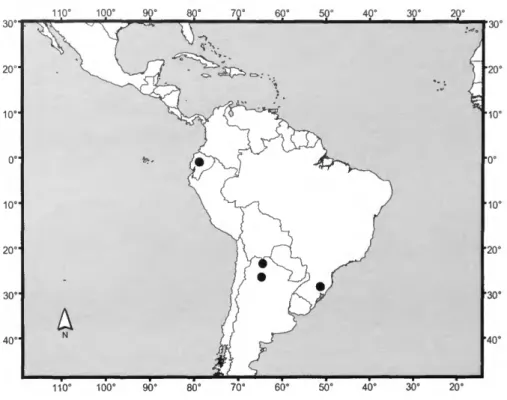
Nostima melina, new species
Parafacial shiny black; narrow band of silvery gray microtomentum along eye margin between ocelli and frontal suture. Abdomen (Figures Background shiny black; tergites 1-3 with sparse, yellowish silver microtomentum; tergites 4 glabrous; tergites 5 with silvery gray microtomentose posterolateral spot. Very small shore flies, body length 1.01-1.30 mm; yellowish brown to dark brown with yellowish silver and silver gray microtomentum.
Facial background yellowish brown with yellowish silver, silvery gray and golden microtomentum; narrow band of golden microtomentum along eye margin starting at vertical setae, extending along eye margin, and extending and gradually blending with silvery gray microtomentum on gena. Gena covered with dense, silvery gray microtomentum; postgena covered with silvery gray microtomentum, not as dense as common microtomentum. Facial background pale to dark brown with silvery gray microtomentum; band of silvery gray microtomentum along eye margin from below inner vertical seta, along parafacial, and extending to gena.

Nostima pulchra (Williston)
Face color light brown light brown light brown light brown light brown light brown light brown dark brown dark brown dark brown dark brown dark brown. Legs yellowish brown to dark brown; femora dark brown with yellowish brown apex; middle and hind tibia yellowish brown with medioproximal and mediodistal brown bands;. Abdomen (Figures Background brown to dark brown; tergite 1 dark brown and covered with sparse, yellow silvery microtomentum; tergite 2 covered with sparse, yellowish silvery microtomentum, posteromedial margins with a narrow band of silvery gray microtomentum narrowing lateromedially, silvery gray microtomentose posterolateral spot, lateral margins with silvery gray microtomentum;.
TYPE MATERIAL.—The holotype male of Hydrellia pulchra Williston is labeled "Type [circular label with red outline]/. India 1907-66/May/[rectangular gray label without inscription]/Hydrellia pulchra Will [handwritten rectangular label] with thick and thin red lines along the edge, thicker line outside, folded in half]." The holotype is double-mounted (minute peg through the underside of the mid-thorax, minute attached to a white cardboard holder), is in good condition (right wing apex and left flagellomere 1 missing), and is deposited in the BMNH. Etymology.—The species epithet, as indicated by its Latin root, pulcher, meaning beautiful, refers to this species' attractiveness.
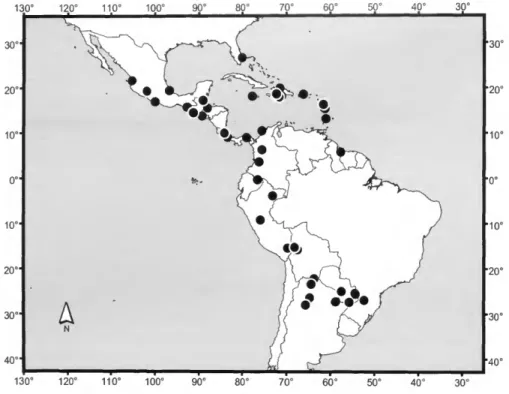
Nostima quinquenotata Cresson
DIAGNOSIS.-Nostima schildi is distinguished from congeners by the following combination of external characters: gena with silvery gray microtomentum; mesonotum vittate; scutellum laterally covered with silvery gray microtomentum; hind- tibia banded; tergite 2 posterolaterally with dense silvery gray microtomentum; tergite 3 with dense silvery gray microtome-. DESCRIPTION.-Small shore flies, body length 1.20-1.70 mm; yellowish brown to brown with silvery yellow and silver- very gray microtomentum. Background of face brownish yellow with silvery yellow and silvery gray micro-tomentum; narrow band of silvery yellow microtomentum along margin of eye beginning on vertical setae, gradually extending and blending with silvery gray microtomentum on gena.
Gena covered with silvery gray microtomentum; postgena covered with very gray silvery microtomentum less dense than in gena. Mesonotum brown, vittae with very gray silvery microtomentum, vittae posteriorly not distinct; mesonotum medially with dark brown line bordered laterally by silvery gray bands; dorsocentral line brown; silvery gray stripe between dorsocentral line and interalar setae; scutellum brown with sparse, yellow silvery microtomentum, laterally with very gray silvery microtomentum; anepisternum shiny brown with sparse, silvery gray microtomentum; catepisternum brown with sparse silvery gray microtomentum; subscutellum brown with sparse silvery, yellowish microtomentum; shiny brown anatergites with sparse silvery yellow microtomentum. Abdomen (Figures Yellow-brown background; tergites 1-5 covered with sparse silvery yellow microtomentum; tergite 2 posteriorly with dense silvery gray microtomentum; tergite 3 with dense silvery gray microtomentum.

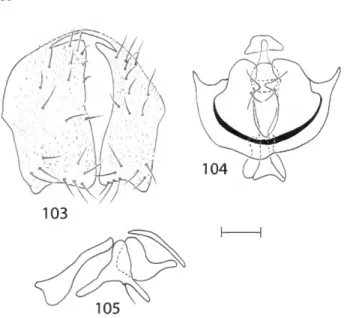
Nostima simuliflavida, new species FIGURES 103-106,165,231,232
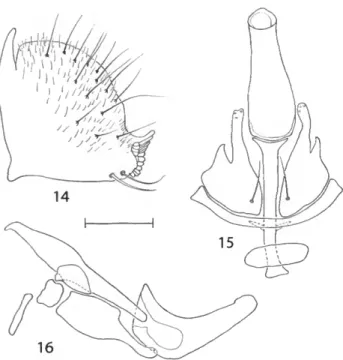
ETYMOLOGY. Nostima Schildi was named in honor of Pablo Schild, an early twentieth century collector of Costa Rican Diptera. 103, epandrium, cercus, fused surstylus, lateral aspect; 104, internal male genitalia, ventral aspect; 105, same, lateral aspect. Dominica/HOLOTYPE 6 Nostima simuliflavida Edmiston & Mathis USNM [red]." The holotype is double mounted (minute pin through the right thorax and attached to a white plastic holder), is in good condition (left wing in an attached microviolet), and is being deposited in the USNM.
ETYMOLOGY.—The species epithet, simuliflavida, is of Latin derivation and is a combination of simulo, meaning to copy or imitate, and flavida, which is the species it closely resembles. Even though we have only a few specimens from limited areas, the structures of the male genitalia are clear and justify the recognition of N. Females and males were not collected from the same locality, but the males and females from Trinidad and Dominica are accepted that it is the same species.
Nostima slossonae Coquillett
FIGURES 107-109. Male genitalia of Nostima slossonae Coquillett: 107, epandrium, cercus, fused surstylus, lateral aspect; 108, internal male genitalia, ventral aspect; 109, same, lateral aspect. Legs yellow-brown to brown; femora dark yellowish brown proximally, paler distally; fore and mid tibia yellowish brown medially, paler proximally and distally; hind leg yellowish brown with medioproximal and mediodistal brown bands; tarsi yellow to yellow-brown with tarsomer 5 brown. Abdomen (figures Background brown; tergites 1-5 covered with sparse, silver-gray microtomentum; tergite 2 with silver-gray microtomentose spots on mediolateral anterior and posterior margins, dense, silver-gray microtomentose posterolateral spots touching the posterior margin, and dense, silver-gray microtomentum on the lateral edges;.
Male genitalia (Figures 107-109): epandrium-cerci-surstyli complex fused; epandrium a broad U-shaped band with rounded and rounded anterodorsal projection. REMARKS.—Nostima slossonae is one of the larger species of Nostima and therefore may be better represented in collections. Distance between the white spot in the distal part of the cell T| and the white spot located posterodistally along vein R2+3 at the point where R2+3 bends toward the costa is shorter in specimens from Florida, North Carolina, Cuba, and the Dominican Republic than in specimens from Central and South America.
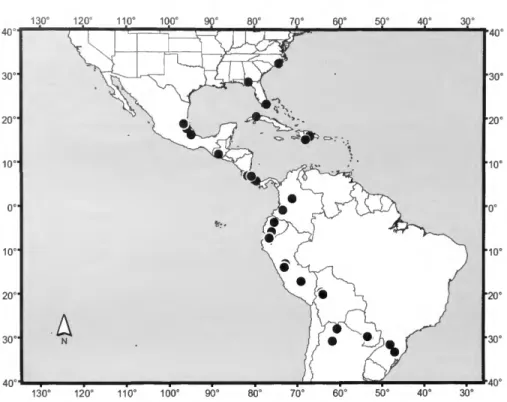
Nostima spilogaster Cresson
Head: Frons with brown velvety ventrolateral triangles, anterior semicircular brown with yellowish silver microtomentum. Axiput medially brown with yellowish silver microtomentum, laterally with silver gray microtomentose stripes continuous with thoracic stripes. Head: Frons with velvety brown ventrolateral triangles, anterior semicircular brown with yellowish silver microtomentum.
Nap brown with silvery yellow microtomentum, flanks with silvery gray microtomentous streaks attached to silvery gray microtomentum on thorax. Mesonotum yellowish brown with silvery yellow microtomentum, darker laterad of dorsocentral band, intra-alar band with dense silvery gray microtomentum;. Head: Frons with ventrolateral triangles yellowish brown with silvery yellow microtomentum, anterior semicircle yellowish brown with silvery yellow microtomentum.
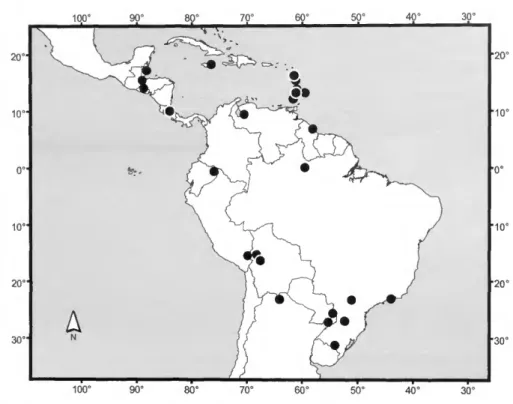
Nostima ypsilona, new species
The synapomorphic state of the ventral surstylar setae reduced to four occurs in species of the niveivenosa lineage, and the syna-. Hardy, editors, A Catalog of the Diptera of the Oriental Region, Suborder Cyclorrhapha (excluding division Aschiza. A systematic annotated arrangement of the genera and species of the neotropical Ephydridae (Diptera), II: the subfamily Notiphilinae.
A systematic arrangement of notes on the genera and species of the Indo-Australian Ephydridae (Diptera), II: Subfamily Notiphilinae and Appendix to Part I on the Subfamily Prilopinae. A systematic arrangement of notes on the genera and species of North American Ephydridae (Diptera), IV: Subfamily Na-paeinae. Papavero, editor, A Catalog of the South American Diptera of the United States, 43 pages.
A new reconstruction of the origin of eremoneuran hypopygy and its implications for classification (Insecta: Diptera). Extensive notes should be collected together and placed at the end of the text in a notes section.