79■Week 2: The Social Feedback cycle
Week 2: The Social Feedback Cycle
For the past fifty years media spending has been focused largely on awareness
—where it drives demand — and point-of-sale — affirming pending purchases or shifting them to a competing brand.
Under-utilized by too many marketers has been the consideration process through which consum- ers evaluate purchase options.
The consideration phase — in the middle of the purchase funnel — turns out to be the central link between the Social Web and Marketing. This is the Operations connection of social media based marketing, where conversations between consum- ers based on experiences carry further and with greater trust than traditional media.
Chapter Contents Social Media in Marketing
Consideration and the Purchase Funnel Consumer-Generated Media Create Your Social Feedback Cycle The Main Points
5
80
chapter 5:Week 2: The Social Feedback cycle■
Social Media in Marketing
on the Social Web, consumers connect, share, and validate thoughts, arriving at con- sensus over time. consensus on the Social Web may be fleeting or scattered — think of fads or small groups of ardent followers for products like the new designer energy drinks — or it may indeed manifest as “mass” popularity around long-standing power brands such as Red bull, apple, and Nike, all of which have a strong presence on the Social Web. online marketing concepts such as engagement and loyalty morph into their social counterparts like participation and reputation. Why? With traditional and most online media, the interaction is generally one way: The end user gets to watch or play with something that someone in a position of control has put forth. Too often, that’s about as far as it goes. With social media, it’s truly participative: The end user gets to shape, create, and share the content. Through participation and response, social reputations are formed: When the context is marketing, these become the active social expressions of the brand. This participative development of reputation is a direct consequence of collective action, of community. communities — whether formally built around a specific interest or cause, or informally built through more casual connections — sit at the center of the Social Web.
Featured Case: GlaxoSmithKline Consumer Healthcare
The desire to lose weight is one of the most universal and emotional issues in America. Millions of overweight women and men are constantly seeking a “silver bullet” that will rescue them from the torment of failed efforts. So when GlaxoSmithKline Consumer Healthcare set out to market alli, the only FDA-approved weight-loss product available to overweight adults without a prescription, they knew they were entering unusually challenging territory. They needed a way to understand the rational and emotional tugs of war overweight adults face every day in order to help the company develop, and inspire, a new behavioral model, while carefully managing consumer expectations.
A first-of-its-kind over-the-counter (OTC) drug launch required a new approach to listening to, and understanding, weight-challenged consumers — new ways that would get at consumers’
hearts and minds and provide an intimate experience, which allowed the company to go deeper than ever before. GSK Consumer Healthcare partnered with Communispace, spanning over two years to create five private online communities that became the center of gravity for the entire multifaceted market launch of alli.
On July 25, 2007, GlaxoSmithKline released its second quarter earnings statement reporting that sales of over-the-counter alli hit $155 million in just six weeks, since its launch on June 14, 2007.
On October 23, 2007, the company announced that it had sold more than 2 million alli starter packs at retail, and that alli users are enthusiastically embracing alli and its proven track record of helping people lose weight gradually.
81■Social Media iN MaRkeTiNg
in the physical world, people can engage and learn through direct experience.
Then, based on that experience, they develop a “favored supplier” with regard to a particular product or service (for example, a restaurant or line of automobiles).
community — the collection of individuals acting together around a specific topic in conversations on the Social Web — doesn’t operate in quite this way. in an online social community, loyalty and engagement are certainly possible, although they take a different form, and are much more easily lost given the power and presence of the collective. The online community — because it is measurable and therefore tangible — fosters participation, through which engagement at the individual level occurs. The community maintains — that is, acts as a curator for — the collective reputation of a brand, based on which an individual may develop or attest to personal loyalty. in other words, communities are the containers for the individual attributes you are familiar with and use when building mass campaigns. on the Social Web, it’s the collective — not just the individual — that is of interest to marketers. This is not because “collec- tive” is analogous to “mass” — it isn’t — but rather because it is the tangible collective that the individual taps when making a decision. by influencing the collective, you reach the individual. Therefore, and arising directly out of this, active participation — not message saturation — drives your success on the Social Web.
Step back and look at most traditional forms of media: They are “push” and
“tell” oriented. They place the marketer in control of the message and dictate for the consumer a subservient role. Social media tips this balance: on the Social Web, both the consumer and the marketer have an equal voice in terms of permission to speak.
This not the same as implied trust, which is something else altogether, but it does serve to support the notion that as a marketer you need to participate in the communities of which your audience is a part in order to gain trust. on the Social Web, to not be pres- ent is to send a message that you don’t really care enough to participate.
Tip:
On the Social Web, your absence is conspicuous. Failing to participate retards the advancement of trust. In fact, it can increase the likelihood of mistrust.From your perspective, social media may be outright scary, and the cautionary memos from your legal department don’t help. From the perspective of your audience, especially if they are using the Social Web already, participation is easy, simple, and nat- ural. Members of your audience may not grasp or even care about the complexities of the corporate policies that are causing you grief: For them, the Social Web is second nature.
Just do it. actually, for many, it’s first nature: For younger Millenials, some of their first social experiences were very likely digital, not analog. i am making this point in a bit of detail here because it presents a significant challenge to the traditional marketing orienta- tion. There are genuine issues relating to participation — including the fear that comes
82
chapter 5:Week 2: The Social Feedback cycle■
with ceding control — that require your thought and commitment prior to initiating a social campaign. at the same time, your audience may well expect you to be there. This is the subject of more than a few books and certainly will be the theme of many more.
The good news is that if you work through these issues, following the framework that i am outlining in this book, you’ll be able to operate on the Social Web with a very high degree of confidence and in ways that Social Web participants will tend to embrace. Ulti- mately, participation is key, and participation is what this book is all about.
oddly, too many marketers still take the position that they are better off not participating so as not to appear to “approve” of the social conversations that include references to their brand. There is an obvious wrong-headedness in this logic, and the flaw here is actually two-fold. First, it implies that consumers care whether or not a marketer has approved their conversation. Consumers don’t care. in fact, they are hav- ing these conversations themselves because marketers have not entertained them in the past. Second, choosing not to participate implies a now questionable belief that con- sumers don’t have an alternative forum to share information. Consumers have lots of alternatives. back in the day, robust, widespread mass communication may have muted casual conversation around brands. No more. consumers are having these conversa- tions between themselves, posting all sorts of content around the Social Web widely and easily, and regardless of whether or not what they post has been “approved” by your agency or public relations (PR) team.
Consideration and the Purchase Funnel
Savvy marketers have not only picked up on the existence of the Social Web but have found ways to use it to advance their interests by tapping into the consideration phase of the purchase process, something out of their reach with the traditional tools of mar- keting. how they’ve done this is what this section is all about.
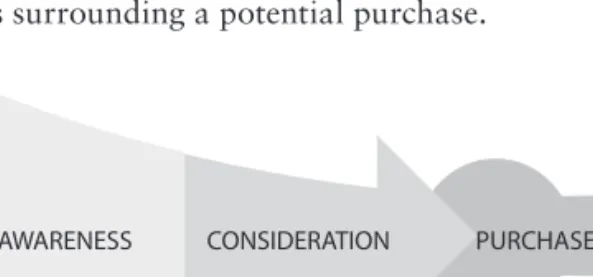
The classic purchase funnel referenced in chapter 3, “What is Social Media?”
is back. Figure 5.1 shows the purchase funnel and buying phases of awareness, consid- eration, and purchase. “consideration” links the buying-process activities, connecting awareness and purchase. consideration is the point where a consumer thinks through the purchase. Value, performance, applicability, reputation…are all “considered” fac- tors surrounding a potential purchase.
CONSIDERATION
AWARENESS PURCHASE
Figure 5.1 The Purchase Funnel
83■coNSideRaTioN aNd The PURchaSe FUNNel
Traditional media and marketing practitioners approach the problem of incit- ing a purchase from the awareness perspective, leaving the consumer to make up her mind (consideration) albeit with lots of interruptive prompting. by comparison, social media simultaneously tackles awareness and consideration, and does so with a lower level of perceived interruption. To be sure, traditional media still plays a role in pure awareness. again i’ll stress that “social media” is not a technique that is applied in iso- lation. however, unlike traditional media, social media connects with and involves the consumer from awareness all the way through consideration. Just as with a TV spot, an interesting forum or blog post or a compelling homemade video may be the start- ing point through which a potential customer gains an awareness of a product or ser- vice. however, with the social channels, often right in the same conversation, a more substantive validation that supports the purchase decision takes place. Social media is applicable as both a prompt (awareness) and as a validation, something that works very much to your advantage if you apply it correctly.
it is important to understand the role of the social feedback cycle as a purchase validation tool. Note too that the source of awareness has little to do with it. Tradi- tional media is still very much a part of the picture in terms of awareness. it’s the vali- dation step that is changing the equation. From a Forrester Research report comes the following consumer quote:
“No matter what I hear, read, or find on TV, radio, or in a magazine or newspaper, I can verify it on the Internet.”
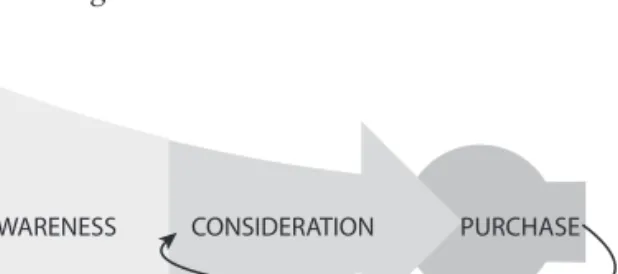
boom! There you have it: you talk about it, and they check it out. This valida- tion impact of the Social Web via the content created and made available in the social feedback cycle is best understood though the mechanics of word-of-mouth. Figure 5.2 shows the purchase funnel with the addition of post-purchase word-of-mouth and con- sumer-generated media. it is the post-purchase conversation — built up and validated through the collective wisdom of the crowd — that ultimately drives word-of-mouth- based evangelism.
CONSIDERATION
AWARENESS PURCHASE
Figure 5.2 The Social Feedback Cycle
84
chapter 5:Week 2: The Social Feedback cycle■
The Role of the Evangelist
Evangelists exert a significant impact on the buying process through the social feedback cycle via word-of-mouth and consumer-generated media. As consumers increasingly choose to block advertising in all forms, the impact of traditional advertising is bound to be diminished. By what degree remains to be seen. Nonetheless, it is happening. This is perhaps ironic: Consumers aren’t opposed to learning more, and no one wants to make a poor choice. It’s the intrusions and the interruptions that are driving this. In response, consumers are using the Social Web to talk with each other about potential buying decisions. These actions are often driven by evangelists.
The conversations built around word-of-mouth extend to the discussions of the company itself when the company chooses to participate in the conversation. Participa- tion conveys a sense of trust, of caring, of involvement in the outcome. This applies even when the experience is negative: There are many cases of a “mistake” being righted in public, and of considerable goodwill being generated in the process. To this end, using the Social Web as a listening platform pays dividends in terms of a better under- standing of what your customers want. Taking the next step — using the Social Web as a platform for talking and sharing — brings your company to the level of participation.
consideration phase marketing is a toolbox essential. it forms the basis for effective social media campaigns. Participation in the consideration phase — using the tools available, offering and sharing content — is an essential “plus” in the awareness- consideration-purchase campaign integration process. Quantitative measurement — readily enabled on the Social Web — gives you the ability to track effectiveness as you add social elements to your existing campaigns.
although there is a common misperception that social media is somehow unmeasurable, it is in fact quite measurable. chapter 13, “objectives, Metrics, and Roi,” is devoted entirely to the connection of business objectives and social media measurement. consider the impact of social media and the conversations that ref- erence your brand, product, or service with your existing measures of customer profitability. you already know about the value of repeat customers in terms of their generally higher purchase levels. Take this a step further, and use the Social Web to gauge the impact of these same customers as “reference experts” for other custom- ers. one of the benefits of using the Social Web as a measurable feedback loop is that you can see the impact of beneficial word of mouth. your existing customers are — or should be — among your strongest evangelists. after all, they are buying your product
Tip:
The addition of consideration-phase marketing bridges a critical gap for marketers between awareness and purchase while opening the channel for effective word-of-mouth.85■coNSideRaTioN aNd The PURchaSe FUNNel
again and again...they must like it! your objective should be to get them to talk about their positive experiences. This gives you the double benefit of making the current sale — to them — and a future sale to the new customer that they create for you.
Social media measurement has a direct impact on the value calculation of cur- rent customers. it may be, for example, that an “expensive” customer — one that always seems to be asking for a special part or new feature — is actually the “hub” for your
“profitable” customers. identify, connect with, and tap this value through social media and its measurement. by taking account of the social feedback cycle, your calculation of your customer’s “net profitability” changes dramatically. customers who ask for favors can be expensive: but if they are so delighted as a result that they create three new customers for you, it may well be worth the investment. if it’s favor after favor, followed by a never-ending stream of requests for price concessions with no detectable beneficial conversation being generated, then you’re servicing yourself right out of busi- ness. Those are good things to know, and powerful distinctions to draw. The simple act of listening on the social web enables this level of understanding.
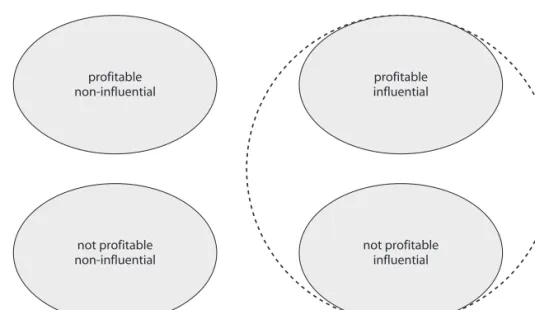
Shown in Figure 5.3, adding “degree of influence” expands the “profitable cus- tomer” segment, and, suggests strategies for converting selected noninfluential custom- ers to influential customers. you will spend more time on this in chapter 7, “influence and Measurement,” when you work with the Net Promoter Score and related measures of influence.
Degree of Influence versus Conventional Profitability
Profitability
Degree of Influence profitable
non-influential profitable
influential
not profitable
non-influential not profitable
influential
Figure 5.3 Profitability and Influence
86
chapter 5:Week 2: The Social Feedback cycle■
in summary, marketing efforts focused on the social feedback cycle are less about what a marketer has to say and instead more about the consumer and what he wants to know right now. While it may be tempting to jump ahead to measurement or some other favorite chapter, take your time and work through the social feedback cycle, thinking about why it works and about its role in social media versus traditional media. This will be important later when you start building your social media plan. if you jump ahead and simply pick three social channels, you’ll be fast out of the gate, as they say in horse racing. but there is also a good chance that one or more of your ideas will not work — that’s to be expected with any new media form. if that’s all you’ve got, it’s going to be a short ride. on the other hand, if you work through the process i’ve established in this week’s exercises and still happen to pick the wrong channel for a particular application, you’ll quickly catch it, correct it, and move on toward a success. by tapping the social feedback cycle — and understanding how to build off of it — you create a powerful link between your awareness and point-of-purchase efforts based on the value of trusted conversations. Trusted conversations and the content associated with them — however casual or trivial they may appear — are essential to your successful use of social media.
Consumer-Generated Media
The internet has had a pronounced impact on how people view their ability to gather unbiased information, to seek, find, and obtain a wider range of products and services, and to talk with others about actual experiences both before and after purchase.
coincident with the launch of the World Wide Web, content itself was changing from analog form (sheets of paper, vinyl records, VhS tapes) to digital forms (web pages and blogs, MP3 audio, MPeg movies) that lent themselves to distribution on the internet checked to a large extent only by available bandwidth. These two developments — the realization of a global network and the digitization of content — multiplied each other, driving the growth in the use of the Web as an information and fulfillment platform.
as an example, consider Napster and its impact on music. if music were spread over a global network in analog form, it would quickly deteriorate in quality as succes- sive copies were made. Think about the cassettes (or eight-track tapes!) that used to be made for use in the car from the vinyl albums: The sound quality was reduced in each successive copy. as a result, copies of copies weren’t worth the effort. alternatively, consider digital copies — each perfect — but with no global network. This is essentially
Tip:
What you see on the social web may seem pointless, trivial, or otherwise lacking in conventional measures of editorial value. Avoid this mindset: Instead, think about the fact that someone actually took the time to create this content. To that person, what is being expressed through this content most certainly matters.87■coNSUMeR-geNeRaTed Media
the situation that existed for the first 20 years of digital audio: compact discs (cds) were not widely copied and passed around, other than in an analog form — e.g., as cassette tapes, very much subject to the aforementioned limitations. however, when the two came together — digital content plus a global digital network — the result was no less than a tectonic shift. The music business is still trying to recover, and the film and video businesses are being challenged now. digital content spreads rapidly and perfectly, quickly becoming both everywhere at once — powering widespread distribution — and persistent over time — filtering into the niche markets and driving the long tail.
There is a second profound impact of the combination of digital content and a global digital network: it’s the breakdown of the scale requirements that have prior to this point supported mass media. Not only did the internet and digital content change the economics of distribution, it created a viable market for very small audiences.
Where the transition from “three networks” to “four networks plus cable” split view- ers into narrower segments, the combination of internet-based distribution and the dig- itization of content fundamentally changed the ways in which consumers viewed, used, and shared information and digital content across a range of decisions and activities.
consumers are more connected, more informed, and more likely to share experiences with each other as a result.
great recent examples of this are dell’s “idea Storm” and Starbuck’s “MyStar- bucksidea” forums, along with companies like Southwest airlines and Zappos and their use of Twitter, a very casual form of blogging and community-like interaction.
dell and Starbucks are using a combination blogs and forums to provide current, past, and prospective customers with the ability to directly comment on the issues that mat- ter, including the direction of future product ideas. Southwest airlines and Zappos are using more casual channels — in this case, Twitter — to maintain an ongoing conver- sation that establishes a very basic level of personalized communication between the brand and its audience. all feature plenty of content — positive and negative — and stand as testaments to the willingness and desire for consumers to get involved in the brands that they are — or about to become — passionate about.
Figure 5.4 shows a typical Twitter dialog in which i happened to be involved.
a friend was commenting on Southwest airlines with regard to travel with children, and i responded with the information that i had (having flown Southwest in the prior week). Shortly after, a post from Southwest appeared on Twitter, directing people trav- eling with children to its online tips on how to make that travel easier. This is a really nice example of the smart use of social channels like Twitter: by simply being involved in the conversation, you can learn about what your customers like (and don’t like) and you can respond right away, through that same channel. Not only do you get on con- verse directly with the person creating the original comment, you also get to do it in a forum that influences everyone else who is watching.
88
chapter 5:Week 2: The Social Feedback cycle■
Figure 5.4 Twitter Conversations
consumer-generated media — photos, blogs, videos, comments, ratings, reviews — is controlled by the participants in that media or conversation. They directly control the content and the path it takes. consumer-generated media features the thoughts, hobbies, and interests of consumers. While the bulk of this content is created purely for fun, sharing experiences that relate to products, events, services — in short, many of the things that you sell — appears in the same channels and often with the goal of encouraging or dissuading a specific purchase based on personal experience. Think of the sites that enthusiastically support — or vehemently denounce — popular automo- biles, stores, telecommunications providers, airlines, and of course restaurants. Firms like Nielsen|buzzmetrics and TNS|cymfony specialize in the measurement of online conversations through quantitative indexing of blogs and similar forums, giving mar- keters insight into what these consumers think about specific products and services.
This information can be folded right back into the product development process, creat- ing products “just for them” and thereby encouraging active, authentic evangelism.
The takeaway for marketers is this: participants on the Social Web engage in social activities. They talk about the things that interest them, and this talk can be measured. What interests them includes not only personal activities — birthdays, cel- ebrations, and similar — but also the experiences that arise directly out of the things
89■coNSUMeR-geNeRaTed Media
that you bring to them through the marketplace. airline flights, concerts, movies, new cars, dealership service experiences, hotel stays…are all extensively documented on the Social Web.
Need a New Computer?
Consider the following personal story from Hilary Powers. Hilary is an editor, and just happens to be the developmental editor for this book. She writes, “My computer is showing signs of going belly-up, so I’ve got to think about a new one. Assorted discussion lists have persuaded me that the best thing to do is get someone trustworthy to build a machine locally — but who’s trust- worthy? I went online to check out the nearest store, only to find reviewers split about evenly between love and hate, with the latter more recent. On the other hand, a guy up the road had all enthusiastic reviews, so I went and talked to him and was very favorably impressed. Deal isn’t quite done, but I expect to close shortly — and return from my speaking engagement in New York to a brand-new machine.”
(Author’s note: Hilary did indeed return to find a brand new machine, and loves it.)
So why the big interest in consumer content and all of the associated conversa- tions now? consumer-generated media is a reflection of the generational norms: as Millennials move into the center of the marketing power band, their online behaviors become increasingly significant. Websites, the first wave of online publishing, were (and many remain) largely one-directional, island-mentality prospects. That some sites still expect others to ask permission before linking is proof-positive of this. This first wave — developed and led early-on by boomers in the early/mid-’90s tracks the boomer mindset: it’s all about me, and it’s my property. More recently, blogs have exploded. They are in many ways an easier way for people to tell their own story. others can comment — creating an “us” experience. open publishing and truly collaborative platforms called “wikis” are now gaining popularity as their place in the overall land- scape gets sorted out. Not coincidentally, the Millenials (which includes people ages 18 to 24) are gaining considerable influence. The Millennial mindset is “we” compared with the boomer “me” — and nowhere is this more evident than wikis, the mashup — the connecting together of existing software services to make something new, as is often done with google maps and various geographic or demographic data sources to create a richer map — and similar collaborative work products. These all invite par- ticipation, and are essentially controlled only by the collective. generational norms are expressing themselves on the Social Web via the information structures they suggest.
The proliferation of consumer-generated media also tracks broadband adoption, users of which are more likely to create — or at the least share — content. The majority of broadband users create or share content with others compared to a minority of dial-up
90
chapter 5:Week 2: The Social Feedback cycle■
users. John b. horrigan, Senior Research Specialist with the Pew internet Project, put it this way in 2002 as broadband was emerging: “broadband users drive in both direc- tions on the information superhighway. With their tendencies to create and post online content, they value not only fast uploading speeds, but also an unconstrained inter- net, a network on which they are free to publish and share whatever they want, with whomever they choose.” Sites like current TV — through a combination of video and web postings — bring the same opportunity to younger consumers seeking a broad- reach multichannel forum, allowing individuals to reach the widest audience for their content and offering them the greatest range of sources to satisfy their appetite for information.
The net impact is a democratization of information, a relative loss of control for the established content distributors — including marketers, agencies, and PR firms — and a corresponding gain for consumers. This has had an obvious and direct impact on marketing and advertising. This democratization — and the tools supporting it — have enabled what is likely the largest driver yet of the changes in how consumers learn: consumer-generated media. What was a single voice being broadcast through centralized services is now a sea of individual voices — powered by consumer gener- ated media — coming together in conversations. The key point is partially that the illusion of control, to the extent that it ever really existed, has been lifted. in its place, Social Web participants now have the power to make what they were already doing louder. From a marketing perspective, you’re no longer competing just with your direct competitors for share of voice: you’re also competing directly with your customers.
Create Your Social Feedback Cycle
your exercises this week focus on establishing the feedback cycle for your chosen brand, product, or service. you’ll start by identifying what you want to look at, and then you’ll make a list of all of the things you are doing to generate awareness or encourage a sale at the point of purchase. Finally, you’ll use existing tools to discover and capture what is being said on the Social Web as it relates to your current marketing program. The work that you do this week — along with the touchpoint map you’ll create next week — will form the measurement framework for your social media marketing plan.
Tip:
For a fun look at the world of banner ads, check out Current TV and search for “Man vs. Banner Ad.” You’ll find Current TV at http://current.com.Tip:
A set of worksheets covering this week’s exercises can be found in the appendix of this book. In addition to these printed worksheets, you can also download electronic copies and access related resources at the website accom- panying this book. Complete information regarding these resources and the website is included in the appendix.91■cReaTe yoUR Social Feedback cycle
The Social Feedback Cycle
To understand how to apply social media, start by getting a handle on how social media is being applied to you! The reality of social media is that it is by and large something that happens to you as a result of a set of experiences that your brand, product, or service have set into motion. go back to the purchase funnel: Social media is generated at the output end of the funnel. if you say “our new formulation with XZ7 really gets whites whiter…” it has to do it, and the result has to be obvious. The conversation on the Social Web is going reflect your claim: “you’ve got to try this new XZ7 stuff…it really works!” compare that with, “They claim it’s a new formulation…i looked at the label and an online testing report (click here!): The product hasn’t changed.
They simply renamed the ingredients. it’s no better than the old stuff.” Which conver- sation do you want?
This is a key realization in the application of social media in marketing: Where you can craft and deliver your own message in traditional awareness and point-of-sale efforts, on the Social Web your participation is just one of many voices. Quite often participation is limited to gauging and responding to, or even facilitating the (positive!) conversations that occur there. your ability to control the conversation — other than through your own behavior — is severely limited, if it even exists at all.
This week you’ll create your own feedback cycle, including on it the consumer- generated media elements that contribute to the conversations that impact your brand.
This may be a bit tougher than it sounds, so take the time to work through each of the steps. creating your social feedback cycle will show you how your message — combined with the actual experiences of your customers and the larger conversations that occur — is being fed back into your campaigns at the point of consideration. This exercise will set the stage for understanding which social media elements are likely to be most effective in amplifying beneficial conversations versus addressing those that are offered by detractors.
To get started building a feedback cycle, you need to decide what to map. ideally you’ll use one of your own products or services that you are responsible for, or even your brand as a whole. if you are working through this book purely as an exercise or simply want to see how social media applies to an arbitrary or favorite brand, then you can pick any brand with which you’d like to work. The main point is this: you want to work with a brand, product, or service that you understand. in this exercise you’ll need a more-than-passing familiarity with how the product or service is being marketed. if you make up or assume the answers, you’ll miss the value of the exercise.
once you’ve identified a product, service, or brand, you’re going to make two lists. The first is a detailed list of your business objectives. Specifically defined objec- tives like “Turn a profit of X” or “create a sustainable online presence as measured by Y” ought to be at the top of your list. but don’t stop there: dig deeper, and in particular dig into the things that lead to a profit or create a sustained presence. For example, your
92
chapter 5:Week 2: The Social Feedback cycle■
objectives may be increasing market share (new sales), promoting a new use of your product (new customers), or elevating the opinion of your brand (better reputation).
The most important thing is to be clear about what you are trying to accomplish so that you can tie the measures you’ll develop in later chapters to those objectives.
Monday’s One-Hour Exercise
Today you’re going to spend an hour reviewing and documenting specific objectives for your campaign. Work through the following questions, and think carefully through the answers you provide. it’s not a test — however, the clearer you are about what you want (and how you will measure it), the higher your chances for success.
W
• hat is the name of the product or service (or brand) with which you will be working?
W
• hat is the business objective of this campaign?
W
• hat are the metrics or objectives you are setting for this campaign? list them all.
F
• or each metric identified, what is the success value? What is the failure value?
(in other words, what result would make you decide to double your effort or stop altogether? This could be either something that happens or something that fails to happen.)
F
• or each metric identified, what is the current value?
i
• n a short summary, write out what success looks like.
Some of the above may seem trivial, but you’ll be surprised by how quickly you start to slow down and have to dig or think to come up with answers you could defend.
There is a huge value in simply writing this out, so take the time to do it. Then, with your campaign objectives completed, consider the following:
a
• re your objectives clear? if you handed them to someone else in your office, or better yet, a friend or family member who knew nothing about your business, would they make sense?
a
• re your objectives specific? “More sales” is great, but it is hard to translate directly into action. “Reaching $100,000 in wake-sport-related sales by the end of the current quarter” is a more specific objective.
a
• re your success metrics quantitative?
i have to admit to a certain bias here: i am a scientist and mathematician with a passion for marketing: For me, numbers rule. To quote engineer and physicist William kelvin (for whom that particular temperature scale is named):
“When you cannot measure it, when you cannot express it in numbers, your knowledge is of a meager and unsatisfactory kind.”
93■cReaTe yoUR Social Feedback cycle
ouch! ok, so lord kelvin may have been a bit of a snob with regard to quanti- tative measures, but his point is well taken: if you can’t measure success, how do know when you’ve achieved success? even more to the point, for online media — and social media is granted no exception here — a robust measure of Return on investment (Roi is) essential. your colleagues, with whom you compete for budgets and around- the-office prestige, will expect you to possess a numerical justification for your social media projects. Ultimately, when you go up against the coo with your excellent idea for leveraging Twitter, you’d better have more in your arsenal than “it’s cool” or “We need to be there.” if you haven’t gotten to the numbers, stop now, go back, and find some. Note here that by “numbers” i don’t mean “17” or “112” — i mean having a quantitative basis for determining whether or not moving from 17 to 112 is getting you where you want to go. you need the actual measurements (e.g., 17 and 112), but you also need context and meaning. as a marketer, you are uniquely qualified to provide them. here are some ideas that may help you:
c
• ount the number of comments your campaigns generate in the blogosphere and look for a trend.
T
• rack the positive references versus the negatives and trend that, too, noting your success and failure reference points.
c
• ount the number of inbound links to your site or campaign and tie your social campaign to the metrics that underlie your Search engine optimization (Seo) program.
c
• onduct a pre/post awareness study, and then make this an annual benchmark- ing exercise.
c
• ompare (quantitatively) the study with the trends you just developed.
c
• ompare negative comments you find with customer Service inquiries and begin to connect “operations” and “marketing.”
c
• onnect your trends and studies quantitatively with sales. it may be primarily
“correlation” at first (versus “causation,” which is what you are ultimately after), but that is a start down a quantitative path.
Monday’s Wrap-Up
Today you set up your objectives, and you took the time to ensure that they are specific and measurable. These are marketing basics, to be sure, but a lot of us are or have been guilty of glossing over this critical step. you are heading into the uncharted seas on the Social Web: having a map is a good idea. you will face critical reviews. Some of what you propose will not work, and some will. in all cases, numbers — right along with your trusty gut — are your best friend. There are a lot of ways to quantitatively assess marketing performance. The previous listing is just a small sample. The takeaway for Monday’s exercise is this: Put your campaigns on a solid, metrics-oriented base that is
94
chapter 5:Week 2: The Social Feedback cycle■
closely tied to your business objectives. otherwise, you’ll end up floating with the tide, rising in good times and sinking in bad. That might float your boat, but it won’t put you ahead of the competition.
The Awareness Phase
Today you’re going to dig into your current marketing program, beginning with aware- ness. yesterday you clearly articulated your objectives as you defined what success looks like and how you’ll measure it. Today’s exercise involves assessing what you are doing now to build awareness and how you are measuring it.
awareness drives the purchase funnel, and “awareness” is just as important on the Social Web as any place else. This reality points up one of the governing factors of contemporary marketing: it remains an integration challenge. you can’t switch to
“social media” and dump everything else any more than you can build a brand purely on TV. building awareness means placing your “introductory” message where it will be seen; building sustained awareness means anchoring your message across a variety of channels, and then tapping the social feedback cycle to pull social media and social conversations back into the loop where they can do you some good.
Tuesday’s One-Hour Exercise
For today’s exercise, identify all of the channels that you are currently using to gener- ate awareness. Use the following questions as a guide and as you did yesterday answer each, taking care to make sure that what you write down is specific and where appro- priate, measurable.
l
• ist each of the channels you are using currently or have used in the recent past.
F
• or each channel identified, what is the success value? What is the failure value?
F
• or each channel identified, what is the current value?
F
• or each channel identified, what did you have to do to justify its use? When will this decision be next reviewed?
look back at the list you have developed. The first big question is “do they all have defined, quantitative success goals?” To the extent that they do, how many are currently in the success range? This is more than an academic exercise: as a consultant, when i go through this analysis with clients, i often find that there are channels that are accepted on faith or simply because they have always been used. To be sure, there is a certain amount of “correct wisdom” and “gut knowledge” that is part of the dNa of every successful marketer and the campaigns she produces. at the same, on some level you are exploring a new approach to marketing — one that introduces the consumer conversation as an integral part of the overall process. This will upset some “con- ventional truths.” Take some time here to discover and validate your own “accepted beliefs.”
95■cReaTe yoUR Social Feedback cycle
Tuesday’s Wrap-Up
The main goal of today’s exercise is to be specific about what you are doing to gener- ate awareness, and to identify the conventional or accepted practices that are a part of your overall marketing program. at this point, you simply want to be aware of what you really do know versus what you believe but don’t necessarily know. of course, you also want a solid handle on all of the awareness channels you are using, regardless of why or how justified.
The Point-of-Sale
if yesterday was all about purchase funnel input, then today is all about the output, the transition point to a relationship. The last step of the purchase funnel has tradition- ally been viewed as just that: the last step. “We’ve got your money. Who’s next.” it’s as if the purchase funnel was a landing strip that ended at the cash register, as if your business sales cycle operated in a vacuum. look back at the social feedback cycle: The purchase phase is the gateway to the Social Web, the transition point at which you shift from courting a customer to building a durable relationship. The relationships you build will set in motion the conversations that occur on the Social Web, expressed through social media and fed back into the purchase funnel in the consideration phase.
if the conversation helps you, you’ll have less to do at the point of purchase. if the conversation is hurting you, then you have to make up for that, for example through a coupon or in-store promotion. in any event, what you do — or have to do — to make the actual sale is what you will be working on today.
like yesterday, today is a survey, not an analysis. The objective is to get a complete understanding of what you are doing and how you are defining and measuring success.
Wednesday’s One-Hour Exercise
For today’s exercise, identify the channels that you are using at the point-of-sale. Use the following questions as a guide, as you did yesterday.
l
• ist each of the channels you are using currently or have used in the recent past.
F
• or each channel identified, what is the success value? What is the failure value?
F
• or each channel identified, what is the current value?
F
• or each channel identified, what did you have to do to justify its use? When will this decision be next reviewed?
look at your list and consider:
d
• o they all have quantitative success goals? are they delivering?
W
• hich of the above are you using offensively (for example, to side-track a com- petitive sale in favor of your own product) and which are you using defensively to protect your sale?
W
• hich of the above are driven by direct market forces (recognizing that to some
96
chapter 5:Week 2: The Social Feedback cycle■
Finally, think about what conditions would have to exist in the mind of your customers that would change the tactics you have identified. That is where you are headed tomorrow.
Wednesday’s Wrap-Up
Today you gathered the remaining information needed to map the traditional purchase funnel. This provides a solid baseline for your marketing activities going forward and especially for the integration of social media. integrating social media involves develop- ing a clear plan of attack. like any marketing plan, your social media plan is based on your business objectives and the channels you are currently using. To your current plan add your point-of-purchase efforts needed to push the ball across the line. Then you can gauge the conversations likely to form around your brand, product, or service and make some decisions about what you want social media to do for you. For example, do you want to start a new conversation, sustain or amplify an existing positive conversa- tion, or respond to and address a negative one? Tomorrow you’ll be looking at what the current conversations are like. on Friday you’ll complete your map and set your initial objectives with regard to the use of social media.
Let the Games Begin
you’re now about a week and a half into a three month process. Today you’re going to use the tools you’ve already looked at to generate “intelligence.” Simply put, you’re going to see what people are saying about you.
as you start gathering intelligence, relate it back to your purchase funnel and social feedback cycle. however, as you do this switch your perspective from a market- ing view to a customer view. Why? because the intelligence you are gathering is the equivalent of customer feedback. it may or may not be what you want to hear. The key is this: Put yourself in your customer’s place and ask how these comments arose rather than judging what you find. don’t dismiss critical reviews or immediately accept posi- tive comments as if they were gospel. ask yourself if these comments are isolated, and think about existing customer service calls you may have listed to or for which you may have internal data. What you find in terms of intelligence on the Social Web is largely the result of the consistency between your awareness campaign promises and the experience actually delivered. anything different is in a large part driving your point-of sale efforts. in other words, a very simple (and yes, simplistic but insightful nonetheless) relationship emerges:
Tip:
Your promise minus your delivery drives what you do at the point-of-sale.97■cReaTe yoUR Social Feedback cycle
What you are currently doing at the point of sale has a cost: if you are rebating or running sales, you are losing margin. if you are creating displays or buying search terms to get noticed, you are increasing your expenses. To be sure, either of these can result in incremental gain, at a profit. There is nothing wrong with that. What’s impor- tant to identify is whether you are primarily running defensive or offensive point-of- sale programs. The key to tapping social intelligence — part of the larger landscape called social media — is suddenly obvious: This intelligence allows you to proactively
“tune” your promise and delivery so that you can focus your point-of-sale on offense rather than defense.
Thursday’s One-Hour Exercise
Today you’re going to spend an hour gathering as much online intelligence as you can find. The following tools will help you. as you find references or competitive com- parisons, subscribe to feeds if they are offered and use del.icio.us to collect, save, and share bookmarks to these items. While you may not be able to do this next item “in an hour,” at some point spend some time looking at the services offered by buzzMetrics, cymfony, Techrigy, and others. each is different, and each is particularly useful in a different role. They may be attractive to you as part of an ongoing intelligence pro- gram. listening is one of the easiest and most practically valuable ways to utilize the Social Web.
Google’s Blogsearch
Start here and go for the wide view. blogsearch will quickly bring you into the conversa- tion. Use blogsearch to follow the conversations around competing products — for example, to get an idea of what that exists on the Social Web in the market around you.
http://blogsearch.google.com
Nielsen | Buzzmetrics BlogPulse
Jump over to blog Pulse. look for two things: the trend in the number of mentions that relate to you, and the trends around competing products or general terms of art within your specific industry segment.
blogPulse will take you into the conversations (which blogsearch will do as well), and will give you a picture over time of the activity level. you’ll be able to see, for example, the dates of press releases or major announcements.
http://www.blogpulse.com
Planet Feedback
be sure to check out one of the original consumer-generated content sites specifically focused on company ratings. developed by Pete blackshaw, PlanetFeedback covers a lot of companies, all at the initiation of customers.
http://www.planetfeedback.com
98
chapter 5:Week 2: The Social Feedback cycle■
YouTube
don’t forget video! Start with youTube and search for your branded terms — you may be pleasantly (or otherwise) surprised by what you find. youTube and similar video content sites often contain references, new uses, and critiques that are immensely helpful.
http://www.youtube.com
Online Reviews
depending on your industry, there are very likely one or more online review sites that pertain to your product. again, look at competitors, too.
Google Alerts
one of the easiest ways to monitor your brand, products, or services is through google alerts. This service is free, very quick to set up, and provides daily (near real time) notices of references to the terms or trademarks in which you are interested.
Presenting Video Offline?
Wondering how to present multimedia content to your team or a client whose Internet connec- tion is slow or nonexistent? If you’ll install RealMedia’s latest media player, you can save many forms of online video to your desktop with a single click. That way, you can show it as a part of a presentation when your Internet connection isn’t all it should be. Not that it ever happens!
Thursday’s Wrap-Up
you’ve now gotten your first real sense of what social media brings to your toolkit from a marketing intelligence perspective. hopefully, you’re happy about what you’ve found. if not, it’s still good: by opening yourself to the conversations that are happen- ing around you, you’ve gathered the critical information needed to change the conver- sation by discovering, documenting, and then proactively working with operations to address the issues raised through what you’ve learned on the Social Web.
Your Social Feedback Cycle
Today you put it all together: awareness, consideration, and purchase. Today you’ll draw your social feedback cycle and examine the way in which what you promised was reflected back on the Social Web. assuming that your marketing plan is working
Tip:
Use Google Alerts to monitor your competitors.99■cReaTe yoUR Social Feedback cycle
reasonably well, your awareness efforts combined with the consideration phase and social feedback cycle should validate your point-of-purchase efforts. if not, then you have your first opportunity to use social-media-based intelligence to refine your aware- ness and point-of-purchase efforts.
importantly, keep in mind that you cannot change the conversation by fiat.
instead, you’ve got to look at how well your product performs, the expectations you are setting, and the competitive landscape to understand why the social intelligence gave rise to what you found. if it’s negative — in other words, if you have to work harder to overcome the information circulating on the Social Web — then you can use this same information to reformulate your offering, not just your message. if it’s positive, you can use what you’ve learned to refine your supporting advertising and to establish the beneficial attributes of your current offering that you want to protect.
Friday’s One-Hour Exercise
Today you’re going to spend an hour pulling together what you’ve gathered this week.
This includes:
M
• onday: business objectives and success measures T
• uesday: awareness efforts and performance metrics W
• ednesday: Point-of-sale efforts and performance metrics T
• hursday: Summarized social intelligence
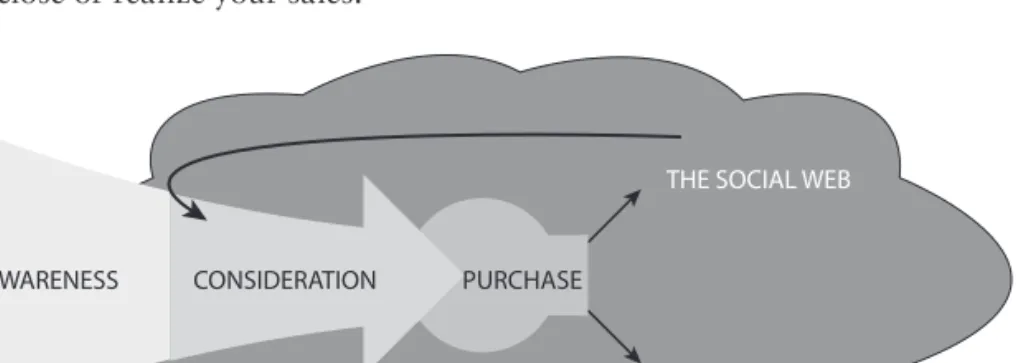
Start with the funnel included on the worksheet for this chapter, or create your own. Start with your business objectives and then connect your awareness efforts with them as they support promotion, trial, connection, or initiation of the relationships that lead to success in terms of your objectives. Then, add your point-of-purchase efforts. if you can, tie these directly to actual sales. you now have a “map” of your purchase funnel, similar to that shown in Figure 5.5. Starting with your business objec- tives, you can see how you are generating awareness and what you have to do to actu- ally close or realize your sales.
THE SOCIAL WEB
CONSIDERATION
AWARENESS PURCHASE
Figure 5.5 The Social Feedback Cycle and Social Web
100
chapter 5:Week 2: The Social Feedback cycle■
Next, add to this what you’ve learned through your social media intelligence efforts. Note that the social feedback intelligence is being developed in several places.
Social media content that enters the purchase funnel at the point of consideration can be developed after the purchase, for example by your customers based on an actual product experience. it can also arise as a part of, or because of, advertising: burger king’s “king” and “Subservient chicken” campaigns, along with competitor Wendy’s
“Red Wig” campaigns are examples of this. as well, conversations and content post- ings on the Social Web can result from what Paul Rand, Partner, President, and ceo of Zócalo group, refers to as a “brand detractor.”
Paul describes the detractor as the person whose mission it is — regardless of what you do, short of shutting down — to impede you. Think of tobacco or trans fat, or any other polarizing brand, product, or service. Rightly or wrongly, the detractors are out there, and their voices are part of the conversation.
The combined experiences — as shared by your customers, by people exposed to your ads, through the content generated by brand detractors, and more — are then fed back to your potential customer. The entry point to the purchase funnel is the point of consideration that occurs during the research and social discussion phase. look at your completed map and see if it makes sense. What you should see is a consistent progres- sion, from awareness to purchase, with a predictable effort applied at the point of sale that is more or less driven by what is entering the funnel at the point of consideration.
assuming that your map shows something like this, you’ve isolated the impact of social media: it may be helping, hurting, or both. by isolating it, you can develop a plan to add your understanding and influence to the process.
My Map Doesn’t Tell Me Anything
If your Social Feedback Cycle map is empty, disconnected, or otherwise a jumble, take a break.
Remember, no single technique is perfect, and sometimes it takes a few tries to get it right.
Go back through this exercise and make sure that you’ve uncovered enough detail. Check that you are mapping actual results and not assumptions. It may be too that no one is talking about you…in which case consider yourself fortunate. It could be worse! Seriously, if the conversation is nonexistent, just note that. You’ll get into “starting a conversation” in upcoming chapters.
Tip:
A brand detractor is not the same as someone who simply doesn’t like you. A brand detractor is someone who has made it his personal cause to impact you negatively, generally out of a strong belief that what you are doing is wrong. By comparison, an upset customer is someone who is open to a change in viewpoint: Generally speaking, a brand detractor is not.101■chaPTeR 5: The MaiN PoiNTS
Friday’s Wrap-Up
look at what you are saying in your awareness campaigns and at the point-of-sale. look as well at the intelligence you have gathered via the Social Web. compare these: The difference between your messages and the conversations you find is what is happening in the consideration phase. by isolating the social feedback cycle contribution, you’ve effectively modeled the macro-impact of social media on your current marketing pro- gram. you may not be able to see into the individual channels — yet — but you can at least point to the specific contributions or impediments to your current campaigns that arise on the Social Web.
you did a lot this week, and you took your first big steps in harnessing the Social Web. by looking at your current awareness and point-of-purchase efforts and then connecting the two with the conversations that consumers are having about your products and services, you are now able to identify your opportunities and challenges in the application of social media.
Chapter 5: The Main Points
S
• ocial media plays a significant role in marketing: The conversations that take place on the Social Web determine how easy — or difficult — your task in driv- ing conversion will be.
T
• he social feedback cycle is built on the post-purchase feedback and conversa- tional loop that augments your traditional purchase funnel activities.
c
• onsumer-generated media, and in particular photos, audio, and video that supplement text (blogs), are in mainstream use now, even if concentrated in the Millennial and gen X segments.
T
• he determined detractor is an individual who plays an important role in the evolution of markets but nonetheless will not (normally) be “won over” and therefore is generally best viewed as a participant with whom you will “respect- fully agree to disagree.” your best response is to simply ensure that your story is also being told.
y
• our social feedback cycle, developed and maintained over time, is a key plan- ning tool as you develop your social media plan.