To the glory of God, the healthy growth of the local church, and in loving gratitude to my wife and four sons. I am grateful to John Alford and Greg Carlson for the passion you instilled in me for discipleship, and especially for teaching and the life of the spirit. You have each been a constant source of encouragement in your own unique ways, and I am aware of the many sacrifices you have made so that I could pursue this degree.
INTRODUCTION
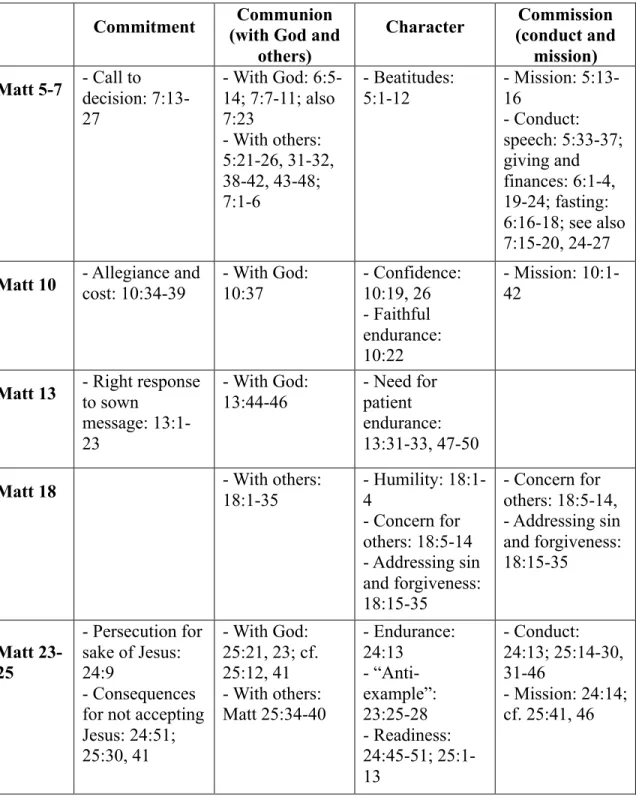
If we move into the next major section of the SM (Matt or the central section of 23), many highlights of discipleship come to the surface. An examination of the biblical story adds further credibility to the 4C discipleship portrait discussed. Redemption to the Ends of the Earth: A Biblical Theology of Mission, NSBT (Downers Grove, IL: InterVarsity Press, 2001).
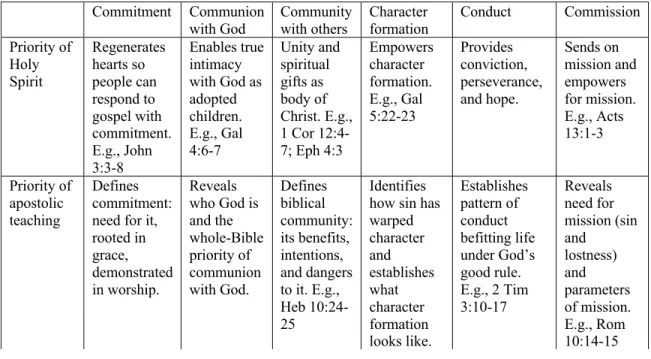
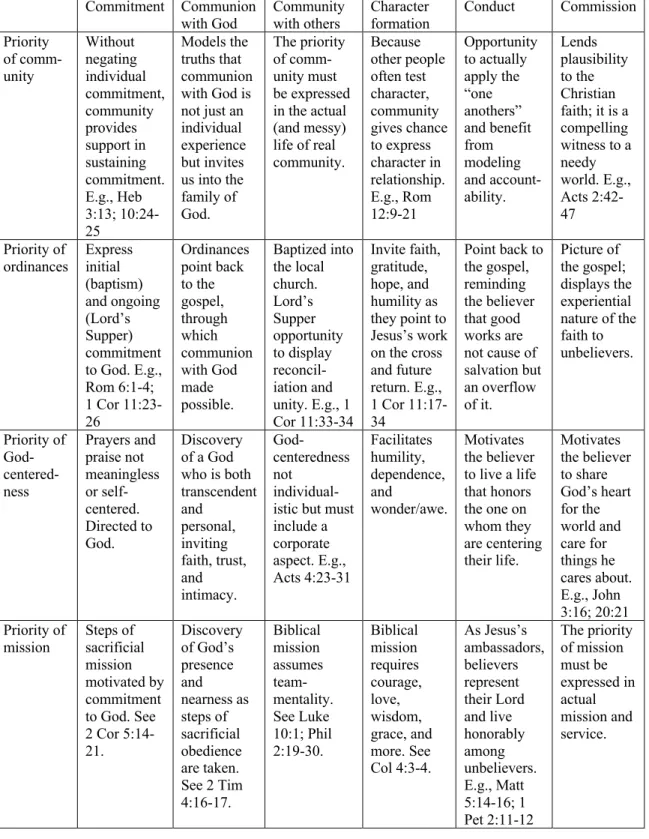
These priorities remain essential weights in the life of the early church and provide categories. The presence and work of the Spirit is everywhere in the life of the New Testament church. The priority of the ordinances is then reinforced in the life and practice of the early church.
180 John Webster, "The Visible Attests the Invisible," in The Community of the Word: Toward an Ecclesial Theology, eds. This theological validation further confirms the value of these priorities as a guiding framework for discipleship in the life of the local church.
Would Do Differently
Understanding Discipleship
If I were to ask now, I could back up my understanding of discipleship with at least two to three Bible passages. I deliberately think about how to disciple others in a multiplier sense (i.e., disciple others who will be equipped and motivated to disciple others myself).
Practicing Discipleship as Leaders within Ministry Programming Contexts 13. There are clear ways that programs I oversee or in which I am directly involved
Within the ministry department(s) that I oversee or are involved in, there are clearly defined programs for me to send new Christians to. Within the ministry department(s) I oversee or am involved in, there are clearly defined programs that I can lead mature followers of Jesus to. For areas of ministry that I am not directly involved in, I am aware of appropriate programs at Brookside to direct interested seekers to.
For areas of ministry that I am not directly involved in, I know the appropriate programs at Brookside that I direct new Christians to. For areas of ministry that I am not directly involved in, I know of appropriate programs at Brookside to mentor mature followers of Jesus. Over the past six weeks, I have discussed the practice of discipleship with volunteers or others involved in my ministry.
I can clearly articulate how our ministry programming intentionally facilitates discipleship to volunteers in my ministry. I have criteria that can help me evaluate ministry programs that I oversee or am involved in, that help me discern whether we are helping people grow as disciples. I listen for stories of how people in my ministry area(s) are growing in spiritual maturity.
Over the past three weeks, I have shared a story (either publicly in ministry or informally with someone else) about how people are growing spiritually because of how God works in and through the local church.
The Importance of Discipleship (and a Discipleship Pathway)
Questions like, "What does it mean to follow Jesus?" and "What does 'finding Jesus' mean, and what does it mean for our lives?"2 How do we make sure that 'finding' is connected with 'following', so that the former really leads to the latter. These questions draw attention to a larger question: "What does it mean to be a disciple?" We'll answer this shortly, but for now I just want to help you feel the importance of the question. Rather, the phrase is meant more simply in the sense of individuals—who have been called and whose hearts have been opened—discovering who Jesus is and putting their faith in Him for the first time.
Path of Discipleship” is just a fancy phrase for the intentional path, steps and pathways in your church to develop missional disciples of Jesus for Kingdom impact.”3. When laying out a beautiful, functional path, it must have the image in mind, the parts in place (ie, structure, "pavers"), and it must facilitate access and movement (to be inviting and go somewhere). Explain here that we are focusing on what the church as a local church is doing to nurture disciples.
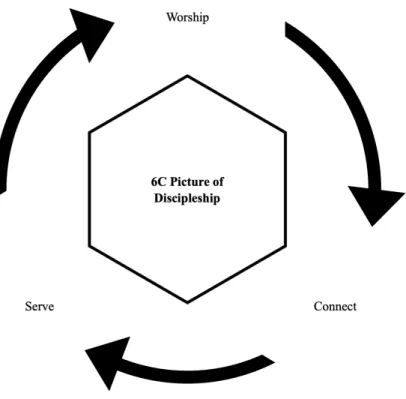
Point out "picture" (picture 6C), "pavers" (worship, connect, serve), and "access and movement" (arrows with ramps into each). So you know where/how to lead others and what else is going on in the life of the church. Illus: "Call before you dig" commercials – the value of understanding the larger infrastructure and knowing that digging a hole can have bigger consequences than you think.
Illus: Boys in the Boat story of "swing"4—the multiplied power of all working in the same direction.
What is a Disciple? Toward a
A Bible study (for example the teaching blocks in Matthew - expand on the importance of learning from the Gospel of Matthew here) highlights six areas of life that deserve our attention as we grow in discipleship. Following Jesus changes my loyalty.” (This is not consumerism or another part of a self-actualization project that you control.). Illus: Return of the King (Lord of the Rings) movie segment:12 When Frodo sees Sam after waking up at the end of the movie.
12 The Lord of the Rings: The Return of the King, directed by Peter Jackson (New Line Cinema, 2003). Large Group Discussion Question: Why is it personally valuable to have this clarity in the image of discipleship. Large Group Discussion Question: Why is it important to have this clarity in the picture of discipleship as a ministry team.
We want to articulate what it looks like to grow in these areas (ie, the picture of discipleship) as a first, middle, or high school student. student, a young professional, mother with four children, etc. In your ministry area, what words, pictures, concepts, or illustrations would you use to make these areas of discipleship. live" and help this picture "come alive" for people. The goal with this exercise is not to make this language something you should put on a wall in a room or at the head of a website.
Everyone realizes a priority (one of the "C's") that is underrepresented in the ministry you have led.
How Do We Make Disciples as a Local Church? Three “Pavers” that Provide Structure and
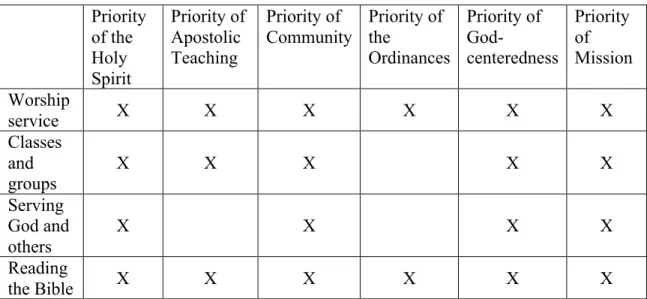
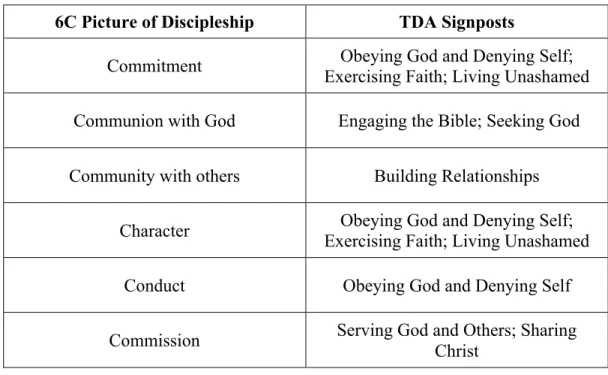
Go through Learning Exercise #1 here (“Exercise Connecting the Priorities and Image of Discipleship” - included below). Overview of TDA: The Transformational Discipleship Assessment is an in-depth study of discipleship "on the ground" - through interviews with experts and surveys of both Protestant clergy and 4000+ lay people in North America.14. 13 For an overview of the Transformational Discipleship Assessment (TDA), see “Discipleship Pathway Assessment,” Lifeway Christian Resources, accessed January 6, 2022.
Daniel Im highlights four input goals that disproportionately influence progress in the directions listed above: "[T]he research showed that doing certain actions (input goals) would actually predict a higher score in each of the discipleship characteristics."17. In other words, there are "certain things" we can do that cultivate progress in our 6C Picture of Discipleship. Question to focus on: How does each priority in Acts 1-2 advance the picture of discipleship that has already been discovered.
For each priority, consider how the pursuit and application of that priority transforms people in each area of the picture. If a church strives for dependence on and empowerment of the Holy Spirit ("the priority of the Spirit"), how will that affect their commitment. The goal is to give them a good head start and reinforce the idea that the priorities of discipleship must cultivate the image of discipleship.).
Small Group Discussion: In your own words, how has this session best helped you under the importance and value of the three "pillars"—worship, connect, and serve.
The Value of Access and Movement for a Healthy Discipleship Pathway
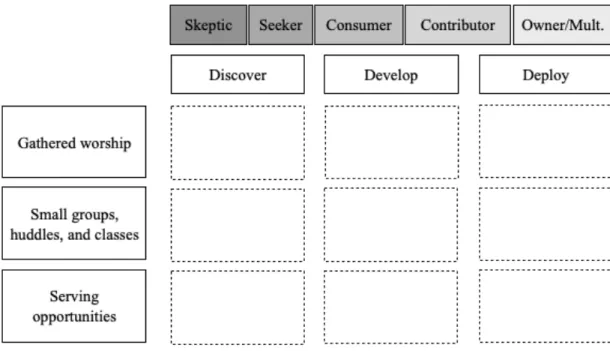
Discover: Opportunities for skeptics and seekers to discover who Jesus is, why they need him, and how they can know him. Develop: Opportunities for consumers and contributors to grow in their understanding of God's Word, the implications of the gospel, spiritual disciplines and a life of discipleship. Admittedly, these categories are not hermetically sealed off from each other - there is interaction and overlap.
Nevertheless, these categories provide a simple way to think deliberately through programs we offer that may serve different people. Opportunity for growth within (or across) programs: Have we clearly outlined the next steps. Small Group Discussion: Choose one of the “stages of spiritual maturity” and look at your ministry area(s) through that lens.
What does this person need (whether they feel it or not). Time permitting, keep working through the different stages of spiritual maturity.). Small Group Discussion: Summarize in your own words what is meant by the importance of "movement" in a discipleship journey.
Putting It All Together—A Discipleship Pathway for Brookside Church
Area to focus on: Have ministry departments work together as a group to fill in the appropriate boxes of the discipleship path for their ministry department. Or is it better to point to something else within the life of the larger church?. Imagine you were in a discipleship relationship with someone where you knew you would encourage them along the entire spectrum of the discipleship path (from "discover" to "deploy").
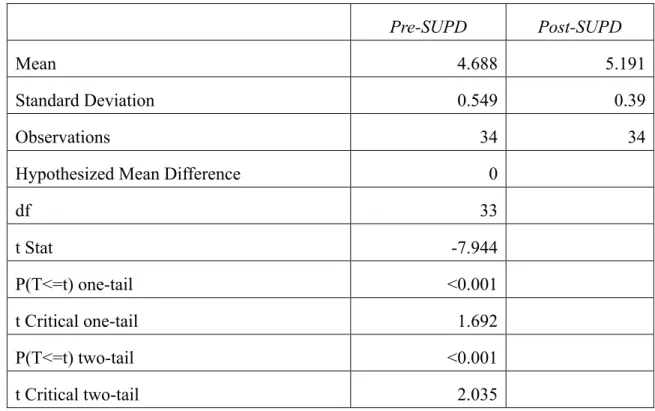
The role of the local church in facilitating discipleship is clearly stated in the ministry plan. The "variance" column on the right side of the table calculates the simple value difference between the individual questions (on pre- and post-SUPD), to further indicate any difference made by the Discipleship Path curriculum. Following the intensive Discipleship Pathway seminar, each participating ministry department was asked to complete and submit a ministry plan for their specific department, depicting how the ministry organizes their programming through the lens of the Discipleship Pathway.
1 In this example, "Gathered Worship" is a ministry department that remains largely focused on one line of discipleship. 2 In this example, "Small Groups" is a ministry department that remains largely focused on one line of the discipleship process, but has also included ways it connects to or overlaps with other areas of the path. 3 In this example, "Youth" is a department of ministry that clearly touches every line on the path of discipleship.
4 It should be noted that at the time of the Discipleship Path seminar, Brookside's college ministry was in its "initial launch phase." The ministry was brand new—staff resources were devoted to building and developing a ministry to college-age students, but programming had not yet begun.