This is confirmed by an examination of the substantial European holiday catalogs of two of the most important British travel agencies, Cook and the Polytechnic Touring Association, as issued in 1939. Absent the cheeky advertisements of Western civilization, much of the goods that come with them are in connection with.
The Soviet tourism industry as seen by Western tourists of the late Soviet period,” in L. The spa towns of the Austrian-Hungarian Empire and the growth of tourist culture in P. eds.), New Directions in Urban History.
Tourism and the Making of Socialist Yugoslavia
The journey to the old holiday paradise (the song was recorded in 1996) depicts an atmosphere of life that the majority of people in Yugoslavia began to participate in and identify with during the heyday of the socialist era in the 1960s and 1970s. In the Yugoslav successor states, the dominant political histories of the late 1990s and early 21st century have tended to reinforce national territorial and cultural claims, while historians based outside these countries have dissected various nationalisms.
Tourism and the Promotion of State Policies
The latter clearly challenge long-standing assessments of the study of tourism as unimportant or frivolous. According to John Allcock, "these developments were not limited to 'industrialization' in its narrowest sense, but were extended to include developments such as the creation of the tourism industry."15.
The Active Tourist
And because social relations often become formalized, the study of the development of tourism and holidays can follow political, social and cultural changes. As a result, it seems imperative that the historical study of tourism in Yugoslavia takes into account transnational and cross-border commonalities as well as economic and social interaction.
Trends in Tourism Development in Socialist Yugoslavia
Furthermore, while the tourism business raised living standards and spending power in the tourist communities, it also reinforced the existing regional differences that marked Yugoslav society. Although the socialist government did not treat tourism as a key factor in the economy, the tourism business affected many state nerve cells and individual livelihoods, while its dynamic nature created.
Transformation of the State and the National Question
The greatest success in the eyes of the Party was the agreement by leading linguists and literary experts from Serbia, Croatia, Bosnia and Montenegro on a common Serbo-Croatian language. The policy of decentralization was closely linked to the development of the leadership's prestige project: workers' self-management.
Social stratification
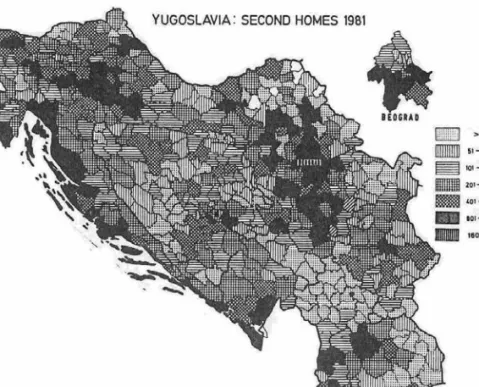
Over the course of the 1980s, the incomes earned by guest workers abroad increasingly defied the conventions of middle-class leisure as they were channeled into flashier cars, elaborate second homes, and other luxury clothing. apparent relative wealth. As agreed by most scholars of Yugoslavia, the ability to cross international borders on the strength of the famous visa-free Yugoslav passport was one of the few effective components of Yugoslav identity.
Book Concept and Chapter Outlook
56The editors later discovered that Slovenia used the slogan "The Sunny Side of the Alps" to promote tourism in the 1980s. Holidays for all : the leisure issue in the era of the Popular Front, 'Journal of Contemporary History.
Holidays on Command”
Workers into Tourists
Some of the answers to these questions are hidden in five main sources covering the entire socialist period and used for this history of social tourism: first, the archive records of the Council of the Association of Trade Unions of Croatia (Vijeće Saveza) sindika Hrvatske, VSSH ) dealing with tourism or those belonging to the Committee for Rest and Recreation (Odbor za odmor i recreaciju, OOR) and similar bodies, available for the years, secondly, Radničke novine ("Workers' paper"), the VSSH weekly, which ' Contains a large number of articles on social tourism from 1973 to 1989;. These changes became cornerstones of the post-war tourism industry, as "holidays for all" meant not only legal entitlement, but also the possibility to leave home to travel.
Legislation: Entitlements and Financial Incentives
The federal and republican headquarters, as well as many of the local branches, had offices, boards, committees or commissions for tourism, vacations and recreation. In Rijeka, for example, in the same year it was agreed to divert 15 percent of the regress funds to a separate fund to cover holiday expenses for needy workers.36 As a result, around 3,000 workers from Rijeka enjoyed a free holiday that year.

Construction: Setting up a Workers’ Holiday Center
In the late 1940s, many of the smaller seaside resorts did not have excess accommodation available for commercial tourism, as their facilities were fully occupied by state-sponsored tourists. On the other hand, the workers themselves are not excluded from the conditions in the rest centers.
Promotion: The Struggle to Create a Need
The members must be fully informed of the circumstances."85 When union officials from Delnice in Gorski Kotar reported to the headquarters that they had tried their best to explain the benefits of vacationing, some workers "didn't want to hear about it" and preferred to stay at home "and attended to their business. A year later, representatives at the Republican Conference of the Socialist Union of Working People of Croatia (SSRNH) still saw domestic tourism in Yugoslavia.

Holiday-Making: Summers in Odmaralište
A year later, there were several complaints about the food at the trade union center in Biograd. In 1963, the only problem in terms of food at the brand new center in Malinska on the island of Krk was the size of the self-service restaurant.
Social Tourism: A Benefit and a Burden
It can be assumed that a number of workers did not appreciate returning to the same center for years in a row. Moreover, there were also those who were not enamored with the idea of spending their holidays with their co-workers, ie. in the same social environment that they had in the workplace.141 Since the centers were generally quite modest, some of the guests encountered problems. to adapt to the quality of the service and accommodation.
From Comrades to Consumers Holidays, Leisure Time, and Ideology
Only at the end of the story do they learn how the traumas of the war affected him. When these stories appeared, thirteen years after the end of World War II, the memories of the occupation were still strong and the emotions raw.
The Promise of a Better Life?
The Evolution of the Tourist Industry in Communist Yugoslavia
On the tenth anniversary of the region's liberation from Nazi occupation, he pointed out, the Tourist Alliance had the opportunity to increase the number of visitors who came to holiday in the region. In the kitchen, meanwhile, as well as the dust, darkness and clutter of the kitchen, there was a "wooden basket at
Holidays on Command: Summer Resorts and Socialist Leisure
Svaić told the meeting - which included Joža Vukelić, the representative of the National Council of National Youth - that his veterans' organization had no interest in discussing children's summer camps, where war heroes who had sacrificed their lives and health for the liberation of the nation had nowhere to go say. 27. For the propagandists of these new resorts, their existence was not just an incidental, frivolous sideshow to the more important task of building socialism: in fact, they were the whole point of the construction, giving the workers a taste of the good life that their work in building of a socialist society deserved.
The Ljetovalište on the Riviera
A Case Study in Tourism as Ideology
Even more than that, youth leaders should provide education about economic and social life. Bernardo Tičić, Letter to the director of the youth summer camp in Zaostrog, July 6, 1949, HDA, MTO, NRH, fund of the Ministry of Rada, box 177, s.
Public Opinion and Tourism in Yugoslavia in the 1950s and 1960s
On the contrary, there was increasing unease about the consumer values of the new society, which was reflected in the ambiguous depictions of tourism in the popular press. Yet it was hardly a taste of the good life that affluent foreign tourists seemed to be enjoying.
The Caravan of Brotherhood and Unity
Tourism as Ideology’s Last Stand
Contested versions of the past and specifically the trauma of World War II were also prominent. On the last day of the visit to Zagreb, the guests went with their hosts to the international match.
Comrades with Credit Cards: Tourism and Ideology in Communist Yugoslavia
The Caravan of Brotherhood and Unity continued until the early 1990s, but the less attention given to the annual event towards the end of the 1970s, the growing divisions that began to emerge in Yugoslav society, reflect. All that remained of the concept were the memories of those who participated in the annual fraternal trips.
The Yugoslav Road to International Tourism Opening, Decentralization, and Propaganda in the
I will then examine the development of foreign tourism in the light of Yugoslavia's international position in the years following its expulsion from the Cominform. In the second part, I will examine the overall situation of international tourism in Yugoslavia in the first half of the 1950s.
A Message for Abroad: “Come and See the Truth”
In this particular chapter of Yugoslavia's history, the visits of foreigners served a political purpose in the ongoing conflict with Moscow. Was the early development of foreign tourism a result of Yugoslavia's 1949 "come and see the truth" policy.
The Growth of International Tourism in the First Half of the 1950s
In the next chapter, we will briefly outline the development of international tourism in the first half of the 1950s and continue with the analysis of Putnik's decentralization and its consequences. Tito and Boris Krajger, a senior Slovenian communist who supported economic reforms, advocated the development of international tourism.
Czechoslovak and Soviet Bloc Tourists Return to Yugoslavia
Archives of the Museum of the History of Yugoslavia, Office of the President of the Republic, KPR III-A-e. Putnik's decentralization was one of them, and its analysis makes it possible to take a closer look at the issue of international tourism in Yugoslavia.
The Decentralization of Putnik and Its Impact on International Tourism
Milan Apih, Director of the Committee for Tourism in 1951, was appointed Director of the Main Department of Tourism in 1952. 68Barbić, the Director of the Croatian Main Department of Tourism and Hotel Management, strongly criticized Putnik as a completely centralized institution that had unhealthy relations with hotels .
Decentralization and Propaganda: A Thorny Issue
These initially Republican-based agencies would take on more familiar names over the years to come. On the one hand, republican and local associations were free to produce their own materials, while TSJ, financed mainly from the federal budget, carried out promotional work of a non-commercial nature in the interest of the federation as a whole.

Conclusion
The development of international tourism in Yugoslavia was characterized by a degree of continuity, as evidenced by the stability of Yugoslav policy towards foreign tourism and the steady flow of Czechoslovak tourists throughout the twentieth century despite the political conflict of 1948– . The political rationale behind Yugoslavia's invitation to the outside world quickly lost significance as the economic importance attached to tourism increased in the 1950s.
Tourism and the “Yugoslav Dream”
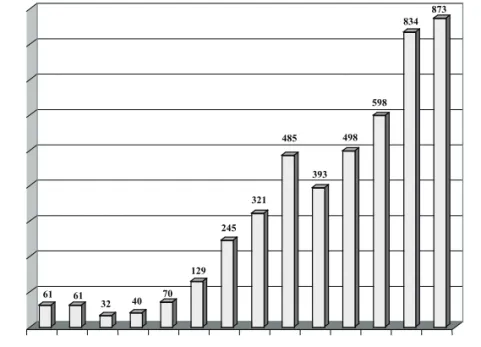
1 The data presented in this article result from archival and field research conducted within the international project "Political Places in Change: The Case of Kumrovec", led by Kirsti Mathiesen Hjemdahl and Nevena Škrbić Alempijević. 4 In the following period, the number of visitors fell in line with political and social changes: from 1985 to 1987 about one million people registered, in the next two years half a million, in 1990 about 200,000 people and in 1991 fewer than 10,000 (source: unpublished register of visitors to the "Old Village" Museum in Kumrovec).
Travelling to the Birthplace of “the Greatest Son of Yugoslav Nations”
Introduction
6 This part of the analysis is based on the records of Marijana Gušić, which are stored in the Croatian State Archives in Zagreb, as well as on the documentation of the "Old Town" museum in Kumrovec. Preserved in the authentic condition of Tito's early years, it is nowadays organized as the Memorial Museum of Marshal Tito.
Travelers to Kumrovec: Tourists or “Believers”?
While conducting field research in Kumrovec at the Youth Day17 celebration in 2004, we talked with the participants of the celebration. However, we bear in mind that the categories defined externally by "experts" do not necessarily correspond to the worldview of "users", i.e. people who travel to Kumrovec.

Creating the Core Attraction: Preparing Tito’s House of Birth for Visitors
From the 1950s to the 1970s, she incorporated more and more cottages into the museum's elaborate frame, eventually forming an entire preserved village. Tito's life was present in every aspect of the project, as the central attraction of the village as a whole.
The Construction of Kumrovec as a Political Tourism Destination
The trip to the birthplace of the "Greatest Son of the Yugoslav Nations" 151 of the National Liberation War and the Yugoslav Youth Organization, represented two main stops during these trips. Source: Provisional list of notes: Political School of the League of Communists of Yugoslavia "Josip Broz Tito".

Media Attention on Kumrovec as the Place to Visit
However, when describing trips to Tito's hometown, writers often leaned toward impressionistic, lyrical, and intimate descriptions. The pastoral of Kumrovec's surroundings often served as a space in which a visitor could feel Tito's presence.

Visitors’ Books in Tito’s House of Birth: Tourists’
The reason for the special beauty of spring was the fact that it was time to celebrate Tito's birthday in his native town. Thousands of visitors from children to famous world statesmen wrote their impressions in the visitors' book.”40.
Inscriptions
In this wealth of comments, a researcher can discover some of the visitors' motivations for traveling to Tito's birthplace. The visitor books in Tito's childhood home can be compared with similar books at other tourist sites, museums or similar institutions, but only to a certain extent.
In Search of Authenticity
On the other hand, Dean MacCannell described the tourists as embodying the demand for authenticity in contrast to the superficiality of the modern way of life.45 The term "authenticity" used in this analysis of Kumrovec comes from Edward M. .. According to the second — authenticity — New Salem is reconstructed a complete simulation.49 The third meaning—originality—includes a sense of the original as opposed to a copy.
Different Tourists—Different Authenticities
The lists of names in the visitors' books testify to the popularity of the place. Holiday homes began to populate tourist areas and the rural surroundings of major cities in Yugoslavia in the early 1960s.
Retreat from Industrialization: 1950s and 1960s