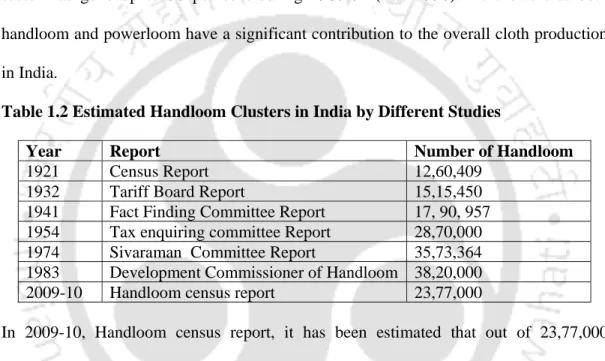
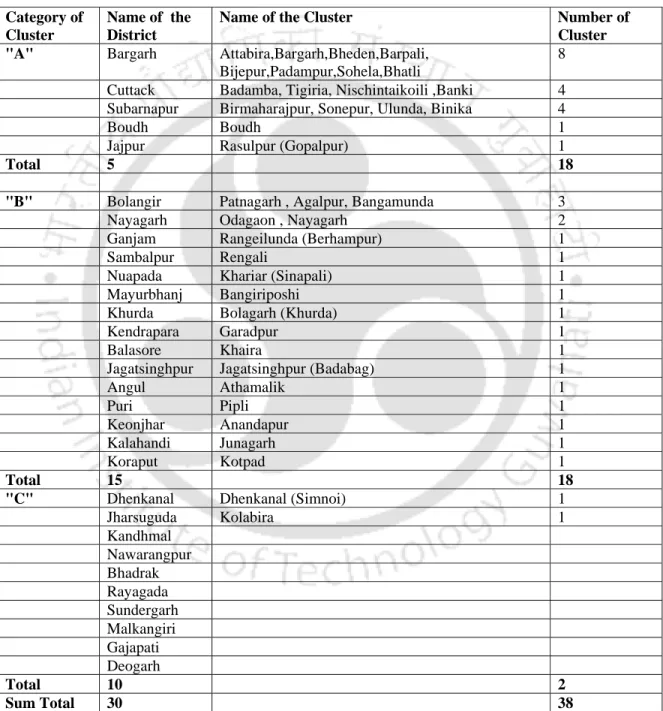
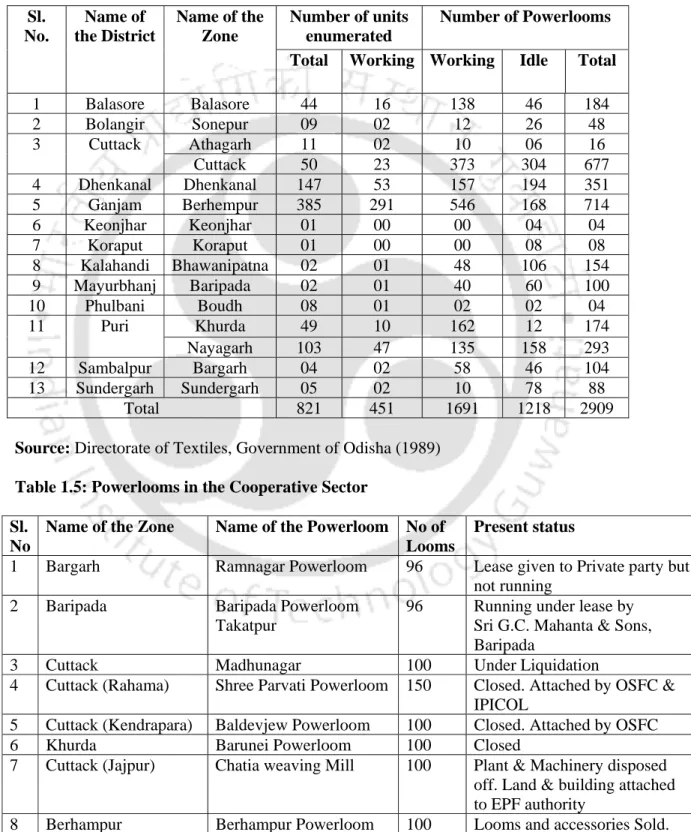
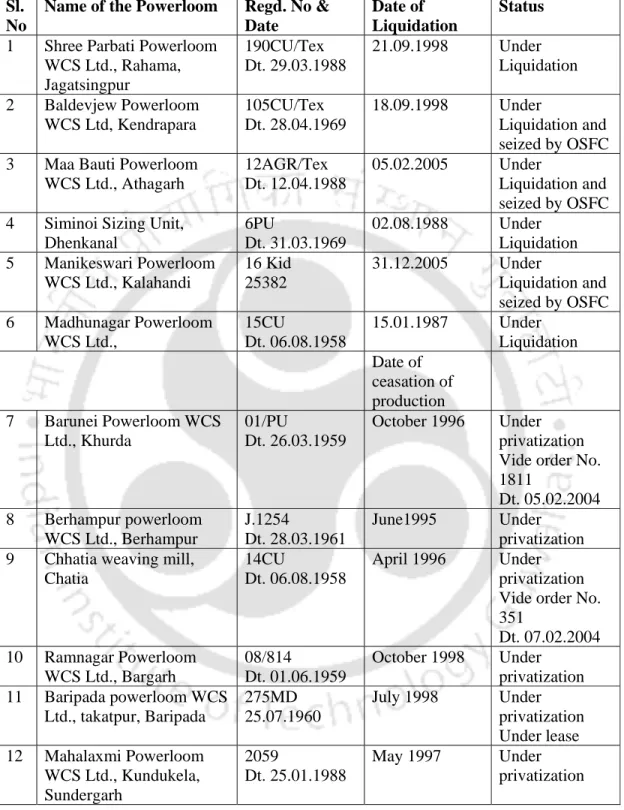
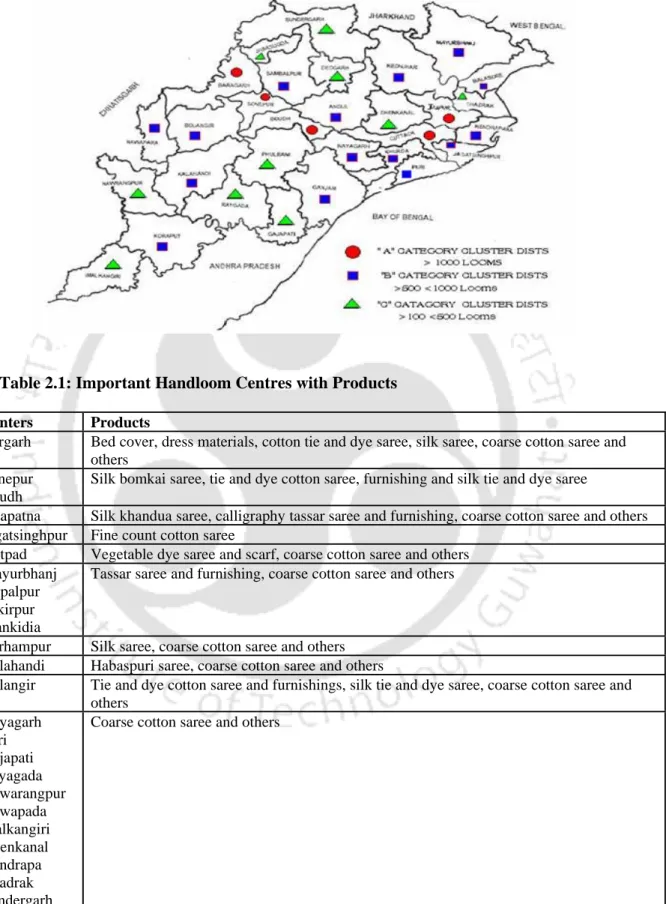
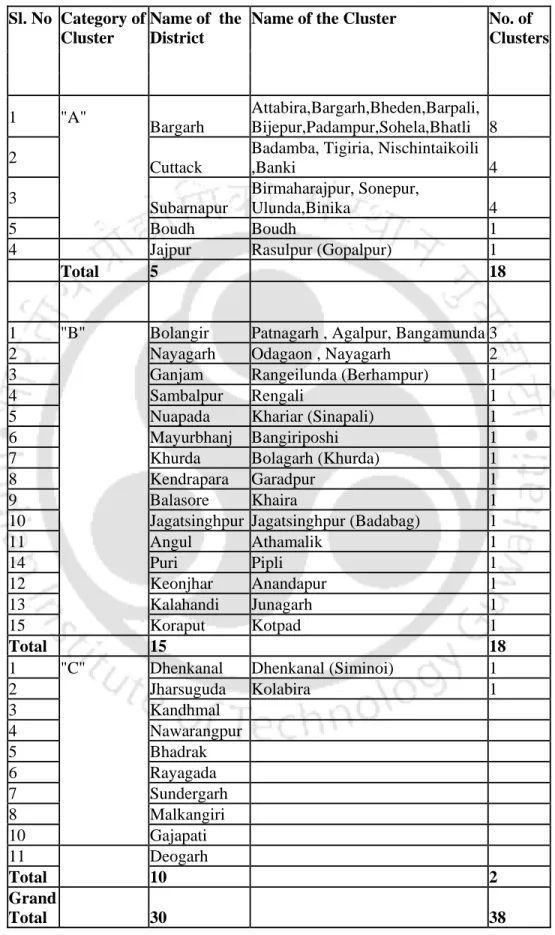
Against this background, the present dissertation is an empirical study on the extinction of indigenous knowledge system (handloom) in western Odisha and the extinction of western knowledge system (powerloom) and indigenous knowledge system (handloom) in coastal Odisha. The indigenous knowledge system (handloom) in western Odisha cannot flourish due to lack of government support.
INTRODUCTION
Introduction
Powerloom as a Western and Handloom as an Indigenous Knowledge System Powerloom is a mechanised loom developed by Edmund Cartwright in Europe in
The uncritical introduction of powerloom fails to promote the effective management of the existing available handloom technology at the local level and thus contributes to the plight of handloom technology (indigenous technology). Against this backdrop, the present thesis is an empirical study on the extinction of an indigenous knowledge system due to the uncritical introduction of a western knowledge system by the government of Odisha.
Review of Literature
- Workers’ Alienation
- Intrinsic and Extrinsic Satisfaction in Work
- Self-identity and Subjectivity at Work
- Class and Family Influences
- Employment Relationship
- Technology and Work Experience
- Factors Contributing to the Plight of the Handloom Sector
- Cross National Flow of Products and Handloom Industry
- In-house Technological Innovation in Small-Scale Industry
- Influence of Public Policy on Indigenous Economy
- Institutional Arrangements and Handloom Industry
- Factors contributing the present plight of the powerloom sector
- Alienation in Work Situation
- Planning Process in the Cotton Textile Industry
- Disadvantages to the Powerloom Sector
- Comparison of Powerloom Industry of Odisha with the Rest of India
- Research Gap
- Handloom Industry in India in General and Odisha in Particular
- Uniqueness of Handloom of Odisha
- Types and Patterns in Ikat Weaving
- Tie and Dye Fabrics
- Types of Households by Activity Status of Handloom
- Types of Looms in the Handloom Sector
- Sources of Raw Material in Handloom Sector
- Powerloom Industry in India
- Powerloom Industry in Odisha
The non-performance of the powerloom industry in the state is attributed to various factors. No emphasis is given in the earlier studies to the decline of the powerloom sector in Odisha.
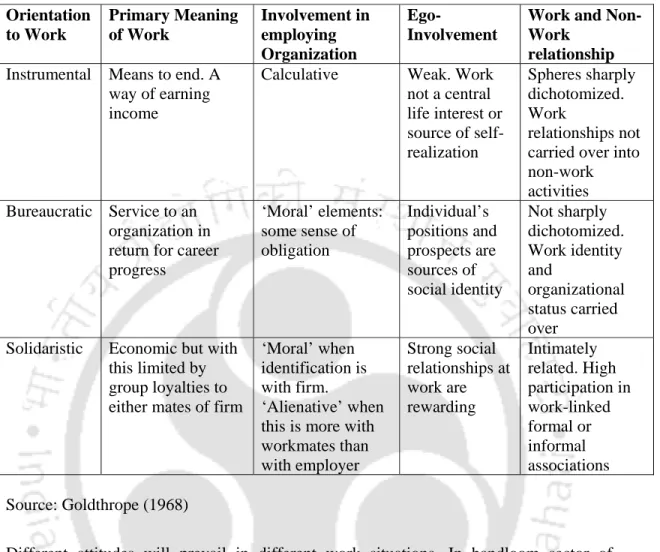
Rationale for the Topic
Research Questions
Objectives of the Study
Methodology
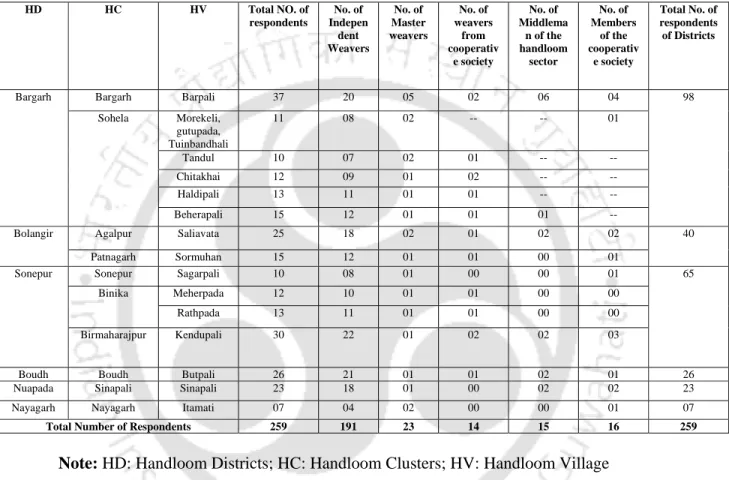
Note: HD: Handloom Districts; HC: Handloom clusters; HV: Handloom Village Table 1.10: Respondents in Powerloom Industry in Odisha. To address the third objective, the study dwells on how the allied technology factors contribute to the decline of the handloom industry in Odisha.
Structure of the Thesis Chapter I Introduction
Addressing the second objective, the study focuses on the two conflicting technological systems as seen through the practices of the weavers' community in Odisha. The third chapter, through detailed cases, attempts to examine the factors of the fading state of the Odisha handloom sector.
HISTORY OF HANDLOOM AND POWERLOOM INDUSTRIES WITH SPECIFIC REFERENCE TO ODISHA
History of Handloom in Odisha with specific reference to Western Odisha The engravings on the stones of Khandagiri Cave in Odisha suggest the existence
Finally, in 1941, the Government of India appointed "fact-finding committee" on the recommendation of the Handloom Committee of 1940. The report of this committee providing for various factors of the handloom industry was the first verified and valuable report.
Context of the Emergence of Powerlooms
Until the first decade of the twentieth century, handloom still had an advantage in the domestic market. But this quickly suffered due to the growth and consolidation of the power loom sector.
Handloom Sector in India with specific reference to Odisha after Independence The Government of India formed a ‘Standing Handloom Industry’ in 1948 under
This fund was utilized for the development of the khadi and handloom industries, particularly for carrying out, assisting or promoting the khadi and other handloom industries. Therefore, the Board has decided to give financial assistance to the handloom industry in the cooperative circle.
Brief profile of Textiles in India in General and Odisha in Particular
- Uniqueness of Handloom of Odisha
- History of Handloom Industry in Western Odisha
- Handloom Industry after India’s Independence
- Weavers of Odisha
- Religious Foundation of ‘Bandha’ Art
- Tie and Dye (Ikat)
- The Process of Weaving
- Warping
- Preparation of ‘Bandha’ (Tie-Dye)
- Preparation of Weft
- Sizing
- Drafting
- Denting
- Setting up of Dobby
- Weaving
- Analysis of Production Cycle
In addition, the atrocities of the customs in India and their counterpart in England had played a hostile role. the handloom industry of this place. This committee had recommended the following:. a) The production of mills and power looms should be limited to the level already achieved, i.e. 5,000 million yards (assuming an export target of 1,000 million yards) and 200 million yards respectively, and any increased demand which the Commission puts at 1,700 million yards. yards during the plan period should be covered by expansion of handloom production. This is rare in the refined and stylized paintings of the skilled artist of the Mughal era.
It is a poetic creation, a 'lotus' in the hearts of an artist and a person who can appreciate or understand the various feelings expressed through it - the artist's contemplation of the manifold beauties of nature on the streams of feelings.
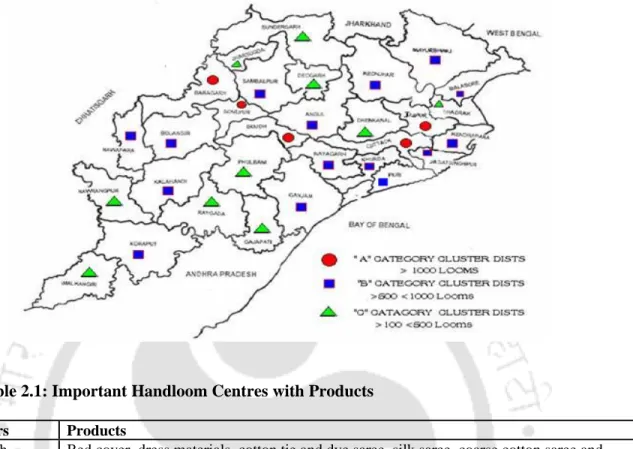
WANING HANDLOOM INDUSTRY: A STUDY OF SELECTED HANDLOOM CLUSTERS IN ODISHA
Introduction
Before colonialism, weavers in the handloom sector were able to meet their basic needs through the handloom. In this context, the present chapter attempts to study the various challenges facing the handloom sector in various handloom clusters in western and coastal Odisha. In-depth interviews were also conducted with one of the leading entrepreneurs in the handloom sector in the state of Odisha.
However, in practice, the Odisha government has neglected the handloom sector in the state, thereby contributing to the poor condition of the handloom sector.
Brief profile of the handloom weavers and their socioeconomic status
- Challenges faced by the Handloom Weavers in Odisha Table 3.11
- Nexus between the officers and the Members of the Cooperative Society
- Ineffective cooperative System
- Shortage of raw material
- Lack of Working Capital
- Infrastructure bottleneck
- Lack of product diversification
- Challenges faced from the powerloom sector
- Lack of government support
- Marketing problem
- Challenges from the powerloom sector
- Conclusion
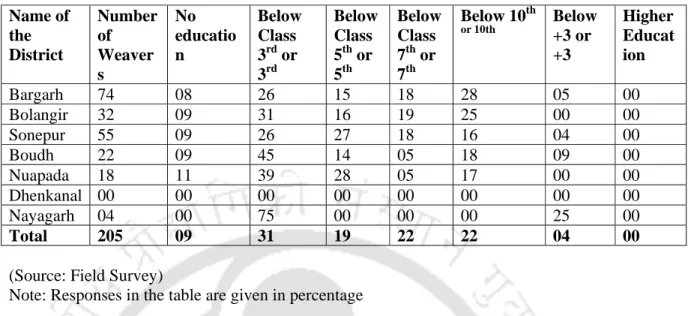
Now the role of middlemen and master weavers is crucial in the handloom sector. Different opinions of the weavers of Western Odisha regarding the handloom sector Name. Now let's talk about the current plight of the master weavers handloom sector.
There are not many explanatory answers from the members of the cooperative in the handloom sector. An ineffective marketing system has resulted in the decline of handloom products in the country. Even the government has not formulated any proper policy to revive the handloom sector.
DECLINING POWERLOOM INDUSTRY AND ALLIED TECHNOLOGY FACTORS: A SOCIOLOGICAL STUDY OF
SIMINOI POWERLOOM CLUSTER IN ODISHA
Introduction
The uncritical transition from handloom to powerloom clusters is seen as involving the issue of 'labour de-skilling': the process by which skilled labour. However, it is beyond the scope of this study to critically engage with the nature of the state. As Bythell (2008) points out, fixed costs of powerloom are high: In the powerloom sector in Odisha, there is high investment and low returns.
Handloom sector in the country is the second employment generating sector in the country.
Powerloom Clusters in India
But the problem in Odisha is that powerloom is in a distressed state compared to the rest of India. Currently, 1,238 power looms in Odisha produce low value products such as Gamucha, Saree, Dhoti, Blouse and long cloth (Textile Committee Report, Government of India 2003). The textile industry accounts for as much as 21 percent of the total employment created in the economy.
Apart from these states, handloom weaving is more present in the states of Andhra Pradesh, Karnataka, Madhya Pradesh, Punjab, Rajasthan, Uttar Pradesh and Odisha; and these together account for 15-20 percent of all machine loom units in the country (Textiles Board Report, Government of India 2003).
Powerloom Industry in Odisha
In few cases, like in Odisha, it is observed that both handloom and powerloom are integrated to produce market oriented products. However, since 1985, Odisha has been facing a serious crisis, while at the same time the power waves of southern and western Indian states have flourished. The causes of the decline of the powerlooms and the closure of the powerloom cooperative societies are manifold.
This chapter tries to find out the main causes of the decline of handloom in the state of Odisha from different perspectives.
Case of Siminoi Powerloom Cluster
After the closure of the cooperative, the market demand for the powerloom product in the country is at its worst. The infrastructural bottleneck is one of the main reasons for the poor position of the powerloom sector. Odisha government is not interested in handlooms as well as power looms sector.
Total investment in powerloom sector is Rs15000 (machine) + Rs15000 (yarn and other raw materials).
Discussion
The state's powerloom sector still lacks all these qualities, which need to be strengthened. Since there is a lack of product diversification in the state, there is a less competitive environment in the state for which the powerloom cannot flourish. Since the price of cotton is high and Odisha is not a major producer of cotton, this ultimately leads to a shortage of raw materials in the sector, which is responsible for the fate of the textile industry, both handloom and powerloom.
After discussing a case of Siminoi powerloom cluster in Dhenkanal district of Odisha, the next chapter strengthens the argument of the study by focusing on another powerloom cluster (Itamati powerloom cluster) in Nayagarh district of Odisha.
HANDLOOM AND POWERLOOM INDUSTRIES: A
SOCIOLOGICAL STUDY OF ITAMATI POWERLOOM CLUSTER IN ODISHA
Lack of Product diversification and Unorganized growth of powerloom
The loom group in Itamati directly ape the product design of the loom instead of making some innovations in product design. It is important to note that the handloom of Odisha cannot duplicate the sophisticated handloom products. The powerloom cluster in Itamati is not properly organized due to which it is not able to flourish and produces low quality products which have no demand in the market.
It is possible that the powerloom industry in Odisha as a whole would grow in an organized manner.
Lack of running/working capital
In Odisha we also find lack of technological dynamism and poor infrastructure contributing to the plight of the power industry in the state. One of the major obstacles in the handloom industry is insufficient pre- and post-loom equipment. Severe shortage of power is also responsible for the current state of handloom industry in the state.
According to a handloom weaver, despite the difficulties, there is still a profit in the handloom sector.
Lack of profit in the powerloom sector According to a weaver,
Lack of product diversification: if one makes a design, everyone is interested in copying that product, so they are not interested in product diversification due to which one type of product flooded the market thus reducing the sale of our product and there is less market demand for all of these. I advised all the weaver, that you got the formulas from me, that as a hand jacquard, you can put it on the loom. Here the weaver explained how lack of poor business skills and business ethics and poor industrial relations are responsible for the plight of the handloom sector in the state of Odisha in general and the Itamati handloom group in particular.
Here, the weaver explains how the business in Bombay is so organized that it leads to maximum profit, while such disorganized powerloom sector in Odisha is responsible for less profit in the sector.
Lack of professionalism in the sector According to a weaver,
For this reason, there is now a shortage of manpower in the handloom sector, which is again contributing to the plight of the handloom sector. But the handloom of Odisha lacks all these due to which it cannot flourish in the national market. Here the weaver is trying to explain that the state government is responsible for the current state of the power sector in the state.
Here the weaver is trying to explain the careless attitude of the people which is again contributing to the plight of the power sector in the state.
Financial Irregularities in the Powerloom Sector
The weaver switched from handloom to powerloom, but with powerloom they also encounter the same problem as with handloom. Previously he wove the gamucha, then he changed the design in the handloom sector. He also makes the Konark Chakra product for the studying girls in the powerloom.
Since he gave the wages to the weaver one rupee 50, why should we not weave it in the power loom.
Can the Sambalpuri handloom saree be woven in the powerloom?
- The Case of a Powerloom owner and his family
The work of the master weaver or the owner of the loom units as follows:. Therefore we are losing our interest to make a new kind of innovation in the design of the loom. Instead of promoting the handloom sector, the government is buying the handloom product and selling it under the brand name of the handloom.
The weaver has adequately explained how a new innovation in the handloom sector is being copied by the powerloom.
Conclusion
Since the handloom is installed in the state in a semi-hazardous manner, this ultimately leads to irregularities in the disbursement of finance to the handloom sector. Furthermore, the closure of the powerloom cooperative society due to serious corruption has also reduced the state of the power sector in the state. The state power sector lacks all these qualities, which must be strengthened.
Since there is a lack of product diversification in the state, there is a less competitive environment in the state for which power is unable to thrive.
CONCLUSION
Summary of the Findings of the Study