
The Stigma of Addiction An Essential Guide
Jonathan D. Avery
Joseph J. Avery Editors
123
The Stigma of Addiction
Editors
The Stigma of Addiction
An Essential Guide
ISBN 978-3-030-02579-3 ISBN 978-3-030-02580-9 (eBook) https://doi.org/10.1007/978-3-030-02580-9
Library of Congress Control Number: 2018968278
© Springer Nature Switzerland AG 2019
This work is subject to copyright. All rights are reserved by the Publisher, whether the whole or part of the material is concerned, specifically the rights of transla- tion, reprinting, reuse of illustrations, recitation, broadcasting, reproduction on microfilms or in any other physical way, and transmission or information storage and retrieval, electronic adaptation, computer software, or by similar or dissimi- lar methodology now known or hereafter developed.
The use of general descriptive names, registered names, trademarks, service marks, etc. in this publication does not imply, even in the absence of a specific statement, that such names are exempt from the relevant protective laws and regulations and therefore free for general use.
The publisher, the authors, and the editors are safe to assume that the advice and information in this book are believed to be true and accurate at the date of pub- lication. Neither the publisher nor the authors or the editors give a warranty, express or implied, with respect to the material contained herein or for any errors or omissions that may have been made. The publisher remains neutral with regard to jurisdictional claims in published maps and institutional affiliations.
This Springer imprint is published by the registered company Springer Nature Switzerland AG
The registered company address is: Gewerbestrasse 11, 6330 Cham, Switzerland Department of Psychiatry
Weill Cornell Medical College New York, NY
USA
Department of Psychology Princeton University Princeton, NJ USA
and Gian Marco Moratti. We love you, and we miss you.
Dr. Jonathan Avery would like to thank
Robin Kellner Sicher and John Sicher for their
support of his research on stigma.
vii
Contents
1 Introduction . . . 1 Jonathan D. Avery and Joseph J. Avery
2 Self-Stigma and Addiction . . . 5 Steve Matthews
3 “Bad Parents,” “Codependents,” and Other Stigmatizing Myths About Substance
Use Disorder in the Family . . . 33 Carrie Wilkens and Jeffrey Foote
4 The Stigma of Addiction in Romantic
Relationships . . . 55 Lindsey M. Rodriguez and Lauren Prestwood
5 The Language of Stigma and Addiction . . . 71 Sarah E. Wakeman
6 The Stigma of Addiction in the Medical
Community . . . 81 Jonathan D. Avery
7 Stigma and Addiction Treatment . . . 93 Linda Richter, Lindsey Vuolo,
and Mithra S. Salmassi
8 Race, Stigma, and Addiction . . . 131 Sonia Mendoza, Alexandrea E. Hatcher,
and Helena Hansen
9 Addiction Stigma in the US Legal System . . . 153 Joseph J. Avery
10 The Stigma of Addiction in the Workplace . . . 167 Ann Roche, Victoria Kostadinov, and Ken Pidd
11 Stigma of Addiction in the Media . . . 201 Emma E. McGinty, Alene Kennedy-Hendricks,
and Colleen L. Barry
Index . . . 215
ix
Contributors
Jonathan D. Avery, MD Department of Psychiatry, Weill Cornell Medical College, New York, NY, USA
Joseph J. Avery, JD, MA Department of Psychology, Princeton University, Princeton, NJ, USA
Colleen L. Barry, PhD, MPP Department of Health Policy and Management, Johns Hopkins Bloomberg School of Public Health, Baltimore, MD, USA
Jeffrey Foote, PhD The Center for Motivation and Change, New York, NY, USA
Helena Hansen, MD, PhD New York University, Departments of Anthropology and Psychiatry, New York, NY, USA
Alexandrea E. Hatcher, LMSW Drug Policy Alliance, New York, NY, USA
Alene Kennedy-Hendricks, PhD Department of Health Policy and Management, Johns Hopkins Bloomberg School of Public Health, Baltimore, MD, USA
Victoria Kostadinov, MPsych National Centre for Education and Training on Addiction (NCETA), Flinders University, Adelaide, SA, Australia
Steve Matthews Plunkett Centre for Ethics, St Vincent’s Hospital and Australian Catholic University, Darlinghurst, NSW, Australia
Emma E. McGinty, PhD, MS Department of Health Policy and Management, Johns Hopkins Bloomberg School of Public Health, Baltimore, MD, USA
Sonia Mendoza, MA Mailman School of Public Health, Sociomedical Sciences Department, Columbia University, New York, NY, USA
New York University, Departments of Anthropology and Psychiatry, New York, NY, USA
Ken Pidd National Centre for Education and Training on Addiction (NCETA), Flinders University, Adelaide, SA, Australia
Lauren Prestwood, MA Department of Psychology, University of South Florida St. Petersburg, St. Petersburg, FL, USA
Linda Richter, PhD Center on Addiction, New York, NY, USA
Ann Roche National Centre for Education and Training on Addiction (NCETA), Flinders University, Adelaide, SA, Australia
Lindsey M. Rodriguez, PhD Department of Psychology, University of South Florida St. Petersburg, St. Petersburg, FL, USA
Mithra S. Salmassi College of the Holy Cross, Worcester, MA, USA
Lindsey Vuolo, JD, MPH Center on Addiction, New York, NY, USA
Sarah E. Wakeman, MD Massachusetts General Hospital Substance Use Disorders Initiative, Boston, MA, USA Harvard Medical School, Boston, MA, USA
Carrie Wilkens, PhD The Center for Motivation and Change, New York, NY, USA
1
© Springer Nature Switzerland AG 2019
J. D. Avery, J. J. Avery (eds.), The Stigma of Addiction, https://doi.org/10.1007/978-3-030-02580-9_1
The Stigma of Addiction: An Essential Guide is one of the only books that focuses on stigma directed toward those with substance use disorders (SUDs). This may come as a surprise given addiction’s ubiquitous impact and its prominence in the national dialogue. Yet, while scholars have long discussed stigma pertaining to mental illness, addiction, which now is recognized as a disorder and falls within the ambit of mental illness, is just beginning to receive similar scholarly treatment.
Our primary goal in this book is to collect leading scholarly thought, providing both the clinician and the nonexpert with a comprehensive understanding of the different aspects of addiction stigma and the different arenas in which it arises.
What is stigma? In the Journal of Mental Health, Sonya Lipczynska described how, after a goalkeeper named Andy Goram was diagnosed with mild schizophrenia, English soc- cer fans would taunt him by yelling, “Two Andy Gorams, there’s only two Andy Gorams…” [4]. This is but one of
Chapter 1
Introduction
Jonathan D. Avery and Joseph J. Avery
J. D. Avery (*)
Department of Psychiatry, Weill Cornell Medical College, New York, NY, USA
e-mail: [email protected] J. J. Avery
Department of Psychology, Princeton University, Princeton, NJ, USA
e-mail: [email protected]
countless examples of stigma faced by individuals every day, and it accords with the understanding put forth by the editors of the Oxford English Dictionary, who have stigma as “a mark of disgrace or infamy.”
Although the word is widely used and readily understood, there is some variability in how it is defined. The classic defini- tion, by Goffman [2], has stigma referring to an “attribute that is deeply discrediting” and that reduces the bearer “from a whole and usual person to a tainted, discounted one.” Link and Phelan [3] embrace Goffman’s definition but also add an element of power: “[S]tigma exists when elements of labeling, stereotyping, separation, status loss, and discrimination occur together in a power situation that allows them.” For the purposes of this book, we will adopt a definition of stigma that functions as a common denominator of the above three definitions. Addiction stigma refers to negative attitudes toward those suffering from sub- stance use disorders that, one, arise on account of the substance use disorder itself and, two, are likely to impact physical, psycho- logical, social, or professional well-being.
Consider a prototypical example of addiction stigma, one that will be discussed further in Chap. 6. A 25-year-old male named John visits the hospital emergency department multi- ple times over the course of a year for alcohol abuse. He eventually agrees to inpatient substance use treatment, after which he transitions to outpatient care. He does well. He has a multimonth period of sobriety. However, he relapses and, as he had many times over the prior year, presents himself in the emergency room. While he’s waiting to be treated, he over- hears a physician remarking to a nurse, “Oh, that’s just John.
We knew he’d be back again.” Here, we see negative attitudes toward an individual that arise on account of the individual’s substance use disorder.
But do such attitudes matter? As our authors discuss in this book, such attitudes certainly do matter. Major and O’Brien [5] found that stigma creates unique stressors and psychological distress, not least on account of the fact that stigma involves status loss (see [3]). Moreover, the sheer need to cope with stigma may lead to unintended and unforeseen
consequences, even ones that are unrelated to the stereotype [6]. For instance, the cognitive effort required to defend against self-esteem loss precipitated by stigma could lead to a decrease in cognitive functioning in other areas. Research in social psychology has documented a multitude of adverse outcomes stemming from stigma, including poor academic performance [1]. Over the past decade, stigma has increas- ingly been linked to adverse mental and physical health out- comes, especially among those who are likely to suffer multiple stigmas, such as African Americans [7].
In 2017, the opioid crisis was declared a Public Health Emergency in the United States, bringing addiction even more into the spotlight. Substance use disorders incur a large toll on individuals and on the collective society. Successful treatment requires astute care by experienced professionals.
Unfortunately, stigma against those with SUDs is rampant, permeating multiple professional fields and coloring both social and familial relationships. In service of both scholarly progress and societal welfare, in this book we provide an overview of the different aspects of addiction stigma and the different arenas in which it arises.
Chapter 2 covers self-stigma, the patient’s thoughts about his or her own disorder. From there, we cover nine other aspects. Family members of those with SUDs might begin by reading Chaps. 3 and 4, which cover familial addiction stigma, as well as addiction stigma arising in close relationships.
Addiction stigma in physicians is covered in Chap. 6, and addiction stigma in the U.S. legal system is covered in Chap.
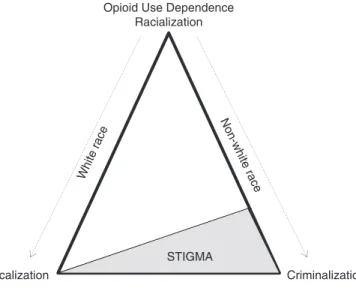
9. Some researchers have posited that the high rate of incar- ceration for nonviolent drug offenders in the U.S. is the prod- uct of converging drug stigma and racial bias. Thus, in Chap.
8, we consider the nexus of race, stigma, and addiction. We also cover addiction stigma in the workplace (Chap. 10), in the media (Chap. 11), and in the context of addiction treat- ment (Chap. 7). In a chapter that spans disciplines and pro- vides a framework for thinking about the perpetuation and the reach of addiction stigma, we consider the language of stigma and addiction (Chap. 5). Just as we have, in discussing
the chapters of this book, taken them topically and out of order, the reader should feel free to do the same. The chap- ters do not depend on one another, and they may be read in any order.
References
1. Crocker J, Major B, Steele C. Social stigma. In: Gilbert D, Fiske ST, Lindzey G, editors. Handbook of social psychology. 4th ed.
Boston: McGraw-Hill; 1998.
2. Goffman E. Stigma: notes on the management of spoiled identity.
Englewood Cliffs: Prentice Hall; 1963.
3. Link B, Phelan J. Conceptualizing stigma. Annu Rev Sociol.
2001;27:363–85.
4. Lipczynska S. Stigma. J Ment Health. 2005;14(4):423–5.
5. Major B, O’Brien LT. The social psychology of stigma. Annu Rev Psychol. 2005;56:393–421.
6. Smart L, Wegner DM. Covering up what can’t be seen: concealable stigma and mental control. J Pers Soc Psychol. 1999;77:474–86.
7. Williams DR, Neighbors HW, Jackson JS. Racial/ethnic discrimi- nation and health: findings from community studies. Am J Public Health. 2003;93:200–8.
5
© Springer Nature Switzerland AG 2019
J. D. Avery, J. J. Avery (eds.), The Stigma of Addiction, https://doi.org/10.1007/978-3-030-02580-9_2
Introduction
Neuroscientist Marc Lewis, whose personal history includes misuse of opiates, said that developing self-trust was the rea- son he gave up drugs.1 After countless attempts to quit and many years of trying, one day he placed a large handwritten sign inside his house that simply said ‘No’. If he could say no to himself for an hour, he thought, then he could say no for another hour and then for a day and then for longer and lon- ger periods, and eventually he realised that he could rely with confidence on his future self to keep that commitment to his earlier self not to backslide. He came to regard himself as a trustworthy person, ably sticking to a principle of abstinence.
His newfound self-trust and capacity to resist temptation meant that sources of his shame were now being erased. And ridding himself of this shame – the self-stigma of his addic- tion – provided an important step to his recovering control. A part of that was an acceptance of who he was. Acceptance and self-trust had led to the removal of self-stigma.
1 See www.memoirsofanaddictedbrain.com/connect/addiction-recovery- and-self-trust/. For his unique account combining narrative and neuro- science see Lewis [29].
Chapter 2
Self-Stigma and Addiction
Steve Matthews
S. Matthews (*)
Plunkett Centre for Ethics, St Vincent’s Hospital and Australian Catholic University, Darlinghurst, NSW, Australia
e-mail: [email protected]
I have begun at a place where I hope also to finish, but I begin here because in understanding the role of self-stigma in addiction, we can also come to understand how removing the social sources of self-stigma will go some way – perhaps a very long way – to ameliorating the toxic effects ensuing from public stigmatisation of addiction. There is evidence that self- acceptance plays an important role in recovery and that such acceptance goes hand in hand with removal of the marks of disgrace that formerly plagued the affected person.
But that fact suggests a possibility: if the social sources of self-stigma can be eliminated, or at least greatly reduced, those who develop substance use disorders will not, in addi- tion to their own internal struggles, also have to face a hostile social world.
In this chapter, I will focus on the process in which stig- matised individuals with substance use disorders (SUDs) take on the labels and stereotypes associated with the stig- matization category. Evidence exists that out of the range of stigmatised groups, individuals with SUDs suffer more mar- ginalisation than those with mental illnesses or those with physical disabilities, especially in relation to the factors of (perceived) blameworthiness and dangerousness [9]. In the light of this, it is not surprising that self-stigma has been thought by some to be partially responsible for the social construction of addiction in a significant range of cases (Matthews et al. [38]: p. 276, Patterson and Keefe [41]:
p. 122).2 But even eschewing this strong conceptually based thesis, there is a plethora of evidence for the claim that pub- lic stigma of addiction feeds into the self-conception of those affected leading to deleterious effects on ‘life chances’
[17, 32].
In what follows, we define self-stigma and explain how the process works in terms of what Hacking [18] has described as the ‘looping effects of human kinds’ (section “Introduction”).
In the section “What Is Self-Stigma and How Does It Work?”,
2 On social construction theory, see Berger and Luckman [4].
we distinguish and describe the two sources that feed into this process – self-recognition (a private source) and the mytho- logical stereotypes in public stigma. Then in the section “The Public Mythology and The Recognitional Reflection of Addiction in Self-Stigma”, we explore in greater and more subtle detail what the origins of self-stigma in addiction are, and why it is so severe (relative to comparable other cases such as mental illness). In the section “Where Does Self- Stigma Come from and Why Is It Severe?”, we consider the nature of the affective component of self-stigma (shame) and its relation to morality. Finally, in the section “Subjective Themes in Self-Stigma”, we describe how the account of self- stigma we offer in terms of looping may lead to recovery;
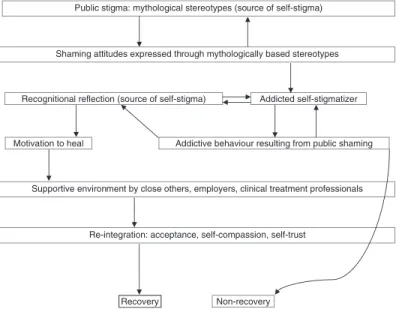
interestingly, the elimination of self-stigma is importantly correlated with a notion of self-acceptance. (For a snapshot of the overall view being defended, see Fig. 2.1.)
Public stigma: mythological stereotypes (source of self-stigma)
Shaming attitudes expressed through mythologically based stereotypes
Recognitional reflection (source of self-stigma) Addicted self-stigmatizer
Motivation to heal Addictive behaviour resulting from public shaming
Supportive environment by close others, employers, clinical treatment professionals
Re-integration: acceptance, self-compassion, self-trust
Recovery Non-recovery
Figure 2.1 A model of self-stigma in addiction
What Is Self-Stigma and How Does It Work?
As Mittal et al. [40] point out, the term ‘self-stigma’ denotes a cluster of closely related ideas such as ‘internalized stigma’,
‘perceived stigma’ or ‘enacted stigma’. Sometimes the term
‘stereotype concurrence’ is used when an individual inter- nalises ‘negative preconceptions associated with membership in a stigmatized group’ (Rodrigues et al. [45]: p. 129).
Nevertheless, there are good theoretical reasons for choosing self-stigma as the key concept. The subject of the stigmatising attitude is indeed the self, in contrast to (say) some action performed by the self. The stigma felt by an individuals with SUDs extends beyond stigmatising situations, out to signifi- cant parts of their whole being. And as we will see, a close cousin of self-stigma – shame – also has the self in its sights.
The shame individuals with SUD experience extends beyond the guilt felt over specific actions; it is shamefulness of who they are. As Goffman originally had it, stigma’s effects go beyond presentations in everyday life situations – temporary discreditations of identity such as embarrassing moments – to the permanent spoliation of whole identities. The identity change in the minds of others means that the stigmatised changes status from being ‘…a whole and usual person to a tainted and discounted one’ (Goffman [16]: 3). This process continues on in self-stigma when the person applies such sta- tus loss to himself, coming to agree (if only tacitly) that he bears the marks of the disgraced kind.
Bringing this together, we can say that self-stigmatisation occurs when (1) people react to public stigmatisation of a human kind (based on mythological stereotypes) by coming to see themselves as belonging to that kind, (2) typically as a result of powerlessness they apply the normative categories of the kind to themselves, and (3) the transformation they make in seeing themselves as belonging to the stigmatised group causes harm. This broad account is in line with other definitions found in the literature.3 But there is a reason when applying the idea of self-stigma within addiction to add a
3 See, e.g., Livingston ([33]: 39), and Corrigan and Rao [10].
fourth condition: self-stigmatisation can derive from an accu- rate recognition that the affected person has of her own fail- ures to be an effective agent and to live up to her values. This last condition sheds important light on claims about the proper role for self-shaming in leading to recovery. The litera- ture on this question is divided, with some claiming that stigma can motivate recovery and with others claiming that on balance stigma curtails it. In identifying two sources of self-stigma, one, the damaging myths that abound in public stigma and, two, the shame arising from genuine self- understanding, we are in a better theoretical position to rec- oncile these competing positions. I will suggest that private shame need not be damaging to recovery (and may even assist it) so long as the social ambience in which it arises is stripped of the damaging mythologies inherent in the addic- tion stereotypes.
Self-stigma in addiction can be usefully explained in terms of what Hacking has called the ‘looping effects of human kinds’.4 Individuals with SUDs form a relevant human kind, a kind whose classification imports the public stigmas, and so once the individual with SUD agrees with this classification, he automatically self-attributes some or all of these stigmas.
Hacking uses ‘human kinds’ as,
…systems of classification … Although I intend human kinds to include kinds of behaviour, act, or temperament, it is kinds of people that concern me. That is, kinds of behaviour, act, or tem- perament are what I call human kinds if we take them to charac- terize kinds of people. ([18]: p. 352)
The self-conception of an individual with SUD takes on fea- tures from publicly stigmatising beliefs about the human
4 I thank Robyn Dwyer for originally drawing my attention to Ian Hackings’ work, and for connecting the idea of looping to the feedback mechanisms inherent in self-stigma.
kind, which feed back into that very conception.5 Individuals with SUDs may be viewed, and may view themselves, in terms of a classification constituted by ‘generalizations suffi- ciently strong that they seem like laws about people, their actions, or their sentiments’ (Hacking [18]: p. 352). Moreover, the classification ‘addict’ (and its cognates) contains a quite explicit normative dimension, sometimes a pernicious nor- mativity, based on the public mythology that addicts are bad people, and even the two main international diagnostic manuals (DSM and ICD), as well as twelve-step disease mod- els, carry criteria with negative norms.6 The more direct effects in addiction of taking up the classifications and inter- nalisation, or cross-situational persistence, of the stereotype include treatment threatening self-esteem, exclusion from public engagement, being seen as appropriate subjects of paternalistic treatment, problems maintaining and applying for work, difficulties finding housing and difficulties securing health (and mental health) treatment. In short, stigma, as experienced by others, as well as by oneself, is one of the social determinants of health [21].
5 The strong reading of this claim is in terms of social construction theory which is the view about the metaphysical status of social phenomena, and some authors have argued that this would include addiction (Matthews et al.). The theory understands the phenomena as dynami- cally formed in stages: ideas and concepts are externalised, objectivised, and finally internalized by social actors [4]. So, in this case, the concept of addiction (and related cognates), the discourses, practices, policies, objects and so on associated with it that come into the social space are then made objective. Addiction is then seen as objective (carrying the normative weight of objectivity) when in fact it develops out of perspec- tive-dependent phenomena. And because of this externalisation and normativity it will frame understandings of the actions and behaviour of those it describes whose experience of the world is in fact unique, and which may not neatly fit into the imposed externalising categories.
6 See Matthews et al. [38]. The diagnostic tools occupy a liminal position between describing and prescribing; they contain morally loaded classi- fications that simultaneously seek to identify kinds of people in order to help them while at the same time positing social categories that describe norms and frameworks within which individuals with SUDs will grow.
The human kind ‘addict’ has normativity built into it then, and this includes a measure of self-worth, or rather its lack.
The addict stereotype is shameful because the public mythol- ogy carries with it a loss of social status. The effects of this normative dimension are pervasive and carry both explicit and implicit biases in the way people interact with individuals with SUDs. This can extend (even) to theorists, as well as to professionals engaged with their clients, to social institutions, corporations, legal frameworks and to mainstream media;
ultimately, such classifications cascade throughout and down to the very people they describe. Hacking explains what hap- pens at this stage of the process (p. 368):
If H is a human kind and A is a person, then calling A H may make us treat A differently … we may reward or jail, instruct or abduct. But it also makes a difference to A to know that A is an H, precisely because there is so often a moral connotation to a human kind … Thinking of me as an H changes how I think of me.
Well, perhaps I could do things a little differently from now on.
Not just to escape opprobrium … but because I do not want to be that kind of person. Even if it does not make a difference to A it makes a difference to how people feel about A – how they relate to A – so that A’s social ambience changes.
I will later argue that attenuation of public stigmatisation of addiction is critical for improving the social ambience in which self-stigma flourishes. Self-stigma is usually at its worst in conditions where public stigma operates unfettered, so it makes sense to improve the social conditions in order to properly address the looping effects of human kinds as they beset addiction.
We have just spoken at a quite general level of the ways in which the addiction classification carries with it the disvalues attaching to the relevant human kind. Consider now one example of a specific effect of looping and self-stigma: addic- tive consumption in response to shame, where the shame of use turns out to be cyclical and self-perpetuating – individuals with SUDs consume in order to wipe out the shame they are feeling, and in the process they perpetuate the very condition from which they are attempting to free themselves. There is evidence that such practices are not uncommon. For example,
interviewed participants from a recent study on addiction and moral identity explicitly drew the link between negative self- regarding feelings and substance use. In order to cover up how badly they were feeling about what they had done (as a result of their addiction), the affected persons continued to consume, as the following quotes indicate (Matthews et al. [36]: p. 282):
I know a lot of my heavy using was because I was ashamed of what I was doing and it didn’t ... commonsense approach would be to not use. But in my case, it was, use more so I could forget how bad I was feeling about myself. – Brigitte
I’d stuffed up so many times with things. That’s why I drunk as well, it wasn’t to self harm myself, it was just to, like I say, get drunk and stop thinking about what I’d done wrong and where I went wrong. – Frank
I wake up in the morning and go oh what have I done, oh I’ll just have another drink. – Simon
Yeah oh it’s just constantly in the back of your head and that’s just even more of an excuse to drink and to just eliminate that or just for it to go away for a while but then the next morning or when you wake up sober and it’s there ten times as worse and it’s just like a revolving circle. – Peter
It turns out that thinking of self-stigma in terms of the inter- nalisation of classifications of human kinds has a positive and hopeful aspect, and that is because these classifications are permanently open to revision. Hacking suggests that feedback loops lead to changes in our conceptualising of people and their behaviour, and in turn, as more and more looping occurs, revisions must also occur of the ‘classification and theories, the causal connections, and the expectations’ surrounding such conceptualising. In consequence, as he puts it, ‘Kinds are modified, revised classifications are formed, and the classified change again, loop upon loop’ (Hacking [17]: p. 370). This is positive because if classifications can change, then the norms associated with them can also change. There is nothing fixed about human kinds in this story, and so a commitment to weeding out the distorting mythological elements that stoke self-stigma makes for a hopeful overall account.
The Public Mythology and the Recognitional Reflection of Addiction in Self-Stigma
As indicated earlier, it is important to distinguish two sources fuelling the shame constituting self-stigma in addiction: (1) the mythological stereotypes that feature in public stigmatisa- tion of addiction, and (2) that which an individual with SUDs might accurately understand about their condition and its negative effects through reflection (call this source recogni- tional reflection; see Fig. 2.1.)
The self-stigma arising from (1) corresponds closely to what Pinel [44] called stigma consciousness, that is, affected people’s expectations of being stereotyped by others. Both the mythology informing this consciousness and recognitional reflection stoke the shame of addiction, and so if it is thought that such shame may lead to healing and recovery, it is impor- tant to separate these. Why? Evidence shows that the push to recover from addiction that might issue from self-stigma will not succeed unless the social conditions (where the mythol- ogy potentially abounds) can provide a supportive environ- ment [6]. Indeed, the mythology driving public stigma is on balance highly damaging to recovery systems, and certainly exacerbates addict life chances, which include income, educa- tion, housing, physical and mental health, and treatment within public institutions (Link and Phelan [31]: p. 371).
To take one example depicting the mythological dimen- sion to public stigma, consider the belief that addicts are hedonistic pleasure seekers. There are strong reasons to believe that this aspect of the mythology is false. Although pleasure seeking can initially motivate consumption (and even this applies only to some), in general, pleasure seeking ceases to play this role. In a recent study (n = 69) (see Kennett et al. [27]), semi-structured interviews were undertaken to determine the effects of substance use on what individuals with SUDs value, and what role pleasure occupied within these values. Three distinct subgroups were identified.
Respondents from the first group said that pleasure was the main motivation for using substances, but they realised that
in the long run, the damage their alcohol and drug use caused had the effect of hindering their goal of a hedonistic life. They were disposed to stop their consumption for hedonistic rea- sons. The second group nominated pleasure as initially moti- vating, but after repeated use, pleasure subsided and ceased to motivate.7 The third group claimed to have never really experienced pleasure from using.
These results provide an important example of the way careful analysis of the publicly generated mythology around addiction is perniciously at odds with the reality for those it purports to describe. It is pernicious because the public mis- understanding built into the stereotype of ‘pleasure-seeking wanton’ creates an extra burden on individuals with SUDs when they know this stereotype is highly distorting of the his- tory of how they came to be addicted. And indeed, the bur- den may be so great that over time those affected simply give up trying to explain how their own experiences diverge from the stereotype.8
This effect may be particularly egregious in hospital or clinical settings where the power imbalance there means that affected persons will simply pass over opportunities to question their exposure to an imposed stereotype. In these situations even if I am strong enough to resist the imposed stereotype, the fact that others accept it (explic- itly or implicitly) leads to a range of behaviours that I adopt in order to protect myself from what I perceive as the false beliefs of those perpetuating the stereotype.
These protective measures are destructive when, for example, they disable my capacity to work and/or engage
7 This is compatible with Kent Berridge’s distinction between liking and wanting in which individuals with SUDs stop liking the drug of choice they cannot help continuing to want [5].
8 This is associated with the phenomenon of the resigned addict in which those affected retain an awareness of their fundamental values, but they estimate that a life according to such values is no longer open to them [25].
with others on an equal footing. They may even lead to avoidance of certain hospitals and clinicians when the individual with SUDs has been treated with suspicion at earlier times as someone who is seeking drugs, not for pain relief but to get high [39].
The mythology around addiction that ultimately fuels self- stigma dominates, yet it is certainly important to acknowledge the private sources of shame that are based on accurate understandings that an affected person might have of addiction. A helpful metaphor for getting this understanding comes from Marc Lewis, the neuroscientist mentioned at the start who wrote of his own addiction. He has described it in terms of the metaphor of the hourglass.9 At the top where the aperture is widest represents a person pre-addiction: at this point, unaffected by substance use, she has available to her the widest set of possible goals, values, desires, hopes, plans and so on. As she falls into addiction, these goals, values etc. begin to narrow as her focus increasingly moves to her drug of choice. As she approaches this narrow point, more of her time is spent on securing and taking drugs. She becomes single- minded in her pursuit of the drug hit. Friends are lost, relationships trashed, career or study neglected or abandoned and day- to-day responsibilities let go. In the final stages of addic- tion, she is gripped by a single dominant desire, which is to re-enact over and over the sequence of actions that sur- round her use. She has reached the narrow point of the hourglass. An inversion has occurred: previously, at the top of the hourglass, her life contained a plurality of options, and she determined which of them would be chosen. At the narrow point, now her life has become monochrome: there are never any options, for it is now the drug that ‘plans’ her life for her.
9 http://www.psychologytoday.com/blog/addicted-brains/201210/
the-hourglass-shape-addiction.
Pre-addiction
Post-addiction
This metaphor disguises the nuance of particular cases, but nevertheless Lewis points out that it captures a culture- invariant picture of the individual with SUDs. In serious addiction, the capacity to live according to the values one reflectively endorses is lost, and this stokes the shame that arises privately from recognitional reflection. Self-stigma involves this kind of self-understanding, as well as negative self-assessment. In terms of self-understanding, individuals with SUDs mark themselves out to themselves as addicts, only when they understand (or begin to realise) and appreci- ate the negative effects of their habitual consumption [14]. In leading to feelings of shame, such self-recognition need not be damagingly self-stigmatising (if it can provide an insight that immediately leads to actions to heal), but it would be remarkable if such feelings of shame could neatly separate recognitional reflection from the publicly stigmatising mythology.
Nevertheless, it is worth pressing the point: could (narrow recognitional) self-stigma arise in a social environment in which there is no public stigma? Suppose there were a society that treated individuals with SUDs with understanding and kindness, endeavouring to respect their dignity and to help them get back on track. Is self-stigma possible here? Probably, but it is hard to say, not least because it is hard to neatly cleave off the sources of narrow recognitional self-stigma from the public mythology. How could we gauge the extent to
which removal of the publicly imposed marks of addiction disgrace might reduce private shame? Still, stigma comes in degrees (Link and Phelan [32]: p. 376), and what seems highly plausible is that the removal of public stigma would reduce self-stigma to a very large extent because it would eliminate its central source. Turning off the main tap of public stigma seems very likely to moderate levels of shame that arise in almost all cases we know of.
Where Does Self-Stigma Come From and why Is It Severe?
This section considers an eclectic set of issues in connecting stigma with self-stigmatisation. We note first the highly nuanced relation between self-stigma and public stigma before addressing the important question of the way stigma- tising language fits with the idea of addicts as human kinds.
We note in passing the severity of self-stigma relative to other cases and offer an explanation for this in terms of the nature of addiction itself.
The main sources for self-stigma derive from the distorting and bogus features of addiction falsely spread through the mythological stereotypes within public stigma. But what are the sources of these stereotypes? Public attitudes to addiction stigma might be thought to be strongly influenced by the predominant models adopted in the academy, by clinicians, and in public administration. There is some evidence that this is so, but it is mixed. However, and moreover, the stereotypes encountered in mainstream discourse (typically media) are often enough distortions, oversimplifications or even outright misrepresentations of the careful work of academic and clini- cal professionals who have devoted significant portions of their careers to highly nuanced understandings of the phe- nomena [49, 50]. The problems with media translations of the science of addiction are a lack of expertise, institutions that filter scientific information improperly and a corporate media with interests in selling audiences to other corporate
players, and this creates a force for adapting information that can be digested by that audience only if it is in line with the stereotypes.
The determinants of public stigma are inherently complex and include the characteristics of the individual with SUDs (age, gender, social status), the type of addiction (substance, duration) and the person doing the stigmatising [47]. It had been anticipated by supporters of the Brain Disease Model of Addiction (BDMA) that public stigma would decrease, although this has not really happened (as discussed below).
In fact, public attitudes to addiction, including the stigma embedded in those attitudes, depend on factors besides these, including harm-minimisation policy and legal changes, such as has happened in Portugal [28]. Decriminalisation seems particularly potent for removing stigma, given the way crimi- nal statutes may be perceived as codification of social norms, and for its effect on the underground economy for drug dis- tribution and consumption.10
The BDMA is coming under increasing pressure from two camps, those who advocate a choice model and those who advocate what we might call a developmental (or habit) model in which addiction grows and self-perpetuates after repeated use leading to deep learning.11 However, there is evidence that the process of self-stigmatisation applies regardless of which model we adopt. In two early studies of attitudes to alcoholism and drug addiction, it was found that although 58% of respondents thought alcoholism a disease, 73% thought alcoholics fit the description of ‘skid row habi- tue’; for drug addiction, 32% thought it a disease and 79%
thought drug addicts were ‘hippies’, where ‘hippie’ fit the stigma category of the young, unkempt, long-haired and
10 Nevertheless, the relation between illicit drug taking and the law is complex [36].
11 On the choice model, see Heyman [23]; on the deep learning account, see Lewis [30]; the disease model has been championed by medicine in general, but particularly in North America by the National Institute on Drug Abuse (NIDA), and its members. See, e.g., Volkow [52]. To get an overall sense of the landscape in theory of addiction, see Snoek and Matthews [48], and Part 1 of Pickard and Ahmed [43].
bearded dirty person with shifty/glassy/bloodshot/dilated eyes wearing jeans [12]. Even more noteworthy is that there is evidence that the disease model – a view partly motivated to reduce stigma – has had less effect in this area than was predicted, and in addition it brings its own unique stigmatis- ing features to bear on labelled patients [7, 22].
Importantly, the language of addiction stigmatisation has the effect of facilitating self-stigma. ‘Addict’ and related pejo- ratives such as ‘junkie’, ‘user’ and so on are general nouns enabling a fluid memetic transfer of public stigmas within social communication. Those words prime the stereotype automatically and reductively by lumping in the subject with the stigmatised group at a basic linguistic level. By contrast,
‘person with substance use issues’ is a description that con- tains the possibility that the individual and her condition are detachable. Moreover, it at least goes some way to preserving the humanity of the subject, whereas ‘user’ (or worse) reduc- tively emphasises only the disability that the term picks out.12 The language of stigma is important to our understanding of the way public stigmatisation gets a focus on its targets, con- sidered as human kinds. For the targets themselves, to self- label as the kind addict (rather than a person with those issues) prevents dissociation of who you are from your con- ception of what an addict is.
Self-stigma in addiction is especially severe, and there appears to be evidence that it is at least as severe as, if not worse than, in other cases of serious mental impairment [9].
First, because of the history of blaming individuals with SUDs, public stigma of addiction is prominent. One specula- tion for why this is the case is that unlike (say) cases of dementia, in which unusual behaviour is understood to be caused intrinsically and uncontrollably by neuro-cognitive impairment, addiction is regarded as an externalising disor-
12 See Denver et al. [13] who discuss recent interest in the way linguistic choices (labelling theory) feed into conceptualisations of stigmatising categories in the context of criminal stigma.
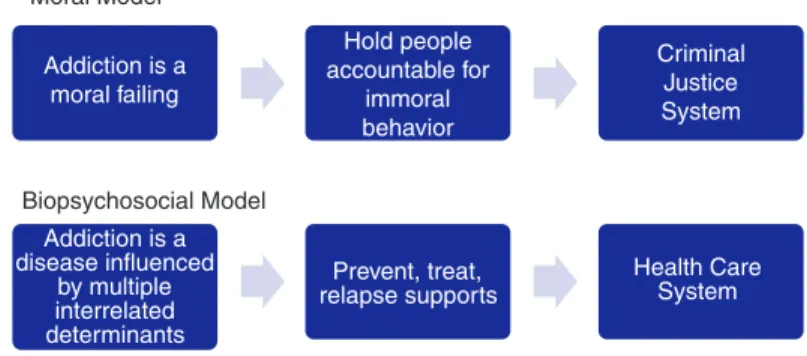
der [11]; that is, the maladaptive behaviour depends on fea- tures of the environment, and where in virtue of this, conceptual space opens up for thinking individuals with SUDs are able to control their consumption, and since they do not, they are somehow responsible for it. In addition, the moral model of addiction – that addicts not only harm them- selves and others through choice but also are morally blame- worthy because of it – is inherently antagonistic towards addiction and addicts. This is exacerbated when the blame is codified in the law, as has occurred most damagingly under the war on drugs [19, 20]. In labelling theory, this works in so far as criminalised groups are isolated and alienated from conventional society, leading to subcultural coalescence around the allegedly deviant behaviour and internalisation of group norms [31, 54]. Self-stigmas on this account are counter- productive because they prolong the activity they reject.
There are some other reasons for the severity of self- stigma in addiction. First, in the co-morbidity cases, patients experience a ‘double whammy” ’ of prejudice, which can fur- ther exacerbate those who self-medicate, thereby inducing and prolonging addiction [26]. Second, unlike cases of (say) neuro-cognitive impairment (e.g., late stage Alzheimer’s dis- ease), insight into one’s situation – and the stigma involved – is not affected on account of the condition itself. On the contrary, self-stigma is arguably internal to the condition of addiction, or at the very least it is an aggravating characteris- tic [38]. And third, the relation between self-stigma in addic- tion and injunctive norms suggests the possibility of isolating effects for individuals with SUDs. Injunctive norms are our perceptions of others’ responses to us and of how we ought to behave. Different groups respond differently to us, and when a preponderance of such groups make stigmatising judge- ments, there is a proportionate raising of negative self- imagery. This is further exacerbated by groups perceived to have power or epistemic authority, such as parents, employ- ers, professionals, police, government officials or managers and so on. These are the groups that individuals with SUDs
will encounter in such a way as to lead them to appropriate such attitudes towards themselves.
Subjective Themes in Self-Stigma
We now consider the key affective component of self- stigma – shame – to further bolster the central point of the chapter that it greatly depends on the sources of shame as to whether its possession may become a force for a recovery or a factor that prolongs addiction.
Now although it might be thought that private shame can- not count as self-stigma, it is useful to leave the source of the subjective process open. There are of course strong reasons to believe that individuals with SUDs self-stigmatise largely because they (wittingly or unwittingly) appropriate the labels and stereotypes generated through public discourse and prac- tice and that socially powerful groups generate and exacer- bate such talk and practice. Nevertheless, it is sensible that we acknowledge that not all sources of self-stigma arise this way;
in the limit case, people may self-stigmatise simply on the basis of their own assessment of the way their addiction com- promises their capacity to align their motivations with the values they endorse when they rationally reflect on the life they ought to be leading. This self-assessment is aggravated by the repeated disappointment over failures to live up to one’s own expectations, and reflection on this personal failure can lead to disgrace in one’s own eyes (Flanagan [14]:p. 1).
Such limit cases are something of an idealisation because in fact the sources of self-stigma are both public and private.
But, nevertheless, it remains more than a mere conceptual possibility for individuals with SUDs to mark themselves out to themselves as failing even when they respond to pub- lic stigma with ‘righteous anger’, as Corrigan and Watson ([8]: p. 36) note, for it may be that the individuals with SUDs believe that the addiction population is unjustly targeted and treated badly, thereby providing a buffer to internalisa- tion of publicly stigmatising attitudes. But that illegitimacy
dissociates from the private disappointment, even shock, at the failure to live up to one’s own standards. One sees a ver- sion of this expressed in alternative subcultures in which illicit drug taking is the norm where like-minded members can provide support and a kind of scaffolded solidarity required to fight back against public stigma even when they recognise the inherent destructiveness of their practices.
The sentiment here is that ‘our internal struggles are bad enough – we know what they are – without having to put up with a hostile public!’ [2].
Consider now the affective dimension of self-stigma, viz., its central emotion, as well as the effects and experiences that it generates. As Luoma and Platt note ([35]: p. 97), ‘[s]hame is the emotional core of the experience of stigma’.13 As remarked above, shame takes the self as its object rather than a particu- lar action, and to be ashamed of oneself on account of a sub- stance addiction is to feel compromised, discredited, even tainted in one’s social standing, and to be disabled in social agency as a result of these effects. Those who absorb and redirect negative public attitudes inwards feel the shame of it even in the case where they do not regard themselves as par- ticularly blameworthy, though in the typical case they may also blame themselves. The main idea is that shame dissoci- ates from any morally discreditable features: shame does not entail blame.
Shame in self-stigma involves some closely related factors.
First, conceptually, shame has a ‘swamping’ quality. The aggregated guilt one might feel for particular actions per- formed on account of an addiction comes to spill over from act to character [38]. Second, shame gives rise to a fear, even paranoia, that others will blame the individual with SUDs in social situations where the addict stereotype might be trig- gered, e.g., in a social setting where if an item was stolen the (possibly former) addict would fear being blamed. More gen- erally, self-stigma leads to avoidance of situations where ste- reotyping abounds. Third, addiction shame is associated with
13 Other writers to have emphasised shame in addiction are Flanagan [14] and Matthews et al. [38].
self-directed anger and despair (Lewis [28]: 191). Fourth, shame leads people to disguise or erase the shameful identity (Velleman [51]: p. 44), and for self-stigmatising individuals with SUDs the effect here is to engage in self-censorship, to be socially inhibited, to stay home, in general to adopt the techniques such as anonymity that protect privacy [37]. Fifth, there is the ‘John Henryism’ effect (Link and Phelan p. 379), in which shame leads to over-compensation in order to dispel the stereotype. And sixth, there is evidence of the phenome- non of self-sabotage (Matthews et al. [38]: p. 280), in which individuals with SUDs engage in behaviour that damages their capacity for overcoming their addiction.14
We spoke above of the importance of separating the phe- nomenon of self-shame from moral or moralising presupposi- tions. This bears elaboration. Individuals with SUDs are apt to feel addiction shame independently of genuinely held moral or political stances they take on addiction. Moreover, David Velleman points out that we can feel shame ‘without being ashamed of anything in particular’. He gives the exam- ple of the shame that teenagers experience in public accom- panying their parents. They do not think their own parents are ‘especially discreditable as parents’ (Velleman [49]; p. 44), rather, their shame stems from efforts at giving birth to an adult social identity, and those efforts entail the need to erase the presence of the childlike social identity. There is an ana- logue here to self-stigma in addiction in so far as it is dis-
14 Kathleen Gallo [15] writes movingly about these different aspects in a first-person account of her mental illness. When in private quarters she could ‘hide from the cruelty of social stigmatization’. But outside her house she said ‘I tortured myself with the persistent and repetitive thought that people I would encounter, even total strangers, did not like me and wished that mentally ill people like me did not exist … I would do things such as standing away from others at bus stops and hiding and cringing in the far corners of subway cars. Thinking of myself as garbage, I would even leave the sidewalk in what I thought of as exhibiting the proper deference to those above me in social class. The latter group, of course, included all other human beings.’
abling of social agency: the self-stigma of addiction motivates those who are affected to hide their addict identity, and that leads to all sorts of self-censorship and disguising of features that reveal addiction. Worse yet, it leads to a form of self- medication where part of the aim is to forget about addic- tion’s woes; and as we saw, this sets up a vicious cycle, a looping effect, that feeds the addiction itself.
But to return to the main point, the effect here has nothing to do (necessarily) with a belief that one’s compulsive con- sumption is morally discreditable and has everything to do with the shame that feeds off others’ responses to addictive behaviour.
Self-Stigma and Recovery
That people who self-stigmatise draw on the available human kind of addict is suggestive of a way in which some of its negative effects can be dampened, even eliminated. We can think of public stigma as falling within the set of social deter- minants of health [21, 46]. In this connection, the stress of being a stigmatised addict can be understood through a con- sideration of the negative social ambience created by mythol- ogies in public stigma, discussed earlier. The following quote brings home poignantly the long-lasting sensitivity that this ambience creates:
I mean there’s a time in my life where I’d be paranoid about sit- ting around other people’s possessions you know ‘cause if any- thing went missing generally nine out of ten people in the room would be dismissed and I’d get the blame ... there’s a lot of dis- comfort within yourself after coming out of that lifestyle or exis- tence really. (Quoted in Matthews et al. [38]: p. 278).
In fact, this social ambience can be characterised by five items that form the ‘backbone of stigma’, as described in one study on mental illness and substance use [42]. These include a lack of trust in intimate settings (cf. the above quote!); risk of contact with the vulnerable, e.g. children; exposure to self- harm; mental illness (disorderliness that threatens authority);
and the unease created in having to interact with an affected
person. Socially vulnerable individuals with SUDs – particu- larly those who cannot disguise the physical marks of their addiction and self-presentation – must negotiate a social world where they feel unwelcome, and, often enough, are positively rejected as well.15
One important way in which social vulnerability can be moderated (but of course not the only way) is via the legal system. In the debate over criminalisation, there is some evi- dence from the Portugal example that a move to decriminal- ise illicit drug taking tends to increase the willingness of individuals with SUDs to volunteer their consumption, given increased uptake of treatment there [24]. The resulting reduc- tion in public stigma reduces self-stigma, which in turn emboldens those affected to address their condition, or at the very least to open up a conversation about it more willingly.
Stigma is well known to increase the barriers to seeking help because those affected are simply too ashamed (that is, self-stigmatised).
It would be an exaggeration to claim that there are two schools of thought on self-stigma and recovery: one that claims public stigma is morally permissible in so far as it shames people into changing behaviour and one in which such shame perpetuates it. The latter view is dominant even though some accounts exist for the former. For example, Bayer ([3]: 471) writes that ‘…there may be circumstances when public health efforts that unavoidably or even inten- tionally stigmatize are morally defensible’. But Bayer is tenta- tive, claiming that it depends on the case and also that the permissibility depends strictly on evidence-based procedures and utilitarian (public health) ethics. The trouble is that addiction is almost certainly not one of the cases where this may occur. Public stigmatisation of addiction is long-lasting, pervasive and almost always inescapable; over time, it under- mines confidence, trust and the capacity to form supportive relationships [53].
15 For a detailed account of the way the physical marks of addiction compound self-stigmatization see (Matthews et al. [36]: p. 281)
Nevertheless, in support of Flanagan [14], narrowly under- stood shame, as he puts it, can be a powerful source for heal- ing, so long as this is understood non-moralistically. For that to happen, the social backdrop must be purged of moralistic forces. MacCoun (supporting Braitwaite) [36] comes close to a suitable model, writing (pp. 505–6):
…an improved labelling theory should indicate the precise condi- tions under which stigmatization effects will or will not occur.
Braithwaite’s [6] theory of re-integrative shaming is one such theory; he predicted that the deleterious effects of labelling can be avoided if social disapproval is temporary, occurs in a context of interdependence and communitarianism, and is followed by gestures of forgiveness and reacceptance. Under such conditions, social shaming is predicted to increase subsequent compliance. In the absence of such conditions, shaming is disintegrative and can foster the stigmatization effects predicted by labelling theory.
Even here, a degree of social shaming is condoned, but never- theless the important point is about reintegration. Typically, only if social space is given for recovery will there be recovery.
Recognitional reflection giving rise to self-stigma (sourced independently of the public mythology) is probably inevitable in addiction – Flanagan goes further saying it’s constitutive – and so the question is how to best channel that self-stigma into a force that can rebuild the self. Self-stigma undermines trust; removal of self-stigma is necessary to rebuild that trust, both in oneself and from others. In recovery, self-trust returns:
the earlier self can rely on the later self not to pay attention to the temptations that undermined control and led to failures to live up to the values that one reflectively endorses.
Luoma and Platt [35] broaden this, utilising a concept of self-compassion.16 By this they mean an affective stance
16 Luoma and Platt [35] discuss this in the context of Acceptance and Commitment Therapy (ACT). See also Luoma et al. [34]. Gallo [15] also identifies acceptance as important to counter stigma. More broadly, Livingston et al. (2012) reviewed thirteen studies concerning interven- tions reducing stigma in substance use disorders. They concluded that not all are effective but that ‘…therapeutic interventions, such as group- based ACT and vocational counseling, are likely to produce positive effects [and this] is consistent with the broader research literature regarding self-stigma interventions.’ (p. 47)
towards self, which includes care, warmth, interest, sympa- thetic joy and pride (p. 97). The idea in therapeutic interven- tions is to instil in clients ‘…the same sort of caregiving repertoire that one might apply to a friend, loved one, or other beloved person’ (p. 97). I have emphasised self-trust as a way of overcoming self-stigma because of the connection that trust has to the idea of being able to rely on one’s future self to abstain.17 The idea of self-compassion fits with self- trust because it creates a space in which the recovering person can be forgiving of himself if he lapses. Self-trust has two compo- nents: I need to make predictions about my future capacity, and I need to make a commitment, and as with trust of others, what is definitive of the concept is a kind of leap of faith: if I genuinely trust you, that means I take you as trustworthy, and I do not need to keep checking on you. In the case of self-trust, I (therefore) need to take myself as worthy of my own trust. I need to be a friend to myself, and that is where Luoma and Platt’s notion of self-compassion looks exactly right. I need to get to the point where I don’t have to keep checking myself.
The warmth I may feel towards myself is just the stance in which I see myself as a worthy person, someone I can (largely) rely on, but with a forgiving attitude when I make a mistake.
The move to this stance will be greatly held back, even impos- sible for many people, so long as a hostile stigmatising public feeds the self-doubt that is part of self-stigma.
We end this section with some further quotes from Matthews et al. [38] indicating both the acceptance and for- giveness aspects of recovery (all quotes p. 284):
Yeah I think acceptance has got a lot to do with that for me … I had to start a new life ‘cause I tried changing my life so many times by stopping … and my new life is an abstinence-based life. I think that’s … for me, that’s acceptance. And not making grand state- ments like I’ll never use again because I mean that … yeah in my heart I think it’s my intention, but I’ve only got today. – Dan
17 Some writers on addiction – e.g., George Ainslie ([1], and elsewhere) – make the idea of preference oscillation definitive, so self-trust has to be central to recovery in order to stabilize a preference for abstinence.
…other times I sort of picked up the pieces and then I failed at a few things and I just went no, stuff it, I lost my place to live again and I was back to that … back to where I started, so that’s … the last time I went to rehab I said I’ll make sure [that] even if I do have a beer I’m not going to punish myself for it. – Paul
I’ve come to a point in my life where I can’t say I’m proud of what I’ve done or anything, but I’ve accepted it and I’m okay with who I am … It’s taken a long time … and a lot of that had to do with the stigma of being homeless and being a drug addict … I wouldn’t go so far as proud, but I’m happy with myself … I’m finally starting to do things that are productive – Alice
Conclusion
Self-stigma in addiction is a dynamic process of self-shaming arising mainly (and most perniciously) from public stigma that marks (‘spoils’ in Goffman’s language) identity. An addiction stereotype issues from a mythology around the taking of illicit substances that feeds into the self-conception of those who are already fighting the private shame gener- ated by the recognition of their own inability to control consumption and live according to their values. This has the effect of exacerbating – even further constructing – the addict identity that it is intent on removing. Over time – loop upon loop in Hacking’s phrase – the self-stigma of addiction does indeed have the effect of socially situating the individ- ual with SUDs in a place where recovery is made even less likely and more remote. On the other hand, private shame and a re- integrative and accepting social context can provide what is required for self-trust and self-compassion to lead to recovery. The accepting environment needed for develop- ment out of addiction is like the bottom half of Lewis’s hour- glass. If the individual with SUDs survives its narrow neck, it is possible to escape if the conditions allow it. On this point, Lewis remarks:
…people make whatever attempts they make to get better, to get past it, to ‘recover’. And usually, eventually, after ten or a hundred tries, they make it. Then they start to live their own lives once
more, and here’s where the hourglass starts to bulge out again, in its bottom half. Now individuality, creativity, and uniqueness get relaunched, without that yoke restricting them, and the hollow tube of mindless repetition fans out to a million possible ways to live one’s life.18
References
1. Ainslie G. Intertemporal bargaining in habit. Neuroethics.
2017;10:143–53.
2. Andriote J-M. Don’t be angry at Spencer Cox; be angry at the stigma that pushes gay men into drugs and unsafe sex. New York:
Huffpost; 2016.
3. Bayer R. Stigma and the ethics of public health: not can we but should we. Soc Sci Med. 2008;67:463–72.
4. Berger PL, Luckmann T. The social construction of reality.
New York: Anchor Press/Doubleday; 1966.
5. Berridge KC. Wanting and liking: observations from the neuro- science and psychology laboratory. Inquiry (Oslo). 2009;52:378.
6. Braithwaite J. Crime Shame, and reintegration. Cambridge, NY:
Cambridge University Press; 1989.
7. Buchman D, Reiner PB. Stigma and addiction: being and becom- ing. Am J Bioeth Neurosci. 2009;9:18–9.
8. Corrigan PW, Watson AC. The paradox of self-stigma and men- tal illness. Clin Psychol Sci Pract. 2002;9:35–53.
9. Corrigan PW, Kuwabara SA, O’Shaughnessy J. The public stigma of mental illness and drug addiction. J Soc Work. 2009;9:139–47.
10. Corrigan P, Rao D. On the self-stigma of mental illness:
stages, disclosure, and strategies for change. Can J Psychiatr.
2012;57:464–9.
11. Davies W. Externalist psychiatry. Analysis. 2016;76:290–6.
12. Dean JC, Rud F. The drug addict and the stigma of addictions.
Int J Addict. 1984;19:859–69.
13. Denver M, Pickett J, Bushway SD. The language of stigma- tization and the mark of violence: experimental evidence on the social construction and use of criminal record stigma.
Criminology. 2017;55:664–90.
18 http://www.psychologytoday.com/blog/addicted-brains/201210/
the-hourglass-shape-addiction.
![Figure 6.1 Changes in psychiatry residents’ attitudes by first for second half of training [4]](https://thumb-ap.123doks.com/thumbv2/azdoknet/10585127.0/90.540.73.470.537.710/figure-changes-psychiatry-residents-attitudes-second-half-training.webp)
![Figure 9.1 Population [75], lifetime rates of illicit drug use among persons aged 12 or older ([72], p. 224, Table 1.29B), and individuals in federal prisons whose primary offense was a drug charge ([15], p. 20, Table 15)](https://thumb-ap.123doks.com/thumbv2/azdoknet/10585127.0/163.540.72.467.508.663/figure-population-lifetime-illicit-persons-individuals-federal-prisons.webp)
