Downloaded by [New York University] at 02:55 26 August 2016
Supporting Young Children with Communication Problems
Now in its fourth edition, formerly published as How to Manage Communication Problems in Young Children, this invaluable guide to understanding and helping children whose speech and/or language is delayed or impaired has been completely revised and updated, and provides readers with:
•
practical advice on how to recognise communication problems;•
strategies for supporting children with speech, language and communication needs;•
a best practice guide for parents and professionals working in partnership;•
contributions from a wide range of specialist speech and language therapists.Refl ecting new developments and current practice, this book is of interest to parents, early years practitioners, students in education and speech and language therapy, and anyone interested in pursuing a career with young children in the foundation years. Written in an accessible style, it assumes no prior knowledge and includes a range of practical suggestions for dealing with children with all kinds of communication diffi culties.
Myra Kersner was previously a Senior Lecturer at University College London, UK.
Jannet A. Wright was formerly Professor of Speech and Language Therapy and Head of the Speech and Language Therapy Division at De Montfort University, Leicester, UK.
Downloaded by [New York University] at 02:55 26 August 2016
This page intentionally left blank
Downloaded by [New York University] at 02:55 26 August 2016
Supporting Young Children with Communication Problems
Fourth Edition
Edited by Myra Kersner and Jannet A. Wright
Downloaded by [New York University] at 02:55 26 August 2016
Fourth edition published 2015 by Routledge
2 Park Square, Milton Park, Abingdon, Oxon OX14 4RN and by Routledge
711 Third Avenue, New York, NY 10017
Routledge is an imprint of the Taylor & Francis Group, an informa business
© 2015 M. Kersner and J.A. Wright
The right of the editors to be identifi ed as the authors of the editorial material, and of the authors for their individual chapters, has been asserted in accordance with sections 77 and 78 of the Copyright, Designs and Patents Act 1988.
All rights reserved. No part of this book may be reprinted or reproduced or utilised in any form or by any electronic, mechanical, or other means, now known or hereafter invented, including photocopying and recording, or in any information storage or retrieval system, without permission in writing from the publishers.
Trademark notice: Product or corporate names may be trademarks or registered trademarks, and are used only for identifi cation and explanation without intent to infringe.
First edition published by David Fulton Publishers 1996 as How to Manage Communication Problems in Young Children
Third edition published by David Fulton Publishers 2002 as How to Manage Communication Problems in Young Children
British Library Cataloguing-in-Publication Data
A catalogue record for this book is available from the British Library Library of Congress Cataloging in Publication Data
Supporting young children with communication problems / edited by Myra Kersner and Jannet A. Wright. -- 4th edition.
pages cm
Revised edition of: How to manage communication problems in young children.
1. Speech disorders in children. 2. Speech therapy for children. 3.
Language disorders in children. I. Kersner, Myra. II. Wright, Jannet A. III.
Title.
RJ496.S7 H625 618.92’855--dc23 2014042315
ISBN: 978-1-138-77920-4 (hbk) ISBN: 978-1-138-77921-1 (pbk) ISBN: 978-1-315-70983-3 (ebk) Typeset in Sabon
by Saxon Graphics Ltd, Derby
Downloaded by [New York University] at 02:55 26 August 2016
The fourth edition of this book is dedicated to Renée Byrne, friend, colleague and
contributor to previous editions, who died in December 2011.
Downloaded by [New York University] at 02:55 26 August 2016
This page intentionally left blank
Downloaded by [New York University] at 02:55 26 August 2016
Contents
List of fi gures ix
Contributors xi Preface xiii Acknowledgements xv Glossary xvii
1 Speech, language and communication problems in young
children 1
MYRA KERSNER
2 The development of communication: speech and language
acquisition 13
MYRA KERSNER
3 Recognising hearing problems 26
MAGDALENE MOOREY AND MERLE MAHON
4 How to recognise speech, language and communication
problems 37
JANNET A. WRIGHT AND MYRA KERSNER
5 Working with parents 54
KEENA CUMMINS
6 Stammering and early dysfl uency in young children 70
TRUDY STEWART AND ALISON McLAUGHLIN
Downloaded by [New York University] at 02:55 26 August 2016
viii Contents
7 Links between social, mental and emotional health diffi culties,
and communication needs 86
MELANIE CROSS
8 Autism spectrum disorder 104
TOM LOUCAS
9 Language programmes 119
BLANCA SCHAEFER AND SILKE FRICKE
10 Supporting young children with speech, language and
communication needs 141
MYRA KERSNER AND JANNET A. WRIGHT
Index 156
Downloaded by [New York University] at 02:55 26 August 2016
Figures
1.1 The relationship between communication, language and
speech 2
1.2 Communication patterns 3
1.3 Verbal and non-verbal expression 5
3.1 Outer, middle and inner ear 27
3.2 Diagram to show the angle of the Eustachian tube in the
infant and the adult 29
Downloaded by [New York University] at 02:55 26 August 2016
This page intentionally left blank
Downloaded by [New York University] at 02:55 26 August 2016
Contributors
Melanie Cross is a consultant speech and language therapist, video interaction guider, clinical tutor, lecturer and trainer. Melanie is also an advisor on child mental health to the Royal College of Speech and Language Therapists and is the author of Children with Social, Emotional and Behavioural Diffi culties and Communication Problems.
Keena Cummins is a speech and language therapist. She has spent the last twenty-fi ve years learning from and working with parents and children with communication diffi culties, through the use of video playback. She has managed an early years service, is a university tutor, has an independent practice and works in early years, primary and secondary schools.
Silke Fricke is a lecturer at the University of Sheffi eld. As a speech and language therapist she specialised in children with speech, language and literacy diffi culties. Since September 2011 she has been involved in various research projects evaluating school-based oral language interventions for monolingual and multilingual children.
Myra Kersner has been a senior lecturer at University College London, where for many years she focussed on students’ clinical and professional development. As a speech and language therapist she specialised in working with children and adults with severe learning disabilities. She won an Honours award from the RCSLT. She has co-written many articles and books with Jannet A. Wright, including Speech and Language Therapy: the decision-making process when working with children.
Tom Loucas is a speech and language therapist and a lecturer in speech and language pathology at the University of Reading, where he has established a Centre for Autism with colleagues in the School of Psychology and Clinical Language Sciences. His clinical specialism and area of research is autism spectrum disorders.
Downloaded by [New York University] at 02:55 26 August 2016
xii Contributors
Alison McLaughlin is an advanced practitioner and a European clinical specialist in fl uency disorders with over ten years’ experience of working with individuals who stammer and their families. Her experience includes research relating to stammering, raising public and investor awareness of stammering, developing NHS fl uency services, delivering highly specialist training nationally and guest lecturing at Manchester University.
Merle Mahon is a senior lecturer in the Developmental Science Research Department, Division of Psychology and Language Science, University College London. Her research focusses on spoken language development in children with hearing impairment, especially those from families where English is an additional language.
Magdalene Moorey is a principal speech and language therapist at Lewisham and Greenwich NHS Trust. She also works as a health commissioner, redesigning services and pathways of care for children with hearing diffi culties.
Blanca Schaefer is a speech and language therapist with a special interest in child language acquisition. After working as a post-doctoral research associate in two projects in the UK and holding a professorship in Germany, she is currently working as a visiting lecturer at the University of Chester.
Trudy Stewart is a consultant speech and language therapist and the lead clinician/manager of the Stammering Support Centre, Leeds. She was the fi rst therapist in the UK to gain a PhD in the fi eld of stammering. She has written books, research articles and chapters on many subjects including psychological issues and stammering. She has trained speech and language therapy students in Europe, the USA and Sri Lanka.
Jannet A. Wright was a professor of speech and language therapy and the head of the Speech and Language Therapy Division at De Montfort University, Leicester. She is a Fellow of the RCSLT. She has carried out extensive research into collaboration between speech and language therapists and educational practitioners. She has co-written many articles and books with Myra Kersner, including A Career in Speech and Language Therapy.
Downloaded by [New York University] at 02:55 26 August 2016
Preface
Supporting Young Children with Communication Problems is the fourth, revised and completely updated edition of the book How to Manage Communication Problems in Young Children that was fi rst published in 1993. The fi rst edition was developed from specialist courses that were run in the Department of Human Communication Science at University College London. These courses, which did not assume prior specialist knowledge, aimed to meet the needs of those who wanted to understand the speech and language problems of young children. However, there were other practitioners and parents who indicated that they wanted to improve their knowledge and learn more about children’s diffi culties with communication without attending courses. They wanted a book which was ‘jargon-free’ and accessible.
Contributors who were specialist speech and language therapists with specifi c expertise and experience with such children were therefore invited to write a chapter about their fi eld of expertise for the original book. Since then, in each new edition some of the chapters have been revised by their original authors, and in this edition, in which new aspects of communication diffi culties have been introduced and resources updated, we are pleased to welcome some new specialist contributors.
Learning to talk is something that most children do naturally and without fuss. Helping children to communicate and develop speech and language is something that most adults do spontaneously and without thought. There is no need for us to understand this process, the children’s role or the adults’
role, no reason to know why, or how, speech and language develops – that is, until something goes wrong. It is not until we come across children who are experiencing diffi culties, and who are not learning to talk easily and routinely, that we go in search of knowledge. Then we urgently try to fi nd out more about speech and language development, attempting to discover what has gone wrong and how we might be able to help put it right.
It is not only parents of young children who might fi nd themselves in this situation. Early years workers, nursery nurses, assistants and volunteers as well as teachers of young children may fi nd that they are working with
Downloaded by [New York University] at 02:55 26 August 2016
xiv Preface
children with speech, language and communication needs (SLCN), and they too welcome information regarding communication problems.
The aim of the book, now entitled Supporting Young Children with Communication Problems, is to offer some insight and understanding into some of these diffi culties: to indicate what signs to look out for; to offer some interpretation of what these signs might mean; and to suggest how best to help, and where, when and how to seek expert advice. In this fourth edition we have made additions and alterations to refl ect new developments and current practice. Increased access to the internet has meant that we have been able to include website addresses for relevant organisations and resources.
We hope that this fourth edition will continue to be a useful text for fellow professionals. It may also be helpful for those who are contemplating a career working with young children by highlighting some of the problems which they may encounter. In addition, we hope that parents will continue to fi nd it a useful resource. We hope that it will help them to understand more fully their children’s diffi culties, and thus enable all of us to work together for the benefi t of the children in our care.
Myra Kersner Jannet A. Wright (Editors)
Downloaded by [New York University] at 02:55 26 August 2016
Acknowledgements
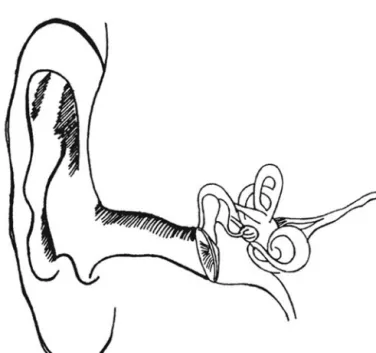
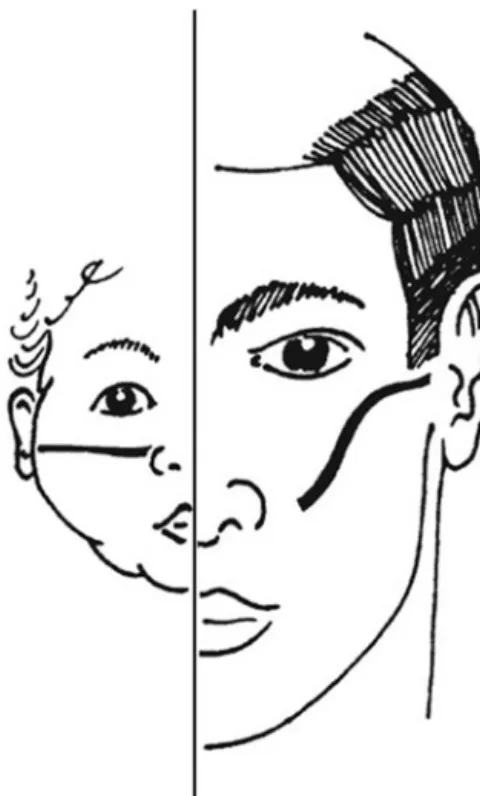
We would like to thank Gene Mahon for kindly providing us with the original illustrations for Chapter 3.
We would also like to acknowledge the earlier work of Monica Bray, Rosemarie Morgan Barry, Carolyn Bruce, and our late colleague Sandy Winyard.
Myra Kersner Jannet A. Wright (Editors)
Downloaded by [New York University] at 02:55 26 August 2016
This page intentionally left blank
Downloaded by [New York University] at 02:55 26 August 2016
Glossary
BLISSYMBOLS: This is a structured system – with its own grammar – of diagrammatic symbols which represent spoken words. The symbol elements are put together in different combinations and are repeated with consistent meaning. It is used most widely by people with physical disabilities to help them to communicate.
BRITISH SIGN LANGUAGE (BSL): The sign language used by many deaf people in Britain. It does not follow the same word order as spoken English, but has a grammar and structure of its own.
CEREBRAL PALSY: Brain damage which may occur before, during or shortly after birth. Children with cerebral palsy usually have some degree of physical disability, which may affect vocal communication. In some cases children may also have learning disabilities.
CLEFT LIP and/or PALATE: A structural abnormality which affects the developing foetus and is present at birth. It involves the hard palate and/or soft palate (roof of the mouth) which fail to meet completely. It may be associated with a cleft lip. Both conditions are normally treated surgically, and treatment may continue until a child is in his/her late teens. In babies and young children there may be feeding diffi culties, and some articulation problems may occur.
ENGLISH AS AN ADDITIONAL LANGUAGE (EAL): Refers to children for whom English is not the language spoken in the home. They learn, and often use, English as an additional language.
INTERVENTION: Usually refers to some kind of therapeutic treatment following assessment. This may involve activities, exercises or games that help to minimise a child’s speech and language problems and improve their communication skills.
Downloaded by [New York University] at 02:55 26 August 2016
xviii Glossary
LEARNING DISABILITIES: May also be referred to as learning diffi culties, and refers to people who have some degree of cognitive diffi culty. In the past it has been referred to as ‘mental handicap’ or ‘mental retardation’.
LOOKED AFTER CHILDREN: The NSPCC defi nes the term ‘looked after children and young people’ as being generally used to mean those looked after by the state, according to relevant national legislation. This legislation differs between England, Northern Ireland, Scotland and Wales. The term includes those who are subject to a care order as well as those temporarily classed as ‘looked after’ on a planned basis for short breaks or respite care.
MAKATON SYMBOLS: A system of stylised pictures which are used to represent the signs of MAKATON. This refers to a system of over three hundred specifi c signs which have been specially selected from BSL. The symbols are widely used with people with learning disabilities to help them communicate.
ONSET: The initial signs of a communication diffi culty, commonly used in relation to stammering.
Please note:
The word ‘parents’ within the context of this book is used to refer not only to birth or adopted parents but to all those taking on a caring/parental role.
In some chapters the speech and language therapist has been referred to as ‘she’ and the child as ‘he’.
Downloaded by [New York University] at 02:55 26 August 2016
Chapter 1
Speech, language and
communication problems in young children
Myra Kersner
The children described in this book are, in the main, the kind of children who may be found in any nursery or classroom. They may have a variety of different types of communication problems. In order to understand these problems it is helpful to understand how communication develops.
Speech, language and communication are words which most of us use, comfortably and often, taking for granted that we understand their meaning.
However, as with many words, there can be different aspects to their meaning, according to different contexts, and when they are used by speech and language therapists in a professional context they take on a specifi c meaning. This book has been written by speech and language therapists, and throughout the text these three words are used in their technical sense, in terms of the developing child. It is therefore important that they should be clearly defi ned at the outset, and that the relationship between them in this context should be explained (see Figure 1.1).
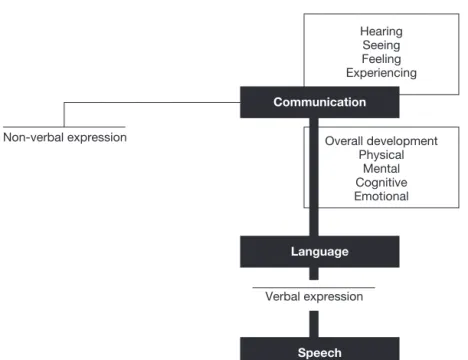
Figure 1.1 illustrates how communication develops as the newborn baby sees, hears and begins to experience the world. Initially the baby communicates using non-verbal expression such as crying, laughing or cooing. As the child begins to develop physically, cognitively and emotionally, so the understanding of language develops. This language may then be communicated using verbal expression or speech. This is more fully developed in Chapter 2.
Communication
Communication is the all-embracing term that includes speech and language but also covers all of the other ways in which we receive and express messages. This might be Morse code, semaphore signals or a sign language, or it might be through text messages, mobile phones, emails, Twitter, Facebook or other forms of social media.
It is generally defi ned in terms of social interaction – people connecting with each other – and this may occur in many different ways. For example, teenagers who are capable of conducting long telephone conversations or
Downloaded by [New York University] at 02:55 26 August 2016
2 Myra Kersner
Overall development Physical
Mental Cognitive Emotional Hearing
Seeing Feeling Experiencing
Non-verbal expression
Communication
Language
Speech Verbal expression
Figure 1.1 The relationship between communication, language and speech
sequences of text messages with their friends often resort to nothing more than a grunt or a shrug when communicating with their parents. Newborn babies who have not yet developed language or speech are also able to communicate, quickly beginning to respond as adults communicate with them (see Chapter 2).
From the fi rst day of life babies receive communication from others, albeit passively, as they begin to see, hear and experience the world around them.
When they are held close by a caring adult, when they hear words of comfort, or even angry tones, or when they are merely taking part in the feeding process, they are receiving communication from others.
At the same time, babies are able to communicate actively and express themselves, because from the day they are born they are able to tell us when they are wet, hungry or uncomfortable.
In order to communicate, three basic elements are required: intention; the means; and a receiver. This is true even in newborn babies, as illustrated below.
Intention: this refers to the intention to convey a message. For example, babies have the need, almost from the moment of birth, to convey a message expressing their discomfort.
The Means: this is the means by which that message may be conveyed. In young babies, for example, the means to express their discomfort is by crying.
Downloaded by [New York University] at 02:55 26 August 2016
Speech, language and communication problems 3 A Receiver: this refers to the person who is required to ‘pick up’ and respond to the message once it has been sent. With young babies it is usually a parent who hears them crying and is ready to react and respond.
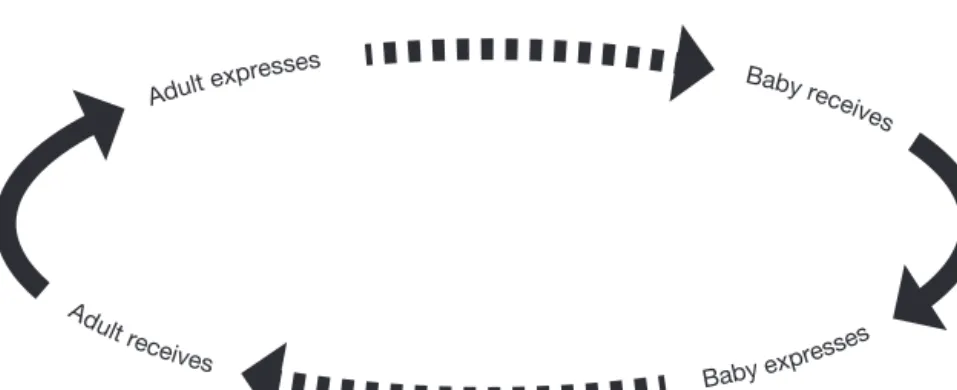
These three elements of communication are usually in place at birth, and it is from this cycle that early communication patterns are set (see Figure 1.2).
As Figure 1.2 illustrates, the baby expresses discomfort by crying; the adult carer receives that message and responds, perhaps with soothing words or noises; and the baby hears these noises and responds, perhaps with a modifi ed type of expression such as a whimper or a comfort noise. It is also important to notice that when an adult receives the baby’s fi rst message s/he will probably also respond with an action, such as feeding the baby or changing its nappy. This action will reinforce the baby’s intention to communicate, because the baby will realise that its attempts to communicate are rewarded by adults’ actions.
At fi rst babies are only able to communicate their feelings of discomfort, but gradually they begin to signal ‘I am happy; I am comfortable’ non- verbally, by cooing, gurgling or smiling, and once again the cycle is reinforced. Normally this repertoire of pre-language, non-verbal forms of expression increases as children develop more understanding of language, until fi nally they are ready to speak (see Chapter 2).
Language
Although communication begins at birth, language does not develop until the child begins to grow, mature and absorb sensory experiences from the outside world. Language is extremely complex, even though, once acquired, we use it extensively and automatically. Very young babies are motivated to be good communicators and by the time spoken language starts developing, around their fi rst birthday, the basic capacity to use it has begun to develop too.
Babyexpresses Adul
t recei ves
Babyreceiv Adult expresses es
Figure 1.2 Communication patterns
Downloaded by [New York University] at 02:55 26 August 2016
4 Myra Kersner
Language is a form of shorthand which is used as a means of classifying and ordering the world. Various symbols are used to represent objects, situations and the everyday occurrences of life. These symbols are the spoken, written or signed words which, over generations, have evolved (and continue to evolve) into an agreed and accepted system of symbols – a particular language. For example, spoken or written English is a system of symbols governed by many hundreds of grammatical rules which are accepted and recognised in this country and by many people throughout the world. Adults may be expected to have about fi fty thousand different words which they are able to use, and they will often understand and recognise up to twice that number.
As young children begin to understand the symbols of their own language, gradually they are able to use that language to express their own messages and to improve their communication. It is surprising to realise how many words may be used even by young children. A study cited in Crystal (1986) showed that at seventeen months one child was able to use 1,860 different types of words. These included nouns, naming people and different categories of objects; verbs, describing a variety of actions; descriptive words referring to location; and words such as ‘more’ and ‘again’.
The use of language means that a greater variety of messages may be communicated to larger numbers of people. Language allows messages to be more precisely expressed, so that they will be easily understood. For example, the mother of a fi fteen-month-old boy may understand that when he says ‘er ber ber’ and points his fi nger he means ‘there’s a bus over there’, but she may be the only person who understands this. However, anyone who understands English will know what he means once he is able to say the words ‘look, there’s a bus’. By the time the child is fi ve, he may be expected to use over two thousand different words.
Language may be expressed in a variety of ways (see below). Most commonly, however, it is expressed through words which are spoken out loud.
Speech
Speech, or verbal expression, is the mechanism by which most people communicate. Speech requires the use of the voice to make sounds. In English these sounds are then formed and shaped by the tongue, lips, teeth and palate to make twenty vowel sounds and twenty-four consonant sounds, which are then combined in hundreds of different ways to form English words. When these words are heard and understood, the receiver may respond with other words.
Downloaded by [New York University] at 02:55 26 August 2016
Speech, language and communication problems 5
Other ways of expressing language
There are other ways in which language may be expressed non-verbally. As Figure 1.3 shows, language may also be expressed using two forms of non- verbal expression: non-vocal expression and body language.
Non-vocal expression
There are several forms of non-vocal expression. Perhaps the most common is the use of written symbols (letters). This form may be used in books or magazines, or when sending emails or texts. Reading and writing are usually learned after speech has developed, when children go to school.
However, there are some children who may understand language but whose speech does not develop properly. They have to learn to express their language in other ways. This may occur with children who have hearing problems, or with some of those who have learning disabilities; it may be that they have a physical disability, such as cerebral palsy, or they may have a specifi c problem affecting the speech organs, such as paralysis or a degenerative disease.
In such cases these children may be taught an alternative or augmentative system of communication (AAC) such as a sign language (e.g. British Sign Language), a symbol system where they point to pictures, words or specifi c symbols (e.g. Makaton Symbols or Blissymbols - see glossary), or they may use written words if they are able to read and write.
In some cases, an AAC might involve the use of a technical aid such as an electronic communication device that may provide an alternative to speech (Clarke et al. 2012).
Body language
Verbal expression
Non-vocal expression Language
Speech Figure 1.3 Verbal and non-verbal expression
Downloaded by [New York University] at 02:55 26 August 2016
6 Myra Kersner
Body language
Body language is another form of non-verbal expression. However, messages communicated through body language, which may be sent either consciously or unconsciously, are usually used in addition to the spoken word. This type of non-verbal expression amplifi es speech, giving it another dimension and sometimes even another meaning.
An example of body language is making eye contact, or alternatively avoiding someone’s gaze. This gives unspoken messages about the level of confi dence, shyness, awkwardness or embarrassment which one may be feeling during a particular interaction. However, it is important to be aware that there may be different uses of eye contact in various cultures.
Stance gives another message. The arms akimbo position with fi sts on the waist and the elbows pointing outwards is often considered to express aggression, whereas arms folded across the chest may be interpreted as defensive.
Gestures may help to emphasise a spoken message, such as wagging a fi nger while telling someone off. Gestures may even replace the spoken word, such as when pointing or shrugging the shoulders. Once again it is important to be aware of cultural variations in the use of specifi c gestures.
Different facial expressions also give additional messages. Smiling or frowning may quickly convey an accurate message regarding feelings, which may help to underline the words of the message.
However, facial expressions may also be used to convey a ‘mixed message’.
For example, this may occur when a speaker uses an angry voice which is belied by a twinkle of the eye, or when seemingly harmless words are combined with a sarcastic lifting of the eyebrows. Such non-verbal messages play an important role in communication.
Difficulties with communication
Sometimes, however, the ideal relationship between communication, speech and language is not achieved. The links are not made and at some level communication breaks down. In such instances, children may be said to have a ‘communication disorder’ or speech, language and communication needs (SLCN), which are umbrella terms covering a wide range of diffi culties.
It is recognised that as many as fi ve per cent of children enter school with some of these diffi culties. It would therefore seem to be important for early years workers, teachers and carers to ensure they have an understanding of children’s speech and language problems. Indeed, because more children with special educational needs now enter mainstream schools, more education and support staff require knowledge and skills in the management of children with speech and language diffi culties.
The relationship between communication, language and speech is a complex one, and the ability to communicate is dependent on the social and
Downloaded by [New York University] at 02:55 26 August 2016
Speech, language and communication problems 7 emotional as well as the physical environment. It is therefore possible that this ability could break down at any stage during a child’s development. The effect this would have on the young child would depend on the level at which the breakdown occurred.
For example, if something went wrong during the early stages of development, before the patterns of communication were fully established, this could result in the child having diffi culties in the subsequent development of language, and later in the development of speech. It could interrupt the development of communication patterns with children who have an Autism Spectrum Disorder, for instance (see Chapter 8). On the other hand, if there was a physical problem only affecting the organs of speech, this would not necessarily affect language development or the establishment of communication patterns.
Some children encountered by early years workers within the British health and/or educational system may have developed language normally, but that language may not have been English, so that they will need to learn English as an additional language (EAL). Until they are able to learn to speak English fl uently, they may struggle with their speech as they come to grips with new words and different sound combinations. However, this is not the same as a child who struggles because they have SLCN unless that child has diffi culties learning the language spoken at home as well as learning English.
Describing children’s speech and language
Which terms to use to describe children’s abnormal speech and language development is often a point for discussion among speech and language therapists. For example, there is debate, but not always agreement, regarding the use of different terminology. In the following chapters, such words as delayed, disordered, diffi culties, problems and impairment are used interchangeably to describe the speech and language of children with SLCN.
While it may not be crucial to differentiate the specifi c terminology here, it is important to be able to recognise children who have developmental language problems. It is important to be able to broadly classify the area in which they (the children) are having the most diffi culty – is it with language?
with speech? or with basic patterns of communication? – and to know how to begin to help. If children are not given help the overall result could be that their communicative skills may not be learned at the appropriate time, or may not be learned at all.
The population of children
Children with communication problems may be found in any nursery or mainstream classroom. They may not appear to be different from other
Downloaded by [New York University] at 02:55 26 August 2016
8 Myra Kersner
children, and yet they may be experiencing some diffi culties with speech/
language/communication. These are the children who are often in danger of being overlooked, if their particular diffi culty is not understood. There are several reasons which might account for their speech and language diffi culties, some of which will be dealt with in the following chapters. These include: hearing diffi culties; speech and language problems; Autism Spectrum Disorder; social, mental and emotional health problems; and stammering.
Hearing difficulties
Babies are normally able to hear from the moment of birth. If there are diffi culties with this fundamental sensory system, it can be seen from Figure 1.1 how the entire communication system and the development of language and speech may be affected to some degree. Some children may enter an early years setting or even begin school with a hearing problem, because the cause of their diffi culties has not yet been recognised. Details of how hearing diffi culties may affect the young child are described in Chapter 3.
Speech and language problems
Although the diagnosis of specifi c speech and language disorders requires the specialist knowledge of a speech and language therapist, early years workers and carers are often able to recognise and describe children’s communication problems. There is a description and discussion in Chapter 4 of how to recognise and distinguish some of these diffi culties.
Stammering
Stammering is a specifi c problem affecting the speech and language of people of all ages, and as many as fi ve per cent of the population may have stammered at some time in their lives. Although fewer children are affected by stammering than by other disorders, stammering may sometimes prove more diffi cult to manage than other speech problems. Stammering affects verbal expression, which may sound as if it is ‘broken up’ and not fl uent.
The problems which may arise with children who stammer, and how they may be helped, are dealt with in Chapter 6.
Social, mental and emotional health problems
Although emotional diffi culties may arise as a result of speech and language problems, and the resultant frustration of having an impaired communication system, it can be seen from Figure 1.1 that emotional development plays an important role in the growth and progress of the child as a whole, and particularly in the development of language and speech. Some social, mental
Downloaded by [New York University] at 02:55 26 August 2016
Speech, language and communication problems 9 and emotional health diffi culties may also contribute to communication and/or language problems. This is discussed more fully in Chapter 7.
Autism Spectrum Disorders (ASD)
ASD is a common diffi culty in childhood which affects the development of speech, language and social interaction, and it is now well documented that children who have ASD will experience some form of SLCN. The exact causes are unknown, and diagnosis relies on the expertise and experience of the members of the Autism Team working with the child. However, there are several different approaches to intervention, and the ways in which support may be offered to the child and their family are dealt with in Chapter 8.
How can you help?
The development of language and speech is an intrinsic and integral part of the development of the child as a whole, and there are many ways in which children can be helped if they are experiencing diffi culties with this aspect of their development, as discussed in Chapters 9 and 10. Chapter 9 focusses on how language development may be enhanced by the use of formal language programmes. However, there are also many games and activities which are useful for such children which teachers could incorporate into their curriculum planning, or which early years workers and/or parents could incorporate into the child’s routine within the nursery or at home. Ideas and suggestions for the inclusion of these informal activities are given in Chapter 10.
Working with parents
It is acknowledged that parents are often among the fi rst to recognise that something is wrong with their child, and it is therefore important for them to be included in the helping process whenever possible. How professionals may collaborate with parents in order to facilitate this aspect of their work is discussed in Chapter 5.
Of course, there are many other groups of children who have speech and language diffi culties which are beyond the scope of this book. Mostly these are children who have communication disorders as a result of physical problems such as cerebral palsy, or children with severe or mild learning disabilities. Many of these children may need specifi c specialist help.
However, there are many children with SLCN who can be helped by a speech and language therapist, particularly if s/he is able to work collaboratively with parents, teachers and early years workers.
Downloaded by [New York University] at 02:55 26 August 2016
10 Myra Kersner
The speech and language therapist
Wherever possible it is best to seek the advice of a speech and language therapist, to discuss the ways in which to help any child with a communication diffi culty.
Speech and language therapists are the professionals to contact if a child is known to have a speech and language problem, or if professional education/care workers or parents are concerned about the way in which a child communicates (RCSLT 2006).
In the UK most speech and language therapists are employed by the National Health Service, although many may work in early years settings as well as schools. As discussed above, communication begins at birth, so therapists may become involved with children and their families very early in a child’s development. This may be to help not only with communication but also if there are any feeding problems, such as those associated with a cleft lip and/or palate, or a physical problem that has been identifi ed at birth. For further description and discussion about cleft lip and palate, see Sell and Harding-Bell (2012).
A therapist evaluates children’s speech and language in order to establish their communicative abilities. Each child will be looked at individually. The therapist will also try to consider patterns of interaction, i.e. how the child relates to people in their home environment, in order to establish whether there are any particular features which may be contributing to the communication diffi culties. With the parents’ permission, the therapist will also talk to the child’s early years workers or teachers about how the child communicates with staff and other children. The therapist may be able to work with the teachers and the parents to help the child, integrating such things as curriculum topics and the school’s teaching methods into the therapy. Increasingly therapists may help the parents or early years practitioners to work with the children themselves.
Service delivery
The local arrangements for speech and language therapy service provision will vary from one geographical area to another. Thus, for example, in Yorkshire a child with a communication problem, and those working with that child, will fi nd services are organised in a different way from those provided for children with the same problems in Cornwall.
The way in which therapists work may also vary. In some areas therapists will work directly with the children, while in other areas therapists work
‘indirectly’, training others to continue therapy with the children.
Downloaded by [New York University] at 02:55 26 August 2016
Speech, language and communication problems 11
Health centre services
Even within one geographical area speech and language therapists may vary the frequency of the appointments that they offer. This will depend on the needs of the child, the family’s commitments, the therapist’s rationale for the management of that child, and the policy and organisation of the local services. The length of time that children and their families spend with a therapist will vary, depending on the needs of the children. Sometimes an appointment will last thirty to forty-fi ve minutes, whereas some appointments may last up to one and a half hours.
Children may be seen as part of a group, in which case parents may be asked to bring their child for a whole morning or an afternoon. Parents may then be expected to continue to work with the child regularly at home until the next appointment. Parents need to be involved as much as possible from the time of referral.
Education-based services
In an increasing number of areas speech and language therapists are working within early years settings and schools as well as special schools, where they liaise directly with early years workers, teachers and assistants. The teachers and the therapist will discuss the effect of the communication problem on the child’s academic work. They will also decide how therapy may be integrated into curricular activities, and how relevant new vocabulary and topics may be incorporated into the therapy. Sometimes therapists may work with an individual child or a group of children within the classroom.
Often, regular therapy may be continued by an assistant whom the therapist has trained.
What will the speech and language therapist do?
The speech and language therapist needs to obtain a complete picture of the child, including speech and language skills. The assessment of communication problems involves using materials with which children are comfortable, namely toys and books. The way in which they play can reveal a great deal about the way in which they think and understand the world around them, and aspects of their intellectual functioning. The therapist will also be interested in the children’s attention span and their ability to concentrate – for example, noting how long they play with one toy or one game. They will also observe their interaction skills and their non-verbal communication such as gestures, pointing and eye contact.
The therapist will need to assess the child and take a full case history from the parent, and establish whether the child’s problems are related to any hearing diffi culties.
Downloaded by [New York University] at 02:55 26 August 2016
12 Myra Kersner
The therapist will try to work out how much a child understands, using a variety of assessment techniques. It may appear that children ‘understand everything that is said to them’, but this may not be the case.
The therapist will take a language sample which they can then analyse and compare to developmental norms to identify a child’s communication strengths and weaknesses. The therapist will note the grammatical structures as well as the vocabulary the child uses.
They also listen to the speech sounds the children use in single words as well as in continuous speech, to see if there is a pattern in the way certain sounds are produced, omitted or substituted. Therapists will also look at how the child interacts with their parents and siblings as this helps them to assess and understand the full range of the child’s communicative abilities.
Speech and language therapy sessions will only be successful if the therapy is then incorporated into a child’s lifestyle. If speech and language therapy is offered in an educational setting the therapist will have to make decisions about whether to see the child in the classroom or take them out into another room for individual therapy. Close collaboration between the therapist, all other professionals and the parents is necessary if a child is to receive a coordinated programme of intervention which will enable them to integrate their newly acquired skills into their everyday lives.
References
Clarke, M., Price, K. and Jolleff, N. (2012) Augmentative and Alternative Communication. In M. Kersner and J.A. Wright (eds) (2nd edition), Speech and Language Therapy: the decision-making process when working with children.
London: Routledge.
Crystal, D. (1986) Listen to your Child: Parents’ guide to children’s language.
Harmondsworth: Penguin Books.
Royal College of Speech and Language Therapists (2006) Communicating Quality 3. London: RCSLT.
Sell, D. and Harding-Bell, A. (2012) Cleft Palate and Velopharyngeal Anomalies. In M. Kersner and J.A. Wright (eds) (2nd edition), Speech and Language Therapy:
the decision-making process when working with children. London: Routledge.
Further reading
Crystal, D. (2007) How Language Works: How babies babble, words change meaning, and languages live and die. London: Penguin.
Wright, J.A. and Kersner, M. (2013) (3rd edition) A Career in Speech and Language Therapy. London: Metacom Education.
Downloaded by [New York University] at 02:55 26 August 2016
Chapter 2
The development of communication
Speech and language acquisition
Myra Kersner
As discussed in Chapter 1, the process of communicating starts from birth, and the development of communication into language and speech begins as the newborn baby draws its fi rst breath.
Communication is an interactive process; that means that more than one person is involved. Even from birth it is something that does not occur alone – it is dependent on other factors, such as people and events. This can be illustrated by thinking about any conversation. What one person says is dependent on what the other person says, on their reactions to the fi rst person’s communication. In most instances the fi rst people to communicate with the newborn are the parents, and their role in facilitating and encouraging continuing speech, language and communication development is critical as the child grows and develops.
Communication is both verbal and non-verbal. The verbal part of communication is the words that are spoken. The non-verbal part consists of facial expression, such as smiling and frowning, eye contact, and gestures such as beckoning, pointing or waving. Body language also provides non- verbal information for the listener. For example, slouching and turning away from someone indicates disinterest and boredom, while sitting up straight and turning towards someone indicates interest and attention.
Normally communication requires both verbal and non-verbal skills, and it is important to remember that much information is conveyed by both methods.
Language development
Language can be divided into expression and comprehension. Expression is what people say or do that conveys what they want to communicate.
Comprehension is what people understand from verbal messages when they are spoken to, and what they understand from what is conveyed in a non- verbal way by gestures and/or body language.
Language can be described by breaking it down into several parts.
Downloaded by [New York University] at 02:55 26 August 2016
14 Myra Kersner
Sounds
The sounds in spoken English do not match the letters of the alphabet in written English. For example:
•
the letter ‘a’ is pronounced differently in the words ‘pan’, ‘pane’ and‘park’;
•
the ‘sh’ sound in words like ‘shop’ and ‘shape’, although it is said as one sound, is written with two letters from the alphabet;•
CAT is written with three letters and has three sounds C-A-T, but SHARP has fi ve letters and three sounds SH-AR-P.When children are learning to talk, it is the sounds that are learned, not the letters. It is these sounds that they sometimes have problems with during their development (see Chapter 4).
Content
This is the words or vocabulary which make up the meaning of a message;
that is, what children want to convey. Children may sometimes try to convey the same message as an adult, but the way that they say it may sound different. Child language is different from adult language. It is not incorrect or wrong; rather, it is developing.
Some children may pronounce the words incorrectly. For example, they may confuse some sounds in words, so that they say ‘tat’ instead of ‘cat’ or
‘gog’ instead of ‘dog’.
Their sentences may be incomplete. For example: ‘Daddy sock’ may mean
‘Daddy, I want my sock’, or ‘This is Daddy’s sock’. Or it could mean,
‘Daddy, this is my sock’.
The order of the words may be incorrect. For example, a child may say
‘Go car me’ instead of ‘Me go car’, meaning ‘I want to go in the car’.
However, despite sounding different, the message may still be clear to the listener because contextual clues may be given; that is, information within the context which will help the understanding of the message. This may come from the general situation, or from previous knowledge and information which is known to the two people who are communicating.
For example, Jack asks his mother, ‘Where loon?’ What he means is,
‘Where is the balloon?’
His mother’s interpretation of this is dependent on her knowledge of his language as well as her knowledge of her child and his environment. His mother may know that he has been playing with a balloon, or that he has called it a ‘loon’ previously, or else she may have been told about it by someone who has seen the balloon game. Because she has this information, the mother can understand what Jack is talking about.
Downloaded by [New York University] at 02:55 26 August 2016
The development of communication 15
Grammar – Syntax
Grammar refers to the rules of language and is sometimes referred to as syntax. The words which express ideas, give information and convey feelings are not put together in a haphazard way. They are organised into structured sentences according to the grammatical rules of the specifi c language.
For example, when describing the size and colour of an object in English, size always comes before colour. Thus we say a ‘big blue ball’, not a ‘blue big ball’.
In summary, language comprises sounds, which combine to make words, which combine to make sentences.
Use
Language fulfi ls a variety of communication functions such as greeting people, asking questions, explaining a problem or telling a story. The use of language, or pragmatics, refers to the way language, both verbal and non- verbal, is used appropriately in different social situations. For example, children use language in a more informal way when talking to their friends than when talking to their teachers. The majority of children learn spontaneously how to use language appropriately. For example, they learn how to take turns in conversations, how to start a conversation, how to end it, how to keep it going, how to correct an error and ‘repair’ it should they make a mistake, and how to change the topic in an appropriate way.
Intonation
This means the rising or falling sound patterns of speech, or the melody.
Intonation has an important role in communication because it is this melody which is one of the fi rst features of speech and language that children both understand and produce. The intonation carries much of the information about the content or meaning of a message.
For example, if the sentence ‘We’re going out’ is said as a statement, announcing the intention to go out, the intonation usually goes down so that the voice will drop at the end. Try saying it.
The same sentence can be turned into a question by changing the intonation pattern. For a question, the intonation rises at the end. Now try saying ‘We’re going out?’ as a question. Can you hear the difference?
Young children rely on the information provided by intonation patterns to help them understand what is said, long before they understand the individual words in a sentence they hear.
Downloaded by [New York University] at 02:55 26 August 2016
16 Myra Kersner
Voice
Voice is produced when yelling, shouting or speaking. The air which is breathed in is forced out of the lungs through the mouth and/or nose. This stream of air passes through the vocal cords or vocal folds which are situated in the neck. Try putting a fi nger on your Adam’s apple, the lump of cartilage on the front of your neck. The vocal cords or larynx are within this protuberance. Say ‘bbb’. You will feel vibrations. This is because the vocal cords are vibrating as the air passes through them.
Children frequently use a loud voice, and at school they often shout in the playground. It is possible for their voices to become hoarse because of excessive shouting. If hoarseness persists, then they may need to be seen by a speech and language therapist to help them use their voices less stridently.
The same can happen to adults, especially teachers who have to project their voices over a noisy classroom. They may strain their voices and become hoarse. They may even ‘lose’ their voice. If this happens, they too may need help from a speech and language therapist, or from a doctor, or an Ear, Nose and Throat (ENT) Specialist.
How do children learn language?
Imitation
If asked how children learn language, some people would say it was by imitation – they hear words and copy them. There is no doubt that some of the words children produce are imitated. For example, three-year-old Sam was overheard saying to his best friend, ‘You can’t have ice cream until you’ve eaten your dinner.’ He used exactly the same words, as well as the voice and intonation pattern, that his mother used to him a few days earlier.
This is a clear example of imitation.
However, imitation cannot tell the whole story about how children learn to speak. Even allowing for the fact that children hear many different examples of language, from many different sources, such as at home, with friends or at school, imitation cannot account for the new and original ways in which children then produce and use language themselves.
If children learned to speak only by imitation we would expect children’s speech to be the same as adults’ speech. However, as we saw before, the language of the child is not a replica of the language of an adult – it is different. It seems to have its own patterns and to follow its own rules.
No matter how often you say ‘Daddy has just gone to work in the car’, children can only attempt to repeat such a sentence using the language that corresponds to the level or stage of their development. For example, in the case of two-and-a-half-year-old Ben, his attempted repetition of this sentence was ‘Daddy go work car.’
Downloaded by [New York University] at 02:55 26 August 2016
The development of communication 17 Another way children’s speech differs from adults’ speech is that children do not indulge in ‘babytalk’ in the way that adults do. For example, how many children refer to their toes as ‘piggy wiggies’?
Another argument against imitation is that, by adult standards, children’s language is full of errors. For example, children talk about ‘mouses’ – they do not immediately imitate the word ‘mice’. Similarly they use ‘goed’ instead of ‘went’ and ‘badder’ instead of ‘worse’. This is quite normal – all children go through these stages while they are developing language. The rate at which they develop may vary, with some taking longer than others to progress through the stages of ‘child language’ to mature language structures.
Innate ability
If imitation does not explain how language develops, then how do children develop language? There are a signifi cant number of researchers in this area, such the prestigious academic Noam Chomsky, who feel that children are born with an innate ability to produce language. The language they are exposed to in their environment, which they hear all around them, then triggers this inbuilt ability.
This theory certainly offers an explanation as to how children are able to learn a limited number of words and use them in combinations which they have obviously never heard before.
These two approaches focus on the child rather than the people who communicate or interact with the child, whereas the interaction approach outlined below focusses on the way that adults and children communicate together.
Adult–child interaction and the development of language
This approach focusses on the person in conversation with the child – for example, the mother – who is thought to be important in the development of language. Work on this approach was based on original research by Bruner (1975). Here, the mother’s contribution or input is thought to be fundamental to the child’s normal development of speech and language.
Viewed from the perspective of the child, language development in terms of adult–child interaction may be considered in two stages – pre-verbal and verbal.
Pre-verbal stage
The pre-verbal stage covers the period from babies’ fi rst cries to the emergence of their fi rst words. The adults’ input during this stage is important because initially it is the way that adults respond to the cries and physical actions of babies that gives those cries and actions meaning. A baby who wriggles, kicks and cries could be trying to communicate:
Downloaded by [New York University] at 02:55 26 August 2016
18 Myra Kersner
‘I’m hungry’
‘I’m uncomfortable and wet and want to be changed’
‘I want to be picked up and made a fuss of’
The adult interprets the meaning by responding to the baby’s behaviour, for example by offering food, changing a dirty nappy or picking up and cuddling the infant. The way the adult responds will infl uence the child’s behaviour.
In this way children learn that some of their messages mean something to the adults around them, and that some of their messages are ignored and need to be altered before the adults will respond in the required way.
Of course, this can be a two-way process, and sensitive adults learn from the babies’ responses whether they have responded appropriately to the messages.
During this pre-verbal stage babies spend a great deal of time practising the sounds and melodies of speech. They will make noises, and their mothers will often make the same noises back. This is one of the ways in which babies learn the turn-taking skills which are required for later stages in their language development, when they need to learn how to use language in social contexts and to take turns in verbal conversations.
Listening and attention
In order to interact in this way young children have to be able to listen and pay attention, and long before they can talk they will listen and attend when an adult is talking. Listening and attending is more than just hearing, more than just being aware of noises and happenings all around; it involves actively concentrating on the noises in the environment. Babies demonstrate that they are really listening by focussing on the adult’s face and stopping all activity while the adult is talking. When the adult stops talking they start to make noises and thrash around with their limbs as they ‘take their turn’ in the conversation (see Chapter 5).
By about nine months children realise that they can infl uence adult behaviour by using various communication strategies like gestures, vocalisations, or even by making eye contact. This may be considered to be intentional behaviour because children really want the particular message they are sending to be understood. They know what they are trying to communicate and they are sending signals using the same combination of sounds, gestures or looks which in the past have achieved the responses they want from the adult.
For example, baby Fadila, at eleven months, knows that the sounds ‘erer’, said with a certain intonation together with a pointing gesture, will always result in her getting a drink. Therefore she will reproduce it next time she wants a drink.
Downloaded by [New York University] at 02:55 26 August 2016
The development of communication 19
Child-directed speech
When interacting with young babies, adults or older children employ a different sort of communication style. This child-directed speech tends to be simpler than the speech used when talking to an adult, and while the sentences are correct in grammar and sounds, they tend to be short and simple in their construction. Speech is often slower, louder and on a higher note, and words which the adult really wants the child to understand are emphasised by putting more stress on them. For example, ‘Owen, go and get the ball, get the ball.’
Vocal play
While building turn-taking skills with their mothers, babies still have time for practising their speech by playing with sounds. They progress from crying and making basic sounds through happy, cooing noises, to vocal play. Vocal play is quite melodic and babies often bang toys in time with their vocalisations. This stage is reached at about four months.
For example, Sarita was four months old when she began to produce a greater variety of sounds – vowel sounds like ‘ah’, ‘oo’ and ‘oh’ and consonant sounds like ‘g’, ‘k’ and ‘m’ became common. She produced one sound and then repeated it over and over again. She also produced trills and blew ‘raspberries’. All of these are common features at this age, and are typical of vocal play.
Babbling
At about six months the babbling stage begins. Most people are familiar with this and remember the long strings of ‘bababababa’ or ‘dadadadada’
sounds which infants produce. As the baby continues to babble the sounds become more varied and change within the string, so that strings like
‘madumadu’ may be produced.
Jargon
At about nine months the intonation patterns of speech are picked up more intensely and practised. Gradually the length of sounds children produce increases, and they sound as if they are producing adult speech. In fact they are not using real words, they are producing strings of sounds with intonation patterns they have learnt from adults. This is called jargon.
By the end of this phase, children are ready to enter the verbal stage. They have acquired many functional communication skills: they have learnt the conversational skills of turn-taking, listening and attending; they have practised using their voice, different intonation patterns and sounds; and
Downloaded by [New York University] at 02:55 26 August 2016
20 Myra Kersner
they have practised using some content, and getting their message across to their listener. They continue to practise these functional communication skills, by making their needs known and manipulating their world by intentionally communicating. They have begun to realise the power of language and they have not yet said a word!
Verbal stage
Into this non-verbal framework of sounds and intonation, at about twelve to fi fteen months the child begins to insert words. The fi rst words children say are usually the names of things that are important to them in their personal world. The fi rst words might be ‘cup’, ‘bear’, ‘car’, ‘drink’, names of the family, or pets. These words may not be pronounced perfectly; for example, cup might be ‘cu’ or drink might be ‘dint’ or ‘dink’. However, by this stage the word is always used to mean the same thing, showing that the child has attached meaning to it and is using it consistently to convey the same message.
Generalisation
Sometimes children use the same word to mean a number of things that seem similar to them. So, for a period in the child’s language development the word ‘dog’ might be used for all the four-legged animals the child comes across, such as dogs, cats and horses.
A common example of this generalisation is the use of the word ‘Daddy’
or ‘Mummy’. Once learnt, ‘Daddy’ may then be used for all men, and
‘Mummy’ for all women. A similar process may also happen with the name of the family pet. It is very common to hear a child calling everybody’s cat
‘Smokey’ because that is the name of their own cat. Gradually children learn to refi ne these umbrella terms or generalisations, learning, for example, that a cat is different from a dog. They also learn that not all men are Daddy.
The ‘two-word’ stage
A little later in their development – from approximately two years upwards – children begin to put two words together. These two-word phrases or sentences are the beginnings of real grammar and may represent a number of different functions such as statements, requests and questions.
For example:
‘Car gone’ is a statement meaning ‘The car has gone.’
‘Mummy biscuit?’ is a request meaning ‘Mummy, please may I have a biscuit?’