저작자표시-비영리-변경금지 2.0 대한민국 이용자는 아래의 조건을 따르는 경우에 한하여 자유롭게
l 이 저작물을 복제, 배포, 전송, 전시, 공연 및 방송할 수 있습니다. 다음과 같은 조건을 따라야 합니다:
l 귀하는, 이 저작물의 재이용이나 배포의 경우, 이 저작물에 적용된 이용허락조건 을 명확하게 나타내어야 합니다.
l 저작권자로부터 별도의 허가를 받으면 이러한 조건들은 적용되지 않습니다.
저작권법에 따른 이용자의 권리는 위의 내용에 의하여 영향을 받지 않습니다. 이것은 이용허락규약(Legal Code)을 이해하기 쉽게 요약한 것입니다.
Disclaimer
저작자표시. 귀하는 원저작자를 표시하여야 합니다.
비영리. 귀하는 이 저작물을 영리 목적으로 이용할 수 없습니다.
변경금지. 귀하는 이 저작물을 개작, 변형 또는 가공할 수 없습니다.
1
Master's Thesis
Cyanide, An Environmental Inhibitor of Predation by Bdellovibrio bacteriovorus HD100
HeeUn Kwon
Department of Biological Sciences
Graduate School of UNIST
2017
2
Cyanide, An Environmental Inhibitor of Predation by Bdellovibrio bacteriovorus HD100
HeeUn Kwon
Department of Biological Sciences
Graduate School of UNIST
3
Cyanide, An Environmental Inhibitor of Predation by Bdellovibrio bacteriovorus HD100
A thesis/dissertation
submitted to the Graduate School of UNIST in partial fulfillment of the
requirements for the degree of Master of Science
HeeUn Kwon
4
Cyanide, An Environmental Inhibitor of Predation by Bdellovibrio bacteriovorus HD100
HeeUn Kwon
This certifies that the thesis/dissertation of HeeUn Kwon is approved.
07/05/2017
5
Cyanide, An Environmental Inhibitor of Predation by Bdellovibrio
bacteriovorus HD100
Abstract
BALOs are predatory bacteria attacking specific Gram-negative prey bacteria and have been studied about both their life itself and their possibility to be used as alternatives to antibiotics. One of most widely used strain is a Bdellovibirio bacteriovorus HD100. In this study, environmental factors affecting on competition between prey and predatory bacteria, cyanide, is studied. The results show cyanide can inhibit predation by BALO and how the cyanide effect on predation.
6 OVERVIEW: BACTERIAL PREDATION OF BACTERIA
Contents
Abstract I Contents II List of Figure List of Table
Chapter 1. Interaction and Competition between Bacteria: Quorum sensing, Antibiotics, and Predation 1.1 Summary
1.1 Quorum sensing and Secondary metabolites 1.2 Antibiotics
1.3 Cyanide
1.4 Predatory bacteria 1.5 Conclusion
Chapter 2. Predation study of B.bacteriovorus HD100 with Chromobacterium piscinae - Cyanide Negatively effects on Predation
2.1 Summary 2.2 Introduction
2.3 Materials and Methods
2.3.1 Delayed Predation of HD100 with C. piscinae
2.3.2 C. piscinae supernatant have negative impact on HD100 predation 2.3.3 Violacein Does Not Inhibit HD100 predation
2.3.4 Purged Supernatant of C. piscinae Losing Inhibitory effect for HD100 Predation 2.3.5 Measurement of Cyanide concentration
2.3.6 Different concentration of Potassium Cyanide Inhibits HD100 predation 2.4 Results
2.4.1 Delayed Predation of HD100 with C.pis.
2.4.2 C.pis. supernatant have a negative impact on HD100 predation 2.4.3 Violacein Does Not Inhibit HD100 predation
2.4.4 Purged Supernatant of Chromobacterium piscinae Losing Inhibitory effect for HD100 Predation
2.4.5 Cyanide Production of Chromobacterium piscinae
2.4.6 Different concentration of Potassium Cyanide Inhibits HD100 predation 2.5 Discussion
7 Chapter 3. How Cyanide Changes HD100 Predation with Escherichia coli
3.1 Summary 3.2 Introduction
3.3 Materials and Methods
3.3.1 Motility test at initial stage of HD100 predation 3.3.2 Initial attachment of HD100 predation
3.3.3 Intraperiplasmic growth of HD100 with cyanide 3.3.4 ATP pool test of HD100 with Cyanide
3.4 Results and Discussions
3.4.1 Motility test at initial stage of HD100 predation 3.4.2 Initial attachment of HD100 predation
3.4.3 Intraperiplasmic growth of HD100 with cyanide 3.4.4 ATP pool test of HD100 with Cyanide
References
8
Chapter 1. Interaction and Competition between Bacteria: Quorum sensing, Antibiotics, and Predation
1.1 Summary
In bacterial world, many of interaction and competition have been occurred since long time ago, for getting a limited amount of resources and spaces for their own species. By recognizing same species, competitors, and co-existers with some of the cell-to-cell communication methods (e.g.
quorum sensing), bacteria can perform their own interacting methods: giving antimicrobial agents outside, emission of wastes of metabolic pathway, and even prey upon other bacteria. In this chapter, some of these interactions of bacteria with each other would be explained, including related studies and papers.
1.2 Quorum sensing and Secondary metabolites 1.2.1 Quorum Sensing
Bacteria, organisms that individually reproduced by binary fission majorly, have been competing each other and their neighbors with resources and nutrients. Interacting and competition of bacteria accompany with “recognition of others” of course, and many behaviors needing more than one individual cell, for example, conjugation, symbiosis, secondary metabolism exist and were found.
Such that the way of recognition was assumed, for instance, small and diffusible chemical substances for cell communication between bacteria [1].
Firstly, it was called as pheromones, the meaning of transferring and excited molecule [2].
Nevertheless, nowadays the term of ‘autoinducer’ is more widely used, due to their function of stimulating themselves to promote the production of pheromone. Autoinducers are used to do signaling each other and if it overcomes specific concentration, meaning that bacteria reach at considerable population, following behaviors get started, e.g. production of secondary metabolites. To say it simply, sensing pheromones are used to check environmental factors whether and how their own and/or other species exist, and bacteria change their actions as responses.
This kind of phenomena was named as ‘quorum sensing’ [3]. From and with this paper, quorum sensing has been in the spotlight of the research field. This kind of co-beneficial behavior for own species and characteristic that performed only if a large quantity of cell number is satisfied are somehow viewed as similar to multicellular organisms. Additionally, it is also studied with intra- and interspecies communication [4].
1.2.2 Antibiotics
One of the secondary metabolites produced and regulated by quorum sensing is antibiotics, for example, in Actinobacteria [5] and Erwinia [6], including antifungal substances such as
9 polyketides [7].
Some signaling molecule like γ-butyrolactones(GBLs) are also regulating production and differentiation of antibiotics in Streptomyces [8, 9]. To be specific, IM-2 (one of GBL family) controls nucleoside antibiotics manufacturing in S. lavendulae [10], and streptomycin is regulated by A-factor in GBL likewise in S. griseus. Similarly, signaling molecules named virginiae butanolides to induce making virginiamycin in S. virginiae [11]. Another signaling molecule, methylenomycin furans (MMFs) is known to be related with quorum sensing and coordinate methylenomycin assembly [12].
As stated above, there are many cases of antibiotic production controlled by quorum sensing and signaling molecules.
1.2.3 Cyanide
Cyanide is a chemical substance can be used as a strong toxin, which can kill an adult human with several mg of cyanide, with inhibition of cytochrome c oxidase majorly [13]. This substance can affect for animals having circulatory and nervous system such as insects, mice [14], and also D.
melanogaster [13], with the amount of virulent P. aeruginosa producing. Actually, cyanide concentration manufactured by P. aeruginosa can be fatal for nematode, C. elegans [15, 16].
It is natural that cyanide is one of the secondary metabolites, and have related characteristics.
It is related quorum-sensing as well. For example, in Pseudomonas aeruginosa, hcnABC is controlled transcriptionally by quorum sensing regulators, LasR and RhlR [17]. The cyanogenic bacteria, in this case, proteobacteria, have resistance to cyanide and the production is thought to have ecological functions to give advantages for producer [18]. As one of the examples, P. flurescens CHA0 give protection of root disease to nearby plants caused by fungi, and this function is related to hydrogen cyanide production [19]. Some of Pseudomonas strains, for instance, P. fluorescens and P. putida.
produce cyanide for somehow plant-beneficial ecologically, for example, killing larvae [20]. In addition, cyanide production is also regarded as mobilization of metal ions with cyanide complexes by cyanogenic bacteria [21].
With this kind of high toxicity of cyanide for many animals, however, it is well-produced by Pseudomonas and some of Chromobacterium species. The precursor of cyanide in oxidative decarboxylation is considered as majorly glycine, in addition to glutamate and methionine as well [22, 23]. It is regarded as produced in early stationary phase [24]. HCN synthase is based on amino acid dehydrogenase/oxidase by sequence [25], and the major two mechanisms proposed as bacterial cyanogenic reactions: Firstly, glycine changed into hydrogen cyanide and carbon dioxide, with imino acetic acid as intermediate molecule. It is depend on HCN synthase (HcnABC) [26]. Secondly, L- amino acid oxidase and peroxidase makes L-histidine and oxygen molecules into imidazole aldehyde [27]. The main mechanism to make cyanide in proteobacteria is regarded as first one, with HCN
10 synthase. This enzyme is bound in cell membrane flavoprotein [28].
The metabolism of Bdellovibrio has been studied, with its distinct characteristic to grow inside intraperiplasmic space of prey, and the fact that Bdellovibrio is an obligate aerobe, being necessary for both prey-dependent growth [29] and prey-independent growth of host independent case [30] to get oxygen. Bdellovibrio strains have cytochrome a and c component [30] which are related to oxygen-consuming metabolisms, and it was studied that amino acid and phosphate uptake, as energy- dependent processes by Bdellovibrio can be inhibited by cyanide and carbonyl cyanide p- trifluoromethoxyphenyl hydrazine [31]. ATP uptake decrease [32] and amino acid uptake decrease [29]
of B. Bacteriovorus 109J by cyanide is observed as well. Cyanide is treated as one of the inhibitory effectors (e.g. cyanide, azide, or arsenate) for energy-producing mechanisms of Bdellovibrio [33].
Therefore, it is obvious that cyanide would be negative effects for life of Bdellovibrio also.
1.2.4 Predatory bacteria
Bdellovibrio bacteriovorus is one of the predatory bacteria which is capable of attacking a broad range of Gram-negative prey bacteria, such as some of Escherichia coli, Acinetobacter baumannii, Kelbsiella pneumoniae, and Yersinia strains.
They and related predatory bacteria are called as Bdellovibrio-and-like-organisms(BALOs), and BALOs have been studied about both their life itself and their possibility to be used as alternatives to antibiotics. One of the most studied and widely used BALO species is Bdellovibrio bacteriovorus HD100.
All organisms in nature have been interacting and fighting each other to survive, with constant variation and development of their tools. In the world of microorganisms, they also interact and attack each other. For examples, they recognize others by quorum sensing and attack others by toxic compounds including antibiotics, and even predation like carnivores. These kinds of competition in nature can be utilized by humans, for dealing with worldwide rampancy of multidrug-resistant bacteria.
BALOs have various hydrolytic enzymes to break down inside composition of host bacteria, and utilize its nutrients to be elongated and divided to make new cells, while other predation forms exist: epibiotic predation by V. chlorellavorus [34], M. aeruginosavorus and B. exovorus [35]. BALOs have distinct and regular predatory cycle: first is attack phase that BALOs move to find host cells and intraperiplasmic growth phase that BALOs grow after invasion inside hose cell. With enough growth time, BALO cells would present septation and lysed out from host cells to find another victim [36, 37].
Predation can be achieved by one cell or by cell group. Individual predatory cells may eat prey in an epibiotic way or in invading way. In Bdellovibrio case, the endobiotic(invading) way is the method. Some predators (e.g. Lysobacter spp., Myxobacteria) could hunt by the group, with the
11 ability to do that in the single cell also.
Because of BALOs’ ability to decrease pathogen and control population of bacteria with or without antibiotic resistance, it has been assumed as one of the candidates for alternatives to antibiotics, and it is also can be used in other fields like experiments about ecology and evolution [38].
12
Chapter 2. Predation study of B. bacteriovorus HD100 with
Chromobacterium piscinae - Cyanide Negatively effects on Predation
2.1 Summary
Chromobacterium piscinae, one of Chromobacterium strain, produces violacein and cyanide.
We tested these Chromobacterium piscinae for predation test by Bdellovibrio bacteriovorus HD100, and it showed delayed or blocked predation of HD100. We investigated what is precisely negative factors for BALO predation produced by Chromobacterium piscinae, such that we tested supernatant of Chromobacterium piscinae for predation test by HD100, with Escherichia coli MG1655 as prey.
The result suggested supernatant of Chromobacterium piscinae has predation inhibitory factor(s). We listed possible chemical substances as candidates and found that cyanide molecule can inhibit BALO predation, from mild inhibition (50μM) to complete blocking (400μM, until 96hr predation). It is double-checked by examining the cyanide-producing amount of Chromobacterium piscinae in nutrient media, until 24hr. Consequently, we can know that cyanide is one of the crucial factors to hinder Bdellovibrio bacteriovorus HD100 predation.
13
2.2 Introduction
BALOs are predatory bacteria eating on certain Gram-negative bacteria, and their habitats and preys are variable. They can be found in soil, plant roots, seawater, freshwater, biofilms, and sewage [39, 40], including in the animal gut [41]. So BALOs can predate much preys they can, however, there are also effectors to inhibit predation, such as indole [42], high concentrations of glucose or glycerol, low pH [43], and cyanide.
At the start of this chapter, it was clear that C. piscinae showed delayed and blocked predation by B. bacteriovorus HD100 when given a few nutrients by dilute nutrient broth but was predated when cultured in HEPES buffer.
2.3 Materials and Methods
2.3.1 Delayed Predation of HD100 with C. piscinae
Four independent C. piscinae and four independent B. bacteriovorus HD100 were cultured overnight. HD100 was used after soft agar plating inoculation and liquid cultured two times before overnight culture, based on revised culturing method[44], changed to use HEPES (purchased from Sigma Aldrich) buffer amended with MgCl2 and CaCl2 for liquid culture.
After culturing C. piscinae in NB (Nutrient broth, Neogen) for 24hr with shaking (250rpm, 30’C), the culture was centrifuged (15min, 1878 rcf) to be pelleted and resuspended with HEPES buffer until OD600 reaches at 1.0. Then it was divided into two tubes (Tube A and Tube B) and centrifuged again.
Tube A was resuspended with HEPES, and tube B was resuspended with DNB(Diluted Nutrient Broth;10-fold diluted nutrient broth) both for adjusting OD600 to 1.0. Both tubes were divided into two tubes including 10ml of resuspended culture each, as a BALO tube and a control tube.
Initial CFU and PFU were checked, and 0.45μm filtered B. bacteriovorus HD100 100ul was added to each tube of 10ml C. piscinae suspension for predation test. CFU of C. piscinae and PFU of B. bacteriovorus HD100 of tubes were checked at 24hr and 48hr after predation. It was the key point that filtering culture with 0.45μm before PFU to remove the C. piscinae cells which block plaque forming.
2.3.2 C. piscinae supernatant have negative impact on HD100 predation
B. bacteriovorus HD100 predation of E. coli MG1655 was tested, resupended with supernatant of C. piscinae cultured in DNB or HEPES. Same liquid culturing method above was used for B. bacteriovorus HD100 after soft agar plating inoculation and liquid cultured two times before overnight culture. E. coli MG1655 was cultured with LB broth (Difco™ LB Broth, Miller (Luria- Bertani)), shaking incubated overnight at 37’C, 250rpm. C. piscinae was overnight cultured in NB with shaking condition (30’C, 250rpm), and 1:100 diluted inoculation was done in HEPES or DNB
14 media before overnight culturing (30’C, 250rpm). Both E. coli and C. piscinae were centrifuged (15min, 1878 rcf) to get a pellet. Supernatant of C. piscinae was collected with 0.22μm filtering. E.
coli MG1655 was resuspended with filtered C. piscinae supernatant (from HEPES or DNB culture) until OD600 reached at 1.0. Resuspended E. coli MG1655 was divided for 10ml each into 50ml tube (Falcon), and 100ul of overnight cultured B. bacteriovorus HD100 was inoculated. All tubes were shaking incubated at 30’C, 250rpm. CFU was checked at initial point(0hr) and 24hr.
Preparation of dose-dependent treatment of C. piscinae supernatant was similar as above, nevertheless, one group of overnight cultured E. coli MG1655 was resuspended with HEPES buffer up to 2.0 of OD600 value, then mixed with the same volume of C. piscinae DNB supernatant. It was 50% supernatant group and serially diluted into 25% and 12.5% also. Another group of cultured E.coli MG1655 was resuspended only with C. piscinae DNB supernatant. It was 100% supernatant group.
Last group, 0%(HEPES) group of E. coli MG1655 was only resuspended with HEPES buffer.
Resuspended E.coli MG1655 was divided for 10ml each into 50ml tube (Falcon), and 100ul of overnight cultured B. bacteriovorus HD100 was inoculated. All tubes were shaking incubated at 30’C, 250rpm. CFU was checked at initial point(0hr) and 24hr.
2.3.3 Violacein Does Not Inhibits HD100 predation
Extract violacein was extracted by ethanol from C. piscinae and purified by acetone crystallization method, similar in [45], nonetheless, with an evaporator in this experiment. 0.05g/L and 0.5g/L violacein stock (100X) in DMSO were prepared. Overnight cultured E. coli MG1655 was resuspended in HEPES to adjust OD600 value to 1.1. Violacein stock was added as 1:100 ratio for meet each concentration (0.5mg/L and 5mg/L). Overnight cultured B. bacteriovorus HD100 (liquid cultured at least twice before experiment) was inoculated as 1:100 ratio. All tubes were shaking incubated at 30’C, 250rpm. CFU and PFU were checked at initial point(0hr) and 24hr.
2.3.4 Purged Supernatant of C. piscinae Losing Inhibitory effect for HD100 Predation
C. piscinae was overnight cultured in NB with shaking condition (30’C, 250rpm), and 1:100 diluted inoculation in DNB was done to culture overnight (30’C, 250rpm). Centrifugation (15min, 1878 rcf) and 0.22μm filtering were done to get supernatant without cells. These supernatants were poured 20ml each into 60ml serum bottles and purged with nitrogen gas (flow rate: 3L/min) for 1hr.
Then overnight cultured E. coli MG1655 was resuspended with purged supernatant, followed by 1:100 ratio inoculation of overnight cultured B. bacteriovorus HD100 (liquid cultured at least twice before experiment). CFU was checked at initial point(0hr) and 24hr.
15 2.3.5 Measurement of Cyanide concentration
Modified method from [46] was used, based on a paper [47]. 0.1M o-dinitrobenzene (Fluka) and 0.2M p-nitrobenzaldehyde solutions in 2-methoxyethanol were prepared. Solvent of two solutions was 2-methoxyethanol, and these substances were purchased from Sigma Aldrich. For each measurement, a fresh 1:1 mixture of 0.1M o-dinitrobenzene (Fluka) and 0.2M p-nitrobenzaldehyde was made. Then, 23μl portions of the diluted measuring samples were located in 1.5ml microcentrifuge tubes, and 77μl of the mixture was added, followed by incubation for 30 min at room temperature. Next, 900μl of 2-methoxyethanol was added to each tube, and the well-mixed 100μl liquid inside 1.5ml tubes was put in wells of 96-well transparent plate. Optical density was measured at 578 nm for each well including samples. Concentrations were obtained by comparison with a calibration curve computed using serial dilutions of a KCN stock solution.
2.3.6 Different concentration of Potassium Cyanide Inhibits HD100 predation
From 1M KCN solution made in sterile HEPES, serially diluted concentration (1M ->
100mM -> 10mM -> 1.6mM -> 800μM -> ... -> 100μM) of KCN were prepared to use as 2X solutions in this experiment. Prey, overnight cultured E. coli MG1655 was prepared as 2.0 of OD600 value in HEPES. Each of prepared 2X KCN solution and adjusted E. coli MG1655 were mixed as 1:1 ratio and final volume was 10ml each in a 50ml tube (Falcon). 1:100 ratio inoculation of overnight cultured B. bacteriovorus HD100 (liquid cultured at least twice before experiment) for each tube was followed. All tubes were shaking incubated at 30’C, 250 rpm. CFU and PFU of tubes were checked at initial point(0hr) and 24hr.
16
2.4 Results
2.4.1 Delayed Predation of HD100 with C. piscinae
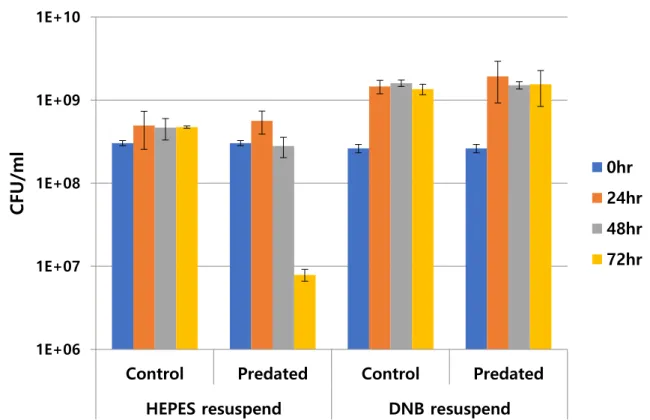
Figure 2.1. Inhibited Predation of B. bacteriovorus HD100 with C. piscinae in HEPES and DNB media. Left and right side of the graph above divided as resuspending media of C. piscinae. Control groups were not included predator (B. bacteriovorus HD100), and predated groups contained active B.
bacteriovorus HD100.
Unlike the well-predated prey, E. coli MG1655, C. piscinae showed slower predation. It showed slower predation and predated after 72hr incubation when it was resuspended with HEPES, and not predated until 72hr when it was resuspended with DNB.
1E+06 1E+07 1E+08 1E+09 1E+10
Control Predated Control Predated HEPES resuspend DNB resuspend
CFU/ml 0hr
24hr 48hr 72hr
17 2.4.2 C.piscinae supernatant have negative impact on HD100 predation
(A)
(B)
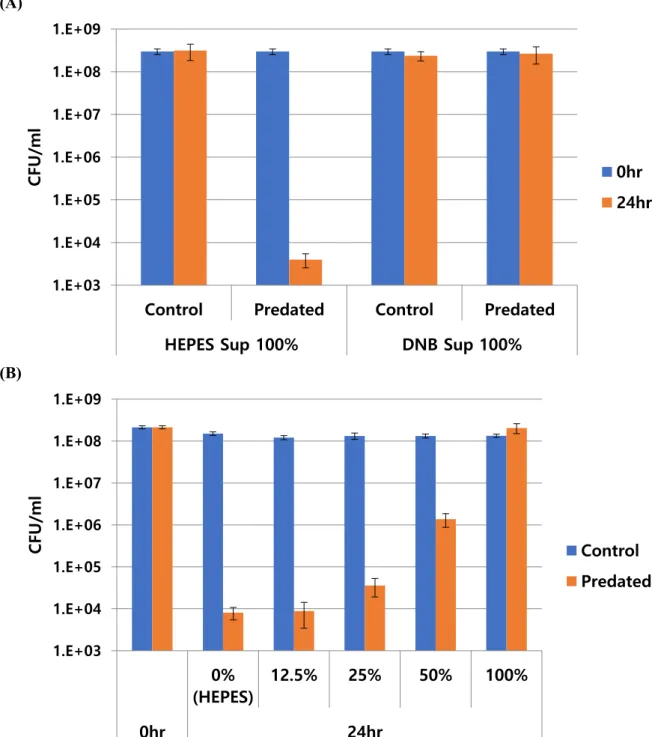
Figure 2.2. C. piscinae supernatant have negative impact on B. bacteriovorus HD100 predation. (A) E. coli predation in C. piscinae media from HEPES and DNB. E. coli MG1655 was predated by B.
bacteriovorus HD100, with C. piscinae supernatants (cultured from HEPES or DNB) as a resuspending media. Control groups did not put HD100, and predated group was added HD100. (B) Dose-dependent inhibition of E. coli predation by C. piscinae media (DNB). Overnight cultured supernatant of C. piscinae from DNB media was used, and serial diluted to see inhibitory effect for B. bacteriovorus HD100 predation. Dilution was done with HEPES buffer.
1.E+03 1.E+04 1.E+05 1.E+06 1.E+07 1.E+08 1.E+09
Control Predated Control Predated HEPES Sup 100% DNB Sup 100%
CFU/ml
0hr 24hr
1.E+03 1.E+04 1.E+05 1.E+06 1.E+07 1.E+08 1.E+09
0%
(HEPES)
12.5% 25% 50% 100%
0hr 24hr
CFU/ml
Control Predated
18 E. coli MG1655 cells were very slowly predated in (A) of Fig 2.2, even not predated until 72hr in a group of resuspended C. piscinae DNB supernatant. It was clear that DNB supernatant of C.
piscinae have inhibitory effect, though we did not know what exactly it was. It was also proved with the dose-dependent test in (B) of Fig 2.2. Such that, further study to investigate inhibitor proceeded.
19 2.4.3 Violacein Does Not Inhibits HD100 predation
(A)
(B)
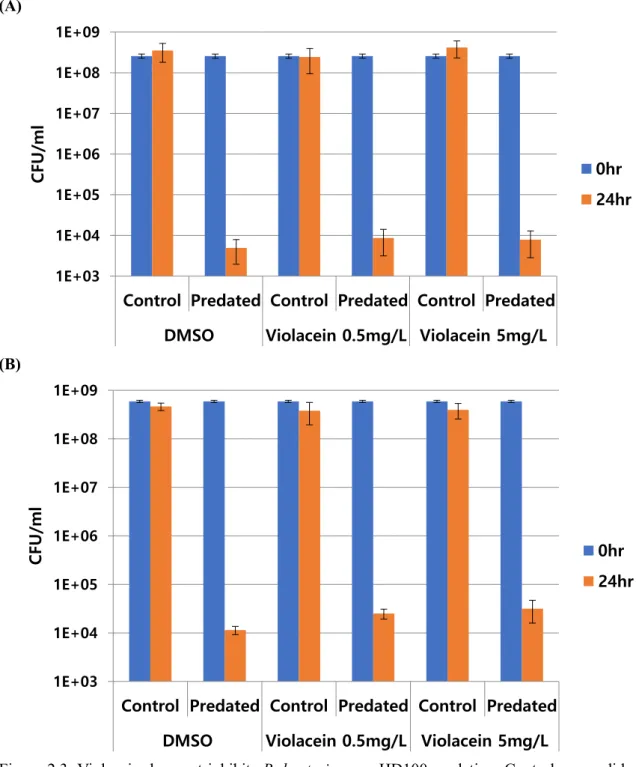
Figure 2.3. Violacein does not inhibits B. bacteriovorus HD100 predation. Control group did not contain overnight cultured B. bacteriovorus HD100, and predated group was added HD100. (A) E. coli MG1655 predation with crude extracted violacein. (B) E. coli MG1655 predation with pure violacein.
1E+03 1E+04 1E+05 1E+06 1E+07 1E+08 1E+09
Control Predated Control Predated Control Predated DMSO Violacein 0.5mg/L Violacein 5mg/L
CFU/ml
0hr 24hr
1E+03 1E+04 1E+05 1E+06 1E+07 1E+08 1E+09
Control Predated Control Predated Control Predated DMSO Violacein 0.5mg/L Violacein 5mg/L
CFU/ml
0hr 24hr
20 As shown in Fig 2.3, both extracted violacein from C. piscinae and purchase violacein (Sigma Aldrich) indicated no inhibitory effect at all toward B. bacteriovorus HD100. Such that, further investigation proceeded.
21 2.4.4 Purged Supernatant of C. piscinae Losing Inhibitory effect for HD100 Predation
(A)
(B)
Figure 2.4. Purged supernatant of C. piscinae losing inhibitory effect for B. bacteriovorus HD100 Predation. (A) is CFU, and (B) is PFU graph for E. coli MG1655 predation by B. bacteriovorus HD100, resuspended with C. piscinae supernatant from DNB media, with or without purging.
Left(Non-treated) groups show E. coli MG1655 with C. piscinae DNB media with B.
bacteriovorus HD100, and right(Purged) groups indicate similar with non-treated group except resuspending media was changed as purged C. piscinae DNB media.
1.E+03 1.E+04 1.E+05 1.E+06 1.E+07 1.E+08 1.E+09
Non-Treated Purged
Cp Sup (DNB)
CFU/ml
0hr 24hr
1.E+05 1.E+06 1.E+07 1.E+08 1.E+09 1.E+10
Non-Treated Purged
Cp Sup (DNB)
PFU/ml
0hr 24hr
22 Figure 2.4 explains about how purging was affecting on the inhibitory effect of C. piscinae supernatant from DNB media. It was obvious that major inhibitor in C. piscinae supernatant was disturbed by 1hr purging by nitrogen gas. Therefore, we could guess that inhibitor of the supernatant is volatile. Such that, the volatile substance was presumed and predicted as an inhibitor in the continued experiment.
23 2.4.5 Cyanide Production of Chromobacterium piscinae
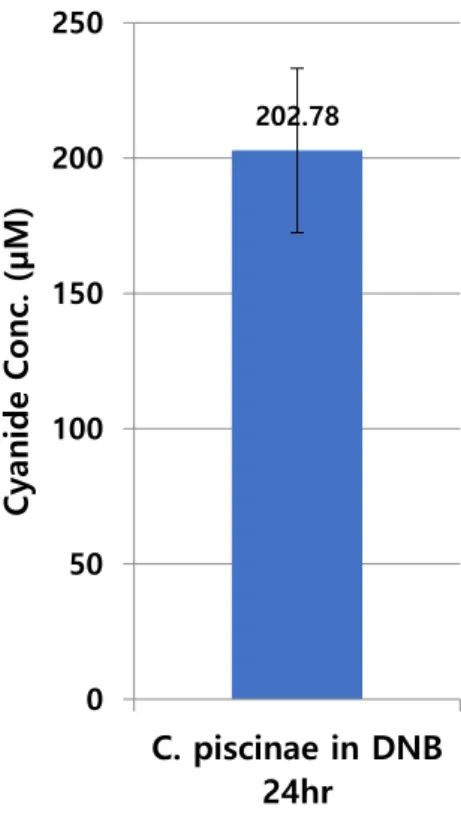
Figure 2.5. Average cyanide concentration produced by C. piscinae, cultured overnight in DNB, 15ml cultured in 50ml of Falcon tube.
With a method based on [46], it was continuously confirmed that production of cyanide by C.
piscinae was approximately 200μM. Cyanide is one of the secondary metabolites, so of course, it could easily change by culture condition including container, media, temperature, and so forth. In our test, culturing condition was constantly maintained and every cyanide concentration used in the experiment was measured to check if the concentration is similar as usual or not.
202.78
0 50 100 150 200 250
C. piscinae in DNB 24hr
Cyanide Conc. (µM)
24 2.4.6 Different concentration of Potassium Cyanide Inhibits HD100 predation
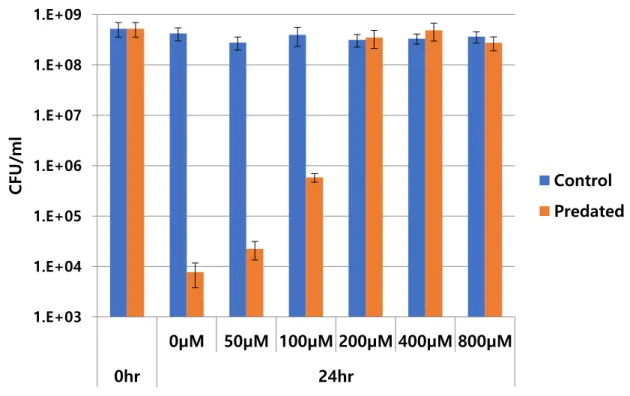
Figure 2.6. Predation with different concentration of cyanide by using KCN. At 0hr and 24hr after adding B. bacteriovorus HD100 was sampled. Different concentration of potassium cyanide used in the experiment is written in x-axis in the graph.
Overall preference of CFU of survived C. piscinae cells after 24hr predation by B.
bacteriovorus HD100 indicated that over 200μM of KCN can block B. bacteriovorus HD100 predation almost completely within 24hr, and this inhibitory effect was proportionally drops following with serially diluted concentration of KCN. Below 25μM of cyanide, the inhibitory effect was not significant. With this result above, it was certain that cyanide is the main effector in C. piscinae supernatant from DNB.
1.E+03 1.E+04 1.E+05 1.E+06 1.E+07 1.E+08 1.E+09
0µM 50µM 100µM 200µM 400µM 800µM
0hr 24hr
CFU/ml
Control Predated
25
2.5 Discussions
With results of experiments of this chapter, it is sure that C. piscinae can inhibit predation of B. bacteriovorus HD100 when C. piscinae is cultured with nutrient media, in this case, DNB. Its inhibitor exists in the supernatant, and some guessed candidates were set and tested. First, violacein was tested because this substance has an antimicrobial effect on S. aureus [48], and it is bisindole, supported by previous research telling indole can reduce motility of B. bacteriovorus [42].
Nevertheless, violacein showed no inhibition effect, so another experiment to find a clue of the candidate of effector was done: purging. 3L/min of nitrogen gas was purged into C. piscinae DNB supernatant, and it indicated reduced ability of inhibition, meaning that volatile compound is major effector in C. piscinae DNB supernatant. This result and the fact that bacteria in Chromobacterium produce cyanide in their metabolic pathway [49-51], we assumed that cyanide may major effector in the supernatant. In this context, cyanide concentration in C. piscinae supernatant was measured, telling that enough amount of cyanide is produced when C. piscinae is cultured in DNB to completely block B bacteriovorus HD100 predation in 24hr. The result of dose-dependent predation inhibitory effect of C. piscinae DNB supernatant was mimicked in the dose-dependent test with potassium cyanide, by using similar cyanide concentration with the supernatant.
Compounds included in NB (Nutrient Broth, NEOGEN) are 5g of enzymatic digest of gelatin and 3g of beef extract in one liter. DNB (Diluted Nutrient Broth) is ten-fold more diluted NB.
It is already studied that cyanide produced by C. violaceum is derived from the carbon in methylene and carbon dioxide in carboxyl group of glycine [50], and free glycine concentration. Free glycine concentration in DNB media is calculated as under 10mM at most, and at least about 5mM of glycine is used to make cyanide. It means most of glycine concentration is under cyanide-producing metabolic pathway. Amino acids in nature have various concentration by place and time, but for example of freshwater, free glycine concentration is about 1~2 ug/L in Huron River, Michigan [52]. So, direct comparison of cyanide concentration of C. piscinae between in DNB media (in vitro) and in nature is not capable, however, large amount and role of cyanide production have to be thought deeply.
26
Chapter 3. How Cyanide Changes HD100 Predation with Escherichia coli 3.1 Summary
To know limited steps of B. bacteriovorus HD100 predation by cyanide, major two steps of Bdellovibrio predation cycle were studied: initial attachment, and intraperiplasmic growth.
Experiment for motility was also done for researching about prey finding in the attack phase.
3.2 Introduction
As already stated and studied well, predation cycle of Bdellovibrio is divided into some steps including initial attachment to prey in attack phase, and intraperiplasmic growth (followed by septation) with making bdelloplast. Such that, it is important that studying about these two major steps, including motility. Motility of B. bacteriovorus has been researched about the function of scouting prey [53] and move to a prey-rich place by rotating a polar flagellum [54-56]. Therefore, prey-finding, invading, and growing inside prey steps were tested in the paper.
3.3 Materials and Methods
3.3.1 Motility test at initial stage of HD100 predation
Experiment method was based on [42]. Overnight cultured of B. bacteriovorus HD100 was prepared (liquid cultured at least twice before using in this experiment) and incubated in the absence or presence of 200μM potassium cyanide. It was incubated in a shaking incubator (250 rpm) at 30°C, and samples were taken over time and plated to count the active predatory B. bacteriovorus cells.
Cell^R (OLYMPUS, USA) microscope was used to take videos (each video was taken 25 sec).
3.3.2 Initial attachment of HD100 predation
Experiment method was based on [42]. Overnight cultured of B. bacteriovorus HD100 was prepared (liquid cultured at least twice before using in this experiment), and serially diluted potassium cyanide were made (1M -> 100mM -> 10mM -> 1.6mM -> 800μM -> 400μM -> 200μM -> 100μM -
> 50μM) in HEPES.
Overnight cultured E. coli MG1655 was centrifuged (15min, 1878 rcf) resuspended with HEPES buffer up to OD600~3.0, and overnight cultured B. bacteriovorus HD100 was also centrifuged at 4’C (10min, 16100 rcf) to make 2X concentrated HD100.
Experiments were done with 15ml Falcon tubes, to contain 1.8ml of potassium cyanide solutions, 100ul of concentrated E. coli MG1655, and 100ul of concentrated B. bacteriovorus HD100.
MOI was approximately 1. It was incubated in a shaking incubator (250 rpm) at 30°C. CFU and PFU of tubes were measured at initial time(0h) and 24hr later from incubation.
27 3.3.3 Intraperiplasmic growth of HD100 with cyanide
Experiment method was based on [42]. Overnight cultured of B. bacteriovorus HD100 with VENUS plasmid was prepared (liquid cultured at least twice before using in this experiment), and serially diluted potassium cyanide were made (1M -> 100mM -> 10mM -> 4mM -> 2mM -> 1mM) in HEPES, to be used as 20X potassium cyanide solutions in this experiment.
Overnight cultured E. coli MG1655 with RFP plasmid was centrifuged (15min, 1878 rcf) resuspended with HEPES buffer up to OD600~2.0, and overnight cultured B. bacteriovorus HD100 was also centrifuged at 4’C (10min, 16100 rcf) to make 2X concentrated HD100.
Experiments were done with 15ml Falcon tubes, to contain 1ml of concentrated E. coli MG1655 and 1ml of concentrated B. bacteriovorus HD100. MOI was approximately 1. It was incubated in a shaking incubator (250 rpm) at 30°C, and 20X potassium cyanide was added after 1hr incubation to make bdelloplast. Sampling was done at 0hr, 1hr, 3hr, and 6hr from start of incubation.
Microscopic images were taken with LSM780, in UNIST.
3.3.4 ATP pool test of HD100 with Cyanide
ENLITEN® ATP assay system bioluminescence detection kit for ATP measurement was used to observe ATP of initial(0h) B. bacteriovorus HD100, and ATP of control group added HEPES buffer and the experimental group added 200μM KCN, a similar concentration of C. piscinae DNB supernatant after 2hr incubation (250rpm, 30’C).
28 3.4 Results and discussions
3.4.1 Motility test at initial stage of HD100 predation
By comparing the speed of control group (incubated with HEPES buffer) and experimental group (incubated with 200μM of potassium cyanide) in taken video with IX81, it was clear that each group of B. bacteriovorus HD100 have different motility. Control groups showed normal motility, similar with as stated previous paper [42], and experimental group with 200μM of potassium cyanide showed obviously reduced motility, and somehow tumbled. As mentioned in other papers, motility of B. bacteriovorus has a role of finding prey [53] and move to prey-rich place by rotating a polar flagellum [54-56]. Such that, this kind of effect of cyanide for B. bacteriovorus could be assumed as decrease of prey-finding capacity and ability to move into the prey-rich region.
29 3.4.2 Initial attachment of HD100 predation
(A)
(B)
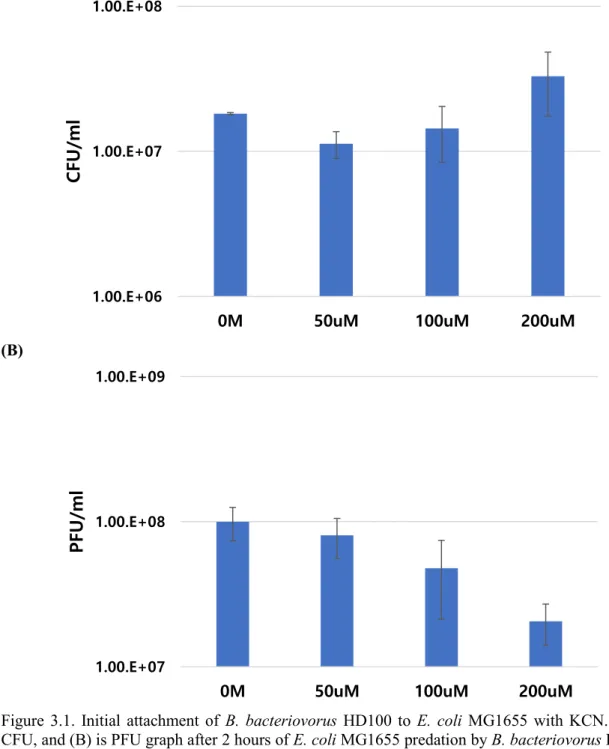
Figure 3.1. Initial attachment of B. bacteriovorus HD100 to E. coli MG1655 with KCN. (A) is CFU, and (B) is PFU graph after 2 hours of E. coli MG1655 predation by B. bacteriovorus HD100 inside KCN solution based HEPES buffer. (A) shows increasing preference of CFU, survived E.
coli MG1655 from BALO predation, proportional to cyanide concentration. (B) presents decreasing preference of PFU, progeny number of B. bacteriovorus HD100 by predation, with increasing cyanide concentration.
1.00.E+06 1.00.E+07 1.00.E+08
0M 50uM 100uM 200uM
CFU/ml
1.00.E+07 1.00.E+08 1.00.E+09
0M 50uM 100uM 200uM
PFU/ml
30 With increasing cyanide concentration, CFU value of E. coli MG1655 was increasing and PFU value of B. bacteriovorus HD100 was decreasing in 2hr of predation. It shows the ability of cyanide gave adverse effect for initial attachment, proportional to its concentration. Relating this result and Fig 3.1 with motility test (3.4.1) in this paper, we can know that attack phase of B.
bacteriovorus HD100 is surely affected by cyanide.
31 3.4.3 Intraperiplasmic growth of HD100 with cyanide
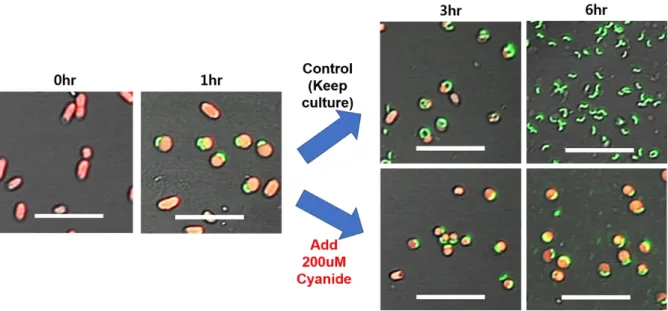
Figure 3.2. Intraperiplasmic growth of B. bacteriovorus HD100 with potassium cyanide. Prey is E.
coli MG1655 with RFP plasmid (shown as red), and predator is B. bacteriovorus HD100 with VENUS plasmid (shown as green). The size of scale bar is 10μm. The picture at 0hr incubation shows prey only, and at 1hr just presents well-formed bdelloplasts by HD100. Then potassium cyanide was added for experimental group to make final 200μM concentration, and the same volume of HEPES buffer was put in the control group.
As for showing in Fig 3.1, the control group showed elongated predator inside of host at 3hr, and lysed-out predator could be seen at 6hr incubation picture. By contrast, experimental group with 200μM of potassium cyanide showed very delayed growth-actually almost no change of growth both at 3hr and 6hr. With this result, it is assumed that effect of cyanide would give influence on the intraperiplasmic step in predation cycle of Bdellovibrio.
3.4.4 ATP pool test of HD100 with Cyanide
With the 2hr exposure of 200μM cyanide with attack phase HD100 without prey cell, ATP level was reduced. The relative percentage of the 2h experimental group compared to 2h control group was 64.17%, although overall ATP measurement showed huge standard deviation. Nevertheless, it means ATP of HD100 quite decreased with 200μM of cyanide.
32
References
1. Williams, P., et al., Look who's talking: communication and quorum sensing in the bacterial world. Philos Trans R Soc Lond B Biol Sci, 2007. 362(1483): p. 1119-34.
2. Karlson, P. and M. Luscher, Pheromones': a new term for a class of biologically active substances. Nature, 1959. 183(4653): p. 55-6.
3. Fuqua, W.C., S.C. Winans, and E.P. Greenberg, Quorum sensing in bacteria: the LuxR-LuxI family of cell density-responsive transcriptional regulators. J Bacteriol, 1994. 176(2): p. 269- 75.
4. Waters, C.M. and B.L. Bassler, Quorum sensing: cell-to-cell communication in bacteria.
Annu Rev Cell Dev Biol, 2005. 21: p. 319-46.
5. Polkade, A.V., et al., Quorum Sensing: An Under-Explored Phenomenon in the Phylum Actinobacteria. Frontiers in microbiology, 2016. 7.
6. Bainton, N., et al., N-(3-oxohexanoyl)-L-homoserine lactone regulates carbapenem antibiotic production in Erwinia carotovora. Biochemical Journal, 1992. 288(3): p. 997-1004.
7. Recio, E., et al., PI factor, a novel type quorum-sensing inducer elicits pimaricin production in Streptomyces natalensis. Journal of Biological Chemistry, 2004. 279(40): p. 41586-41593.
8. Takano, E., γ-Butyrolactones: Streptomyces signalling molecules regulating antibiotic production and differentiation. Current opinion in microbiology, 2006. 9(3): p. 287-294.
9. Liu, G., et al., Molecular regulation of antibiotic biosynthesis in Streptomyces. Microbiology and Molecular Biology Reviews, 2013. 77(1): p. 112-143.
10. Gottelt, M., et al., Characterisation of a natural variant of the γ-butyrolactone signalling receptor. BMC research notes, 2012. 5(1): p. 379.
11. KIM, H.S., et al., Identification of binding protein of virginiae butanolide C, an autoregulator in virginiamycin production, from Streptomyces virginiae. The Journal of antibiotics, 1989. 42(5): p. 769-778.
12. Willey, J.M. and A.A. Gaskell, Morphogenetic signaling molecules of the streptomycetes.
Chemical reviews, 2010. 111(1): p. 174-187.
13. Broderick, K.E., et al., Cyanide produced by human isolates of Pseudomonas aeruginosa contributes to lethality in Drosophila melanogaster. Journal of Infectious Diseases, 2008.
197(3): p. 457-464.
14. Jander, G., L.G. Rahme, and F.M. Ausubel, Positive correlation between virulence ofPseudomonas aeruginosa mutants in mice and insects. Journal of bacteriology, 2000.
182(13): p. 3843-3845.
15. Gallagher, L.A. and C. Manoil, Pseudomonas aeruginosa PAO1 killsCaenorhabditis elegans by cyanide poisoning. Journal of bacteriology, 2001. 183(21): p. 6207-6214.
16. Darby, C., et al., Lethal paralysis of Caenorhabditis elegans by Pseudomonas aeruginosa.
Proceedings of the National Academy of Sciences, 1999. 96(26): p. 15202-15207.
33 17. Pessi, G. and D. Haas, Transcriptional Control of the Hydrogen Cyanide Biosynthetic Genes hcnABC by the Anaerobic Regulator ANR and the Quorum-Sensing Regulators LasR and RhlR inPseudomonas aeruginosa. Journal of Bacteriology, 2000. 182(24): p. 6940-6949.
18. Castric, P.A., Hydrogen cyanide, a secondary metabolite of Pseudomonas aeruginosa.
Canadian Journal of Microbiology, 1975. 21(5): p. 613-618.
19. Voisard, C., et al., Biocontrol of root diseases by Pseudomonas fluorescens CHA0: current concepts and experimental approaches. Molecular Ecology of Rhizosphere Microorganisms:
Biotechnology and the Release of GMOs, 1994: p. 67-89.
20. Flury, P., et al., Antimicrobial and Insecticidal: Cyclic Lipopeptides and Hydrogen Cyanide Produced by Plant-Beneficial Pseudomonas Strains CHA0, CMR12a, and PCL1391 Contribute to Insect Killing. Frontiers in microbiology, 2017. 8.
21. Dursun, A., A. Çalık, and Z. Aksu, Degradation of ferrous (II) cyanide complex ions by Pseudomonas fluorescens. Process biochemistry, 1999. 34(9): p. 901-908.
22. Faramarzi, M.A. and H. Brandl, Formation of water-soluble metal cyanide complexes from solid minerals by Pseudomonas plecoglossicida. FEMS microbiology letters, 2006. 259(1): p.
47-52.
23. Castric, P.A., Glycine metabolism by Pseudomonas aeruginosa: hydrogen cyanide biosynthesis. Journal of Bacteriology, 1977. 130(2): p. 826-831.
24. Knowles, C.J. and A.W. Bunch, Microbial cyanide metabolism. Advances in microbial physiology, 1986. 27: p. 73-111.
25. Blumer, C. and D. Haas, Mechanism, regulation, and ecological role of bacterial cyanide biosynthesis. Archives of Microbiology, 2000. 173(3): p. 170-177.
26. Laville, J., et al., Characterization of the hcnABC gene cluster encoding hydrogen cyanide synthase and anaerobic regulation by ANR in the strictly aerobic biocontrol agent Pseudomonas fluorescens CHA0. Journal of Bacteriology, 1998. 180(12): p. 3187-3196.
27. Vennesland, B., E. Pistorius, and H. Gewitz, HCN production by microalgae. Cyanide in biology/edited by B. Vennesland...[et al.], 1981.
28. Wissing, F., Cyanide formation from oxidation of glycine by a Pseudomonas species.
Journal of bacteriology, 1974. 117(3): p. 1289-1294.
29. Hespell, R.B., et al., Respiration of Bdellovibrio bacteriovorus strain 109J and its energy substrates for intraperiplasmic growth. Journal of bacteriology, 1973. 113(3): p. 1280-1288.
30. Seidler, R.J. and M.P. Starr, Isolation and characterization of host-independent bdellovibrios.
Journal of bacteriology, 1969. 100(2): p. 769-785.
31. Friedberg, D. and I. Friedberg, Membrane-associated, energy-linked reactions in Bdellovibrio bacteriovorus. Journal of bacteriology, 1976. 127(3): p. 1382-1388.
32. Ruby, E. and J. McCabe, An ATP transport system in the intracellular bacterium, Bdellovibrio bacteriovorus 109J. Journal of bacteriology, 1986. 167(3): p. 1066-1070.
33. Ruby, E. and S. Rittenberg, Attachment of diaminopimelic acid to bdelloplast
34 peptidoglycan during intraperiplasmic growth of Bdellovibrio bacteriovorus 109J. Journal of bacteriology, 1984. 158(2): p. 597-602.
34. Soo, R.M., et al., Back from the dead; the curious tale of the predatory cyanobacterium Vampirovibrio chlorellavorus. PeerJ, 2015. 3: p. e968.
35. Pasternak, Z., et al., In and out: an analysis of epibiotic vs periplasmic bacterial predators.
The ISME journal, 2014. 8(3): p. 625-635.
36. Lambert, C., et al., The first bite—profiling the predatosome in the bacterial pathogen Bdellovibrio. PloS one, 2010. 5(1): p. e8599.
37. Jurkevitch, E., The genus Bdellovibrio, in The prokaryotes. 2006, Springer. p. 12-30.
38. Velicer, G.J. and H. Mendes-Soares, Bacterial predators. Current Biology, 2009. 19(2): p.
R55-R56.
39. Williams, H., et al., Recovery of bdellovibrios from submerged surfaces and other aquatic habitats. Microbial ecology, 1995. 29(1): p. 39-48.
40. Richards, G.P., et al., Predatory bacteria as natural modulators of Vibrio parahaemolyticus and Vibrio vulnificus in seawater and oysters. Applied and environmental microbiology, 2012. 78(20): p. 7455-7466.
41. Schwudke, D., et al., Taxonomic studies of predatory bdellovibrios based on 16S rRNA analysis, ribotyping and the hit locus and characterization of isolates from the gut of animals. Systematic and applied microbiology, 2001. 24(3): p. 385-394.
42. Dwidar, M., D. Nam, and R.J. Mitchell, Indole negatively impacts predation by Bdellovibrio bacteriovorus and its release from the bdelloplast. Environmental microbiology, 2015.
17(4): p. 1009-1022.
43. Dashiff, A., T.G. Keeling, and D.E. Kadouri, Inhibition of predation by Bdellovibrio bacteriovorus and Micavibrio aeruginosavorus via host cell metabolic activity in the presence of carbohydrates. Applied and environmental microbiology, 2011. 77(7): p. 2224- 2231.
44. Mukherjee, S., et al., Visualizing Bdellovibrio bacteriovorus by using the tdTomato fluorescent protein. Applied and environmental microbiology, 2016. 82(6): p. 1653-1661.
45. Wrede, F. and W. Swane, Über das Violacein, den violetten Farbstoff des Bacillus violaceus.
Naunyn-Schmiedeberg's Archives of Pharmacology, 1937. 186(2): p. 532-538.
46. Blom, D., et al., Volatile-mediated killing of Arabidopsis thaliana by bacteria is mainly due to hydrogen cyanide. Applied and environmental microbiology, 2011. 77(3): p. 1000-1008.
47. Guilbault, G.G. and D.N. Kramer, Ultra sensitive, specific method for cyanide using p- nitrobenzaldehyde and o-dinitrobenzene. Analytical Chemistry, 1966. 38(7): p. 834-836.
48. Cazoto, L.L., et al., Antibacterial activity of violacein against Staphylococcus aureus isolated from bovine mastitis. Journal of Antibiotics, 2011. 64(5): p. 395.
49. Brysk, M.M., C. Lauinger, and C. Ressler, Biosynthesis of cyanide from [2-14C15N] glycine in chromobacterium violaceum. Biochimica et Biophysica Acta (BBA)-General Subjects,
35 1969. 184(3): p. 583-588.
50. Bunch, A.W. and C.J. Knowles, Production of the secondary metabolite cyanide by extracts of Chromobacterium violaceum. Microbiology, 1982. 128(11): p. 2675-2680.
51. Nazly, N., P. Collins, and C. Knowles, Cyanide production by harvested Chromobacterium violaceum. Cyanide in Biology, 1981. 289: p. 299.
52. Lee, J.H., et al., Cyanogen chloride precursor analysis in chlorinated river water.
Environmental science & technology, 2006. 40(5): p. 1478-1484.
53. Lambert, C., et al., Predatory Bdellovibrio bacteria use gliding motility to scout for prey on surfaces. Journal of bacteriology, 2011. 193(12): p. 3139-3141.
54. Iida, Y., et al., Roles of multiple flagellins in flagellar formation and flagellar growth post bdelloplast lysis in Bdellovibrio bacteriovorus. Journal of molecular biology, 2009. 394(5): p.
1011-1021.
55. Lambert, C., et al., Characterizing the flagellar filament and the role of motility in bacterial prey‐penetration by Bdellovibrio bacteriovorus. Molecular microbiology, 2006. 60(2): p.
274-286.
56. Thomashow, L.S. and S.C. Rittenberg, Isolation and composition of sheathed flagella from Bdellovibrio bacteriovorus 109J. Journal of bacteriology, 1985. 163(3): p. 1047-1054.