67 Figure 5.5.TEQ contribution of PCDD/Fs and dl-PCBs based wet weight in fishery products. 69 Figure 6.1. Levels of Σ17PCDD/Fs and Σ12PCBs based wet weight in agricultural products (pg-TEQ/g. wet weight).
Introduction
- Research background
- Arsenic
- Dioxins and dioxin-like compound
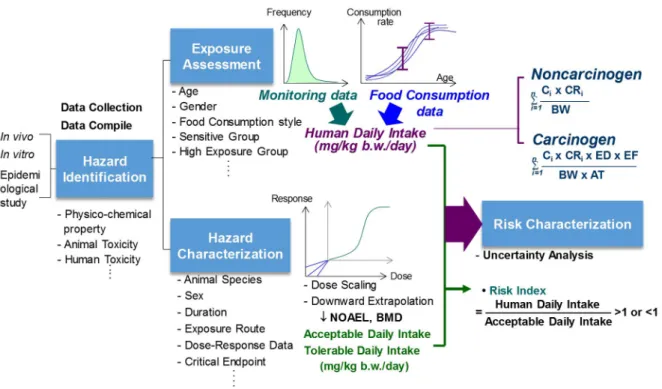
- Risk assessment
- Objective of this study
An exposure assessment is an estimate of the likely amount of human exposure through systematic and accurate environmental monitoring. Arsenic toxic pollutants such as PCDD/F and dioxin-like PCBs are widespread and persistent pollutants in the environment.
An improved rapid analytical method for the arsenic speciation
- Abstract
- Introduction
- Materials and methods
- Standards and reagents
- Instrumentation
- Preparation of marine samples
- Method validation and real sample analysis
- Results and discussion
- Optimization of the instrumental settings
- Optimization of the extraction process
- Method validation
- Real sample analysis using the proposed optimal method
- Conclusions
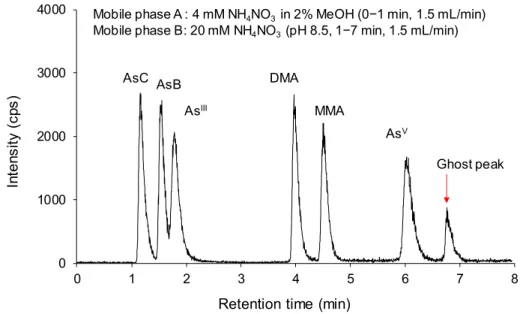
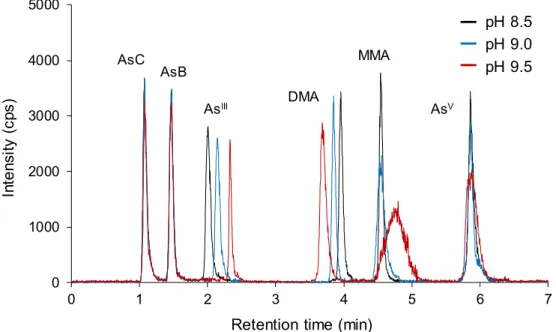
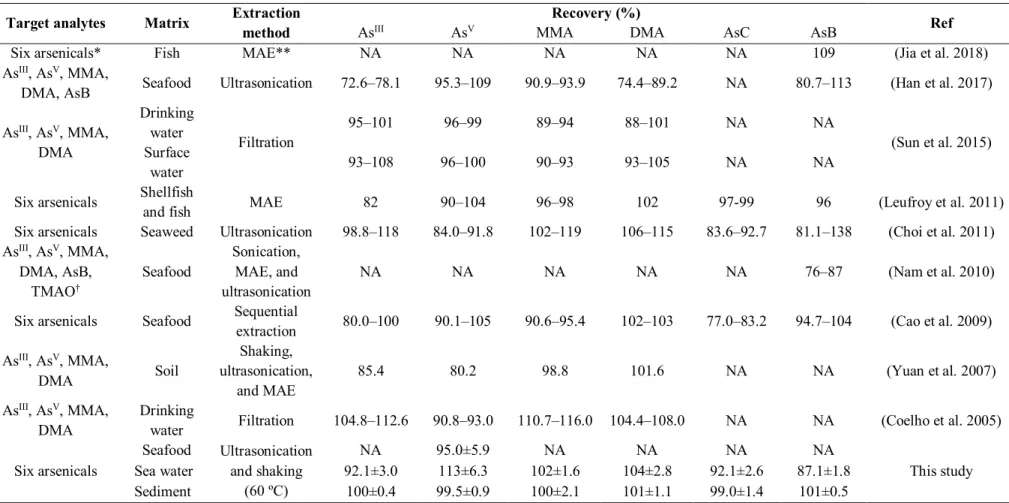
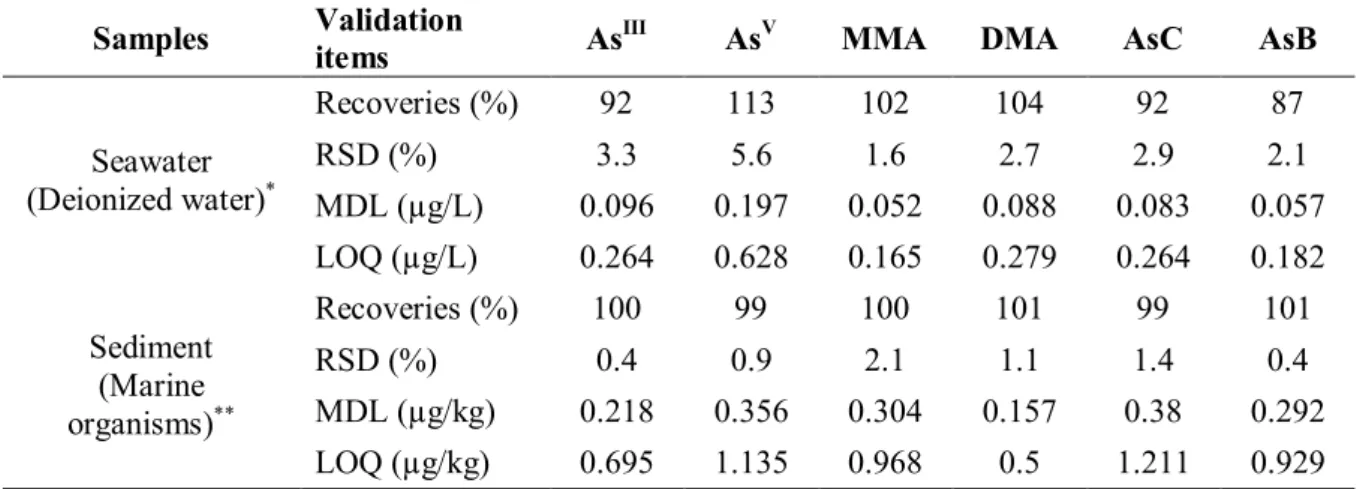
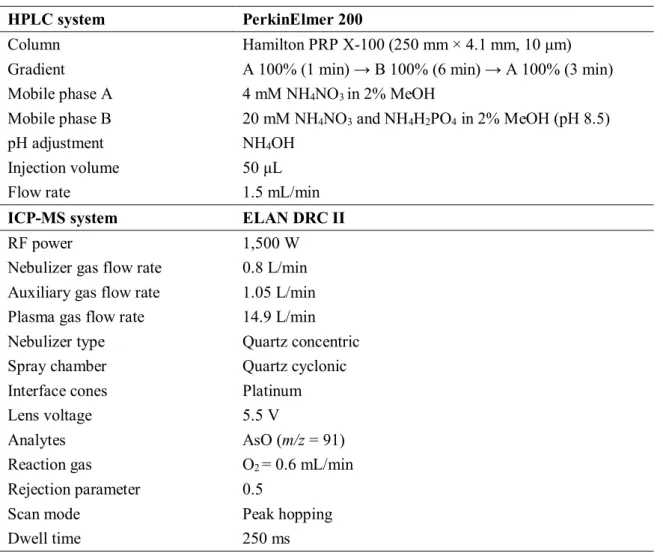
The choice of the extraction solvent is also important because it can affect the extraction efficiency and retention time of individual arsenicals in a chromatogram (Choi et al. 2011; Francesconi and Kuehnelt 2004). Previous studies have reported that the optimal pH of the mobile phase for arsenic analysis ranges from 8 to 10 (Contreras-Acuña et al., 2013; Schmidt et al., 2017).
Distribution characteristics of arsenic speciation and health risk
- Abstract
- Introduction
- Materials and methods
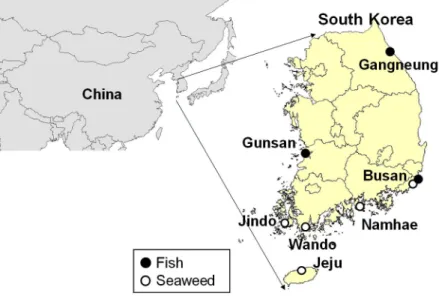
- Sample collection and preparation
- Pretreatment and instrumental analysis
- Results and discussion
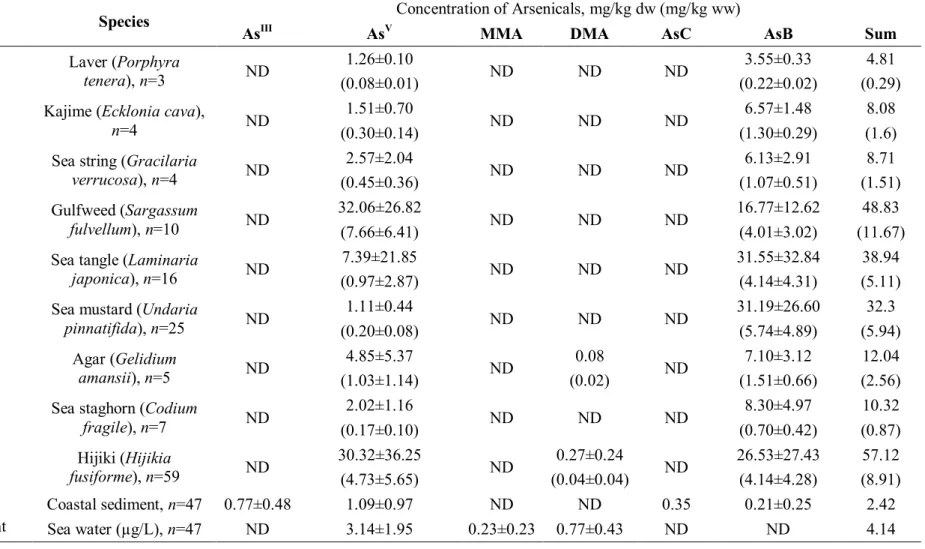
- Total arsenic and arsenical concentration in seaweed
- Levels and patterns of arsenicals in fish
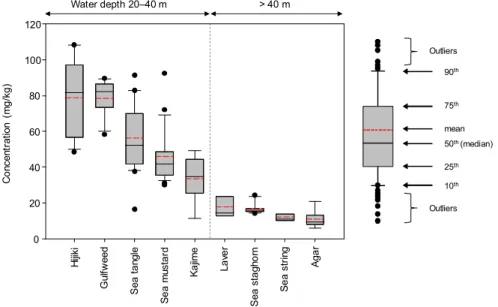
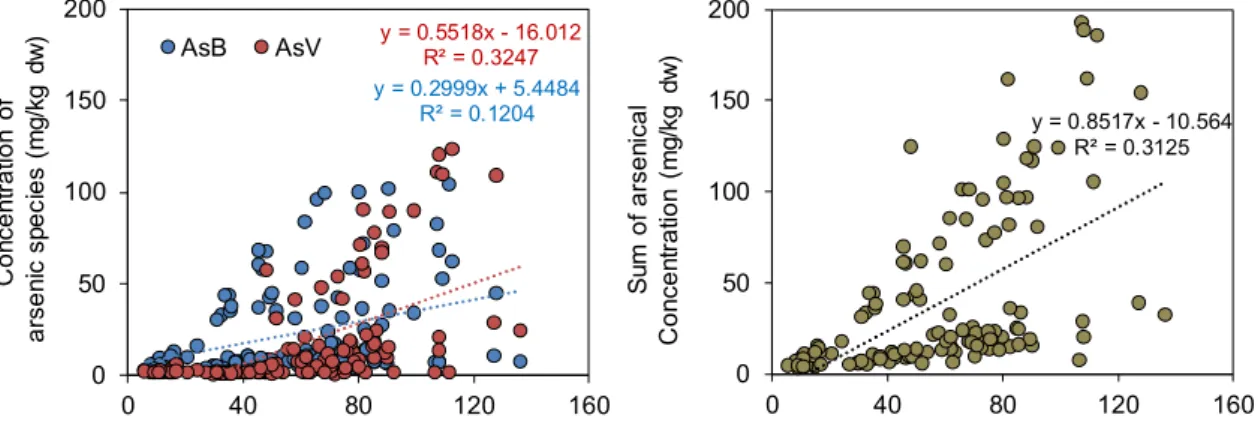
- Evaluation of contamination patterns
- Contamination by habitat and feeding
- Conclusions
The main sources of arsenic and arsenic compounds are agriculture, mining and industry, for example the production of wood preservatives, herbicides and insecticides, purification and recovery of electrolytes, fining agents and decolorizing agents. The average total arsenic concentration in freshwater fish (1,541 ng As/g ww) is 20 times higher than that in marine fish (76 ng As/g ww). In this study, concentrations of As were determined in the 37 most consumed agricultural products in Korea.
Procedural gaps were analyzed in the determination process to assess background levels of PCDD/Fs and dl-PCBs. As concentrations in seaweed varied based on the origin of the beach samples.
Dietary exposure to arsenic species in agricultural products
Abstract
Arsenic (As) pollution in agricultural products originates from both natural processes and anthropogenic activities, such as mining, smelting, coal burning and arsenic-based pesticides. Inorganic arsenic (arsenite [AsIII] and arsenate [AsV]) is known to be more toxic than organic arsenic. Therefore, the concentration of total As cannot accurately describe the toxicity of As in the environment.
In this study, six arsenics were analyzed in major agricultural products (crops, fruits and vegetables), which are a large part of the Korean diet. A total of 150 individual samples representing 37 different agricultural products were purchased from local markets in three cities (Seoul, Gwangju and Gangneung) in South Korea.
Introduction
Food Safety Authority (EFSA) published the standard at 6 mg/kg for organic As and 2 mg/kg for inorganic As. FAO/WHO has the safety assessment for Ash intake through food at 15 μg/kg bw/week for highly toxic inorganic Ash, and recently in developed countries, arsenic is a highly dangerous chemical for the human body due to its carcinogenic and general toxicity. In the United States, the priority list of hazardous chemicals is drawn up and managed, and as no.
However, since the exact standards for inorganic and organic As have not yet been established in Korea. Thus, this method may be useful for comprehensive monitoring of arsenic contamination in agricultural products.
Materials and methods
- Collection of agricultural samples
- Sample digestion and analysis
- Health risk assessment of food consumption
- Quality control and data analysis
In 2001, the Environmental Protection Agency (EPA) increased the permissible level of arsenic in drinking water from 50 ppb to 10 ppb due to the high cancer risk of As, focusing on improving existing As treatment techniques and developing innovative treatment technologies. As concentration was quantified using the method described in a previous study (Park et al., 2019). Six forms of As, including arsenite (AsIII), arsenate (AsV), dimethylarsinic acid (DMA), monomethylarsonic acid (MMA), arsenobetaine (AsB) and arsenocholine (AsC), were separated on an anion exchange column (Hamilton PRP X-100 ). , 250 mm × 4.1 mm, 10 μm particle, USA).
Detailed information on the reagents and solutions used for HPLC/ICP-MS can be found in Section 2.3.1 in Chapter II. The hazard quotient (HQ) was introduced to evaluate the potential non-carcinogenic risk of As exposure through seaweed ingestion.

Results and discussion
- Comparing arsenical levels among different agricultural products
- Arsenic species in agricultural products
- Chronic daily intake and hazard quotient
Among the As species, the concentrations of inorganic As (AsIII and AsV) were relatively high and dominated in the agricultural products. The CDI for agricultural products was calculated for age based on the equations in section 4.3.3. When HQ ≤ 1.0, the risk of metals from agricultural products is lower than the RfD, indicating little health risk.
Arsenic concentrations in all agricultural products were low and within the maximum permissible limits set by FAO/WHO (JECFA, 2016). According to the results in this study, based on CDI and HQ, the risk of metal exposure through the consumption of the 5 most consumed agricultural products is likely to be of limited concern.

Conclusions
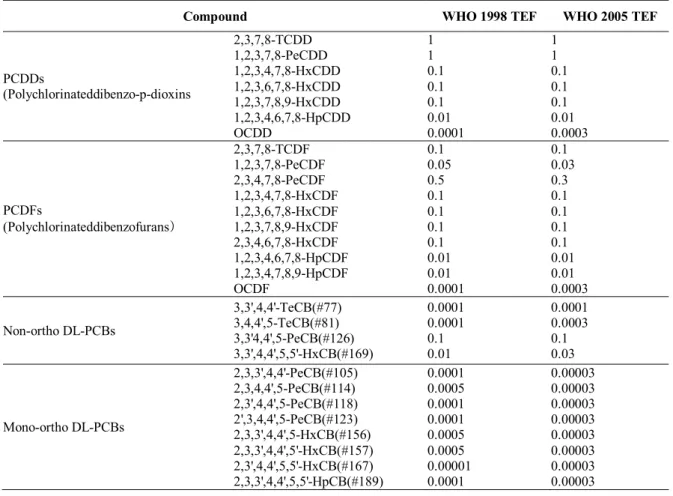
For risk assessment, toxicity equivalents (TEQ) values for PCDD/Fs and dl-PCBs were calculated with concentrations of each pollutant. However, the highest concentrations of PCDD/Fs and dl-PCBs were found in internal organs of Polinices didyma (Whelk), Portunus trituberculatus (Swimming crab) and Todarodes pacificus (Squid) (Fig. 5.6). Characteristics of PCDD/Fs and dl-PCBs concentration in species (swimming crab, snow crab, abalone, battle shell, snail, turban shell, long arm squid).
Estimated daily intake of PCDD/Fs and dl-PCBs in fishery products (pg-TEQ/kg body weight/day). Estimated daily intake of PCDD/Fs and dl-PCBs in agricultural products (pg-TEQ/kg body weight/day).
Contamination characteristics of dioxins and dioxin-like
Abstract
Using high-resolution gas chromatography/mass spectrometry, 17 PCDD/Fs and 12 dl-PCBs congeners in the edible part and internal organs of fishery products were analyzed. All 17 toxic PCDD/F congeners were detected in all samples and the amounts of PCDFs were higher than those of PCDDs. It should be noted that the concentrations of target compounds in the internal organs of some species were higher than those of edible parts.
Because the internal organs of these products were edible for Koreans, the TEQ values of these species were higher than those of other products. Crab species were a significant contributor to exposure to PCDD/Fs and dl-PCBs, indicating a health risk for consumers.
Introduction
However, average dietary habits cannot accurately indicate exposure for the extreme (95th percentile) group and specific subgroups (eg, age, pregnancy, and lactation). Estimates for each age group, as well as the general population, were performed separately to assess subgroup risk (Moon and Choi, 2009). To show the difference in results between subgroups, socioeconomic factors were also presented for detailed discussion.
Additionally, potential health risks were also suggested for providing quantitative information such as neurotoxic equivalent, consumption limit and potential cancer risk. In this study, aquatic products were investigated based on dietary exposure to PCDD/Fs and dl-PCBs in Korea after sampling seafood from markets (Busan, Gwangju, Gangneung, Gunsan, and Pohang).
Materials and methods
- Sampling
- Analytical procedure
- Calculation of TEQs
- Quality assurance/quality control (QA/QC)
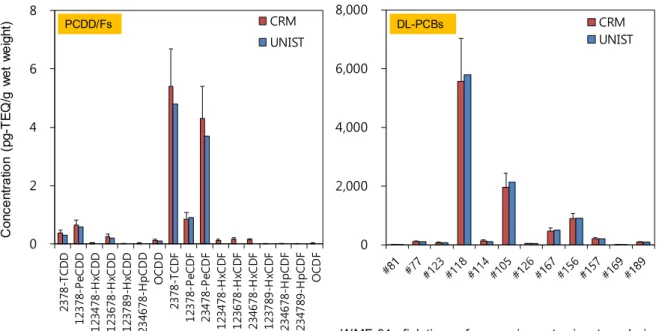
The PTS test is used for examination in the intralaboratory test by taking the same samples and verifying the degree of our laboratory's ability through comparison. In this study, fish samples provided by the UNEP (United Nations Environment Programme) Intra-Laboratory Evaluation of Stockholm Convention POPs and the NIPH (Norwegian Institute of Public Health) Intra-Laboratory Comparative Study were selected and investigated. laboratory on Determination of POPs in food and all results belonged to the average group as PTS test.
Results and discussion
- Level of PCDD/Fs and DL-PCBs
- Estimated daily intake of PCDD/Fs and DL-PCBs
Wet weight-based levels of Σ17PCDD/F and Σ12PCB in fishery products (pg/g wet weight). Wet weight-based levels of Σ17PCDD/F and Σ12dl-PCB in fishery products (pg-TEQ/g wet weight). In previous monitoring studies of dioxin-like compounds in Korea, these fishery products (such as crustaceans and molluscs) were found to be highly contaminated by PCDD/Fs and dl-PCBs.
The estimated daily dietary intake of PCDD/Fs and dl-PCBs based on both the mean and the extreme intake data (95 percentile) did not exceed the EDI in all considered groups (Table 5.1). In our study, the estimated daily intake of PCDDs and dl-PCBs could be calculated using the intake of fishery products for each gender and age group.

Conclusions
Contaminant characteristics of dioxins and dioxin-like polychlorinated biphenyls in agricultural products and exposure through dietary intake of. Because consumers cannot reduce the PCDD/Fs and dl-PCB concentration in the food, the intake data is the only factor under the consumers' control. Polychlorinated dibenzo-p-dioxins (PCDDs), dibenzofurans (PCDFs) and polychlorinated biphenyls (PCBs) were registered as persistent organic pollutants (POPs) in the Stockholm Convention in 2001.
Based on the results, the daily dietary exposure and risk assessment was performed using seafood consumption data from the Korean population. Estimated dietary intake and risk assessment of polychlorinated dibenzo-p-dioxins and dibenzofurans and dioxin-like polychlorinated biphenyls from fish consumption in the Korean general population.
Contamination characteristics of dioxins and dioxin-like
Abstract
Polychlorinated dibenzo-p-dioxins and dibenzofurans (PCDD/Fs) are well-known hazardous substances that arise from three main processes: processes derived from other similar chemicals, combustion processes such as smoke from factories and exhaust gases from cars and manufacturing processes. In addition, it is imperative to monitor pollution because it relates to human health through air inhalation and dietary intake of foods originating from environmental media such as soil, sediment and water. The selected items of agricultural products did not cover the dietary habits of the entire population because it was selected specific food group, but larger food groups such as agriculture, livestock, fishing and processed foods.
In addition, we examined how the different pollutants (eg PCDD/Fs and dl-PCBs) are distributed by age to account for dietary habits. These results indicate that food intake is the most important route for pollutants and it can be influenced by dietary habits of populations based on socioeconomic factors.
Introduction
However, dl-PCB is considered to be one of the pollutants originating from the environment, so there will be regional differences in high levels of pollution. However, some species had the carcinogenic health endpoint consumption limit, in the case of PCDD/Fs. AsB was found as the dominant As species in most of the fish samples examined, consistent with the reports in freshwater and marine fish.
To evaluate the contamination levels in various food products in the Korean market and to evaluate the dietary exposure of the Korean population, 43 varieties of agricultural product groups from a total of 240 samples were evaluated. Dioxins, dioxin-like PCBs and non-dioxin-like PCBs in food: occurrence and dietary intake in the Netherlands.
Materials and methods
- Sampling
- Instrumental analysis and QA/QC
Results and discussion
- Dioxin like compound contamination in agricultural samples
- Exposure effects of POPs on agricultural products
Discussion
Given that most existing assessments have overlooked the benefits of consuming agricultural products, a comprehensive and effective assessment of the health risks and benefits of consuming agricultural products was attempted based on the FAO/WHO survey. The aim of this study was to provide information and advice on human exposure to PCDD/F and dl-PCBs through food consumption by analyzing different agricultural foods.
Summary and conclusions
Inductively coupled plasma mass spectrometry (ICP-MS) was used for the determination of total As, and high-performance liquid chromatography (HPLC) coupled to ICP-MS was used for As speciation. Arsenic and its speciation analysis using high-performance liquid chromatography and inductively coupled plasma mass spectrometry. Speciation of arsenic in seafood (Anemonia sulcata) by liquid chromatography coupled to inductively coupled plasma mass spectrometry and organic mass spectrometry.
Arsenic and its speciation in water samples by inductively coupled plasma mass spectrometry with high performance liquid chromatography - Review of the last decade. An improved rapid analytical method for arsenic speciation analysis of marine environmental samples using high-performance liquid chromatography/inductively coupled plasma mass spectrometry.