First, different proportions of modified sulfur compositions were developed by replacing a portion of the modified sulfur polymer with fly ash and rubber powder. The modified sulfur composites consisted of a binary cement of calcium sulfoaluminate (CSA) expansion agent and Portland cement, superabsorbent polymer (SAP) powder, and fine aggregate.
Introduction
- Problem Statement and Motivation
- Academic Backgrounds for Modified Sulfur Concrete
- Objectives of This Work
- Outline of This Work
Typical composition of the modified sulfur concrete is completely different from Portland cement concrete. The main advantage of modified sulfur concrete is an excellent long-term durability compared to Portland cement concrete.
![Figure 1-1: World sulfur production and the change in prices of sulfur from 1990 to 2008 [3]](https://thumb-ap.123doks.com/thumbv2/123dokinfo/10516956.0/22.892.153.744.244.566/figure-world-sulfur-production-change-prices-sulfur-1990.webp)
Overview of Sulfur Polymer and Experimental Techniques
Modified Sulfur Polymer
- Mechanism
- Types
- Modification conditions
As the fly ash ratio increased, the compressive strength of the sulfur composites generally increased, regardless of the amount of rubber powder. The increase in the rubber powder ratio generally caused a reduction in the compressive strength of the sulfur polymer composites (Figs. 4-5).
![Figure 2-1: Effects of various modifiers on the compositions of modified sulfur [18].](https://thumb-ap.123doks.com/thumbv2/123dokinfo/10516956.0/30.892.213.682.494.917/figure-effects-various-modifiers-compositions-modified-sulfur-18.webp)
Dicyclopentadiene-Modified Sulfur Polymer
- Chemical composition
- Viscosity
- Limitations
Experimental Techniques
- Compression test
- Powder X-ray diffraction
- Mercury intrusion porosimetry
- Scanning electron microscopy
- Fourier-transform infrared spectroscopy
All powdered samples were not solvent exchanged as no water was present in the mixtures. The pore size distributions and total porosities (i.e., total pore volumes) of the samples were measured using a MIP (Auto Pore IV 9500, Micromeritics, USA).
Sustainable Sulfur Composites with Enhanced Strength and Lightweightness Using Waste
Introduction
This study introduced rubber powder and fly ash as effective components of SPC to replace aggregate and improve the properties of sulfur composites. In this study, mechanical and microstructural tests were conducted to investigate the effects of rubber powder and fly ash on the strength, density and microstructure of sulfur composites.
Experimental Program
- Materials
- Mix proportions
- Test methods
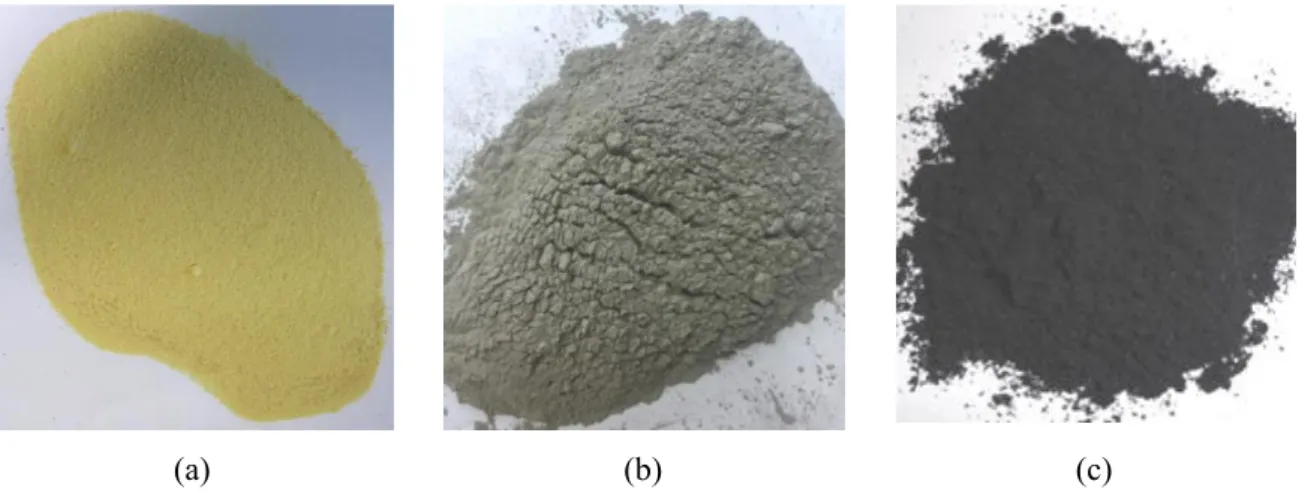
The rest except rubber dust and fly ash corresponds to modified sulphur. The particle size distributions of fly ash and rubber dust were determined using a laser diffraction particle size analyzer (Sympatec HELOS, Germany).
Results and Discussion
- Characterization of raw materials
- Compressive strength
- Density
- Crystalline phase transition (XRD)
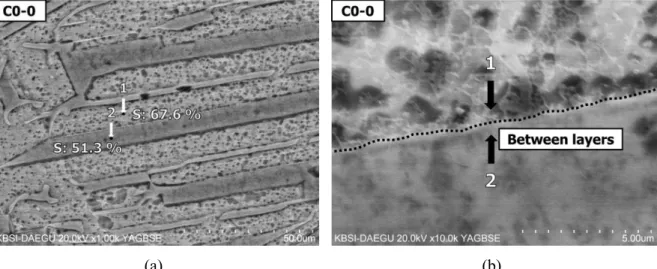
- Morphological transition (SEM BSE/EDS)
- Porosity (MIP)
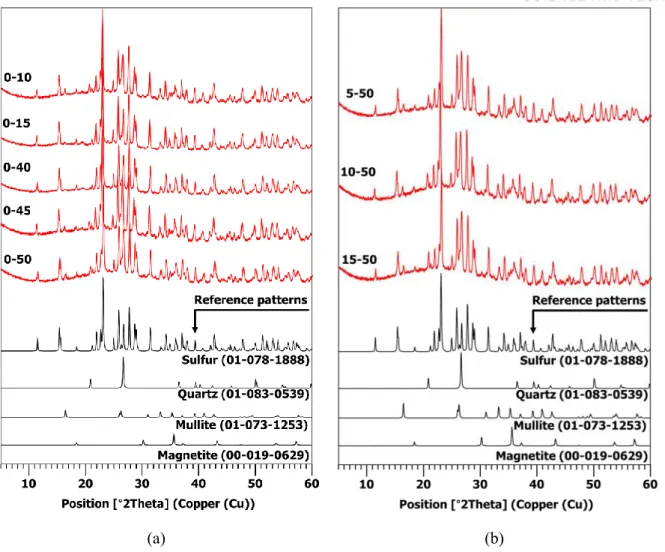
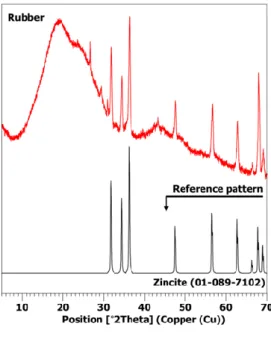
The optimum content of rubber powder for the compressive strength was highly dependent on the content of fly ash. The purpose of the XRD tests was to investigate the effects of rubber powder and fly ash on the reaction products of sulfur compounds.
Conclusions
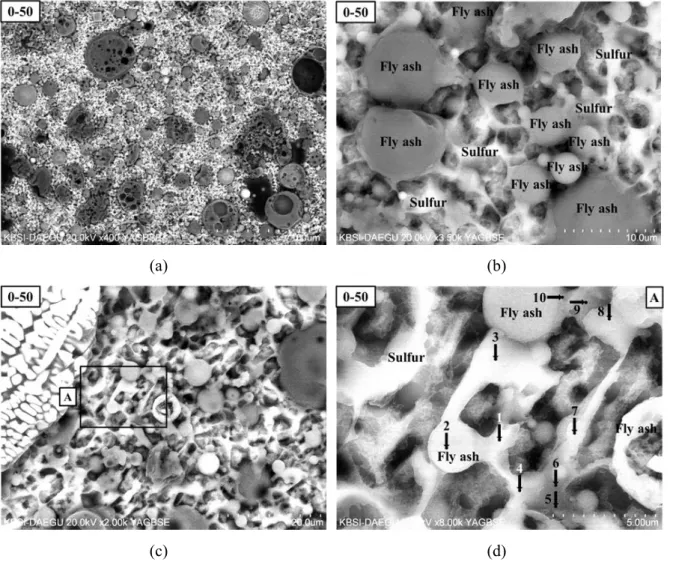
The density of sulfur composites decreased well below 1,900 kg/m3 as the rubber powder ratio increased, due to the lower specific gravity of rubber. Because fly ash was used in a higher ratio (e.g., 45%), the microstructure of the sulfur matrix was completely changed, and this morphological evolution likely provided a substantial benefit to the strength development of sulfur composites. The sulfur composites had very low total porosity, and the use of fly ash generally reduced the total porosity of sulfur composites.
It was likely that the strength increase of sulfur composites with the use of fly ash resulted from the reduction of small pores.
Strength and Microstructural Characteristics of Sulfur Polymer Composites Containing
- Introduction
- Experimental Program
- Materials
- Mix proportions
- Production of specimens
- Test methods
- Results and Discussions
- Characterization of raw materials
- Compressive strength
- Crystalline phase transition (XRD)
- Morphological transition (SEM BSE/EDS)
- Chemical bond (FT-IR)
- Conclusions
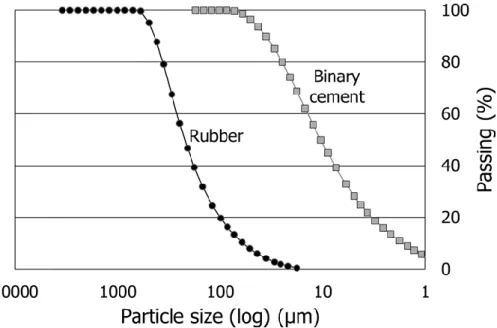
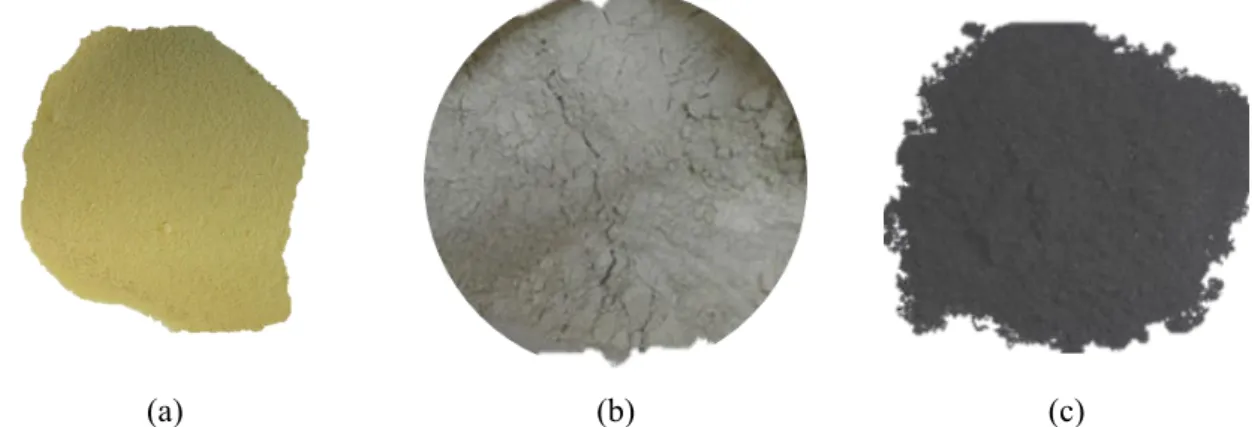
The particle size distributions of the binary cement and rubber powder were determined using a laser diffraction particle size analyzer (Sympatec HELOS, Germany). The compressive strength of the sulfur polymer composites generally increased as the binary cement ratio increased up to 40% (Figs. 4-5). The mixtures without rubber powder showed the fastest growth in compressive strength from the increase in the binary cement ratio.
It appears that the dense inclusion of binary cement caused the increase in compressive strength.
Flexural Stress-Strain Responses of Micro Fiber-Reinforced Sulfur Polymer Composites . 62
Experimental Program
- Materials
- Mix proportions
- Test methods
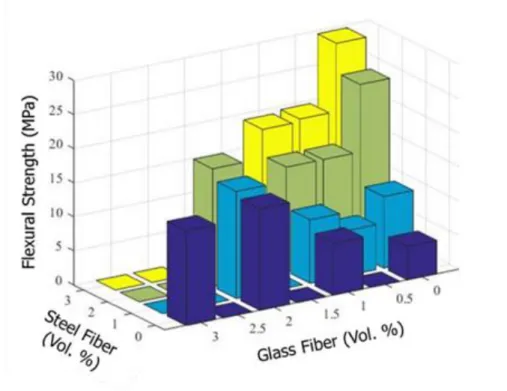
Two types of straight microfibers were used, respectively steel and electrical chemical resistant (ECR) glass fibers, as shown in Fig. A total of 15 microfiber reinforced sulfur polymer composites were developed by varying the relative proportion of each microfiber, as shown in Table 5-3. After the perfect liquefaction of modified sulfur in a mixing bowl at 140℃, the preheated fly ash and microfibers were poured successively.
To investigate the effect of a portion of the microfibers on the porosity, the pore size distributions and total pore volumes of sulfur composites were evaluated using mercury intrusion porosimetry (MIP) (Auto Pore IV 9500, Micromeritics, USA).

Results and Discussion
- Compressive strength
- Flexural stress-strain responses
- Porosity (MIP)
- Visualization of crack propagation (DIC)
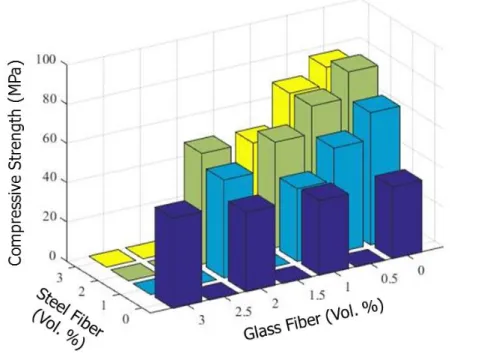
Without steel fibers, the total porosity was reduced by 3% compared to more glass fibers. This phenomenon parallels the test results that the compressive strength and flexural strength mostly increased with more glass fibers but no steel fibers (“0% steel fiber” series in Table 5-4). This was also reflected in the formation of abundant pores larger than 50 nm relative to several glass fibers (Figure 5-15 and Table 5-5).
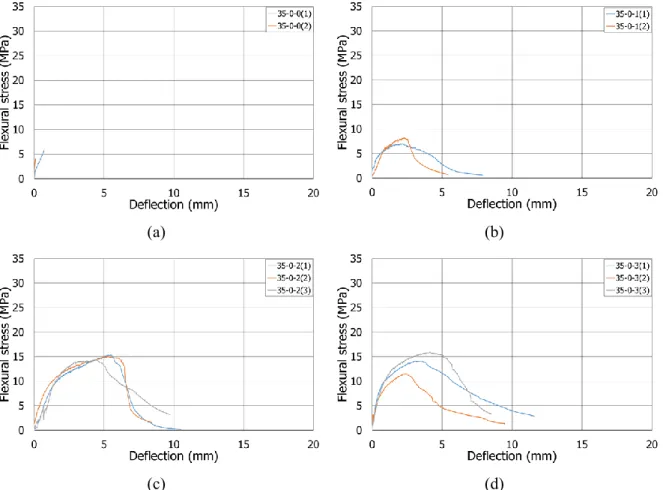
Although the "3% steel fiber" series mixes showed a similar pore structure trend with respect to more glass fibers (Figure 5-18 and Table 5-5), mix 35-3-1 contained 0.5% more glass fiber than mix 35 -3-0.5 did not achieve increased flexural strength as a similar was observed in the compressive strength result.
Conclusions
The microfiber-reinforced sulfur composites failed abruptly at maximum compressive strength without severe fragmentations due to microfiber confinement. Regardless of the type of microfibers, the more microfibers attracted the greater cumulative volume of large pores (>50 nm), with the reduction of the cumulative volume of small pores (<50 nm) in the sulfur composites. For the sulfur composites without steel fibers (“0% steel fiber” series), the increase in the ECR glass fiber fraction led to a gradual reduction in porosity, accompanied by an increase in both compressive and flexural strength.
In general, the sulfur compositions carried the more cumulative volume of large pores with a more total fiber.
Introduction
However, in most cases, modified sulfur is mixed with micro-fillers such as cement and fly ash to improve physical properties (eg, compressive strength, curing shrinkage) [41,57]. However, there has not been a quantitative approach dealing with the effect of micro-fillers on the properties of fresh modified sulfur mixtures at a given temperature. Based on the aforementioned concern, the main objective of this study was to investigate the coupled effects of temperature and microfiller particle size characteristics on the rheological properties of modified sulfur fresh mixes.
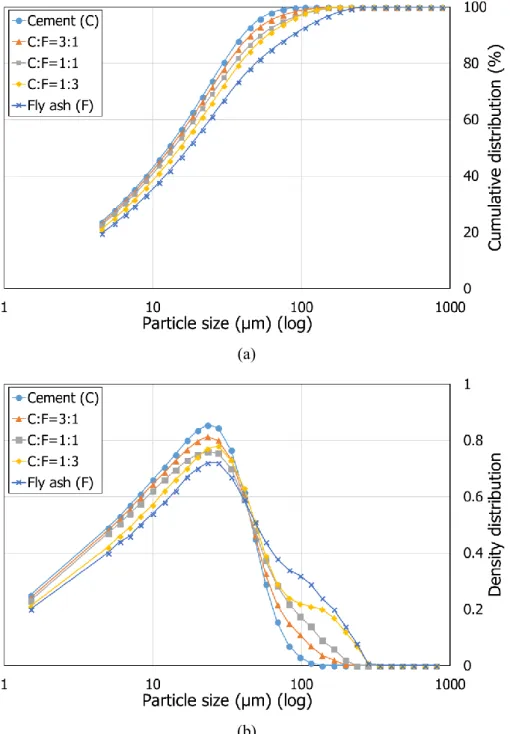
The microfillers were prepared as binary cements (Portland cement/fly ash blends) by varying the composition ratios of Portland cement and fly ash to assign different particle properties to the fresh modified sulfur blends.
Experimental Program
- Raw materials
- Mix proportions
- Test methods
The composition ratio of cement to fly ash was varied to assign different particle size distributions of microfiller to fresh sulfur mixtures. Following ASTM C1749 [84], the shear protocol was designed to determine the yield stress and plastic viscosity of fresh sulfur mixtures based on the Bingham plastic flow. Both the mini-slump cone and the steel plate were preheated in an oven at about 150℃.
Once the mini pocket cone was filled with the fresh mixtures, the cone was smoothly lifted and the diameter of the disc formed was measured in the four directions.

Results and Discussions
- Particle-size distributions of cement/fly ash blends
- Compressive strength
- Rheology
- Mini slump flow
At 120℃, both the yield stress and plastic viscosity of each fresh sulfur mixture were significantly affected by the total micro-filler fraction (Table 6-4). Thus, it was thought that the total micro-filler surface area had a substantial effect on the rheological properties of fresh sulfur mixtures with the same micro-filler fraction. With a higher percentage of micro-filler, the mean spreading diameters of the fresh sulfur mixtures became smaller.
This observation was also reflected in the increase in yield stress of fresh sulfur mixtures with a higher proportion of microfiller during the rheology test at 140℃ (Table 6-5).
Conclusions
Self-Healing Properties of Modified Sulfur Polymer Composites Containing Binary Cement and
Introduction
This observation revealed the feasibility of binary cement as a self-healing agent in sulfur composites. Assuming that water can enter the cracks in real structures, this study investigated the self-healing properties of modified sulfur composites containing fine aggregate, Portland cement, calcium sulfoaluminate (CSA) expansive agent, and superabsorbent polymer (SAP) powder. Among them, Portland cement and CSA expansive agent were prepared as a binary cement by varying the relative ratios between them, which offered different levels of self-healing capacity to the sulfur composites.
To promote the self-healing of this induced crack, all the samples were subjected to a water hardening or water permeability test.
Experimental Program
- Materials
- Mix proportions
- Sample preparation
- Test methods
In the first group, one sheet of silicon pad was inserted on each side of the samples. The samples from the other group had two sheets of silicon cubes on each side. In general, the main objective of water curing was to promote a stable curing environment and to evaluate the self-healing performances of the sulfur compositions.
After completion of the water hardening, all the specimens were kept in a dry room at a temperature of 20±3℃ for 24 hours to remove the remaining water in the crack volume.

Results and Discussions
- Compressive strength
- Water curing
- Surface crack monitoring
- Self-healing evaluation using elastic wave
- Monitoring of through crack using computed tomography
- Water permeability test
- Surface crack monitoring
- Self-healing evaluation using elastic wave
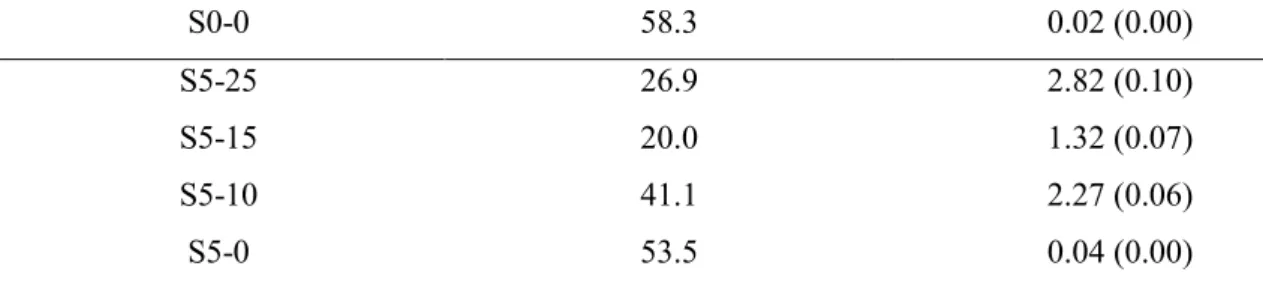
As shown in Table 7-4, the initial crack widths of the samples bearing a silicon foil ranged from 168 to 316 µm. However, the S0-25 mix containing the maximum proportion of CSA expansive agent did not show a perfect crack closure after 7 days of curing (Fig. 7-12). For example, Mix S5-25 gained approximately 87% recovery of the initial crack width after 12 hours of curing.
However, the others without SAP showed a decrease in the spectral energy transmission ratios in relation to the size of the portion of CSA expansive agent, i.e.
Conclusions
The samples containing a higher ratio of CSA expander than Portland cement and SAP showed a faster closure of both the surface and inner crack widths, and a greater spectral energy transfer ratio after 7 days of curing. All the samples without SAP except Mix S0-25 maintained the steady water flow rates during 30 minutes of water permeability testing, while all the samples with SAP except Mix S5-0 showed a faster decrease in the water flow rate according to a greater ratio of CSA expanding agent than Portland cement. This phenomenon was attributed to a faster initial setting of the binary cement stimulated by the swollen SAP particles on the crack surfaces.
Considering that only the samples with the SAP showed an increased spectral energy transfer ratio after the water permeability test, the swelling of SAP particles was considered critical for cutting off the water penetration and the subsequent solidification and hydration of the binary cement on the crack surfaces within a short period of just 30 minutes.
Concluding Remarks
Overall Conclusions
The modified sulfur composites generally resulted in a more cumulative volume of large pores (>50 nm) with a larger total fiber. Regardless of temperature, an increasing fraction of microfiller with a larger surface area led to a gradual growth of the yield stress as well as the plastic viscosity of fresh modified sulfur mixtures. This was probably due to the further production of longer amorphous sulfur chains in the fresh modified sulfur.
Thus, the optimum mixing temperature favorable for placing freshly modified sulfur mixtures is assumed to be 120-135℃.
Path Forward
- mechanical behavior of the newly developed sulfur polymer concrete. 2002) Interaction of bicyclopentadiene with elemental sulfur in the initial stages of the reaction. Material and bond properties of ultra-high-performance fiber-reinforced concrete with micro steel fibers. Tensile fracture properties of ultra high performance fiber reinforced concrete (UHPFRC) with steel fibers.
In RILEM International Conference on the Use of Superabsorbent Polymers and Other New Additives in Concrete (p. 10).
![Figure 1-5: Strength development of elemental sulfur concrete and cement concrete [7]](https://thumb-ap.123doks.com/thumbv2/123dokinfo/10516956.0/25.892.197.694.131.543/figure-strength-development-elemental-sulfur-concrete-cement-concrete.webp)