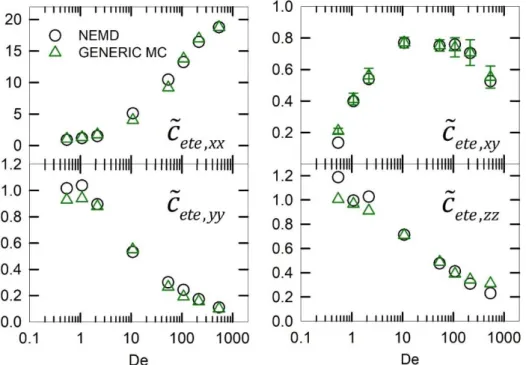
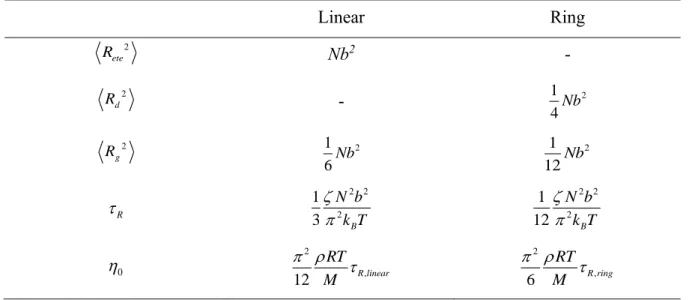
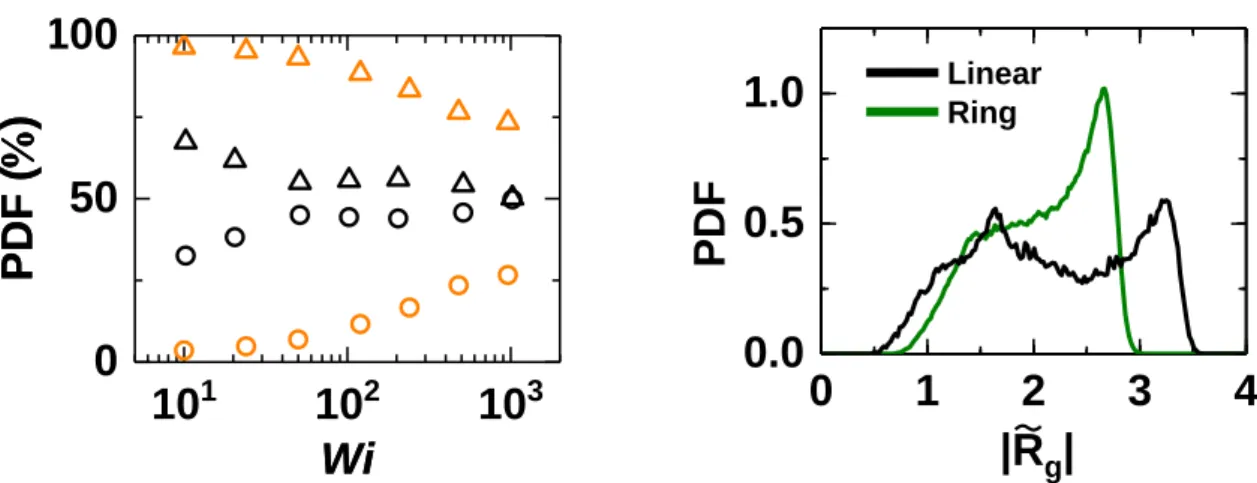
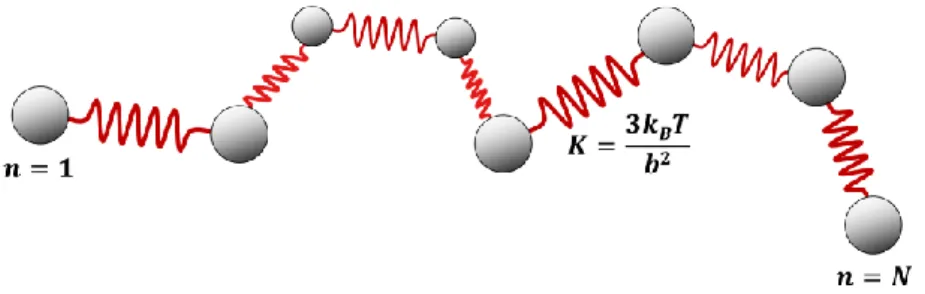
Schematic description of the Rouse model with N number of beads (gray circles) connected by springs. The proportion of the end-loop tumbling (circles) and middle-loop tumbling (triangles) mechanisms as a function of Wi for the dilute (black) and melting (orange) ring systems. The error bars are smaller than the size of the symbols unless otherwise noted. a) Comparison of the probability distribution function (PDF) of the chain end-to-end distance |Rete| between GENERIC MC (dashed lines) and NEMD (solid lines) for the simulated C400H802.
Population of trans- and gauche states for the bond-rotation mode along the chain backbone for the simulated ring, linear, and SCB PE systems.
Introduction
- Research Motivation
- Theoretical Backgrounds
- Polymer Physics
- Rheology
- Computational study
- Molecular Dynamics simulations
- Monte Carlo Simulations
- Simulation model
- References
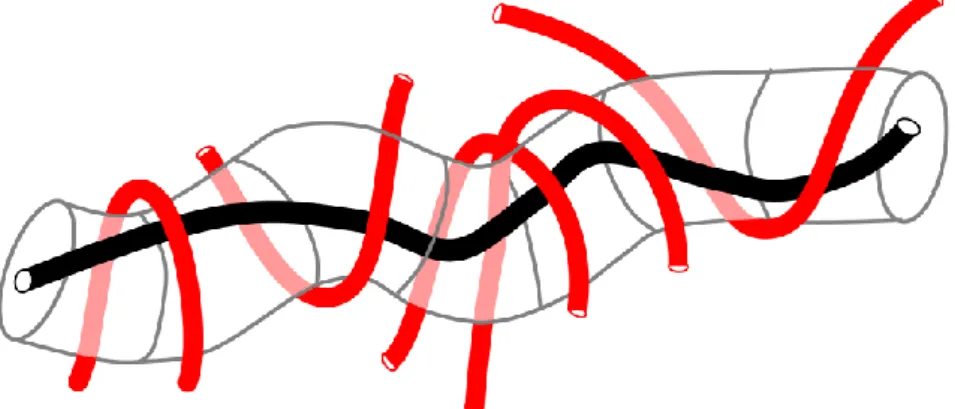
According to the tube model [1,2], the intermolecular topological interactions are approximated as a mean-field tube whose axis coincides with that of the primitive chain path (i.e. the geometrically constructed shortest path connecting two chain ends without violating topological constraints). 1] Therefore, the overall dynamics of an entangled polymer chain is equivalent to the time evolution of the primitive path and the stress relaxation of entangled polymer chains is described by the survival probability ψ(s,t) of chain segment s to remain within the initial chain. tube at time t. Rheology is literally the physical science that studies the flow and deformation of materials.
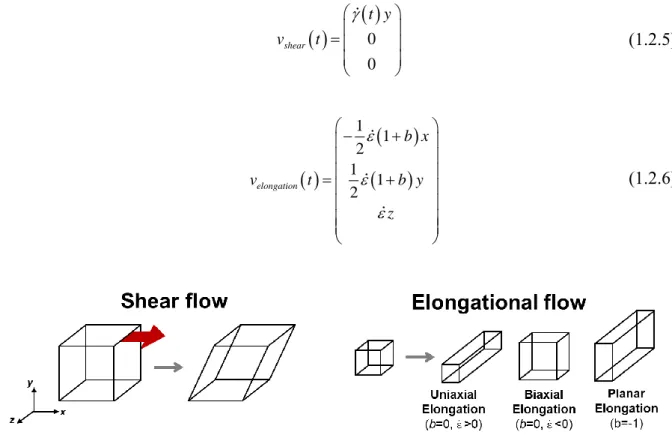
However, it fails to predict the nonlinear response of the material in large deformation and breaks frame-invariant objectivity.
Intrinsic surface characteristics and dynamic mechanisms of ring polymer
- Introduction
- Simulation methods and Materials studied
- Results and Discussion
- Conclusion
- Reference
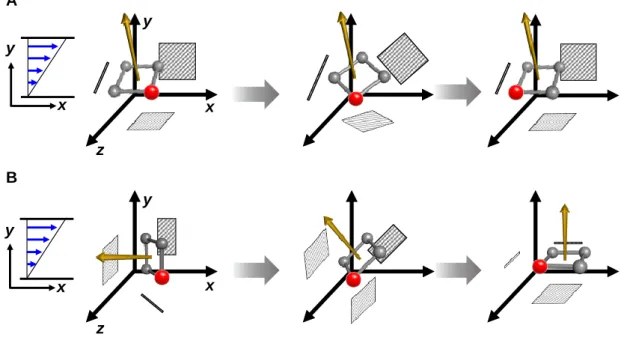
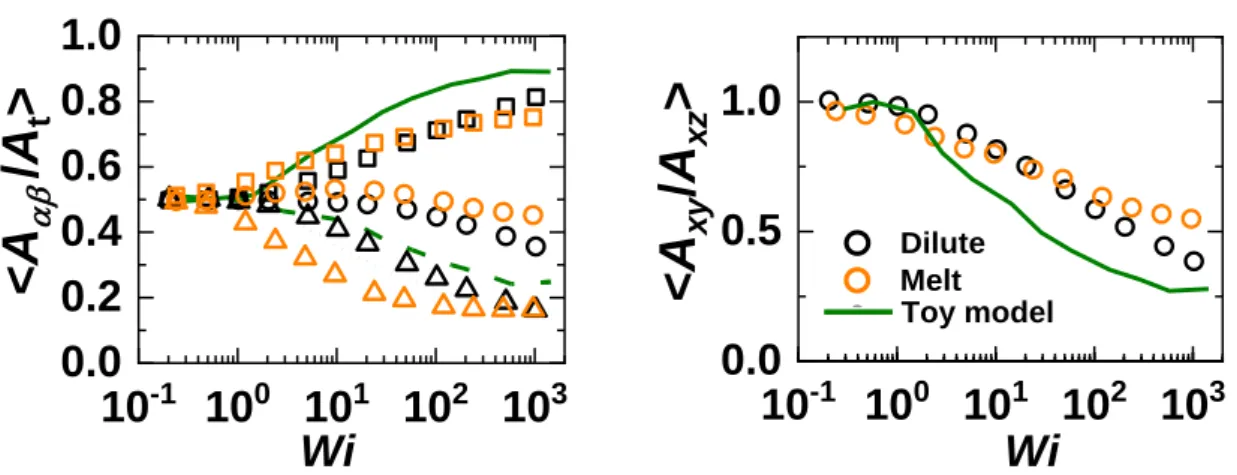
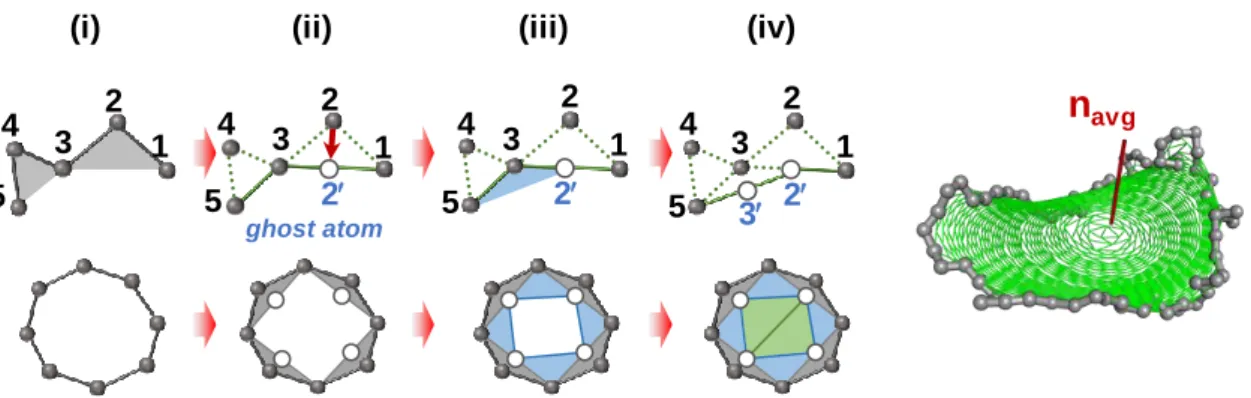
Therefore, the navg of the ring polymer is considered to be intrinsically equivalent to the Rete of the linear polymer. Schematic illustration of inner ring surface construction 3. Next, we analyze the basic structural characteristics of the surface orientation and stretching for ring systems under shear flow. This completely consistent behavior between actual ring polymers and toy models indicates the essentially same basic properties of the ring surface under shear flow.
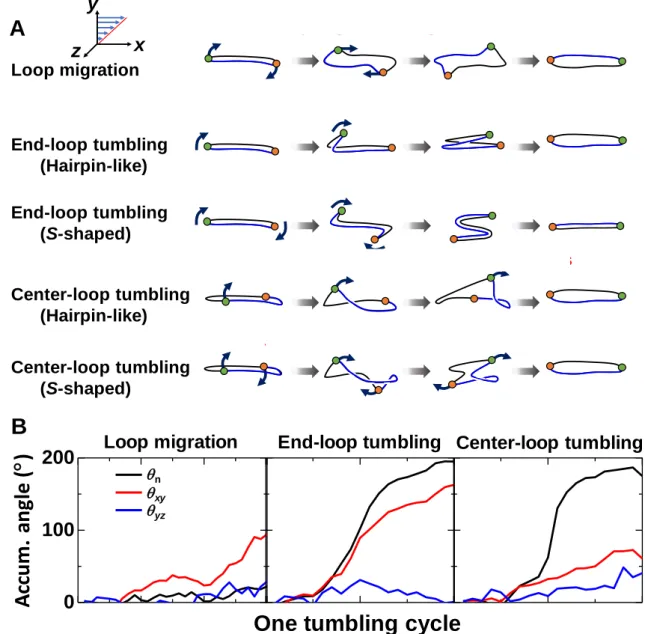
Surface area projected from the intrinsic surface of the ring in three xy- (circles and dashed line), xz- (squares and solid line), and yz- (triangles and dashed line) planes for melt (orange symbols), dilute (black symbols) ) , and toy model (dark green lines) as a function of Weissenberg number (Wi). Note that these projected areas are normalized by the total area of the intrinsic ring surface At. Right). For the loop migration mechanism, the overall surface structure of the ring is quite well maintained; so navg is practically unchanged.
The end-loop (S-shaped or hairpin-like) rocker mechanism of the stretched rings along the flow direction is essentially similar to the typical end-over-end rocker mechanism for linear chains. Importantly, ring polymers reveal an additional tumbling mechanism driven by the loops located in the center of the stretched ring backbone. However, the melt system exhibits a particularly larger portion of the central loop mechanism due to a significantly large number of loops along the ring backbone, created by strong intermolecular interactions.
As the flow strength increases, the portion of the end-loop and mid-loop mechanisms generally increases and decreases, respectively, for both systems. This dynamic feature of ring polymer directly affects the overall shape of the probability distribution P(Rg) of the chain radius of gyration (Rg).
Molecular Dynamics study on the structure and relaxation of short-chain branched
- Introduction
- Simulation methods and Materials studied
- Results and Discussion
- Conclusion
- References
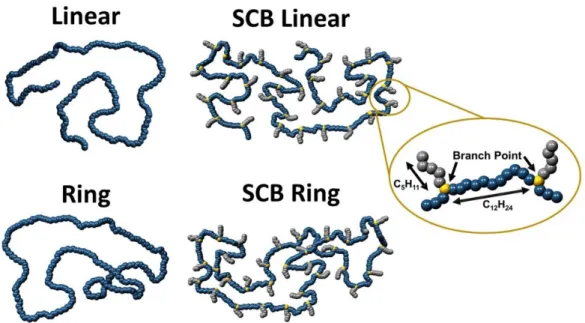
In addition, the results for the SCB ring system were directly compared with those of the SCB linear analogue. The Table 3.3.1 shows the simulation results for the density (ρ), characteristic chain dimensions (Rd2, Rete2, Rg2), pack length (lp), and eigenvalues (λ1, λ2, λ3) of the gyration tensor for all PE melt systems. The relatively compact backbone structures of the SCB polymers are attributed to the inherent Brownian motions of short branches located along the backbone.
This difference underlies the distinctive large-scale structural features of SCB systems, as shown in Table 3.3.1. 3.3.1(b), SET 1 shows a significantly larger extent of the gauche-conformation relative to the trans-conformation compared to SET 3. The ring and linear SCB systems show quantitatively similar behavior of P() to each other throughout the misfit torsion angle range.
We further analyzed the dynamics of the three torsional modes involved in short branches compared to that of the regular torsional mode in the bare linear and ring polymers. Let us now compare the structural and dynamical characteristics of the Rouse normal modes for the simulated annular, linear, and SCB melt systems. Again, this is attributed to the relatively more compact chain structures of the SCB polymers due to the short branching.
Mean square amplitude of the Rouse normal modes
Furthermore, the dynamics of the local torsional modes around the branch points appears to be slowed down considerably through an additional torsional stiffness imposed by the short branches.
Nonequilibrium Monte Carlo simulations of entangled polymer melts under steady
Introduction
Simulation methods and Materials studied
4.2.5) GENERIC MC simulations are performed on the basis of equation (4.2.4) in the extended ensemble (NchNVTμ, where the following variables are given: number of polymer chains Nch, average number of atoms per chain N, volume V temperature T, spectrum of chain relative chemical of potentials μ*, which control the distribution of chain lengths, and the thermodynamic field Accordingly, in GENERIC MC simulations, we used the thermodynamic field for each individual entanglement segment (consisting of about 68 carbon atoms. ), starting from the chain ends. We find that applying the field to the entanglement segment vector for entangled PE melts essentially corresponds to that based on the end-to-end chain vector for unentangled PE melts.
This feature is consistently reflected in theoretical descriptions of the structural and rheological behaviors in terms of the entanglement segment vector for long entangled melts and the end-to-end chain vector for short unentangled melts. tensor between entangled and unentangled PE systems to be meaningful both physically and numerically. Since the field tensor plays a role of the external flow field driving the polymer systems in some non-equilibrium states, it is closely related to the applied one. Initial values for the three non-zero components ( xx, xy andyy) in the GENERIC MC simulations were estimated based on the results of for each De number obtained for the corresponding unmixed PE melts.
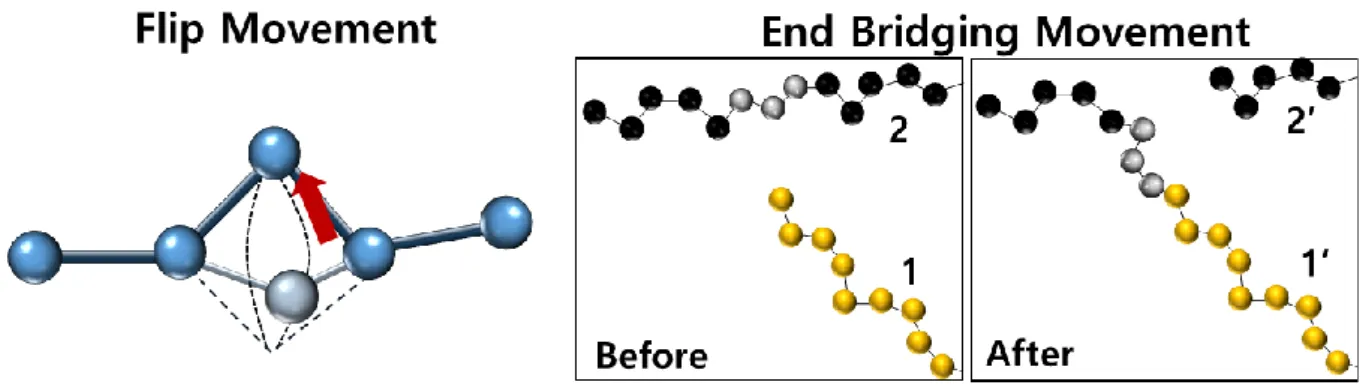
Therefore, an iteration procedure was performed to achieve convergence between the GENERIC MC and NEMD data for eth 3 eth eth eth eth2. For the GENERIC MC simulations, a small polydispersity of I ≈ 1.083 was introduced with a uniform distribution of chain length in the range from C200H402 to C600H1202 in association with effective end-bridge bridging that modifies chain connectivity. NEMD simulations were performed using the p-SLLOD algorithm, [39] implemented by the Nosé-Hoover thermostat [40,41] and standard Lees-Edwards sliding brick boundary conditions.
42] The set of evolution equations in the NEMD method is numerically integrated using an efficient r-RESPA (reversible reference system propagator algorithm) [43] with two different time scales in an MD step;. The well-known Siepmann-Karaborni-Smit (SKS) united-atom potential model [44] was adopted for both GENERIC MC and NEMD simulations, except that the rigid bond in the original model was replaced by a harmonically flexible one for the NEMD.
Results and Discussion
For low to intermediate flux strengths (up to De numbers approximately equal to 10), the GENERIC MC method quite successfully reproduces the entire skewed non-Gaussian chain size distribution as obtained by NEMD. This is attributed to the nature of the GENERIC MC thermodynamic force field, which is uniformly and independently applied to all interlaced segments along the chain. Comparison between GENERIC MC (filled symbols) and NEMD (open symbols) for the distribution of six representative mesoscale chain configurations (folded, half-weighted, stretched, folded, weighted and coiled) obtained by the brightness method at different De numbers.
47-49] In general, the GENERIC MC method accurately predicts the NEMD results of the increasing trend for the three configurations (Fold, Half-dumbbell and Stretched) and decreasing trend for the other three configurations (Kink, Dumbbell and Coil). It is mainly attributed to the inherent inability of the GENERIC MC method to accommodate any dynamic information. In this regard, it is interesting that the GENERIC MC method gives rise to a dramatic increase in the Fold configuration in the intermediate flow regime.
This result is considered due to the mean field nature of the thermodynamic force field applied uniformly and independently to individual entanglement segments in the GENERIC MC method. Overall, the GENERIC MC method is considered to reproduce the general trends of the variations in the entanglement network with respect to the applied shear flow quite well. Comparison between GENERIC MC and NEMD for (a) the average orientation angle based on entanglement segment vector es and (b) the average number of entanglement (kink) points Zkink (normalized by the equilibrium value) with respect to the (normalized) PP contour segment s ranging from 0 to 1.
On the other hand, systematic quantitative discrepancies were observed between GENERIC MC and NEMD in the medium-to-high flow regime. This is mainly attributed to the intrinsic mean-field nature of the GENERIC MC flow field, which is uniformly and independently applied to each entanglement segment along the chains.