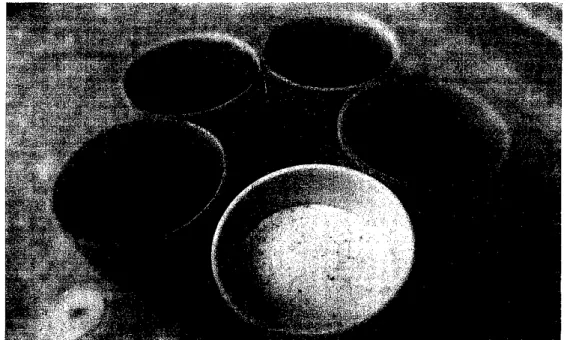
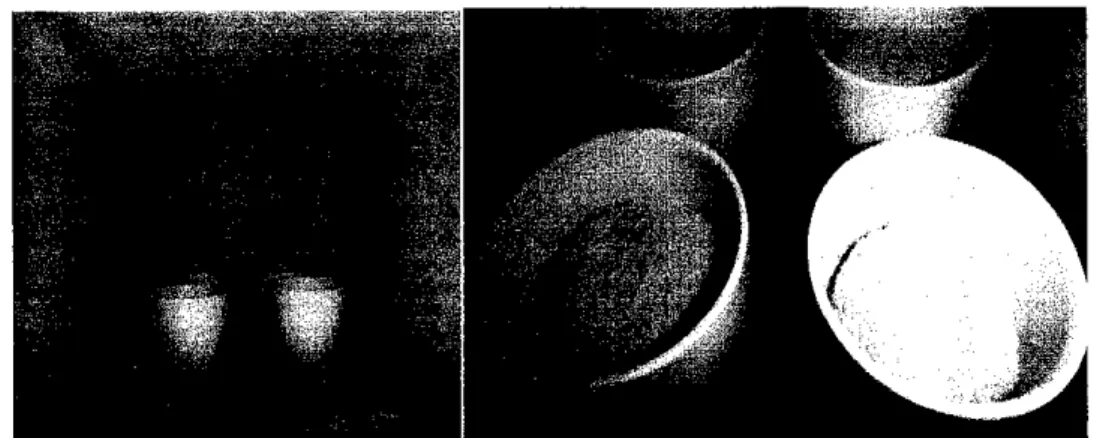
In the pre-treatment stage, the raw rice husk is washed with distilled water and dried at 100°C for 24 hours to remove moisture. First and foremost, I would like to express my praise to Allah for His endless blessings. Samah Babiker Daffalla for her very encouraging, supportive and responsive attitude throughout the process of completing this final year project to fulfill the university requirements.
Apart from that, I would like to express my appreciation to the Department of Chemical Engineering, the Department Head; Dr. Thanks to all the laboratory technicians involved who helped me carry out the research work in the laboratory; Last but not least, I would like to thank my family members for keeping me motivated throughout the year to complete this final year project.
INTRODUCTION
Background ofStudy
In recent years, there has been increasing concern about the discharge of pollutants into the aquatic environment (Hasar H., Cuci Y., 2000). Concentration of chemical oxygen demand (COD) in industrial wastewater is generally contributed by the discharge of amine from industrial and domestic waste to sewer and drain system. The regulation has adopted that the concentration of COD in industrial wastewater must be 50 and 100 ppm for standard A; discharged at upstream and B; discharged downstream.
On the other hand, in gas processing plants, amines are used to sweeten hydrogen sulfide and capture carbon dioxide (Haugmo et a!, 2009). They are also used in detergents as they are used to form various amine salts and pH regulator. Part of it, ethanolamines are used in many other industries such as in concrete mixes, flexible urethane foam catalyst, pharmaceuticals, personal care products, agricultural chemicals, photographic emulsions and more.
Problem statement
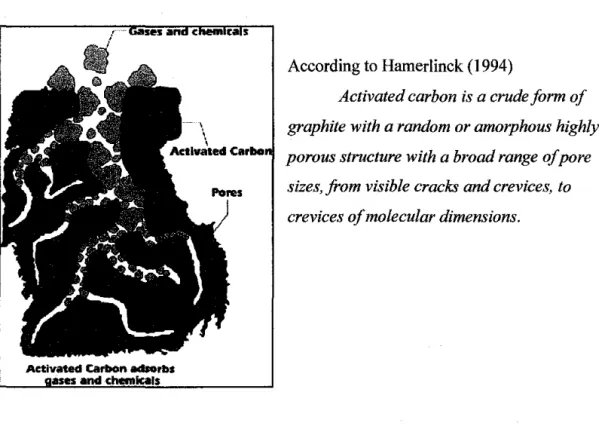
Activated carbon is a raw form of graphite with a random or amorphous highly porous structure with a wide range of pore sizes, from visible cracks and fissures to cracks of molecular dimensions. In an alternative way, the newly developed activated carbon from RH is being tested as an adsorbent in effective cleaning. Thus, in this project, the newly developed adsorbent is intended for the removal of amine contaminants from sewage.
COD is the amount of oxygen required to stabilize organic matter, determined by using a strong oxidant. A number of anion exchangers have been investigated for the removal of natural organic matter (NOM), both as isolated from surface water and after fractionation into four fractions based on hydrophobic and hydrophilic properties. Activated carbon is agreed to be the most consumable adsorbent in wastewater treatment of Bhatnagar.
Objectives and Scope of Study
LITERATURE REVIEW
- Effluent and Sewage
- Biochemical Oxygen Demand (BOD)
- Total Suspended Solids (TSS)
- pH
- Colifonn bacteria
- Nutrients
- Metals
- Total Dissolved Solids (TDS)
- Pesticides/Endocrine Disruptors
- Effluent characteristics ...................................................................................... 1 0
- Rice Husk as Activated Carbon
- Equilibrium Isothenns
- The Langmuir Isothenns
- The Brunauer- Emmett- Teller lsothenn
- Breakthrough
- Existing Studies
Nitrates in wastewater come from ammonia, which bacteria convert into nitrates during the treatment process. If these metals are present in sufficient concentrations, they can be harmful to human health and the environment. Common dissolved solids include inorganic salts such as calcium, magnesium, potassium, sodium, bicarbonates, chlorides, and sulfates that can be found in industrial effluents.
Heteroatoms on the surfaces of the adsorbent are composed of functional group characters found in aromatic compounds. The surface of the adsorbent is uniform, which means that all adsorption sites are equivalent. The greater the flow of artificial industrial sewage, the faster the breakthrough of the adsorbent will be.
RESEARCH METHODOLOGY
- Adsorbent preparation
- Calibration curve and standard solution
- Preparation of MEA solutions and standard calibration curve
- Treatment Phase
- Preparation of solution NaOH and ZnC1 2 for chemical activation
- Test performance
- Gantt Chart and Key Milestones
With the intention, this study will make a new contribution to the studies related to the field that focuses on converting agricultural waste into useful products. Apply the formula M1V1 = MN2 to determine the amount of distilled water to add. The source is referred to the flux and rejection characteristics of amine wastewater using a membrane separation process by Binyam Seyoum Woldehawariat (July 2010).
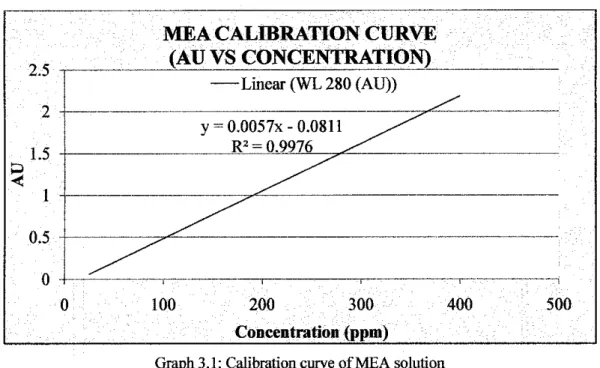
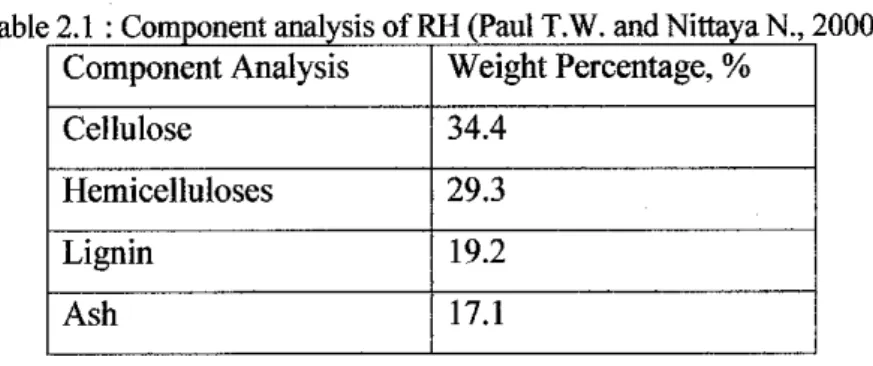
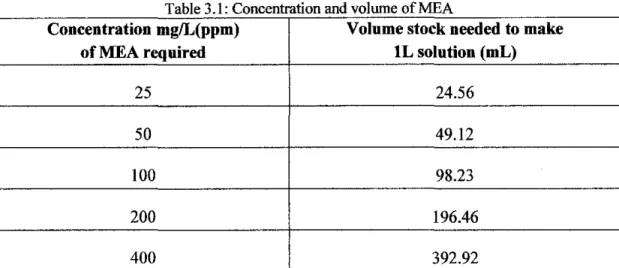
Standard calibration of amine solutions (MEA) is also performed using low standard and normal standard of concentration MEA. First phase of RH treatment was by treating rice with a solution of sodium hydroxide (NaOH) at a concentration of 0.5 M, zinc chloride (ZnCb) at a concentration of 0.1 M and sulfuric acid (H2SO4) at a concentration of 1M. It is to create the appearance of polar groups on the adsorbent surface to provide more cation exchange capacity to the presence of polar groups on the surface which probably gives significant cation exchange capacity to the adsorbent (Daffalla S.B., 2009).
The pH of the solution has significant effects on the properties developed by the adsorbent (Chowdhury et al.). The purpose of this process is to vary and discover the carbon composition of the adsorbent. As Mohan states in his diary, surface chemistry depends on the activation and temperatures used.
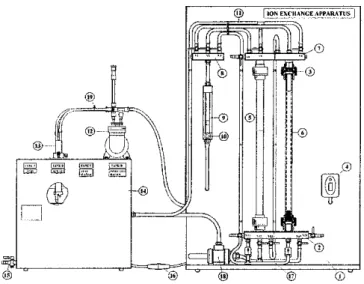
Thus, this project is expected to further contribute to the related field of research and development (RND) of agricultural waste into a useful product by using a new treatment method. Artificial amine effluent (MEA) flows through the column using a pump that supplies the artificial effluent at a flow rate of 10 cc/min. Since this project is about testing the adsorptivity of the adsorbent, only a certain part of the section is needed, which is used from the ion exchange apparatus.
The amine concentration is sometimes taken to observe the removal efficiency of each type of adsorbent.
RESULT AND DISCUSSION
Characterization of adsorbent for each development
- Characterization of adsorbent using SEM and FTIR
- Analysis ofadsorbent
From SEM figures, rice husk ash after being treated with chemical and physical treatment, the activation sites are wider with functional groups that improve the attraction with contaminants of artificial industrial effluent. However, when adsorbent is burned, the structure of raw rice husk is destroyed, thus creating different porous structure on the rice husk ash. This structure is important to develop a good adsorbent that has a larger surface area and porous structure to trap contaminants.
At the same time, it can also cause the removal of components in the rice husk such as lignin, cellulose crystal and hemicelluloses. Using scanning electron microscopy (SEM) or field emission electron microscopy (FESEM), the morphology of rice husks can be clearly observed before and after the treatment process. It was found that the total surface area after burning is greater compared to raw rice husk.
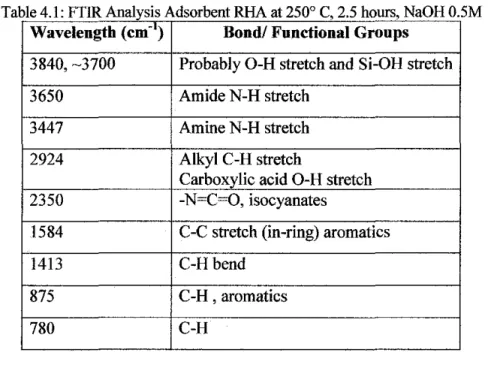
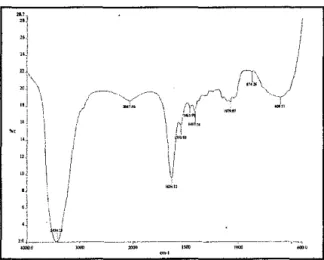
Thus, the surface of the adsorbent is more porous and results in a larger specific surface area of the particles. Functional groups attached to rice husks are analyzed using Fourier transform infrared (FTIR) equipment. By extending the burning time for more than 2.5 hours, a less functional carbon group is detected.
However, these functional groups are removed with longer burning time in the furnace. -OCH3 can be detected at 468 cm·1• Thus, increasing the burning time removes more of the carbon chain as the carbon is oxidized during the process. On the other hand, this is the FTIR analysis between rice husk ash burned at the same temperature at different burning times.
The table below shows the distribution of functional groups present on the surface of the developed adsorbent, ZnCl2-treated rice husk burned at 250 °C.
Test Performance
- Adsorbents done for test performance
- HPLC Result Analysis
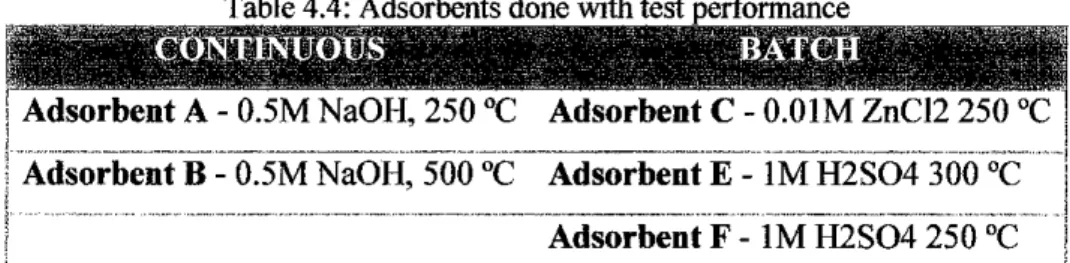
Adsorbent A treated with NaOH at 250 °C shows a slower breakthrough point than adsorbent B treated at 500 °C. From the result it is concluded that RHA treated at 250 °C produces better adsorbent compared to treated adsorbent at higher temperature. The higher number of carbon chains that is promising for more active sites is comparable to the lower number of carbon chains.
Carbon chains are destroyed during combustion process where a lot of carbon loss due to high temperature of combustion during treatment. The graph shows the removal efficiency of amine at specific time; corresponding at exact time, how many concentrations of MEA are left in the system. Previously, other chemical analysis equipment was used, but the result is not reliable due to some reasons.
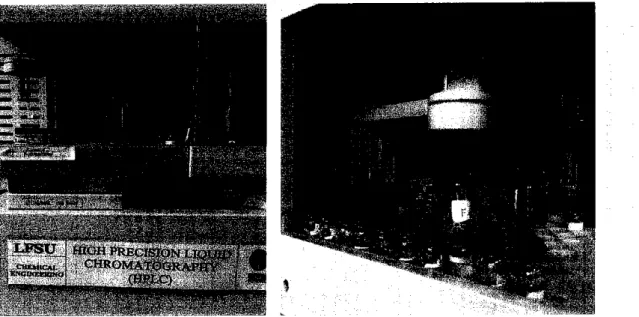
The main cause of this situation is due to color or dye appearance due to the breakdown of adsorbent after a certain time. Column used for HPLC is YMC Polymer C18 S-6UM which is suitable to be used for amine Adsorbent type. From the graph above, all adsorbents passed for batch mode have the same pattern of removal efficiency.
Initially the removal shoots at the highest level until they reach points where the removal decreases and eventually reaches a plateau pattern. At the earlier stage, RE shoots the highest due to the availability of active sites on the adsorbent. However, competition becomes more difficult when there is a limitation on the number of active sites left on the adsorbent.
Therefore, adsorbent treated with ZnCl2 shows better removal efficiency, followed by adsorbent treated with HzSO4.
Modeling into Langmuir isotherm ................................................................... .4 7
Treated rice husk ash (RHA) is a potential alternative to activated carbon and as an adsorbent for the removal of amine contaminants (monoethanolamine, MEA) from industrial wastewater. The carbon content on rice husk ash varies with temperature and time of combustion. On the other hand, functional groups on the adsorbent; rice husk ash will decide the exchange of cations with the cation groups of the pollutants.
In short, chemical activation on rice husk created and improved the surface chemistry of the adsorbent. Regarding adsorbents tested by batch mode, rice husk treated by ZnCb gives better amine removal than H2SO4 treated adsorbent. Next, specific ways to wash rice husk during the chemical treatment phase must be considered.
Thus, without a proper cleaning process, they can produce dirt after being converted to activated carbon and passing through the adsorption process. In these research studies, the percentage removal is quite low due to the limiting factor of the amount of adsorbent. In order to improve the removal efficiency, the amount of adsorbent should be increased to 1 g or more, which corresponds to the method used in this project.
Rice husk and its ash as low-cost adsorbents in water and effluent treatment, chemical industrial and engineering research. Adsorption thermodynamics, kinetic and isosteric heats of adsorption of malachite green on chemically modified rice husk. Polycyclic aromatic hydrocarbons in coarse fly ash particles emitted from fluidized bed combustion of Thai rice husk.
Activated carbon and cheap adsorbents for the purification of tri- and hexavalent chromium from water. Characterization of mesoporous rice husk ash (RHA) and adsorption kinetics of metal ions from aqueous solution on RHA. Product yield and characteristics of rice husks, rice straw and corn cobs during fast pyrolysis in a drip tube/fixed bed reactor.
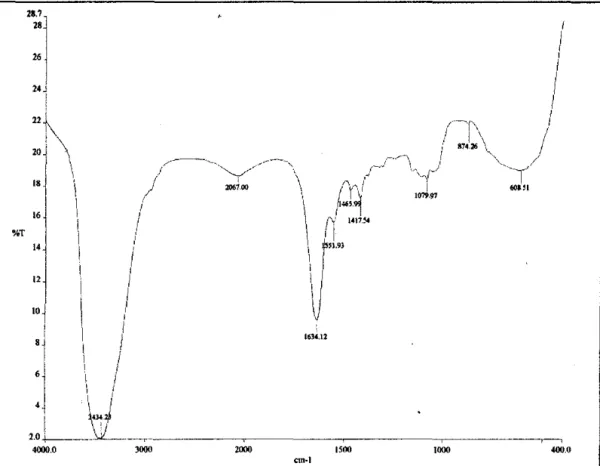
FTIR ANALYSTS
SEM FIGURES
EQA 1974 (STANDARDS A AND 8)