In this process, the traditional cultural role of the Lumads as guardians of the rain forest is restored. The author traces the roots and evolution of the vision and practices of leading firms in the value chain in order to identify the main driving forces of inclusive business models in different product and geographic contexts.
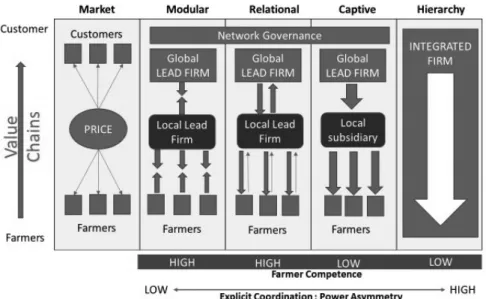
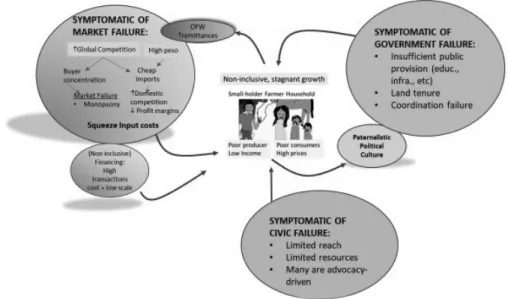
The banana global value chain and the Philippine banana sector Being inclusive is often regarded as a virtue and as such explained by the inherent good
For example, in the banana sector, with the implementation of the Comprehensive Agrarian Reform Program (CARP) in 1988. The Philippine banana sector therefore reflects the characteristics, limitations and market failures found in the global value chain.
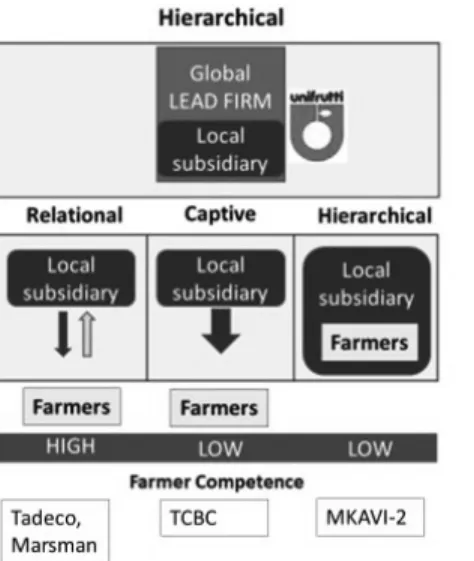
Unifrutti: Peaks and valleys towards inclusion
This convinced the remaining landowners in the community to eventually incorporate their properties into La Frutera.1⁹. The advantage of the incentive system is that it is accessible even to the lowest worker. Although some workers joined the jihad, most of the ex-combatants who became employed at La Frutera chose to stay in the fields.
Today, MKAVI-2 is known in the Japanese market for one of the best quality bananas. But it is in the further development of the company's vision that care for the environment took a decisive central place in the company's core values. This is very important because deep-rooted prejudices can seriously undermine the sustainability of the company.
Unifrutti's employment policy is one of the areas where it stands out in the industry. Once again, it is the Datu who defends and promotes the collective rights of the community. At present, UTPI is at a crossroads where difficult choices are being made about the company's future.
UTPI's resilience will be seen in how it navigates itself in the changing context of the company and the banana sector.

The Transformational Business Partnership (TBP) Model and the problems of smallholder farming
A possibility to operate a 1000-hectare plantation in Lamitan opened Basilan, with the cooperation of the local government unit. For more than ten years, the CSR projects have been very demand-driven, or defined by the requests of the communities around the company (eg daycare centers, water systems, health and sanitation projects, skills training and livelihood programs). The new CSR program, called UNI-SEEDS (Unifrutti Skills Enhancement and Entrepreneurial Development for Sustainability) is aimed at poverty alleviation, from the direct environment of the company.
When asked what, in their opinion, are the main differences between successful and unsuccessful agricultural cooperatives, Unifrutti representatives drew attention to the history of the cooperatives themselves. Instead, farmers who experienced forms of oppression acted as nothing more than wage laborers, with little concern for the overall welfare of the enterprise. With the awareness of mutual dependence comes the willingness to come to each other's aid.
The usual practice in the industry is for cooperatives to request a renegotiation of prices that companies may or may not feel compelled to act on due to the existing fixed contract. When supply shocks occur, they know the impact of these on production costs, and therefore "see no reason why (they) should squeeze farmers' profit margins unnecessarily."⁴2 When asked how the company could afford these additional increases in prices, they by pointing to the company's many different roles in the value chain, each of which earns value and profit for the company.
UGP and its Transformational Business Partnership (TBP) with Bangsamoro communities
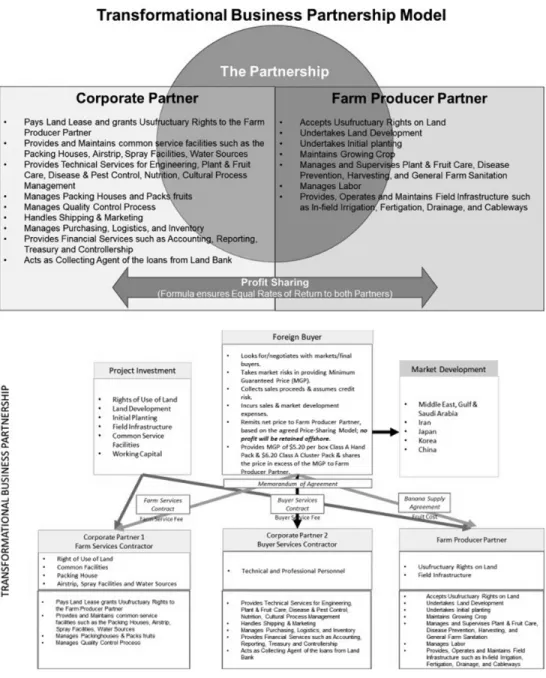
Farmers and local community leaders, however, should strive to develop their competencies in production and effective labor management to increase the productivity of their farms. The company does not have to control the actual day-to-day operations of the company, but is free to inform and guide the community partner about the technical requirements that must be met in order to achieve the highest possible level of productivity. At the end of the contract or at the moment when the returns are realized, the company receives the principal together with a pre-agreed share of the profit.
The company may offer incentives for hard or quality work, but the majority of the profits are still reserved for the company's shareholders. One of the key tenets of the Transformational Business Partnership model is that a partnership of equals will ultimately lead to better resource management and therefore higher profit levels. The smallholder cooperative/community leader, for his part, is expected to be equally transparent in his costs related to field and personnel management, as well as the maintenance of the plantation and its facilities.
43 Tropical race 4 (TR4) is the name given to the fungal species Fusarium oxysporum f. When UGP officially took over La Frutera in January of 2018, one of the first orders of business was to reinvest in the irrigation and water purification systems for the 1,200-hectare farm.
Socio-economic transformation of Datu Paglas and Bumbaran
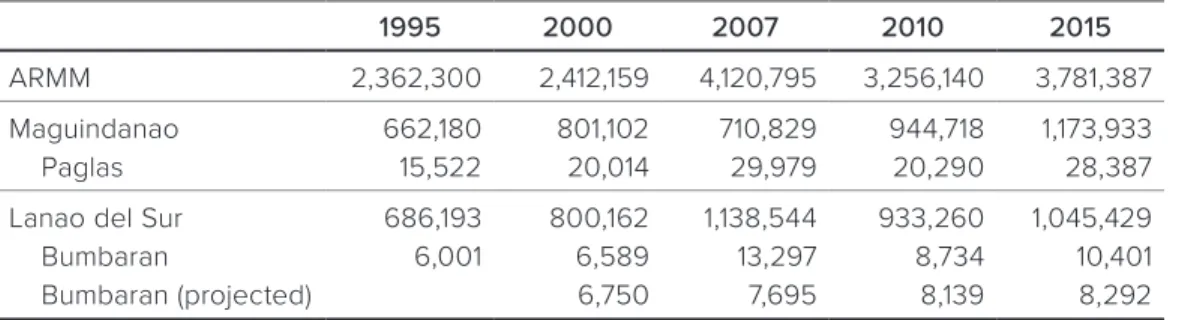
The population growth in Datu Paglas in the period immediately following the establishment of La Frutera in 1997 is no less remarkable. While population growth in the entire ARMM region from 1995 to 2000 was a trivial 0.4%, Datu Paglas realized a growth rate of 6% per year during the same period. Datu Paglas and Bumbaran were both sixth class municipalities (i.e. the lowest income category) before the establishment of Unifrutti plantations within their jurisdictions.
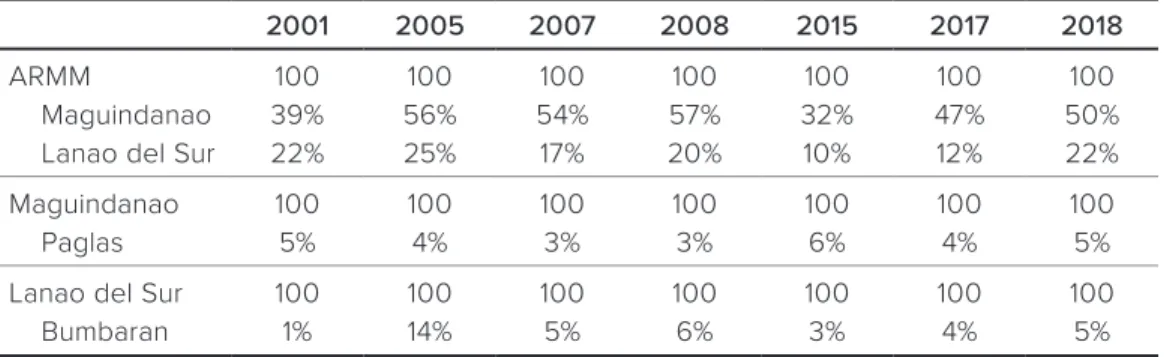
Datu Paglas, moved to the fourth grade in 2008, while Bumbaran, jumped to the third grade during the same period. The share of both municipalities in the total local revenue earned by the respective provinces of Maguindanao and Lanao del Sur is much higher than would be expected given their share in the total provincial population. Datu Paglas accounts for only two percent of Maguindanao's total population, but contributes five percent to the total provincial revenue collected locally.
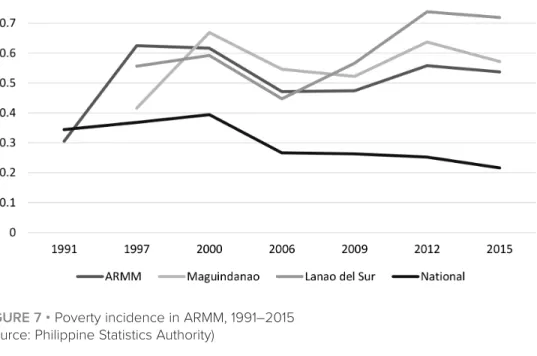
While Lanao del Sur experienced a 25 percent decline in poverty incidence from 2000 to 2006, for Bumbaran the decline was twice as fast at 56 percent. The incidence of poverty actually increased from 59 percent of the population living below the poverty line in 2000 to 72 percent in 2015, while for Bumbaran, people living in poverty dropped from 77 to 54.

Key driving forces of the Inclusive and Transformational Business Partnership Model
For the purpose of the exposition, we will assume that standard business models largely consist of a negative approach to solving market failures (that is, the main motive is to address only the negative consequences of market failures for their private interests) , while inclusive models such as that of the Transformational Business Partnership use positive action to create new mechanisms and incentives that benefit both the business and their partners. On the part of the workers, it took more than a year before everyone was convinced to leave their weapons at home when working in the fields. Datu Toto was wary of the effects of the individual reward system on the employees with such a strong collective culture, but nevertheless allowed the company's management to introduce this system.
The third phase involved the definition of the company's values and measures to create a coherent corporate culture. Another catalyst was the growing perception of the impairment, especially among some of the company's employees. What started as informal Bible studies evolved into institutionalized weekly values formation sessions that became one of the company's most distinctive features.
John Perrine's instructions to the company's managers and supervisors were to take the ordinary complaints as an aid to the company being true to its vision and values. But as the company began to articulate a set of values, the importance of the environment became linked to the vision of stewardship of God's creation.

Conclusions
In this sense, Unifrutti's entry into the Bangsamoro region built a level of social capital that also benefits subsequent entrants to the area due to the higher degree of trust that has been fostered. Unlike its competitors, the company has never been attacked or sabotaged by any of the parties involved in the conflict in Mindanao. The Unifrutti narrative presented in this study is thus completely incomplete, because half the story is the transformation of its main partner communities.
Key Elements of the UGP Transformational Business Partnership Model (1) It is a “non-incorporated joint venture” between a small farmer/cooperative/. On the other hand, if the small farmer/cooperative/entrepreneur is in the minority, he will also be at the "mercy" of the majority shareholder. This ensures that the land can be grouped into blocks of at least 250 ha and that the integrity of the plantation is maintained.
The most efficient farm producing the best quality bananas is in Amai Manabilang, Lanao del Sur, operating under the management of a corporate-backed traditional leader. Both parties will share profits above this price level, with 55 percent of the market price for the Farm Producer Partner and 45 percent for the Corporate Partner.
Tables
Makati City: Australian Agency for International Development, ARMM Regional Board of Investment, ARMM Business Council and Management Association of the Philippines. Philippine Capitalists and the Banana Export Industry.” In Multinationals and the World Restructuring of the World Economy, edited by Michael Taylor and Nigel Thrift, 256–81. Explaining social capital: trust and participation in civic space.” The Canadian Journal of Sociology 27, no.
Editorial Office: Ground Floor, Ang Bahay ng Alumni, Magsaysay Avenue, University of the Philippines. The Editor-in-Chief and Program Editors will ensure that contributions to the UP CIDS Public Policy Monograph Series include research findings on issues aligned with the core agenda of the research programs of the University of the Philippines Center for Integrative and Development Studies (UP CIDS). The responsibility of the editor-in-chief and the program editors is towards high scientific standards, the generation of new knowledge that can be used for the benefit of the public, and the dissemination of such information.
The UP Center for Integrative and Development Studies (UP CIDS), founded in 1985 by UP President Edgardo Angara, is a policy research unit of the university that connects disciplines and scholars across several units of the UP system. ABOUT THE PROGRAM The Escaping the Middle Income Trap: Chains for Change (EMIT C4C) program examines the entire problem of the Philippines.