PHILRICE BATAC
TABLE OF CONTENTS
Page Executive Summary
PhilRice-Batac
1
Adaptation of Recommended Rice Varieties under Unfavorable
Agro-Ecosystems in Ilocos 2
Assessment of Damage Caused by Major Rice Pests under
Rainfed Ecosystem 9
Evaluation of the Rice Direct Seeding Technology in Farmers’
Fields in Northwest Luzon 10
On-station Palayamanan Model Farm: Showcasing the
Developed Technologies for Rainfed Ecosystem 14 Women Initiatives to Integrate Vegetable Production Using
Good Agricultural Practices 16
Effects of Drying Methods, Storage Condition and Packaging on
the Aroma of Fragrant Rice 21
Sustainable Production of Rice and other Crops in the Uplands
through Conservation Farming in Abra and Apayao(CARFO-3) 23 Tillage Options for Upland Rice in the Plateaus (CARFO-4) 27 Promotion of Rice-based Knowledge Products in Northwest
Luzon 33
Database Management of R&D Outputs of PhilRice Batac 38 Enhancing the Knowledge Exchange and Decision-making
among Rice Stakeholders through the Development and Promotion of Location–specific Rice Knowledge Products and Delivery System (CVP Phase II)
40
Abbreviations and acronymns 43
List of Tables 45
List of Figures 48
PhilRice Batac
Branch Manager: Fe P. Bongat
PhilRice Batac is located in a rainfed area and its coverage are mostly limited with water and is comprised of small landholdings. Its task is to develop and promote sustainable and location-specific integrated rice-based farming systems and technologies suited for dryland areas. Most farmers plant rice only during the wet season, followed by vegetables and other cash crops during the dry season. Trials on adaptation of recommended rice varieties in drought, submergence, and saline-prone areas were
established both using the direct-seeded and transplanted methods. In the drought ecosystem, trials using the transplanted method had better yields.
For submergence-prone areas, traditional varieties Raminad and Los Banos yielded better than the modern varieties. NSIC Rc190 and Rc188 showed great potential to withstand high salinity levels.
Sixteen drought-prone farmers’ fields were also assessed for major pests. The incidence of Brown Spot and Leaf feeder injury showed significant correlation with the rate of N fertilizer applied. Pests were generally lower in 2012 than in 2011. Also, the rice direct-seeding technology in farmers’
fields was evaluated. Reasons of farmers for using direct-seeding technology include lower production cost, less labor, and less water requirement for crop establishment. Yield and net income under the direct-seeded method, however was lower than transplanted. Regression analysis between outputs and inputs showed significant relationships of the direct-seeded rice major inputs. Fertilizers, herbicides, labor cost, and age of farmers revealed positive significant relationships on the yield of direct-seeded rice. Hence, direct- seeding is a technology that shall be promoted widely in the area.
Four production technologies for the rainfed and upland ecosystems were showcased at the on-station Palayamanan model farm, which is considered a marginal area. These technologies include off-season vegetable production with the use of Good Agricultural Practices (GAP), the Low-Cost Drip Irrigation System (LDIS) for supplemental irrigation, planting of different aromatic upland rice varieties using the direct seeding and transplanted methods, including its response to furrow seeded and rationing, and orchard and nursery with the production of medicinal plants.
The technologies and extension strategies used in the study, and Women Initiatives to Integrate Vegetable Production Using Good Agricultural Practices were replicated by the Local Government Unit (LGU) in 9
barangays and 10 elementary schools in Lagangilang, Abra. A significant number of families in the project sites have established and adopted the LST on vegetable production in their gardens.
The branch also evaluated the effects of drying methods on the storability and aromatic characteristics of fragrant rice with promising initial results. Conclusion has yet to be generated as the study has just started.
Promotion of rice-based knowledge products through training and briefing of farmers, students, legislators, and agricultural extension workers has been one of the strong points of the PhilRice Batac branch. The holding of several festivals through exhibits and providing of [delete: as] resource persons in
“Usapang Palay” organized by the Department of Agriculture (DA) and Agriculture Training Institute (ATI) in several towns in Northwestern Luzon were also implemented by the branch.
For easy access of data and results of previous studies and projects, the branch has its database management of research and development (R&D) outputs. It has details of R&D technical reports of studies and projects, trainings, briefings, and demonstrations conducted from 1999 to 2011, technology promotion materials such as coursewares, and a compendium of photographs since the time of its operation. Similarly, all literatures searched from the internet and raw data of studies from 2004 to 2012 are all stored for easy retrieval. These data could enhance the efficiency and productivity of the staff. Hence, maintenance of this database is actively being pursued.
Likewise, linkages and networking with LGUs and national government agencies have been vigorously fostered and strengthened. Nine studies have been implemented with IRRI, DA-Regional Field Office 1, and DA-Cordillera Administrative Region Field Office (DA-CARFO). Initial results have been gathered.
Adaptation of Recommended Rice Varieties under Unfavorable Agro- Ecosystems in Ilocos
A Y Alibuyog, JM Solero, RG Rosales, and MABBartolome
The study is on its third year of implementation. On-farm trials were established in Batac and Dingras, IlocosNorte (for drought); Sta. Catalina and San Vicente, Ilocos Sur (for salinity); and Currimao (for submergence). Nine early maturing rice varieties (PSB Rc14, PSB Rc80, PSB Rc82, NSIC Rc120, Rc130, Rc134, Rc138, Rc146 and Rc158) were tested in verification trials in Naguirangan, Batac (direct-seeded) and Capasan, Dingras, IlocosNorte (transplanted), both rainfed areas. Nine saline-tolerant rice varieties were also evaluated in Sta. Catalina under a slightly-saline condition. On the other hand, three submergence trials at different stress levels [(non-stressed with 1-centimeter to 6-cm water level (Site 1); slightly- stressed with 1-cm to 16- cm water level (Site 2); and highly-stressed with 6-cm to 24-cm water level (Site 3)] were established in Tapao-Tigue, Currimao, IlocosNorte for 2011 and 2012 DS. Two modern rice varieties (PSB Rc68 and NSIC Rc194) and two traditional rice varieties (Raminad), and a farmer’s variety (Los Banos) were tested.
Highlights:
Drought Trial
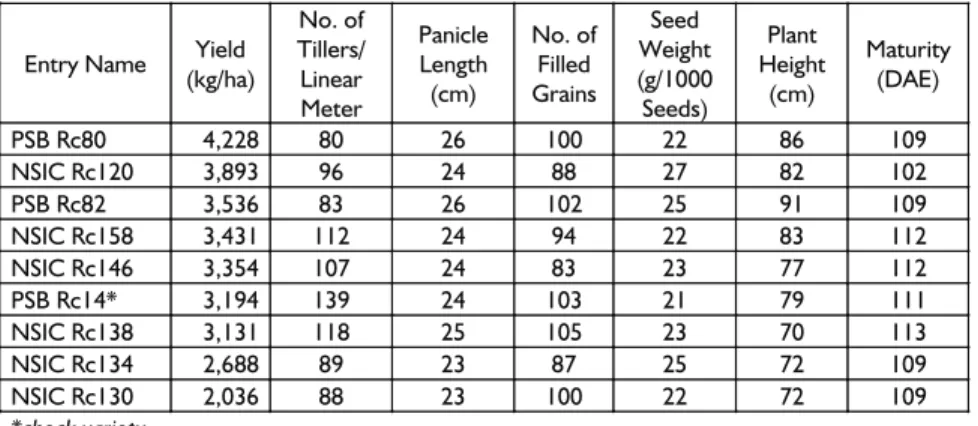
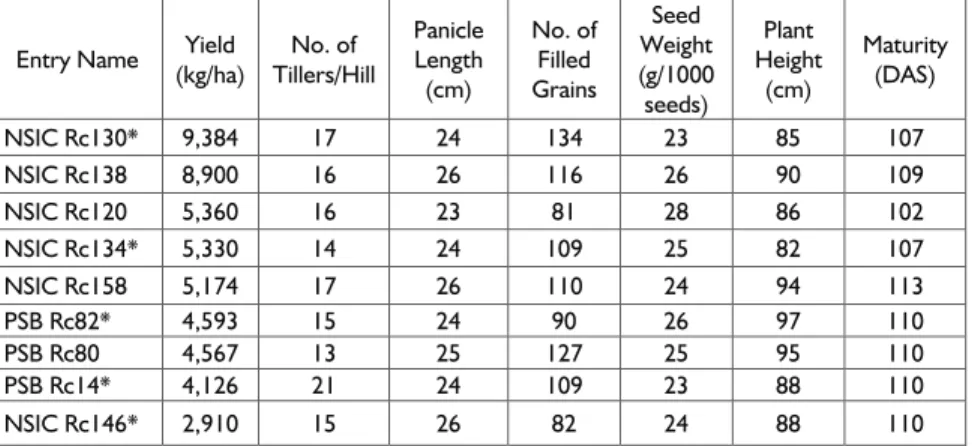
• Entries performed better in Dingras than in Batac due to the difference on the method of crop establishment and fertilizer application. Results showed that the entries produced higher yield when transplanted (2,910 kilograms per hectare to 9,384 kg/ha) than when direct-seeded (2,036 kg/ha to 4,228 kg/ha). Among the transplanted varieties, the top three were NSIC Rc130 (9,384 kg/ha), Rc138 (8,900 kg/ha), and Rc120 (5,360 kg/ha).
• The high yield of NSIC Rc130 can be attributed to its good tillering ability (17 tillers/hill) and high number of filled grains (134/panicle).
NSIC Rc138 had lower tiller count (16 tillers/hill) and lower number of grains (116/panicle) than Rc130, but it had longer panicles (26 cm) and denser seeds (26 grams). PSB Rc14, the check variety had the highest tiller count (21/hill), but it had shorter panicles (23 cm) and lower number of grains (109/panicle).
• Generally, the entries grew taller when transplanted (82 cm to 97cm ) than when direct seeded (70 cm to 91 cm), however, in terms of maturity, there was no significant difference between the two methods (102 to 110 DAS for transplanted vs. 102 to 113 DAS for direct-seeded). It can be noted that among the top three entries, only NSIC Rc120 showed consistent performance (102 DAS) under the two methods.
• Five of the entries in Dingras were infected by neck rot at the dough grain to mature grain stage. The highest infection based on incidence was observed from NSIC Rc146 (50%), followed by PSB Rc14 (40%), and NSIC Rc134 (30 %). The severe blast infection in these varieties might have contributed to the entries’ lower yields.
• Participatory evaluation was done only in Dingras. NSIC Rc138, PSB Rc80 and Rc82 were the three most acceptable varieties to farmers because of their good crop stand, particularly good tillering ability, long panicles, and resistance to disease, especially that most of the entries were infected by neck rot.
• Under dry direct-seeding method, the highest yielding entries were PSB Rc80 (4.228 tons/ha), NSIC Rc120 (3.893 t/ha) and PSB Rc82 (3.536 t/ha). The top three entries had lower number of tillers but had longer panicles than the other entries. The high yield of PSB Rc80 can be attributed to its long panicles (26 cm) and intermediate number of grains (100/panicle). On the other hand, the high yield of NSIC Rc120 can be explained by its dense grains (27 g).
The good performance of PSB Rc82 can be attributed by its long panicles (26 cm) and dense grains (25 g). Aside from PSB Rc80, Rc82 and NSICRc120, two other varieties (NSIC Rc146 and Rc158) out yielded PSB Rc14. All the entries had plant height less of than a meter (70 cm to 91 cm).
• Among the entries, NSIC Rc120 had the shortest maturity (102 DAE) when direct- seeded, followed by PSB Rc80, Rc82; NSIC Rc130 and Rc134 (all 109 DAE). It can be noted also that the top three yielders had earlier maturity than PSB Rc14 and three other entries.
• Five of the entries had above 5% yield advantage over PSB Rc14, the check variety, namely: PSB Rc80, Rc82; NSIC Rc120, Rc146 and Rc158 under direct-seeding method while only NSIC Rc146 did not reach the 5% yield advantage under the transplanting method.
Salinity Trial
• Although not statistically different, NSIC Rc190 and Rc182
produced the highest yields of 3.23 t/ha and 3.14 t/ha, respectively.
NSIC Rc182 had the highest number of filled grains and heaviest seed while NSIC Rc190 and Rc188 produced the highest number of tillers (16 and 18 tillers/hill, respectively).
• PSB Rc88 was the tallest among the test varieties while NSIC Rc188 and Rc190 were the earliest to mature.
• NSIC Rc190 and Rc188 showed their potential, that even if transplanted at 19 DAS, they were able to withstand the salinity level of 5.76 dS/m2 to 11.7 dS/m2 within three weeks after transplanting.
Submergence Trial
• Results from the two season trails (2011 and 2012), showed no significant differences of all the entries in the three sites in terms of grain yield. Generally, the traditional varieties (Los Banos and Raminad) had higher yield than the modern varieties under higher water level. Days to maturity also did not differ at this environment.
However, under non-stressed and slightly-stressed conditions, the modern varieties (PSB Rc68 and NSIC Rc194) had higher yield.
Days to maturity of the modern varieties were also statistically shorter.
• In Site 1 (non-stressed), all entries did not statistically differ in all the agronomic parameters, except for the days to maturity, which showed highly significant differences among entries. NSIC Rc194 had the highest yield (3,718 kg/ha), followed by PSB Rc68 (3,129kg/
ha) and Los Banos (3,017 kg/ha). Raminad, the check variety, had the lowest yield (2,476 kg/ha).
• The higher yield of NSIC Rc194 can be attributed to its higher number of tillers (10 tillers/hill) and denser seeds (28 g/1000 seeds).
Raminad and Los Banos had lower number of tillers, however, they had longer panicles and more filled grains. The tallest variety was Los Banos (152 cm) but was still comparable with the other entries.
The two modern varieties had significantly earlier maturity than two the traditional varieties.
• In Site 2 (slightly-stressed), all entries were also comparable in terms of yield, tiller count, panicle length, and seed weight. On the other hand, entries significantly differed in number of filled grains, plant height and days to maturity. NSIC Rc194 and PSB Rc68 had higher yields (3,554 kg/ha and 3,397 kg/ha) than the traditional varieties (3,397 kg/ha and 2,857 kg/ha), however, all entries were still comparable with each other.
• The two traditional varieties produced more filled grains than the two modern varieties, although all entries were comparable in terms of panicle length. Los Banos outperformed Raminad (160 vs. 139), and all other entries. NSIC Rc194 had statistically lower number of filled grains than Raminad.
• Genetically, the traditional entries were taller while the modern entries were shorter in height. Likewise, the traditional varieties were had longer maturity than the modern varieties. The better tillering ability (12 tillers/hill) and denser seeds (28 g) of NSIC Rc194 contributed to its higher yield.
• Results in Site 3 showed that Los Banos (2.558 t/ha) was the highest yielder among the entries. The yield of Los Banos can be attributed to its longer panicle (25 cm) and higher number of filled grains (125).
Table 1. Agronomic and yield performance of the early maturing rice varieties under dry direct-seeding method in a rainfed area. Naguirangan, Batac, IlocosNorte. 2012 WS.
Entry Name Yield (kg/ha)
No. of Tillers/
Linear Meter
Panicle Length (cm)
No. of Filled Grains
Seed Weight (g/1000 Seeds)
Plant Height
(cm)
Maturity (DAE)
PSB Rc80 4,228 80 26 100 22 86 109
NSIC Rc120 3,893 96 24 88 27 82 102
PSB Rc82 3,536 83 26 102 25 91 109
NSIC Rc158 3,431 112 24 94 22 83 112
NSIC Rc146 3,354 107 24 83 23 77 112
PSB Rc14* 3,194 139 24 103 21 79 111
NSIC Rc138 3,131 118 25 105 23 70 113
NSIC Rc134 2,688 89 23 87 25 72 109
NSIC Rc130 2,036 88 23 100 22 72 109
*check variety
Table 2. Agronomic and yield performance of the early maturing rice varieties under transplanting method. Capasan, Dingras, IlocosNorte.
2012WS.
Entry Name Yield
(kg/ha) No. of Tillers/Hill
Panicle Length (cm)
No. of Filled Grains
Seed Weight (g/1000 seeds)
Plant Height
(cm)
Maturity (DAS)
NSIC Rc130* 9,384 17 24 134 23 85 107
NSIC Rc138 8,900 16 26 116 26 90 109
NSIC Rc120 5,360 16 23 81 28 86 102
NSIC Rc134* 5,330 14 24 109 25 82 107
NSIC Rc158 5,174 17 26 110 24 94 113
PSB Rc82* 4,593 15 24 90 26 97 110
PSB Rc80 4,567 13 25 127 25 95 110
PSB Rc14* 4,126 21 24 109 23 88 110
NSIC Rc146* 2,910 15 26 82 24 88 110
*Infected by blast at dough grain to mature grain stage
Table 3. Agronomic and yield performance of the saline varieties based on the adaptability trial conducted in Sta. Catalina, Ilocos Sur. 2012WS.
Variety Name Yield
(t/ha) No. of Tillers/Hill
Panicle Length (cm)
No. of Filled Grains/
panicle Seed Weight (g/1000 grains)
Plant Height
(cm)
Days to Maturity (DAS)
PSB Rc88 2.29 10 25 115ab 21.8c 102.0a 138b
PSB Rc90 2.22 13b 25.3 104c 20.3d 91.5c 144a
NSIC Rc182 3.14 10c 23.8 124a 24.2a 89.4c 136c
NSIC Rc184 2.19 11c 24.4 123ab 21.9c 96.7b 139b
NSIC Rc188 2.38 18a 23.5 112b 20.7c 81.7d 113f
NSIC Rc190 3.23 16ab 24.8 102c 21.3c 83.0d 117f
NSIC Rc290 2.26 11c 23.7 104c 21.2c 78.4f 133e
NSIC Rc292 2.06 10c 24.7 97d 23.8ab 83.6d 132e
NSIC Rc296 2.28 11c 23.7 112b 21.7c 79.0f 134d
Level of
Significance ns * ns ** ** ** **
LSD 0.84 4 1.83 12 1.47 3.2 1
CV (%) 21.7 17 4.3 21.2 3.9 3.7 0.8
Means followed by the same letter in each column are not significantly different
Table 4a. Agronomic and yield performance of the entries evaluated under non-submerged condition, Tapao-Tigue (Site 1), Currimao, IlocosNorte.2011 DS and 2012 DS.
Varieties Yield (kg/ha)
Tiller Count/
Hill
Panicle Length (cm)
Number of Filled Grains/
Panicle
Weight of 1000 seeds (g)
Plant Height
(cm)
Days to Maturity (DAS)
Raminad (Check) 2476 8 24 138 29 133 139
Los Banos 3017 8 26 204 25 152 138ns
NSIC Rc194 3718 10 23 106 28 89 113#
PSB Rc68 3129 9 23 98 28 87 115#
Level of significance ns ns ns ns ns ns **
LSD value (5%) 2547.44 4.58 3.53 94.16 8.67 62.27 12.13 ns- not significant
** Significant at 5% level
Table 4b. Agronomic and yield performance of the entries evaluated under slightly-submerged condition. Tapao-Tigue (Site 2), Currimao, Ilocos Norte.2011 DS and 2012 DS.
Varieties Yield (kg/ha)
Tiller Count/
Hill
Panicle Length (cm)
Number of Filled Grains/
Panicle
Weight of 1000 seeds (g)
Plant Height
(cm)
Days to Maturity (DAS)
Raminad (check) 2857 9 24 139 29 127 142
Los Banos 3244 8ns 24ns 160* 25ns 133ns 142ns
NSIC Rc194 3554 12ns 22ns 81# 28ns 80# 114#
PSB Rc68 3397 9ns 23ns 87ns 28ns 85# 115#
Level of significance ns ns ns ** ns ** **
LSD value (5%) 2020.95 4.53 2.78 53.14 6.11 31.93 16.68 ns – not significantly different from the check
*- significantly different at 5% level
**- significantly different at 1% level
Table 4c. Agronomic parameters as affected by the interaction of site and variety under submergence condition. Site 3, Tapao-Tigue, Currimao, IlocosNorte.2011 DS and 2012 DS.
Varieties Yield (kg/ha)
Tiller Count/
Hill
Panicle Length (cm)
Number of Filled Grains/
Panicle
Weight of 1000 seeds (g)
Plant Height
(cm)
Days to Maturity (DAS)
Raminad 2478 10 23 72 30 131 127
Los Banos 2558ns 10ns 25ns 125ns 26ns 140 126ns
NSIC Rc194 1432ns 10ns 21ns 50ns 25ns 66 115ns
PSB Rc68 1747ns 9ns 21ns 58ns 25ns 66 117ns
Level of significance ns ns ns ns ns ns ns
LSD value (5%) 3899.55 6.86 16.09 63.76 49.32 181.52 33.45
Assessment of Damage Caused by Major Rice Pests under Rainfed Ecosystem
EP Agres and JNalundasan
Drought is identified as the key factor for low rice productivity in the drought-prone rainfed ecosystems of the Ilocos Region. The coping mechanisms of Ilocanos may influence the occurrence and degree of injury or damage by pests. Hence, pests were monitored for two seasons in 61 farms in Ilocos Norte to document major pests and percent of injuries, production practices, and yield, and, to establish relationships between current production practices with pests incidences and yield.
Highlights:
• A total of 45 farmer’s fields in the rainfed sites of Paoay, Currimao and Badoc, Ilocos Norte were assessed in WS2011. In WS2012, 16 drought-prone rice fields in Sta. Cruz and Caraitan, Badoc were chosen as assessment fields for pest occurrence, pest injuries and damage, and yield. It is in these same fields where PhilRice Batac documented the production practices of farmer partners (FPs).
• The rice crop of FPs were assessed at booting stage when the foliage has been fully grown, the stage when most of the field operations have translated into a visible effect on the crop, and when most pests have not yet achieved their highest possible intensity.
• Majority (91%) of the FPs planted inbred and hybrid varieties recommended for irrigated lowland ecosystem in WS2011 and 86%
of them in 2012.
• Sixty four percent of the FPs in 2011 applied high amount of N fertilizer (>120 kgN/ha) compared to only 15% in 2012. The reason for the low fertilizer application in 2012 is the more abundant and better distribution of rainfall (Figure 1).
• Varieties with resistance to Rice Blast such as PSB Rc28 showed high incidence (100%) of the disease when applied with high amount of N fertilizer (345 kgN/ha). At ripening stage, NSIC Rc154, Rc160, Rc28 and PSB Rc82 showed Brown Spot incidence ranging from 45% to 100%. Correlation analysis of N with the diseases, however, was not significant.
• In 2012, the incidence of Brown Spot and Leaf feeder injury showed significant correlation with the rate of N fertilizer applied.
NSIC Rc160 applied with 360kg N/ha had 13% Brown Spot incidence and 19% leaf feeder injury.
• Generally, insect pest injury and percent incidence of diseases was lower in 2012 than in 2011.
Evaluation of the Rice Direct Seeding Technology in Farmers’ Fields in Northwest Luzon
NQ Abrogena and LMdCTapec
Increasing shortages of irrigation water, uncertainty of rainfall patterns due to climate change, and the rising cost of fuel for irrigation;
as well as escalating labor cost pose threats in the sustainability of rice production in the rainfed areas. Dry direct- seeded rice (DDSR) could be one of the solutions that counter the irrigation water insufficiency; and the increasing rainfall uncertainty and the scarcity of labor and increasing wages rate. It can be a technology that increases the capacity of farmers to cope with climate-induced change. In case of early drought, farmers can direct seed with minimal soil moisture, rather than waiting for sufficient rainfall for transplanting. Considering these climate-induced changes and other biophysical and economic environment changes, the prospects of DDSR is bright. Hence, there is a need to assess the economic viability of DDSR.
The study aimed to identify the factors that encourage farmers to use direct seeding method in crop establishment; determine the cost-saving effect of DDSR and its cost and benefits; identify the agro-physical situations when direct seeding are viable; and recommend information flow and decision frameworks for R&DE workers and farmers for their technology options.
The data were gathered using structured interview schedules and guide questions. The sample-respondents of DDSR and transplanted rice (TPR) farmers were also monitored on their production activities: land preparation, seeding to harvesting.
Highlights:
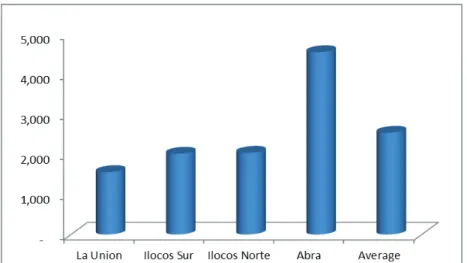
• The average area planted to direct seeding was relatively small but ranges from 144 to 20,000 square meters. (Figure 1).
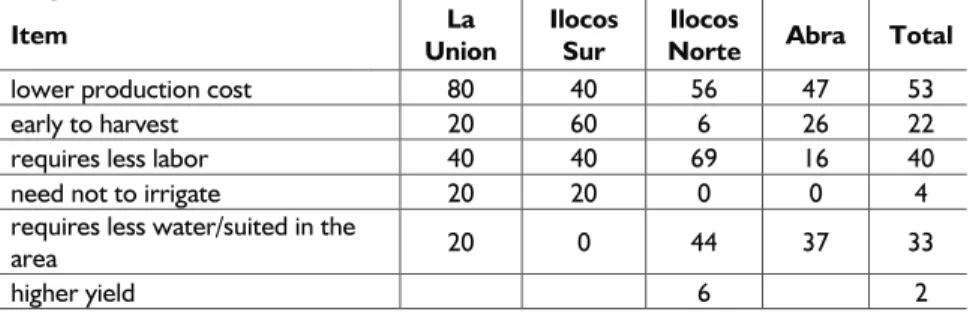
• The major reasons of farmers for using DDSR were lower production cost, 53%; less labor, 40%; and less water requirement for crop establishment, 33%. (Table 5).
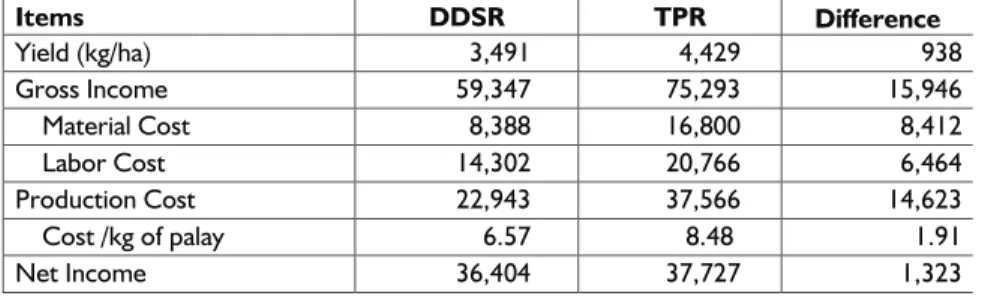
• With DDSR, labor cost was reduced to 45% from the total labor days required by TPR. (Table 6).
• The DDST total production cost was lower than the TPR by 14,623/
ha (64%). The DDSR material cost was lower by 100% due to the
reduced expenses on fuel, insecticides and fertilizers; despite the high herbicide cost. The production cost per kilogram palay of DDSR was P6.57 while the TPR cost P8.48/kg. The DDST was more cost efficient by 29% or P1.32/kg of palay.
• Though the DDSR was cost efficient compared to TPR, the
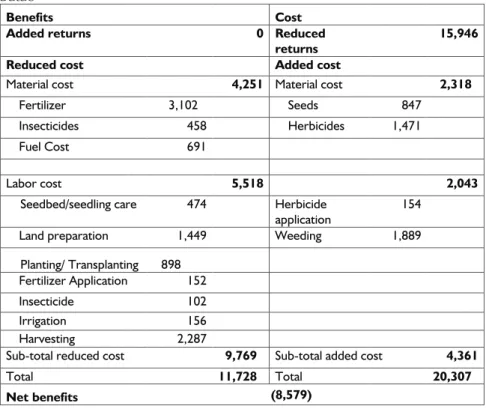
productivity of the latter was higher by 27% than the former. Partial profit budget analysis shows that the DDSR was outperformed by TPR by P8,579/ha due to the average lower yield of DDSR (Table 7).
• Net income of DDSR was lower by 34% compared to TPR. However the former incurred lower investment cost by 72% than the later.
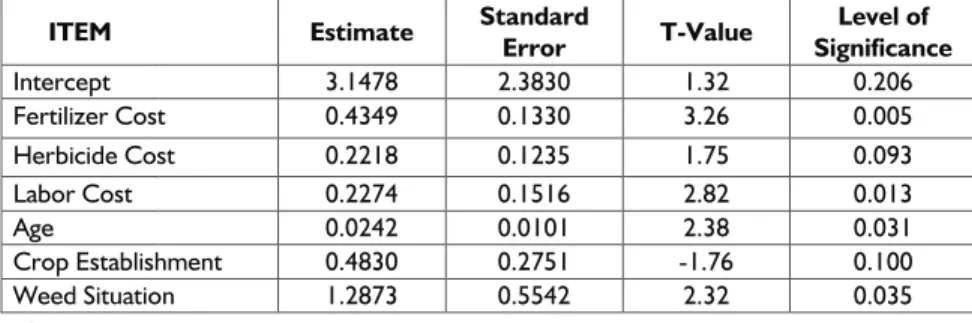
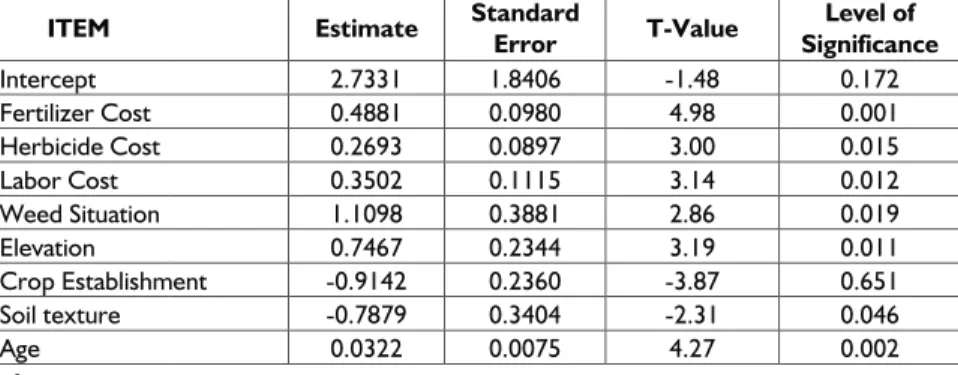
• Regression analysis for the functional relationships between outputs and inputs with Cobb-Douglas type production function showed significant relationships of the DDSR major inputs (Table 6).
• Results showed that fertilizers, herbicides, labor cost; and age of farmers revealed positive significant relationships on the yield of DDST. These variables contributed to the increase of the DDSR yield. However, age showed relatively low coefficient as compared to fertilizer, herbicide and labor utilization.
• Other variables like weed situations, farm elevation and soil textures were included as 0, 1 variables, and significantly influenced yield increase of DDSR. The estimation variables showed a relatively good fit to predict the behavior of yield of the DDSR farms.
• Considering that fertilizer and herbicides costs had the greatest influence on the yield of DDST, R&D activities on how to optimize the use of these inputs should be given focus to increase DDSR yield.
Figure 1. Average area planted (sq.m) to direct seeding by the farmer respondents. 2012
Figure 1. Average area planted (sq.m) to direct seeding by the farmer respondents. 2012
Table 5. Percentage distribution for the reasons of farmer-respondents in using DDST. WS 2012. PhilRice Batac
Item
La
Union Ilocos
Sur Ilocos
Norte Abra Total
lower production cost 80 40 56 47 53
early to harvest 20 60 6 26 22
requires less labor 40 40 69 16 40
need not to irrigate 20 20 0 0 4
requires less water/suited in the
area 20 0 44 37 33
higher yield 6 2
Table 6. Comparative yield (kg/ha), production cost (P/ha), net income (P/
ha) of the farmer respondents. WS 2012. PhilRice Batac
Items DDSR TPR Difference
Yield (kg/ha) 3,491 4,429 938 Gross Income 59,347 75,293 15,946 Material Cost 8,388 16,800 8,412 Labor Cost 14,302 20,766 6,464 Production Cost 22,943 37,566 14,623 Cost /kg of palay 6.57 8.48 1.91 Net Income 36,404 37,727 1,323
Table 7. Partial budget analysis for DDSR versus TPR. WS 2012. PhilRice Batac
Benefits Cost
Added returns
0 Reduced
returns 15,946
Reduced cost Added cost
Material cost 4,251 Material cost 2,318
Fertilizer 3,102 Seeds 847
Insecticides 458 Herbicides 1,471
Fuel Cost 691
Labor cost 5,518 2,043
Seedbed/seedling care 474 Herbicide
application 154
Land preparation 1,449 Weeding 1,889
Planting/ Transplanting 898
Fertilizer Application 152
Insecticide 102
Irrigation 156
Harvesting 2,287
Sub-total reduced cost 9,769 Sub-total added cost 4,361
Total 11,728 Total 20,307
Net benefits (8,579)
Table 8a. Estimate of production function of DDSR farms pooled regression model, Northwest Luzon, 2012. PhilRice Batac
ITEM Estimate Standard
Error T-Value Level of Significance
Intercept 3.1478 2.3830 1.32 0.206
Fertilizer Cost 0.4349 0.1330 3.26 0.005
Herbicide Cost 0.2218 0.1235 1.75 0.093
Labor Cost 0.2274 0.1516 2.82 0.013
Age 0.0242 0.0101 2.38 0.031
Crop Establishment 0.4830 0.2751 -1.76 0.100
Weed Situation 1.2873 0.5542 2.32 0.035
R2 - 81.57
Table 9b. Estimate of production function of DDSR farms pooled regression model, Northwest Luzon, 2012. PhilRice Batac
ITEM Estimate Standard
Error T-Value Level of Significance
Intercept 2.7331 1.8406 -1.48 0.172
Fertilizer Cost 0.4881 0.0980 4.98 0.001
Herbicide Cost 0.2693 0.0897 3.00 0.015
Labor Cost 0.3502 0.1115 3.14 0.012
Weed Situation 1.1098 0.3881 2.86 0.019
Elevation 0.7467 0.2344 3.19 0.011
Crop Establishment -0.9142 0.2360 -3.87 0.651
Soil texture -0.7879 0.3404 -2.31 0.046
Age 0.0322 0.0075 4.27 0.002
R2 - 95.06
On-station Palayamanan Model Farm: Showcasing the Developed Technologies for Rainfed Ecosystem
AC Aguinaldo, JG Casil and BA Pajarillo, Jr.
This year, four production technologies for the rainfed and upland ecosystems were showcased at the On-station Palayamanan model farm.
These technologies included the following: (1) off-season vegetable production with the use of Good Agricultural Practices (GAP); (2) the Low Cost Drip Irrigation System (LDIS) was used for supplemental irrigation; (3) the performance of different aromatic upland rice varieties using the direct- seeding and transplanted methods was also demonstrated, including its response to furrow seeded and ratooning; and (4) a pomology orchard and nursery was established, including the production of medicinal plants. The area served as the learning field of on-the-job students, trainees, agriculture extension workers, and visitors of the station and other stakeholders. It served as one of the highlights during the successful annual field day of the station.
Highlights:
• Gross income from the vegetables harvested was P3,129.29, as shown in Table 10 for WS 2012. Two beds (each bed had an area of 1x14 sqm) were allotted for each of the 4 kinds of the vegetables planted, and supplemental irrigation was provided through the use of the established LDIS.
Table 10. Yield and gross income of vegetables planted in the on-station Palayamanan. 2012 WS
Vegetables Number of
Hills Yield( kg) Price
(P)/kg Gross Income (P)
Patola 30 30.33 25 758.25
Ampalaya 30 22.65 40 906
Eggplant 96 11.63 40 465
Tomato 64 25 40 1000
Total 3,129.29
• The aromatic rice varieties, both direct seeded and transplanted, yielded an average of 3.2 and 1.29 t/ha, respectively.
• Of the13 upland rice varieties planted (collected from the upland areas of Abra and Apayao), an average of 2.08 t/ha (crop cut) was harvested. Dinorado obtained the highest yield at 4.03 t/ha while 90 days yielded the lowest at 0.08 t/ha. Table 11 shows the agronomic data of the traditional varieties planted for seed increase.
Table 11. Agronomic data of traditional rice varieties established at the On- Station Palayamanan. Wet season 2012.
TRV Seeding
Rate/ha Days to Maturity
Number of Panicles
at Maturity
(1m²)
Plant Height
(cm)
Panicle Length (cm)
Number
Grains/Panicle Crop Cut Yield (t/ha) Filled Unfilled
Payakan 60 135 185 142 30 116 36 3.04
Palawan 60 125 146 194 29 102 30 2.41
IsekPugot 60 114 157 136 23 98 22 1.81
IsekDiket 60 114 118 175 29 77 14 1.5
Gannal 60 122 110 156 30 119 12 2.71
Ballatinaw 60 120 178 103 20 88 23 3.19
Dagmuy 60 123 141 176 38 96 22 1.52
Maluit 60 114 73 136 26 127 22 1.6
Bullilising 60 120 141 163 34 72 6 1.42
Mindanao 60 114 161 168 25 71 65 0.91
Dinorado 80 120 243 113 27 97 15 4.03
Kinamurus 80 125 197 120 20 88 10 2.84
90 Days 80 102 123 75 14 42 11 0.08
• Dagmuy exerted the highest height of 110 cm among 13 planted rice varieties. IsekPugot was the shortest at 72 cm and both Payakan and Palawan had no panicle exertion documented. However, there was no yield gathered due to drought.
• A total of 307 accession of fruit crops (Papaya, Dragon Cactus, Atis, Bignay, Tamarind, Guapple, Macopa) were established and 65 accession of medicinal plants (Ashitaba, Gisol, Lemon Grass, Pandan, Pepper Mint, Luyang Dilaw and Oregano) were produced.
Women Initiatives to Integrate Vegetable Production Using Good Agricultural Practices
EP Agres, LG Inocencio, AC Aguinaldo and RA Beronio
The Technical Cooperation Project Phase 3 (TCP3) of PhilRice, JICA and the LGUs of Currimao, Ilocos Norte, and Cabugao, Ilocos Sur developed and promoted Location-Specific Technologies (LST) for rice and vegetables from 2005 to 2008. The strategies of TCP3 worked for women farmers in Ilocos, hence, PhilRice Batac embarked on expanding it in Abra. This study assessed the contributions of women as adopters of the LST on vegetables.
Highlights:
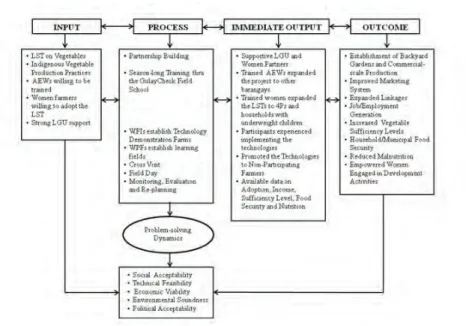
• The LST on vegetables, including the developed promotion strategies as inputs, were geared toward food security, increased income, improved nutrition and employment generation (Figure 2).
• The processes in adopting and promoting the LST on vegetables started with a strong partnership with the LGU that has very low (3.8%) sufficiency level of vegetables and with nutritional problems among pre-schoolers.
• The first dissemination process was the hands-on training of the Agricultural Extension Workers and the women partners through the GulayCheck Field School.
• Simultaneous with the training, the women participants experienced the technologies by establishing a technology demonstration farm (TDF) (Figure 3) or a learning field (FLF) (Figure 4).
• The technologies and the extension strategies were replicated by the LGU in 9 barangays and 10 elementary schools. After two years of the project, 56% of the total numbers of families in the project sites have established their vegetable gardens using the technologies.
The women leaders from the original project sites outscaled the project on their own within their barangays. They extended the
technologies to the recipients of the PantawidPamilyang Pilipino Program (4Ps) who had underweight children.
• Technologies that were highly adopted were those that required labor only and minimal material inputs (Table 12). Adaptation was made on materials used which were locally available, cheap or free.
The women also resorted to recycling papers, plastics and other local materials. Likewise, they converted previously unproductive areas into very productive vegetable gardens (Figure 5). Others established urban gardens and even at their house’s rooftop (Figure 6).
• The areas grown with vegetables increased from 400m2 before project intervention to 27,000 sqm two years after project implementation (Table 13). It resulted to the municipality’s improved vegetable sufficiency level from 3.8% in 2007 to 40%
during the first half of 2012 (Table 14). The women leaders claim that the 34% decrease in the number of underweight children (Table 15) was due to their monitoring and promoting the LSTs to recipients of the 4Ps.
• The LSTs on vegetables provided cash income as much as
P26,000 per year to some women farmers, who before the project contributed not more than P4,000 imputed labor for her household farming activities in a year (Table 16).
• LGU Lagangilang institutionalized vegetable production following the LST in the entire municipality. The project was integrated with other projects such as the 4Ps, GulayansaPaaralan, and finally the GulayansaBakuraninvolving all households in the municipality.
• Enabling factors for the commercialization of the LST on vegetables included the desire of the LGU and the women to increase the sufficiency level of vegetables and improve nutrition of pre-school children; their active participation, and the strong support of the LGU.
• The training of women farmers should be right at the farm, includes hands-on exercises, experiential in nature and season-long. The training should be enhanced with IEC materials in the local dialect.
• Women leaders and successful women farmers should be tapped to assist in disseminating technologies. Their capabilities as food producers and technology promoters are needed especially that the country envisions becoming food self-sufficient.
• Hence, the country must invest in devising an extension system and training programs for women farmers.
Figure 2. The conceptual framework of the women’s involvement in adopting location-specific technologies on vegetable production
Figure 3. TDF on ampalaya established by a WFI in WS 2010.
Figure 4. FLF on eggplant established by a WPF in WS2010.
Figure 5. WFI successfully planted upo in a stormy area, 2010 WS.
Figure 6. WPF established her ampalaya and eggplant at their rooftop, 2010 WS.
Table 12. Technology components adopted according to type of inputs required, Abra 2011.
Technology Component % Adopting Input Category
Planting in raised beds and high ridges 100 Labor
Appropriate distance of plating 100 Labor
Practice of IPM 99 Labor
Construction of Simple Nursery 99 Labor
Construction of Trellis 98 Labor
Raising Seedlings in Cell Trays 94 Labor
Use of Recommended Seedling Media 89 Labor
Off-Season Cultivation 73 Labor
CRH Making 73 Labor
Composting 61 Combination
Use of High Quality Seeds 41 Material
Basal Fertilization 35 Material
Plastic Mulching 8 Material
Table 13. Total area planted to vegetables by project participants from 2010 to 2012 at the project sites. Lagangilang, Abra
Site Area (m2)
2010 (Baseline) 2011 2012
Dalaguisen 135 7,100 12,400
Pawa 160 4,625 9,100
Nagtupacan 120 3,585 5,330
All Sites 415 15,310 26,830
Table 14. Vegetable sufficiency level (%) of Lagangilang, Abra. 2007-2012.
Year Population Production
(MT) Demand (MT) Deficit (MT) Sufficiency Level (%)
2007 13,552 19,989 528,528 508,539 3.8
2010 14,072 109,256 548,808 439,552 19.9
2011 14,246 156,068 555,594 399,526 28.1
2012 14,427 224,130 562,653 338,520 39.8
Table 15. Decrease in the number of underweight children (0-72 months old) in the sites. Lagangilang, Abra. 2012.
Site Baseline Underweight (no.) 2012 Change (%)
Dalaguisen 77 37 52
Pawa 50 50 0
Nagtupacan 22 11 50
Total 149 98 34
Table 16. Increase in income (PhP) of the women partners in Lagangilang, Abra. 2011.
Site Income (PhP)
Baseline 2011
Dalaguisen <1000 – 2,745 3,200 – 26,000
Pawa <1000 – 3,840 2,500 – 18,000
Nagtupacan <1000 – 2,716 3,000 – 9,500
Effects of Drying Methods, Storage Condition and Packaging on the Aroma of Fragrant Rice
MAU Baradi, NGT Martinez and MJC Ablaza
Fragrant rice has become popular and continues to command a higher price in the market. The 2-acetyl-1-pyrroline (2AP) had been identified as the major compound which gives rice its pleasant popcorn-like scent (Buttery et al. 1983; 1988) as described by non-orientals, and its pandan-like scent as described by orientals (Paule and Powers 1989). It showed strong correlation with the aroma quality of rice in sensory evaluation (Paule and Powers 1989).
The compound, particularly in free form, is volatile and unstable. Hence, this study aimed to investigate the effects of drying methods, storage condition and packaging on the aroma quality of fragrant rice.
Highlights:
Drying Experiment
The variety Mestizo I harvested during the 2012 wet season (October 2012) at the experimental field of PhilRice in Maligaya, Muñoz, NuevaEcija was used.
Newly harvested samples with initial moisture content (MC) were dried to 13% to 14% MC, wet basis (w.b.), using three methods of drying (sun, bamboo-bin, and flatbed drying). The moisture
content of the paddy samples was measured using portable digital moisture meter. The experiment was replicated three times and the treatments were laid out in a completely randomized design (CRD).
The distinctive pleasant pandan-like aroma of the rice samples were evaluated by a trained sensory panel composed of 10 members of the Rice Chemistry and Food Science at PhilRice Maligaya, Muñoz, Nueva Ecija. Both the raw and cooked rice samples were considered. The procedures described in the National Cooperative Testing Manual for Rice (PhilRice 1999) were used in the sensory evaluation.
Table 17. Aroma evaluation of Mestizo 1 rice samples subjected to different drying methods.
TREATMENT RAW MILLED RICE COOKED MILLED RICE
Rating Aroma Level Rating Aroma Level
Sundried 1.9 Slight 2.5 Slight
Bamboo-bin
dried (BBD) 2.3 Slight 3.2 Slight
Flatbed dried 2.4 Slight 3.2 Slight
Based on the results of the sensory evaluation (Table 17), there were no significant variations in aroma levels among the different treatments. The range of aroma levels in the raw milled rice samples was 1.9–2.4, indicating that they were all slightly aromatic. On the other hand, the cooked milled rice samples had aroma levels of 2.5–3.2. The values were higher than those of the raw milled rice samples and this indicated that there are bound forms of 2AP released during cooking as suggested by Yoshihashi et al. (2005).
However, the cooked milled rice samples were also found to be all slightly aromatic.
The paddy samples subjected to the three drying methods were brought to the Grain Quality, Nutrition and Postharvest Center (GQNPC) of the International Rice Research Institute, Los Baños, Laguna for 2AP analyses using Gas Chromatograph-Flame Ionization Detector (GC-FID).
The milling potentials (brown rice, milling and headrice recoveries) and other sensory attributes (whiteness, translucency, brittleness, cohesiveness and taste) of the different samples were also determined.
Storage Experiment
The rice variety Basmati harvested during 2012 wet season (October 2012) were used in the experiment.
The paddy, brown and milled rice forms of Basmati were packed in different packaging materials and methods (ordinary sack, plastic using ordinary sealer, vacuum packed). Then the samples were stored at ambient temperature for 20 weeks starting 29 October 2012. Samples are taken bi-weekly for aroma quality evaluation (aroma level and 2AP content).
The experiment was replicated three times and was laid out in CRD.
Sustainable Production of Rice and other Crops in the Uplands through Conservation Farming in Abra and Apayao(CARFO-3)
ND Ganotisi, ML Quigao, LG Inocencio,MR Gappi, and MAU Baradi As population increases and as lowland farmlands are rapidly being diverted to alternative uses, the uplands will have an increasing role in securing a community’s food needs. But, without appropriate soil conservation techniques, upland soils become prone to erosion and could eventually become infertile as production intensifies leading to unsustainable production.
The study generally aims to enhance farmers’ adoption on conservation farming techniques in the uplands through demonstration of sloping agricultural land technology components. Specifically: 1) To verify the terracing technique for rice and vegetables in the uplands; 2) To demonstrate the planting of hedgerows and cover crops, 3) To introduce mulching for vegetable production; and ultimately, 4) To develop location specific package of technologies for uplands. The study was conducted in San Isidro, Abra and Pudtol, Apayao.
Highlights:
• Soil samples were gathered from the experimental sites and were submitted at the Provicial Agriculture Office of Ilocos Norte for laboratory analysis. In Abra, the soil pH was neutral having a value of 7.30, and had low organic matter content at 0.75, and phosphorus of 12.37. While in Apayao, the soil was acidic with pH of 4.85, organic matter content of 2.4 with a trace posphorous and 30.32 ppm potasium (Table 18).
• Raingauge was fabricated and installed at the experimental area where there was no obstruction to weather parameters. Rainfall was the main factor that can affect the growth of the crop. In San Isidro, Abra, the highest rainfall was recorded at the flowering stage at 131 mm. It was observed that rainfall was very frequent from June to September 2012. In Apayao, rainfall occurred 7 times during the vegetative stage and 7 times also during the reproductive stage. At maturity, rainfall occurred 6 times as shown in Figure 7.
• A-frame was constructed and used in determining contour lines across the slope. It was the simplest and the most economic method in allocating contour lines. It was made of a carpenter level and three bamboo poles nailed in the shape of a capital letter-A, with a base of 200 cm wide. Different contour lines at different elevations were laid-out using the A-frame gadget at 3 to 5 meters apart.
The laid-out contour lines were planted with hedgerow crops like pineapple, cassava, taro, ginger, napier grass, kakawate, and ipil-ipil in alternate double-row planting.
• In Abra, two modern upland rice varieties (NSIC Rc9 and NSIC Rc192) and one indigenous variety (Palawan) were evaluated and planted in space between the rows of hedgerow crops or alleys at 50 kg/ha with a planting distance of 30 x 20 cm. Seeds were dibbled on May 31, 2012.
• The yield of upland varieties ranged from 2.17 to 4.13 t/ha (Table 19). Palawan gave the highest yield and this was due to the highest number of spikelets/panicle (276), longer panicles (31.44 cm), higher percent field grains (97%), and 1,000-grain weight (34.77 g).
• Field caravan was conducted on September 25, 2012 at the experimental site in San Isidro, Abra during the maturity stage of the rice crop to showcase the agronomic and yield performance of the field trial to farmers. There were 76 participants, composed of 61 farmers from the different barangays of San Isidro, Abra, 9 LGUs headed by the Committee on Agriculture Chair, and 6 PhilRice staff.
• In Apayao, erosion gadgets were fabricated and installed at different crop combinations in the intervention model and farmers’ practice.
It was made of galvanized iron (GI) with 1-meter width. The lower tip part of the erosion plot was connected with a flour bag (katsa) and plastic bag. The flour bag separated the eroded soil from water and the plastic bag caught the surface run-off water. The data was gathered every occurrence of heavy rainfall. Initial erosion data in Apayao were also gathered but were not enough to establish the trend (Table 20).
• The three varieties (NSIC Rc9, Rc192, and Palawan) planted direct seeded at flat areas (2% slope) yielded higher (877-1,681 kg/ha) compared to those planted in steep areas (45% slope) which yielded lower (822-1,309 kg/ha) as shown in Table 4 and Figure 8. The flat (2% slope) area was more favorable in terms of nutrient and moisture holding capacity because the steep areas were prone to erosion during heavy rainfall. Among the three varieties, the NSIC Rc9 yielded the highest (1,309-1,681kg/ha) followed by Palawan (1,246-1,619 kg/ha), while the lowest was exhibited by NSIC Rc192 (822-877kg/ha). The low yield obtained on the NSIC Rc192 was due to damage on grains caused by the rice bug and water stress.
Table 18. Soil physical and chemical properties of the experimental areas.
ITEMS San Isidro, Abra Pudtol, Apayao
Texture Light Medium (Alaminos Clay Loam)
Organic Matter 0.75 2.4
pH 7.30 4.85
Olsen’s P, ppm 12.37 Trace
Cold H2SO4 K, ppm 104.59 30.32
Figure 7. Daily rainfall data throughout the growing period of the rice crop (July 3 to November 8, 2012). Barangay Swan, Pudtol, Apayao.
Table 19. Yield and yield component of different upland varieties in San Isidro, Abra. 2012 WS.
Variety Yield t/ha
Panicle Length cm
Spikelet/
panicle Filled
spikelet/panicle Filled Grains
%
1000 Grain Weight
g
NSIC Rc9 2.17 c 24.23 b 168 b 148 b 88 b 23.25 c
NSIC Rc192 2.43 b 24.37 b 169 b 128 b 78 c 26.72 b
Palawan 4.13 a 31.40 a 275 a 266 a 97 a 31.00 a
Mean 2.91 26.67 204 181 88 26.99
Significance *** * * * ** ***
CV (%) 0.04 3.94 2.38 2.30 0.37 0.05
Table 20. Amount of soil erosion as affected by the different crop combinations. Pudtol, Apayao.
Crop Combinations and Slope
Erosion Plot Area (m2)
Amount of Eroded Soil (g) 11/1/2012 11/8/2012
rice + cassava + (pigeon pea + pineapple) 2% 6 99 318
rice + ginger + gabi + (pigeon pea + pineapple) 2% 10 45 189
cowpea + rice + sweet potato 43% 22 500 258
cowpea + cowpea + rice 43% 10 166 577
farmers' practice ( rice - pineapple) 50% 5 1,431 578
Table 21. Yield and yield components of the rice varieties tested at flat (2%
slope) and steep (45% slope) areas. Barangay Swan, Pudtol, Apayao. July 3-November 8, 2012.
Varieties Slope Plant Height (cm)
Tiller Count
Panicle Length
(cm)
Filled Grains (%)
Yield (kg/ha)
Palawan flat (2%) 138 10 29 80 1,619
steep (45%) 125 9 27 79 1,246
NSIC Rc9 flat (2%) 95 19 22 83 1,681
steep (45%) 83 15 23 82 1,309
NSIC Rc192 flat (2%) 81 18 19 77 877
steep (45%) 78 11 23 74 822
Figure 8. Grain yield of NSIC Rc192, Rc9, and Palawan at flat (2% slope) and steep area (45% slope) in different crop combination. Barangay Swan, Pudtol, Apayao. July 3-November 8, 2012.
Tillage Options for Upland Rice in the Plateaus (CARFO-4) ND Ganotisi, ML Quigao, MR Gappi, and MAU Baradi
A study aims at evaluating the tillage techniques in maximizing available water for upland rice production was conducted in Tayum, Abra and Pudtol, Apayao during 2012 WS. The study specifically aims at determining the appropriate tillage techniques for soil moisture conservation for upland rice, and the agronomic and yield performance of upland rice as affected by the tillage techniques. The study was laid-out in Randomized Completely Block Design (RCBD) with 3 replications with plot size of 3 x 7 meters. The different tillage techniques such as minimum tillage, furrow slice, and conventional method were evaluated. NSIC Rc9 and Palawan traditional variety were tested separately in Abra while the NSIC Rc9 was tested singly in Apayao. In the no- tillage technique, seeds were sown by dibbling, dropped in the furrow sliced, and conventional technique at a seeding rate of 50kg/ha. Planting distance was 20 x 25 cm in both varieties.
Highlights:
• Soil samples were gathered from the experimental sites for physical and chemical analyses to assess the available nutrients of the soil and to determine nutrient recommendation. In Tayum, Abra, the area was medium soil with 1.61% organic matter, 6.96 ppm phosphorus, and 277 ppm of potassium with slightly alkaline having a pH value of 7.58.
While in Pudtol, Apayao, the soil pH was acidic with a pH of 4.85, organic matter content of 2.4% with trace phosphorus and 30.32 ppm of potassium (Table 22).
• In Tayum, Abra, there was a good distribution of rainfall and the highest was recorded at 138.2 mm during the flowering stage of the crop (Figure 9).In Pudtol, Apayao, there were frequent rainfall during the seedling and tillering stages of the crop, but minimal rain occurred during the early flowering stage. Rainfall ranged from 5 to 192.2 mm per day (Figure 10).
• The soil moisture content (MC) was also gathered using the gravimetric method. In Tayum, Abra, soil MC ranged from 24.3 to 31.5%. During the tillering to flowering stages (49, 78, 92 DAS), soil MC was not significantly affected by tillage techniques because of the frequent rainfall in the area, which made the soil became saturated.
But during the grain filling stage (113 DAS) and maturity (121 DAS), soil MC was significantly higher in minimum tillage than furrow slice and conventional in both NSIC Rc9 and Palawan (Table 23). In Pudtol, Apayao, the soil MC was not significantly affected by the tillage techniques. Soil MC ranged from 43.11 to 47.21% (Table 24).