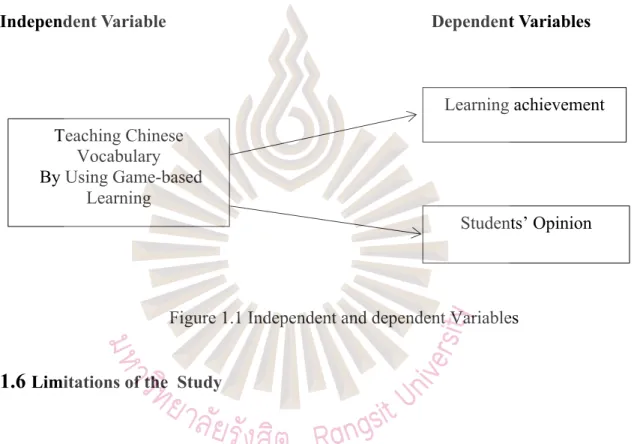
The results of learning performance were analyzed by Wilcoxon signed rank test, which showed that all students had improved their scores on the posttest compared to the pretest. This chapter includes the background, rationale, scope, and objectives of the study, as well as the research questions and operational definitions related to the study, followed by some expected outcomes of the study.
Background and Rationale of the Study
More than 6 million participants took Chinese language level tests around the world in 2016 (Hanban, 2017). The games could also engage students in class and influence student attitudes.
Research Objectives
Research Questions
Research Hypothesis
Scope of the Study
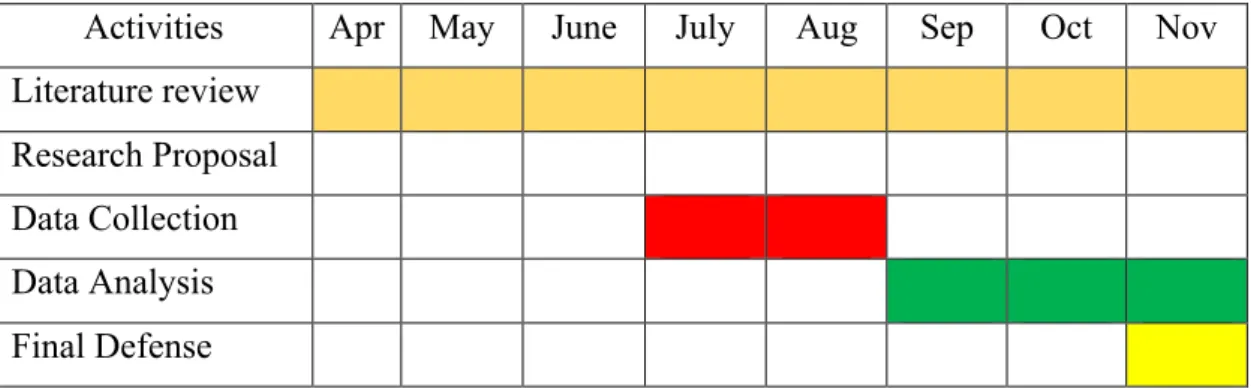
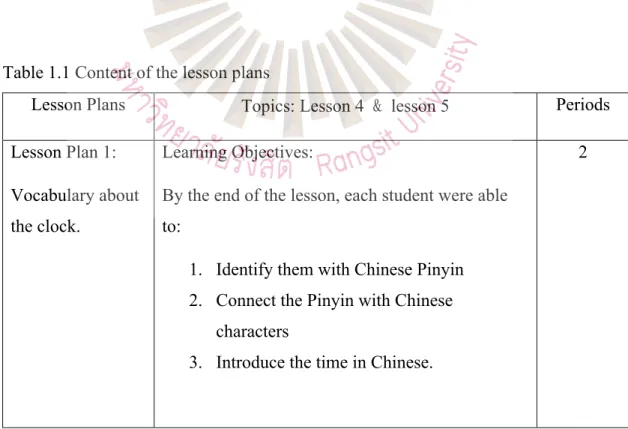
The theme of the lesson was “Using Games to Introduce Time Vocabulary in Chinese” from the Standardized Textbook of Thai Grade 8 Students. This study was conducted in four weeks, with two periods in each week in August 2020 in first semester of the academic year in Thailand.
Operational Definitions
More time could have been given for students to participate in game-based learning.
Significance of the Study
LITERATURE REVIEW
Teaching and Learning Chinese as a Second Language
Chinese language learning has been promoted by Confucius institutes, the voluntary, state-sponsored teachers in many different ways, also the Chinese bridge of TV show Chinese skill competition has attracted many participants from all over the world (Gil, 2008).
Background on Chinese Language Learning Education of Thailand
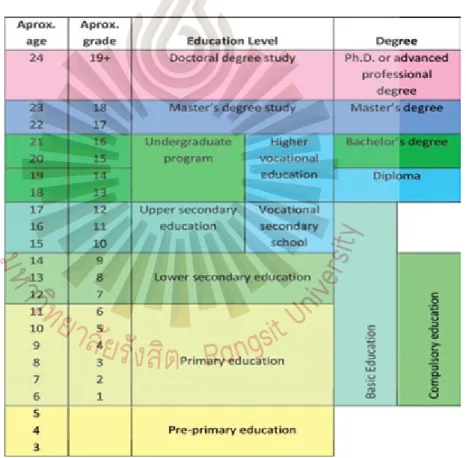
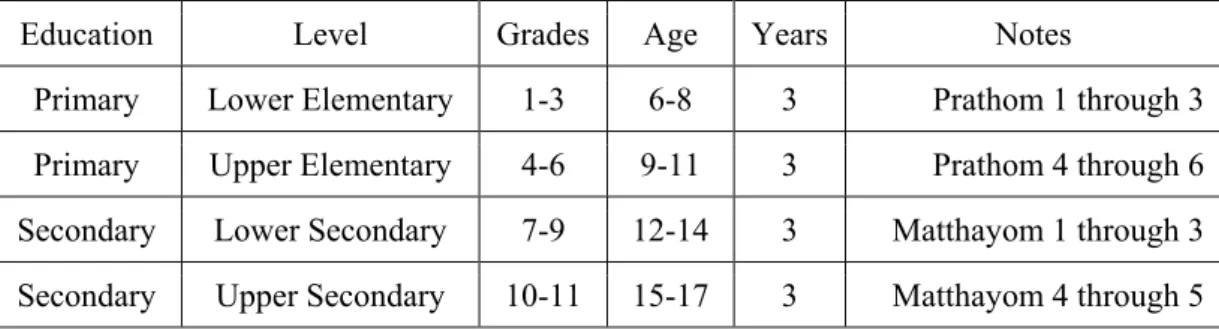
The entire basic and secondary education system (Table, 2.1) in Thailand is divided into four stages; 1) The first stage is lower primary; 2) "Prathom" is also called basic education from class 1 to class 6; 3) Youth Education, secondary means "Mattayom" in Thai, includes in grade 7 to grade 9; 4) Upper secondary education refers to grades 10 to 12 (Michael et al., 2018). The Thai education system (Figure 2.1) provides 9 years of compulsory education, with 12 years of free basic education guaranteed by the constitution.
The Importance of Vocabulary Acquisition Teaching in Second Language Classroom
The Research of Vocabulary of Vocabulary Acquisition Teaching in TCSL Classroom
Aiming at the beginning level, Cheng (2019) suggested using character-based learning to learn Chinese vocabulary. It seems that many researchers have tried all kinds of ways to help students learn and remember Chinese vocabulary in the CVT classroom.
The Problem with CVT of the Secondary School in Thailand
In the secondary stage, the Chinese language content did not ensure compliance with the requirements that the Ministry of Education of Thailand published so that the student's Chinese language ability cannot be advanced so that the student is still in the initial stages. Chen (2016) introduced the concepts of education in Thailand and found happiness as a necessary educational content in primary CVT in Nonthaburi.
Student Attitude
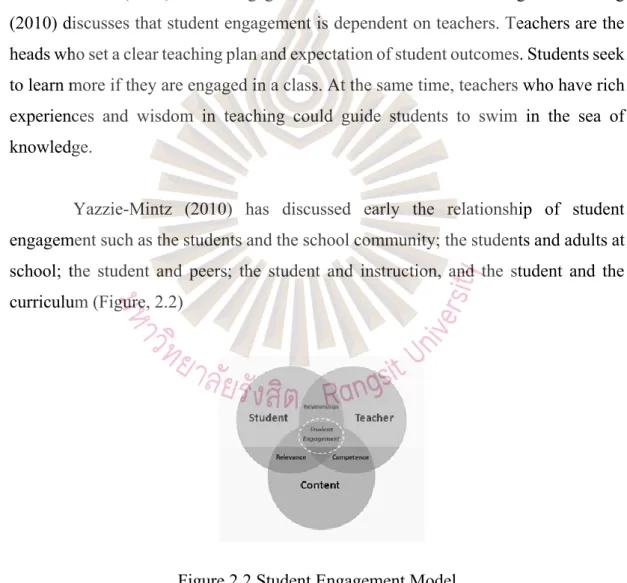
Already in 1984, Astin (1984) drew considerable attention to the role of student involvement in literature. The higher student engagement was examined in two main components, which include campus engagement and class engagement.
GBL (Game-Based Learning)
The literature review explained a number of games that could be effectively used in Chinese language learning. This section elaborates on the types of GBL in Chinese language teaching and learning.
Related Theories
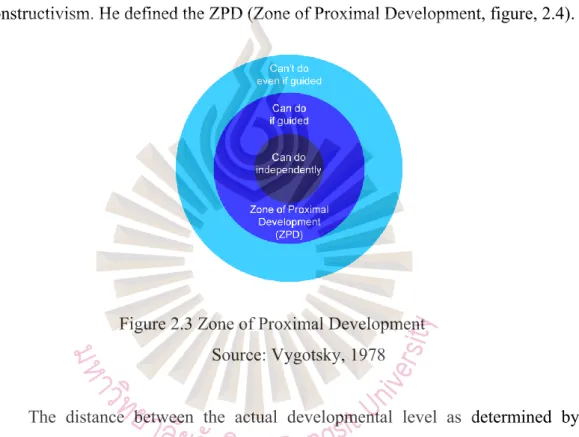
The first student thinks of a message from the teacher and whispers it into the ear of the second student in line. Gass and Selinker (1994) mentioned that there are three conditions that consist of the monitor hypothesis as follows: 1) Teachers must give students a lot of time to remember the learned knowledge and let them apply it in real communication; 2) Taking into account the language form when students express it, whether it is correct or not; 3) Teachers should ensure that students learn the rules of the target language and ensure that they communicate effectively.
Related Research and Studies
Ni (2018) conducted a study to investigate the nature of games students like best in the secondary Chinese classroom. According to the Thai students' characteristics, the game is a key to engage them in the class activity. In 2015, Wu conducted question-experimental research to find out whether the Chinese language level of foreign students taught in GBL performed better in vocabulary learning assessments.
All students' Chinese vocabulary level is at the same level before the experiment with their baseline data collection.
RESEARCH METHODOLOGY
- Research Design
- Population of the Study
- Research Instruments
- Validity and Reliability of the Instruments
- Data Collection Procedures
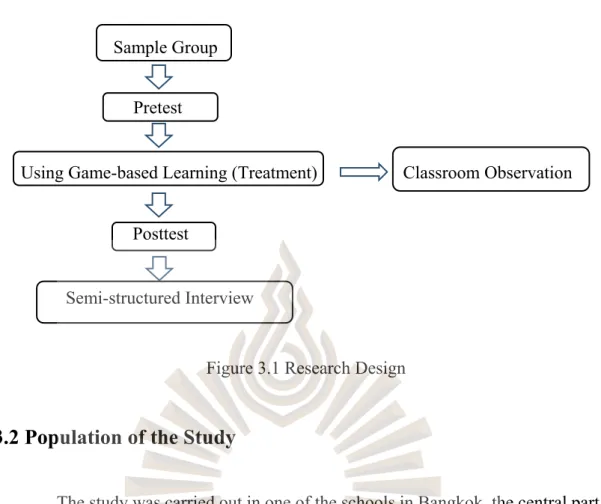
Finally, it was for lesson closure to summarize and evaluate the students' learning outcome of the lesson (see Appendix C for Lesson Plans). Learning achievement test consisted of pre-test and protest, which compared the learning achievement of the students, before and after the treatment. The researcher conducted semi-structured interviews with each student at the end of the treatment.
The IOC for lesson plans and performance test is rated +1. the semi-structured interview questions were +0.87, and the classroom observation was +0.67.
RESULT AND DATA ANALYSIS
Quantitative of Data Analysis
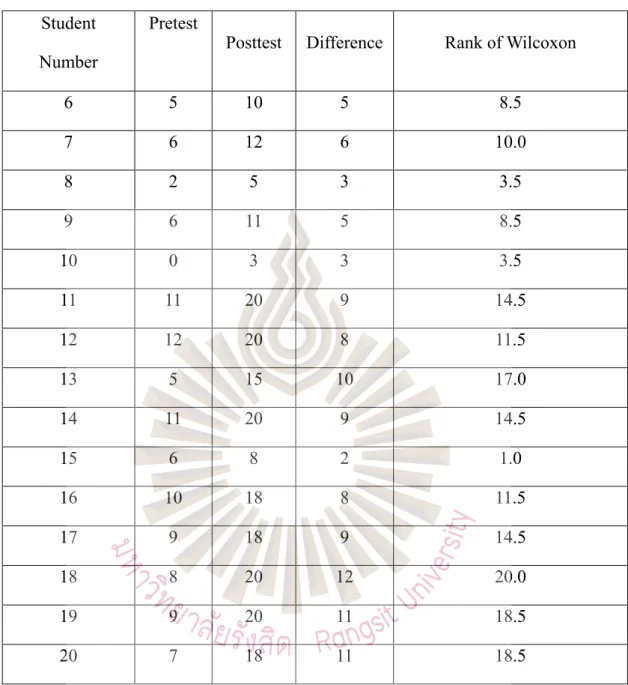
According to Table 4.1, it shows the raw scores obtained by the students in the pretest and posttest, along with the Wilcoxon difference in scores. In the pretest, the highest score of the students was 12 and the lowest score was 0, while in the posttest the highest score of the students was 20 with the lowest score being 3. Student no. 18 showed the highest difference of 12 points. while student no. 10 showed a lower but an increase of 3 points in the posttest.
The Positive Rank indicated N=20, which indicated that each student had improved their scores on the posttest compared to the pretest.
Qualitative Data Analysis
It was found that almost all participants preferred to learn Chinese vocabulary using games. Did you enjoy the lesson using games to learn Chinese vocabulary along with the teamwork. S2: "The game (To be a clock) helped me understand the vocabulary of Time in Chinese and it is impressive."
S9: "The game (You perform and I will guess) helped me to do the performance bravely in public and practiced the vocabulary about the school day activities.".

Summary
It is followed by discussions of the findings and recommendations for future studies and research.
Conclusion
A semi-structured interview was conducted at the end of the study to find out the students' opinions about the use of games in teaching and learning Chinese vocabulary. The students emphasized that GBL attracted them to the lessons and that they felt motivated to learn Chinese vocabulary. Thus, based on the results of the semi-structured interview, the researcher concluded that GBL engages students in class and motivates them to learn Chinese vocabulary more effectively.
However, according to the data obtained from the classroom observation, the use of GBL was obviously effective in learning Chinese vocabulary by Thai students in grade 8.
Discussion
The semi-structured interview was implemented at the end of the study to find out the students' opinion about the use of GBL in the Chinese vocabulary class. It stated that GBL was a good way to engage students in second language learning. GBL required students to engage in class and focus on vocabulary to complete the game.
It turned out that all students felt happy when they played games in class.
Recommendations
Some of them understood Chinese pinyin, so it may not be possible to generalize the reported findings to other Thai students who have never studied Chinese. It will be difficult for Thai students to memorize words if they do not understand Pinyin well enough. When the first game was played in class, some students were passive, then, in the second and third grade, they not only participated actively, but also tried to speak and memorize more vocabulary.
In summary, the use of GBL appears to be an alternative and effective teaching approach that is necessary for today's classroom, in particular, in the Chinese language classroom.
Toward the West - The China Dream and 'One Belt, One Road': Chinese Foreign Policy under Xi Jinping. 2018). The Study on Applied Research of Game Teaching Method in Primary Stage of Teaching Chinese as Foreign Language Take Malasawanphittaya Middle school as an example (Master's thesis, Guang Xi Normal University). Study of China's Language Status Planning for "The Belt and Road Initiative": Proposing the Ecology-of-Language Paradigm.
2015). The study of game design in Chinese vocabulary education - based on Chanthaburi Technical College of Thailand (Master's thesis, Guangxi Normal University).
APPENDICE
APPENDIX A
LETTER OF APPROVAL
APPENDIX B
VALIDITY TEST RESULT OF THE RESEARCH INSTRUMENTS
Details of three expertise who validated the instruments
Name Position Title Institutes
Instruments
IOC Remarks
Did you enjoy the lesson using game to learn Chinese vocabulary with teamwork.
APPENDIX C
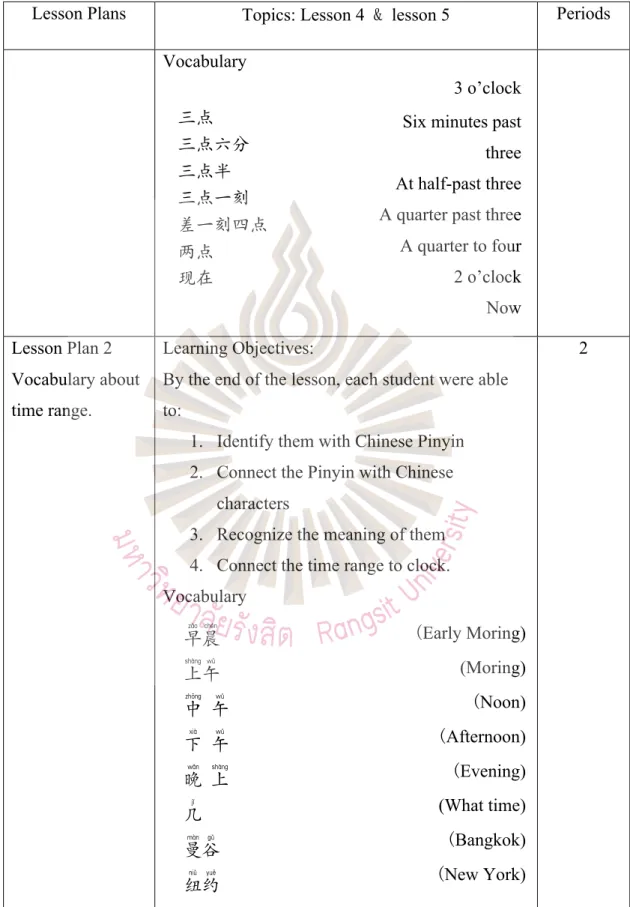
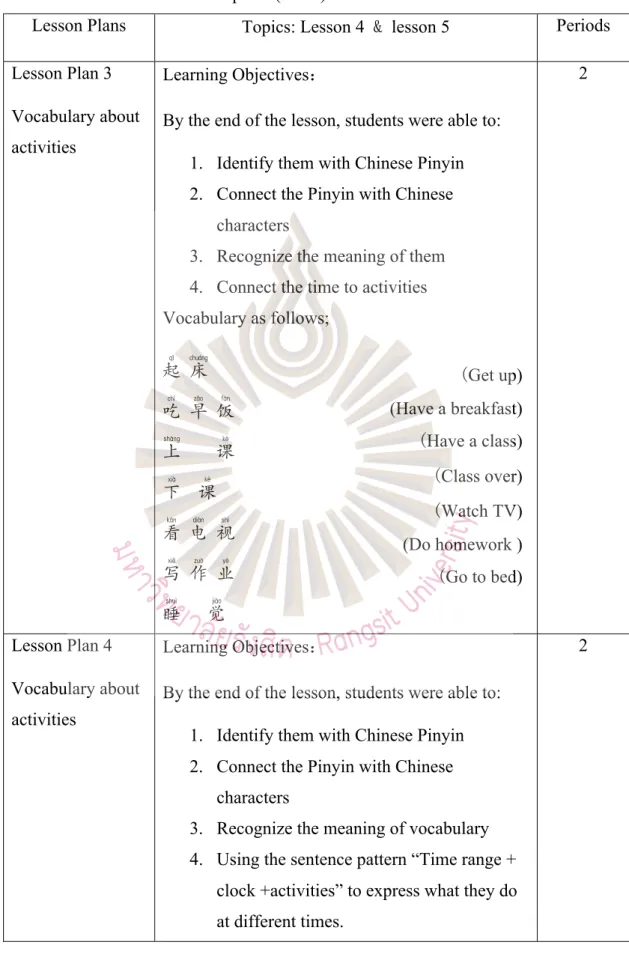
LESSON PLANS
LESSON PLAN 1
50 minutes)
The students are divided into four groups with five members each (odd number or even roll number). Students use the pattern of the hour hand, minute hand and second hand to represent the time according to the given vocabulary. The students are divided into two groups with ten members each (odd number or even roll number).
Teacher will prepare two sheets with ten vocabulary words and let each group choose them randomly when they play the game.
LESSON PLAN 2
Introduce the topic "time span" and let the students spell the pinyin in the vocabulary. Second round: Students will prepare a time vocabulary sheet without Pinyin and English for the second group (5 vocabulary words per time). Wolf” to read Chinese vocabulary correctly by entering Chinese characters on the vocabulary sheet.
Round three: Teacher can add the "上午,下午,晚业" to the dialogue pattern, as well as the other city to ask about the time.
LESSON PLAN 3
50 minutes)
The teacher will prepare four sheets (5 different pinyin vocabulary words on each sheet) and let each group choose one at random. Each group should decide that one student from the group will perform the act and the others will guess the meaning of this act in Chinese. The teacher will prepare four sheets (5 different vocabulary pictures on each sheet) and let each group choose one at random.
Each group will write five words on the sheet and let the other group choose it at random when they play this game.
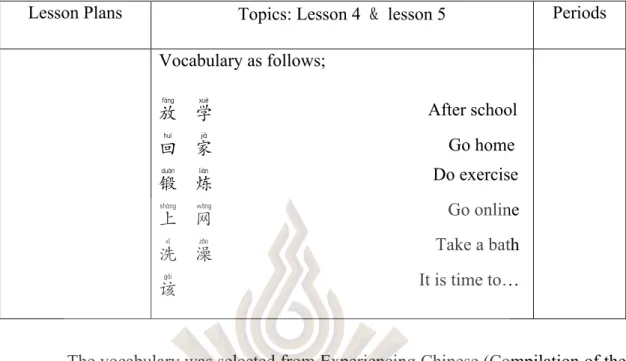
LESSON PLAN 4
50 minutes) Activity 3: Review-5 minutes
Students standing first will pass the vocabulary silently to the others one by one. The student standing first must silently pass the action on to the others.
APPENDIX D
ACHIEVEMENT TEST (PRETEST & POSTEST)
Choose the parts to form characters according to the radicals
- 我_____________________。
Source: https://images.app.goo.gl/6yskfQcnoYP. https://images.app.goo.gl/mFe5HqxBzD1jV YDu5 .. https://images.app.goo.gl/jhjRoEpLCi4 y4V8w5. Source: https://images.app.goo.gl/ZHv1v1dhqRv. https://images.app.goo.gl/kdTS3WSgBV FUJcM9A. d).
APPENDIX E
SEMI-STRUCTURED INTERVIEW
APPENDIX F
CLASSROOM OBSERVATON FORM
APPENDIX G
RESULTS OF RELIABILITY LEARNING ACHIEVEMENT TEST
APPENDIX H
INFORMED CONSTENT FORM