TOURISM DESTINATION RESIDENTS' PERCEPTIONS AND ATTITUDES TOWARD TOURISM FESTIVAL: TAKE THE LANTERN FESTIVAL IN MIYI COUNTY AS AN EXAMPLE
Xu Wanfei
A Thesis Submitted in Partial
Fulfillment of the Requirements for the Degree of Master of Economics (Economics and Management)
School of Development Economics
National Institute of Development Administration
2022
TOURISM DESTINATION RESIDENTS' PERCEPTIONS AND ATTITUDES TOWARD TOURISM FESTIVAL: TAKE THE LANTERN FESTIVAL IN MIYI COUNTY AS AN EXAMPLE
Xu Wanfei
School of Development Economics
Major Advisor (Associate Professor Apirada Chinprateep, Ph.D.)
The Examining Committee Approved This Thesis Submitted in Partial
Fulfillment of Requirements for the Degree of Master of Economics (Economics and Management).
Committee Chairperson (Assistant Professor Dr. Kampanat Vijitsrikamol, Ph.D.)
Committee (Associate Professor Apirada Chinprateep, Ph.D.)
Committee (Associate Professor Dr. Yuthana Sethapramote, Ph.D.)
Dean (Professor Dr. Sorasart Sukcharoensin, D.B.A.)
_____/_____/_____
ABST RACT
ABSTRACT
Title of Thesis TOURISM DESTINATION RESIDENTS' PERCEPTIONS AND ATTITUDES TOWARD TOURISM FESTIVAL: TAKE THE LANTERN FESTIVAL IN MIYI COUNTY AS AN EXAMPLE
Author Miss Xu Wanfei
Degree Master of Economics (Economics and Management)
Year 2022
The attitude of local residents towards organizing local tourism festivals is crucial to the development of a place. This paper uses quantitative analysis methods to study the perception and attitude of residents in Miyi County towards the impact of the Lantern Festival in Miyi. Then, this study analyzes the specific content of residents' perceptions, residents' attitudes, and the relationship between perception and attitude.
In the research process, a questionnaire survey was used to collect effective data, factor analysis was used to analyze residents' specific perception content, and cluster analysis was used to analyze residents' attitudes; Regression model was used to analyze the relationship between perception and attitude.
ACKNOWLEDGEMENT S
ACKNOWLEDGEMENTS
This paper is the end of this long and arduous learning journey. Because of the strong support of many people during this period, I can finish this journey.
I deeply and sincerely thank my tutor Professor Apirada Chinprateep for her continuous valuable guidance throughout my research process. It is my great honor to study under her guidance. Thank him for her patience, support, empathy, and sense of humor. I think I am the luckiest person to benefit from the profound knowledge and noble qualities of teacher Apirada. In addition, I would like to thank all the teachers and students of the School of Development Economics, NIDA, as well as the internal and external evaluation teachers, for their valuable opinions, which have greatly helped me to improve the quality of my thesis. I sincerely thank my dearest friends and members of the research team for their support and thank them for their encouragement, friendship, and support since I started this research. I am very grateful to my parents for their motivation, patience, love, and care in my education and life journey. Without their help, this paper could not have been completed. Finally, I would like to thank all those who directly or indirectly helped me complete my thesis. I sincerely wish you all the best and happiness.
Xu Wanfei October 2022
TABLE OF CONTENTS
Page
ABSTRACT ... iii
ACKNOWLEDGEMENTS ... iv
TABLE OF CONTENTS ... v
LIST OF TABLES ... viii
LIST OF FIGURES ... ix
CHAPTER 1 INTRODUTION ... 1
1.1Research background ... 1
1.2Purpose of the study ... 2
1.2.1Theoretical significance ... 2
1.2.2Practical significance ... 3
1.3Research objective ... 4
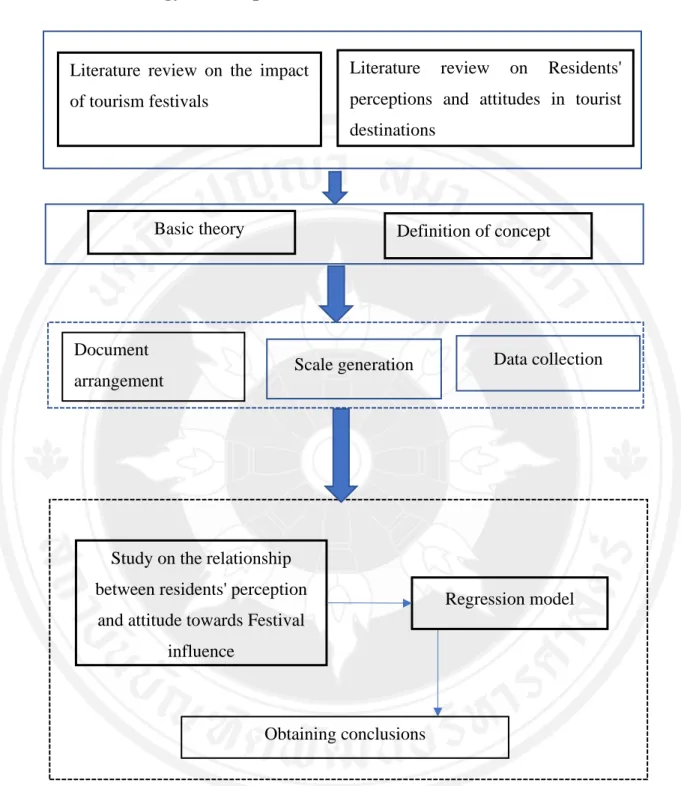
1.4Technology roadmap ... 5
CHAPTER 2 LITERATURE REVIEW ... 6
2.1Foreign study on the impact of tourism festivals and residents' perceived attitudes ... 6
2.1.1A study on the impact of tourism festivals ... 6
2.1.2A study of the impact on residents' perceptions and attitudes ... 9
2.2Domestic study on the impact of tourism festivals and residents' perceived attitudes ... 11
2.2.1A study on the impact of tourism festivals ... 12
2.2.2A study of the impact on residents' perceptions and attitudes ... 15
CHAPTER 3 METHODOLOGY ... 17
3.1Sources of relevant theory and questionnaire design ... 17
3.1.1Relevant theory ... 17
3.1.2Related Concept Definition ... 18
3.1.3Determination of research subjects and scope of research ... 21
3.1.4Questionnaire design ... 21
3.2Data analysis methods and model ... 27
3.2.1Analysis of basic statistical characteristics of the sample ... 27
3.2.2Cluster Analysis ... 27
3.2.3Exploratory factor analysis ... 28
3.2.4Model… ... 29
CHAPTER 4 DATA ANALYSIS ... 30
4.1The first questionnaire ... 30
4.1.1Reliability test ... 30
4.1.2Validity test ... 30
4.1.3Factor analysis ... 31
4.1.4Descriptive analysis ... 36
4.1.5Attitude section of the first questionnaire ... 36
4.1.6Cluster analysis ... 37
4.1.7Regression analysis ... 39
4.2Second questionnaire ... 40
4.2.1Reliability test ... 40
4.2.2Validity test ... 41
4.2.3Descriptive statistics of the perceptual component ... 42
4.2.4Correlation analysis ... 42
4.2.5Descriptive statistics of attitude section ... 43
4.2.6Cluster analysis ... 44
4.2.7Regression analysis ... 45
CHAPTER 5 CONCLUSION AND RECOMMENDATIONS ... 47
5.1Conclusion ... 47
5.2Recommendations ... 48
5.2.1Pay more attention to brand and market development ... 48
5.2.2Improve the social and environmental benefits of the festival ... 48
5.2.3Improve residents' awareness of environmental protection ... 49
5.2.4More marketing and promotion ... 49 BIBLIOGRAPHY ... 51 BIOGRAPHY ... 55
Page
Table 3.1 Perceived variables and sources of economic impact of festival... 22
Table 3.2 Perceived variables and sources of social and cultural impacts of festivals 23 Table 3.3 Perceived variables and sources of festival environmental impact ... 24
Table 3.4 Perceived variables and sources of economic impact of festival... 25
Table 3.5 Perceived variables and sources of social and cultural impacts of festivals 26 Table 3.6 Perceived variables and sources of festival environmental impact ... 26
Table 4.1Reliability Statistics ... 30
Table 4.2KMO and Bartlett's Test ... 31
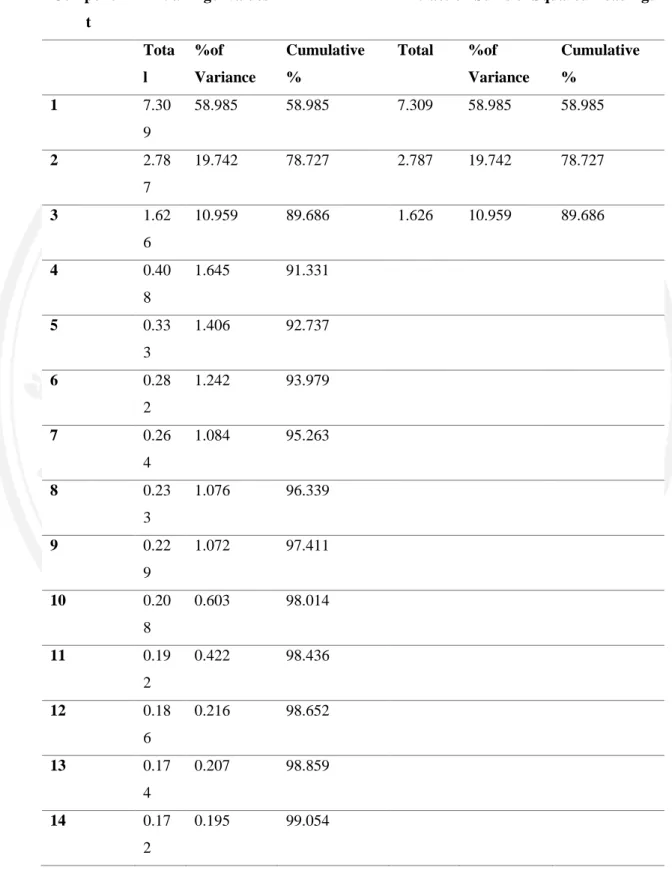
Table 4.3Principal component analysis ... 32
Table 4.4Component rotation load matrix ... 34
Table 4.5 Descriptive analysis ... 36
Table 4.6Descriptive analysis ... 36
Table 4.7 Reliability test ... 37
Table 4.8Cluster Analysis ... 38
Table 4.9 Regression analysis ... 39
Table 4.10 Reliability test ... 41
Table 4.11Validity test ... 41
Table 4.12 Descriptive analysis ... 42
Table 4.13 Correlation analysis ... 43
Table 4.14Descriptive analysis of attitude part ... 43
Table 4.15Cluster analysis ... 44
Table 4.16Regression analysis ... 45
Page Figure 1.1 Technology Roadmap ... 5 Figure 3.1 social exchange process model ... 17
INTRODUTION
1.1 Research background
With its remarkable economic and extensive social effect, tourism festival activities are favored by tourism destination governments and enterprises at home and abroad. The successful holding of tourism festival activities has become an essential booster in promoting the development of tourism destinations. However, there is still a big gap between domestic and foreign tourism festivals. The development of foreign tourism festivals shows a sustained and healthy development trend, and there are many tourism festivals with a long history (such as Munich Beer Festival, Brazil carnival, etc.); these brand tourism festivals enjoy a high international reputation; Compared with the development of foreign tourism festival activities, the development of tourism festival activities in China is relatively backward. China's tourism festival activities first appeared in the late 1980s. In the past 30 years, all kinds of tourism festivals have gradually developed, but they have the characteristics of small scale, low popularity, and short duration. The economic and social effects they bring are far less than those of foreign tourism festivals. From the perspective of economic investment and government support, there is no significant gap between domestic and foreign tourism festival activities, or even better than abroad in some aspect. Why is there such a huge gap between domestic and foreign tourism festival activities? Chinese scholar Yao Haiqin's point of view may give a new way to answer this question to some extent: a successful tourism festival is often inseparable from strong support and active participation. Whether it is the Munich Beer Festival or the Brazilian Carnival, the commercial nature of the festival is gradually weakened, and the highlight is to make it a part of the residents' life. The domestic tourism festival is more for the purpose of utilitarianism, in order to obtain certain economic benefits, but rarely take into account
the realization of residents' interests. This is also reflected in academic research. In the early stage of foreign research on the impact of tourism festivals, more attention was paid to the economic effect, but now it has gradually shifted to the study of social and environmental effects, while domestic experts and scholars still focus more on the economic effect. Therefore, from the perspective of residents, this paper attempts to analyze residents' perceptions of the impact of tourism festivals, residents' attitudes towards tourism festivals, and the relationship between perception and attitude.
In this study, the Miyi Lantern Festival is selected as the specific research object. The Miyi Lantern Festival (from now on referred to as the Lantern Festival) has been held for 11 years. In these 11 years, the Lantern Festival has received a certain degree of development and social attention. The government is also increasing financial investment and external promotion efforts year by year and enriching the activities of the Lantern Festival. However, in a survey conducted in 2019, the author found that the residents of Miyi did not pay much attention to the festival and participated in it. With many doubts, the author chooses the Miyi Lantern Festival as the case study object.
Although the research results lack universality, it is still expected to obtain some research conclusions with practical and theoretical significance.
1.2 Purpose of the study
1.2.1 Theoretical significance
1) From the perspective of residents, the paper expands the perspective of Tourism Festival impact research
Research on the impact of tourism festivals is one of the current hot spots.
However, the research on the impact of tourism festivals is mostly from the perspective of enterprises and the government and puts the economic benefits of tourism festivals in the first place but ignores the important role of residents. A successful tourism festival is often inseparable from the strong support and active participation of residents. In this study, mainly from the perspective of residents in the tourist destination, the residents' perceptions and attitudes of the impact of tourism festivals are analyzed to expand the research perspective of the impact of tourism festivals.
2
)
Path analysis is used to achieve the innovation of research methodsIn the process of research on the impact of tourism festivals, factor analysis and qualitative research methods are often used. Generally speaking, there is a phenomenon that the research is not in-depth. In order to deeply analyze the residents' perception and attitude of the impact of tourism festivals, and further analyze the interaction between perception and attitude, this study adopts empirical research methods, and chooses the path analysis to conduct in-depth analysis of this problem, so as to realize the innovation of research methods.
3) This paper selects Miyi Lantern Festival as a case to supplement the case Through literature search, it is found that there is a lack of literature on Residents' perception and attitude towards the impact of tourism festivals. So far, the Miyi Lantern Festival has been successfully held for 11 times, and has been widely used
It has produced certain economic, social, cultural and environmental effects, and has certain typicality and representativeness. Therefore, we choose the Miyi Lantern Festival as the case to supplement the case.
1.2.2 Practical significance
1) It is helpful to guide the development of Miyi Lantern Festival
Miyi Lantern Festival has been held 11 times so far. Through the holding of the festival, Miyi County has expanded the degree of opening to the outside world, shaped the city's image, enhanced the city's popularity, expanded the tourism market, and promoted the economic development of Miyi.
This study selects the Miyi Lantern Festival as a case study, starting from the residents' perspective, trying to analyze the relationship between the perception and attitude of local residents on the impact of tourism festivals. The analysis results are targeted and specific, and the management enlightenment is feasible and forward- looking, which will play a guiding role in the future development of the Miyi Lantern Festival.
2) It is helpful to guide other tourism festivals to be held better
At the present stage, one of the problems in China's tourism festivals is that they cannot mobilize the active participation of the residents, and it is often dominated by government regulation with strong administrative color. On the other hand, foreign tourism festivals, such as Munich Beer Festival and Brazil carnival, are all residents' events from which everyone can have fun. This is an important reason for the long-term existence of these festivals, which is also worth our reflection on. Improving residents' participation will greatly promote the sustainable development of tourism festivals.
Miyi Lantern Festival is the case selected in this study. The universality of the research results remains to be tested, but its theoretical results and research methods still have a certain reference for developing other tourism festivals.
3) It is helpful to improve residents' participation in tourism festivals
From the existing research results and the actual development situation, we can find that the residents are often in a weak position in the tourism festival activities, unable to participate in the design and planning of Tourism festivals, and unable to express their ideas and opinions, just passively participate in them. However, a series of positive or negative impacts of tourism festivals directly point to residents. This study starts from the perspective of residents because we see the important role of residents in tourism festivals and the status quo of residents' passive participation.
Therefore, this study is conducive to improving residents' participation in tourism festivals.
1.3 Research objective
This study aims to solve three main problems
1) What are the specific components of residents' perceptions of the impact of the Miyi Lantern Festival?
2) What is the attitude of the residents of Miyi towards the Lantern Festival?
What are the specific types of the residents' attitude towards the Lantern Festival;
3) For residents, what is the relationship between their perception and attitude, what is the impact path, and on this basis, put forward the management enlightenment.
1.4 Technology roadmap
Literature review on the impact of tourism festivals
Literature review on Residents' perceptions and attitudes in tourist destinations
Basic theory Definition of concept
Document
arrangement Scale generation Data collection
Study on the relationship between residents' perception
and attitude towards Festival influence
Regression model
Obtaining conclusions
Figure 1.1 Technology Roadmap
LITERATURE REVIEW
2.1 Foreign study on the impact of tourism festivals and residents' perceived attitudes
2.1.1 A study on the impact of tourism festivals 1)A study of the impact content of tourism festivals
The research on the content of tourism festival impact mainly focuses on the economic impact of tourism festivals, the social impact of tourism festivals, and the environmental impact of tourism festivals. Cultural impact, and the environmental impact of tourism festivals. It is also in view of the comprehensive effect that tourism festivals can bring.This is why the government, business, and academia have conducted research on this issue, while research on the content of the impact has mainly focused on the economic impact of tourism festivals and the socio-cultural impact of tourism festivals.
Economic Impact. Experts and scholars agree on the huge economic impact that tourism festivals can have(Formica & Murrmannn,1998). (Getz,2003) believes that tourism festivals can have a significant impact on the local economy and can bring significant economic benefits to the area. (Felsenstein and Fleischer,2003) analyzed the reasons for organizing tourism festivals in destinations, and in their view that the local economy and tourism industry can be promoted to a great extent by organizing tourism festivals. (Hua and Chiu,2013) believes that through the development of tourism festivals, the impact of seasonality on tourism development can be weakened to some extent, expanding government revenues and having a positive economic impact on the local economy. Melville. (2012) proposes that tourism festivals can bring huge direct and indirect economic benefits. However, some scholars have seen the possible negative economic effects of developing tourism festivals, such as Evinç and Ibrahim.
(2013) analysis of the phenomenon of possible price increases driven by tourism festivals on the basis of fully seeing the positive effects of tourism festivals.
Snowbaoo&Antrobus research shows that only a small number of tourism festivals generate great economic benefits, while for most of them, the economic benefits are limited, and the reason for this problem may be due to the rapid increase in local demand for infrastructure due to the influx of tourists, and this increase in demand has led to local outsourcing of some of the projects of tourism festivals, thus causing economic leakage that. Snowbaoo&Antrobus perspective on this issue forces us to re- examine the economic impact that tourism festivals can have. Russell Hitchings, Browne, and Jack. (2018)It shows that festivals are the blood of our culture and heritage. There are many festivals in hadoti area, especially local festivals, which have social and economic impact. Local festivals in hadoti naturally help to strengthen local tourism and make a significant contribution to the economy. Festivals are a key strategy for promoting places that are largely abandoned because of underinvestment. .B, R, and F (2020) Information on residents' perceptions and attitudes toward cruise tourism was collected through questionnaires and principal component analysis was used to obtain explanatory variables (factors) to estimate logit models to explain these perceptions and attitudes. The results indicate that residents' perceptions of cruise tourism have a positive impact from a socioeconomic perspective.
Socio-cultural influences. On the socio-cultural impact of tourism festivals, experts and scholars have also conducted studies .Athinson&Laurier analyzed the international marine festival held in Bristol, UK in the year as the research object The analysis of the social rejection of tourists by local residents during the development of the festival reveals the possible negative socio-cultural impacts of the festival development; however, most still believe that the positive socio-cultural impacts of the festival outweigh the negative impacts, such as Janiskee & Drews, who argue that for more small and medium-sized cities, the purpose of the festival is not only to promote local economic development, but more importantly, to improve the local infrastructure and enhance the image of the city through the festival. Rao (2001) argues that the development of tourism festivals can effectively enhance social cohesion; in the view of O'Sullivan and Jachson (2002)tourism festivals can increase the diversity of activities of local organizations, promote harmonious relations between government
and residents, and contribute to the overall social development. Richard Prentice &
Vivien Andersen (2003), on the other hand, see that the development of tourism festivals can reintegrate a city's tourism resources and reposition the city. (Mckercher and Mei,2006) points out that tourism festivals can deeply explore the unique local cultural connotations, ethnic characteristics and local customs, and achieve the preservation and inheritance of the city's traditional culture while enabling the sustainable development of tourism. Similarly, RickRollins & TomDelamere suggest that the benefits of developing tourism festivals to society far outweigh the problems they may cause. It is noteworthy that when conducting research on social impacts, some experts and scholars have also chosen to cut through the residents' perspective to conduct research, in their view, by conducting festivals, residents have increased their pride, social cohesion, promoted cultural exchange and cultural identity, increased their understanding of regional culture, improved their quality of life, and enhanced their social image
Environmental impact. In addition to the social and economic impact, some experts and scholars believe that tourism festivals can also bring about improvements in the local environment(Carrie Valdez, Babak Sarani, Young, S., & Chawla, 2016), Indeed, The symbiotic relationship between tourism festival development and environmental protection has also been recognized by a growing number of scholars(O'Sullivan & Jachson, 2002). Carrie Valdez et al. (2016) It is noted that with the rapid development of tourism festivals, residents are more willing to take action to change the existing state of the local area; furthermore, with the development of festivals, the desire and commitment of residents to improve the community is increasing, such as preserving and restoring historical buildings, rebuilding old theaters, building public recreational facilities, planting trees, building roads, etc.Collins and Cooper (2017) suggests that ecological footprint analysis can provide festival organizers and policy makers with valuable information on the factors that influence the scale of a festival's environmental impact and the types of strategies needed to reduce the impact of visitor travel
2)An evaluation study of the impact of tourism festivals
The assessment of the impact of tourism festivals is complex and mostly is based on a more mature system of destination tourism impact assessment, while for social impact, The assessment of the effectiveness of social impact is mostly from a psychological perspective(Rollins & Delamere, 2007). Emma (Wood & Thomas) used three small-scale tourism festivals in Wales, UK, as a case study to assess their economic impact, using a quantitative research approach in an attempt to analyze which of the three is more beneficial to the development of the local rural economy.
Timothy.J. Tyrrell estimates the direct economic impact of festival tourism using a methodology that distinguishes between different sources of spending, ultimate flows of spending, and causes of spending. Rollins and Delamere (2007), The Toronto Sand Sculpture Festival is used as an example to assess and measure its social impact. D.
Getz (2018) think while economic impacts have received significant attention and there is sufficient material to guide all applications, the theory and practice of social, cultural, and environmental impacts have lagged relatively behind. In the context of the triple bottom line, social responsibility, and sustainability approaches, most of the available literature is on normative goals (e.g., going green, meeting sustainability criteria), the nature of positive and negative impacts (descriptive approaches or based on public input), or theories of how impacts occur; very little theoretical development or practice is directed toward impact assessment in these application areas.
2.1.2 A study of the impact on residents' perceptions and attitudes As early as the 1960s, studies on the residents and attitudes of tourist places appeared in foreign countries, and in recent years, it has become one of the hot issues in foreign tourism sociology and tourism geography research.
Bulter (1980), a representative of early theories, proposed the theory of the tourism development cycle. In his view, the development of a tourist destination generally goes through six stages: exploration, start-up, development, stabilization, stagnation, decline or revival, and after the revival of a tourist destination, the evolution of the previous stages begins again. JohnAP (1992) argues that all human behavior is aimed at maximizing the satisfaction of benefits, and that by providing other interest groups in tourism activities, such as tourism resources and services, residents expect to
receive what they perceive to be equivalent benefits, and he attempts to construct a social He tries to construct a model of the social exchange process to understand the dynamic relationship between tourists and residents and to explain residents' perceptions of tourism. Baoying Ning, He., and Li. (2013)Jade Dragon Snow Mountain was chosen as a case study to understand their perceptions and attitudes towards glacier tourism and the factors influencing it, and the results indicated that almost all residents support the development of tourism, although they are also aware of its negative effects.
Yunxi and Shanying (2016)Examining local residents' perceptions and attitudes toward convention center development in Suwon City from the perspective of social exchange theory resulted in the greatest socio-cultural influence in local residents' perceptions of convention center development, and environmental influences did not seem to have a significant impact on local residents' attitudes toward development. B et al. (2020) The perceptions and attitudes of the inhabitants of Las Palmas de Gran Canaria regarding cruise tourism in Gran Canaria (Spain) were analyzed. We collected information on residents' perceptions and attitudes towards cruise tourism through a survey and applied principal component analysis to obtain explanatory variables (factors), proposing that residents' perceptions of public policies that limit the development of cruise tourism are negative.
A review of the literature on the impact of tourism festivals reveals several commonalities in the research of domestic and international experts and scholars. (1) Although research on the impact of tourism festivals is abundant, research on the impact from the residents' perspective is slightly lacking, and research on residents' perceptions and attitudes toward the impact of tourism festivals is scarce. In the foreign literature only in the study of social influence have scholars cut from the residents' perspective (Delamere & Hinch, 1994; Besculides, Lee & Mc Cormic, 2002: Besculides, Lee Cormic, 2002) but do not address the issue of their perceptions and attitudes. In the foreign literature, only one other study is similar to this one, but it is based on the organizer's perspective, examining the organizer's perception of the impact of the festival. And in the domestic literature, only Wenwen Yu Wenwen (2009) master's thesis. A study of residents' perceptions and attitudes towards event tourism - taking the Qingdao International Beer Festival as an example is similar to the topic chosen for this paper. but the object of study is event tourism rather than tourism festivals. (2) In the
research on the impact of tourism festivals, both foreign and domestic experts and scholars focus more on the positive economic and socio-cultural impact, and this"utilitarian" view is closely related to the huge economic benefits of tourism festivals. (3) Experts and scholars at home and abroad When conducting research on the impact of tourism festivals, most experts choose the case study approach to analyze the impact of tourism festivals in specific regions. festival impacts in specific regions.
However, it is worth mentioning that some experts and scholars are beginning to explore the negative impacts of tourism festivals, which will become one of the key issues for future research as they continue to develop. This will also become one of the key issues for future research as tourism festivals continue to develop. Of course, there are some differences between domestic and foreign experts and scholars, for example, from the perspective of research methods, foreign research mostly adopts quantitative research methods, while domestic research adopts more qualitative research methods.
while domestic research is more qualitative. Of course, there are some differences between domestic and foreign experts and scholars, for example, from the perspective of research methods, foreign research mostly adopts quantitative research methods, while domestic research adopts more qualitative research methods. method, while domestic research is more qualitative; the research is more mature, with both in-depth theoretical discussion and rich application research, while domestic research is more In contrast, domestic studies are mostly validation studies.
2.2 Domestic study on the impact of tourism festivals and residents' perceived attitudes
The rise of local festivals in China first arose in the mid to late 1980s. such as the Dalian International Fashion Festival, the Weifang Kite Festival, etc. However, these events are more rooted in the economic impact they can bring, and rarely do governments or companies run some kind of festival for tourism purposes. With the continuous development of practice, the comprehensive impact of tourism festivals has become increasingly prominent, and theoretical studies on the impact of tourism festivals have been conducted. Domestic research on the impact of tourism festivals has focused on both the content of tourism festival impact and its assessment.
2.2.1 A study on the impact of tourism festivals 1)A study of the impact content of tourism festivals
Similar to foreign studies, domestic research on the impact content of tourism festivals has also focused on the economic and socio-cultural impacts they bring.
Economic Impact. Many experts and scholars believe that the development of tourism festivals can bring good economic effects to the destination and promote local economic development, among which the representative views are: Huifang and Haining (2012) considering that tourism festivals play an important role in tourism and economic development, on the one hand, through the development of tourism festivals can gather a large number of tourists in a short period of time, on the other hand, can drive the economic development of related industries and the whole region. thereby generating a huge economic effect. Y. X. Li (2003) divides the impact of tourism festivals on the economy of tourism destinations into the economic impact of the festival itself, the direct economic impact on the destination, and the total economic impact on the destination three levels, seeing the huge linkage effect that can be brought about through the development of tourism festivals. Lu Fengying and Wang Lucang (2007) suggest that tourism festivals are a "booster" for regional development, an engine for economic take-off, and can have a huge economic impact, and this role is gaining increasing attention. Yu (2007) in his master's thesis, mentions that tourism festivals have now become an important means of attracting tourists to tourist destinations and increasing tourism revenues. Similarly, Du(2017)also fully affirmed the economic role of tourism festivals as plays a strong pulling effect on regional economic and social development and reform and development, and has become a comprehensive activity indispensable for economic development. Y. Y. Zhang, Shi, and Qian (2021)Using the ancient canal town of Yaowan as a case study, we collected data through on-site observation and semi-structured interviews with residents of the core scenic area of the ancient town of Yaowan and the external new town, and studied the economic perceptions of residents
Socio-cultural influences. Experts and scholars have also seen the socio-cultural effects brought about by the development of tourism festivals: Golay, Mahon, and Cismas. (2011) argues that the holding of tourism festivals not only improves local economic management, but also has an important impact on the ideology, moral
cultivation and spiritual life of the residents of the destination. but also has an important impact on the ideology, moral cultivation and spiritual life of the residents of the destination. Yao (2006) suggests that tourism festivals can be a source of material and spiritual for the individual, and to achieve physical and mental satisfaction through participation in tourism festivals, while for people from different countries and regions, they can enhance understanding and friendship in a specific time and space. for people from different countries and regions to enhance understanding and deepen friendship in a specific space. Ho and Yeon. (2019) argue that tourism festivals are an important vehicle for promoting the image of destinations, shaping regional tourism brands, spreading regional culture, promoting economic and trade cooperation, and driving economic development. Sroypetch. (2016), using the Qingdao International Beer Festival as an example, provides an in-depth analysis of its impact, as the festival highlights the cultural characteristics of Qingdao, the activities enrich the life of the citizens, improve the quality of the citizens, and play a positive role in promoting the creation of a tourism city brand in Qingdao. Y. Li (2015)provides a more comprehensive analysis of the socio-cultural impact of tourism festivals, including from the positive side, tourism festivals are conducive to the shaping of regional image, to the dissemination of regional traditional culture, to enhance the residents' sense of identity and honor of the host place, and contribute to the division of labor and cooperation among the social parts, but also have the effect of negative effects such as impacting and influencing the original cultural and traditional life patterns of the host place, distorting moral standards, etc. But overall, the positive effects seem to far outweigh the negative ones.
Environmental impact. Unlike foreign studies, there are experts and scholars who have conducted studies on ecological environment, but the number is relatively small, which is also in line with the development stage of tourism festivals in China. At this stage, tourism festivals are on the rise, and people see more of their economic and social impacts, and their environmental impacts are mostly studied in terms of large tourism festivals. The impact is also mostly studied in the context of large tourism festivals. Jia, Mei, and Huang (2013) Using the Shanghai Peach Blossom Festival and the Shanghai Urban Forest Carnival as examples, we studied the effects of festivals on vegetation, soil, water environment, atmosphere, and other factors. The negative
environmental impacts from tourism festivals were seen. Haojie (2015) Community residents tend to negatively perceive the environmental impacts of urban B&Bs, but community residents in Hohhot do not strongly resist the environmental impacts of urban B&Bs J. Liu, Qu, Huang, and Liang (2014) believes that ecological environment quality is one of the keys to the sustainable development of local ecotourism. This paper explores the influence of community residents' participation, perceived benefits and environmental attitudes on community residents' environmental attitudes by constructing an influence relationship model with three variables as one and applying structural equation modeling
2)An evaluation study of the impact of tourism festivals
Since tourism festivals are highly relevant and driven, it is difficult to assess their impact, but there are still many experts and scholars who try to use different methods to assess the impact of tourism festivals. However, many experts and scholars have tried to assess the impact of tourism festivals using different methods. Y. X. Li (2003) develops an estimation model of the impact on the economic benefits of the tourism festival itself, the direct impact on the destination economy and the total impact on the destination economy by borrowing estimation and sampling data. Lv (2012) used the idea of fuzzy mathematics to establish a corresponding fuzzy comprehensive evaluation model. And used the model to quantitatively analyze the comprehensive benefits of the Beijing Daxing Watermelon Festival on the basis of a large number of actual data surveys. Lin, Song, and Wang (2014)based on questionnaires and in-depth interviews, we analyzed local residents' perceptions of the festival's impact and the mechanisms of its formation from both quantitative and qualitative aspects, using social exchange theory and social representation theory. The results showed that the residents' perceptions of the festival were mainly formed through direct experience and social interaction, and their positive perceptions of the event's impact were dominant, while their negative perceptions of benefit distribution and land use were also evident.Yang (2019) Taking the Tianshui Fuxi Cultural Tourism Festival as the research object, from the perspective of residents' perceptions, based on the collation and summary of relevant literature at home and abroad, and the comprehensive application of social representation, social exchange, Doxey anger index, and factor analysis, ANOVA and cluster analysis of the data, we conducted a systematic and in-depth exploration and
research on the overall situation and individual differences of residents' perceptions and attitudes in Tianshui, faxian local residents in general perceive that the positive impact of the development of the tourism festival is greater than the negative impact, and most people have a positive and supportive attitude towards the holding and development of the festival.
2.2.2 A study of the impact on residents' perceptions and attitudes The research on tourism perceptions and attitudes of residents in tourist destinations by Chinese scholars began in the 1990s, and Lu Lin's (1996) survey on the perceptions and attitudes of residents in the Yonan tourist area is one of the most representative early research results. Based on a more detailed survey, he tried to conduct a study related to the attitudes of residents in tourist destinations and introduced the relevant theory of Hasan Zafer Dogan (1989). Gu Qiushi (2008), based on a study of relevant literature at home and abroad, provides a more comprehensive review of the current status and problems of research on residents' perceptions and attitudes in tourism destinations, and proposes corresponding development directions for China in the future. J. Y. Liu and Li (2016)Integrating social exchange theory and Weber's rationality theory, a conceptual model of the relationship between community empowerment, residents' perception of equity, and tourism sustainability support is constructed. The study shows that community empowerment positively affects perceptions of equity and sustainability support, community empowerment is an effective way to achieve tourism equity and sustainability, and perceptions of equity positively affect residents' sustainability support. Cheng (2016)Through the analysis of the data from the questionnaire, the relationship between perceptions and support of urban residents for major events was studied, and the mechanism of the support of residents for major events was explored. It is suggested that a continuous study of residents' perceptions and support for major events should be conducted in China, so as to provide a reference experience for major events held in major cities in China one after another.Z. Y. Li (2020) selected the first China International Import Expo (CIE) as a case study, and from the perspective of residents' perceptions, a semi-structured interview and questionnaire were used to conduct two surveys of Shanghai residents half a month before and four months after the event. However, the intensity of residents'
perceptions significantly decreases as the exhibition progresses. At the same time, residents' perceptions changed significantly before and after the fair, with a significant weakening of positive impact perceptions and a significant increase of negative impact perceptions, but the positive impact perceptions were still stronger than the negative impact perceptions.
A compilation and analysis of the existing literature revealed that there are significant differences between domestic and foreign experts and scholars in their research on the perceptions and attitudes of tourism impacts among residents of tourist destinations. In contrast, domestic scholars lack innovation in the field of basic theory, and often cite it directly without fully verifying its generalizability to our research, which will not be conducive to deeper research in the field. In terms of research areas and types, foreign scholars cover a wide range of objects, covering both urban and remote rural areas, but domestic scholars mostly focus on large events and key tourism economic areas as research objects.
However, domestic and foreign experts and scholars also have certain commonalities in their research, such as the positive economic effects brought by tourism development are an important part of local residents' perceptions, as well as an important factor influencing their perceptions and attitudes, but with the continuous development of tourism in the local area, the negative effects will also continue to increase, thus generating a series of contradictions and conflicts. In the process of research, experts and scholars at home and abroad regard tourism impact as a dynamic process, that is, it will change with time and space, and tourism impact will be affected by multiple factors, not only limited to tourism factors, which makes experts and scholars in thinking about this issue, using a variety of This has led experts and scholars to use a variety of disciplines when thinking about this issue, such as sociology, psychology, anthropology, etc., making a variety of knowledge cross-application and enriching the research perspective.
METHODOLOGY
3.1 Sources of relevant theory and questionnaire design
3.1.1 Relevant theory 1) Social Exchange Theory
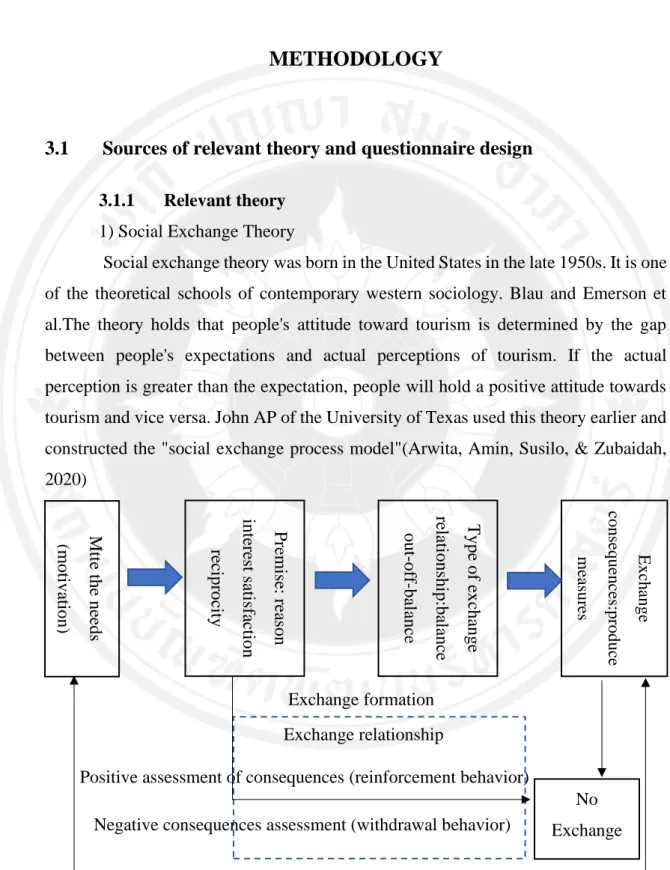
Social exchange theory was born in the United States in the late 1950s. It is one of the theoretical schools of contemporary western sociology. Blau and Emerson et al.The theory holds that people's attitude toward tourism is determined by the gap between people's expectations and actual perceptions of tourism. If the actual perception is greater than the expectation, people will hold a positive attitude towards tourism and vice versa. John AP of the University of Texas used this theory earlier and constructed the "social exchange process model"(Arwita, Amin, Susilo, & Zubaidah, 2020)
Figure 3.1 social exchange process model
Mtte the needs(motivation) Premise: reason
interest satisfaction
reciprocity Type of exchange
relationship:balance
out-off-balance Exchangeconsequences:produce
measures
Exchange relationship Exchange formation
Positive assessment of consequences (reinforcement behavior) Negative consequences assessment (withdrawal behavior)
No Exchange
2) Social representation theory
The theory of social representation was first proposed by Moscovici, a foreign psychologist, and is widely used in social psychology, In the 1990s, scholars such as Pearce introduced it to tourism research, but only focused on how individual residents view the development of tourism and the impact of tourists on them, However, residents' perception and attitude of influence not only come from individual experience, but also due to many aspects of influence. Later scholars will integrate social interaction, culture and other factors into their research.
3) Anger index theory
According to the anger index theory, with the increasing influence and threat of tourists on the local, the attitude of local residents to tourists will also change, Anger index theory mainly describes the different feelings of residents at different stages of tourists' intake, but it only regards local residents as a homogeneous group, so it can not explain the different attitudes of residents in the same region towards the development of tourism.
3.1.2 Related Concept Definition 1) Residents
The definition of inhabitant in the Dictionary is: a person who settles in a place.
The Modern Chinese Dictionary defines resident as: a person who lives in a certain place regularly. The dictionary does not give a definition of resident, but it thinks that the word "dwelling" contains the meaning of residence and place.
The definition of resident in this paper follows the interpretation of resident in the Modern Chinese Dictionary. However, for the sake of objectivity and reliability of the questionnaire collection, a technical definition of resident is given in this study, and it is defined as a person who has lived in a place for more than one year. Therefore, only those who have lived in Miyi for more than one year were defined as the subjects of this study.
2) Tourism Festivals
Burns & Mules (1986) proposed four basic characteristics of tourism festivals:
firstly, the starting point of tourism festivals is not from the festivals themselves, but from other related service industries; secondly, the direct revenue from the festivals is relatively small, and the main revenue comes from the influx of external funds; thirdly, the duration of the festivals is relatively short, and there is a certain peak effect. Thirdly, the duration of festivals is relatively short and there is a certain peak effect, and fourthly, festival revenues are affected by the "peak", so it can be seen that Burns & Mules elaborate on the characteristics of tourism festivals and agree on the important role of indirect effects in tourism festivals.
McDonnel & Allenren(1999) point out that tourism festivals, that is, include grand national celebrations, unique national performances, important public gatherings, major sporting events, but also corporate promotions, product launches and other activities, thus it can be seen that in its definition of tourism festivals, it does not highlight the tourism of the festivals held purpose.
Parrinello and Bécot (2019) made a conceptual definition of tourism festivals, arguing that tourism festivals can be divided into two kinds, broad and narrow, while broad tourism festivals refer to some events containing a variety of tourism items, which include festivals, local special product exhibitions, light sports competitions and other activities with tourism characteristics or special events that do not occur on a daily basis.While the narrow sense of tourism festivals refers to the activities held periodically, but does not include a variety of trade fairs, exhibitions, expositions fairs, exhibitions, expositions, culture, sports and other events that end at once.
Huang(2004)is also known as tourism festivals and events, refers to the scale, a specific theme, in a specific time and the same area held regularly or irregularly, can attract a large number of regional and external The tourism festival is also known as the tourism festival event, which is a variety of festivals, gatherings, fairs, fairs, expositions, games, cultural life events that are held regularly or periodically in the same area and attract a large number of tourists from inside and outside the area. fairs, expositions, games, cultural life, etc.
From the definition of tourism festivals by domestic and foreign experts and scholars, we can find that the specific definition of the content also has some differences
due to the different research perspectives, but there is a certain consensus on the definition of the concept of tourism festivals in the following aspects: it can generate good economic benefits; it has a certain role in promoting the development of tourism places; it has a short duration; the tourism festivals are held intermittently and are held regularly or irregularly.
In the study of this paper, the definition of tourism festivals is mainly based on the narrow definition of tourism festivals made by Wu Bihu (2001).
3) Perceptions and Attitudes
In the Modern Chinese Dictionary, perception is interpreted as the direct reflection of objective things in the human brain through the sense organs; in the Advanced Chinese Dictionary, perception is interpreted as a philosophical term, which is a general term for sensation and perception. In the Advanced Chinese Dictionary, perception is interpreted as a philosophical term, which is a collective term for sensation and perception, and is the direct reaction of objective things in human brain through senses.
The definition of perception in this study is referred to the Advanced Chinese Dictionary. Sensation is the response of the human brain to the individual properties of objective stimuli acting directly on the senses, while perception is the human brain's response to the individual properties of objective stimuli acting directly on the senses, while perception is the human brain's overall response to objective stimuli acting directly on the senses. perception is the overall response of the human brain to objective stimuli acting directly on the senses. However, perception is not simply the sum of sensation and perception. It is a response to the whole of an objective object based on the comprehensive processing of a large amount of information.
And attitude refers to the actor's tendency to assess some abstract things, concrete things or certain situations in an affirmative or negative way. The psychological tendency of some situations. In terms of psychological processes, perceptions come first and then attitudes, i.e., residents' perceptions of tourism impacts first, followed by either affirmative or negative attitudes based on perceptions of tourism impacts. In terms of the psychological process, perceptions of tourism impacts are created first, followed by either affirmative or negative attitudes based on the perceptions of tourism impacts. This is an important logical basis for this study.
3.1.3 Determination of research subjects and scope of research
In this study, the research object is the residents of Miyi County, and the concept of residents is strictly referring to the previous technical definition of residents, that is, people who have lived in Miyi for more than one year.
Miyi lantern festival began in 2010, and in the middle of June every year, has been successfully held ten times. Throughout the previous Lantern Festival, there are more and more activities, more and more participatory entertainment, more and more people's enthusiasm for participation, and more and more social influence. The tourism festival in 2021 will be held from June 12 to June 18. The traditional culture will run through the festival. Promote the growth of tourism economic income of Miyi. This paper takes Miyi people as the research object and takes Miyi Lantern Festival as a specific case to study the relationship between residents' perception of Tourism Festival and their attitude.
It is true that among the numerous tourism festivals in China, the Miyi Lantern Festival is not a particularly mature one, but this study hopes to get some meaningful conclusions through the case study of this small place, which can solve practical problems and play a reference role for the development of other tourism festivals.
3.1.4 Questionnaire design
The main purpose of the questionnaire design was to collect first-hand data. The questionnaire was designed by referring to the relevant research literature of domestic and foreign experts and scholars in this field, combining the actual situation of Miyi County with the purpose of this study, and also by actively discussing with experts and scholars in the field and listening to multiple opinions.
The main content of the questionnaire involves the specific content of the residents' perception of the impact of tourism festivals and the residents' attitudes towards tourism festivals in two parts, as follows.
1) The first questionnaire
The first questionnaire, designed from an absolute quantitative perspective, presents three main dimensions to demonstrate residents' specific perceptions of hosting a tourism festival. These three dimensions are: residents' perceptions of the economic impact of tourism festivals, residents' perceptions of the socio-cultural impact of
tourism festivals and residents' perceptions of the environmental impact of tourism festivals.
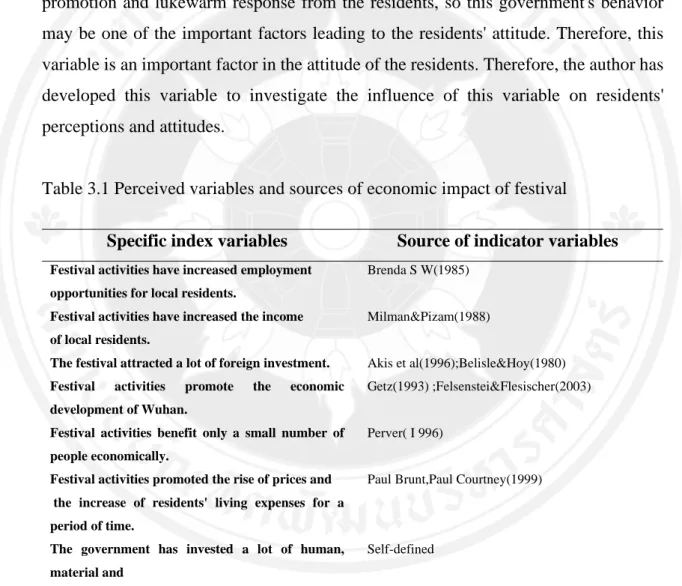
In the residents' perception of the economic impact of tourism festivals, four positive impact perception variables and three negative impact perception variables were involved, for a total of seven variables, the details and sources of indicators of which are shown in the table. the main reason is that the government, as the organizer and main promoter of the lantern festival, is one of the important stakeholders of the festival. The main contradiction to be studied in this paper is the government's massive promotion and lukewarm response from the residents, so this government's behavior may be one of the important factors leading to the residents' attitude. Therefore, this variable is an important factor in the attitude of the residents. Therefore, the author has developed this variable to investigate the influence of this variable on residents' perceptions and attitudes.
Table 3.1 Perceived variables and sources of economic impact of festival
Specific index variables Source of indicator variables
Festival activities have increased employment opportunities for local residents.
Brenda S W(1985)
Festival activities have increased the income of local residents.
Milman&Pizam(1988)
The festival attracted a lot of foreign investment. Akis et al(1996);Belisle&Hoy(1980) Festival activities promote the economic
development of Wuhan.
Getz(1993) ;Felsenstei&Flesischer(2003)
Festival activities benefit only a small number of people economically.
Perver( I 996)
Festival activities promoted the rise of prices and the increase of residents' living expenses for a
period of time.
Paul Brunt,Paul Courtney(1999)
The government has invested a lot of human, material and
financial resources in the festival activities.
Self-defined
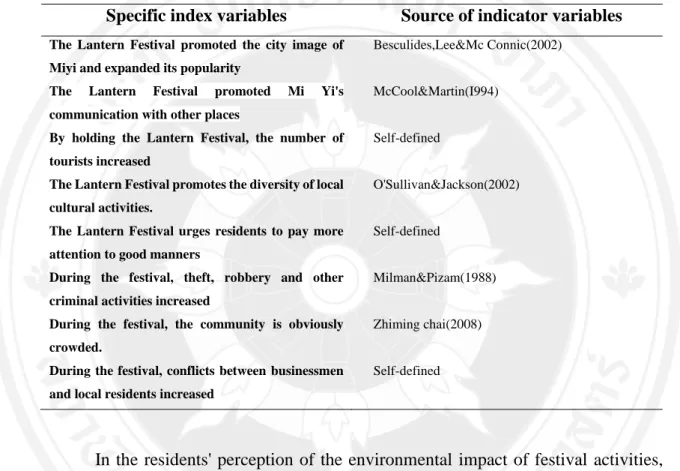
Five positive impact perception variables and three negative impact perception variables are involved in the residents' perception of the socio-cultural impact of tourism festivals, a total of eight variables, the details and sources of indicators of which are shown in Table 3.2.
Table 3.2 Perceived variables and sources of social and cultural impacts of festivals Specific index variables Source of indicator variables
The Lantern Festival promoted the city image of Miyi and expanded its popularity
Besculides,Lee&Mc Connic(2002)
The Lantern Festival promoted Mi Yi's communication with other places
McCool&Martin(I994)
By holding the Lantern Festival, the number of tourists increased
Self-defined
The Lantern Festival promotes the diversity of local cultural activities.
O'Sullivan&Jackson(2002)
The Lantern Festival urges residents to pay more attention to good manners
Self-defined
During the festival, theft, robbery and other criminal activities increased
Milman&Pizam(1988)
During the festival, the community is obviously crowded.
Zhiming chai(2008)
During the festival, conflicts between businessmen and local residents increased
Self-defined
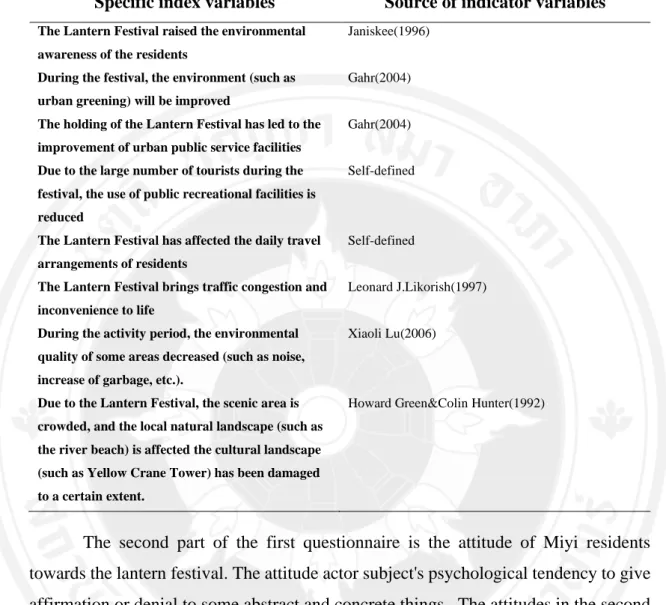
In the residents' perception of the environmental impact of festival activities, there are three positive impact perception variables and five negative impact perception variables, a total of eight variables. The specific content and index sources are shown in the table. The two variables "because of the large number of tourists during the festival, the use of public recreational facilities is reduced" and "the Tourism Festival affects the daily travel arrangements of residents" are designed by the author, mainly based on the temporary and sensational characteristics of the activities and the comprehensive consideration of niche theory. the details and sources of indicators of which are shown in Table 3.3.
Table 3.3 Perceived variables and sources of festival environmental impact
Specific index variables Source of indicator variables
The Lantern Festival raised the environmental awareness of the residents
Janiskee(1996)
During the festival, the environment (such as urban greening) will be improved
Gahr(2004)
The holding of the Lantern Festival has led to the improvement of urban public service facilities
Gahr(2004)
Due to the large number of tourists during the festival, the use of public recreational facilities is reduced
Self-defined
The Lantern Festival has affected the daily travel arrangements of residents
Self-defined
The Lantern Festival brings traffic congestion and inconvenience to life
Leonard J.Likorish(1997)
During the activity period, the environmental quality of some areas decreased (such as noise, increase of garbage, etc.).
Xiaoli Lu(2006)
Due to the Lantern Festival, the scenic area is crowded, and the local natural landscape (such as the river beach) is affected the cultural landscape (such as Yellow Crane Tower) has been damaged to a certain extent.
Howard Green&Colin Hunter(1992)
The second part of the first questionnaire is the attitude of Miyi residents towards the lantern festival. The attitude actor subject's psychological tendency to give affirmation or denial to some abstract and concrete things. The attitudes in the second part are built on the results of the first part of the questionnaire. In this part, a total of five indicator variables are involved, which we hope to use to explain the residents' attitude tendency of the lantern festival (see Appendix for specific indicators).
In the measurement of the questionnaire, the five point scale was used to score, and the options were composed of five parts: "totally disagree", "not very agree",
"neutral", "basically agree" and "completely agree". Each respondent scored each variable according to these five parts, and the score was from "totally disagree" to
"completely agree". The higher the score, the stronger the intensity of agreement.
2) The second questionnaire
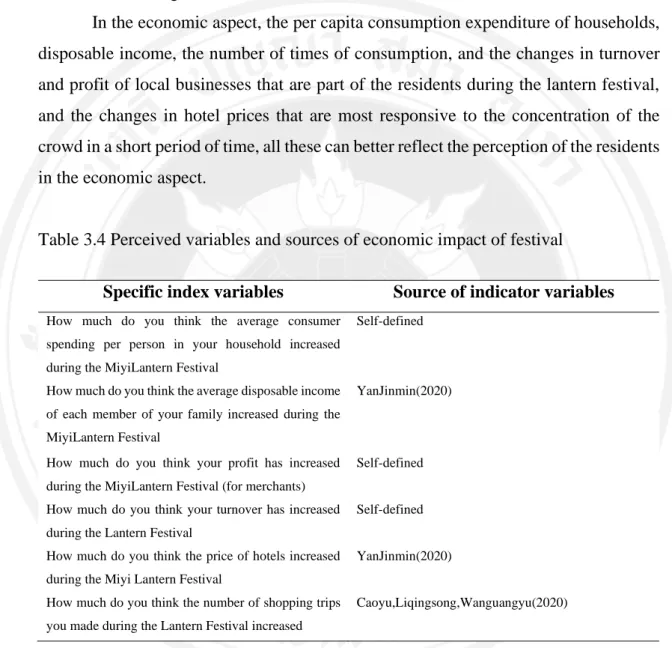
The second questionnaire was designed from a relatively quantitative point of view, also in three dimensions: economic, socio-cultural and environmental, in order to obtain the corresponding data and analyze it to obtain the specific perception of the residents on the organization of the lantern festival.
In the economic aspect, the per capita consumption expenditure of households, disposable income, the number of times of consumption, and the changes in turnover and profit of local businesses that are part of the residents during the lantern festival, and the changes in hotel prices that are most responsive to the concentration of the crowd in a short period of time, all these can better reflect the perception of the residents in the economic aspect.
Table 3.4 Perceived variables and sources of economic impact of festival
Specific index variables Source of indicator variables
How much do you think the average consumer spending per person in your household increased during the MiyiLantern Festival
Self-defined
How much do you think the average disposable income of each member of your family increased during the MiyiLantern Festival
YanJinmin(2020)
How much do you think your profit has increased during the MiyiLantern Festival (for merchants)
Self-defined
How much do you think your turnover has increased during the Lantern Festival
Self-defined
How much do you think the price of hotels increased during the Miyi Lantern Festival
YanJinmin(2020)
How much do you think the number of shopping trips you made during the Lantern Festival increased
Caoyu,Liqingsong,Wanguangyu(2020)
In terms of socio-cultural aspects, this can be reflected by changes in the travel time of the residents themselves, as well as changes in the flow of foreigners, and changes in the attendance of local public officials such as the number of disputes handled.
Table 3.5 Perceived variables and sources of social and cultural impacts of festivals
Specific index variables Source of indicator variables
How many times more visitors do you think the local traffic is during the Lantern Festival than usual
LiZhuoyan(2020)
How many times more time do you think you spend traveling during the Lantern Festival than usual
Self-defined
How many times more foreigners do you think you saw during the Lantern Festival than usual
Self-defined
How many times do you think the number of disputes between merchants and customers during the Lantern Festival is probably higher than usual
Self-defined
How many times more police officers or traffic police officers do you think are on duty on the streets during the Lantern Festival than usual
Self-defined
How many times more visitors do you think the local traffic is during the Lantern Festival than usual
LiZhuoyan(2020)
In terms of the environment, it is reflected by the hazy weather that is most likely to occur when people gather, as well as changes in the flow of people such as daily travel public transport traffic, traffic jams, as well as littering and daily rest being disturbed.
Table 3.6 Perceived variables and sources of festival environmental impact Specific index variables Source of indicator variables
How many days of foggy weather during the Lantern Festival
Caoyu,Liqingsong,Wanguangyu(2020)
How many times the usual number of customers on the bus during the festival
Self-defined
How many times did you encounter traffic jams during the Lantern Festival
Quhongjian,Heqian(2019)
How many times did you see pedestrians littering during the festival
Pangjuan,Heqingyuan,Sunjinling(2018)
How many times were you disturbed while taking a break during the light show
Self-defined
The second part of the questionnaire is likewise about the attitudes of Miyiresidents toward the Lantern Festival. Attitudes act the subject's psychological tendency to give affirmation or denial to certain abstract and concrete things. This part involves a total of three indicator variables, which are hoped to explain the residents' attitudinal tendencies toward the Lantern Festival (see Appendix for specific indicators).
Of course, the basic information of the respondents is also designed in the questionnaire to assist in analyzing the validity and reliability of the questionnaire. The question of "why there are certain differences in perceptions and attitudes among residents" can also be explored to some extent through this section. The question of
"why there are differences in perceptions and attitudes among residents" can be explored to some extent through this section. The basic information section contains demographic information and tourism-related information. The basic information section contains two categories: demographic information and tourism relevance. The demographic information includes gender, age, education level, place of birth, occupation, income level, length of residence, area of residence, and the number of people living in the area. The tourism-related degree includes whether any of the family members or relatives are engaged in the tourism industry and whether they participate in the tourism industry. The degree of tourism-relatedness includes whether anyone in the family or relatives is engaged in the tourism industry and the number of times they attend tourism festivals.
3.2 Data analysis methods and model
3.2.1 Analysis of basic statistical characteristics of the sample
The sample statistical analysis of the questionnaire can provide a preliminary descriptive summary of the questionnaire data.
3.2.2 Cluster Analysis
In order to understand the respondents' attitudes toward tourism festivals, the author chose to conduct k-means clustering on the sample to gain insight into the
respondents' attitudinal tendencies. Through cluster analysis, the residents' attitudes toward the Lantern Festival tourism festival were clearly classified.
3.2.3 Exploratory factor analysis
The original variables can be expressed as a sum of two parts, one as a linear function of several unobservable so-called common factors, and the other as a special factor unrelated to the common factors .The basic idea of factor analysis is to study the internal structure of the correlation coefficient matrix of variables, find a few random variables that can control all variables to describe the correlation between multiple variables, and group the variables according to the magnitude of correlation, so that the variables in the same group have higher correlation with each other and lower correlation with different variables. The correlation between variables in the same group is high and the correlation between different variables is low.
Each group represents a basic structure, and this basic structure is called the common factor. The function of factor analysis is to condense information, reduce the dimensionality of indicators, simplify the structure of indicators, and make the analysis of the problem simpler, more intuitive and effective. For this study, respondents' perceptions of the impact of tourism festivals are diverse. For this study, the respondents' perceptions of the impact of tourism festivals are numerous, so the factor analysis can reflect their perceptions more clearly and intuitively.
The linear expression of the common factor is generally obtained as follows:
F
1=a
11x
1+a
21x
2+…+a
p1