SEAFDEC-UNEP-GEF-MALAYSIA: REP-MY39
Establishment and Operation of a Regional System of Fisheries Refugia in the South China Sea and Gulf of Thailand
MANAGEMENT PLAN FOR TIGER SHRIMP, Penaeus monodon FISHERIES REFUGIA AT
KUALA BARAM, MIRI, SARAWAK
DEPARTMENT OF FISHERIES, MALAYSIA
SOUTHEAST ASIAN FISHERIES DEVELOPMENT CENTER TRAINING DEPARTMENT
SEAFDEC-UNEP-GEF-MALAYSIA: REP-MY39
First published in Phrasamutchedi, Samut Prakan, Thailand in December 2022 by the SEAFDEC-UNEP-GEF Fisheries Refugia Project, Training Department of the Southeast Asian Fisheries Development Center
Copyright © 2022, SEAFDEC-UNEP-GEF Fisheries Refugia Project
This publication may be reproduced in whole or in part and in any form for educational or non-profit purposes without special permission from the copyright holder, provided acknowledgment of the source is made. The SEAFDEC-UNEP-GEF Fisheries Refugia Project would appreciate receiving a copy of any publication that uses this as a source.
No use of this publication may be made for resale or for any other commercial purpose without prior permission in writing from the SEAFDEC Secretary-General.
Southeast Asian Fisheries Development Center Training Department
P.O.Box 97, Phrasamutchedi, Samut Prakan, Thailand Tel: (66) 2 425 6100
Fax: (66) 2 425 6110
https://fisheries-refugia.org and https://seafdec.or.th
DISCLAIMER:
The contents of this report do not necessarily reflect the views and policies of the Southeast Asian Fisheries Development Center, the United Nations Environment Programme, and the Global Environment Facility.
For citation purposes this document may be cited as:
DOF/Malaysia. 2022. Establishment and Operation of a Regional System of Fisheries Refugia in the South China Sea and Gulf of Thailand, Management Plan for Tiger Shrimp, Penaeus Monodon Fisheries Refugia At KUALA BARAM, MIRI, SARAWAK. Southeast Asian Fisheries Development Center, Training Department, Samut Prakan, Thailand; FR/REP/MY39, 162 p.
Southeast Asian Fisheries
Development Center United Nations
Environment Programme Global Environment Facility
1
MANAGEMENT PLAN FOR TIGER SHRIMP, Penaeus monodon FISHERIES
REFUGIA AT KUALA BARAM, MIRI, SARAWAK
FINAL REPORT
DECEMBER 2022
i
Prepared by:
Mhd Ikhwanuddin Abdullah Hadil Rajali
Cheah Wee
Mohd Fazhan Mohd Hanafiah Khor Wai Ho
Nur Azura Sanusi
i Executive Summary
The Tiger shrimp, Penaeus monodon fisheries refugia was proposed by the Department of Fisheries Malaysia (DoF) to preserve the P. monodon population at the Kuala Baram, Miri area for sustainable harvest through the implementation of specific fishery management strategies. This concept differs from the Marine Protected Area (MPA) zone concept where a refugium only focuses on more effective fishing management instead of complete fishing prohibition on selected areas such as in MPAs. Two areas identified for the fisheries refugia management around the Kuala Baram, Miri include the nursery ground (Area A) Batang Baram, Sungai Pasu, Sungai Lutong and Sungai Miri and the spawning grounds (Area B) involving deep waters (depths up to 50m) off Kuala Baram up to 12 nautical miles from the beach with the total area of 852km2 (85, 200 hectares). As the fisheries refugia aims for sustainable fisheries, the protection of P. monodon at different life stages is proposed. Some of the elements taken into account for the success of P. monodon Fisheries Refugia are the revision of harvest methods and fishing gears during close season, environmental parameter analyses for 10 years seasonal forecast modelling, determination of allowable size for capture of P. monodon to >30cm Total Length (TL) and >90g Body Weight (BW) as well as financial sustainability plan. The close season is proposed to be implemented between August and October to protect female spawners during their high reproductive period and allowing the offspring to grow without the risk of environmental disturbance caused by fishing activities.
The involvement of the communities is important including the fishermen community, government agencies (e.g. DoF and authority agencies) and shrimp sellers. The participations of these stakeholders especially in complying to the terms and regulations of the P. monodon fisheries refugia is important to ensure the success of the program. As financial stability is an important element for a long-term and sustainable management of the fisheries refugia of P.
monodon, a trust fund is needed through incorporation of the existing trust funds from both federal and regional government agencies.
ii CONTENT
Page
1.0 Introduction 1
1.1 Background 1
1.1.1 Fisheries Refugia - The Concept 1
1.1.2 Fisheries Refugia for Fisheries Management 1 1.1.3 Fisheries Refugia Management Area Description 2
1.2 Problem Statement and Significance 3
1.2.1 Current scenario of P. monodon in Malaysia 3 1.2.1.1 Distribution of Penaeus monodon 3 1.2.1.2 Current Harvest and Fisheries Production 4 1.2.1.3 Current Threats to P. monodon Population 5 1.2.2 SWOT (Strength-Weakness-Opportunity-Threat) Analysis 6 1.3 Objectives of Management Plan for P. monodon Fisheries Refugia 8
2.0 Literature Review 9
2.1 General Biology and Life Cycle of P. monodon (Penaeus monodon) 9
2.1.1 Reproductive Biology 9
2.1.2 Ovarian Maturation 11
2.1.3 Spawning Behaviour 12
2.1.4 Life Cycle of P. monodon 13
2.2 General Criteria for P. monodon Fisheries Refugia Management Plan 15 2.3 International Fisheries Communication on P. monodon 17
2.3.1 Catch Limit of P. monodon Using Bycatch Reduction Devices
(BRDs) in Australia 17
2.3.2 Sustainable Fishery in United States 18
2.3.3 Shrimp Fisheries Management in Gulf of Mexico 18
2.4 Review on International Fisheries Refugia 19
2.5 Socio-economic Aspect 20
2.5.1 Policy Framework and Legislation on P. monodon Fisheries
Management 20
2.5.2 Implementation and Financing of Management Plan 21 3.0 P. monodon Fisheries Refugia Establishment at Kuala Baram, Miri, Sarawak 22
3.1 Proposed Site and Focused Area 22
3.1.1 Description of the Habitat, Fisheries and Ecosystem 22 3.1.2 P. monodon Fisheries Refugia Border Establishment 23 3.1.3 Coordinates of P. monodon Fisheries Refugia Site 25
3.2 Seasonal Closure 27
3.2.1 Seasonal Patterns Comparison of P. monodon with Seasonal
Variabilities 29
iii
3.2.2 Seasonal Forecast Modelling 33
3.3 Minimum Landing Size 36
3.3.1 Concept of size-based fishery 36
3.3.2 Size at Sexual Maturity and Minimum Landing Size (MLS) 38 3.3.3 Minimum Landing Size (MLS) for P. monodon 38
3.4 Revision of Harvest Methods and Gears 42
3.4.1 Fishing Gears and Trawling Areas 42
3.4.2 Harvest Strategy 45
4.0 Communication Plan for Refugia Fisheries 48
4.1 Objectives of Communication Plan 48
4.2 Stakeholder Engagement 48
4.3 Proposed Monitoring and Management Plan for Fisheries Refugia 51
5.0 Financial Implication 56
5.1 Economic Analysis 57
5.1.1 P. monodon Landings 59
5.1.2 P. monodon Sales 59
5.2 Socio-economic and Environmental Returns 64
5.3 Financial Sustainability 71
5.3.1 Financial Mechanism 73
5.4 Financial Model 84
5.4.1 Trust Funds 84
5.4.2 Proposed Refugia Trust Fund 88
6.0 Addressing Key Issues and Options 92
6.1 Key Issue 1: Insufficient Data for The Estimation of Size at Maturity and Minimum Landing Size, MLS
92
6.1.1 Issues 92
6.1.2 Options 93
6.2 Key Issue 2: Incidental Catch of Juvenile and Sub-adults During Open Season
93
6.2.1 Issues 93
6.2.2 Options 94
6.3 Key Issue 3: Environment-related Habitat Changes 94
6.3.1 Issues 94
6.3.2 Options 96
6.4 Key Issue 4: Warmer Water Due to Hydropower Electrical Turbine in Baram
96
6.4.1 Issues 96
6.4.2 Options 97
iv
7.0 Summary from Main Stakeholder Engagement 98
7.1 Meeting with Department of Fisheries Malaysia on 28th – 29th July
2022 98
7.1.1 Strategy 1: Fisheries Refugia Site 99
7.1.2 Strategy 2: Harvest Methods and Gears 100 7.1.3 Strategy 3: Satellite Analysis and Hydrological Parameters 101
7.1.4 Strategy 4: Size-based Fisheries 101
7.1.5 Strategy 5: Financial Sustainability 102 7.2 Meeting with Department of Fisheries Malaysia in Putrajaya on 15th
August 2022 103
7.3 Meeting with Department of Fisheries in Port Dickson on 8th November 2022
104
7.4 Engagement with Local Fishermen 105
7.4.1 Online Engagement with Local Fishermen on Refugia for Keys
to Sustainable Fisheries Management and Conservation 105 7.4.2 Workshop with Members of Persatuan Nelayan Kawasan
Miri 106
8.0 Final Recommendations of Fisheries Refugia Management Plan for P.
monodon at Kuala Baram, Miri
108
8.1 Location and area 108
8.2 Restocking Program 108
8.3 Minimum Landing Size 108
8.4 Seasonal Closure and License Regulation 109
8.4 Community Engagement Program 110
8.5 Proposed Refugia Trust Fund 111
9.0 Action Plan for Fisheries Refugia Management Plan for P. monodon at Kuala
Baram, Miri 112
Acknowledgement 114
References 115
Appendices 128
Appendix A Gantt Chart 128
Appendix B Project Milestone 129
Appendix C Published Reports 130
Appendix D Posters 131
Appendix E Pamphlets 135
Appendix F Awareness Posters 139
v Appendix G Proposed Measuring Equipment for Size at Sexual Maturity of P.
monodon
142
Appendix H Curriculum Vitae of Consultants 143
vi Abbreviations
ASPIC A stock Production Model Incorporating Covariates B1 Total biomass in the first year of stock assessment BMC Broodstock Multiplying Centre
BRD Bycatch Reduction Devices
BW Body weight
CBOs Community Based Organizations CPUE Catch per Unit of Effort
DoF Department of Fisheries ES Ecosystem Services
CSR Corporate Social Responsibility
CZMA/I Coastal Zone Management Authority and Institute CZM Coastal Zone Management
ICM Integrated Coastal Management
CNAP National Centre of Protected Areas of Cuba GEF Global Environment Facility
FCLP Fisheries Comprehensive Licensing Policy
IUCN-WCPA International Union for the Conservation of Nature's World Commission on Protected Areas
MINTUR Cuban Ministry of Tourism (MINTUR) MLS Minimum Landing Size
MSY Maximum Sustainable Yield MSC Marine Stewardship Council
vii NBC Nucleus Breeding Centre
NCTF National Conservation Trust Fund NPF Northern Prawn Fishery
NTF National Trust Fund
NOAA National Oceanic and Atmospheric Administration K Carrying Capacity
OY Optimum Yield
PES Payments for Ecosystem Services PIPA Phoenix Islands Protected Area PNK Persatuan Nelayan Kawasan PTF Provincial Trust Fund
RWG-F Regional Working Group of Fisheries SPF Specific Pathogen Free
TLA Traffic Light Approach
TL Total length
UMT Universiti Malaysia Terengganu
UNCED United Nations Conference on Environment and Development WtC Willingness to Contribute Time
WTP Willingness To Pay
viii List of Figures
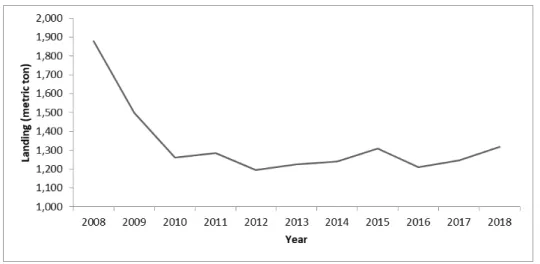
Page Fig. 1.1: Annual landing of Penaeus monodon recorded between year 2008 to 2018
(Siow et al., 2020).
4
Fig. 1.2: SWOT analysis for P. monodon Fisheries Refugia at Kuala Baram, Miri, Sarawak.
8
Fig. 2.1: Arrow showing petasma presence in male shrimp (Lewis, 2010). 10 Fig. 2.2: Appendix masculine is located at the 2nd pleopods. 10 Fig. 2.3: Thelycum is situated between the 4th and 5th pereopods of female shrimps.
There are two types of thelycum (open & closed) depending of the shrimp species.
11
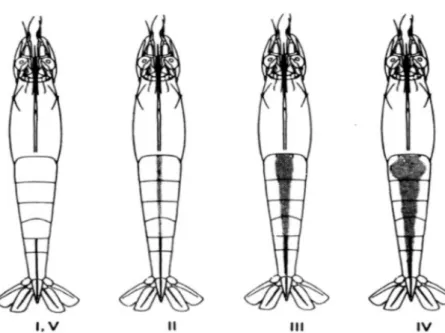
Fig. 2.4: Ovarian maturation stages of penaeid shrimp. 12
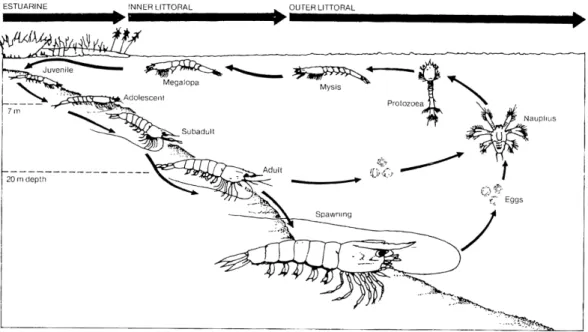
Fig. 2.5: Life cycle of P. monodon (Motoh, 1985). 15
Fig 2.6: (a) Lateral view of P. monodon juvenile (b) Juvenile gradually turn blackish as they grow.
15
Fig. 2.7: Outline of the fisheries refugia identification and description approaches (Source: Keppel et al., 2012).
17
Fig. 3.1: P. monodon life cycle (Motoh 1981; Rosenberry, 2009) 22
Fig. 3.2: Sungai Pasu mangrove fringes. 23
Fig. 3.3: (a) Small (40-tonnage) Zone B stern-trawler and (b) Big (70-tonnage) twin- outrigger trawler from Kuala Baram, Miri Sarawak.
24
Fig. 3.4: Proposed P. monodon Fisheries Refugia site off Kuala Baram, Miri, Sarawak. 25 Fig. 3.5: Dredging carried out by Department of Irrigation and Drainage, DID at Sungai
Lutong to deepen the channel.
27
Fig. 3.6: Satellite derived Chl-a concentrations in the month of January with high concentrations of Chl-a can be observed in the coastal waters near Kuala Baram. The rectangle box in black indicates the region of interest indicating P. monodon active area at Kuala Baram, where monthly data of
hydrological parameters were averaged.
30
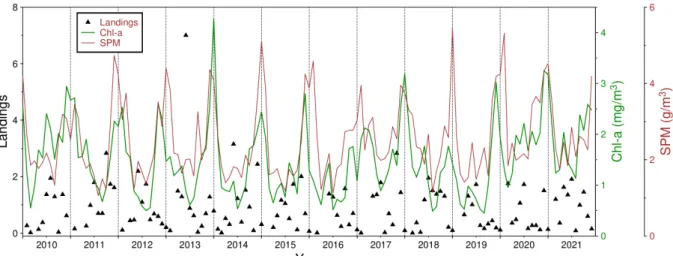
ix Fig. 3.7: Monthly values of P. monodon landings for Miri, and monthly average of
Chl-a and SPM concentrations for the region of interest as indicates in Fig.3.6 from 2010 to 2021.
31
Fig. 3.8: Monthly values of P. monodon landings for Miri from 2010 to 2021 and monthly average of sea surface temperature (SST) and sea surface salinity (SSS) for Kuala Baram as indicates in Fig. 3.6.
32
Fig. 3.9: Spearman rank correlation between P. monodon landings and hydrological variables. Data are monthly observations from 2010 to 2021 as shown in Fig. 3.7 and Fig. 3.8. n = 124.
33
Fig. 3.10: Future projection of biomass density of small demersal < 30cm at Kuala Baram under the shared socioeconomic pathways (SSP) scenario with an additional forcing of (top) 2.6 W/m2 (SSP126) and (bottom) 8.5 W/m2 (SSP585) by the year 2100.
35
Fig. 3.11: The ideal equilibrium community size spectrum, with increasing body mass and decreasing density in an unexploited fish community (solid red line).
Balanced harvest removes (harvests) a cross-section of this size- structured community, eventually reduces the overall density, but has little impact on the slope (dashed red).
39
Fig. 3.12: The length-weight relationship of P. monodon in Kuala Baram (n = 95) sampled in August 2019 by Nurridan (2020b).
40
Fig. 3.13: The distribution of maturation stages of female P. monodon from June to November 2019 in Kuala Baram, Miri, Sarawak (Nurridan, 2020c).
41
Fig. 3.14: Distant in Nautical Miles (NM) from the coast where local fishermen landed P. monodon in their catch from Kuala Baram, Miri, Sarawak.
43
Fig. 3.15: P. monodon broodstocks kept in aerated tank ready for hatchery production. 43 Fig. 3.16: Fishery profit (RM x 1000) and revenue (RM x 1000) versus fishing effort
(Hadil, 2004).
44
Fig. 4.1: The coordination mechanism for the establishment of fisheries refugia in Malaysia (Siow et al., 2020).
54
Fig. 5.1: Time series plot of P. monodon landing with forecasted values for Miri. 60 Fig. 5.2: Time series plot of P. monodon sales with forecasted values for Miri. 60
x
Fig. 5.3: The most common Gaps Discovered 70
Fig. 5.4: Framework of Conservation Trust Fund by Rotjan et al. (2014). 85 Fig. 5.5: Framework of Payment of Ecosystem Service (Bladon et al., 2016). 86 Fig. 5.6: Framework of Provincial Trust Fund (Ison et al., 2018). 88 Fig. 6.1: Sawmill and plywood companies along the Kuala Baram river. 95 Fig. 6.2: Saw dust accumulation along the river at Kuala Baram potentially destruct
the habitat of wild P. monodon at Kuala Baram due to pollution and shallowing of the water.
95
Fig. 7.1: First engagement with main stakeholders of the P. monodon Fisheries Refugia Plan at Meritz Hotel, Miri, Sarawak on 28th – 29th July 2022.
98
Fig. 7.2: First engagement with main stakeholders of the P. monodon Fisheries Refugia Plan at Meritz Hotel, Miri, Sarawak on 28th – 29th July 2022.
99
Fig. 7.3: Meeting with the DoF Malaysia was held in Putrajaya on 15th August 2022 at Palm Garden hotel.
103
Fig. 7.4: Meeting with the DoF Malaysia was held in Putrajaya on 15th August 2022 at Palm Garden hotel.
103
Fig. 7.5: Pre-council meeting for the final report presentation at Port Dickson on the 8th November 2022.
104
Fig. 7.6: Pre-council meeting for the final report presentation at Port Dickson on the 8th November 2022.
104
Fig. 7.7: Poster for the FORAS which was held on 22nd September 2022 with the theme
“Refugia: Keys to Sustainable Fisheries Management and Conservation via online through Cisco Webex.
105
Fig. 7.8: Meeting with the Fishermen Association of Miri was held at Kompleks Lembaga Kemajuan Ikan Malaysia (LKIM), Miri Sarawak on 26th September 2022.
106
Fig. 7.9: Meeting with the Fishermen Association of Miri was held at Kompleks Lembaga Kemajuan Ikan Malaysia (LKIM), Miri Sarawak on 26th September 2022.
107
xi List of Tables
Page Table 2.1: Life cycle summary of P. monodon (Motoh, 1985). 14
Table 5.1: 60 months forecast for P. monodon landing 61
Table 5.2: 60 months forecast for P. monodon sales 62
Table 5.3: Financing Marine Resource Sustainability Tools 81 Table 5.4: Financial Sustainability Mechanisms and Measurement in Four Contrasting
Fisheries.
86
Table 7.1: Issues and suggestions raised by the local fishermen regarding the proposed P. monodon Refugia Management Plan.
107
1 1.0 Introduction
1.1 Background
1.1.1 Fisheries Refugia – The Concept
The term “refugia” has numerous definitions depending on the concept and purposes.
According to Ashcroft (2012), this term was initially used to describe locations in which certain species survived during the glacial period. The modern term of refugia is defined as areas that required conservation to limit the impacts of climate change (Rull, 2009). Keppel et al. (2012) conferred that in terms of habitat-based refugia, it refers to sites where a biota retreats, stays and potentially expand from under changing environmental conditions. Dobrowski (2011) defined it as places where local climate is separated from regional climate. In general, the term refuge means temporal and/or spatial protection from disturbances, predation or competition as well as anthropogenic disturbances (Keppel et al., 2012). In terms of fisheries approach, the concept of fisheries refugia refers as “spatially and geographically defined, marine or coastal areas in with specific management measures for sustainability of important species during critical stages of their life cycles, for their sustainable use” (UNEP, 2005). The main priority of refugia often emphasised on conservation purposes under projected anthropogenic related climate change (Loarie et al., 2008). Refugia offers a better chance for the selected ecosystems of survival and adaptation to climate change (Groves et al., 2012).
While there is growing interests on the conservation concept through refugia, more studies on the protocols for their identification and conservation is still required (Keppel et al., 2012).
1.1.2 Fisheries Refugia for Fisheries Management
The establishment of fisheries management was a way to resolve the issue of overfishing, to reduce the impact caused by the coastal habitat degradation and potential climate change- induced impacts. However, the matter of habitat conservation and fisheries management incorporation is that, it does not necessarily improve the habitat and fish stock. Therefore, the concept of fisheries refugia emerged as an innovative approach in which priority areas
2 were identified and designated based on various factors, including the biology and ecology of the targeted species, for fisheries and habitat management integration (Paterson et al., 2013).
Unlike other forms of marine reserves management such as “no-take zones”, “fisheries reserves”, “fully protected marine reserves”, “highly protected marine reserves” and “fish stock recovery areas” which strictly ban fishing activity of a selected area, fisheries refugia focused on the nature of the particular habitat and prioritise the life-history of the fished species. In other words, fisheries refugia focuses on the habitat of the fishing area management instead of restricted access, either temporarily or spatially (Paterson et al., 2013). According to Pauly (1997), the concept of fisheries refugia focused on areas of critical importance to the life cycle of the targeted species and that the conservation efforts were aimed to protect the particular individuals such as the juveniles and spawners from incidental capture and predators.
1.1.3 Fisheries Refugia Management Area Description
The fisheries refugia for P. monodon at Kuala Baram, Miri involves two areas, namely the nursery ground and spawning ground. Nursery grounds, where juveniles are commonly found, were identified along the rivers of Batang Baram, Sungai Pasu, Sungai Lutong and Sungai Miri. Spawning grounds, where the adults and spawners were found in abundance, are located at areas of deeper waters (10-60m) off Kuala Baram shore (Nurridan, 2021a; Hadil
& Albert, 2001; Hadil, 1994). The proposed P. monodon Fisheries Refugia area in Kuala Baram involved the demarcation of the mangrove area at least 20m of the lower water edge of four rivers including Batang Baram, Sungai Pasu, Sungai Lutong dan Sungai Miri. The geographical location of the P. monodon fisheries refugia area is further described in Chapter 3.
3 1.2 Problem Statement and Significance
1.2.1 Current scenario of P. monodon in Malaysia
1.2.1.1 Distribution of Penaeus monodon
P. monodon is a large brackish-marine prawn widely distributed in the Indo-West Pacific area from Africa, to South East Asia and the Sea of Japan as well as Australia and Mediterranean Sea (Cawthorne, 1983; Nahavandi et al., 2011), generally at 30°E to 155°E longitude and from 35°N to 35°S latitude (Motoh, 1985). P. monodon are found in waters of 18-34.5oC and 5-45 ppt (Chen, 1990; Branford, 1981). Commercial fishery of this shrimp species is being carried out intensively in most tropical countries particularly Indonesia, Malaysia and Philippines (Motoh, 1985).
Ecologically, penaeid shrimps have to go through two major ecosystems: the offshore and the coastal inshore environments in order to complete their life cycle. Mature penaeids breed in deep water while post-larval and juvenile shrimps inhabit inland marshes; estuaries, brackish water and mangrove areas, and then they migrate back to the sea for maturation and breeding (Mosha & Gallardo, 2013).
P. monodon resource in Malaysia is scattered and very much associated with deep marine water next to a healthy mangrove ecosystem such as in the waters of Kedah, Perak, Selangor, Kelantan, Sabah, Labuan and Miri in Sarawak. According to Rosle and Ibrahim (2017), P.
monodon was found to be one of the most abundant shrimp species in the Kelantan delta, contributing approximately 38.67% to the total shrimp population. They were found abundant in the marine and brackish area with higher abundance of adult shrimp in brackish waters where the population was influenced by mangrove vegetation. Resource survey on P.
monodon of Sarawak, Labuan and Sabah was carried out in 2012 and the estimated maximum sustainable yields, MSYs derived were 23 tonnes for Miri, Sarawak; 160 tonnes for Labuan; 28 tonnes for Kudat; 68 tonnes for Sandakan; 46 tonnes for Lahad Datu and 156 tonnes for Tawau (Hadil & Mushidi 2014). In Miri, Sarawak, P. monodon was found to be the largest and one of the most important commercial shrimp species (Hadil et al., 2017), with 62.5% of its
4 resources found in the area between 11m to 50m deep while the remaining percentage were reportedly caught in shallow waters (Hadil & Albert, 2001). P. monodon are mostly found in the waters off Kuala Baram and are not caught in large quantities (Hadil et al., 2017; Hadil, 2007). While P. monodon was not common along the Johor Straits, previous study reported that they were still found along the area (Upanoi, 2015).
1.2.1.2 Current Harvest and Fisheries Production
The statistics from the Department of Fisheries Malaysia (DoF) has shown that the landing pattern (Fig. 1.1) for P. monodon has fluctuated from around 1,900 MT in 2000 (Manap, 2016) to 1,418 MT in 2021 (Siow et al., 2020). It was noted that intensive exploitation of P. monodon broodstock from wild habitat for mass production in shrimp fry hatcheries (Wong et al., 2021) and the destruction of mangrove ecosystem for development (Siow et al., 2020) have contributed to this trend in landings of this species. A positive correlation between mangrove area and near-shore yields of fish or shrimp has been documented in Australia, the Philippines, Indonesia and Malaysia (Valiela & York, 2001; Lacerda, 2002; Primavera, 1995).
During the last 3 years from 2019 to 2021, P. monodon landings in Malaysia were 1237, 1302 and 1418 metric tonnes. The annual P. monodon landing percentage contributions by each region of Malaysia: West Coast Peninsular, East Coast Peninsular, Sarawak, Labuan and Sabah are roughly about 20%, 15%, 1%, 10% and >50% respectively.
Fig. 1.1: Annual landing of P. monodon recorded between year 2008 to 2018 (Siow et al., 2020).
5 The exploitation of P. monodon in Sarawak has been going on since early 70s after the introduction of trawl gear. Since then, the fishing activity increased with annual catches of 19 MT until 1990s. Landings fluctuated after 1990 with the lowest catch at 11 MT in 1998 (Hadil
& Helmi 2001). For the last 3 years: 2019, 2020 and 2021, P. monodon landings in Sarawak were 11, 13 and 11 metric tonnes respectively. The wild P. monodon population in Miri, Sarawak is the few remaining healthy P. monodon populations in Malaysia.
Marine aquaculture contributes more than 20% of Malaysian seafood production. Marine shrimp (both capture & aquaculture) is one of the most important items for Malaysian seafood industry, contributing 57,743 metric tonnes in 2021. In the last twenty years, marine shrimp aquaculture production has increased by 208% from 27,014 metric tonnes in 2001 to 56,325 metric tonnes in 2021. Two main marine shrimp species are farmed in Malaysia: the native P. monodon and the non-native Pacific white shrimp, Litopenaeus vannamei. L.
vannamei production in Malaysia peaked in 2010 at 69,049 MT, but has since declined to 38,205 MT in 2021. By comparison P. monodon production has decreased from its peak of 26,352 MT in 2001 to 18,120 MT in 2021. Over the years, to some extent shrimp farming has acquired the reputation of being destructive (being linked to mangrove clearing) and unsustainable. With greater public awareness of the ecological importance of the mangrove, high-lighted by an increasingly vocal environmental movement in the country, many state governments are being much more cautious in the allocation of large parcels of coastal land for such venture.
1.2.1.3 Current Threats to P. monodon Population
While this P. monodon species has been extensively farmed to meet increasing demand, they were also caught in the wild for seed production purposes. The high dependency of wild- caught spawners for seed production thus resulted in over-exploitation of the natural population, affecting the sustainability and biodiversity of fishery resources (Wong et al., 2021). The study conducted by Hadil et al. (2017) revealed a negative allometric growth in shrimps in which the body length growth was not proportional to the body weight growth
6 indicating an inconsistent growth among the shrimp within the population. Another possibility for such occurrence may be due to frequent catching activities at the same area, deforestation and uses of inappropriate gear type.
1.2.2 SWOT (Strengths-Weaknesses-Opportunities-Threats) Analysis
A SWOT analysis is a strategic planning method to evaluate the Strengths, Weaknesses, Opportunities and Threats involved in any project. A SWOT analysis in fisheries helps to identify these components that is and may occur to the fisheries sector thus, allowing the policy makers and the scientific community to continuously adjusting their strategies of management to make it a success.
Strengths: P. monodon is known to be highly valuable commodity. According to the statement by the director of Department of Marine Fisheries, Sarawak during the engagement session in October 2021, the total landings of P. monodon in Miri, Sarawak between 2015 – 2020 was reported to reach up to 78.79 metric tonnes with sales value worth RM5.6 million (Daily Dayak, 2021). P. monodon are fast growing species, known as the largest shrimp species and are tolerant to wide range of water conditions particularly salinity (Nahavandi et al., 2010). Therefore, they offer much contribution to the fisheries and aquaculture in terms of production and profitability. Shrimp plays important role in maintaining a balance ecosystem. At different stages of their lives from larvae to adult, P.
monodon transition from pelagic feeding on zooplanktons to omnivorous benthic individuals feeding on algae and plant materials, other invertebrates and other organic matter. They too are food for larger organisms such as fish which makes a balanced population of P. monodon vital to ensure the sustainability of local food web community and ecosystem (Oceana, 2022).
A balanced population of P. monodon also ensure a continuous production of P. monodon in fisheries which in terms maintaining the livelihood of the local fishermen.
Weaknesses: P. monodon fisheries management is quite challenging to carry out because the biological and physiological data of wild caught P. monodon are limited and inconsistent. In terms of governance, there is still no policy specifically for P. monodon fisheries management
7 to date. When it comes to wild stock, it is difficult to determine the age of an aquatic animal.
Therefore, size-based capture is important where the shrimp are caught according to allowable size. However, the knowledge of this approach is still limited and insufficient for fisheries refugia set up.
Opportunities: Since this is the first establishment of P. monodon Fisheries Refugia, the community that involved in the early development may gain maximum profit when this approach become increasingly commercialised in the near future. Furthermore, the success of P. monodon Fisheries Refugia will also ensure the sustainability of P. monodon Fisheries which resulted in continuous supply of P. monodon. As fisheries refugia is a conservation effort, it involved in creating awareness as well as knowledge transfer of the latest trend and technology in sustainable fisheries among related individuals such as the fishermen, local communities, students, Non-Government Organisation (NGO) and many more.
Threats: The ecosystem in the wild are always subjected to weather and water quality fluctuations. Climate change is often the cause of declining population of marine fishes and shrimp. Climate change was reported to be the reason for organisms of fisheries refugia unable to survive or move fast enough to their suitable habitat. However, despite the implication, refugia still offer the best survival chance for species negatively impacted by climate change (Keppel et al., 2012). Pollution cause by anthropogenic activities such as town development, dredging, industrial waste, deforestation and many more also affect the shrimp populations. This problem is difficult to tackle due to limited enforcement capability. The SWOT analysis for P. monodon Fisheries Refugia at Kuala Baram, Miri, Sarawak is summarised in Fig. 1.2.
8 Fig. 1.2: SWOT analysis for P. monodon fisheries refugia at Kuala Baram, Miri, Sarawak.
1.3 Objectives of P. monodon Fisheries Refugia Management
The management of P. monodon Fisheries Refugia Plan aims to achieve the following objectives:
1. To develop a sustainable plan for a long-term protection of P. monodon population at Kuala Baram, Miri, Sarawak.
2. To identify ways for optimal utilisation of P. monodon resources.
3. To ensure the ecological integrity of fisheries refugia is maintained.
4. To generate a plan and strategy to reduce conflict and create awareness among stakeholders.
9 2.0 Literature Review
2.1 General Biology and Life Cycle of P. monodon
In general, the morphology of P. monodon is similar to other penaeid shrimp species, such containing a cephalothorax, tail, five pairs of swimming legs (pleopods) and walking legs (pereopods). This species is then distinguished by their distinct black and white stripes on the backs and tail. P. monodon are large in which they can grow up to 330mm or greater in length with females are generally larger than male shrimp (Kiel, 2013).
2.1.1 Reproductive biology
The sexes of P. monodon are distinguished by the external morphology of their reproductive organs namely petasma and a pair of appendix masculine in male and thelycum in female.
The petasma is situated between the 1st pleopods (Fig. 2.1) and the appendix masculine on the exopods at the 2nd pleopods (Fig. 2.2). The petasma functions as interlocking structure for spermatophore transfer, while the appendix masculine branched out of the second pair of pleopods and serve to separate the petasma into two component halves (Motoh, 1985).
Thelycum is presence between the 4th and 5th pereopods of female shrimp (Fig. 2.3) (Motoh, 1985). There are two types of thelycum which are “open” or “closed” thelycum depending on the species. P. monodon has closed thelycum type. For a “closed” thelycum, the thelycum is enclosed by exoskeleton plate. In the case of mating, spermatophore is placed in the groove below these plates by a male when the female exoskeleton is soft right after moulting took place. The spermatophore will be stored for some time before spawning. Therefore, female shrimp with spermatophore presence within the thelycum is evidence of successful mating.
10 Fig. 2.1: Arrow showing petasma presence in male shrimp (Lewis, 2010).
Fig. 2.2: Appendix masculine is located at the 2nd pleopods in male shrimp.
11 Fig. 2.3: Thelycum is situated between the 4th and 5th pereopods of female shrimps. There are two types of thelycum (open & closed) depending of the shrimp species.
2.1.2 Ovarian maturation
Females of P. monodon are categorised as non-spawning or spawning based on their ovaries.
There are four stages of ovarian maturation as followed (Kannan et al., 2014):
Stage 1 Immature: The ovaries are thin, translucent, unpigmented and confined to the abdomen. They contain oocytes and small spherical ova with clear cytoplasm and conspicuous nuclei.
Stage 2 Early mature: Ovary increases in size with light yellow and yellowish green in colour.
Opaque yolk granules are formed in the cytoplasm and partly obscure the nuclei.
Stage 3 Late mature: The ovary is light green and is visible through exoskeleton. The anterior and middle lobes are fully developed. The accumulation of yolk resulted the maturating ova to appear opaque.
Stage 4 Mature: The ovary is dark green and clearly visible through exoskeleton. The ova are larger than in the previous stage and the peripheral region becomes transparent.
12 Stage 5 Spent recovering: After spawning has ended. The gonad reverts almost immediately to the immature condition. This stage is therefore, distinguishable from that found in the immature virgin females only from the size of the shrimp.
Fig. 2.4: Ovarian maturation stages of penaeid shrimp.
2.1.3 Spawning behaviour
Spawning generally takes place at night. Female shrimp usually swims actively in the water column and slowed down when spawning take place. Eggs are extruded from the genital pores at the base of the 3rd pereopods and as the eggs are released, they passed through the spermatozoa being stored in the thelycum and the eggs are fertilised in the water column.
Depends on the size and weights of the shrimp, a spawner usually produces between 250,000 to 1,000,000 eggs per spawning (Motoh, 1985).
13 2.1.4 Life cycle of P. monodon
The larval development of P. monodon consists of 6 nauplius, 3 protozoea and 3 mysis stages before they entered the juvenile and postlarvae stages (Fig. 2.5). The larval developmental stages of P. monodon take place in the offshore waters and they are planktonic. At the end of the postlarvae stage, P. monodon move to the nursery ground at the estuaries which include wide brackish water rivers (mostly upstream and middle portion), mangrove swamps and interior portions of enclosed bays where they become mostly benthic. In this area, shrimps are exposed to wide physico-chemical fluctuations (especially temperature and salinity) (Motoh, 1985).
P. monodon at early juvenile stage has transparent body with dark brown streak on the ventral side (Fig. 2.6a) in which the body will then gradually turns blackish (Fig. 2.6b). The length of the carapace at this stage varies between 2.2 to 11.0mm. The sexes of the shrimp can be distinguished when they become adolescent through the presence of petasma in the male and thelycum in the female. The onset of sexual maturity happens during the sub-adult stage. At this stage female grows faster than male shrimp with spermatozoa present in the thelycum. Adult phase is when the shrimp has achieved sexual maturity. At this stage the ovary of the shrimp is at Stage 4 and is ready to spawn (mostly at the offshore, some spawn in shallow water). Male shrimp on the other hand is not quite different from the sub-adult stage except from size increment and different habitat (offshore area of about 160m). The maximum adult shrimp size is about 270mm in body length and 260g in weight with the carapace length varies between 37 and 71mm in males and 47 and 81 mm in females (Motoh, 1985). The complete life cycle of P. monodon is shown in Fig. 2.5. The summary of P. monodon life cycle is as described in Table 2.1.
14 Table 2.1: Life cycle summary of P. monodon (Motoh, 1985).
Life Stages Description Mode Carapace length
Larvae Begins at hatching:
Consist of 6 nauplii stages, 3 protozoea, 3 mysis and 3-4 megalopa.
Planktonic -
Juvenile Completion of gill system.
Benthic 2.2-11.0mm
Adolescent Resembles adult shrimp. Sexes are distinguishable.
Benthic 11.0-30.0mm (male) 11.0-37.0mm
(female)
Sub-adult Onset of sexual maturity. First copulation.
Presence of spermatozoa in female thelycum.
Benthic 30.0-37.0mm (male) 37.0-47.0mm
(female)
Adult Completion of
sexual maturity.
Benthic 37.0-71.0 (male) 47.0-81.0 (female)
15 Fig. 2.5: Life cycle of P. monodon (Source: Motoh, 1985).
(a) (b)
Fig 2.6: (a) Lateral view of P. monodon juvenile (b) Juvenile gradually turn blackish as they grow.
2.2 General Criteria for P. monodon Fisheries Refugia Management Plan
The concept the fisheries refugia emphasised on the effort to protect the population of selected fishery species in a particular fishing area for sustainable fishery. This program was initiated by SEAFDEC-UNEP-GEF in the South East Asia Region involving six member countries including Malaysia, Cambodia, Thailand, Vietnam, Indonesia and the Philippines (Siow et al., 2020). Fisheries refugia was established under the project funded by Global Environment Facility (GEF) entitled “Reversing Environmental Degradation Trends in the South China Sea
16 and Gulf of Thailand” where it falls under the fisheries component of the project entitled
“Over Exploitation of Fisheries in the Gulf of Thailand” (Paterson et al., 2013).
Identification of refugia is important in managing climate change impacts caused by anthropogenic activities (Loarie et al., 2008). The development of precise methodologies for the identification and description is crucial for the success of refugia (Steffen et al., 2009).
Generally, there are two major approaches to identify and describing refugia. First is through the study of biogeographic patterns which involved data collection on paleobiology, ecology and/or genetics of target biota. This approach often suggests that refugia was once existed naturally for a period of time in the past. The second approach is through investigation of refugial habitats which involved data collection on environmental and physical geographical processes which may provide valuable information on refugia formation and maintenance such as climate conditions, resource availability and disturbance (Keppel et al., 2012). A simplified criteria of refugia identification and description is as shown in Fig. 2.7.
The main criteria of fisheries refugia is the identification of critical spawning and nursery areas. The Regional Working Group of Fisheries (RWG – F) also identify the areas where the fish population are impacted by over-fishing especially spawning ground, juveniles and migration grounds of pre-recruits. Therefore, the RWG – F decided to focus on management of nursery and spawning grounds to safeguard juvenile fish (Paterson et al., 2013). As fisheries refugia has not been well established, one of a limiting factor of the development is the limited information related to the early-life history of aquatic species of any targeted species (Paterson et al., 2013).
17 Fig. 2.7: Outline of the refugia identification and description approaches (Keppel et al.,
2012).
2.3 International Fisheries Communication on P. monodon
Fisheries management theory on the whole is traditionally based on a rather biocentric philosophical viewpoint and focusing on physical output and aim to sustain fish stocks and harvest. Modern perspectives of fishery management focus on whole systems and aim to produce healthy ecosystems and human systems. To date, there has not been any scientific reports found on the establishment of P. monodon Fisheries Refugia. In Malaysia, fisheries refugia program had started for lobster (Panulirus spp. and Thenus orientalis) in Tanjung Leman, Johor and P. monodon in Kuala Baram, Miri, Sarawak. Some of the important information for a successful P. monodon Fisheries Refugia Program includes the landing data of the animal, maturation stage and life cycle of the shrimp (Siow et al., 2020).
2.3.1 Catch Limit of P. monodon Using Bycatch Reduction Devices (BRDs) in Australia
According to Australian Fisheries Management Authority, the commencing of Northern Prawn Fishery (NPF) P. monodon season began in 1st August 2020. The full implementation of BRDs such as Kon’s Covered Fisheye, FishEX 70, Popeye Fishbox and Tom’s Fishey BRDs was
18 one of the efforts for sustainability fisheries in protecting other marine species from accidental capture. With the new implementation, it is compulsory for vessels to use one of these devices in each fishing net throughout the P. monodon season. The test data showed that the use of BRDs improved bycatch reduction by 37 – 44% (Australian Fisheries Management Authority, 2020).
2.3.2 Sustainable Fishery in United States
United States’ commercial fisheries are generally being managed with sustainability goals.
Hence the term “Commercial Fishery” denoted the process of managing, catching, processing and selling of any natural resources of the sea. According to Marine Stewardship Council (MSC) of Oregon, reduction of bycatch is the main factor of their success in economic fisheries sector as well as their achievement in obtaining MSC certification in 2006. The bycatch devices used, “Otter trawl” and “round gate” directs fish into the trawl nets reducing the bycatch of shrimp by 2% or less (Trickey, 2020).
2.3.3 Shrimp Fisheries Management in Gulf of Mexico
The amendment of shrimp fisheries under National Oceanic and Atmospheric Administration (NOAA) on the yield, threshold number of permits and transit provisions addresses the aggregate Maximum Sustainable Yield (MSY) and aggregate Optimum Yield (OY) and determined a minimum number of commercial vessel moratorium permits in the fishery. The purpose of the amendment was to maintain catch efficiency, economic efficiency and stability in shrimp fishery. According to the amendment, the moratorium permits are valid for 1 year in which individuals are required to renew their permit annually or it is no longer renewable and is terminated. The amendment 17B established the aggregate MSY for Federal Gulf shrimp fishery at 112, 531, 374 lb (51,043,373 kg) tail weight and aggregate OY at 85,761,596 lb (38,900,806 kg) tail weight (The Daily Journal of the United States Government, 2018).
19 2.4 Review on International Fisheries Refugia
Fisheries refugia was adopted at Ham Ninh, Vietnam as part of integrated fisheries and habitat management. This approach was aimed to improve the management of fish stock and habitat at Ham Ninh as was agreed among associated parties including Kien Giang Department of Science and Technology (DoST) and Department of Fisheries (DoF) as well as the community of Ham Ninh. According to the report, the implementation was well accepted for its concept that highlights on the “sustainable use” of the refugia rather than “no take”
approach as enforced in marine protected area. The issue on limited data on distribution and abundance of fish eggs and larvae as well as management issue for refugia site identification was resolved through active involvement and cooperation of local fishermen, environment department, border army officials and scientists from Viet Nam’s Institute of Oceanography (UNEP/GEP Project, 2008).
In other countries such as Myanmar, the concept of fisheries refugia was used as de facto protected areas such as “shark protected areas”, “crab protected zones”, “lobster protected zone” and many more in which fishermen are prohibited from illegal fishing collection and sell of these organisms. The regulation also includes temporal closed seasons to protect specific fish species. In Thailand, fisheries refugia was implemented since 2008 at Andaman Chub mackerel closed area with annual closed season from 1st April to 30th June during fish spawning and breeding. The fisheries refugia site at coastal fisheries conservation area was also implemented in 1992 with prohibition of any kind of fishing gear used with boat engine such as trawlers and push nets within any area 3 km from the shore. In Maldives, fisheries refugia was established on spawning and aggregating sites for pelagic species especially tuna (BOBLME, 2011).
In South Africa, the establishment of both natural and artificial fisheries refugia of Eastern Cape redfin benefited the population when in involved in conservation of both species and ecosystem (Magellan et al., 2021). Strauch et al. (2014) also reported success of fisheries refugia with increased fish biomass and richness with increasing refugia size. However, the study on the effect of land-use and water-use on habitat quality is necessary to ensure the improvement of rural livelihood of the fisheries refugia area. According to Ssanyu et al. (2011)
20 fisheries refugia was expected to improve plankton diversity and biomass which in turn improved the growth and the size of fish fingerlings during harvest.
2.5 Socio-economic aspect
2.5.1 Policy framework and legislation on P. monodon Fisheries Management
The policy on shrimp management in Malaysia was established to overcome one of the critical issues which is overfishing by both licensed and illegal fishermen. The fishing equipment used by Malaysian fishermen for both fish and shrimp are mostly trawl and drift net on the west coast of Peninsular Malaysia and trawl and purse seine fisheries on the east. The policy and legislation framework for fisheries management was implemented under the Fisheries Act 1985 which provides law for conservation, management and development of marine fishing.
Fisheries Act 1985 however only provides policy and regulation for the conservation and management of Marine Parks. The main issue with Malaysian coastal fisheries is that the sector lacks strict regulations in fishing operations which resulted in extensive illegal fishing (Yassin, 1997)
The management of marine fisheries aimed for sustainable coastal fisheries for both fish and shrimp species. Some of the general considerations under the policy of marine fisheries management include:
- Assessing the effectiveness of Fisheries comprehensive Licensing Policy (FCLP).
- Protected areas (nursery area) identification to ensure the survival of juveniles.
- Identify the impact of development on fisheries and fishing communities for better management plan for conservation.
- Facilitating cooperation effort between government bodies and academe in terms of data/knowledge transfer for better construction of management plan.
- Establish stringent regulation and enforcement regarding illegal fishing issue.
21 2.5.2 Implementation and Financing of Management Plan
When it comes to financial support regarding fisheries activities in Malaysia for the past decades, most was in the forms of governmental subsidies to aid in improving the incomes of fishers. These included beneficial subsidies such as budgets for research and development and fisheries management purposes as well as harmful subsidies which support boat constructions, fleet modernisation and fuel support which resulted in overfishing issue. The harmful subsidies thus considered as an impact of unsustainable fisheries resources (Lee &
Viswanathan, 2019). Subsidies are generally being provided in numerous forms such as grants, loans, equity, tax preferences or exemptions, and price or income support programs (Ali et al., 2017). According to Islam et al. (2016), fisheries subsidies do not support sustainable fisheries or even improving the income of small-scale fishers. However, subsidy elimination also does not reduce overfishing which means effective planning is necessary in achieving sustainable fisheries both on the resources and the well-being for fishers in Malaysia.
22 3.0 P. monodon Fisheries Refugia Establishment at Kuala Baram, Miri, Sarawak
3.1 Proposed Site and Focused Area
3.1.1 Description of the Habitat, Fisheries and Ecosystem
This initiative by the DoF, Malaysia to adopt fisheries refugia concept in preserving the only known area for P. monodon resource in Sarawak is praiseworthy and timely. The delineation of the P. monodon Fisheries Refugia at Kuala Baram, Miri shall be based on the critical habitats in the P. monodon life cycle (Fig. 3.1). The life history of P. monodon has an offshore planktonic larval phase of about 14 (Silas et al., 1978) to 20 days (Kenway & Hall, 2002); an estuarine, benthic postlarval and juvenile phase of over 6 months (33 g); a coastal subadult phase of 5 to 6 months (60 g); and an inshore and offshore ocean adult and spawning phase (60 to 261 g) (Dall et al., 1990, Kenway & Hall, 2002). In its natural range, P. monodon frequently found in water temperature of 18-34.5°C and salinities of 5-45 ppt (Branford, 1981; Chen, 1990).
Fig. 3.1: P. monodon life cycle (Rosenberry, 2009; Motoh, 1981)
23 Area A involves the inclusion of the mangrove areas (at least 20m from the mean high-water level) of the 4 rivers: Batang Baram, Sungai Pasu, Sungai Lutong and Sungai Miri. While, Area B covers the waters off Kuala Baram to Marina Bay extending outwards to about 12 nautical miles from the beach with water depths up to 50m (Fig. 3.1).
3.1.2 P. monodon Fisheries Refugia Border Establishment
The fisheries refugia site was designated based on past and current research findings (Hadil
& Albert, 2001; Hadil, 2007; Nurridan, 2021a) with the integration of knowledge on P.
monodon life-cycle and its critical marine habitats. The proposed site encompasses the brackish riverine mangrove areas (Area A in Fig. 3.1) of the adjoining rivers: Batang Baram, Sungai Pasu (Fig. 3.2), Sungai Lutong and Sungai Miri and the marine waters off Kuala Baram (Area B).
In 2020, a total of 79 juveniles (38 male & 41 female) P. monodon (324.8 g) were sampled from Sungai Pasu, Sungai Lutong and Sungai Bakam and the average density was 6.8 g/m2, 1.66g/m2 and 1.20 g/m2 respectively. Biomass estimate are directly proportional to the catch rate and the length of the river with the highest biomass at 31.94 kg contributed by Sungai Pasu, followed by Sungai Bakam (25.33 kg) and Sungai Lutong (4.80 kg) respectively (Nurridan, 2021a).
Fig. 3.2: Sungai Pasu mangrove fringes
24 Recent studies show that post-larvae and juvenile P. monodon were found in the rivers, like Sungai Pasu, Sungai Lutong, Sungai Bakam and Sungai Sibuti (Nurridan, 2021a) indicating that that these rivers (Area A) are important nursery ground for the post-larvae and juvenile P.
monodon (Rosle & Ibrahim, 2017).
P. monodon was found up to a depth of 110m and their preferred habitat is muddy and sandy bottoms. The life cycle of P. monodon encompasses both brackish (post-larvae & juveniles) and marine (adults and spawners) environments (FAO, 1980). In Area B, more than 60% of the P. monodon adults and spawners were found in this deeper water area (10-60m) at 4- 6NM offshore of Kuala Baram (Hadil, 1994; Hadil & Albert, 2001; Nurridan 2021a). These individuals were caught using small Zone B trawler (Fig. 3.3a) and bigger 70-tonnage twin outrigger trawler (Fig. 3.3b).
(a) (b)
Fig. 3.3: (a) Small (40-tonnage) Zone B stern-trawler and (b) Big (70-tonnage) twin-outrigger trawler from Kuala Baram, Miri Sarawak.
Catch data on P. monodon from surveys carried out at sea (Area B) were readjusted to the catch rate of the net with head-rope length of 24.8 m used by the trawler in 2012 survey (Hadil, 2014). The adjusted catch rates were then used to determine the high P. monodon density areas of the proposed fisheries refugia site so that the final size of the fisheries refugia can be ascertain. The proposed Area B was based on the trawl stations having P. monodon adjusted catch rates >1.0kg per hour or trawl stations having >5 tails male & >3 tails female P. monodon caught (Hadil & Albert 2001; Hadil 2007; Nurridan 2021a).
25 Fig. 3.4 is the map showing the location of the proposed P. monodon Fisheries Refugia site off Kuala Baram (red-dash lines), covering an area of approximately 852 km2 (85,200 hectares).
Fig. 3.4: Proposed P. monodon Fisheries Refugia site off Kuala Baram, Miri, Sarawak.
3.1.3 Coordinates of P. monodon Fisheries Refugia Site
The coordinates for the P. monodon Fisheries Refugia site are as followed:
Point Latitude Longitude Bearing
A 4° 35.40’ 114° 3.84’ N 4° 35.40’; E 114° 3.84’
B 4° 42.30’ 114° 3.96’ N 4° 42.30’; E 114° 3.96’
C 4°48.00’ 113° 58.08’ N 4°48.00’; E 113° 58.08’
D 4° 34.74’ 113° 43.32’ N 4° 34.74’; E 113° 43.32’
E 4° 22.80’ 114° 0.60’ N 4° 22.80’; E 114° 0.60’
F 4° 35.40’ 113° 59.16’ N 4° 35.40’; E 113° 59.16’
26 The boundary of the fisheries refugia starts from latitude N4° 35.40’ longitude E114° 3.84’ at the point A (at Sungai Tujuh) where the EEZ boundary for Malaysia and Brunei starts. It then heads to the sea with points B and C along the EEZ boundary with points C and D are under 12NM territorial water line. Point E is at Marina Bay, Miri. The land area encompassed from point E to point F includes the 4 rivers: Sungai Miri, Sungai Lutong, Sungai Pasu and Batang Baram. The ending position latitude N4° 35.40’ longitude E113° 59.16’ (point F) is at Kuala Baram river mouth. Once this fisheries refugia is established, points A, B, C, D, and F (with the exception of position E) will be marked with lighted buoy.
Under the Department of Irrigation and Drainage (DID) guidelines on the development related to river and reserve, since the 3 rivers (Sungai Miri, Sungai Lutong & Sungai Pasu) excluding Batam Baram fall under the category of 10-20m river width, mangrove buffer zone of 20m from mean high water level along these riverbanks will be preserved. In doing so, the nursery area of the P. monodon post larvae and juvenile is protected.
Stock enhancement program whereby Specific Pathogen Free (SPF) fries from local hatcheries using spawners from Kuala Baram are release in the refugia-designated river should be carried out at least twice a year. This is to increase shrimp stock in the fisheries refugia area as well as the surrounding sea. Stock assessment and biological survey for post larvae and juveniles in the area before and after the release program should also be carried out. Additionally, the stock enhancement of P. monodon is suggested to be carried out every time after dredging and clearing of mangrove fringes (approximately 2 weeks after). Dredging to deepen the river channel up to 10m is carried out once a year by the Department of Irrigation and Drainage (DID), Sarawak to mitigate floods and the latest was on the 12 of May, 2022 at Sungai Lutong (Fig. 3.5).
27 Fig. 3.5: Dredging carried out by Department of Irrigation and Drainage (DID), Sarawak at Sungai Lutong to deepen the channel.
This proposed fisheries refugia site for P. monodon at Kuala Baram, Miri can be established under the existing Fisheries Act 1985.
3.2 Seasonal Closure
Numerous studies have shown that environmental factors can directly and indirectly affect shrimp’s life cycles (Salini et al., 1990; Hill, 2000; Vance et al., 2003; Manson et al., 2005). In the worst-case scenario, a change in the environment can cause the recruitment of shrimp to collapse (Dambacher et al., 2015). Hence, managing an exploited natural resource such as the P. monodon requires an integrated approach that encompasses not only its population dynamics, but also the ecosystem’s effects on all life cycle stages of the P. monodon stock.
Environmental factors and habitats have direct impact on the living conditions and food sources of shrimps. For example, early wet season rainfall has shown to increase food supply for larvae, juveniles and adults (Vance et al., 2003). In addition, changes in the environment conditions can also influence the emigration pattern of shrimp. The emigration of juvenile shrimps can be triggered and even accelerated by rainfall through the effects on river flow and a reduction in salinity, which triggered the emigration of smaller shrimps (Vance et al.,
28 1998; Loneragan & Bunn, 1999). Meanwhile, late wet season can reduce inshore salinities, causing adult shrimps to move offshore and increased they chances to be harvested (Vance et al., 2003). Furthermore, an increase in turbidity due to rainfall can make it difficult for predator to prey on juvenile shrimp in estuary (Vance et al., 2003). In terms of habitat, mangroves provide ecosystem services such as retaining nutrients that enrich juveniles' food supply and providing refuge from predators, and cover for juveniles in estuary (Manson et al., 2005). Study carried out in Peninsular Malaysia shows that mangrove detritus and benthic microalgae constitute major dietary component for shrimps living in the estuaries, whereas shrimps living offshore were mainly consuming phytoplankton (Newell et al., 1995).
Therefore, to ensure a sustainable P. monodon fishery in Kuala Baram, an in-depth understanding on the environmental conditions in each habitat hosting different stages of P.
monodon is required. Specifically, it is essential to identify key environmental parameters influencing P. monodon stocks in Kuala Baram.
In Miri, mangrove forest can be found around the coastal area, which around 678 ha of the mangrove forests are 45 km west away from Miri town and had been declared as wildlife sanctuary in year 2000, commonly known as Sibuti mangrove forest (Shah et al., 2016). From all the documents collected in the desktop review, there is no study that combine the economically importance fishery resources such as shrimp, and environmental parameters to study the effect of ecological stress on their temporal and seasonal abundance. It is rather crucial as there are increasing ecological stress such as sedimentation or effluent discharge in the Miri estuary, which can potentially alter the ecological landscape as well as the regional community structure, affecting the fisheries production in this region.
The presence of several industries such as timber processing plants, palm oil estates and petroleum industries which are located on the banks of Baram and Miri rivers have raised the concern of pollutants or effluents especially trace metals. Such unwanted discharges might potentially be introduced into the coastal environment as the estuaries of both rivers are the final destination of the runoff water from the upstream areas, harming the coastal ecosystem (Anandkumar et al., 2017; Billah et al., 2017) which include P. monodon habitats. Among the rivers, Sungai Baram was reported to contribute the higher sediment input into the Miri coast
29 as compared to Sungai Miri and Sungai Sibuti due to the deforested agricultural lands (Anandkumar et al., 2019; Nagarajan et al., 2015).
3.2.1 Seasonal Patterns Comparison of P. monodon with Seasonal Variabilities
Variability in recruitment to the nursery ground relies on factors that affect the survival during the early life-history stages, the offshore subadult and the population of the adult (van der Velde, 2021). This section focused on the relationship between seasonal variabilities of P.
monodon and several key environmental parameters. Due to the limitation in in-situ observations, the current analysis of the environmental variables such as Sea Surface Temperature (SST), Sea Surface Salinity (SSS), ocean current direction and speed, chlorophyll- a (Chl-a, proxy of phytoplankton biomass and indication of food source), and suspended particulate matter (SPM, indication of river runoffs and nutrients) were derived from satellite data. The satellite data were then analysed to investigate the seasonal fluctuation of the environmental variables and their relationships with P. monodon stock in Kuala Baram.
SST were obtained from National Oceanic and Atmospheric Administration (NOAA), whereas ocean current, SSS, Chl-a and SPM data were obtained from Copernicus Marine Service.
Monthly average of the hydrological parameters was calculated based on a spatial area of 4.25˚N to 5˚N and 113.5˚E to 114.25˚E (Fig. 3.6), a region that covers P. monodon landings for the Miri district.
30 Fig. 3.6: Satellite derived Chl-a concentrations in the month of January with high concentrations of Chl-a as indicated in yellow and red colours can be observed in the coastal waters near Kuala Baram. The rectangle box in black indicates the region of interest indicating P. monodon active area at Kuala Baram, where monthly data of hydrological parameters were averaged.
Spatial and temporal distribution of the hydrological parameters were analysed and the correlation between P. monodon landings and hydrological parameters was calculated. Fig.
3.6 shows a snapshot of the typical spatial distribution of satellite derived Chl-a concentrations in the month of January in the study area. High concentrations of Chl-a were observed in the coastal waters near Kuala Baram indicating that there was high concentrations of phytoplankton i.e., primary food source at Kuala Baram. Temporal distribution of Chl-a and SPM showed similar seasonal trends with higher concentrations usually observed at the end of the year and low values in the middle of the year (Fig. 3.7).