Effects of anonymous and non-anonymous peer assessment in blended learning on Thai high school EFL students' writing. TITLE The effects of anonymous and non-anonymous peer peer assessment in blended learning on Thai high school students' EFL writing AUTHOR Weera Saengsit.
INTRODUCTION
- Background
- Purposes of the research
- Scope of the research
- Significance of the study
- Definition of terms
Therefore, the aim of this research is to investigate the advantages and disadvantages of peer assessment in a blended learning environment and to determine whether there is any difference between peer assessment from anonymous and non-anonymous peer assessors. The study will provide a deeper insight into the advantages and disadvantages of anonymous and non-anonymous peer review of L2 writing pedagogy.
LITERATURE REVIEW
Writing
- Concept of writing
- Related studies about L2 Writing
- Writing instruction approaches
- Product approach
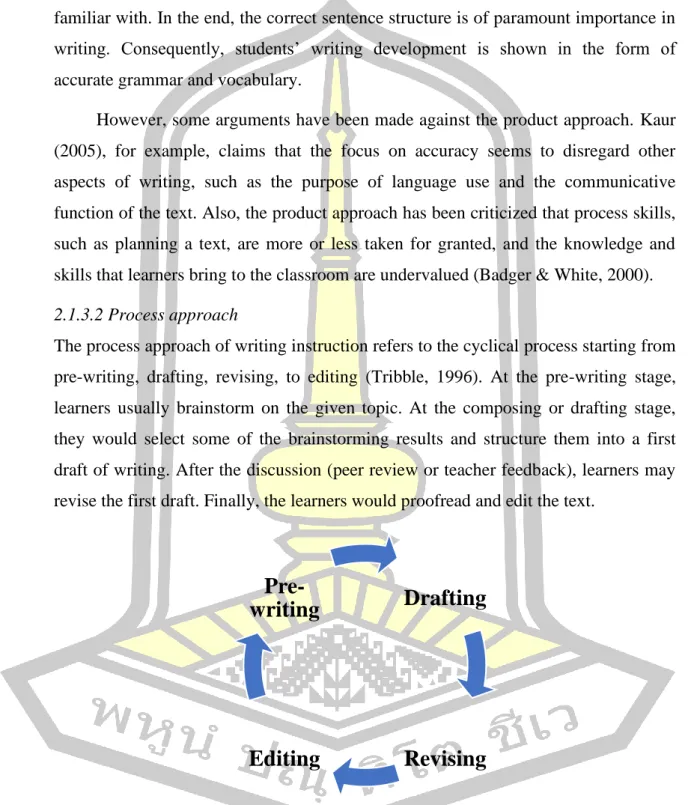
- Process approach
- Genre approach
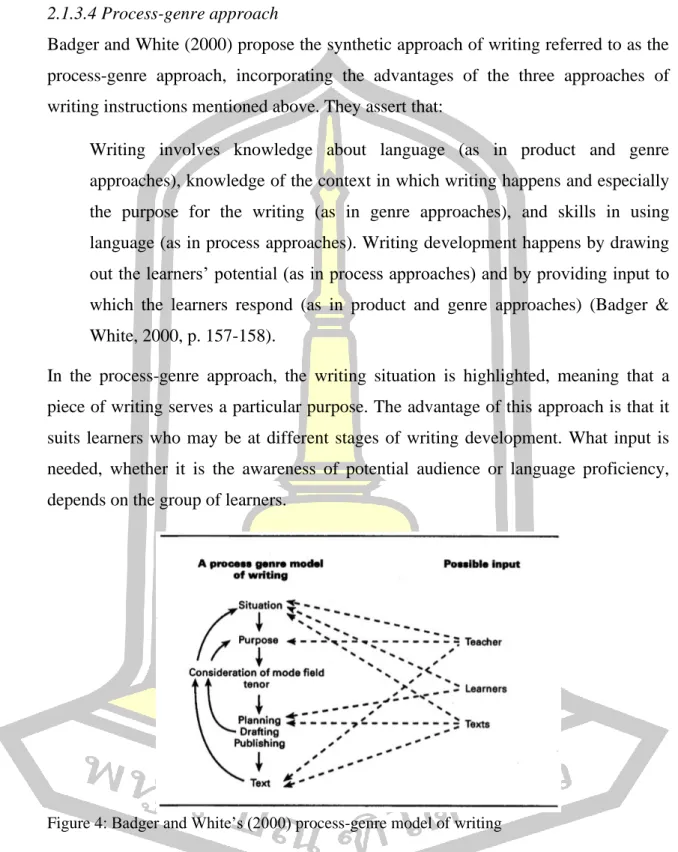
- Process-genre approach
- Writing assessment
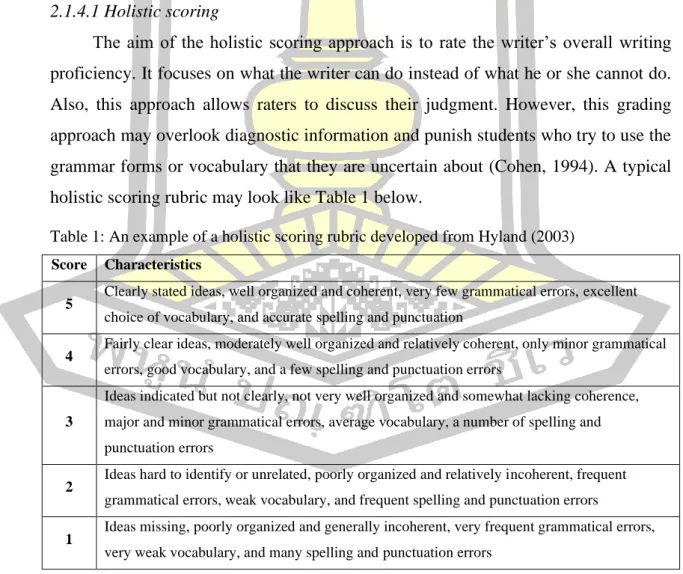
- Holistic scoring
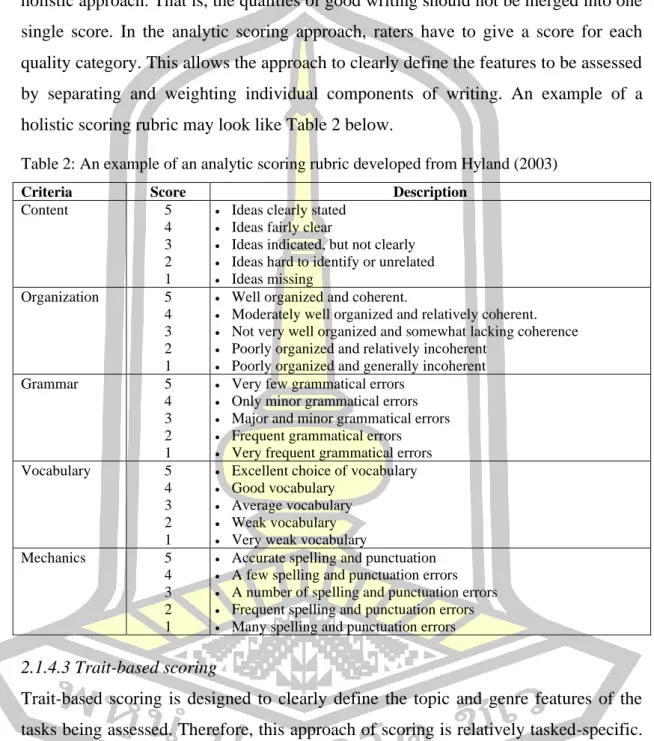
- Analytic scoring
- Trait-based scoring
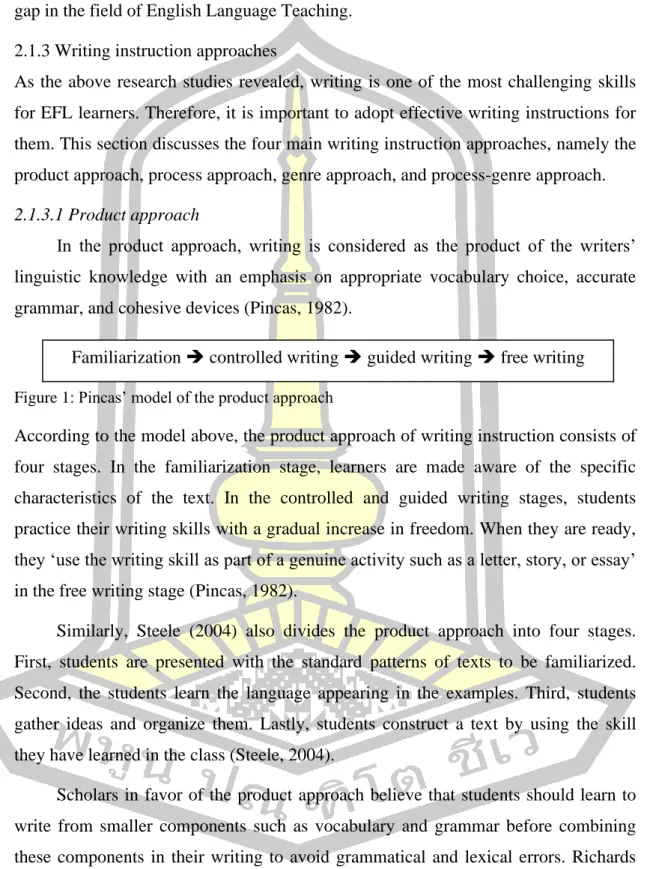
In the recognition phase, students become aware of the specific characteristics of the text. When an input is needed, peer review as part of the process approach is done to improve accuracy, as emphasized in the product approach.
Peer review
- Related studies about the peer review and writing
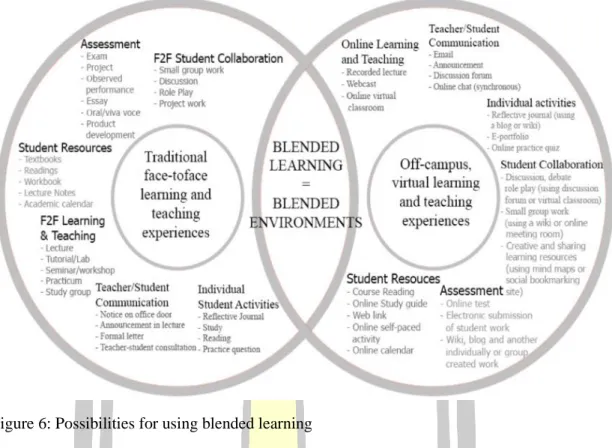
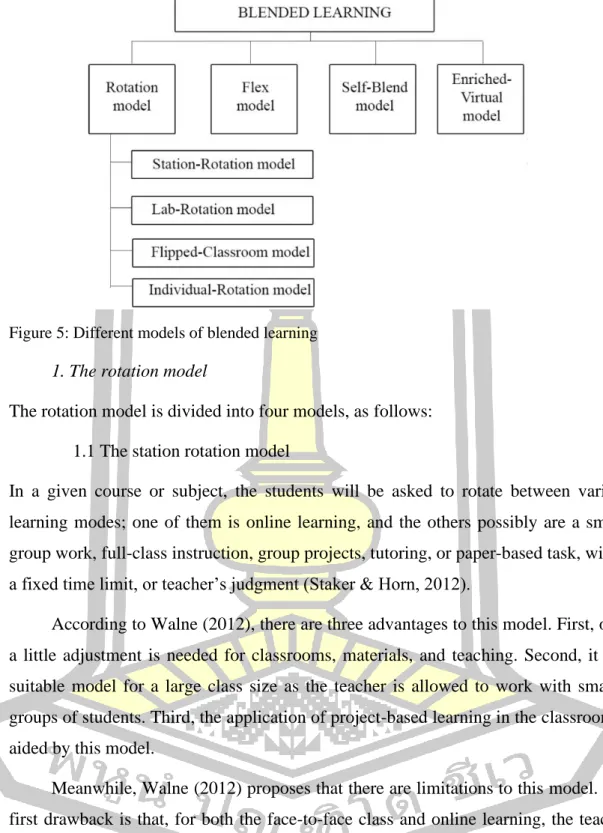
Not only does peer review benefit writing in terms of language and organization, it also increases students' writing confidence. To solve the problem of time constraints in the classroom, the peer review activities will take place in a blended learning environment.
Blended learning
- Background about blended learning
- Related studies about blended learning
2014) state that one of the most important advantages of blended learning is flexibility and time management. Sucaromana (2013) conducted experimental research and compared the effects of blended learning and face-to-face instruction.
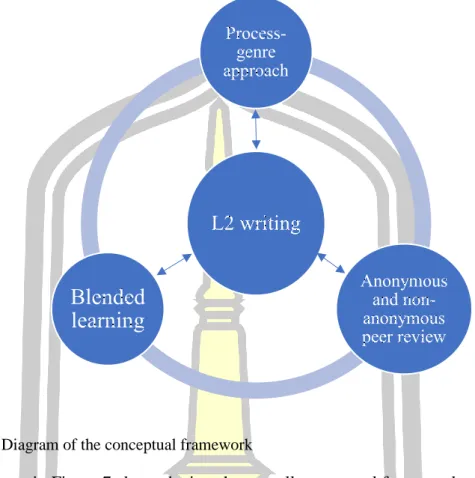
A summary of the conceptual framework of the study
Anonymous and non-anonymous peer review will be used to improve students' writing skills, and peer review activities will take place in a blended learning environment.
RESEARCH METHODS
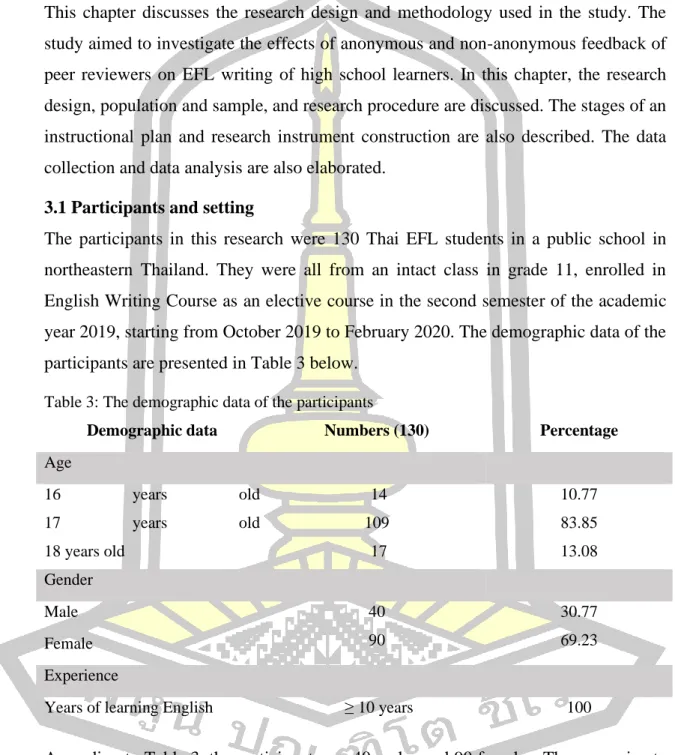
- Participants and setting
- Research instruments
- Writing tasks
- Questionnaire
- Semi-structured interview
- Data collection procedure
- Data analysis
- Research question one: Is there any difference in students’ writing ability
- Research question two: What are the students’ attitudes toward
- Summary
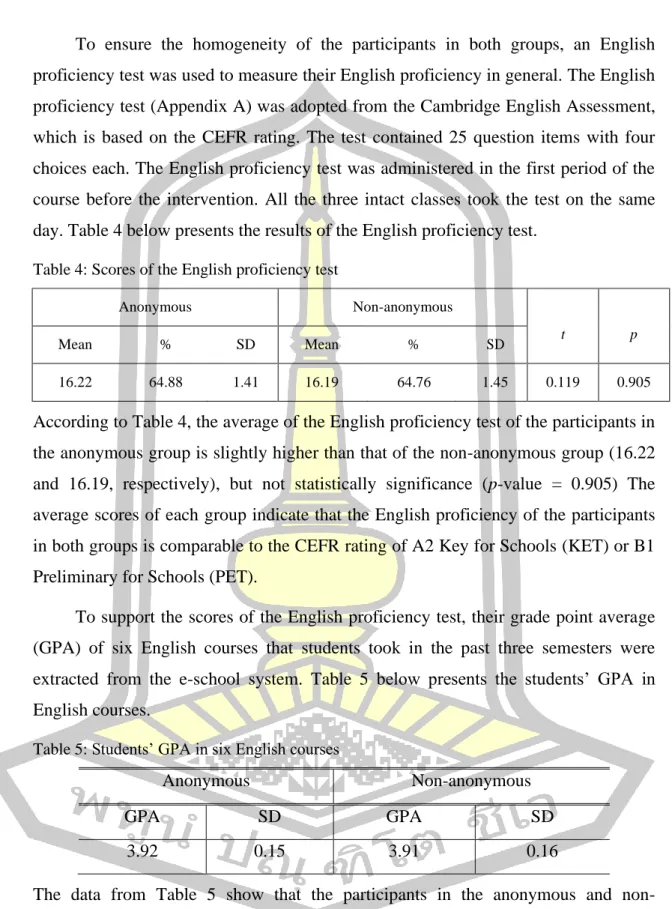
The interview protocol was designed to explore student attitudes toward anonymous and non-anonymous peer review. 33 3.4.2 Second research question: What are students' attitudes towards anonymous and non-anonymous peer review. The second part deals with students' attitudes towards anonymous and non-anonymous review.
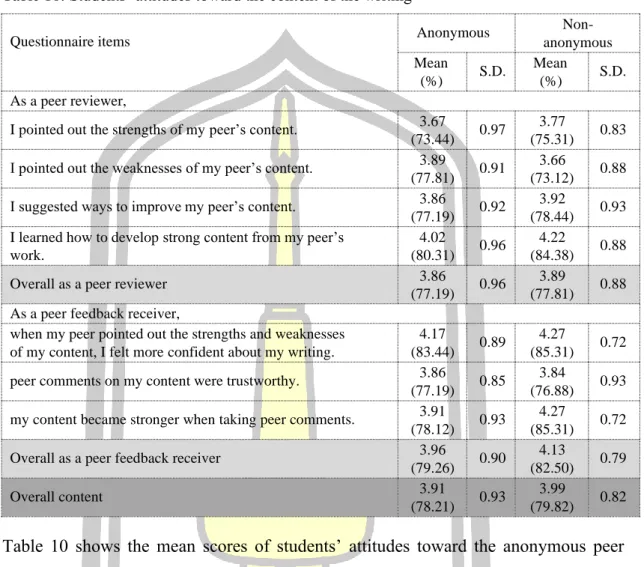
An analysis of quantitative data on students' attitudes towards anonymous and non-anonymous peer assessment is presented. The findings indicate students' attitudes toward anonymous and non-anonymous peer review of writing content. Findings indicate students' attitudes toward anonymous and non-anonymous peer review of writing organization.
The findings show students' attitudes towards anonymous and non-anonymous peer assessment regarding grammar in writing. The findings show students' attitudes towards anonymous and non-anonymous peer assessment in relation to vocabulary in writing. The findings show students' attitudes towards anonymous and non-anonymous peer review in relation to the mechanics of writing.
RESULTS
The effects of anonymous and non-anonymous peer reviewers on the students’
- Results from the comparison of the pretest and posttest scores in English
The first part examines the effects of anonymous and non-anonymous peer reviewers on students' writing ability. The purpose of this work is to answer research question 1: Is there any difference in students' writing ability after using feedback from anonymous and non-anonymous expert evaluators in a blended learning environment. This part answers research question 2: What are students' attitudes towards anonymous and non-anonymous written peer review.
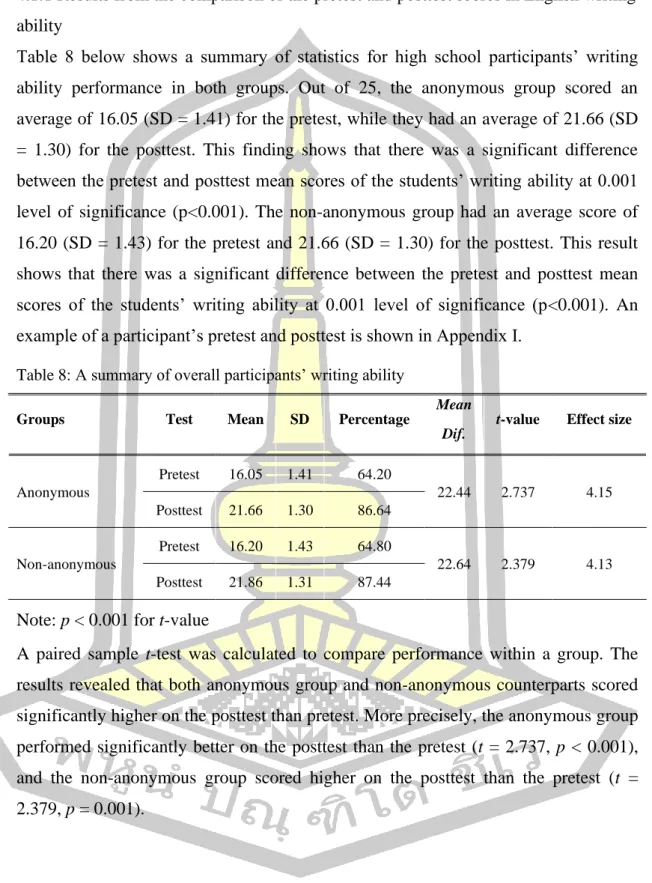
The third part presents additional findings from the qualitative data from the post-intervention focus group interview regarding anonymous and non-anonymous peer review. In response to RQ1, this section summarizes the performance of high school participants on the writing proficiency test and interprets their performance using the Statistical Package for the Social Sciences (SPSS) 23. This finding indicates that there was a significant difference between the pre- and post-test mean scores. students' writing skills at the 0.001 level of significance (p<0.001).
This result shows that there was a significant difference between the mean scores of the pretest and posttest of the students' writing skills at a significance level of 0.001 (p<0.001). The results showed that both anonymous group members and non-anonymous counterparts scored significantly higher on the posttest than on the pretest.
The students’ attitudes toward anonymous and non-anonymous peer review
- The results from the post-intervention questionnaire
- Student’s attitudes toward anonymous and non-anonymous peer
- Student’s attitudes toward anonymous and non-anonymous peer
- Students’ attitudes toward anonymous and non-anonymous peer
- Students’ attitudes toward anonymous and non-anonymous peer
- Overall student’s attitudes toward anonymous and non-anonymous peer
Average scores of students' attitudes toward anonymous and non-anonymous peer review regarding writing organization are presented in Table 11 below. 39 Table 11 shows the average scores of students' attitudes towards anonymous peer review and non-anonymous peer review regarding writing organization. Average scores of students. the relationship to anonymous and non-anonymous peer review on written grammar is presented in Table 12 below.
The results indicate that the participants in the anonymous group and the non-anonymous group showed a positive attitude towards their types of peer review. The mean scores of students' attitudes towards anonymous and non-anonymous peer review regarding vocabulary in writing are presented in Table 13 below. 42 Table 13 shows the average scores of the students' attitudes towards the anonymous peer review and non-anonymous peer review regarding vocabulary in writing.
This finding will be further discussed in Chapter Students' attitudes towards anonymous and non-anonymous peer review regarding mechanics in writing regarding mechanics in writing. The average scores of students'. attitudes towards anonymous and non-anonymous peer review in relation to the mechanics of writing are presented in Table 14 below. The findings indicate that the participants in the anonymous group and the non-anonymous group showed a positive attitude towards their type of peer review.
The results from the post-intervention interview
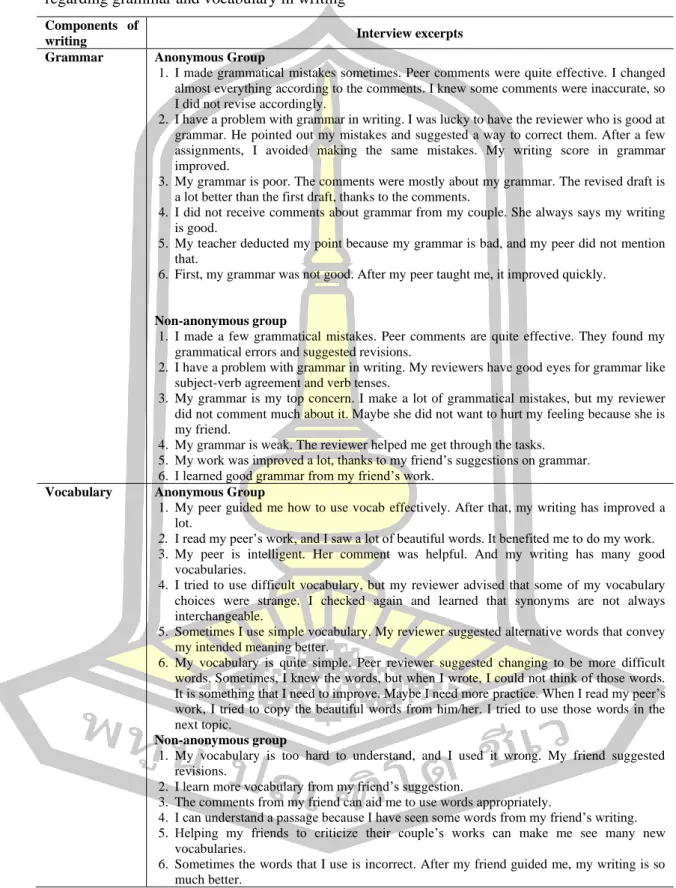
My teacher deducted a point because my grammar was bad and my peer didn't mention it. I tried to use heavy vocabulary, but my reviewer thought some of my vocabulary choices were weird. I didn't understand the capitalization rule at first, but my friend made it clear to me.
Qualitative data from the post-intervention interview highlighted the role of peer review in increasing writing proficiency in Thai EFL high school students. More specifically, participants reported that peer review helped improve components of their writing, including content, organization, grammar, vocabulary, and writing mechanics.
Summary
First, participants in the anonymous group showed a more positive attitude toward peer review. 12, when my peer pointed out the strengths and weaknesses of my organization, I felt more confident about my writing. 19 when my peer pointed out the strengths and weaknesses of my grammar, I felt more confident about my writing.
26 when my peer pointed out the strengths and weaknesses of my vocabulary, I felt more confident about my writing. 33 when my friend pointed out the strengths and weaknesses of mechanics, I felt more confident about my writing. 5 when my peer pointed out the strengths and weaknesses of my content, I felt more confident about my writing.
33 when my peer pointed out the strengths and weaknesses of my punctuation and spelling, I felt more confident about my writing.
DISCUSSION AND CONCLUSION
Discussion
- The effects of anonymous and non-anonymous peer reviewers on the
- Students’ attitudes toward anonymous and non-anonymous peer review 51
The current study revealed that participants' writing ability increased significantly by receiving peer review in a blended learning environment. More precisely, the participants in the non-anonymous group showed a better attitude towards non-anonymous peer review than the anonymous group did anonymous peer review. In addition, the participants' positive attitudes towards peer review may be due to increased social interaction among themselves.
The mutual examination of the positive attitude of the participants may also be a result of the environment in which they learned. In conclusion, participants in the anonymous group and the non-anonymous group showed positive attitudes towards their types of peer review. The current study examined 1) the effects of anonymous and non-anonymous peer reviewers on Thai EFL learners' writing ability in a blended learning environment and 2) students' attitudes toward anonymous and non-anonymous peer reviews.
Indeed, the quantitative data from the writing pre-test and post-test showed that anonymous and non-anonymous peer review can equally increase Thai EFL learners' writing ability. More specifically, the non-anonymous group showed significantly more positive attitudes toward non-anonymous peer review than the anonymous group about anonymous review. Also, participants in both the anonymous and non-anonymous groups showed a positive attitude toward peer review while the non-anonymous group showed a statistically significantly more positive attitude.
Limitations of the study
Second, peer review could lead to a positive attitude because it reduces stress and increases motivation to learn. Third, a positive attitude towards peer assessment may be the result of improved critical thinking, learner autonomy and social interaction among students. Finally, Facebook as a blended learning environment was reported to promote greater learning satisfaction and motivation to learn.
Regarding the first research question, the current study found that both types of peer review had effects on students' writing ability. To answer the second research question, the quantitative results from the questionnaire showed that Thai EFL learners showed a positive attitude towards peer review. In conclusion, anonymous and non-anonymous peer review significantly improved participants' writing ability, although the improvement resulting from different types of peer review was not statistically significant.
It is unclear why participants were less willing to point out peers' writing weaknesses related to writing organization and vocabulary. First, they may not want to offend the writers since, culturally, Thai students are likely to avoid offending others. Second, it's also possible that the writers did well on that part.
Recommendations of the study
The effects of peer editing versus self-editing on students' revision of language errors in revised drafts. Technology and language – what works and what doesn't: A meta-analysis of blended learning research. An investigation of Thai students' English language difficulties and their learning strategies in an international program at Mahidol University.
Effects of Blended Learning Using Local Cultural Content on English Writing Ability of Tenth Grade Students in Ayutthaya Province. The effectiveness of corrective feedback for the acquisition of L2 grammar: A meta-analysis of the research. Towards an understanding of the special nature of L2 writing: The ESL research and its implication.
Effects of the genre-based writing instruction module in a blended learning environment on English writing ability and thinking skills of Thai undergraduate students.
Examples of Students’ Pretest and Posttest
After reading the examples from the teacher and the work of my colleagues, I think I know how to create good content.