STRATEGIC MANAGEMENT FOR THE SURVIVAL OF TOURISM BUSINESS DURING COVID-19 CRISIS OF
ELEPHANT PARK IN MAE TAENG DISTRICT, CHIANG MAI PROVINCE, THAILAND.
KANNIKA HONGPHONG
MASTER OF ARTS IN TOURISM MANAGEMENT (INTERNATIONAL PROGRAM)
MAEJO UNIVERSITY
2022
STRATEGIC MANAGEMENT FOR THE SURVIVAL OF TOURISM BUSINESS DURING COVID-19 CRISIS OF
ELEPHANT PARK IN MAE TAENG DISTRICT, CHIANG MAI PROVINCE, THAILAND.
KANNIKA HONGPHONG
A THESIS SUBMITTED IN PARTIAL FULFILLMENT
OF THE REQUIREMENTS FOR THE DEGREE OF MASTER OF ARTS IN TOURISM MANAGEMENT (INTERNATIONAL PROGRAM)
ACADEMIC ADMINISTRATION AND DEVELOPMENT MAEJO UNIVERSITY 2022
Copyright of Maejo University
STRATEGIC MANAGEMENT FOR THE SURVIVAL OF TOURISM BUSINESS DURING COVID-19 CRISIS OF
ELEPHANT PARK IN MAE TAENG DISTRICT, CHIANG MAI PROVINCE, THAILAND.
KANNIKA HONGPHONG
THIS THESIS HAS BEEN APPROVED IN PARTIAL FULFILLMENT OF THE REQUIREMENTS FOR THE DEGREE OF MASTER OF ARTS
IN TOURISM MANAGEMENT (INTERNATIONAL PROGRAM)
APPROVED BY Advisory Committee
Chair
(Dr. Winitra Leelapattana) .../.../ ...
Committee
(Associate Professor Dr. Weerapon Thongma) .../.../ ...
Committee
(Dr. Jirachai Yomkerd) .../.../ ...
Program Chair, Master of Arts
in Tourism Management (Dr. Winitra Leelapattana)
(International Program) .../.../ ...
CERTIFIED BY THE OFFICE OF
ACADEMIC ADMINISTRATION (Associate Professor Dr. Yanin Opatpatanakit)
AND DEVELOPMENT Vice President
.../.../ ...
C
ABSTRACT (THAI)
ชื่อเรื่อง การจัดการเชิงกลยุทธ์เพื่อความอยู่รอดของธุรกิจท่องเที่ยวภายใต้วิกฤต COVID-19 ของปางช้างในอำเภอแม่แตง จังหวัดเชียงใหม่ ประเทศไทย ชื่อผู้เขียน นางสาวกรรณิกา หงษ์พงษ์
ชื่อปริญญา ศิลปศาสตรมหาบัณฑิต สาขาวิชาการจัดการการท่องเที่ยว (หลักสูตร นานาชาติ)
อาจารย์ที่ปรึกษาหลัก อาจารย์ ดร.วินิตรา ลีละพัฒนา
บทคัดย่อ
วิทยานิพนธ์เรื่อง “การจัดการเชิงกลยุทธ์เพื่อความอยู่รอดของธุรกิจท่องเที่ยวภายใต้
วิกฤต COVID-19 ของปางช้างในอำเภอแม่แตง จังหวัดเชียงใหม่ ประเทศไทย” การวิจัยครั้งนี้มี
วัตถุประสงค์หลักเพื่อ 1) ศึกษาสถานการณ์ของธุรกิจปางช้าง ในอำเภอแม่แตง จังหวัดเชียงใหม่
ภายใต้สถานการณ์วิกฤต COVID-19 และ 2) ศึกษาและวิเคราะห์กลยุทธ์การปรับตัวของธุรกิจปาง ช้าง ในอำเภอแม่แตง จังหวัดเชียงใหม่ ภายใต้สถานการณ์วิกฤต COVID-19 และวิเคราะห์ความ เหมือนและแตกต่างของธุรกิจขนาดใหญ่และขนาดเล็ก การวิจัยนี้ใช้วิธีการดําเนินการวิจัยเชิงคุณภาพ (qualitative research) ที่ประกอบไปด้วยการสัมภาษณ์เชิงลึก (in-depth interview) แบบมี
โครงสร้าง (structured interview form) และการบันทึกภาคสนาม (field note) โดยผู้ให้ข้อมูลเป็น เจ้าของ และพนักงานของกิจการปางช้างในอำเภอแม่แตง จังหวัดเชียงใหม่ ที่ผู้วิจัยได้ใช้วิธีการสุ่ม กลุ่มตัวอย่างอย่างง่าย (simple random sampling) โดยวิธีจับสลาก (lottery) ซึ่งได้ระบุโควตาแก่
ปางช้างขนาดเล็กจำนวน 2 ปาง และปางช้างขนาดใหญ่จำนวน 2 ปาง จากทั้งหมด 8 ปาง
ผลการวิจัยพบว่า วิกฤตการณ์การแพร่ระบาดโควิด-19 ส่งผลกระทบต่อรายรับของธุรกิจ ปางช้าง ในอำเภอแม่แตง จังหวัดเชียงใหม่ นักท่องเที่ยวจากต่างประเทศไม่สามารถเดินทางเข้ามาใน ประเทศไทยได้ เนื่องจากนโยบายการปิดประเทศ ซึ่งนักท่องเที่ยวต่างชาติถือเป็นตัวแปรสำคัญในการ สร้างรายได้หลักให้แก่ปางช้างต่างๆ ในอำเภอแม่แตง จังหวัดเชียงใหม่ และเมื่อแบ่งประเภทของธุรกิจ ปางช้างเป็นขนาดใหญ่และขนาดเล็ก พบว่า รายรับเฉลี่ยของธุรกิจปางช้างขนาดใหญ่ ช่วงก่อน สถานการณ์โควิด-19 กับ ช่วงระหว่างสถานการณ์โควิด-19 มีอัตรารายได้เฉลี่ยลดลงร้อยละ 99.87 ส่วนรายรับเฉลี่ยของธุรกิจปางช้างขนาดเล็ก ช่วงก่อนสถานการณ์โควิด-19 กับ ช่วงระหว่าง สถานการณ์โควิด-19 มีอัตรารายได้เฉลี่ยลดลงร้อยละ 97.06 เมื่อเปรียบเทียบกันระหว่างธุรกิจปาง ช้างขนาดใหญ่และธุรกิจปางช้างขนาดเล็กอัตรารายได้เฉลี่ยลดลงสูงมากพอๆ กัน และกลยุทธ์การ ปรับตัวของธุรกิจปางช้างใน อำเภอแม่แตง จังหวัดเชียงใหม่ ของธุรกิจปางช้างเป็นขนาดใหญ่ เน้นการ
D ใช้กลยุทธ์การจัดการทรัพยากรมนุษย์มากที่สุดในการบริหารงาน รองลงมา กลยุทธ์การตลาด, กลยุทธ์
กระบวนการการป้องกันโควิด-19และ กลยุทธ์ทางการเงิน ส่วนของธุรกิจปางช้างเป็นขนาดเล็ก มีการ ใช้ กลยุทธ์กระบวนการการป้องกันโควิด-19 มากที่สุด รองลงมากลยุทธ์ทางการเงินและกลยุทธ์
การตลาดและกลยุทธ์การจัดการทรัพยากรมนุษย์ ธุรกิจปางช้างขนาดใหญ่เน้นการใช้กลยุทธ์การ จัดการทรัพยากรมนุษย์มากที่สุด โดยรวมอยู่ในระดับดี (x ̅ = 4.12) ในขณะที่ธุรกิจปางช้างขนาดเล็ก เน้นการใช้กลยุทธ์กระบวนการการป้องกันโควิด-19 ส่งผลให้ธุรกิจปางช้างขนาดเล็กในอำเภอแม่แตง จังหวัดเชียงใหม่ ภายใต้สถานการณ์โควิด-19 โดยรวมอยู่ในระดับดี (x ̅ = 3.60) ส่วนกลยุทธ์อื่น ๆ อยู่
ในระดับใกล้เคียงกัน
วิทยานิพนธ์นี้แสดงให้เห็นถึง ลักษณะการเลือกใช้กลยุทธ์ในการบริหารจัดการธุรกิจปาง ช้าง 5 ด้าน โดยมีลักษณะการเลือกใช้ที่เหมือนและแตกต่างกันออกไปตามขนาดของปางช้าง สิ่ง สำคัญคือการเลือกใช้ให้เหมาะสมกับลักษณะการดำเนินงานของแต่ละขนาด ซึ่งผลการศึกษาจะเป็น ประโยชน์ต่อผู้ประกอบการปางช้างในการศึกษาแนวทางการรับมือจากวิกฤตโควิด-19 ในปัจจุบัน
คำสำคัญ : การจัดการเชิงกลยุทธ์, การปรับตัวขององค์กร, การท่องเที่ยว, โควิด-19
E
ABSTRACT (ENGLISH)
Title STRATEGIC MANAGEMENT FOR THE SURVIVAL
OF TOURISM BUSINESS DURING COVID-19 CRISIS OF ELEPHANT PARK IN MAE TAENG DISTRICT, CHIANG MAI PROVINCE, THAILAND.
Author Miss Kannika Hongphong
Degree Master of Arts in Tourism Management
(International Program) Advisory Committee Chairperson Dr. Winitra Leelapattana
ABSTRACT
Thesis on “Strategic management for tourism business survival under the COVID-19 crisis of the elephant park in Mae Taeng District, Chiang Mai Province, Thailand.” The main objectives of this research were 1) study the income situation of the elephant park business in Mae Taeng District, Chiang Mai Province under the COVID-19 situation and 2) to study and analyze the adaptation strategies of elephant park businesses under the COVID-19 situation and analyze the similarities and differences of large and small businesses. This research was conducted using a qualitative research method that consisted of an in-depth interview, a structured interview form, and a field note by the contributor proprietary information and employees of the elephant park in Mae Taeng District, Chiang Mai Province. The researcher used simple random sampling by lottery method, which specified quotas for 2 small elephant parks and 2 large elephant parks out of a total of 8 elephants parks.
The results showed that COVID-19 epidemic crisis affects the income of the elephant park business in Mae Taeng District, Chiang Mai Province. Studies have shown that the spread of COVID-19 affect the tourism of Thailand foreign tourists cannot enter Thailand. Due to the country's lockdown policy in which foreign tourists are considered a key factor in generating the main income for the elephant parks in Mae Taeng District, Chiang Mai Province and when categorizing the elephant park
F businesses into large and small, it was found that the average income of large elephant park businesses before the COVID-19 situation and during the COVID-19 situation. The average income rate decreased by 99.87%. The average income of the small elephant park business before the COVID-19 situation and during the COVID-19 situation the average income rate decreased by 97.06%. Compared between the large elephant park business and the small elephant park business, the average income declined equally high. And the adjustment strategy of the elephant park business in Mae Taeng District, Chiang Mai Province of the large elephant park businesses, the use of human resource management strategy was the most important in management, followed by marketing strategy, process strategy and prevention strategies for COVID-19 and financial strategy and the strategy and prevention strategies for COVID-19 were the most, followed by financial strategy and marketing strategy and human resource management strategy. The large elephant park businesses focus on using the human resource management, the overall average was at good (x ̅ = 4.12), while the small elephant park businesses focus on the use of process strategy and prevention strategies for COVID-19 as a result as the small elephant park business in Mae Taeng District, Chiang Mai Province under the COVID-19, the overall average was at good (x ̅ = 3.60) Other strategies are at a similar level.
This thesis shows characteristics of choosing and using strategies for managing 5 areas of elephant park business with the same and different selection characteristics according to the size of the elephant park. It is important to choose the right one for the operating characteristics of each size. The results of the study will benefit elephant park operators in studying ways to cope with the current COVID-19 crisis.
Keywords : Strategic Management, Organization Survival, Tourism, COVID-19
G
ACKNOWLEDGE MENTS
ACKNOWLEDGEMENTS
Thesis on strategic management for the survival of tourism business during COVID-19 crisis of elephant park in Mae Taeng District, Chiang Mai Province, Thailand was successfully accomplished with the kindness of Dr. Winitra Leelapattana, Chairman of the Tourism Management Program (International Program), Associate Professor Dr.
Weerapon Thongma, Dr. Jirachai Yomkerd the committee and Dr. Suthira Sitthikul Lecturer at International College, who has kindly given the content review and always gives good advice on the development, improvement and correction of this thesis complete. Therefore, I would like to thank you for this opportunity.
In this regards, I would also like to thanks to the owners and informants of the 4 Elephant Parks in Mae Taeng District are: 1) Maetaeng Elephant Park 2) Boonlert Elephant Park 3) Maetaman Elephant Park and 4) Panda Elephant Park for giving an interview informations to the researcher can be attributed to this thesis until complete.
I greatly appreciate your effort all teachers and staff of the International College for providing advice, knowledge, and assistance during the period of study.
Many thanks for your gratitude Mr. Supachai Chaiudomvitee for giving me kindness offer help and advice in doing this research until it has been successfully accomplished.
I would like to thank my beloved family, thank you father (Sub Lt.
Montienthong Hongphong), mother (Mrs. Panisa Wongsai), aunt (Miss Napat Wongsai) and grandmother (Mrs. Kongkam Wongsai) for giving love, concern, encouragement and the most valuable educational opportunities in life.
Finally, if this thesis has any flaws I sincerely apologize and sincerely hope that this thesis will be useful for managing business to survive under the epidemic situation of COVID-19.
Kannika Hongphong
TABLE OF CONTENTS
Page ABSTRACT (THAI) ... C ABSTRACT (ENGLISH) ... E ACKNOWLEDGEMENTS ... G TABLE OF CONTENTS ... H List of Tables ... J List of Figures ... K
CHAPTER I INTRODUCTION ... 1
Research Problem ... 2
Objectives of the Study ... 3
Expected Results ... 3
Scope of Study ... 4
Limitation of the Study ... 5
Definition of the Terms ... 5
CHAPTER II REVIEW OF RELATED LITERATURE ... 7
Business Strategies ... 7
Crisis concept and crisis management ... 14
Conceptual Framework ... 24
CHAPTER III RESEARCH METHODOLOGY ... 25
Locale of the Study ... 25
Population and Sampling Procedure ... 26
Measurement of Variables ... 27
Research Instrument ... 29
Data Gathering ... 30
Analysis of Data ... 30
Research Duration ... 30
CHAPTER IV RESULTS AND DISCUSSION ... 32
The income situation of the elephant parks ... 33
The adaptation strategies of the elephant parks ... 40
CHAPTER V SUMMARY IMPLICATION AND RECOMMENDATIONS ... 67
Summary ... 67
Implication ... 68
Recommendations ... 73
REFERENCES ... 75
APPENDIXES... 78
Appendix A Permission Letter ... 79
Appendix B Questionnaire ... 84
CURRICULUM VITAE ... 88
List of Tables
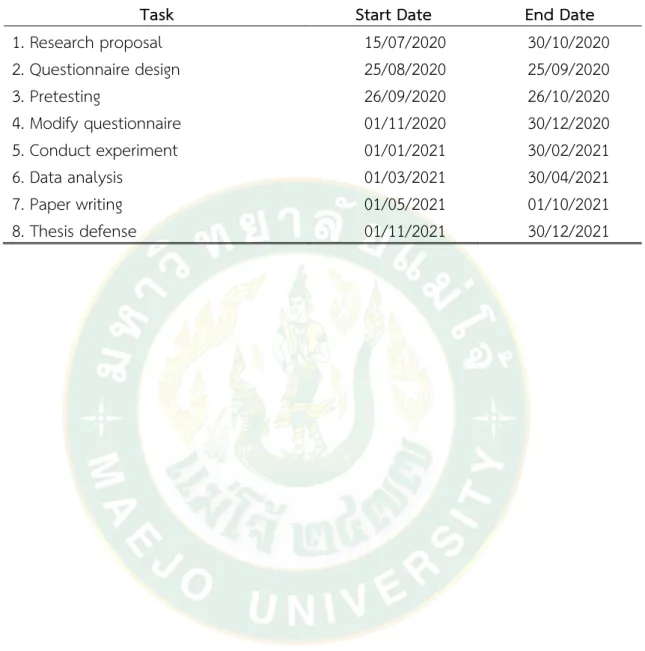
Page Table 1 Research Timetable ... 31 Table 2 Opinion of Maetaeng elephant park administrators on various strategies important to the adjustment of the business under the COVID-19 situation ... 41 Table 3 Opinion of Maetaman elephant park administrators on various strategies important to the adjustment of the business under the COVID-19 situation ... 47 Table 4 Opinion of Boonlert elephant park administrators on various strategies important to the adjustment of the business under the COVID-19 situation ... 52 Table 5 Opinion of Panda elephant park administrators on various strategies
important to the adjustment of the business under the COVID-19 situation ... 56 Table 6 Average income of large elephant Chiang Mai Province ... 60 Table 7 Average income of small elephant park business in MaeDistrict, Chiang Mai Province ... 62
List of Figures
Page
Figure 1 Basic elements of strategic management ... 7
Figure 2 The three levels of strategy hierarchy. ... 8
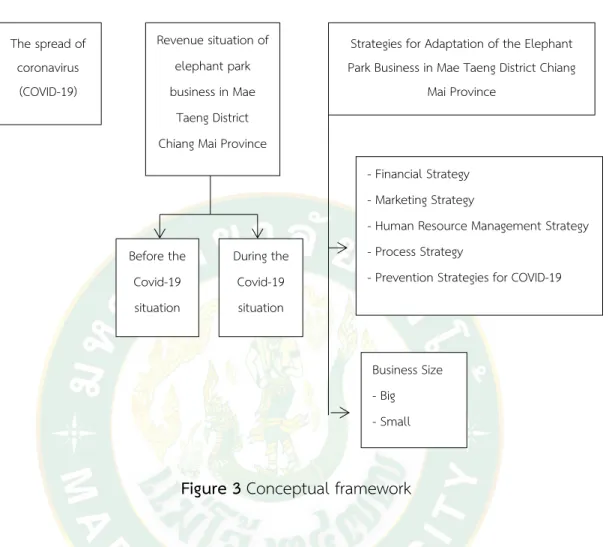
Figure 3 Conceptual framework ... 24
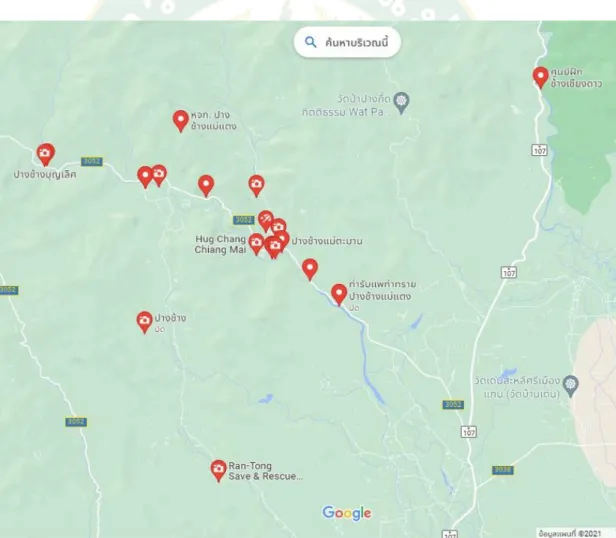
Figure 4 Map of Elephant Park in Mae Taeng District, Chiang Mai, Thailand ... 25
Figure 5 Maetaeng elephant park annual income before the COVID-19 situation ... 34
Figure 6 Maetaeng elephant park annual income during the COVID-19 situation ... 34
Figure 7 Maetaman elephant park annual income before the COVID-19 situation ... 35
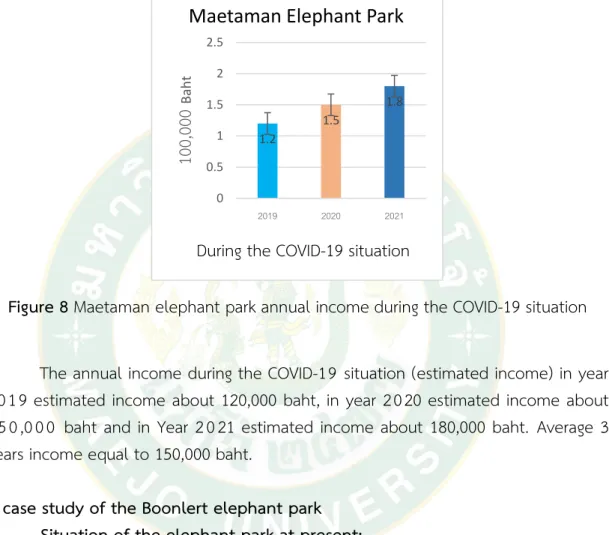
Figure 8 Maetaman elephant park annual income during the COVID-19 situation ... 36
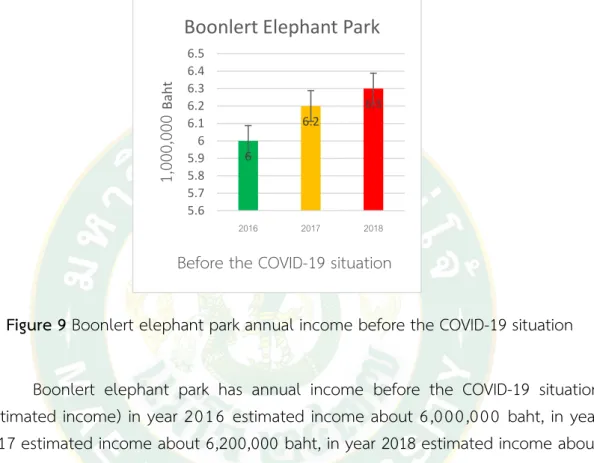
Figure 9 Boonlert elephant park annual income before the COVID-19 situation ... 37
Figure 10 Boonlert elephant park annual income during the COVID-19 situation... 37
Figure 11 Panda elephant park annual incomes before the COVID-19 situation ... 39
Figure 12 Panda elephant park annual income during the COVID-19 situation ... 39
Figure 13 Proportion of the adaptation strategy of Maetaeng elephant park ... 42
Figure 14 Maetaeng elephant park ... 42
Figure 15 Map of Maetaeng elephant park ... 43
Figure 16 Resting area of Maetaeng elephant park ... 43
Figure 17 Souvenir shop of Maetaeng elephant park ... 44
Figure 18 Elephant show ground... 44
Figure 19 Map in Maetaeng elephant park ... 45
Figure 20 Elephant ride zone ... 45
Figure 21 Proportion of the adaptation strategy of Maetaman elephant park ... 48
Figure 22 Maetaman elephant park ... 48
Figure 23 Map of Maetaman elephant park ... 49
Figure 24 Elephant nursery of Maetaman elephant park ... 49
Figure 25 Interview general manager of Maetaman elephant park ... 50
Figure 26 Interview general manager of Maetaman elephant park ... 50
Figure 27 Interview general manager of Maetaman elephant park ... 51
Figure 28 Proportion of the adaptation strategy of Boonlert elephant park ... 53
Figure 29 Boonlert elephant park ... 53
Figure 30 Map of Boonlert elephant park ... 54
Figure 31 Interview with the owner of the Boonlert elephant park ... 54
Figure 32 Interview with the owner of the Boonlert elephant park ... 55
Figure 33 Proportion of the adaptation strategy of Panda elephant park ... 57
Figure 34 Map of Panda elephant park ... 57
Figure 35 Panda elephant park ... 58
Figure 36 Panda elephant park ... 58
Figure 37 Panda elephant park ... 59
Figure 38 Average income of large elephant park business ... 61
Figure 39 Average income of small elephant park business ... 63
Figure 40 Strategies of large elephant parks business in Mae Taeng District, Chiang Mai Province under the situation of COVID-19 ... 65
Figure 41 Strategies of small elephant parks business in Mae Taeng District, Chiang Mai Province under the situation of COVID-19 ... 66
Tourism industry is a major cog in driving the Thai economy in terms of income generation Income distribution brings prosperity to the local Situation before the coronavirus outbreak (COVID-19) The tourism industry accounts for about 20 percent of GDP, with more than 4.5 million industrial workers connecting people and making use of an extensive resource base. It is a sector that plays an important role in the development of the country. From the situation, a major problem before COVID-19 (COVID-19 stands for Coronavirus Disease 2019) was caused by the new coronavirus, 2019-nCoV. The coronavirus outbreak affecting the world in a wide range and spread all over the world this resulted in a large number of sick and fatalities. In addition, the COVID-19 virus it also affected the disruption of the tourism and related industries. It spreads to the slowing down of production in the global industrial sector that is under the global value chain system, which has continued to affect both domestic and international trade and investment. It also includes the cost of living with people to prevent infection, as well as measures to keep people in their homes, lead to a lack of income. Affecting global stock markets this also included the choice of many countries to shut down the country which caused severe economic recession. Therefore, it cannot be denied that our global economy is entering a global economic crisis, which is primarily driven by the global health crisis.
(Posttoday, 2020: online)
Thailand economy in tourism and export sectors as a result, Thailand was hit hard by COVID-19, the Thai economic structure compared to many Asian countries It is found that the Thailand economy is primarily an economy that relies on tourism and exports. It is highly concentrated in the tourism sector ( 1 2 % of GDP) and international trade. (Total export value, import value equal to 1 0 0 % of GDP), resulting in a slowdown in tourism and world trade, affecting the Thai economy harder than other countries. Thailand's tourism and trade sectors still rely heavily on China. In addition to the Thai economy is mainly dependent on tourism and international trade. Thailand's tourism and exports depend mainly on the Chinese economy. China tourism revenue accounts for 2 8 % of total tourism revenue. And Thai exports to China accounted for 12% of total exports. It is not surprising that the shock from China and the slowdown in the Chinese economy affect Thailand more than any other country. The top five sectors that will be most severely affected will
be in the tourism-related services sector: hotels, accommodation, retail, restaurants, and land transport. However, the impact can be widespread in more than five businesses, considering the entire industry chain through the input-output table. That are related to the tourism sector and are considered to be affected (Forbes Thailand, 2020)
Research Problem
Due to the impact of the COVID-1 9 virus occurring in the world above as mentioned above. It's like a set zero business related to tourism. With the current situation of the COVID-1 9 epidemic it affects many aspects and many people, not just people, are affected. Elephants are among the most severely affected by the COVID-19 outbreak. COVID-1 9 is affecting the elephant park lack of various factors especially for elephant food that requires a large budget each day. Usually, food for elephants each day is frequented by tourists. Has eaten fruit or snacks in addition to the main food, such as grass or corn plants and now there is not enough food to meet the needs of the elephants. Because elephants eat about 140-270 kg per day per 1 rope. COVID-19 Crisis that spread throughout thus affecting the income of the elephant park that will provide food for the elephants for many months. Causing the elephant park to bear the cost both mahouts, food costs, and elephant medicine costs have affected elephant care.
This made researcher interested in studying the situation of the elephant park business in Mae Taeng District, Chiang Mai Province and to study and analyze the adaptation strategies of elephant park businesses under the COVID-19 situation and to analyze the similarities and differences of large and small businesses because it is considered one of the famous tourism business in Chiang Mai and is a business that can generate income for Mae Taeng District. In order to use the results of the study as a guideline suggestion for tourism business operators in Thailand to use in the adjustment of tourism business in the future.
Against this background, the issue this research seeks to address involves a few key questions. The objectives of this study are 1) to study the income situation of the elephant park business in Mae Taeng District, Chiang Mai Province under the COVID-19 situation and 2) to study and analyze the adaptation strategies of elephant park businesses under the COVID-19 situation and to analyze the similarities and differences of large and small businesses.
We must understand research questions such as:
During the lockdown measures in the country during the COVID-1 9 crisis elephant park in Mae Taeng District, Chiang Mai Province How do you manage tourism or adjust your business to survive the COVID-19 crisis?
Due to the problems and impacts of the COVID-1 9 virus that occur around the world as mentioned above, it is like a Set Zero business related to tourism. This made the researcher interested in studying the tourism management of each elephant park in Mae Taeng District, Chiang Mai Province Because it is considered one of the famous tourism businesses and generates income of Mae Taeng District, Chiang Mai Province as well to apply the results of the study to be used as a recommendation for tour operators in Thailand to apply in the adjustment of the tourism business in the future.
Objectives of the Study
The purposes of this study are clearly stated in the previous section. This section, the author address the objective that need to complete in order to achieve the purpose. Therefore, the objective of this research is:
1. to investigate the income situation of the elephant park business in Mae Taeng District, Chiang Mai Province under the COVID-19 situation.
2. to analyze the adaptation strategies of elephant park businesses under the COVID-1 9 situation and analyze the similarities and differences of large and small businesses.
Expected Results
The main objective of this study is to know the current situation of elephant park businesses in Mae Taeng District and to know the adaptation strategies of elephant park businesses under the COVID-19 situation and to provide advice to the tourism industry in Mae Taeng determining a post-crisis recovery strategy. Therefore, the expected outcomes of this study are as follows:
1. The government sector can use revenue analysis for each period of the COVID-19 epidemic situation let's assess the income of the business of the elephant park tourism industry in Chiang Mai Province. And also has a policy that can bring help in various fields to entrepreneurs to support their business in the future.
2. Tourism businesses especially elephant parks can use research findings as a guideline for managing strategies within the organization to survive under the COVID-19 situation.
3. Academics, students and general interested persons can be used as a basis for further research on business knowledge about elephant parks.
Scope of Study
The scope of this thesis was aimed at the elephant park in Mae Taeng District, Chiang Mai Province, Thailand, divided into 2 large elephant park businesses and 2 small elephant park businesses. The study was based on population observations measuring instrument interview the owners of each elephant park and continue to conduct surveys to collect data from the beginning of April 2021 to September 2021.
1. This thesis have conducted studies and collected research data in each elephant park of Mae Taeng District, Chiang Mai Province, Thailand. In which Chiang Mai Province, Mae Taeng District is considered the district with the most elephant parks and many tourists come to visit the elephant park in Mae Taeng District.
2. Elephant Park in Mae Taeng District Chiang Mai Province there are 8 elephant parks. The researcher selected samples from the elephant parks in Mae Taeng District, Chiang Mai Province total of 8 elephant parks. For this research the researcher selected 4 elephant parks (2 elephant parks with large businesses and 2 elephant parks with small businesses).
3. Researcher studied the income before and during COVID-19 situation of the elephant park business in Mae Taeng District, Chiang Mai Province under the COVID- 19 situation.
4. Researcher studied and analyze the adaptation strategies of elephant park businesses under the COVID-19 situation and analyze the similarities and differences of large and small businesses.
Duration of the Study
The study was based on population observations measuring instrument Interview the owners of each elephant park and continue to conduct surveys to collect data from the beginning of April 2021 to September 2021.
The researcher chose to use a combination or mixed purposeful sampling, i.e.
critical case sampling and purposeful random sampling.
Limitation of the Study
This research was conducted to explore the adaptation strategy to study the income situation of the elephant park business in Mae Taeng District, Chiang Mai Province under the COVID-1 9 situation and to study and analyze the adaptation strategies of elephant park businesses under the COVID-19 situation and to analyze the similarities and differences of large and small businesses. Some restrictions that the document must specify:
1. The survey was conducted by in-depth interviews. The advantage is that the sample is the person who has the best information on the subject the researcher is studying or is most relevant to.
2. Interviewees are owners and employees working in the elephant park in Mae Taeng District, Chiang Mai Province, Thailand.
Definition of the Terms
Strategy is an action that managers take to attain one or more of the organization’s goals. A strategy is all about integrating organizational activities and utilizing and allocating the scarce resources within the organizational environment so as to meet the present objectives. Strategy is the blueprint of decisions in an organization that shows its objectives and goals, reduces the key policies, and plans for achieving these goals, and defines the business the company is to carry on, the type of economic and human organization it wants to be, and the contribution it plans to make to its shareholders, customers and society at large. (Management study guide, 2015).
Strategic Management is the management of an organization’s resources to achieve its goals and objectives. Strategic management involves setting objectives, analyzing the competitive environment, analyzing the internal organization, evaluating strategies, and ensuring that management rolls out the strategies across the organization. (Investopedia, 2022)
Tourism is a social, cultural and economic phenomenon which entails the movement of people to countries or places outside their usual environment for personal or business/professional purposes. These people are called visitors (which may be either tourists or excursionists; residents or non-residents) and tourism has to do with their activities, some of which involve tourism expenditure. (The World Tourism Organization, 2008)
The worldwide outbreak of COVID-19 has brought the world to a standstill, and tourism has been the worst affected of all major economic sectors. Against a backdrop of heightened uncertainty, up-to-date and reliable information is more important than ever, both for tourists and for the tourism sector. By cooperating closely with the world health organization (WHO), the lead un agency for the management of this outbreak; by ensuring with who that health measures are implemented in ways that minimize unnecessary impact on international travel and trade; by standing in solidarity with affected countries; and by emphasizing tourism’s proven resilience and by standing ready to support recovery. (World Health Organization, 2020)
Organizational survival refers to Organizational survival refers to the survival of a firm depends on its ability to survive with its internal and external environmental factors. Corporate performance should portray how effective and efficient is in terms of its profitability, growth, cost minimization and productivity.
(Erengwa, K. N., et al. 2017).
Large Business Large elephant park business with funds amounting to 1 0 million baht, having at least 5 0-1 0 0 elephants, Lots of activities such as elephant shows. Elephant painting activities, elephant riding, rafting, and wagon ride, etc.
Small Business Small elephant park business with capital amount 3 million baht, have at least 2-15 elephants, no employees divided into different departments.
There is help in managing within the family. There are not many activities such as elephant riding, elephant feeding, elephant bathing, etc.
CHAPTER II
REVIEW OF RELATED LITERATURE
A study on strategic management for the survival of tourism business during COVID-19 crisis of elephant park in Mae Taeng District, Chiang Mai Province, Thailand.
The researcher reviewed the concepts, theories and related research which are presented as follows:
1. Business Strategies
2. Crisis concept and crisis management
3. Guidelines for organizational planning and management in crisis 4. Coronavirus 2019 or COVID-19
Business Strategies
Thikamporn Thaweedej (2016) defined strategy (strategy) is a plan that a business organization has a course of action which may be formal or informal. This is to accommodate the various situations that will arise and to enable the organization to pass with growth. An approach is a planning or strategy in determining the direction of business operations.
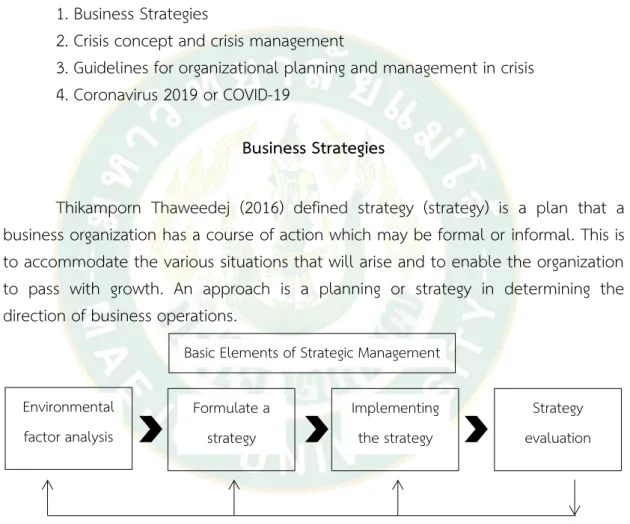
Figure 1 Basic elements of strategic management Source: Wheelen & Hunger (2012)
The basic elements of strategic management that are illustrated in Figure 1 are considered to be the strategic workflows that are the heart of any business operation to improve performance all the time. This allows them to compete with other organizations with similar business models. At present, strategies that are used
Basic Elements of Strategic Management
Environmental factor analysis
Formulate a strategy
Implementing the strategy
Strategy evaluation
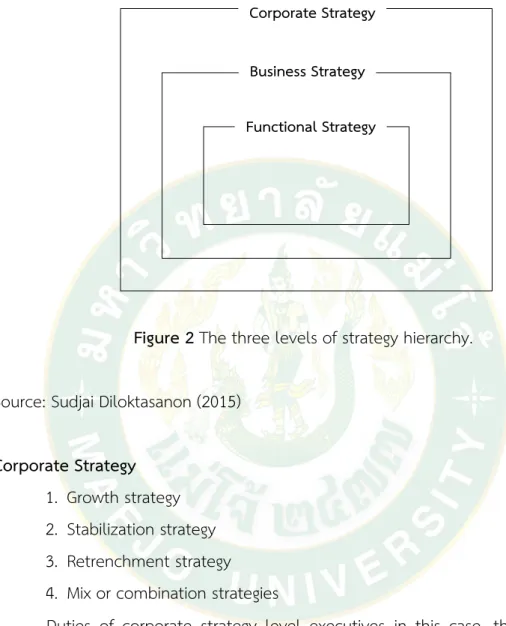
in operations can be divided into 3 levels, with each layer working simultaneously.
All from the smallest hierarchy will support larger strategies.
Figure 2 The three levels of strategy hierarchy.
Source: Sudjai Diloktasanon (2015)
Corporate Strategy 1. Growth strategy 2. Stabilization strategy 3. Retrenchment strategy 4. Mix or combination strategies
Duties of corporate strategy level executives in this case, the duty of the controller or the highest strategy maker in the organization is from the top management who will control the interests of business operations and create. The broadest strategy in strategic management It has an important function to determine the market in which the organization should operate, to define business practices and to decide how the organization should proceed or having to decide on the allocation of resources to each business in the organization for development planning Improve the human resource section within the organization to be able to meet current and future competition.
Corporate Strategy
Functional Strategy Business Strategy
Business Strategy
1. Cost – leadership strategy 2. Differentiation strategy 3. Focus group strategy
4. Differentiation focus strategy
Duties of business strategy level executives or those responsible for business strategy level That is, a person holding a position as the head of a department/
department/group. It is responsible for formulating strategies to meet competition at each level of the agency. It is responsible for making strategic decisions in relation to creating value for customers. Their main duty is to monitor and monitor the competitive conditions in their industry businesses by coordinating to create unity to increase business efficiency and in order to determine the position of the product competition and the product responsible for the quality of the product, the price of the product and the product responsible for and prepares procedures for considering the allocation of resources to each sub-department within the organization.
Functional Strategy
This level of strategy plays an important role in supporting business and organizational strategies to achieve their objectives the weakness of the organization The organization shall pay attention to the selection of strategies to correct weaknesses and to strengthen or to increase differentiation from competitors
Operational strategy (Warangkana Polprasertr, et al., 2011.) will be set up according to the workload according to various functions operational strategies
consist of 1) product and operation strategy 2) marketing strategy 3) financial strategy 4) human resource management strategy strategy) and 5) research and development
strategy. These strategies must be a combination of strategies and to minimize conflicts. Therefore, the roles of the strategy at the operational level are classified according to the duties of each segment as follows:
1. Product and operation strategy
Production and operation strategies are formulated based on production activities can be classified into 2 types:
1.1 System design strategic executives must take into account the starting point in designing a system in accordance with customer needs in order to produce goods and services with the lowest cost in mind, production method selection facilities.
1.2 Operations planning and control it is a way of planning production according to the actual needs of customers and services.
2. Marketing strategy
It determines the company's strategy in terms of its products and services.
both available in market and will be released in the market that meets the needs of customers how much marketing strategy is a strategy that focuses on the needs of the customer is important. both old and new customers.
3. Financial strategy
Implementing a financial strategy, the results of the analysis of the company's financial statements must be used in order to know the company's performance. Both in terms of weaknesses and strengths. The factors used in the formulation of key financial strategies are as follows:
3.1 Consider the introduction of factors related to funding. The condition for consideration is the company's cash needs method of giving credit and debt collection investing the company's capital in the form of bonds, stocks or bank deposits and methods for controlling inventory.
3.2 Consider making good use of financial resources. by considering the comparison of the long-term profits of the projects operated by the company with the costs incurred in the organization and considering the operating budget and are working to improve.
3.3 Consider actions that affect lenders and shareholders by considering the method for repaying the benefits incurred to the shareholders and consider the period of credit to the appropriate customer or purchaser.
3.4 Consider financial collections by considering building a good accounting system to be useful in considering the financial results of the company, consider the overall financial situation of the company. Whether in each business group can generate profit for the company or not. and consider the timing of the management of harm to the performance of the company at all levels of the business unit.
4. Human resource management strategy
Master in human resource management strategies considering the duties of human resource management, including the use of human resources for maximum benefit development of human resources in the organization to be ready and capable of meeting the needs of the organization. Use methods to motivate employees in the organization to perform tasks in accordance with the needs of the organization and focus on building morale and morale for employees in the organization.
5. Research and development strategy
Changes in technology and environment make products and services obsolete and out of competition. research and development will know the real needs of customers and the market strategies for research and development can be classified as follows:
5.1 Innovative R&D Strategy as a research strategy and product development and new services by focusing on products and services to be different from competitors and giving customers a choice for the product and new services all the time.
5.2 Protective R&D Strategy as a research strategy and development that focuses on research to improve the quality of products and services, including the production techniques of the organization to change according to the needs of customers.
5.3 Catch-Up R&D Strategy as a research strategy and develop to find the form of goods and services. According to the form of competitors, that is, if the competitors have good performance. Executives should do research and bring the results to improve and change operations to be superior to competitors.
5.4 Combination R&D Strategy as a research strategy and develop the office combine the above 3 strategies depending on the appropriateness of each case.
Marketing mix strategy of service business or business marketing mix strategy from the original marketing mix concept consisted of 4Ps, i.e. product price place and promotion
Competitive strategy and competitive advantage was first studied by Michael E.
Porter (1996), who suggested that the strategies there are 3 options: cost – leadership strategy, differentiation strategy and focus group strategy strategic determination is a question from the business whether to do it. How and how to compete by creating an advantage over business competitors A good starting point for formulating a business- level strategy is to consider the organization in which business it is in order to have a clear division of the business. Therefore, business-level strategies it is therefore classified as a main strategy directly from the strategic manager using all available resources and capabilities in order for the business to survive and be stable within the period of setting goals and to create competitive advantages within the industry in line with Wassana's research (2 0 1 1 ), said that the business strategy is determining ways to increase the competitiveness of the products or services of that business unit the specific marketing segment, how the business unit competes, creates value for customers and creates.
How do you gain competitive advantages with core competencies to achieve objectives?
Any organization with only one type of business may have only one business strategy.
But if any organization expands into a variety of businesses, each business must have a specific strategy for being competitive in that industry or creating a strategy. Competitive Strategy by starting with a study of the missions and missions of the relevant departments in the business and then starting to examine the internal and external environment of business units to bring the information to process the information for consideration for the purpose of choosing a strategy that is suitable for the business.
Tools to help analyze and formulate business strategies.
Jirat Akararasamebhokin (2010) said that strategic management is a process to implement in determining the strategy of the executives. There is an overall process of analysis and study of strengths, weaknesses, opportunities and obstacles, also known as environment and potential analysis. It is a situational assessment tool for an organization or project that helps management determine strengths and weaknesses from its internal environment. With the opportunity to face obstacles from the external environment, Albert Humphrey, who initiated the technique, presented this technique at a seminar at Stanford University that included with 4 letters SWOT, which stands for strengths, weaknesses, opportunities, and threats, arranged for information to understand the condition environment in business by explaining additional meanings of each component as follows:
Strength refer to strengths or strengths which is a result of internal factors this is an advantage that can arise from the business environment such as the strength of the mix financial strength production strengths, human resources strengths the company must take advantage of its strengths in formulating marketing strategies.
Weaknesses refer to a weak point or a weakness which is a result of internal factors. It is a problem or defect caused by the various internal environments of the business, which must find a way to solve it.
Opportunities refer to opportunities in corporate business caused by external factors as a result of the external environment of the business to benefit or promote the operation of an organization; an opportunity differs from strength in that an opportunity is a result of the external environment. Hardening as a result of the internal environment a good marketer needs to always be on the lookout for opportunities and be able to take advantage of them to profit in business. Threats refer to threats are barriers, which are largely due to external factors, that become constraints that businesses need to adjust their strategy to match their location and
try to eliminate any obstacles that arise as quickly as possible. For example, factors affecting the structure of a business such as the expansion of a large company in that business, the expansion may occur from within the company and outside the company Internal expansion, such as the discovery of new management technology, the ability to raise capital at low cost External expansion, such as the merger of companies, increases the size of the company. As a result, the concentration value changes with a higher value. There are production factors such as economies of scale. A large company will have the advantage of size and with more branches resulting in economies of scale while new businesses will not be able to. The production cost is as low as the previous big company. In addition, there are marketing factors such as advertising and sales promotion, which the organization needs to use a budget high marketing. Therefore, it is beneficial to large companies.
In addition, if considering the familiarity that the same company in the market has advertised with promotional strategies that are attractive and acceptable to consumers. These factors therefore hinder the entry of new entrepreneurs eventually in terms of capital requirements. In the case of a business that requires a large amount of capital the amount of entrepreneur's capital is therefore an obstacle to entering the competition. While large companies can raise large amounts of capital and have different capital costs.
Examples of external factors are the decrease in the number of companies in that business. This may be caused by the economic downturn product demand service is reduced or competition is fierce. This made the small business units unable to adapt to the changing environment have to liquidate the business out of the business cause the concentration of demand to change in an increasing way or there is also uncertainty. Government policy in some industries, the state will limit the entry of new business because the industry has enough or exceeded the demand, which affects the cost. Concentration is higher and copyright matters and management techniques by the big companies can be procured by such specific methods such as inventory management. Product placement and distribution system in the market, etc.
A tool to analyze the relationship of the internal and external environment to formulate strategies.
Boonthawan Wingworn (2 0 1 3 ) STOWs Matrix Model is an analysis of the relationship between strengths, weaknesses, opportunities and obstacles. The SWOT data will then be linked into a Matrix table so that the issues can be clearly
formulated as a strategy. The results of the analysis can be divided into 4 types of strategies as follows:
Internal Strengths and External Opportunities (S-O) – how can they use the strengths to benefit from existing external opportunities?
Internal Strengths and External Threats (S-T) – how can they benefit from their strengths to avoid or lessen (potential) external threats?
Internal Weaknesses and External Opportunities (W-O) – how can they use opportunities to overcome the organization’s internal weaknesses?
Internal Weaknesses and External Threats (W-T) – how can they minimize weaknesses and thus avoid potential threats?
A tool for analyzing the competitive conditions of businesses in the same industry.
The method of analyzing the competitive conditions of industries and factors affecting the competition in that industry is based on the 5 Forces Model theories with the following five factors.
1. Rivalry among current competitors 2. Bargaining power of suppliers 3. Bargaining power of customers
4. Threat of substitute products or services 5. Threat of new entrance
The study of business strategies can make the process or process of adjusting the opportunities and obstacles in a situation more visible during the process.
Businesses are in the middle of a crisis such as the spread of COVID-19. The barriers to doing business are quite high. There are external factors causing business instability and changes in consumer groups that are external opportunities or obstacles that will lead to adjustment. Therefore, the tools to help the adjustment of the operational level business can help entrepreneurs and investors in businesses who want to change. To create short-term survival and be able to take action to develop long-term products if there are strengths or stable internal organization conditions.
Crisis concept and crisis management
Crisis is a situation or threat that occurs unexpectedly both natural human action and emerging infectious diseases which affect the operations or cause rapid
and severe damage to the normal operation of the organization. This makes it impossible to achieve the set goals (Kathleen, 2017). Ulmer et al. (2011) divides crises into two types:
1. Intentional incident including terrorism obstruction of work workplace violence Bad relationship with employees ownership of raw material factors by opponents unethical leadership
2. Accidental events such as natural disasters, disease epidemics. Unseen technical failures, faulty products and economic failure. Therefore, the crisis in the hotel business means Severe circumstances or sudden abnormal situations caused by intentional and unintentional incidents such as epidemics, natural disasters, wars, obstacles in work, etc., affecting the operation of the hotel business to the extent that it cannot achieve its goals.
Glaesser (2006) states that crisis management is a business management tool to deal with crises since planning preparation defining processes and implementing strategies to revitalize the business after a crisis to prevent or resolve problems that businesses may be affected by and help reduce the damage from crises that negatively affect the organization, while Timothy (2012) sees that organizations need to prepare for or deal with various crises that may occur to all sectors or individuals.
Related through communication it plays an important role in crisis management.
Therefore, the hotel business must have an effective crisis management approach. In order to prevent and mitigate the impact of a crisis as much as possible, the Tourism Authority of Thailand (2016) has established three crisis management guidelines for the Thai tourism industry: the pre-crisis period; during the crisis and the post-crisis period (post-crisis), with the implementation steps in each phase as follows (Coombs, 2007; Ulmer et al., 2011).
1. Pre-crisis readiness It is to prevent and be careful of the chance that the crisis will spread beyond control. The business has a crisis communications playbook, which breaks down the severity of the crisis and how to deal with it at each level.
There are a management system public relations plans, research or training of personnel in the organization to streamline operations and prevent impacts on the image of the organization when faced with crises.
2. During crisis is the response to a crisis, this step is critical to the implementation of the planned action to be able to deal with the crisis accurately, quickly and accurately. The origin of the crisis, frankly communicated facts and monitor to check if the incident is at any level, including communication in the organization media relations and issuing a declaration.
3. post-crisis period is the recovery phase (recovery) after the crisis. Focus on learning how to solve problems. which arises from the experience of working or solving the crisis that has occurred and then reviewed and improve to suit the next operation, including planning to solve the root cause of the crisis in the long term and prepare action plans and countermeasures in the crisis communication plan.
Crisis management tools SWOT Analysis and Risk Management concepts are commonly used to present crisis response strategies that help prevent potential damage and Reduce risk in managing the organization from crisis, consisting of 4 strategies as follows (Coombs, 2007; Glaesser, 2006).
1. Deny crisis response strategies is a crisis response in which the organization denies faults in the crisis, as appropriate. There are three types of responses: attack- based responses to the accused rejection response and responding using a scapegoat.
2. Diminish crisis response strategies are crisis responses by reducing the level of importance or responsibility to an incident. Helps prevent negative corporate reputational effects. This is because if the organization has less responsibility for such incidents, the impact on reputation will be less. There are two types of apology response and rational response.
3. Rebuild crisis response strategies compensation for damage from a crisis can be divided into two types: compensatory response and an apologetic response.
4. Bolstering crisis response strategies are ideal for complementing all three of the above strategies. It discusses the good relationship between the organization and the groups of stakeholders both inside and outside the organization and response by appreciation.
Guidelines for organizational planning and management in crisis ( 5R” ) (Suwit Maesincee et al., 2020)
1. Resolve addresses challenges affecting employees, customers, business, technology, and introduces basic measures to protect liquidity, such as employee policies by working from home or increasing social distance at work and ensuring the safety of employees. This change results in stress and decreases work efficiency. An example of a solution is organizing small, effective teams Setting goals for the management to work remotely (remote working) with clear goals and the use of technology to help increase work efficiency
2. Resilience responsiveness and discipline is an important factor in responding to the challenges of short-term financial management. And it's something to learn from organizations that have survived past economic downturns. These companies did not
succeed during the economic crisis with existing capital. It is a crisis adaptation, which has six steps: identify and prioritize risks, model scenarios (scenarios) from the highest risks, and test the ability to withstand the financial impact of the agency (financial stress test) identifies operational guidelines, increase transparency and tighten financial management, create a dashboard to track key metrics.
3. Return has a detailed plan for returning to normal. Starting from closely monitoring the situation that the number of infected people has decreased. Measures from the government to ease the detention there are widely used disease test kits and results are known quickly. Or there is an effective vaccine against disease. If the situation improves this led to the consideration of organizational actions to protect employees by including measures such as taking a fever, washing hands frequently, and ensuring customers that the organization has strict measures such as having a disinfectant gel.
Come back to work with agencies in the supply chain (supply chain) by trying to spread the supply chain out to different regions to reduce risks. The impact of business interruption is then considered and considers that in the future should continue to operate the same business or how to improve operational guidelines.
4. Reimagination imagines what the new social condition after COVID-19 or the
"next normal" will be. What are the impacts of the changes and how should organizations adapt? For example, the transformation of public health to be inclusive using technologies such as artificial intelligence (AI) and telemedicine. It must be borne in mind that adjusting to the “new normal” is difficult.
5. Reform government sectors need to be involved in regulatory reforms.
To make work more efficient, such as reducing trade barriers and defining and protecting the rights of workers to work remotely (work from home) etc.
Novel Coronavirus 2019 or COVID-19 (Novel Coronavirus 2019-nCoV.) (World Health Organization, 2021)
The coronavirus is the largest family of viruses found in both animals and humans. That causes a range of illnesses, from the common cold to more serious illnesses such as Middle East Respiratory Syndrome (MERS) and Severe Acute Respiratory Syndrome (SARS). On Dec. 31, 2019, Chinese authorities confirmed a novel coronavirus outbreak in Wuhan. After collecting virus samples from patients for laboratory analysis.
China and the World Health Organization later identified the virus as the 2 0 1 9 novel coronavirus, or COVID-19.
Symptoms are fever, cough, fatigue, shortness of breath, sore throat, muscle pain, odor, and taste, etc. It is transmitted from person to person through droplets from the nose or mouth, which are excreted when the patient coughs or sneezes. We can get
the infection by inhaling aerosol from a patient or from putting your hand on the aerosol-bearing surface and then touching it on your face. The time from infection and onset of symptoms (incubation period) ranges from 1-14 days and averages 5-6 days, with more than 97% of cases onset within 14 days. Occurs in the upper respiratory tract and in the lungs. Early research indicates that proliferation of viruses in the gastrointestinal tract however; gastrointestinal transmission has not been confirmed. Peak phases of transmission are likely to occur early in symptoms and decrease thereafter.
Pre-symptomatic transmission can occur, however. If there is no cough (the main mechanism for excreting the virus) may limit transmission during that time.
Characteristics of disease, transmission rate and severity.
Basic reproductive rate (R0) is the mean rate that one patient will infect others in a population susceptible to infection, the R0 value of COVID-19 It's around 2 and 4.
Clinical onset interval is the duration of symptoms in subsequent patients together in the chain of epidemic in most research the average time is 4 and 5 days.
Case fatality ratio (CFR) or mortality rate is the proportion of patients who die, the global approximate rate is 7% (December 2019 - May 2020).
Research indicates that children and young people can be infected and transmitted. However, children usually do not have severe symptoms. But the risk of severe disease increases with age and in people with underlying diseases such as high blood pressure, diabetes, coronary artery disease chronic respiratory disease and cancer.
No testing for COVID-19 what types are registered? Except under the terms of use in emergency conditions only all types are currently being evaluated, including:
Nucleic Acid Amplification Tests (NAATs) are used to diagnose infections.
(whether the virus is detected or not) in the acute phase of the disease The examination of this technique takes between 13 minutes and 3 hours and requires specialized equipment.
Immunosuppressive antibody detection is used to detect IgM and IgG antibodies created against the virus. There is no diagnostic benefit as the response of the body is undetectable in the first week of illness. The test takes 15 minutes and can be used to determine who has been infected before a population-based study. Antibodies are currently being made in six countries.
Antigen detection they are used to detect viral antigens and may be helpful in the diagnosis of acute infections. The development of test kits has been done in many countries.
Treatments there are currently no registered antiviral drugs for the treatment of COVID-19. But research is being done to determine whether any drugs may modify their
original purpose for treating COVID-19 . The World Health Organization is coordinating a large multinational project, Solidarity Trial, to assess four drugs/treatments: 1) Remdesivir - Originally developed for Ebola 2) Lopinavir / Ritonavir - It is a combination of anti-HIV drugs. 3) Lopinavir / Ritonavir + Interferon Beta - Added Interferon Beta to have antiviral properties. 4) Chloroquine - Antimalarial drugs with antiviral properties.
Individual measures maintaining hand hygiene and coughing/ sneezing etiquette is important at all times and is the best way to protect yourself and others.
When possible, maintain a distance of at least 1 meter from others. As some infected people may be asymptomatic or have mild symptoms, social distancing is very important if you are in an area with a COVID-19 outbreak.
Public health measures quarantine is the restriction of activities or isolating those who are not sick but may have a history of close contact with COVID-1 9 patients the purpose is to prevent the spread of disease during people onset, quarantine means isolating people who have symptoms of COVID-19 and may spread the disease. Therefore, this is done to prevent the spread of disease. Distance is to stay away from each other. The World Health Organization recommends that keep a distance of at least 1 meter from other people. This is a general measure that everyone should take even if they are healthy contact tracing. This is done to identify people who may have a history of exposure to the disease in order to quickly separate
A summary of the impacts on the factors driving the domestic economy from the spread of the COVID-19 virus are as follows: 1) The widespread spread of COVID- 19 and the economic crisis linked to this situation. This creates great challenges on a global and local level. 2) Health effects Economy and society happen to all groups of people. But it undermines the most vulnerable populations, including the poor, the elderly, the disabled, youth and ethnic groups. 3) The epidemic and economic crisis unfairly affects the vulnerable population. This could trigger more inequality and poverty. 4) This global crisis requires coordination oneness and economic policy effective social and public health.
From the situation of the epidemic of the COVID-1 9 virus Since December 2 0 1 9, it has caused health problems and severely impacted the global economy.
This resulted in fluctuations in marketing, finance, trade, import and export of consumer goods, labor, transportation, causing communication problems roaming Stockpiling of goods and food followed, as seen in almost every country.
Related research
Donpiwat Preedawiphat et al. ( 2 0 1 2 ) developing a real estate business management model in a recession. The objective is to study management strategies of real estate companies in Thailand in terms of marketing, finance, human resource management and work processes during the recession and studied the behavior and factors influencing consumers' decision to buy real estate during the recession to determine the most suitable management guidelines for real estate business to survive during the recession and in accordance with consumer behavior by using research tools including qualitative research and in-depth interviews to collect information from the management of residential real estate development companies operating for a period of 5 years or more, a group discussion was to examine the appropriateness of the management framework development model of the residential real estate business.
Mixed recession period and quantitative research with 600 sets of opinion questionnaire on purchasing behavior of consumers in the residential real estate market by content analysis for qualitative data and statistical computer programs from the study, various adaptations and strategies can be summarized that entrepreneurs consider choosing in the recession that is, financial strategy marketing strategy human resource management strategy and work process strategies.
Walaitip Kitkan. (2020) Covid-19 and the strategy of operating small hotels and resorts in Nakhon Nayok province. This research aims to study the operations of small hotels and resorts in the preepidemic to during the COVID-19 epidemic (lockdown) throughout the period after the sixth unlock down in prevention of COVID-19 in Nakhon Nayok Province, Thailand. Structured interviews were used as a tool for this research.
There were 10 small resort entrepreneurs in Nakhon Nayok province, 5 persons in real estate developers and tourism investors were the sample of the study. It found that during the epidemic of covid-19, entrepreneurs used a retrenchment strategy for pricing throughout the epidemic period until releasing the lockdown period. Pro-active strategy were applied in the business management process. Moreover, most investors and real estate developers suggested that the entrepreneurs should reduce the business cost and maintain the cash flow; maintaining business reputations and hygiene. Entrepreneurs needed to develop the employees’ service-skills of regularly. The results of the study can be used to guide hoteliers, resorts, and tourism industry partners to prepare for the uncertainty of the economic crisis in the future.
What competencies should this manager have?
Firstly, the manager, as we have said before is called ‘Chief Intelligence Marketing Officer’, so it is not anymore ‘Chief Marketing Officer’. That person for sure needs to be a