This research aims to investigate and evaluate the relationship between OC, LS and KM in Abu Dhabi Gas Liquefaction Company (ADGAS) in the United Arab Emirates (UAE) using the competing value framework (CVF) developed by Cameron and Quinn (2006). ). I would like to thank the senior management of Abu Dhabi Gas Liquefaction Company (ADGAS) for their approval and support to conduct this study.
1 Introduction
Competence Assurance Management System
It was associated with the phrase "high culture" in the 19th century, meaning "refinement of mind, taste and manners". The culture of the organization influences the way individuals or groups of individuals behave and the way they understand and interact with the external environment. 1985) of corporate culture as “the shared philosophies, ideologies, values, assumptions, beliefs, expectations, attitudes and norms that unite an organization”.

Autocratic Leadership
Democratic Leadership
Although democratic leadership is one of the most effective LS, it has a potential downside. In situations where roles are not clear or time is of the essence, democratic leadership can lead to communication failures and unfinished projects.
Laissez-Faire Leadership
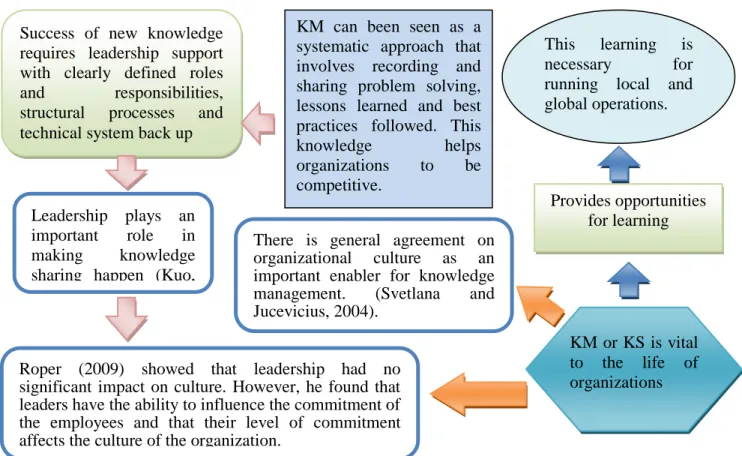
Csepregi (2004) stated that the old phrase of "knowledge is power" does not apply nowadays and is replaced by "knowledge sharing is power." "Knowledge," as defined by Sveiby, (1997) is the ability to act. Many philosophers define knowledge as "justified true belief," "it is information in context," and "knowledge is an understanding based on experience." The Oxford English Dictionary, 10th edition, defines knowledge as "information and skills acquired through experience and education." Allee (1997, p. 27) cited that "knowledge can be perceived as a collection of concepts, experiences, actions and events that we retain, learn from and apply to manage and interpret the world in which we live," and "knowledge is experience or information that can be communicated or shared.".
2 Literature Review and Research Questions
Organizational Culture
In the second quadrant, people have more influence on the organization's culture. Therefore, a strong positive culture will have a more or less positive influence on everyone in the organization and vice versa.

Transformational and Transactional Leadership Styles
He or she has the element of taking care of the team and task orientation. The disadvantage of this leadership style is that while the enthusiasm is passed on to the team, the leader needs the support of knowledgeable people.
LSs Behavior
It has also been noted that knowledge can be unclear due to the interpretation of those who possess it (Davenport et al., 1998). The transfer of knowledge mainly depends on the learning intention, absorptive capacity and motivation of the receiver of knowledge (Al-Salty et al., 2010).
3 Theory
- Clan Culture
- Adhocracy Culture
- Market Culture
- Hierarchy Culture
- National/UAE Local Culture
- Expatriate/Western Culture
- Industry Based/Oil and Gas Culture
Each of the researched management styles has an influence on both organizational culture types and knowledge management processes. However, none of the studies covered the OC while studying its effect on KM (Svetlana & Jucevicius, 2011).

4 Data and Methodology
Dependent Variable
In this study, a number of data collection methods were used, such as the questionnaire survey, using the Monkey Survey. The questionnaire was sent out on e-mail to 500 participants with an explanation of the nature and purpose of the survey. The questionnaires were distributed to senior and middle managers and technical and support staff from six divisions (operations, maintenance, engineering, HR, IT and finance).
The analysis of variance (ANOVA) and least significant differences (LSD) were used to test the relationship between the main study variables.
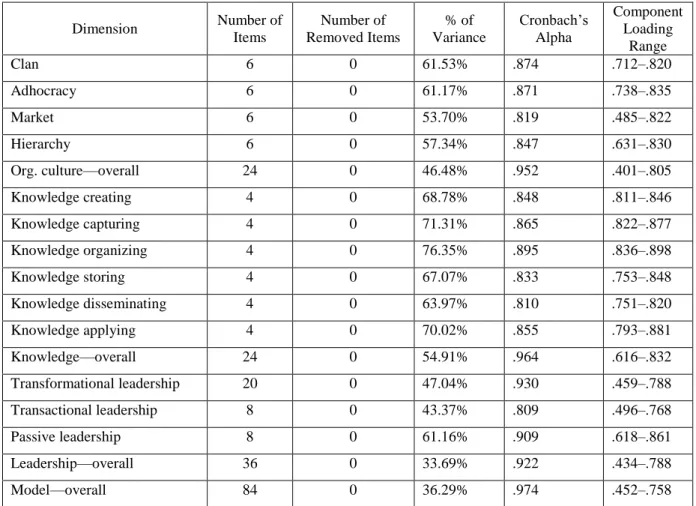
Reliability and Data Reduction
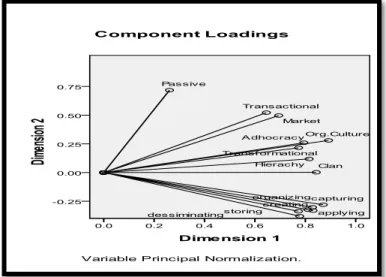
It can be noted that none of the suggested items in the questionnaire were excluded from the analysis, which means that the questionnaire design was based on a very strong theory and it was found applicable to the UAE culture. Moreover, almost all items had the same component loading sign, which indicated that the measurement fit the data well as shown in the biplots in Figures 14 to 17. Based on the reliability analysis, it was clearly shown that the questionnaire had a very good internal consistency and reliability with Cronbach's alpha- coefficients that ranged from .81 (knowledge dissemination) to .93 (transformational leadership) as shown in Table 2 above.
The biplots given in Figures 14 to 17 indicate that there is an interrelationship through the component loadings between the dimensions of the factors proposed in the proposed models.
Structural Equation Modeling
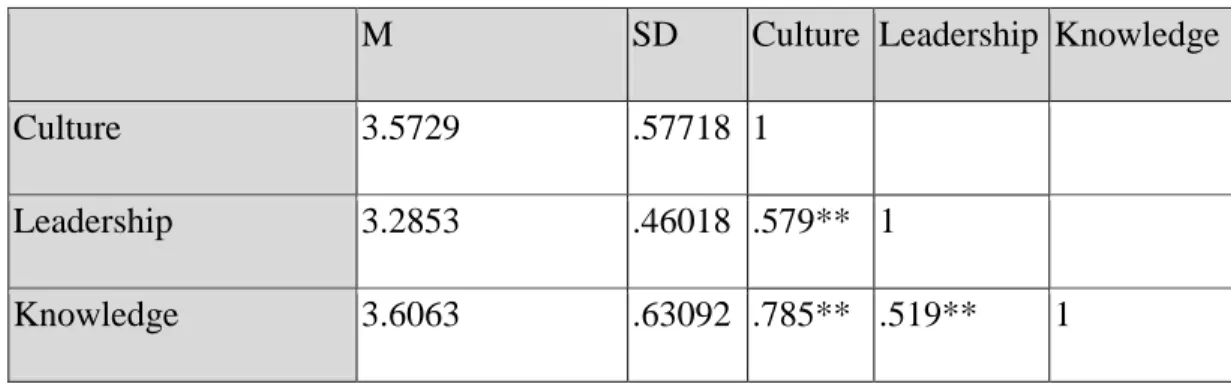
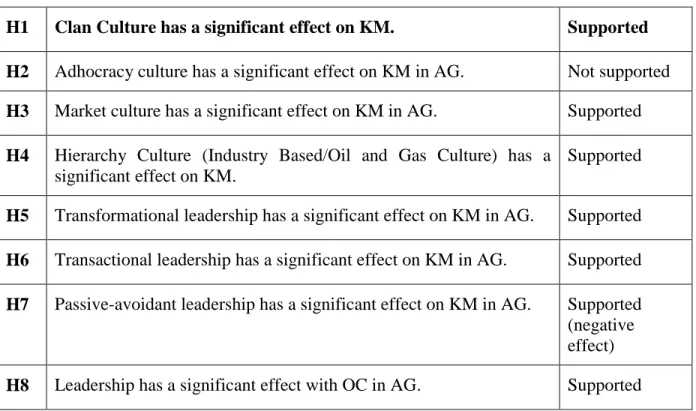
The average mean, standard deviation and correlation coefficient of the 13 variables in the proposed model were calculated and tabulated in Tables 3 to 6. Furthermore, the root mean square error of approximation (RMSEA) was found to be 0.121; these values indicated that a fit index value greater than 0.90 represented a good fit of the model. Furthermore, each of the OC types has a significant effect on KM; for example, there is a positive significant effect of organizational hierarchy culture on KM (β = .349, p = .000), there is a positive significant effect of organizational clan culture on KM (β = .179, p = .000) , and there is a positive significant effect of the organization's market culture on KM (β = .105, p = .005).
Since data were collected from different AG divisions, it was only necessary to examine whether there were significant differences between participants in terms of the different variables studied using one-way ANOVA in Table 8.
Overall Knowledge Management in the Six Divisions
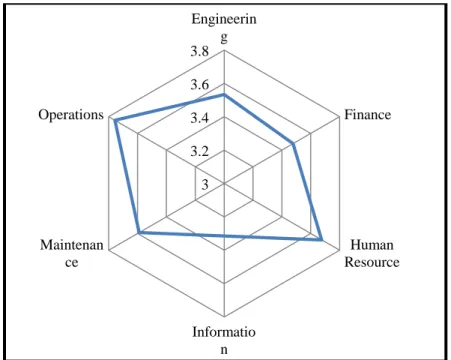
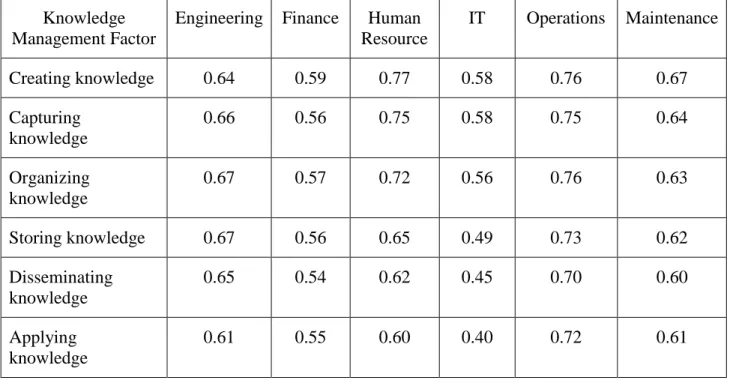
In the finance division (FD), 35% are unsure and are not even aware of KM activities in the company. KM results in each of the six AG divisions are presented in Tables 12 to 17 and Figures 26 to 31 below.
Overall Assessment of Knowledge Management Using the SECI Model
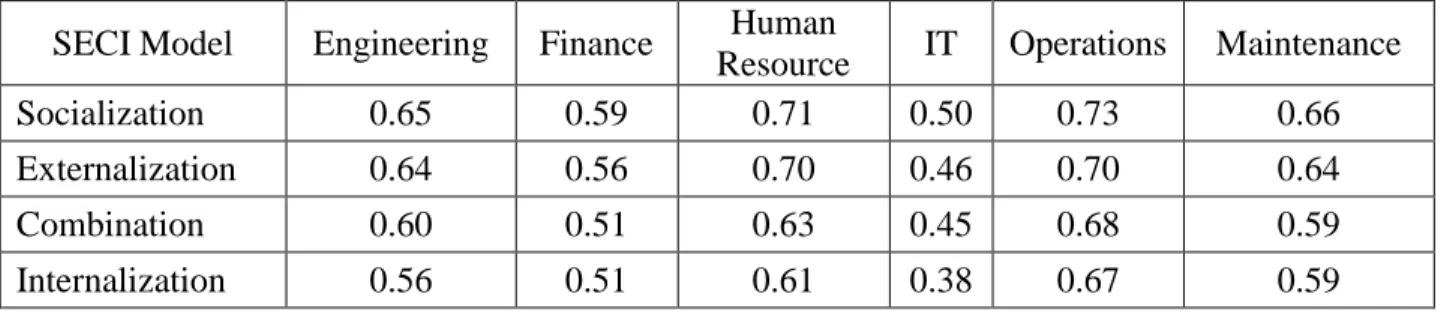
The KM results using the SECI model for each of the six AG divisions are shown in Tables 20 to 25 and Figures 33 to 38. Furthermore, 68% of employees rated clan culture as the second dominant type of culture in the AG organization , while ahocracy has received the lowest support in the organization, thus indicating that the overall culture is not well balanced. This again shows agreement with Jones et al. 2011) in the fact that the three cultural types, with the exception of adhocracy culture, are influential, but the present finding does not place them in the same order.
Overall Organizational Culture—Statement-wise Analysis
Referring to Table 31 and Figure 42 below, it can be clearly seen that the majority of respondents (75%) in the HR department agreed that the culture is a hierarchy culture, and 70% saw it as a rated tribal cultures, and 64% rated it as a market culture. With reference to Table 32 and Figure 43, it can be clearly observed that the majority of respondents (71%) in the IT department agreed that the culture organization is hierarchical in nature and 68% said that it is a tribal culture . Referring to Table 33 and Figure 44, it can be clearly observed that the majority of the respondents (81%) in the operational department agreed that the overall culture is a hierarchy culture, and 76% claimed that it is a tribal culture , while 66% rated it as a market culture.
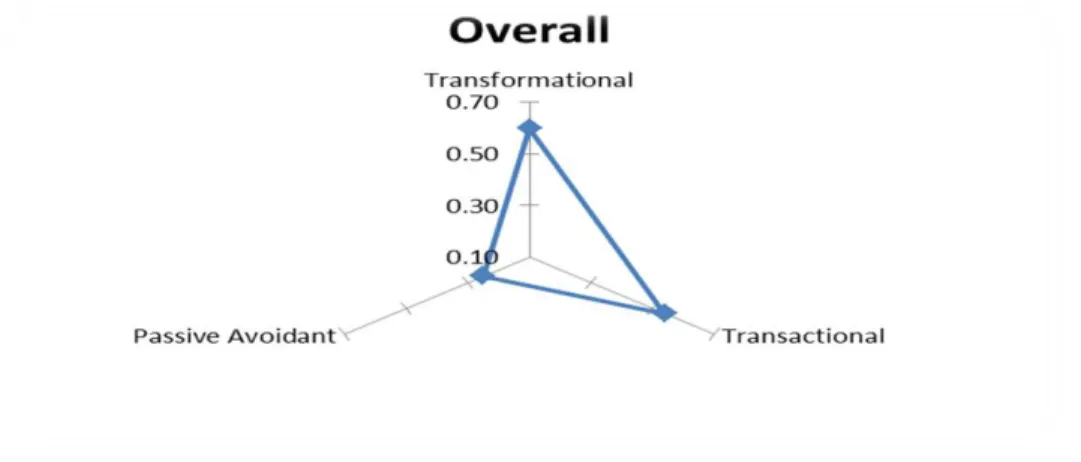
It was interesting to note that both transformational and transactional LS are quite strong in the AG organization.

Overall Leadership Style Statement-wise Analysis
The difference between transformational as well as transactional LSs is very significant in MD and more or less insignificant in all other divisions. The results of OC types in each of the six AG departments are shown in Tables 38 to 43 and Figures 47 to 52.
8 Discussion of Results
- Organization Culture Division Comparison
- National Culture versus Corporate Culture
- Leadership Styles Division Comparison
- Knowledge Management in the Six Divisions
- Knowledge Management Assessment Using the SECI Model—Limitation
Clan culture is the second strongest culture in OD and equally weakest in ED, FD and MD. Comparatively, the marketing culture is stronger in the operations department and is weakest in the IT department due to the fact that production is essential to marketing the product. The same is felt in maintenance and ED, but insignificant in FD (Table 37).
The analysis of the SECI results (Table 19) showed that KM through socialization, externalization, combination and internalization is generally strongest in the operations department and weakest in IT.
9 Implications and Suggestions for Future Research
Influence of Foreign Culture
ADGAS also relies on these expats to train and impart knowledge and skills to the young UAE employees, most of whom act as trainers, OJTs, SKT officers and SMEs. Emiratisation also affects the motivation and morale of both the knowledgeable expats and the young UAE nationals. The research highlighted that knowledge is shared through socialization among the UAE nationals, which only implies that there is still mistrust between the locals and the expats.
To remove the concerns of the expatriate workforce regarding their job security and motivate them to leave with their tacit knowledge and transfer it to the young UAE workers, ADGAS should recommend policies and procedures to address such concerns.
Impact of ADGAS Culture and Leadership Styles on Knowledge Management It was noticed that when OC types were linked to KM using the SEM test, it was found
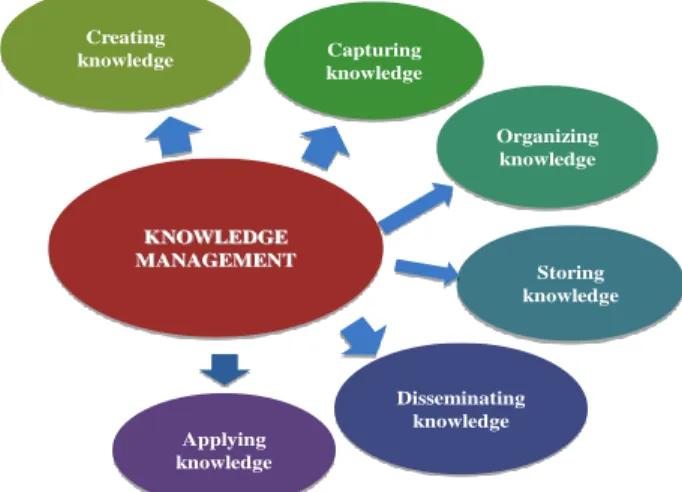
The young generation is aware of the learning initiative in ADGAS, which is promoted by the transformational leadership in the company. It is recommended that ADGAS should increase its awareness regarding the KMS and enforce a change after its implementation as 65% of the respondents are aware of a KMS in ADGAS. There seems to be a big difference between the divisions regarding the six processes of the knowledge cycle.
ADGAS must analyze and plan its business strategies based on the knowledge it currently has and the knowledge needed for future goals.
Recommendations for Future Research
The leadership characteristic in such a culture, which is the mentor or father figure, requires the willingness to share information, experience and best practices with the team.
10 Conclusion
The divisional assessment of KM highlighted that there is a significant difference in KM practiced in the six divisions examined in this study. It generally agrees with Chin-Loy and Mujtaba (2007) and Lawson (2003) that there is a positive relationship between OC and the KM program. The present study concluded that there is a positive correlation between the three main variables studied, which is in accordance with what is reported in the literature by Schimmoeller (2010), Den Hartog et al.
Chin-Loy and Mujtaba (2007) and Lawson (2003) generally agree that there is a positive relationship between OC and KM.
The effect of organizational culture and the relationship between transformational leadership and job satisfaction in the oil sector in Libya. Effects of organizational culture and knowledge management mechanism on organizational innovation: An empirical study in Taiwan. The influence of organizational culture on the success of knowledge management practices with North American companies.
Kaur, V., Kahlon, R., & Randhawa, S., (2012) Conceptual framework for the relationship between knowledge management and organizational culture.
Appendix (1)
Appendix (2)
Please get attached IRB application along with questionnaires and consent from sources for IRB committee approval so that I can start data collection using the attached survey questionnaires.
Appendix (3)
Appendix (4)
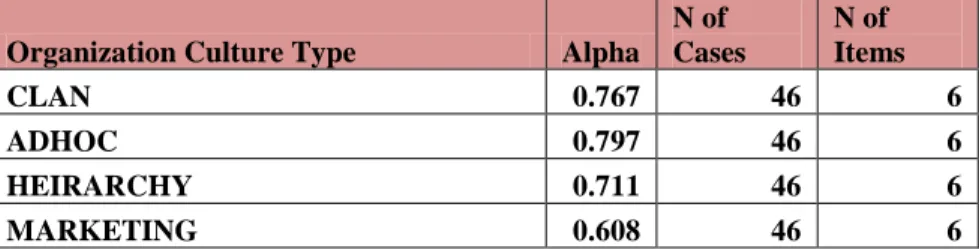
The results of the pilot test showed the validity and reliability of the questionnaires as they are consistent with the Alpha value above 0.70 which is acceptable. It was found that all respondents understood the questions in English and therefore there was no need to translate the questionnaires into Arabic. Examining the relationship between organizational culture and knowledge management “ A Dissertation at Nova Southeastern University.
Rahgozar, H., Afshangian, F., and Ehteshami, K. (2012). The relationship between organizational culture and knowledge management (A case study at the University of Shiras "Journal of Basic and Applied Scientific Research.
Appendix (5)