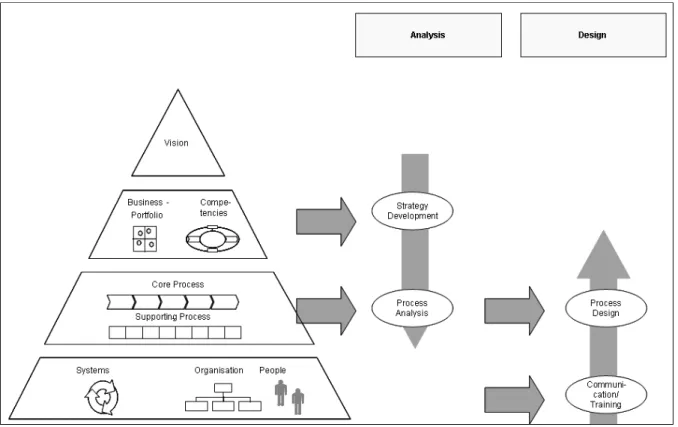
Business re-engineering is therefore based on order and control, while maintaining the comprehensive knowledge of the development of the organization and the creation of the participatory system. Comparing the bottom-up and top-down approaches, the advantage of a bottom-up orientation lies in the ability to adjust the rhythm of development and the organization's capacity for development. The advantages of the top-down approach are the straightforward attempt at comprehensive, cross-departmental thinking and action and the focus on central processes.
Lewin’s Change Theory
Chin & Benne’s “Effecting Changes in Human System”
A second strategy is to use political institutions to achieve change—for example, changing education policies through state-level legislation. In the normative-re-educational approach, the individual is seen as actively searching for satisfying needs and interests.
Bullock and Batten’s Phases of Planned Change
This model involves direct intervention by change agents, who focus on the client system and work with the clients to identify and solve their problems. Click on the ad to read more Click on the ad to read more Click on the ad to read more Click on the ad to read more.
Beckhard and Harris change formula
It looks at the seven key elements that make organizations successful or not: strategy; structure; systems; style; skills;. It says it's not just a matter of coming up with a new strategy and executing it. To be effective, your organization must have a high degree of alignment or internal coordination among all seven S's.
All S's are interrelated, so a change in one has a ripple effect on all the others. So, to improve your organization, you need to master systems thinking and pay attention to all seven elements at the same time. A useful application is to determine the current state of each element and compare it to the ideal state.
Based on this, it is possible to develop action plans to achieve the intended situation.
Initiating a Top-Down Change
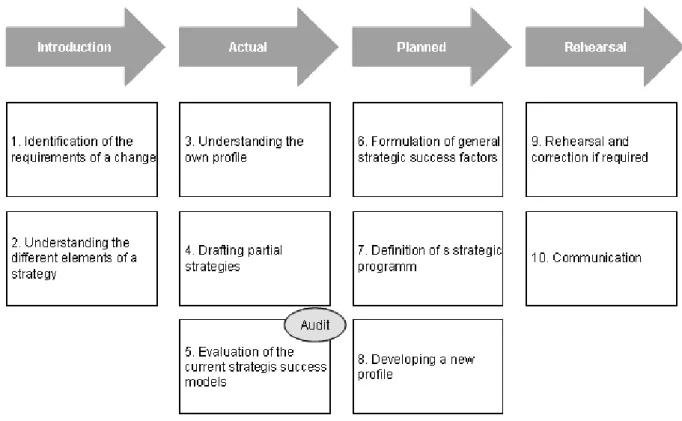
Determining the right business strategy is therefore at the beginning of every change process. There are numerous approaches to strategy definition available (e.g. the Porter 5-Forces-Model, 7S) and these are not the subject of this book. A strategy audit is an important cornerstone for a common view of the general and strategic position of the company.
Participatory reconstruction of the processes and visualization of the expectations, strengths and weaknesses for the initialization of a lasting change is required. The next phase of process (re)design cannot be seen separately from the process analysis in terms of the method and modeling tools. The change process The goal of the top-down process analysis is firstly to eliminate all non-value-adding activities and secondly to optimize all remaining activities.
Initiating a Bottom-Up Change
Employee surveys are a useful way to repair harm and mistrust among employees—provided you allow people to complete them anonymously, and provided you publish and act on the findings. Management training, empathy and the ability to facilitate are priority areas – managers are key to the change process – they need to enable and facilitate, not just intervene and implement policies from above, which does not work – Change must involve people – change must not be forced on people. We need to be careful with terms such as 'mindset change' and 'changing people's mindsets' or 'attitude change', as this language often indicates a tendency towards forced or imposed change and strongly implies that the organization believes that its people currently have ' wrong' mentality that is never, ever, so.
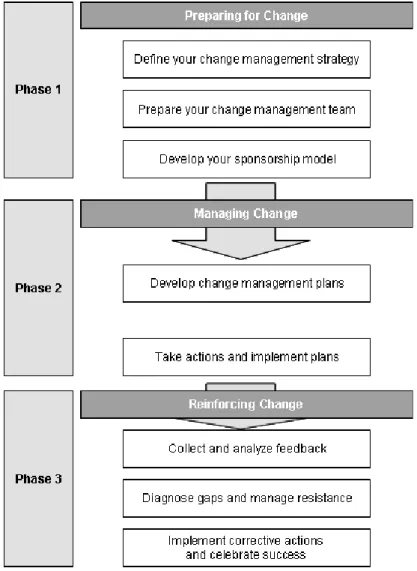
The employee has no responsibility to manage change – the employee's responsibility is nothing but to do their best, which is different for each person and depends on a variety of factors (health, maturity, stability, experience, personality, motivation, etc.) ). The responsibility for managing change lies with the management and leaders of the organization – they must manage the change in a way that employees can cope with it. The change management process is the sequence of steps or activities that a change management team or project leader would follow to apply change management to a project or change.
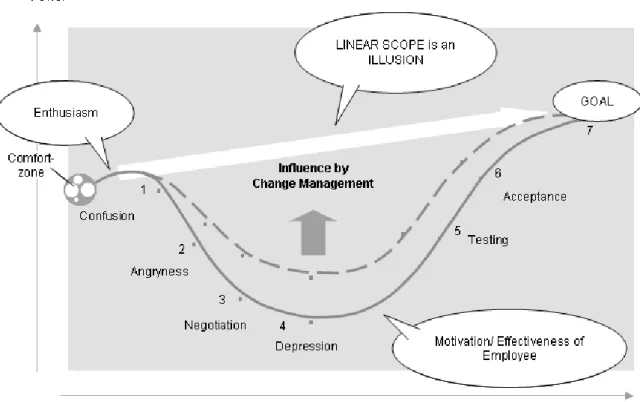
Next, the change itself requires a series of solutions that must be acted upon as quickly as possible (before resistance builds). The term 'change-ready' is often used to describe people who are unfrozen and ready to take the next step.
STUDY AT A TOP RANKED
Talking about the future is therefore rarely enough to move them from this 'frozen' state and considerable effort may be required to 'unfreeze' them and get them moving. This usually requires Push methods to get them started, after which Pull methods can be used to keep them running. Click on the ad to read more Click on the ad to read more Click on the ad to read more Click on the ad to read more Click on the ad to read more Click on the ad to read more.
INTERNATIONAL BUSINESS SCHOOL
External and internal influences
For example, when new technology is implemented within an organization, technological efficiency serves no purpose unless adequate provisions are made to train employees in the new procedures. As a result, managers should implement new systems and procedures to ensure that the new technology leads to an increase in efficiency. For example, it may not be worth hiring new IT staff to install a new computer network if it is expected to take only three months.
If the new system fails, the company may be forced to sell this equipment at a reduced price. On the one hand, a worker's qualification level may be reduced (dequalification). On the other hand, employees may resist change if they have to acquire new skills.
For example, implementing a new computerized system requires all employees to learn new procedures. Click on the ad to read more. Click on the ad to read more. Click on the ad to read more. Click on the ad to read more. Click on the ad to read more. Click on the ad to read more. Click on the ad to read more. on the ad to read more Click on the ad to read more.
CLICK HERE
- Change strategies and approaches
- Examples of failed change management projects
- Pitfalls in a change management project
- Bringing Change to Success
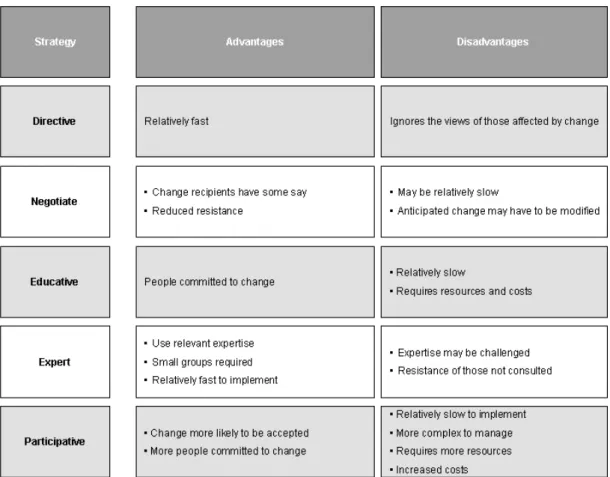
This approach emphasizes the willingness of senior managers to negotiate and bargain to effect change. The advantage is that individuals will feel involved in the change and will be more supportive of the changes being made. Click on the ad to read more Click on the ad to read more Click on the ad to read more Click on the ad to read more Click on the ad to read more Click on the ad to read more Click on the ad to read more on the ad to read more Click on the ad to read more Click on the ad to read more.
"Unsuccessful" can be defined as "the goals of change are not achieved or only small parts are achieved." If the term "not successful" is defined more closely, we will see a more negative number. Click on the ad to read more Click on the ad to read more Click on the ad to read more Click on the ad to read more Click on the ad to read more Click on the ad to read more Click on the ad to read more Click on the ad to read more Click on the ad to read more Click on the ad to read more Click on the ad to read more Click on the ad to read more Click on the ad to read more Click on the ad to read more Click on the ad to read more Click on the ad to read more Click on the ad to read more Click on the ad to read more Click on the ad to read more Click on the ad to read more Click on the ad to read more Click on the ad to read more Click on the ad to read more.
In the further process of change, this initial profitability study is considered inadequate. Click on the ad to read more. Click on the ad to read more. Click on the ad to read more. Click on the ad to read more. Click on the ad to read more. Click on the ad to read more. Click on the ad to read more. per ad to read more. Click on the ad to read more. Click on the ad to read more. Click on the ad to read more. Click on the ad to read more. Click on the ad to read more. We have already mentioned that poor communication greatly affects the success of the change.
Click on the ad to read more Click on the ad to read more Click on the ad to read more Click on the ad to read more Click on the ad to read more Click on the ad to read more Click on the ad to read more Click on the ad to read more Click on the ad to read more Click on the ad to read more Click on the ad to read more Click on the ad to read more Click on the ad to read more Click on the ad to read more.