DECLARATION
I, Célestin Musekura, declare that
(i) This thesis is based, except where otherwise indicated, on my original research.
(ii) This thesis has not been submitted for any degree or examination at any other university.
(iii) This thesis does not contain other persons’ data, pictures, graphs or other information, unless specifically acknowledged as such.
(iv) Where other written sources have been quoted
a) their words have been re-written but the general information attributed to them has been referenced;
b) where their exact words have been used, quotation marks have been used, and a reference added.
(v) This thesis does not contain text, graphics or tables copied and pasted from the Internet, unless specifically acknowledged with details of the source being provided in the thesis and in the references sections.
Signed:……….
DEDICATION
The thesis is dedicated to my beloved wife, Eugénie BYUKUSENGE, and my dear daughters, Grace INGABIRE and Espérance INEZA, for their constant love and encouragement, and for prayers devoted to me during the time of doing this hard and for me so important work towards the completion of the PhD degree.
This work is yours.
ACKNOWLEDGEMENTS
I would like to express my sincere gratitude specifically to:
• My mighty and dear Lord for his guidance and protection;
• My supervisors, Professors Rob Taylor and Kriben Pillay, for their time, guidance, useful advice and friendship, without which the work would not have been completed as planned;
• My parents for their love and the education they gave me that contributed to the completion of this hard but for me so important work;
• My lecturers, from primary school to university level, for their time and their knowledge of which I benefited so much;
• The staff members of the Leadership Centre and my fellow-students at the University of Kwazulu-Natal for their social and academic support;
• The GADP staff and all participants in the research for their support in providing relevant information for the study;
• My dear friends, brothers and sisters in Jesus Christ for their physical and spiritual support for my family and me while I was in South Africa completing my PhD degree.
ABSTRACT OF THE THESIS
The Gikongoro Agricultural Development Project (GADP) was implemented in Gikongoro in 1990 and terminated in 2001. It covered 83,508 ha with 250,000 habitants and had a target group of 42,000 farm families, with an estimated total budget of U$ 31.2 million. Its objectives focused on land development, increase of farm crops, environmental conservation and protection, stores and roads construction and bank loans for small farmers. Its expected impacts included the increase of incomes, enhancement of nutritional status and the resolution of the employment problem. The project was closed without achieving these goals. On the basis of this situation, the following research questions were raised:
• How and to what degree did inadequate processes of management and evaluation contribute to the GADP failure?
• How and to what degree did external environmental events prevent the GADP from achieving its objectives?
• How was the participatory development approach used by the GADP in the process of learning?
• What were the main causes that led the GADP to fail?
• What could be done and what lessons could be drawn from this experience for the benefit of ongoing and future projects operating in Rwanda?
The answer to these questions required a review of literature regarding project management and evaluation principles and organizational environment. The methods used for data collection included documentation, systems thinking, observation and interviews. Thematic analysis and systems thinking were used for data analysis. The findings located the reasons for GADP failure in different problem areas. The civil war of October 1990 and the genocide of April 1994, and frequent droughts, swept away the GADP resources. The GADP failed to identify the real needs of the beneficiaries (farmers), coordinate its stakeholders’ activities, and cooperate and communicate adequately with them. This resulted in delays and budget overruns. The failure to bring together management and evaluation caused the project to be ineffective and inefficient in its management of resources. The GADP closed having made no significant positive impacts on the farmers, especially women. To prevent future potential failures, it is recommended to introduce systems thinking in Rwandan higher education programs and to develop strong partnerships between public and private role players.
TABLE OF CONTENTS
Item Page Declaration ___________________________________________________________________ i Dedication ___________________________________________________________________ ii Acknowledgments _____________________________________________________________ iii Abstract of the thesis ___________________________________________________________ iv Table of contents _______________________________________________________________ v List of tables ________________________________________________________________ xiii List of figures and maps ________________________________________________________ xv List of images ______________________________________________________________ xvii List of appendices ___________________________________________________________ xviii List of acronyms _____________________________________________________________ xix
CHAPTER ONE: INTRODUCTION _____________________________________________ 1
1.1 The GADP context _________________________________________________________ 1 1.2. Problem Statement ________________________________________________________ 4 1.3 Research questions _________________________________________________________ 8 1.4 The research objectives _____________________________________________________ 9 1.5 Delimitation and limitations of the study ________________________________________ 9 1.6 Importance of the study _____________________________________________________ 9 1.7 Research design and methodology ____________________________________________ 10 1.7.1 Methods of evaluation _______________________________________________ 10 1.7.1.1 Steps of evaluation _____________________________________________ 10 1.7.1.2 Process of evaluation ___________________________________________ 10 1.7.2 Methods of data collection ___________________________________________ 11 1.7.2.1 Systems thinking ______________________________________________ 11 1.7.2.2 Case study ____________________________________________________ 12
1.7.3 Data analysis methods _______________________________________________ 12 1.8 Study Outcomes __________________________________________________________ 12 1.9 Structure of the study _____________________________________________________ 13 CHAPTER TWO: PROJECT MANAGEMENT PRINCIPLES _____________________ 14
2.1 Overview of project critical success factors ____________________________________ 14 2.1.1 The notion of project ________________________________________________ 14 2.1.2 The concept of project management ____________________________________ 15 2.1.3 The concept of critical success factors of the project regarding the project ______ 17 2.1.4 The project management environment, stakeholder analysis and partnership _____ 20 2.1.5 The concept of project life cycle _______________________________________ 26 2.1.6 Project risk management _____________________________________________ 28 2.1.7 Project leadership ___________________________________________________ 29 2.1.8 Systems thinking ___________________________________________________ 32 2.1.9 Assessment of the applicability of the project critical success factors (CSFs) ____ 42 2.2 The causes of the project failures related to management issues _____________________ 44 2.2.1 Problems of planning: project definition, scheduling and resource allocation ____ 44 2.2.2 Inadequacy of information and communication ____________________________ 46 2.2.3 Losing control of project _____________________________________________ 47 2.2.4 The lack of integration of risk management in management systems ___________ 48 2.2.5 Project life cycle ____________________________________________________ 49 2.2.6 Ineffective management and leadership __________________________________ 50 2.3 Chapter summary _________________________________________________________ 50 CHAPTER THREE: THE FAILURE OF DEVELOPMENT PROJECTS _____________ 51
3.1 The concepts of sustainable development and development projects ________________ 51 3.2 The Local Economic Development (LED) projects ______________________________ 53 3.3 Agricultural development projects ____________________________________________ 56 3.3.1 Participatory development approach ____________________________________ 56 3.3.2 Gender mainstreaming in projects ______________________________________ 60
3.3.3 Farming systems____________________________________________________ 61 3.3.4 Specific causes of agricultural development project failures __________________ 65 3.4 Other external environmental factors leading to project failures ____________________ 67 3.4.1 Introduction _______________________________________________________ 67 3.4.2 Project management environment in developing countries ___________________ 67 3.4.2.1 Culture and business competitive advantage _________________________ 68 3.4.2.2 Constraints of foreign direct investments (FDI) in developing countries ____ 70 3.4.2.3 The global economy in developing countries ________________________ 72 3.4.3 Project management environment in Rwanda _____________________________ 74 3.4.3.1 Historical background of Rwanda _________________________________ 74 3.4.3.2 Cultural, social, economic, demographic and climatic environment _______ 76 3.4.3.3 Rwanda decentralized government, social and economic infrastructures ___ 79 3.4.3.4 Banking and financial constraints and agriculture _____________________ 80 3.4.3.5 The sector of non-farm business and technology _____________________ 82 3.4.3.6 Effects of the global economy on Rwanda’s economy __________________ 84 3.4.4 Stories of some unsuccessful and successful agricultural project in developing countries __________________________________________________________ 85
3.4.2.1 Tanzania ____________________________________________________ 85 3.4.2.1 Rwanda _____________________________________________________ 88 3.5 Chapter summary _________________________________________________________ 92 CHAPTER FOUR: PROJECT EVALUATION PRINCIPLES ______________________ 94
4.1 The concept of evaluation __________________________________________________ 94 4.2 Purposes of evaluation _____________________________________________________ 95 4.3 Forms of evaluation _______________________________________________________ 96 4.3.1 Proactive evaluation _________________________________________________ 96 4.3.2 Clarificative and interactive evaluation __________________________________ 96 4.3.3 Monitoring evaluation _______________________________________________ 97 4.3.4 Impact evaluation ___________________________________________________ 97 4.3.5 Realistic evaluation _________________________________________________ 98
4.3.6 Internal and external evaluation ________________________________________ 98 4.3.7 Lesson from these forms of evaluation __________________________________ 98 4.4 Evaluation approaches ____________________________________________________ 100 4.4.1 Evaluation approaches as developed by O’Sullivan _______________________ 101 4.4.2 The model of evaluation approaches according to Guba, Lincoln and Zadek ____ 105 4.4.3 Evaluation approach of UNCHS (United Nations Centre for Human Settlements) 106 4.4.4 Evaluation approach according to Dale _________________________________ 111 4.5 Participatory evaluation ___________________________________________________ 115 4.6 The process of evaluation _________________________________________________ 117 4.6.1 Formative evaluation _______________________________________________ 118 4.6.2 Summative evaluation ______________________________________________ 121 4.7 Evaluation problems _____________________________________________________ 124 4.7.1 Project evaluation in developing countries ______________________________ 124 4.7.2 Resistance to evaluation _____________________________________________ 125 4.7.3 A case of unethical issues encountered in evaluation ______________________ 126 4.8 Chapter summary ________________________________________________________ 127 CHAPTER FIVE: RESEARCH DESIGN _______________________________________ 129
5.1 Definition of concepts ____________________________________________________ 129 5.1.1 Research design ___________________________________________________ 129 5.1.2 Qualitative research ________________________________________________ 129 5.2. Qualitative and quantitative research ________________________________________ 130 5.3 Advantages of qualitative research in the case study of the GADP __________________ 131 5.4 Data collection __________________________________________________________ 132 5.4.1 Restructuring of the GADP performance and impact indicators ______________ 132 5.4.2 Methods _________________________________________________________ 132 5.4.2.1 A case study ________________________________________________ 132 5.4.2.2 Documentary review ___________________________________________ 133 5.4.2.3 Interviews __________________________________________________ 134 5.4.2.4 Direct observation _____________________________________________ 136
5.4.2.5 Triangulation _________________________________________________ 137 5.4.2.6 Corroboration _______________________________________________ 137 5.5 Data analysis ___________________________________________________________ 138 5.5.1 Data analysis principles _____________________________________________ 138 5.5.2 Methods _________________________________________________________ 139 5.5.2.1 Thematic analysis _____________________________________________ 140 5.5.2.2 Systems thinking ______________________________________________ 140 5.6 Interpretation of results ___________________________________________________ 143 5.7 Trustworthiness of the study _______________________________________________ 143 5.8 Methodological limitations ________________________________________________ 145 5.8.1 Documentary review _______________________________________________ 146 5.8.2 Field research _____________________________________________________ 146 5.9 Chapter summary ________________________________________________________ 147 CHAPTER SIX: PRESENTATION OF THE CASE STUDY OF THE GADP _________ 148 6.1 Introduction: historical background of the GADP _______________________________ 148 6.1.1 Terms of reference of the GADP ______________________________________ 148 6.1.2 The GADP implementation __________________________________________ 150 6.1.3 The GADP leadership ______________________________________________ 153 6.2 Organizational structure and objectives of the GADP ____________________________ 155 6.2.1 Organization structure ______________________________________________ 155 6.2.2 Weaknesses of the GADP organizational structure and objectives ____________ 159 6.3 The performance indicators used structured by the GADP _______________ 161 6.4 The GADP organizational environment ______________________________________ 169 6.4.1 Political environment _______________________________________________ 169 6.4.2 Ecological environment _____________________________________________ 170 6.4.3 Climatic environment _______________________________________________ 172 6.4.4 Demographic environment ___________________________________________ 175 6.4.5 Economic environment _____________________________________________ 180
6.5 Chapter summary ________________________________________________________ 182 CHAPTER SEVEN: ASSESSMENT OF THE GADP MANAGEMENT ______________ 184
7.1 Initiation phase __________________________________________________________ 185 7.1.1 Definition of priorities ______________________________________________ 185 7.1.1 Definition of project boundaries ______________________________________ 186 7.2 Design and development phase: the GADP planning ____________________________ 187 7.3 Phase of implementation __________________________________________________ 190 7.3.1 Time management _________________________________________________ 190 7.3.2 Human resource management ________________________________________ 191 7.3.3 Financial resources management ______________________________________ 194 7.3.4 Management of the GADP’s inputs and infrastructures ____________________ 197 7.3.5 Managing partnership relationships in the GADP _________________________ 203 7.3.5.1 Stakeholder identification ______________________________________ 201 7.3.5.2 GADP and the Rwandan government _____________________________ 207 7.3.5.3 GADP and farmers ____________________________________________ 209 7.3.5.4 GADP and banks _____________________________________________ 214 7.3.5.5 GADP and training centres ______________________________________ 220 7.3.5.6 GADP and small and medium business enterprises ___________________ 226 7.3.5.7 GADP and construction subcontractors ___________________________ 228 7.3.5.8 GADP Research and Development department and other partners _______ 231 7.3.6 Participatory development approach within the GADP _____________________ 232 7.3.6.1 Cooperation _________________________________________________ 232 7.3.5.2 Integration of women in the GADP_______________________________ 234 7.3.6.3 Conflict management and decision-making process ___________________ 237 7.3.6.4 Communication ______________________________________________ 239 7.4 Closeout and sustainability of the GADP _____________________________________ 241 7.5 The main causes of failure of the GADP _____________________________________245
7.5.1 Weak study feasibility ______________________________________________ 245 7.5.2 Inadequate environment analysis ______________________________________ 246 7.5.3 Poor planning _____________________________________________________ 247
7.5.4 Poor partnership relationships ________________________________________ 248 7.5.5 Lack of harmonization between management and evaluation ________________ 248 7.5.6 Weak leadership ___________________________________________________ 249 7.5.7 Lack of the use of systems thinking in the GADP _________________________ 249
7.6 Chapter summary ________________________________________________________ 250 CHAPTER EIGHT: ASSESSMENT OF THE EVALUATION PROCESS AND IMPACTS OF THE GADP _____________________________________________________________ 253
8.1 Evaluation by the GADP __________________________________________________ 253 8.1.1 Principles of evaluation _____________________________________________ 253 8.1.2 Process of evaluation by the GADP ____________________________________ 255 8.1.3 Weaknesses of the evaluation process (formative evaluation) within the GADP _ 260 8.2 Assessment of the GADP effects and impacts __________________________________ 267 8.2.1 The GADP effects _________________________________________________ 267 8.2.2 The GADP impacts ________________________________________________ 268 8.2.2.1 Agricultural development and livestock ____________________________ 268 8.2.2.2 Bank loans, micro-enterprises and target group ______________________ 271 8.2.3 Weaknesses in summative evaluation by the GADP _______________________ 273 8.3 Assessment of the overall performance of the GADP ____________________________ 274 8.3.1 Performance of the project departments _________________________________ 274 8.3.2 Performance criteria for the overall assessment of the GADP ________________ 277 8.4 Chapter summary ________________________________________________________ 282 CHAPTER NINE: SUMMARY, CONCLUSION AND RECOMMENDATIONS_______ 286
9.1 Summary ______________________________________________________________ 286 9.2 Conclusion _____________________________________________________________ 287
9.2.1 The answer to the research questions and the achievement of the research
objectives _______________________________________________________ 287 9.2.1.1 The first research question ______________________________________ 288
9.2.1.2 The second research question ____________________________________ 290 9.2.1.3 The third research question ______________________________________ 325 9.2.1.4 The fourth research question _____________________________________ 291 9.2.1.4 The fifth research question ______________________________________ 292 9.2.2 Importance of the study _____________________________________________ 292
9.2.2.1 Implications of the study on the theoretical and practical knowledge of the researcher ___________________________________________________ 292 9.2.2.2 Implications of the study for potential users of the research findings ______ 294 9.2.3 Learning experience from the case study of the GADP _____________________ 295 9.2.3.1 Environmental factors and stakeholder analysis ______________________ 296 9.2.3.2 The GADP planning, implementation and closeout ___________________ 297 9.3 Recommendations _______________________________________________________ 300
9.3.1 Introduction of systems thinking as a course in the Rwandan higher educational programs ________________________________________________________ 300 9.3.2 Promotion and development of strong partnership between social and economic actors __________________________________________________________ 301 REFERENCES _____________________________________________________________ 302 APPENDICES ______________________________________________________________ 324
LIST OF TABLES
Table Page
Table 1-1: The position of agriculture in Rwanda’s economy in terms of GDP (annual average in percentage) ___________________________________________________________________ 2 Table 2-1: “Seven” list of critical success factors _____________________________________ 18 Table 2-2: Sources of project conflicts _____________________________________________ 23 Table 2-3: The concept of a project life cycle ________________________________________ 26 Table 2-4: Styles of leadership ___________________________________________________ 30 Table 2-5: Systemic elements in a project context ____________________________________ 34 Table 4-1: Integration of evaluation purposes and evaluation forms in the program/project life cycle _______________________________________________________________ 99 Table 4-2: Possible evaluation activities during the life of a program/project ______________ 101 Table 4-3: Evaluation approaches ________________________________________________ 102 Table 4-4: Evaluation criteria ___________________________________________________ 110 Table 4-5: Evaluation criteria ___________________________________________________ 110 Table 4-6: Characteristics of formative and summative evaluation ______________________ 118 Table 5-1: Strategies for the trustworthiness of the study ______________________________ 145 Table 6-1: Performance indicators as structured by the GADP _________________________ 163 Table 6-2: Suggested success indicators ___________________________________________ 167 Table 6-3: Model of structuring performance and impact indicators in the process of project planning ___________________________________________________________ 168 Table 6-4: Rainfall (in mm) _____________________________________________________ 172 Table 6-5: Number and movement of population in Gikongoro over the period 1991-1996 ___ 176 Table 6-6: Demographic data in 1991 in the project zone _____________________________ 177
Table 6-7: Farmland estimated for agricultural production in Gikongoro province in 1998-1999 ___________________________________________________________________________ 178 Table 7-1: Personnel of the GADP on 1st January 1993 _______________________________ 192 Table 7-2: Personnel of MINAGRI and GADP in Gokongoro province on 1st January 1993 __ 193 Table 7-3: General budget 1993-1995 (1 US $ = 136 FRW) ___________________________ 195 Table 7-4: The situation of inputs sold to the cooperatives for the period 1990-1993 in 3 districts ___________________________________________________________________________ 198 Table 7-5: Training programs in 1990 _____________________________________________ 221 Table 7-6: Representation of women among GADP personnel _________________________ 235 Table 7-7: Representation of women in cooperatives supported by the GADP _____________ 236 Table 8-1: The GADP’s reports _________________________________________________ 257 Table 8-2: Project control ______________________________________________________ 264 Table 8-3: Performance of the project departments __________________________________ 274 Table 8-4: Synthetic assessment of the GADP ______________________________________ 278
LIST OF FIGURES AND MAPS
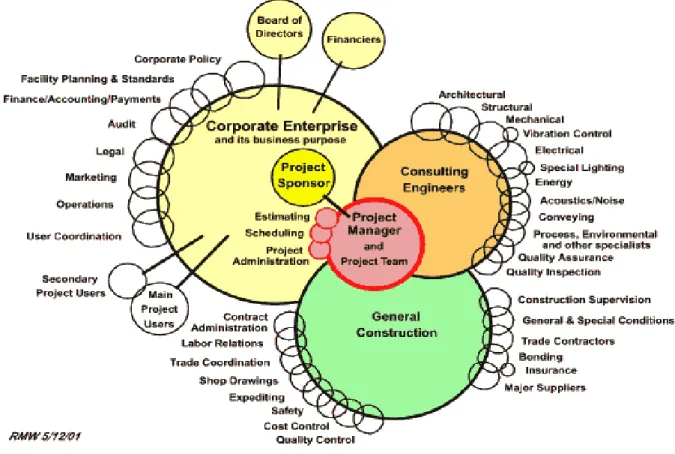
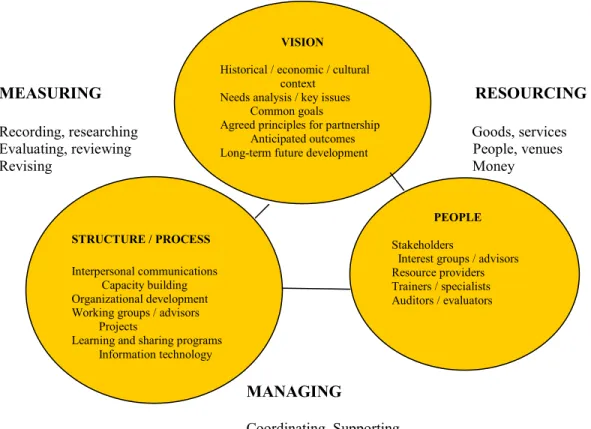
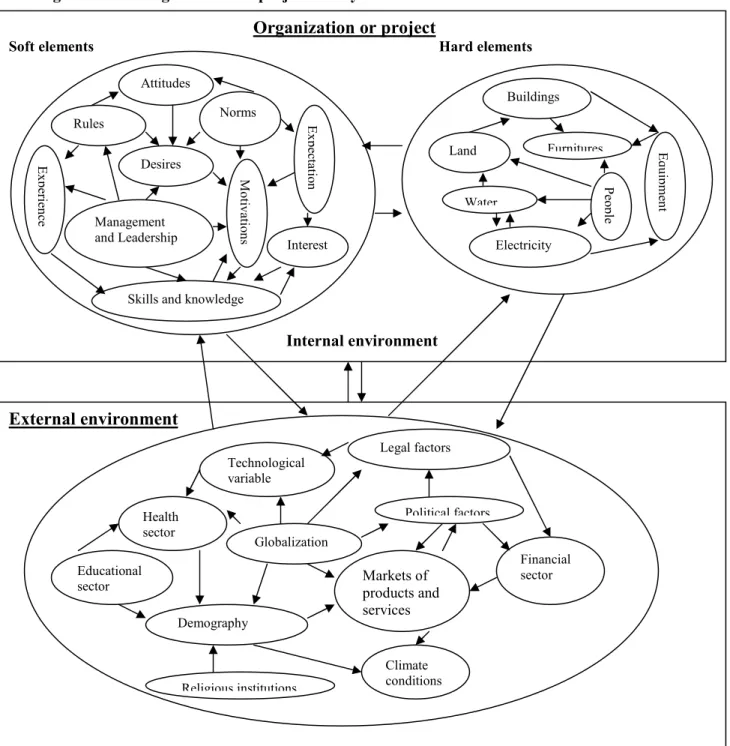
Figure Page Figure 2-1: Corporate environment of project management _____________________________ 21 Figure 2-2: Ingredients for sustainable partnership action ______________________________ 24 Figure 2-3: Major skills of project leadership ________________________________________ 30 Figure 2-4: A systemic model of viewing a project ___________________________________ 35 Figure 2-5: An organization or a project as a system __________________________________ 37 Figure 2-6: Belasi and Tukel’s model of critical factors of project success or failure _________ 39 Figure 3-1: Action Research Model Cycle __________________________________________ 56 Figure 3-2: Illustration of farming systems __________________________________________ 62 Figure 4-1: The chain of results __________________________________________________ 94 Figure 4-2: Relationships between the project management processes ____________________ 99 Figure 4-3: Links between inputs, outputs, outcomes and impacts _______________________ 103 Figure 4-4: Stages in the evaluation process ________________________________________ 107 Figure 4-5: A framework of evaluation of development work (program and project) ________ 112 Figure 4-6: Integrative framework of project evaluation ______________________________ 114 Figure 6-1: Organizational structure of the GADP ___________________________________ 156 Figure 6-2: Chart flow of Agricultural Services at Provincial level: April 1992 ____________ 157 Figure 6-3: Relationship between organizational structure, objectives and resources ________ 160 Figure 6-4: Some factors of climate changes and their impact on agricultural productivity and poverty ____________________________________________________________ 174 Figure 7-1: Factors that affected the GADP throughout its life cycle ___________________ 184 Figure 7-2: Transaction between the GADP and ETIRU _____________________________ 206 Figure 7-3: Causes of bad loan repayment _________________________________________ 219 Figure 8-1: The place of the evaluation process in the project life cycle _________________ 254
Figure 8-2: A model of successful project management from a systemic perspective _______ 283 Maps
Map 6-1: The GADP location on the map of Rwanda _______________________________ 149
LIST OF IMAGES
Image Page Image 3-1: Mushroom growing house of banana in the area of Rombo in the village of Kindi __ 87 Image 3-2: A wooden house in the area of Tarakea ___________________________________ 87 Image 3-3: Members of Abahuzamugambi Coffee Growers Cooperative of Maraba _________ 89 Image 3-4: Coffee plantation _____________________________________________________ 90 Image 3-5: Pre-sorting cherries __________________________________________________ 90 Image 3-6: Old system of processing coffee _________________________________________ 90 Image 3-7: One of Maraba’s coffee washing stations __________________________________ 90 Image 3-8: Maraba coffee in supermarkets in the UK _________________________________ 90 Image 6-1: Deforestation effects on the productivity of the farmland ____________________ 179 Image 7-1: Store for crop and inputs ______________________________________________ 200 Image 7-2: Store for wheat at Tare _______________________________________________ 200 Image 7-3: Forest planted by the GADP ___________________________________________ 201 Image 7-4: Deforestation _______________________________________________________ 201 Image 7-5: Deforestation _______________________________________________________ 201 Image 7-6: Deforestation _______________________________________________________ 201 Image 7-7: Terraces ___________________________________________________________ 201 Image 7-8: Developed valley of Mwogo ___________________________________________ 201 Image 7-9: The GADP roads ____________________________________________________ 201 Image 7-10: The GADP office __________________________________________________ 201 Image 7-11: Cooperative UNICOOPAGI _________________________________________ 242
LIST OF APPENDICES
Appendix Page Appendix 1: Rwanda and Tanzania’s location ______________________________________ 324 Appendix 2: Maps of Rwanda and Tanzania________________________________________ 325 Appendix 3: Characteristic features of Rwanda and Tanzania’s economies ________________ 326 Appendix 4: Informed consent letter for research ____________________________________ 327 Appendix 5: Interview instrument ________________________________________________ 328
LIST OF ACRONYMS AND ABBREVIATIONS
AGECO: Agency Accounting Consultants. It was a GADP contracting company in accounting systems
AGROTECH: Agrotechnology and Foods Sciences and Sciences Group. It was a GADP contracting company for procurement of inputs for farmers
ARDI: Association for Integrated Rural Development BIT: International Organization for Employment CARITAS: Catholic Organization for Poor Assistance CBs: Cooperative Banks
CEPEX (French abbreviation): Centre for the Promotion of the Exports. It was an external contracting company in charge of GADP evaluation
CNIA: National Center for Artificial Insemination
COMESA: Common Market for Eastern and Southern Africa CPM: Critical Path Method
EAC: East Africa Community
ETIRU: A wheat-grinding factory based in Ruhengeri (Northern region of Rwanda) FACAGRO: Faculty of Agriculture
FAO: Food and Agriculture Organization of the United Nations FDI: Foreign Direct Investment
FENU: United Nations Fund for Equipment FIAS: Foreign Investment Advisory Service
FIDA: International Fund for Agricultural Development GADP: Gikongoro Agricultural Development Project GDP: Gross Domestic Product
GHG: Green House Gas
HIMO: Labour-Intensive Public Works
HIV/AIDS: Human Immunodeficiency Virus AIDS / Acquired Immune Deficiency ICT: Information and Communication Technology
IDA: International Development Association
IFAD: International Fund for Agricultural Development IFC: International Finance Corporation
IMF: International Monetary Fund
INADES: African Institute for Economic and Social Development INP: Initial National Communication
ISAE: Institute of Sciences for Agriculture and Animal Resources.
ISAR (French abbreviation): Rwandan Agricultural Research Institute IT: Information Technology
IWACU: Training Centre and Cooperatives Research JRC: Joint Railway Concession
Labour
LED: Local Economic Development Mg: Mega
MIJEUMA: Ministry for Youth, Sport and Culture MINAGRI: Ministry of Agriculture
MINALOC: Ministry of Local Government, Community Development and Social Affairs MINEFIN: Ministry of Finance and Economic Planning
MINIFOTRA: Ministry of Public Service, Skills Development, Vocational Training and MINITRAPE: Ministry of Public Works (Civil Engineering)
MSSEs: Micro and Small Sector Enterprises MSU: Michigan State University
NAPA: National Adaptation Program of Action on Climate Change NGO: Non Government Organization
NPK: Neutral Player Kill
NUR: National University of Rwanda OBS: Organization Breakdown Structure PAIB: Supporting Program for Basic Initiatives PAM (French abbreviation): World Food Program PAR: Participatory Action Research
PEARL: Partnership for Enhancing Agriculture in Rwanda through Linkages PIA: Project for Intensification of Agriculture
PNAS: National Program of Social Action PNASS: National Program of Social Action PNUD: United Nations Program for Development
PSTP/HIMO: A GADP contracting company which was in charge of constructing GADP’s infrastructures (roads, and storerooms) with the use of labour-intensive public works
R&D: Research and Development
RDAS: Regional Direction of Agricultural Services
RIEPA: Rwanda Investment and Export Promotion Agency RIPA: Rwanda Investment Promotion Agency
RITA: Rwanda Information Technology Authority RRA: Rwanda Revenue Authority
SEGEAC: A GADP’s contracting company in project planning SMEs: Small and Medium Enterprises
SPPW: Special Program of Public Works STI: Science, Technology and Innovation Syndrome
TV: Television
UBPR: Union of Cooperative Banks UK: United Kingdom
UKZN: University of KwaZulu-Natal UN: United Nations
UNCDF: United Nations Centre for Development Fund UNCHS: United Nations Centre for Human Settlements
UNCTD: United Nations Conference on Trade and Development UNDP: United Nations for Development Program
UN-HABITAT: United Human Settlements Program UNICA: Network of Universities from Capitals of Europe
UNICEF: United Nations International Children’s Emergency Fund UNICOOPAGI: Agricultural Cooperatives of Gikongoro
UNRISD: United Nations Research Institute for Social Development US: United States
USAID: United States Agency for International Development VAT: Value Added Tax
WB: World Bank
WBS: Work Breakdown Structure WFP: World Food Program WHO: World Health Organization
Currency
$ EU stands for Euro dollars. The currency is specifically used in the European Economic Community. 1 $ EU = 1.3959 USD (Exchange rates on 04/03/2011).
USD: United States Dollars
Frw: Rwandan Franc (local currency) Measures
ha: hectare kcal: kilocalories kg: kilogram
km²: square kilometer m: meter
mm: millimeter MW: Mega Watt
CHAPTER ONE: INTRODUCTION
1.1 THE GADP CONTEXT
The economy of Rwanda depends mainly on agriculture. Major food crops are dry beans, sweet potatoes, cassava and plantains. The principal crops for export include coffee, which represented over 60% of the total earnings from export in 2005 (Ministry of Finance and Economic Planning, 2007 :). The manufacturing sector is largely concerned with tobacco, basic consumer products, food products, and beverages. The Rwandan economy has, however, been negatively affected by the fact that the country is landlocked: by the genocide of 1994; by the drop in international coffee prices; droughts; and AIDS (Acquired Immune Deficiency Syndrome), which disease has devastated rural communities (individuals as well as families) and aggravated their vulnerability through the growing number of orphans and the loss of knowledge, income and productive labour (Cooper et al., 2008).
In Rwanda, particularly in the southern region (Gikongoro province), people are very poor. But households most severely affected by poverty are those headed by women. People in Gikongoro province do not have enough resources in terms of land or livestock. The demand for farmland is increasing while the available green land is decreasing with the result that not enough domestic animals can be reared in order to produce the manure needed to keep the small portions of farmland fertile (Olson, 1994).
Nearly 93% of Rwandans are employed in the agriculture sector, mostly at the subsistence level (Lahmeyer, 2004). Almost 2 % of the population works in the industrial sector against 8%
employed in the services sector (United Nations Peace Operations, 2001). However, as Table 1-1 indicates, the position of agriculture in Rwanda’s economy is very significant because, on average, agriculture provided 37.7 % of GDP in the period from 1996 to 2000 and 36.4% in the period from 2001 to 2006 (Ministry of Finance and Economic Planning, 2007).
Table 1-1: The position of agriculture in Rwanda’s economy in terms of GDP (annual average in percentage)
Share of total GDP 1996-2000 Share of total GDP 2001-2006
Gross Domestic Product (GDP) 100.0 100.0
AGRICULTURE
37.7 36.4
Food crop 31.9 31.4
Export crop 1.0 1.1
Livestock 3.0 2.2
Forestry 1.5 1.3
Fisheries 0.3 0.4
INDUSTRY 15.1 14.2
Quarrying and mining 0.3 0.6
Manufacturing 8.2 6.8
Of which Food 1.5 1.7
Beverages, tobacco 4.2 2.5
Others 2.4 2.7
Water, electricity and gas 0.6 0.5
Construction 6.0 6.3
SERVICES 41.9 43.8
Wholesale & retail trade 10.7 9.7
Restaurants and Hotels 0.8 0.9
Communication, storage, transport 4.8 6.0
Insurance and Finance 2.6 3.5
Real state, business services 10.3 9.6
Public administration, education, health
12.4 13.2
Other personal services 0.3 0.9
ADJUSTMENTS 5.4 5.7
Less: Imputed bank service charge -1.6 -1.7
VAT and other product taxes 7.0 7.4
Source: Ministry of Finance and Economic Planning (2007)
Furthermore, an important factor is that Rwanda has a high population density of 337 people per km² (The World Bank Group, 2007) and an average annual population growth rate of 2.6 % for the period from 2002 to 2006 (Tourism Investment Conference, 2007). In the period 2001-2006 annual average declined by 3.6% compared to the period 1996-2000 (Ministry of Finance and Economic Planning, 2007).
During the period from 1996-2000, the agricultural growth rate gradually increased by 37.7%, but declined to 36.4% in the period 2001-2006. This situation can be explained by the lack of investment in agriculture and the decreasing available farmland, which in turn was due to the
growth of population density after the civil war of October 1990 and the genocide of April 1994 (Ministry of Agriculture and Animal Resource, 2008).
In attempts to deal with these changes, the government of Rwanda initiated many agricultural projects throughout the country including the Gikongoro Agricultural Development Project (GADP). It was implemented in 1990 in the above-mentioned circumstances in the province of Gikongoro, a southern region of Rwanda, and it was terminated in 2001. It is clear that the project was implemented in difficult times because of the war that was engaged in 1990, and the genocide in 1994. IFAD (1993) and GADP (2001) state that at the beginning, the project covered 7 municipalities out of a total of 13 and inherited much from previous projects. IFAD (1993) adds that, from 1976 and before the implementation of the GADP, a number of agricultural projects in the region had received significant funding from the UNDP (United Nations for Development Program). The funding was destined for reforestation and land conservation, for the training of farmers and for general agricultural growth, specifically potato- and wheat farming. The Project for Intensification of Agriculture (PIA) which was one of the funded projects was of significant impact on the GADP.
About 500,000 inhabitants live in the region covered by the GADP, at a high altitude (1,800 m).
The annual rainfall is 1600 mm. However, the soil is acidic and the abrupt contrasts of levels in the landscape led to erosion problems. Areas at a very high altitude are not suitable for pastureland, while there is about 2,000 ha of marshland in the lowest part of the valleys. These need intensive labour so as to improve the fertility of the soil. In Gikongoro, farmers grow many food crops such as sweet potatoes, cassava, sorghum, and maize. Coffee is one of the main cash crops. The livestock, widely dispersed on farm - and pastureland, contributes little to the farms’
incomes (IFAD, 1993).
To deal with these challenges, the GADP needed important funds. IFAD (1993) asserted that the total projected budget of the GADP was US$ 24.2 million along with an extra US$ 7.0 million for contingencies. According to IFAD (1993), the main funders were the International Fund for Agricultural Development (IFAD) itself (36%), beneficiaries who contributed 25%, the government of Rwanda (17%), the United Nations Centre for Development Fund (UNCDF) (12%) and the United Nations for Development Program (UNDP) (10%).
IFAD (1993) listed as the main objectives to be achieved by the GADP, the improvement of services, of food security and agriculture, and the increase of small-scale incomes in the farming sector. This meant that the project would have to lead to an increase in the production of livestock, food crops and cash crops (potatoes and wheat). The project also had to develop methods for improving soil conservation and fertility. The intentions for the project extended to helping the cooperatives of small-scale farmers to get agricultural credits, and the construction of roads and stores for farm cooperatives. Unfortunately, the GADP was terminated in 2001 without achieving these last objectives.
According to the Organization for Economic Cooperation and Development (2001:41-46), the success of agricultural development projects depends on the extent to which they achieve social, economic and environmental objectives. They have to produce food and industrial crops safely and efficiently, maintain habitats for wildlife and conserve landscapes on agricultural land and meet a growing market demand, without degrading the environment and natural resources (through pollution, water depletion and soil erosion). Projects such as these play an important role in the national economy by positively influencing levels of, and changes in, agricultural production, employment, income, education (basic agricultural training and environmental and farm management practices), farm structures (sizes and numbers of farms), as well as the adoption of technological change and government policies concerning the agricultural sector.
The current study centres on an assessment of the causes for the GADP’s failure. To achieve such an assessment, a thorough evaluation of the GADP management is necessary. Management is particularly concerned with planning, resources and partnership relationships. In this evaluation particular attention needs to be paid to general developments that occurred during the existence of the GADP. According to the United Nations Centre for Human Settlements (2003), the evaluation of a project is of great importance and should take into consideration the relevance of the project, its coherence, effectiveness, efficiency and impact and it should help to identify lessons, learned from the implementation of the project or program so that necessary changes can be made.
1.2. PROBLEM STATEMENT
The GADP was adversely affected by a number of factors, right from the early stages of its establishment. In October 1990 the civil war broke out in the northern region of Rwanda.
Communication and transport networks were interrupted, which made it very difficult for the
GADP to get to its upstream and downstream markets (GADP, 2001). People fled towards the southern region of Rwanda, where the GADP was located. To get firewood, they had to cut down forest trees, which had been planted to protect the soil against erosion. This immigration, combined with the serious drought that struck the region in 1990, considerably reduced the harvest in the Gikongoro province, particularly in the area covered by the GADP. In this period, many changes were made in the central government, especially in the Ministry of Agriculture (MINAGRI) and these in turn affected the GADP leadership (GADP, 2001) as the project was under the direct guardianship of the Ministry. The project was privileged for three years in that it had sufficient human resources, a director who was an expert in management and agricultural engineering, and expatriate experts in agriculture. This did allow the GADP to achieve its objectives of promoting and developing activities in relation to farming, forestation and reforestation, protection of soil against erosion and excavation work for terracing. However, the genocide of April 1994 swept away many of the project’s resources, both human and material.
Besides, ever since 1990, Rwanda had experienced difficult times leading to a reduction in the number of expatriate experts as a result of decreased sponsorship.
In addition to these negative external environmental elements, the phases of planning and implementation were difficult for the GADP because it was not able to identify the real needs of its stakeholders, particularly those of farmers who were the main beneficiaries, to adequately assess the project’s impact and to take appropriate action (IFAD, 1993). The specific groups targeted by the project represented 90% of the population and included women and small farmers (IFAD, 1993). Women, however, were not fully integrated in the project whereas they represented 60% of small farmers (GADP, 2001).
The GADP was involved in many activities such as research and development focused on monitoring and evaluation, training for farmers, agro-forestry, production of livestock and seed, agricultural loans, valley and upland development, construction of storerooms for the harvest of farm cooperatives, road rehabilitation and construction, and promotion of micro and small business (IFAD, 1993). These activities were too many for the GADP and besides there was the fact that the budget of $EU 35.6 million was not sufficient to complete the project within a period of 7 years (Bguyonb and GADP, 1993). The GADP had a large number of stakeholders such as training centres, farmers, contractors and sponsors. As the amount of tasks proved beyond the GADP’s capacities, some stakeholders were subcontracted to training centres, road
construction and Cooperative Banks (CBs). But the project was not able to coordinate their activities (Bguyond and GADP, 1993).
Thus, the GADP and MINAGRI tried to work together with CBs as subcontractors for the provision of credits to the farm cooperatives. But the alternative failed (GADP, 2001) because the CBs were not interested in investing money in social and economic development in the rural sector and their contractual relationships with the GADP were not strong. The CBs were also reluctant to grant loans to farmers because most of them were already not able to pay back loans that they had received from previous projects. That is why, in 1993, the total amount of bank loans amounted to no more than 12,200,000 FRW (that is almost US$ 23,922) for 90 cooperatives and individual farmers (Bguyonb and GADP, 1993). In addition to this, investment in the agricultural sector through bank loans was not a viable option for farmers because of crop diseases that specifically affected potatoes and because the size of the market (especially for wheat) was small. Bank loans would cover investment in, for example, crop and plant seeds, but farmers wanted to invest in livestock (IFAD, 1993).
As IFAD (1993) indicated, the GADP had failed in the areas of construction and maintenance of infrastructure such as roads and storerooms. For instance, it was estimated that the construction of roads would have been completed by the end of 1995 at an annual rate of 40 kilometres. But the work was held up because of delays in the delivery of materials and the completion rate was only 12%. This created overspending of the available budget. The roads which were available deteriorated because of a lack of maintenance. This was the responsibility of local governments.
Bguyonb and GADP (1993) add that terraces were constructed to protect soil against erosion but the beneficiaries (farmers) did not want to spend money and did not take good care of them. The same attitude was displayed with regard to the protection and maintenance of forests planted by the GADP.
Similarly, IFAD (1993) and Bguyonb and GADP (1993) state that the GADP planned and constructed 26 stores in addition to 27 which had been constructed by PIA as it was expected that the harvest of food and cash crops would increase. Instead the harvests decreased because of environmental and technical constraints resulting from activities aimed at farmland extension.
This decrease was also caused by the buying of costly and unaffordable inputs and the inability of small-scale farmers to use new agricultural techniques suitable for improving soil fertility and conservation. Seeds were inadequate and agricultural activities were apparently not profitable,
while at the same time the GADP withdrew from the financing of inputs and crops. All farmers used uniformly new techniques regardless of their specific needs and priorities. The market for the products was found to be too small, and the prices proposed by the project to the farmers were low. IFAD (1993) adds that because the production did not meet expectations, the storage capacity of storerooms turned out to be far beyond the needs of small farm cooperatives. The investment was not productive, a situation that was due to the lack of consultation and information from the beginning.
Solving the problem of unemployment and small incomes was also at the heart of the GADP that tried to support micro-enterprises. However, because of insufficient financing, the micro- enterprises did not have a significant impact on job creation. A funding of 12,200,000 FRW for farm activities seemed to be too small to cover the needs of the agricultural sector and to promote Small and Medium Enterprises (SMEs) in Gikongoro (IFAD, 993).
The provision of training for farmers was another issue that the project had to address. But there was a lack of interest on the part of the beneficiaries, especially among those who were viewed as advantaged above others in the region, and training costs were high (IFAD, 1993). The GADP continued to use traditional farming methods even though it had a modern training program and a department of research and development. Consultation with the key stakeholders like the Rwandan Agricultural Research Institute (ISAR), the Food and Agriculture Organization of the United Nations (FAO), and the Faculty of Agriculture, was not achieved (Bguyonb and GADP, 1993).
As far as evaluation is concerned, the GADP had a division of Follow-up and Evaluation, which made investigations into the implementation of the project. The findings of these investigations were synthesized in a document used for measuring performance indicators, which could have helped to identify deficiencies of the project and to take corrective measures (Bguyonb and GADP, 1993). But that document was only used by the managing director of the GADP and the accounting-management division (IFAD et al., 1993; Bguyonb and GADP, 1993). This should not have been the case because other stakeholders of the GADP, such as farmers, sponsors, government authorities and contractors also needed to share in that information in order to learn how effective and efficient the project was. In a meeting held in 2001, the GADP stakeholders, especially farmers, were informed that the project had ended. It closed its doors at a time when people had not expected it would. Even the termination of the project and the post-project
management had not been adequately planned. The project left people with no significant change in their livelihoods.
Looking at this situation, one realises that the GADP was not able to use the participatory development approach and create a continuous learning experience because there was little cooperation between the project and its stakeholders. In this regard, IFAD (1993) challenges the lack of a participatory approach by the GADP from the beginning of the project onwards and stresses that there was little cooperation between the GADP and IWACU (Training Centre and Cooperatives Research) in supporting cooperatives; between the GADP and United Nations volunteers in the renovation of tracks in the low-lying valley grounds; and the giving of technical assistance to farmers. Within the GADP itself, there was also a lack of cooperation between the Research and Development division and the Monitoring and Evaluation division when it came to selecting and setting priorities for the project.
As outlined above, the following questions arose from this problematic situation.
1.3 RESEARCH QUESTIONS
The problem situation described above led the researcher to ask the following questions:
• How and to what degree did inadequate processes of management and evaluation contribute to the GADP failure?
• How did the GADP impact the lives of small farmers that were judged to be the main beneficiaries?
• How and to what degree did external environmental events prevent the GADP from achieving its objectives?
• How was the participatory development approach (Participatory Action Research) used by the GADP in the process of learning?
• What were the main causes that led the GADP to fail and how did they affect the project?
• What could be done and what lessons could be drawn from this experience for the benefit of ongoing and future projects operating in Rwanda?
The answers to these questions are found in the next chapters. These research questions are particularly important because they constitute the focus of a significant amount of research to which the investigator will refer in the course of this study (Soy, 1996).
1.4 RESEARCH OBJECTIVES
The research objectives of the current study are the following:
• To assess how the GADP was implemented (the processes of the GADP management and evaluation)
• Assess the impacts of the GADP on small farmers that were judged to be the main beneficiaries;
• To assess how environmental events affected the achievement of the objectives of the GADP;
• To assess how the participatory development approach (Participatory Action Research) was applied by the GADP in the learning process during the phase of its implementation;
• To identify the main causes that made the project unsuccessful;
• To provide existing and future projects with relevant and useful information that might prevent potential failures.
1.5 DELIMITATION AND LIMITATIONS OF THE STUDY
The GADP was implemented in the region of Gikongoro, one of the poorest provinces of Rwanda, characterized by the high density of its population, frequent droughts and famines.
People live off agriculture but the arable land is infertile and the soil acidic. The GADP was welcomed as an opportunity to modernize agriculture and protect the environment against erosion which is one of the enemies of food security. Agricultural transformation in the region was expected to increase crop harvests, incomes, new jobs, and to improve health conditions.
Although the project benefited from the important financial support of international organizations, it failed. It was that unexpected failure that drew the attention of the researcher to the GADP, as a case study for the current research. However, the researcher does not pretend to have covered all aspects of the project because of constraints of time, research funding and field research.
1.6 IMPORTANCE OF THE STUDY
This study has generated significant results and it has created an opportunity to improve knowledge of project management and evaluation through the existing relevant literature and field research. The findings will also be useful for existing and future projects implemented in
Rwanda, because it could possibly help to prevent failures. The document will be available to users of the libraries of the University of KwaZulu-Natal and the NUR.
1.7 RESEARCH DESIGN AND METHODOLOGY
The researcher has undertaken a qualitative research into a topic on which little information was available. To find answers to the research questions various methods for data collection and analysis were used. The application of multiple methods has helped the researcher to collect data on views of research participants with different perspectives (Jennifer, 2005) and to get a better understanding of the complexity of the investigated project (Wolcott: 1990). This section deals with methods of data collection and analysis that are appropriate for the current study.
1.7.1 Methods of evaluation
1.7.1.1 Steps of evaluation
The success of an evaluation depends on the use of suitable mechanisms that have to be integrated in the project in its early stages. Some sequential steps are required for an effective evaluation (United Nations Centre for Human Settlements, 2001). They include:
• preparing an evaluation plan including reasons for undertaking the evaluation, purpose of the evaluation, the use of results, participants in the evaluation, type of evaluation which is most suitable;
• developing indicators, which indicators measure the project’s progress or its activities aimed at achieving its objectives;
• structuring indicators that are indicators oriented toward different aspects of intervention, such as policy level relevance, project level performance, operational level effectiveness, efficiency, project impact;
• evaluation stages: these are mostly concerned with data collection, data analysis and assessment;
• lessons from evaluation: lessons of evaluation must be implemented to improve the project.
1.7.1.2 Process of evaluation
As the evaluation of the GADP concerns a completed project, the process of evaluation appropriate to and used in the current research was aimed at a summation of the GADP’s implementation and its impact on the lives of the people living in the Gikongoro province.
1.7.2 Methods of data collection
1.7.2.1 Systems thinking
As this study is qualitative, the systems thinking approach seemed to be well placed for data collection and analysis. As Lane (1999:7) indicates, systems thinking looks at the interconnectedness between parts of a whole, instead of concentrating on its parts. It helps to deal with complex situations that include people and material aspects and focuses on ways in which they relate in a particular situation. Lane (1999:16) argues that understanding such situations can defeat human descriptive abilities because words alone either confuse or misrepresent the situation. For this reason, diagrams are often used as a characteristic aspect of the systemic approaches to the understanding of complex situations. Diagrams help to establish the relationships which exist between parts of the situation.
According to Lane (2000:70), the great advantage that diagrams have over words in the representation of systems is that they make interconnections visible. Diagrams come in many forms and have many uses. Trochim (2006) argues that diagrams in the forms of graphic or cartoons should be used as summarizing tools during the process of gathering data. This process should be successfully performed by a research team, interacting and sharing opinions and remaining inspired.
In the practice of systems thinking diagrams are useful because they help the researcher to think carefully about his field of research and, if necessary, revise his ideas on the subject under investigation. Diagrams also facilitate the sharing of information with others (Waring, 1996:33).
In the current research, the use of the systems thinking approach was useful in the constructing of Chapters Two to Four. It helped the researcher to identify elements that were interconnected within the GADP and their influence on the project and on the lives of its stakeholders, especially the farmers living in the Gikongoro province (Chapters Six to Eight). Those elements included infrastructure (roads, forests, and storerooms) and other resources (human and financial resources), the rearing of livestock, the production of food and cash crops, land development, bank loans, partnership between the GADP and its stakeholders, the GADP’s internal environment (management and evaluation issues) and its external environment (economic, ecological, demographic and political aspects). Diagrams were used to clarify the relationships (causes and effects) between these elements and to show how people felt about the GADP
(Figure 7-1). Some examples of these relationships were given in Figure 2-5 (section 2.1.8), Figure 6-4 (section 6.4.3) and Figure 7-4 (section 7.3.5.4).
1.7.2.2 Case study
According to Creswell (1994:12), a case study is a method by which the investigator explores a particular phenomenon that is delimited by time and activity. The activity can involve a social group, an institution, a process, event or program. During the period of research, the researcher collects detailed information by means of various methods. Soy (1996) found that research in a particular case study becomes successful when it is aimed at understanding a complex situation or when it comes to confirm information that was already gathered in preceding research. For this thesis, data were collected from various sources, namely, documentation review, electronic resources, direct observation, and interviews.
1.7.3 Data analysis methods
Since the research is qualitative, the data analysis focused on thematic analysis. The thematic analysis method consists of “reducing accumulated data to a manageable size in order to facilitate the synthesis in analyzing data” (Babbie and Mouton, 2003:492). The systems thinking approach proved also useful for structuring and analyzing the problems faced by the GADP in the light of data collected using methods mentioned above. Themes from the field data were systematically identified and developed as the data analysis progressed. For this reason, there was no need to use specific software for data analysis. In the data interpretation, the views of participants in the case study and the research questions were referred to (Cooper and Schindler, 2003:87), and recommendations were made accordingly.
1.8 STUDY OUTCOMES
This study has helped the researcher to gain more information and knowledge regarding the subject under investigation. It is hoped that the publication of the results of the study will be a valuable contribution towards building a solid foundation for existing and future projects leading to their success, so that they may help in solving many social and economic problems in the Rwandan community. Those problems are specifically related to unemployment, small incomes not enough to cover medical care, nutrition, education, shelter (home ownership), and communication needs for a large portion of the population.
1.9 STRUCTURE OF THE STUDY
The thesis as a whole is structured as follows. Chapter One outlines the main points of the research design, notably the problem statement, objectives of the study, research questions, and methodology.
The focus of Chapter Two deals with the literature review explaining some key concepts of project management, project critical success factors and the causes of project failures related to management issues.
Chapter Three presents the failure of development projects. Aspects of success and failure are indicated in Local Economic Development (LEC) projects, agricultural projects and the external project management environment in developing countries, more specifically in Rwanda.
Chapter Four presents the concept of project evaluation, evaluation purposes, evaluation forms, evaluation approaches and some problems encountered in project evaluation.
Chapter Five details the research design. It clarifies the concept of research design and discusses qualitative approaches, qualitative methods, ethical considerations, data collection and analysis.
Chapter Six presents the case study of the GADP with its objectives and organizational structure.
The organizational environment is at the centre of the chapter with the focus on problems faced by the project in relation to political, economic, climatic, ecological and demographic aspects.
Chapter Seven deals with the assessment of the GDAP management, whereby the key management processes throughout the phases of the GADP life cycle are stressed. These phases are the project initiation, its planning, and execution (implementation) and the closing down.
Elements worthy of particular attention in these phases include project initiation, planning, stakeholder identification and partnership management, communication, training, time management, resource management, and participatory development approach.
Chapter Eight assesses the evaluation process in the GADP, together with the evaluation of effects and impact, and an overall assessment of the GADP using the criteria of coherence, relevance, effectiveness, efficiency, cost-effectiveness and impact.
Chapter Nine presents a summary of the work, a conclusion and recommendations.
CHAPTER TWO: PROJECT MANAGEMENT PRINCIPLES
This chapter presents project-critical success factors (CSFs) and causes of project failures. In this regard, the project management environment in developing countries at large and in Rwanda in particular is considered along with some cases of successful and unsuccessful projects.
2.1 OVERVIEW OF PROJECT CRITICAL SUCCESS FACTORS
2.1.1 The notion of project
According to Cleland and Gareis (1995), organizations explicitly and frequently use projects in order to deal with new challenges and opportunities. Frimpong (2003:7) distinguishes between project-driven organizations and non project-driven organizations. In project-driven organizations, activities mainly focus on projects through which all work is done. Every project has its own cost center. In non project-driven organizations, those activities that are usually ongoing repetitive efforts are performed by functional units or departments. The project goals are achieved using temporary resources whereas in project-driven organizations roles are defined for staff and are performed by means of stable resources.
Frimpong (2003:6) found that projects are time-phase efforts that have a shorter duration than programs. According to Keeling (2000:1) and Heerkens (2002:10), a project is “a temporary endeavor which is undertaken to create a unique product or service to respond to a need”. This means that a project has definite time limits (start and finish) and provides a new product or service, which is different from similar existing products or services. Heerkens (2002:10-11) estimates that a project is undertaken one time in the sense that, once implemented, it will not be executed again in exactly the same fashion within the same environment and by the same people.
A project is an attempted solution of a specific problem, a solution that gives promises of a benefit, which may be financial, environmental, economic or social. The project is associated with risk, which implies a threat to the ability to make perfect plans and predict outcomes with confidence. A project consumes resources to execute a well-defined collection of specific tasks in a logical sequence. Burke (2001:2) viewed a project as an effort in which resources (people, money, materials) are well planned in a new way, aimed at carrying out specific work which is bounded by the constraints of time, scope, and cost in order to make a desirable change expressed in terms of qualitative and quantitative objectives.