Community Participation in the Integrated Development Plan Preparation Process: The Case of Ndwedwe Local Municipality, KwaZulu-Natal
Elijah Phumlane Matosse
Thesis presented in partial fulfilment of the requirement for the degree of masters of Town and Regional Planning and Development (School of Architecture, Planning and Housing) at University of KwaZulu Natal.
Supervisor: Dr. Rosemary Awuor-Hayangah October 2013
i Declaration
I declare that the entirety of the work contained therein is my own, original work, that I am the owner of the copyright thereof (unless to the extent explicitly otherwise stated) and that I have not previously obtained any qualification – neither in its entirety nor in part.
__________________________
Date
ii Acknowledgements
I am indebted to my supervisor Dr. Rosemary Awour Hayangah for her great work, her wonderful motivation and interest, in making this dissertation possible. I am deeply grateful for all the help from the Community Development Workers; Lindeni Rebecca Phakathi, Nompumelelo Primrose Vezi and the Ndwedwe Local Municipality Management particularly Mr Phakama Mhlongo who provided a deep insight of Ndwedwe Local Municipality, the great, mysterious, exciting and beautiful land. I always longed to write a dissertation that relates to participation in Ndwedwe. It has been a pleasure working with all of you. Thank you.
My gratitude goes to Mr. Themba Freedom Mtshali, and to all my wonderful friends for their encouragement. In particular I want to thank Calvin; your support, enthusiasm and courage helped me enormously. Thank you for being there for me.
Finally, I want to pay tribute to my wonderful Mother Catherine Busisiwe Mfeka (Mofokeng) who supported me through some dark days and her love and care means the world to me.
iii Abstract
This study examines community participation and focuses on the preparation of the Integrated Development Plan in Ndwedwe Local Municipality. Before 1994, the apartheid government had a top down approach that did not engage communities to participate in the preparation of integrated development planning process and rural areas were neglected. After 1994 the new democratic government sought to establish a people driven approach to development characterised by community participation. Homelands formed part of segregation development hence there were no local municipalities to drive development in rural areas such as Ndwedwe. The new dispensation of democratically elected government focuses on integrated development and mandated by policies such as Municipality Systems, Act No. 32 of 2000; Municipality Structural Act No 32 of 2000 and Development Facilitation Act of 1995. They provide a mandate to local municipalities to render service to local communities and to endeavour to address the problems of the past through integrated development planning process. The policies provide the responsibility for the municipality to administer development and transform local communities from the segregation development to IDP process which involves all the stakeholders.
The purpose of this study is to examine community participation in the Integrated Development Plan preparation in Ndwedwe Local Municipality, focusing on ward 15 and 16 which, are amongst the 19 wards that constitute Ndwedwe local municipality. Data for the study was collected from ward communities and the local municipality through interviews which were conducted with the ward councillors, the Mayor, the IDP Manager and members of community.
The study findings revealed there was tokenism with respect to community participation in the preparation of the plan, since the citizens were not fully empowered to drive the process.
Poverty and the backlogs in terms of social, infrastructural and environmental could be addressed through strong participation with support systems such as funds, skills development and investments in infrastructural development.
iv
Table of Content
Declaration ... i
Acknowledgements ... Error! Bookmark not defined. Abstract ... Error! Bookmark not defined. List of Tables ... viii
List of figures: Diagrams and Maps... viii
List of Acronyms ... ix
Chapter One: Problem Statement and Methodology ... 1
1.1 Introduction ... 1
1.2 Study site ... 2
1.3 Statement of the problem ... 4
1.4 Significance of the study ... 5
1.5 The main objective ... 6
1.6 Research Questions ... 6
1.7 Hypothesis ... 7
1.8 The research methodology ... 7
1.9 Limitations of the study... 16
1.10 Chapter Summary ... Error! Bookmark not defined. 2 Chapter Two: Conceptual and Theoretical Framework ... 19
2.1 Introduction ... 19
2.2 Participatory Rural Appraisal ... 19
2.3 Community Participation ... 20
2.3.1 Community participation in the South African context ... 22
2.4 Strategic Planning ... 22
2.5 Neo-Functionalism ... 24
2.6 Intergovernmentalism... 24
v
2.7 Definitions of key concepts ... 28
2.7.1 Community ... 28
2.7.2 Participation ... 30
2.7.3 Characteristics of effective participation ... 32
2.8 Integration ... 33
2.9 Development ... 33
2.10 Integrated Development Planning ... 34
2.11 Summary of the chapter ... 35
3 Chapter Three: The Iintegrated Development Planning from an International Perspective ... 36
3.1 Introduction ... 36
3.2 Development planning in Ghana ... 40
3.3 The Development Planning in South Africa ... 43
3.4 Participation and planning ... 45
3.5 Participatory Process ... 46
3.6 Conventional means of Public Participation ... 46
3.7 Public meetings and hearings... 47
3.8 Information documentation ... 49
3.9 Innovative means ... 50
3.1.1 Decision making ... 52
3.1.2 Means of participation ... 53
3.1.3 The participants ... 54
3.1.4 Lessons for South Africa ... 55
3.1.5 Inequality opportunities ... 57
3.1.6 Summary ... 58
4 Chapter Four: Integrated Development Planning in South Africa: Policies, Roles and Responsibilities ... 60
4.1 Introduction ... 60
vi
4.2 The roles and the responsibilities of the government spheres ... 61
4.3 The life span of an Integrated Development Plan ... 62
4.4 The duration to complete the integrated Development Planning process... 62
4.5 The core components of the Integrated Development Planning ... 62
4.6 The Integrated Development Plan and Community Participation ... 63
4.7 Problems in implementing service delivery and development in traditional areas..64
4.8 Preparation of Integrated Development Plan in Ndwedwe Local Municipality ... 66
4.9 The Ndwedwe Local Municipal powers and functions ... 67
4.10 Ndwedwe Local Municipal functions ... 68
4.11 The Challenges of Ndwedwe local Municipality... 68
4.12 Community participation; a strategy or a tragedy? ... 69
4.13 Governance ... 71
4.14 Public participation Strategy ... 72
4.15 Ndwedwe Representative Forum ... 72
4.16 Mayoral Izimbizo ... .72
4.17 The decision making structure of Ndwedwe Local Municipality ... 73
4.18 Local Community Participation and Municipal IDP ... 73
4.19 Needs orientation ... .73
4.21 Community ownership ... 74
4.22 Empowermen ... .74
4.2 Composition of Ward Committees ... 61
4.3 Status functions and powers of Ward Committees 62
4.4 Ward meetings for IDP 63
4.5 The Stakeholder Organization 63
4.6 Chapter Summary 64
Chapter 5 Findings and Discussions……….....66
vii
5.1 Introduction 66
5.2 The Ndwedwe Integrated Development planning process 67
5.3 Skills shortages 68
5.4 Levels of participation ... 84
5.5 Forms of engagement by councillors and mayors ... 85
5.6 The role of the Amakhosi in the IDP process ... 86
5.7 Service delivery ... 86
5.8 Attendance of meetings... 89
5.9 Testing the hypothesis of the study ... 90
5.10 Summary ... Error! Bookmark not defined. Chapter 6 Summary of Conclusions and recommendations ... 92
6. References:... 99
viii List of Tables
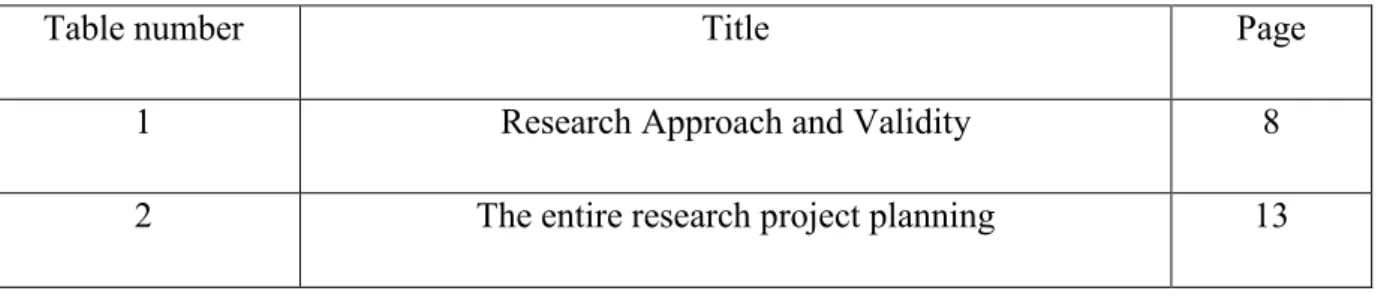
Table number Title Page
1 Research Approach and Validity 8
2 The entire research project planning 13
List of figures: Diagrams and Maps
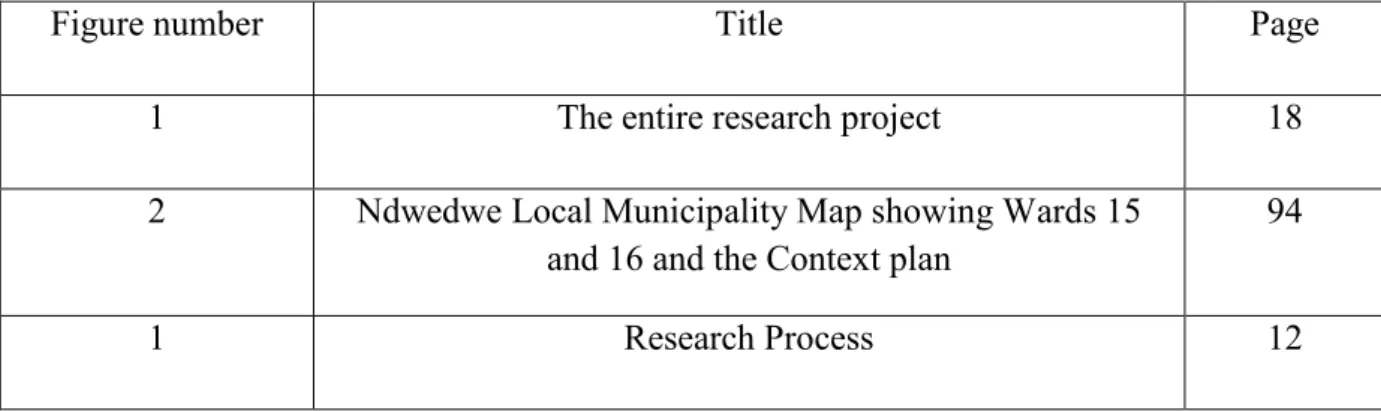
Figure number Title Page
1 The entire research project 18
2 Ndwedwe Local Municipality Map showing Wards 15
and 16 and the Context plan 94
1 Research Process 12
ix List of Acronyms
ASGISA Accelerated Shared Growth Initiative of SA ANC African National Concress
DFA Development Facilitation Act No of
DLGTA Department of Local Government and Traditional Affairs DMA Disaster Management Act No 57 of 2002
NHF National Housing Forum SC Steering Committee FBS Free Basic Services
HH Households
IDP Integrated Development Plan IFP Inkatha Freedom Party IDPRF IDP Representative Forum
ISRDP Integrated Sustainable Rural Development Programme KRA Key Rural Appraisal
KZN KwaZulu-Natal LUF Land Use Framework
LUMS Land Use Management System
MFMA Municipal Finance Management Act No of 2000 MIG Municipal Improvement Grant
MSA Municipal Systems Act No 32 of 2000
MSA Municipal Structures Act No 117 of 1998 MSIG Municipal Systems Improvement Grant
NEMA National Environmental Management Act No 107 of 1998 NSDP National Spatial Development Perspective
PC Project Consolidate
PDS Provincial Development Strategy PRA Participatory Rural Appraisal Theory PPS Public Participation Strategy
RDP Reconstruction and Development Programme SACA South African Constitution Act 106 of 1996
x SLA Sustainable Livelihood Approach
TA Traditional Authority TORs Terms of Reference
1 CHAPTER ONE: PROBLEM STATEMENT AND METHODOLOGY
1.1 Introduction
The Department of Traditional and Local Government (DTLG) proposed that an Integrated Development Planning Representation Forum be established to encourage the participation of communities and other stakeholders at ward levels and in local municipalities (Information Package on Integrated Development Planning, 2001). This is of importance because the affected community members would be in a position to utilize the opportunity to identify themselves more with common societal issues. Whilst participation in Integrated Development Planning has been successful in involving the public, the business and other sectors and different stakeholders, the situation is however complicated by the number of sectors involved as observed by the researcher (Information Package on Integrated Development Planning, 2001). This large number of stakeholders tend to weaken the degree of participation in the political processes. Different stakeholders present a multiplicity of interests. Furthermore, the local communities within the municipality can best articulate their own needs and assist in improving ownership of processes and legality of government projects that are cited as important for active citizen participation in the integrated development planning process (Buccus and Hicks, 2007).
Integrated Development Planning is a tool used to inform development planning in communities. It engages various stakeholders to contribute their input rationally. The researcher argues that the engagement of various stakeholders is put to a test due to the multiplicity of interests which are often associated with conflict; lack of trust and hidden agendas. This is opposed to what community participation is about. This study focused on two community wards in the Ndwedwe Local Municipality; Ward 15 and 16. Ward 15 is located next to the Ndwedwe Local Municipality administrative offices; while Ward 16 is situated on the remote periphery of Ndwedwe Local Municipality. The Ndwedwe Local Municipality is a semi-rural area that lacks infrastructure; natural resources and adequate service delivery.
It appears that there is variation in participation by ward in the Ndwedwe community in the forums and meetings arranged by the municipality. This has been noted from observations by
2 the researcher in previous forums and as a team member of the Social Development Services.
Meetings vary from those summoned by Ndwedwe Local Municipality and Traditional meetings arranged by the Amakhosi. There is an understanding that these meetings are organized to put emphasis on people’s needs during their participation. However there is variation in terms of wards location that exist between wards 15 and 16 then there is something missing here. The extent to which community members participate in development committees vary and at different stages of planning meetings. This study examined whether this weakness of community participation exists in the context of Integrated Development Planning preparation process.
Encouraging community participation is a basis for good governance. This is supported by the laws and policies of the South African government. Local communities in Ndwedwe have to participate according to the principles, space and platform provided to them. Communities should participate freely, confidentially, without coercion or prejudice. Influential stakeholders and political decision makers should conduct themselves according to the rules and regulations consistent with the South African Constitution.
In South Africa participation is in line with democratic principles. Prior to the first democratic elections in 1994, the apartheid government negated the democratic principles in respect of the majority of black population. Ndwedwe is one of those areas where African people were forced to reside on reserved land according to ethnic classification and subsequent Land Act of 1913 and the revisions of Acts in 1939 which consolidated the unequal distribution of land, services and resources along the racial lines (Buccus et al 2007, 2006). Ndwedwe came about as a result of homeland delimitation. Former homeland areas and Ndwedwe in particular are often not suitable for cultivation and commercial activities due to the undulating terrain.
1.2 Study Area
Ndwedwe Local Municipality has 19 wards and each ward is comprised of a number of villages. This research focused on wards 15 and 16, see Map1 (Appendix A). Three villages fall within the jurisdiction of ward 15. These wards differ in levels of development and geography. Ward 15 is more developed and located near Ndwedwe town with good physical and social infrastructure and economic development. Ward 15 is the most developed ward of Ndwedwe Local Municipality and forms the economic hub of the area. In this area there are
3 economic activities such as agriculture, local health facilities, transport infrastructure, local Ndwedwe Police Station and a road construction programme established under the Urban Renewal Programme. Ward 16 is located at the periphery of Ndwedwe town. It is not developed and is also ravaged by poverty, rampant unemployment and HIV/AIDS (Ndwedwe Local Municipality Integrated Development Plan, 2007-2012). Ward 16 lacks infrastructural development, family and social support structures and basic services; a situation which affects the community’s livelihood (Von Kotze, 1998). The social structure of communities in this Ward is “ruptured” (Ndwedwe IDP Review Document 2009- 2010). From the above explanation, ward 15 and 16 were selected for this study. The researcher argues that there is weak community participation in the Integrated Development Planning preparation process meetings which result into failure of plans to inform decisions or address needs of the local people. The assumption is that effective participation by the local community is likely to make them take ownership of the plan and use it to address their development needs.
Ndwedwe Local Municipality is one of four local authorities within the ILembe District Municipality. It borders in the east with the KwaDukuza Municipality and in the north with Maphumulo Municipality (see Map1). In the south borders of Ndwedwe there is the eThekwini Municipality and in the west the uMshwathi Municipality. In broad terms the municipality is situated parallel to and approximately 20 km inland from the KwaZulu Natal coast. While much of the north – eastern part of Ndwedwe forms part of the coastal flats mostly covered by KwaDukuza, the majority of the area consists of tribal authority land ranging from topographically fragmented to steep and dramatic landscape (Ndwedwe Local Municipality Integrated Development Plan, 2007-2012).
The topographic conditions of Ndwedwe area consist of a steep and fragmented landscape which impact negatively on linkages associated with rendering of services. The topography is structured as follows: In the east and north –east a band of flat to undulating low-lying topography forming a part of the coastal flats. In the western half of the area mostly steep, fragmented and elevated topographic conditions, interspersed with some undulating high- lying areas. Very steep dramatic topographic conditions in the form of cliff faces and escarpments in the western and south –western part of Ndwedwe and there is a series of incisive river valleys running largely in an easterly direction bisecting in particular the western part of the municipality into a series of spurs and valleys. According to Ndwedwe IDP Review of 2009-2010 the special framework is estimated approximately as follows:
4 20 % of the municipal area consists of flat to softly undulating land;
40 % of the municipal area consists of undulating land;
30 % of the municipal area consists of steep and fragmented land; and-
10 % of the municipal area contains over-steep and dramatic topographic conditions.
Within the regional context, much of the Ndwedwe Municipality represents the former KwaZulu homeland consisting of traditional settlement areas and while it is located relatively closer to major urban and economic centres (such as, King Shaka International Airport and Dube TradePort), it however has remained substantially underdeveloped, disadvantaged and poor (The Ndwedwe 2009-2010 IDP Review). The Ndwedwe Municipality is 1153 square kilometres and accommodates a population of 134 326 people (Community Survey, 2007).
Overall settlement densities are approximately 145 people per square kilometre. 68% of Ndwedwe consists of tribal authority land and the remainder is made up of commercial farmlands located in the north–east of the municipality (Ndwedwe Local Municipality Integrated Development Plan, 2007-2012).
1.3 Statement of the problem
In the past, South Africa was governed by policies that promoted separatist development.
When the African National Congress (ANC) led democratic government took over in 1994, it intended to address the problems of the past which promoted a segregated society, poverty and inequalities. Various policies and legislations were introduced such as Integrated Development plan mandated by Municipal Systems Act of 2000 and the Development Facilitation Act of 1995. Such policies intended to promote and integrate societies in decision making and openness which allows communities to participate in discussions on the day to day running of their local municipalities. This study was undertaken with the view that community participation is weak and it should be further strengthened in local municipalities.
Ndwedwe Local Municipality is characterized by huge disparities between the community and its local municipality in terms of location with the exception of Ward 15 (The Ndwedwe 2009-2010 IDP Review). Due to the huge disparity, it is difficult for the municipality to communicate with people about issues that relate to poverty alleviation and service delivery.
The municipality’s primary task is to ameliorate the livelihood of people, in terms of service delivery such as infrastructure and environmental management (ibid). Furthermore, the
5 municipality’s duty is to overcome barriers which mock down the barriers of communication through the Integrated Development process. This could contribute to participation of communities and service providers to become fully engaged with the community in matters of community development.
The main focus of the study was to obtain an understanding or various forces and levels which influence decision making during participation and its relation to IDP. It focused on the local municipality structures, community development committees in wards, and Non Government Organisations (NGOs) operating in Ndwedwe.
1.4 Significance of the study
The majority of Ndwedwe community members, Ndwedwe Local Municipality officials and other sectors that constitute stakeholders in the integrated development planning preparation processes will be better positioned to understand task that inform increased community participation. This would provide knowledge and skills to support community participation during integrated development planning preparation processes. The support could be achieved in various ways: for example the provision of government subsidies in transport to overcome obstacles which result in the absence or limited community participation in ward committees.
I chose to conduct this this study because I have noticed lack of participation by the community in terms of decision-making on the services they need. This study will assist Ndwedwe community and Ndwedwe Local Municipality and ILembe District Municipality to come with strategic planning which will lobby some of the stakeholders to contribute towards supporting mechanisms for increased community participation during the IDP process. As a start some of the stakeholders who participate in business ventures introduced by Ndwedwe Local Municipality could assist in reducing levels of poverty. Mutual relationships could be enhanced amongst traditional leaders, ward councillors from ward 15 and 16 and municipal officials.
At Ndwendwe Municipality the local community appears to be not involved in policy formulation, designing of municipal programmes as well as implementation, monitoring and evaluation of programmes. The researcher argues that there is weak community participation in the Integrated Development Plan preparation process, which results in the failure of the
6 plan in promoting the livelihoods of the local people. The assumption is that effective participation by the local community is likely to award them some ownership of the plan and use it to address their realities. By and large the Ndwedwe area lacks basic services and amenities such as water and sanitation services, water reticulation, spring protection, the built environment as well as roads, buildings. According to the 1996 and 2010 revised IDP annual reports, Ndwedwe Local Municipality had high rates of unemployment and in most cases seasonal jobs were the closest form of job security. Therefore, this re-emphasises the need for research on the content of community participation in the Integrated Development Planning preparation process in Ndwedwe. Lack of participation has led to inadequate service delivery.
It is the communities that can identify their problems thus their absence contribute to lack of services because the Municipality is not in a position to know the services the community needs.
1.5 The main objective
The main objective of this study is to examine community participation in the Integrated Development Planning process with a view to identifying reasons for weak participation in Ndwedwe Local Municipality.
Specific objectives
To assess community participation in the integrated development plan preparation process in the Ndwedwe local community.
To examine the role of planners that facilitates community participation in the IDP preparation.
To identify how community participation can be strengthened in the preparation of the Integrated Development Plan
1.6 Research Questions
What are the factors which explain weak community participation in the Integrated Development Plan preparation process in Ndwedwe Local Municipality
How is community participation in the Integrated Development Planning process carried out at the Ndwedwe Local Municipality?
How do planners facilitate community participation in the Integrated Development Planning process at the Ndwedwe Local Municipality?
7
How can the community be encouraged to participate in the integrated development planning process in Ndwedwe Local Municipality?
1.7 Hypothesis
There is weak community participation in the Integrated Development Plan preparation process.
1.8 The research methodology
1.8.1 Research Design
Babbie and Mouton (2007:104) define a research design as “a plan or structured framework of how one intends to conduct the research process in order to solve the research problem”. A research design is a plan or blueprint of how you intend conducting the research (Mouton, 1996). This study determines the strengths and weaknesses of community participation in the Integrated Developing Planning process. It employs a qualitative research methodology.
Respondents were used as source of data to develop concepts that will provide meaningful rationality, this research design plan and structure gives the research project validity and maximises the research credibility.
The design approach chosen uses the accepted decision steps in this research process as a frame of reference. Chapter 1 to 5 provide an explanation of factors that presents the problem statement, objectives and aim of the study, the conceptual and theoretical framework that constitutes a community, participation, integration, development and planning. Furthermore, it yields powerful debates that lead to the understanding of participation in the IDP process.
The research deals with the broad range of concepts or discourse that occurs across a broad spectrum of participation in the IDP preparation process. It is highly unlikely that all the factors discussed will ever occur in other local municipalities. For this reason, it is the task of the reader to decide which of the factors discussed are likely to affect or concern other local municipalities. This includes the validity of the findings. For the purpose of maximising the validity of the research design the following five research decision were distinguished: (1) the topic, (2) problem formulation, (3) conceptualisation, (4) data collection, and (5) analysis and interpretation of data.
1.8.2 Research Approach
8 The researcher internalised specific inputs or concepts (conceptualisation) and selected a study the case of Ndwedwe Local Municipality to examine community participation in the Integrated Development Plan preparation process. The researcher incorporated the research models seen as relevant to the specific goals. This enabled the researcher to formulate research problem and identify the constraints. The constraints determined that the research would be qualitative. This was followed by the research questions, the characteristics and size of the study. The research goal was established to evaluate the research and to determine the hypothesis about the existing situation as a result a research strategy was conducted.
Table1
Research Approach and Validity Conceptualisation theoretical validity
Data collection reliability Analysis and
interpretation
inferential validity
Research Strategy Research goal To examine community participation in
the Integrated Development Planning process and the factors that determines the validity of findings.
Community participation in the integrated development plan preparation process.
The role of planners that facilitate community participation in the IDP preparation and the community courage in the preparation of the Integrated Development Plan
Descriptive research
A study the case of Ndwedwe Local Municipality that in community participation in the Integrated
Development Plan preparation process.
In-depth interviews,
participant observation, focus groups, sample
Source: (Robinson, 2010) 1.8.3 Sources of Data
Both secondary and primary sources of data were used in this study
9 1.8.3.1 Secondary data
The researcher referred to the Ndwedwe Integrated Development Document 2009, relevant policies and legislation on Integrated Development Programme 2009 plan, journals and the Constitution of South Africa. Secondary sources are those that provide information that has been done in the field of interest (Creswell, 2003). It is the information that is already available and can be accessed. The secondary sources used were as follows:
Ndwedwe Integrated Development Document 2009;
Relevant Policies and Legislation on Integrated Development Programme 2009;
Journals and the constitution of South Africa;
Stakeholders’ reports from the municipality and consultancy reports;
Information from the archives of the municipality associated with community planning process in the Integrated Development Planning process;
Minutes of the consultative meetings, and
Izimbizo minutes.
1.8.3.2 Primary data
(i) Selected respondents from wards 15, 16 were community members; the Local Municipality officials and the Traditional Authority structures. Interviews were held with selected respondents from wards 15, 16 who were community members and the Local Municipality and the Traditional Authority,
(ii) Focus Groups Discussion: 4 Community Development workers,
(iii) Key informants – were selected because of the experience and knowledge they posses and regular attendance in meetings. The key informants are listed below:
a) IDP Manager of Ndwedwe Local Municipality and Integrated Development Planning Provincial Manager,
b) Two traditional leaders, six amakhosi and five Izinduna from ward fifteen and sixteen.
c) Ward 15 and 16 Ndwedwe Local Municipaly councillors.
d) Community Development Workers from wards fifteen and sixteen (focus group).
e) Consultants Inkasa Manager: Programme Director Inkasa.
f) Speaker: Ndwedwe Local Municipality.
g) Speaker: ILembe District council.
10 h) The Chairperson of civic organisations–Inkatha Freedom Party and African National Congress.
1.8.4 Sampling procedure and sample size
The respondents were identified during field work and participant observation was conducted as relevant activities in the encountered process. Participation observation was undertaken by the researcher in the setting to observe the everyday actions and interactions of the participant. This observational method is based on the assumption that understanding of the inner perspective of actors can only be achieved by actively participating in the subjects’
world and gain insight by means of introspection (Bless and Higson 2004). Participant observation was undertaken over three periods of two weeks each. During these periods the researcher spent several hours daily between 08h00 and 13h00. Observation made during participation observation were recorded by jotting down notes; keeping mental notes of conservations with forums and ward committees. The researcher did not take much into consideration the size of the population since hence; an observation was drawn from all participants who engaged in meaningful discussions.
Twenty (20) community members who often participate in ward committees and Ndwedwe Local Municipality meetings were selected from the attendance register. Interviews were conducted to provide a framework for a respondent to speak freely and in his or her own terms about a set of concerns which the researcher brings to the interactions and whatever else the subject may introduce. The researcher had an idea of the basic issues that had to be covered in interviews. The researcher derives these notions from the formulation of the research problem; analysis of observations and experiences reported by the participants. Free narration by the respondent was encouraged. However, such narration was guided since the interview and the data collected must contribute to the research objectives. An interview guide list of topics was used to gather information and served as a checklist of which sub- topic may be ticked off as they are covered. Analysis were made and a study of related literature. The themes guided and formed the structure for later analysis and interpretation.
During the interview the researcher endeavoured to assume a non- argumentative, supportive and sympathetically understanding attitude. The procedure was first to establish rapport with the respondents and create a warm and receptive atmosphere. It was again pointed out to respondents what the purpose of interviews was and what way the data and findings would be used. It was explained that while factual data of the situation occurring in the participation of
11 IDP process during participation were sought. The respondents were invited to communicate their own attitude and feelings, and in so doing encouraged to speak freely on the selected themes and issues which were of most concern to them. The duration of the interviews ranged from 20 to 30 minutes. Interviews with key informants lasted from 40 to 60 minutes.
1.8.5 Instruments, tools and techniques used
Interviews, Focus Group Discussions, journals, Key informants, Traditional Leaders and population sample, Councillors, media reports, and Ndwedwe local Municipality Officials 1.8.6 Face to face interviews and focus groups
Participatory observation and Focus Group Discussion consisted of two Community Development Workers, two Ward Committee Members and three from Women’s group members.
1.8.7 Data collection process
All the respondents were advised of the importance of the data collected. Respondents were informed that the information was confidential and they were not compelled to disclose information.
Meetings were held with CDWS in order to obtain relevant information. The discussions were comprised of questions and important points were written on the answer pad by the researcher.
Face to face interviews was conducted with Ndwedwe officials including the ward councillor.
Most important data was recorded on the answer book to ensure maximum quality.
Respondents were advised that a recording devised would be used and as such, the permission to use the devise was requested.
A visit to Makhulu Newspaper Company, which is the local media, was conducted to obtain relevant information. The data collected has been used as an attachment or annexure B in this study.
1.8.8 Data analysis
Data analysis informed that decision making is inclusive, democratic since meetings are open to the public except meetings of the council’s executive. The ward committee system
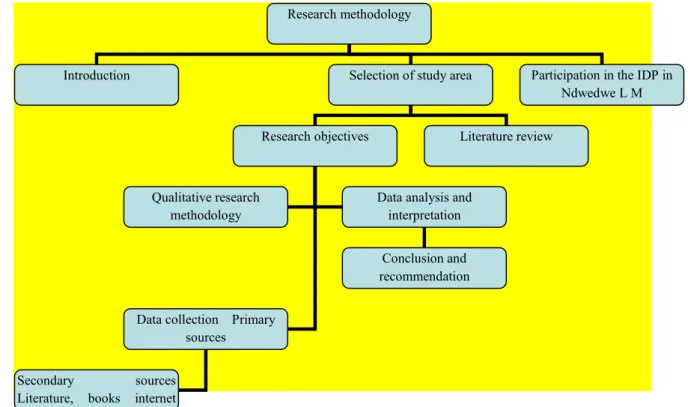
12 includes the stakeholders into governance issues. However, some stakeholders were unable to contribute any inputs. Analysis included the interviewed community that attend meetings, the demographics in the wards, the factors that hinder the participation of people in ward committees. Civic organisations and forums in the planning and implementation phases of the IDP were issues raised. Izimbizos as a form created to ensure service delivery and public accountability was analysed. The role of the Amakhosi, Izinduna and Town Planners including their mandate, in the IDP process was also analysed. The analysis determined what the main forms of participation are during the IDP preparation process. The entire research project planning can be viewed diagrammatically in the Satisficing Model as follows
Fig1 Research Process
Source: Researcher’s own interpretation, 2013.
Research methodology
Introduction Selection of study area Participation in the IDP in
Ndwedwe L M Research objectives
Qualitative research methodology
Data collection Primary sources questionnaires/interviews
Literature review
Secondary sources Literature, books internet and Municipal records
Data analysis and interpretation Conclusion and recommendation
13 The entire research project can be viewed in the table 2 below which has been constructed based on the work of Robbins, (1996)
Table2: Summary of the Research Process Actors
involved
Research methodology
Stages of participation
Activities to be undertaken
Researcher selection of study area
Ndwedwe Local Municipality focus on Ward 15 and 16 Researcher methodology Ward levels understanding forces and levels
which influence decision making
Researcher sources of data Local
Municipality
&
Ward Level
Primary and secondary data
Researcher data collection local
Municipality
&
Ward level
primary and secondary data Sampling procedure and sampling size Researcher data collection local
Municipality
&
Ward level
interviews, Population Sample Snowball
Techniqu es and instrumen ts
Researcher data analysis Local
Municipality ward level
obtain responses from respondents and provide analysis and interpretation of data
14 Municipal
manager
local
municipality
Provide access for role players to IDPs for their interaction with Ndwedwe Local Municipality. Prioritise issues and strategies of Local Municipality. Link projects with budget figures and responsible agencies. Ensure majority decision in a full council meeting. Take care of the concerns of the councillors.
Give relevant role players such as executive committee to discuss and comment.
IDP Manager
Local
Municipality and ward level
Identify other stakeholders and their roles to assist in preparation of the IDP and prioritisation
Consultants Local
Municipality and ward level
Provide feedback to relevant stakeholders in ward level and at the local municipality level about challenges and achievements on the issues of IDPs.
Community Developmen t Workers (CDWs)
Ward level Assist ward committees in the IDP preparation process
15 Traditional
Leaders:
Inkosi and Izinduna
Ward level Participate actively in IDP preparations undertaken by Municipality in all developmental issues affecting the community
Councillor Local
Municipality and ward level
Interventions: take initiatives on IDP preparation process with regard to specific issues.
Initiation of specific steps to change the existing situation on the ground. Allow voices to be heard and frames of reference.
Co-determination of IDP preparation issues that take place through partnerships with specific community groups.
Mayor Ward level To convene Izimbizo; to bring
out the problems in meeting the demands of the poor; the deepening of democracy; open public decision making; to conduct himself or herself in an answerable and transparent manner
conceptual theoretical framework
Researcher Participatory rural appraisal
community participation theory strategic planning
16 Neo – functionalism
Intergovernmentalism definition of key concepts
Research community, participation, instrumental participation, transformative participation and
representative participation Researcher background to
integrated development planning
Researcher Relevant themes
Public participation in the context of National, provincial and local government
lesson learnt
Researcher analysis, interpretation
findings and recommendations Approval
Source: Robbins, 1996: 87.
1.9 Limitations of the study
The study focused on interviewing the community members from ward 15 and 16 and the officials of Ndwedwe Local Municipality because the research sought to evaluate community
17 participation in the integrated development planning preparation process. In addition, the unevenness of Ndwedwe terrains shun route because of lack of proper roads, a situation that is limiting as it inhibits the free movement within the municipality. The area of Ndwedwe had recently experienced civil disputes between the members of Inkatha Freedom Party (IFP) and the African National Congress (ANC) as a result some community members of Ward 15 and 16 were not comfortable with being interviewed. The researcher built a good rapport with respondents to overcome these constraints.
1.10 Chapter Structure Chapter 1
Chapter one introduces the study area. It also presents the problem statement, objectives and aim of the study.
Chapter2
Chapter two presents the conceptual and theoretical framework that constitutes a community, participation, integration, development and planning.
Chapter 3
This chapter presents various views from different authors on planning and development. The chapter’s main focus is Britain which is regarded by most countries as a pathfinder in development planning systems. The aim of the chapter is to contribute to an understanding of participation in planning from other countries.
Chapter 4
Chapter four presents the South African planning history that was mainly comprised of land control and segregation development. However, in 1995 the Integrated Development plan emerged and gave a mandate to local municipality to implement service delivery in an integrated manner, this endeavour was supported by the Reconstruction and Development Programmes which intended to address the problems of the past and also the 1996 South African Constitution. It captures the roles and responsibility of local municipalities; the role of the IDP, its legal status and the function and powers of Ndwedwe Local Municipality that include participatory approach.
18 Chapter 5
Chapter five presents findings of the research based on the emergent themes as derived from the study objectives.
Chapter 6
Chapter six presents summary of findings, conclusions and recommendations of the study.
1.11 Chapter Summary
This chapter entails that integrated development planning is tool used to inform development planning in communities that determines needs of people during participation, it also focused on the Ndwedwe study site and provided the statement of the problem that Ndwedwe is characterized by huge disparities between the community and its local municipality, poverty and inequalities that were inherited from the apartheid government. Furthermore, the chapter discusses the hypothesis which states that there is weak community participation in integrated development plan preparation process. It is with this regard that the researcher selected a study case of Ndwedwe local municipality to examine community participation in integrated development plan preparation process. Finally the chapter lays out the chapter structure of the study.
19 2 CHAPTER TWO: CONCEPTUAL AND THEORETICAL FRAMEWORK
2.1 Introduction
The conceptual and theoretical framework used in this study places community participation within the Integrated Development Planning processes. This chapter explains some of the key concepts in the discourse of integrated development planning as the planning movement evolved over time. The chapter begins by reviewing the theoretical underpinnings of what constitutes a community, participation, integration, development and planning. This section of the study underscores the theoretical perspectives; points of entry and serves as a basis for conducting this research. Furthermore, while concepts to better understand the phenomena under study are discussed, this chapter also presents an opportunity to present the theories which explain why the problem under the study exists. The conceptual and theoretical framework provides an overarching context in which matters of integration, participation, development, planning and community are conceptualised. Accordingly, it consists of a set of assumptions, concepts, values, and practices that determine how the aforementioned themes were managed or approached.
2.2 Participatory Rural Appraisal
According to Von Kotze (1998), Participatory Rural Appraisal Theory (PRA) is applicable to both urban and rural settings. This theory is premised on the tradition of participatory learning and knowledge production. It involves collaborative planning, sharing knowledge and experience. Furthermore, it encompasses the process of listening and asking questions during discussions. In that regard, all participants play a major role in initiating and influencing the direction of discussions, in this case, IDP preparation process. Integrated development plan is a tool for local municipality that could be used during participation since time and other resources are often limited. Researchers and service providers as outsiders could be able to acquire information about a community quickly that is aimed at strengthening, analysing and making decisions since they are vested with power to address problems of the affected community.
Hired agencies in the local municipality can design programmes, implement, monitor and evaluate activities using the PRA tool (Chambers, 1997). Moreover, agencies can be able to
20 facilitate the process that allows community members to analyse their situation and also to list their priorities in terms of their related needs and their perceived needs. This is essential as it is related to Integrated Development Planning preparations particularly at ward levels.
Hence, this is about moving away from the notion of top down approach to bottom up approach which is people centred.
Evidently, formulation of valid theory possesses enormous power to elevate and accelerate the expansion and development of human capabilities in any field, leading to fresh discoveries, improvement of existing activities and capacity for greater results (Mouton and Marais, 1990). For example, today, researchers have taken science to new heights, because of knowledge breakthroughs in fields such as physics, chemistry and biology. The Participatory Rural Appraisal theory can tell us not only what should be done, but also what can be done and the process by which it can. Social development can be summarily described as the process of organizing human energies and activities at higher levels to achieve greater results.
Development increases the utilization of human potential. In the absence of the participatory rural appraisal theory, social development remains largely a process of trial and error, with a high failure rate and very uneven progress (Mouton and Marais, 1990). The dismal consequences of transition strategies in most Eastern European countries, the very halting progress of many African and Asian countries are shortcomings of experimentation (Lusk and Mason, 1992). Moreover, the increasing income gap between the most and least developed societies, and the distressing linkage between rising incomes, environmental depletion, crime and violence reflect the fact that humanity is vigorously pursuing a process without the full knowledge needed to guide and govern it effectively (Wint, 2002).
Advancement of the development theory can enhance society by the same order and magnitude that is advanced by theoretical physics multiplied by technological achievements in at the turn of the (Wint, 2002). The emergence of a sound theoretical framework for social development would provide the knowledge needed to address these inadequacies. It would also eventually lead one to the most profound and practical discovery of all – the infinite creative potentials of the human being (Wint, 2002).
2.3 Community Participation
Since the late 19th century, communities have been associated with the hope and the wish of reviving the closer, warmer, more harmonious type of bonds between people (Hoggett, 1997).
21 Community participation means some form of involvement of people, with similar needs and goals, in decision making that affects their lives. Similarly, Abrams (1964: 63) defines community participation as “[t]he theory that the local community should be given an active role in programs and improvements directly affecting it”. Abrams maintains that it is rational and necessary to give control of affairs and decisions to people most affected by them since by and large, there is no government or any formation of public authority that can rightly solve all its public problems with apt adequacy. As highlighted above, it is not with ease to delegate power to people in places of authority and professionals in the public sphere.
Proponents of the theory of community participation have deep-seated differences in approaching the latter. Hamdi (1997: 75) defines the theory as a “powerful concept which sees professionals, families, community groups, government officials, and others getting to together to work something out, preferably in a formal or informal partnership”. Far from Abrams (1979) notion of community participation being a rather ‘careless’ exercise of transferring political power to people, Hamdi (1997) reveals that community participation is a harmonious partnership that hauls different stakeholders into one institutional moment to make decisions. A more useful argument is put forward by researchers who studied the failures of collectivist for pro bono initiatives. Avruch and Black (1999) argue that community participation initiatives often lack conceptual understanding of community structures. The setup is complex and different; it includes race, gender, sex, age, level of education and other forms of physical differentiation. Furthermore, genuine participation would not be plausible because some members by virtue of their demographic status in the community inevitably wield and are endowed with more power than others. Other researchers who noted this about community participation include Sjoberg (1955) and Black and Scholes (1974). Sjoberg (1955) was more interested in extra-community activities that affect activities that take place in a community and concluded that community ownership and management of development projects do not take place within a vacuum but are rather embedded to varying degrees within the life and workings of their communities of place. In the same vein Buccus and Hicks (2007) bemoans that perception of communities as ‘mass society’ veils the pertinent social structural characteristics for example size and heterogeneity in communities that may either stifle or promote collective initiatives.
22 2.3.1 Community participation in the South African context
Community participation according to Kotze (1997: 37) is defined as “the people –centred development approach which engages community attitude to communicate with government and it involves a reciprocal influence”. Davids (2005:19) on the other hand defines community participation as “a process that intensifies democracy using participatory methods that provide a platform for decision making, implementation, monitoring process and evaluation of development initiatives that produce good results and governance”.
Meyer and Theron (2001:1) define participation as “a programme that involves sharing decision- making process in the implementation of programmes and evaluating of programmes associated with development and benefits”. Moreover, Greighton (2005: 22 argues “that community participation has participation levels depending on the issue being discussed”. However, the role of the communities that participate is decision- making that is based on participatory principle which, through effective dialogue eliminates the distinctions between the communities. Communities draw inferences and conditions that are different from the perceptions of the outsiders (Burkey, 1993:62). It is the perceptions of the communities that should form point of references for any analysis. These perceptions can be identified and understood through continuous dialogue and joint reflections (Burkey, 1993:62) this. This is confirmed by Thomas (1995:1) who argues that “community participation involves community members and affected groups as community representatives”.
2.4 Strategic Planning
The strategic planning has its roots in business planning but was adopted into urban planning as a procedural theory guiding decision-centred views of influencing operational decisions of an organisation (Faludi, 1985). It contends that if planning cannot exert such influence, then it is not worth undertaking. This theory advocates for pragmatic decision-making where public decision makers are required to give reasons for their decisions. This requires attending to, beforehand, their inter-relations that are not commonly given time during operational decision-making. Figuring out in advance what to do involves many decisions in
23 turn and cumulates in a framework, or plan. So the decision-centred view of planning sees the purpose of planning as guiding decision-making about action “if the selection of current actions is made only after a formulation and comparison of possible solutions over a wider field of decision relating to certain anticipated as well as current situations” (Friend & Jessop, 1977: 110).
Strategic planning theory gives guidance to the lower-tier planning authorities where externalities or inequities threaten, where opportunities for creatively combining measures taken with respect to the territories of various lower-tier planning authorities are in danger of being lost, or where goods and services cannot be expected to be provided by local authorities (Faludi, 1985). Hence, the distribution of powers between national and local planning authorities rest on assumptions enshrined in the constitution and the dominant political philosophy with respect to state intervention generally and the distribution of public powers over the various tiers of government more in particular. Since the onslaught of industrialisation and urbanisation, socio-economic development has transgressed existing boundaries and made traditional planning arrangements obsolete as much time and energy is spent on reforming governmental structure, powers and responsibilities (Faludi, 1985).
The current approach to strategic planning involves integrated development planning for local government. The current situation is assessed for formulating issues that lead to potential agreements. Identification of needs is pragmatic for prioritisations that yield concurrent objectives which result in long term visions and goals (Robinson, 2009:19).
Robinson (2009) adds that this result into action plans that organise projects into integrated programmes requiring implementation by the local municipality in South Africa.
Belgium and Netherlands faced rapid change and limited resources, a formulation of strategic planning approach combined a long term objective with short term (Robinson, 2009:19) solution. Robinson addresses spatial, ecological, social, technical and institutional aspects of development problems. Concurrently he argues that it mobilises key actors from local government, local community and the private sector thereby strengthening coherence.
Coherence involves actors to participate in planning, decision-making and resolving dispute constructively at different levels of the society (Robinson, 2009:19).
24 2.5 Neo-Functionalism
Neo-Functionalism is a theory of integration which was propounded in the mid 1950’s by American scholars (Aston, 2004). The theory advocates for new forms of regional co- operation between neighbouring planning authorities (Aston, 2004). The theory initially focused on regional integration processes but later shifted from its initial political and economic integration foundations to focus on the ‘spillovers’ which accrue with increased cooperation between states in policy formulation which subsequently has a knock on effect, where co-operation in one field necessitates co-operation in another (Aston, 2004; Cini, 2000). As a result of such cooperation it is anticipated that municipalities will have effective, community backed policies inextricably linked to each other, not through necessity but rather as part of a bargaining process whereby government departments agree mutual support for each other in negotiations in so called ‘package deals’ (Hix, 1999).
This research utilised this theory to explain how and why local governance developed to strengthen the planning of regional economies. Whilst there are undoubtedly many different causes and factors which have contributed to community-led development, this research draws on the functional process that has guided political and economic development initiatives in Europe. However, the functionalist theory has been criticised for resulting in unintentional cultivated spillovers, where integration is not the primary motive but rather an unintended consequence of power delegation (Aston, 2004). Hence, Lindberg and Scheingold (1970) suggested that most local governments are concerned with achieving concrete economic and welfare goals and will view integration only as a means to these ends. Whilst neo-functionalism provides an explanation for how and why local governance developed up to the 1960’s, it fails to explain the demise in integration from this period. The lack of continual integration during the 1970’s suggests the neo-functionalist prediction of a gradual intensification of political integration was incorrect and mispredicted both the trajectory and the process of national and local government co-operation policy evolution (Aston, 2004).
This research covered this theoretical gap by drawing from the intergovernmentalist theory.
2.6 Intergovernmentalism
25 The intergovernmentalist theory of integration was propounded in the 1960’s as a critique of neo-functionalism. This theory argues that development initiatives should be driven by the interests and bargaining actions of local stakeholders to reduce anarchy or the development project becoming a ‘white elephant’. Hence Rosamund (2000: 140), argues that local
“governments seek integration as a way of solving problems that they have in common” to have effective results that give them greater credibility. The advantages of such co-operation are that financial, human, and natural resources can also be ‘pooled’ to have effective and responsive development. This research bases itself on the idea proposed in this theory that development is planned in cooperation with other stakeholders. Firstly, policy preferences within the local government jurisdiction will be synchronised with those of the national government through bargaining more or less simultaneously. Hence, within communities politicians aim to build coalitions of support among domestic groups while at the national level, the same actors seek to bargain in ways that enhance their positions domestically by meeting the demands of key domestic constituents (Rosamund, 2000).
The theoretical framework outlined above helps establish an understanding of the various aspects of the evolution of development planning. The different but related theories provide explanations for different stages and patterns of development planning. However, no theory in itself provides a completely adequate and comprehensive explanation of how the discourse on integrated development has evolved.
Economic integration leads to political integration, the EU transferred more sovereignty to a central authority at the European level. This process happened almost automatically, the so called “spillovers’ integration in one sector enforces integration in other sectors (Eilstrup- Sangiovanni, 2006). Limited spillover effects occurred within the community and expanded economy beyond the boundaries. Limited spillover effects that occurred within the community expand economy beyond boundaries. Hence, there were problems that could not be solved on the national level by the key actors due to the lack of trust within member states.
Therefore, there was a decline of decision- making regarding supranationalism McKay, 1999:17). This was perceived as being complicated and confusing. It undermined the intergovernmental aspects of the EU that are seen to infringe on national matters such as the Euro or continued integration (Sweet, 2004:1). However, on-state actors such as interest groups and trade unions bypassed the state and cooperated directly with the Union (Eilstrup- Sangiovanni, 2006:230). Neo-functionalists, intergovernmentalists regarded European
26 integration rather skeptically. The theory focuses on the nation state and sees national governments as the key actors of the process. Integration is not considered happening accidentally. However, it happened through spillovers and rational and well calculated decisions by the national governments. Also in the course of integration, the nation state is seen as remaining predominant over any supranational authority
(http// www.Scribd. Com /doc //16249343/everything-abc).
In Great Britain, the intergovernmental approach seemed the most suitable. Great Britain had good relations with all members of the European Union. A closer cooperation in economic terms was favoured by Great Britain. An attitude in favour of liberalization and deregulation of the internal market as well as increasing productivity existed. The British government had an economic concept, more closely related to the USA, while opposing the social model proposed by France, Germany and the Scandinavian countries (Eilstrup-Sangiovanni, 2006).
This tendency occurred in the light of the United Kingdom (UK) being the only country with such a liberal market, low social welfare and a high level of 'self-responsibility' of its people (Hobsbawm, 1968). This shows clearly the British’s position in economics, tries to keep foreign intervention in their affairs to a minimum, while using the positive aspects of the internal market to a maximum.
United Kingdom is still not in favour of a supra national state and wants to keep the decision making for the national states. It argues in favour of a broader involvement of national parliaments in EU affairs and opposes any political union, while pointing out the importance of strong economic cooperation. The main goal of the British participation in the Union is based on the economic benefits, to play a leading role in the European Union's future development and to create a peaceful and beneficial power in the world, which encourages and allows flexibility (Hobsbawm, 1968).
The UK proposed a clearer and more efficient decision making mechanism. The British position within the European Union is influenced by belief in sovereignty and self- responsibility, opposing the social welfare states included in the union. The British realized the importance and influence of the European Union, as well as its potential in creating wealth and prosperity and joined it therefore. However, the United Kingdom still plays its own role within the union (http// www.Scribd. Com /doc //16249343/everything-abc).
27 There were other variables that influence decisions - making in a continental European perspective. For instance, strong British national identity, the different currency and geographic position that set Britain apart from continental Europe. The United States and the European Union had a close relationship. They had a common identity, and it was often created by a feeling of unity against all others; in this case against all that is not Anglo- American (http// www.Scribd. Com /doc //16249343/everything-abc).
The United States took into account that Britain had become Europe’s only reliable military power and that made Britain more important for the US (Harris, 2002: 5). The liberal economy of the United State and the United Kingdom was in contrast to continental Europe.
Both countries had in common the preference for limited state intervention by the government. Their markets were closely linked to each other thus creating a feeling of common identity, due to much interaction on the business level. Facts and figures depict that the UK is the biggest overseas investor in the United States. (Harris, 2002: 6). The economic markets of both countries are based upon similar concepts since both trade with and invest in each other maximally. This reflects on the current financial crisis into the market, which could be claimed on failure of regulation. The United Kingdom rescued the economy after the economic downfall. These efforts were more similar to the ideas of the United States (http// www.Scribd.Com /doc //16249343/everything-abc).
The United States had much influence on the European Union and the United Kingdom, for instance through the National Atlantic Treaty Organisation (NATO). The United States was seen as a partner. In general they are the super powers in the globalised world (Harris, 2002:4) and speak with one voice. However, Britain perceived itself as having a leading role on key debates on Europe, but there were difficulties that emerged. The issue of being part of the Euro region or not, the issue of European single currency became a major subject.
Though the United Kingdom did join the European communities, it nonetheless, opt-outs and stirred into intergovernmental direction (Harris, 2002:4).
The United Kingdom had been a major asset for the European Union. That could be observed by the efforts made in European Union. However, the United Kingdom could not claim the same stand in the international arena particularly in terms of economic and political