RURAL ENTREPRENEURSHIP AND ITS IMPLICATIONS ON LOCAL ECONOMIC DEVELOPMENT: A CASE OF MOGALAKWENA LOCAL MUNICIPALITY,
WATERBERG DISTRICT, LIMPOPO PROVINCE
By
Kgalema Abbyton Mashamaite
Submitted in Fulfilment of the Requirements for the Degree
Doctor of Administration (Development Planning and Management)
In the
Faculty of Management and Law
(School of Economics and Management)
At the
University of Limpopo
Supervisor: Dr. T.M. Ramoroka
December 2022
ii
DECLARATION
I declare that the thesis ‘Rural Entrepreneurship and Its Implications on Local Economic Development: A Case of Mogalakwena Local Municipality, Limpopo Province’ hereby submitted to the University of Limpopo, for the degree Doctor of Administration (Development Planning and Management) has not been previously submitted by me for a degree at this or any other university; that it is my work in design and in execution, and that all material contained herein has been duly acknowledged.
Mashamaite KA (Mr) 05 April 2023
Surname & Initials (Title) Date
iii
ACKNOWLEDGEMENTS
It gives me great pleasure to thank a number of people without whom this thesis would not have been completed. I thank God for giving me strength, guidance and wisdom during the course of this study.
Firstly, I wish to extend my special thanks to my supervisor Dr. T.M Ramoroka for her guidance, moral support, patience and valuable contribution during the course of this study.
Secondly, I also wish to thank my mother, Mrs. G. Majatladi and the entire family for their enduring support and encouragement and standing by me during tough times. Thank you all for your patience and for believing in me.
Thirdly, I would like to send my sincere gratitude to Professor MX Lethoko-Zitha for her guidance, moral support, patience, valuable contribution and for believing in my research ideas during the conception stage of this study.
Lastly but not least, I owe my gratitude to the University of Limpopo for the opportunity and financial support to ensure that I further this doctoral study.
DEDICATION
iv
I dedicate this thesis to my late grandmother, Change Christina Mashamaite, who passed away in 2005. May her soul continue to rest in eternal peace. I also dedicate this thesis to my entire family for their unwavering support throughout my academic journey.
ABSTRACT
v
Rural entrepreneurship is a relatively young sector in the entrepreneurship field, but it has emerged as one of the most important tools for rural economic growth in developing nations like South Africa. A majority of poor people live in the rural areas and face the challenges of extreme poverty levels, high unemployment rates, appalling socio-economic conditions, and inequalities.
Therefore, rural entrepreneurship is regarded as a vital tool for accelerating Local Economic Development (LED) and improvement of the quality of life of the rural people and their communities. Rural entrepreneurship stimulates economic development by improving economic conditions, creating employment, reducing poverty and improving the overall standard of living of the rural populace. Theoretically, there is clear consensus that rural entrepreneurship has the potential to reduce poverty, unemployment, economic inequalities and low income as well as value creation and improving standards of life in rural areas through the creation of new enterprises. Entrepreneurial activities stimulate the local economy and create employment opportunities through the creation of new enterprises in the rural areas. Thus, entrepreneurship development is seen as one of the important components of LED and the development agenda in most developing countries. However, entrepreneurial success is dependent on various factors, internal or external, such as the need for achievement, locus of control and desire for personal control of business, human capital, infrastructure, training, communication network, financial support, business environment, economic climate, competitiveness, risk-taking propensity, confidence, and regulatory environment. These factors may determine or influence the success of enterprises, thereby hampering LED efforts in a particular locality.
Literature further reiterates the importance of rural entrepreneurship development towards accelerating economic development of local communities in the developing countries.
Entrepreneurship development is regarded as a driving force of local economic growth and development in the developing countries. Many developing countries are faced with numerous socio-economic challenges of extreme poverty levels, high unemployment rates, stagnant economic growth and poor living conditions. Entrepreneurship development has become an important policy agenda and priority for employment creation, poverty reduction and economic growth and development of communities in many developing countries. Thus, many developing countries have turned their focus on entrepreneurship development as an important mechanism
vi
and driver of economic development with expectations of addressing these challenges. Despite such efforts, entrepreneurship development in developing countries faces challenges such as financial, human, management, lack of access to markets, lack of capacity, lack of infrastructure and appropriate regulations. These challenges affect and undermine the potential of entrepreneurship to stimulate LED and address challenges affecting many developing countries.
The role of local government in creating an enabling environment for entrepreneurial activities and LED to thrive is widely acknowledged in most developing countries. Local governments in developing countries have become important vehicles for the promotion and implementation of LED and the creation of enabling environment for entrepreneurial activities to take place. LED in these developing countries is driven mainly by globalisation and decentralisation as an important strategy to local development. Globalisation and decentralisation play an important role in reconfiguring of planning approaches to local and regional development in developing countries.
The observations above are also prevalent in South Africa, where entrepreneurship development is one of the national development policy imperatives. However, South Africa has a low entrepreneurial rate compared to other developing countries because of various factors including those highlighted above. Lack of entrepreneurial spirit or culture is increasing highly in the country. Entrepreneurship development and LED practice in South Africa is shaped by overwhelming policies and legislations, which seek to support and encourage entrepreneurship and LED. These regulatory frameworks are aimed at creating conducive and enabling environment for LED and entrepreneurial activities to take place. Local governments have a constitutional obligation to promote social and economic development as well as improving the overall standard of living of local communities within the municipal area. In the process, municipalities must work collectively with local people and local stakeholders to develop their communities. LED has been adopted as one of the strategies to local growth and development of communities in South Africa. Despite LED efforts, the country continues to grapple with societal challenges of poverty, unemployment, inequality and stagnant growth of the economy.
Currently, municipalities are plagued with various challenges and are in a dire state that threatens the ability to fulfil their constitutional and developmental mandate of promoting social and economic development.
vii
The aim of this study was to investigate rural entrepreneurship and its implications towards LED in the Mogalakwena Local Municipality, Limpopo Province. To achieve this aim, the study adopted descriptive, positivist case study design, and used the concurrent mixed methods approach to achieve the aim and objectives of the study. The study sampled 54 rural entrepreneurs around three Service Delivery Areas (SDAs) of Mokopane, Mapela and Bakenberg in Mogalakwena Local Municipality as well as key informants from Small Enterprise Development Agency, Local Economic Development Agency (LEDA) and Municipal LED Unit.
A semi-structured questionnaire was used to solicit data from rural entrepreneurs whereas an interview schedule was used to solicit data from key informants. The study findings affirm that rural entrepreneurship plays a significant role towards LED through poverty alleviation, employment creation, economic opportunities, income generation, value or wealth creation, migration and overall improvement of the standard of living of local communities in Mogalakwena Local Municipality. Rural entrepreneurship is seen as one of the stimulators of economic activities in rural areas within the municipality. Despite the affirmation, the study found that rural entrepreneurs are faced with persistent challenges such as lack of access to finance and markets, lack of skills or capacity, stiff regulations and completion, crime, lack of infrastructure, lack of support by the municipality and poor participation or integration in LED.
These challenges inhibit entrepreneurial activities to take place, thereby threatening the survival and success of rural enterprises. Therefore, the study recommends measures such as creation of an enabling regulatory environment, financial support models for entrepreneurs, skills development and training, recognition and integration of rural entrepreneurs in LED fora and promotion of entrepreneurship culture to maximize the potential of rural entrepreneurship in Mogalakwena Local Municipality. Additionally, future research is also important to tap into the niche area of rural entrepreneurship.
viii
TABLE OF CONTENTS
Contents Page
DECLARATION ... ii
ACKNOWLEDGEMENTS ... iii
DEDICATION ... iii
ABSTRACT ... iv
TABLE OF CONTENTS ... viii
LIST OF ACRONYMS ... xv
LIST OF FIGURES ... xvii
LIST OF TABLES ... xix
CHAPTER 1: INTRODUCTION AND BACKGROUND OF THE STUDY .... 1
1.1.INTRODUCTION AND BACKGROUND ... 1
1.2.STATEMENT OF THE RESEARCH PROBLEM ... 3
1.3.RESEARCH AIM AND OBJECTIVES ... 4
1.4.RESEARCH QUESTIONS ... 5
1.5.DEFINITION OF TERMS ... 5
1.5.1. Entrepreneurship ... 5
1.5.2. Rural Entrepreneurship ... 6
1.5.3. Economic Development ... 6
1.5.4. Local Economic Development ... 6
1.6.RESEARCH DESIGN AND METHODOLOGY ... 7
1.6.1. Research Design ... 7
1.6.2. Study Area ... 9
1.6.3. Target Population ... 9
1.6.4. Sampling Procedures ... 10
1.6.5. Data Collection Methods ... 11
1.6.6. Data Analysis Procedures ... 12
ix
1.6.7. Validity and Reliability ... 13
1.7.SIGNIFICANCE OF THE STUDY ... 13
1.8.ETHICAL CONSIDERATIONS... 14
1.9.STRUCTURE OF THE THESIS ... 15
CHAPTER 2: RURAL ENTREPRENEURSHIP AND LOCAL ECONOMIC DEVELOPMENT: THEORETICAL PERSPECTIVES ...17
2.1. INTRODUCTION... 17
2.2. THEORIES OF ENTRENEURSHIP AND LOCAL ECONOMIC DEVELOPMENT 18 2.2.1. Economic Location Theory ... 18
2.2.2. Schumpeter’s Theory on Entrepreneurship (Theory of Innovation) ... 20
2.2.3. Personality Traits Theory of Entrepreneurship ... 22
2.3. CONCEPTUALISING RURAL ENTREPRENEURSHIP ... 24
2.3.1. The Concept of Entrepreneurship ... 24
2.3.2. Perspectives of Entrepreneurship ... 28
2.3.2.1. Economic Perspective ... 29
2.3.2.2. Psychological Perspective ... 30
2.3.2.3. Sociological Perspective ... 31
2.3.3. Forms of entrepreneurship: Necessity-based vs Opportunity-based Entrepreneurship ... 32
2.3.3.1. Opportunity-based Entrepreneurship ... 33
2.3.3.2. Necessity-based Entrepreneurship ... 34
2.3.4. Rural Entrepreneurship: Characteristics and Definitional Issues ... 36
2.3.5. Factors Influencing Entrepreneurial Success ... 39
2.4. LOCAL ECONOMIC DEVELOPMENT AT LOCAL GOVERNMENT ... 41
2.4.1. Defining Local Economic Development ... 42
2.4.2. The Historical Contexts of Local Economic Development ... 45
2.4.3. Understanding Local Government as a Sphere of Government ... 47
2.4.4. Stakeholders in Local Economic Development ... 50
x
2.4.4.1. National Government ... 51
2.4.4.2. Provincial/Regional Government... 52
2.4.4.3. Local Authorities/Government ... 52
2.4.4.4. Civil Society... 53
2.4.4.5. Private Sector ... 54
2.4.5. LED Planning Process ... 54
2.4.5.1. Organizing the Effort ... 55
2.4.5.2. Local Economy Assessment ... 56
2.4.5.3. Strategy Developing ... 57
2.4.5.4. Strategy Implementation ... 58
2.4.5.5. Strategy Review ... 59
2.4.6. Approaches to Local Economic Development ... 60
2.4.6.1. Traditional Approach ... 60
2.4.6.2. Entrepreneurial-competitive Approach ... 61
2.4.6.3. Urban and Rural Efficiency Approach... 62
2.4.6.4. Human Resource Development Approach ... 62
2.4.6.5. Community-based Approaches... 63
2.4.6.6. Progressive Approaches ... 63
2.4.7. Local Government Role in Local Economic Development ... 64
2.5. CONCLUSION ... 66
CHAPTER 3: THEORISING RURAL ENTREPRENEURSHIP AND LOCAL ECONOMIC DEVELOPMENT: INTERNATIONAL PERSPECTIVES ...67
3.1. INTRODUCTION... 67
3.2. UNDERSTANDING ENTREPRENEURSHIP IN A GLOBAL PERSPECTIVES ... 68
3.2.1. State of Entrepreneurship from International Experiences ... 69
3.2.2. Significance of Rural Entrepreneurship in an International Contexts ... 72
3.2.2.1. Rural entrepreneurship and Poverty Alleviation ... 75
xi
3.2.2.2. Rural entrepreneurship and Economic Growth... 76
3.2.2.3. Rural entrepreneurship and Employment Creation ... 79
3.2.2.4. Rural entrepreneurship and Income Generation ... 81
3.2.2.5. Rural entrepreneurship and Value or Wealth Creation ... 84
3.2.2.6. Rural entrepreneurship and Migration ... 86
3.2.3. Challenges Facing Rural Entrepreneurship in a Global Context ... 87
3.2.3.1. Financial Challenges ... 88
3.2.3.2. Management Challenges ... 90
3.2.3.3. Marketing Challenges ... 90
3.2.3.4. Human Resource Challenges ... 91
3.3.THE ROLE OF LOCAL GOVERNMENT FROM A GLOBAL PERSPECTIVES .... 92
3.3.1. Historical Background of Local Economic Development ... 93
3.3.2. Local Government Role in LED ... 98
3.3.3. Local Government Challenges Associated with LED... 100
3.3.3.1. Lack of Capacity/Skills ... 101
3.3.3.2. Financial Constraints ... 102
3.3.3.3. Corruption and Fraud ... 103
3.3.3.4. Political Interference ... 104
3.3.3.5. Lack of Autonomy ... 105
3.4.CONCLUSION ... 106
CHAPTER 4: RURAL ENTREPRENEURSHIP AND LOCAL ECONOMIC DEVELOPMENT IN A SOUTH AFRICAN CONTEXT ...108
4.1.INTRODUCTION ... 108
4.2.ENTREPRENEURSHIP IN SOUTH AFRICA ... 108
4.2.1. South Africa’s Entrepreneurship Ecosystem ... 109
4.2.2. Rural Entrepreneurship in South Africa ... 112
4.2.3. Entrepreneurial Challenges in the Rural South Africa ... 114
4.2.3.1. Lack of Access to Finance ... 114
xii
4.2.3.2. Lack of Skills or Capacity ... 115
4.2.3.3. Limited Access to Markets ... 116
4.2.3.4. Government Regulations ... 117
4.2.3.5. Lack of Infrastructure ... 118
4.2.3.6. Lack of Access to Information ... 118
4.2.4. Policies and Strategies Supporting Entrepreneurship in South Africa ... 119
4.2.4.1. White Paper on National Strategy for the Development and Promotion of Small Businesses ... 120
4.2.4.2. National Small Enterprise Act 102 of 1996 ... 120
4.2.4.3. The Integrated Strategy on the Promotion of Entrepreneurship and Small Enterprises ... 121
4.2.4.4. Youth Enterprise Development Strategy ... 122
4.2.4.5. Broad-Based Black Economic Empowerment Act 53 of 2003 ... 122
4.3.LOCAL ECONOMIC DEVELOPMENT IN SOUTH AFRICA ... 123
4.3.1. Evolution Local Economic Development in South Africa... 123
4.3.2. Local Planning and Legislative Framework for LED in South Africa ... 129
4.3.2.1. The Constitution of the Republic of South Africa (1996) ... 129
4.3.2.2. White Paper on Local Government (1998) ... 130
4.3.2.3. Local Government: Municipal Systems Act 32 of 2000 ... 131
4.3.2.4. National Framework for LED in South Africa (2006-2011) ... 132
4.3.2.5. Local Government: Municipal Financial Management Act 53 of 2003 ... 134
4.3.2.6. Policy Guidelines on the Implementation of LED in South Africa (2005) ... 135
4.3.3. The Role of Local Government in Local Economic Development ... 136
4.3.3.1. Local Government System in the Post-1994 South Africa ... 136
4.3.3.2. Developmental Local Government ... 139
4.3.3.3. Institutional Arrangements for Local Economic Development at Local Government ... 148
4.3.3.4. LED and Integrated Development Planning Nexus in South Africa ... 156
4.3.3.5. South African Local Government Role in LED ... 161
xiii
4.3.4. LED Challenges Facing Local Government in South Africa... 165
4.3.5. The Current State of Local Government in South Africa ... 166
4.4.CONCLUSION ... 169
CHAPTER 5: DATA ANALYSIS AND INTERPRETATION ...171
5.1. INTRODUCTION... 171
5.2. RURAL ENTREPRENEURSHIP: CHARACTERISTICS AND SIGNIFICANCE .. 171
5.2.1. Characteristics of Rural Entrepreneurship in Mogalakwena Local Municipality………172
5.2.1.1. Area of Operation of the Enterprises ... 172
5.2.1.2. Number of Employees with the Enterprises ... 174
5.2.1.3. Status of Rural Enterprises ... 176
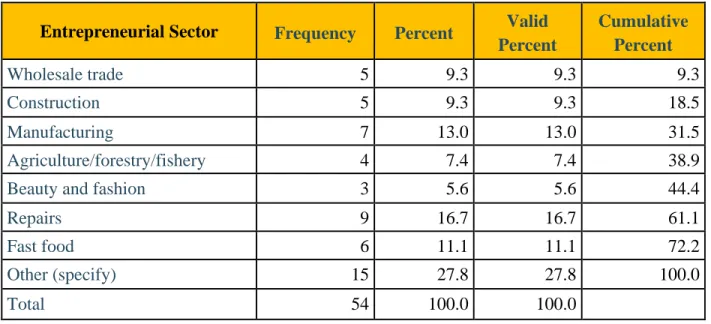
5.2.1.4. Entrepreneurial Sector/Activity ... 178
5.2.1.5. Entrepreneurial Traits of Rural Entrepreneurs ... 179
5.2.1.6. Motivation for Engaging Entrepreneurial Activity ... 181
5.2.2. Significance of Rural Entrepreneurship in Mogalakwena Local Municipality .... 183
5.2.2.1. Rural Entrepreneurship and Poverty Alleviation... 184
5.2.2.2. Rural Entrepreneurship and Economic Growth ... 185
5.2.2.3. Entrepreneurship and Employment Creation ... 187
5.2.2.4. Rural Entrepreneurship and Income Generation ... 188
5.2.2.5. Rural Entrepreneurship and Overall Standard of Living ... 190
5.2.2.6. Rural Entrepreneurship and Migration ... 191
5.3. CHALLENGES FACING RURAL ENTREPRENEURSHIP ... 193
5.3.1. Lack of Finance/Credit/Capital/Financial Support ... 193
5.3.2. Limited/Lack of Access to Market ... 195
5.3.3. Lack of Skills ... 197
5.3.4. Government Regulations ... 198
5.3.5. Lack of Infrastructure ... 200
5.3.6. Crime ... 202
xiv
5.3.7. Stiff Competition ... 203
5.4. THE ROLE OF MOGALAKWENA LOCAL MUNICIPALITY IN LED ... 205
5.4.1. Regulatory Role ... 205
5.4.2. Providing Funding or Financial Support ... 207
5.4.3. Partnerships/Participation ... 208
5.4.4. Reasons for not Participating in LED Forums/Partnerships ... 210
5.4.4. Providing Infrastructure ... 211
5.5. THE IMPLICATIONS OF RURAL ENTREPRENEURSHIP TOWARDS LED ... 212
5.5.1. Rural Entrepreneurship as a Mechanism for LED... 213
5.5.2. Rural Entrepreneurship as Mechanism for LED through Employment Creation214 5.5.3. Number of Employees Employed by Enterprises... 216
5.5.4. Rural Entrepreneurship as Mechanism for LED through Poverty Alleviation .... 217
5.5.5. Rural Entrepreneurship as Mechanism for LED through Income Generation .... 218
5.5.6. Rural Entrepreneurship as Mechanism for LED through Value and Wealth Creation ... 220
5.5.7. Rural Entrepreneurship as Mechanism for LED through Economic Growth ... 221
5.5.8. Rural Entrepreneurship as Mechanism for LED through Improved Living Standard ... 223
5.6. CONCLUSION ... 225
CHAPTER 6: SUMMARY, KEY FINDINGS, LIMITATIONS, RECOMMENDATIONS AND CONCLUSION ...226
6.1. INTRODUCTION ... 226
6.2. SUMMARY OF THE STUDY... 226
6.3. SUMMARY OF THE KEY FINDINGS ... 228
6.4. LIMITATIONS OF THE STUDY ... 230
6.5. RECOMMENDATIONS ... 231
6.6. CONCLUSION ... 236
LIST OF REFERENCES ... 238
APPENDICES ... 278
xv
LIST OF ACRONYMS
ASGISA : Accelerated and Shared Growth Initiative of South Africa B-BBEE : Broad-Based Black Economic Empowerment
CoGTA : Department of Cooperative Governance and Traditional Affairs DPLG : Department of Provincial and Local Government
DPME : Department of Planning, Monitoring and Evaluation
DSBD : Department of Small Business Development DTI : Department of Trade and Industry
EU : European Union
GDP : Gross Domestic Product
GEAR : Growth Employment and Redistribution GEM : Global Entrepreneurship Monitor
GIZ : Gesellscchaft fur Internationale Zusammenarbeit IDP : Integrated Development Plan
IEDC : International Economic Development Council ILO : International Labour Organisation
ISPESE : Integrated Strategy on the Promotion of Entrepreneurship and Small Enterprise
LED : Local Economic Development
LEDA : Limpopo Economic Development Agency MDGs : Millennium Development Goals
MFMA : Municipal Financial Management Act NDP : National Development Plan
NPC : National Planning Commission
NSDP : National Spatial Development Perspective
xvi
OECD : Organization for Economic Co-corporation and Development PGDS : Provincial Growth and Development Strategy
RDP : Reconstruction and Development Programme SALGA : South African Local Government Association SDAs : Service Delivery Areas
SEDA : Small Enterprises Development Agency SEFA : Small Enterprise Finance Agency SMEs : Small and Medium Enterprises
SMMEs : Small, Medium and Micro Enterprises SPSS : Statistical Package for Social Sciences TEA : Total Entrepreneurial Activity
UN : United Nations
UNDP : United Nations Development Programme
WB : World Bank
xvii
LIST OF FIGURES
Figure 5.1: Area of Operation
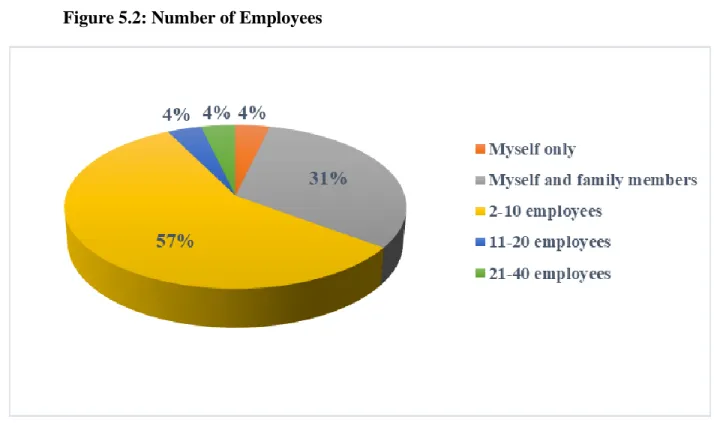
Figure 5.2: Number of Employees Employed Figure 5.3: Status of Enterprises
Figure 5.4: Motivation for Engaging in Entrepreneurial Activity Figure 5.5: Rural Entrepreneurship and Poverty Alleviation Figure 5.6: Rural Entrepreneurship and Economic Growth Figure 5.7: Rural Entrepreneurship and Employment Creation Figure 5.8: Rural Entrepreneurship and Income Generation
Figure 5.9: Rural Entrepreneurship and Overall Standard of Living Figure 5.10: Rural Entrepreneurship and Migration
Figure 5.11: Lack of Finance/Credit/Capital/Financial Support Figure 5.12: Limited/Lack of Access to Market
Figure 5.13: Lack of Skills
Figure 5.14: Government Regulations Figure 5.15: Lack Infrastructure Figure 5.16: Crime
Figure 5.17: Stiff Competition Figure 5.18: Regulatory Role
Figure 5.19: Providing Funding/Financial Support Figure 5.20: Partnerships/Participation in LED Figure 5.21: Reasons for Not Participating Figure 5.22: Providing Infrastructure
Figure 5.23: Rural Entrepreneurship as a Mechanism for LED Figure 5.24: Employment Creation
Figure 5.25: Number of Employees Employed Figure 5.26: Poverty Alleviation
xviii Figure 5.27: Income Generation
Figure 5.28: Value and Wealth Creation Figure 5.29: Economic Growth
Figure 5.30: Overall Standard of Living
xix
LIST OF TABLES
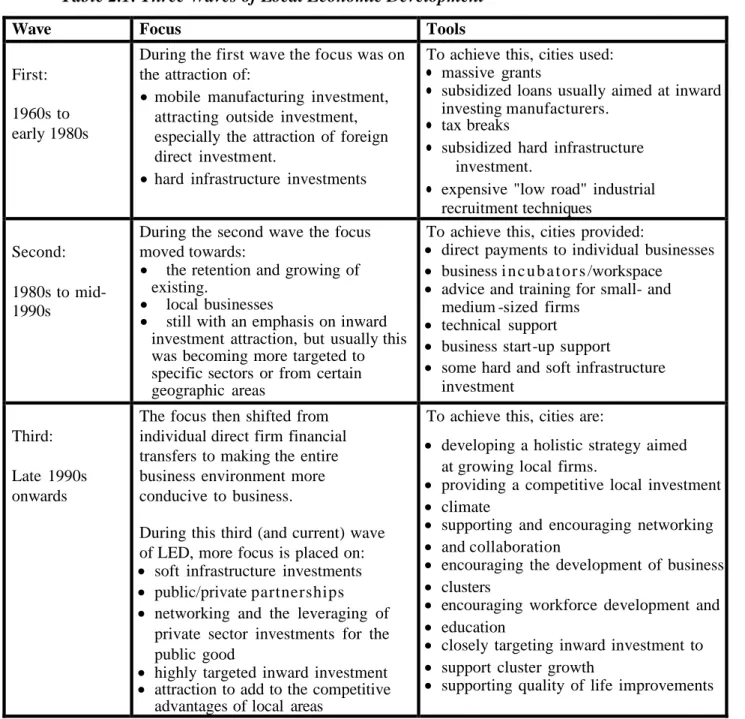
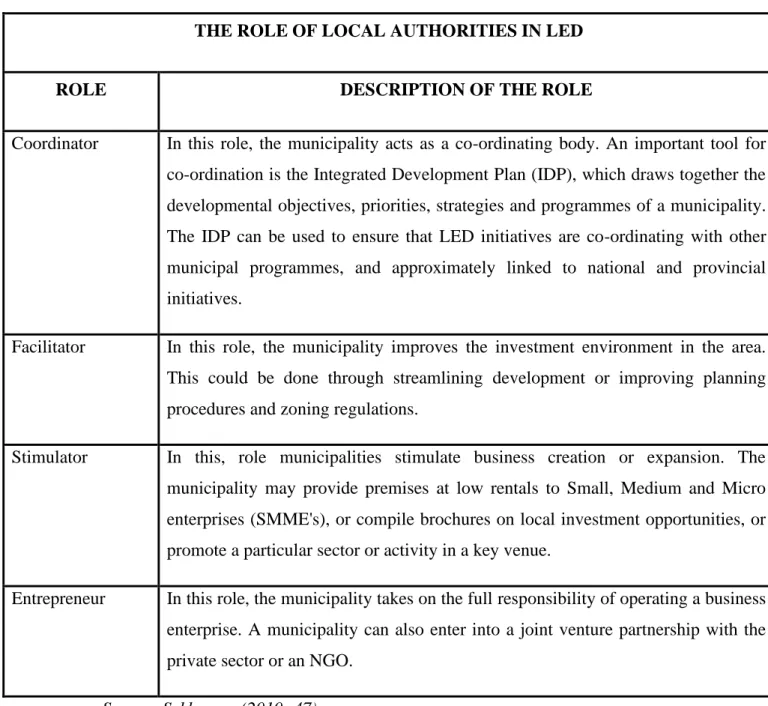
Table 3.1: Three Waves of Local Economic Development Table 4.1: The Role of Local Authorities in LED
Table 5.1: Entrepreneurial Sector/Activity
Table 5.2: Entrepreneurial Traits of Rural Entrepreneurs
1
CHAPTER 1: INTRODUCTION AND BACKGROUND TO THE STUDY
1.1 INTRODUCTION AND BACKGROUND
The majority of people living in rural areas, especially in developing countries, are facing challenges of extreme poverty, high unemployment, economic and social inequalities as well as stagnant economic growth, with approximately 1.3 billion people are living in extreme poverty around the world, with over 900 million residing in the rural areas (Awasthi, 2011; Apata, Alani
& Bioku, 2015; Kirabira, 2015). For these deplorable conditions in rural areas, most developing countries have pushed for pro-poor development techniques including Local Economic Development (LED) and entrepreneurship development, which focus on raising rural people's living standards. As such, many governments and development policy makers have realized the need and significance of encouraging entrepreneurial activity to stimulate LED in most rural communities. This means that, the promotion of entrepreneurship is one of the most crucial tools for addressing local economic difficulties in the rural areas. Accordingly, rural entrepreneurship development has since attracted widespread attention as an instrument for economic development to address the dramatic economic slumps affecting many rural areas (European Commission, 2012).
Rural entrepreneurship is considered as a key mechanism for alleviating poverty, employment creation and increased growth in the economy and prosperity in rural environments (Ansari, Mirdamadi, Zand & Arfaee, 2012). In other words, rural entrepreneurship has the potential to reduce poverty, unemployment, economic inequalities and low income as well as other aspects of human life in rural areas through the creation of new enterprises. According to Kirabira (2015), entrepreneurship in rural areas is based on nurturing local entrepreneurial talent and growing local businesses, which in turn create jobs and add economic value to a region while preserving scarce resources in the community. Through the establishment of new firms, entrepreneurial activities improve the local economy and create jobs, subsequently creating more wealth and prosperity in the country. Thus, the promotion of rural entrepreneurship development can be seen as one of the critical components for the LED trajectory and development agenda of
2
most developing countries. As result, numerous debates have emerged about the promotion of rural entrepreneurship in order to stimulate LED across and beyond these countries. LED is a
“process in which local governments and/or community-based groups manage their existing resources and enter into partnership arrangements with the private sector, or with each other to create new jobs and stimulate economic activity in an economic area” (Triegaardt, 2007: 4). In other words, LED is based on identifying, harnessing and using local resources and capabilities as well as partnerships to create employment opportunities, stimulate the local economy and improve the overall well-being of the local area.
One of the most important tactics for accelerating economic development through capital formation and wealth creation is to encourage entrepreneurship in rural areas (Kaburi, Mobegi, Kombo, Omari & Sewe, 2012; Nolan, 2003). Kirabira (2015) highlighted that about 70 percent of a region's economic output depends on how entrepreneurial the region’s economy is. Toma, Grigore and Marinescu (2014) noted that over 80 percent of new job opportunities in the United States of America were associated with the creation of enterprises during the 1980s, while in Japan, 80 percent of the total number of employees are employed by small and medium enterprises. However, the promotion of entrepreneurship development continues to be challenged by a myriad of factors. These include lack of financial backing from financial institutions, a hostile legal climate, a lack of access to markets, financing, credit, and capital, a scarcity or lack of skills, and lack of information (Dilip, 2014; Phungwayo & Mogashoa, 2014; Agbenyegah, 2013; Ansari et al., 2013; Ngorora & Mago, 2013; Patel & Chavda, 2013; Fatoki & Van Aardt- Smit, 2011). As a result, local communities continue struggling to cope with unconducive socio- economic conditions instigated by such factors despite wide recognition and acknowledgement of entrepreneurship’s contribution towards poverty reduction and employment creation as well as economic growth at the local level. Nevertheless, governments around the globe have since recognised the significant role of entrepreneurial activities to the socio-economic development of the local people, particularly the poor in the rural areas.
The White Paper on Small Businesses in South Africa expects entrepreneurial activity and small business development to decrease poverty in the country by creating jobs, providing income for
3
poor people to meet their needs, and enhancing economic growth, innovation, and competitiveness (Department of Trade and Industry, 1995). On the other hand, the Accelerated and Shared Growth Initiative of South Africa (ASGISA) of 2006 envisaged the country to be an entrepreneurial nation, vibrant and a competitive sector (Industrial Development Corporation (IDC), 2008; National Planning Commission (NPC), 2012). Similarly, the National Development Plan (NDP) prioritises the promotion of entrepreneurship and small businesses as critical mechanisms to eliminate poverty and create employment opportunities through entrepreneurial and small businesses development by the year 2030 (NPC, 2012). The NDP notes the need of fostering an environment that allows small businesses to thrive and solve the country’s poverty, unemployment, and inequities. Accordingly, entrepreneurship promotion and development remain one of the most important policy priorities for the new government to date (Department of Trade and Industry (DTI), 2005). The study therefore seeks to investigate the implications of rural entrepreneurship towards Local Economic Development in the Mogalakwena Local Municipality, Limpopo Province. The objective is to determine the extent to which rural entrepreneurship can accelerate and stimulate LED in rural areas with the ultimate aim of addressing socio-economic challenges. This chapter provide the foundations of the study and focuses on the background, problem statement, aim and objectives, research questions, clarification of key concepts, methodology adopted, validity and reliability, ethical issues considered and significance of the study.
1.2 STATEMENT OF THE RESEARCH PROBLEM
Entrepreneurship is one of the most important factors of economic progress due to its potential contribution towards economic growth, employment creation, wealth creation and poverty reduction for both the government and individuals at the local level (Imafidon, 2014; Olele &
Uche, 2012). To achieve this, there is a need to stimulate and accelerate LED and create an enabling environment for rural entrepreneurship to flourish and strive in a rural environment.
Entrepreneurship in South Africa is perceived as contributing to the Gross Domestic Product (GDP) where it constitutes up to between 37% and 72% of employment (Kumo, Omilola &
Minsat, 2015). Accordingly, entrepreneurial activities constitute a major source of employment,
4
increased growth in the economy and wealth of most countries including South Africa. However, various existing barriers such as the lack of management skills, infrastructure, access to markets, financial support, and appropriate technology, a burdensome legal and regulatory environment, tax burden, poor infrastructure, and a low level of economic activity in the rural areas threaten the creation of an enabling environment, and the development of rural entrepreneurship as a form of LED stimulation in the rural areas (Ngorora & Mago, 2015; Babuchowska & Marks-Bielska, 2013; DTI, 2005; Department of Trade and Industry, 1995).
Essentially, entrepreneurial activities at the rural level are faced with critical factors that hamper the efforts of accelerating economic growth, poverty reduction and employment creation through LED (Masumbe, 2018; Koyana & Mason, 2017; Delalić, 2014). Although rural entrepreneurship's benefits to economic growth, job creation, wealth generation, and poverty reduction are well acknowledged around the world, the plight of South Africa’s rural communities remains inhibited by the societal problems of high poverty and unemployment rates, stagnant local economies and lack of economic opportunities (Fiseha, Kachere & Oyelana, 2019). Additionally, despite the importance of LED in rural areas, little has been done to tap on the potentials of rural entrepreneurship in the Limpopo Province, particularly in the Mogalakwena Local Municipality. Therefore, it is in this context that the study investigated the implications of rural entrepreneurship towards LED using the Mogalakwena Local Municipality as a case study.
1.3 RESEARCH AIM AND OBJECTIVES
The overall aim of the study was to investigate the implications of rural entrepreneurship towards LED in the Mogalakwena Local Municipality, Limpopo Province, and to recommend measures to enhance rural entrepreneurship development towards stimulating LED in rural areas. The objectives drawn from the overall aim are as follows:
• To examine the significance of rural entrepreneurship;
• To evaluate the challenges facing rural entrepreneurship;
• To examine the role of local government in LED planning and promotion;
5
• To investigate the implications of rural entrepreneurship on LED;
• To recommend measures to enhance rural entrepreneurship development towards stimulating LED in rural areas.
1.4 RESEARCH QUESTIONS
The general research question of the study is as follows: What are the implications of rural entrepreneurship towards LED in the Mogalakwena Local Municipality, Limpopo Province? The following sub-questions are drawn from the main research question:
• What is the significance of rural entrepreneurship?
• What are the challenges facing rural entrepreneurship?
• What is the role of local government in LED planning and promotion?
• What are the implications of rural entrepreneurship towards LED?
1.5 DEFINITION OF TERMS
The following key terms are defined below to clarify the context in which they are used in the study. These terms include the concept of entrepreneurship, rural entrepreneurship, economic development and local economic development.
1.5.1 Entrepreneurship
Akinwale (2014) described entrepreneurship as the process of starting and running a business, an act of recognising opportunities, mobilising resources to take advantage of the opportunities identified, and ensuring the provision of goods or services and making profits for the risk associated with production. Toma et al., (2014) reiterate that entrepreneurship is a process that includes the discovery, evaluation and use of opportunities to introduce new products, services, processes, and forms of organization or markets. In this context, entrepreneurship is defined in this study as a process of developing and managing a business venture for profit through risk
6
taking and recognising opportunities and mobilising resources to take advantage of such opportunities.
1.5.2 Rural Entrepreneurship
Rural entrepreneurship is defined as the creation of a new organization that introduces new products, serves new markets, creates new markets, and uses new technologies locally (Yu &
Artz, 2009; Mugobo & Ukpere, 2012). Similarly, rural entrepreneurship is defined as entrepreneurship that arises in rural areas and can take place in a variety of fields of activity such as business, industry and agriculture, and can act as a potent factor in economic development (Dilip, 2014; Paul & Sharma, 2013). In this study, rural entrepreneurship refers to an entrepreneurial activity that emerges from a rural setting, which involves the establishment of an enterprise, business or organisation by recognising and taking advantage of opportunities, mobilising and utilising local resources to provide goods and services for profit in a rural environment.
1.5.3 Economic Development
Economic development can be described in terms of goals such as job creation and the improvement of the quality of life or as a growth-influencing process in order to increase the economic well-being of a community or society (Toma et al., 2014). Economic development is defined as the process that influences growth and restructuring of an economy in order to improve the economic well-being of a community through job and wealth creation, job retention, tax base enhancements and quality of life (International Economic Development Council (IEDC), n.d). Against this backdrop, the study maintains the latter definition by IEDC.
1.5.4 Local Economic Development
Triegaardt (2007) defines LED as the process by which local governments and/or community- based groups manage their existing resources and partner with the private sector or with each
7
other to create new jobs and stimulate economic activity in a local area. Likewise, LED is seen as a local development approach with a territorial focus, which enables local actors to understand their economy, identify needs, mobilise resources internally and externally, and jointly take measures to improve the local economy in order to reach its full potential (Wekwete, 2014). In this study, LED is defined as a locally driven process whereby local government, communities, the private sector and civil society collectively work in partnership to create an enabling environment, stimulate growth in the economy and create jobs through the use of available local resources to improve the living standards of the local communities.
1.6 RESEARCH DESIGN AND METHODOLOGY
A research methodology is a systematic and theoretical analysis of procedures that apply to a field of study (Kenya Projects Organisation, 2016). Research methodology is an investigation strategy that moves from underlying assumptions to research design and data collection (Thomas, 2010). Accordingly, all research is based on some underlying philosophical assumptions about what constitutes valid research and what research methods are appropriate for developing knowledge in a particular study (Thomas, 2010). Research methodology focuses on how the research was conducted, methods and procedures to be used and includes research design, target population, sample size and sampling procedure, data collection and analysis methods and procedures. Research methodology refers to the methods, techniques, and procedures used in implementing the research design or plan (Schurink, 2010).
1.6.1 Research Design
The research design refers to the overall strategy that you choose to integrate the different components of the study in a coherent and logical way, thereby, ensuring that the research problem is effectively addressed (De Vaus, 2001). The research design for the study is descriptive and positivist case study, which was analysed through the mixed methods approach.
The positivist paradigm explores the facts or reasons for the social phenomenon without the subjective interpretation and focuses on reasoning to ensure precision, objectivity and rigour,
8
rather than hunches, experiences and intuition for the study of the research problems (Collis &
Hussey, 2003). Positivism is about uncovering truths and using empirical means to present them (Thomas, 2010). Given the positivistic stance adopted for the study and the nature of research questions, the case study approach was considered the most appropriate design for this study simply because it can provide an in-depth understanding of the phenomena and perceptions of participants from a real-life situation.
Case study is defined as an empirical investigation that examines phenomena in their real-life context, especially when the boundaries between phenomenon and context are not clearly apparent and tries to answer research questions from multiple sources from the case situation (Rowley, 2002). The nature of the research problem, research questions and aim compelled for a purposeful research design towards achieving the objectives of the study, thus a mixed methods approach was used to conduct the study to increase the scope of the research. Mixed methods research design is a process of collecting, analysing, and blending quantitative and qualitative methods in a single study or a series of studies to understand a study problem (Creswell, 2012).
According to Vosloo (2014), the purpose of mixed methods research is not to replace quantitative or qualitative research approaches, but to take advantage of these approaches and minimize possible weaknesses. In this approach, concurrent mixed methods procedures were used. According to Creswell (2009), concurrent mixed methods are those wherein the researcher brings together quantitative and qualitative data to offer a complete evaluation of the research problem. This method allowed the researcher to collect both qualitative and quantitative data in parallel or at the same time (concurrently). In other words, qualitative and quantitative data were collected within this study. Hence, the study combined both qualitative and quantitative methods to achieve the objectives of the study and generate conclusions that are comprehensive and credible. Use of the concurrent mixed methods approach was to integrate qualitative and quantitative data sets and subsequent results within this study and explicitly interrelate them to reach justifiable conclusions.
9 1.6.2 Study Area
The study was conducted in the three Service Delivery Areas (SDAs) with entrepreneurial activities within Mogalakwena Local Municipality, Waterberg District, Limpopo Province.
According to the 2015/16 Mogalakwena Local Municipality's Integrated Development Plan (IDP), the municipality has a well-defined and established development footprint, with three proclaimed townships, 178 villages, and a population of around 307682 people divided into three SDAs: Bakenberg, Mapela, and Mokopane, and 32 wards. Due to the Municipality's geographical size, the study solely looked at the entrepreneurial and economic hotspots in these SDAs. After numerous municipalities and councils that had previously serviced Potgietersrus and its surrounding areas were consolidated in 2000, Mogalakwena Local Municipality, a Category B municipality, was founded. The local authorities of Greater Potgietersrus (Mokopane), Bakenberg, and Koedoesrand/Rebone were united to form the new municipality.
Mogalakwena Municipality is located in the Limpopo Province's western quadrant, within the western district of the Waterberg District Municipality, and is bordered on the east by the Capricorn District, on the south by Mookgophong/Modimolle, and on the north by Lephalale (Local Government Handbook). The Municipality’s LED strategy identifies mining, finance and wholesale as the major role players in promoting growth and development within the municipality, whereas other important sectors, such as tourism and agriculture, have the potential to play a significant role in the economy.
1.6.3 Target Population
Target population is defined as a group of elements on which the research is focused and from whom data will be acquired, and which will serve as the study's unit of analysis (Bless &
Higson-Smith, 2000; Babbie & Mouton, 2001; Bless, Higson-Smith & Sithole, 2013). People, organizations, locales, regions, countries, and incidents could all be considered units of analysis in the study. Thus, the target population is a set of elements on which the researcher intends to concentrate and draw conclusions. The target population for this study consisted of rural entrepreneurs (youth, male and female adults) who are actively engaged in some kind of
10
entrepreneurial activity in the three Mogalakwena Local Municipality SDA’s. Thus, the study is not skewed towards any specific gender or age group, however targeted adult entrepreneurs with 18 years old and above. Importantly, these entrepreneurs engage in entrepreneurial activities, or their enterprises are located in the rural settings of the SDA’s. The target population also comprises key informants (i.e., LED coordinator from Mogalakwena Local Municipality, officials from the Small Enterprises Development Agency (SEDA) Mokopane Office and Limpopo Economic Development Agency (LEDA)). These institutions or individuals form part of the LED Steering Committee of Mogalakwena Local Municipality.
1.6.4 Sampling Procedures
Sampling is the process of choosing a sample as a small part or subset of a defined population with the aim of representing the respective population (Vosloo, 2014). Participants for this study were chosen from a specific target demographic using a non-probability sampling approach. In this regard, the rural entrepreneurs and key informants were chosen using a purposive sample technique. According to Babbie (2010), purposive sampling is a method in which a researcher selects a sample based on his or her ability to select appropriate participants, knowledge about the target population, its components, and the study purpose. In other words, the researcher depends on their experience, skills and judgement in order to purposely obtain units of analysis.
The researcher purposively identified rural enterprises or entrepreneurs based on the characteristics of an entrepreneur and rural entrepreneurship within Mogalakwena Local Municipality, in particular the three SDAs. Thus, the study purposely distributed 73 questionnaires to rural entrepreneurs (youth, female and male adults) or enterprises, instead of the initial target of 150 (50 in Mokopane SDA, 50 in Bakenberg SDA and 50 in Mapela SDA) from the three SDAs that fit the characteristics of an entrepreneur and rural entrepreneurship.
However, the researcher only managed to collect data from 54 rural entrepreneurs (29 in Mokopane SDA, 11 in Bakenberg SDA and 14 in Mapela SDA) out of the 82, while 28 entrepreneurs could not be reached by the end of data collection. One of the challenges was that the entrepreneurs were not available or present at their premises at the time of data collection visits, while others were not willing to assist with data collection. Other entrepreneurs requested
11
to return the completed questionnaires after a few days but could not be reached afterwards for the researcher to collect the questionnaires. The researcher also managed to interview the LED coordinator/manager/officer from the Municipality, official from Small Enterprises Development Agency (SEDA) and another official from the Limpopo Economic Development Agency (LEDA) as key informants based on their active involvement and ability to elaborate on entrepreneurial activity and LED within the Municipality. It is worth noting that the sample was not drawn from a specific gender, age range, race, or nationality.
1.6.5 Data Collection Methods
In the study, the mixed methods approach was employed in the data collection process. In this approach, data collection is simultaneous or sequential and includes accumulating numeric statistics (e.g., on instruments) in addition to textual content statistics (e.g., on interviews) so that the very last database represents each quantitative and qualitative statistics to satisfactorily comprehend the research problem (Creswell, 2003). In other words, the mixed methods approach helps to collect both qualitative and quantitative data. According to Creswell, with this approach, the investigation is based on the concept that gathering a variety of data types is the most effective way to comprehend a study subject. The study reviewed literature for data collection through documentation as a secondary source of information about the phenomena under study in order to provide discussions and theories about the implications of rural entrepreneurship towards LED. The method assisted in collecting secondary data necessary for the study. For the purposes of this study, data were gathered from a variety of sources, including government records, archive materials, published and unpublished academic journal articles, online sites, and books.
The researcher used a questionnaire and a semi-structured interview schedule to collect primary data. In this study, questionnaires were distributed to 54 rural entrepreneurs in the three SDAs to collect quantitative data, and an interview schedule was used to obtain qualitative data from the four key informants about their perceptions, experiences, and challenges related to entrepreneurship and LED within the municipal jurisdiction. The questionnaire and interview
12
schedule were created to explore the perceptions of rural entrepreneurs and LED agents on the effects of rural entrepreneurship on LED in rural regions, based on the opinion statements, i.e., study questions and objectives. The questionnaire and interview schedule included both open- ended and closed-ended questions about the phenomena under study. Participants were able to offer in-depth qualitative data on their perceptions, knowledge, and experiences about the phenomena under study by answering open-ended questions, while closed-ended questions allowed respondents to provide quantitative data to understand the research problem. The data collected with the two tools were both qualitative and quantitative in nature.
1.6.6 Data Analysis Procedures
In respect to the study approach chosen or stated in 1.6.1, a mixed methods data analysis procedure was used. In a mixed methods approach, the type of data analysis employed is determined by the research strategy chosen for the procedures; however, analysis occurs in both quantitative and qualitative ways, as well as regularly between the two. As a result, methodologies for both qualitative and quantitative data analyses were used. Qualitative analysis produces descriptive results, which means that words rather than statistics are used to describe and comprehend the events being studied. Key informant qualitative data were transcribed and incorporated into data analysis and interpretation. The study used the Statistical Package for Social Sciences (SPSS) software to evaluate quantitative data utilizing a coding procedure in which data were converted into numerical representation for descriptive statistical analysis.
Quantitative analysis, in the words of Babbie (2010), focuses on numerical representation and manipulation of perceptions in order to characterize and explain the processes reflected in those observations. The researcher can save, compute, and analyse data, as well as construct statistical analyses and descriptive statistics in the form of graphs, charts, tables, percentages, frequencies, and averages, using the software package.
13 1.6.7 Validity and Reliability
Asha (2014) describes validity as a situation in which a certain instrument provides information that relates to the generally accepted meaning of a certain concept. Welman and Kruger (2001) describe validity as a method that guarantees that the data collection process has efficaciously acquired the preferred data. In this study, literature review was conducted from a wide range of sources and triangulation was used to compare various data (qualitative and quantitative).
Furthermore, the study compared the findings of the study with findings of other researchers.
The degree to which the results are consistent over time and accurately represent the entire population under investigation is referred to as reliability (Babbie and Mouton, 2001; Golafshani, 2003). According to Silverman (2006) and Gibbs (2007), the equipment used to collect data can be coded and cross-checked to improve reliability. This study conducted a pilot study to test the instruments used to minimise errors and misinterpretations. Furthermore, the study used the coding method and categorization (themes) during the analysis.
1.7 SIGNIFICANCE OF THE STUDY
Literature on rural entrepreneurship remains a growing subject of research and is therefore scanty with limited information. In other words, there is little research done or available on rural entrepreneurship despite widespread interests, however most of the studies on entrepreneurship focus mainly on urban areas, neglecting rural areas. Hence, the research adds to the body of knowledge on the subject of rural entrepreneurship and may provide opportunities, lessons, and awareness for additional research. Accordingly, the study also complements other research areas on LED planning and could be used as a point of reference for the promotion of rural entrepreneurship. The study further determined the entrepreneurial rate and nature of entrepreneurial activities within Mogalakwena Local Municipality. Most importantly, these findings may serve as the basis for LED planning and entrepreneurship promotion by determining the challenges and gaps, as well as opportunities that may be explored. The study raises awareness about the importance of entrepreneurial culture and activities for local growth and growth of the rural communities within the Municipality. The findings and
14
recommendations provide guidelines for developing comprehensive support structures for rural entrepreneurs for the purpose of enhancing their potential to accelerate and stimulate local economic progress and growth in rural areas. However, the study notes some of the challenges or limitations that may be encountered throughout the study. These include factors such as scant literature on rural entrepreneurship; limited number of entrepreneurs due to the fact that the study is limited to rural areas in the three SDAs; refusal to provide some information by participants;
constrained mobility during data collection due to the distance among the three SDAs, as well as the nature of rural areas, and shortage/limited grants or funds towards the project.
1.8 ETHICAL CONSIDERATIONS
De Vos, Strydom, Fouche and Delport (2011) note that ethics are generally accepted set of guidelines and expectations for researchers’ behaviour towards subjects and participants such as employers, sponsors, other researchers, assistants, and other students. To achieve this, the study upheld ethical guidelines to ensure credibility, accuracy and reliability, informed consent, privacy, confidentiality and anonymity, respect and dignity as well as voluntary participation.
Firstly, all participants were informed of the purpose, nature and method of data collection before commencing to collect information. The consent was obtained from all participants and were assured that the obtained information is only used solely for academic purposes. Secondly, it was made it known to all participants that the study is solely for academic purposes, and that their participation is entirely voluntary, and no one is forced to take part in the study.
Furthermore, the researcher ensured that privacy, confidentiality and anonymity of all participants were respected throughout the study and beyond. Again, the study also ensured that no participant was put in a situation that might be harmful to their physical, mental or psychological well-being, thus all participants were treated with utmost respect and dignity throughout the study and beyond. Lastly, all the necessary permissions and procedures were requested from relevant authorities or individuals to conduct the study. The ethical clearance was granted, and the study adhered to the plagiarism policy and ethical requirements of the University by acknowledging the sources used. Furthermore, all participants were provided feedback of the research results or outcomes after the conclusion of the study.
15 1.9 STRUCTURE OF THE THESIS
This thesis is structured into six chapters, which are outlined below as follows:
Chapter 1: Introduction and Background of the Study
This chapter covers the study introduction and background, as well as the research statement, research questions and objectives, important definitions, research design and methodology, significance of the study, ethical considerations, and the thesis structure.
Chapter 2: Rural Entrepreneurship and LED: Theoretical Perspectives
The theoretical perspectives on rural entrepreneurship and LED are discussed in Chapter 2. The theories and models that underpin the concept of entrepreneurship and local economic development are the subject of this chapter. Furthermore, the chapter defines rural entrepreneurship and focuses on comprehending the notion of entrepreneurship, entrepreneurship viewpoints, definitional clarifications of rural entrepreneurship, and factors that influence entrepreneurial success in rural areas. Finally, the chapter provides a conceptual framework for LED, focusing on defining the concept of LED, historical contexts, understanding local government as a sphere of government, local government's role in LED processes, and rural entrepreneurship as a mechanism for LED at the local government level.
Chapter 3: Theorising Rural Entrepreneurship and LED in Developing Countries
This chapter theorises the concept of rural entrepreneurship and LED in developing countries.
The chapter focuses on understanding entrepreneurship, the significance of rural entrepreneurship and challenges facing rural entrepreneurship in developing countries. The chapter also conceptualises LED with a specific focus on the historical contexts, the role of local government and LED challenges facing developing countries.
Chapter 4: Rural Entrepreneurship and LED: A South African Perspective
Chapter 4 provides the South African experiences and practice on rural entrepreneurship and LED. It focuses on understanding South Africa’s entrepreneurship environment by looking at
16
rural entrepreneurship, challenges facing rural entrepreneurs and policy framework and strategies supporting entrepreneurship development. In addition, the chapter discusses the nature of LED in South Africa, focusing on the historical perspective, legislative framework for LED, the role of local government, LED challenges and the current state of local government.
Chapter 5: Data Analysis and Interpretation
This chapter provides the analysis and interpretation of the data collected on the implications of rural entrepreneurship towards LED within the Mogalakwena Local Municipality in Limpopo Province. The focus is on the characteristics, significance and challenges of rural entrepreneurship, the role of the municipality on LED and the implications of rural entrepreneurship towards LED in the Mogalakwena Local Municipality.
Chapter 6: Summary, Key Findings, Limitations, Recommendations and Conclusion This chapter provide the summary of the major research findings, limitations, recommendations and conclusion emanating from the study on rural entrepreneurship and its implications towards LED in the Mogalakwena Local Municipality.
17
CHAPTER 2: RURAL ENTREPRENEURSHIP AND LOCAL ECONOMIC DEVELOPMENT: THEORETICAL PERSPECTIVES
2.1. INTRODUCTION
Entrepreneurship is largely regarded as a vital tool for local economic development (LED) in the rural areas. According to Ngorora and Mago (2018), entrepreneurship can play an important role in promoting economic growth and development, rural development and poverty reduction.
Similarly, Madzivhandila and Musara (2020); Malecki (2018); Bruton, Ketchen and Ireland (2013) see entrepreneurship as an integral part of economic development, poverty reduction, job creation and economic inclusion. Entrepreneurship development is necessary and crucial to address appalling conditions in rural communities such as high poverty levels and unemployment, economic exclusion and poor standards of living. As such, rural entrepreneurship may be a significant strategy for rural development in most developing countries (Ngorora & Mago, 2018; Boohene & Agyaspong, 2017).
Rural entrepreneurship boosts rural economic development by launching new firms. These enterprises create jobs, offer a diverse range of goods and services, promote competition, and boost productivity through technical advancements (Fiseha et al., 2019). Rural entrepreneurship facilitates LED by improving economic growth, creating employment, alleviating poverty, creating value and improving the overall standard of living of rural communities. The theoretical ideas that underpin the domains of rural entrepreneurship and local economic development are explored in this chapter. The economic location theory, Schumpeter's theory of entrepreneurship, and personality traits theory are among the theories and models that underpin the concept of entrepreneurship and local economic development. The second section conceptualises rural entrepreneurship and focuses on understanding the concept of entrepreneurship, perspectives of entrepreneurship, definitional clarifications and characteristics of rural entrepreneurship and factors that influence entrepreneurial success in rural areas. The last part of the chapter provides the conceptual framework on LED, with specific focus on defining the concept of LED, historical contexts of LED, understanding local government as a sphere of government,
18
stakeholders in LED, LED planning process, approaches to LED and the role of local government in LED processes.
2.2. THEORIES OF ENTRENEURSHIP AND LOCAL ECONOMIC DEVELOPMENT
The complexity and multidimensional nature of problems associated with economic development have instigated diverse development theories, explanations, arguments and assumptions. These theories describe tools and techniques for achieving development objectives. According to Van der Waldt (2017), theories provide philosophical assumptions on the ontology, epistemology and methodology as well as methods for a scientific inquiry. There are various theories and models, by various scholars, that explain the field of entrepreneurship and economic development as well as how these activities take place in a particular locality. Additionally, these theories provide actions, structures, processes and mechanism for undertaking entrepreneurial and economic activities in a particular community. Some of the theories inform and influence planning, implementation and growth of local economies. The theories and techniques or models that underpin this investigation are discussed below for the purpose of this study. This will provide the theoretical assumptions that the study is based on and assist to align the study with the existing body of knowledge.
2.2.1. Economic Location Theory
Location theory deals with what economic activities exists, where and why such activities exist in a particular location (Dube, Brunelle & Legros, 2016). Thisse (2008) mentions that the ‘what’
refers to any kind of different type of economic activity, including businesses, housing, factories, offices, or public facilities, and the ‘where’ refers to a geographical area such as a region, city, jurisdiction, or customs union where such activities exist. According to Thisse (2008), the main purpose of location theory is to explain why particular industries or businesses settle in a particular location. The location theory also explains the distribution of activities in a particular space to identify factors that influence the location of individual activities (Capello, 2011). The theory is more concerned with the geographical location of economic activities and why such