THE EFFECT OF MAIZE-LEGUME CROPPING SYSTEM AND NITROGEN FERTILIZATION ON YIELD, SOIL ORGANIC CARBON AND SOIL MOISTURE
ERICK SEBETHA
M.Sc. Plant production (University of Limpopo)
Submitted in fulfillment of the requirements of Doctor of Philosophy (Crop Science)
in the
School of Agriculture, Earth and Environmental Sciences University of KwaZulu-Natal
Private Bag x 01 Scottsville 3209
March 2015
ii DECLARATION
The experimental work presented in this thesis was carried out at three locations of Northwest province of South Africa (Potchefstroom, Taung and Rustenburg) from 2010/11 up to 2012/13 planting seasons. The research contained in this thesis was completed under the Professional Development Program (PDP) of Agricultural Research Council (ARC) while based at the Agricultural Research Council, Grain Crops Institute, Potchefstroom, 2520 as a student under the supervision of Dr Lawrence G. Owoeye, as ARC line manager and Professor Albert T. Modi. The research was financially supported from funds under ARC PDP and National Research Foundation (NRF) of South Africa respectively.
The contents of this work have not been submitted in any form to another University and, except where the text, the results reported are due to investigations by the candidate.
...
Erick Sebetha
...
Professor A.T. Modi
iii AKNOWLEDGEMENTS
I express my sincere gratitude to my supervisor Professor A.T Modi and Doctor L.G.
Owoeye for their supervision and guidance.
I would like to express my gratitude to ARC-GCI staff members, Dr Andri Nell for helping with direction of study, Mr Attie de Beer for helping me to find ARC mentor and Mr Tinus Prinsloo for always signing travelling forms to the field during the process of experiment. I would also like to thank Dr Cedric Baloyi for helping me with procedure of using GenStat and Mr Molefe Thobakgale for his technical support on during field experiments.
I am grateful to my mother, Mokgadi Mpebe Sebetha for her encouragement and support.
The study was funded by Agricultural Research Council (ARC) and National Research foundation (NRF).
iv ABSTRACT
Crop rotation and intercropping are regarded as better cropping in terms of yield improvement of both cereal and legume crops as compared to monocropping. A factorial experiment was carried out at three dryland localities of Northwest province (Potchefstroom, Rustenburg and Taung) from 2010/11 to 2012/13 planting seasons. The experiment consisted of three cropping systems, monocropping, intercropping and rotational cropping. Two rates of nitrogen fertilizer, zero and optimum levels based on soil analysis results prior to planting were applied on maize and cowpea plots. Soil moisture content was evaluated during three growth stages at different depths of the soil (0-15, 15-30, 30-60 and 60-90 cm) using gravimetric method. Parameters considered for the study included the followings: 100%
tasseling/flowering, days to physiological maturity, plant height, number of leaves per plant, leaf area in maize, stem diameter in maize, ear length in maize, ear mass , kernel number per ear, hundred seed mass, grain yield in maize, LER, plant population at harvest and stover yield in maize, number of leaves and nodules per cowpea plant, pod length, seed per pod, pod mass at harvest, grain, field biomass yield at harvest, cowpea leaf, immature pod, seed protein content and maize seed protein, oil, starch and phosphorus content. The analysed soil chemical properties included soil organic carbon using Walkley Black method, soil Bray 1-P;
N-NO3, N-NH4 and exchangeable K. Cropping system had significant effect (P < 0.05) on the growth and yield of maize. Cowpea-maize rotation and monocropping maize had tasseled earlier, reached days to physiological maturity earlier, had large leaf area, higher number of leaves per plant, ear mass, kernel number, seed mass, grain yield and stover yield. Maize- cowpea rotation and monocropping cowpea had significantly (P < 0.05) higher number of leaves per plant, seed per pod, pod mass, grain yield and field biomass yield than intercropped cowpea. Cropping system had significant effect (P < 0.05) on soil organic carbon; Bray 1-P and soil nitrate (N-NO3). The interaction effect of cropping system on
v
cropping system x nitrogen x site on maize yield, cowpea growth, protein content and soil N- NO3 contributed towards significant of this study.
The chapters of this thesis represent different studies presented as different articles. Chapter 1 is a general introduction to explain the study background and hypothesis. Chapter 2 is on the effect of maize-cowpea cropping system on soil moisture content. Chapter 3 is on crop rotation and intercropping cowpea with maize: maize growth and yield. Chapter 4 is on crop rotation and intercropping cowpea and maize: cowpea growth and yield. Chapter 5 is on the effect of crop rotation and intercropping on cowpea crude protein. Chapter 6 is on the maize seed quality in response to crop rotation, intercropping and nitrogen fertilization. Chapter 7 is on the effect of maize-cowpea cropping system on soil chemical composition. The last chapter 8 is a general discussion and conclusion.
vi
TABLE OF CONTENTS
DECLARATION ii
ACKNOWLEDGEMENTS iii
ABSTRACT iv
TABLE OF CONTENT vi
LIST OF FIGURES xv
LIST OF TABLES xviii
ABREVIATIONS xx
LIST OF APPENDICES xxi
1. GENERAL INTRODUCTION 1
1.1. The effect of planting date on maize-cowpea production 3
1.1.1. Planting date and maize-cowpea growth 3
1.1.2. Planting date and maize-cowpea yield 4
1.2. Crop rotation and its advantages 4
1.2.1. Crop rotation and soil fertility 4
1.2.1.1. Soil fertility and soil organic carbon 5
1.2.2. Rotation and soil nitrogen 5
1.2.3. Crop rotation and yield improvement of crops 7
1.3. Cowpea and soil nitrogen fixation 9
vii
1.3.1. Soil nitrogen and maize production 11
1.4. Intercropping and its advantages 13
1.4.1. Types of intercropping 13
1.4.2. Intercropping and land equivalent ration (LER) 14
1.4.3. Intercropping and yield of crops 15
1.4.4. Intercropping and soil structure improvement 15
1.5. Nutritional value of crops 16
1.5.1. Crude protein content of cowpea 17
1.5.2. Crude protein content of maize and the influence of legume intercropping 17
1.6. Conclusion 19
References 21
2. THE EFFECT OF MAIZE-COWPEA CROPPING SYSTEM ON SOIL MOISTURE CONTENT 33
Abstract 33
2.1. Introduction 34
2.2. Materials and methods 35
2.2.1. Experimental sites 35
2.2.2. Experimental design 36
2.2.3. Data collection, laboratory procedure and analysis 36
viii
2.3. Results 39
2.3.1. Soil moisture content at the depth of 0-15 cm 39
2.3.2. Soil moisture content at the depth of 15-30 cm 41
2.3.3. Soil moisture content at the depth of 30-60cm 43
2.3.4. Soil moisture content at the depth of 60-90 cm 45
2.4. Discussion 47
2.5. Conclusions and recommendations 49
References 51
3. CROP ROTATION AND INTERCROPPING COWPEA WITH MAIZE: MAIZE GROWTH AND YIELD 55
Abstract 55
3.1. Introduction 56
3.2. Materials and methods 58
3.2.1. Experimental sites 58
3.2.2. Experimental design 58
3.2.3. Data collection and agronomic practices 59
3.3. Results 62
3.3.1. Days to 100% tasseling of maize 62
3.3.2. Days to physiological maturity 64
ix
3.3.3. Maize leaf area 66
3.3.4. Number of leaves per maize plant 68
3.3.5. Maize plant height 70
3.3.6. Maize stem diameter 72
3.3.7. Maize ear length 74
3.3.8. Maize ear mass 76
3.3.9. Maize kernel number per ear 78
3.3.10. Maize hundred seed mass 80
3.3.11. Maize grain yield 82
3.3.12. Maize plant population at harvest 84
3.3.13. Maize stover yield 86
3.3.14. Land equivalent ratio of maize-cowpea under nitrogen and zero nitrogen fertilizer application 88
3.4. Discussion 90
3.5. Conclusions and recommendations 96
References 97
4. CROP ROTATION AND INTERCROPPING COWPEA WITH MAIZE: COWPEA GROWTH AND YIELD 105
Abstract 105
x
4.1. Introduction 106
4.2. Materials and methods 108
4.2.1. Experimental sites 108
4.2.2. Experimental design 108
4.2.3. Data collection 109
4.3. Results 110
4.3.1. Days to 100% flowering 110
4.3.2. Days to physiological maturity 112
4.3.3. Number of leaves per cowpea plant 114
4.3.4. Number of nodules per cowpea plant 116
4.3.5. Cowpea pod length 118
4.3.6. Cowpea seed per pod 120
4.3.7. Cowpea pod mass at harvest 122
4.3.8. Cowpea grain yield 124
4.3.9. Cowpea stover biomass yield at harvest 126
4.3.10. Cowpea plant population per hectare at harvest 128
4.4. Discussion 130
4.5. Conclusions and recommendations 132
References 133
xi
5. EFFECT OF CROP ROTATION AND INTERCROPPING ON COWPEA CRUDE
PROTEIN 139
Abstract 139
5.1. Introduction 140
5.2. Materials and methods 142
5.2.1. Experimental site 142
5.2.2. Experimental design 142
5.2.3. Chemical and statistical analysis 143
5.3. Results 144
5.3.1. Cowpea leaf protein 144
5.3.2. Cowpea immature pod protein 146
5.3.3. Cowpea seed protein 148
5.4. Discussion 150
5.5. Conclusions and Recommendations 152
References 153
6. MAIZE SEED QUALITY IN RESPONSE TO CROP ROTATION, INTERCROPPING AND NITROGEN FERTILIZATION 157
Abstract 157
6.1. Introduction 158
xii
6.2. Materials and methods 160
6.2.1. Experimental sites 160
6.2.2. Experimental design 160
6.2.3. Chemical and data analysis 161
6.3. Results 162
6.3.1. Maize seed oil content 162
6.3.2. Maize seed protein content 164
6.3.3. Maize seed starch content 166
6.3.4. Maize seed phosphorus content 168
6.4. Discussion 170
6.4.1. Maize seed oil 170
6.4.2. Maize seed protein 170
6.4.3. Maize seed starch 171
6.4.4. Maize seed phosphorus 172
6.5. Conclusions and recommendations 173
References 174
7. EFFECT OF MAIZE-COWPEA CROPPING SYSTEM ON SOIL CHEMICAL COMPOSITION 178
Abstract 178
xiii
7.1. Introduction 179
7.2. Materials and methods 180
7.2.1. Experimental sites 180
7.2.2. Experimental design 181
7.2.3. Data collection, laboratory procedure and analysis 181
7.3. Results 184
7.3.1. Soil organic carbon content at harvest 184
7.3.2. Soil Bray 1-P content at harvest 186
7.3.3. Soil nitrate (N-NO3) content at harvest 188
7.3.4. Soil ammonium (N-NH4) content at harvest 190
7.3.5. Soil exchangeable K content at harvest 192
7.4. Discussion 194
7.4.1. Soil organic carbon 194
7.4.2. Soil Bray 1-P 195
7.4.3. Soil NO3 and N-NH4 195
7.4.4. Soil exchangeable K 196
7.5. Conclusions and recommendations 197
References 199
xiv
8. GENERAL DISCUSSION AND CONCLUSIONS 204 References 209
xv LIST OF FIGURES
Figure 2.1. The interaction effects of cropping system, growth stage, site and nitrogen fertilization on soil moisture content in percentages at the depth of 0-15 cm 40 Figure 2.2. The interaction effects of cropping system, growth stage, site and nitrogen
fertilization on soil moisture content in percentages at the depth of 15-30 cm 42 Figure 2.3. The interaction effects of cropping system, growth stage, site and nitrogen
fertilization on soil moisture content in percentages at the depth of 30-60 cm 44 Figure 2.4. The interaction effects of cropping system, growth stage, site and nitrogen
fertilization on soil moisture content in percentages at the depth of 60-90 cm 46 Figure 3.1. The interaction effects of cropping system, site and nitrogen fertilizer on maize
ear mass in kg ha-1 77 Figure 3.2. The interaction effects of cropping system, site and nitrogen fertilizer on maize
grain yield in kg ha-1 83 Figure 3.3. The interaction effects of cropping system, site and nitrogen fertilizer on maize
plant population per hectare 85 Figure 3.4. The interaction effects of cropping system, site and nitrogen fertilizer on maize stover yield in kg ha-1 87 Figure 4.1. The interaction effects of cropping system, nitrogen fertilizer and site on cowpea
pod mass (kg/ha) during harvest 123 Figure 4.2. The interaction effects of cropping system, nitrogen fertilizer and site on cowpea
grain yield (kg/ha) during harvest 125
xvi
Figure 4.3. The interaction effects of cropping system, nitrogen fertilizer and site on cowpea field biomass yield (kg/ha) during harvest 127 Figure 4.4. The interaction effects of cropping system, nitrogen fertilizer and site on cowpea plant population per hectare 129 Figure 5.1. The interaction effects of cropping system, nitrogen fertilization and site on cowpea leaf protein content in percentages 145 Figure 5.2. The interaction effects of cropping system, nitrogen fertilization and site on
cowpea immature pod protein content in percentages 147 Figure 5.3. The interaction effects of cropping system, nitrogen fertilization and site on cowpea seed protein content in percentages 149 Figure 6.1. The interaction effects of cropping system, nitrogen fertilization and site on maize
seed oil content in percentages 163
Figure 6.2. The interaction effects of cropping system, nitrogen fertilization and site on maize seed protein content in percentages 165
Figure 6.3. The interaction effects of cropping system, nitrogen fertilization and site on maize seed starch content in percentages 167
Figure 6.4. The interaction effects of cropping system, nitrogen fertilization and site on maize seed phosphorus content in percentages 169
Figure 7.1. The interaction effects of cropping system, nitrogen fertilization, soil depth and site on soil organic carbon in percentages 185 Figure 7.2. The interaction effects of cropping system, nitrogen fertilization, soil depth and
site on soil Bray 1-P in mg kg-1 187
xvii
Figure 7.3. The interaction effects of cropping system, nitrogen fertilization, soil depth and site on soil N-NO3 in mg kg-1 189 Figure 7.4. The interaction effects of cropping system, nitrogen fertilization, soil depth and site on soil N-NH4 in mg kg-1 191 Figure 7.5. The interaction effects of cropping system, nitrogen fertilization, soil depth and site on soil exchangeable K in mg kg-1 193
xviii LIST OF TABLES
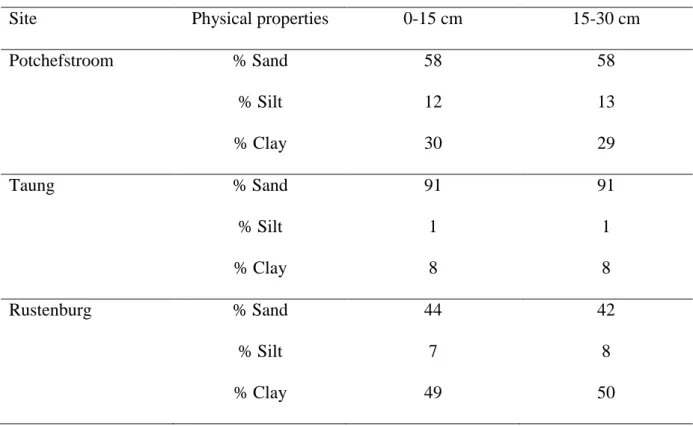
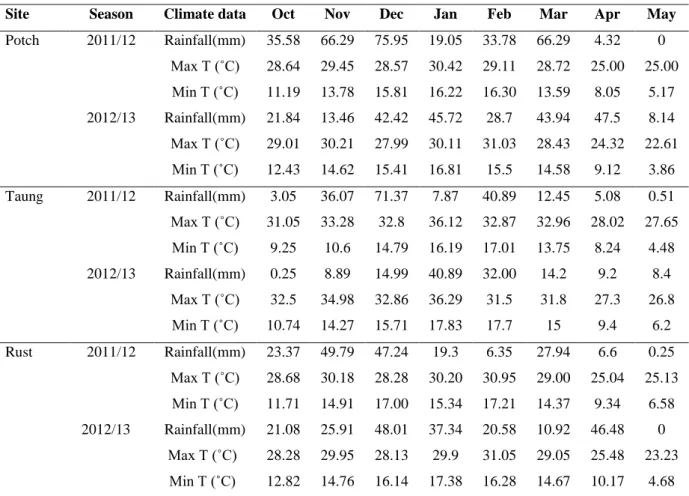
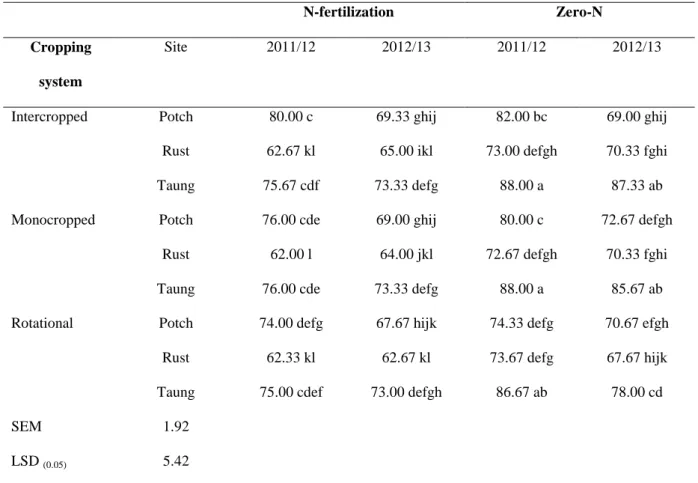
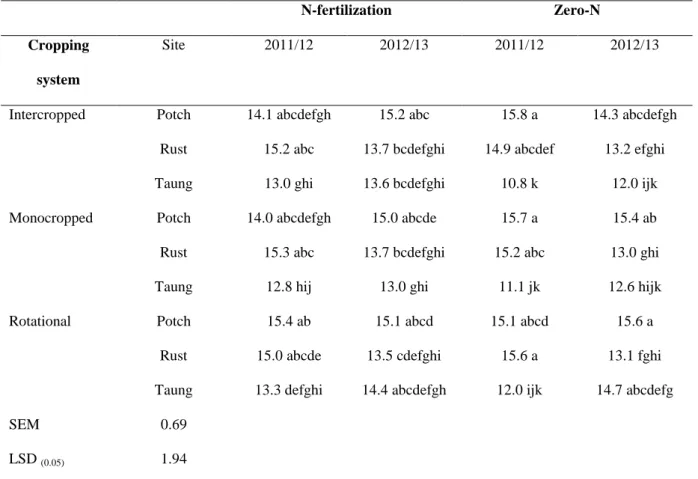
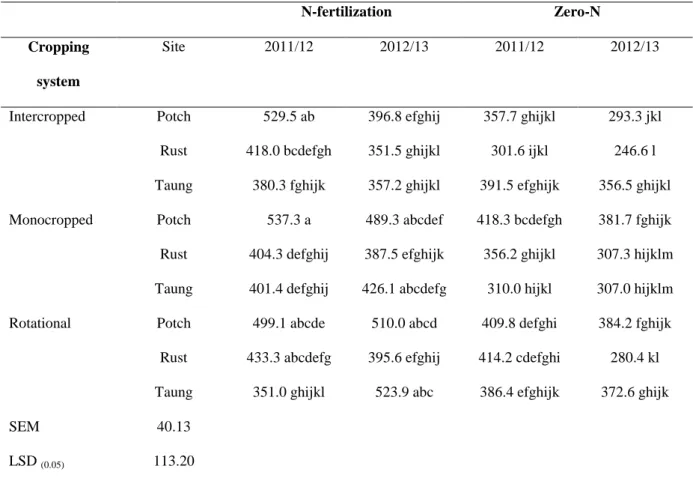
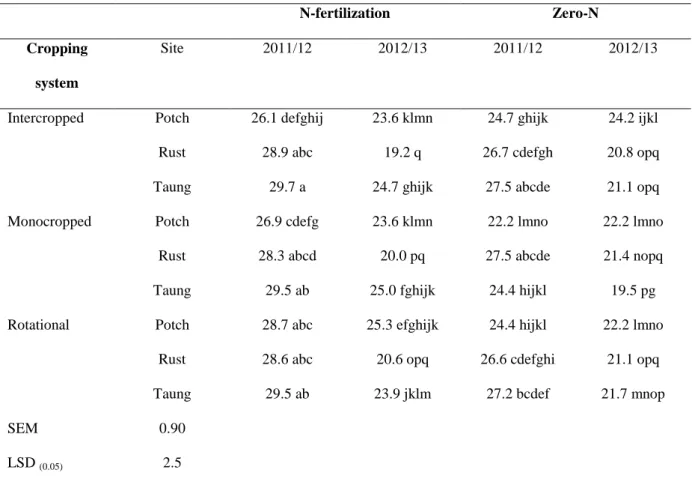
Table 2.1. Soil physical properties of three sites collected before planting of trial 38 Table 3.1. The mean temperature and rainfall data for Potchefstroom, Taung and Rustenburg for the duration of experimental period 61 Table 3.2. The interaction effects of cropping system, site and nitrogen fertilizer on days to 100% tasseling of maize 63 Table 3.3. The interaction effects of cropping system, site and nitrogen fertilizer on days to physiological maturity of maize 65 Table 3.4. The interaction effects of cropping system, site and nitrogen fertilizer on maize leaf area in cm2 67 Table 3.5. The interaction effects of cropping system, site and nitrogen fertilizer on number
of leaves per maize plant 69 Table 3.6. The interaction effects of cropping system, site and nitrogen fertilizer on maize
plant height in centimeter 71 Table 3.7. The interaction effects of cropping system, site and nitrogen fertilizer on maize
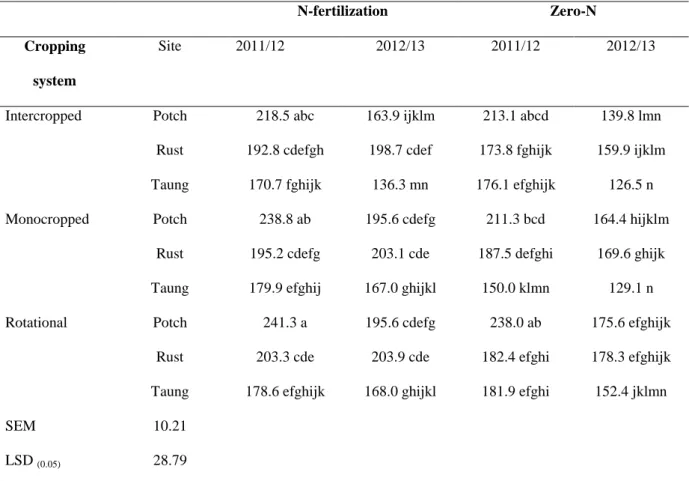
stem diameter in centimeters 73 Table 3.8. The interaction effects of cropping system, site and nitrogen fertilizer on maize ear
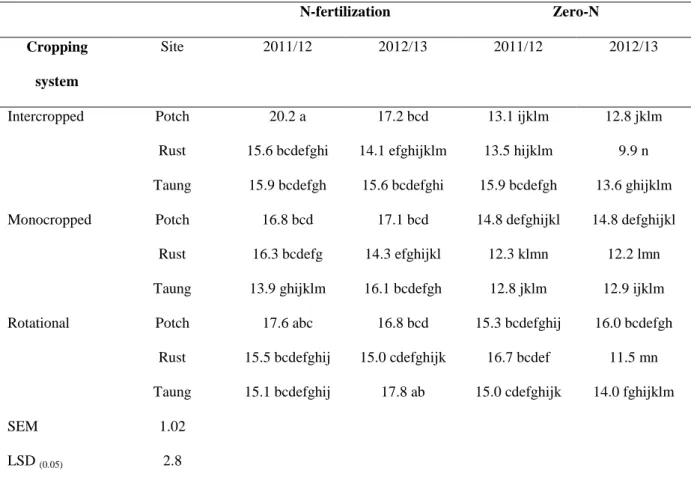
length in centimeters 75 Table 3.9. The interaction effects of cropping system, site and nitrogen fertilizer on maize
kernel number per ear 79
xix
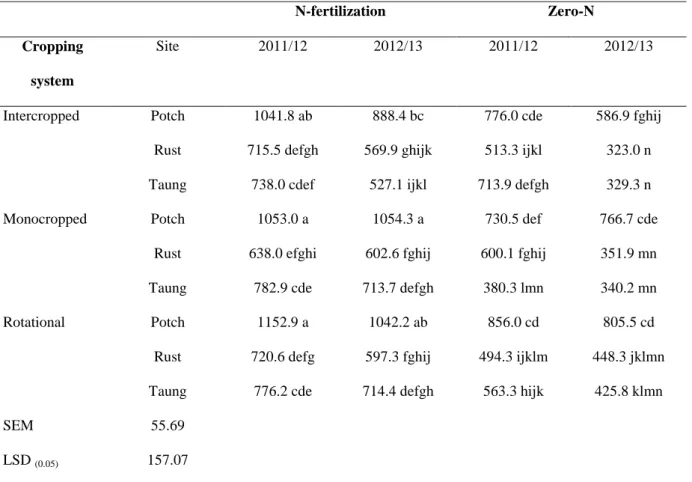
Table 3.10. The interaction effects of cropping system, site and nitrogen fertilizer on hundred seed mass in kg ha-1 81 Table 3.11. The partial and total land equivalent ratio (LER) as affected by different
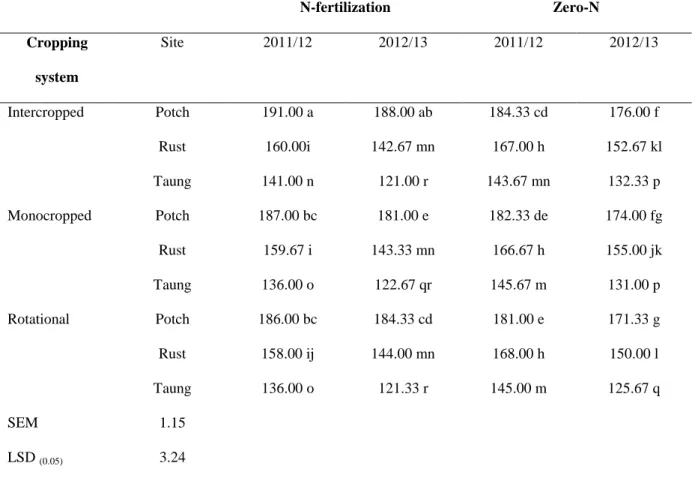
treatment combinations during 2011/12 and 2012/13 planting seasons 89 Table 4.1. The interaction effects of cropping system, nitrogen fertilizer and site on days to
100% flowering of cowpea 111 Table 4.2. The interaction effects of cropping system, nitrogen fertilizer and site on days to
physiological maturity of cowpea 113 Table 4.3. The interaction effects of cropping system, nitrogen fertilizer and site on number
of leaves per cowpea plant 115 Table 4.4. The interaction effects of cropping system, nitrogen fertilizer and site on number
of nodules per cowpea plant 117 Table 4.5. The interaction effects of cropping system, nitrogen fertilizer and site on cowpea
pod length in centimeters 119 Table 4.6. The interaction effects of cropping system, nitrogen fertilizer and site on cowpea
seed per pod 121 Table 7.1. The results of soil chemical properties (mg kg-1) of samples collected before
planting at three sites 183
xx ABBREVIATIONS
Monocowpea = monocropping cowpea Monomaize = monocropping maize Rotacowpea = rotational cowpea Rotamaize = rotational maize Rust = Rustenburg
Potch = Potchefstroom
Zero N= zero nitrogen fertilizer N-fertilization = nitrogen fertilization LSD = least significant difference SEM = standard error of means
MIC/zero-N = maize intercropping cowpea under zero nitrogen fertilizer MIC/N-fert = maize intercropping cowpea under nitrogen fertilizer Rotational C = rotational cowpea
Rotational M = rotational maize
Max T (ºC) = maximum temperature in decrees Celsius Min T (ºC) = minimum temperature in decrees Celsius mm = millimeters
xxi LIST OF APPENDICES
Appendix 2.1. Analysis of variances of soil moisture content at three locations during 2011/12 and 2012/13 planting seasons 212 Appendix 3.1. Analysis of variance of maize growth and yield parameters at three locations during 2011/12 and 2012/13 planting seasons 216 Appendix 4.1. Analysis of variance of cowpea and yield parameters at three locations during 2011/12 and 2012/13 planting seasons 229 Appendix 5.1. Analysis of variance of cowpea protein content at three locations during 2011/12 and 2012/13 planting seasons 239 Appendix 6.1. Analysis of variance of maize seed quality at three locations during 2011/12 and 2012/13 planting seasons 242 Appendix 7.1. Analysis of variance of soil chemical properties at three locations during 2011/12 and 2012/13 planting seasons 246
1 CHAPTER 1
GENERAL INTRODUCTION
Maize and cowpea are planted by small scale and commercial farmers in either monocropping, intercropping or rotational cropping as strategy for improving food security.
Crop rotation is the growing of different types of crops in the same piece of land in different seasons (Liebman and Dyck, 1993). The benefits of crop rotation include the increased yield of maize and maize grown in rotation with early and medium maturity cowpea varieties increased yield benefits (Ennin et al., 2004). Crop rotation represents a systems approach in crop production research, enabling the available natural resources to be preserved and more efficiently utilized (Feizabadi and Koocheki, 2012).
Crop rotation involving legumes improve soil properties and reduce mineral fertilizer requirements of cereal crops (Bagayako et al., 2000; Chan and Heenam, 1996). According to Tiessen (1988), significantly higher soil N levels were observed under rotations that included maize and legumes. Crop rotation influences N use efficiency and also affects the nitrogen availability to the plant (Lopez-Bellido and lopez-Bellido, 2001). In crop rotation experiments, a monoculture is generally compared to various crop sequences. In most cases the yields of cultivated crops are higher in crop rotation, compared to a monoculture under same conditions (Berzsenyi et al., 2000). Cropping in rotation was more effective than intercropping for maintaining soil N status (Baldwin, 2006).
Crop rotation can be considered as best strategy for yield improvement, but it has its own disadvantages as stated by Yilmaz et al. (2008) that, it requires increased expertise, equipment and different management practices. Certain insect pests and diseases may spread easily from one crop to the next though the crop residues (Yilmaz et al., 2008).
2
Intercropping is the growing of two or more crops in the same piece of land during the same growing season (Sharaiha and Gliessman, 1992). Intercropping is a widely used cropping practice in various ecozones of Africa, but due to increased market orientation in cowpea production, over the last years more and more area is replaced by monocropping, resulting in increasing problems with pests and diseases (Trenbath, 1993; Fininsa, 2001). Intercrops are better than monocrop cultures because they yield more, protect against risks of drought and pests, even out the distribution of labour requirements, and provide a more balanced human diet (Vandermeer, 1990).
According to Banik et al. (2006) the advantages of intercropping include soil conservation, lodging resistance, and weed control over the monocropping. Mpangane et al. (2004) reported that intercropping maize with cowpea is a common practice in smallholder farming systems. It was further indicated that, introduction of leguminous crop species into cropping systems had been recognised as an important approach to soil fertility improvement (Mpangane et al., 2004). Since intercropping increases light interception, it reduces growth of late emerging weeds (Takim, 2012).
Disadvantages of intercropping include the competition for light, water and nutrients between crops, which lead to reduction of yields (Cenpukdee and Fukai, 1992). A serious disadvantage of intercropping is due to different requirements for fertilizers, herbicides and pesticides of component crops. In the intercropping, mechanization is almost impossible (Vandermeer, 1990). The other disadvantage of intercropping cowpea with cereal crops is higher labour requirements during inter-row cultivation of crops. Farmers have to increase labour input for removing weed on intercropping rows with hand hoes (Osman et al., 2011).
3
1.1. The effect of planting date on maize-cowpea production
Planting date has a major effect on the yields of maize and cowpea (Sesay, 2000). Planting dates can change over time, due to changes in climate (Kucharik, 2006). According to Sacks et al. (2010) the relationships between planting date and climate for maize can be useful for estimating planting dates in regions. It was further reported that climate alone cannot fully explain farmer’s choices about when to plant their crops. According to Saseendran et al.
(2005) planting date depends on the weather variability at the location and varies among years and locations. It was further reported that studies for determining planting date recommendations for a locality should be based on field experiments that have been done periodically with limited multiyear and multi-location replications (Saseendran et al., 2005).
1.1.1. Planting date and maize-cowpea growth
Fabunmi et al. (2012) reported that cowpea canopy height was significantly affected by planting date at two and five weeks after planting. Plant height of succeeding maize responded significantly to date of planting of preceding cowpea green manure at eight weeks after planting. According to Adipala et al. (2002), time of introducing cowpea into maize significantly affected the growth of cowpea. The reduction in the growth of cowpea was due to increased shading from the maize plants especially when cowpea was introduced at the fourth week. A study by Amujoyegbe and Elemo (2013) showed that the time of introducing cowpea in intercropping system had significant effect on canopy height of crops across seasons and locations. Early introduction of cowpea together with maize led to high cowpea canopy formation. A study by Aziz et al. (2007) showed that late planting of maize reduced vegetative growth because of less photosynthetic activity at later stages of plant growth. Late planting of maize terminated vegetative growth and resulted in shorter plant with fewer and smaller leaves.
4 1.1.2. Planting date and maize-cowpea yield
In the case of maize, yield decreased sharply as planting date was delayed, while yields of cowpea were higher with a later planting date (Ofori and Stern, 1987). According to Lawson et al. (2009) planting the two intercrop components the same day gave the highest maize grain yield. Amjadian et al. (2013) indicated that planting date significantly affected maize qualities such as number of rows, number of kernels, grain weight and grain performance.
The delay in planting time decrease number of grains per maize plant, number of rows and seed performance. Myaka (1995) reported that yield of cowpea was not significantly different when sown with maize or two weeks after maize, while yield was 67% lower when sown four weeks compared with two weeks after maize. According to Mariga (1990) cowpea sowing date did not affect grain yield of the maize intercrop and the best intercropping treatment was simultaneous sowing.
1.2. Crop rotation and its advantages
A well planned crop rotation system that includes a legume crop will not only contribute to replenishing soil nutrients but also reduce the demand for chemical fertilizers (Baloyi et al., 2009). It will also help break the cycle of disease and pest build-up in the soil, a condition that characterizes monoculture. Reddy (2000) reported that many crops may have positive effects on the succeeding crops in a rotation, leading to greater overall production.
1.2.1. Crop rotation and soil fertility
Rotation may also give benefits in terms of improved soil quality, better distribution of nutrients in the soil profile and to increased biological activity (Ogungbile et al., 1998).
According to Reeves (1997) long-term studies have consistently shown the benefit crop rotation on maintaining agronomic productivity by increasing carbon inputs into the soil. It was further indicated that even with crop rotation and manure additions, continuous cropping
5
results in a decline in soil organic carbon. Lalfakzuala et al. (2008) reported that long term cropping systems can influence important soil properties such as soil organic matter and nutrient cycles within the soil profile. The positive effect of crop rotations on physical, chemical and biological soil properties are related to higher carbon inputs and diversity of plant residues returned to soil. The study of (Moore et al., 2000) indicated that crop rotation significantly affected soil biomass carbon.
1.2.1.1. Soil fertility and soil organic carbon
Soil organic carbon is an important indicator of soil quality because it influences soil structure. Soil structure affects soil stability as well as its capacity to hold water (Perucci et al., 1997). Sundermeier et al. (2004) reported that carbon is a key ingredient in soil organic matter. It was further highlighted that soil carbon sequestration is a natural, cost effective and environmentally friendly process. The soil carbon benefit of organic farming results from the fact that the system is based on inputs of organic matter to the soil and its decomposition by soil microbial activity. This releases nutrients for crop production and this process also produces humus which raises the soil carbon level. It was concluded that there is a positive association between soil carbon levels and soil microbial levels, because it is soil microorganisms that produce the humus (Sundermeier et al., 2004).
1.2.2. Rotation and soil nitrogen
Cowpea rotation can be considered to be an effective resource management technology in cereal based systems. Carsky et al. (2002) reported that leguminous rotation and fallows is the key to sustainable and productive soil management. They require less N for growth and produce high protein products. The use of legumes replaces a small part of the N fertilizer required by subsequent cereals in a rotation. According to Ennien et al. (2004) the amount of N contributed to the soil by a legume for the benefit of other crops grown either in association or in rotation depends on the total amount that is fixed and the proportion of fixed
6
N that is removed from the field in the harvested seed and straw. In the absence of the fertilizer application, the rotation of maize with legumes, especially the pigeon pea, could be considered as an alternative cropping that returned large quantities of residue to the soil, sustained maize growth and minimized soil carbon loss (Adiku et al., 2009). To attain highest productivity levels, it is necessary to combine rotation systems with mineral N fertilizer (Iwuafor et al., 2006). According to Altieri (1995) organic rotation are divided into phases that increased the level of soil nitrogen and phases that deplete it. Rotation provides the basis for forward planning of nitrogen supply, necessary in the absence of soluble nitrogen fertilizer (Watson et al., 1996). Qureshi (1990) reported that incorporating maize crop residue increased the content of available K, Ca, Mg, P, organic carbon and total N in the soil. Crops such as cowpea, mung bean, soybeans and groundnuts commonly accumulate 80-250 kg N ha-1 (Donald et al., 1963; Norman, 1996; Weber, 1966). Nelson and Spaner (2010) reported that systems that have reduced tillage, diverse crop rotations or intercrops and low application of inorganic fertilizer tend to encourage a large and diverse microbial community. It was further indicated that well-managed conventional systems with minimum tillage and inorganic crop inputs can be as effective as organic systems in encouraging soil biological fertility.
Sarr et al. (2008) reported that soil microorganisms compete with plant for available nitrogen, which results in a decrease in nitrogen availability for the first crop. The decomposition of these microorganism releases substantial available nitrogen for the following crops.
According to Ouma and Jeruto (2010) in intercropping, nitrogen fixation by the legume is not sufficient to maintain soil fertility. If chemical fertilizers are applied, it is not necessary to use nitrogen fertilizer on the cereal crops. It was further indicated that fertilizers are more efficiently used in an intercropping system, due to the increased amount of humus and the
7
different rooting systems of the crops as well as differences in the amount of nutrient taken up.
1.2.3. Crop rotation and yield improvement of crops
Yadav et al.(1998) reported that in a crop rotation, essential plant nutrients are absorbed by the crop plants in a balanced manner as the nutrient requirement of crops are different, some taking up more of one kind of nutrient than another. A process of single sided depletion may therefore take place unless a change of crops or rotation is practiced. Yadav et al. (1998) further highlighted that legumes assimilating nitrogen from the atmosphere and enriching the soil with their root system form an important component in the rotation. Crops sown under rotation have to be selected in such a way that they are able to suppress the weeds. They further indicated that, the yield increasing effects of crop rotations, especially where legumes are involved have been attributed to a number of factors, including the improvement of soil fertility, enhancement of balanced nutrient removal from the soil and improvement of soil physical properties. Other benefits of crop rotation include soil conservation, organic matter restoration and pests and disease control. The value of crop rotation is measured by its effect on land productivity and its economic return (Ogungbile et al., 1998). According to Adiku et al. (2009) maize rotated with cowpea or pigeon pea produced similar maize biomass of 8.0 t/ha per year, but with higher variability for the maize-cowpea rotation. Biomass produced by cowpea or pigeon pea were 4.0 and 8.0 t/ha per year respectively. Rao and Mathuva (2000) reported that maize-cowpea sequential and pigeon pea/maize intercropping systems produced respectively higher maize yields than continuous sole maize, but maize-pigeon pea rotation yielded only marginally better. According to Hardter et al. (2008) higher maize yields were obtained in maize/cowpea rotation, which in contrast to the other cropping systems did not show any reductions in yields over years. The parameters of the study indicated low
8
productivity of maize mono-cropping, clearly demonstrating that crop sequence as well as fertilizer application must be considered as important for maintaining high production levels.
Adetunji (1996) reported that maize grain yields were significantly increased when cowpea was rotated with maize, either as mono-crop or intercrop, as compared with continuous maize. Maize-cowpea rotation can provide a sustainable alternative to chemical N fertilizers and can supply most or some of the maize N requirements. Nel and Loubser (2004) reported that higher yields associated with rotated crops will increase the cost of activities such as harvesting. They indicated that, weed and pest control costs are less on rotated than mono- cultured crops which will increase the net return. It was further highlighted that the savings on the inputs most probably outweigh the extra costs of harvesting higher yields, which suggests that the net returns and risk for the rotation systems are conservative estimates (Nel and Loubser, 2004).
Rafael et al. (2001) reported that cereal-legume rotation was the most effective of all rotations tested. Cereal yields were more stable for all N fertilizer rates. It was further reported that monoculture in their study prompted consistently lower yields than two year rotations, and also led to accumulation of soil nitrate, owing to lower N use efficiency (Rafael et al., 2001).
Adiku et al. (2009) reported that when no fertilizer was applied to maize, the yield for the maize legume rotation treatments was no better than that for the maize grass fallows. It was reported that the differences in maize response to the different rotations could also be attributed to the differences in biomass additions to the soil. Iwuafor et al. (2006) reported that the main effect of rotation on exchangeable cations was highly significant with all rotation systems performing better than the continuous maize. Unfertilized maize grain yield was significantly higher following the two cowpea varieties than maize and natural fallow. In
9
that study, there was no interaction between rotation and fertilizer effects, which indicates that other non-N effects were equally important.
The study showed that crop rotation involving grain legumes is a viable management option that helps increase maize yield and can substitute the unproductive fallow system traditionally used for soil fertility maintenance. Ennin et al. (2004) reported that medium maturity cowpea in rotation with maize resulted in significantly higher maize grain yields than continuous maize with or without applied N and had N credits greater than 90 kg N ha-1. They further highlighted that the benefits of legumes in cropping systems is through biological nitrogen fixation (BNF), which can be as much as 450 kg N ha-1 although as much as 201 kg N ha-1 per season has been reported. Soybean usually fixes between 50 and 150 kg N ha-1. It was also indicated that, soybean and groundnut of both early and later maturity did not have yield benefits to maize in rotation when no N was applied. Maize planted after early maturity soybean resulted in a significant decrease in maize grain yield at 0 N and negative N credits to maize (Ennin et al., 2004).
1.3. Cowpea and soil nitrogen fixation
Dadson and Acquaah (1984) reported that in N deficient soils, smaller starter doses of applied N may stimulate nodule formation and enhance the grain yield of legumes. The low soil N status of the soils is expected to encourage a positive response to Rhizobium inoculation particularly in the presence of applied phosphorus. Nodulation of faba bean was markedly restrained by N fertilization at the later growth stage of faba bean but facilitated remarkably by inoculation, and the facilitation of intercropping on nodulation was erratic (Omar and Abd-Alla, 1994).
Sangakkara and Marambe (1989) reported that inoculation increased nodulation of bush beans and to a lesser extent of mungbean. This effect was more evident with time. Nodulation was reduced in the presence of nitrogen fertilizer, and the effect was more pronounced in the
10
extensively nodulating species, mungbean. Nitrogen and nodulation increased yield of both species. The study indicated the inability of bush beans to meet all nitrogen requirements by nodulation and nitrogen fixation alone. This suggests the need for some fertilizer nitrogen for tropical legumes, in addition to inoculation, to obtain yields (Sangakkara and Marambe, 1989). Otieno et al. (2007) reported that when sufficient levels of nitrogen are present in the soil, nodulation is inhibited. Nitrogen fertilizer application significantly reduced the number of nodules and nodule dry weight per plant in most species during long rains.
They further indicated that, the addition of 20 kg N ha-1 as ammonium nitrate depressed nodulation and nitrogen fixation in soybean. Nitrogen is known to impact negatively on nodulation but phosphorus has been reported to improve nodulation. Rhizobia inoculation increased number of nodules and nodule dry weight per plant for most species but the increase in the nodulation was neither translated to dry matter accumulation in the shoot and root nor to the yield and yield components (Otieno et al., 2007).
Cartwright and Snow (1962) reported that the urea treatment resulted in a delay in nodulation so that the number of nodules at the first sampling (four weeks) were reduced, while numbers at later samplings were higher since nodulation had been delayed until the root system was larger and provided a greater number of potential nodule sites. The authors further indicated that, urea treated plants showed reduced nodulation throughout the six week experimental period. It was highlighted that the advance effects on nodulation cannot be due to high concentration of combined nitrogen in the rooting medium, but it is suggested that they derive from a high level of nitrogen within the plant (Cartwright and Snow, 1962).
Davis et al. (1991) reported that cowpea, like all legumes forms a symbiotic relationship with a specific soil bacterium (Rhizobium spp). Rhizobium makes atmospheric nitrogen available to the plant by a process called nitrogen fixation. Excess nitrogen promotes lush vegetative growth, delays maturity, reduce seeds yield and may suppress nitrogen fixation. Cowpeas
11
perform well under low N condition due to a high capacity of N fixation. A starter N rate of around 12.25 kg ha-1 is sometimes required for early cowpea plant development on low N soils (Davis et al., 1991).
Geetha and Varughese (2001) also reported that even though cowpea has the ability to fix atmospheric nitrogen, it requires a starter dose of nitrogen for early growth and establishment. Higher level of nitrogen tended to reduce the pod yield in their study. The authors highlighted that the reduction in yield at higher dose of nitrogen might be due to the excessive vegetative growth at the expense of pod production (Geetha and Varughese, 2001).
Abayomi et al. (2008) reported that a parameter such as plant height; number of branches per plant, number of pods per plant, pod weight and shelling percentage were significantly improved by the application of nitrogen fertilizer and hence significant increase in grain yield. It was concluded that the application of inorganic fertilizer to cowpea is beneficial, although in a small quantity of 30 kg N ha-1.
1.3.1. Soil nitrogen and maize production
Gungula et al. (2005) reported the significant differences observed in total leaf number among N rates, which is the indication that the number of leaves produced by maize plant is affected by N rates. Increasing the N rates resulted in more leaves produced per plant with the highest mean values in most cases at 120 kg N ha-1. They further indicated that higher N rates enhanced the vegetative growth of the maize and increased the source capacity of the plants by the number of leaves produced per plant. By increasing the level of N in the soil, there will be more green leaves maintained on the plants. It was also indicated that, since there are more leaves produced at higher N rates, those higher N rates will have higher photosynthetic capacity than the lower N rates.
Ding et al. (2005) reported that N deficiency decreased grain yield and plant weight. The response of grain yield to N deficiency was associated with much larger effects on biomass
12
production than the harvest index. They further indicated that, different responses of grain yield to N deficiency between hybrids were mostly due to their different rate of accumulation of dry matter after anthesis. Leaf area may be decreased by N deficiency depending on the severity. Dry matter production after flowering of the N deficient plant was significantly lower in the study by Ding et al., (2005).
Thomison et al. (2004) reported that split applications of N increased grain protein concentration but had little or no effect on yield. Grain oil concentration was not influenced by the timing of N application and responded to N rate only. Their study demonstrated that N management will be an important factor in maximizing the grain protein of nutritionally enhanced maize. Feinerman et al. (1990) reported that late nitrogen application at tassel emergence did not increase corn yield. If applying nitrogen as late as tassel emergence, it is important that the fertilizer be activated either by rainfall or irrigation or soon as possible for maximizing plant availability of the nitrogen fertilizer and minimizing yield loss.
They further indicated that nitrogen fertilizer application as late as tassel emergence may increase corn yield if the plant is nitrogen deficient. Sharifi and Taghizadeh (2009) reported that maximum maize plant height of 204.6 cm was obtained with the highest nitrogen level of 240 kg N ha-1, while the least value of 181 cm was recorded at the lowest nitrogen level of 0 kg N ha-1. It was highlighted that across nitrogen levels, maximum number of kernel per ear (668) was recorded at 240 kg N ha-1 and minimum of 300.3 at 0 kg N ha-1. The number of kernel per ear increased with increasing nitrogen level.
It was revealed that nitrogen levels influenced significantly the cob length of maize hybrid.
Ear length generally decreased with decrease in nitrogen level. Nitrogen levels and maize hybrids did not show any significant variation in respect of number of ears per plant (Sharifi and Taghizadeh, 2009).
13 1.4. Intercropping and its advantages
Francis and Decoteau (1993) reported that intercropping offers farmers the opportunity to engage nature’s principle of diversity on their farms. Intercrops can be more productive than growing pure stands. Pest management benefits can also be realized from intercropping due to increased diversity (Mousavi and Eskandari, 2011). They further indicated that, planting intercrops that feature different development periods takes advantage of variations in peak resource demands for nutrients, water and sunlight.
Altieri and Leibman (1994) reported that having one crop mature before its companion crop lessens the competition between the two crops. Selecting crops or varieties with different maturity dates can also assist staggered harvesting and separation of grain commodities. They further indicated that, the most important reasons to grow two or more crops together are the increase in productivity per unit of land.
Willey (2006) reported that the biological basis for intercropping advantages include the use of resources such as light, plant nutrients and water, N relations in legume/non-legume combinations and yield stability. Another advantage of intercropping is that the soil is used more efficiently (Eskandari et al., 2009). A mixture of various crops will often give a better coverage of the soil leaving less space for the development of weeds. Risch (1983) reported that many pests and diseases multiply more rapidly in monoculture than in a mixed crop. In a monoculture, insects can disperse easier and faster. When other crops are present in the field the insects need more time to search for the host plant.
1.4.1. Types of intercropping
Intercropping is the space-dependent form of multiple cropping and is the growing of two or more crops simultaneously on the same field (Marshall and Brown, 1974). Intercropping is divided into four sub-categories: (i) mixed intercropping, which is the growing of two or more crops simultaneously with no distinct row arrangement. (ii) Row intercropping is the
14
growing of two or more crops simultaneously where one or more crops are planted in rows.
(iii) Strip intercropping is the growing of two or more crops simultaneously in different strips wide enough to permit independent cultivation but narrow enough for the crops to interact agronomically. (iv) Relay intercropping is the planting of a second crop into a standing crop at the time when standing crop is at its reproductive stage but before harvesting (Marshall and Brown, 1974).
1.4.2. Intercropping and Land equivalent ratio (LER)
Hardter et al. (2008) reported that maize yields of the intercropping systems, especially of maize cowpea mixed cropping, were significantly lower than in sole cropping. They further indicated that, by reducing the seeding rates of each crop; the crops have a chance to yield well within the mixture. It is suggested that the most important practical situation is where intercropping is called on to produce higher total crop yields than where each crop component is grown separately. It was concluded that LER (Land equivalent ratio) is probably the most useful term at present available for assessing the advantage of intercropping.
LER is likely to be lowered towards unity and is expressed in the following equation:
LER = Cowpea intercrop yield + Corn intercrop yield Cowpea sole yield Corn sole yield
When LER ≤ 1, intercropping is disadvantageous while LER ≥ 1 implies intercropping is advantageous (Benites et al., 1993). Better use of growth resource as a result of the complementary effect between component crops is considered to be a major source of yield advantage from intercropping (Willey, 2006). Zuo and Zhang (2009) reported that monocropping has maintained crop productivity through heavy chemical inputs including the application of fertilizers and pesticides. Monocropping has therefore resulted in substantial
15
eutrophication, environmental pollution, a food security crisis and economic burdens on the farmer.
1.4.3. Intercropping and yield of crops
Newman et al. (1997) reported that intercropping with maize in sub-arid regions is a way to grow a staple crop while obtaining several benefits from the additional crop. Intercropped maize may produce LER of 0.58 the yield of monocropped maize and intercropped beans may produce 0.67 LER the yield of monocropped beans. They further indicated that, when nitrogen fertilizer is not applied; intercropped legume will fix most of their nitrogen from the atmosphere and not compete with maize for nitrogen resources. High densities of maize maximized maize yield and calorie production, but high densities of beans maximize financial return (Ullah et al., 2007).
Chabi-Olaye et al. (2005) reported that maize monocrops had more stems tunnelled and more cob damage than intercropped maize. Each percentage increase in stem tunnelling under monocrop lowered maize grain yield by 1.10 and 1.84 g per plant. Maize yield losses due to stem borer were 1.8-3.0 times higher in monocrops than in intercrops. Khandaker (1994) reported that intercropping of maize and cowpeas is beneficial on nitrogen poor soil. The author reported that, maize yields were significantly not affected by intercropping with cowpea in that study. It was reported that, cowpeas planted three weeks after maize had significantly reduced yields during previous studies and therefore it was recommended to plant cowpeas with maize simultaneously (Khandaker, 1994).
1.4.4. Intercropping and soil structure improvement
Dahmardeh et al. (2009) reported that intercropping of maize and cowpea is more economical than maize monocropping when phosphorus fertilizer is not applied. Maize-cowpea intercropping increases green fodder yield and forage quality of maize. They indicated that, maize-cowpea mixture are advantageous compared to both sole crops of maize and cowpea.
16
Olufowote and Mc Connell (2002) reported that incorporating cowpea in the cropping system either as a sole crop or intercrop with cereal will go a long way to improve the fertility of those degraded soils or is crucial for sustainable crop productivity.
They indicated that, where soil degradation is a major constrain to crop production, inclusion of cowpea into the cropping system is crucial as it helps to replenish soil nitrogen. According to Khandaker (1994) inclusion of cowpea in the cropping system will improve the nutrition of the people, increase the feed quality of livestock and contribute to soil fertility maintenance.
This will further lead to increased food security and reduced environmental degradation.
According to Latif et al. (1992) improvement of soil structure in maize plots associated with increasing N application was the results of increased maize-root residues. Legumes intercropped with maize and N fertilization may be helpful in maintaining and improving the soil organic matter and there by improving the soil structure. According to Ahmad et al.
(2013) monocropping system had negative impacts on soil physical properties and structure and intercropping system is the better option to address problem of soil structure.
Intercropping is now becoming more important to improve soil quality and increase crop productivity (Li et al., 1999)
1.5. Nutritional value of crops
Protein is reported to be the major components affecting function properties of food material (Oyarekwa and Adeyeye, 2009). Water absorption capacity is attributed to protein content of food material (Fleming et al., 1974). According to Sefa-Deden and Afaokwa (2001), addition of cowpea improved the water absorption potential of maize; this led to increase protein content. Cereals such as maize are widespread used in livestock nutrition for their high production and low cost, they have low nutritional value due to their forage quality (Ghanbari-Bonjar, 2000).
17 1.5.1. Crude protein content of cowpea
Evans and Boulter (1974) found that the range of crude protein of 79 cowpea varieties was 21 to 34% and stated that due to the wide range screening for higher protein containing cowpea varieties were likely to be successful. Cowpea meal is a valuable protein source which can contribute towards overcoming the predicted protein shortage by supplying protein, produced in the arid agronomical areas of South Africa (Nell et al., 1992). Cowpea contains about 24%
protein, 62% soluble carbohydrates and small amounts of other nutrients. The high protein content represents a major advantage in the use of cowpea in nutritional products and compensate for the large proportion of carbohydrate often ingested in African diets (Central Bank of Nigeria, 1997 and 1998). Sebetha et al. (2010) reported that cowpea leaves from sole crops plots had higher protein content than those from intercrop. It was reported that cropping systems during vegetative stage had no significant effect on the protein content of cowpea green pods. It was concluded that when cowpea is grown as vegetable crop, it should be planted as sole crop and harvested since higher protein content of both leaves and green pods will be obtained than when intercropped with cereal crops. The increase in crude protein content of cowpea can be attributed to production of growth enzymes (Sunday et al., 2001).
1.5.2. Crude protein content of maize and the influence of legume intercropping
Eskandari and Ghanbari (2009) reported that total nitrogen uptake by maize was significantly affected by cropping system. They further reported that nitrogen uptake by maize in intercropping was significantly greater than for the sole maize. Crude protein content of maize in intercrops was significantly greater than in maize sole crop. Therefore, forage quality of maize was high in intercrops compared with its sole crop. Forage quality of maize was improved by intercropping due to more nitrogen availability for maize in intercropping (Eskandari and Ghanbari, 2009). Cereal grains have a low protein concentration and that
18
protein quality is limited by deficiencies in some essential amino acids, mainly lysine (Bressani, Breuner and Ortiz, 1989).
Dzowela (1987) reported that the inclusion of the climbing forage legumes resulted in a maize legume and stover product higher in crude protein content. The climbing forage legumes were intact on to stover at the time of harvesting the stover and contributed to the high crude protein contents. Haque et al. (1986) reported that protein yield per hectare is increased by intercropping cereals and forage legumes. Protein yield of cereal crops such as sorghum was higher when intercropped with fodder cowpea than with grain legumes grown to maturity. Higher crude protein yields were obtained from treatments in which two rows of sorghum and one row of lablab were planted, but with maize the highest protein yields occurred where cereal and legume were mixed and broadcast (Haque et al., 1986). Iqbal et al.
(2006) reported that both the interactive and main effects of fertilizer and intercropping on crude protein content of maize and legume mixed forage was significant. The highest crude protein content of 12.98% was recorded for the crop fertilized with 150-100 kg NPK ha-1 and intercropped with cowpea.
The lowest crude protein of 7.5% was recorded for the maize crop grown alone with no fertilizer. Gunasena et al. (1978) reported that the crude protein content of maize increased with N under mono-cropping and intercropping. The authors indicated that, in mono-cropped maize crude protein content ranged from 8.74 to 8.92 in experiment one and from 8.5 to 8.77 in experiment two at zero and 50 kg N respectively. Under intercropping, the crude protein content of maize increased by 4.2% and 7% in experiment one and experiment two with 25 kg N. It was highlighted that although intercropping tended to depress the crude protein content of both maize and soybean, the crude protein harvest of combined maize-soybean was higher than that of the mono-cropped system (Gunasena et al., 1978).
19 1.6. Conclusions
The literature reviewed the benefits of maize-legume intercropping and rotation on grain yield. In most study revealed by literature, intercropping and crop rotation were studied separately, not compared in relation to nitrogen fertilization. The focus on the current was on the comparison of maize-cowpea rotation and intercropping in relation to nitrogen fertilization. Soil moisture retention was compared between monocropping maize and cowpea, intercropping maize-cowpea and in rotational plots of maize and cowpea. The interaction effects of cropping system, site and nitrogen fertilizer on the quality of maize and cowpea form part of this study. The soil chemical properties as affected by the interaction of cropping system, site, nitrogen fertilizer and season were also studied. The yield and growth of maize and cowpea under monocropping, intercropping and rotation were also the focus of the study. The specific objectives of the study were:
1. To establish the interaction effect of site, cropping system and nitrogen fertilization on maize and cowpea biomass production and yield components.
2. To establish the effect of maize-legume cropping system and nitrogen fertilization on soil chemical properties, moisture content and soil organic carbon.
3. To evaluate the effect of cropping system and nitrogen fertilization on the quality of cowpea (crude protein) and maize seed.
The problem statement of the study:
The interaction effects of cropping systems x site x nitrogen fertilizer x season on maize- cowpea growth were not studied extensively during previous studies. The yield and growth of maize-cowpa had been studied separately under intercropping and rotational cropping systems and were not compared in relation to nitrogen fertilization. The quality of both cowpea and maize were not evaluated extensively in previous studies under the influence of cropping system, site, season and nitrogen fertilizer interactions.
20 The hypotheses of the study were:
1. Cropping systems such as intercrop and rotation in relation to nitrogen fertilization will have more soil moisture content compared to monocropping and zero nitrogen fertilization.
2. Cropping systems such as intercrop and rotation in relation to nitrogen fertilization will have higher maize-cowpea growth, yield and biomass compared to monocropping and zero nitrogen fertilization.
3. Cropping systems such as intercrop and rotation in relation to nitrogen fertilization will have higher maize-cowpea quality compared to monocropping and zero nitrogen fertilizer.
4. Cropping systems such as intercrops and rotation with legumes will have more soil nitrogen compared to monocropping systems on maize.
21 References
Abayomi, Y.A., Ajibade, T.V., Sammuel, O.F. and Saadudeen, B.F. 2008. Growth and yield responses of cowpea (Vigna unguiculata (L) walp) genotypes to nitrogen fertilizer (NPK) application in the southern guinea savannah zone of Nigeria. Asian J. Plant Sci. 7: 170-176.
Adetunji, M.T. 1996. Nitrogen utilization by maize in a maize-cowpea sequential cropping of an intensively cultivated tropical ultisol. Journal of the Indian Society of Soil Science 44 (1): 85-88.
Adiku, S.G.K, Jones, J.W., Kumaga, F.K. and Tonyigah, A. 2009. Effect of crop rotation and fallow residue management on maize growth yield and soil carbon in a savannah forest transition zone of Ghana. Journal of Agricultural Science 147: 313-322.
Adipala, E., Ocaya, C.P. and Osiru, D.S.O. 2002. Effect of time of planting cowpea (Vigna unguiculata (L.) walp.) relative to maize (Zea mays L.) on growth and yield of cowpea. Tropicultura 20 (2): 49-57.
Ahmad, I., Cheng, Z., Meng, H., Liu, T., Wang, M., Ejaz, M. and Wasila, H. 2013. Effect of pepper-garlic intercropping system on soil microbial and bio-chemical properties.
Pakistan Journal of Botany 45 (2): 695-702.
Altieri, M.A. 1995. Agroecology: the science of sustainable agriculture. Intermediate Technology Publications, London UK.
Altieri, M.A. and Leibman, M. 1994. Insect, weed and plant diseases management in multiple cropping systems. In Francis, C.A. (eds). Multiple Cropping System. Macmillan Company. New York. pp. 383.
Amjadian, M., Farshadfar, M. and Gholipoor, M. 2013. The effects of planting date on the yield and yield components of corn (Zea mays L.) cultivar, single cross 704 in Gorgan region. Annals of Biological Research 4 (4): 38-41.
22
Amujoyegbe, B.J. and Elemo, K.A. 2013. Growth performance of maize/cowpea in intercrop as influenced by time of introducing cowpea and nitrogen fertilizer. International Research Journal of Plant Science 4 (1): 1-11.
Aziz, A., Rehman, H. and Khan, N. 2007. Maize cultivar response to population density and planting date for grain and biomass yield. Sarhad J. Agric 23 (1): 25-30.
Bagayako, M., Buekert, A., Lung, G., Bationo, A. and Romheld, V. 2000. Cereal/legume rotation effects on cereal growth in Sudano-Sahelian West Africa: Soil mineral nitrogen, mycorrhizae and nematodes. Plant Soil 218: 103-116.
Baldwin, K.R. 2006. Organic production-conservation of tillage on organic farms, published by North Carolina Cooperative Extension Service.
Baloyi, T.C., Thobakgale, M.D. and Kutu, F.R. 2009. Crop rotation and fertilizer effect on productivity and nutritional demands of small scale farmers in dry land areas of South Africa. African Crop Science Conference Proceedings 9: 17-21.
Banik, P., Midya, A., Sarkar, B.K. and Ghose, S.S. 2006. Wheat and chickpea intercropping systems in an additive serves experiment: advantages and weed smothering. Eur. J.
Agro. 24: 325-332.
Benites, J.R., Mccollum, R.E. and Naderman, G.C. 1993. Production efficiency of intercrops relative to sequentially planted sole crop in a humid tropical environment. Field Crop Research 31: 1-18.
Berzsenyi, Z., Gyorffy, B. and Lap, D.Q. 2000. Effect of crop rotation and fertilization on maize and wheat yields and yield stability in a long term experiment. European Journal of Agronomy 13 (2): 225-244.
Carsky, R.J., Sanginga, N., Schultz, S. and Vanlauwe, B. 2002. Promising practices for sustainable intensified systems in the savannah zone of West Africa. International
23
Institute of Tropical Agriculture. Tropical Soil Biology & Fertility Institute, Nairobi, Kenya.
Cartwright, P.M. and Snow, D. 1962. The influence of foliar applications of urea on the nodulation pattern of certain leguminous species. Annals of Botany 26: 251-259.
Central Bank of Nigeria. 1997 & 1998. Annual Agricultural Survey Reports.
Chabi-Olaye, A., Nolte, C., Schulthess, F. and Borgemeister, C. 2005. Relationships of intercropped maize, stem borer damage to maize yield and land-use efficiency in the humid forest of Cameroon. Bulletin of Entomological Research 95: 417-427.
Chan, K.Y. and Heenan, D.P. 1996. The influence of crop rotation on soil structure and soil physical properties under conventional tillage. Soil Tillage 37: 113-125.
Dadson, B.B. and Acquaah, G. 1984. Rhizobium Japonicum, nitrogen and phosphorus effects on nodulation, symbiotic nitrogen fixation and yield of soybean (Glycine max L.
merill) in the southern savannah of Ghana. Field Crop Research 9: 101-108.
Dahmardeh, M.A, Ghanbari, B.S. and Ramroudi, M. 2009. Effect of intercropping maize (Zea mays L.) with cowpea (Vigna unguiculata) on green forage yield and quality evaluation. Asian Journal of Plant Science 8: 235-239.
Davis, D.W., Oelke, E.A., Opliger, E.S., Doll, J.D., Hanson, C.V. and Putnam, D.H. 1991.
Cowpea. Alternative Field Crops Manual. University of Wisconsin-Extension.
Ding, L., Wang, K.J., Jiang, G.M., Biswas, D.K., Xu, H., Li, L.F. and Li, Y.H. 2005. Effect of nitrogen deficiency on photosynthetic traits of maize hybrids released in different years. Annals of Botany 96 (5): 925-930.
Donald, L., Stangel, H.L. and Pesek, J.T. 1963. Advances in knowledge of nitrogen fertilization in the U.S.A since 1950. In: Fertiliser Technology and Usage, edited by M.H. McVickar et al. pp 75, 129 Soil Science Society of America, Madison, Wisconsin.
24
Dzowela, D.H. 1987. Efforts to enhance maize stover utilization for smallholder livestock producers in Malawi. Ministry of Agriculture, Chitedze Research Station, Lilongwe.
Fao Corporate Document Respository.
Ennin, S.A., Dapaah, H.K. and Abaidoo, R.E. 2004. Nitrogen credits from cowpea, soybean, groundnut and mucuna to maize in rotation. West African Journal of Applied Ecology 6: 65-74.
Eskandari, H. and Ghanbari, A. 2009. Intercropping of maize (Zea mays) and cowpea (Vigna sinensis) as whole-crop forage: Effect of different planting pattern on total dry matter production and maize forage quality. Not. Bot. Hort. Agrobot. Cluj 37 (2): 152-155.
Eskandari, H., Ghanbari-Bonjar, A., Galavai, M. and Salari, M. 2009. Forage quality of cowpea (Vigna sinensis) intercropped with corn (Zea mays) as affected by nutrient uptake and light interception. Notulae Botanicae Horti Agrobotanici Cluj-Napoca 37:
171-174.
Evans, I.M. and Boulter, D. 1974. Chemical methods suitable for screening for protein content and quality in cowpea (Vigna unguiculata) meals. J. Sci. Food Agric. 25: 311.
Fabunmi, T.O., Adigbo, S.O., Odedima, J.N. and Olasunkanmi, T.O. 2012. Effect of planting dates on green manure of cowpea (Vigna unguiculata L.), response of succeeding maize in a derived savannah ecological zone of Nigeria. Journal of Agricultural Science 4 (7): 57-66.
Feinerman, E., Choi, E.K. and Johnson, S.R. 1990. Uncertainty of split nitrogen application in corn production. American Journal of Agricultural Economics 72 (4): 975-984.
Feizabadi, A.Z. and Koocheki, A. 2012. Effects of different crop rotations on yield and yield components of wheat in cold regions of Iran. International Journal of Agriculture and Crop Sciences 4 (10): 616-621.
25
Fininsa, C. 2001. Epidemiology of bean common bacterial blight and maize rust in i