Various experiments have been conducted by many researchers to determine the nutrient requirements of the female BB and the effects of the mother's diet. Selection affected not only metabolic traits, but also reproduction, health and general behavior of birds (Anonymous, 2000).
The Role of Nutrition in Broiler Breeder Fertility
Growth and Reproductive Performance in Breeder Males
Nutritional Requirements for Growth and Reproductive Performance of Broiler Breeder Males
- Effects of Energy on Reproductive Parameters of Breeding Males
- Effects of Crude Protein on Reproductive Parameters of Breeding Males
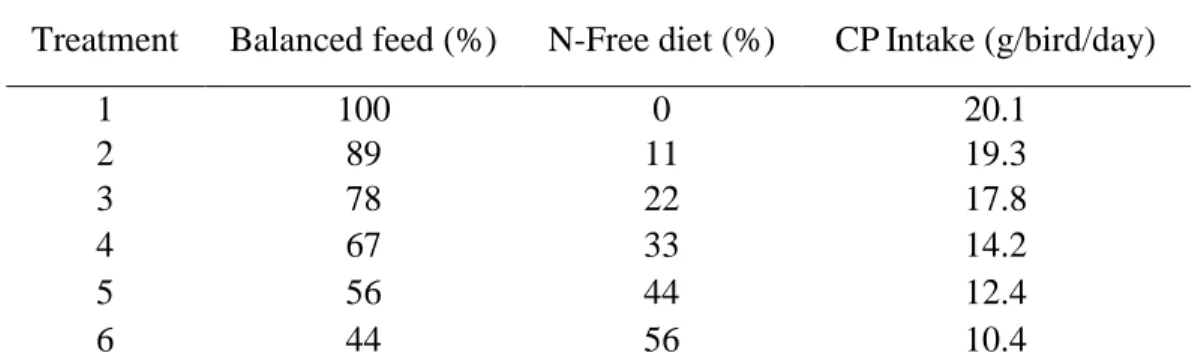
However, female needs are generally higher than male, due to the nutritional demands of egg production as opposed to spermatogenesis. It was suggested that CP intake to optimize fertility would be approximately 16.9 g CP/bird/day (confirmed by analysis of the author's data).
Growth control during Rearing
A number of studies have been conducted to determine the effects of feed restriction on early chick development. It is important to note that birds raised on a restrictive feeding program should not lose weight and condition, but rather maintain body weight within the breed target to ensure later reproductive efficiency (Harms et al, 1984; Crouch et al, 2002 ).
Body Weight Control during Breeding
They found that birds fed a low CP diet during rearing had improved fertility levels at the end of production. Sexton & Renden (1988) conducted an experiment to determine whether feeding regimen had an effect on body composition, gastrointestinal tract size and semen quality and found that birds fed the SAD regimen had delayed sexual maturity, sometimes to 10 days, then birds were fed. daily. 1999) conducted an experiment to determine the effects of CP during the rearing period on BW and sperm production of BB males.
Assessment of Fertility in Broiler Breeder Flocks
Cockerel Fertility Affected by Body Weight
Physiological function and physical characteristics also play a crucial role in the level of fertility shown by the male, as well as measures of sperm quality. The rationale was that the birds were unable to physically support their bodies, resulting in failed copulations. In an experiment by Bilcik et al. 2005) to determine reproductive success and the effects of body condition on fertility, a positive correlation was found between the frequency of matings without cloacal contact and BW, resulting in inefficient fertilization from such matings.
Therefore, higher mating frequency does not necessarily mean higher fertility, because not all observed matings are successful. A strain genetically selected for yield was found to have a significantly greater dorsal pelvic width, which was associated with lower fertility compared to the other strain. A likely explanation is that during selection for higher yield, the skeletal structure of the breed was slightly modified to accommodate the larger breast conformation.
Reproductive Physiology of the Male Broiler Breeder
Assessment of Semen Quality of Broiler Breeder Males
Assessment of Egg Fertility
Macroscopic Examination
Determining fertile eggs at an early stage of production is very important in poultry farms (Liptói et al., 2004), as it provides an indication of the productivity and reproductive success of the flock. Kosin (1945) stated that by distinguishing between the spherical appearance of the fertile blastoderm and the condensed knot of opaque material and crater-like lacunae in an infertile egg, fertility can be assessed in the fresh, unhatched egg. However, incorrect predictions of fertility may result from misrecognition of the fertile blastoderm (Wishart determined fertility by macroscopic examination of blastoderms after a 24-hour incubation period, when they were assessed for evidence of embryonic development.
However, this method does not recognize early embryonic mortality, which may arise as a result of incorrect handling (before or during incubation), flock health, incorrect incubation positioning, incorrect incubation settings (humidity and temperature), storage time before settling. in the incubator and chemical exposure to eggs (Kosin, 1964; . Wilson, 1991; Wilson, 2007). Although useful in poultry enterprises, the macroscopic evaluation of fertility in eggs is destructive and therefore only a sample of eggs can be tested which does not always give an accurate indication of the total population.
In Vitro Examination
- Examination of the Inner Perivitelline Layer
- Examination of the Outer Perivitelline Layer
Although, numerous experiments (Wishart, 1987; Bramwell et al., 1995; Wishart & Staines, 1999), have suggested that there is a minimum number of sperm needed for fertilization to be successful. Minutes after fertilization of the egg, the second layer membrane (OPVL) is secreted, which traps excess spermatozoa in the protein fibrils, which are visible but have not necessarily penetrated the IPVL (Wishart et al., 2001). There is a positive correlation between the number of sperm trapped in the OPVL and the likelihood of fertility.
However, this does not indicate the number of sperm bound or penetrated, which requires further examination of the IPVL to determine fertilization, visualized as microscopic holes in the IPVL (Wishart, 1987). Estimating the number of spermatozoa trapped in the OPVL of unhatched eggs is one of the methods used to determine the probability of fertilization and the length of the fertile period (Wishart, 1997). Wishart (1997) found that the sperm count in the OPVL after a series of natural matings was double that in the OPVL after AI.
An important aspect to remember when performing AI is that the number of sperm in the OPVL decreases logarithmically in consecutively laid eggs, with a loss of approximately 30% per day (Bramwell et al., 1995).
Conclusion
This may be due to the increased frequency of natural mating that continuously fills the SSTs, as opposed to a single fill after AI (Wishart et al., 2001).
Introduction
From a research perspective, it is important to note the differences between naturally paired couples and couples that require AI. 2010), compared natural mating and AI in the native Mazandran chicken and found no significant difference between the outcome properties of these two methods. The aim of this experiment was therefore to investigate the effects of dietary CP on the fertility of BB males, observed by hatching and examining egg OPVL, and to compare the response to CP of males in individual cages with those in a natural cage. mating herd.
Materials and Methods
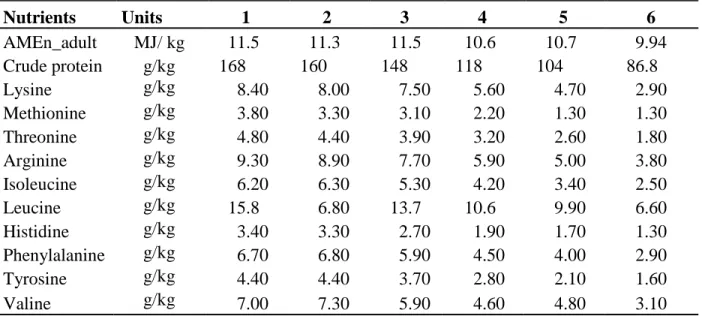
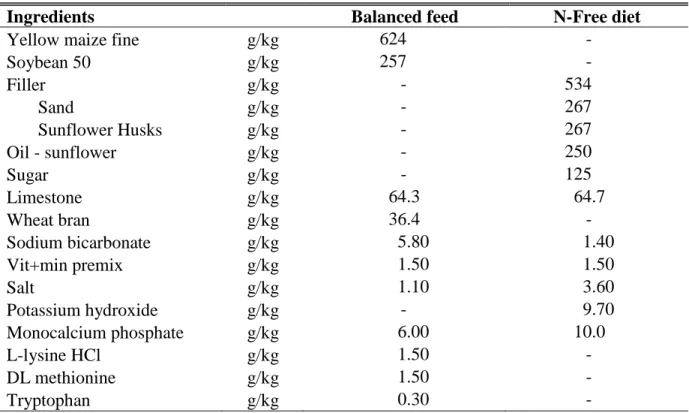
Diet treatments were fed to males both in natural mating pens via separate sex feeders and to birds caged in individual cages via individual feeding troughs. BB males were weighed individually at the beginning of the trial and once a month thereafter. Care was taken during collection to prevent faecal contamination and collection of the clear watery fluid, which indicates the absence of spermatozoa (Bakst. & Brillard, 1995).
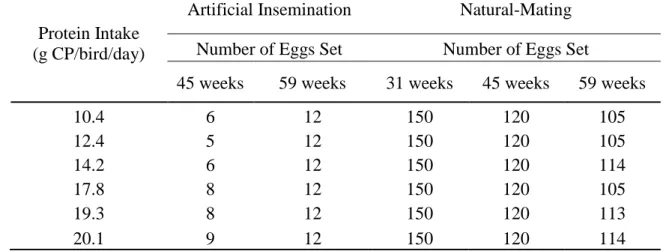
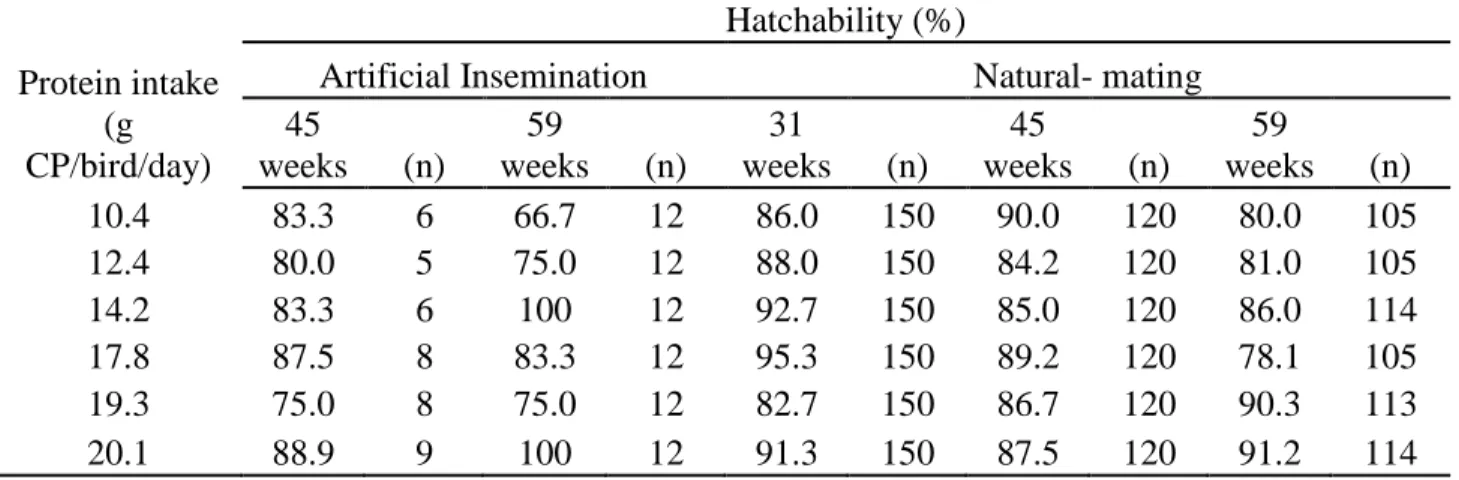
A 50 μl sample of the undiluted pooled sample from each treatment was added to 8 ml of eosin and nigrosin solution, and the concentration was determined using a hemocytometer. Fertility was determined by hatching percentage of the number of eggs laid (Table 4) and by examining OPVL sperm from oocytes (n= 30 for each treatment) at 31, 45 and 59 weeks of age in the naturally mating males and at 45 and 59 weeks in the males in individual cages after semen collection and AI. At each assessment age, eggs from each natural mating cage and inseminated birds were collected 4 times per day over a 5-day period, and hatchable eggs were marked and stored for up to 1 week at 13 oC, before trays of each treatment were placed in an incubator ( Table 4).
The germinal disc was located and a square of perivitelline membrane approximately 1 cm2 in size was cut around the germinal disc and rinsed 3 times in Dulbecco's phosphate-buffered saline (PBS) to remove excess yolk before being spread on a microscope slide .
Statistical Analysis
These results were used to assign the probability that each egg would be fertile, based on Wishart (1997) and Brillard &. Wishart (1997) found that an egg cell needs 3 or more spermatozoa/mm2 to have a 94% probability of fertility. Brillard & Antoine (1990) suggested in a similar experiment that an egg needs only 0.43 OPVLsperm/mm2 membrane to have a 100% chance of being fertile.
Analysis of OPVLsperm/mm2 is a preferred method for determining a response in fertility, as it provides continuous data instead of comparing binomial data (fertile versus infertile) as provided by the Brillard and Antoine (1990) and Wishart ( 1997). The percentage of eggs predicted to be fertile according to the calculations of Brillard & Antoine (1990) and Wishart (1997) over the range of CP intake were analyzed by simple linear regression with age as a group, and also over the range of ages with CP intake as a group.
Results and Discussion
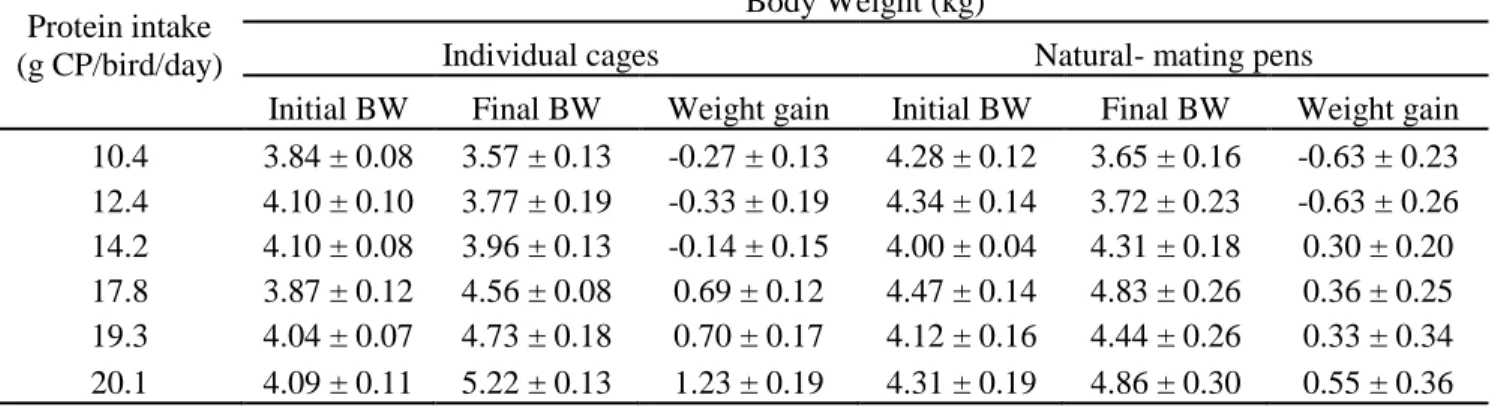
- Body Weight
- Hatchability of Artificially Inseminated Birds
- Hatchability of Naturally-Mated Birds
- Assessment for OPVL sperm /mm 2 in Natural-Mated Pens
- Egg Fertility Predicted from OPVL sperm /mm 2 in Natural- Mating Pens
- The Response in Fertility to Protein Intake
- The Response in Fertility to Age
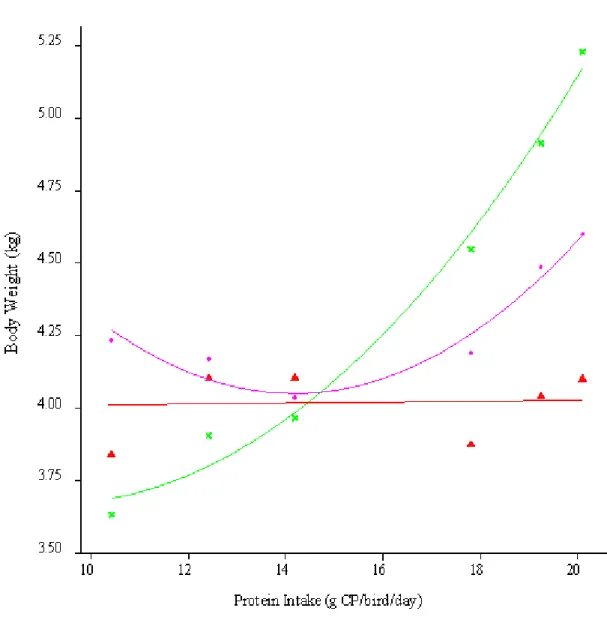
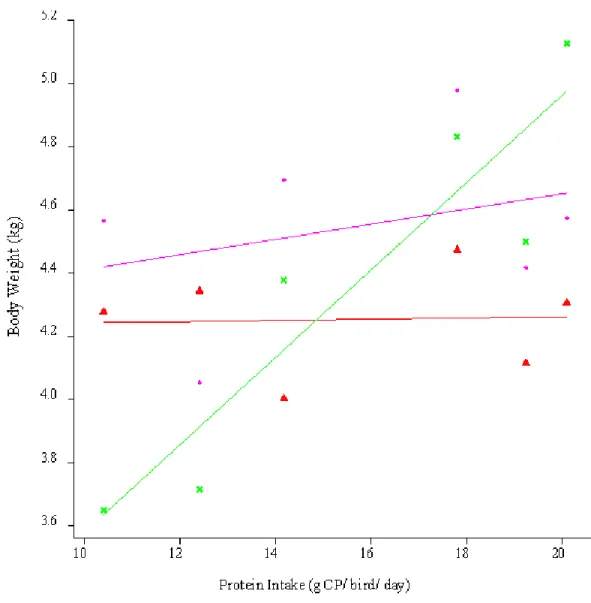
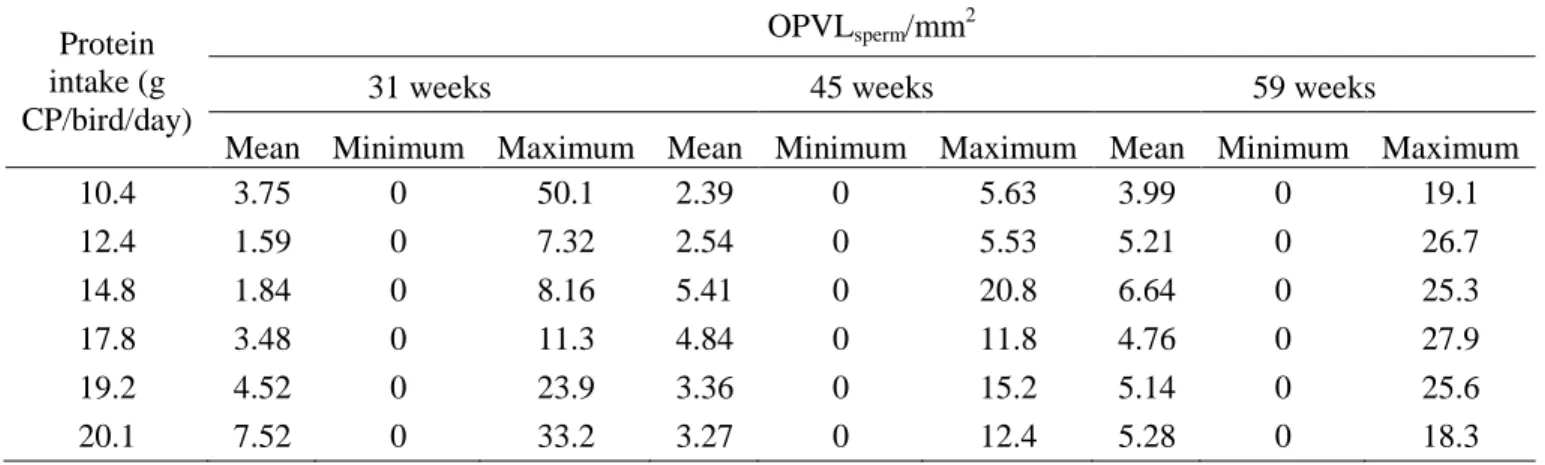
The greatest increase in body weight recorded in the natural mating and AI scenario was due to the intake of 20.1 g of CP. After AI, there was no significant response in hatchability to egg CP intake in birds in individual cages. The lack of response may be due to the small number of eggs set (Table 6). There was an overall significant response in mean Log OPVLsperm/mm2 to CP intake for each age (P<0.05; R2=52.2), with a significant interaction between CP intake and age.
Antoine (1990) (Table 9), which probably resulted in the significant interaction found (P<0.05) between CP intake and age for this variable. Predicted fertility at 45 weeks was higher across all CP intakes, with an increase in predicted fertility of 0.56% per gram of CP intake (P<0.001). This regression analysis did not result in a significant relationship between predicted fertility and age for any of the CP intake groups.
Predicted fertility using the method published by Brillard & Antoine (1990) did not result in a significant response, but a trend was found (P=0.073) showing that predicted fertility decreased as birds aged (P <0.01) and there. was a trend indicating that birds with a CP intake of 14.2 g CP/bird/day had the best fertility overall (P=0.063).
Conclusion
The effect of feeding programs on reproductive traits and selected blood chemistries in cage-reared males. Effect of a high protein diet fed before the initiation of laying on performance in broilers. Effect of restricted feeding and ad libitum feeding on sperm production and fertility in broilers.
Relationships between dietary crude protein, body weight and fertility in breeding males of naturally mated hens. Developmental control of ovarian follicular hierarchy in broiler breeder pullets by feed restriction during growth. Effect of feeding program and dietary crude protein during growth on body weight and fertility of male breeder chickens.
The effect of dietary tryptophan on aggressive behavior in developing and mature broilers. Effects of feeding program and crude protein intake during rearing on the fertility of broilers. Body weight and sperm production in broiler breeders as affected by crude protein levels and feeding regimes during rearing.