EFFECTS OF IRRIGATION INTERVAL AND PLANTING DENSITY ON BIOMASS YIELD AND CHEMICAL COMPOSITION OF NIGHTSHADE (SOLANUM RETROFLEXUM) IN LIMPOPO PROVINCE, SOUTH AFRICA
THAKGALA CONFIDENCE MABOTJA
DISSERTATION SUBMITTED IN FULFILMENT OF THE REQUIREMENTS FOR THE DEGREE MASTER OF AGRICULTURAL MANAGEMENT (PLANT PRODUCTION), DEPARTMENT OF PLANT PRODUCTION, SOIL SCIENCE AND AGRICULTURAL ENGINEERING, SCHOOL OF AGRICULTURAL AND ENVIRONMENTAL SCIENCES, FACULTY OF SCIENCE AND AGRICULTURE, UNIVERSITY OF LIMPOPO, SOUTH AFRICA
SUPERVISOR: PROFESSOR P.W. MASHELA (UL)
2019
ii
TABLE OF CONTENTS
Page
DECLARATION v
DEDICATION vi
ACKNOWLEDGEMENTS vii
LIST OF TABLES viii
LIST OF FIGURES x
LIST OF APPENDICES xii
ABSTRACT xiv
CHAPTER 1: GENERAL INTRODUCTION 1
1. RESEARCH PROBLEM 1
1.1 Background 1
1.1.1 Description of the research problem 1 1.1.2 Impact of the research problem 4 1.1.3 Possible causes of the research problem 5
1.1.4 Proposed solutions 7
1.1.5 General focus of the study 9
1.2 Problem statement 9
1.3 Rationale of the study 10
1.4 Purpose of the study 10
1.4.1 Aim 10
1.4.2 Objectives 11
1.5 Hypotheses 11
1.6 Reliability, validity and objectivity 11
iii
1.7 Bias 12
1.8 Ethical considerations 12
1.9 Scientific contribution 12
1.10 Structure of full-dissertation 12
CHAPTER 2: LITERATURE REVIEW 14
2.1 Introduction 14
2.2 Work done on the problem statement 16
2.2.1 Crop yield response to planting density 16
2.2.2 Planting density of crops 18
2.2.3 Crop yield response to irrigation interval 19 2.2.4 Crop yield response to irrigation interval and
planting density interactions
20
2.2.5 Contribution of indigenous vegetables in Limpopo Province
20
2.2.6 Irrigation systems in Limpopo Province for smallholder farmers
21
2.3 Work not yet done on the problem statement 22 2.3.1 Proposed integrated irrigation system 22
2.4 Addressing the identified gaps 22
2.5 Summary of the gaps to be investigated 22 CHAPTER 3 EFFECTS OF IRRIGATION INTERVAL AND PLANTING
DENSITY ON VEGETATIVE GROWTH AND
CHEMICAL COMPOSITION OF NIGHTSHADE
24
3.1 Introduction 24
iv
3.2 Materials and methods 25
3.2.1 Description of the study site 25
3.2.2 Experimental design 25
3.2.3 Procedures 27
3.2.4 Data collection 31
3.2.5 Data analysis 32
3.3 Results 32
3.3.1 Plant growth variables 32
3.3.2 Nutrient element variables 41
3.4 Discussion 54
3.4.1 Plant growth variable 54
3.4.2 Nutrient element variables 67
3.5 Conclusion 74
CHAPTER 4: SUMMARY OF FINDINGS, SIGNIFICANCE OF FINDINGS, RECOMMENDATIONS AND CONCLUSIONS
76
4.1 Summary of findings 76
4.2 Significance of findings 77
4.3 Recommendations 78
4.4 Conclusions 78
REFERENCES 80
APPENDICES 104
v
DECLARATION
I, Thakgala Confidence Mabotja, declare that this dissertation hereby submitted to the University of Limpopo for the degree Master of Agriculture Management has not been previously submitted by me or anybody for a degree at this or any other University, that this is my work in design and in execution and that all material contained herein had been acknowledged.
Candidate: Thakgala Confidence Mabotja Signature Date
Supervisor: Professor P.W. Mashela Signature Date
vi DEDICATION
To my loving mother: Eunice Kwena Mabotja My son: Kutullo Thebe Mabotja
My brother: Mosa Mabotja
vii
ACKNOWLEDGEMENTS
First and foremost, praises and thanks to God, the Almighty, for His showers of blessings throughout my research work for completing the research. I would like to express my sincere gratitude and appreciation to my supervisor, Professor P.W.
Mashela, for accepting me as his student and for his invaluable guidance and support, along with the feedback that he rendered throughout this research work. I would also like to thank him for giving me a second chance to complete my research work. I will always treasure the knowledge and the scientific writing skills that I acquired during this research journey. His passion in scientific research remains an incredible motivator to me as an aspiring researcher in plant sciences. His constant dedication enabled me to do all to the best of my abilities. I owe my deepest gratitude to Dr Z.P.
Dube and Mrs P. Kgopa for technical assistance and critical advises on some aspects of this work. I am deeply grateful to Mr M.K. Ralefatane, Mr L.T. Letsoalo, Mrs S.M.
Seabela, Ms M.A. Mawasha and Ms S.R. Mawasha for assistance during establishment of my experiments and harvesting. I also extend my sincere thanks to the Department of Plant Production, Soil Sciences and Agricultural Engineering, Green Biotechnologies Research Centre for Excellence and Limpopo Agro-Food Technology Station for providing technical assistance with processing and analysing samples and the Executive Dean for the Faculty of Science and Agriculture for funding the analytical part of this study. Finally, my thanks go to the National Research Foundation for providing a bursary for my master’s studies.
viii
LIST OF TABLES
Page Table 3.1 Partitioning sources of variation on biomass of Solanum
retroflexum in response to seven irrigation interval (days) and nine levels of planting density during two successive harvests in summer and winter months under field conditions.
34
Table 3.2 Effects of irrigation interval (I.I) on dry shoot mass of Solanum retroflexum under field conditions obtained from two harvests.
35
Table 3.3 Effects of planting density on dry shoot mass of Solanum retroflexum under field conditions obtained from two harvests.
36
Table 3.4 Quadratic relationship of dry shoot mass and irrigation interval of Solanum retroflexum during summer first harvest (H1) and winter first and second harvests (H1 and 2).
40
Table 3.5 Quadratic relationship of dry shoot mass and planting density of Solanum retroflexum during summer first and second harvests (H1and H2) and winter first and second harvests (H1 and H2).
40
Table 3.6 Partitioning sources of variation on major minerals of Solanum retroflexum leaf tissues in response to seven irrigation interval (days) and nine planting densities per drip irrigation hole under field conditions obtained from summer first harvest (H1).
43
ix
Table 3.7 Partitioning sources of variation on trace minerals of Solanum retroflexum in response to seven irrigation interval (days) and nine planting densities per drip irrigation hole under field conditions obtained from summer first harvest (H1).
44
Table 3.8 Macro nutrient elements as affected by irrigation interval (I.I) in leaf tissues of Solanum retroflexum obtained from first harvest (H1) during summer.
45
Table 3.9 Micro nutrient elements as affected irrigation interval (I.I) in leaf tissues of Solanum retroflexum obtained from first harvest (H1) during summer.
46
Table 3.10 Macro nutrient elements as affected by planting density (P.D) in leaf tissues of Solanum retroflexum obtained from first harvest (H1) during summer.
47
Table 3.11 Quadratic relation of macronutrient elements in essential nutrient in Solanum retroflexum leaf tissues over irrigation interval from summer first (H1) harvest..
52
Table 3.12 Quadratic relation micronutrient elements of irrigation interval in Solanum retroflexum leaf tissues over irrigation interval from summer first (H1) harvest.
53
Table 3.13 Quadratic relation of macronutrient elements in Solanum retroflexum leaf tissues over planting density from summer first (H1) harvest.
53
x
LIST OF FIGURES
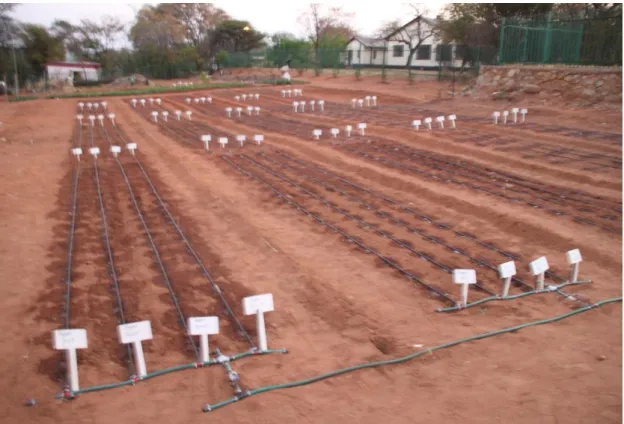
Page Figure 3.1 Integrated Drip Irrigation System (IDIS) at Green
Biotechnologies Research Centre of Excellence, University of Limpopo experimental field.
27
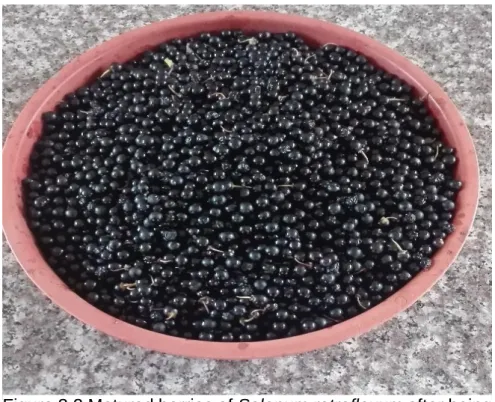
Figure 3.2 Matured berries of Solanum retroflexum after being collected from the field before fermentation process.
28
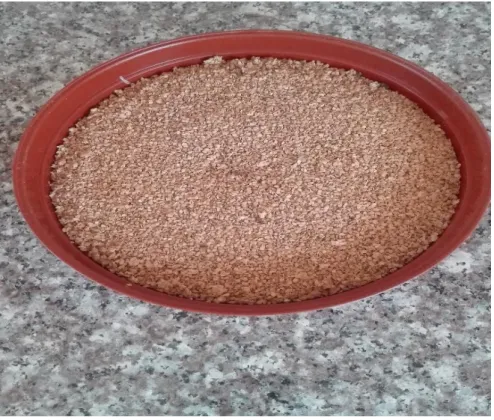
Figure 3.3 Solanum retroflexum seeds after fermentation process. 28 Figure 3.4 Planting densities per drip hole under integrated drip irrigation
system on growth of Solanum retroflexum under field conditions
30
Figure 3.5 Planting tool used for transplanting Solanum retroflexum seedlings.
31
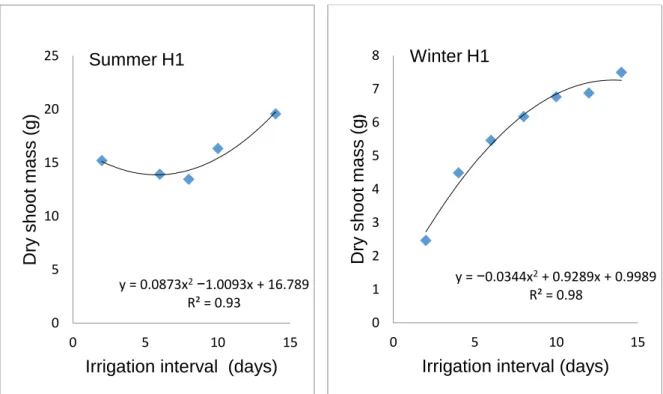
Figure 3.6 Influence of irrigation interval on dry shoot mass during summer first (H1) harvest and winter first (H1) harvest..
37
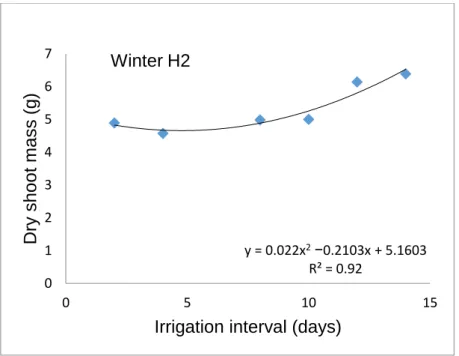
Figure 3.7 Influence of irrigation interval on dry shoot mass during winter second (H2) harvest.
38
Figure 3.8 Influence of planting density on dry shoot mass during summer first (H1) and second (H2) harvests
38
Figure 3.9 Influence of planting density on dry shoot mass during winter first (H1) and second (H2) harvests..
39
xi
Figure 3.10 Response of Ca and Mg in leaf tissues of Solanum retroflexum to irrigation interval during summer first (H1) harvest.
48
Figure 3.11 Response P, K, Na and Fe in leaf tissues of Solanum retroflexum to irrigation interval during summer first (H1) harvest.
49
Figure 3.12 Response Cu, Zn and Mn in leaf tissues of Solanum retroflexum to irrigation interval during summer first (H1) harvest.
50
Figure 3.13 Responses of Ca, P and K in leaf tissues of Solanum retroflexum to planting density during summer first (H1) harvest.
51
xii
LIST OF APPENDICES
Page Appendix 3.1 Analysis of variance for dry shoot mass of Solanum
retroflexum in response to different irrigation intervals and planting densities in summer first (H1) harvest.
104
Appendix 3.2 Analysis of variance for dry shoot mass of Solanum retroflexum in response to different irrigation intervals and planting densities in summer second (H2) harvest.
104
Appendix 3.3 Analysis of variance for dry shoot mass of Solanum retroflexum in response to different irrigation intervals and planting densities in winter first (H1) harvest.
105
Appendix 3.4 Analysis of variance for dry shoot mass of Solanum retroflexum in response to different irrigation intervals and planting densities in winter second (H2) harvest.
105
Appendix 3.5 Analysis of variance for calcium accumulation in Solanum retroflexum in response to different irrigation intervals and planting densities in summer first (H1) harvest.
106
Appendix 3.6 3.6 Analysis of variance for magnesium accumulation in Solanum retroflexum in response to different irrigation intervals and planting densities in summer first (H1) harvest.
106
Appendix 3.7 Analysis of variance for phosphorus accumulation in Solanum retroflexum in response to different irrigation intervals and planting densities in summer first (H1) harvest.
107
xiii
Appendix 3.8 Analysis of variance for potassium accumulation in Solanum retroflexum in response to different irrigation intervals and planting densities in summer first (H1) harvest.
107
Appendix 3.9 Analysis of variance for sodium accumulation in Solanum retroflexum in response to different irrigation intervals and planting densities in summer first (H1) harvest.
108
Appendix 3.10 Analysis of variance for iron accumulation in Solanum retroflexum in response to different irrigation intervals and planting densities in summer first (H1) harvest.
108
Appendix 3.11 Analysis of variance for zinc accumulation in Solanum retroflexum in response to different irrigation intervals and planting densities in summer first (H1) harvest.
109
Appendix 3.12 Analysis of variance for manganese accumulation in Solanum retroflexum in response to different irrigation intervals and planting densities in summer first (H1) harvest.
109
Appendix 3.13 Analysis of variance for copper accumulation in Solanum retroflexum in response to different irrigation intervals and planting densities in summer first (H1) harvest.
110
xiv ABSTRACT
Nightshade (Solanum retroflexum Dun.) is among the most important indigenous leafy vegetables in Vhembe District, Limpopo Province, South Africa, due to its high values of beta-carotene, vitamin E, folic acid, ascorbic acid, calcium, iron and protein.
Vhembe District occurs in the tropical regions of Limpopo Province and the production of vegetables is dependent upon the availability of irrigation water. An Integrated Drip Irrigation System (IDIS) and a 3S planter were developed to save water by planting several plants/hole of drip irrigation system. The subsystems in IDIS allow for the production of different crops with different water requirements, whereas the 3S planter can be used for planting from one to nine plants/hole of drip irrigation system. Also, the subsystems could be used in assessing irrigation interval for crops under various planting densities. The interaction of irrigation interval and planting density of S.
retroflexum had not been documented. The objective of this study, therefore, was to determine the interactive effects of irrigation interval and planting density on biomass yield and chemical nutrient elements (summer harvest only) of S. retroflexum under field conditions. The irrigation interval and planting density/hole were arranged in a split-plot experimental design, with eight replications. The main plot was irrigation interval and the subplot was the planting densities. Harvesting was done twice for both summer and winter experiments. The first harvest (H1) was done at 6 weeks after transplanting, with the second harvest (H2) being done at six weeks after the first harvest. Fresh shoots were oven-dried at 60°C for 72 h for the determination of dry matter. Mature leaves were powdered and analysed for mineral content (Ca, P, K, Mg, Na, Fe, Zn, Mn and Cu) using the ICPE-9000. Data were subjected to analysis of variance using SAS software. In the summer experiment, the interaction was significant (P ≤ 0.05) for dry shoot mass at H1 and H2. However, the contribution of
xv
the interaction in the total treatment variation (TTV) of the variable was negligent and therefore, only single factors were reported. Irrigation interval and planting density had highly significant (P ≤ 0.01) effects on plant variables during H1 and H2 in summer and winter. However, irrigation interval effects for dry shoot mass were not significant for summer H2. Interaction effects were significant for Ca, P, K, Mg, Mn and Cu in leaf tissues during summer H1, but were not significant for Na, Fe and Zn. Also, irrigation interval was significant for Ca, Mg, P, K, Na, Fe, Zn, Mn and Cu during summer H1, whereas planting density had no significant effects for all chemical nutrients except for Ca, P and K during summer H1. Dry shoot mass of S. retroflexum increased linearly with increasing irrigation interval and planting density. Results suggested that most nutrient elements increased with deficit irrigation water and higher planting density, whilst P decreased under high planting density. The study showed that there is a high potential for saving water through longer irrigation intervals and produce good high yields at a higher planting density. In conclusion, the use of IDIS and 3S planter to promote growth and accumulation of essential nutrient elements on S. retroflexum demonstrated that longer irrigation interval and higher plant density per drip irrigation hole could be suitable for cultivation of this indigenous vegetable. The recommendation of this study is that higher planting density and longer irrigation intervals are key determinants of higher biomass yield and water saving strategies for large-scale production of the crop. Further, the mineral composition of the crop was under the influence of higher planting density and irrigation intervals.
1 CHAPTER 1
GENERAL INTRODUCTION 1. Research problem
1.1 Background
1.1.1 Description of the research problem
An Integrated Irrigation System (IIS) intended to produce high crop yield per drop of irrigation water was researched and developed at the Green Biotechnologies Research Centre for Excellence (GBRCE), University of Limpopo, South Africa in the context of climate-smart agriculture (Mashela, 2015). Climate change is adding pressure to the already stressed ecosystem for agricultural productions. Climate change projections suggested future decreases in yields of maize (5%), wheat (22%) and rice (2%) due to increases of drought in South Africa (Mabhaudhi and Modi, 2016).
Many agricultural production systems are now being affected by climate change which had since increased uncertainty and exacerbate drought incidents, land loss due to salinity and water scarcity (IFAD, 2011). On the other hand, a wild vegetable species such as nightshade (Solanum retroflexum Dun.), which is indigenous to South Africa, is drought-tolerant and has the potential to produce high vegetative yield in areas where most exotic crops might perform poorly (Van Averbeke and Juma, 2006).
Worldwide, there is a growing need for developing resilient agricultural systems and new strategies that could be adaptable to climate change (Chivenge et al., 2015). The new strategies should ideally involve promotion and cultivation of indigenous vegetables, which could therefore, be essential in the future development of
2
appropriate water-saving management tactics and increase in the efficiency of water use for agricultural production and processing (Mashela, 2015).
Inland South Africa temperature is projected to increase by 6°C and rainfall decrease by 5-10% by 2030. Worldwide, water scarcity is already affecting 2.8 billion people during at least one month of every year (IPCC, 2014). Increased demand for food security, mineral nutrition security and water security from the growing populations and the effects of climate change, had been escalating the impact of food insecurities and nutrition insecurities with water scarcity experienced in arid- and semi-arid areas of South Africa (Wenhold et al., 2007).
Water security can be defined as the reliable availability of an acceptance quantity and quality of water for health, livelihoods and production, coupled with an acceptable level of water-related risks (Muller et al., 2009). Efficient water use by IIS is, therefore, becoming increasingly, important especially in arid- and semi-arid regions with limited water sources (Mashela, 2015). Climate change has a negative impact in agriculture by increasing water demand (Reid et al., 2005), where the world is expected to produce more nutritious food to meet the demand of rapidly growing populations by 70% in developing countries (FAO, 2013). Therefore, cultivation of drought-tolerant plants coupled with appropriate water saving systems like the Integrated Drip Irrigation System (IDIS) and 3S planter would be able to increase the capacity of agricultural productions as dictated by extremes of climate change (Mashela, 2015).
Worldwide, water scarcity is a major threat to food and nutrition security (Besada and Werner, 2015). However, there is a low intake of vegetables, which had been among
3
the top ten risks factors intensifying mortality (Shiundu, 2005). Indigenous vegetables are known to be drought-tolerant and rich sources of various micronutrients. In the year 2000, South Africa had11.1 million males and 12.5 million females who were over 15 years with a low intake of vegetables (Schneider et al., 2007). In order to address the situation, there had been a necessity to increase the cultivation of indigenous vegetables and to promote their utilisation. However, modernisation of South African communities, affordability and availability of vegetables due to their seasonality, have had a negative impact on consumption of indigenous vegetables (Faber and Wenhold, 2007). Among various adaptation mechanisms, selection and promotion of indigenous vegetables with low fertiliser and water requirements might also contribute to improve food, nutrition and water security in marginal communities (Steyn et al., 2001).
Solanum retroflexum is a biannual herbaceous indigenous plant and could sometimes behave as a perennial due to its deep root system (Akubugwo et al., 2007; Njume et al., 2014; Van Rensburg et al., 2014). Solanum retroflexum belongs to the family Solanaceae, a cosmopolitan family containing most essential vegetables and fruits that includes tomatoes, chilies, green and red peppers (Edmonds and Cheweya, 1997). This plant is among the most important indigenous leafy vegetables in Vhembe District, Limpopo Province, containing high beta-carotene, vitamin A and E, folic acid, ascorbic acid, calcium, iron, fibre and proteins (Van Averbeke and Juma, 2006).
Therefore, this plant could be suitable for cultivation in most arid- and semi-arid rural regions of South Africa (Van Jaarsveld et al., 2014). The plant also has some medicinal properties and is widely used in treating cancerous sores, leucoderma and wounds (Edmonds and Cheweya, 1997; Maanda and Bhat, 2010). The purple or black berries are extensively consumed either as fresh or as preserves, but green fruit berries
4
contain solanine (C45H73NO15), which could cause some degree of human poisoning (Van Rensburg et al., 2007).
Currently, there is scant information on interactive effects of irrigation interval and planting densities on growth of S. retroflexum as well as the mineral nutrient in leaf tissues. This indigenous vegetable is one of the most underutilised crops intended for use in context of climate-smart agriculture. Climate-smart agriculture (CSA) is an integrative approach for developing agricultural strategies by adapting and building resilience in agricultural production system for food security under climate change and also by reducing greenhouse gas emissions from agricultural production system (World Bank, 2008). Indigenous vegetables can grow on soil with low fertility, and most are relatively drought-tolerant, are well-adapted to harsh environmental conditions and require limited synthetic chemicals protection against pest (Van Averbeke and Juma, 2006). Increase in water use efficiency holds the key to mitigating water scarcity and food or nutrition insecurity issues (Costa et al., 2007). The 3S planter can improve water use efficiency by improving soil coverages, therefore, supplying more crops with one drop of water. The IDIS is a water-saving irrigation system which could mitigate the negative impact of climate change on limited available water sources for agricultural purposes.
1.1.2 Impact of the research problem
Agriculture alone contributes 14% of the greenhouse gas emissions to global emission scales (IPCC, 2007). The drawbacks of climate change are generally felt through a series of impacts that cover all aspects of socio-economic impacts in terms of economic opportunities and political stability (IFAD, 2011). Globally hot temperatures
5
are expected to increase by 2°C to 5°C between 2010 and 2050, with the estimated cost to adapt to climatic fluctuations being approximately US$75 billion to US$100 billion a year (Benhin, 2006). Approximately, 7.4 million people in South Africa suffer from hunger every day, which is a direct negative effect on food and nutrition security (Stats SA, 2016). Global climate change introduces more uncertainty regarding future water supplies, with water scarcity threatening food and nutrition security (FAO, 2013).
Achieving food, nutrition and water security and to produce high crop yields under such conditions, depends on many factors, including the proper irrigation intervals and the use of optimum planting densities.
1.1.3 Possible causes of the research problem
Previously, indigenous vegetables played a major role in contributing to food and nutrition security for poor communities in the rural areas of South Africa (Oelefse and Van Averbeke, 2012). However, the utilisation of these crops had been relegated to the status of weeds (Mashela and Mollel, 2001) by promoting exotic crops, which resulted in declining consumption and cultivation of former crops (Van Rensburg et al., 2004). Due to their nutritional content, there is immediate need in improvement of dietary intake of leafy indigenous vegetables, especially in marginalised households.
Usually, the indigenous leafy vegetables are easier to produce and require limited cultural practices such as irrigation, fertilisation and pest management with respect to weed, insect, and pathogens (Slabbert, 2007; Van Rensburg et al., 2007; Van Vuuren, 2006).
In 2015, Limpopo Province was declared a disaster area due to continuous droughts, which were last experienced in 1983 (SAHNS, 2016). The current exotic crop yield,
6
quality and quantity were reduced and could be hardly sustained in terms of production under such harsh environmental conditions. Therefore, it is urgent to promote the production and utilisation of indigenous leafy vegetables in order to provide food and nutrition security to marginalised households (Van Jaarsveld et al., 2014). The planting density and the quantity of water are important on yield production and growth of crops, but these are difficult by inherently being plant-specific. Solanum retroflexum is an essential indigenous leafy vegetable to South Africa (Schippers, 2002), but is mostly harvested from the wild, with limited cultivated areas by small-scale farmers in rural communities in Vhembe District, Limpopo Province (Van Averbeke and Juma, 2006).
This vegetable could play an important role in food security, job creation and wealth creation as outlined in the Presidential Outcomes set aside for the agricultural sector (NDP, 2012).
Water scarcity is one of the leading challenges affecting more than 1.1 billion of people globally (WWF, 2014). Over 40% of the world population lives in regions with water scarce challenges and the situation could worsen if current population growth trends continue. Climate change is generally the primary determinant of agricultural productivity (Bouwer, 2000). Future climate change would also worsen the current stressors such as drought conditions and flooding events that would severely affect the agricultural potential of many regions, which would subsequently place food security at dire risk. Strategies and new innovations should therefore, be implemented to improve water use efficiency (WUE), starting with the choice of irrigation system and optimal planting densities followed by the application of the proper irrigation intervals in terms of both timing and quantity of water. Due to repeated incidents of drought coupled with increasing water scarcity the IDIS and 3S planter would be ideal
7
to improve crop WUE. These systems are being researched and developed by the GBRCE, University of Limpopo (Mashela, 2015).
South Africa is fundamentally a semi-arid and water-scarce country with a mean annual rainfall of 500 mm, which is half the world average, with 9% rainfall converted to river runoff (Tapela, 2008). Prospects of climate change, low and irregular rainfall, along with continued population growth and industrialisation in Limpopo Province, due to increased mining activities, have intensified the search for measures to conserve water in irrigated agriculture (IPCC, 2014). Competition for water resources is one of the greatest concerns when viewed within the context of the impacts this would have on exotic crops and the vulnerability of marginal communities and the urban poor, regarding food and nutrition security, because the incidents of crop failures would likely increase (Sisulu and Scaramella, 2012).
1.1.4 Proposed solutions
Indigenous future crops, particularly the neglected underutilised crops, have high nutritional levels of micro-nutrients and are mostly drought-tolerant (Shiundu, 2005).
Therefore, such crops could significantly contribute to nutrition security if eaten as part of the daily diets (Makobo et al., 2010). Solanum retroflexum is considered as a wild species, and thus, has never been considered for large-scale commercial production in South Africa, with limited information on its agronomics (Van Averbeke and Juma, 2006). Given the challenges that Limpopo Province is rated as one of the poorest provinces in South Africa, with high level of water scarcity, unlimited population growth and restricted food and nutrition security (Machete et al., 2004; Oelefse and Van
8
Averbeke, 2012), alternative crops should be sought and further researched and developed to enhance their entering the main stream agricultural production systems.
Indigenous leafy vegetables had been identified as holding the key to contributing towards food and nutrition security (NDP, 2012). Such plants have the potential to adapt from the underutilised status to commercial production status, thereby, contributing to income generation for subsistence farmers. Consequently, there is need to generate empirically-based information on water requirement and agronomic practices for these vegetables (Maseko et al., 2015). Water requirement could include amount of water per irrigation and irrigation interval, which plant- specific. Agronomic practices in indigenous vegetables would among other things, include optimum irrigation interval as well as the planting density per hole of drip irrigation system and mineral content of S. retroflexum.
Generally, the production of indigenous vegetables in South Africa does not meet the market demands due to inappropriate production technologies and the exclusive focus on exotic vegetables (Schippers, 2006). Education on health benefits of indigenous leafy vegetables would be essential. Also, most indigenous leafy vegetables are adaptable to low rainfall in semi-arid areas of Southern Africa, where water scarcity for crop production is one of the major limiting factors (Machete et al., 2004; Oelefse and Van Averbeke, 2012).
Irrigation in South Africa accounts for nearly 63% of arable agriculture, with some estimates being as high as 70% (Gerbens-Leenes and Nonhebel, 2004). Therefore, irrigation water management in context of climate-smart agriculture would have to be
9
carried out efficiently and effectively with the aim of saving water, while maximising crop productivity (Niederwieser, 2001). Concerns on future increasing water demands inland South Africa have led to the introduction of new technologies and strategies for improving water use efficiency, while improving underutilised indigenous future crops which could have the capability to ameliorate the effects of drought on food security.
1.1.5 General focus of the study
The overview of smallholder farming in South Africa suggested that indigenous vegetable farming has an important role in human nutrition in the rural areas of the country (Oelofse and Van Averbeke, 2012). Solanum retroflexum is a drought- tolerant indigenous leafy vegetable, rich in protein, fibers, vitamins and amino acids. This makes S. retroflexum an indigenous leafy vegetable of choice for inclusion in food- based approaches that have the potential to ameliorate malnutrition, which is an important type of under nutrition among the marginal communities of South Africa (Van Averbeke et al., 2007). However, information on the irrigation interval and planting density for this plant had not been documented. Therefore, the production of multiple seedlings and irrigation interval through the water-saving IDIS and the use of 3S planter would provide information on the optimum irrigation interval and the optimum planting density for this vegetable.
1.2 Problem statement
Solanum retroflexum is an essential leafy vegetable indigenous to Limpopo Province, South Africa, with medicinal and nutritional properties for serving as a future crop.
However, information on the interactive effects of irrigation interval and planting density on vegetative yield and mineral nutrients of S. retroflexum is not documented.
10
Selection and promotion of indigenous nutritious food crops with low water requirement for smallholder farmers and home gardeners would improve food security, nutritional and health status. The researcher intends to establish multiple planting densities of S. retroflexum through the use of IDIS and 3S planter to optimise the productivity of this leafy vegetable under different irrigation interval.
1.3 Rationale of the study
Solanum retroflexum is a drought-tolerant indigenous crop with the potential to serve as a future crop under the context of climate change inland South Africa, where predictions such as harsher climatic conditions for most exotic crops by 2030 had been made (Sisulu and Scaramella, 2012). It is expected that good management, adoption of new strategies and innovations together with suitable practice will improve water conservation and intake of underutilised indigenous vegetable and result in more efficient crop production under irrigated conditions (Mashela, 2015). The establishment of S. retroflexum under irrigation interval and planting density would provide essential growth, yield and mineral content information with respect to the potential usefulness of this plant as a future crop. A better understanding of the effects of irrigation and planting densities on indigenous vegetable can help to determine optimal irrigation scheduling.
1.4 Purpose of the study 1.4.1 Aim
Developed sustainable cropping systems for S. retroflexum in semi-arid regions of Limpopo Province.
11 1.4 2 Objectives
1 To determine interactive effects of different irrigation interval and planting density per drip hole on vegetative growth and mineral nutrients of S.
retroflexum during summer.
2 To investigate the interactive effects of different irrigation interval and planting density per drip hole on vegetative growth of S. retroflexum during winter.
1.5 Hypotheses
1. The interactive effects of different irrigation interval and planting density per drip hole would have an effect on vegetative growth and nutritional elements of S.
retroflexum during summer.
2. The interactive effects of different irrigation interval and planting densities per drip hole would have an effect on vegetative growth of S. retroflexum during winter.
1.6 Reliability, validity and objectivity
In this study, reliability of data were based on statistical analysis of data at the 5%
probability level, validity would be achieved through repeating the experiments in time, while objectivity would be achieved by ensuring that the findings are discussed on the basis of empirical evidence, in order to eliminate all forms of subjectivity (Leedy and Ormrod, 2005).
12 1.7 Bias
Bias would be minimised by ensuring that the experimental error in each experiment was reduced through replications, and by assigning treatments randomly within the selected research designs (Leedy and Ormrod, 2005).
1.8 Ethical considerations
In the current study, IIS in under review for patent registration by the University of Limpopo. The researcher would ensure that moral or legal rights of any potential claimants are respected. The University policies, appropriate legal framework and ethical considerations as outlined here, would endure beyond the completion of this study.
1.9 Scientific contribution
Findings of the study would provide empirically-based information on interactive effects of irrigation interval and planting density on growth and chemical composition of S. retroflexum under Limpopo Province. The information would help in decision- making as to whether the plant could be embraced as a future alternate crop for the semi-arid regions of Limpopo Province.
1.10 Structure of dissertation
Chapter 1 focused on Research Problem, followed by Literature Review (Chapter 2).
Chapter 3 focused on addressing both Objective 1 and Objective 2. In Chapter 4, the findings were summarised and then integrated to provide the significance of the findings and the recommendations with respect to future research, which were
13
followed by conclusions. Citations in text and reference-listing adopted the Harvard style using author-alphabet as approved by the Senate of the University of Limpopo.
14 CHAPTER 2 LITERATURE REVIEW
2.1 Introduction
Indigenous vegetables are the most important source of food, mainly in the rural areas of South Africa (Modi et al., 2006; Van Rensburg et al., 2007; Vorster et al., 2007;
Vorster et al., 2008). These vegetables had formed part of human diet since the time of Khoisanoid people, who lived in Southern Africa over 120 000 years and survived by collecting plants from the wild (Fox and Norwood Young,1982; Parsons, 1993).
Collecting and cultivating vegetables continued over the years to be a predominant cultural practice among Africans in South Africa (Bhat and Rubuluza, 2002;
Husselman and Sizane, 2 006; Modi et al., 2006; Van Rensburg et al., 2004). Most indigenous vegetables are both heat-tolerant and drought-tolerant, and therefore, require minimum resources, which make them suitable for smallholder farmers and home gardeners (Dovie et al., 2002; Shackleton et al., 1999; Shackleton, 2003; Van Rensburg et al., 2007). Indigenous vegetables were reported to be resistant to certain pests and pathogens (DAFF, 2013). Therefore, the basic assumption had been that they could grow better and produce higher yields when proper agronomic management factors such as irrigation interval and planting density were optimised
Indigenous vegetables form part of the daily staple diet of South Africans and are rich in nutrients such as vitamin A and iron (Faber et al., 2010), which are commonly associated with malnutrition diseases. The inclusion of these vegetables in human diets had been identified as a major means of promoting balanced diet across
15
populations in marginal areas, however their level of utilisation had been decreasing (Mauyo et al., 2008; Modi et al., 2006). Most South African rural communities were observed to be consuming less indigenous vegetables, which contributed to poor quality diets and increased incidents of nutritional deficiencies (DAFF, 2013; Medisa and Tshamekang, 1995; Modi et al., 2006; Shackleton 2003; Steyn et al., 2001; Van Rensburg et al., 2007). The decreased level of utilisation is characterised by limited information on agronomic practices that describe production systems such as the amount of irrigation and optimum planting density (Van Rensburg et al., 2007).
Most indigenous vegetables are often described as drought-tolerant and have the potential to ameliorate poverty, hunger and malnutrition when different strategies are applied and could, therefore, prove vital in fighting food insecurities (Mabhaudhi, 2009;
Zeven, 1998). Strategies based on health benefits and nutrient-rich foods like indigenous vegetables are considered essential. Studies conducted on wild African vegetables in South Africa also highlighted their significant contribution as sources of micronutrients (Lewu and Mavenghama, 2010; Nesamvuni et al., 2001). Generally, most indigenous vegetables contain micronutrient levels as high as or even much higher than those found in exotic vegetables (Ndlovu and Afolayan, 2008; Odhav et al., 2007; Steyn et al., 2001).
Other studies (Faber et al., 2007; Flyman and Afolayan, 2006; Odhav et al., 2007 Uusiki et al., 2010) reported that nutritional composition of indigenous leafy vegetables have high levels of vitamin A and minerals when compared to those in cultivated vegetables. However, most indigenous knowledge systems for these vegetables had been lost over decades and this had been attributed to people’s negligence to learn
16
about such culture due to limited information on agronomic and cultivation practices, exacerbated by much reliance on exotic vegetables (Vorster et al., 2008). Lost knowledge included other less known edible vegetable species, preservation methods, indigenous seed collection, and storage systems. The decline in indigenous vegetable knowledge systems coupled with limited information on nutritional values had been cited among reasons for the decline in the consumption of indigenous vegetables (Mnzava, 1997). Lack of improved cultivars constraints the production of these vegetables. On the other hand, seed companies do not consider the production and marketing of indigenous vegetable seeds to be a profitable business. In addition, S. retroflexum is an open-pollinated plant species, which allows farmers to save their own seeds. This further reduces marketing opportunities for private companies (Afari- Sefa et al., 2012).
2.2 Work done on the problem statement 2.2.1 Crop yield response to planting density
Optimum planting density is a key to achieving maximum crop production, especially when water is a limiting factor (Bell et al., 1991). The ideal planting densities could lead to optimum yields, whereas too high or too low planting densities could result in relatively lower yields and quality (Maseko et al., 2015). Currently, most farmers aim at producing the highest yield per production area by resorting to the highest possible planting density. One of the possible ways to achieve this is to increase planting density by decreasing row spacing (Rana and Rana, 2014). The plant number per unit area could be easily increased and also the potential yield loss of individual plants can be compensated by the higher plant density (ARC-GCI, 2002). However, higher planting densities intensify competition for nutrients, physical space and water. Under
17
drought conditions, competition could be high resulting in extreme plant water stress (Law-Ogbomo and Eghaverba, 2009). Increasing plant density might decrease the individual production of plants, but the overall yield per unit area might increase in accordance to density-dependent growth patterns (Egli, 1988). Plant population management is generally poor in many smallholder farming systems under irrigation, with under populations being prevalent (Moswetsi et al., 2017).
Changes in planting densities might necessitate changes in cultural practices. For instance, Amaranthus planting densities from 100 to 200 plants/m2 could be practiced for the increased yield if the uprooting method at harvest was to be used (Mamadi et al., 2009). The yield could be from 1.2 to 2.25 kg/m2. The planting density for onions when using the 3S planter ranged from of 25 plants/m2 to 225 plants/m2 (Mabotja, 2015), with bulb yield from 44g/m2 to 215g/m2. For leafy vegetables that can be harvested more than once, 20 to 25 plants/m2 could be highly recommended and the expected yield could range from 1.0 to 1.5 kg/m2 (Mabotja, 2015).
However, too high or too low planting density could have positive or negative impact on most crop traits. As planting density increases, there is an increase in interference for available water, nutrients and light, the competition results in reduced yield (Law- Ogbomo and Egharevba, 2009). Water stress, nutrient deficiency and less light penetration are induced by higher plant density (Yarnia, 2010). Increased competition for available nutrients in the soil at higher plant densities might lead to reduced chlorophyll content due to shading (Kamel et al., 1983). Lower plant densities might result in higher chlorophyll content due to less competition for nutrients and less shading. Aminifard et al. (2012) reported no variations in chlorophyll content of sweet
18
pepper (Capsicum annuum L.) due to increased plant densities, suggesting that variations could be plant-specific.
The study conducted at the Green Biotechnologies Research Centre for Excellence (Mabotja, 2015), on exotic crops such as onion (Allium cepa L.), Swiss chard (Beta vulgaris subsp. vulgaris) and beetroot (Beta vulgaris L.) under the use of IIS irrigation system and a 3S planter had linear relations for plant growth variables and planting density, suggesting that the system could be suitable for 9 plants per hole of drip irrigation. The highest yield was observed at 8 and 9 plants per hole of drip irrigation.
More crop yields per one drop of water were being practiced on exotic vegetable crops.
2.2.2 Planting density of crops
The ideal planting density depends on several factors such as availability of water, soil fertility, type of crop and row spacing (Rana and Rana, 2014). High plant density can significantly increase yield per unit area, however high planting density than the required can results in additional stress to the plants which in turn could have adverse effects on yield, whereas lower planting density could lead to unnecessary sacrificing of crop yield (ARC-GCI, 2002). Higher planting density increases leaf area index (LAI) and consequently, water consumption. Therefore, the use of higher planting density under limited water supply may increase plant water stress and dramatically reduce yield (Tetio-kagho and Gardner, 1988). The use of IDIS and 3S planter can therefore help in improving water use efficiency by planting multiple seedlings of S. retroflexum per hole of drip irrigation.
19 2.2.3 Crop yield response to irrigation interval
Successful vegetable production depends on adequate water for plant growth and good yields. However, due to shortage of water in South Africa, most vegetable producers experience high crop yield losses (DWAF, 2002). Water shortage in crop production interferes with the normal functioning of plant cells such as elongation and expansion, resulting in reduced plant height, leaf number and leaf area and, generally, reduced plant growth (Kaya et al., 2006; Nonami, 1998). Limpopo Province had been declared as a disaster area due to continuous drought spells in 2015 (SAHNS, 2016).
Therefore, application of water through irrigation systems became a necessity for vegetable farmers to produce target crop yields.
Water-saving strategies could be achieved by practicing irrigation interval, where vegetable plants are irrigated less than the crop water requirement. The concept had been defined as deficit irrigation (Pereira et al., 2002). Irrigation is affected by the structure and texture of the soil, depth of effective root-zone of the soil, type of the crop and developmental stage of the crop (Scherer, 2000). Proper irrigation plays a major role in increasing the water use efficiency and productivity by applying the required amount of water when it is needed. Studies have shown that increased water productivity and water use efficiency through proper irrigation intervals in crop production holds the key to future water scarcity challenges (UN-Water, 2007).
The relation between irrigation interval and water use efficiency is another issue when dealing with irrigation management practices in vegetable production. Water use efficiency increases of up to over 60% or 70% without harming crop yield or quality have been recorded in best case scenarios (Costa et al., 2007). The study conducted
20
by Nkgapele and Mphosi (2014) on indigenous leafy vegetable, wild cucumber (Cucumis myriocarpus Naudin), revealed that an irrigation interval of 4 days could produce the highest crop fresh and dry biomass yields. Khazaie et al., (2007) reported that high potential for water saving could be achieved through the longest irrigation of 14 days on certain medicinal and herbaceous plants such as thyme (Thymus vulguris) and hyssop (Hyssopus officinalis).
2.2.4 Crop yield response to irrigation interval and planting densities interaction Yield of vegetables is a complex variable that depends on the interaction between environmental factors and management practices. Achieving high crop yield under water scarce regions depends on various factors, including proper irrigation interval together with optimum planting densities (Mashela, 2015). A better understanding of the effects of irrigation interval and planting densities can help to determine optimal irrigation scheduling and planting densities (Wang and Tian, 2004). Therefore, there is a need to improve irrigation water management for indigenous vegetables in smallholder farming systems. Due to limited information on agronomics of indigenous vegetables (Nesamvuni et al., 2001), there is need to establish interaction effects of irrigation interval and planting density for crops such as S. retroflexum.
2.2.5 Contribution of indigenous vegetables in Limpopo Province
Limpopo Province is known to be one of the poorest provinces in South Africa, with 89% of the provincial population living in rural areas and 11% in urban/peri-urban areas with a very high rate (38.9%) of unemployment (Stats SA, 2012). Therefore, there is a need to encourage and promote the consumption of affordable food such as traditional food crops. Indigenous vegetables are rich in mineral nutrient elements and
21
play a major role in contributing to food security, especially to poor family households (Oelefse and Van Averbeke, 2012). Limpopo Province was reported to have higher consumption of traditional food crops and these crops have the potential to combat hidden hunger, more especially among low income earners and the rural population (Steyn et al., 2001).
2.2.6 Irrigation systems in Limpopo Province for smallholder farmers
South Africa has invested substantially in smallholder farmer irrigation systems, particularly in the former homelands. Irrigation need to be designed for production of multiple crops in order to enhance holistic livelihoods (Mapedza et al., 2015). In Limpopo Province alone, there had been 171 irrigation schemes with assets valued at R4 billion (Botha et al., 2003). However, most of the irrigation schemes never performed optimally (Botha et al., 2003) and had been abandoned. In these areas, irrigated farming has the potential to contribute significantly to food security and income and create employment for the homestead participating in the irrigation schemes (Bembridge, 2000; Letsoalo and Van Averbeke, 2004). Limpopo Province is one of the driest and the poorest province in South Africa, with over 18 500 ha of smallholder irrigation (Machete et al., 2004). However, productivity is generally low and the farmer’s income is often below subsistence levels (Machete et al., 2004).
According to the White Paper on Agriculture (NDA, 1995), water in South Africa is a limited natural resource that is essential for life in both rural and urban areas. Coupled with the intensity of mining sectors in the region, water is bound to continue to be a source of conflict among various stakeholders.
22 2.3 Work not yet done on the problem statement 2.3.1 Proposed integrated irrigation system
Integrated drip irrigation system (IDIS) is a water-saving irrigation system, with the aim to produce more crop yields per one hole of drip irrigation. The system was designed particularly for smallholder farmers and home gardeners to improve water use efficiency in rural areas of South Africa. There is a greater need for water application systems that would result in improved water use efficiency and lower evaporation losses. The IDIS structure was built out of a drip tubing pipes, control valves, various connectors, clamps, pipes thread to hose thread adapters, end caps and hose pipes for division of the main system to the subsystems (Mashela, 2015). The main system has one control valve for water supply to the subsystems, with each having its own control valve.
2.4 Addressing the identified gaps
Water scarcity in South Africa, particularly in the drought-prone Limpopo Province, had since highlighted the need to improve water use efficiency. Due to the growing population there is need to promote the utilisation of indigenous food crops in order to secure food and nutrition security at household level in poor rural areas. The promotion of water use efficiency systems like IDIS and 3S planter would be necessary for the production of indigenous leafy vegetables under water scarce areas in South Africa.
2.5 Summary of the gaps to be investigated
Currently, there is limited agronomic information on irrigation interval and planting density of S. retroflexum in the drought-prone Limpopo Province. Empirically-based information on the listed two gaps, could enhance the production of S. retroflexum in
23
Limpopo Province and thereby improving the consumption of indigenous leafy vegetables.
24 CHAPTER 3
EFFECTS OF IRRIGATION INTERVAL AND PLANTING DENSITY ON VEGETATIVE GROWTH AND CHEMICAL COMPOSITION OF NIGHTSHADE 3.1. Introduction
Integrated Irrigation Systems (IIS) for improving water use efficiency (WUE) in cropping systems is becoming increasingly important in semi-arid regions, where water deficit is a major challenge. An Integrated Drip Irrigation System (IDIS) and a 3S planter were developed to save water and increase planting densities/drip hole, respectively, in the semi-arid regions of Limpopo Province. The IDIS has a number of capabilities related to WUE since one drip hole/drip irrigation hole supplies multiple plants, whereas the 3S planter is used for planting one to nine seedlings per drip irrigation hole. The system is intended to increase planting densities and therefore, crop yields.
The system was tested for planting density in maize (Zea mays L.) and cowpea (Vigna unguiculata L.) (Mashela, 2015), onion (Allium cepa L.), beetroot (Beta vulgris L.) and Swiss chard (Beta vulgaris var. cicla L.) (Mabotja, 2015). In all cases, yield was increased several folds. The efficacy of the system had not been tested for use in the production of wild indigenous vegetables, most of which have attributes for use as alternative crops in semi-arid regions. Some indigenous vegetables have high nutritional levels of micronutrients and could contribute to nutritional security in marginal communities of South Africa (Makobo et al., 2010). Solanum retroflexum is one of such essential vegetable indigenous to Limpopo Province, South Africa, with both nutritional and medicinal properties for serving as a future crop.
25
Indigenous vegetables are also affected by low rainfall in semi-arid areas of Limpopo Province, South Africa, where water deficit for crop production is increasingly one of the major limiting factors (Machete et al., 2004; Oelefse and Van Averbeke, 2012).
Predictive models suggested that fro 2030, due to climate change, temperatures inland South Africa, including Limpopo Province, would increase by 2°C (Steyn et al., 2010). In addition, incidents of drought would increase. Generally, the availability of moisture to plants is a function of the amount of water applied (quantity) and irrigation interval. The interactive effects among irrigation interval and planting densities on yield and accumulation of mineral nutrients in indigenous vegetables had not been documented. The objectives of the study were to determine the interactive effects of irrigation interval and planting densities on yield and chemical nutrients of S.
retroflexum during summer (October-January) 2016/2017 and during winter (May- July) 2017
3.2 Materials and methods
3.2.1 Description of the study site
The study was conducted under field conditions at the Green Biotechnologies Research Centre for Excellence (GBRCE), University of Limpopo, Limpopo Province, South Africa (23°53'10"S, 29°44'15"E). The location has hot and dry summers, with daily maximum temperature from 28 to 38°C. The average annual rainfall is less than 500 mm, which occurred mainly during summer. Two experiments were conducted during summer (October-January) 2016/2017 and winter (May-July) 2017
26 3.2.2 Experimental design
Seven irrigation intervals (2, 4, 6, 8, 10, 12 and 14 days), with nine planting densities (T1 = 1 plant, T2 = 2 plants, T3 = 3 plants, T4 = 4 plants, T5 = 5 plants, T6 = 6 plants, T7
= 7 plants, T8 = 8 plants and T9 = 9 plants) per drip irrigation hole, were arranged in a split-plot experimental design, with eight replications. The main plot was irrigation interval and the subplot was the planting densities. The control treatment for irrigation interval was 2 days (Van Averbeke and Juma, 2006) and for planting density was 1 plant per drip irrigation hole.
An IDIS with seven sub-systems was used for irrigation interval with the 3S planter used to make transplanting holes/drip hole (Figure 3.1). Drip holes were 45 cm apart, with each subsystem having its own independent opening/closing valve. Each drip hole had one to nine plants throughout the IDIS with 7 irrigation intervals. All plants were irrigated using one litre in the morning, and the other litre applied in the afternoon.
The irrigation interval treatment was initiated at 14 days after transplanting.
27 3.2.3 Procedures
Matured berries from S. retroflexum (Figure 3.2) were collected from local cultivated fields. Each day after collection, fruit were squeezed out of the carpus and the jelly- like substances that surround seeds. The jelly and seeds were placed in a small container with water to allow for fermentation. The container was loosely covered with a paper towel for 2 days and placed in an incubator (30°C) to promote the build-up of a fungal layer. The fungal layer eats the gelatinous coat that surrounds each seed, thereby preventing germination and also produces antibiotics that could possibly control seed-borne diseases. The fermentation process was done each day during fruit collection (Van Rensburg et al., 2007), with seeds shade-dried at a room temperature (Figure 3.3).
Figure 3.1 Integrated Drip Irrigation System (IDIS) at the Green Biotechnologies Research Centre for Excellence, University of Limpopo experimental field.
28
Figure 3.2 Matured berries of Solanum retroflexum after being collected from the field before fermentation process.
before fermentation process.
Figure 3.3 Solanum retroflexum seeds after fermentation process.
29
Seedlings were raised in seedling trays, with 10 g 2:1:2 (43) NPK (Multifeed) in 4 L of tapwater applied weekly after emergence and transplanted at 25 days after sowing.
Generally, Multifeed (Nulandies, Johannesburg) supplies all essentials micro- and macro- nutrient elements except for Ca. At three-leaf stage, seedlings were hardened- off outside the greenhouse by withholding irrigation water, until most seedlings had wilted partially, and then water applied. A week after hardening-off, seedlings were transplanted in the field with the layout of the experiment as being illustrated in Legend 3.4 using a 3S planter (Figure 3.5). Fertilisation comprised 5 g 2:3:2 (26) NPK + 0.5%
Zn + 5% S + 5% Ca to provide macro- and micro-elements and 2 g LAN at seven days after transplanting. Soon after transplanting, cutworm bait (Sodium Fluosillicate 100 g/kg) was applied around the stems of seedlings. Pests were monitored daily and controlled when more than ten were observed with the experiment. Cobalt® Advanced insecticide was used per label instruction to control aphids. Irrigation interval comprising T1 = 2, T2 = 4, T3 = 6, T4 = 8, T5 = 10, T6 = 12 and T7 = 14 days, was initiated at 2 weeks after transplanting. Hand weeding was done when necessary.
30
Figure 3.4 Planting densities per drip hole under integrated drip irrigation system on growth of Solanum retroflexum under field conditions.
31 3.2.4 Data collection
Harvesting was done twice for summer and winter experiments. The first harvest (H1) was done at 6 weeks after transplanting, when plants reached commercial maturity, with the second harvest (H2) being done at six weeks after the first harvest. At each harvest, shoots were cut-off using a pruning scissor and placed in brown paper bags, with three young branches left at the base of each plant for re-growth. At H2 all shoots were removed. At each harvest, shoots were oven-dried at 60°C for 72 h, weighed and recorded.
Dried mature leaves were ground in a Wiley mill to pass through a 0.5 mm sieve, with the fine powder stored in plastic bags. Calcium (Ca), magnesium (Mg), potassium (P), phosphorus (K), sodium (Na), zinc (Zn), iron (Fe), manganese (Mn) and copper (Cu) Figure 3.5 3S planting tool used for transplanting Solanum retroflexum seedlings.
32
were quantified from 0.1 g powdered leaf samples. The powdered material was dissolved in 50 ml tubes containing 5% nitric acid (HNO3). Materials were incubated in a waterbath at 95°C for 90 minutes, cooled at room temperature, filtered using Whatmann filter paper and covered with a foil (SW-846 EPA Method 3050B). Samples were then submitted to the Limpopo Agro-Food Technology Station (LATS) for analytical work using an Atomic Absorption Spectrophotometer ICPE-9000 (Jones and Case, 1990).
3.2.5 Data analysis
Data were subjected to analysis of variance (ANOVA) through the SAS software (SAS Institute, 2008). The degree of freedom and their mean sum of squares (MSS) were partitioned to provide the total treatment variation (TTV). In the event when the interactions were not significant (P ≤ 0.05), mean comparisons for main and subplot factors were achieved using Waller-Duncan multiple range test at the probability level of 5%. Significant plant variables were subjected to lines of the best fit, with the generated quadratic equations used to compute optimum irrigation interval and planting density for vegetative growth and mineral nutrients. Unless stated otherwise, treatment effects were discussed at probability level of 5%.
3.3 Results
3.3.1 Plant growth variables
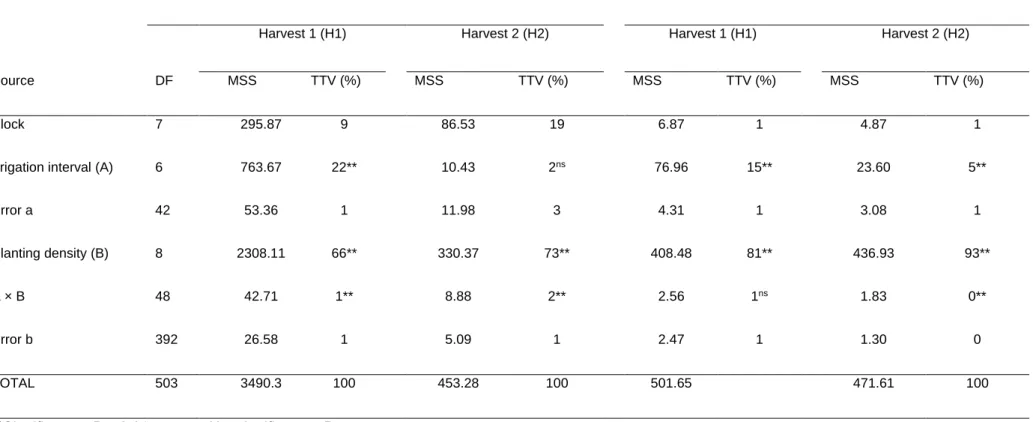
Treatment: The irrigation interval × planting density interaction was significant on dry shoot mass during summer H1 and H2. However, in winter H1 treatment effects were not significant, but were significant during winter H2. In all experiments, during both seasons, although the interaction effects were significant, their contribution in TTV of
33
the variables (1-2%) was negligent (Table 3.1). Consequently, only the main factor irrigation interval and subplot factor planting density were discussed further.
In summer H1, irrigation interval contributed 22% in TTV of dry shoot mass, but had no effect during summer H2 (Table 3.1). In winter H1 and H2, irrigation interval contributed 15% and 5% in TTV of the variable during the respective harvests, respectively. In contrast, in summer H1 and H2, planting density contributed 66% and 73%, respectively, in TTV of the variable, whereas in winter H1 and H2 the treatment contributed 81% and 93%, respectively, in TTV of the variable.
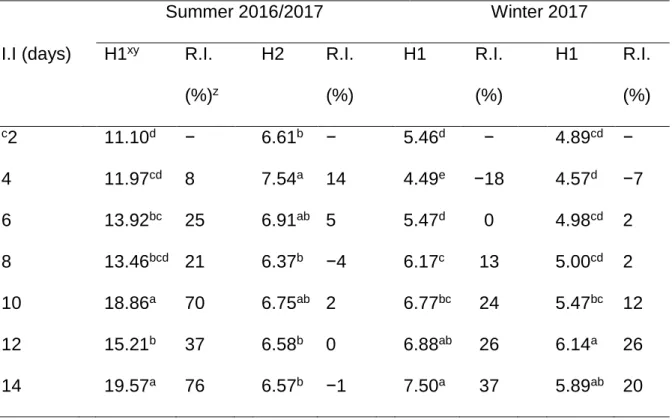
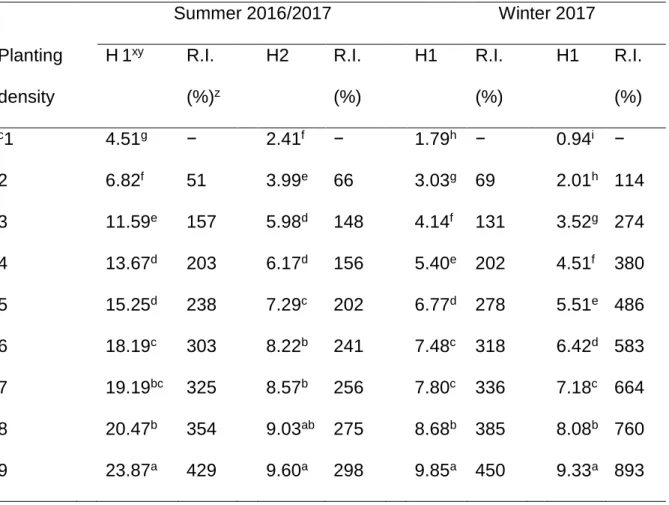
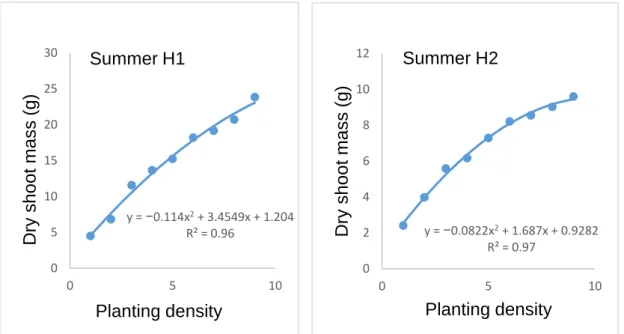
Relative impact: Relative to two-day irrigation interval during summer H1, increasing irrigation interval increased dry shoot mass of S. retroflexum, whereas during summer H2, the variable was reduced (Table 3.2). In contrast, at low irrigation intervals, during the winter season, dry shoot mass declined during H1 and H2, but as the irrigation interval increased, the variable increased. Relative to one plant per drip irrigation hole during summer H1 and H2, increasing planting densities increased dry shoot mass of the test plant (Table 3.3). Similar results were observed in winter H1 and H2.
34
Table 3.1 Partitioning sources of variation on biomass of Solanum retroflexum in response to seven irrigation interval (days) and nine levels of planting density during two successive harvests in summer and winter months under field conditions.
Summer 2016/2017 Winter 2016/2017
Harvest 1 (H1) Harvest 2 (H2) Harvest 1 (H1) Harvest 2 (H2)
Source DF MSS TTV (%) MSS TTV (%) MSS TTV (%) MSS TTV (%)
Block 7 295.87 9 86.53 19 6.87 1 4.87 1
Irrigation interval (A) 6 763.67 22** 10.43 2ns 76.96 15** 23.60 5**
Error a 42 53.36 1 11.98 3 4.31 1 3.08 1
Planting density (B) 8 2308.11 66** 330.37 73** 408.48 81** 436.93 93**
A × B 48 42.71 1** 8.88 2** 2.56 1ns 1.83 0**
Error b 392 26.58 1 5.09 1 2.47 1 1.30 0
TOTAL 503 3490.3 100 453.28 100 501.65 471.61 100
**Significant at P ≤ 0.01, 0.0.5, nsNot significant at P ≤ 0.05 MSS= Mean Sum of Squares
TTV= Total Treatment Variation
35
Table 3.2 Effects of irrigation interval (I.I) on dry shoot mass of Solanum retroflexum under field conditions obtained from two harvests.
Summer 2016/2017 Winter 2017
I.I (days) H1xy R.I.
(%)z
H2 R.I.
(%)
H1 R.I.
(%)
H1 R.I.
(%)
c2 11.10d − 6.61b − 5.46d − 4.89cd −
4 11.97cd 8 7.54a 14 4.49e −18 4.57d −7 6 13.92bc 25 6.91ab 5 5.47d 0 4.98cd 2 8 13.46bcd 21 6.37b −4 6.17c 13 5.00cd 2 10 18.86a 70 6.75ab 2 6.77bc 24 5.47bc 12 12 15.21b 37 6.58b 0 6.88ab 26 6.14a 26 14 19.57a 76 6.57b −1 7.50a 37 5.89ab 20
xH1 = Harvest 1, H2 = Harvest 2.