i
Social Geographies of Participation and Success:
Narratives of six students in a Technical Vocational and Educational Training (TVET) College in Northern KwaZulu-Natal
By
Alois Nzembe
A dissertation submitted in partial fulfilment of the requirements for the degree of
Master of Education (Social Justice Education)
Pietermaritzburg
6 March 2019
ii
Declaration
I, Alois Nzembe, declare that this dissertation entitled:
Social Geographies of Participation and Success: Narratives of Six Students in a Technical Vocational and Educational Training (TVET) College in Northern KwaZulu- Natal, is my own work and that all sources I have used or quoted have been indicated and acknowledged by means of complete references. It has not been submitted before for any degree or examination at any other university.
_______________________________
Alois Nzembe 213570841
_______________________________
Saajidha Bibi Sader (PhD) (Supervisor)
Date: 30 November 2018
iii
Dedication
This work is dedicated to my wife, Nyembezi Reason Nzembe, my in-laws, Mr. and Mrs.
Pilime, my late parents Mr and Mrs Nzembe, my sibling Simbisayi Ndige, who has always motivated me to go a step further in my academic career. I also dedicate this study to a model, mentor and coach par excellence Professor Rungano Jonasi Zvobgo, who has always been a torch-bearer, consistently reminding all his protégés that education is a tool which we can use to solve today and tomorrow’s socio-economic challenges. You all have been a source of motivation even when I seemed to be throwing away the towel. Your words of inspiration continued to ring in my sub-conscious mind, helped me to pull up my socks and focus on my mission of finishing this research project.
iv
Acknowledgements
I would like to express my genuine indebtedness to my guide, instructor and supervisor Dr. S.
B. Sader who has the assertiveness and the material of a guru: she persistently and influentially conveyed a spirit of adventure with regard to investigation and studentship.
Without her supervision and persistent support, this thesis would not have been successful.
Many words of appreciation go to the College Management team at Mnambithi TVET College, particularly Ms D. M. Dlamini, the outgoing Rector, for granting me the permission to generate data in one of the college campuses.
I would like to thank Gedion Rambakora, who as a friend and a brother was always willing to share ideas and give his finest recommendations. It would have been a solitary adventure without him.
To Faheem Gaffer, Mzwandile P. Zuma and Vinodhani Govender, I say thank you my colleagues and true friends for helping me to format my research report according to the academic dictates of the University of KwaZulu-Natal.
I also would like to thank Tendayi Isaac Mawango who edited the entire draft and whose language skills and knowledge had a final touch on the linguistic and logical quality of this research.
Many thanks go to my NCV level 2 students, which include Education and Development, Financial Management and Information Technology cohorts of 2015 for their participation in this study. My inquiry would not have been successful without their cooperation.
I would also like to thank my elder sister, Vongai Mavengere and my elder brother, Godwin Nzembe. They buttressed and invigorated me with their words of encouragement.
Finally, I would like to thank my wife, Nyembezi Reason Nzembe. She was always there cheering me up and stood by me through the trying times. To my daughters, Ruth and Rutendo and my sons Alois (Jnr) and Emmanuel I say this research is yours because you stood by me when the research journey seemed impossible.
v
Abstract
Challenges pertaining to social geographies of participation and success among students from low socio-economic backgrounds have been a bone of contention and areas of intense academic contestation in post-apartheid and democratic South Africa. Academics have tried to unravel variables, which impede or promote participation and success among students from low socio-economic backgrounds, with a special focus on constructing policy models, which cater for a socio-legal and academic needs of disadvantaged students. It is against this background that a study of social geographies of participation and success in a TVET college in Northern KwaZulu-Natal was conducted.
This was a qualitative study, located in the critical paradigm, which aimed at analysing students’ social geographies of access, participation and success in a public College in Northern KwaZulu-Natal. The study was undertaken through the development and understanding of the experiences of six students in a TVET college in KwaZulu-Natal province. Research data was collected through one-on-one semi-structured interviews, which were transcribed, coded and finally categorised into themes, which the researcher used during the process of data analysis. Document analysis was also used to find out students’
participation and success rates in the TVET College. To establish students’ level of involvement and achievement in the TVET College, the researcher used attendance registers to find out the number of students who enrolled for Information Technology, Education and Development and Financial Management cohorts at levels NCV level 2, 3 and 4. An analysis of the number of students who enrolled for NCV level 2, 3 and 4 revealed that there was a marked difference between the number of students who registered for education and training programmes at NCV level 2 and those who registered for the same programmes at level 3 and 4. In short, the number of students who registered for NCV level 2 programmes was higher than the number of returning students at NCV level 3 and 4.
A comparative analysis of the reasons why students experience reduced and extraordinary academic outcomes at NCV level 2 showed that the students’ lack of preparation for the NCV programme, attitudes of scholars towards their college work, poor attendance by both students and lecturers, lack of inspiration in the majority of students who register for NCV level 2, pleasant relationships between the students and lecturers, a good educational context in the relevant curriculum subjects, self-inspiration on the part of the student all contributed to either reduced or higher academic outcomes by students in the TVET college under study.
vi
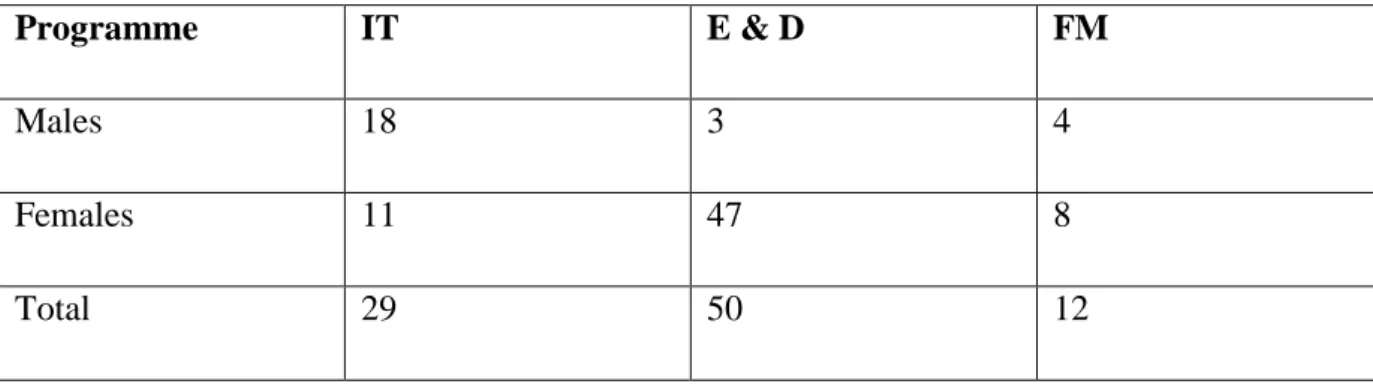
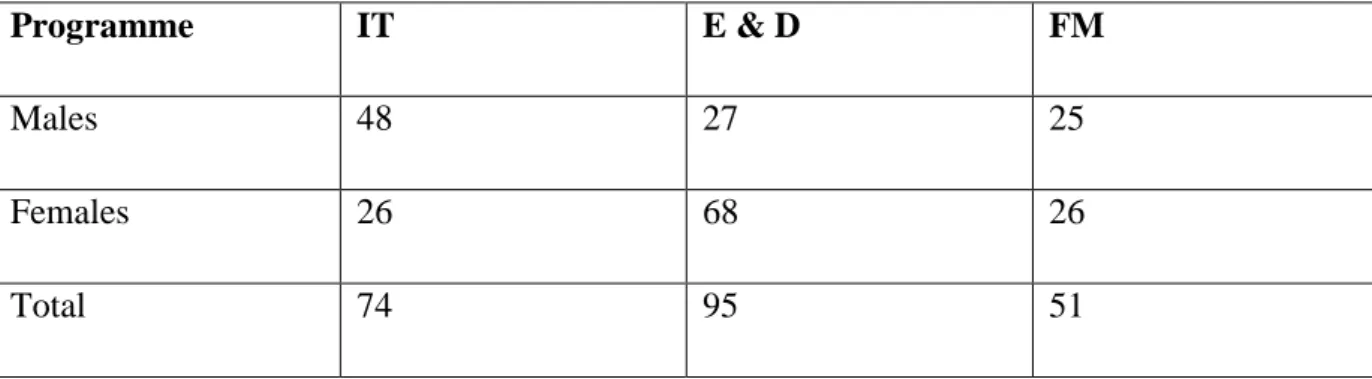
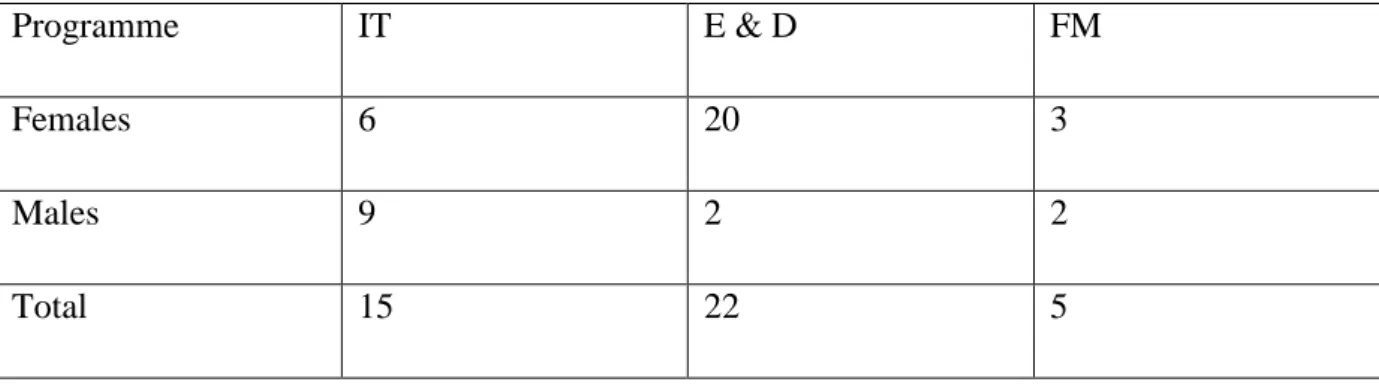
LIST OF TABLES Table 1: NCV Level 2 Enrolment-2015 Table 2: NCV Level 3 Enrolment-2016 Table 3: NCV Level 4 Enrolment-2017
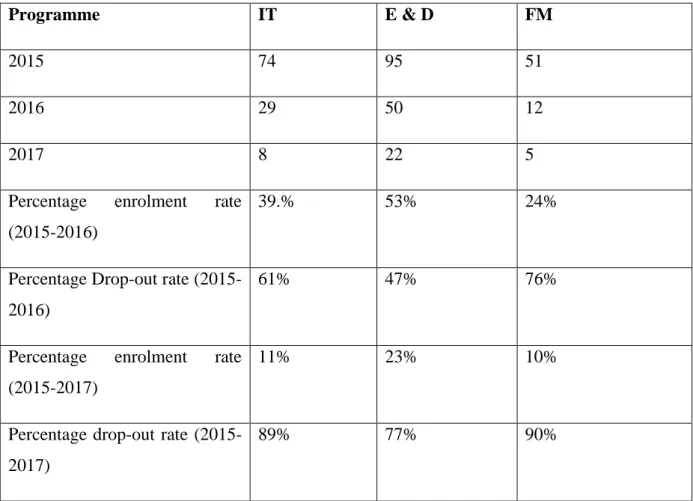
Table 4: Percentage Differences from 2015-2017 Enrolments
vii
LIST OF ACRONYMS AND ABREVEATIONS ANC African National Congress
CMT College Management Team
DHET Department of Higher Education and Training DOE Department of Education
FET Further Education and Training ICASS Internal Continuous Assessment ILO International Labour Organisation
ISAT Integrated Summative Assessment Tasks
NATED National Accredited Technical Education Diploma NCV National Certificate Vocational
NDS National Development Strategy NQF National Qualifications Framework NSFAS National Students Financial Aid Scheme REAP Rural Education Assistance Programme SAQA South African Qualifications Authority SSO Student Support Office
TELSA Tertiary Education Fund of South Africa
TVET Technical Vocational Education and Training
UNESCO United Nations Education Scientific and Cultural Organisation
viii
TABLE OF CONTENTS
CHAPTER ONE: INTRODUCTION TO THE STUDY
1.1 Introduction……… 1
1.2 Rationale and Significance of the Study……… 1 1
1.3 Focus and Purpose of Study………... 2
1.4 Background to the Study……… 4
1.5 Review of Related Literature………. 5
1.5.1 Introduction……….. 5
1.5.2 Financial Factors which influence Participation and Success……….. 5
1.5.3 Academic Factors which influence Participation and Success……… 6
1.5.4 Socio-cultural Factors affecting Participation and Success………. 7
1.6 Research Design and Methodology……… 8
1.6.1 Research Paradigm………... 9
1.6.2 The Research Sample………... 9
1.6.3 Research Questions……….. 10
1.7 Organisation of this Study……….. 10
1.8 Conclusion……….. 10
CHAPTER TWO: LITERATURE REVIEW AND THEORETICAL FRAMEWORK 2.1 Introduction……… 12
2.2 Widening Participation: The Legislative Framework……… 14
2.3 White Paper for Post-School Education and Training………... 17
2.4 The TVET System in South Africa: Challenges, Strengths and Prospects……… 18
2.5 Student related factors which influence access and success in TVET Colleges…………... 20
2.5.1 The influence of socio-economic status on participation and success………... 20
2.5.2 2.6.2 How time management promote Participation and Success ………. 21
2.5.3 The influence of Lecturer-Student relationship on Participation and Success …………. 22
2.5.4 The influence of geographic location on academic achievement……….. 23
ix
2.5.5 The role of motivation on Participation and Success……….. 23
2.5.6 The relationship between parental support and student success………. 24
2.5.7 Participation in non-academic activities and Success………. 25
2.6 Non-academic factors that influence participation and success………. 25
2.6.1 National Student Financial Aid Scheme (NSFAS) support in TVET colleges…………... 27
2.6.2 The Role of TVET Colleges in facilitating financial aid……… 29
2.6.3 Management of National Student Financial Aid Scheme………... 30
2.7 Academic Factors Which Influence Participation and Success………. 31
2.7.1 Articulation between school, college and university 31 2.7.2 The influence of pedagogical practices on participation and success………. 32
2.7.3 The importance of language on Participation and Success………. 33
2.7.4 Class attendance and academic performance……….. 33
2.8 Institutional Interventions……….. 35
2.8.1 Student preparedness: Career Counselling……….. 35
2.8.2 TVET student’s induction programme……… 36
2.8.3 Academic support and development………... 37
2.8.4 The influence of institutional culture on Participation and Success………... 38
2.9 Theoretical Framework……….. 38
2.9.1 Cultural, Economic, Social and Symbolic Capital……….. 39
2.9.2 Habitus and Field……… 41
2.9.3 A critique of Bourdieu’s Theory of Cultural Capital……….. 42
2.10 Conclusion……… 43
x
CHAPTER THREE: RESEARCH DESIGN AND METHODOLOGY
3.1 Introduction……… 44
3.2 Qualitative Research Design……… 44
3.2.1 The Research Paradigm……….. 45
3.2.2 The Narrative Inquiry……….. 47
3.2.3 The Research Sample……… 49
3.3 Document Analysis……… 50
3.4 Data generation methods……… 51
3.4.1 In-depth interviews……….. 52
3.4.2 Data Analysis……….. 54
3.4.3 Pilot Study………... 55
3.5 Ethical Issues……….. 55
3.6 Issues of Trustworthiness……… 56
3.7 Conclusion……… 57
CHAPTER FOUR: PRESENTATION AND DISCUSSION OF FINDINGS 4.1 Introduction……… 59
4.2 Biographical Information of Participants………... 60
4.2.1 Ian……… 60
4.2.2 Robert……… 61
4.2.3 Ngosazana………... 62
4.2.4 Dinesh……….. 62
4.2.5 Zuzi……….. 63
4.2.6 Prumel………. 64
xi
4.3 Key Findings……….. 65
4.4 The influence of Student-Related Factors on Participation and Success………... 70
4.4.1 Choice of institution……… 71
4.4.2 The Role of NSFAS on facilitating Participation and Success………... 72
4.4.3 Place of Residence………... 74
4.4.4 Choice of Career………... 73
4.4.5 The influence of motivation on Participation and Success………. 77
4.4.6 The correlation of college attendance and academic achievement………. 79
4.5 Academic Factors Influencing Participation and Success in the TVET College…………... 80
4.5.1 The under-preparedness of students for the NCV Curriculum……… 80
4.5.2 The language of instruction and academic outcomes……….. 82
4.5.3 Academic support programmes in the TVET College……… 84
4.5.4 The influence of educational resources on Participation and Success……… 86
4.5.5 The interaction between assessment approaches and academic achievement……… 89
4.5.6 Students’ perception of assessment approaches used in the TVET College………... 91
4.5.7 The nexus between ISAT and academic achievement……… 92
4.5.8 The influence of pedagogical approaches on academic achievement………. 94
4.5.9 The influence of lecturer-student relationship on academic achievement……….. 95
4.6 Institutional Interventions……….. 97
4.6.1 The relationship between the registration process and student participation……….. 97
4.6.2 Participation in non-academic activities……….. 99
4.6.3 The effects of student protests on Participation and Success……….. 101
4.6.4 Towards positive educational outcomes in the TVET College………... 104
xii
4.7 Summary of Findings………. 107
CHAPTER FIVE: CONCLUSIONS AND RECOMMENDATIONS 5.1 Introduction……… 108
5.2 Summary of Main Findings……… 109
5.3 Significance of Study………. 112
5.4 Limitations of the Study………. 113
5.5 Recommendations……….. 113
5.6 Conclusion……….. 114
References……… 116 APPENDICES
Appendix A Informed consent letter to gatekeepers Appendix B Informed consent letter to participants
Appendix C In-depth Interview questions
Appendix D Ethical clearance letter from UKZN
1
CHAPTER ONE: INTRODUCTION TO THE STUDY 1.1 Introduction
Technical and vocational education and training (TVET) refers to instruction and preparation that organizes students for useful contribution in the national economy (Finch and Crunkilton 2007). By implication, TVET refers to thoughtful intercessions to bring about knowledge and skills, which would make graduates more fruitful in selected areas of economic activity (Finch and Crunkilton 2007). It is upon this background that the African National Congress (ANC) government came up with the concept of technical and vocational education and training to increase access to high quality and relevant education and training and skills development opportunities, including workplace learning and experience, to enable effective participation in the economy and society by all South Africans and reduce inequalities (National Development Strategy 111, 2009). It is also for this reason that the South African Department of Higher Education and Training’s uppermost focus is to reinforce and develop the public TVET colleges and turn them into high-quality institutions of choice for school leavers (Department of Higher Education and Training 2012). Despite this policy thrust, participation and success rates in TVET colleges remain a challenge for students, educators, college management, policy makers as well as national leadership of the Department of Higher Education and Training (DHET).
1.2 Rationale and Significance of the Study
The reasons for carrying out this research were based on the observations by the researcher at a public college in Northern KwaZulu-Natal. From the investigator’s observations, the number of students who registered and participated in the college’s training and education programmes has been higher than the number of students who succeeded in getting qualifications, which would assist them in competing in the job market. For example, a very high number of students registered to study with the college in January of every year since 2011 but by the end of every year between 2011 and 2017 a disproportionately high number of students did not write examinations, or failed to pass all seven subjects at National Certificate (Vocational) (NCV) level two. One of the challenges which the researcher observed is that most of the students did not write examinations or failed to pass all seven subjects are at NCV level 2, which is regarded as the first year class in the TVET system.
This observation tallied with Lau (2003) who argues that institutions with extraordinary first year retention rates tend to have greater percentages of students graduating within four years.
2
This view is also corroborated by Noel, Levitz and Saluri (1985) cited in Lau (2003) who comment that research has consistently indicated that college students who dropped out ordinarily did so by the time they finished their first year of study. Ezeala-Harrison (2014) encapsulates the challenge of graduation rates in higher education by saying that the notion of marginalized student retention in tertiary instruction is not unrelated with their social standing of being underprivileged and therefore calls for a deeper study and understanding of the issues of marginalized student retention in post-school instructional contexts.
At a personal level, I have observed that the College Management Team (CMT), comprising the Campus Manager, Head of Department, Student Support Managers, and Senior Lecturers did not have a proactive approach in addressing the problem of student participation and success especially during the first year of study. Students joined the college with very little information pertaining to different education and training programmes offered at the college due to poor interaction between the college and the prospective students. It was important for the CMT to design and implement communication media directed at first year students because according to Lau (2003) first year students are overawed with the movement from high school to college life and they could become excessively strained by the melodramatic modifications even before they finished their first year of college. It is for these reasons that there was a need for carrying out research on why there was a high participation rate and a low success rate in the TVET College in Northern KwaZulu-Natal.
1.3 Focus and Purpose of the Study
The emphasis of this research was to scrutinize factors, which facilitated or impeded participation, access to the curriculum and success of low socio-economic groups in a public college in Northern KwaZulu-Natal. According to Smith (2010), social geographies refer to the study of people and their environment with particular emphasis on social factors. For the purposes of this study social class, as a socio-geographical factor was examined with a view to analyse factors which promoted or impeded participation and success in a TVET college in Northern KwaZulu-Natal. According to the Centre for the Study of Higher Education (CSHE) (2008), the Australian geographers of education have long been concerned with analysing and critiquing the spatial inequalities in education between young people of different social classes, genders, and ethnicities.
The problem of involvement and achievement rates in public colleges in South Africa has been and is still a challenge to college management, policy makers and the national
3
leadership of the Department of Higher Education and Training (DHET). According to DHET (2012), public colleges were mandated to offer industry and business related instructional and preparation programmes to students who dropped out of school before completing Grade 12, those who finished Grade 12, but did not succeed to be enrolled in universities, as well as working persons who desired to improve their abilities and understandings, and at the same time improve their quality of life. Nevertheless, there is, however, a scarcity of existing research on the socio-cultural and economic issues, which contributed to low involvement and achievement rates (DHET 2012) among NCV students in TVET colleges in South Africa. It is, therefore, against this context that there was a need to carry out an investigation on the reasons why there was a low involvement and achievement rate at a public college in Northern KwaZulu-Natal, especially at NCV level 2.
Statistics from DHET (2012) show that a total of 17 769 students in the province of KwaZulu-Natal alone participated in the NCV level 2 programmes but only 9788 sat for the 2012 NCV level 2 examinations, representing a drop-out rate of 45%. This implies that only 55% of the total number of students who enrolled for the NCV level 2 wrote the 2012 examinations. Although figures for pass rates for KwaZulu-Natal as a province were not available, the TVET Colleges Technical Task Team (2014) reported that nationally, the pass rate for 2012 was at 39% for students who enrolled for the NCV Level 4 qualification. By implication, 61% of the NCV students did not graduate in the 2012 academic year. This painted a very bleak picture in terms of participation and success rates in the TVET system.
A study of six TVET Colleges in Western Cape province by Papier (2009) showed that out of a total of 4896 NCV level 2 students enrolled in Electrical Engineering, Office Administration, Information Technology and Tourism 1254 (26%) dropped-out, 853 (17%) were certificated and 2789 (57%) were not certificated. These statistics pointed to a very bleak scenario considering that only a mere 17% of the total number of students enrolled in 2008 at NCV level 2 managed to obtain certificates. The other issue that was of concern is that when figures for students who dropped out and those who were not certificated were put together a total of 4043 (83%) were not able to complete their first year in the TVET colleges. These figures tallied with the National Plan for Higher Education (2001) study that reported that the South African graduation rate of 15% was the lowest in the world. Letseka and Maile (2008) also commented that this was of particular distress given the changes that had taken place in the occupational distribution and the shortage of critical skills in the employment market. In combination, these variables were likely to act as chief barriers to
4
accomplishing the central government’s economic development goals. The Department of Education (2001), therefore, identified the need to escalate both the involvement and completion rates of black students in general and African students in particular with simultaneous increases in the representation of blacks and women in educational, administrative, managerial and executive positions, especially at senior levels. A DHET Research and Policy Report (2016) found out that of students who entered higher education in 2007, only 20% completed within three years, 34.4% in four years, and 42.8% in five years. When looking at this by race, the report shows that more White students graduated within regulation time (42%) than Indian (26%), coloured (23%), and African (19%). The DHET study went further to indicate that white females were most likely to graduate within regulation time (61.4%) and that the graduation rate for African females was slightly higher than African males. However, there was not such a significant difference in the dropout rate within the first three years for this cohort, with white students having a dropout rate of 32%
compared to Indian (36%, African students (38% and coloured students 41%. In the American higher education system Blacks also suffered from racial disparities (Museus, Palmer, Davis and Maramba 2011) since a research by the National Center for Education Statistics (2007) found out that about 42% of Afro-American students who matriculated at a four –year post-secondary institution completed a bachelor’s degree within six years, which is approximately 18% lower than their White peers. Because of these shocking statistics, there was, therefore, a need to investigate causes of low participation and success rates in a TVET college in Northern KwaZulu-Natal.
It is important to note that a low success rate at NCV level 2 had a very huge negative impact on enrolments at NCV Levels 3 and 4 since NCV level 2 is regarded as the first year class in the TVET instructional and preparation system. It is therefore, imperative for college management, policy makers and the national leadership and management of the Department of Higher Education and Training (DHET) to work towards retaining TVET students at NCV level 2 so that the student numbers at levels 3 and 4 are kept at reasonably higher levels. This is important, because retaining students at NCV level 2 will also ensure a reasonable number of students will acquire the necessary skills and knowledge and therefore graduate from the TVET sector and participate in the successful socio-economic development and transformation of South Africa.
5 1.4 Background to the Study
South Africa’s accomplishment rate of 15% is one of the lowest in the world (Department of Higher Education and Training 2013). This is of great distress since this may be a main contributor to a scarcity of critical abilities in the South African employment, industrial and socio-economic market. Because of this situation in TVET Colleges, this state of affairs is likely to act as a principal obstacle to realising the central government’s economic development goals. The Department of Higher Education and Training (2013) also noted wide discrepancies in the participation and success proportions, with the average achievement rate for white students more than double that of black students. To bring about parity, the department identified a need to increase both the involvement and success rates of black students in general, and African students in particular, with associated increases in the representation of blacks and women in academic and administrative positions, especially at senior levels. Because of the lower success and participation rates in higher education, improving graduation rates remained a priority, to the extent that the new funding framework linked funding to the number of graduates and institution produced (Department of Higher Education and Training 2013). It is against this background that there is need to carry out research on factors, which contribute to poor participation and success rates at a public college in Northern KwaZulu-Natal.
1.5 Review of Related Literature 1.5.1 Introduction
South African TVET colleges have been the target of intensive policy reform since 1998 when the first FET Act was passed (REAP, 2009) and amended in 2006. This implies that for these policy reforms to have a positive impact in the South African economy the TVET system needs to be strengthened in order provide access to high quality technical and vocational education for all without losing sight of the TVET’s special relationship with the worlds-of-work (McGrath, 2012). To achieve this, the theoretical grounding of the TVET policy in South Africa needs to shift from the human capital approach, and broadened to include the human capability and sustainable development approaches (Rasool and Mahembe 2014). Research by Jones, Coetzee, Bailey and Wickham (2008) shows that South African students from low social and economic backgrounds failed to participate successfully in TVET Colleges because of the following factors: financial, academic, institutional and socio- cultural factors.
6
1.5.2 Financial factors which influence participation and success in TVET colleges Studies, which have been carried out, emphasise that the uppermost reason for students’
failure to participate and succeed in tertiary education programmes are economic difficulties (Jones et at (2008). Thomas (2002) also notes that the significant ways in which economic pressures influence on underprivileged students in the United Kingdom are total lack of money, liabilities, and fear of liabilities, relative lack of money in comparison to previous financial levels, in relation to peers and part-time work which interferes with time and energy for studies. While financial challenges may cut across all socio-economic levels, Jones et al (2008) note that students from low social and economic levels were mostly affected. Students from low social and economic level were affected, firstly in terms of admission, that is, the application fees charged by TVET institutions were a barrier to many disadvantaged students, which may have excluded them from post-school education or precluded them from applying to more than one institution.
Furthermore, registration and educational fees were even bigger economic barriers (Krause, Vick and Boon 2009). Within the South African situation, Jones et al (2008) noted that the National Student Financial Aid Scheme (NSFAS) loan may have covered registration and educational fees but if students applied late, they would not be able to access financial aid for the first semester. Failure to pay these costs at the end of the first year resulted in students being disqualified from registering. The other barrier which Jones et al (2008) highlighted was the fact that since these students came from disadvantaged backgrounds, they did not have access to information about official processes regarding registration and application for financial aid, because so very often first year students apply late.
Thirdly, a research by Jones et al (2008) found out that the majority of students from the countryside did not have kinfolk or networks near the college with whom they could stay or offer them any social and economic support. These students, therefore, may have come from the security of a small village, arrived in strange town environment, often having to find and finance their own lodgings, food and means of transport, and to some extent, textbooks and equipment, with very limited resources or awareness of how to manage their finances.
1.5.3 Academic Factors which affect participation and success in TVET colleges
The other factor, which influenced students’ successful participation in tertiary institutions, is related to academic challenges. A report in the Mail and Guardian dated 16 to 27 2007
7
highlighted the fact that a major factor in poor participation and hence low success rates was their inadequate educational preparation for tertiary instruction in high school, and inadequate academic teaching and sustenance services in tertiary institutions. This report also noted that other major factors that disadvantaged students experienced related to having to study in a foreign language, to which rural students may have had little contact, and being the first generation in their family structures to enter TVET institutions. This implied that in this development, their families did not have the educational capital to offer assistance to the students’ integration in their academic adventures.
Jones et al (2008) argued that students from low socio-economic backgrounds, especially in their first year found it problematic to adjust to the TVET College environment; in particular, the change from the disciplined school environment which was usually characterised by imposed self-restraint and supervision, to TVET environment which was characterised by greater freedom, free time and self-discipline. Because of the poor quality of schooling the students acquired, disadvantaged students tended to lack the range of academic skills, for example, study skills, time management, self-discipline, which were important ingredients in tertiary education. Thomas (2002) concluded that students from low social and economic backgrounds were less successful, not because they are of lower intelligence, but because the education and training programme was prejudiced in favour of those things with which middle-class students were already acquainted.
1.5.4 Socio-cultural factors affecting participation and success in TVET colleges Social and cultural factors were also found to influence students’ chances of successful participation in tertiary education. Jones et al (2008) found out that the socio-cultural backgrounds of underprivileged, rural students did not prepare them for the considerably different post-school education context and, for students from low socio-economic backgrounds; the change into post-school education was even more challenging than middle- class students. There is, therefore, a need to provide an integrated and coherent support system to maximise students’ success in tertiary institutions (Jones et al 2008). Students from low socio-economic backgrounds, especially disadvantaged rural areas have been found to have poor participation and success rates because they are different from their urban counterparts and to those from economically privileged backgrounds. Reay, David and Ball (2001) affirmed that it was only the more advantaged of the middle-class students who experienced the different contexts affecting choice as almost seamless. They went on to say
8
that while the middle class students were operating within domains where the miscellaneous influences were principally strengthening rather than in competition with each other, for the socio-economically underprivileged rural students, there was less of a fit between educational institution, family and friends. Jones et al (2008) concluded that feelings of segregation and lonesomeness could contribute significantly to a student’s decision to pull out of the learning programme.
1.6 Research Design and Methodology
In this study, a qualitative research strategy was used in classifying and evaluating the direction of the study. According to Saunders, Lewis and Thornhill (2003), qualitative research is carried out in an ordinary setting and includes a development of a multifaceted and all-inclusive representation of the spectacle of interest. Atieno (2009) also stated that qualitative research design could use either the critical or the interpretive paradigm because it captured the life understandings of contributors and its aim was to comprehend the communal or social problem from multiple viewpoints. I, therefore, used the qualitative research design, as this was the most convenient for this study. Meir, Newell and Pazer (1989) cited in Greco, Baidissin and Nonino (2013) qualitative approach to research is concerned with the investigator’s evaluation of attitudes, feelings and conduct. Using data generation methods such as in-depth interviews, I was able to gain a deeper understanding of issues, which influence involvement and accomplishment rates in a TVET college in Northern KwaZulu- Natal.
In this research, a narrative of six college students at a TVET institution was used as a study method. According to Creswell (2006), a narrative is a style of investigation in qualitative research with a specific emphasis on the stories told by persons. Clandinin and Connolly (2000) also state that narrative inquiry is an all-encompassing term that captures individual and social scopes of information over time, and take account of the association between personal experience and social context. Riley and Hawe (2005) summarised the main focus of narrative inquiry as a way of conveying an appreciation to the investigator of how individuals talked about events and whose perspectives they drew on to make sense of such events. This may have revealed itself in how and when particular events were introduced, how tension was portrayed and how judgements were carried out.
It is against this context that the researcher recorded stories from six students with the goal of locating their experiences of partaking in instructional and preparation programmes at a
9
TVET college as well as aspects, which led to them to prosper or pull out from the college system. This was important because the stories from students helped the investigator to have an appreciation of students’ individual involvements in the college structure and also be able to draw from these experiences a sense of why some students participate successfully in the TVET college while, on the other hand, other students failed to make it through the college programmes.
1.6.1 Research paradigm
According to Bertram and Christensen (2014), a research paradigm represents a specific perception that defines, for the investigator who hold this view, what is tolerable to investigate and how this should be done. In this research, a critical research paradigm was used. This was significant because the critical research paradigm focused on the imbalanced and biased ways in which the world is organised (Bertram and Christensen 2014). For example, literature for this study pointed to an unequal distribution of opportunities between the students from low socio-economic backgrounds and middle class students. There was, therefore, a need to examine factors, which contributed to this discrepancy between participation and success rates for students from low socio-economic backgrounds and middle class students. Having identified the issues which promote or hinder participation and success between these social classes, the investigator planned to draw up a list of recommendations which the TVET college could use to increase the involvement and achievement probabilities of the underprivileged group of students because according to Cohen, Manion and Morrison (2011) the aim of using the critical paradigm in qualitative investigation was not just to define or comprehend, but to transform society to become more fair.
1.6.2 The research sample
A research sample is a collection on which evidence is acquired (Fraenkel and Wallen 2008).
In this research, the researcher used a purposive research sample, because he did not propose to generalise the outcomes beyond the group sampled. Patton (2006) is of the view that in purposive sampling participants are nominated because of some individual differences. In this study, the researcher intentionally nominated a purposive sample of six students, encompassing three young men and three young women aged between 21 and 25 years.
Among the six students in the purposive sample, the researcher confirmed that the other three must have prospered in the NVC level 2 examinations in 2015 and the other three must have
10
experienced failure to register for the NCV programme in 2016. The reason why the researcher interviewed students who had passed or failed to succeed was that the researcher intended to elicit participants’ experiences of factors that promote or hinder participation and success in the TVET college education and training programmes.
1.6.3 Research Questions
What are students’ experiences of participation and success in the context of one TVET college in Northern KwaZulu-Natal?
What are the factors, which facilitate or impede student participation and success in this TVET College?
How do students navigate the contextual dynamics that affect participation and success?
1.7 Organisation of this Study
Chapter two provided a critical analysis of the empirical studies within South Africa, in the Sub-Saharan Africa as well as international research on the challenges, which contributed to poor participation and success rates in higher education in general, and the TVET sector in particular. Chapter three provided a logical outline of the research methodology and design, which was employed in this research project, and the research instruments, sampling procedures, the research paradigm, which informed the research approach, as well as issues relating to data analysis, ethics and trustworthiness of the study. Chapter four presented, interpreted and analysed the data with a view to find answers to the research objectives and questions outlined in the introductory chapter of this study. Lastly, Chapter five concluded, summarised key research findings, provided an outline of recommendations as well as implications of the study for future research.
1.8 Conclusion
The main thrust of this chapter was to provide a synopsis of the whole research project.
Along this vein critical research concepts such as a breakdown of the rationale and significance, focus and purpose and background of study were provided to put the research study in perspective. A summary of related literature from South Africa as well as internationally was also outlined to contextualise the research topic within the boundaries of what other researchers have found out within South Africa, Sub-Saharan Africa as well as in
11
the diaspora. Lastly, the research design and methodology as well as the a breakdown of key research questions was also provided to ensure that the research focus and purpose is linked to what the researcher intends to unravel through the narratives of six students in a TVET college in Northern KwaZulu-Natal.
12
CHAPTER TWO: LITERATURE REVIEW AND THEORETICAL FRAMEWORK 2.1 Introduction
The promulgation and implementation of the TVET curriculum by the South African government is a significant innovation in breaking the cycle of poverty in post-apartheid and democratic South Africa. The TVET curriculum focuses on two broad curriculum pathways:
the National Accredited Technical Education Diploma (NATED) and the National Certificate Vocational (NCV). The aim and intention of the NCV curriculum include allowing learners to access and master abilities, awareness, standards and attitudes for all-time learning; to continue horizontal education and training; to access higher education; and to follow self- employment or employment opportunities (DHET, 2015). The NCV curriculum, which is the main focus of this study, is a student-centred approach to teaching and learning, and outcomes-based in nature was introduced in the Further Education and Training Colleges Act 98 0f 1998. Further, education and training, according to the Education White Paper 4 (1998) is all learning programmes that are registered on the National Qualifications Framework (NQF) from levels 2 to 4 as determined by the South African Qualifications Authority (SAQA) Act, 1995 (Act 95 of 1995) and corresponds to the present Grades 10 to 12 in the school system. The NCV programme is, therefore, offered at National Qualifications Frameworks (NQF) 2, 3 and 4. It provides Grade 9 learners a vocational alternative to an academic Grade 10-12 by offering industry-focused training (Garraway, Bronkhorst and Wickham, 2015).
The new NCV, curriculum was introduced to Colleges in 2007. This curriculum included both theoretical and practical aspects of learning. There was a significant change in the subject and assessment guidelines, and the concept of internal continuous assessment (ICASS) and integrated summative assessment (ISAT) was introduced in the curriculum (Department of Higher Education and Training, 2013b). The new NCV curriculum was introduced in FET Colleges with a matrix of 11 programmes each comprising of 3 Fundamental subjects, 3 Vocational subjects and 1 Elective subject. The elective subject could be chosen from any field or programme thus providing for a wide range of variations available to students. From the onset of these changes, FET Colleges were expected to emulate the business world in the running of their colleges so as to be responsive to the needs of the business community and in the long run, be able to operate as fully autonomous
13
institutions (Akoojee, Gewer and McGrath, 2005; McGrath, Akoojee, Gewer, Mabizela, Mbele and Roberts, 2006; Akoojee, 2008; Towani, 2010).
The decision of the South African government to develop an education and training system that could provide a range of potential pathways that enable youth to make a smooth transition from mainstream schooling to the world of work is significant due to the lingering effects of the pre-1994 education system (Branson, et al. 2015). Although FET is a noble concept and should be applauded, the number of youth who have benefitted from this national education and training programme still remains very low given that the main thrust of the FET curriculum was to increase the number of youth who would participate in the economy through employment and entrepreneurship. Branson, Papier, Needham and Hofmeyr (2015), highlight the fact that the majority of South African youth do not register in post-school education, with only 8% of youth between the age of 18 and 24 attending university or college, with only 4% of these youth attending vocational colleges. Statistics South Africa (2013) reports that the percentage of 16 to 18 year olds out of the education and training system was at 14% in 2012 against a background of youth unemployment of 33%.
Furthermore, statistics of individuals within the age group of 20 – 24 indicate that 16%
remain in school, 21% in employment and 51% are not in employment, education or training (NEET).
This paints a very bleak future for the majority of youth in post-apartheid, democratic South Africa. Moreover, Education For All (2015), reports that only 4% of the 2012 intake of FET Colleges completed their qualifications in 2014. This implies that as long as the completion rates are low and the reputation of FET College qualifications remains poor, the choice by the South African youth for technical, vocational education and training will not be realised (The Presidency, 2014). In 2014, the DHET officially renamed Further Education and Training Colleges (FET) to Technical Vocational Education and Training Colleges (TVET) (Singh, 2015).
Ramphele (2008) highlights the point that a far-reaching renovation of a prejudiced, disorganized education system with rudiments of distinction in a sea of unevenness into a co- ordinated and consistently outstanding one has been a major challenge for post-apartheid South Africa. Wilson-Strydom (2015) also argues that the concerns about participation and success are vast, multifaceted, disputed and fundamental to meaningful change within the South African post-school education sector. However, Jones, Coetzee, Bailey and Wickham
14
(2008), argue that some individuals perform poorly due to their financial, academic, institutional, social and cultural circumstances. The Department of Education (2014) attuned the funding formula for the public higher education sector to include certification rates with a view to ensuring that success becomes a greater focus in post-school education and training.
However, challenges relating to participation and success remain obstacles to an achievement-oriented tertiary education system in South Africa. It is, therefore, the intention of this chapter to make a critical analysis of factors that promote or impede participation and success in TVET Colleges, as well as evaluate the impact of academic, institutional, socio- economic and cultural factors on students’ participation and success in the TVET Colleges.
This chapter will provide an outline of legal frameworks, educational policies and empirical research that influence participation and success rates in a TVET College in Northern KwaZulu-Natal. Additionally, this chapter presents a discussion of the theory and key concepts, which inform this study on widening participation and success in post-school education.
2.2 Widening Participation: The Legislative Framework
According to the Department of Higher Education and Training (2012), educational transformation in terms of legislation and policy had a huge impact on TVET Colleges.
Legislative and policy frameworks such as the Constitution of South Africa (1996), Further Education and Training Act No. 98 of 1998, Skills Development Act of 1998, White Paper for Post-School Education and Training, and National Student Financial Aid Scheme Policy had a titanic effect on determining the scale of participation and success among tertiary students in general and on TVET College students.
The Constitution of South Africa (1996) is explicit on issues regarding the provision of equitable opportunities for the citizens of the Republic. For instance, Section 29 states,
“everyone has the right to basic education, including adult basic education”. Furthermore, it emphasizes that the state should take reasonable measures to make opportunities for participation in basic and post-school education available and accessible. This implies that learners should have adequate infrastructure, teachers, and equipment and face no barriers in terms of access. The aim of Section 29 of the Constitution of South Africa are focused around the substantive attainment of sufficient learning to enable South African youth to participate as citizens, contribute to society and derive self-fulfilment, sufficient enough to enjoy one’s dignity. The provisions of the Constitution of South Africa are in line with
15
international human rights legal statutes, which identify the right to education as an end in itself and a means to an end. Along this vein the International Covenant on Economic, Social and Cultural Rights (2016) states that education should permit all persons to participate successfully in an unrestricted society, stimulate understanding, acceptance and companionship among all racial, ethnic and religious groups.
The Skills Development Act 97 of 1998 places prominence on the importance of access to education and training in South Africa. The Skills Development Act 97 of 1998 was designed by the South African government in the middle of high levels of unemployment, low levels of investment in the South African employment market, pronounced discrepancies in income sharing, disparity in opportunities and poverty because of the tyrannical apartheid policies (Skills Development Act 98 of 1998). This act aimed to address two main issues.
Firstly, it focussed on the need to improve skills and increase productivity in order to compete successfully in the global economy, and the need to reverse apartheid imbalances and create a more inclusive and cohesive society. According to the Department of Labour (2009), the main aim of the Skills Development Act is to develop the skills of the South African workforce and improve the quality of life of workers and their prospects for work.
Furthermore, it helps individuals acquire new skills and to use the workplace as an active learning environment in order to improve productivity within the workplace. Section 2(1)(e) of the Skills Development Act 97 of 1998, intends to redress the unfair discrimination in training and development experienced by the majority of Black people during the apartheid era. Haasbroek (2014) states that the development of skills through training and development has always been the most powerful lever for improving both individual opportunity and institutional competitiveness.
According to Grawitzky (2007), the Skills Development Act 97 of 1998 was introduced due to the realisation that the economy was being constrained by the shortage of a skilled workforce and the political imperative to redress the unfair discrimination in training and development in employment opportunities. Furthermore, there was a general decline of training being conducted by employers, while at the same time the country was facing rising levels of unemployment as the labour market lacked sufficiently qualified and trained human resources. The Skills Development Act 97 of 1998 accentuated the need to transform skills development through investment, turning the workplace into a democratic site and improving the quality and relevance of education and learning in the workplace because employers are reluctant to hire unskilled persons.
16
Access to education is an issue that was accentuated in the majority of legal instruments in South Africa. Thus, Further Education and Training Colleges Act 16 of 2006 focuses on ensuring access to further education and training by persons who have been marginalised in the pre-1994 period in terms of gender, class, ability, sexual orientation and race. The aim of Further Education and Training Colleges Act of 16 of 2006 is threefold. Firstly, it aims to restructure and transform institutions to respond better to the human resources, economic and development needs of South Africa, including redressing past discrimination and ensure equal access to education and training. Secondly, it aims to promote strategic priorities determined by national policy objectives at all levels of governance and management within the further education and training sector. Thirdly, it also aims at fostering respect and encourages democracy and an institutional culture, which promotes fundamental human rights and creates an appropriate environment for teaching and learning. The above- mentioned issues are mainly in response to the oppressive apartheid system that trampled on human dignity of majority South Africans. According to Maimane (2016), the South African government has tried to create a socio-legal and policy environment that promotes equal access to education and training, however, the situation, especially for learners who come from disadvantaged socio-economic backgrounds, remains dire. Statistics in South Africa indicates that youth unemployment remains unacceptably high, the percentage of youth who choose the TVET route is still very low and completion rates in TVET Colleges is also very low. The tragedy of the whole TVET system is that dropout rates are astronomically high, which paints a very bleak socio-cultural and economic scenario for the future of South African youth (Statistics South Africa, 2015).
Although many legal and policy instruments were put in place between 1998 and 2013, throughput rates in TVET Colleges remained very low and did not match the financial investment and the government’s vision of a massive expansion of the TVET sector (Singh, 2015). This raises serious concerns with regard to the quality of teaching and learning, as the pressure was on TVET Colleges to provide post-school education and training to a large number of youth who had completed grade 12, youth who were unemployed and youth who wanted to articulate into higher education institutions such as universities (Mestry and Bosch, 2013; Singh, 2015). Therefore, there is a need for the government of South Africa, through the department of higher education and training, to put systems, processes, and structures in place. This will ensure that legal, regulatory and policy frameworks do not remain paper tigers but instruments of transforming policies into tangible results within the post-school
17
education and training establishment (Further Education and Training Act 16 of 2006). Thus, legal and policy provisions should be monitored with a comprehensive system of observation and evaluation in order for students in TVET Colleges participate successfully and add value to the South African economy.
Policy documents such as the National Certificate Vocational (NCV), the introduction of the College bursary scheme and the government priorities as outlined in the New Growth Path for job creation provided a clear mandate that the TVET College system should address the skills shortage in the country by providing high quality education and training to the youth in order to pave way for employability (Department of Economic Development, 2011b). The National Development Plan, the New Growth Path and the National Development Strategy placed more emphasis on job creation and the expansion of education and training to help reduce poverty and inequality in South Africa (Department of Economic Development, 2011b). Furthermore, the Department of Higher Education and Training (2013c) developed a Public Further Education and Training College Attendance and Punctuality Policy to enforce high levels of attendance and punctuality in order to improve students’ chances for success and to prepare them for the professional culture of the workplace (Singh, 2015).
2.3 White Paper for Post-School Education and Training
The White Paper for Post-School Education and Training (WPPSET) can be described as a blueprint and roadmap for post-school education and training programmes in South Africa.
This document comes against a historical background of unfair, inequitable, racial and sexist educational policies and practices, which were supported by legal statutes promulgated mainly during the tenure of the illegitimate and oppressive system of apartheid. With the birth of democracy in 1994, the new government set in motion policies and programmes to redress past injustices to accommodate the previously disadvantaged sections of the Republic.
The new government prioritized the urgent provision of an educational and training environment, which was accommodative and accessible to all South Africans. The WPPSET focuses mainly on building a fair, equitable, non-racial, non-sexist and democratic South Africa.
According to the Department of Higher Education and Training (2013), the WPPSET’s main vision is to create a post-school education and training system that is responsive to the needs of individual citizens and of employers in the public and private sectors, as well as broader societal and developmental objectives. To this end the White Paper for Post-School
18
Education and Training aims at building a single, coordinated post-school education and training system, expand access, improve quality and increase diversity of provision as well as building a stronger and more cooperative relationship between tertiary institutions and business organisations (DHET 2013).
The WPPSET aims to create a close relationship between education and work; however, social justice is imperative in order to provide equity for all individuals (DHET, 2013).
Social justice is significant as South Africa aims to move away from a fragmented, unfair, inequitable, and racially divided system that privileged the minority racial group at the expense of the majority. Therefore, it makes sense to build a system based on non-racial, fair, just, equitable, and non-sexist principles. Although the government has tried to build a non-racial society based on principles of social justice, DHET (2013) observes that deep- seated inequalities are rooted in the country’s past. Thus, the disparities of wealth, educational access and attainment, health status and access to opportunities are still largely based on race and gender. It is therefore not by accident that the remaining disparities of wealth, educational access and attainment, health status and access to opportunities are still largely based on race and gender. The accomplishment of greater social justice is closely related to equitable access by all sections of the population to quality education and training (DHET 2013). This means that there is need to expand access to PSET opportunities for the previously disadvantaged sections of the South African society, at the same time ensuring that the quality of the post-school system benefits young South Africans in terms of the development of skills, knowledge, and work-related experience.
2.4 The TVET System in South Africa: Challenges, strengths and prospects
The TVET system in South Africa was born out of the need to close the skills gap that currently exists in the South African labour market. Along this vein, the Centre for Researching Education and Labour (2016) posits that the large number of youth who are not in education, training or employment, together with the discourse of the critical skills shortage has provided the necessary impetus for TVET to become a significant driver of the overall response to the socio-economic development of South Africa. The 6th Summit of BRICS countries comprising of Brazil, Russia, India, China and South Africa held in Fortaleza in Brazil in July 2014 affirmed the strategic importance of the role of education for sustainable development and inclusive economic growth, and pledged to strengthen education cooperation in which all the BRICS members unanimously agreed that TVET is the engine of
19
economic development and should be well-resourced if development should be realised (Centre for Researching Education and Labour, 2016). To this end, UNESCO (2015) emphasized that there is need to strengthen the links between business and TVET Colleges to facilitate workplace learning.
While the constructing of the TVET concept has been perceived with a lot of fanfare, zeal and optimism, like any other curriculum innovation, it has been met with many challenges.
For example, years of neglect have left the TVET system considerably weak and for this reason, it has suffered inadequate throughput and certification rates (The Presidency, 2012).
Poorly crafted curriculum outcomes, a lack of responsiveness to the needs of industry and a negative relationship between TVET Colleges and business are some of the challenges facing the post-school education and training system in South Africa (Lolwana, 2011). The lack of financial, material and infrastructural resources because of underfunding of colleges, together with the poorly trained teaching staff have led to challenges in the administration and management of TVET Colleges (Human Resources Development Council of South Africa, 2014). One of the major challenges facing TVET Colleges is the lack of parity of esteem between the TVET system and other post-school education and training institutions in South Africa including universities (DHET, 2013). Official reports from the government about TVET Colleges highlight a weak financial management system, poor governance and poor quality education offered to learners (DHET, 2012). Furthermore, TVET Colleges are indicted of a lack of coherence in the system, weak partnerships with the labour market actors and questionable curriculum quality in the programmes (Organisation for Economic Cooperation and Development, 2014).
The Organisation for Economic Cooperation and Development (OECD) (2014), reports that enrolment in the public TVET Colleges system increased radically after 2010, with a particularly sharp increase between 2011 and 2012. While the public TVET system experienced a sharp increase in enrolments, increased student enrolment at the TVET Colleges has not been accompanied by a concomitant increase in human, material and infrastructural resources. For example, there was a student increase of 400 273 in 2011 which increased further to 657 695 in 2012, representing a 61% student increase and a mere 3% increase in the number of staff. However, the OECD (2014) report highlights this expansion of the TVET system as a positive development, given that a higher number of students were able to enrol into the TVET sector and benefit from the government’s policy of widening access and participation in the post-school education and training in South Africa.
20
DHET (2012) argues that this increase in student numbers had a negative impact on the lecturer/student ratio, which rose from 1:25 in 2011 to 1:41 in 2012, a direct result of unrestricted access for mainly students pursuing white-collar programmes such as human resource management and office administration. This implies that the government should now focus on increasing financial, human, infrastructural and material resources in critical skills areas such as artisan training because it looks like there is an oversubscription on office-based TVET qualifications. The government’s policy of education and training in TVET Colleges should, therefore, shift from training of white-collar graduates since the South African economy is in dire need of blue-collar professionals such as fitters, instrument technicians, welders, bricklayers, plumbers and boilermakers. The OECD (2014) report highlights the fact that involving the business sector in the process of curriculum design and development as well as maintaining a mutual relationship between business and the TVET Colleges is likely to create a symbiotic relationship where both the business sector and the TVET system will benefit from the liaison. This means any curriculum design and development in the blue-collar trades should involve industrial experts so that the curriculum will benefit both industry and the graduates from TVET Colleges.
2.5 Student-related factors which influence access and success in TVET Colleges
According to Jones et al (2008), the ease with which students become integrated into the academic environment of the college may facilitate a process that will make it possible to succeed in their education and training programmes. Furthermore, Jones et al (2008) argues that a major factor in student dropout, cited by students of all races, is their poor academic and social preparation for post-school education and training.
2.5.1 The influence of socio-economic status on participation and success
The holistic development of a student in a TVET College is dependent on a number of variables. One of the most influential factors that can make or break the student’s ability to cope with the rigours of studying at a TVET College relates to the student’s socio-economic background. Laosa (2015) defines socio-economic status as the student’s family background including nutrition and health status, environment at home, income of parents, their educational experiences, and means of recreation in the family as well as place of residence.
Hill, Castellino, Lansford, Nowlin, Dodge, Bates and Pettit (2014) suggest that the socio- economic status of parents not only influences children at home but also develops competition among the students belonging to persons of different social and economic