By unbundling the determinants of HDS in Lagos, this study identified the universal objectives of housing construction in terms of the quantity and quality of housing and the quality of the environment. FMHUD Federal Ministry of Housing and Urban Development FMWH Federal Ministry of Labor and Housing.
CHAPTER ONE INTRODUCTION
Background of the Study
Similarly, the private sector capitalized on the rapid commoditization of housing in Lagos by capitalizing on governments. To the extent that such a definition of the context suggests a mechanism for exploiting the inherent characteristics of the public and private sectors to achieve the government's intended goals.
Problem Statement
Based on the above indicators, the government's housing policy proposes to provide target costs to privileged middle-income working groups among established public sector institutions (Mabogunje, 2002; FGN, 2008). Because public housing is tied to state employment with the complete exclusion of private sector participation.
Aim of the Study
Research Questions
- Subsidiary Research Questions
Objectives of the Study
Defining the relationship that exists between objectives of actors/partners, the housing systems and the architectural typology. Develop model(s) (Adequacy Evaluation Technique, AET) based on the determinants of partnerships for predicting future levels of adequate housing and partnership arrangements.
Research Hypothesis of the Study
Differences in housing provision systems regarding actor/partner arrangements such as tenure, government policy and land value factors are not determinants of design/layout - typology. Changes in future levels of actor/partner commitment cannot predict changes in levels of construction activity regulations and design/layout typologies.
Relevance of the study
Taking advantage of the social, economic, political and traditional values and the contrast between housing standards in Lagos, this analysis would clarify the difference in housing delivery systems in Lagos and streamline the features of partnerships that are more likely to promote adequate housing delivery with an emphasis on ' process' rather than 'product' (Rapoport, 1983). Considering the above, it is clear that a study of public-private partnerships in the Lagos housing delivery system requires new insights.
Limitations of the Study
Thus, the specific use of the enabling paradigm in a public-private partnership translates the accuracy of the planned goals into achievable tasks for the actors/partners.
Scope of the study
When housing is provided by a private company in partnership with the government: (public-private partnership). The private partner is a member of REDAN and they conceptually originate the housing scheme and mutually cooperate towards the successful completion of the project). Representation of households (being residents and resident property managers) together with housing development stakeholders/partners and housing development experts are defined in subsection definition (1.10).
Definition of Terms
Two concepts in residential construction formed the basis for this definition; the concept of standards and the concept of sustainability of the housing system. The investment capacity of these two sources therefore explains the internalized differences and the general characteristics of the residential environment.
Assumptions
A1.11.2 The material and technology assumptions for the housing delivery systems are the use of intermediate technology, which is largely the current practice for REDAN members and the local construction industry (Olusanya, 1992). A1.11.3 The favored distribution channels for the housing produced by REDAN members and other government-based actors is through access to national housing fund (NHF) from the primary mortgage institutions and the federal mortgage bank.
Organization of Work
A1.11.4 This thesis assumes that the current debate on housing reforms would not be consequential for HDS and AHD, as this study proposes a reform based on HDS objectives and not broad legal policy reforms among actors/partners. Chapter seven is the case study of Lagos, developing the framework of the applied research for the city of Lagos and the study area.
Style and Convention
Chapter nine is a summary of the research, the conclusion from the entire analysis, policy implications of the research and recommendations.
CHAPTER TWO
RESEARCH METHODOLOGY
Introduction
Therefore, the four subgroups of the research hypothesis (in section 1.6) enabled the separation of HDS, PPP and AHD in terms of contributions and efficiency.
Research Design
Population of the Study
- The Households
- The Housing Development Actors/Partners
- The Housing Development Experts
This group includes heads of households (man or woman) who are responsible for making sure that they provide housing for the rest of the family. They engage in the housing activity both for profit and for welfare or personal reasons.
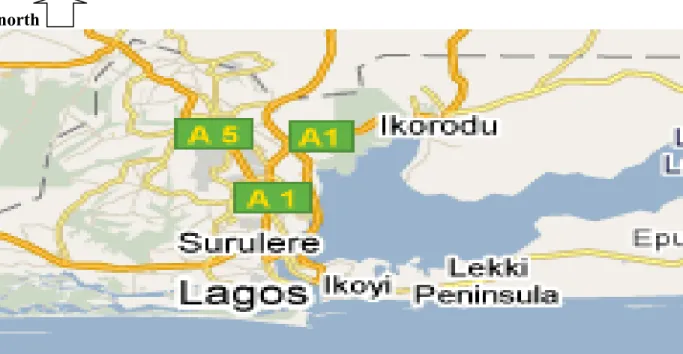
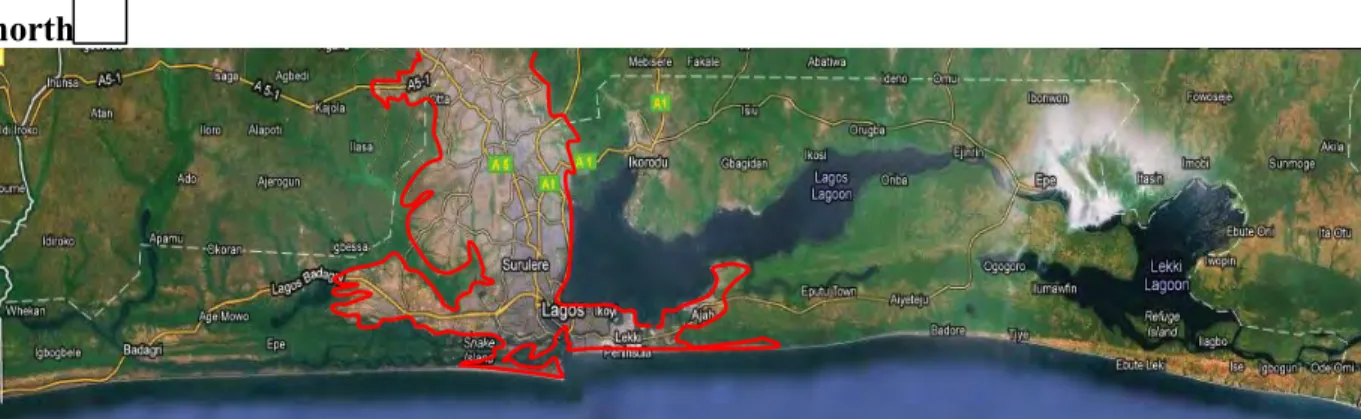
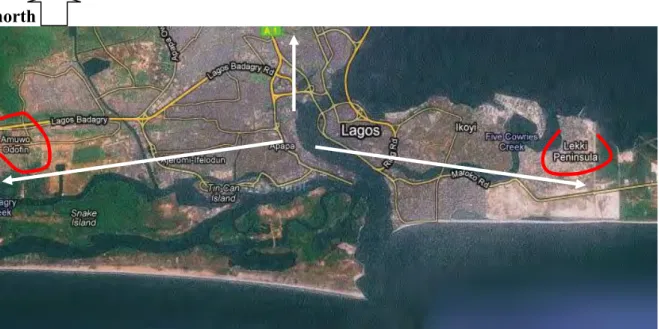
The Study Area
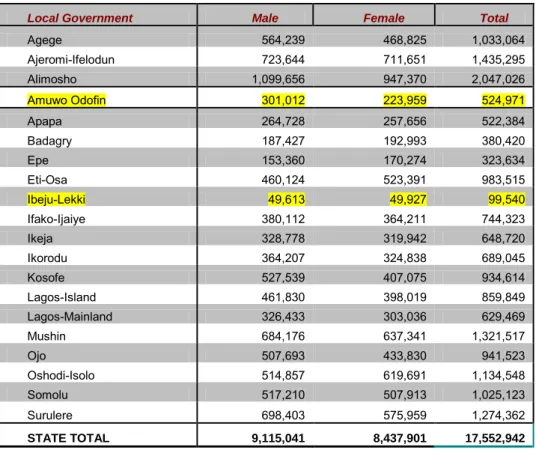
The core neighborhood environments of government and private layouts as they emerge form the basis for the selection of the study area as above. The selection of the residential areas in the research is based on the way in which the residential areas were created, as a public or private actor/partner initiated residential area.
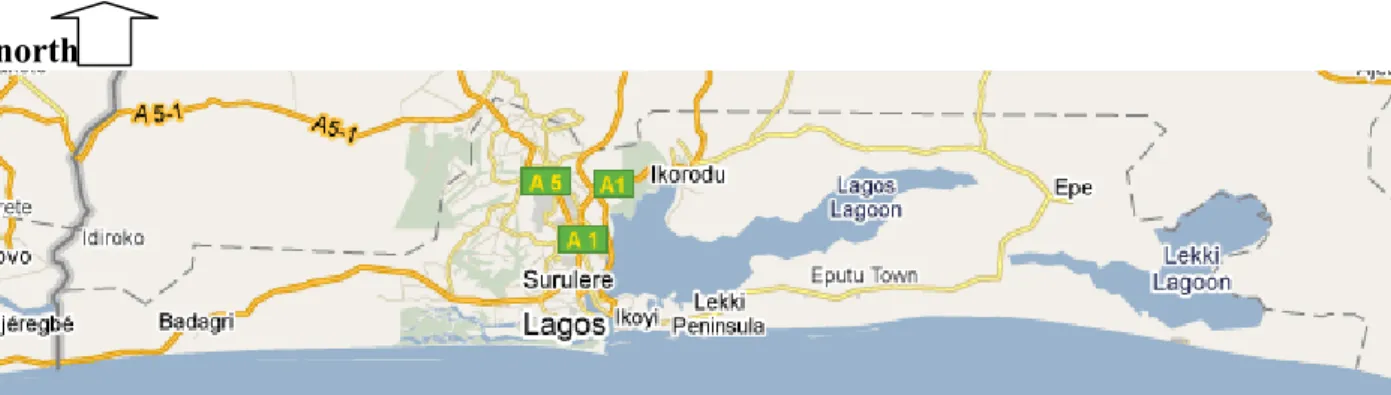
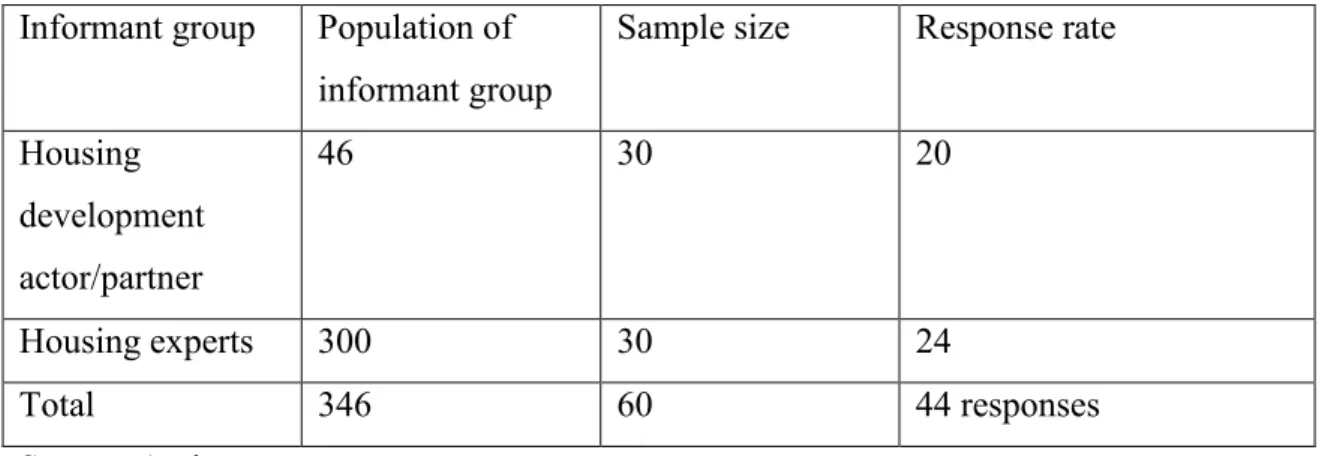
Selection of Subjects .1 Sampling Frame .1 Sampling Frame
- Sampling Technique
- The Households
- The Housing Development Actors/Partners
- The Housing Development Experts
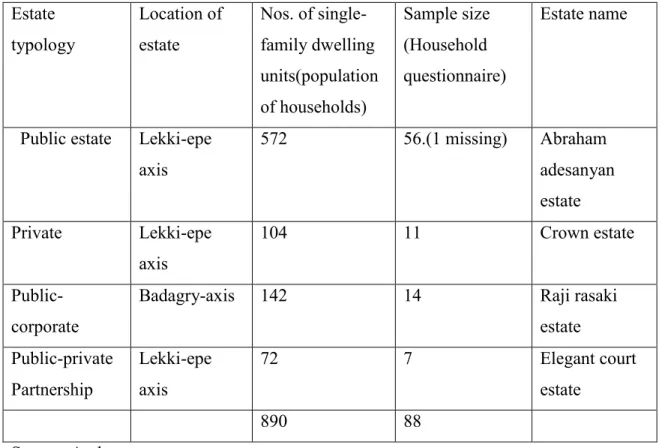
Using a systematic sampling technique, the sample size consisted of 10% (that is, 89) of all housing units. This comprised public housing - Abraham Adesanya Estate (572 residential units), private housing - Crown Estate (104 residential units), private residential housing - Raji Rasaki Estate (142 residential units) and residential PPP - Elegant Court Estate (72 housing units).
Pilot Study
The housing experts are of two types: The public sector and the private sector's housing development experts.
Research Instruments
- Oral Interview
- Structured Questionnaires
Structure of the Questionnaire
- Validation of the Questionnaire
- Reliability of the Questionnaires
Questionnaire type-A was administered to households in the four-typological estates, which represent the types of housing delivery systems. Questionnaire type-C consists of fourteen questions which were designed to capture the influence of housing development experts on the overall AHD in Lagos.
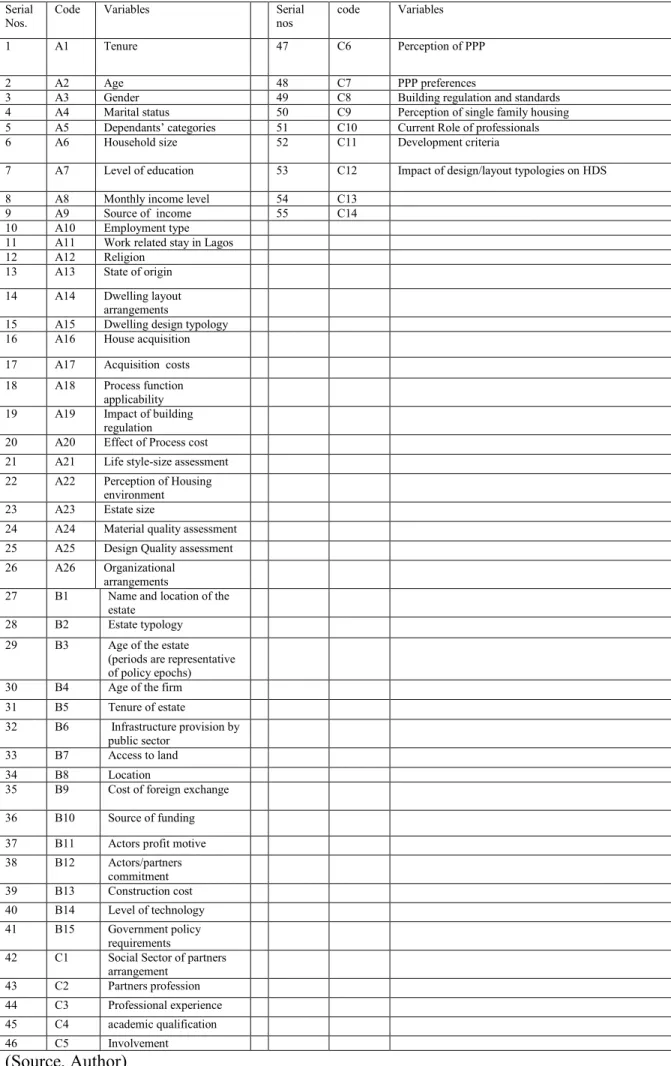
Research Variables and Measurements
- Determinants of Housing Delivery Systems
- Determinants of Public-Private Partnerships
- Determinants of Adequate Housing Delivery
This was aimed at establishing relationships between access to land and the actual housing they have created and the preferred choice of partnership used. This was consistent with the perception of housing development experts' standards (VC8). Both data were used to determine housing quality for the homeowner and for the housing development actor/partner.
Procedures for Data Collection
Variables and Controls used in the Study
This hypothesis aimed to ascertain whether the independent variables could predict the future levels of the dependent variables. The result of testing for hypothesis-4 was a model for the suitability assessment technique (AET) based on the dependent variables, which served as a control for predicting future levels of stakeholder/partner engagement.
Method of Data Analysis
- The Basic of GST Linear Equations 1. The Equations
- Predictive Linear Models (of HDS, PPP AHD)
- Validation of the Model
The results were tested for determinants of the housing delivery systems (HDS) with the Fisher's exact test; in terms of Housing design preference/taste, provision of infrastructure, Household income, levels of building activity regulations, tenure, process costs and typology (layout/design). The remaining variables were used in the development of adequacy assessment techniques (AET) as a predictor model for PPP and adequate housing delivery (AHD). The overall significance of the model was tested using the Fishers exact p-value: Using the standard error of estimate. , residual analysis and exponential smoothing with trend adjustments, the reliability and accuracy of the models were improved.
Characteristics/nature of Variables in the Study .1 House Design preference/taste
This variable is in groups of households' personalities in relation to the head of the household. It is a measure of the general commitment to government goals for housing as a private sector partner.
CHAPTER THREE
THEORITICAL AND CONCEPTUAL FRAMEWORK 3.1Global Nature of HDS
Developments in the architecture of HDS
The housing system includes the arrangements implicit in the nature of regulatory institutions and organizational configurations. However, the variability of housing systems became the bane of global housing problems.
Perspectives to the global Housing Problem
The availability of housing in relation to the amount of housing stock compared against the housing need/demand and the supply. This is the financial life cycle of the housing project, cost recovery and the economic viability.
Theoretical Framework for the Study
- The Marxist Approach
- The Neo-liberal Approach
- The Urban Capitalist Approach
- The Man-Environment Relation Theory
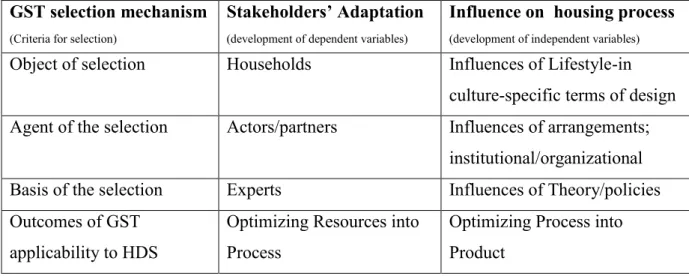
- The General Systems Theory
In contrast, the value of housing for the public sector differs economically from that of the private sector. In Lagos, the intrinsic value of housing is relative to sub-regional productivity and specialization of the urban space.
Conceptual Framework/Models used in this Study
- Models of Housing Delivery Systems
- Systems definition of housing
- Modified Model; general systems theory definition of housing Turner, Fitcher (1972;
- Prins model for housing delivery systems
- PPP Models of Housing delivery Systems
- Planning Models for Housing and Construction Sectors
- Theoretical development for HDS, PPP, and AHD
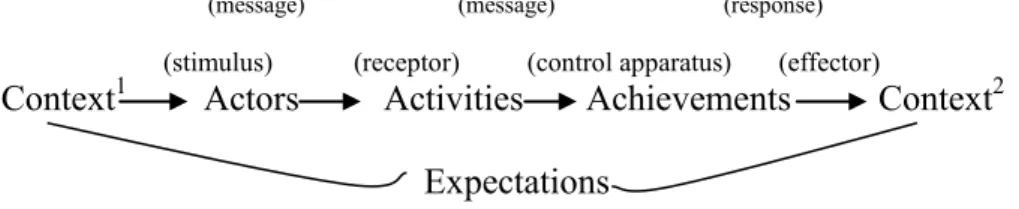
The result, however, is the housing typology, which is a composite expression regardless of HDS. The resolution of these components in relation to the housing targets derived from the PPP schemes is the effective contribution of the PPP expressed as results of the universal targets (the 3-Q factors).
- Emerging international policy paradigm
- The State and Power relations in Housing Delivery systems
- The World Bank Policy and Housing Reforms
- The Supporter Paradigm
- The Enablement Paradigm
- Delineating Partnerships
- Privatization in construction/infrastructure developments
- Characteristics of partnerships
- Merits and Demerits of Partnerships
This is evident in the housing schemes implemented to serve the working class in various sectors of the economy. Since the new approach from the private sector is often never sustainable in the design and elements of the housing product (Payne, 1999; Jones, Mittin, 1999).
Public-Private Partnership in relation to the enablement paradigm
- Housing Delivery Systems (HDS)
- Public Private Partnership (PPP)
- Interrelationship between HDS and PPP
- Redefining the question of Adequate Housing Delivery (AHD)
- Institutional/Organizational arrangements and Housing Delivery Systems
Measuring the efficiency of the housing delivery system and establishing standards to meet the needs/requirements of the targets are central to the issue of adequacy. This is to improve financing in three stages of the housing process (production, distribution and consumption).
3Q-factor AHD -housing unit
The measurements of PPP a subset of HDS are the result of optimization of resources and process, which is actually the result of AHD, called the 3-Q factor. Note: Based on the summary of the literature reviewed, PPP is a subset of HDS and AHD conceptualized in three ways, called the 3-Q factor of housing adequacy.
CHAPTER FOUR
HISTORICAL DEVELOPMENTS
Introduction
Urban Housing Problems in Nigeria
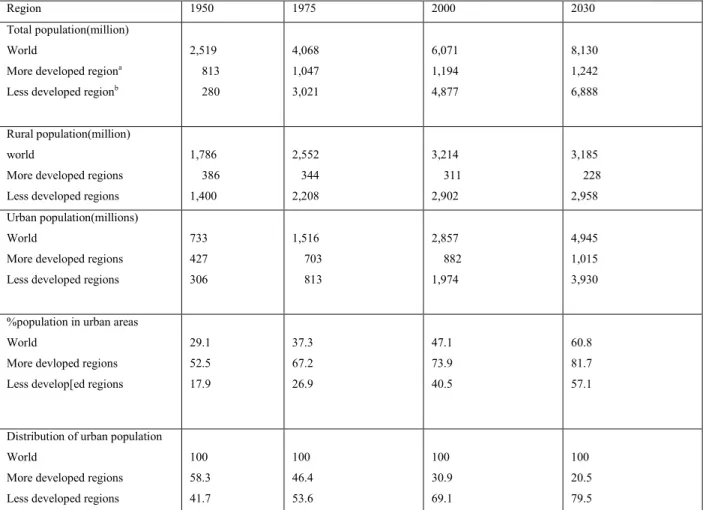
- Urbanization/Data
- Estimating housing/target policies
- Quantitative aspects of the housing problem
It is clear that the meaning of 'urban' is related to the perceptions of elements of westernization of the population and the function of the environment in political circles. "Dwelling type" was defined as the portion of the building and services occupied by a household (this captured for the first time the socio-cultural implication in housing arrangements among Nigerian households).

Housing Environment/Lifestyle
There have been several calls for the need for a new study of housing conditions in Nigeria. This specified testimony of modernity rejects the notion of residential environment and lifestyle in sociocultural terms.
Social Arrangements/Focus groups
One of these dilemmas concerned the distribution of FESTAC 77 properties in Lagos. Clearly, the complexity of social arrangements and the need to meet housing requirements and social focus group objectives continue to pose a major setback in the housing process.
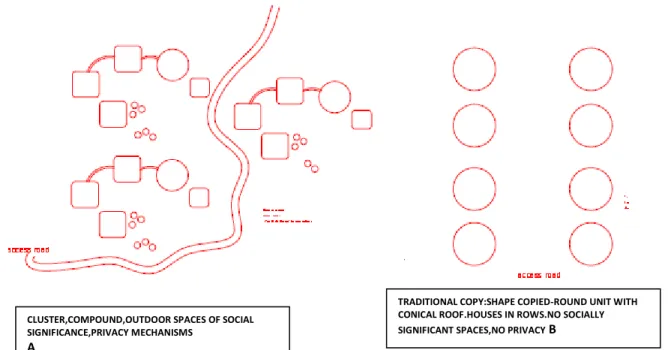
Planning/ Design intentions and cultural response
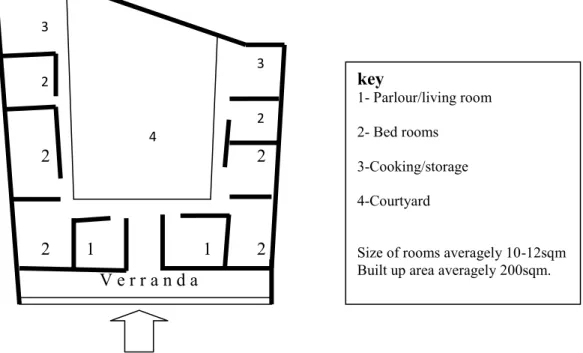
In physical development, these manifestations exist on two levels, the planning level and the design level. This expression is captured in the following statement: 'the spatial organization within building types, bungalows, duplexes, apartments, villas, etc.
Evolution of the Housing Policy Periods
- Colonial Period 1914-1959
- Post-Colonial Period, 1960- to present day
Since the Emir of Kano's palace in the 18th century (the council chamber which is still intact) has. However, the establishment of the Nigerian Building Society (NBS) in 1956, which was the cradle of housing finance on a mortgage basis as an institution, was established (FGN, 2006).

Response by the private sector in these periods