THE INFLUENCE OF FAMILY ENVIRONMENT ON CHILDREN'S GOALS IN SPORT
A thesis submitted in partial fulfillment of the requirements for the degree of Master of Arts (Educational Psychology) in the School of Psychology at the University of Kwa-Zulu Natal,
Pietermaritzburg.
Lisa Dales
September 2004
ACKNOWLEDGEMENTS
I would like to extend my thanks to the following for their contribution to mis study:
My supervisor, Professor Clive Basson, for his invaluable guidance, assistance, encouragement and support throughout this time. Professor Bruce Faulds for the time and patience he gave to assist me with the statistics and to Gail Nicolson for her support during my internship. My family for their support and financial assistance.
DECLARATION
I declare that mis thesis is my own original work. All other sources of references have been acknowledged.
Abstract
The relationship of family environment and children's goals in sport is not a well- established area of research and although findings to date are equivocal, links between various dimensions do appear to exist. The aim of this study was to explore the relationship between family environment, particularly the perception of achievement orientation within the family, and the youth participants' goal orientation in hockey.
The sample consisted of fifty-five female senior school hockey players, as well as their parents, that attended independent girls' schools in the Pietermartizburg and Durban areas. No significant relationship was found between the perception of achievement orientation in the family and the youth participants' goal orientation in sport There were however, indications that other aspects of social climate within family environment, as perceived by the participants, influence youth goal orientation in sport Findings also revealed links between positive parental involvement and intrinsic motivation, and perceived parental pressure and pressure experienced by the hockey players. The results are discussed in terms of the literature reviewed, and the implication and the limitations of the study are discussed, concluding with recommendations for future research
TABLE OF CONTENTS
INTRODUCTION l
LITERATURE REVIEW 3
2.1 Introduction to Motivation 3 2.1.1 Theoretical approach to understanding motivation and
achievement behaviour 4 2.1.2 Measurement of the Individual differences in goal
perspectives 8 2.1.3 Goal perspectives, perceived competency and behaviour in
sport 9 2.1.4 Behaviour correlates of goal orientation in sport 9
2.1.5 Situational aspects of achievement goals 10
2.1.6 Conclusion 11 2.2 Influence of Significant Others on Youth Sport 12
2.2.1 Influence of significant others in sport socialization of children 12 2.2.2 Influence of significant others on youth sport motivation
and achievement 15 2.2.3 Conclusion 23 2.3 Achievement Orientation 24
2.3.1 Achievement orientation and intrinsic motivation 24 2.3.2 Effects of achievement orientation on performance goals 24
2.3.3 Conclusion 25 2.4 Implications of Literature for Future Research 26
METHODOLOGY 28
3.1 Aims and Rationale 28 3.2 Research Design 29 3.3 Sample Characteristics 30
3.4 Instruments for assessment 31 3.4.1 Biographical questionnaire for youth sport participants 31
3.4.2 Biographical questionnaire for parents 32
3.4.3 Family Environment Scale 32 3.4.4 The Marlowe-Crowne Social Desirability Scale 35
3.4.5 The Perception of Success Questionnaire 36
3.5 Procedure 38 3.6 Data Analysis 40
4. RESULTS 42
4.1 Reliability 43 4.2 Correlations 46 4.2.1 Youth and parent FES scores 46
4.2.2 Goal orientation and FES subscales 47 4.2.3 Correlations of perceived parental pressure and support with
youth goal orientation, achievement orientation and
perceived self pressure 48 4 3 Factor Analysis 50 4.3.1 Factor analysis of youth FES scores 50
4.3.2 Factor analysis of parent FES scores 52 4.3.3 Correlations of youth and parent factors 54
4.3.4 Correlations of youth factors of FES and goal orientation 55
4.3.5 Correlations of parent factors of FES and goal orientation 56
4.4 Regression Analysis 57 4.5 Cluster Analysis of FES Items 57
4.6 Canonical Analysis Correlations 57
4.7 Conclusion 58
5. DISCUSSION 60
5.1 Reliability 60
5.2 Correlations 62 5.2.1 Youth and parent FES scores 62
5.2.2 Goal orientation and FES subscales 63 5.2.3 Correlations of youlh FES subscales and youth goal
orientation 63 5.2.4 Correlations of parent FES subscales and youth goal
orientation 65 5.2.5 Correlations of perceived parental pressure and support with
youth goal orientation, achievement orientation and
perceived self pressure 66 5.3 Factor Analysis 69 5.3.1 Factor analysis of youth FES scores 69
5.3.2 Factor analysis of parent FES scores 70 5.3.3 Correlations of youth and parent factors 71 5.3.4 Correlations of youth factors of FES and goal orientation 72
5.3.5 Correlations of parent factors of FES and goal orientation 72
5.4 Regression Analysis 73 5.5 Cluster Analysis of FES Items 73
5.6 Canonical Analysis Correlations 73
5.7 Conclusion 74
CONCLUSION 77
6.1 Summary 77 6.2 Implications of this study 78
6.3 Limitations of this study 79 6.4 Recommendations for future research 80
References 83
Appendices 89
1
1. INTRODUCTION
This chapter aims to provide a context for the study of the influence of family environment on children's goals in sport.
Achievement Goal Theory has been the focus of recent research into motivation processes and achievement behaviour patterns. This theory assumes that they are two goal perspectives that operate in achievement contexts: task (mastery) and ego (performance) goal orientation (Roberts, Treasure & Balague, 1998). Nicholls (1984, as cited in Roberts et al., 1998) contends that two conceptions of ability are embedded within these two orientations and that they are reflected in an achievement context There is evidence in support of achievement behaviour being consistent with goal orientation within the sport context (Roberts et al., 1998).
According to Singer, Murphy and Tennant (1993) identifying the contributors to and correlates of motivation in young athletes is central to understanding youth sport behaviour. These authors suggest that achievement goal preferences and motivation orientation is likely to be influenced by parents, but that there has been little research on this relationship.
Research in both sport and academic areas has supported current theories that children's self- perception characteristics are important mediators of the motivation patterns (Harter, 1978,1981;
Nicholls, 1984,1989, bom in Singer et al., 1993). These self-perceptions during their sport involvement are likely to be heavily influenced by adults because of their involvement in youth sport Children also prefer to assess their ability by using adult sources of feedback (Freize &
Bar-Tal, 1980; Horn & Hasbrook, 1986,1987, both in Singer et al., 1993).
2
Findings of some previous studies have indicated that parental influence and pressure does have an impact on children's motivation orientation (Elliot & Harackiewics, 1994; and Escarti, Roberts, Cervello & Guzman, 1999). Bilden (1999) however, in a study that investigated the relationship between parent styles and achievement motivation in sport, provided evidence mat does not support research that has revealed significant relationships between the two.
Although mere has been little research on achievement orientation and goal orientation, findings have suggested mat the performance or mastery focused goals on intrinsic motivation varied as a function of achievement orientation (Senko & Harackiewicz, 2002).
According to Singer et al. (1993) the relationship between achievement behaviour and children's motivation processes, has not received much attention with regards to research. The unequivocal results in this area of research also suggest that further research is needed.
In this study the aim is to study a South African sample of adolescent female hockey players and to identify whether family environment influences their goal orientation in sport
3
2. LITERATURE REVIEW 2.1 Introduction to Motivation
According to Roberts (1992) motivation is one of the central issues in human affairs and that the role of motivation in individual lives is very important. Roberts defined motivation as 'those personality factors, social variables, and/or cognitions that come into play when a person
undertakes a task at which he or she is evaluated, enters a competition with others, or attempts to attain some standard of excellence.' According to this author, in such situations there is a
challenge for the individual who is responsible for the outcome of the task. It is also assumed that these situations influence human behaviour in achievement situations, as they facilitate various motivational dispositions. Furthermore, it has been hypomesized that approach and/or avoidance motives, incentive values and cognitive assessments of success and failure, and expectancies determine achievement behaviour.
According to Roberts (1993) motivational theories are assumed to explain achievement behaviour. Motivation in sport is inferred from assessments of behaviour which study when participants try harder and for longer, concentrate and pay more attention, perform better, and practice and participate in sporting activities for longer periods (Roberts, 1992).
The motivational theories that have been proposed to explain achievement behaviour will be discussed briefly.
4
2.1.1 Theoretical Approaches to Understanding Motivation and Achievement Behaviour
Need Achievement Theory
This theory has been most influential in this area of research, especially in research within sport contexts. In this approach the central constructs of the theory are formed by motive to achieve success and motive to avoid failure, and these motive states are the mainsprings of action.
Although such research in sport generally has been inconclusive, the approach has been important to the understanding of motivation (Roberts, 1992).
The Test Anxiety Approach
This theory is based on research relating test anxiety to achievement in task performance. The theory focuses on the evaluative aspects of the school situation where the major motivational variable was anxiety with evaluation. Although this research has produced evidence that performance in such situations is influenced by motivational factors, this approach has not been popular in sport contexts (Roberts, 1992).
Expectation of Reinforcement
This theory is based on social learning theory and theorists of this approach emphasize overt behaviour as opposed to motives. Achievement behaviour is viewed as behaviour directed towards the attainment of self approval and the approval of others, depending on criteria for performance competence. In this approach the major motivational variable is the individual's expectancy of reinforcement. Although this is a major school of thought in motivation, little research of this nature has been conducted in the area of sport achievement (Roberts, 1992).
5
The Cognitive Approach: Attribution Theory
This approach is now dominant in the study of motivation and focuses on the way knowledge is acquired, represented, and used by humans. According to these theorists, cognitions and beliefs mediate behaviour in sport. According to mis approach human action is determined by the human as an active information processor with higher mental processes. Attributional models have been important in the theory of motivation from a cognitive perspective but are not comprehensive in explaining achievement behaviours (Roberts, 1992).
Social Cognitive Approaches
This theory draws from past theories and assumes that the choice and attainment of achievement goals are mediated by sets of affective, cognitive and value-related variables. There are three mini-theories in the social cognitive approach, which have all been used extensively in sport research (Roberts, 1992).
Self-efficacy
In the investigation of motivation in sport, this has been the most extensively used theory It is based on Bandura's theory of Self-Efficacy, which is concerned with one's assessments of what one is capable of as a result of their abilities (Roberts, 1992).
Perceived competence
These theories focus on the perception of the competence of the participant. Harter, a major theorist in this area, explains that perceived competence motivates an individual in cognitive,
6 social and physical domains. Achievement striving is seen to increase from perceived
competence and intrinsic pleasure that is gained from success in these domains (Roberts, 1992).
Achievement goal approaches
According to the achievement goal approach, the major focus of individuals in achievement contexts is to demonstrate competence or ability. This ability has two conceptions that lead to two major goal perspectives. Roberts (1992) uses the term competitive goal for the first achievement goal but others have also labeled it as performance goal or ego orientation (Duda, 1992). This goal drives participants to perceive their ability in comparison to the abilities of others. Success or failure is dependant on mis comparison with others. The second achievement goal is termed mastery goal but the terms, learning goal or task orientation has been used by others (Duda, 1992). Individuals perceive abilities according to improvement or learning and are self-referenced (Roberts, 1992). According to Roberts, there is considerable data to support this approach in sport and this approach will be considered in greater detail in the following sections
A Goal Perspective
Motivation research has recently focused on a goal perspective analysis of motivational behaviour (Duda, 1992). According to the major theorists in mis area of research, Nicholls, Ames and Dweek, these approaches have given us the most insight into the motivation of children (Roberts, 1993). As discussed in the previous section, goal perspective theorists of achievement motivation assume that there are two major goal perspectives operating in achievement contexts, which relate to the ways that individuals perceive their level of competence. Although these two goal perspectives have been given a number of labels in
7
research, they will be termed ego orientation and task orientation in this study as the instrument used to measure goal perspective refers to ego and task goal orientation. This approach maintains that important interrelationships exist between goal perspectives, perceived ability and behaviour (Duda, 1993). Ames (1992) maintains that task goal orientation promotes motivational patterns that place value on learning and effort. Adaptive patterns are more likely to evolve when this goal orientation is adopted. If an individual is ego-involved and therefore compares their ability and success to those of others, maladaptive behavioural patterns are expected. According to Steenkamp and Steyn (2001) while task orientation is linked with high levels of enjoyment and interest in sport, ego orientation is linked with low levels of enjoyment and interest.
According to recent theories of achievement motivation, situational and individual differences affect which goal perspectives are dominant (Duda, 1992). Ames (1992) argues that parents, teachers and coaches create goal structures which influence participants in achievement contexts.
These motivational climates convey certain goals to children, which influence their goal adoption and in turn their motivational patterns. According to the work of Nicholls (1989, in Duda, 1993) it is also assumed that individuals differ in dispositional goal orientation as a result of socialization experiences within achievement contexts.
Orthogonality of goal orientations
Nicholls (1989, cited in Roberts, 2001) argued that goal orientations are orthogonal, that they are independent and that an individual can be high or low in each or both orientations at the same time. Literature in this area of research has largely been supported (e.g., Duda & Whitehead, 1998 cited in Roberts, 2001).
8
Stability of goal orientations
The stability of goal orientations refers to situational stability or generalisabilhy. Hardy (1997, cited in Roberts, 2001) conducted a study among professional golfers that provided evidence for the instability of goal orientations in the sport domain. The study indicated that individuals can fluctuate in their emphasis on ego and task goals across situations. According to Roberts (2001) there are discrepancies in such studies and further research is needed to resolve these.
2.1.2 Measurement of the Individual Differences in Goal Perspectives Determining individual differences in orientations to sport achievement has received considerable interest (Duda, 1992). The Task and Ego Orientation in Sport Questionnaire (TEOSQ) assesses individual differences in the emphasis placed on task-and ego-involved goal perspectives in sport (Duda, 1993). This instrument developed my Nicholls and Duda requests individuals to consider when they feel most successful in sport and then to identify with items either reflecting task- or ego-involved criteria (Duda, 1992). This author also mentions that psychometric research on the TEOSQ has provided insight into the nature of these two goals in the sport environment Firstly, ego-or task-orientated individuals are both considered to be competitive, but the difference between the two is the importance of the competitive process in relation to the outcome, along with the devastation of losing. Both groups are also equally goal- directed but the difference lies in the perceptions and criteria that underlie subjective goal
attainment Thirdly, bom ego-and task-orientated individuals are concerned with playing well but they differ in their perceptions of whether they played well or not Roberts, Treasure and
Balague (1998) developed and validated The Perception of Success Questionnaire which is
another measure of achievement goals in sport according to an individual's perception of success in sport. According to the authors this instrument, like the TEOSQ, has demonstrated acceptable reliability and validity to be used in sport contexts.
2.1.3 Goal Perspectives, Perceived Competence and Behaviour in Sport As mentioned previously, the goal perspective approach maintains important interrelationships exist between goal perspectives, perceived ability and behaviour (Duda, 1993). This theory is based on research on motivation in educational settings which has more recently been examined in the sport setting (Duda, 1992). According to Duda two research strategies have been adopted to investigate the impact of goal perspectives in sport. The first has been to determine the degree and direction of the relationship between goal orientation and related cognition and affect The second has been to determine subjects cognitive and affective responses in situations that have been manipulated to be either more or less task- or ego- involving.
2.1.4 Behavioural Correlates of Goal Orientation in Sport
According to Duda (1993) studies investigating the behavioural correlates of goal perspectives have found that goal orientations relate to exerted and sustained involvement in athletic settings.
While an emphasis on task- orientated goals have been found to positively influence exerted and sustained involvement, ego-orientation is correlated with lack of persistence. According to Roberts, Treasure and Kavussanu (1997) one of the most consistent findings in this area of research is the link between task orientation and satisfaction, experienced enjoyment, and interest during participation in physical activity. According to these authors achievement goals have been found to be related to affective experiences such as trait and state anxiety. Although these
findings do not indicate a causal relationship between individual differences in goal perspectives and behaviour in sport, the evidence suggests that this approach is useful in mis area of research.
2.1.5 Situational Aspects of Achievement Goals
Research on achievement goals in the context of physical activity has indicated that different motivational processes are associated with both individual differences and situational differences (Roberts et al., 1997). The situational perspective focuses on how the individuals' experiences and interpretations influence how they perceive a mastery or performance climate within a context, which is likely to induce a particular achievement state of involvement (Roberts et al., 1997). The influence of parents in the development of youths' achievement motivation has been included in the area of research (Roberts et al., 1997). According to Nicholls (1989, as cited in Roberts et al.. 1997) goal orientations are developed during childhood through socialization experiences and parents play an important role in this process.
An Interactionist Approach
The research on situational influences suggests that the perceptions of motivational climate created by significant others may be critical in the understanding of motivation (Roberts, 2001).
According to Roberts, although Achievement Goal Theory states that both this perception and dispositional goal orientations are dimensions of motivation that interact to affect behaviour, research has only investigated their independent affects. It has been suggested therefore that an interactionist approach seeking to understand both variables will provide for a more insightful understanding.
11 2.1.6 Conclusion
Although a number of motivational theories have been proposed to explain achievement
behaviour, motivation research has recently focused on a goal perspective analysis. According to the Achievement Goal Theory, the major focus of individuals in achievement contexts is to demonstrate competence or ability. This ability has two conceptions which lead to two major goal perspectives: ego orientation and task orientation. These goal perspectives have been argued to be orthogonal and unstable across situations. This approach maintains that important
interrelationships exist between goal perspectives, perceived ability and behaviour. Studies investigating the behavioural correlates of goal perspectives have found that goal orientations relate to exerted and sustained involvement in athletic settings. Situational factors, especially the motivational climate created by parents have been found to influence goal orientations. More recently the Interactionist approach has been proposed to investigate the impact of both situational and dispositional goal orientations. Consequently, the investigations of children's goal orientations and their determinants have been the focus in recent research.
The next section will review literature on the influences of significant others and the family on youth sport and children's goal orientation in the sport context.
12
2.2 Influence of Significant Others on Youth Sport
2.2.1 Influence o f Significant Others in Sport Socialization of Children and Adolescents
Greendorfer and Lewko (1978) examined the role significant others play in influencing
children's active sport involvement. Results indicated parents had the most significant influence on children's sport participation; more specifically it was only the father that served as a
significant influence.
Higginson (1985) investigated the influence of socializing agents on female participants in the sport context. The results were supportive of Greendorfer and Lewko (1978) who indicated that the family unit demonstrated the most significant influence on sport participation. Furthermore the findings indicated that socializing agent influences change across life-cycle states. According to the results of the study, parents were most influential at the under-13 life-cycle, changing to mostly coach/teacher orientated during junior and senior high school years.
Greendorfer and Lewko (1988) reported that more recent studies have indicated mat the father does not emerge consistently as the most influential for bom sexes, and mat peers and other social systems have a joint effect on the process. The article does however acknowledge the importance of family in the sport socialization of children. It also emphasizes the need to understand how family relations affect children's involvement, persistence and/or withdrawal and desire to excel in sport.
13
Parental Pressure in the Sport Environment
Singer et al., (1993, p.193) suggested that 'Harter's (1981) model of competence motivation proposes that the nature of parental response to children's mastery efforts directly impacts on children's perception of competence and control, and subsequent intrinsic/extrinsic motivation orientation'. A study assessing the influence of perceived 'parental pressure' on intrinsic motivation of 145 children playing soccer revealed that higher perception of affective support (i.e. lower perceived pressure) predicted high intrinsic motivation (Brustad & Weigand, 1989 in Weigand, 2000).
McElroy (1982) examined the consequences of perceived parental pressure on self-esteem in youth sport participants. It was hypothesized that in cases in which children's values of sport performance differ from that of their parents and in addition, self-esteem would be considerably lower than when parent-child sport value perceptions are similar. Results suggested that self- esteem was related to sport value orientations of boys but not for girls. A non-significant relationship indicated that self-esteem was not related to different parent-child interactions.
Lewthwaite and Scanlan (1989) investigated the effects of parental pressure as one of the predictors of competitive trait anxiety in male youth sport participants. Results indicated that cognitive anxiety symptoms involved worries about failure and about adult expectations and evaluation. Frequent adult-related worries were predicted by greater personal upset for poor performance and perceptions of greater parental and coach shame, more negative adult evaluations, and greater parental pressure to participate.
Hellstedt (1990) investigated early adolescents' perceptions of parental pressure in the sport environment Questionnaires were completed by 104 13-yr-old skiers regarding their perceptions of the amount of parental pressure on sport participation and their subjective response to this pressure. Participants perceived that the pressure exerted on them by parents to be moderate to strong, particularly paternal pressure, both to compete and not to withdraw. The results indicated a relationship between low levels of parental pressure and positive affect and a relationship between high levels of parental pressure and negative affective response.
O'Connell and Zin (1996) examined how self-assessment of seasonal soccer performance was affected by parental attitudes and motivational climate of youth soccer players. Participants were 60 girls and boys between the ages of 8 to 13 and their fathers. According to the results of this study parental pressure to win was negatively related to self-performance assessment. They also revealed that participants who expressed higher levels of self-assessment perceived that their parents were most interested in them having fun and improving as a player. According to the authors the results suggest that for a positive motivational climate for youth sport participants, parents and coaches should provide an environment where improvement, learning and having fun is promoted.
In response to such claims mat parents are a source of pressure on children in sport, a study was designed to explore how it may be exerted (MacLean, 1997). Male (n=34) and female (n=48) competitive swimmers completed responses about the behaviour of their parents with regard to their swimming activities. They were asked to elicit responses identifying the frequency with which certain behaviours were exhibited by and desired of their parents. Results revealed that
15 discrepancies between desired and perceived behaviour and levels of pressure participants desired, predicted pressure experienced. These results indicated mat parental behaviour is critical in provoking feelings of pressure.
2.2.2 Influence of Significant Others on Youth Sport Motivation and Achievement
Recently youth sport motivation research has investigated the mediating of socialization agents on the motivation of youths in physical activity (Weigard, 2000). According to Weigard, researchers in this area have found that parents, teachers and peers can influence children's motivation in sport.
Escarti, Roberts, Cervello and Guzman (1999) examined the relationship of goal orientations to adolescent athletes' perceptions of the criteria used by significant others to assess their sport success. Boys and girls, who were involved in tennis and track and field, completed the Perception of Success Questionnaire to measure goal orientation. The perception of significant others' criteria of achieving sport success was measured by using the Perception of Significant Others' Success Criteria Questionnaire. The results of the study supported the general hypothesis that there is a meaningful relationship between the two. Two goal orientated profiles were found amongst the athletes, one that was task orientated and one mat was high in bom ego and task orientation. This finding is not consistent with most other studies that found participants were either ego or task orientated. The authors explain the difference as possibly a result of cultural dynamics, as Spanish students, opposed to North American students who were the participants in previous studies, were used in the study. In previous research (Duda & Horn. 1993, in Escarti et al., 1999) it was found that children who were higher in task orientation perceived their
16 significant parent to be higher in task orientation. However in this study, it was found that task orientated participants, perceived that their peers used task involving success in sport but not the adults. The athletes who were task orientated perceived that the adults were ego involving and not task involving in their criteria of success. The athletes who were high on both goal
orientations perceived that both adults and peers had criteria of success that were high in both ego and task involving criteria. The findings of this study support previous research that suggest that parents, coaches and peers play an important role as socializing agents of goal orientations.
Weigard and Carr (2002) explored whether differences in motivational climate correspond to differences in personal goal profiles in children in physical education. The study investigated differences in perception of motivational climate emphasized by teachers, peers and sporting heroes and the influence they have on children's task and ego orientation. Based on the work of Ames, the motivational climate emphasized by such social agents are determined by that agent's own goals, emphasized evaluation and reward processes, and task, authority and grouping structures of the environment The achievement climates of social agents can be detected by individuals who interact with them. Surveys on personal goal orientations for P.E. and
perceptions of the motivational climate emphasized by P.E. teachers, peers and sporting heroes, were completed by 266 secondary school pupils in the United Kingdom. Results supported the study's hypothesis mat children with a high task/low ego profile for P.E. would perceive the climate emphasized by significant others to be more task involving. It was also found that children with a high ego/low task profile tended to internalize perceptions of a more ego involving climate from others, as hypothesized. Results of the study also indicated that those with a high task orientated goal profile tended to internalize higher perceptions of a learning
17 climate from teachers than those with a low task orientated profile. Children with a high ego orientated profile tended to internalize higher perceptions of a comparison climate from these individuals than those with lower ego orientation. While teacher promotion of a learning climate related most with task orientation, peer promotion of a comparison climate related most with ego orientation. This study indicated the important role that significant others play in the
development of children's goal orientations.
Family Role in Sport Motivation
The social cognitive perspective of motivation used in research of goal orientations in the sport context has been based on findings of studies mat support the impact of goal perspective in educational environments (Duda, 1992). Epstein (1989) discusses the family's role in motivating children to leam. The author discusses the motivation in terms of a student's willingness and desire to engage and persist in academics at school, and the home is included as one of the main influential settings where this motivation is developed. Key structures in families that are parallel to those in school setting are identified. The six major structures at home mat affect children's motivation to leam are Task (children's activities), Authority (increasing independency), Reward (parents' reaction to good or bad behaviour), Grouping (Children's social groups), Evaluation (parents' judgments of children's progress) and Time (time children and parents spend together).
According to Epstein, positive family environments influence children's motivation to leam, whereas negative environments can set up emotional or cognitive barriers to success and reduce motivation. It was also concluded that motivation is characterized by a number of qualities such as attribution of success and failure, high interest in achievement, self-esteem and confidence.
18 Different treatments, opportunities, interactions and experiences that occur under the family structures identified at home, influence these qualities of children's motivation.
O' Donnell (2002) examined the relation between children's achievement orientations and parental behaviours in dyadic situations. The purpose of the study was to demonstrate a link between specific parental behaviours and the manner in which children face challenges.
According to the author, mastery and learned helpless orientations have been linked to differential outcomes in children. While mastery children tend to approach challenges with enjoyment, helpless children tend to have low persistence and are focused on their competence Forty-six dyads of 4-6 year old children and their parents were placed in a variety of situations in which parental behaviours could be observed and coded for warmth/responsiveness, provision of structure and intrusiveness. The children were placed into either the mastery of learned
helplessness category. The study hypothesized mat parental provision of warmth/responsiveness and structure would be related to mastery orientations, while intrusiveness and low structure would be related to helplessness. While mere were no significant results indicating a relationship between mastery orientation and warmth/responsiveness and structure, parental intrusiveness combined with low structure were associated with the helpless pattern. The results therefore confirm previous findings of the effects of parental behaviours on children's motivation.
Parent Influence on Children's Goal Orientation in Sport Weitzer (1989, in Brustad, 1993) examined the relationship between levels of parental
involvement and children's sport related achievement orientations. Parent's involvement was operationalized as the encouragement the children perceived to receive from their parents as well
19 as from parents' participation in their sport. Although no relationship was found for boys, it was found mat maternal involvement was related to mastery (task) goal orientation for the girls. Duda and Horn (1993, as cited in Roberts et al., 1997) found however, in a study examining the
relationship between parent and self-reported goal orientation, that children's goal orientations were related to their parent's involvement.
Roberts and Treasure (1994) conducted a study extending the research of Ames and Archer (1987, in Roberts & Treasure, 1994) which proposed that parents provide an important context for the development of children's motivation processes and their goal orientation influence the context that they provide. Roberts and Treasure extended this academically based research into the sport context, focusing on the linkages between the achievement goals of parents and their beliefs concerning the competitive-sport experience of their child, including the relative importance that they place on trying hard versus achievement
The study hypothesized that a parent's achievement goal orientation will determine their
interpretation of their child' sport experience. It was predicted that task orientated parents would perceive success in sport in personal improvement and hard work. They were also expected to endorse tasks that focused on challenge and effort. Ego orientated parents were expected to perceive success as winning, to judge performance in comparison to others and endorse tasks that ensured success. The sample consisted of 96 parents whose children were in the their first year in a secondary school in the United Kingdom and parents goal orientations were measured by their responses to the Perception of Success Questionnaire (Roberts & Balague, 1991). The authors recognizing that this relationship may be mediated by other factors examined the impact
of the gender of the child, the type of sport the child competed in, and the gender of the parent on parental goal orientation. No significant relationships were found allowing for a group of
children and a group of parents to be used in the analysis.
Achievement goals were found to affect the meaning of success in sport. Parents high in ego orientation defined success according to normative standards while parents low in ego orientation indicated that winning was less important in interpreting success. Parents' goal orientation however, did not influence the type of tasks they endorsed for their children. Parents high in ego orientation were expected to endorse tasks mat ensured success but it was found mat all parents encouraged perseverance with the task. The results of this study indicate how parent's goal orientations can affect the way children perceive their experience and success in sport and influence their attitudes toward the sport
White (1996) examined the relationship between goal orientation and the perceptions of the motivational climate initiated among female volleyball players. According to the author, it has suggested that the motivational climate created by adults has a significant influence on the child and adolescent adopting either an ego or task orientation. The purpose of the study was to examine this relationship using the Parent-Initiated Motivational Climate Questionnaire
(PIMCQ-2). The PIMCQ-2 and the Task and Ego Orientation in Sport Questionnaire (TEOSQ) were completed by 204 female volleyball players, ranging in age from 14 to 17 years. It was hypothesized mat the Learning/Enjoyment Climate subscale of PIMCQ-2 would be a significant predictor of task orientation, and that the subscales Worry-Conducive Climate and Success- Without-Effort Climate would best predict ego orientation. Stepwise multiple regression
21 analyses were used to determine the relationship between goal orientation and the predictor variables. Overall the results indicted that the participants' perceptions of what their parents prefer and consider being important was related to their dispositional goal orientation. The hypothesized relationship between several of the predictor variables and task orientation was supported by the correlational results and therefore climates fostered by parents mat focused on learning/enjoyment were found to predicted task orientation.
Results also indicted mat children who perceived their parents to prefer a climate where success without effort was emphasised, were higher in ego orientation man in task orientation. White discusses the indication from previous studies that the adoption of an ego orientation tends to lead to maladaptive motivational behaviour in the individual. These include low persistence, aggressive acts, cheating and participating in sport in order to gain recognition and status.
According to the author, parents therefore need to be careful in how and what they tell children when discussing skill development and need to promote skill mastery and improvement in place of success and low levels of effort.
White (1998) in a study using female and male adolescent participants of organized sports teams found mat sports participants high in ego orientation and low in task- orientation would perceive parent-initiated motivational climate to be ego involving. It was also found that high levels of task orientation were related to tasks involving perceptions of the parent-initiated motivational climate. This investigation provided evidence that what parents are perceived to value and deem important in the learning of physical skills is related to the child's dispositional goal orientation.
Bilden's (1999) study of the relationship of parenting styles to goal orientations and beliefs in fathers and goal orientation in adolescent athletes did however, not reveal significant results. The study examined the relationship between parenting styles and achievement motivation in a sport context using 79 fathers and their adolescent sons. It was predicted that both fathers" and sons' goal orientations in sport would be related to fathers' parenting styles. Although the
methodological limitations of the study were recognized, a regression analysis indicated mat there was no significant relationship.
Steenkamp and Steyn (2001) conducted a study with the purpose of understanding how the goal orientation of the competitive sports participant is formed in the social interaction process with parents and coaches. The study used seven in-depth interviews which were analyzed to
understand how goal orientations are shaped by the social climate. The main aim of the study was to clarify the role and the impact of the parent and the coach by focusing on the complex interaction between the three. Secondly, it aimed to acquire an understanding of the role of these interpersonal relationships in relation to goal orientation. Results of the study indicated mat the influence of parents and coaches impact on goal formation of sport participants and those participants strongly imitate their parents and coaches' goal orientations. Although there are cases where the participant chooses to form new constructive task goal orientation despite
orientations of parents and coaches, generally the results indicated that the goal orientation of the child is influenced by those of parents and coaches.
2.2.3 Conclusion
The literature reviewed has indicated that the family unit has demonstrated significant influence on children's sport participation, persistence and desire to excel. Studies investigating parental pressure, perceived by children as a result of parental behaviours, have provided evidence mat suggests that high parental pressure can be related to children's negative affective responses, anxiety and self-assessment. Findings of research in the area have indicated that significant others influence children's motivation and goal orientations in sport. The role of family and parents in youth sport motivation was discussed more extensively, demonstrating the influences of family structures and parental behaviour on children's goal orientations, the motivational climate and their perceptions of their sport experience.
In the next section literature reviewing the effects of achievement orientation on motivation will be of focus.
2.3 Achievement Orientation
2.3.1 Achievement Orientation and Intrinsic Motivation
Epstein and Harackiewicz (1992) conducted a study investigating the effects of competition and achievement orientation on intrinsic interest An individual's achievement orientation seemed critical in determining their intrinsic interest in a competitive sport context
A later study (Elliot & Harackiewics, 1994) investigated the interactive effects of achievement orientation and task specific goals on intrinsic motivation for university undergraduate students in an enjoyable pinball game. The study hypothesized that individual differences in achievement orientation would moderate the effect of performance (ego) and mastery (task) focused goals on intrinsic motivation. Results indicated that individual differences in achievement orientation appear to predispose individuals to be more responsive to certain types of goals. While participants that were low in achievement orientation responded most positively to mastery goals, individuals that were achievement orientated showed positive responses to performance- focused goals. These results supported findings from a previous study by these two authors where it was found that only performance achievement goals raised interest for achievement- orientated individuals.
2.3.2 Effects of Achievement Orientation on Performance Goals
In order to resolve the mixed findings that past research on performance goals have yielded, Senko and Harackiewicz (2002) conducted two experiments examining the moderating role of context and individual differences in achievement orientation. In the first study, female and male participants pursued either a performance goal or no goal while solving enjoyable puzzles. All
participants received positive feedback but some completed the puzzles in an evaluative context and the others in a non-evaluative context. Results indicated that for participants low in
achievement orientation, pursuing performance goals in an evaluative context undermined their interest. The second study was an extension of the first by manipulating the nature of the
feedback. Although negative feedback given in an evaluative context had no effect on those who were low in achievement orientation, it undermined interest for people high in achievement orientation. These results indicated that an individual's achievement orientation and the context affect an individual's interest in completing a task.
2.3.3 Conclusions
Literature on the effects of achievement orientation on motivation indicates that an individual's achievement orientation impacts on intrinsic interest and goal orientations. Available literature in this area is however limited and it must be recognized that the research discussed was not
conducted in the sport context.
2.4 Implications of literature for future research
Singer et al. (1993) have emphasised that it is likely that children's motivational processes will be influenced by parents, given the importance they attach to achievement in sport. Findings in this area of research of goal orientation in the sport context have been consistent in the indication that goal orientation is related to intrinsic interest, satisfaction, or enjoyment (Roberts et al., 1997). According to these authors there is little doubt that enjoyable and more satisfying activities are more meaningful to an individual, and therefore promoting intrinsic interest in the sport context is important
More recent studies (Weitzer, 1989; Roberts & Treasure, 1994; White, 1996; White, 1998;
Escarti et al., 1999; Roberts et al., 1999; Steenkamp & Steyn, 2001; Weigand & Carr, 2002) have provided evidence of a relationship between children's motivation processes and goal
orientation, and parental influences in the sport context. Achievement orientation has also been indicted to affect goal dispositions of individuals completing tasks in both evaluative and non- competitive contexts (Elliot & Harackiewicz, 1992; Senko & Harackiewics, 2002). The study conducted by White (1998) further expanded on the notion that parents play an important role in socializing children in sport, by demonstrating that a child's perception of what they think their parents value and emphasize in the motivational climate was related to dispositional goal
orientation. According to White, future studies therefore need to enable a better understanding of how parents determine what is to be emphasized in the motivational climate experienced by children.
According to Roberts (2001) task orientation in sport has consistently been associated with desirable cognitive and affective responses and in order to increase motivation, task involvement needs to be promoted.
This study will aim to further investigate the influence of family environment, specifically achievement orientation as perceived by families, on children's goal orientation in sport.
Literature on the effects of achievement orientation in families on children's goal orientations is limited and therefore further research in this domain is needed. Further research in this area will have implications for the motivational climate that needs to be created by parents, coaches and teachers for children's sport experiences
3. METHODOLGY 3.1 Aims and Rationale
The main aim of the study was to investigate whether there is a relationship between family environments (as measured by The Family Environment Scale) as perceived by bom parents and children, and children's goal orientation (as measured by The Perception of Success
Questionnaire) in a particular sport In a study of parent-child differences in perceptions of family climate, it was found that there were small but systematic differences in how parents and adolescents saw their families (Moos & Moos, 1986). It is for mis reason that bom parent's and children's perception of their family environment will be measured.
More specifically, the study questioned whether children within family environments that are perceived to be achievement-orientated, will tend to demonstrate higher levels of ego goal orientation.
The aim was to test the following hypotheses:
Hypothesis 1: Children within family environments that they perceive to be achievement orientated will tend to demonstrate higher levels of ego goal orientation.
Hypothesis 2: Children within family environments that they perceive to be less achievement orientated will tend to demonstrate higher levels of task goal orientation.
Supporting hypothesis: Children who perceive their family environment to be achievement orientated, with parent/s who perceive their family to be less achievement orientated will tend to demonstrate higher levels of ego-orientation.
It is likely that children's motivational processes will be influenced by parents, given the importance they attach to achievement in sport (Singer et al, 1993). More recent studies that have been reviewed in the previous section have provided evidence of a relationship between children's motivation processes and goal orientation, and achievement orientation and parental influences. Further research would allow for a more comprehensive understanding of youth motivation processes and behaviour in sport Such research could be used to inform parents and coaches on how they influence their children's motivation and direct parental response in order to develop youth's task goal orientation.
3.2 Research Design
A survey research design, using structured questionnaires, was used to measure the variables.
The independent variable in this study will be the achievement orientation perceived by the youth sport participant within the family environment as measured by The Family Environment Scale (Moos, 1986). Choosing a specific sample population controlled for the effects of the extraneous variables of age, socio-economic status, education, the type and level of sport they compete in. The dependant variable was the youth sport participant's goal orientation in the sport context as measured by The Perception of Success Questionnaire (Roberts, Treasure, & Balague,
1998). The questionnaires were self-report measures and in order to control for the effects of
socially desirable responding, participants completed a shortened form of The Mario we-Crowne Social Desirability Scale.
3.3 Sample Characteristics
The sample population were 55 female pupils from private girls' schools in the Pietermaritzbuig and Durban regions of Kwa-Zulu Natal. This population was chosen for location and procedural convenience and in order for the pupils to have similar characteristics in terms of education and social economic status. The participants were members of the school's first, second or under 16 hockey teams so mat the pupils were also similar in terms of age. The age range was 16years to 18 years with a mean age of 17 years. The youth participants therefore also competed in the same sport and the level of competition is also homogenous. Questionnaires were distributed to the pupils, and their parent's, and data was collected from those families who were willing to participate in the study.
One methodological difficulty in this study was the weak general isabi lity of the results to the broader population because of the nature of the sample. Various extraneous variables were however, controlled for in this study, reducing the possibility that significant relationships between variables existing as a result of the influence of uncontrolled extraneous variables (Bryman & Cramer, 1997 in Myers, 2000).
31
3.4 Instruments for Assessment
In the present study, four psychometric instruments were administered to and, completed by all youth respondents. These instruments were: a Biographical Information Questionnaire for Youth Sport Participants (created by researcher, 2003); the Family Environment Scale (Moos & Moos, 1986); a shortened version of the Marlow-Crowne Social Desirability Scale (Reynolds, 1982);
and the Perception of Success Questionnaire (Roberts, Treasure & Balague, 1998).
The parent's of each youth participant completed three psychometric instruments. These instruments were: a Biographical Information Questionnaire for Parents (created by researcher, 2003); the Family Environment Scale (Moos & Moos, 1986); and a shortened version of the Marlow-Crowne Social Desirability Scale (Reynolds, 1982).
3.4.1 Biographical Questionnaire for Youth Sport Participants
A biographical questionnaire (Appendix A) was completed by each of the youth sport participants in order to obtain brief demographic details for each of these participants.
The questionnaire also required certain information regarding their sport participation. The questionnaire inquired as to what hockey team they are members of, whether they were members of other sport teams and if so which sports team. The participants were asked to indicate whether they had previously been selected to represent any of the following: a school first team, a
regional team, a provincial team or a national team.
Participants were asked to rate on a scale from 1 to 5 the pressure they feel to perform in sport from each of the following: father, mother and them self. Finally, their perception of the amount of practical support (for eg. transporting and watching) and emotional support (for eg.
understanding and encouraging) they receive from their father and mother was again rated on a scale of 1 to 5.
3.4.2 Biographical Questionnaire for Parents
A biographical questionnaire (Appendix A) was completed by each of the youth sport
participants' parent's in order to obtain brief demographic details for each of these participants.
Separate sections of the questionnaire were designated to both father and mother requiring responses regarding their participation in sport at present, participation in sport at school and whether they have previously been selected to represent any of the following: a school first team, a regional team, a provincial team or a national team.
The parent s were also asked to rate on a scale of 1 to 5 the amount of pressure they consider they put on their child to perform in sport. Finally, their perception of the amount of practical support (for eg. transporting and watching) and emotional support (for eg. understanding and encouraging) they give to their child was again rated on a scale of 1 to 5.
3.4.3 The Family Environment Scale
This social climate scale (Moos & Moos, 1986) was designed to assess family members' perceptions of their social environment The Family Environment Scale (FES) has four forms:
33
Real, Ideal, Expectations and a children's version. The real version was used in this study. The FES contains 90 items that are responded to by true or false answers. There are 10 subscales, each of which contains 9 items mat are in statement form:
1) Cohesion (COH) 2) Expressiveness (EXP) 3) Conflict (CON) 4) Independence (IND)
5) Achievement orientation (AO)
6) Intellectual-Cultural Orientation (ICO) 7) Active-Recreational Orientation (ARO) 8) Moral- Religious Emphasis (MRE) 9) Organization (ORG)
10)Control(CTL)
As this study was investigating the influences of achievement orientation within a family environment on sport goal orientation, the Achievement Orientation subscale was of primary focus in mis study. The inclusion of this subscale in the FES was the major criteria for the selection of this instrument in this study. The manual defines this subscale as measuring the extent to which activities are cast into an achievement oriented or competitive framework (Moos
& Moos, 1986). The other subscales are given the following descriptions in the manual:
• Cohesion: the degree of commitment, help, and support family members provide for one another
34
• Expressiveness: extent to which family members are encouraged to act openly and to express their feelings directly
• Conflict: the amount of openly expressed anger, aggression, and conflict among family members
• Independence: the extent to which family members are assertive, are self- sufficient, and make their own decisions
• Intellectual-Cultural Orientation: the degree of interest in political, social, intellectual, and cultural activities
• Active-Recreational Orientation: the extent of participation in social and recreational activities
• Moral-Religious Emphasis: the degree of emphasis on ethical and religious issues and values
• Organisational: the degree of importance of clear organization and structure in planning family activities
• Control: the extent to which set rules and procedures are used to run family life Plake and Impara (2001) review the technical properties of the scale. The review proposes mat the internal consistency and test-retest reliability are of accepted standards. The review also discusses that various studies have addressed construct and discriminate validity of the FES and that it demonstrates sufficient evidence of acceptable validity. In order to build validity, items were chosen on the basis of empirical criteria such as item intercorrelations, item-subscale correlations, and internal consistency analyses (Moos & Moss, 1986). Plake and Impara (2001) also merit the scale on the theoretical context that has informed it, a conceptual framework that is grounded in stress and coping theory. This framework includes the family environment concept, a set of determinants and a set of outcomes. The manual (Moos & Moos, 1986) discusses the research applications demonstrating the broad-based use of the FES. The Form R Subscale
Internal Consistencies, Corrected Average Item-Subscales Correlations, and Test- Retest Reliabilities (Moos & Moos, 1986) are reflected in the table below.
Table 1. Form R Subscale Internal Consistencies, Corrected Average Item-Subscales Correlations, and Test- Retest Reliabilities
Subscales
Cohesion Expressiveness Conflict
Independence Achievement Orientation
Intellectual-Cultural Orientation
Active-Recreation Orientation Moral-Religious Emphasis Organization Control
Internal Consistency (N= 1067) .78
.69 .75 .61 .64 .78 .67 .78 .76 .67
Corrected Average Item-Subscale Correlations (N=1067) .44 .34 .43 .27 .32 .44 .33 .43 .42 .34
2-Month Test-Retest Reliability (N«47)
.86 .73 .85 .68 .74 .82 .77 .80 .76 .77
3.4.4 The Marlowe-Crowne Social Desirability Scale
A shortened form of The Marlowe-Crowne Social Desirability Scale (Reynolds, 1982) (Appendix A) was administered to each pupil and their parent/s to control for any social desirability effects on their responses in the two previously mentioned instruments. A factor analysis on the response of 608 students to the original 33-item Marlowe-Crowne Social Desirability Scale, was used to produce this shortened version (Crowne & Marlow, 1960: as cited in Reynolds, 1982). The instrument consisted of 13 true-or-false items. According to
Reynolds (1982) a reliability coefficient of .76 was obtained during its development and a
correlation of .93 (p< .001) with the original scale supported concurrent validity. A mean of 5.67 fSP = 3.20) for the scale was also reported (Reynolds, 1982). Reynolds (1982) therefore
recommended this shortened form of the scale as a viable substitute for the original form, due to its shorter administration time, its increased ease of administration and favourable psychometric properties.
3.4.5 The Perception of Success Questionnaire
The Perception of Success Questionnaire (Roberts, Treasure & Balague, 1998) (POSQ) (Appendix A) was designed as a measure of achievement goals in sport. As this instrument assesses task and ego orientations in the sport context it fulfilled the criteria for a suitable
instrument The POSQ has two forms: an adult and children's version. Participants in the present study completed the adult version. The questionnaire consists of 12 statements which elicit responses on a scale ranging form strongly agree to strongly disagree, regarding feeling successful when participating in sport in a given situation.
According to Roberts et al (1998) construct validity is the most important psychometric property to be demonstrated in the development of any instrument., which involves testing the adequacy of theoretically derived relationships. There research has focused on three sets of personal beliefs: purposes of sport, beliefs about the causes of success and sources of satisfaction. This research has indicated responses from the POSQ can be conceptually associated with different beliefs about sport. The authors report research mat supports the construct validity of the POSQ confirming th e relationships derived from achievement goal theory.
37
In the development of the POSQ, Roberts et al. conducted their own study in order to
demonstrate the construct validity by using ractor analysis to confirm research that indicated the existence of a two-factor structure in then instrument. The confirmatory factor analysis supported previous research. Cronbach alpha was used to determine the internal consistency of the
subscales that were .87 for task orientation and .84 for ego orientation, indicating a high reliability of the POSQ.
To further determine the construct validity, the authors examined the degree to which task and ego achievement goals were related to beliefs about the causes of success in sport and preference for challenging tasks. The findings confirmed the hypothesized relationships and the data
provided further support for the construct validity of the POSQ. It was therefore concluded that the POSQ is a reliable and valid measure of task and ego goal orientations in sport
3.5 Procedure
A letter requesting permission to conduct research with pupils in their schools was sent to the head teachers of six private girls' schools in the Pietermaritzburg and Durban Regions of Kwa- Zulu Natal (Appendix A). Once permission had been granted, appointments were made at each of the schools to present the nature and purpose of the study to the pupils who would be suitable participants for the study. The pupils were assured of the confidential nature of the study and that parental permission to participate was necessary before they voluntarily completed the
questionnaires for the purpose of the study. The pupils and head teachers were offered the option of feedback on the results of the study once the study had been concluded. After the presentation, questionnaires for the pupil and their parent/s were administered to the pupils to take away with them. Letters were also sent home with the pupils for their parents, requesting their permission for their child to participate in the study (Appendix A). Subsequent meetings were organized to collect questionnaires from the pupils who had permission and who had completed the
questionnaires.
The initial response from the participants was very poor and therefore further presentations were conducted at others schools in order to increase the amount of data collected. When the response was again poor, a third attempt was made to collect further data by approaching players in the U/16 age group, with the aim of creating a second comparison group. Once again, there was a poor response. In order to create the largest sample group possible, it was decided to combine the groups.
The poor response can perhaps primarily be assigned to the fact that the parents weren't as informed about the study as the youth participants, as they were not present at the initial presentation. This could have affected their motivation to complete the questionnaires in their own time. The girls were also required to complete the questionnaires in their own time because they needed to obtain permission from their parents before they could do so, which may also have hindered the response rate. In retrospect it would have been more beneficial to organize a meeting with parents and their children, with time to complete the questionnaires before leaving.
There may, however be practical barriers in organizing such a meeting.
3.6 Data Analysis
The statistical package SPSS (SPSS-X. 1983) was used for the analysis of data.
A Cronbach alpha reliability was run for each of the subscales of the three measures used for the youth participants and for the two measures completed by the corresponding adult participants.
Correlation analysis, using Pearson's correlation, was conducted on the youth's scores on the subscales of the FES and the corresponding parent scores to ascertain whether the two groups had similar perceptions of their family environments.
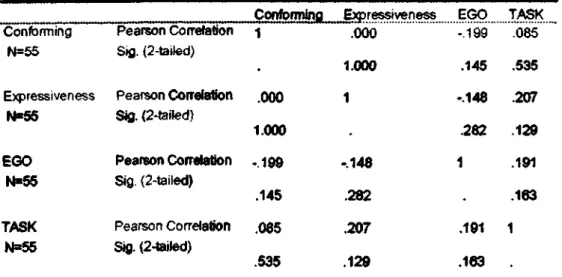
Correlation analysis was also performed on both youth and parent FES scores with the youth's responses on the POSQ to investigate whether there were any significant relationships between their perceptions and their goal orientation.
Factors from the biographical questionnaire were included in a correlation matrix to correlate results of perceived parental pressure and support with goal orientation, achievement orientation and perceived self-pressure of the hockey players.
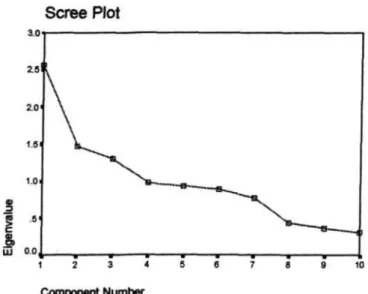
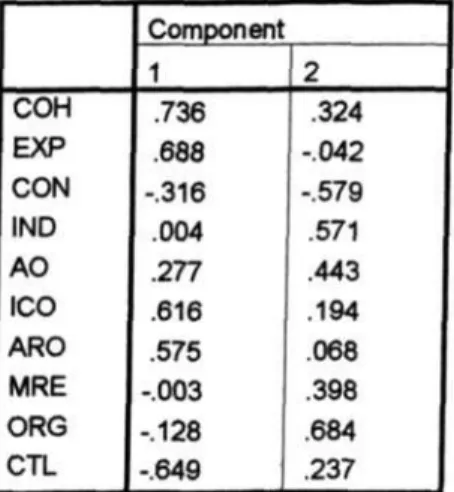
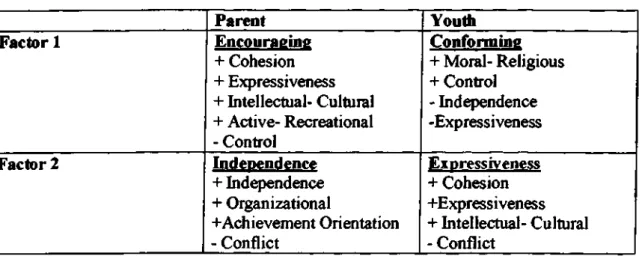
Factor analysis was used to explore whether there are overlaps of the FES scales in both youth and parent results. The extraction method used was a principal component analysis and the rotation method was Varimax with Kaiser Normalisation.
41 Youth and parent ractors that emerge were correlated to explore any similarities that might exist between the two participant groups. These ractors were also correlated with the subscales of the POSQ.
Multiple regression analysis was then used to explore whether a significant combination of predictors existed, based on a wide range of biographical ractors other than those extracted from the FES. The task subscale of the POSQ was chosen as a dependant variable and the stepwise method was used in the regression analysis.
Cluster analysis is an alternative method that was used to investigate structure in the FES by looking for similarities between the items assigned to clusters by SPSS and the items assigned to the FES scales.
Finally, Canonical correlation analysis was considered to explore the overlap between the two separate sets of FES scores to produce possible pairs of scores.
It was accepted that participant numbers are low for the above three multivariate analyses, but it was thought of interest at least to inspect the outcomes.
42